Key Takeaways
- An industrial milkshake manufacturing plant in India goes far beyond blending milk and flavours – it involves standardized milk, stabilizers, homogenization, heat treatment, hygienic filling, cold storage and refrigerated distribution, each of which directly affects project cost, operating expenses and loan repayment capacity.
- Milkshake manufacturing plant setup cost varies significantly with capacity (micro 2,000–5,000 LPD vs medium 10,000–25,000 LPD), automation level, packaging format, cold storage size and local construction costs – ranging from tens of lakhs for micro units to several crores for automated mid-scale plants.
- A bankable milkshake manufacturing plant DPR must integrate technical configuration, machinery quotations, capacity planning, project cost, means of finance, revenue modelling, break-even analysis, DSCR calculations and sensitivity analysis – not just headline machinery prices.
- Cold chain logistics and waste management are vital considerations in the dairy product supply chain; for chilled milkshakes, inadequate refrigeration directly erodes contribution margins and threatens project viability.
- Every milkshake manufacturing plant project report should be customised to the promoter’s actual capacity, product mix, packaging choices and market plan rather than relying on copied industry averages.
Introduction: Commercial Potential of Industrial Milkshake Manufacturing in India
Ready-to-drink milkshakes have emerged as a high-value extension of dairy products, distinctly different from loose or liquid milk. Where plain packaged milk competes largely on price, milkshakes allow branding, standardized taste, premium positioning and value addition through flavours, packaging formats and distribution channels. The dairy beverage market is seeing a growing preference for flavored and value-added products, driven by urban consumers who demand convenience, safety and consistent sensory experience across cafés, QSR chains, modern retail and quick-commerce platforms.
A typical industrial milkshake is not a kitchen-scale operation. It involves standardized milk with defined fat and milk solids content, sugar, permitted stabilizers and emulsifiers to maintain creamy texture and prevent separation, flavour preparations such as cocoa or fruit concentrates, homogenization for smooth mouthfeel, pasteurization or UHT heat treatment depending on shelf-life strategy, hygienic or aseptic filling into bottles or cartons, cold storage and refrigerated distribution. Each of these steps adds technical complexity, capital expenditure and regulatory requirements compared with handling raw milk or plain pasteurized milk.
The economics of a milkshake manufacturing plant depend on several interconnected variables: production capacity (typically 2,000–20,000+ LPD for Indian projects), recipe and formulation cost, packaging type (PET, HDPE, glass, cups, pouches), automation level, shelf-life technology choices that include traditional chilled distribution and UHT processing, distribution radius and cold-chain robustness. These variables drive not just machinery cost but also working capital, distribution costs, operating expenses and ultimately the debt service coverage ratio that banks evaluate before sanctioning finance.
A professionally prepared milkshake manufacturing plant project report is therefore essential to integrate technical design, investment planning, working capital estimation and bank finance documentation under Indian conditions. This article explains the complete project from a practical, financial feasibility perspective.
Milkshake Manufacturing Plant Project Overview
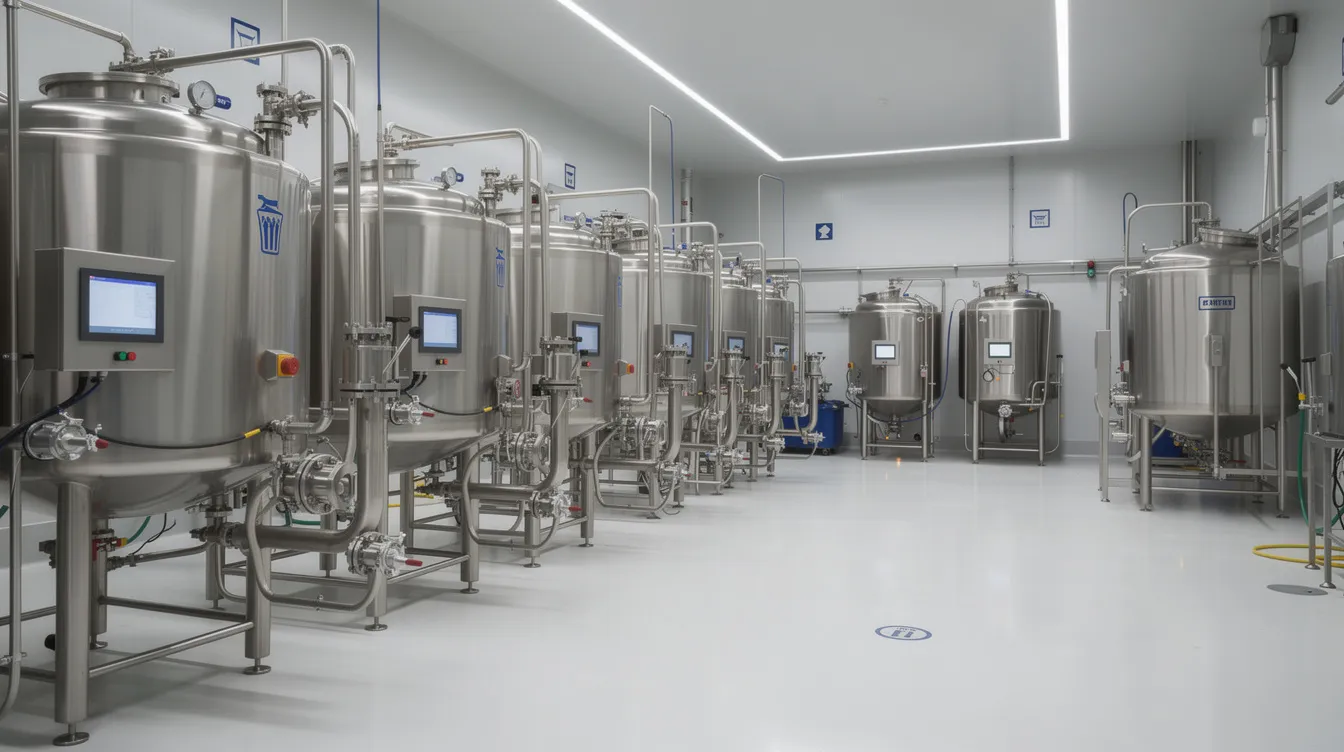
An industrial milkshake production plant is a dedicated processing line within a dairy plant designed for thick flavoured milk beverages with defined fat, SNF, viscosity and sensory profile. Unlike a simple flavoured milk operation, a milkshake line requires more robust mixing, higher-pressure homogenization and carefully selected stabilizer systems to maintain suspension, thickness and indulgent mouthfeel across extended shelf life.
The plant can typically handle multiple product categories: chocolate milkshake, vanilla, strawberry, mango, coffee, fruit-based shakes and increasingly popular premium or high-protein variants. Each requires compatible formulations, specific ingredient preparations and process parameters. The manufacturing process for milkshakes includes pasteurization, homogenization, and aseptic bottling – steps that differentiate it from basic milk processing.
Plant configuration changes substantially with packaging and shelf-life strategy. A chilled milkshake line using PET or glass bottles has different machinery, cold storage and distribution requirements compared with a long-life product using UHT treatment and aseptic cartons. These choices cascade directly into milkshake plant machinery cost, utility sizing, cold-chain investment and overall milkshake manufacturing plant project cost.
Typical line capacities for mid-scale Indian units range from 1,000 to 5,000 LPH, translating to 8,000–40,000 LPD depending on shift operations.
Market Opportunity for Packaged Milkshakes in India
Rising disposable incomes, expansion of modern trade into Tier-2 and Tier-3 cities, rapid growth of quick-commerce platforms and the café culture spreading beyond metros have created significant demand for branded, ready-to-drink dairy beverages. Market analysis involves understanding target demographics and the competitive landscape – urban youth, working professionals, students and families are primary consumers. The India milkshake market was estimated at approximately ₹8.9 billion in 2025, with projections suggesting growth to ₹35.6 billion by 2034 at a CAGR of around 16%.
Consumers are shifting from unbranded, loose milk-based drinks to branded milkshakes with consistent taste, convenience and perceived safety. Institutional channels – school canteens, corporate cafeterias, railway catering, multiplexes and airports – offer relatively stable demand that complements seasonal retail peaks during summer months. Flavoured milk drinks as a broader category grew from ₹4,420 crore in 2021 to ₹7,600 crore in 2025, with milkshakes being a growing sub-segment.
The contrast between mass-market SKUs (180–200 ml PET bottles priced for volume) and premium offerings (thicker shakes, real cocoa, high-protein formulations) is important for project planning. Mass products drive throughput and fixed cost absorption; premium products deliver better contribution margins but usually move in lower volumes. A sound milkshake manufacturing business plan balances both. Market feasibility studies include validating demand size and consumer readiness to purchase at targeted prices in the promoter’s specific geography. For context, the global milk powder market was valued at USD 38.47 billion in 2025 and is expected to reach USD 61.76 billion by 2034, exhibiting a CAGR of 5.4% from 2026 to 2034 – reflecting broad dairy industry trends. Demand for milk powder is driven by urbanization and infant nutrition growth, and milk powder is increasingly used in food processing for its stability, including as an ingredient in certain milkshake formulations.
- Milkshakes sit within the broader value-added dairy strategy, sharing formulation similarities with flavoured milk but requiring higher viscosity, more complex stabilizer systems and often different packaging.
- The product’s position between processed foods and fresh dairy beverages makes it attractive for food manufacturers and dairy companies looking to move up the value chain.
Milkshake Plant Capacity Planning
Capacity planning for an industrial milkshake manufacturing plant is expressed in litres per day (LPD) or litres per hour (LPH). Indian plants typically fall into three bands: micro plants at 2,000–5,000 LPD, SME or medium plants at 10,000–25,000 LPD, and regional plants exceeding 30,000 LPD. The right capacity flows backward from market coverage – a promoter targeting a single city may need a medium unit, while state-level distribution demands significantly larger throughput.
The relationship is sequential: capacity determines milkshake production line size, which drives utility requirements (power, steam, refrigeration), cold storage area, working capital for raw materials and packaging inventories, distribution logistics and ultimately profitability. Larger capacity enables economies of scale – lower per-litre capital expenditure and better fixed cost absorption – but demands higher upfront investment, more robust milk procurement networks and wider distribution reach. For a detailed discussion of how capacity interacts with product planning, refer to value-added dairy plant capacity planning and product mix.
| Plant Size | Daily Capacity (LPD) | Indicative Shift Hours | Manning Level | CAPEX Character | OPEX per Litre |
|---|---|---|---|---|---|
| Small / Micro | 2,000–5,000 | Single shift (8–10 hrs) | Low (small team, semi-automated) | Low | Higher |
| Medium / SME | 10,000–25,000 | Two shifts (16–20 hrs) | Medium (supervisory, automation, QC) | Moderate | Moderate |
| Large / Regional | 30,000+ | Multi-shift / 24 hrs possible | High (engineering, maintenance, logistics) | High | Lower |
Product Mix Planning for Milkshake Manufacturing
Product mix – flavours, pack sizes, chilled versus ambient, retail versus institutional – has a direct impact on formulation cost, line efficiency and profitability. More SKUs mean more packaging inventory, more changeover downtime and higher working capital.
- Typical flavour families: chocolate (~32.6% market share), vanilla (~21.4%), strawberry (~18.7%), mango, coffee, butterscotch and regionally inspired variants.
- Cocoa-based and real fruit puree-based variants usually carry higher raw material costs compared with synthetic-flavour products.
- Packaging options range from 150–200 ml single-serve bottles or cups, 250–300 ml café-focused SKUs, 1 L family packs to institutional bulk containers.
Milkshake formulations overlap with flavoured milk in their base ingredients but differ in viscosity, stabilizer systems, mouthfeel and often shelf life. A promoter already operating a flavoured milk line may find it efficient to add milkshake capability with incremental equipment. For a detailed comparison, see the Flavoured Milk Manufacturing Plant Project Report. Similarly, chocolate-based milkshakes – which involve higher cocoa and packaging costs – share production considerations discussed in the Chocolate Milk Manufacturing Plant Project Report.
Industrial Milkshake Manufacturing Process
The full industrial milkshake manufacturing process follows a defined sequence: raw milk reception → quality testing → filtration and clarification → standardization of fat and SNF → pre-chilling → ingredient preparation (sugar syrup, stabilizer dispersion, flavour and cocoa or fruit preparations) → batch or inline mixing → homogenization → pasteurization or suitable heat treatment → cooling → holding or ageing where required → filling → sealing and capping → coding and labelling → secondary packing → refrigerated storage → dispatch. Harvested milk must go through quality checks for fat and solids not fat before processing – this is a non-negotiable starting point.
Homogenization plays a critical role in achieving a stable emulsion, smooth mouthfeel and prevention of fat separation. Two-stage homogenization at pressures typically in the range of 1,000–3,000 psi is common for milkshake-type dairy beverages, though specific parameters depend on formulation and equipment supplier specifications. Milk powder production retains nutritional value through controlled thermal processes, and similar thermal discipline applies to milkshake pasteurization – temperature-time combinations must align with equipment supplier recommendations, FSSAI standards and desired shelf life.
Shelf-life technology choices significantly affect plant design. Chilled milkshakes use HTST pasteurization and require robust cold chain from production to retail. UHT-treated products processed through aseptic filling systems offer a long shelf life and wider distribution without continuous refrigeration, but demand substantially higher machinery investment. For a broader view of dairy beverage manufacturing, refer to value-added dairy products manufacturing process and production line.
CIP (Clean-In-Place) systems, sanitation procedures and microbiological controls are essential for maintaining product safety, particularly for chilled milkshakes with shorter shelf lives.
Milkshake Plant Machinery and Equipment
Milkshake plant machinery cost often forms the largest portion of capital expenditure after civil construction. Proper equipment sizing is crucial – undersized equipment creates bottlenecks, while oversized equipment inflates capital and operating costs. For reference, a small dairy plant needs a batch pasteurizer or HTST pasteurizer as a starting point, and the minimum equipment investment for a 500 LPH dairy plant is approximately ₹25 lakhs. A milk powder plant requires pasteurizers and spray dryers, while essential equipment for dehydrated dairy product lines includes evaporators and fluidized bed dryers – milkshake plants share the pasteurization requirement but replace drying equipment with filling and packaging systems.
Core processing equipment:
- Raw milk reception and weighing units, chilling tanks, storage tanks
- Clarifiers, filters, cream separators or standardization systems
- Mixing and batch tanks with agitators, high-shear mixers for stabilizers and cocoa
- Sugar syrup preparation systems, ingredient dosing systems
- Homogenizer, plate heat exchanger-based pasteurizer or UHT system
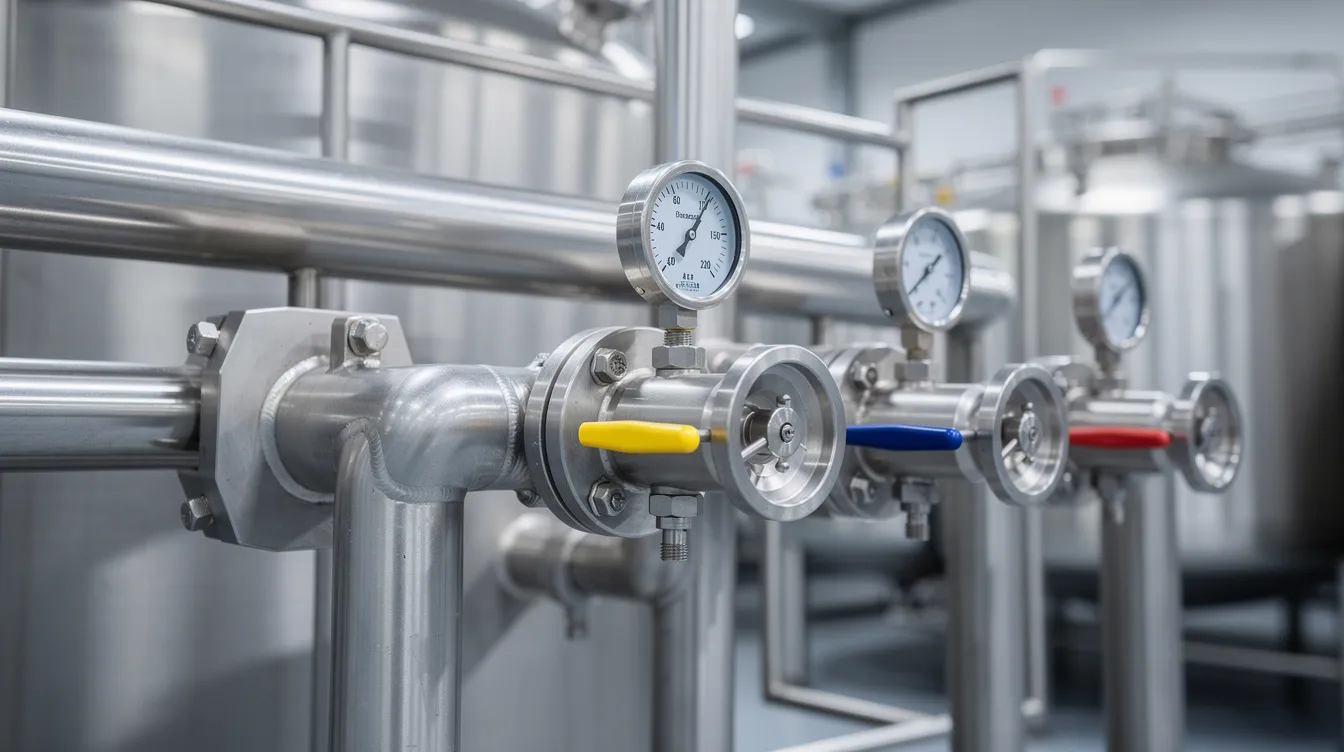
- Balance and holding tanks, CIP system, sanitary pumps and pipelines
- Process automation and control panels
Utilities and supporting systems:
- Refrigeration plant (chillers, brine or glycol system), boilers or steam generators
- Air compressors, water-treatment plant, an efficient effluent treatment plant (mandatory for dairy processing to manage wastewater)
- Laboratory equipment for quality control
| Equipment Group | Examples | Influence on |
|---|---|---|
| Core Processing Line | Homogenizer, pasteurizer, mixers, tanks | Capacity, product quality |
| Packaging Line | Filling machine, capper, labeller, coder | Throughput, automation level |
| Refrigeration & Utilities | Chillers, boilers, compressors, WTP, ETP | Operating cost, energy consumption |
| Quality Control & Lab | Testing instruments, sampling equipment | Regulatory compliance, product consistency |
For methodology on structuring equipment cost estimates in a DPR, see value-added dairy plant machinery and equipment cost.
Automatic Milkshake Filling and Packaging Line
The filling and packaging line – including the automatic milkshake filling machine, bottling plant, labelling, date coding and secondary packaging – can account for a substantial share of milkshake manufacturing plant setup cost. This is a distinct commercial decision that affects shelf life, consumer perception and distribution logistics.
Packaging formats include PET and HDPE bottles (most common for mass market), glass bottles (premium café products), plastic cups with foil sealing, and UHT-compatible cartons for long shelf life. Each option affects transport weight, breakage risk, packaging material cost and consumer appeal differently.
- Filling speed: hundreds to thousands of bottles per hour depending on automation
- Fill volume range: typically 150–1,000 ml
- Capping types: screw, snap-on or crown caps
- Labelling: wrap-around or shrink sleeve
- Coding: batch number, manufacturing date, expiry date
Excessive SKU variety – many flavours multiplied by many pack sizes – reduces line efficiency, increases changeover time and raises operating expenses. The DPR should examine an optimal product and packaging mix that balances market coverage with production efficiency.
Cold Storage and Cold Chain Requirements
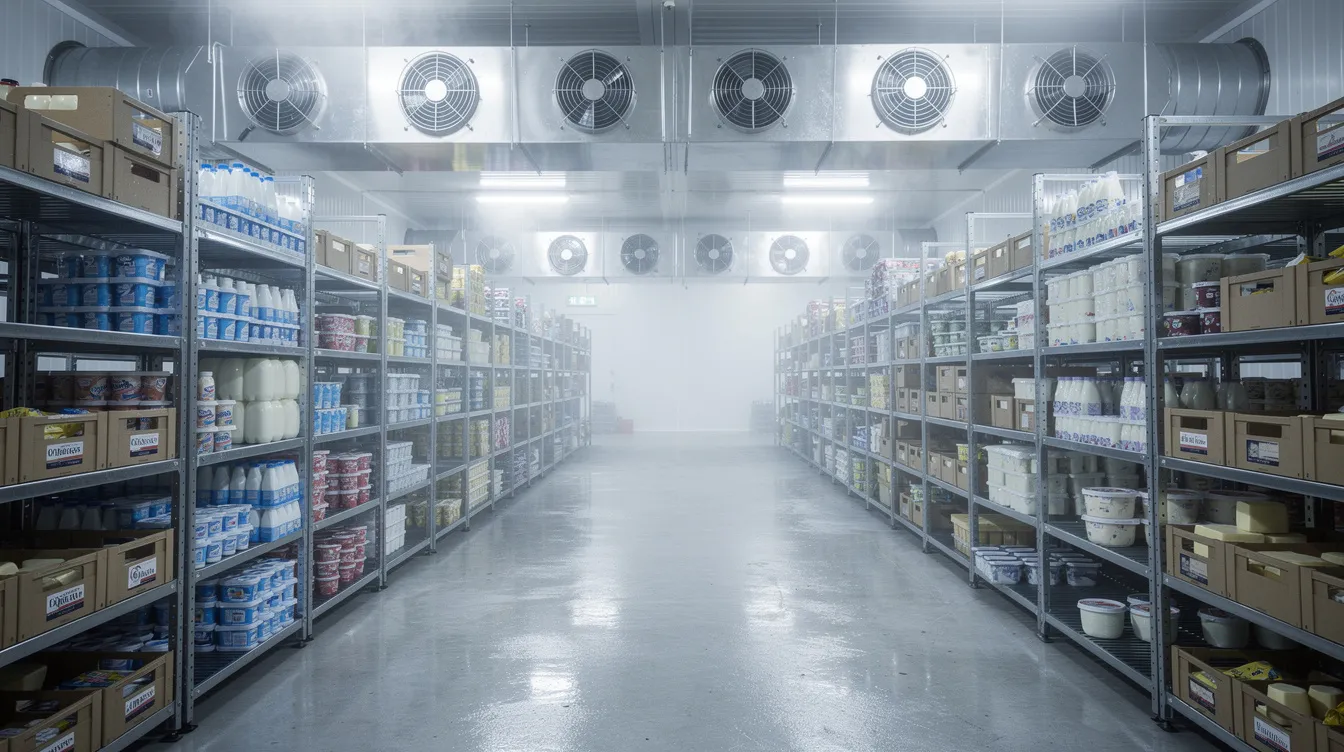
Milkshakes are perishable dairy beverages requiring a cold chain from production to retail. For chilled milkshakes, cold storage and cold chain logistics are often the decisive factors for product success and wastage control. Maintaining a reliable cold chain plays a significant role in economic viability for milkshake producers.
- Rapid post-pasteurization cooling to 4–5°C
- Finished-goods cold rooms maintained at 2–4°C
- Refrigerated vehicles or tie-ups with cold logistics providers
- Temperature monitoring at distributor and retailer level
- Backup power (DG sets) for cold rooms and critical refrigeration
Maintaining cold chain integrity is essential for product safety and shelf life. Inadequate cold chain leads to spoilage, off-flavours, microbial issues and increased returns – all of which directly erode contribution margins and may hurt DSCR and loan repayment capacity. The DPR must address refrigeration tonnage, insulation quality and defrost/maintenance planning as critical infrastructure. For detailed guidance, see cold storage and cold chain requirements for value-added dairy products.
Land, Building and Hygienic Plant Layout
Land and building planning for a milkshake manufacturing plant must allocate space for raw milk reception bay, processing hall, ingredient preparation room, packaging hall, finished goods cold room, dry store for packaging materials, laboratory, utilities block, CIP area, staff hygiene and change rooms, administrative block and dispatch zone. Compliance with local zoning laws is necessary for dairy plants.
- Physical separation of raw milk handling from pasteurized and final product zones
- Unidirectional flow of materials to prevent cross-contamination
- Segregation of chemical and CIP stores from production areas
- Controlled personnel movement with changing and wash facilities
A well-designed plant layout minimises cross-contamination risk, reduces internal material handling cost and improves audit and compliance readiness. Small plants may operate within a compact built-up area under 10,000 sq.ft., while medium plants typically require 15,000–25,000 sq.ft. and above. Similar layout principles are discussed in value-added dairy plant land, building, utilities and hygienic layout.
Utility Requirements for a Milkshake Processing Plant
Utilities – power, steam, refrigeration, water, compressed air and effluent treatment – are recurring cost drivers in milkshake manufacturing plant cost analysis and must be sized in line with capacity and operating hours.
- Electrical power for motors, automation, chillers and lighting
- Steam for pasteurization, UHT treatment and CIP heating
- Chilled water or brine for process cooling and cold rooms
- Potable and process water (source, treatment, storage)
- Compressed air for pneumatic valves and packaging machines
- DG backup for cold rooms and critical process equipment
- Natural gas may be used as boiler fuel where available and cost-effective
Environmental clearances are required for dairy plant operations. Utility loads depend on technology choices (plate versus tubular heat exchangers, energy-efficient homogenizers, variable frequency drives), daily operating shifts and ambient temperature. Accurate estimation of utility capital expenditure and operating expenditure is essential for realistic DSCR and profitability analysis in the DPR.
Milkshake Manufacturing Plant Project Cost Structure
Milkshake manufacturing plant project cost must be customised to each promoter’s plan – capacity, technology, packaging format and location – and should be split into fixed capital (CAPEX) and margin for working capital, as is standard in Indian detailed project report preparation. The milk powder plant setup cost similarly includes capital investments and operating expenses, and the same structured approach applies to milkshake projects. Initial investment for a milk powder manufacturing plant is significantly high; milkshake plants, while generally lower in capital intensity, still require disciplined cost estimation.
Main CAPEX heads:
- Land and site preparation
- Civil construction and internal roads
- Processing machinery and packaging line
- Refrigeration and cold storage equipment
- Utility equipment (boilers, chillers, transformers, compressors)
- Electrical installations, laboratory and quality control instruments
- Furniture, office equipment, preliminary and pre-operative expenses
- Professional and consultancy fees, contingencies
For micro plants (few thousand LPD), total project cost for a micro dairy ranges from ₹40–80 lakhs. SME and mid-sized plants with automated packaging lines and adequate cold storage typically require several crores – a 5,000 LPD multi-product dairy plant has been estimated at approximately ₹4.8 crore, while a 10,000 LPD plant may cost ₹5–7 crore excluding land. Margin for working capital (generally covering 3–6 months of raw materials, packaging, wages and overheads) is part of total project cost considered by banks. For structuring methodology, see value-added dairy plant project cost and means of finance.
Means of Finance and Capital Structure
Typical funding patterns for Indian manufacturing MSMEs include promoter’s equity or margin money, term loan from banks or financial institutions, possible unsecured loans from promoters or relatives, and government subsidy components where applicable under schemes like PMFME or state-level dairy development programs.
- Minimum promoter contribution as per bank norms
- Acceptable debt-equity ratio for the project
- Adequacy of working capital limits
- Realistic phasing of term loan disbursement linked to project milestones
For a sound milkshake plant bank loan project report, sources and uses of funds must tally with clear distinction between CAPEX financed by term loan and current assets supported by working capital limits. A project report serves as a critical tool for securing funding for the manufacturing plant. Well-documented means of finance help both promoters and bankers assess whether the proposed milkshake manufacturing plant investment is adequately capitalised for sustainable operations. Financial assistance from banks depends on the promoter’s profile and lender policy.
Raw Materials, Packaging and Consumables
Primary raw materials include fresh milk or standardized milk from nearby sources, sugar, milk solids or cream where required, permitted stabilizers and emulsifiers, flavours, cocoa powder or dried milk ingredients, fruit concentrates or purees, and permitted colours as per Indian regulations. Skimmed milk powder and whole milk powder may be used as supplementary ingredients to adjust solids content. Skimmed milk and cream additions help achieve the target fat and SNF profile.
- PET/HDPE bottles, preforms, caps, foil lids for cups, labels, shrink sleeves
- Cartons, shrink film for secondary packing
- CIP chemicals, cleaning agents, laboratory reagents
In most milkshake projects, raw milk and packaging material together form a significant portion of variable costs. Raw milk accounts for 75–85% of total operating expenses in dairy processing – milkshake plants are no exception. Seasonality in milk procurement price and dependence on packaging suppliers can affect cost stability. The DPR should differentiate between locally sourced inputs and specialised or imported ingredients due to currency and lead-time risk. Operating costs increase due to inflation and market fluctuations, making conservative cost assumptions prudent.
Revenue Model and Pricing Strategy
Milkshake plant revenue is a function of installed capacity, capacity utilisation, product mix, net realisation per litre and geographic reach. The basic relationship is: Capacity × Utilisation × Saleable Yield × Average Net Realisation. Stable demand for branded dairy beverages supports revenue predictability, but seasonal and channel-level variations must be modelled carefully.
- Retail bottled SKUs via distributors
- Institutional supply to cafés, QSRs and food-service chains
- Co-packing or private-label manufacturing for other brands
- Bulk supply to hotels, restaurants and ready to eat meals operators
Channel margins (distributor and retailer), promotional schemes and trade discounts form part of gross-to-net realisation calculations. Handling wastage and sales returns – approaching-expiry products, damaged packaging – must be factored into revenue and cost assumptions to avoid overstating profitability. For pricing methodology, see value-added dairy products revenue model and market strategy.
Milkshake Manufacturing Plant Profitability Drivers
Profitability depends on balancing raw material cost, plant utilisation, product realisation and efficient cold-chain management. Attractive top-line revenue alone does not guarantee viable cash flows. Gross profit margins for comparable dairy beverage products typically range between 20–30%, though actual margins depend heavily on formulation, packaging and distribution efficiency. Price trends in milk and packaging materials directly impact bottom-line results.
- Milk procurement price, sugar and ingredient costs
- Packaging cost per litre, energy and refrigeration expenses
- Labour and supervision, repairs and maintenance
- Distribution freight and trade marketing spends
Contribution margin (selling price minus variable costs per unit) determines how much each litre sold contributes toward covering fixed costs. Higher-contribution premium SKUs – such as indulgent chocolate shakes with high nutritional value – can subsidise mass products if carefully managed within the product mix. Operating leverage means that once the plant crosses break-even utilisation, additional volumes contribute relatively more to profit because fixed costs (salaries, depreciation, interest) are already covered. See value-added dairy plant profitability and break-even analysis for analytical frameworks.
Break-Even Analysis for Milkshake Plants
Break-Even Sales (₹) = Fixed Costs ÷ Contribution Margin Ratio. Equivalently, Break-Even Quantity (litres) = Fixed Costs ÷ Contribution per Litre.
Fixed costs in a milkshake plant include salaries of permanent staff, depreciation, interest, minimum maintenance, insurance and minimum utilities that do not vary directly with production volume. Variable costs include milk, sugar, ingredients, packaging and distribution. Break even points shift when raw milk price or selling price changes – even a moderate procurement cost increase can push the break-even utilisation level noticeably higher. Realistic, data-backed break-even analysis must be part of any milkshake manufacturing plant feasibility report.
Financial Projections in a Milkshake Manufacturing Plant DPR
Comprehensive financial projections (usually 5–7 years) form the backbone of a bankable milkshake manufacturing plant project report in India. Financial projections include income, expenditure, and ROI analysis. Creating a project report for a milkshake manufacturing plant requires technical feasibility and financial rigor.
- Projected Profit & Loss account, Balance Sheet, Cash Flow Statement
- Fund Flow statement, term loan repayment schedule
- Key ratio analysis: DSCR, current ratio, debt-equity, IRR, payback period
- Clearly stated assumptions: production ramp-up, selling price growth, raw material inflation, energy cost escalation, credit periods
Projections should link to realistic capacity utilisation curves and reconcile with technical capacity and market plans. Expenditure projections must account for industry trends and cost escalation. See value-added dairy plant financial projections for DPR.
Working Capital Requirement for Milkshake Manufacturing
Working capital in a milkshake project arises from inventories (raw milk, ingredients, packaging), finished goods in cold storage, receivables from distributors and institutional customers, and cash balances for daily operations. Shorter shelf life for chilled products demands faster inventory turnover compared with ambient or UHT products.
- Higher cold storage inventory during peak seasons
- Credit terms demanded by modern trade and large café or QSR chains
- Working capital cycle: raw material purchase → processing → finished goods in cold room → sale → receivables collection
An additional 15–30 days of receivables can significantly increase bank working capital limits and carrying cost, impacting project DSCR. Compression of this cycle improves liquidity and lowers interest burden. See working capital requirement for a value-added dairy products plant.
Bank Loan, Project Finance and DSCR Assessment
Banks appraise milkshake manufacturing projects by evaluating promoter profile, technical feasibility (which ensures a reliable cold chain and quality raw material sourcing), product mix, market tie-ups, project cost, means of finance, profitability and risk factors. A good project report should include sections on market analysis, technical feasibility, and financial projections. Key components of the project report include market analysis and the technical manufacturing process.
- Detailed project report, CMA data, projected financials
- Sensitivity analysis, DSCR calculations, net worth and collateral details
- Sanction letters for subsidies where relevant
DSCR = Cash Accruals Available for Debt Service ÷ (Term Loan Principal Repayment + Interest during the year). Lenders typically examine both average and minimum DSCR over the projection period. Healthy DSCR indicates adequate repayment capacity; stress-case DSCR under adverse scenarios is equally important. Financial feasibility involves calculating net present value and internal rate of return for the project. For appraisal frameworks, see bank loan and project finance for a value-added dairy products plant and DSCR and loan repayment capacity for a value-added dairy project.
Term Loan Assessment and Security Structure
The proposed term loan quantum should relate to eligible fixed assets – land, building, plant and machinery, utilities and miscellaneous fixed assets – plus margin for working capital as per bank norms.
- Moratorium period during construction and stabilisation
- Repayment period aligned to project cash flows
- Interest rate assumptions and instalment frequency
- Collateral coverage, promoter contribution timing and adequacy of insurance
Realistic implementation timelines – civil construction, machinery delivery, installation and trial runs – should be built into the repayment schedule so that instalments start after commercial production begins. See term loan assessment for a value-added dairy manufacturing plant.
Project Feasibility, Viability, ROI and IRR
A milkshake manufacturing plant feasibility report should address four pillars:
- Technical feasibility: equipment capacity, utilities, consistent supply of quality milk, cold chain adequacy
- Market feasibility: demand validation in target markets, pricing, competition from developing countries’ imports and domestic brands
- Financial feasibility: profitability, cash flows, DSCR, ROI, IRR, NPV – cost analysis must be thorough
- Management feasibility: promoter competence, operational team, procurement and distribution network capability
ROI represents average annual profit on capital employed. IRR is the discount rate at which NPV of project cash flows equals zero. Payback period indicates time to recover initial investment. Sensitivity analysis should test scenarios such as milk price increase, packaging cost escalation, lower selling price, reduced capacity utilisation, higher interest cost and increased refrigeration expenses. Some milkshake products, including those with nutritional value suitable for infant nutrition-adjacent segments, may command premium pricing. See value-added dairy plant feasibility and project viability and ROI, IRR, payback and sensitivity analysis of a value-added dairy plant.
Key Risks in a Milkshake Manufacturing Project and Mitigation
Risk assessment for milkshake production includes monitoring milk price volatility and competition. Identifying and mitigating risks is essential for any milkshake manufacturing business plan presented to investors and lenders.
- Raw milk price volatility: mitigate through long-term procurement contracts and multiple sourcing arrangements for a consistent supply
- Inadequate milk supply in lean season: alternative sourcing, use of skimmed milk powder or whole milk powder as supplementary inputs
- Cold chain failures leading to spoilage: preventive maintenance contracts, backup power, temperature monitoring systems
- Plant breakdowns: annual maintenance contracts, critical spares inventory
- Weak distributor network: phased geographic expansion, selective distributor appointment
- Aggressive price competition: focus on product differentiation, premium positioning, plant based or functional variants
- Delayed receivables: robust credit control, advance payment for new accounts
- Regulatory non-compliance: proactive licensing, periodic audits, trained QA team; pollution control board NOC must be obtained and maintained
- Excessive SKU complexity: phased rollout, periodic SKU rationalisation
- Hot air system or refrigeration failures during processing: redundancy in critical utilities
Risk mapping and sensitivity analysis give comfort to lenders about project resilience and should be explicitly summarised in the milkshake manufacturing plant DPR. Promoters should revisit the risk register annually and adjust strategies as international markets, industry trends and local conditions evolve.
Quality Control, Food Safety and Regulatory Compliance
Systematic quality control is fundamental. Quality control standards in dairy production include rigorous testing for microbial load and pH levels. Raw milk testing covers fat, SNF, MBRT and other quality indicators. In-process monitoring of temperature, time, homogenisation pressure and filling hygiene ensures batch-to-batch consistency. Products of high nutritional value demand particularly rigorous controls.
- Validated CIP cycles and environmental hygiene checks
- Packaging integrity tests (leak tests, torque checks)
- Batch coding and traceability systems
- Finished product shelf-life studies and periodic lab testing
- Spray dryers and other dairy equipment used in related powder manufacturing plant operations require similarly rigorous cleaning protocols
Regulatory compliance includes obtaining licenses from food safety authorities and pollution control. FSSAI registration is necessary for compliance in food manufacturing in India. FSSAI manufacturing license is mandatory for dairy operations, and FSSAI emphasizes maintaining a documented food safety management system for licensed food businesses. Three essential licenses are required to operate a dairy plant in India, and FSSAI licensing costs range from ₹50,000 to ₹2 lakhs depending on scale. Regulatory requirements for milkshake plants include food safety standards and environmental permits. Regulatory approvals and environmental clearances should be secured before commencing construction. Sound quality systems reduce product complaints, returns and recall risk, indirectly strengthening profitability and loan repayment capacity.
Milkshake Plant DPR Preparation: Role of CA Manish Gugliya and ProjectReportBank
A milkshake manufacturing plant DPR is a comprehensive decision-support and bank-finance document combining technical configuration, cost estimates, financial projections and risk analysis specifically for an industrial milkshake manufacturing plant in India. The global milk powder industry – alongside the broader food processing industry – uses similar structured project reporting, demonstrating that this approach has been tested across dairy products and processed foods segments worldwide.
Main components of a customised DPR prepared by CA Manish Gugliya:
- Technical description of the production process and machinery
- Land and building plan with plant layout
- Detailed project cost (CAPEX + margin for working capital)
- Means of finance and capital structure
- Revenue model and cost of production build-up
- Projected financial statements (P&L, Balance Sheet, Cash Flow)
- Break-even analysis, DSCR analysis, ROI, IRR and payback
- Sensitivity analysis and key risk assessment
Inputs such as actual machinery quotations, land and construction estimates, local milk and packaging prices, planned product mix and selling prices provided by the promoter are used to build project-specific financial projections rather than relying on generic industry averages. For a broader view of related advisory work, see the Fermented & Value-Added Dairy Products Manufacturing Plant Project Report.
While projections are prepared with professional care and practical assumptions, they remain estimates to assist decision-making and should not be construed as guaranteed outcomes. The Fonterra Co-operative Group and other dairy majors globally follow similar rigorous feasibility practices when evaluating new processing capacity – the same discipline applies to Indian MSME projects.
FAQs on Milkshake Manufacturing Plant Project Report
How much does it cost to start a milkshake manufacturing plant in India?
Milkshake manufacturing plant setup cost varies widely depending on capacity, automation level, packaging type, cold storage size and local civil construction costs. A micro unit of 2,000–3,000 LPD may require investment in the range of tens of lakhs to under a crore, while a 10,000+ LPD automated plant with adequate cold storage and a packaging line typically requires several crores. No single universal figure applies – each project cost must be estimated based on actual quotations, site preparation requirements and the promoter’s specific configuration.
What machinery is required for a commercial milkshake manufacturing plant?
Core equipment includes milk reception and chilling units, storage tanks, mixing tanks, high-shear mixers, sugar syrup systems, a homogeniser, pasteuriser or UHT unit, CIP system, automatic filling line, capping and sealing machines, labelling and coding equipment, cold rooms and utilities (boiler, chiller, compressor, water treatment). Milkshake plant machinery cost depends on capacity, degree of automation and whether the line is designed for chilled or ambient products. Procurement lead time for major equipment typically ranges from 8 to 16 weeks depending on supplier and customisation.
Is cold storage and refrigerated distribution mandatory for milkshake manufacturing?
For chilled milkshakes – which represent most Indian branded milkshake products – cold rooms and refrigerated transport are essential. UHT or aseptically processed products with a long shelf life may not require continuous cold chain but still benefit from controlled storage to maintain quality. Cold chain logistics and waste management are vital considerations; failure in refrigeration directly causes spoilage and financial losses.
Can a bank loan be obtained for a milkshake manufacturing plant?
Banks and financial institutions typically consider such projects under term loan and working capital schemes for manufacturing and MSME units, subject to promoter profile, project viability, DSCR, collateral and the lender’s credit policy. A well-prepared milkshake manufacturing plant DPR – with detailed project cost, means of finance, financial projections and sensitivity analysis – significantly improves the quality of bank appraisal and strengthens the promoter’s case.
What affects ROI, IRR and break-even period of a milkshake manufacturing project?
Key influencers include total project cost (land, building, machinery), speed of implementation, capacity utilisation ramp-up, net realisation per litre, milk and packaging cost trends, efficiency of cold chain and distribution, interest cost and overall cost control. Operational expenses, distribution costs and fixed costs interact to determine break even points. Individual project performance varies across promoters, locations and market conditions, and no universal return can be guaranteed.
Conclusion
Evaluating a milkshake manufacturing project requires integrating market opportunity, capacity and product mix, manufacturing technology, packaging format, cold-chain investments, project cost, working capital, profitability and debt servicing capacity. Focusing only on milkshake plant machinery cost or headline capacity is not sufficient – holistic DPR-based planning and financial modelling are vital before committing capital to an industrial milkshake manufacturing plant in India.
A customised milkshake manufacturing plant project report, prepared with professional inputs integrating the promoter’s actual capacity, machinery quotations, operating assumptions and market plan, serves as an important planning and bank-finance tool for entrepreneurs, dairy companies and investors. The DPR should be treated as a living document, updated as real project data emerges during implementation.
CA Manish Gugliya – Project Report, DPR, CMA Data, Project Finance & Financial Feasibility Advisory – www.projectreportbank.com