Key Takeaways
- A Fermented & Value-Added Dairy Products Manufacturing Plant Project Report integrates milk production planning, milk processing technology, hygienic plant layout, cold chain infrastructure and bank finance into one cohesive, bankable document.
- Value-added fermented milk products such as yogurt, Greek yogurt, curd/dahi, lassi, probiotic dairy drinks and paneer can significantly improve profitability compared with selling liquid milk alone-provided the detailed project report is grounded in realistic capacity, procurement and financial analysis.
- This hub article covers industry trends, capacity and product mix selection, manufacturing process, machinery, project cost, operating economics, profitability, DSCR, break-even, ROI, IRR and lender expectations specific to the Indian dairy sector.
- Readers will find contextual links to 21 in-depth supporting articles covering individual products (yogurt, Greek yogurt, curd/dahi, lassi, probiotic dairy, paneer), machinery cost, manufacturing process, project cost and means of finance, profitability, working capital, DSCR, bank loan assessment, feasibility and sensitivity analysis.
- The article is written from the perspective of CA Manish Gugliya, focusing on project viability, debt service coverage, break-even analysis and the preparation of bankable DPRs for fermented and value-added dairy projects in India.
Introduction: From Commodity Milk to Fermented & Value-Added Dairy
India’s dairy industry produces over 94.6 million tonnes of milk annually, and broader estimates place total milk production above 230 million tonnes when accounting for the full cooperative, private and unorganized sector output. India’s dairy market is growing over 6% annually, yet only about 35% of total production is processed through organized channels. This gap-between enormous raw milk availability and relatively low industrial processing-represents both the challenge and the opportunity for entrepreneurs entering the value-added dairy space.
Urbanization, rising incomes and changing consumer preferences are shifting demand away from loose, unbranded milk toward packaged, branded, fermented and other processed dairy products. A Fermented & Value-Added Dairy Products Manufacturing Plant Project Report must therefore integrate milk processing technology, hygienic plant design, cold storage planning and realistic market and financial assumptions into a single decision-ready document.
This hub article is designed to guide entrepreneurs, MSMEs, dairy cooperatives and investors through every critical dimension of planning a bankable dairy products manufacturing plant DPR-from product selection and capacity to DSCR, ROI and sensitivity analysis. Each section connects to a dedicated supporting article for deeper analysis.
As a Chartered Accountant with experience in preparing detailed project reports, CMA data, DSCR assessments and working capital planning for dairy processing plants, I have structured this guide to reflect what lenders actually examine, where promoters commonly stumble, and how to build a project report that withstands bank scrutiny.
What Are Fermented & Value-Added Dairy Products?
Fermented dairy products are manufactured through the controlled fermentation of milk using specific lactic acid bacteria or probiotic bacteria cultures. The broader category of value-added dairy products includes not only fermented items but also paneer, flavored milk, cream-based preparations, fortified and functional milk products-essentially anything that transforms raw milk into a higher-value finished product.
Key fermented milk products relevant to commercial dairy processing include:
- Yogurt (set and stirred varieties)
- Greek yogurt (concentrated, high-protein)
- Curd/dahi (the most widely consumed fermented product in India)
- Lassi and buttermilk
- Probiotic fermented milk and drinks
- Fermented cream and kefir
Major non-fermented value-added dairy products include paneer, flavored milk, skimmed milk, toned milk, whole milk powder, skim milk powder, and whey protein concentrates. The global milk market accounts for 35.7% of dairy products, and within this, fermented and value-added items command increasingly higher shares due to health benefits and convenience. Dairy products include butter, cheese and yogurt among other categories, each with distinct processing requirements.
Value addition improves realization per litre of milk compared with selling raw or pasteurized milk, and fundamentally changes the milk processing strategy. Separate commercial project reports exist for individual product lines, which are connected through this hub article.
Major Product Opportunities in a Fermented & Value-Added Dairy Plant
Product selection directly influences dairy plant design, machinery configuration, cold chain requirements and the financial projections in your detailed project report. Here are the major opportunities:
Yogurt is a core fermented dairy product with strong demand across retail and food industry channels. Both set and stirred variants offer scalable production. For a detailed assessment, refer to the Industrial Yogurt Manufacturing Plant Project Report.
Greek yogurt represents a premium, high-protein segment with growing demand in Indian markets and metro cities. It requires additional concentration steps and higher milk solids, but commands better margins. The Greek Yogurt Manufacturing Plant Project Report covers this category in depth.
Curd/dahi remains a mass-market staple with enormous daily average consumption across India. A 5,000 LPD curd/dahi plant may require a total capital investment of approximately ₹4.81 crore. The Curd / Dahi Manufacturing Plant Project Report provides worked-out cost and break-even details.
Lassi and fermented dairy beverages are growing categories, especially in PET bottle and pouch packaging formats. The Industrial Lassi Manufacturing Plant Project Report addresses lassi manufacturing plant setup and cold chain considerations.
Probiotic dairy products represent functional, premium items with higher culture management requirements and shelf life constraints. The Probiotic Dairy Products Manufacturing Plant Project Report explores this segment’s rising demand and technical requirements driven by health and wellness trends.
Paneer is a high-volume value-added dairy product often integrated with fermented lines. A medium-scale industrial paneer plant may cost around ₹3.99 crore in total capital investment. The Industrial Paneer Manufacturing Plant Project Report covers paneer’s influence on whey handling and milk fat utilisation.
- A diversified product basket balances seasonality, spreads risk and can improve overall dairy processing plant profitability.
- Combining mass-market and premium SKUs optimizes both capacity utilisation and margin mix.
Selecting the Right Product Mix for Your Dairy Processing Plant
For a project promoter, product mix planning is as critical as choosing capacity. It defines milk utilisation, plant load, the working capital cycle and the margin profile of the entire business.
Mass-market lines such as curd/dahi, basic lassi and plain yogurt deliver high volume but lower per-unit margins. Premium lines like Greek yogurt, probiotic dairy products and value-added paneer SKUs carry better realization but require deeper technical capability, more sophisticated packaging and targeted marketing. An effective DPR combines both.
Key considerations for product mix selection include:
- Institutional versus retail sales split-institutional contracts provide volume stability, while retail offers better pricing
- HoReCa and food service demand, which is growing in urban areas
- Private label manufacturing contracts for modern retail chains
- Regional taste preferences (e.g., sweet lassi in North India, flavored yogurt in metros)
- Shelf life differences: short shelf-life items like curd and lassi require tighter cold chain and faster stock rotation than some packed paneer or UHT-based value-added milk products
The Value-Added Dairy Plant Capacity Planning & Product Mix article provides structured frameworks for modelling product-mix decisions against capacity and financial outcomes.
In the DPR, product-wise sales volumes, pricing assumptions and margins must be clearly separated rather than using a blanket average realization figure.
Plant Capacity Planning and Milk Utilisation
Installed capacity should reflect realistic milk procurement potential, market absorption capacity and phased ramp-up rather than optimistic projections. A milk processing facility can produce 50 to 200 million litres annually depending on scale, but the question is always: can you actually procure and sell at that level?
Factors influencing capacity include:
- Local milk production density and procurement radius
- Existing chilling infrastructure (bulk milk coolers, village collection centres)
- Seasonal variation in fat and SNF composition
- Competition from existing organized dairy sector players for raw milk
- Distribution reach and cold chain capability in the target market
In financial analysis, capacity utilisation is generally projected to ramp up over 3 to 5 years. Year 1 utilisation is often 40–60%, rising to 70–80% by Year 3 for well-planned operations. Assuming 100% utilisation from day one is a common and damaging mistake.
Selection of continuous versus batch equipment impacts processing hours, shift patterns, labour requirements and energy consumption. A 10,000 LPD plant may need 1–2 acres, while a 50 KLPD integrated facility may require 3–5 acres including cold chain and expansion space.
The dairy plant capacity planning and product mix article provides numerical frameworks for sizing and balancing production lines.
Manufacturing Process Flow for Fermented & Value-Added Dairy Products
The generic manufacturing process for fermented and value-added dairy products follows a well-defined sequence:
Milk reception and testing → clarification and filtration → chilling → standardisation (fat/SNF adjustment) → pasteurisation and homogenisation → product-specific processing (fermentation or coagulation) → filling and packaging → cold storage → dispatch.
The process flow in dairy production includes pasteurization, fermentation and packaging steps, but each product category requires specific adaptations:
- For yogurt and curd, pasteurised milk receives starter culture inoculation followed by controlled incubation at defined temperatures
- Greek yogurt requires a higher concentration step or whey drainage to achieve elevated protein and solids
- Paneer involves coagulation, whey separation, pressing and cutting
- Probiotic products need precise culture dosing with verified strain viability
Fermented dairy products require precise temperature and culture controls during processing. The consistency of incubation temperature, holding time and pH monitoring are critical for achieving uniform acidity and texture.
Hygienic CIP (clean-in-place) practices, automatic valves and validated pasteurisation routines are central to product food safety and shelf life. The DPR should reflect realistic processing losses, cream separation, whey generation and fat standardisation adjustments.
The Value-Added Dairy Products Manufacturing Process article provides detailed step-by-step flows and time-temperature parameters for each product category.
Machinery & Equipment for a Value-Added Dairy Processing Plant
Machinery selection depends on planned capacity, automation level, product mix and whether the plant handles both liquid milk and fermented products or only specialized lines.
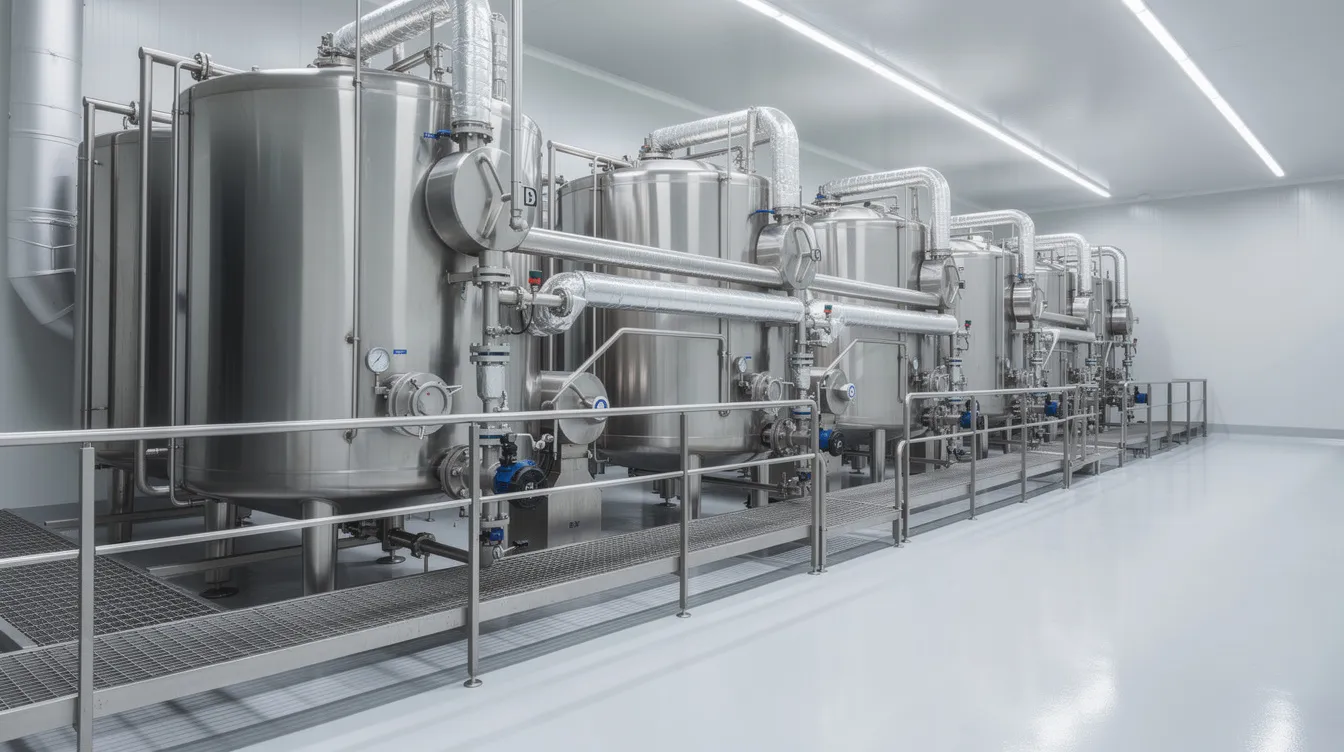
Core processing equipment includes:
- Milk reception tanks and weigh bowls
- Plate heat exchangers and pasteurisers
- Homogenisers
- Milk storage tanks and process tanks
- Fermentation tanks with temperature control
- Culture dosing systems
- Paneer vats and paneer presses
- Product transfer pumps
Packaging and utility equipment:
- Cup filling machines, pouch fillers, form-fill-seal machines
- Shrink-wrapping and labelling machines
- Cold rooms and blast coolers
- Boilers and steam generators
- Refrigeration compressors and refrigeration unit assemblies
- Water treatment plant
- Air compressors and CIP systems
- Laboratory equipment (milk analysers, incubators, pH meters)
The trade-off between semi-automatic and fully automatic lines is significant. Fully automatic systems involve higher initial dairy processing machinery cost but deliver better consistency, lower labour dependency and reduced contamination risk over time. The choice of packaging material is important for preserving the quality of dairy products across shelf life.
The Value-Added Dairy Plant Machinery & Equipment Cost article discusses cost ranges for equipment categories across different capacities and automation levels.
DPRs should include supplier quotations or budgetary estimates dated for the current year, with taxes, freight and installation factored into project cost calculations.
Land, Building & Hygienic Plant Layout
A dairy processing plant’s success depends heavily on an efficient and hygienic plant layout that separates raw milk reception, processing and finished goods flows. A dairy processing plant requires around 2,000 sq. ft. of space at the micro or small scale, with larger integrated plants needing considerably more depending on capacity and product range.
Essential layout blocks include:
- Milk reception dock with testing bay
- Raw milk chilling and storage area
- Processing hall (pasteurisation, standardisation)
- Fermentation rooms with controlled temperature
- Paneer section (coagulation, pressing, cutting)
- Packaging hall
- Cold rooms for raw materials and finished goods
- Dry store for packaging and ingredients
- Laboratory and quality assurance area
- Utilities block (boiler, compressor, water treatment, DG set)
- Staff amenities and administrative office
Unidirectional material flow, segregation of high-risk and low-risk zones, and clearly marked personnel and product movement paths are essential for food hygiene and regulatory compliance.
The Value-Added Dairy Plant Land, Building, Utilities & Hygienic Layout article covers detailed area statements, layout norms and civil cost considerations.
In the detailed project report, land and building costs must be clearly separated by component-land, civil works, PEB structure, internal finishes, drainage and effluent systems.
Utilities Requirement: Power, Steam, Water & Effluent
Utilities represent a significant portion of both project cost and operating expenses in any milk processing plant. Underestimating them distorts both CAPEX and projected profitability.
Main utilities include:
- Electrical power for motors, refrigeration, lighting and control systems
- Steam or hot water for pasteurisation, CIP and paneer production
- Process and potable water supply
- Chilled water circuits for cooling and fermentation temperature control
- Compressed air for pneumatic valves and packaging equipment
- Backup power (DG sets) for smooth plant operations during outages
Dairy processing generates high-BOD wastewater that requires effective treatment. Effluent Treatment Plants are crucial for managing wastewater in dairy processing facilities, and this must be included in both project cost and environmental compliance planning.
Utility sizing should be based on a detailed heat and mass balance prepared during the DPR rather than only on thumb rules. Both fixed charges (demand charges) and variable energy costs impact profitability and should be accounted for in financial projections.
Cold Storage & Cold Chain for Fermented Dairy Products
Fermented milk and other refrigerated dairy products are highly temperature-sensitive. Cold storage and cold chain planning is not optional-it is central to project viability and directly impacts spoilage, product returns and cash flow.
Key cold chain elements include:
- Rapid chilling after pasteurisation
- Controlled incubation rooms for fermentation
- Blast or tunnel cooling after filling
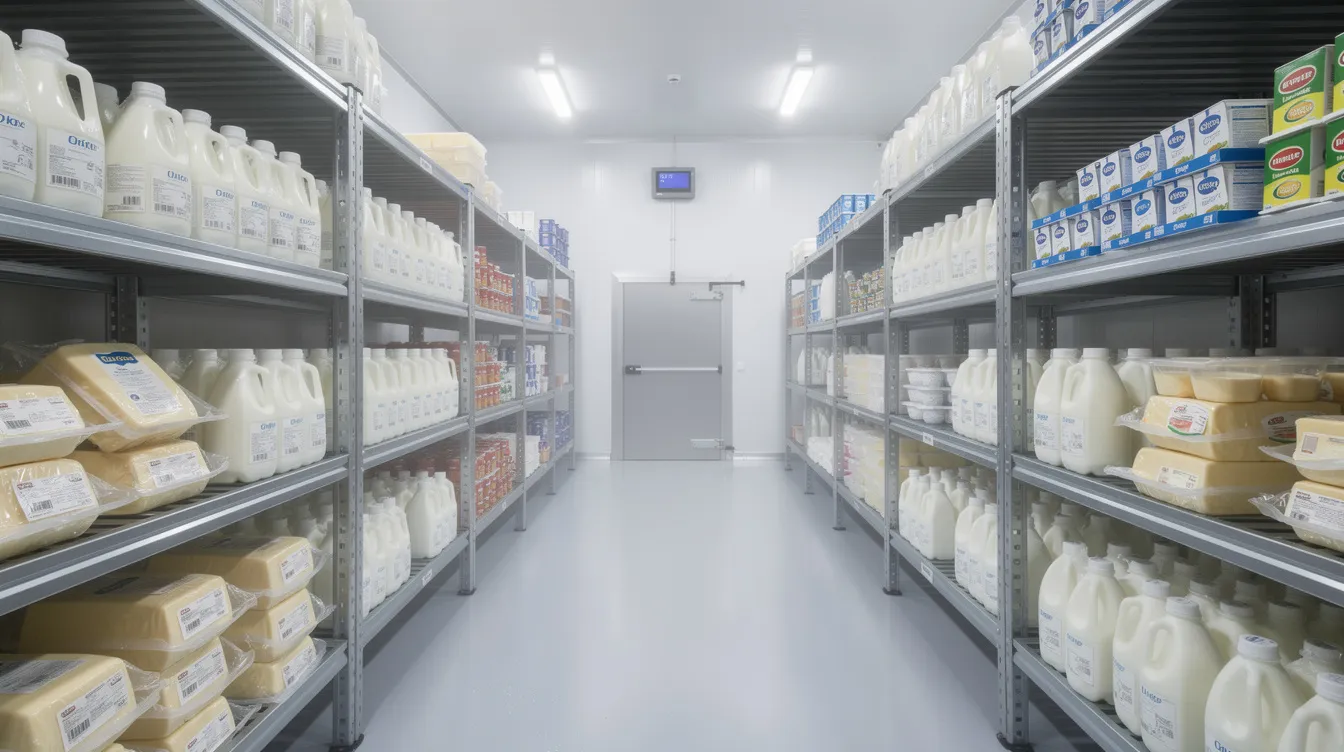
- Finished product cold rooms (typically 2–6°C depending on product)
- Refrigerated vehicles for distribution
Cold room design must differentiate between raw milk storage, fermented product storage and paneer or other value-added dairy items, each with different temperature and humidity needs. The DPR should clearly specify cold store capacity, insulation standards and estimated energy consumption.
The Cold Storage & Cold Chain Requirements for Value-Added Dairy Products article covers in-depth cold chain design, energy costing and government incentive schemes for integrated cold chain infrastructure.
- Cold chain reliability directly impacts spoilage rates, product returns, working capital blockage and ultimately DSCR and loan repayment capacity.
Raw Milk Procurement & Other Key Inputs
Milk procurement strategy is the backbone of any dairy processing business in India. It must be aligned with plant capacity, product mix and the quality requirements of fermented milk products.
Procurement models include:
- Direct farmer collection through village-level societies and milk collection centres
- Procurement through bulk milk coolers (BMCs)
- Tie-ups with existing cooperatives or milk producers
- Sourcing from large dairy farming operations at pre-agreed quality and pricing terms
Quality assurance in dairy includes testing for fat, SNF, acidity and antibiotic residues. Poor raw milk quality reduces yields, disrupts fermentation and increases food safety risk. Milk procurement strategies must consider seasonal availability and quality specifications-lean season often brings higher procurement prices and lower fat content.
Auxiliary raw materials include:
- Starter cultures (mesophilic, thermophilic, probiotic strains)
- Stabilizers and emulsifiers where permitted under regulatory standards
- Sugar, flavours, fruit preparations, salt
- Packaging materials (cups, films, cartons, bottles)
- Cleaning chemicals and lab reagents
Incorrect estimation of raw milk cost is one of the main reasons dairy project profitability projections deviate from actual performance. DPR financial projections must incorporate realistic procurement price escalation over the projection period.
Quality Control, Food Safety & Regulatory Compliance
From a lender’s perspective, product quality and compliance with food safety regulations directly impact long-term marketability, brand value and risk profile of the dairy processing business.
Basic quality checks include:
- Raw milk testing: fat, SNF, MBRT or plate count, adulterant screening, antibiotic residues
- In-process monitoring: pasteurisation temperature verification, pH tracking during fermentation, hygiene indicators
- Finished product testing: microbiological quality, shelf life validation, packaging integrity checks
Fermented products have strict requirements for microbiological quality and shelf life. HACCP is essential for ensuring food safety in dairy processing, and dairy plants must have a documented food safety management system to meet regulatory compliance. Dairy product formulations should comply with applicable regulatory standards such as those from FSSAI in India.
Promoters should account for an adequately equipped laboratory in the project cost. Standard operating procedures covering cleaning, personal food hygiene, traceability, batch coding and product recall should be described in the DPR under operations planning.
Compliance with food safety standards is mandatory for dairy processing-not just for regulatory reasons but because market access increasingly depends on verifiable quality systems.
Project Cost Structure for a Fermented & Value-Added Dairy Plant
Project cost for a value-added dairy processing unit comprises land and site development, factory building, plant and machinery, utilities, pre-operative expenses and margin for working capital.
Major fixed-asset components include:
- Land acquisition or lease deposits and site development
- Factory building and civil works (with hygienic finishes, drainage)
- Milk processing equipment and fermentation systems
- Packaging machinery and material handling equipment
- Cold rooms and refrigeration equipment
- Utilities: boilers, generators, water treatment plant
- Vehicles for milk collection and product distribution
- Laboratory and office equipment
Soft costs include preliminary and pre-operative expenses, interest during construction, contingency provision, consultancy fees and statutory approvals.
For reference, initial investment for a small dairy unit can start at ₹10–15 lakhs for micro-scale setups. Total capital investment for a 50,000 ltr/day integrated unit is approximately ₹17.25 crores. A 50 KLPD multi-product dairy plant producing milk, curd, paneer and ghee may cost around ₹35 crore.
The Value-Added Dairy Plant Project Cost & Means of Finance article discusses typical cost breakdowns and capital budgeting considerations in detail.
Accurate project cost estimation is fundamental for term loan sizing, depreciation calculation and realistic DSCR projections. A dairy project report should include a detailed breakdown of capital and operating expenditures.
Means of Finance and Capital Structure
From a CA’s perspective, an appropriate mix of promoter contribution and bank finance is critical for both bank comfort and project resilience. Over-leveraging weakens DSCR, while excessive equity depresses ROI.
Possible sources of funds:
- Equity capital and promoter’s own funds (typically 30–40% of total project cost)
- Term loan from banks or financial institutions (typically 60–70% of eligible fixed assets)
- Unsecured loans or quasi-equity from promoter group
- Financial assistance through eligible subsidy components where applicable
Lenders for MSME dairy projects generally expect promoter contribution of at least 25–35%, though the final structure depends on project risk, collateral availability and promoter profile. The DPR should include a clear means of finance table tying total project cost to identified funding sources, with realistic timelines for fund tie-up and drawdown.
Revenue Model, Pricing Strategy & Market Positioning
Revenue for a value-added dairy plant is driven by product-wise sales volume multiplied by net realization after trade margins and discounts.
Primary product revenue streams include:
- Packaged curd/dahi in cups and pouches
- Yogurt (plain and flavored)
- Greek yogurt cups
- Lassi and other fermented dairy beverages
- Probiotic dairy products
- Paneer blocks and retail packs
- Institutional bulk packs
Distribution channels span general trade (kirana and small retail), modern trade (supermarkets), HoReCa and food service, institutional bulk buyers and potentially private label manufacturing for other brands. Exports of dairy products are growing at 25% annually, adding another potential revenue stream for quality-certified processors.
Product positioning-economy versus premium, regional versus pan-India brand-influences pricing power, marketing spends and volume build-up. Market research and competitive analysis must be reflected in revenue assumptions.
The Value-Added Dairy Products Revenue Model & Market Strategy article provides detailed guidance on market growth strategies and distribution planning.
In financial projections, revenue assumptions must clearly specify expected selling prices, annual price escalation, trade margins and GST treatment rather than stating only total turnover figures.
Operating Cost Structure and Milk Processing Economics
Operating costs in a fermented and value-added dairy project are dominated by raw milk procurement but also include several other significant cost heads affecting plant economics and profitability.
Major variable costs:
- Raw materials (raw milk represents 80–85% of operating costs for basic processed milk products)
- Cultures and ingredients
- Sugar, flavours and fruit preparations
- Packaging materials
- Utilities (power, steam, water, refrigeration)
- Consumables and logistics including refrigerated distribution
Fixed and semi-fixed costs:
- Salaries and wages
- Repairs and maintenance
- Plant overheads and quality control expenses
- Selling and marketing expenses
- Administration, insurance and establishment costs
Operating costs in dairy include raw materials, utilities, labor and maintenance. From a project viability perspective, promoters should pay particular attention to packaging costs, trade discounts and cold chain logistics, which are often underestimated in initial DPRs.
Proper classification of costs into fixed and variable categories is essential for meaningful break-even analysis and sensitivity assessment in the DPR.
Profitability & Break-Even Analysis
The contribution margin for value-added milk products-selling price minus variable cost per unit-determines how quickly fixed costs are covered and profit begins to accumulate.
Key profit metrics analysed in a dairy products manufacturing plant DPR:
- Gross margin
- EBITDA (stabilised EBITDA margins around 14% are reported for integrated dairy projects)
- Net profit after tax
- Cash accruals (PAT plus depreciation)
The expected profit margin can reach 25–35% after the first year for well-managed value-added dairy operations. Break-even point for a dairy processing unit can be as low as 21% of installed capacity in some configurations, while other examples show break-even at approximately 55% utilisation depending on product mix and cost structure.
For lenders, sustainable profitability at realistic capacity utilisation is more important than very high margins projected on paper. The Value-Added Dairy Plant Profitability & Break-Even Analysis article provides numerical illustrations of dairy processing plant profitability across different scales.
Results depend on actual procurement prices, selling prices, capacity utilisation and operating efficiency-no fixed ROI should be promised.
Financial Projections & Statements Required in a Bankable DPR
A fermented dairy products plant project report must translate technical and market assumptions into structured financial projections acceptable to banks and financial institutions.
Key projected financial statements typically required:
- Projected Profit & Loss account (7–10 years)
- Projected Balance Sheet
- Cash Flow Statement
- Fund Flow Statement where applicable
Supporting schedules include:
- Fixed asset and depreciation schedule
- Term loan repayment and interest schedule
- Working capital assessment
- Sales and production schedule
- Cost of production statement
- Break-even statement
Banks also review key ratios including DSCR, current ratio, debt-equity ratio, coverage ratios, profitability ratios and overall project IRR. The Value-Added Dairy Plant Financial Projections for DPR article explains format and structure requirements.
Projections should be transparent in their assumptions and preferably accompanied by sensitivity scenarios rather than only one optimistic base case.
Working Capital Requirement for Dairy Processing Operations
In my experience while preparing project reports, working capital is often underestimated for fermented and value-added dairy projects. The need to hold raw milk, ingredients, packaging and finished products in refrigerated conditions creates a capital-intensive working cycle.
Main working capital components:
- Raw milk and ingredient inventory (daily procurement)
- Packaging material stock
- Finished goods inventory in cold rooms and at distributors
- Trade receivables from buyers (modern trade credit can extend to 30–60 days)
- Minimum cash balances for daily operations
The working capital cycle in dairy processing must consider product shelf life and rate of stock rotation. Slow-moving SKUs can quickly strain liquidity and increase spoilage costs.
The Working Capital Requirement for Value-Added Dairy Products Plant article offers structured working capital computation frameworks.
DPRs should present month-wise or season-wise working capital needs for the first year, aligned with capacity utilisation ramps.
DSCR & Loan Repayment Capacity
DSCR (Debt Service Coverage Ratio) measures the ratio of cash available for servicing debt to term loan obligations-interest plus principal-for each year. It is the single most scrutinised metric in bank appraisal.
Components used for DSCR calculation:
- Net profit after tax
- Depreciation (non-cash charge added back)
- Interest on term loan
- Compared against: term loan principal repayment + interest for the year
From a lender’s perspective, a sustainable DSCR over the entire loan tenure is crucial. Banks generally expect DSCR of at least 1.25 in early years, rising as the plant stabilises, with an average over the loan tenure of 1.5 or above.
Moratorium period, repayment tenure and realistic capacity utilisation assumptions strongly influence annual DSCR values. The DSCR & Loan Repayment Capacity for Value-Added Dairy Project article covers DSCR computation and interpretation specifically for dairy projects.
Projections showing very tight DSCRs in initial years may require reworking of project cost, means of finance or repayment structure before approaching banks.
Bank Loan & Project Finance for Value-Added Dairy Plants
Dairy plant project finance in India is typically structured as a combination of term loan for fixed assets and working capital limits for operations, subject to bank appraisal of the complete project.
Key aspects banks examine:
- Promoter background, financial strength and experience in dairy processing or related food industry sectors
- Quality of the detailed project report
- Technical feasibility and milk procurement strategy
- Market potential and competitive positioning
- Project cost and means of finance with adequate promoter contribution
- Projected profitability and DSCR over loan tenure
Security typically includes primary charge on project assets, with possible collateral and personal guarantees depending on bank policies. Timely approvals, a clear implementation schedule and realistic contingency margins strengthen lender confidence.
The Bank Loan & Project Finance for Value-Added Dairy Products Plant article discusses the appraisal and documentation process in further detail.
Promoters should approach banks with complete DPRs, CMA data and necessary supporting documents rather than fragmented notes or only machinery quotations.
Term Loan Assessment & Appropriate Loan Sizing
Term loan assessment involves aligning eligible fixed assets with reasonable promoter contribution and projected cash flows so that repayment obligations remain manageable throughout the loan tenure.
Factors influencing term loan quantum:
- Total project cost and asset-wise eligibility
- Margin norms and collateral security
- Expected cash accruals from the dairy business requirements
- Asset life relative to proposed repayment period
Loan tenure and moratorium should reflect the gestation period for plant stabilisation, market development and gradual capacity ramp-up. One of the areas promoters often underestimate is the need for adequate provision for interest during construction and initial under-utilisation of capacity in the first operating year.
The Term Loan Assessment for Value-Added Dairy Manufacturing Plant article explains how lenders appraise term loan proposals for dairy plants.
DPRs should show clearly how term loan instalments align with projected cash accruals and DSCR, instead of mechanically assuming equal repayments without reference to actual cash generation.
Project Feasibility & Viability Assessment
A fermented and value-added dairy products plant DPR must demonstrate technical, market, financial and operational feasibility before seeking bank finance.
Technical feasibility: appropriateness of dairy technology, suitability of machinery for planned product mix, adequacy of utilities, reliability of milk procurement arrangements and cold chain for the proposed milk processing plant. A project report for a dairy manufacturing plant should demonstrate technical feasibility clearly.
Market feasibility: local and regional growing demand for yogurt, dahi, lassi, paneer and probiotic dairy products; competitive landscape; pricing pressures; and realistic distribution reach. India’s increasing population drives milk production growth, but demand must be validated at the local level through proper market research.
Financial feasibility: profitability, cash flows, DSCR, break-even analysis, projected ROI and IRR. Financial analysis assumptions must be grounded in realistic market and cost data rather than aspirational targets.
Operational feasibility: availability of skilled manpower, logistics and cold chain, management bandwidth and systems for quality assurance, hygiene control and material handling.
The Value-Added Dairy Plant Feasibility & Project Viability article provides a structured framework for conducting comprehensive feasibility studies.
ROI, IRR, Payback Period & Sensitivity Analysis
Investors in value-added dairy projects typically evaluate returns using ROI (Return on Investment), IRR (Internal Rate of Return) and payback period, alongside DSCR and break-even metrics.
- ROI: average annual profit divided by total capital investment
- IRR: the discount rate at which the NPV of projected cash flows becomes zero
- Payback period: the time taken to recover the initial investment from net cash flows
The rate of return for a dairy processing unit can reach as high as 104% in certain configurations, though actual returns vary significantly based on capacity, product mix, market conditions and operating efficiency. These indicators should be evaluated together rather than in isolation.
Key risks in dairy processing include milk price volatility and cold chain failures. Sensitivity analysis must test scenarios such as:
- Raw milk procurement cost increasing by 5–10%
- Selling price pressure from competitors
- Power tariff increases affecting refrigeration costs
- Lower-than-expected capacity utilisation
- Rising demand for packaging materials pushing costs up
The ROI, IRR, Payback & Sensitivity Analysis of Value-Added Dairy Plant article guides promoters through detailed financial modelling.
Banks and investors generally appreciate balanced projections with clearly presented downside sensitivity rather than a single optimistic base case.
Importance of a Bankable Detailed Project Report (DPR)
A dairy products manufacturing plant DPR is more than a formality-it is the primary decision document for both promoters and lenders, linking technical design, market analysis and financial viability into one integrated assessment.
A strong DPR follows this logical flow:
Milk procurement assumptions → product mix and capacity → manufacturing process and machinery → infrastructure and cold chain → operating costs → revenue model → working capital → profitability → DSCR and returns → risks and sensitivity.
From a project viability perspective, simply inflating selling prices or capacity utilisation percentages to make numbers work is risky and usually flagged by bank credit teams during appraisal. A bankable DPR anticipates lender queries on milk sourcing, distribution strategy, cold chain management, competition and management capability.
ProjectReportBank.com focuses on integrating these aspects into practical, finance-ready project reports for fermented and value-added dairy plants in India.
Checklist: What a Dairy Products Manufacturing Plant DPR Should Cover
This checklist gives entrepreneurs a quick reference of what a Fermented & Value-Added Dairy Products Manufacturing Plant Project Report must typically include:
- Executive summary
- Promoter and management profile
- Industry overview and market trends analysis
- Milk production and procurement analysis
- Proposed product range and market positioning
- Plant capacity and scale justification
- Manufacturing process description
- Plant layout and hygienic design
- Land and building requirements
- Machinery and equipment specifications
- Utilities requirement and sizing
- Quality control systems and food safety plan
- Cold storage and cold chain plan
- Project cost (total capital investment breakdown)
- Means of finance
- Projected P&L, balance sheet and cash flow (7–10 years)
- Working capital assessment
- DSCR and loan repayment schedule
- Break-even analysis
- ROI, IRR and payback period
- Risk and sensitivity analysis
- Implementation schedule
Common Mistakes in Planning Fermented & Value-Added Dairy Projects
In my experience reviewing dairy project reports, several recurring planning errors can undermine otherwise promising projects:
Procurement and product mistakes:
- Finalising plant capacity before confirming sustainable milk procurement from milk producers within a viable radius
- Choosing a very narrow product range (e.g., only one SKU of yogurt) without diversification
- Ignoring health status and quality testing of raw milk supply
Financial planning mistakes:
- Overly aggressive capacity utilisation assumptions in Year 1 (assuming 80–100% from day one)
- Unrealistic selling price assumptions disconnected from competitive market conditions
- Ignoring seasonal demand variations and price fluctuations
- Underestimating working capital needs, especially for refrigerated finished goods inventory and distributor credit
- Ignoring product returns, expiry losses and spoilage in the operating cost model
Technical mistakes:
- Incorrect machinery sizing relative to actual product throughput
- Lack of redundancy in critical utilities (refrigeration, power backup)
- Ignoring effluent treatment requirements and environmental compliance costs
- Inadequate laboratory and quality assurance provision
Treating financial projections merely as a bank compliance exercise instead of a management tool can lead to unanticipated cash flow stress once the plant is commissioned.
Promoters should subject their DPR to an independent financial and technical review before making final investment decisions.
How CA Manish Gugliya & ProjectReportBank.com Can Assist
CA Manish Gugliya is a Chartered Accountant and project finance consultant with experience in dairy processing, food industry and other manufacturing projects across India.
Core services include:
- Preparation of customised Fermented & Value-Added Dairy Products Plant DPRs
- Bank loan-ready project reports with CMA data
- Financial projections, DSCR and loan repayment analysis
- Working capital planning and assessment
Investment evaluation services:
- Project cost assessment and means of finance structuring
- Profitability analysis and break-even analysis
- ROI, IRR and payback period analysis
- Sensitivity and risk assessment tailored to specific plant capacity, product mix and location
- Advisory on aligning project assumptions with realistic ground conditions for dairy processing businesses in India, including business requirements for milk collection, processing methods and distribution
If you are an entrepreneur, MSME, cooperative or investor planning a value-added dairy products plant, reach out to obtain a customised DPR based on your proposed capacity, location, milk procurement model, product mix and financing plan.
Conclusion: Integrating Technology, Finance & Market Strategy
The success of a fermented and value-added dairy project depends on careful integration of milk procurement, product mix, plant capacity, processing technology, cold chain, market strategy and project finance. No single element-whether advanced dairy technology, strong milk collection networks or favourable industry trends-can compensate for weakness in the others.
A robust Fermented & Value-Added Dairy Products Manufacturing Plant Project Report links dairy processing decisions with realistic financial analysis, DSCR, break-even, ROI and IRR in a way that satisfies both promoters and lenders. This hub article connects readers to specialised resources on yogurt, Greek yogurt, curd/dahi, lassi, probiotic dairy products, paneer, machinery, manufacturing process, project cost, profitability, working capital, bank loan, feasibility and sensitivity analysis.
For promoters serious about building a sustainable dairy processing business, a customised, realistic DPR is the essential first step. Contact CA Manish Gugliya and ProjectReportBank.com for a detailed project report and financial model that reflects your specific business vision, risk appetite and the key factors driving your project.
Frequently Asked Questions (FAQ)
What is meant by a fermented and value-added dairy products manufacturing plant?
This type of plant processes raw milk into higher-value items like yogurt, Greek yogurt, curd/dahi, lassi, probiotic drinks and paneer using controlled dairy processing, fermentation by lactic acid bacteria, hygienic packaging and cold chain distribution. Such plants are designed to achieve better realization per litre of milk compared with selling only pasteurized milk or packaged milk, while meeting the rising demand from modern retail, institutional buyers and the broader food industry. India aims to increase milk production to 135 million tonnes, and value-added processing is a key part of that ambition for the organized dairy sector.
Can yogurt, curd, lassi and paneer be produced in one integrated facility?
Yes. Many Indian dairy processing plants are designed as integrated value-added milk product facilities where common infrastructure-milk reception, pasteurisation, utilities, cold chain-supports multiple product lines. Dedicated equipment such as fermentation tanks, incubation rooms, paneer vats and presses, and product-specific fillers are planned around a common milk processing backbone. This approach optimizes total capital investment, improves overall plant utilisation and supports a diversified revenue model. Products such as powdered milk, whole milk powder, skim milk powder and fat soluble vitamins-enriched items can also be considered depending on scale.
How is the capacity of a fermented & value-added dairy plant selected?
Capacity is selected based on realistic milk procurement potential, expected market demand for value-added dairy products, availability of utilities and the promoter’s ability to invest-not merely on theoretical market size. Factors like the number of active milk producers within the procurement radius, seasonal variations in milk produced, competition from the organized dairy sector, and distribution infrastructure all play a role. DPRs typically show phased capacity utilisation ramp-up. Consulting the dedicated dairy plant capacity planning resource is recommended before finalising scale. The National Dairy Development Board and World Trade Organization standards may also influence processing capacity for export-oriented units.
What level of working capital is usually needed for a dairy processing project?
Working capital requirements depend on plant scale, product mix, credit terms and inventory levels, but typically cover daily raw milk procurement, ingredients, packaging material stock, finished stock held in cold storage, and receivables from buyers. Due to the perishable nature of fermented and processed dairy products-which must be stored in cold rooms and distributed through refrigerated logistics-dairy projects tend to be working-capital intensive. Skimmed milk, toned milk and heat treated products may have slightly different inventory profiles. A separate, detailed working capital assessment with month-wise projections for the first year is essential in the DPR.
Why is a detailed project report critical before seeking a bank loan for a dairy plant?
Banks in India rely heavily on the dairy products manufacturing plant DPR to understand the complete picture: technical design, milk procurement strategy, market potential, project cost, means of finance, profitability, DSCR and risk profile. A well-prepared fermented and value-added dairy products plant DPR reduces back-and-forth with lenders, speeds up appraisal, and helps promoters themselves evaluate whether the project is financially and operationally feasible before committing capital. The human diet is increasingly shifting toward health-conscious choices, making value added products an important human food category-but this market growth must be validated, not assumed. A credible project report backed by proper financial analysis is the foundation for a successful dairy processing project.