Key Takeaways
- An industrial yogurt manufacturing plant is a capital-intensive, automated dairy processing unit that handles milk reception, pasteurization, homogenization, fermentation, filling, cold storage, and refrigerated dispatch at scale.
- A professional Industrial Yogurt Manufacturing Plant Project Report (DPR) integrates technical design, market analysis, project cost, means of finance, financial projections, DSCR, break-even, ROI/IRR, and sensitivity analysis into a single bankable document.
- Plant capacity, product mix (plain dahi, flavoured yogurt, Greek yogurt, probiotic yogurt, drinking yogurt), cold chain infrastructure, and milk procurement strategy are the primary determinants of project viability.
- Profitability depends on interacting variables: milk cost, capacity utilization, packaging economics, cold chain expenses, distributor margins, and product returns; yogurt manufacturing can achieve net margins of 15-30% under favourable conditions.
- No serious promoter should commit capital or approach banks without a detailed, assumption-backed DPR prepared with professional financial modelling and risk assessment.
Industrial Yogurt Manufacturing Plant Project Report; Overview
Selling raw milk generates thin margins. Converting that same milk into branded yogurt, dahi, or Greek yogurt at industrial scale can multiply realization per litre several times over. The yogurt manufacturing sector is one of the fastest-growing segments in India’s dairy industry, driven by rising consumer demand for branded, hygienic, and refrigerated fermented dairy products across organised retail, quick commerce, and institutional channels.
This article on the Industrial Yogurt Manufacturing Plant Project Report is written from the perspective of CA Manish Gugliya, Chartered Accountant and DPR consultant at ProjectReportBank.com. It covers the technical, financial, and regulatory dimensions that promoters, bankers, and investors need to evaluate before committing to industrial yogurt production.
Demand extends across plain dahi and set yogurt (mass market), flavoured and fruit yogurt (premium retail), probiotic yogurt (health-focused consumers), Greek yogurt (protein-conscious segments), and drinking yogurt (convenience). Industrial yogurt manufacturing is capital-intensive, requiring automated dairy processing equipment, continuous cold storage, quality control systems, and a structured distribution network. A comprehensive industrial yogurt manufacturing plant project report serves as a blueprint for feasibility and compliance, integrating project cost, means of finance, financial projections, DSCR, sensitivity analysis, and risk assessment into a single decision document.
What Is an Industrial Yogurt Manufacturing Plant?
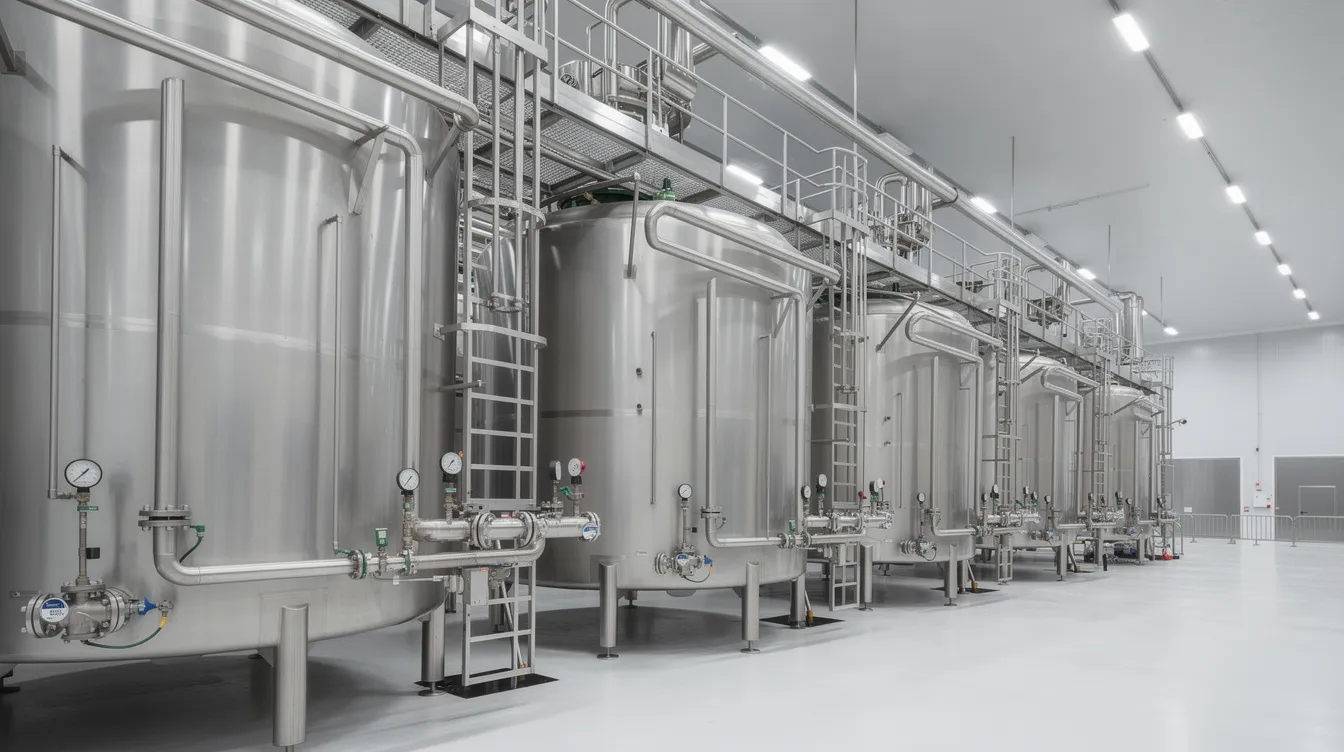
An industrial yogurt manufacturing plant is a medium-to-large-scale automated dairy unit processing several thousand to tens of thousands of litres of milk per day into finished yogurt products. Three levels of yogurt production exist:
- Household / artisanal dahi: Manual preparation, no standardization, no cold chain. Manual yogurt production is prone to contamination and inconsistency.
- Small commercial dairy kitchen: Basic equipment, limited SKUs, local distribution.
- Industrial yogurt production plant: CIP (Clean-In-Place) systems, PLC/SCADA controls, automatic filling, integrated cold chain, batch traceability.
At industrial scale, the manufacturing process follows controlled steps: milk reception, filtration, clarification, milk standardization of fat and SNF, homogenization, pasteurization / heat treatment, cooling to inoculation temperature, starter culture addition, controlled fermentation, rapid cooling, mixing/flavour addition, filling and sealing, yogurt cold storage, and refrigerated dispatch. Hygiene, temperature control, and automation level are the main differentiators separating industrial from manual operations.
An industrial yogurt production plant can be standalone or part of an integrated dairy processing project.
Types of Yogurt Products That Can Be Manufactured
Yogurt production can involve varied products such as plain, flavoured, and probiotic yogurts. Capacity, machinery configuration, and plant economics depend heavily on the selected product mix. A diversified curd and yogurt manufacturing plant can support cup yogurt, Greek yogurt, flavoured yogurt, probiotic yogurt, and drinking yogurt lines from the same core infrastructure, though each product type affects realization per kg, cold storage requirements, shelf life, and working capital.
Plain Set Yogurt
Set yogurt is fermented directly in its retail packaging container, forming a firm gel structure. It serves as the volume driver for many industrial curd manufacturing plant and dahi manufacturing plant operations due to strong mass-market daily consumption across India. Plain set yogurt uses basic starter cultures (primarily Lactobacillus bulgaricus and Streptococcus thermophilus), has shorter fermentation time, and moves at relatively lower price points with brisk turnover. A cup yogurt manufacturing plant design must account for high throughput of small cups per hour and a reliable automatic cup filling and sealing machine line.
Stirred Yogurt
Stirred yogurt is fermented in bulk tanks, then broken, stirred, and filled into cups or tubs, resulting in a creamier, spoonable texture. The industrial yogurt manufacturing process for stirred variants needs fermentation tanks, agitators, and buffer storage before the filling stage. Viscosity targets, permitted stabilizers, and mixing speeds influence machinery selection and yogurt production process flow chart design. Stirred yogurt is well-suited for flavoured or mildly sweetened products aimed at urban consumers.
Flavoured Yogurt
Flavoured yogurt contains added sugar and fruit materials, with variants like mango, strawberry, vanilla, chocolate, and regional flavours (elaichi, kesar). A flavoured yogurt manufacturing plant line requires additional mixing tanks and dosing systems for sugar syrup, stabilizers, and other additives. Flavoured SKUs achieve higher realization and margins but demand more marketing spend and strong cold chain placement in modern trade.
Fruit Yogurt
Fruit yogurt incorporates fruit pieces or fruit preparations (mango, strawberry, blueberry, tropical mixes) either blended in or layered. Production requires fruit preparation kettles, pasteurizers, and gentle mixing systems to avoid damaging fruit pieces. Premium fruit yogurts support strong brand positioning and higher price points, improving the plant’s overall revenue mix.
Probiotic Yogurt
Probiotic yogurt contains specific probiotic cultures beyond standard yogurt cultures, with claimed digestive health and gut health benefits, subject to FSSAI regulatory guidelines. A probiotic yogurt manufacturing plant requires careful strain selection, controlled incubation, and stricter cold chain adherence to maintain live cell counts. Probiotic culture cost and viability metrics should be captured accurately in operating cost assumptions within the DPR.
Greek Yogurt and High-Protein Yogurt
Greek yogurt is made by straining regular yogurt to remove whey, producing a thicker texture and higher protein concentration than standard yogurt. The global Greek yogurt market was valued at USD 10.22 billion in 2025 and is expected to reach USD 17.71 billion by 2034. Greek yogurt commands premium pricing due to its higher milk proteins content per serving. A Greek yogurt manufacturing plant requires straining equipment (centrifugal separators, membrane filtration, or cloth bag systems), and DPRs must model the impact of higher milk solids requirement, whey disposal or utilization, and premium positioning on profitability. Gross profit margins for Greek yogurt range from 14-22%.
Drinking Yogurt
Drinking yogurt has a low viscosity for easy consumption, often sweetened and flavoured, packed in bottles or aseptic cartons. Production requires additional homogenization and sometimes UHT treatment with aseptic filling for ambient products. Bottle filling lines and cap sealing machines influence yogurt processing plant machinery cost. Ambient drinking yogurt reduces cold chain intensity but needs higher capital expenditure for sterilization and aseptic technology.
Industrial Dahi / Curd
Many industrial yogurt plants in India also produce bulk dahi and curd for food service, hotels, restaurants, and sweet makers. Dahi has comparatively simple formulation but high quality and hygiene expectations, with strong daily repeat demand and stable demand patterns. Industrial dahi can stabilise plant capacity utilization throughout the year, complementing premium yogurt SKUs. DPR sections should analyse separate pricing, seasonality, and distribution channel considerations for bulk packs (5-20 kg tubs).
Market Potential for Industrial Yogurt Manufacturing in India
India’s yogurt market has been projected to grow at a CAGR of over 20%, driven by urbanization, nuclear families, health-and-wellness positioning, convenience snacking, and growing preference for branded dahi and yogurt across Tier I-III cities. Rising global demand for high-protein dairy products continues to drive yogurt market growth worldwide. Market segmentation focuses on identifying consumer types such as retail and institutional buyers.
Modern trade, e-commerce, and quick commerce platforms have expanded the refrigerated dairy shelf. Institutional demand from QSR chains, hotels, restaurants, airlines, and corporate cafeterias requires consistent industrial yogurt supply in bulk packs. Market analysis should include current price trends and growth forecasts for yogurt products. The food industry’s shift toward fermented dairy products and weight management positioning further supports rapid growth.
Competition from established national and regional key players is intense. A yogurt manufacturing plant feasibility report should use realistic, region-specific demand assumptions and channel-wise volume build-up rather than relying on headline market numbers.
Yogurt Manufacturing Plant Capacity Planning
Capacity is defined in litres of milk processed per day, tonnes of yogurt per day, cups per hour, and number of SKUs. For example, a 10,000 LPD plant might produce multiple pack formats across several product lines.
Key drivers of capacity decisions include:
- Reliable milk production and procurement in the target region
- Realistic market demand and distribution reach
- SKU mix (plain dahi vs value-added yogurt)
- Fermentation cycle time and number of yogurt incubation tanks
- Yogurt filling and packaging machine throughput
- Cold storage space and dispatch vehicle availability
Principles of dairy plant capacity planning and product mix apply here. Over-designed capacity without assured off-take leads to low plant utilization, weak DSCR, and stressed cash flows during initial years.
Raw Materials Required for Yogurt Manufacturing
Raw material planning is central to any yogurt manufacturing plant DPR because milk procurement cost and quality drive both operating expenses and final product quality. Raw material sourcing must include fresh milk, stabilizers, and packaging materials.
Key inputs include:
- Fresh milk (cow and buffalo), cream, skimmed milk, milk powder for standardization
- Sugar, stabilizers and emulsifiers (where permitted), fruit preparations, flavour concentrates
- Starter cultures and probiotic cultures
- Packaging: plastic cups, tubs, bottles, foils, lids, labels, corrugated cartons
The milk procurement strategy should be detailed in the DPR. Quality testing of fat content, SNF, adulteration, and microbial load, along with timely chilling of raw milk, protects yields and profitability. Raw material consumption patterns and seasonal pricing must be modelled carefully.
Industrial Yogurt Manufacturing Process
Yogurt is produced by fermenting pasteurized milk with specific bacteria. The plant’s manufacturing process should involve standardized procedures for raw milk handling and treatment. Here is a typical yogurt production process flow:
- Milk reception and filtration: Incoming fresh milk tested and filtered
- Standardization: Fat and milk solids adjusted to target levels
- Homogenization: Via yogurt homogenizer for texture and culture distribution
- Pasteurization: Milk is heated to about 85°C using yogurt pasteurization equipment
- Cooling to inoculation temperature: Brought down to 41-43°C
- Culture addition: Starter cultures (primarily Lactobacillus bulgaricus and Streptococcus thermophilus) added
- Fermentation: Yogurt fermentation process at industrial scale; fermentation occurs at 41-43°C for 2-3 hours in fermentation tanks
- Post-fermentation cooling: Yogurt is cooled to 15-22°C after fermentation to stop acidity increase
- Mixing / flavour addition: For stirred and flavoured variants
- Filling and sealing: Via yogurt filling and packaging machine
- Cold storage: Finished product held at 4-5°C
- Refrigerated dispatch
For set yogurt, culture-inoculated milk is filled into retail cups before incubation; the gel structure forms inside the package. For stirred yogurt, fermentation occurs in bulk tanks and the product is stirred before filling. Quality control includes monitoring pH levels, lactic acid percentage, and hygiene protocols at each stage. Greek yogurt production requires a fermentation temperature of 41-43°C, followed by straining.
Yogurt Manufacturing Plant Machinery and Equipment
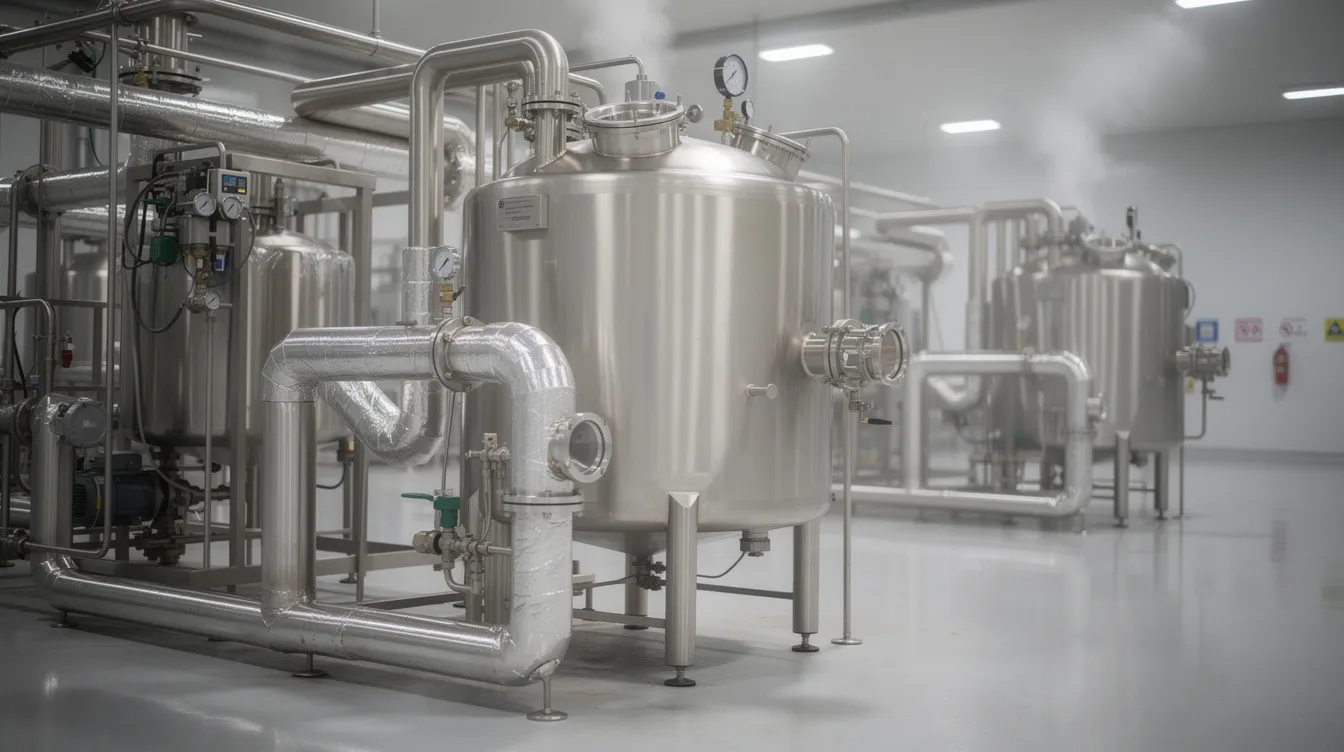
Machinery selection should consider processing equipment such as pasteurizers and homogenizers, aligned with capacity, product range, and automation level. A yogurt machine automates key production stages for consistency. Yogurt processing lines include pasteurization and fermentation units.
Processing equipment:
- Milk reception tanks, chillers, storage tanks
- Cream separators and standardization systems
- Yogurt homogenizer and pasteurizer
- Yogurt fermentation tanks / yogurt incubation tank
- Mixing, blending, and fruit preparation tanks
- CIP systems, pumps, and stainless-steel pipelines
Packaging equipment:
- Automatic cup filling and sealing machine
- Industrial yogurt packaging line for cups, tubs, bottles
- Date coding, check weighers, conveyors
Supporting systems:
- Refrigeration plant, cold room, air compressor
- Steam boiler or hot water generator, water treatment plant
- Electrical panels, PLC controls, backup power
Commercial yogurt machines can cost between ₹2-50 lakh based on capacity and automation. Yogurt processing plant machinery cost and yogurt fermentation tank cost vary by origin (Indian vs imported), stainless-steel grade, and after-sales support. The yogurt processing plant project report should include vendor-backed budgetary quotations.
Land, Building and Factory Layout
From a project finance perspective, lenders look for logical, hygienic, and food-safe factory design. The layout design of a yogurt plant should prevent contamination by zoning clean and raw areas. Functional areas include milk reception, processing block, fermentation area, filling hall, finished goods cold room, dry stores, utilities block, laboratory, staff amenities, and administration.
Linear product flow from raw to finished zones, separate routes for raw milk and finished goods, and adequate drainage are essential. Guidance on dairy plant land, building and utilities provides a detailed reference for promoters. Site preparation, statutory compliance (FSSAI-grade construction, fire safety, ETP), and manpower planning covering technical, operational, and administrative roles must be factored into cost estimates.
Utilities Required for a Yogurt Processing Plant
Yogurt production requires significant energy for pasteurization and refrigeration. Utilities assessment in yogurt plants includes calculations for power, water, and steam requirements. Key utilities:
- Electrical power for drives, refrigeration, and lighting
- Steam or thermal fluid for pasteurization and CIP hot water
- Chilled water and brine for process cooling
- Potable and process water, compressed air
- Fuel for boilers and backup generators
- Effluent treatment plant for dairy wastewater
Operating expenses account for 62-73% of total costs in yogurt plants, with utilities representing 5-9% of that. The DPR should include a utility balance summarizing kW, tonnes of refrigeration, boiler capacity, and daily water requirement for banker appraisal.
Cold Chain Requirement for Yogurt Manufacturing
Cold chain infrastructure is a non-negotiable component of any commercial yogurt manufacturing plant. Fresh yogurt shelf life in India is often 10-21 days, and every hour of temperature abuse reduces that window.
Cold chain elements include:
- Blast/rapid cooling chambers post-fermentation
- Finished goods cold rooms at 2-5°C
- Refrigerated marshalling and dispatch areas
- Refrigerated vehicles or insulated vans
- Distributor-level and retailer display refrigeration
Cold chain failures increase product returns, write-offs, and working capital blockage. Cold chain capital expenditure must be captured separately in the yogurt plant project cost, and its running cost (electricity, maintenance, diesel for reefer units) should appear as a separate line in operating expenses. In a professionally prepared Industrial Yogurt Manufacturing Plant Project Report, cold chain design is treated both as a technical and a financial consideration impacting DSCR and break-even.

Packaging Options for Industrial Yogurt
Packaging decisions affect industrial yogurt plant setup cost, machinery configuration, brand positioning, and working capital. Key formats include plastic cups (80-200 g), family tubs (400-1,000 g), institutional buckets (5-20 kg), PET/HDPE bottles for drinking yogurt, and pouches for dahi.
Premium Greek and flavoured yogurts often require high-quality printed cups and lids, raising unit packaging cost but supporting premium pricing. The DPR should model packaging cost per kg, impact on contribution margin, and implications for the production line configuration and product innovation strategy.
Yogurt Manufacturing Plant Project Cost
There is no single “standard” yogurt manufacturing plant cost in India. Cost varies by production scale, automation, product range (including Greek and probiotic lines), and location. Initial investment for a yogurt plant can exceed ₹15 lakh for even the smallest commercial setups; medium-to-large plants run into several crores. The initial investment is significantly high due to automation requirements at industrial scale. Yogurt plant capital costs include raw materials procurement infrastructure and technology.
Major capital expenditure heads:
- Land, site development, factory building
- Yogurt manufacturing plant machinery, packaging lines
- Refrigeration plant, cold storage, utilities
- ETP, laboratory, vehicles, office equipment
- Pre-operative expenses, contingency, margin for working capital
The dairy plant project cost and means of finance framework provides a broader structure for project cost assessment. Contingency, interest during construction, and margin money for working capital are often under-estimated but must be included for a realistic total cost presentation to banks.
Means of Finance for a Yogurt Manufacturing Project
A typical financing structure for an automatic yogurt manufacturing plant includes promoter equity, unsecured loans from promoters or associates, a term loan from a bank or financial institution, and possible incentives or subsidies under state or central schemes.
Banks assess the project’s total cost and means of finance together. Under-capitalised projects with very low promoter contribution face difficulty in sanction. Appropriate debt-equity ratio, realistic repayment period, and adequate margin for working capital are essential. CA Manish Gugliya assists promoters in structuring yogurt plant project finance and preparing a yogurt manufacturing project report for bank loan, but loan approval depends on the lender’s independent assessment.
Working Capital Requirement for Yogurt Manufacturing Plant
Working capital is the lifeblood of a yogurt processing plant. Fresh milk must be purchased daily (often against immediate payment) while distributors and institutional buyers may receive 15-45 days credit, creating a structural working capital gap.
Major components include:
- Raw milk, cream, and ingredient inventory
- Packaging material stock
- Finished goods in cold storage
- Receivables from distributors and institutions
- Cash for logistics, marketing, salaries, and electricity
A month-wise working capital assessment for the first year and peak requirement calculation is useful for lender appraisal. The framework described in the working capital requirement for dairy manufacturing article is directly applicable to yogurt plants.
Revenue Model and Product Mix
Revenue for an industrial yogurt production plant comes from multiple SKUs: plain dahi, plain yogurt, flavoured and fruit yogurts, probiotic and Greek yogurts, drinking yogurt, and institutional bulk packs. Monthly revenue for medium-scale yogurt production ranges from ₹3 lakh to ₹7 lakh, scaling up with capacity and product mix.
A balanced product mix improves average realization per kg without compromising capacity utilization. Insights from dairy plant revenue and product mix strategy are relevant here. Channel strategy (general trade, modern trade, institutional, quick commerce) affects pricing, margins, distribution costs, marketing spends, and credit period assumptions. SKU-wise selling price and volumes should feed into consolidated yogurt manufacturing plant financial projections.
Yogurt Manufacturing Plant Profitability
Profitability in an industrial yogurt manufacturing plant depends on multiple interacting variables, not only gross sales revenue. Yogurt manufacturing can achieve net margins of 15-30% under favourable conditions, but this range varies with execution quality and market dynamics.
Primary profitability drivers: milk procurement cost and seasonal variation, milk solids recovery, process yield, product realization, capacity utilization, packaging cost, refrigeration and energy cost, distributor margins, marketing expenses, stock returns, expiry losses, and product mix (share of Greek and probiotic SKUs). The dairy plant profitability and break-even analysis framework can be adapted for profit analysis in yogurt manufacturing.
Break-Even Analysis
Break-even analysis separates fixed costs (salaries, depreciation, interest, minimum utility charges) from variable costs (milk, ingredients, packaging, variable power, distribution costs). Contribution margin per unit minus variable costs determines how many units must be sold to cover fixed costs.
During initial years, plants may operate at 40-60% capacity, delaying break-even unless marketing and distribution scale up quickly. Break-even should be tested under multiple price and milk cost scenarios during DPR preparation. This approach aligns with the methodology described in the break-even analysis for dairy manufacturing reference.
Financial Projections for Yogurt Manufacturing Plant DPR
A well-structured financial model underpins any yogurt manufacturing plant DPR and yogurt manufacturing project report for bank loan applications. Financial projections should cover capital costs, operational costs, and profitability statements over a 7-10 year horizon.
Key statements include: production and capacity utilization schedule, sales projections by SKU, raw material consumption, manufacturing expenses, employee cost, administrative expenses, selling and distribution expenses (including distribution costs), EBITDA, depreciation, interest, PBT, PAT, cash flow, projected balance sheet, and expenditure projections. The financial projections for a dairy project DPR article provides a parallel guide to financial model logic. All assumptions must be internally consistent and documented for bank appraisal.
DSCR and Loan Repayment Capacity
Debt Service Coverage Ratio (DSCR) measures cash available for debt servicing (profit after tax plus depreciation plus interest) divided by total annual debt obligations (interest plus principal repayment). From a lender’s perspective, both average DSCR and minimum DSCR across the projection period are evaluated.
Banks typically expect DSCR above a defined threshold (often 1.25x or higher). Aggressive repayment schedules can depress DSCR and strain liquidity. The DSCR and loan repayment capacity resource covers dairy project DSCR analysis in detail. DSCR should be re-checked under sensitivity scenarios as part of the yogurt manufacturing plant financial feasibility assessment.
Term Loan Assessment for Yogurt Manufacturing Plant
Banks appraise a yogurt manufacturing plant term loan by combining technical, market, financial, and promoter-level assessment. Key appraisal aspects:
- Promoter profile, experience, and financial track record
- Detailed project cost, means of finance, and promoter contribution
- Technical feasibility (machinery quotations, layout, utility balance)
- Market feasibility (demand/supply analysis, distribution channel plan)
- Projected profitability, DSCR, break-even, and working capital
- Collateral/security and compliance with regulatory norms
Lenders may benchmark the project against comparable dairy processing cases and expect a coherent yogurt manufacturing business plan. The dairy plant term loan assessment article provides a reference for bank term loan appraisal. A strong, bankable DPR improves credit evaluation quality but does not guarantee sanction.
ROI, IRR and Payback Period
Return on Investment (ROI) measures net returns relative to total investment. Internal Rate of Return (IRR) is the discount rate at which net present value of project cash flows equals zero; higher IRR relative to cost of capital indicates more attractive projects. Net present value itself provides the absolute rupee surplus or deficit of a project’s cash flows discounted at the required rate.
Payback period shows how many years it takes to recover the initial investment from net cash inflows, though it ignores cash flows after payback and time value of money. These metrics are outcomes of detailed projections and sensitivity tests in the yogurt manufacturing plant DPR, not predetermined numbers. For deeper analysis, the ROI, IRR and sensitivity analysis framework is relevant.
Sensitivity Analysis for Yogurt Manufacturing Project
Sensitivity analysis is a standard tool in professional dairy manufacturing project feasibility studies. Sensitivity analysis should assess risks related to raw material price volatility and market demand shifts. Typical scenarios include:
- Increase in milk procurement price by 5-15%
- Lower-than-expected selling price realization
- Lower capacity utilization (e.g., 50% instead of projected 70%)
- Higher packaging cost, electricity, or refrigeration tariffs
- Longer credit period to trade partners
For each scenario, review impact on EBITDA, PAT, cash flow, DSCR, break-even point, and payback period. Sensitivity analysis identifies critical risk areas and informs investment decisions on pricing strategy, procurement contracts, and financial structuring.
Key Risks in an Industrial Yogurt Manufacturing Plant
Despite strong consumer demand, industrial yogurt projects carry commercial, operational, and financial risks that should be transparently addressed in any bankable DPR.
| Risk Category | Examples | Mitigation |
|---|---|---|
| Procurement | Milk quality, quantity, seasonal availability | Diversified sourcing, long-term contracts |
| Product | Expiry, returns, microbial contamination | Robust QC, cold chain maintenance |
| Market | Competition, price discounting, distributor dependency | Differentiated SKUs, multi-channel strategy |
| Financial | Low utilization, cost overruns, working capital stress | Conservative projections, adequate contingency |
| Regulatory | FSSAI changes, environmental compliance | Proactive compliance, professional advisory |
Effective project management includes a detailed implementation schedule and risk mitigation plans. A comprehensive risk-and-mitigation section in the DPR supports lender and investor confidence.
Regulatory and Statutory Considerations
This is a general overview; promoters should consult legal and regulatory experts for current requirements. Regulatory compliance includes acquiring necessary licenses such as food safety authority approvals. Environmental management includes waste treatment and adherence to pollution control regulations.
Key areas: business constitution (LLP, company, etc.), FSSAI licence and product approvals, factory and boiler approvals, pollution control clearance, fire safety NOCs, labour law compliances, packaging and labelling norms (ingredients list, nutritional information, batch coding, MRP, best-before date), and GST registration. Probiotic claims require particular labelling care under FSSAI. Regulatory compliance planning should be reflected in DPR timelines and pre-operative costs.
Why a Bankable DPR Is Important
From a project finance perspective, an Industrial Yogurt Manufacturing Plant Project Report must go beyond machinery quotations to integrate technical, market, and financial feasibility into a single decision document. Merely collecting equipment quotes does not answer whether the project can service its debt, reach break-even within a reasonable timeframe, or sustain long term sustainability under adverse conditions.
Core components of a bankable DPR include: project concept, capacity and product mix planning, market analysis, technical configuration, detailed project cost, means of finance, projected P&L, cash flow, balance sheet, yogurt plant DSCR, yogurt plant break even analysis, ROI/IRR, sensitivity analysis, and risk assessment. DPRs prepared with CA Manish Gugliya’s assistance are based on agreed assumptions and promoter-provided information; they are not guarantees of performance.
Professional DPR and Project Finance Advisory
In my practice as CA Manish Gugliya, I work with promoters across the dairy processing spectrum to prepare yogurt manufacturing plant DPRs, financial models, and bankable feasibility reports. Services relevant to industrial yogurt production plant promoters include:
- Detailed project reports and bank finance DPRs
- Yogurt plant project cost and means-of-finance structuring
- Yogurt manufacturing plant financial projections and CMA data assistance
- Working capital assessment, DSCR analysis, and financial analysis
- Break-even analysis, ROI/IRR computation, and sensitivity testing
Experience with related value-added dairy processing projects, including Ghee, Butter & Milk Fat Processing Plant Project Report and Industrial Ice Cream Manufacturing Plant Project Report assignments, supports broader product innovation and diversification advisory. Advisory also covers pre feasibility reviews, capacity and product-mix alignment with milk procurement realities, and investor-ready financial models. Serious entrepreneurs should approach professional advisors before finalizing large industrial yogurt plant setup cost decisions.
Conclusion
An industrial yogurt manufacturing plant can be an attractive value-added dairy processing venture when backed by sound milk sourcing, a thoughtful product portfolio (dahi, flavoured, Greek, probiotic, cup yogurt, frozen yogurt desserts), efficient cold chain, and disciplined financial management. Success depends on integrated planning: technical design, marketing and distribution strategy, working capital, operating costs, and project finance structure, not only on installing machinery.
A professional Industrial Yogurt Manufacturing Plant Project Report is an essential part of the pre-investment process. It validates assumptions, quantifies risks, and provides a structured framework for bank proposals and investor conversations. Treat the DPR as a decision tool rather than a formality.
Combining dairy-technical inputs with rigorous financial modelling is the foundation for long-term project viability. The right time to build that foundation is before the first rupee is committed.
Frequently Asked Questions (FAQ)
These questions address practical issues often raised by promoters during early planning of an industrial yogurt manufacturing plant. Answers are general; actual figures must be tailored through a customised yogurt manufacturing plant DPR.
How much does an industrial yogurt manufacturing plant cost in India?
Yogurt production plant cost in India varies by capacity, automation, and product scope. A small commercial unit (1,000-5,000 LPD) might require ₹30-80 lakh in plant and machinery alone. Medium plants (10,000-20,000 LPD) can cost ₹3-8 crore including cold storage, utilities, and building. Large facilities processing 50,000+ LPD with Greek yogurt, probiotic, and ambient lines can exceed ₹15-30 crore. These are illustrative ranges; actual yogurt manufacturing plant setup cost in India depends on vendor quotations, site conditions, and product mix. A customised cost estimate based on project-specific data is always preferable to generic thumb rules.
Is yogurt manufacturing profitable in India at industrial scale?
Industrial yogurt manufacturing can be profitable when milk procurement is competitive, plant utilization is strong, and product mix balances mass-market dahi with premium SKUs. Profitability must be assessed against full operating costs including cold chain, marketing, trade margins, returns, and expiry losses. No consultant can guarantee profit. Sector competitiveness, execution quality, and market dynamics influence actual results. A yogurt plant profitability analysis within the DPR should present base, optimistic, and conservative scenarios.
What machinery is required for a medium-to-large yogurt manufacturing plant?
Core yogurt processing plant machinery includes milk reception and chilling equipment, storage tanks, cream separation and standardization systems, homogenizer, pasteurizer, yogurt fermentation tanks, CIP system, mixing and fruit preparation tanks, boilers, chillers, compressors, and generators. Packaging requires an automatic yogurt production line with cup fillers, sealing heads, bottle fillers for drinking yogurt, date coders, and conveyors. Laboratory instruments, ETP, and cold rooms complete the setup. Machinery configuration changes with product mix; adding straining equipment for Greek yogurt or aseptic systems for ambient drinking yogurt raises cost.
Can I obtain a bank loan for a yogurt manufacturing plant?
Banks in India routinely finance yogurt manufacturing plant bank loan proposals when the project demonstrates technical feasibility, market viability, and adequate promoter contribution. Required documents typically include the detailed yogurt plant DPR for bank finance, promoter KYC and financials, project cost and means-of-finance statement, machinery quotations, land/building documents, projected financial statements, and CMA data. Lenders evaluate collateral, banking track record, and DSCR projections. ProjectReportBank.com assists with DPR and financial modelling; final loan sanction depends on the bank’s credit appraisal.
How long does it take to set up an industrial yogurt plant?
For a greenfield medium-to-large commercial yogurt manufacturing plant, implementation typically spans 9-18 months, covering land acquisition, statutory approvals, civil construction, machinery procurement and dispatch, installation, commissioning, and trial production. Phased implementation (starting with dahi and plain yogurt, adding flavoured or Greek lines later) can accelerate the first commercial launch while deferring some capital expenditure. A realistic implementation schedule with cash-flow planning, including interest during construction, should be built into the yogurt plant project finance model from the outset.