
Key Takeaways
Establishing a value-added dairy products plant requires careful calculation of working capital well beyond what most promoters initially expect. Here are the core points this article covers:
- Working capital is calculated as current assets minus current liabilities. For a new industrial value-added dairy plant, banks require a detailed working capital assessment integrated into the DPR and CMA Data before sanctioning finance.
- Value-added dairy products such as paneer, curd, yogurt, lassi, ghee and probiotic items need higher working capital than fluid milk operations because of daily milk procurement, cold-chain inventory costs, packaging intensity and distributor credit periods ranging from 15 to 45 days.
- For a 10,000 to 25,000 LPD plant, working capital for dairy processing typically accounts for 2 to 3 months of operating expenses, but the actual number must always be derived from the project’s specific operating cycle, product mix and market arrangements.
- Working capital requirements for a value-added dairy products plant typically range from 15% to 30% of total project cost, depending on capacity, product portfolio and distribution model.
- CA Manish Gugliya, FCA, DISA (ICAI), a practising Chartered Accountant, assists promoters in preparing realistic working capital calculations, financial projections and CMA Data for bankable DPRs. Professional preparation supports better decision-making but does not guarantee bank sanction.
Introduction to Working Capital Requirement for Value-Added Dairy Products Plant
A promoter who has invested in land, building, plant and machinery for a value-added dairy unit often assumes the hard spending is over. It is not. The working capital requirement for a value-added dairy products plant is a recurring, daily funding need that begins the moment the first litre of milk enters the plant and continues every single day of operations. Inadequate working capital can disrupt business operations, even when the project is technically sound and the product has strong market demand.
Capital expenditure and working capital expenditure serve different purposes. A pasteuriser, a yogurt incubation tank or a paneer press is CAPEX, financed through term loans and equity. The milk purchased every morning, the printed cups stacked in the store, the electricity bill for cold rooms, and the credit extended to distributors for 30 days are all working capital items. They recur, they need cash, and they must be funded before the first rupee of sales reaches the bank account.
Within working capital itself, there is a permanent component (fixed working capital) and a variable component. Fixed working capital is the minimum level of inventory, receivables and cash the plant needs every month to keep running at its base capacity. Variable working capital covers seasonal peaks: higher milk procurement during flush, increased yogurt and lassi demand during summer, or festival-driven paneer and ghee orders. Even a profitable dairy plant can face serious cash flow stress if the working capital cycle is miscalculated. A 30-day receivable period from a hotel chain, combined with a 7-day payment obligation to farmers, creates a 23-day gap that must be funded from somewhere.
The dairy industry has characteristics that make working capital planning more demanding than many other manufacturing sectors: daily milk procurement with no “pause” button, products with shelf lives measured in days rather than months, chilled and frozen storage that draws power around the clock, packaging materials ordered weeks in advance, refrigerated logistics, seasonal milk prices, and festive demand spikes. Each of these factors feeds directly into the dairy plant working capital requirement, and getting them wrong in the DPR can mean the difference between a well-funded operation and a cash-starved one.
What Is Working Capital in a Dairy Processing Plant?
The formula is straightforward: working capital (net working capital) equals current assets minus current liabilities. A plant may show profit on its income statement, but if current assets are consumed faster than they convert back to cash, the plant runs out of money. Working capital ensures a company can meet short-term obligations such as farmer payments, wages and utility bills without delay.
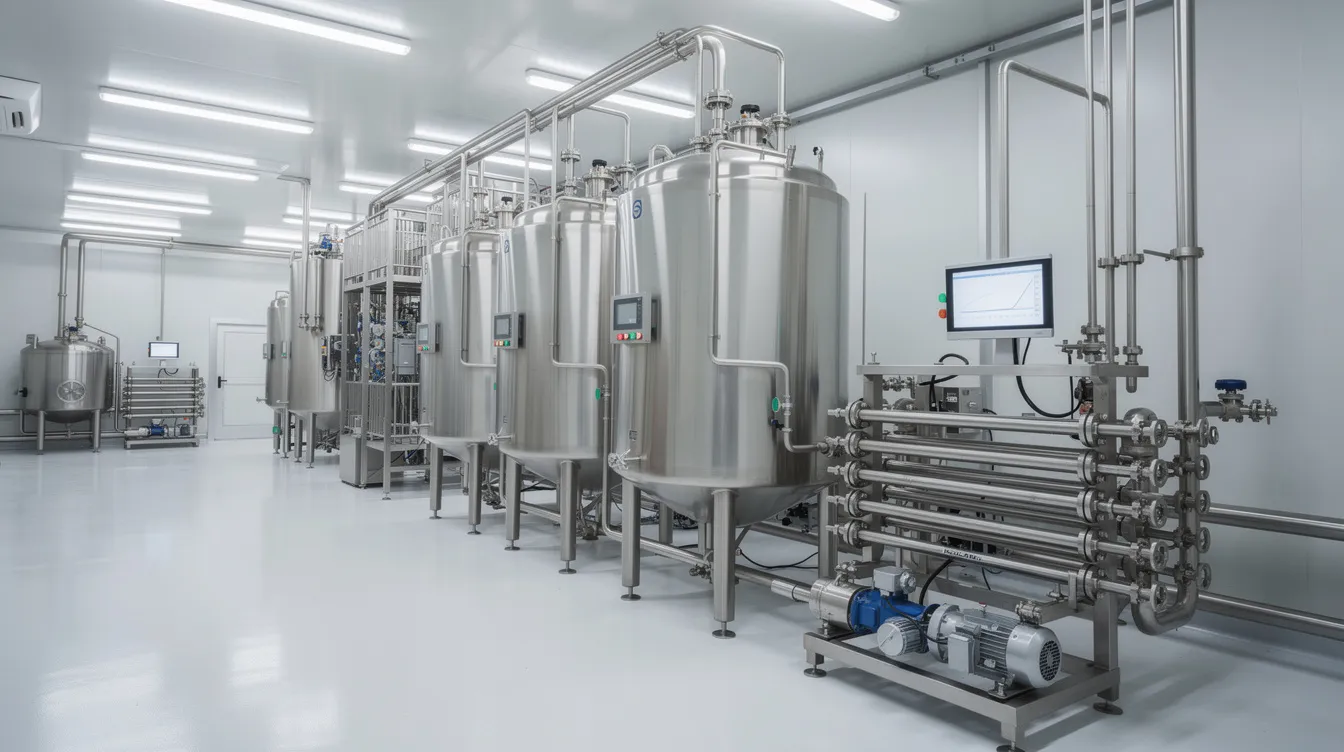
Current assets in a dairy processing plant typically include raw milk inventory (in silos or chilling tanks), cream and skim milk, ingredients such as sugar, starter cultures, stabilisers and fruit pulps, packaging materials (cups, pouches, bottles, cartons), work in progress (curd fermenting in incubation rooms, cheese in aging), finished goods (paneer blocks, yogurt tubs, lassi bottles), trade receivables (amounts owed by distributors, modern retail and institutional buyers), and minimum cash and bank balances. Current assets include cash, inventory and accounts receivable.
Current liabilities are debts and obligations due within one year. For a dairy plant, these include payables to milk suppliers (co-operative societies or individual farmers), credit from packaging and ingredient suppliers, wages payable, outstanding electricity bills, transporter dues, accrued tax payable, statutory obligations and short-term bank borrowings under cash credit facilities.
Gross working capital is the total of all current assets. Net working capital is current assets minus current liabilities. Bank-financed working capital is the portion of the working capital gap that the lending institution supports through cash credit or working capital demand loans. In bank appraisal, ratios like the current ratio and net working capital for a dairy plant are examined to judge whether the projected liquidity position is adequate. A working capital ratio above 1.2 generally suggests sufficient liquidity, though norms vary by lender.
Why Value-Added Dairy Plants Need Higher Working Capital Planning
Selling raw liquid milk in bulk involves a short operating cycle: procure, chill, dispatch and collect payment within days. The moment a plant converts milk into paneer, curd, yogurt, Greek yogurt, lassi, probiotic drinks, ghee, butter, cheese or flavoured milk, the dairy plant operating cycle stretches. Dairy processing firms often face longer production cycles because fermentation, incubation, aging or cooling add hours or days before the product is ready for dispatch. Dairy requires immediate processing of raw materials to maintain quality, which means procurement cannot be deferred.
Each product category carries different implications:
- Paneer requires high-fat milk, produces whey as a by-product, and has a shelf life of about 7 days at 8°C under basic refrigeration.
- Yogurt and curd require 6 to 12 hours of fermentation, then rapid chilling, with retail shelf life of 5 to 15 days.
- Ghee and butter can be stored for months, locking up higher value inventory but reducing spoilage risk.
- Probiotic products need expensive cultures, cold-chain from production to retail, and often have slower initial market uptake.
Value-added operations often require longer customer credit periods compared to fluid milk operations. Distributors, modern retail chains, hotels and institutional buyers routinely demand 15 to 45 days of credit. Maintaining wider SKUs (multiple flavours, pack sizes, product types) increases packaging and finished goods inventory. Banks expect a clear, product-wise working capital analysis in any value-added dairy processing plant DPR. A flat “two months of expenses” assumption is rarely accepted for projects above a certain scale.
Major Components of Dairy Plant Working Capital Requirement
The following sub-sections break down each major working capital component for a value-added dairy unit, with practical descriptions and illustrative numbers. All figures are illustrative and must be adapted to each project’s specific context.
Raw Milk Procurement
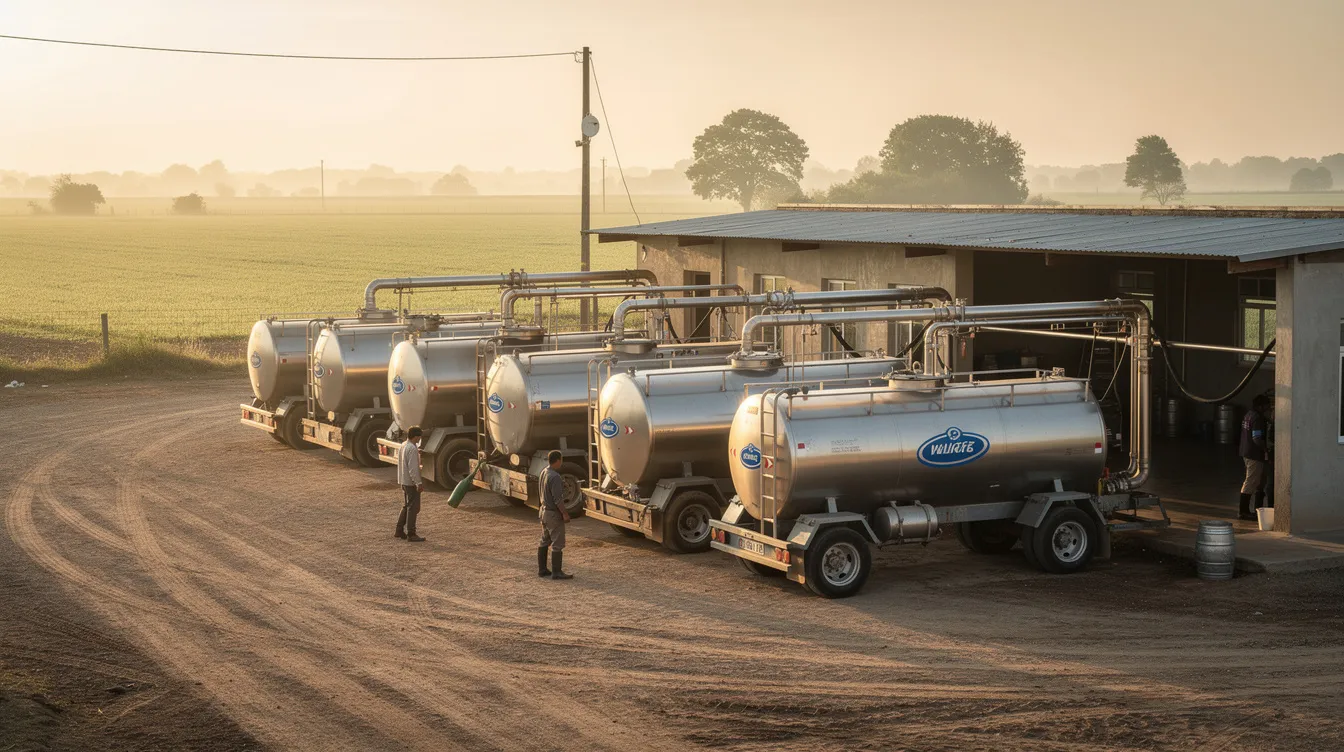
Raw milk is the single largest operational cost in dairy processing. For a 25,000 LPD plant procuring milk at approximately ₹48 per litre (a mid-2026 reference price for cow milk at 6% fat / 9% SNF), the basic formula is:
Monthly Milk Procurement Cost = Daily Milk Requirement (LPD) x Purchase Price per Litre (₹) x Operating Days per Month
For 25,000 LPD x ₹48 x 30 days = ₹3.60 crore per month. Dairy processing involves daily cash outflows for raw milk procurement. If farmers or co-operative societies require payment every 7 to 10 days, the plant must have at least ₹84 lakh to ₹1.20 crore available just for milk procurement working capital at any given time.
Dairy product pricing and procurement timelines affect working capital requirements. Procurement prices rise during the lean season (April to September) and may drop during flush (October to March). Fat and SNF content also varies seasonally, changing yields and per-unit cost of value-added products. Milk rejection due to low quality, adulteration penalties and chilling charges at collection centres add to the effective cash outflow.
Ingredients and Additives
Typical ingredients for value-added products include sugar, salt, milk powder (SMP/WMP), cream, stabilisers, emulsifiers, fruit pulps, flavours, starter and probiotic cultures, cocoa and nuts. These are procured in bulk with minimum order quantities, so several weeks of ingredient inventory gets locked as short-term assets.
Different products require different ingredient intensity. Greek yogurt uses more milk solids per unit than basic dahi. Probiotic cultures are expensive, require refrigeration and have limited shelf life, adding both cost and inventory risk. Credit terms with suppliers (typically 15 to 30 days for ingredients) partially offset the need for own funds, but credit terms with suppliers affect working capital requirements in both directions: shorter terms from a new supplier increase the funding gap.
Packaging Materials
Main packaging categories include pouches for milk and lassi, cups and tubs for curd, yogurt and Greek yogurt, PET bottles for flavoured milk, laminated foils, lids, shrink wraps, labels and corrugated boxes. Printed packaging must be ordered in large lots due to printing plate costs and minimum run requirements, tying up capital in unused stocks.
Packaging cost as a percentage of product selling price can reach 15 to 30% for value-added items like yogurt, flavoured milk and probiotic drinks. Two to three weeks of packaging inventory can form a material part of the dairy plant inventory requirement. Specialised packaging (multi-layer cups, printed bottles) may have lead times of 3 to 6 weeks, requiring higher safety stock and correspondingly more working capital.
Finished Goods Inventory
Finished goods inventory holding periods vary considerably based on the product in dairy processing. Fresh dahi and curd may have retail shelf life of 5 to 7 days; paneer lasts about 7 days at 8°C or up to 45 days at 4°C under polyfilm packaging. Ghee and butter can be stored for months. Longer shelf life allows for larger inventories in value-added dairy products, while short-shelf-life products demand tight production planning to avoid wastage but still require 1 to 3 days of finished goods stock for smooth distribution.
Cold Storage and Refrigerated Inventory
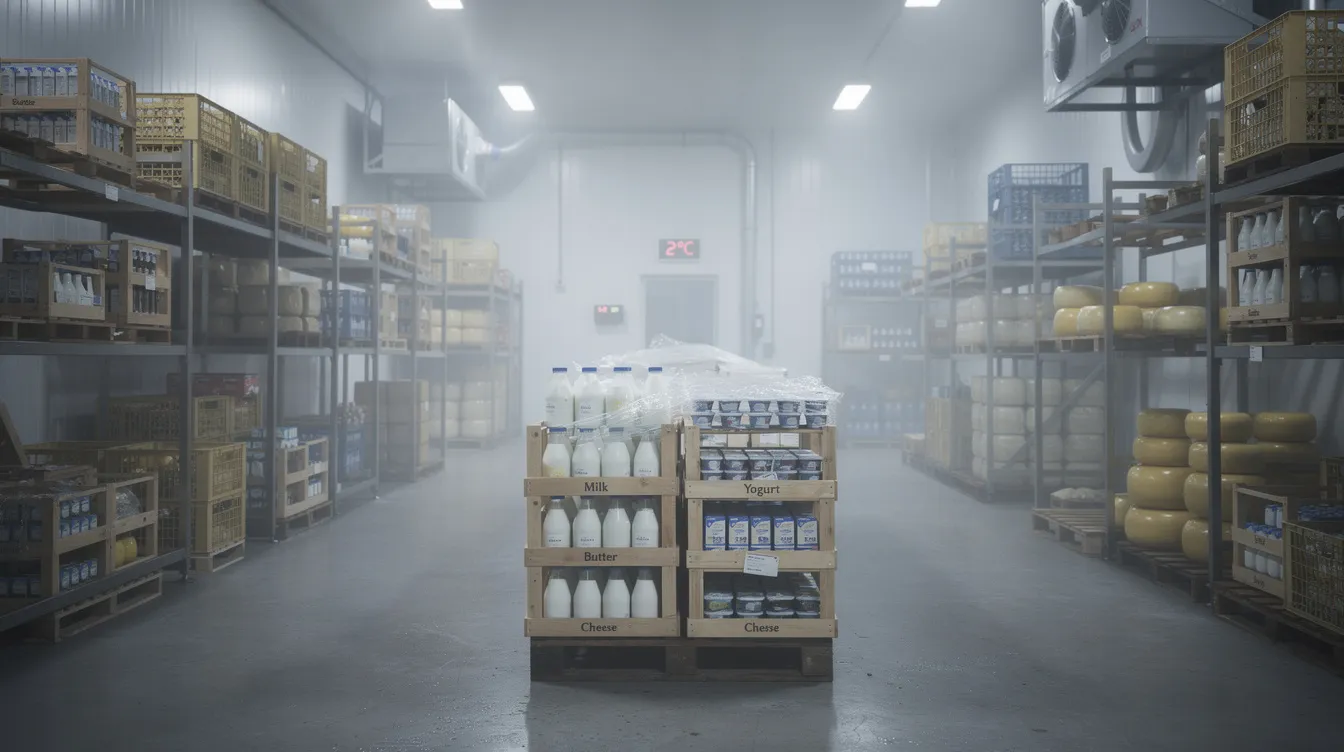
Almost all value-added dairy products require chilled or frozen storage. Maintaining a cold chain requires ongoing cash flow in dairy processing: cold rooms, blast chillers, freezers, insulated vehicles, backup DG sets and continuous electricity. In Indian summers, ambient temperatures above 40°C increase cooling loads and energy costs. For detailed infrastructure planning, refer to cold storage and cold chain requirements for value-added dairy products. Electricity and DG fuel for refrigeration are monthly operating expenses funded from net working capital and cash credit limits.
Receivables from Distributors and Institutional Buyers
Accounts receivable for dairy products often involve credit terms ranging from 30 to 60 days when selling to modern retail, hotels, restaurants and institutional buyers. Even a 20-day average receivable cycle on monthly credit sales of ₹3 crore locks up ₹2 crore in receivables. A 45-day cycle on the same sales locks up ₹4.5 crore. The working capital gap in dairy processing can be impacted heavily by receivables and finished goods holding periods.
E-commerce and organised retail may also impose deductions (returns, promotional schemes, slotting fees) that reduce realised collections below invoiced values. These must be reflected in the DPR’s receivable and cash flow assumptions.
Cash and Operating Expenses
Monthly operating expenses include salaries and wages (including unpaid salaries at month-end), electricity, steam and boiler fuel, refrigeration power, water, chemicals for CIP, transport and logistics, repairs and maintenance, lab and quality-control costs, marketing, administration, insurance and regulatory and compliance costs. Working capital planning must include a minimum cash or bank balance covering 7 to 10 days of operating expenses to avoid delayed payments, bounced cheques or wages payable accumulations.
Operating Cycle of a Value-Added Dairy Products Plant
The operating cycle traces the journey of cash through the business: cash is spent on raw milk and ingredients, converted into work in progress during processing, held as finished goods until dispatched, then locked in receivables until the buyer pays. The cash conversion cycle, measured in days, determines how much working capital the plant needs at any point.
| Stage | Illustrative Days |
|---|---|
| Raw material holding (milk, ingredients) | 2 to 7 |
| Packaging inventory holding | 10 to 15 |
| Work in progress (fermentation, processing) | 1 to 2 |
| Finished goods holding | 2 to 5 |
| Receivable days | 15 to 40 |
| Less: Creditor days (milk, ingredients, packaging) | 7 to 30 |
| Net operating cycle | Typically 20 to 50 days |
These figures are illustrative and vary by project. A plant selling mostly through cash-and-carry retail may have 20-day cycles; one supplying institutional buyers on 45-day credit may exceed 60 days. Lenders focus closely on the cash conversion cycle and its components while appraising dairy plant working capital finance proposals.
Working Capital Calculation for Dairy Plant
Below is an illustrative working capital calculation for a 25,000 LPD value-added dairy plant. All figures are for demonstration only and not industry benchmarks.
Current Assets
| Component | Basis of Calculation | Illustrative Amount (₹ lakh) |
|---|---|---|
| Raw milk inventory | 25,000 LPD x ₹48 x 2 days | 24.00 |
| Ingredient inventory | ₹10 lakh/month usage x 7 days | 2.33 |
| Packaging inventory | ₹25 lakh/month usage x 15 days | 12.50 |
| Work in progress | 1 day of processing value | 1.70 |
| Finished goods | 3 days of sales value | 8.00 |
| Trade receivables | ₹100 lakh/month credit sales x 20 days | 66.70 |
| Cash and bank balance | 7 days of operating expenses | 9.30 |
| Total Current Assets | ≈ 124.53 |
Less: Current Liabilities
| Component | Basis | Illustrative Amount (₹ lakh) |
|---|---|---|
| Milk supplier creditors | 10 days credit on ₹36 lakh/month | 12.00 |
| Ingredient and packaging creditors | 30 days credit on ₹35 lakh/month | 35.00 |
| Expenses payable (wages, utilities, transport) | 15 days on ₹40 lakh/month | 20.00 |
| Total Current Liabilities | ≈ 67.00 |
Working Capital Gap = ₹124.53 lakh – ₹67.00 lakh = approximately ₹57.50 lakh
This gap must be funded through a combination of promoter margin and bank cash credit. Banks typically expect the current ratio (company’s current assets divided by current liabilities, after subtracting current liabilities from total current assets) to remain above 1.25 to 1.50, though actual norms depend on each bank’s policy. Positive working capital indicates financial health and operational efficiency; negative working capital may signal liquidity problems for a company.
Working Capital Requirement Based on Plant Capacity
Working capital generally increases with plant capacity, but the relationship is not linear. A 10,000 LPD unit focused on paneer and curd has fewer SKUs, simpler distribution and lower total assets and liabilities. A 1,00,000 LPD integrated plant handling yogurt, lassi, UHT milk, ghee and cheese will have proportionally greater absolute working capital, but per-litre working capital may decrease due to bulk purchasing power and better supplier terms.
Larger plants often negotiate longer credit from packaging and ingredient vendors and shorter receivable cycles through distributor financing programmes. However, total capital employed in working capital at a 50,000 LPD plant can run into several crores, requiring structured bank finance and careful financial management. For detailed capacity-related planning, refer to value-added dairy plant capacity planning and product mix.
Impact of Product Mix on Working Capital
Two plants processing the same total milk volume can have completely different working capital profiles:
- Paneer-heavy mix: Higher fat-content milk required, 7-day shelf life creates tight dispatch cycles, cold storage intensity is high. See the industrial paneer manufacturing plant project report for process-specific details.
- Yogurt and curd-heavy mix: Fermentation adds 1 day of work in progress, short shelf life limits finished goods holding, but wider SKUs increase packaging inventory. Refer to the industrial yogurt manufacturing plant project report, Greek yogurt manufacturing plant project report, or curd and dahi manufacturing plant project report.
- Beverage-heavy mix: Flavoured milk and lassi have high packaging cost per unit and are often sold through distributors on credit. The industrial lassi manufacturing plant project report covers process-specific assumptions.
- Ghee and butter mix: Long shelf life, high per-unit value inventory, lower spoilage risk but higher capital locked in finished goods.
- Probiotic and premium mix: Expensive cultures, slower market development, cold-chain from factory to shelf. See the probiotic dairy products manufacturing plant project report.
Working capital requirement for paneer plant, yogurt plant, curd plant, lassi plant, ghee plant, cheese plant, flavoured milk plant and probiotic dairy products plant should each be calculated separately in a detailed DPR.

Link Working Capital with Manufacturing Process
The value-added dairy products manufacturing process and production line determines batch sizes, WIP duration, process losses and cleaning downtime, all of which influence working capital. A plant running daily continuous production (make-to-stock) holds more finished goods inventory than one manufacturing batch-wise against confirmed orders. Production policy directly affects how much raw material and packaging must be kept on hand.
Operational efficiency in dairy production impacts overall working capital needs. Efficient CIP cycles, reduced wastage, better equipment utilisation and tighter production scheduling reduce the need to hold excess inventory and too much inventory of raw materials, indirectly lowering the working capital requirement.
Machinery Investment vs Working Capital
Many business owners focus on the visible cost of plant and machinery while underestimating the ongoing dairy processing plant working capital needed to operate that machinery at economic capacity. Machinery investment is a long-term asset financed through term loans and equity. Working capital is funded separately through promoter margin and bank cash credit. An otherwise modern plant can still fail if sufficient working capital is not available to procure milk, buy packaging and extend credit to distributors. For machinery cost benchmarks, see value-added dairy plant machinery and equipment cost. If a company fails to plan working capital alongside CAPEX, daily operations stall regardless of the technology installed.
Land, Building, Utilities and Working Capital Implications
Land and building are not current assets, but plant layout and utility design affect monthly operating expenses, and therefore cash flow and net working capital. A compact, energy-efficient layout reduces recurring electricity and steam costs. Poorly designed refrigeration piping increases power consumption. Oversized boiler capacity wastes fuel. These recurring costs are part of normal operations funded from working capital. For layout and utility planning, refer to value-added dairy plant land, building, utilities and hygienic layout.
Working Capital and Total Project Cost
Total project cost for a value-added dairy plant comprises land and site development, building and civil works, plant and machinery, utilities, preliminary and pre-operative expenses, contingencies and margin money for working capital. Working capital requirements for a value-added dairy products plant typically range from 15% to 30% of total project cost. Banks finance both the term loan (fixed capital) and a portion of working capital, but expect the promoter to contribute a minimum margin toward working capital as shown in the DPR. For project cost structuring, see value-added dairy plant project cost and means of finance.
Working Capital Margin
Working capital margin is the promoter’s own contribution toward funding current assets. The calculation is straightforward:
| Item | Illustrative Amount (₹ lakh) |
|---|---|
| Total working capital requirement | 400 |
| Less: Promoter’s margin (25%) | 100 |
| Bank working capital finance | 300 |
Banks usually require 20% to 30% of current assets to be funded from the promoter’s own funds, though exact norms depend on the lender and prevailing guidelines. This margin is part of the means of finance in the DPR and is essential for maintaining a healthy current ratio. Positive working capital suggests that the company expects to handle its short-term financial health comfortably, provided margin is maintained.
Cash Credit Limit for a Dairy Processing Plant
In Indian banking, a cash credit (CC) account is the standard mechanism for financing part of inventory and receivables on a revolving basis. The dairy plant cash credit limit is assessed based on the projected working capital gap, not on collateral value alone. Banks typically finance a portion of the working capital gap in dairy operations through CC limits, overdraft facilities or working capital demand loans.
Term loans finance fixed assets. CC and overdraft facilities finance current assets. Not every applicant qualifies for the required limit; the bank evaluates the project’s viability, promoter credibility and financial projections. Irregular use of CC limits (frequent overdrawings, unpaid interest) signals liquidity issues and affects future lending support. A company’s ability to service both term loan EMIs and CC interest simultaneously is a key assessment parameter.
Working Capital Assessment for Bank Finance
Banks examine multiple factors when sanctioning dairy plant working capital finance: projected turnover, operating cycle length, inventory and receivable norms, creditor days, net working capital, current ratio, DSCR, interest coverage, promoter contribution, existing borrowings and overall financial strength. The financial performance of the project, as presented in the DPR, must show internal consistency between sales projections, production capacity and working capital estimates.
Banks may use different methods for assessment (operating cycle method, turnover method for MSMEs) depending on the scale of the project and prevailing RBI guidelines. Actual assessment standards depend on each lender’s policy and risk appetite. Professional preparation of CMA Data and projections helps present a coherent case to bankers but does not guarantee loan sanction.
Importance of CMA Data in Working Capital Assessment
CMA Data is a structured set of past and projected financial statements (balance sheets, profit and loss accounts, fund flow, maximum permissible bank finance calculations) prepared in the format prescribed by Indian banks. For a dairy plant, CMA Data captures current assets (inventories, receivables, cash and cash equivalents) and current liabilities (creditors, bank borrowings, provisions) to calculate the working capital gap and required bank borrowing.
CMA projections include sales, profitability, current ratio, fund flow, cash flow and working capital requirements for each projected year. These help banks assess measuring liquidity, financial efficiency and whether the projected working capital cycle is realistic. CA Manish Gugliya provides professional assistance in preparation and analysis of CMA Data and financial projections for bank finance proposals. CMA Data presents estimated projections, not certified future performance.
Link with Revenue Model
Working capital must arise logically from the revenue model: product-wise pricing, distributor margins, dealer incentives, credit terms and expected sales volumes. Higher dealer margins and extended credit may improve sales but increase receivable days and cash flow requirements. Institutional sales (hotels, caterers, modern trade) mean higher volumes but longer credit cycles, directly increasing total revenue locked in receivables. For revenue planning, refer to value-added dairy products revenue model and market strategy.
Link with Profitability and Break-Even
Profitability and liquidity are related but different financial measures. Working capital management affects a company’s liquidity and profitability, but a plant can show accounting profit while being short of cash. Excess inventory, slow-moving SKUs, long receivables or reduced supplier credit can cause cash strain despite attractive gross margins. A realistic break-even analysis should consider the working capital needed to reach and sustain break-even volume. See value-added dairy plant profitability and break-even analysis for detailed methodology.
Link with Financial Projections
A robust DPR integrates working capital estimates with the projected Profit & Loss Account, Balance Sheet, Cash Flow Statement and Fund Flow Statement for at least 5 to 7 years. As capacity utilisation and turnover rise, working capital requirements also increase and must be funded internally or through enhanced CC limits. Term-loan repayment schedules and interest costs must align with projected cash flow so that both fixed capital and working capital needs are met without strain. For projection methodology, see value-added dairy plant financial projections for DPR. Long-term debt servicing must not crowd out short-term funds needed for daily operations.
Working Capital for a New Dairy Plant vs Existing Dairy Business
Greenfield projects require additional working capital for initial stock build-up, market development, introductory distributor schemes and longer initial credit periods. The plant may operate at low capacity utilisation in the first 6 to 12 months while building distribution, meaning revenues are low but fixed expenses paid from working capital continue. Unearned revenue from advance bookings, if any, provides minor offset.
For expansion projects, banks refer to historical working capital cycle data, existing CC utilisation, ageing of accounts receivable and actual inventory levels. An existing dairy processor adding value-added lines has established supplier relationships and dealer networks, providing a more reliable baseline for projecting the working capital requirement of the dairy processing unit in India.
Capacity Utilisation and Working Capital
Capacity utilization in dairy processing plants can initially operate below 30% to 50% as the plant develops its market and distribution. Working capital requirements grow as utilisation rises from 40 to 50% in Year 1 to 70 to 80% in Year 2 and stabilised levels thereafter. In early months, distributor credit and inventory are still building up, creating a temporary mismatch that the working capital model must address.
A sudden jump in utilisation (e.g., a large institutional order) increases milk procurement, packaging purchases and receivables simultaneously. Sensitivity analysis around capacity ramp-up is important to avoid short-term debt accumulation during growth spurts.
Seasonality in Dairy Working Capital
Indian dairy seasonality creates distinct working capital peaks. During flush season (October to March), milk supply is abundant, procurement prices may soften, and the plant can build buffer stocks of ghee and butter. During lean season, supply tightens and prices rise by ₹1 to ₹1.5 per litre in some regions, increasing milk procurement working capital. Dairy firms require more working capital during peak seasons.
On the demand side, summer drives consumption of lassi, yogurt, beverages and flavoured milk. Festivals (Diwali, Navratri) spike paneer and ghee demand. These peaks increase both production and distribution intensity. High ambient temperatures raise cold-chain operating costs, increasing cash outflow even if volumes remain stable. Economic conditions and inflation increase the nominal amount of working capital needed year over year. The working capital plan must identify peak-season requirements, not only average monthly figures.
Common Mistakes in Dairy Plant Working Capital Estimation
Common errors observed in dairy DPRs include:
- Estimating only raw milk cost and ignoring packaging, ingredients, receivables and outstanding expenses
- Assuming cash-and-carry sales (zero receivables) for value-added products sold through distributors
- Using unrealistic credit terms from suppliers (e.g., assuming 60-day credit from a new packaging vendor)
- Ignoring GST timing effects on input credit and output tax
- Applying identical working capital cycles for paneer, yogurt, ghee and beverages
- Underestimating cold-chain costs, wastage and returns
- Not providing adequate promoter margin and relying entirely on bank finance
Risk factors in dairy processing include perishability and wastage due to spoilage, and these must be built into working capital estimates rather than treated as exceptional events. Financial obligations related to property taxes, accrued tax payable and insurance premiums are often overlooked in monthly cash outflow planning.
How to Reduce Working Capital Requirement (Without Harming Quality)
Effective working capital management reduces costs associated with tied-up capital. Practical measures include:
- Procurement: Optimise milk collection routes and chilling centre operations to match daily requirements without excess inventory
- Inventory control: ABC analysis for ingredients and packaging; tighter safety-stock norms for slow-moving items; avoid holding too much inventory of any single SKU
- Commercial terms: Negotiate balanced supplier credit; structure distributor schemes rewarding faster payment; adopt digital collections to shorten the receivable cycle
- Operations: Improve demand forecasting, align production scheduling to orders, reduce process losses, and implement efficient cold-chain management
- Product mix: Shift production policy toward faster-moving items with similar characteristics in margin and demand, while maintaining portfolio breadth
These measures should never compromise hygiene, product quality or regulatory compliance. Foreign investments or joint ventures in dairy, if applicable, may also bring working capital management expertise from partner organisations, but the basic principles remain the same.
Working Capital Sensitivity Analysis
Before finalising working capital numbers in a DPR, promoters should test what happens if assumptions change:
| Scenario | Impact on Working Capital |
|---|---|
| Milk price rises 10% | Raw milk inventory and procurement cost increase proportionally |
| Receivable period extends from 20 to 35 days | Receivables locked up increase by 75% |
| Packaging cost rises 15% | Packaging inventory value rises |
| Creditor period drops from 30 to 15 days | Current liabilities reduce, widening the working capital gap |
| Capacity utilisation jumps 20% | All current assets increase; bank limit may need enhancement |
This analysis demonstrates to lenders and investors that the promoter has thought through financial commitments and cash flow risks. A working capital model without sensitivity analysis leaves the project’s economic benefits and risks unexplored.
Role of a Detailed Project Report in Working Capital Planning
A professional value-added dairy plant project report must integrate technical, market and financial analysis. Working capital is not an afterthought; it is derived from the operating cycle, product mix, procurement geography, market strategy and distribution model. The major DPR components that must be internally consistent include capacity, product mix, milk procurement plan, manufacturing process, machinery, utilities, project cost, means of finance, revenue projections, expenses, working capital and loan repayment schedules.
Working capital figures should never be inserted as a flat percentage of turnover. They must be derived from detailed operating assumptions that match the plant’s specific business model. CA Manish Gugliya’s role is to help prepare commercially realistic DPRs and working capital models for bank appraisal and investor discussions.
When Professional Financial Planning Becomes Important
Small units processing 2,000 to 5,000 LPD may manage capital management informally. Larger industrial projects with multiple SKUs, bank borrowing, automated processing, cold-chain infrastructure and wide distribution networks require structured financial analysis and financial modelling. Professional support is particularly helpful for plants above 25,000 LPD, units producing across multiple product categories (paneer, yogurt, ghee, beverages, probiotic products), projects targeting modern retail or exports, and any unit seeking term loan and working capital finance simultaneously.
Professional DPR preparation, CMA Data assistance and financial projections support better decision-making and transparent communication with lenders. They do not guarantee bank sanction or subsidies. CA Manish Gugliya, FCA, DISA (ICAI), is a practising Chartered Accountant experienced in project finance, working capital assessment and dairy plant financial projections.
Conclusion: Integrating Working Capital into Value-Added Dairy Project Planning
Accurately estimating the working capital requirement for a value-added dairy products plant involves analysing milk procurement costs, product mix, raw materials inventory, packaging, process flow, cold storage, receivables, creditors, operating expenses, capacity utilisation and bank finance structure as an integrated whole. No single component can be assessed in isolation. The dairy plant working capital requirement must be clearly presented in the DPR, CMA Data and financial projections so that promoters know the real funding needed after commercial production begins.
A well-prepared working capital model strengthens the overall DPR, satisfies bank appraisal requirements and helps the business owner plan the business’s financial health from day one. CA Manish Gugliya assists promoters in preparing detailed DPRs, financial projections, CMA Data, working capital assessments and project finance plans for value-added dairy processing and other manufacturing units. Final lending decisions always rest with banks and financial institutions based on their own appraisal and prevailing norms.
Frequently Asked Questions (FAQ)
These questions address practical issues that entrepreneurs, bankers and consultants frequently raise about dairy plant working capital beyond what the main article covers.
How many months of working capital are typically required for a new value-added dairy plant in India?
There is no fixed rule. For a professionally run 10,000 to 25,000 LPD value-added plant, total working capital requirement often corresponds to roughly 2 to 4 months of total operating cost, depending on product mix, credit terms and seasonality. Banks require a calculation based on the operating cycle (days of inventory plus receivable days minus creditor days) rather than a flat “X months” thumb rule. The figure must be project-specific and derived from the DPR’s financial projections.
Can a value-added dairy plant operate with negative working capital?
Genuine negative working capital, where current liabilities exceed the company’s current assets, is uncommon and usually risky for dairy plants. Milk suppliers, employees and utility providers must be paid regularly while chilled inventory sits in storage. Some high-turnover FMCG businesses operate with negative working capital due to strong supplier credit and immediate cash sales. For dairy processing, negative working capital typically signals a stressed liquidity position unless supported by extraordinary trade terms. Positive working capital indicates that a company can meet its short-term obligations and fund daily operations without distress.
What financial ratios related to working capital do banks focus on for dairy projects?
Banks examine the current ratio, quick ratio, inventory days, receivable days, payable days and the overall cash conversion cycle. Desirable levels vary by bank and time period, but a current ratio of 1.25 to 1.50 is commonly expected. Banks also assess DSCR, interest coverage, short-term debt levels and overall leverage to ensure working capital limits are sufficient but not excessive relative to the company’s total assets and total revenue.
How is working capital for milk procurement treated when farmers are paid daily in cash?
If farmers are paid in cash daily, the entire raw milk cost becomes an immediate daily cash outflow and must be funded from promoter funds or bank limits. This makes milk procurement the dominant element in net working capital. Forming producer groups or working through co-operative societies can sometimes introduce 7 to 15-day payment cycles, easing pressure on cash flow. However, any delay in farmer payments must be managed carefully to maintain supply relationships and avoid procurement disruptions during lean season.
At what stage should a promoter finalise working capital estimates in the DPR process?
Working capital estimates should be finalised only after locking key assumptions on plant capacity, product mix, revenue model, manufacturing process and procurement strategy. Revising capacity or product mix later requires reworking the entire working capital and cash flow model, causing delays and confusion with lenders. The working capital section of the DPR should be among the last sections finalised but among the first sections planned, because it depends on almost every other assumption in the project report.