Key Takeaways
- A modern value-added dairy processing plant shares common upstream infrastructure for milk reception, chilling, clarification, standardisation, pasteurisation and CIP, then branches into dedicated downstream lines for products such as paneer, curd/dahi, yogurt, Greek yogurt, probiotic drinks, lassi, flavored milk, butter and ghee.
- Production-line design, dairy processing plant machinery selection, utilities sizing, cold chain capacity and automation level directly influence total project cost, operating economics, working capital requirements and the overall bankability of your Detailed Project Report (DPR).
- The same litre of raw milk can generate vastly different realisations depending on how fat and SNF are allocated across the product mix, how packaging and shelf life are managed, and how by-products like whey and buttermilk are handled, making integrated technical and financial planning essential from day one.
- Capacity planning must go beyond the pasteuriser; fermentation tank volumes, paneer press cycles, filling-machine speeds and cold-room sizing frequently become the real bottlenecks that limit throughput and erode projected returns.
- Promoters and investors planning a value-added dairy plant should prepare a structured, data-backed DPR with realistic yield, utilisation and pricing assumptions, ideally with professional support from resources such as www.projectreportbank.com, before committing capital or approaching banks.
Introduction to Value-Added Dairy Products Manufacturing
Value-added dairy products transform raw milk into higher-margin specialised goods through controlled processes such as fermentation, coagulation, concentration, fat extraction, flavouring and advanced packaging. In an Indian industrial context, this category spans paneer, curd/dahi, yogurt, Greek yogurt, probiotic drinks, lassi, flavored milk, butter, ghee, cheese, ice cream mixes and various dairy beverages.
Why are so many Indian dairies and MSME promoters moving beyond liquid milk? The answer is straightforward: milk can be processed into butter, yogurt, cheese and numerous other products that command better margins, longer shelf life and stronger brand loyalty than commodity pouch milk. Value addition increases the economic value of dairy products at each stage of processing. Globally, the pressure on farm-level milk production has intensified. In 2022, the number of dairy farms globally declined by 22%, and even in a structured market like Japan, only 2.5% of dairy farmers keep herds of 200 or more cows. Against this backdrop, the Indian dairy industry has a compelling opportunity: convert surplus and seasonal milk into processed dairy products with genuine commercial demand.
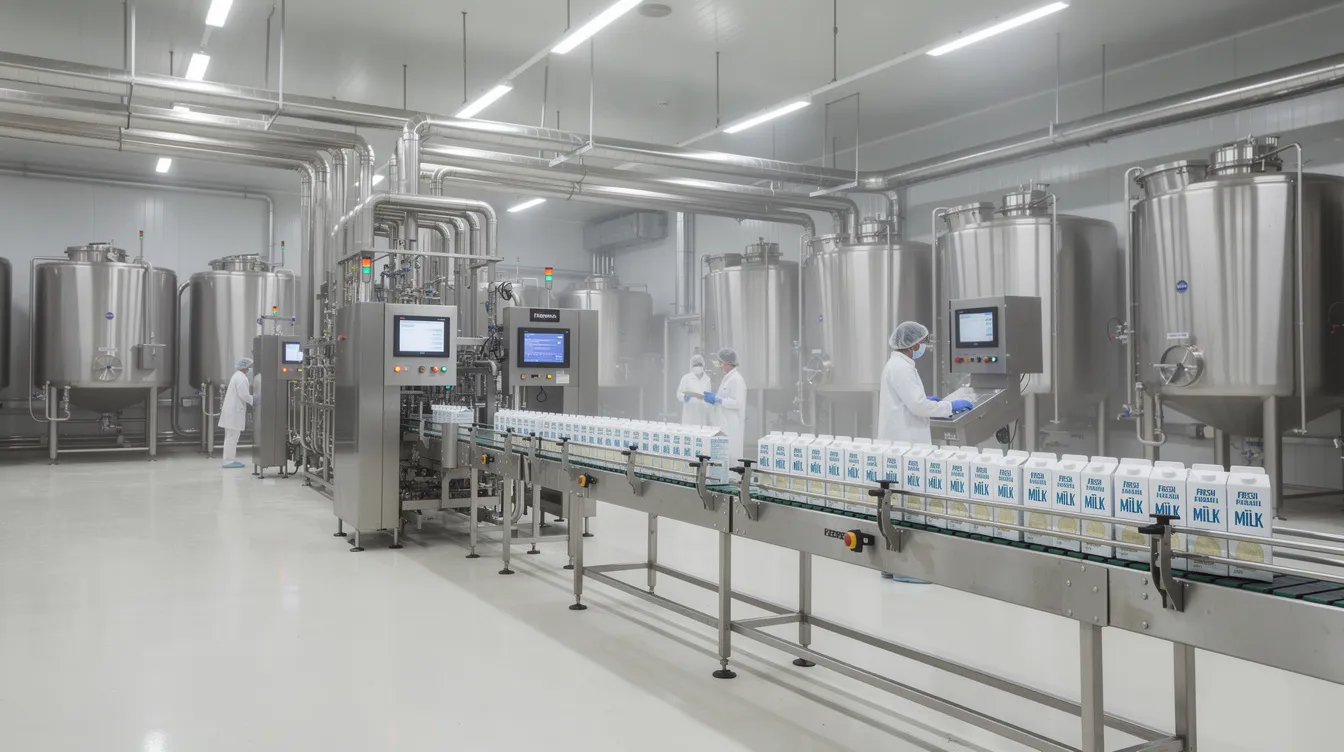
Most value-added dairy plants share a common upstream milk processing backbone: milk collection, chilling, clarification, separation, standardisation, pasteurisation and CIP. Milk is then diverted into product-specific downstream lines. This integrated approach allows a single plant to serve multiple markets while sharing capital-intensive equipment.
This article is written from a DPR and bank-finance perspective, primarily for projects in the 5,000 to 50,000+ litres-per-day range. The focus is on connecting the value-added dairy products manufacturing process with practical production-line configuration, equipment selection, utility sizing and financial feasibility, all elements that banks and financial institutions examine during project appraisal.
Why Value Addition Changes Dairy Plant Economics
Moving from bulk liquid milk sales to an optimised value-added product mix can materially change revenue per litre, margin stability and market reach. However, this is not an automatic guarantee of higher profit. Each product carries its own cost structure, shelf life constraint, packaging requirement and distribution challenge.
Consider a simple comparison:
- Pouch milk at ₹50–55/litre realisation covers milk cost but leaves thin margins after pasteurisation, packaging and cold-chain distribution.
- Paneer requires roughly 4.5–5 litres of milk per kg; at a milk price of approximately ₹60/litre, raw material input alone is about ₹300/kg, while retail prices for branded paneer range from ₹450 to ₹525/kg depending on quality and brand.
- Ghee concentrates milk fat into a shelf-stable product, tying up more fat per unit but reducing cold-chain dependency.
- Processing cheese yields approximately 0.688 euros more profit per litre than selling raw milk, according to European dairy economics research.
Dairy farmers can enhance profitability through value-added processing, but dairy farmers also face significant risks from fluctuating milk prices. The Onishi method, developed in Japanese dairy economics research, quantifies value added at each processing stage. Abe Farm in Japan demonstrated this powerfully: its annual sales increased from 1.71 million to 5.33 million dollars between 2010 and 2021, largely by shifting from commodity milk to processed products. Abe Farm sells its products directly to consumers and through external businesses, capturing margins at multiple points.
From a DPR viewpoint, product mix planning is central to financial projections, DSCR and IRR. Working capital for fast-moving curd and lassi differs fundamentally from slow-moving ghee and butter that hold stock and tie up funds. Capacity utilisation and risk diversification improve when surplus seasonal milk can be converted into ghee or milk powder instead of being distress-sold as liquid milk. These choices must be technically aligned with plant and dairy processing equipment capacity.
Raw Milk Collection, Reception and Preliminary Processing
Industrial-scale milk collection in India typically involves village-level collection centres, chilling centres equipped with bulk milk coolers and insulated tanker transport to the central processing plant. Time and temperature are critical: delays or elevated temperatures increase microbial load, directly affecting downstream product quality and shelf life.
At the dairy processing plant, the milk reception section forms the starting point of the production line:
- Milk is weighed using a weigh bowl or mass flow meter, then transferred to a dump tank.
- Platform tests are conducted for organoleptic quality (smell, colour, taste), temperature, acidity, fat and SNF content.
- Raw milk must undergo rigorous testing for temperature and quality, including adulteration screening for common adulterants such as urea, starch and added water.
- Inline filters remove visible impurities before further processing.
Clarification involves removing physical impurities from raw milk using centrifugal clarifiers, which separate sediment, somatic cells and fine particulates that filters alone cannot catch. After clarification, milk is chilled rapidly to around 4°C and stored in insulated stainless-steel silo tanks with agitation and cooling jackets.
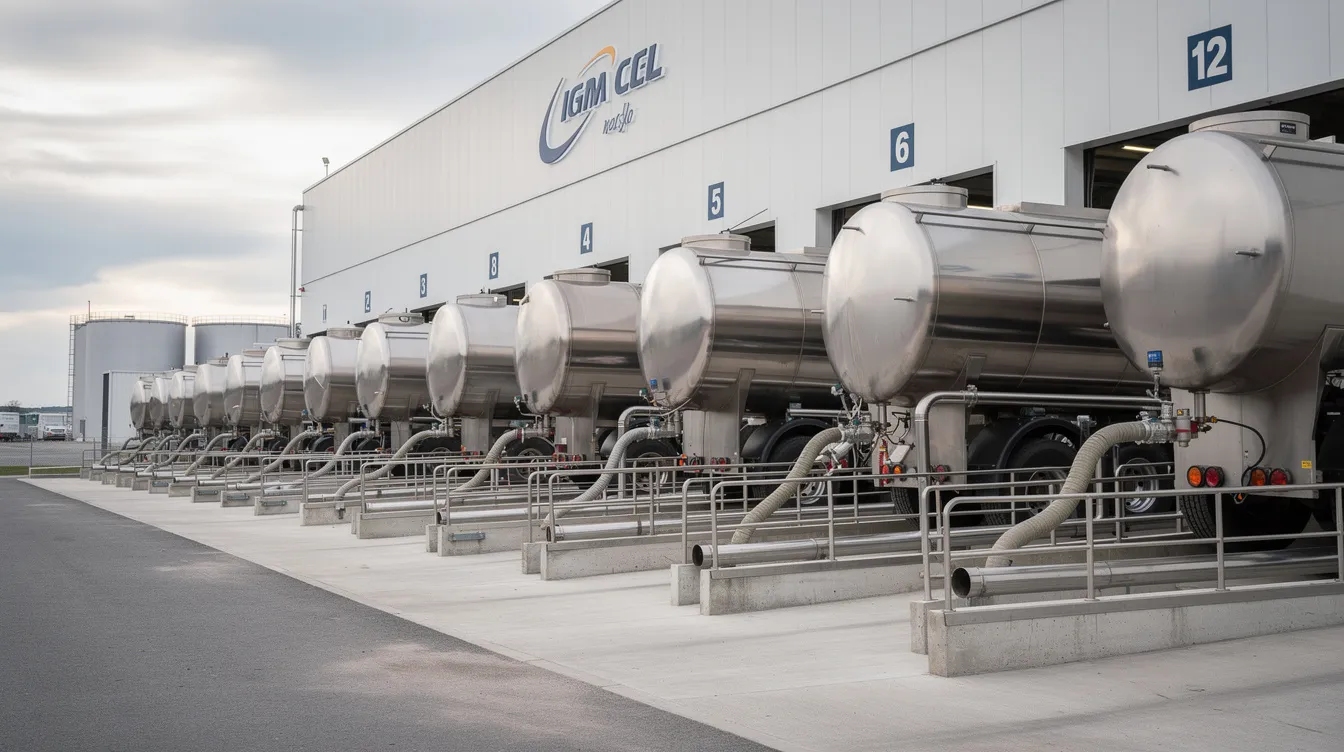
Consistent raw milk quality at this stage directly affects yields, shelf life and economics for all downstream value-added dairy products. A plant processing 220,000 litres per day, such as the Trivandrum Dairy Plant documented in an energy audit, runs two shifts and depends entirely on reception-stage quality control to maintain its output standards.
Milk Standardisation and Homogenisation for Value-Added Products
Milk standardisation, the adjustment of milk fat and SNF to target levels, is the single most influential step in determining product consistency and regulatory compliance. Different products require different compositions:
- Paneer requires a fat-to-SNF ratio of approximately 1:1.65, with buffalo milk typically at 5.8% fat and 9–9.5% SNF.
- Full-cream dahi retains higher fat, while diet yogurt or lassi uses low-fat or skim milk.
- Cream diverted from standardisation feeds into butter and ghee processing lines.
Standardization adjusts the fat-to-protein ratio of milk for specific products. Cream separators split whole milk into cream and skim milk. Automated standardisation units then recombine these streams using microprocessor-controlled sensors to achieve precise fat and SNF targets for each product batch. Methods include batch recombination and continuous inline standardisation using tri-process machines that combine clarification, separation and standardisation in a single pass.
Homogenisation reduces the fat globule size to prevent cream separation, improving mouthfeel and stability. It is essential for products such as yogurt, flavored milk, lassi and dairy beverages. Industrial homogenisers typically operate at 200–250 bar pressure, sometimes in two stages for finer emulsification.
From a costing and DPR perspective, standardisation determines how cream and skim milk balances behave across the product mix. If the DPR proposes simultaneous paneer and ghee production, the cream generated from paneer-milk standardisation must be accounted for in the ghee line’s input, not left as an unexplained surplus.
Pasteurisation and Heat Treatment in Industrial Dairy Processing
Thermal processing like pasteurisation eliminates harmful microorganisms in milk and is a mandatory step in any industrial dairy products manufacturing process. Pasteurization heats milk to 72–75°C for 15–30 seconds in a standard HTST (High Temperature Short Time) regime.
Industrial plants use plate heat exchangers with regeneration sections that recover 80–90% of the heat energy. The Trivandrum Dairy Plant, for example, achieved regeneration efficiency of approximately 88%, heating milk to around 77°C with a 15-second hold before cooling to 5°C. Flow diversion valves automatically redirect under-pasteurised milk back for re-processing, and temperature is continuously recorded for traceability and regulatory compliance.
Some value-added products require higher or longer heat treatment:
- Yogurt and dahi mixes are typically heated to 80–95°C for 5–30 minutes to denature whey proteins and improve gel strength.
- Paneer milk is heated to 85–90°C and held for several minutes before coagulation.
- Ice cream mix undergoes pasteurisation at elevated temperatures to ensure safety and texture development.
Integration of pasteurisation with downstream lines is critical. Pasteurised milk should flow seamlessly into paneer vats, fermentation tanks, blending systems or filling machines, without temperature abuse or extended holding in intermediate tanks.
Overview of a Complete Value-Added Dairy Products Production Line
The manufacturing sequence for value-added products typically includes reception, testing and packaging, but the path between these stages is where the real engineering lies. A complete dairy manufacturing process flow follows this backbone:
Raw Milk Reception → Chilling → Filtration / Clarification → Storage → Separation → Standardisation → Homogenisation (where required) → Pasteurisation / Heat Treatment → Product-Specific Processing → Cooling / Fermentation / Coagulation / Concentration (as applicable) → Filling / Packaging → Cold Storage → Dispatch
This is the common backbone of an integrated dairy processing plant production line. Individual products are “plugged in” at the product-specific processing stage. Downstream sections can run in parallel batches: while one batch of paneer is being pressed, another batch of milk may be fermenting for yogurt, and cream may be churning into butter simultaneously.
Capacity planning must account for pasteuriser throughput, fermentation tank holding times, pressing cycle durations and packaging-line speeds. A 1,000 LPH pasteuriser does not deliver 24,000 litres per day; factoring in CIP, changeovers and non-productive downtime, realistic daily throughput may be closer to 6,000–8,000 litres in a single-shift scenario.
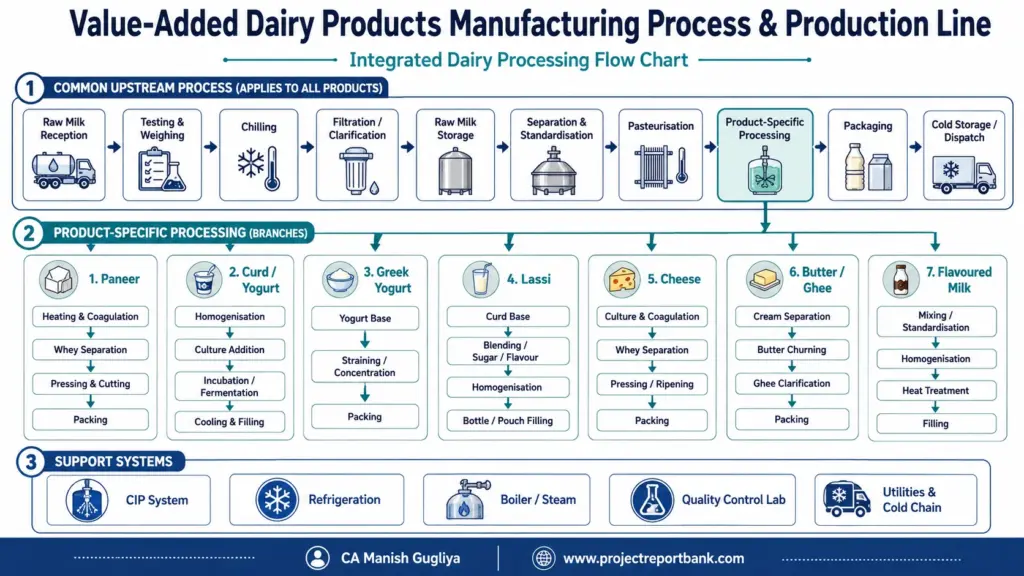
The following sections detail product-wise manufacturing processes within this shared production framework.
Paneer Manufacturing Process and Industrial Production Line
The paneer manufacturing process follows a defined sequence:
- Standardised milk (typically buffalo milk at 5.8% fat or a cow-buffalo blend) is heated to 85–90°C and held for several minutes.
- Food-grade acid coagulant (citric acid or lactic acid at approximately 0.2–1% dosage) is added. Cheese is made by coagulating milk protein to form curds, and paneer follows a similar acid-coagulation principle.
- The curd mass separates from whey, which is drained using whey drainage tables.
- Curd is collected, hooped and pressed using pneumatic or hydraulic presses to achieve target moisture and firmness.
- Pressed paneer blocks are cooled rapidly in chilled water or blast chillers, then cut and vacuum-packed or MAP-packed.
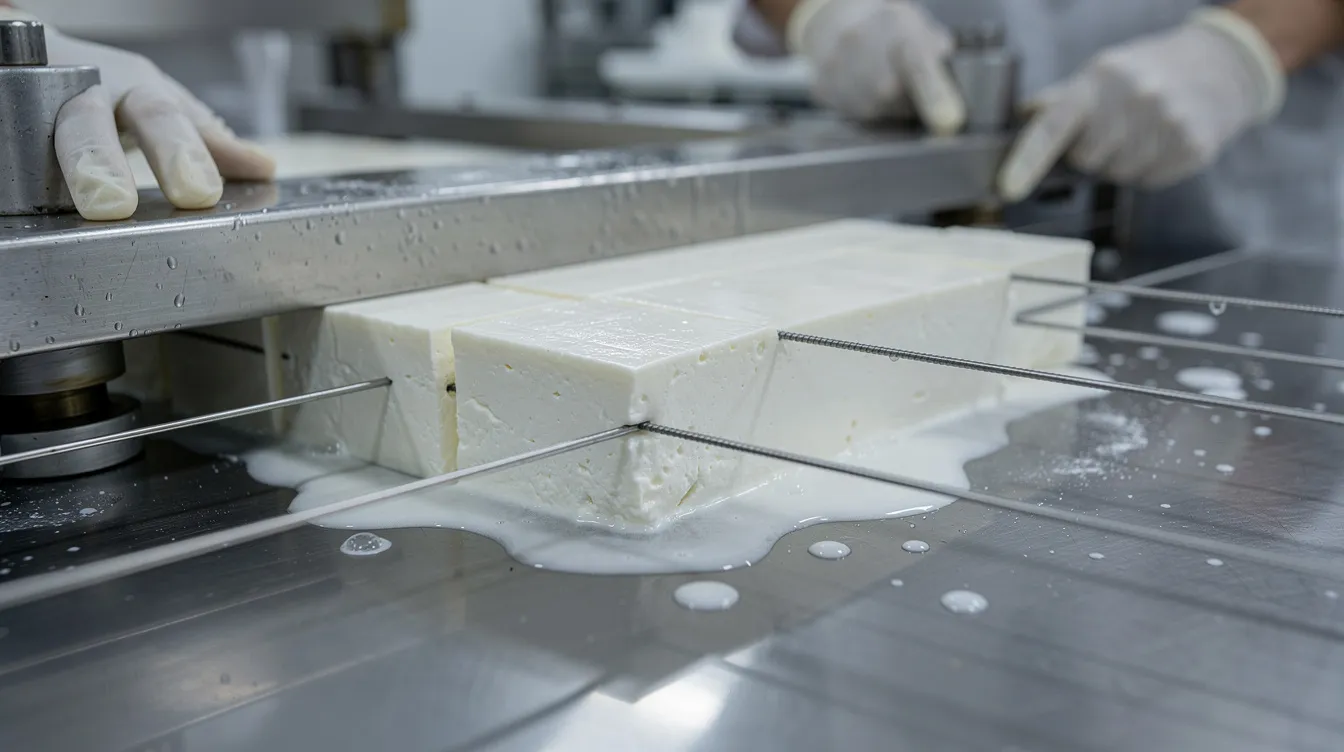
Typical paneer yield is 18–22% of input milk weight, meaning roughly 4.5–5 litres of milk produce 1 kg of paneer. Final moisture should be within 48–58%, and fat content on a wet basis ranges from 22–29% depending on milk source. Salting enhances flavour and regulates microbial growth in cheese and certain paneer variants.
Automated or semi-automatic paneer lines differ significantly from manual processes in terms of labour efficiency, yield consistency and hygiene, all of which matter for bankable projects. Promoters preparing a DPR for paneer-focused plants can refer to the Industrial Paneer Manufacturing Plant Project Report for detailed technical and financial frameworks.
Curd / Dahi Manufacturing Process at Commercial Scale
The curd/dahi manufacturing process at commercial scale involves:
- Milk standardisation to target fat and SNF levels.
- Homogenisation (where applied) to improve body and texture.
- Heat treatment at 80–90°C for 15–30 minutes to improve gel formation.
- Cooling to inoculation temperature (typically 42–45°C).
- Specific starter cultures are added for fermentation in cultured dairy products, usually Streptococcus thermophilus and Lactobacillus delbrueckii subsp. bulgaricus at around 2% (v/v).
- Filling into retail cups or bulk containers.
- Incubation at controlled temperature for 3–5 hours until target acidity is reached.
- Cooling to arrest fermentation and cold storage.
Acidification during fermentation lowers pH and causes milk proteins to gel, producing the characteristic set texture of dahi. Cup-set dahi is incubated directly in retail cups, while bulk-set dahi is fermented in tanks, then broken and filled. Each approach has different implications for incubation room size, filling-machine type and packaging logistics.
Equipment includes fermentation tanks, incubation rooms or cabinets with precise temperature control, culture dosing systems and cup or pouch filling machines. Quality parameters such as set firmness, acidity and shelf life are directly controlled by heat treatment intensity and culture management. A detailed Curd / Dahi Manufacturing Plant Project Report can help promoters structure these technical choices into a bankable document.
Industrial Yogurt Manufacturing Process
Industrial yogurt manufacturing begins with milk formulation, adjusting fat and total solids to target specifications. Stabilisers may be added if required for texture. The mix is homogenised at 200–250 bar and subjected to higher-intensity heat treatment (typically 85–95°C for 5–30 minutes) compared to plain pasteurised milk, which denatures whey proteins and significantly improves gel strength.
The process then follows:
- Cooling to incubation temperature (42–45°C).
- Starter culture inoculation.
- Controlled fermentation creates specific textures in dairy products; for yogurt, this means monitoring pH decline to a target of approximately 4.5–4.7.
- Rapid cooling to arrest fermentation.
- Fruit, flavour or sweetener addition for flavoured variants.
- Filling and refrigerated storage.
Set yogurt is fermented after filling into retail cups, while stirred yogurt is fermented in tanks, broken, cooled and then filled. Stirred yogurt requires additional equipment such as high-shear mixers and fruit feeders.
Abe Farm’s drinkable yogurt achieved a PREMIUM of 4.45 in processing as measured by the Onishi method, illustrating how well-executed yogurt manufacturing can capture substantial value from each litre of milk. Promoters exploring yogurt projects should consult the Industrial Yogurt Manufacturing Plant Project Report for process and financial details.
Greek Yogurt Manufacturing Process and Equipment Implications
Greek yogurt is distinguished by higher protein concentration and thicker texture, achieved by removing whey after standard yogurt fermentation. This additional concentration step is what separates Greek yogurt from conventional yogurt and significantly affects both process design and economics.
Industrial options for whey removal include:
- Traditional cloth or mesh straining (suitable for smaller batches).
- Centrifugal separation for medium to large throughput.
- Ultrafiltration or other membrane concentration systems for continuous, high-volume operation.
The yield impact is substantial: Greek yogurt requires significantly more milk per kilogram of finished product than regular yogurt, generating correspondingly larger volumes of acid whey that must be utilised or treated. Flavour enhancements in fermented products can also occur during aging or post-fermentation holding processes.
Additional equipment includes straining systems, membrane filtration units, high-capacity pumps and specialised tanks. These add to total project cost and utility consumption. Promoters evaluating Greek yogurt as part of their product mix should refer to the Greek Yogurt Manufacturing Plant Project Report for implications on equipment, yields and financial projections.
Probiotic Dairy Products Manufacturing Process
Probiotic dairy products such as probiotic yogurt and probiotic drinks require stricter process control than standard fermented milk products. The critical difference lies in maintaining viable probiotic culture counts through production, packaging and the entire cold chain until the product reaches the consumer.
Key process requirements:
- Selection of specific probiotic strains with documented health benefits.
- High heat treatment of the base mix (to eliminate competing organisms before inoculation).
- Controlled fermentation with precise temperature and time management.
- Viable probiotic count maintenance (measured in CFU) throughout shelf life.
- Oxygen-sensitive cultures may require low-oxygen or nitrogen-flushed environments.
- Aseptic or near-aseptic handling during filling.
Equipment and layout implications include separate probiotic fermentation vessels, high-hygiene zoning to prevent cross-contamination with non-probiotic products, and dedicated filling lines. These requirements add complexity and cost but open access to a growing premium consumer segment. The Probiotic Dairy Products Manufacturing Plant Project Report provides detailed guidance for promoters considering this product category.
Industrial Lassi and Dairy Beverage Manufacturing Process
The lassi manufacturing process uses curd or fermented milk as a base:
- Curd is blended and diluted with water to achieve target consistency.
- Sugar, salt, flavours and stabilisers are added as per the product variant (plain, sweet, salted or flavoured).
- The mix is homogenised for uniform texture and cooled.
- Filling into bottles, pouches or cups, followed by cold storage.
Extended-shelf-life or aseptic lassi variants use specialised heat treatment and aseptic packaging to achieve ambient distribution, though this requires substantially higher capital investment.
Similar production lines can manufacture other dairy beverages such as flavored milk, chaas and probiotic drinks with suitable adjustments in formulation and heat treatment intensity. Equipment typically includes high-shear mixers, a sugar syrup preparation system, blending tanks, a homogeniser, plate coolers and bottle or pouch filling machines.
Promoters planning a lassi-focused or dairy-beverage value-added dairy processing plant can explore the Industrial Lassi Manufacturing Plant Project Report for production-line and DPR frameworks.
Ghee, Butter and Milk Fat Processing from Cream
The cream pathway begins during standardisation, when cream is separated from whole milk. This cream becomes the feedstock for butter and ghee manufacturing:
- Cream is pasteurised and optionally ripened (for cultured butter).
- Churning (batch or continuous) converts cream into butter. Butter contains approximately 80–85% milk fat, with the remainder being moisture and milk solids.
- Ghee is clarified butter made from cow or buffalo milk. Butter is heated to 110–115°C, held until moisture evaporates and milk solids settle, then filtered and filled.
Other milk-fat products include white butter, table butter and anhydrous milk fat for industrial use. These products play a critical role in balancing cream generated from the main standardisation stream. A plant producing paneer and yogurt from standardised milk will inevitably generate surplus cream; routing this to a ghee line improves overall raw-material utilisation.
Cream-based sections require additional steam for heating, refrigeration for cream storage and good odour control. Their influence on plant fat balance and overall profitability is significant. Detailed process and financial frameworks are available in the Ghee, Butter & Milk Fat Processing Plant Project Report.
Common Dairy Processing Plant Machinery and Equipment
The following table summarises major dairy processing plant machinery used in a value-added dairy products production line:
| Machinery / Equipment | Main Function | Typical Application |
|---|---|---|
| Milk reception system (weigh bowl / flow meter) | Weighing and metering incoming milk | All dairy plants |
| Bulk milk cooler / plate chiller | Rapid chilling to ~4°C | Milk reception |
| Raw milk storage silo (insulated SS) | Chilled storage before processing | All plants |
| Centrifugal clarifier | Removing sediments and impurities | Pre-pasteurisation |
| Cream separator | Splitting milk into cream and skim milk | Standardisation |
| Standardisation unit | Adjusting fat and SNF levels | All value-added products |
| Plate heat exchanger (pasteuriser) | HTST pasteurisation and heat treatment | All products |
| Homogeniser (200–250 bar) | Breaking fat globules for texture stability | Yogurt, lassi, flavored milk |
| Balance tank | Buffer between processes | Pasteuriser feed |
| Fermentation / incubation tanks | Controlled fermentation | Curd, yogurt, probiotic products |
| Paneer / cheese vats | Heating, coagulation | Paneer, cheese |
| Whey drainage table | Separating whey from curd | Paneer, cheese |
| Pneumatic / hydraulic paneer press | Pressing curd into blocks | Paneer |
| Blending / mixing tanks | Product formulation | Lassi, flavored milk, beverages |
| Sugar syrup preparation system | Dissolving sugar for addition | Sweetened products |
| CIP system | Automated cleaning of all product-contact surfaces | Entire plant |
| Pumps, pipelines, valves | Material transfer | Entire plant |
| Cup filling machine | Filling into cups | Dahi, yogurt |
| Bottle filling machine | Filling into bottles | Lassi, flavored milk |
| Pouch packing machine | Sachet and pouch filling | Milk, lassi, buttermilk |
| Vacuum packing machine | Vacuum or MAP packing | Paneer, cheese, butter |
| Coding and labelling systems | Date coding and product labelling | All packaged products |
| Refrigeration plant | Generating chilled water and cooling | Chilling, cold rooms |
| Cold rooms (2–8°C) | Finished-goods storage | All perishable products |
| Boiler (steam generation) | Steam for pasteurisation, heating | All heat processes |
| Air compressor | Pneumatic valves, packaging | Automation, packaging |
| Water treatment system | Softening, purification | Boiler feed, CIP, process water |
| Laboratory equipment | Quality testing | Raw milk, in-process, finished goods |
For a detailed discussion of equipment specifications and budgetary costs, refer to the Value-Added Dairy Plant Machinery & Equipment Cost guide.
Product-Wise Production Line Configuration and Equipment Mapping
Not every value-added dairy plant requires all available machinery. The concept of common upstream equipment versus dedicated downstream sections determines what each plant actually needs:
| Product | Common Upstream Equipment | Dedicated Processing Section | Storage Requirement |
|---|---|---|---|
| Paneer | Reception, standardisation, pasteurisation | Coagulation vats, pressing, cutting | Chilled (2–8°C) |
| Curd / Dahi | Reception, standardisation, heat treatment | Fermentation tanks, incubation, cup filling | Refrigerated |
| Yogurt | Reception, homogenisation, high heat treatment | Fermentation, fruit dosing, filling | Refrigerated |
| Greek Yogurt | Yogurt line | Straining / concentration, specialised tanks | Refrigerated |
| Lassi | Fermented milk line | Blending, homogenisation, bottle filling | Refrigerated |
| Probiotic Products | High heat treatment line | Dedicated fermentation, aseptic filling | Strictly refrigerated |
| Ghee / Butter | Cream separation, pasteurisation | Churning, clarification, filtration | Ambient (ghee) / Chilled (butter) |
Each additional product line increases complexity in milk allocation, production scheduling, CIP routing and packaging logistics. Promoters should choose lines based on market study, milk availability and investment capacity rather than attempting to install every possible product category.
Integrated Multi-Product Dairy Processing Plant Design
An integrated dairy processing plant uses a single pool of milk to supply multiple simultaneous product streams. After standardisation, milk splits:
- Stream A → Paneer (standardised high-fat milk to coagulation vats)
- Stream B → Dahi / Yogurt (formulated milk to fermentation tanks)
- Stream C → Lassi (fermented milk base to blending)
- Cream stream → Butter → Ghee
This integration improves capacity utilisation but demands robust production planning. Sequencing CIP cycles between product changeovers, coordinating fermentation timelines with packaging-line availability and managing cold-room inventory for multiple SKUs all require structured scheduling.
Integrated plants absorb seasonal fluctuations better: during flush season, surplus milk can be diverted to ghee or milk powder production rather than distress selling. However, this requires more sophisticated management and accurate data tracking.
In a bankable DPR, integrated multi-product design must be translated into realistic capacity utilisation assumptions, milk-component balancing and by-product handling plans. Oversimplified assumptions about simultaneous full-capacity operation across all lines will not withstand bank scrutiny.
Automation and Control in Dairy Production Lines
Industrial dairy production lines range from manual and semi-automatic to fully automated configurations. The level of automation depends on project size, product complexity and investment appetite.
Typical automation features include:
- PLC-based control of process equipment
- SCADA monitoring and supervisory dashboards
- Automated valves, pumps and flow meters
- Recipe management for consistent batch processing
- CIP automation with chemical dosing and temperature control
- Online temperature and flow recording for regulatory traceability
Benefits include consistent product quality, reduced operator error, better food safety compliance and production data useful for costing and performance analysis. Higher automation raises initial capex but improves long-term operating efficiency and is often positively viewed in bank appraisals for larger projects.
However, over-automation may not be economical for very small MSME plants processing under 5,000 LPD. The appropriate automation level must be evaluated project by project in the DPR.
CIP Systems and Hygienic Plant Design
Clean-in-Place (CIP) systems are non-negotiable in an industrial dairy products manufacturing process. CIP enables cleaning and sanitisation of all product-contact surfaces without disassembly, covering tanks, pipelines, pasteurisers, fermentation vessels and filling machines.
A standard CIP cycle involves:
- Pre-rinse with water to flush product residues.
- Caustic (alkali) wash to remove organic deposits.
- Intermediate rinse.
- Acid wash to remove mineral scales.
- Final rinse and sanitisation.
Temperature, flow rate and chemical concentration are controlled automatically in modern CIP units. CIP water consumption can represent up to 75% of total plant water usage, making recovery and optimisation important for operating cost control.
Hygienic design principles must be embedded from the project planning stage: stainless-steel (SS 304 / SS 316) product-contact surfaces, orbital welded joints, minimal dead legs, sloped piping for self-draining and clear physical separation between raw and pasteurised product lines. CIP should not be treated as an optional add-on after machinery selection is complete.
Utilities Required for Value-Added Dairy Processing
Key utilities for a value-added dairy processing plant include:
- Electricity (50–80 kWh per KL of milk processed in multi-product plants)
- Steam (90–150 kg per KL of milk; for paneer specifically, approximately 0.14 kg steam per kg product)
- Chilled water and refrigeration (often 50–60% of total electricity consumption)
- Compressed air (for automated valves, packaging machinery)
- Process water, soft water and boiler feed water
- Effluent treatment facilities
Utility loads depend heavily on plant capacity, product mix, pasteurisation regime, automation level and climatic conditions. Under-sizing utilities can cap effective production even when machinery is adequately sized. Conversely, excessive oversizing inflates project cost unnecessarily.
Preliminary utility sizing and estimated consumption should be included in the DPR, linking to operating-cost calculations and power/steam back-up strategies. Energy-efficiency measures such as steam condensate recovery and heat regeneration in pasteurisers directly affect operating margins.
Refrigeration, Cold Rooms and Dairy Cold Chain
Value-added products like paneer, curd, yogurt, Greek yogurt, probiotic drinks and lassi are highly temperature-sensitive. Refrigeration infrastructure includes:
- Chilled raw milk storage at approximately 4°C.
- Controlled fermentation temperatures (42–45°C for incubation, rapid cooling afterward).
- Blast chillers for rapid post-process cooling of paneer blocks.
- Finished-goods cold rooms at 2–8°C.
- Refrigerated transport vehicles for distribution.
Cold rooms, blast chillers and refrigerated vehicles must be sized according to daily production volume, peak inventory holding and distribution radius. In many DPRs, cold-storage and cold-chain costs are under-estimated, leading to real bottlenecks and product quality failures once the plant begins operations. Regional distribution scenarios in India, whether local, state-level or national, substantially affect cold-chain investment requirements.
Packaging Systems for Value-Added Dairy Products
Packaging protects dairy products from microbial contamination and moisture loss while conveying brand identity and influencing logistics cost. Aseptic handling in packaging ensures the quality of dairy products, particularly for extended-shelf-life variants.
Common packaging formats by product:
| Product | Typical Packaging Formats |
|---|---|
| Paneer | Vacuum packs, MAP packs, thermoformed trays |
| Yogurt / Greek Yogurt | Thermoformed cups, tubs |
| Curd / Dahi | Cups, tubs, pouches |
| Lassi / Flavored Milk | PET or HDPE bottles, pouches |
| Butter | Printed laminate packs, cartons, tubs |
| Ghee | Tin containers, glass jars, laminated pouches |
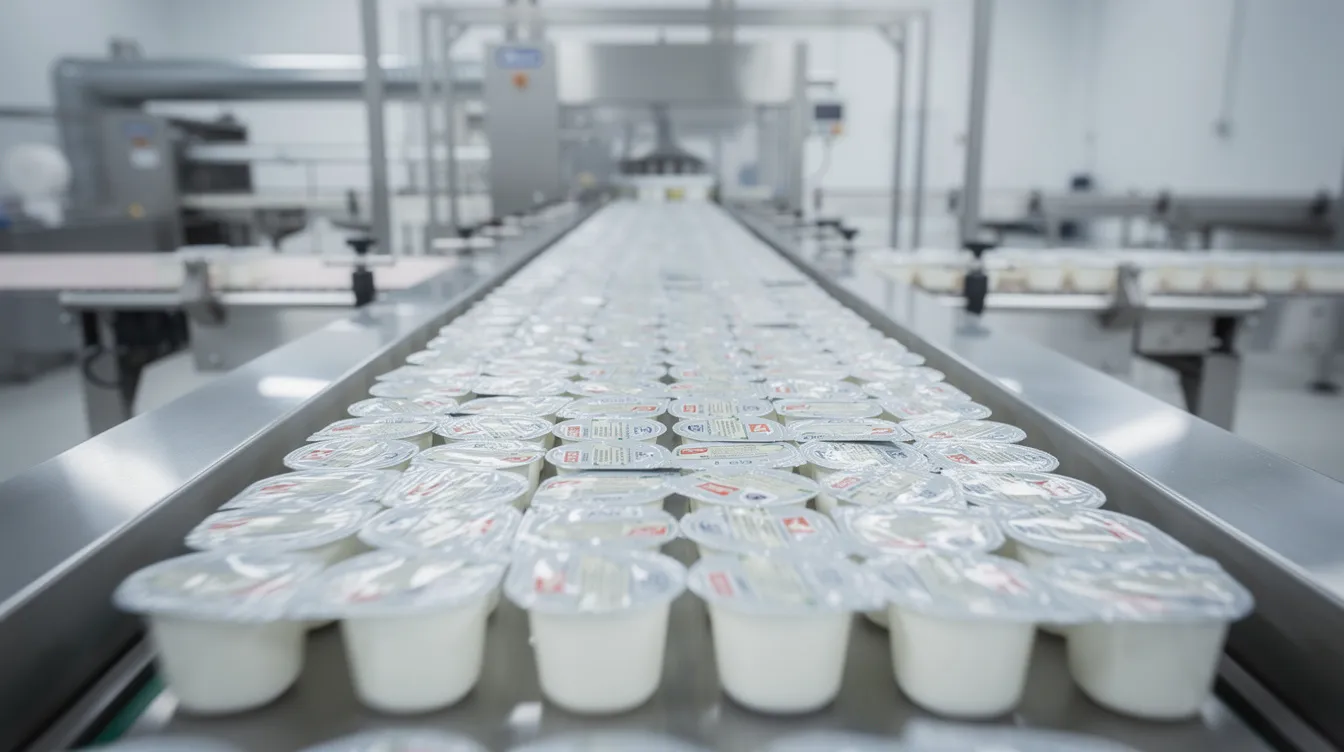
Filling and packing machine selection (form-fill-seal, cup fillers, bottle fillers, vacuum packers) must match line speeds, hygiene standards and shelf-life objectives. Milk packaging material often forms a significant part of variable cost per unit, and working-capital planning must account for inventory of multiple SKUs and sizes.
Quality Control and Dairy Laboratory Requirements
The manufacturing process for dairy products follows a highly regulated sequence, and a value-added dairy plant needs an in-house laboratory to maintain quality standards and regulatory compliance.
Raw Milk Stage
- Fat, SNF, acidity, density testing
- Adulteration screening (urea, starch, neutralisers)
- Milk samples tested for basic microbiological indicators where feasible
Process Stage
- Temperature and pH monitoring
- Titratable acidity and total solids checks
- Fermentation end-point verification
- Visual and sensory consistency checks
Finished Product Stage
- Fat, moisture, protein testing as applicable
- Microbiological parameters (TPC, coliforms, yeast and mould)
- Sensory evaluation for taste, texture and appearance
- Packaging integrity and shelf-life validation
Regulatory barriers in dairy are influenced by national and local authorities such as FSSAI in India, and laboratory capability must align with the product portfolio. In DPRs, laboratory cost including equipment, reagents and manpower should be explicitly budgeted.
By-Products, Whey and Waste Stream Management
Major by-products from a value-added dairy processing plant include:
- Paneer whey (generated at high volumes; approximately 80% of milk used becomes whey)
- Cheese whey
- Buttermilk from butter churning
- Surplus skim milk from standardisation
- Product losses during changeover and CIP
Whey is processed into protein concentrates or powders after cheese production in larger facilities, but at smaller scales, complete whey valorisation may not be financially viable. Practical options include whey-based beverages, use in bakery or confectionery, or sale as animal feed.
Skim milk and buttermilk can often be integrated into lassi, chaas or dairy beverage lines, improving overall raw-material efficiency. Milk powder is produced by evaporating milk to remove moisture, and shelf-stable dairy products are often made through techniques like spray drying, though powder production requires scale to be economical. Milk powder production involves preheating and drying milk in specialised equipment that may not be justifiable for all plant sizes.
A realistic disposal or partial utilisation plan for by-products needs to be incorporated in the project report, as waste reduction can significantly improve gross margins and environmental compliance.
Effluent Treatment and Environmental Compliance
Dairy processing produces high-BOD wastewater from equipment and floor washing, CIP discharges, product spills and whey or buttermilk streams not otherwise recovered. Water consumption in dairy plants ranges from 1 to 7 litres per litre of milk processed, with multi-product plants typically at the higher end.
An Effluent Treatment Plant (ETP) must be sized for expected flow and organic load, typically involving:
- Equalisation tanks
- Biological treatment (aerobic or anaerobic)
- Clarification and sludge handling
ETP design must account for peak loads during CIP cycles and whey discharge, which can differ substantially from average daily water consumption figures. Banks and environmental regulators closely examine ETP adequacy during project appraisal.
Opportunities exist for partial water recycling or biogas recovery from high-organic streams where scale permits, but promoters should not over-promise returns from these secondary systems.
Capacity Planning for a Value-Added Dairy Production Line
Capacity must be defined across multiple dimensions:
- Litres of milk received and processed per day (LPD)
- Number of operating shifts and processing days per year
- Design capacity of the pasteuriser, fermentation tanks, paneer vats and filling lines
- Cold-room holding capacity relative to production and dispatch cycles
Fermentation and setting times for curd, yogurt, Greek yogurt and probiotic products can create bottlenecks even when pasteuriser capacity is sufficient. A yogurt batch occupying a fermentation tank for 4–5 hours limits the number of batches per shift, regardless of upstream throughput.
Realistic capacity utilisation assumptions are essential: phased ramp-up from approximately 50% in the first year to 70–80% over subsequent years should be modelled in project reports, rather than assuming 100% utilisation from day one. Seasonal milk availability variations in India, where monsoon and flush seasons produce surplus while lean seasons create scarcity, make season-wise product-mix modelling important to avoid over- or under-sizing equipment.
Product Mix Planning and Milk Component Balancing
Product mix decisions directly affect daily requirements of fat, SNF and cream. Every litre of milk has a fixed composition: the fat goes into cream-based products or stays in the final product, and milk solids distribute across the product basket.
Key balancing considerations:
- Fat allocated to ghee and butter is not available for full-cream paneer or dahi.
- Surplus skim milk from cream separation must be absorbed into low-fat yogurt, lassi or dairy beverages, or dried into milk powder.
- Whey from paneer and Greek yogurt production must be included in the mass balance: either valorised as a by-product or treated as effluent, both of which affect economics and ETP sizing.
- Milk protein and milk sugar (lactose) distribute across products and by-products and should be tracked for complete mass balance.
Yields per litre of milk for each product must be technically realistic in the DPR. Overestimating paneer yield by even 2–3 percentage points can materially inflate projected revenue and understate raw-material cost per kilogram. Simple tabular or matrix-based tools in the DPR should demonstrate to bankers how milk components are allocated across the proposed product basket without unexplained losses.
Plant Layout, Hygiene Zoning and Material Flow
A well-designed layout separates the plant into functional zones:
- Raw milk reception area
- Processing hall (pasteurisation, standardisation)
- Fermentation and incubation area
- Paneer/cheese processing section
- Packaging rooms (preferably positive-pressure, clean zones)
- Cold storage and dry storage
- Utilities block (boiler, compressor, refrigeration, water treatment)
- CIP chemical storage area
- Laboratory and quality-control room
- Administrative offices
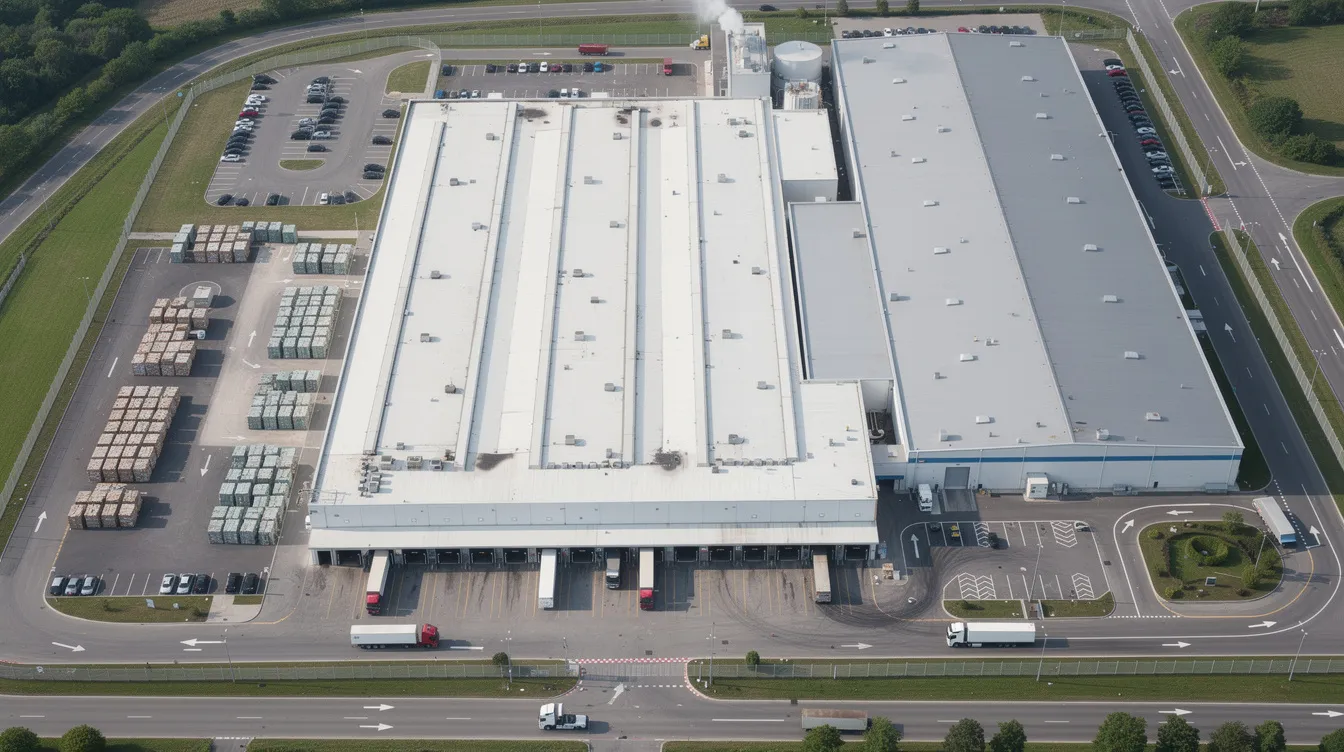
Hygiene zoning ensures separation of raw and pasteurised zones, controlled personnel entry through gowning areas, and directional flow of product and packaging to minimise cross-contamination. Milk, ingredients and packaging should move forward through the plant with minimal backtracking, while waste, effluent and CIP chemicals follow clearly segregated routes.
Good layout design reduces material handling cost, improves safety and hygiene and is a key aspect scrutinised during technical due diligence for financed projects. The DPR should include at least a schematic layout or block diagram to help bankers visualise the process flow and line integration.
How Production-Line Design Influences Project Cost
Total project cost for a value-added dairy processing plant varies significantly depending on:
- Milk-processing capacity (LPD)
- Number and type of product lines installed
- Level of automation (manual, semi-automatic, fully automatic)
- Imported versus indigenous machinery sourcing
- Packaging technology and number of SKUs
- Refrigeration and cold-storage capacity
- Civil construction scope
- ETP and laboratory investment
Adding high-value products like Greek yogurt or probiotic drinks may require more sophisticated dairy processing equipment and higher investment in automation, quality control and cold chain. Multiple small filling and packaging lines for different SKUs can be more expensive than a unified, flexible system, and this choice should be driven by realistic market plans rather than aspirational product lists.
Machinery quotations alone do not determine total project cost. Civil works, utilities infrastructure, cooling equipment, vehicles, pre-operative expenses and working capital are substantial components. Promoters exploring budgetary estimates should consult the detailed Value-Added Dairy Plant Machinery & Equipment Cost resource for a more complete picture.
Production Line Considerations for a Bankable DPR
In my practice of preparing Detailed Project Reports for value-added dairy manufacturing plants, the most common issue I encounter is a disconnect between technical assumptions and financial projections. A technically sound production line must translate into coherent numbers in the DPR.
Key linkages that must reconcile:
- Milk procurement volume ↔ installed machinery capacity ↔ proposed product mix
- Batch cycles and fermentation durations ↔ annual operating days ↔ capacity utilisation percentages
- Product yields per litre of milk ↔ raw-material consumption per kg of finished product ↔ revenue projections
- Utility consumption norms ↔ proposed technology ↔ operating cost line items
- Packaging consumption per unit ↔ packaging-material cost ↔ working-capital inventory
Raw-material, utility, packaging and manpower consumption norms must be consistent with the proposed technology and line design. If a DPR claims 22% paneer yield but the standardisation plan produces milk at a different fat level than what this yield requires, bank appraisers will flag the inconsistency.
Selling prices, credit periods, inventory days and working-capital cyclicality must reflect actual market conditions. A dahi line with a 7-day shelf life demands entirely different working-capital management than a ghee line with 12-month shelf life. Promoters seeking integrated technical and financial DPR support can use the professional resources at www.projectreportbank.com to develop bankable project reports for value-added dairy processing plants in India.
Common Mistakes in Designing Value-Added Dairy Production Lines
Based on my experience in project report preparation, here are the most frequent planning errors:
Technical mistakes:
- Buying machinery before finalising the product mix
- Oversizing the pasteuriser while under-sizing fermentation tanks or paneer presses
- Ignoring filling-machine speed as a production bottleneck
- Inadequate cold-room capacity relative to daily output and dispatch frequency
- Poor CIP coverage and insufficient cleaning time budgeted into production schedules
Mass-balance mistakes:
- Unrealistic product yields (e.g., assuming 25% paneer yield consistently)
- Ignoring cream and whey balances across the product basket
- Failing to plan for by-product utilisation or disposal
Financial-planning mistakes:
- Assuming 85–90% capacity utilisation from the first year
- Underestimating maintenance, spares and labour for multi-product lines
- Ignoring the production costs associated with seasonal milk-supply variability and the time spent on changeovers and CIP
Promoters should validate line design and assumptions with experienced dairy technologists and DPR professionals before freezing equipment orders or approaching banks.
Linking Manufacturing Choices with Financial Feasibility
Technical choices in a dairy products manufacturing process directly influence the numbers that determine financial viability:
- Product mix determines average realisation per litre of milk and overall contribution margin.
- Automation level affects both capex and long-term labour cost.
- Packaging type influences shelf life, brand positioning and variable cost per unit.
- Cold-chain depth determines distribution reach and wastage levels.
- By-product utilisation can turn a cost centre into a marginal revenue stream.
These choices feed into financial indicators commonly used in project appraisal: break-even volume, contribution margin, DSCR, IRR and payback period. A plant focused on short-shelf-life fresh products like dahi and lassi may achieve higher per-unit margins but face greater working-capital intensity and wastage risk. A plant allocating more fat to ghee and butter gains shelf-life stability but ties up more capital in raw material and inventory.
The most profitable configuration on paper may not be feasible in every milk-producing region or market. Location-specific feasibility study and DPR work are essential. ProjectReportBank.com specialises in aligning technical dairy manufacturing process flow with bankable financial modelling tailored to each proposed project.
Who Should Consider a Multi-Product Value-Added Dairy Plant?
Multi-product value-added dairy plants are typically suitable for:
- Existing dairies currently selling liquid milk and looking to improve margins
- Dairy cooperatives and farmer producer organisations with assured pooled milk volume
- Regional dairy brands seeking product diversification
- Food processing companies expanding into the dairy sector
- Institutional investors with access to milk supply infrastructure and cold-chain networks
Medium- and large-scale plants are generally appropriate where assured milk supply, market access and managerial capability exist. Very small, low-volume operations may find the complexity of multi-product manufacturing difficult to manage profitably. Dairy farming operations looking to integrate forward should assess whether their milk produced volume justifies the investment.
The 4Ps marketing mix, including product, price, promotion and place, applies directly: each product in the mix needs a clear market, a competitive lower price or premium positioning, distribution coverage and consumer awareness. Marketing challenges in dairy are primarily resolved through farmers’ and promoters’ own initiatives. However, lack of information often hinders farmers from starting processing ventures, making professional DPR guidance valuable.
Potential investors and lenders should look for robust technical planning, governance and market strategy when evaluating such projects for funding. Not every project is suitable for every promoter.
Conclusion: Integrating Process, Plant and DPR for Successful Dairy Value Addition
A successful value-added dairy products manufacturing process is not about purchasing individual machines in isolation. It requires designing an integrated dairy processing plant production line that is aligned with market demand, milk-supply reality and financial viability.
The main pillars are clear: sound milk collection and standardisation, an appropriate and balanced product mix, well-engineered processing lines for each product, adequate utilities and cold chain, strong quality control producing quality products consistently, and effective by-product management. Each litre of milk must be tracked through mass balance, yields and realisation assumptions in the DPR to give banks confidence in projected cash flows.
Every element discussed in this article, from cow and buffalo milk reception through to the food industry’s packaging and food safety requirements, contributes to whether a project delivers sustainable returns or underperforms. A technically feasible production line does not automatically mean the project is financially viable, and vice versa.
Entrepreneurs, dairy companies and institutions planning such projects can use the resources and professional support available at www.projectreportbank.com to develop detailed, bankable project reports for value-added dairy processing plants. Thorough technical and financial planning upfront, grounded in realistic assumptions about the farm, the equipment, the processing lines and the market, is the most effective way to reduce the risks involved and build a foundation for long-term, sustainable profitability in dairy value addition.
Frequently Asked Questions (FAQ)
What are value-added dairy products in an industrial context?
Value-added dairy products are items such as paneer, curd/dahi, yogurt, Greek yogurt, probiotic drinks, lassi, flavored milk, butter, ghee, cheese and ice cream that involve additional processing, formulation, fermentation or packaging beyond simple pasteurized milk or liquid milk. The value-addition process enhances shelf life, nutritional value, taste, convenience and economic value compared to selling raw milk or pouch milk. These processed milk products require specialised dairy processing equipment, quality control, cold chain and packaging infrastructure at the plant level.
Can multiple value-added dairy products be manufactured in the same plant?
Yes. A single integrated dairy processing plant can produce several products simultaneously by sharing common upstream equipment such as milk reception, chilling, clarification, separation, standardisation and pasteurisation, while installing dedicated downstream lines for specific products. For example, the same milk processing plant can route standardised milk to paneer vats, fermentation tanks for yogurt and curd, blending systems for lassi, and cream to butter and ghee sections. This integration improves capacity utilisation but increases complexity in production scheduling, CIP management and project management.
How does product mix affect profitability in a value-added dairy plant?
Allocating more milk to higher-margin items like paneer, Greek yogurt or probiotic drinks can increase average realisation per litre, but these products also demand higher investment in packaging, cold chain, quality control and working capital due to shorter shelf life. Products like ghee and butter have longer shelf life and lower cold-chain dependency but tie up more high fat content material and capital in inventory. The optimal mix depends on local market demand, milk availability, distribution reach and the promoter’s operational capacity to manage multiple product lines simultaneously.
What utilities are most critical for a value-added dairy processing plant?
Refrigeration is typically the single largest utility consumer, accounting for 50–60% of total electricity consumption in multi-product dairy plants. Steam (for pasteurisation, heating, coagulation and ghee clarification) and electricity (for homogenisation, pumps, automation, packaging and compressed air) are the other major utilities. Water consumption ranges from 1 to 7 litres per litre of milk processed. Effluent treatment capacity must handle high-organic wastewater from CIP, product spills and whey discharge. Utility sizing must align with proposed production volumes and product mix.
What should promoters keep in mind while preparing a DPR for such a plant?
Promoters should ensure technical assumptions about capacities, product yields, utility consumption, product mix and milk composition are realistic and internally consistent. Working-capital cycles must reflect actual shelf-life constraints and credit terms for each product category. Total project cost should include all components: machinery, civil construction, utilities infrastructure, cold rooms, ETP, laboratory, pre-operative expenses and margin money. Financial projections for capacity utilisation should model a phased ramp-up rather than assume full utilisation from day one. Presenting a feasibility study that integrates process engineering with financial modelling substantially improves credibility with banks and financial institutions.