Key Takeaways
- A commercial curd or dahi manufacturing plant in India requires structured investment in land, building, dairy processing machinery, automatic cup-filling and packaging systems, refrigeration, and working capital. Costs vary sharply by plant capacity-a small dairy processing plant costs ₹20 to ₹30 lakhs, while a 5,000 LPD integrated unit may require ₹4.81 crore or more in total capital investment.
- A bankable curd manufacturing plant project report must cover plant capacity planning, complete manufacturing process flow, detailed project cost, means of finance, working capital assessment, DSCR, ROI/IRR, break-even analysis, and sensitivity analysis-with forecasting spanning a minimum of five years.
- Milk procurement quality (fat content, SNF, microbial quality), cold-chain management, and efficient distribution are as critical as machinery selection for ensuring product quality and profitability in any curd plant.
- CA Manish Gugliya, through ProjectReportBank.com, prepares customized detailed project reports and financial projections for curd and dahi plants aligned with actual quotations, location, product mix, and proposed business model.
- With realistic pricing, proper plant setup, disciplined milk procurement, and sound financial planning, an industrial curd or dahi manufacturing plant can be a commercially viable component of a broader dairy processing business.
Introduction: Industrial Curd / Dahi Manufacturing in India
Curd and dahi rank among the most widely consumed fermented dairy products in India. From daily household consumption to hotels, restaurants, institutional catering, quick-service restaurants, and food-service chains, the demand for quality curd is deeply embedded in the country’s food culture. India’s dairy industry is expected to grow significantly by 2026, and curd and paneer are high-demand products driving a substantial portion of this expansion.
There is a fundamental difference between traditional home-made dahi-prepared using household cultures in small batches-and an organized commercial curd manufacturing plant where milk processing, pasteurization, controlled fermentation, automatic cup filling, cold storage, and distribution are standardized and monitored at every stage.
This guide explains the structured outline of a curd manufacturing plant project report covering plant setup, machinery, manufacturing process, cost, profitability, break-even, DSCR, and bank finance requirements. The article is written from the professional perspective of CA Manish Gugliya, a practising Chartered Accountant experienced in dairy processing DPRs, project finance, CMA data, and financial projections, for entrepreneurs and MSME promoters planning a curd plant in India.
Curd / Dahi Manufacturing Plant Project Overview
A curd or dahi manufacturing plant project involves setting up a commercial dairy processing plant focused on industrial-scale curd production. In practice, such a plant is typically integrated with a milk processing plant that may also produce pasteurized milk, buttermilk, paneer, or other dairy products. Curd, paneer, and ghee are popular dairy products that share significant upstream infrastructure, and milk processing plants can additionally produce flavored milk and buttermilk from the same facility.
The product category is packaged curd and dahi-sealed cups, tubs, pouches, and bulk food-service packs-targeted at retail consumers, modern trade chains, HORECA (hotels, restaurants, caterers), and institutional buyers.
Key customer segments in India in 2026 include urban households, quick-commerce platforms, supermarkets, sweet shops, cloud kitchens, QSR chains, and private-label buyers. Urban consumers prefer packaged dairy products for hygiene and quality, and demand for local dairy brands is increasing in Tier-2 and Tier-3 cities as organized retail expands.
Cold-chain management is critical from milk reception to refrigerated storage and distribution because curd has a limited shelf life at 2–8°C. Any break in the cold chain leads directly to product spoilage, returns, and financial losses.
A curd or dahi line may be set up as a standalone unit or as part of a larger integrated dairy processing plant. Entrepreneurs exploring multi-product models-combining milk, curd, paneer, yogurt, ghee, and buttermilk under one roof-should evaluate how shared utilities and infrastructure requirements improve the overall project economics.
Curd, Dahi and Yogurt – Understanding the Product Categories
Though consumers often use the words curd, dahi, and yogurt interchangeably, an industrial dairy processing plant must distinguish between product types because each involves different starter cultures, formulations, and process parameters.
- Traditional dahi uses household back-slopping cultures with variable results in acidity and texture.
- Set curd is produced by filling inoculated milk directly into retail cups, then incubating the filled cups until the desired texture and acidity are achieved.
- Stirred curd is fermented in bulk tanks, then broken and filled into cups or pouches.
- Plain yogurt typically uses defined probiotic cultures (such as Streptococcus thermophilus and Lactobacillus bulgaricus) and may involve higher total solids.
- Greek yogurt is a concentrated, higher-protein variant produced by straining or ultrafiltration, often manufactured in the same facility but requiring additional processing equipment.
- Flavoured yogurt and probiotic products involve fruit or flavour addition and specific culture blends.
Ice cream and yogurt are also commonly produced in dairy processing plants, making product diversification a practical strategy. ProjectReportBank.com covers specialized resources including an Industrial Yogurt Manufacturing Plant Project Report and a Greek Yogurt Manufacturing Plant Project Report for promoters interested in these product lines.
Market Potential for Packaged Curd and Dahi in India
The rising demand for branded, hygienic packaged curd in India has been driven by urbanization, rising incomes, and a clear shift from loose curd sold in steel bowls to sealed cups, tubs, and pouches. According to IMARC Group, the Indian curd and dahi market reached roughly ₹2,001.6 billion in 2025, with the organized segment (sealed cups and tubs) estimated at approximately ₹113.7 billion in FY2025 and projected to grow at a CAGR around 18.6% through FY2030.
The broader India dairy market was valued at USD 135.3 billion in 2024, with projections indicating it could nearly double by 2032 at around 9.3% CAGR, according to Fortune Business Insights. For context, the global milk powder market is projected to reach USD 61.76 billion by 2034, illustrating the scale of the overall dairy sector.
Key demand drivers include:
- Convenience, food safety, and standardized quality expectations
- Availability through organised retail, quick-commerce apps, and supermarket chains
- Growth of food-service, institutional catering, and cloud kitchen sectors
- Health-oriented consumption including probiotic and low-fat variants
Regional preferences remain important. Shrikhand is a high-demand dairy product in Gujarat, while Mishti Doi is popular in West Bengal’s dairy market. Southern and eastern states typically prefer thicker, creamier curds with higher fat content.
Business plans for curd manufacturing must analyze competition and market share to ensure viability. A curd manufacturing project report should include market potential and demand analysis based on location-specific surveys to understand pack sizes, selling price expectations, and competitive dynamics from cooperatives and private dairies.
Curd Manufacturing Plant Capacity Planning
Plant capacity is typically planned in terms of litres of milk processed per day (LPD). Curd processing plants can range from 300 to 5,000 litres per day for small and medium units, while larger integrated plants process 10,000 LPD or more. Output is measured in kg of curd per day or cups per hour from the packaging line.
Capacity selection should consider:
- Daily milk availability and seasonal fluctuation
- Target market size and existing distribution network
- Competition density and distributor reach
- Provision for future expansion
Shift configuration matters: a single 8-hour shift operation requires smaller machinery but limits daily output, while two-shift operation increases throughput and may improve per-unit economics but raises labour and utility costs.
Excessive capacity without an established distribution network is a common planning error. Because curd has a short shelf life (typically 7–15 days under refrigeration), unsold stock quickly becomes waste. Models include:
- Standalone curd plant
- Curd production line within an existing dairy plant
- Integrated milk processing plant producing milk, curd, paneer, ghee, buttermilk, and yogurt sharing common utilities
Raw Materials Required for Dahi Manufacturing
Raw materials for curd production include fresh milk and specific starter cultures, forming the foundation of the product. The complete raw material list includes:
- Fresh cow or buffalo milk (raw milk, tested for quality)
- Standardized milk (adjusted to required fat content and SNF)
- Skimmed milk powder (where solids adjustment is needed)
- Commercial starter cultures for controlled fermentation
- Stabilizers (only where technically justified and permitted by FSSAI)
- Sugar or flavours for value-added variants
- Potable water for CIP and utility use
Packaging materials include:
- PP or PS cups, HDPE or LDPE pouches, HIPS tubs
- Aluminium foil lids, plastic lids, labels
- Corrugated boxes for secondary packing
Cleaning and sanitation chemicals (CIP detergents, caustic soda, acid, sanitizers) are critical consumables and must be budgeted in operational costs. The choice of formulation-economy curd, premium thick curd, probiotic curd, or yogurt-based products-determines the exact raw material mix and cost structure.
Milk Procurement and Quality Considerations
Milk procurement models in India include direct procurement from farmers, village collection centres, tie-ups with dairy cooperatives, or sourcing from existing milk processing plants. Procurement economics vary significantly by region and season.
Key quality parameters checked at milk reception:
- Fat percentage and SNF content
- Acidity and temperature
- Presence of antibiotics or adulterants
- Microbial load
Rapid chilling using Bulk Milk Coolers at village level and transport in insulated tankers is essential to maintain quality and reduce bacterial growth. A curd processing plant must include a Bulk Milk Cooler as part of its reception infrastructure.
Raw milk cost is usually the single largest component of curd manufacturing cost. Typical civil consumer procurement prices for milk with 4.5% fat content are ₹60–₹70 per litre in several states, and the DPR should carefully model price fluctuations across seasons, as even small per-litre variations significantly affect annual profitability.
Curd / Dahi Manufacturing Process
The curd manufacturing process involves milk receipt, pasteurization, fermentation, and packaging in a controlled, standardized sequence. The project report should cover the complete production flow. Actual temperature and time set-points must follow technical design and food-safety industry standards specific to each plant.
Process flow:
Milk Reception → Testing → Standardization → Filtration/Clarification → Homogenization → Pasteurization → Cooling → Starter Culture Inoculation → Cup/Bulk Filling → Incubation → Rapid Cooling → Cold Storage → Dispatch
Milk Reception and Testing
Raw milk is received in cans or tankers, weighed, sampled, and tested for fat, SNF, temperature, acidity, and basic microbiological quality before being accepted into the processing plant.
Milk Standardization
Milk is standardized to obtain the desired fat and SNF level suitable for the final product (full-cream, toned, or double-toned dahi) by mixing cream, skim milk, or adding skimmed milk powder.
Filtration and Clarification
Standardized milk is filtered or clarified to remove physical impurities and sediments, improving hygiene and product appearance.
Homogenization
Homogenization breaks fat globules to provide a smooth, uniform texture and prevent cream separation in the finished curd. This step significantly influences the mouthfeel and consistency perceived by the consumer.
Heat Treatment / Pasteurization
Milk is pasteurized using a plate or tubular pasteurizer to destroy harmful microorganisms and inactivate enzymes, ensuring product safety and a better shelf life.
Cooling to Inoculation Temperature
After pasteurization, milk is cooled to an appropriate inoculation temperature range suitable for the selected starter culture and type of curd being produced.
Starter Culture Addition
Defined quantities of commercial starter culture are added under hygienic conditions to achieve consistent acidity development and flavour. The technology used for culture preparation and dosing affects batch-to-batch consistency.
Cup Filling or Bulk Filling
For set curd, inoculated milk is filled directly into retail cups or tubs and incubated inside the packaging. For stirred curd, fermentation happens in tanks and the product is broken and filled into cups or pouches afterward.
Incubation / Fermentation
Filled cups or incubation tanks are maintained at controlled temperature-curd incubation typically requires holding temperatures of around 45°C-for a defined period until the desired acidity, pH, and texture are achieved.
Rapid Cooling
Once target acidity is reached, products are quickly cooled to refrigeration temperature to arrest further fermentation and stabilize texture.
Cold Storage
Finished products are stored in chilled cold storage rooms (typically 2–8°C) with proper stacking, FIFO rotation, and stock control.
Dispatch and Cold-Chain Distribution
Cold chain logistics is crucial for maintaining the quality of curd during distribution. Products are dispatched using insulated or refrigerated vehicles, with continuous temperature monitoring and coordination with distributors and retailers to minimize returns and spoilage.
Curd Manufacturing Plant Machinery and Equipment
Equipment necessary for curd production includes milk pasteurizers and automated filling machines, along with a range of supporting process and utility systems. The exact specifications depend on plant capacity and automation level.
Core process equipment:
- Milk reception tank and weighing system
- Milk storage and chilling tanks
- Cream separator (where applicable)
- Homogenizer (500–5,000 LPH, typically ₹3–8+ lakh)
- Pasteurizer-PHE or tubular type (500–10,000 LPH, typically ₹3–15+ lakh)
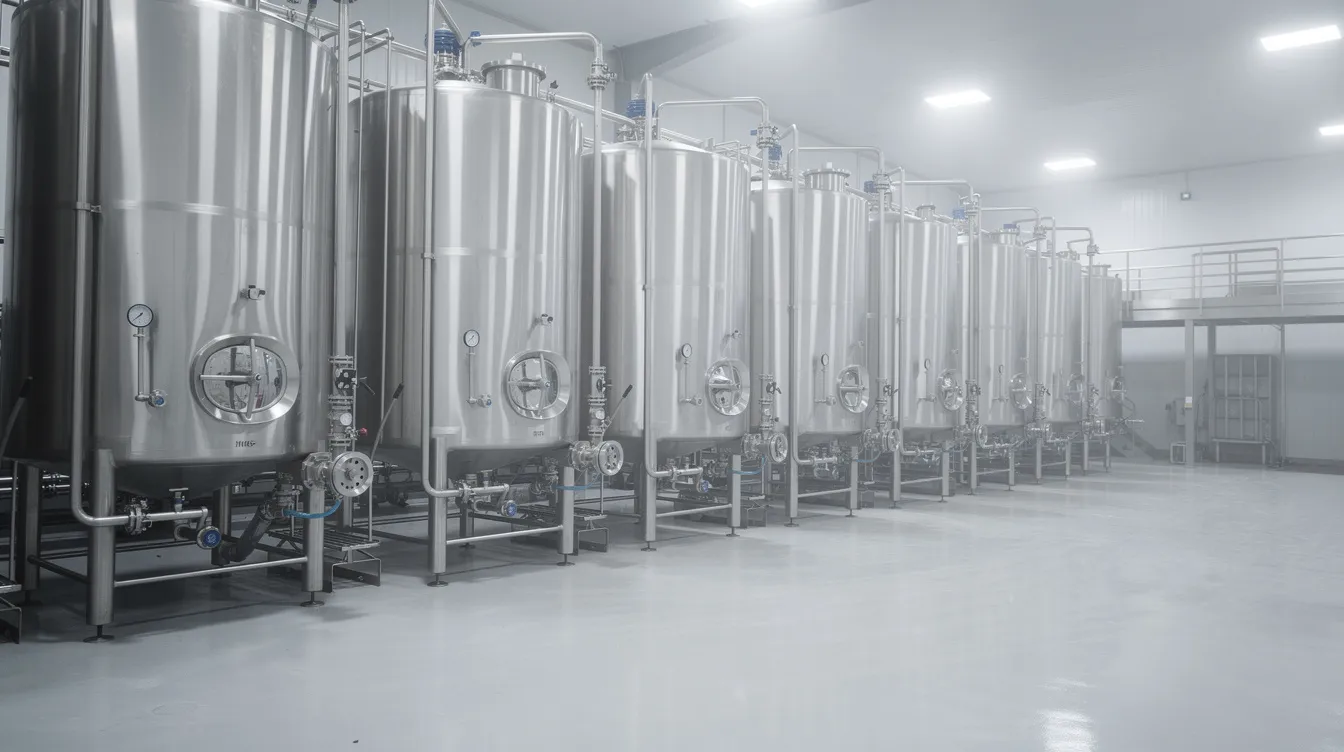
- Balance tank, process tanks, fermentation tanks
- Culture preparation vessels
Packaging and downstream:
- Cup filling machine and foil sealing machine
- Pouch-filling machine (if pouches are used)
- Conveyors, batch coding or inkjet printers
- Shrink-wrapping and secondary packaging
Utilities and support:
- Boiler or hot-water generator
- Refrigeration plant and cold room
- Air compressor (where automation requires it)
- CIP system for cleaning stainless steel contact parts
- Water-treatment plant
- Electrical panels, pumps, pipelines, valves
- Laboratory instruments for quality testing
The DPR should attach machinery quotations with make, model, capacity, and supplier details. Advanced machinery from reputed suppliers provides a competitive edge in consistency and output quality.
Automatic Curd Cup Filling and Packaging Line
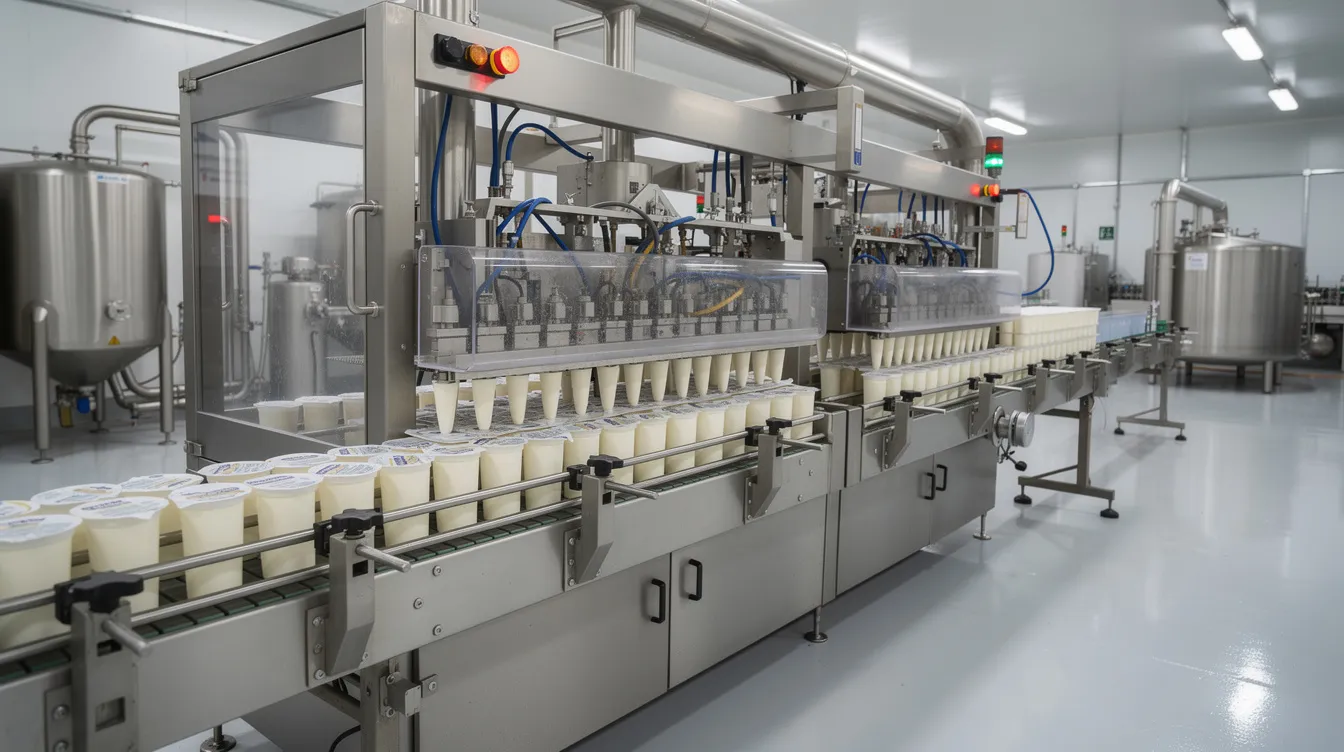
An automatic cup filling and sealing line is the heart of a commercial curd cup business, directly impacting labour requirement, hygiene, and output capacity. Functional stages include cup denesting, metered filling, foil or lid placement, heat sealing, date and batch coding, and discharge to secondary packing.
Fully automatic rotary machines can handle approximately 2,000–5,000 cups per hour depending on configuration. Dual-line roll film cup filling and sealing machines are available from Indian manufacturers at approximately ₹11 lakh, while foil-sealing machines for smaller capacities start from around ₹5 lakh.
For smaller capacities, semi-automatic or manual filling into tubs and pouches is possible, but industrial dahi manufacturing plants targeting modern retail typically invest early in automation for consistency and minimum order quantity compliance.
Packaging Options for Curd and Dahi
The project report should clearly define proposed pack sizes: 80–100 g single-serve cups, 200 g and 400 g cups, 500 g and 1 kg family tubs, and bulk 5–20 kg packs for HORECA and institutional customers.
Packaging choice influences selling price, brand perception, logistics cost, shelf display, and cold-storage space utilisation. Packaging material selection must consider food-safety compliance, seal integrity, compatibility with fermentation (for set curd), and recyclability. Curd pouches reduce packaging cost per kg but may be less premium compared to printed cups or tubs.
Land and Building Requirement
Plant layout must demonstrate a logical forward flow of materials to minimize cross-contamination, with clear separation of raw and finished product zones. Functional areas include:
- Raw milk reception bay
- Processing hall
- Fermentation and incubation area
- Cup-filling and packaging room
- Cold rooms (raw and finished goods)
- Raw-material and packaging store
- Quality-control laboratory
- Utilities block and administrative offices
- Loading and dispatch area
As a reference, a 500-litre-per-day plant requires approximately 1,500 to 2,000 square feet. Land and covered area requirements scale with capacity-a 1,000 LPD plant needs considerably less built-up space than a 10,000 LPD integrated dairy processing plant. The DPR should include a site plan and plant layout drawing showing process flow and provision for future expansion.
Utilities Required
The project report must quantify utility loads including electrical demand (kW), refrigeration tonnage (TR), boiler or hot-water generator capacity, and daily water requirement. Milk processing requires approximately three litres of water per litre of milk processed, covering processing and CIP needs.
Key utilities include:
- Three-phase electricity with suitable connected load
- Refrigeration plant and cold storage
- Process hot water or steam (boiler)
- Compressed air (where automation demands it)
- Potable and process water
- Effluent treatment arrangements
- Backup power (DG set)
Refrigeration and cold-room running are major contributors to operational costs, especially in hot Indian summers, and must be correctly factored into financial projections.
Manpower Requirement
Staffing categories depend on capacity and degree of automation:
| Category | Function |
|---|---|
| Plant Manager | Overall operations |
| Dairy Technologist | Process and formulation control |
| Production Supervisor | Shift-level production oversight |
| QC/Lab Assistant | Testing and quality assurance |
| Machine Operators | Pasteurizer, homogenizer, cup-filling |
| Packaging Workers | Secondary packing, labelling |
| Cold-Room Handlers | Finished goods storage and dispatch |
| Utility Operators | Boiler, refrigeration, water treatment |
| Maintenance Technician | Equipment upkeep |
| Procurement/Accounts/Admin | Support functions |
| Sales & Distribution | Market development |
The DPR should estimate salary and wages cost realistically based on local wage levels and include statutory contributions (ESI, PF) where applicable.
Quality Control and Food Safety
Quality control measures in curd production include microbiological testing and HACCP-based controls at every stage-raw milk testing, process monitoring, fermentation control, packaging integrity checks, and finished-product testing for acidity, pH, fat, SNF, and microbial parameters.
Compliance with food safety standards is mandatory for dairy-processing facilities like curd manufacturing plants. A curd manufacturing plant requires specific regulatory approvals like FSSAI registration, and CIP systems, documented sanitation schedules, and personal hygiene practices for plant staff are non-negotiable.
Batch coding, traceability, recall procedures, and maintenance of quality records are often scrutinised by large institutional buyers and modern retail chains. High standards in quality assurance directly support brand trust and repeat business.
Project Cost of Curd Manufacturing Plant
A curd manufacturing plant project report must break total project cost into clear heads:
- Land and site development
- Building and civil works (acid/alkali resistant tiles, glazed walls)
- Plant and machinery
- Refrigeration and cold storage
- Electrical installation
- Utility equipment (boiler, water-treatment, air compressor)
- Laboratory equipment
- Furniture and office equipment
- Pre-operative expenses
- Contingency provision
- Margin for working capital
There is no single standard curd plant cost. A small dairy processing plant costs ₹20 to ₹30 lakhs, while total capital investment for a 5,000 LTR/day plant is approximately ₹4.81 crore. A 10,000 LPD milk processing plant costs approximately ₹5–7 crore for building, machinery, and utilities (excluding land), with an additional 30–35% for value-added lines like curd and paneer processing.
Accurate costing requires collecting machinery quotations from dairy-plant suppliers and using current local rates for civil construction and utilities. Product videos and technical brochures from equipment suppliers can help promoters compare options and inform the detailed project report.
Means of Finance
The project cost is typically financed through:
- Promoter contribution (equity or own funds)-banks usually expect 20–30% of project cost
- Term loan from banks or financial institutions
- Unsecured loans where permissible
- Separate working capital limits (cash credit, overdraft)
Financial assistance in the form of subsidies under dairy or food processing schemes (where available) may reduce net promoter contribution. CA Manish Gugliya structures the means-of-finance section based on realistic funding discussions with promoters and available bank schemes, without promising specific sanction outcomes.
Working Capital Requirement for Curd Plant
Working capital for a curd or dahi manufacturing plant consists of funds locked in:
- Inventories (milk, cultures, packaging materials, finished goods)
- Trade receivables (distributors, modern retail, institutional buyers)
- Day-to-day cash expenses
Less supplier credit and other current liabilities.
Due to short shelf life, finished-goods inventory days tend to be lower, but receivable days can be significant when selling through distributors or institutional buyers with credit terms. Milk purchase-usually paid to farmers or cooperatives on a weekly or fortnightly basis-and ongoing packaging purchases require adequate working capital for at least one full operating cycle.
The DPR should include a detailed working capital assessment and propose suitable facilities in consultation with the banker.
Revenue Model of a Curd Manufacturing Plant
The basic revenue formula is: Production Volume (kg) × Capacity Utilization (%) × Average Selling Price per kg.
Revenue streams may include retail-branded curd cups and tubs, economy pouches, bulk curd supplies to hotels and restaurants, contract manufacturing or private-label production for other dairy brands, and cross-selling paneer, buttermilk, and yogurt from the same plant. Profit margins for paneer and ghee range from 20 to 40 percent, which makes multi-product integration attractive for improving overall plant economics.
Product mix (premium vs. economy packs, bulk vs. retail) directly influences average realization and profitability. The origin and quality of milk, combined with packaging and brand positioning, determine the price range achievable in the target market.
Major Operating Costs
Major cost heads in a curd manufacturing plant include:
- Raw milk procurement (the largest single cost)
- Starter cultures and skimmed milk powder
- Packaging materials (cups, lids, labels, secondary packaging)
- Electricity and refrigeration power
- Boiler fuel, water, and CIP chemicals
- Direct and indirect labour
- Repairs and maintenance
- Quality control and testing
- Selling, distribution, and transportation expenses
- Administrative overheads and insurance
Operating costs for milk-based processing units are typically 75–85% attributable to raw milk expenses, making milk procurement the most sensitive variable in the project. Packaging and cold-chain distribution costs together can account for a substantial additional share of variable costs.
Profitability of Curd / Dahi Manufacturing Plant
Profitability analysis in the project report should present gross margin (contribution), EBITDA, profit before tax, and net profit over a projected period based on realistic capacity utilization ramp-up. In sample DPRs, gross margins of 20–30% and net profit margins of 8–14% are observed in the early years after stabilization.
Key profitability drivers include milk procurement cost, selling price, packaging cost per kg, plant capacity utilization, distribution efficiency, and control over wastage and returns. Actual profit margins vary widely by region, competition, and business model, and no DPR can guarantee specific margins-but it can rigorously test assumptions and viability.
Break-Even Analysis
The break-even formula in explanatory terms: Break-even Sales = Fixed Costs ÷ Contribution Margin Ratio, where contribution margin equals (Sales – Variable Costs).
Break-even analysis determines the minimum annual sales or production volume at which the curd plant covers all fixed expenses-salaries, interest, depreciation, overheads-without generating a loss. The break-even point for a dairy processing plant is approximately 55% capacity utilization in many observed project models. The DPR should tabulate expected break-even capacity and demonstrate how quickly the project crosses this level under base-case assumptions.
Financial Projections Required in a Curd Plant DPR
The financial analysis of a curd manufacturing project should include cost of production and sales projections. Core financial statements include:
- Projected sales and production statement
- Cost of production calculation
- Projected profit and loss account
- Projected balance sheet
- Projected cash-flow statement
Additionally, the DPR requires working capital assessment, term-loan repayment schedule, depreciation schedule, interest calculation, break-even analysis, DSCR calculation, ROI and IRR computation, and payback period estimation. Forecasting should encompass a minimum of five years in financial projections.
All projections must be customized to the actual proposed plant capacity, chosen machinery, local milk procurement price, packaging cost, labour cost, and bank loan terms-rather than generic templates.
DSCR and Loan Repayment Capacity
DSCR (Debt Service Coverage Ratio) is calculated as: Cash Accruals (Net Profit + Depreciation + Interest) ÷ (Term-Loan Principal Repayment + Interest) for each year.
Banks in India rely heavily on DSCR to judge whether the curd manufacturing plant can comfortably service its term loan throughout the repayment period. Acceptable minimum annual DSCR in early years is generally ≥1.25–1.50, with average DSCR over the loan tenure targeted at 1.50–2.00 or higher. A sample DPR for a curd project showed an average DSCR of approximately 3.76 over five years.
Operating profit, interest cost, loan tenure, moratorium period, and repayment structure all influence DSCR. CA Manish Gugliya assists in preparing and analysing DSCR and repayment schedules but does not guarantee loan approval-the final decision lies with the bank.
ROI, IRR and Payback Period
- ROI measures average annual profit divided by total project cost, giving a simple percentage return on investment.
- IRR (Internal Rate of Return) is the discount rate at which NPV of project cash flows becomes zero, representing the project’s intrinsic return.
- Payback period is the time required to recover initial investment from net cash inflows.
Promoters should avoid judging a curd or dahi project solely by first-year profit percentage. Long-term IRR, payback period, and cash-flow stability over the entire projection period give a more reliable picture. The DPR should present base-case, optimistic, and conservative scenarios.
Sensitivity Analysis for Curd Manufacturing Plant
Sensitivity analysis is essential to assess risks in the financial projections of a curd manufacturing project. It tests how project outcomes (profit, DSCR, IRR) change when key variables move unfavourably or favourably.
Common scenarios to analyse:
- 5–10% increase in raw-milk procurement cost
- 5–10% reduction in selling price due to competitive pressure
- Slower ramp-up of capacity utilization than assumed
- Increase in packaging material costs due to resin price volatility
- Extended credit period to customers lengthening the working capital cycle
Dairy projects are particularly sensitive to raw-milk price and market price realization. Testing these scenarios before committing to a curd plant investment is essential for any clear understanding of project resilience.
Key Risks in a Curd / Dahi Manufacturing Project
Technical and commercial risks:
- Milk availability constraints and milk-price volatility across seasons
- Cold-chain failure or power backup failure leading to spoilage
- Quality complaints, product recalls, and high product returns
- Intense competition from established dairy brands, cooperatives, and unorganised local vendors
Operational risks:
- Poor fermentation control or starter culture failure
- Packaging failure (leakage, seal defects)
- High wastage from overproduction or distribution mismatches
- Skill gaps in dairy processing or quality assurance among staff
Financial risks:
- Inadequate working capital or delayed receivables from distributors
- Underestimation of marketing and distribution costs in the DPR
- Cost overruns during plant setup or commissioning delays
Mitigation strategies include: long-term milk procurement relationships, robust preventive maintenance, investment in reliable utilities, staff training, conservative financial projections, and gradual capacity ramp-up aligned with distribution reach.
Licences and Registrations
Key licences and registrations for a curd or dahi manufacturing plant in India (subject to project-specific applicability):
- Business constitution (proprietorship, partnership, company, LLP) and PAN
- GST registration is mandatory after ₹20 lakhs turnover
- FSSAI Manufacturing License is essential for dairy processing plants; a State FSSAI license is needed for turnover below ₹20 crore
- Udyam MSME registration (where applicable)
- Local trade license is required from municipal authorities
- Factory registration and labour-law compliance (ESI, PF where applicable)
- State Pollution Control Board NOC is necessary for dairy operations, especially for effluent discharge
- Fire and building safety clearances
- Legal Metrology registration for packaged commodities
Regulatory applicability varies by state, capacity, and product mix. Readers should obtain location-specific guidance from legal and compliance professionals, as well as consultants familiar with the food processing sector.
Bank Loan for Curd Manufacturing Plant
Banks evaluate a dahi manufacturing plant bank loan project report on several parameters:
- Promoter background and experience in the dairy or food industry
- Market study and demand assessment
- Detailed project cost and means of finance
- Projected profitability and cash flow
- DSCR and break-even analysis
- Security, collateral, and promoter contribution adequacy
A well-structured project report acts as a blueprint for securing funding and regulatory approvals. Term loans cover plant, machinery, and building, while cash credit or overdraft facilities address working capital needs. Bill-discounting or supplier-credit structures may also be relevant depending on business and clients served.
A professionally prepared curd plant DPR with realistic assumptions greatly improves the quality of discussions with bankers but does not guarantee sanction. The final appraisal depends on lender policy and risk assessment.
What Should a Curd Manufacturing Plant DPR Contain?
A comprehensive DPR should cover:
- Executive summary and promoter profile
- Project concept, location, and product profile (curd/dahi variants, pack sizes)
- Industry overview, industry trends, and market potential
- Milk procurement strategy and quality management
- Manufacturing process and flow chart
- Plant capacity and expansion plan
- Detailed machinery list with quotations from suppliers
- Land, building, plant layout, and infrastructure requirements
- Utilities calculation and manpower plan
- Implementation schedule
- Detailed project cost and means of finance
- Working capital assessment
- Sales and production projections
- Cost of production and profitability analysis
- Cash-flow projections, break-even analysis, and DSCR computation
- ROI, IRR, payback period, sensitivity analysis, and risk analysis
- Term-loan repayment schedule
The DPR should be data-backed and tailored to the promoter’s actual plan-not a generic template suitable for every dairy plant in the country.
How CA Manish Gugliya Can Assist
CA Manish Gugliya, through ProjectReportBank.com, assists entrepreneurs, dairy companies, and MSME promoters in preparing customized curd and dahi manufacturing plant DPRs aligned with bank and investor requirements.
Key professional services include:
- Project conceptualisation and financial analysis
- Estimation of project cost and means of finance
- Preparation of detailed financial projections
- Working capital assessment
- DSCR, break-even, ROI, and IRR computation
- Sensitivity and risk analysis
- CMA data preparation where required
- Support in structuring bank-loan proposals and investor-ready documentation
Every project report is prepared individually, using actual plant capacity, quotation-based machinery cost, local milk price assumptions, proposed product mix, and realistic selling price estimates. Access to professional DPR preparation ensures that the project enters the banking and investment process on a strong foundation.
Frequently Asked Questions
How much does a curd manufacturing plant cost in India?
Cost depends on plant capacity, level of automation (semi-automatic vs. automatic curd production line), building specification, and packaging format. A small-scale dairy processing plant may cost ₹20–30 lakhs, while a 5,000 LPD integrated unit may require around ₹4.81 crore in total capital investment. A turn-key curd and cup curd plant for a state cooperative has been tendered at approximately ₹3.60–₹4.76 crore. The DPR should always be based on actual machinery quotations and local construction rates rather than generic estimates.
Is dahi manufacturing profitable?
Dahi manufacturing can be profitable where there is reliable milk supply, strong local demand, efficient cold-chain distribution, and good capacity utilization. In observed sample DPRs, gross margins of 20–30% and net profit margins of 8–14% are seen after stabilization. However, actual profit margin varies widely and must be tested through detailed financial projections and sensitivity analysis specific to each project.
What is the shelf life of packaged curd?
Typical refrigerated shelf life of curd in sealed retail packs ranges from about 7 to 15 days under proper cold-chain conditions (2–8°C), depending on formulation, packaging integrity, and storage temperature. The exact shelf life must be validated through product testing and labelled as per FSSAI norms.
Can curd and Greek yogurt be manufactured in the same dairy facility?
Yes. The same dairy processing plant can host both curd and Greek yogurt lines, provided there is suitable additional equipment such as straining or ultrafiltration systems and carefully managed process flows. Promoters interested in this combination can refer to the Greek Yogurt Manufacturing Plant Project Report on ProjectReportBank.com for specialized details.
Can a curd plant be integrated with other dairy products?
Curd plants are commonly integrated with milk, paneer, buttermilk, lassi, and yogurt in a single dairy processing plant sharing utilities and milk reception infrastructure. Multi-product integration improves asset utilization and spreads fixed costs across a wider revenue base. Promoters exploring this approach can refer to the Integrated Dairy Processing Plant Project Report on ProjectReportBank.com.
Conclusion
An industrial curd and dahi manufacturing plant, when backed by reliable milk procurement, robust processing and quality control, efficient cold-chain distribution, and realistic financial planning, can be a sustainable and profitable part of India’s organised dairy processing sector. The beverage and fermented dairy segment in the country continues to expand, and the organized curd market’s strong growth trajectory presents a real opportunity for well-prepared promoters.
A professionally prepared curd manufacturing plant project report helps promoters evaluate feasibility, structure bank finance, and present the business model clearly to lenders and investors. It moves the conversation from assumptions to data-backed analysis.
For customized DPRs, financial projections, and project-finance support for curd, dahi, and integrated dairy processing plants in India, connect with CA Manish Gugliya at ProjectReportBank.com.