Key Takeaways
- A hospital project report (DPR) in India is a financial and technical roadmap that integrates project cost, means of finance, revenue model, profitability, working capital and DSCR into one coherent document for promoters and lenders.
- Banks and NBFCs in India rely on a bankable hospital project report along with CMA Data to assess term loans, equipment finance and working-capital facilities for both new and expansion projects.
- Project cost for a 30-bed, 50-bed or 100-bed hospital depends on land, building, medical equipment, infrastructure and ramp-up plan rather than any single per-bed thumb rule.
- Realistic assumptions on occupancy, ARPOB, OPD volumes, staff cost and payor mix are critical for reliable financial projections and DSCR calculations – over-optimistic assumptions are the most common reason DPRs face rejection.
- CA Manish Gugliya at ProjectReportBank.com specialises in preparing customised hospital DPRs, financial models and CMA Data for Indian hospital project finance and bank loan proposals.
Explore Hospital Project Report Guides
Explore our complete Hospital Project Report guides covering general hospitals, multi-speciality hospitals, cancer hospitals, diagnostic centres and eye hospitals.
Introduction: Why a Professional Hospital Project Report Matters in India
Setting up or expanding a hospital in India – say a new 100-bed hospital project in a Tier-2 city in 2026 – involves far more than estimating building and medical equipment cost. The health care industry in India is experiencing sustained demand growth, with ICRA forecasting 13–15% revenue growth for organised hospitals in FY2027. Yet, the gap between a promising idea and a funded, operational hospital is bridged only by rigorous financial planning.
A hospital project must integrate decisions on bed capacity, specialties, location, healthcare infrastructure, staffing, project cost, bank loan structure, working capital and long-term viability into a single coherent document. This document – the hospital DPR or detailed project report – is the core link connecting concept to investment to operations to revenue to profitability to cash flows to debt repayment.
When lenders evaluate a hospital project report for bank loan in India, they focus on several specific indicators:
- Projected occupancy ramp-up and stabilised bed utilisation
- Average Revenue Per Occupied Bed (ARPOB) and OPD revenue assumptions
- EBITDA margins and net cash accrual trajectory
- Debt Service Coverage Ratio (DSCR) across the loan tenure
- Security, promoter contribution and regulatory compliance status
What Is a Hospital Project Report?
A hospital project report is a structured document describing the technical, operational and financial plan of a healthcare facility. In the Indian banking and regulatory context, it must include operational, financial and architectural viability details to satisfy both promoters planning the venture and lenders evaluating loan proposals.
The scope and depth of the report depend on its purpose:
- A basic project report typically summarises the hospital concept, rough project cost, bed strength and a broad revenue idea – suitable for preliminary discussions.
- A detailed project report (DPR) contains a full feasibility study, itemised cost details, financial model, working-capital assessment and DSCR analysis.
It helps to distinguish between related documents:
- Hospital DPR: combines technical depth (departments, equipment, layout) with financial projections and viability analysis.
- Bank loan project report: the DPR supplemented with lender-focused sections such as means of finance, collateral details and repayment schedules.
- Business plan or pitch deck: more promoter- and investor-focused, emphasising market opportunity and returns.
- Financial projections pack: projected P&L, balance sheet, cash flow and ratios.
- CMA Data for hospital: standardised financial information statement (past and projected) required mainly by banks in India.
A 30-bed hospital project seeking a ₹8 crore term loan will naturally need a more detailed report than a small clinic upgrade funded purely from internal accruals.
Why Is a Hospital DPR Important?
A hospital DPR is not just paperwork for a bank loan. It is a decision-making tool for promoters, investors and lenders alike.
- Project planning: it converts a medical vision into structured infrastructure, staffing and equipment requirements, utilizing a systems approach to continuous planning, implementation and evaluation.
- Investment decisions: it tests whether the project justifies capital investment at current interest rates and expected occupancy levels.
- Financial feasibility: it analyses profitability, break-even and DSCR over 7–10 years, giving promoters a clear picture of when the hospital becomes self-sustaining.
- Bank finance: it provides a bankable project report aligned with Indian bank appraisal formats, which most scheduled commercial banks and NBFCs require before processing any term loan application.
- Expansion planning: it evaluates capacity addition, new diagnostics or specialty blocks in an existing hospital.
- Internal consistency is non-negotiable – bed strength, occupancy, theatre utilisation and diagnostic volumes must logically support projected revenue figures.
Who Needs a Hospital Project Report in India?
Any significant healthcare facility investment in India benefits from a structured hospital project report, even if bank finance is not immediately planned.
- Doctors planning a new 20-bed or 30-bed hospital in a district headquarters.
- Promoters planning a 100-bed multi specialty hospital in a metro suburb.
- Existing 50-bed hospitals adding ICU beds, a cath lab or an oncology wing.
- Diagnostic centre owners planning to convert into a day-care or short-stay hospital.
- Investors and PE funds evaluating brownfield hospital acquisitions.
- NGOs and trusts developing charitable hospitals that still require financial viability and cash-flow planning.
- Medical colleges looking to establish attached teaching hospitals with clinical facilities.
Banks generally insist on a hospital project report for term loans above modest ticket sizes (broadly beyond ₹1–2 crore) and for any project where repayment depends on new hospital cash flows.
Types of Hospital Projects and Their Impact on the Project Report
Hospital economics, capital cost per bed, staffing ratios and funding patterns differ significantly between small hospitals, multi-speciality hospitals, cancer centers, diagnostic centres and eye hospitals. The project report must reflect these differences in every assumption – from equipment budgets to revenue models.
This section briefly describes each type and links to specialised guides on ProjectReportBank.com without duplicating their full detail.
General & Small Hospital Project
General and small hospitals in India usually range from 10–50 beds, often run by individual doctors or small groups in Tier-2 and Tier-3 cities, with moderate capital cost and high dependence on local catchment and community health needs.
- Typical services include basic medicine and general surgery, obstetrics, limited ICU, standard diagnostics (X-ray, ultrasound, basic lab) and emergency services.
- The hospital project cost structure is relatively simpler, though working capital and staffing still need careful attention.
- For a detailed walkthrough of cost, revenue and bank-loan planning for smaller facilities, refer to the dedicated General & Small Hospital Project Report / DPR for Bank Loan guide.
Multi-Speciality Hospital Project
Multi-speciality hospitals (often 75–300 beds) combine multiple hospital departments like cardiology, orthopaedics, neurology, oncology day-care, advanced diagnostics and multiple operation theaters. This leads to higher project cost and complex financial modelling.
- The project report must carefully plan department-wise revenue, ICU and OT utilisation, staffing layers and phased commissioning of healthcare facilities.
- Revenue streams are wider but so are fixed costs, especially professionals and nursing staff.
- Explore the Multi-Speciality Hospital Project Report / DPR for Bank Loan guide for specialty-level modelling guidance.
Cancer Hospital / Oncology Centre Project
Oncology centres in India are capital-intensive due to radiotherapy bunkers, linear accelerators, PET-CT scanners, day-care chemotherapy suites and specialised ICUs.
- The DPR for a cancer hospital must cover high-value medical equipment planning, technology upgrades every 7–10 years, and careful demand estimation because oncology referrals may come from multiple districts.
- Consider the total cost of ownership for equipment including long-term maintenance and obsolescence, not just the purchase price.
- For radiotherapy and chemotherapy-specific costing, see the Cancer Hospital Project Report / DPR for Bank Loan guide.
Diagnostic Centre / Pathology & Imaging Project
Diagnostic centres, pathology labs and imaging centres have fundamentally different business models – no inpatient beds but high dependence on test volumes, doctor referrals and equipment uptime.
- Their DPRs emphasise machine capacity (CT scan slices, MRI throughput per hour), test pricing, referral network strength and lease vs. purchase decisions for equipment.
- These projects provide diagnostic services that often feed into larger hospital ecosystems.
- Stand-alone diagnostic entrepreneurs should explore the Diagnostic Centre Project Report / DPR for Bank Loan guide.
Eye Hospital Project
Eye hospitals typically run high-volume OPD and day-care surgeries (cataract, retina, cornea) with specialised diagnostic and OT equipment but comparatively shorter average length of stay.
- The DPR should focus on OPD footfall, surgery volumes per OT, package pricing and outreach programmes (eye camps) when modelling revenue and profitability.
- These facilities offer a distinct model of medical care where throughput efficiency drives financial performance.
- For ophthalmology-specific financial projections, refer to the Eye Hospital Project Report / DPR for Bank Loan guide.
Explore Hospital Project Report Guides
The following table helps you jump directly to the specialised hospital DPR guide matching your project type.
| Hospital / Healthcare Project | Detailed Guide |
|---|---|
| General & Small Hospital | General & Small Hospital Project Report / DPR |
| Multi-Speciality Hospital | Multi-Speciality Hospital Project Report / DPR |
| Cancer Hospital / Oncology Centre | Cancer Hospital Project Report / DPR |
| Diagnostic / Pathology / Imaging Centre | Diagnostic Centre Project Report / DPR |
| Eye Hospital | Eye Hospital Project Report / DPR |
Hospital Project Planning: Key Decisions Before Preparing the DPR
Before any numbers are entered into Excel, promoters need to freeze core strategic decisions that will drive the DPR and all subsequent bank discussions. You should define project objectives separately from deliverables to measure success against proposed outcomes.
- Type and positioning of hospital (general, multi-speciality, oncology, eye) and the target patient population in the catchment area.
- Location choice – city, micro-market, road connectivity, competition mapping. Location details should cover site selection, zoning approvals and building design. Use government health reports for credible market demand data when assessing the area.
- Bed capacity plan for Year 1 vs. stabilised year (e.g. start with 60 beds and expand to 100 beds over 4 years). Design infrastructure to accommodate future bed capacity expansion without disrupting operations.
- Clinical specialties and services – ICU level, OTs, emergency, diagnostics, pharmacy, dialysis, special clinics.
- OPD vs. IPD focus, expected case mix and payor mix (cash, insurance, government schemes like Ayushman Bharat).
- Building ownership (own, lease, PPP) and its impact on project cost and collateral availability for bank loan.
- Implementation timeline with realistic milestones – a phased roadmap detailing milestones from land acquisition to final commissioning is necessary. Quality and patient safety should be integrated into the hospital project from the beginning, not bolted on later.
- Biomedical waste management protocols must be designed into hospital operations from the start, not added as an afterthought.
- Integration of digital health, HIS (Hospital Information System) and telemedicine where relevant, along with minimizing cross-infection risks for optimizing patient experience and flow.
- Regulatory and compliance requirements must identify applicable licenses and safety guidelines for hospital operation, including NABH standards which cover areas such as patient care and medication management essential for hospital accreditation.
- KPI definitions should span clinical, operational, financial and patient satisfaction metrics to enable ongoing performance measurement.
All subsequent financial projections in the hospital project report must be logically traceable back to these planning decisions.

Hospital Project Cost in India: Components and Illustration
Project cost in India for a new hospital in 2026 depends heavily on city, land model, bed capacity, specialties and choice of equipment. Total project cost includes construction and equipment expenses along with several other heads. The figures below are strictly illustrative – actual costs must be estimated project-by-project.
Land: Freehold vs. leasehold or government / trust land materially affects both cost and collateral structure. In Tier-1 cities, land alone can be ₹30–80 crore for a large parcel; Tier-2 may be ₹5–20 crore. When land is already owned and not being financed, it is typically shown separately.
Building and civil construction: The total built up area drives civil cost. Typical construction cost ranges from ₹2,500–₹3,200/sq ft for a basic hospital to ₹3,200–₹4,500/sq ft for a standard multi-speciality facility with decent finishes. Metro and specialty hospitals can exceed ₹4,500/sq ft.
Interiors and hospital infrastructure: Flooring, partitions, false ceilings, medical gas lines (including nitrous oxide and oxygen piping), modular OTs, CSSD, and infection-control finishes.
Medical equipment: OT tables, anaesthesia machines, ventilators, monitors, imaging systems and ICU equipment. This head often forms 30–50% of capital cost for high-end hospitals. A comprehensive inventory of required medical equipment and IT infrastructure should be included in every DPR.
Diagnostic equipment: CT scan, MRI, ultrasound, X-ray, mammography and laboratory analysers. Vendor quotations and service contracts should feature as DPR annexures.
Furniture and fixtures: Ward beds, trolleys, waiting area seating, storage, nursing stations and office furniture.
IT and hospital management systems: HIS, PACS, LIS, networking, servers, cybersecurity and telemedicine setups.
Electrical, HVAC and utility infrastructure: Transformers, DG sets, UPS, air-conditioning, medical gas systems, water treatment and lifts.
Ambulance and vehicles: Basic vs. advanced life support units and replacement cycles for emergency services.
Preliminary and pre operative expenses: Architecture fees, statutory charges, project management fees, interest during construction.
Contingencies: A buffer of 5–10% or more is recommended to handle cost overruns, especially given recent inflation in construction materials and imported equipment.
Margin for working capital: Initial working capital requirement should be explicitly included as part of total project cost for bank appraisal.
Hospital Cost According to Bed Capacity
The most common question promoters ask is: “What is the cost of a 30-bed or 100-bed hospital?” Any per-bed estimate is a useful starting benchmark but should never replace detailed project costing.
- 10–20 bed hospitals or nursing homes: Often built on existing premises with limited diagnostics, lower capex but constrained scalability. Indicative project cost: ₹8–15 crore for 20 beds.
- 30-bed hospital project: Typical in smaller towns in states like Uttar Pradesh and other growing population centres; may include 1–2 OTs, basic ICU, maternity and general surgery. Per-bed cost (excluding land) can range from ₹50–90 lakh.
- 50-bed hospital: Requires more comprehensive diagnostics, ICU and staffing layers. Project cost rises disproportionately vs. 30 beds due to infrastructure standards. Indicative range: ₹15–30 crore.
- 100 bed hospital: Generally targeted at district HQs or city suburbs; usually multi-speciality with multiple OTs, 10–20 ICU beds, full diagnostics. Land and equipment choices can swing costs from ₹30 crore to ₹60 crore or more.
- 150+ bed and tertiary-care hospitals: Complexity increases significantly in terms of land footprint, parking, fire norms and funding structure, often requiring equity plus multiple bank lenders or NBFCs.
The DPR should include a clear bed-wise configuration table (general ward, semi-private, private, ICU, NICU) rather than only an overall bed count, as this drives revenue and staffing assumptions directly.
Hospital Equipment Planning
Medical equipment and diagnostic technology form a large portion of hospital capital investment and bank loan requirement. Equipment planning is among the most consequential sections of any bed hospital project report.
- ICU equipment: Ventilators, multi-parameter monitors, syringe pumps, defibrillators, ABG machines.
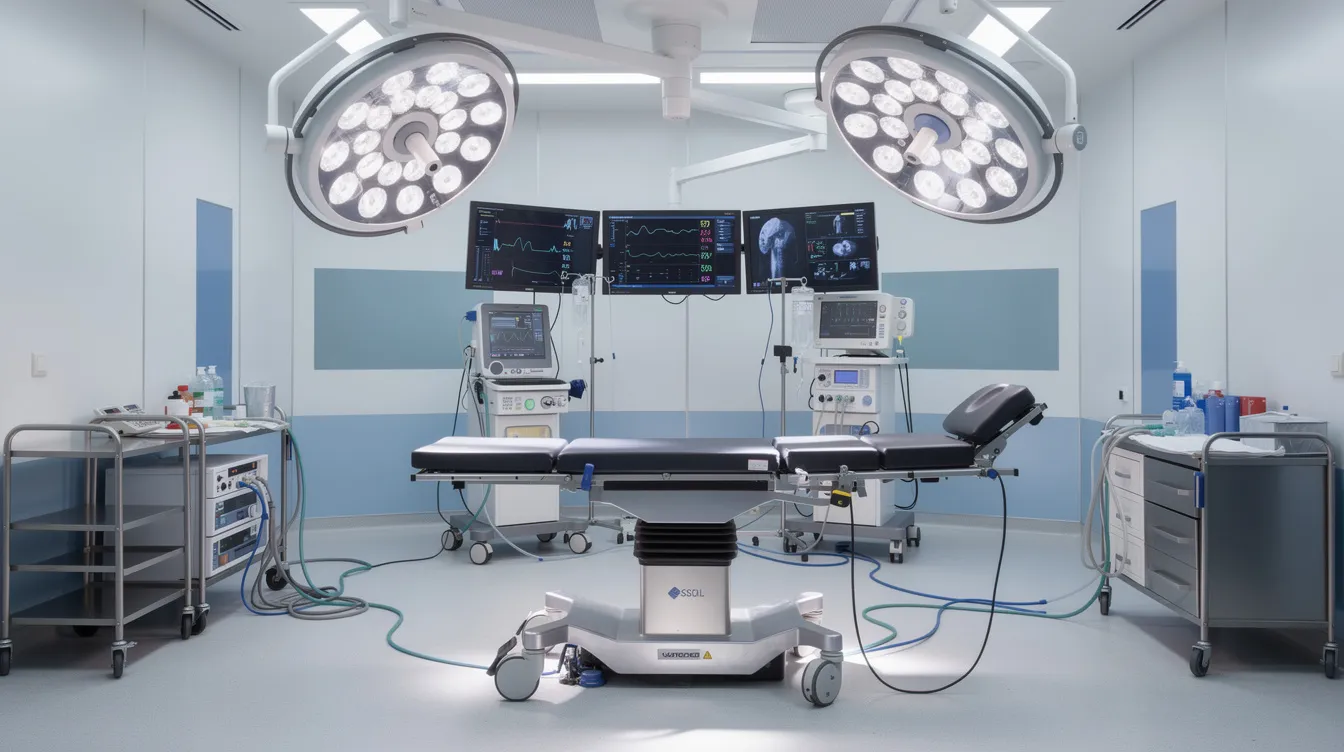
- OT equipment: OT tables, anaesthesia workstations, C-arm, OT lights, endoscopy towers.
- Diagnostic and imaging: X-ray, ultrasound, CT, MRI, echo, cath lab where applicable.
- Laboratory equipment: Biochemistry analysers, haematology analysers, microbiology setup.
- Patient-care equipment: Hospital beds, infusion pumps, wheelchairs, stretchers, patient warmers.
- Emergency and casualty: Trauma care equipment, crash carts, monitors, ventilators.
The DPR should include a medical equipment and technology plan with vendor quotations, buy vs. lease decisions, warranties and annual maintenance contracts (AMCs) as annexures. Consider the total cost of ownership for medical equipment, including long-term maintenance and obsolescence – not just the initial purchase price.
Equipment phasing matters: some machines may be added in Year 3–4 as occupancy grows rather than all commissioned on Day 1. This reduces upfront capex and improves early-year DSCR.
Project Cost and Means of Finance Structure
Banks judge a hospital project strongly on both total project cost and means of finance – how promoters propose to fund it. A stakeholder analysis must identify and distinguish interests of various parties involved in the hospital project, including equity investors, lenders and operational partners.
- Promoter’s equity or internal accruals, including capital brought in by doctors or investors.
- Term loan from banks or NBFCs for building and equipment. Banks prefer a debt-to-equity ratio of approximately 70:30 for healthcare projects, though this varies by lender and project risk profile.
- Separate equipment loans where lenders prefer shorter tenors aligned to asset life.
- Unsecured loans from promoters or group entities (subject to lender policy) treated as quasi-equity.
- Government subsidies or viability-gap support where actually applicable – this is scheme-specific and should never be assumed generically.
- Working-capital limits such as cash credit, overdraft or working-capital term loans.
The DPR should present a clear “Project Cost and Means of Finance” table showing item-wise cost on the left and funding sources on the right, ensuring totals match and timing of drawdown aligns with the project schedule. An under-capitalised structure with very low promoter contribution weakens bank confidence and DSCR.
Hospital Revenue Model: How a Hospital Earns
Revenue projections in a hospital DPR should arise from operational drivers – beds, occupancy, procedures, tariffs – rather than arbitrary percentage growth applied year on year.
Key hospital revenue streams include:
- IPD bed charges (ward, semi-private, private, deluxe)
- ICU and HDU charges
- Surgery and procedure fees (OT charges, surgeon fees, anaesthetist fees, packages)
- OPD consultation and follow-up visits
- Diagnostics: pathology tests, imaging, cardiology diagnostics
- Pharmacy sales from the in-house medical store
- Consumables and implants billed separately
- Emergency and casualty revenue
- Day-care procedures (chemotherapy, dialysis, endoscopy, minor surgeries)
- Specialty clinics and wellness packages, corporate tie-ups, occupational health centres
The report should contain a revenue-segmentation table (IPD vs. OPD vs. diagnostics vs. pharmacy) along with assumptions for ARPOB (Average Revenue Per Occupied Bed) and average OPD revenue per visit. For context, metro tertiary hospitals report ARPOBs of ₹55,000–₹80,000 per day while Tier-2 facilities typically operate at ₹25,000–₹45,000.
Important Assumptions in Hospital Financial Projections
Every number in the projected financial statements should trace back to explicit assumptions, best summarised in a dedicated section of the DPR. The process of building assumptions requires both market analysis and operational benchmarking.
- Bed capacity by department and expected occupancy ramp-up over at least 5–7 years. Initial-year occupancy for new hospitals typically ranges from 30–50%, stabilising at 60–80% by Year 3–5.
- Average length of stay (ALOS) per specialty – typically 3–5 days depending on case mix.
- OPD footfall per day, conversion rate to admission and re-visit assumptions.
- Average tariffs and annual price escalation rate (e.g. 5–7% p.a. as an assumption, clearly labelled).
- Staff strength and salary structure, including annual increments. Recruiting and retaining specialized clinical talent is a significant operational challenge in health care, particularly for nursing and paramedical staff in Tier-2 and Tier-3 locations.
- Doctor remuneration models (fixed, revenue share, mix) and their impact on professional charges.
- Consumables and drugs as a percentage of related revenue, based on benchmarks or actual comparable data.
- Utilities, repairs and maintenance, housekeeping, engineering services and administrative services overheads.
Sensitivity notes should clarify what happens if occupancy is 10% lower or salary costs 10% higher than base assumptions.
Hospital Financial Projections and Key Statements
A bankable hospital project report for bank loan in India must include integrated financial projections. Financial projections in the DPR typically cover five to seven years, though many banks prefer 7–10 years matching or exceeding the proposed term-loan tenure.
- Projected Profit & Loss Account: Revenue, operating expenses, EBITDA, interest, depreciation, profit before and after tax.
- Projected Balance Sheet: Fixed assets, current assets, term loans, working-capital limits, equity and reserves.
- Projected Cash Flow Statement: Operating, investing and financing cash flows, with particular focus on debt servicing capacity.
Supporting schedules should cover term-loan repayment, interest calculations and depreciation as per useful lives of medical equipment (typically 5–10 years) and building (longer). Plant economics should highlight the break-even year, cumulative cash accrual and important financial ratios.
| Financial Concept | Purpose in Hospital DPR |
|---|---|
| Accounting Profit (PAT) | Shows reported profitability after all charges |
| Cash Accrual (PAT + Depreciation) | Measures actual cash generated for debt servicing |
| DSCR | Ratio of cash available to debt obligations – the central test for lenders |
Hospital Working Capital Requirement
Even though hospitals receive substantial cash and digital payments, they require working capital due to inventory and receivables cycles. Working capital needs should always be included in project costs.
- Inventory: Pharmacy stock, surgical consumables, implants, laboratory reagents.
- Receivables: Insurance companies, TPAs and government health schemes often take 45–90 days to settle. Corporate and PSU contracts may have agreed credit periods.
- Cash and bank balance: Needed for monthly salaries, utilities and emergency purchases.
The operating cycle runs from incurring expenses on staff and consumables to receiving payments from patients and insurers. Working-capital requirement is computed using holding days for inventory and receivables minus credit days from suppliers, translating into proposed cash credit, overdraft or WCTL limits.
Many hospital DPRs fail because they ignore adequate working capital, leading to liquidity stress even when the P&L shows profit on paper.
Hospital DSCR and Loan Repayment Capacity
DSCR – Debt Service Coverage Ratio – is the ratio of cash available for debt servicing to total debt obligations (interest plus principal repayment) for each year.
- Cash accrual (PAT + depreciation) or an EBITDA-based proxy is typically used, with the method clearly defined in the DPR.
- Lenders prefer to see DSCR comfortably above 1 on an average basis across the loan tenure. A Debt Service Coverage Ratio of 1.25 is generally considered acceptable for loans, though stronger proposals target 1.50 or above.
- Realistic moratorium periods and repayment tenors must match the hospital’s cash-flow ramp-up, particularly for larger hospital projects with heavy equipment loans.
- Any projection year where DSCR falls below 1.0 raises a red flag with credit teams.
DSCR is central to hospital project finance appraisal and must be highlighted clearly in the hospital project report for bank loan.
Break-Even Analysis for a Hospital
Break-even analysis shows when the hospital’s contribution from operations will cover its fixed costs – an important decision point for both promoters and bankers.
- Fixed costs: Salaries of core staff, rent or interest on building loans, minimum utilities, insurance, administrative overheads.
- Variable costs: Drugs, consumables, some outsourced support services, diagnostic reagents.
- Contribution: Revenue minus variable costs per bed-day or per procedure feeds into overall contribution margin.
Break-even can be presented in occupancy terms (e.g. hospital breaks even at 45–50% average occupancy from Year 3) and in revenue terms. Over-optimistic early-year occupancy assumptions can falsely show an earlier break-even and mislead lenders – a common issue I observe while reviewing project assumptions.
Hospital Project Feasibility and Viability Assessment
Feasibility is not only about raising a bank loan. It means the hospital can sustainably operate, pay staff on time, maintain equipment and service debt throughout the life of the project.
- The relationship between investment per bed and realistic revenue per bed for the chosen location drives the entire viability equation.
- Market demand analysis is critical for hospital project feasibility. A thorough feasibility study supports market demand analysis, incorporating demographic data and local healthcare demand and supply gaps. Market analysis helps determine if patient demand justifies investment.
- Key viability indicators such as IRR, NPV, payback period and average DSCR should be explained in accessible language for doctors and professionals who may not be finance specialists.
- Qualitative factors matter too – promoter strength, governance plans, clinical excellence commitments and the ability to attract consultants all affect long-term viability.
- Transparency about regulatory challenges builds credibility with investors and lenders alike.
This section ties together project cost, means of finance, revenue model, working capital and DSCR as one chain: investment → capacity → patient volume → revenue → operating profit → cash accrual → debt servicing.
Bank Loan for Hospital Project in India
In a typical Indian scenario, hospital project funding ranges from ₹5–10 crore for a 30-bed hospital to ₹25–80 crore or more for a 100-bed multi-speciality facility, with separate products for equipment finance and working capital.
- Types of loans: Term loan for building and infrastructure, equipment loan, working-capital limits and occasionally project finance structures for large hospitals across the country.
- Collateral and security: Banks generally expect primary security over hospital assets plus collateral as per their internal policies. This varies by lender and should not be assumed as universal.
- A well-prepared hospital project report for bank loan reduces queries, speeds up appraisal and improves clarity during credit discussions.
- Loan quantum should align with actual project implementation schedule. Over-borrowing can strain DSCR and signal poor planning.
Promoters should approach banks with a clear DPR, CMA Data and basic KYC and financial documents to begin serious discussions about hospital project funding.
How Banks Assess a Hospital Project Loan
Each bank and NBFC has its own policies, but core appraisal principles in hospital project finance across India are broadly similar.
- Promoter profile: Medical and managerial experience, financial track record, credit history, prior ventures and availability of experienced professionals.
- Project location: Demographic profile, competing hospitals, visibility, access roads, proximity to highways or industrial clusters. Market size and growing population of the catchment area are evaluated.
- Project cost and means of finance: Promoter contribution adequacy – adequate skin in the game is critical.
- Revenue and operational assumptions: Occupancy ramp-up realism, tariff benchmarks, cost structure from the DPR, supported by market analysis including demographic data and local healthcare demand gaps.
- Profitability and DSCR: Projected cash accrual must demonstrate comfortable debt coverage across the loan tenure.
- Regulatory status: Land titles, building approvals, health department clearances. A hospital needs multiple approvals before starting operations. Common approvals include licenses from health departments and local authorities.
- Security and collateral: Evaluated per internal guidelines without any fixed universal collateral-cover rule.
Lenders often run sensitivity scenarios internally (e.g. 10% lower revenue) to check if the project remains serviceable. Conservative, well-supported assumptions in the DPR are valued over optimistic projections.
Documents Commonly Required for Hospital Project Finance
Actual document lists differ by bank and loan size, but a hospital project loan proposal in India typically requires both promoter and project documents.
Promoter-entity documents:
- KYC (PAN, Aadhaar, photographs) of promoters and key directors or partners
- Entity incorporation documents (partnership deed, LLP agreement, MoA & AoA, trust deed, society registration as applicable)
- Last 3–5 years financial statements and income-tax returns, if available
- Bank statements of promoters and entity for recent 6–12 months
Project-related documents:
- Land and building documents (title deeds, sale agreements, lease deeds, sanctioned building plans)
- Project-cost estimates, civil construction quotations and detailed medical equipment quotations
- Hospital DPR including financial projections and workings
- CMA Data where required, especially for larger working-capital limits
- Status of regulatory licences and approvals (pollution, fire, building completion certificate, health department NOC)
The DPR should list all required licenses and their status in a dedicated annexure. The DPR should carry a comprehensive annexure list referencing these documents to make lender review smoother.
What Should a Bankable Hospital DPR Contain?
This section serves as a practical hospital project report format that aligns with Indian banking practice while remaining adaptable to project-specific nuances. A hospital DPR includes an executive summary of the project along with the following core sections:
Narrative sections:
- Executive summary: 2–3 pages capturing project snapshot – promoters, location, bed strength, total project cost, means of finance, key financial indicators (peak DSCR, break-even year).
- Promoter and organisation profile: medical and business background, existing facilities, governance structure.
- Project background and objectives: healthcare gaps in the area, rationale for hospital size and specialties, public health context including infant mortality and health indicators where relevant.
Market and operational sections:
- A hospital DPR must include a market and demand analysis section covering demographic data, existing hospital and bed supply, estimated demand-supply gap and referral patterns.
- A hospital DPR requires a site analysis and location study covering plot details, area, access, utilities and local development plans.
- Hospital design and capacity plan: built-up area, floor-wise layout concept, bed-wise break-up, number of OTs, ICUs and diagnostics. The DPR must detail the hospital’s bed strength and department breakdown.
Technical and HR sections:
- Proposed health care services and specialties: detailed list of clinical departments, support services, diagnostics and pharmacy.
- The DPR should include a medical equipment and technology plan with major equipment list, estimated cost and likely vendors.
- Human resource plan: staffing matrix with numbers and average salaries by category across nursing, medical and administrative services roles.
Financial sections:
- Project cost and means of finance with structured tables.
- Detailed financial projections (P&L, balance sheet, cash flow), working-capital assessment, break-even and DSCR analysis.
- Risk assessment and sensitivity analysis summarising key financial and operational risks. Create a risk register covering potential construction delays and regulatory hurdles with mitigation strategies.
- Annexures for drawings, quotations, resumes of key promoters and technical experts.
Hospital DPR vs CMA Data: How They Work Together
A hospital DPR and CMA Data are complementary but distinct documents commonly used together in Indian bank loan proposals.
| Aspect | Hospital DPR | CMA Data |
|---|---|---|
| Scope | Broad planning document – qualitative and quantitative | Standardised financial information statement |
| Content | Background, market, project design, cost, projections | Past and projected balance sheets, P&L, fund flow |
| Purpose | Narrative justification and detailed analysis | Structured numbers for credit analysis and sanction note |
While a Chartered Accountant like CA Manish Gugliya may assist in preparing CMA Data and projections, banks generally treat them as promoter-submitted estimates, not as audited or guaranteed figures.
Both documents should be internally consistent – numbers in CMA Data must match those in the DPR financial model exactly.
Common Mistakes in Hospital Project Reports
In practical project-finance work, many hospital project reports are rejected or heavily queried due to recurring technical and financial mistakes.
- Underestimating total project cost, especially fit-outs, medical gases and pre operative expenses, leading to cost overruns and additional funding requests mid-construction.
- Ignoring or severely underestimating working-capital requirement, resulting in early cash-flow stress post commissioning – even when the P&L looks profitable.
- Overestimating occupancy and patient volumes in Year 1–2: assuming immediate 70–80% occupancy instead of a realistic 30–40% ramp-up. ICRA data shows that even established chains operate at aggregate occupancy of about 63.5%.
- Understating manpower costs, especially nursing and paramedical salaries, and not factoring for staff attrition and market competition.
- Copy-paste financial models from unrelated projects without aligning to location, bed mix or local tariffs – experienced credit officers identify these quickly.
- Weak linkage between bed strength, OT capacity and projected surgery volumes, causing credibility issues in the report.
- Inconsistent numbers between P&L, balance sheet, cash flow and CMA Data.
- Incorrect DSCR calculations – often ignoring term-loan instalments due or using EBITDA instead of actual cash accrual without proper explanation.
Sensitivity Analysis and Risk Assessment in a Hospital DPR
Robust hospital project finance analysis must answer “what if” questions around cost overruns, delayed revenue and higher expenses.
- Construction delays: Interest during construction increases and revenue start date shifts, squeezing DSCR in early years.
- Cost escalation: Building or medical equipment costs rising 10–15% vs. base budget. Contingency buffers and promoter infusion can mitigate this risk.
- Slower occupancy growth: If occupancy reaches only 50% by Year 4 instead of 70%, break-even shifts and DSCR deteriorates. This is a common scenario lenders test.
- Salary and consumable inflation: Increases in salary costs or consumable prices beyond assumptions, particularly after regulatory changes or inflationary periods.
The DPR should explicitly show 2–3 sensitivity scenarios in summary form and include risk-mitigation measures such as phased commissioning, cost control and contingency planning.
Choosing the Right Hospital Project Report Guide for Your Facility
While this article is the central resource for hospital project reports in India, each project type has specific financial and operational nuances that merit deeper exploration.
- Promoters of small 20–30 bed general hospitals or nursing homes will find specific cost and staffing benchmarks in the general and small hospital DPR guide.
- Investors in 100-bed multi-speciality hospitals can move to the multi-speciality hospital DPR resource for specialty-level modelling guidance.
- Oncology-focused teams should use the cancer hospital guide for radiotherapy and chemotherapy-specific costing and revenue assumptions.
- Diagnostic and day-care project planners can fine-tune machine-throughput and test-volume assumptions using the dedicated diagnostic centre DPR guide.
- Eye-care entrepreneurs will find refined OPD and surgical-volume projection frameworks in the eye hospital DPR guide.
Professional Hospital Project Report Preparation by CA Manish Gugliya
From a project-finance perspective, I have observed that the difference between a hospital DPR that gets serious attention from lenders and one that gathers dust often comes down to the quality of financial assumptions and their internal consistency. CA Manish Gugliya brings practical experience in hospital project finance, DPR preparation, financial projections and CMA Data for Indian borrowers.
A typical professional engagement may include:
- Reviewing project concept, capacity and location with the promoter team from a financial-feasibility angle.
- Preparing detailed project cost estimates covering building, infrastructure, medical equipment and pre-operative expenses using current market benchmarks.
- Developing a customised hospital financial model with revenue assumptions by department, realistic ramp-up and integrated P&L, balance sheet, cash flow and DSCR.
- Assessing working-capital requirement and structuring term loan vs. working-capital limits to match the cash-flow profile.
- Preparing a bank-ready hospital project report for bank loan along with CMA Data and key ratio analysis.
- Supporting promoters in explaining financial assumptions to lenders and refining projections based on bank feedback.
For professional hospital DPR, financial projections and project-finance documentation, consider reaching out through ProjectReportBank.com.

Frequently Asked Questions
The following FAQs address common practical questions about hospital project reports and DPR preparation in the Indian context.
How many years of financial projections are usually expected in a Hospital DPR for bank loan in India?
Most Indian banks are comfortable with 7–10 years of projections, ideally matching or slightly exceeding the proposed term-loan tenure. This allows lenders to evaluate DSCR across the full repayment period and observe performance in stabilised years beyond the initial ramp-up phase. Financial projections in the DPR typically cover five to seven years at minimum.
Can I use a generic 100-bed hospital project report template for my bank loan proposal?
While templates – including 30-bed, 50-bed and 100-bed hospital project report samples – are useful starting points for understanding the document structure, banks recognise copy-paste models quickly. Each DPR must be customised for the specific city, land status, specialties, local tariffs and staffing realities for it to be treated as a credible document during credit appraisal.
Is it necessary to finalise all medical equipment brands before submitting the hospital project report?
Exact brands are not always mandatory at DPR stage, but realistic item-wise cost estimates based on indicative quotations are important. Banks want to see that major equipment categories – OT, ICU, radiology, lab – and their approximate costs have been properly budgeted. Vendor quotations strengthen the report’s credibility during proper treatment of cost estimates by the credit team.
At what stage should I approach the bank for a new hospital term loan?
It is advisable to approach lenders once land or title issues are largely clear, a preliminary building concept and bed plan are ready, and a reasonably detailed project report with draft projections has been prepared. This ensures discussions focus on project viability and excellence in planning rather than only rough ideas without financial backing.
Who is the right professional to prepare a Hospital DPR – architect, consultant or Chartered Accountant?
An ideal DPR typically combines inputs from a hospital architect or planner for design, clinical experts for specialties and services, and a financial professional such as a Chartered Accountant for project cost, means of finance, projections, working-capital assessment and DSCR. CA Manish Gugliya brings this financial expertise to ensure the final report is both technically and financially robust, forming a comprehensive document that stands up to bank scrutiny.
Explore More Hospital Project Report Guides
Continue exploring specialized Hospital DPR guides for project planning, financial projections and bank finance.