Key Takeaways
- This article, written in the professional voice of CA Manish Gugliya, guides Indian entrepreneurs and dairy companies in planning a bankable Probiotic Dairy Products Manufacturing Plant Project Report with a clear link between technology, costs and finance.
- Probiotic dairy projects go beyond simple yogurt or curd plants, covering a product mix such as probiotic yogurt, Greek/high-protein yogurt, probiotic curd/dahi, lassi, buttermilk and fermented milk beverages, all based on controlled lactic acid fermentation.
- A viable plant requires careful alignment of fermented milk manufacturing process, probiotic cultures, plant capacity, machinery, cold chain, utilities, and FSSAI-compliant quality systems with realistic financial projections, DSCR, IRR and break-even analysis.
- Project cost in India depends heavily on capacity (litres/day), automation level, land and building, packaging technology and product portfolio; there is no universal figure, so each Probiotic Dairy Products Plant Cost must be worked out project-specifically.
- A bankable DPR for a probiotic dairy processing plant must integrate technical feasibility with detailed financial modelling, working capital planning and risk/sensitivity analysis to support bank loan appraisal without promising guaranteed sanctions or returns.
Introduction: Functional Dairy, Fermented Milk and Investment Opportunity
Indian consumers are steadily shifting their spending toward functional foods, gut-health products, high-protein dairy foods and convenient beverages that deliver nutritional value beyond basic sustenance. This trend is reshaping the dairy industry. What was once a market dominated by commodity milk and plain dahi is now evolving into a sophisticated ecosystem of fermented dairy products, probiotic drinks, flavoured yogurts and value-added dairy formats positioned around wellness and immunity. Consumer demand for probiotic dairy products is rapidly increasing, and promoters who recognise this shift early stand to gain a meaningful first-mover or fast-follower advantage. Probiotic dairy products now account for over 40 percent of the functional foods market globally, signalling how central this category has become to the food industry at large.
Probiotic dairy products are fermented milk products – and in some cases mildly heat-treated fermented milks – containing selected lactic acid bacteria and other beneficial microorganisms processed under controlled conditions to maintain viable counts and consistent lactic acid development throughout the product’s shelf life. The key distinction from ordinary dahi or yogurt is the deliberate selection of probiotic strains with documented properties, combined with manufacturing controls that preserve those strains through packaging, storage and distribution. Probiotic dairy drinks are increasingly popular due to rising health consciousness, and this shift is driving both new project proposals and capacity expansions across India.
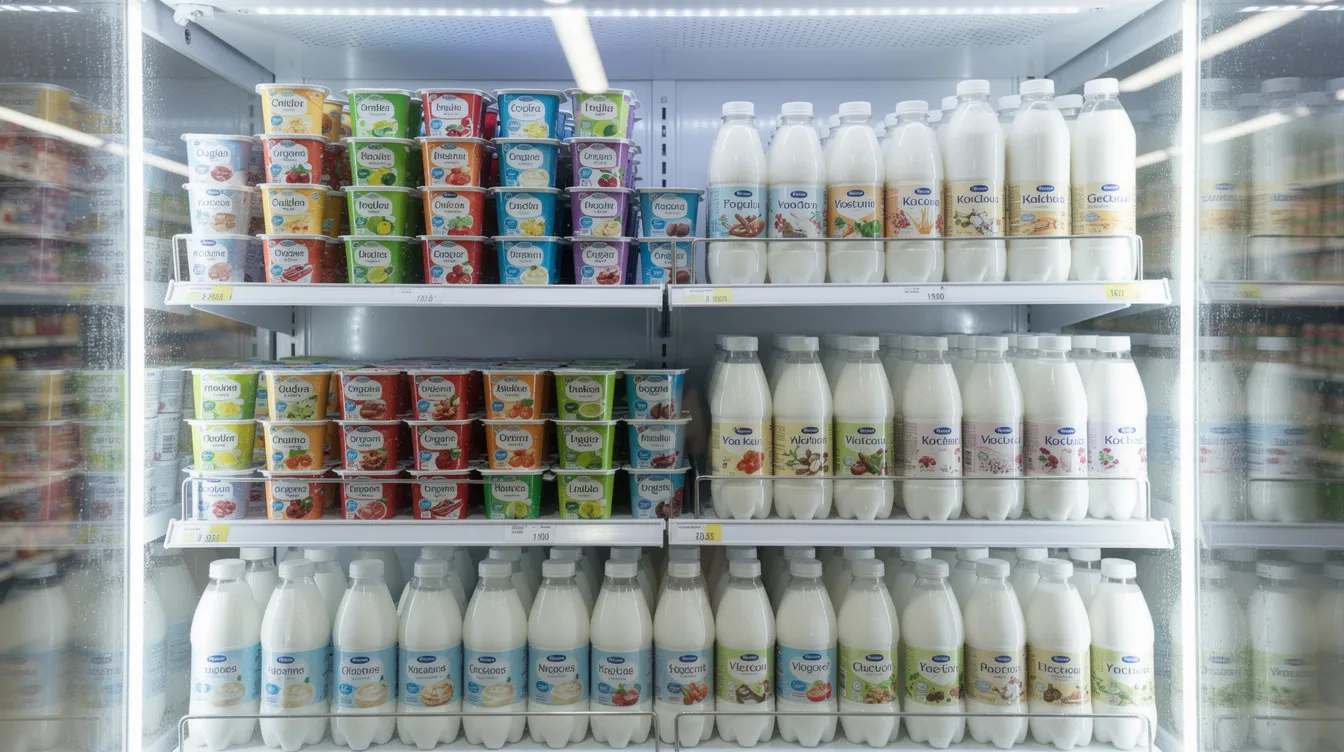
The product categories relevant for an Indian probiotic dairy project include probiotic yogurt (set, stirred, drinking), Greek or high-protein probiotic yogurt, probiotic curd or dahi, probiotic lassi, probiotic buttermilk, fermented milk drinks and functional flavoured dairy beverages. A promoter serious about building a sustainable dairy business should design a complete product mix – not invest in infrastructure for a single SKU. The ability to produce multiple fermented products from the same core infrastructure is one of the strongest commercial advantages of a well-planned probiotic dairy processing plant.
This is where a Probiotic Dairy Products Manufacturing Plant Project Report becomes essential. It is a structured document that translates the market opportunity into a technically sound, financially feasible and bank-presentable plan covering everything from milk procurement to projected cash flows. As a Chartered Accountant and DPR consultant, I focus on project cost, means of finance, profitability analysis, DSCR, IRR and break-even to help promoters objectively evaluate whether their proposed probiotic dairy processing plant is viable before they commit capital.
What Is a Probiotic Dairy Products Manufacturing Plant?
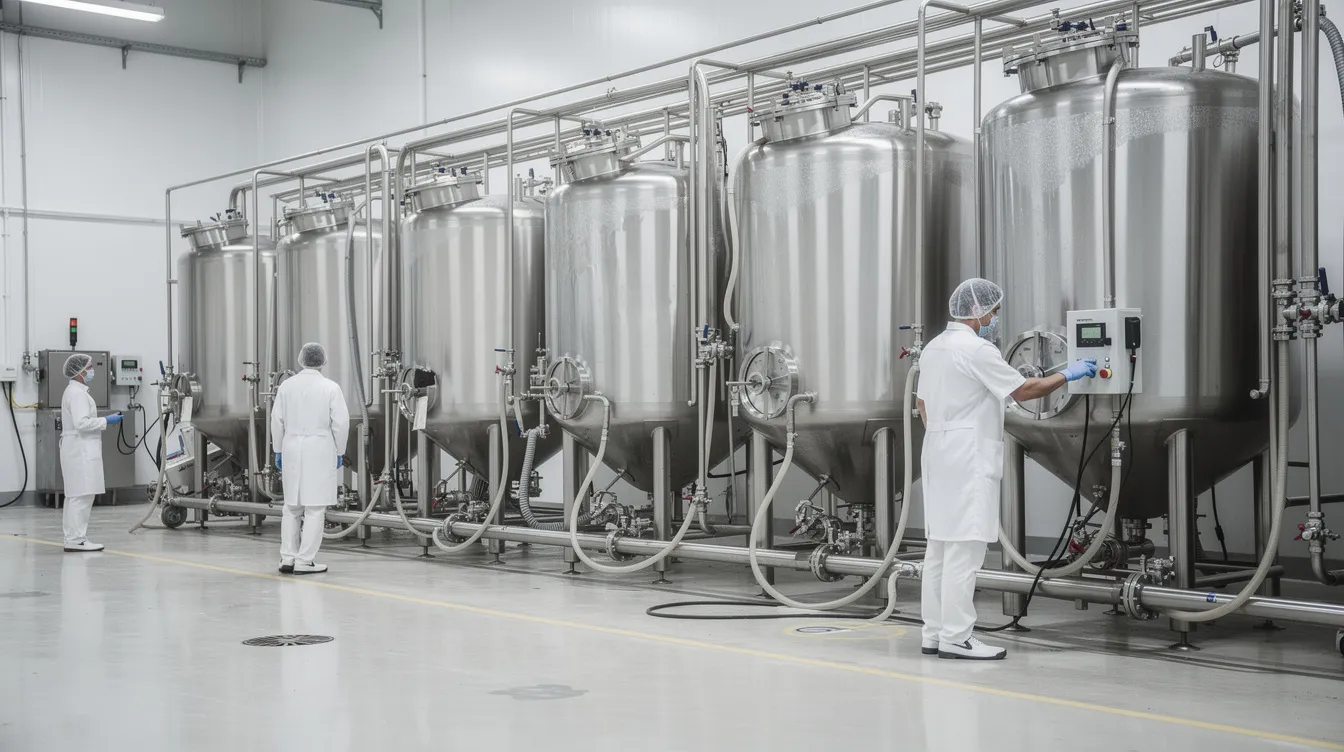
A probiotic dairy products manufacturing plant is an industrial facility that converts raw milk into probiotic fermented dairy products using controlled fermentation, refrigeration and hygienic packaging. It combines dairy engineering with food science and microbiology to produce foods that carry live beneficial microorganisms in quantities meaningful enough to provide health benefits to the consumer.
The difference between conventional fermented dairy – such as plain dahi or traditional lassi prepared with natural starter cultures – and probiotic dairy lies in specificity and control. Conventional fermented products rely on mixed, often undefined cultures that have been passed down through generations. Probiotic dairy, on the other hand, uses carefully selected probiotic strains with identified genus, species and strain designations, maintained at higher viable cell counts at end of shelf life, and backed by documented strain properties. In simple terms, all probiotic dairy is fermented dairy, but not all fermented dairy qualifies as probiotic under regulatory definitions such as those set by FSSAI or the Food and Agriculture Organization.
The role of lactic acid bacteria and other probiotic cultures in this process is threefold. First, they produce lactic acid during fermentation, which creates the characteristic tangy flavour and gel structure that consumers associate with yogurt and dahi. Fermented dairy products often have distinct tangy flavors due to probiotics, and texture changes in dairy products are also influenced by probiotic fermentation. Second, these cultures contribute to food safety by lowering pH and inhibiting undesirable organisms. Third, they are intended to remain viable through manufacturing, cold storage and distribution, so that the consumer receives an adequate dose of live probiotic bacteria. This last point – maintaining probiotic viability during processing – remains a major challenge for manufacturers and is a critical factor in equipment selection, process design and cold-chain planning.
From an operational standpoint, a probiotic dairy plant requires precise temperature control during fermentation, rapid cooling to arrest further acidification, strict hygiene and clean-in-place (CIP) systems, stainless-steel product contact surfaces, and a continuous cold chain from plant dispatch to retail cabinet.
A comprehensive Probiotic Dairy Products Manufacturing Plant Project Report should cover the designed capacity in litres per day, the targeted product mix, utilities requirement, plant layout, manpower, project cost, working capital and financial projections – creating a single reference document that connects the factory floor to the balance sheet.
Major Probiotic Dairy Products That Can Be Manufactured
A single probiotic dairy processing plant can be engineered to handle multiple fermented milk products by designing suitable fermentation tanks, incubation rooms and filling lines. This multi-product flexibility is one of the strongest arguments for investing in a well-planned facility rather than a narrow, single-product setup.
The project report should define targeted SKUs with pack sizes, fat and SNF profile and expected selling price for each product group. Plant design differs for set products (incubated in the cup), stirred products (fermented in a tank then filled) and beverages (fermented milk blended, sometimes homogenised, and filled as drinkable products). The sections below describe each major product type.
Probiotic Yogurt: Core Product for Fermented Dairy
Probiotic yogurt is the anchor product for most probiotic dairy projects. It is produced from standardized milk fermented with a yogurt starter culture plus additional probiotic strains such as Lactobacillus acidophilus or Bifidobacterium species. The role of lactic acid in yogurt extends beyond flavour – it creates the gel structure, determines shelf life and directly influences how consumers perceive freshness and quality. Probiotic strains must survive acidic conditions throughout the product’s shelf life to maintain both sensory quality and functional value.
Manufacturing options within the yogurt category include set yogurt (fermented and set inside individual cups), stirred yogurt (fermented in bulk tanks, cooled, then filled into tubs) and drinking yogurt (a thinner, pourable format). Each format requires slightly different process controls and packaging equipment but shares the same upstream pasteurisation and culture addition infrastructure. Probiotic beverages in the yogurt category are expected to witness exponential growth in the coming years, making this a strategically important segment.
Commercially, probiotic yogurt has strong positioning in Indian metros and tier-2 cities as a breakfast accompaniment, healthy snack, dessert alternative and on-the-go beverage – with growing traction on modern trade shelves and quick-commerce apps. Promoters planning a dedicated yogurt line can refer to the Industrial Yogurt Manufacturing Plant Project Report for a detailed guide on yogurt-specific plant design and financials.
The Probiotic Dairy Products Manufacturing Plant Project Report should quantify yogurt’s share in the overall product mix and its contribution margin relative to other SKUs, since yogurt often serves as the brand’s primary consumer-facing product.
Greek / High-Protein Probiotic Yogurt
Greek or high-protein probiotic yogurt is strained or ultrafiltered fermented milk with significantly higher protein content, thicker texture and premium positioning. It typically commands a higher price per kilogram than standard yogurt, making it attractive for margin optimisation in the product mix.
Two process routes are commonly used. The traditional method involves straining fermented yogurt through cloth or mechanical strainers to remove whey, concentrating the solids. The modern alternative uses membrane concentration (ultrafiltration) of milk before fermentation, yielding a high-protein base that ferments into a thick product without the need for post-fermentation straining. Each route has different implications for equipment selection, whey handling and yield – for instance, traditional straining may yield only 40 to 60 percent of the input volume as finished product, with the remainder being acid whey that needs separate handling or disposal.
Target customer groups include fitness and wellness consumers, calorie-conscious urban professionals and premium hotel and restaurant buffet segments. Promoters focusing on high-protein fermented dairy should review the Greek Yogurt Manufacturing Plant Project Report alongside the present probiotic DPR for a more complete picture.
The DPR should model separate yields, packaging cost and gross margins for Greek yogurt compared to standard probiotic yogurt, since the economics of the two products differ substantially.
Probiotic Curd / Dahi
Probiotic curd or dahi is a mass-market extension of traditional Indian dahi, fortified with carefully selected probiotic cultures to enhance gut-health positioning while retaining the familiar taste and texture that Indian consumers expect. The basic process is similar to standard dahi – standardized milk is heated, cooled and inoculated – but probiotic dahi uses a mixed starter plus documented probiotic strains with a stronger focus on viable cell count at the end of shelf life, rather than relying on undefined natural cultures.
The commercial relevance of probiotic dahi is enormous. Dahi is consumed daily in millions of Indian households, institutional kitchens, tiffin services and QSR chains. This makes probiotic dahi an important volume driver for plant capacity utilization, even if per-unit margins are lower than premium yogurt formats. For promoters currently selling plain dahi who wish to upgrade to probiotic offerings, the Curd / Dahi Manufacturing Plant Project Report provides useful baseline planning alongside the broader probiotic DPR.
In the profitability section of the DPR, promoters should outline how probiotic dahi can be positioned at a modest premium over regular dahi – enough to cover the incremental culture and cold-chain cost, but not so high as to alienate price-sensitive daily consumers.
Probiotic Lassi, Buttermilk and Fermented Dairy Beverages
Probiotic lassi and buttermilk are fermented dairy beverages made from cultured milk, optionally sweetened, salted and flavoured, with live probiotic cultures. India has a long tradition of consuming these traditional dairy beverages, and adding a probiotic dimension to familiar formats can lower the consumer education barrier significantly compared to introducing entirely new product concepts.
These beverages are well suited for PET or HDPE bottles, portion packs and cups, fitting naturally into modern refrigerated distribution, railway catering, institutional supply and convenience store formats. Promoters designing a beverage-heavy product mix should review the Industrial Lassi Manufacturing Plant Project Report for complementary planning.
Fermented milk products such as drinking yogurt, chaas and flavoured cultured milk can share the same fermentation infrastructure with yogurt and dahi, requiring additional blending and homogenization steps downstream. This shared infrastructure is a significant advantage in capital efficiency.
The Probiotic Dairy Products Manufacturing Business Plan should evaluate seasonality (higher summer demand for lassi and buttermilk), pricing strategy, and potential for functional line extensions. Some manufacturers are exploring additions such as probiotics and prebiotics in combination, added fibre, vitamins or herbal extracts to create differentiated probiotic functional foods. Non-fermented dairy drinks that maintain original flavors while delivering probiotics are also an emerging area, and research on non-fermented dairy products is rapidly increasing in the market.
Market Potential for Probiotic Dairy Products in India
The market for probiotic dairy products in India is being driven by several converging forces. Rising health awareness – especially post-2020 – has made gut health a mainstream consumer concern rather than a niche interest. Urbanisation, higher household refrigeration penetration and expansion of organised retail have together created the physical infrastructure needed to sell and distribute cold-chain-dependent functional foods.
The global dairy probiotic beverages market reached 13.9 billion US dollars in 2021, while India’s own probiotic drinks market is projected to grow to INR 2,371 million by 2027. These figures reflect market growth that is being sustained by fundamental shifts in the human diet toward convenient, health-oriented food products. The India yogurt and probiotic drinks market was valued at approximately USD 4,296 million in 2025, with forecasts suggesting it could more than double by 2033, growing at a CAGR of roughly 9.9 percent. These industry trends underscore the structural nature of the opportunity.
Market segments worth targeting include organised retail (supermarkets, hypermarkets), convenience stores, online grocery and quick-commerce platforms, institutional buyers (hotels, hospitals, airlines, corporate canteens) and B2B supply for private labels. Fermented dairy beverages and probiotic yogurt are increasingly perceived as healthier snack alternatives compared to aerated soft drinks, helping value-added dairy compete strongly in urban markets.
Regional variations are important. Adoption of probiotic-labelled products is higher in metros and tier-1 cities, while tier-2 and tier-3 towns show growing but more price-sensitive interest, typically through curd, lassi and buttermilk formats rather than premium yogurt.
A Probiotic Dairy Products Plant Feasibility Report should perform region-specific assessment of milk availability, competing brands, cold-chain infrastructure and consumer education level rather than relying solely on national market headlines. The promoter’s own distribution capability and brand-building budget will ultimately determine how much of the addressable market can actually be captured.
Probiotic Dairy Products Manufacturing Process Overview
The manufacturing process for probiotic dairy products follows a controlled sequence designed to convert raw milk into safe, consistently fermented products with adequate probiotic viability. The manufacturing process for probiotics often includes pasteurization, inoculation, fermentation, and cold storage as its core stages. Here is a step-wise description covering the key stages.
The process begins with milk reception and quality testing, where incoming raw milk is checked for fat, SNF, temperature, acidity, adulterants and basic microbiological quality. Accepted milk moves to standardization, where fat and SNF levels are adjusted to match the recipe for each product – yogurt, dahi, lassi or beverage.
Standardized milk undergoes filtration or clarification to remove physical impurities, followed by pre-heating. The milk is then homogenized under pressure to achieve a uniform fat distribution and smooth texture, and pasteurized using an appropriate temperature-time combination (typically HTST at 72°C for 15 seconds, or higher temperatures for extended shelf-life formulations). Pasteurization is critical for eliminating pathogens and preparing a clean substrate for fermentation.
After pasteurization, the milk is rapidly cooled to the inoculation temperature, typically 37 to 45°C depending on the culture combination being used. Starter cultures and probiotic cultures are then added in precise doses. Controlled fermentation follows, during which lactic acid bacteria produce lactic acid, lowering the pH and developing the characteristic flavour and body of fermented milk. The fermentation process is monitored for target acidity and pH, and once the desired endpoint is reached, the product is cooled to arrest further acid development.
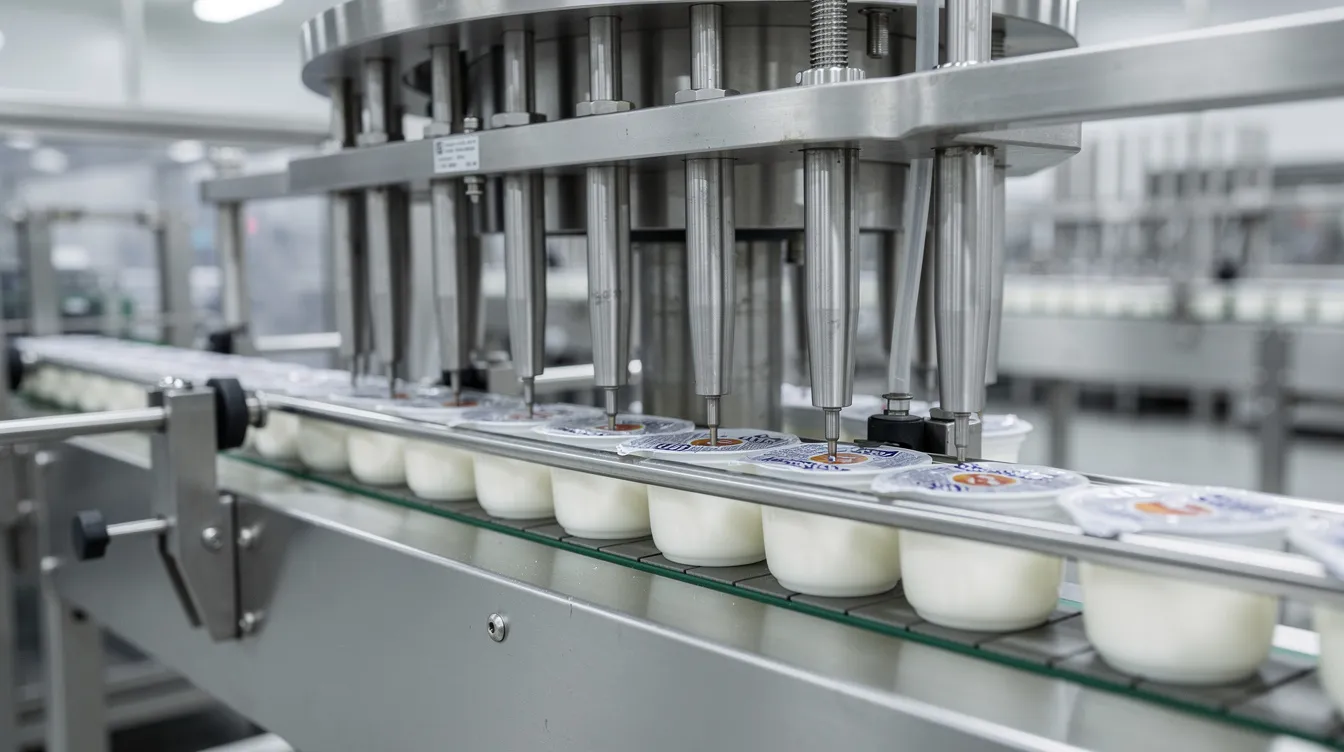
Post-fermentation, sugar, flavours, fruit preparations or seasonings may be added depending on the product type, followed by gentle mixing. The product is then filled into cups, bottles or pouches and moved to cold storage for holding before refrigerated dispatch.
Process variations accommodate different products. Set probiotic yogurt and dahi are incubated directly in the cup after filling. Stirred yogurt is fermented in bulk tanks, cooled, and then filled. Drinking yogurt and lassi undergo post-fermentation homogenization and dilution. Greek yogurt involves straining or membrane concentration. Probiotic buttermilk uses cultured skim milk with seasonings.
Probiotic dairy manufacturing requires specialized processing equipment designed for hygienic operation, and CIP systems are essential across all product contact surfaces. Time-temperature control at every step is non-negotiable: probiotics can produce off-flavors in dairy products if not managed properly, and over-fermentation or delayed cooling can compromise both sensory properties and viable counts. The Probiotic Dairy Products Manufacturing Process described in the DPR should align with machinery vendors’ validated process parameters and FSSAI norms for functional foods and probiotic products.
Importance of Probiotic Cultures and Lactic Acid Bacteria
At a business-relevant level, probiotics are strains of lactic acid bacteria and related probiotic microorganisms that, when consumed in adequate numbers, may support gut health and other functions – subject to regulatory claim rules. Probiotic strains should have proven health benefits supported by scientific evidence, and the selection of strains for a commercial dairy project is one of the most consequential technical decisions a promoter will make. The discipline of dairy science and food microbiology provides the scientific foundation for these choices, but the financial impact flows directly into the DPR.
Practical culture management involves several considerations. Cultures – typically supplied as direct-vat-set (DVS) frozen or freeze-dried concentrates – must be stored under cold conditions specified by the supplier, thawed or prepared according to recommended protocols, and dosed with precision. Cross-contamination must be avoided, and inoculation temperatures and times must be strictly adhered to. Any deviation can compromise probiotic viability or alter the fermentation process, leading to inconsistent sensory properties and potential product rejection.
Lactic acid bacteria play a dual role. They produce lactic acid and flavour compounds that define the product’s taste and contribute to food safety through pH reduction. At the same time, probiotic organisms within the culture blend must remain viable through the product’s intended shelf life. Probiotics must survive gastrointestinal conditions to be effective, meaning they need to withstand not only the acidic environment of the fermented product but also the conditions of the gastrointestinal tract after consumption. This is what allows them to provide health benefits: probiotics improve gut health and boost immunity, aid digestion and enhance nutrient absorption, can reduce symptoms of lactose intolerance, may help prevent gastrointestinal infections, and can enhance the bioavailability of vitamins and minerals. These potential health benefits position probiotic dairy as a functional probiotic food category, though specific claims must comply with regulatory guidelines.
Selecting strains that are compatible with each other and with processing conditions – heat treatment, homogenization, pH – is essential so that probiotic survival and sensory quality remain acceptable throughout the product’s life. Strains that interact poorly or that are sensitive to the food matrix can lead to inconsistent quality. This is why maintaining intestinal microbial balance through adequate probiotic cells at the point of consumption is the ultimate goal of the entire manufacturing chain.
Suppliers’ technical data sheets, certificates of analysis and documented viability claims should be included as annexures or referenced documents in the Probiotic Dairy Products Plant DPR, without turning the DPR into a food microbiology manual. The DPR is a financial and commercial document – the microbiology should inform it, not dominate it.
Raw Materials for Probiotic Dairy Products Plant
The principal dairy input is raw milk, sourced from farmers, cooperatives or chilling centres. Depending on the product recipe, this is processed into standardized milk (using a cream separator and skim milk), with skim milk powder used for SNF adjustment, cream for fat standardization and additional milk solids for specific formulations. Goat milk is also an emerging raw material option for niche probiotic dairy products, though cow and buffalo milk remain dominant in Indian operations.
Non-dairy ingredients include sugar, stabilizers and thickeners where permitted under food safety regulations, fruit pulp and fruit preparations, flavours, colours (where allowed) and salt and spices for buttermilk and savoury lassi. Acidophilus milk and acidophilus yeast milk are specialised fermented formats that may also be considered, though they occupy smaller market niches.
Probiotic and starter cultures constitute a critical category of raw materials. These include direct-vat-set frozen or freeze-dried cultures, bulk starter where applicable, and adjunct cultures used for texture and flavour development in fermented milk products. Probiotic culture dairy manufacturing depends on consistent quality and timely supply of these biological inputs.
Packaging materials form a significant portion of material cost. These include PP or HIPS cups, PET or HDPE bottles, aluminium foil lids, shrink sleeves, labels, corrugated cartons and secondary and tertiary packaging suited to refrigerated logistics. Milk powder may also be stocked as a buffer ingredient.
The Detailed Project Report for Probiotic Dairy Products Plant must calculate raw material consumption and cost SKU-wise – yogurt, dahi, lassi and so on – based on assumed recipes, yields and production volumes for each year of projections. This granularity is what separates a professional DPR from a generic cost estimate.
Plant Capacity Planning for Probiotic Dairy Processing
Plant capacity for a probiotic dairy processing plant is typically expressed in litres of milk processed per day – for example, 5,000 LPD, 10,000 LPD or 50,000 LPD. This translates into tonnes of finished fermented dairy products depending on recipes, process losses and whether products like Greek yogurt involve significant volume reduction through straining.
Capacity planning is not simply about the milk reception tank. It involves interlinked capacities across the entire line:
- Fermentation tank volume and number of batches achievable per day
- Filling line speed in cups or bottles per hour
- Cold storage capacity in tonnes or pallet positions
- Raw milk chillers and storage tanks needed for continuous operation
Key factors influencing capacity decisions include assured milk availability in the project’s catchment area, target geography and distribution radius, shelf life of fermented milk products (typically 15 to 30 days under refrigeration), expected initial capacity utilization, and the promoter’s capital and working capital strength.
The Probiotic Dairy Plant Capacity Planning section of the DPR should present at least two scenarios – for instance, a conservative ramp-up (30 to 40 percent utilization in year one, reaching 60 to 70 percent by year three) and a moderate ramp-up. Assuming 100 percent utilization from day one is unrealistic for any new brand and will undermine credibility with bankers.
For bank appraisal, realistic capacity utilization ramps supported by marketing assumptions are far more credible than over-optimistic projections, especially for new probiotic brands entering a market where established players like Amul, Mother Dairy and Nestlé already operate.
Machinery and Equipment for Probiotic Dairy Manufacturing Plant
The machinery list for an industrial probiotic dairy plant can be extensive. Here is a structured overview of core categories:
Processing equipment:
- Milk reception chillers and weigh-scale
- Raw milk storage tanks (insulated, stainless steel)
- Clarifier and cream separator
- Balance tanks
- Homogenizer
- Pasteurizer / plate heat exchanger with CIP
- Fermentation tanks or incubation room
- Mixing tanks
- Culture dosing system
- CIP plant
Downstream and packaging equipment:
- Yogurt cup filling and sealing machine
- Bottle filling and capping line for beverages
- Fruit and flavour dosing system
- Coding and labelling machine
- Conveying systems and shrink-wrapping for multipacks
Utility-related machinery:
- Refrigeration plant and glycol/chilled-water system
- Cold rooms (walk-in and drive-in)
- Boiler or hot-water generator
- Air compressor
- Water treatment plant
- Effluent treatment plant
Ancillary equipment:
- Laboratory instruments for acidity, pH and microbiological testing
- Milk analysers
- DG set for backup power
- Material handling equipment such as pallet trucks
Emerging technologies can improve probiotic stability and functionality in commercial production. For instance, microencapsulation improves probiotic survival during processing and storage by shielding cells from adverse conditions. Ohmic heating preserves nutrients better than traditional thermal methods and is being explored for certain dairy applications. Ultrasound enhances fermentation efficiency in dairy products by improving culture distribution and reducing fermentation time in some formulations.
The Probiotic Dairy Plant Machinery Cost and Project Report must tailor equipment sizing and automation level – manual, semi-automatic or automatic probiotic dairy products plant – to the chosen capacity, product mix and budget. Equipment cost should be based on actual vendor quotations rather than generic price tags. For reference, a 500 LPH HTST pasteurizer from domestic manufacturers may start at approximately ₹4.5 lakh, while a higher-capacity 2,000 LPH system with CIP and regeneration could range from ₹15 to 25 lakh depending on configuration. These are indicative figures and will vary by supplier, features and time of purchase.
Land, Building and Probiotic Dairy Plant Layout
Land requirements for a probiotic dairy processing plant depend on capacity but should conceptually accommodate space for milk reception bay, processing hall, fermentation area, cold rooms, raw and packaging material stores, laboratory, utilities block, administration, parking and future expansion. Attempting to compress everything into minimal space often leads to operational inefficiencies and hygiene compromises.
The principles of hygienic layout are non-negotiable for fermented dairy:
- Clear separation between milk reception, pasteurized product zone and packaging hall
- Unidirectional movement of product from raw to finished
- Segregation of clean and non-clean areas
- Ease of CIP and sanitation access
- Proper drainage, washable wall finishes and pest-proofing
Fermentation and cold storage rooms require appropriate insulation to maintain stable temperatures and minimise energy consumption. A Probiotic Dairy Plant Layout drawing – preferably prepared by a dairy engineer or architect – should accompany the DPR and show logical placement of utilities, personnel movement routes and truck access to loading docks.
Building design must comply with local building by-laws, fire safety norms and FSSAI hygiene requirements, which may vary slightly across Indian states and industrial parks.
Utilities Requirement and Cold-Chain Considerations
Major utilities for a probiotic dairy plant include:
| Utility | Purpose |
|---|---|
| Electrical power | All machinery, refrigeration, lighting, lab |
| Refrigeration (TR) | Milk chilling, fermentation control, cold storage |
| Hot water / Steam | Pasteurization, CIP, cleaning |
| Process water | Formulations, CIP, cooling |
| Compressed air | Pneumatic controls, packaging |
| Fuel | Boiler (diesel, PNG, biomass) |
| Effluent treatment | Whey, wash water, spillage |
Refrigeration dominates operational energy cost in any probiotic dairy plant. Chilling of incoming milk, precise temperature control during fermentation, cold storage of finished goods and refrigerated dispatch all require continuous cooling. Cold chain systems are essential for maintaining probiotic potency, and any break in the chain can render the product commercially worthless, regardless of how well it was manufactured.
Water treatment is needed to achieve safe process water and CIP water quality. Effluent treatment requirements arise from whey, wash water and spillage typical in dairy processing plants.
The Probiotic Dairy Plant Utilities Requirement section of the DPR should demonstrate availability of power, water and fuel sources at the project location and include approximate load estimates. Selecting energy-efficient compressors, pumps and insulation directly influences long-term operating expenses, which in turn affect profitability and DSCR.
Quality Control, Food Safety and Regulatory Compliance
Quality assurance in probiotic dairy manufacturing involves in-process testing and microbiological analyses at multiple stages of food production. Incoming milk quality checks include fat and SNF testing, adulteration screening, temperature at receipt, basic microbiological assessment and antibiotic residue monitoring where feasible.
During manufacturing, pasteurization efficacy is verified, pH and acidity are monitored throughout fermentation, sensory checks confirm product consistency, and packaging integrity testing ensures that sealed containers protect the product during distribution. Laboratory testing is necessary to ensure product safety and quality throughout production – including total plate count, yeast and mould, coliforms and pathogen testing where applicable, following methods defined by qualified food technologists.
Fermented dairy products must adhere to specific standards set by regulatory authorities such as FSSAI. Under FSSAI’s regulations for foods with added probiotic ingredients, the viable count of probiotic organisms at end of shelf life must be at least 10⁸ CFU/g (or a lower count if efficacy is scientifically demonstrated). It is also widely recognized that probiotic dairy products require a minimum of 10⁶ CFU/g for effectiveness. Probiotic dairy products require precise control over microbial viability to meet these thresholds consistently. Labelling requirements include declaration of genus, species and strain, viable count at end of shelf life, recommended serving size, storage conditions and the mandatory advisory “NOT FOR MEDICINAL USE.”
Safety and regulatory considerations are crucial for probiotic products. Good Hygiene Practices and HACCP principles are essential for food safety in dairy production, and documented risk assessments are essential for adhering to quality and regulatory standards. Regulatory compliance includes securing approvals from food safety authorities before commercial production begins.
Quality systems – SOPs, batch traceability, recall procedures, personal hygiene protocols, HACCP or ISO 22000 certification – are critical not only for consumer trust but also for acceptance by institutional buyers and modern retail chains. Current regulations should always be verified from official sources at the time of project implementation.
Packaging Options for Probiotic Dairy Products
Packaging serves multiple functions in probiotic dairy: it protects the product, extends shelf life, communicates brand identity and directly influences unit economics.
For set yogurt and dahi, HIPS or PP cups with aluminium foil lids are the standard format. These offer reasonable barrier properties and are cost-effective at scale. For drinking yogurt, lassi and probiotic dairy beverages, PET or HDPE bottles provide the portability and reclosability that consumers expect. Multi-layer cartons may be relevant for certain longer-shelf-life formats, though they require higher packaging investment.
Packaging influences lactic acid bacteria viability through oxygen permeability and light barrier properties. Products packed in materials with poor oxygen barriers may see faster decline in probiotic survival over their shelf life. Flavor and mouthfeel significantly influence consumer preferences for probiotic foods, and packaging that maintains product integrity during the cold chain contributes directly to the sensory experience at consumption.
Pack sizes matter commercially:
- Single-serve (100–200 ml/g): Higher per-unit realization, suited for impulse purchase and on-the-go consumption
- Family packs (400–1,000 g): Lower per-gram price, suited for household consumption
- Institutional bulk packs: Cost-efficient for hotels, hospitals and canteens
Packaging investments – moulds, form-fill-seal machines, bottle blowing equipment or procurement of preforms – form a significant portion of Probiotic Dairy Products Plant Investment and must be modelled in the DPR. The Probiotic Dairy Products Plant Financial Projections should include packaging-wise cost per unit and expected selling price to understand SKU-level contribution margins.
Project Cost Structure of a Probiotic Dairy Manufacturing Plant
The project cost of a probiotic dairy products manufacturing plant breaks down into the following major components:
- Land and site development
- Civil construction (processing hall, cold rooms, stores, lab, offices)
- Dairy processing and fermentation machinery
- Packaging lines (cup, bottle, pouch)
- Refrigeration system and cold rooms
- Utility equipment (boiler, water treatment, air compressor, ETP)
- Quality laboratory infrastructure
- Electrical installation and backup power
- Office furniture and fixtures
- Preliminary and pre-operative expenses (trial runs, training, licensing)
- Contingency (typically 5 to 10 percent)
- Margin for working capital
A comprehensive project report should include market and product analysis, technical specifications, and financial projections – all anchored to realistic cost inputs.
Probiotic Dairy Products Manufacturing Plant Cost in India is highly project-specific. It is driven by capacity (a 10,000 LPD plant may cost ₹5 to 7 crore for basic liquid milk processing, and substantially more when integrated with fermentation, cold chain and value-added packaging), level of automation, imported versus domestic equipment selection, degree of building finishing and chosen packaging technology.
Margin for working capital is part of project cost, and lenders usually expect promoters to bring part of this margin as equity or internal accruals.
The Probiotic Dairy Plant Project Cost figures used in any illustrative example within the DPR must not be treated as universal standards for all regions or time periods. Material, labour and construction costs vary widely across India. The cost section should be supported by vendor quotations, civil estimates and utility supplier estimates obtained close to the time of loan application.
Means of Finance for Probiotic Dairy Plant Project
The typical funding mix for a probiotic dairy plant project includes:
- Promoter’s equity: Direct capital contribution from project sponsors
- Term loan: From a bank or financial institution, covering major plant and machinery, civil works and related costs
- Unsecured loans: From promoters’ group, if required to bridge the gap
- Subsidies or incentives: Only if genuinely applicable under current government schemes for food processing or dairy
Maintaining a balanced debt-equity ratio appropriate for dairy processing projects is important, especially considering the long-term nature of assets like buildings, fermentation tanks and cold rooms. Over-leveraging increases financial risk and compresses DSCR.
Working capital limits separately finance day-to-day expenses – milk procurement, packaging material purchases, salaries and utilities.
A Probiotic Dairy Plant Project Finance proposal should be supported by realistic projections. Structuring the means of finance backwards – starting from a desired loan amount and then adjusting projections to justify it – is a recipe for trouble. As a Chartered Accountant, I assist promoters in structuring project cost and means of finance in a manner acceptable for Probiotic Dairy Products Plant Bank Loan appraisal, but I do not promise guaranteed sanction. That decision rests with the lending institution.
Working Capital Requirement for Probiotic Dairy Products Plant
Working capital in a probiotic dairy plant is driven by:
- Raw milk purchase cycle: Daily procurement, often with prompt payment to farmers or cooperatives
- Inventory of ingredients: Sugar, stabilisers, fruit preparations, cultures
- Packaging material stock: Cups, bottles, foils, labels, cartons
- Finished goods in cold rooms: Short shelf life means limited but continuous inventory
- Receivables from trade: Credit offered to distributors, modern trade and institutional buyers
- Minimum cash balance: For daily operations
Even though fermented dairy products have relatively short shelf life, working capital requirement can be significant. Receivables from trade channels – where credit periods of 15 to 45 days are common – and accumulation of packaging inventory can push working capital needs higher than first-time promoters expect.
Banks assess working capital through methods such as turnover-based assessment or operating cycle analysis. Accurate estimation of inventory days and receivable days is critical in the Probiotic Dairy Plant Working Capital Requirement section of the DPR.
A month-wise cash flow for the first year is recommended to capture seasonality – for instance, higher lassi and buttermilk sales in summer increasing milk procurement and stock levels during those months.
Improper estimation of working capital can strain cash flows even if the plant is technically efficient, directly impacting DSCR and loan repayment capacity.
Revenue Model and Product Mix Strategy
Revenue for a probiotic dairy plant is a function of litres of milk processed, conversion factors into finished fermented milk products, SKU-wise selling prices and annual capacity utilization.
Product mix determines average realization per litre of milk and impacts gross margin, warehousing requirements and marketing spend. A plant converting all its milk into plain buttermilk will have a very different revenue profile than one focused on premium Greek yogurt and flavoured probiotic yogurt – even if both process the same volume of raw milk.
A balanced mix works best: mass-volume SKUs like dahi, buttermilk and basic lassi drive capacity utilization and market presence, while higher-margin functional products like Greek yogurt and flavoured probiotic yogurts improve overall profitability. Dairy probiotic products across these segments collectively define the plant’s economic character.
The DPR should include separate revenue lines for retail packs, institutional bulk packs and potential private-label contracts, each with different price and margin structures. Sensitivity of revenue to changes in selling price or capacity utilization should be analysed later in the sensitivity section.
Cost of Production and Operating Expenses
Key operating costs for a probiotic dairy plant include:
| Cost Component | Nature |
|---|---|
| Raw milk | Largest variable cost |
| Probiotic and starter cultures | Variable, sourced from specialised suppliers |
| Sugar, fruit preparations, stabilisers | Variable, recipe-dependent |
| Packaging materials | Variable, differs by SKU and pack size |
| Power and fuel | Semi-variable (refrigeration is a major driver) |
| Labour | Fixed to semi-fixed for a given capacity |
| Plant maintenance | Semi-fixed |
| Laboratory and QC | Semi-fixed |
| Marketing and distribution | Variable to semi-fixed |
| Administrative overhead | Fixed |
Probiotic Dairy Products Plant Cost of Production must be computed per product and per pack size, capturing differences in recipe, process loss and packaging cost. For example, the cost per cup of probiotic Greek yogurt will be substantially different from the cost per bottle of probiotic lassi.
Utilities and cold chain significantly influence per-unit cost, especially for long distribution distances and small pack sizes. Controlling wastage – spillage, product returns due to short shelf life, and expiry losses – is vital in probiotic dairy to protect margins. These assumptions should be made explicit in the cost model.
The DPR should include a detailed manpower schedule covering skilled and unskilled workers across shifts, with associated salary and benefits, since personnel cost is fixed to semi-fixed and must be absorbed regardless of whether the plant operates at 40 percent or 80 percent utilization.
Financial Projections Required in a Bankable DPR
A professional Probiotic Dairy Products DPR for Bank Loan should contain the following core financial statements, projected for at least 7 to 10 years:
- Projected Profit and Loss Account
- Projected Balance Sheet
- Cash Flow Statement
- Year-wise term loan repayment schedule
Supporting schedules should include:
- Capacity utilization plan by year
- Sales projection by product
- Raw material consumption schedule
- Salary and wages
- Power and fuel
- Repairs and maintenance
- Selling and distribution expenses
- Depreciation schedule
Working capital assessment tables showing inventory, receivables and creditors are essential, along with calculation of bank finance for working capital and margin requirements.
Tax assumptions – income tax and GST incidence on inputs and outputs – must reflect the prevailing structure and should not be arbitrarily minimised in projections. Probiotics must survive processing and shelf-life acidity, and similarly, financial projections must survive the scrutiny of informed bank officials.
A well-prepared DPR enhances credibility with lenders by presenting transparent linkage between technical assumptions and financial outcomes. It cannot guarantee loan sanction, but it can dramatically improve the clarity and speed of the appraisal process.
Profitability Analysis of Probiotic Dairy Plant
Profitability metrics that should be presented in the DPR include gross profit, EBITDA, EBIT, profit before tax and profit after tax. Together, these indicate the operating health of the probiotic dairy business over time.
Contribution margins for different fermented dairy products can vary substantially. Premium Greek yogurt may offer significantly higher contribution per unit than mass-market buttermilk, but buttermilk may contribute more to fixed cost absorption due to higher volumes. Comparing product-wise contribution helps optimise product mix and marketing focus.
Profitability should be evaluated under realistic utilization assumptions – for example, phased ramp-up over the first three to five years rather than instant full utilization. Probiotic Dairy Plant Profitability Analysis should transparently factor in marketing and brand-building expenditure, which is often underestimated in technically focused DPRs.
At least one conservative scenario should be included to test whether the plant remains profitable at lower-than-expected sales prices or utilization. This is where the analysis of functional properties of different product lines and their relative margins becomes practically useful.
Break-Even Analysis for Probiotic Dairy Products Plant
Break-even analysis separates costs into two categories:
- Fixed costs: Salaries, interest, depreciation, certain utilities and administrative overhead – incurred regardless of production volume
- Variable costs: Milk, ingredients, packaging, variable power and logistics – which move in proportion to output
Break-even is calculated by dividing fixed costs by the contribution margin (selling price minus variable cost per unit), yielding the minimum production quantity or sales value required to cover all fixed costs.
Break-even is critical for probiotic dairy because fixed cold-chain and manpower costs are high. Underutilization can quickly erode profitability, making it essential for the promoter to understand at what point the plant starts generating positive returns.
The Probiotic Dairy Products Plant Break Even Analysis in the DPR should present both percentage capacity utilization at break-even and the approximate time required to reach it based on realistic ramp-up assumptions. Break-even should be reviewed annually as product mix, selling prices and cost structure evolve with market conditions.
DSCR and Loan Repayment Capacity in Probiotic Dairy Projects
The Debt Service Coverage Ratio is a key measure for bankers. It reflects the ability of project cash flows to service term-loan principal and interest obligations. In simple terms:
DSCR = Cash Accruals (Net Profit + Depreciation + Interest on Term Loan) ÷ (Principal Repayment + Interest on Term Loan)
Both average DSCR across all projection years and minimum DSCR in any single year matter to lenders. Most banks look for a minimum DSCR of 1.25 to 1.30 in dairy processing projects.
Practical aspects influencing DSCR in probiotic dairy include seasonality of sales (summer peaks for beverages), milk price volatility, delay in brand ramp-up and potential need for a moratorium period on principal repayment during the initial commissioning and stabilisation phase.
Probiotic Dairy Plant DSCR calculations in the DPR should be grounded in conservative assumptions rather than adjusted purely to meet a target ratio expected by banks. Reverse-engineering the DSCR by inflating revenue projections is a practice that ultimately harms the promoter when actual operations begin.
As a project finance consultant, I help promoters structure realistic repayment schedules and term loan assessment, but I do not commit guaranteed DSCR levels to lenders. The numbers must reflect operational reality.
ROI, IRR and Payback Period for Probiotic Dairy Investments
Return on Investment (ROI) measures net profit as a percentage of total investment, providing a snapshot of capital efficiency. Project Internal Rate of Return (IRR) is the discount rate at which the net present value of all project cash flows equals zero – a more comprehensive measure of long-term project attractiveness. Payback period indicates how many years it takes for cumulative cash flows to recover the initial investment.
Equity IRR is relevant where there is significant term borrowing, as leverage magnifies returns to equity holders (but also magnifies risk). Probiotic Dairy Products Plant ROI and IRR depend heavily on sustainable margins, capacity utilization, milk procurement efficiency and control over wastage and returns.
The DPR should present these metrics for a base case and at least one conservative case, explicitly stating that figures are illustrative and project-specific. Investors should interpret ROI and IRR together with DSCR and qualitative risks – market acceptance, technology execution, supply chain reliability – rather than treating any single metric in isolation.
Sensitivity and Scenario Analysis in Probiotic Dairy DPR
Sensitivity analysis tests the robustness of project viability under changes in key variables. Typical scenarios for a probiotic dairy project include:
- 10 to 15 percent increase in milk procurement cost
- Delayed achievement of target sales volume by 6 to 12 months
- Need for higher trade discounts or distributor margins
- Higher refrigeration energy costs during summer months
- Increase in packaging material cost
- Higher marketing expenditure to build probiotic brand awareness
- Product returns exceeding initial assumptions
- Interest rate increase on term loan
Each scenario’s impact on profitability, DSCR and payback period should be presented clearly, helping both promoters and bankers understand the risk cushion available.
A well-documented sensitivity analysis strengthens the Probiotic Dairy Products Plant Financial Feasibility Study and demonstrates responsible planning. Scenario analysis should be transparent and not manipulated to show only optimistic outcomes. Identifying challenging scenarios helps design mitigation strategies – such as contractual milk procurement arrangements, staggered marketing spend or phased capacity commissioning.
Bank Loan Considerations for Probiotic Dairy Products Manufacturing Plant
When evaluating a loan proposal for a probiotic dairy products manufacturing plant, banks generally assess:
- Promoter background, experience and financial standing
- Technical feasibility of the probiotic dairy processing plant
- Milk procurement arrangements and supply security
- Project cost and means of finance (debt-equity balance)
- Projected profitability and DSCR across the repayment period
- Security and collateral as applicable
- Regulatory compliance and licensing status
Lenders also evaluate the specific competitive positioning of the proposed probiotic brand: how it will compete against established names, what distribution network is planned, and what the promoter’s contingency plans are for raw milk supply disruptions or slower-than-expected market acceptance.
A comprehensive Probiotic Dairy Manufacturing Plant Bankable Project Report supports credit appraisal, but it cannot substitute the bank’s independent risk assessment. Entrepreneurs should be prepared to justify major assumptions during bank discussions – the sales ramp-up plan, pricing strategy relative to established brands and cold-chain infrastructure plans.
No consultant can guarantee loan sanction. However, professionally prepared DPRs and CMA data improve clarity and speed of appraisal and signal to the lender that the promoter has approached the project with seriousness and diligence.
What Should a Bankable Probiotic Dairy DPR Include?
A bankable DPR for a probiotic dairy manufacturing plant should be structured to cover the following:
Project overview and market context:
- Executive Summary
- Promoter profile and background
- Industry and market overview for probiotic dairy
- Detailed product description and SKU plan
- Manufacturing process flow for each product
Technical planning:
- Capacity and plant layout
- List of machinery and utilities
- Raw material and procurement plan
- Manpower planning
- Implementation schedule with key milestones
Financial architecture:
- Project cost estimate
- Means of finance
- Working capital requirement
- Projected Profit and Loss Account, Balance Sheet and Cash Flow Statement
- Profitability and break-even analysis
- DSCR and term loan repayment schedule
- ROI, IRR and payback period
- Sensitivity and scenario analysis
A risk assessment and mitigation chapter should address milk supply risk, quality control, cold chain breakdowns, competition and regulatory changes relevant to fermented milk products.
While engineering design, microbiological validation and plant performance guarantees should come from qualified technologists and equipment suppliers, the DPR integrates these technical inputs into a coherent financial model. A well-organised DPR serves not only as a bank document but also as a reference for internal management monitoring once the plant becomes operational.
Licences and Approvals for Probiotic Dairy Processing Plant
Typical registrations and approvals required in India include:
- Business constitution registration (proprietorship, partnership, company, LLP)
- PAN and TAN
- GST registration as applicable
- FSSAI Central or State licence for manufacturing dairy and fermented dairy products
- Factory licence and labour registrations (ESI, EPF where applicable)
- Building plan approval from local authority
- Fire safety clearance
- Pollution control board consent for effluent discharge
- Electricity connection approvals
- Boiler inspector approval if steam boilers are used
- Legal metrology registration for weights and measures
- Cold storage registration where required by state laws
Promoters should also consider trademark registration for brand names of probiotic yogurt, dahi and beverages to protect market positioning.
Exact licence requirements depend on plant size, location, chosen legal structure and regulations current at the time of implementation. These should be cross-checked with competent professionals and authorities during project execution.
Major Risks in a Probiotic Dairy Products Manufacturing Project
Supply-side risks: Inconsistent raw milk quality, seasonal shortages, price spikes and bacterial contamination risks can affect fermented milk product performance. Mitigation includes long-term procurement relationships, investment in farm-level chilling infrastructure and robust incoming quality checks.
Production and quality risks: Culture failure, process deviations, packaging defects and cold-chain breakdown can lead to spoilage, off-flavours or product recalls. Preventive maintenance schedules, staff training, documented SOPs and backup refrigeration systems are essential safeguards. Clinical nutrition claims made without adequate evidence can also expose the brand to regulatory risk.
Market risks: Low consumer acceptance of probiotic positioning in certain geographies, intense price competition from established dairy brands, high marketing costs and product returns due to short shelf life. Consumer education about probiotic properties and functional food science benefits is necessary but time-consuming and expensive.
Financial risks: Underestimation of working capital, over-leveraging, weaker-than-expected capacity utilization and slower receivable realisation can strain DSCR and loan servicing. Dairy foods with probiotic positioning require sustained marketing investment that must be budgeted realistically.
The Probiotic Dairy Products Plant Investment and Profitability section of the DPR should openly articulate these risks and document mitigation strategies such as phased capacity ramp-up, conservative pricing assumptions and contingency reserves. Non dairy probiotic beverages and dietary supplements from competitors also represent a competitive risk that should be acknowledged.
Why a Probiotic Dairy Project Requires Detailed Financial Planning
Probiotic dairy projects are capital-intensive due to specialised fermentation equipment, cold rooms, packaging lines and brand-building requirements. Making an investment decision based only on machinery quotations or visible competitor prices is dangerously incomplete.
Profitability depends on integrated factors: milk procurement cost, conversion yield in fermented products, packaging and distribution cost, utilization level, marketing effort and financing cost. Food technology and food production economics must be modelled together. The interaction between these variables is complex, and what looks profitable at 80 percent utilization may be loss-making at 50 percent.
Technical design – capacity, automation, utilities – must be aligned with realistic financial resources and expected market penetration. An oversized plant that cannot be fully utilized will bleed cash through fixed cost absorption, while an undersized plant may miss market opportunities.
A Probiotic Dairy Products Plant Feasibility Report must weave together assumptions on product mix, health-oriented branding, sales realization, working capital and debt servicing to present a coherent picture. Entrepreneurs should treat the DPR as an investment decision tool first and a bank finance document second, ensuring that commercial viability is objectively assessed before capital is committed.
Role of CA Manish Gugliya and ProjectReportBank.com
I am CA Manish Gugliya, a Chartered Accountant and project finance consultant with experience in preparing Detailed Project Reports and bank finance DPRs for dairy and food-processing units across India. My advisory work covers:
- Project cost estimation and means of finance structuring
- Probiotic Dairy Products Plant Financial Projections
- CMA data preparation
- DSCR and term loan repayment assessment
- Working capital assessment
- Profitability, break-even, ROI and IRR evaluation
- Sensitivity and scenario analysis
I want to be clear about boundaries. Technical engineering design, equipment specifications, probiotic strain selection and process guarantees should be handled by qualified dairy technologists, machinery suppliers and food technologists. My role is financial and commercial – ensuring that the technical inputs are translated into a bankable financial model.
At www.projectreportbank.com, we provide both standardized and customized project reports, including Probiotic Dairy Manufacturing Plant Project Reports tailored to capacity, location and planned product mix. Serious promoters should seek a customized, bankable Probiotic Dairy Products Plant DPR rather than relying on generic cost figures found on the internet. I do not promise guaranteed profitability or bank approval – what I do provide is rigorous, transparent financial analysis grounded in project-specific assumptions.
Conclusion: Turning a Probiotic Dairy Vision into a Bankable Project
Probiotic dairy offers a compelling opportunity within India’s dairy industry, driven by growing demand for fermented milk products, gut-health oriented functional foods and convenient refrigerated milk beverages based on fermented probiotic products. The consumer shift toward probiotic foods, kefir grains, functional dairy foods and health-conscious food choices is structural rather than seasonal, and promoters who build the right infrastructure now are positioning themselves for long-term relevance in the food industry.
Success depends on synchronising manufacturing process design, probiotic culture management, plant capacity, cold-chain infrastructure, quality systems and realistic financial planning. A project that excels technically but fails financially – or vice versa – will not survive. The DPR must cover project cost, working capital, profitability, DSCR, break-even and IRR in an integrated manner, with sensitivity analysis that honestly tests the project’s resilience.
A robust Probiotic Dairy Products Manufacturing Plant Project Report is not merely a banking formality. It is a decision-making tool for promoters and investors evaluating risk, return and sustainability. I encourage entrepreneurs, MSMEs and dairy companies who are serious about establishing an industrial-scale probiotic dairy processing plant in India to obtain a customized DPR based on their specific capacity, product mix and location through www.projectreportbank.com. Approach project planning with diligence, seek both specialised financial and technical inputs, and make your investment decision on the strength of rigorous analysis – not assumptions.
CA Manish Gugliya www.projectreportbank.com
Frequently Asked Questions (FAQs)
The following questions are frequently raised by promoters while planning a Probiotic Dairy Products Manufacturing Plant in India.
What is the approximate cost of setting up a probiotic dairy products manufacturing plant in India?
The total Probiotic Dairy Products Plant Setup Cost in India varies widely depending on capacity – a plant processing under 10,000 litres per day will have a fundamentally different cost structure than one handling 50,000 LPD or more. Other cost drivers include the level of automation, land and building cost in the chosen state, packaging technology (cups versus bottles versus cartons) and product mix (basic dahi versus Greek yogurt and probiotic beverages). For basic reference, a 10,000 LPD liquid milk plant may cost ₹5 to 7 crore, while adding fermentation tanks, advanced packaging and cold storage for a probiotic dairy product portfolio could increase this substantially. Instead of relying on generic internet numbers, promoters should obtain civil and machinery quotations specific to their project and use them to build a detailed cost estimate within their DPR, including margin for working capital. ProjectReportBank can help convert these quotations into a structured Probiotic Dairy Products Plant Cost and Means of Finance statement for bank purposes.
Can probiotic yogurt, curd and lassi be manufactured in the same plant?
Yes. With appropriate process design and equipment selection, one industrial probiotic dairy plant can manufacture probiotic yogurt, probiotic curd or dahi, lassi, buttermilk and drinking yogurt using common milk reception, pasteurization and fermentation infrastructure. Product-specific differences arise mainly at the fermentation stage (set versus stirred) and the packaging stage, which influence tank configuration and choice of cup or bottle filling lines. The Probiotic Dairy Plant Layout and machinery list in the DPR should be developed with this shared infrastructure concept in mind to optimise capital cost and operational flexibility.
Is probiotic yogurt manufacturing more profitable than ordinary yogurt or dahi?
Probiotic yogurt and functional fermented milk products can usually command a price premium over ordinary yogurt or dahi, but they also involve higher costs for specialised probiotic cultures, stricter cold-chain requirements and more intensive marketing and consumer education. Profitability comparison must be done through product-wise costing and contribution analysis within the DPR, considering realistic selling prices, packaging cost and expected sales volumes in the chosen geography. There is no automatic guarantee of higher profit – project-specific market conditions, execution quality and the promoter’s ability to build a trusted brand determine actual profitability.
How is working capital assessed for a probiotic dairy products plant?
Working capital assessment considers average inventory of raw milk, ingredients, cultures, packaging material and finished fermented dairy products, plus receivables from distributors and retailers, minus average supplier credit. Banks may use methods such as operating cycle analysis or turnover ratios to determine limits, with margin contribution expected from promoters. It is advisable to prepare a detailed month-wise working capital forecast – especially for the first year – so that the submission to the bank is grounded in operational reality and captures seasonal variations in procurement and sales.
Which licences are mandatory before starting commercial production of probiotic dairy products?
Commonly required licences and approvals include establishment of a business entity (company, LLP or partnership firm), FSSAI manufacturing licence for dairy and fermented milk products, GST registration where turnover or business model demands it, factory licence and labour registrations as applicable, pollution control consent for effluent handling, fire safety clearance and electricity connection approvals. Specific requirements may change with state and time, so promoters should verify current norms with local authorities and professional advisors during project implementation. Obtaining applicable licences in a timely manner should be part of the project implementation schedule included in the Probiotic Dairy Products Manufacturing Plant Project Report.