Key Takeaways
- A project report for an industrial paneer manufacturing plant must combine technical feasibility and financial viability into a single bankable document that serves as a roadmap for securing bank financing and regulatory approvals.
- Project viability depends on milk procurement strategy, paneer yield, selling price, capacity utilisation, product mix (retail vs institutional), cold-chain efficiency and debt structure.
- Total capital investment for a paneer plant is approximately Rs. 3.99 Cr for a medium-scale industrial setup; actual cost varies by capacity, automation, location and machinery configuration.
- Banks evaluate DPR quality, realistic project cost, cash-flow-based repayment, DSCR, working capital cycle and promoter background before sanctioning term loan or working capital limits.
- ProjectReportBank.com prepares customized industrial paneer manufacturing plant DPRs, CMA Data and financial models tailored to each promoter’s specific project.
Introduction
Paneer is a 365-day product with predictable revenue streams, consumed daily across households, hotels, restaurants, caterers, sweet manufacturers and ready-to-cook food companies in India. The paneer industry is growing due to rising vegetarian diets, and dairy product consumption is increasing with higher disposable incomes.
An industrial paneer plant processing 50,000 litres of milk per day differs from a cottage unit in every dimension: milk procurement logistics, continuous manufacturing process, standardized quality, cold storage, packaging machinery, utilities and distribution. This article, written from the perspective of CA Manish Gugliya for ProjectReportBank.com, explains how to plan, finance and evaluate such a project through a professionally prepared detailed project report.
Industrial Paneer Manufacturing Business Opportunity in India
Establishing a paneer production plant requires comprehensive market research. Validate demand by visiting local buyers within 30–50 km before committing capital. The paneer market spans branded retail packs (200–500 g vacuum-sealed, higher realisation per kg) and institutional blocks (5–20 kg, lower price but faster off-take). An appropriate retail-institutional product mix directly influences paneer manufacturing plant profitability, packaging cost and receivables cycle.
Demand drivers include growth in QSR chains, cloud kitchens, frozen-food manufacturers and modern retail. Low-fat and flavored paneer trends are emerging. Promoters with larger dairy infrastructure may consider diversification into industrial curd and dahi manufacturing or an industrial yogurt manufacturing plant.
Industrial Paneer Manufacturing Plant Capacity Planning
Choose production capacity based on actual demand, not ambition. Daily processing capacity for an industrial paneer manufacturing plant can vary based on operational design, milk supply and market reach. The expected milk-to-paneer yield is approximately 18% to 22% depending on milk fat content.
| Plant Size | Milk Input/Day | Paneer Output/Day (Indicative) | Annual Production (300 days) |
|---|---|---|---|
| Small-industrial | 10,000 L | 1,500–2,000 kg | 450–600 tonnes |
| Medium | 50,000 L | 7,500–10,000 kg | 2,250–3,000 tonnes |
| Large | 100,000 L | 15,000–20,000 kg | 4,500–6,000 tonnes |
These are indicative figures. Capacity should align with secured milk supply, proven market demand and distribution capability.
Milk Requirement and Raw Material Planning
Raw milk constitutes 60–70% of daily operating costs, making procurement strategy the single largest determinant of profit margins. Buffalo milk yields 17–19 kg of paneer per 100 litres; cow milk yields 13–15 kg per 100 litres. Mixed milk is common, and fat content directly affects paneer yield and texture.
Raw material sourcing includes high-quality milk and food-grade coagulants such as citric acid. Procurement planning must account for seasonal flush and lean periods, chilling at collection centres, bulk milk coolers and quality testing. For a structured approach to dairy raw material and milk procurement planning, the DPR should quantify daily and annual milk requirement and its cost impact on production economics and working capital.
Industrial Paneer Manufacturing Process
Paneer is made by curdling heated milk with food-grade acid. A 100-litre batch takes approximately 2–3 hours to process. At industrial scale, the steps run continuously or in rapid batches:
- Raw milk reception, weighing and quality testing (fat, SNF, microbial load)
- Filtration, clarification and chilling
- Standardisation of fat and SNF levels
- Pasteurisation (the paneer pasteurizing system heats milk to ~72°C for 15 seconds in HTST mode, or equivalent batch pasteurisation; the paneer pasteurized milk then moves forward)
- Controlled heating to coagulation temperature (~80–85°C)
- Coagulant addition; curd formation
- Whey separation and drainage
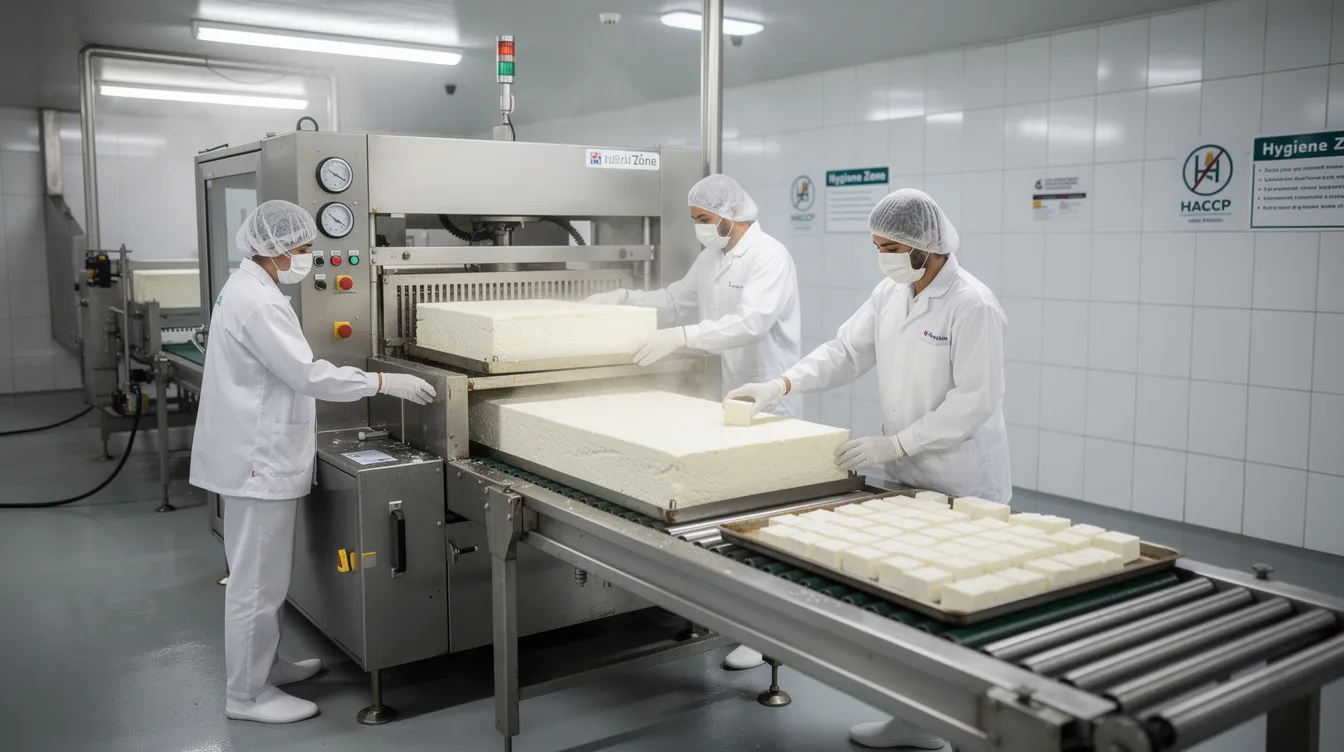
- Curd collection, moulding and pressing
- Block cutting to required shape
- Dip chilling or blast chilling via the paneer cooling system
- Packaging (vacuum or thermoformed)
- Cold storage and dispatch
Quality control in paneer production includes monitoring microbial safety and pH levels. Standardised process parameters reduce batch-to-batch variation and control bacteria formation.
Whey Generation, By-Product Utilisation and Environmental Planning
For every 1 kg of paneer, roughly 4–5 litres of whey are generated. The project should address waste management practices for by-products such as whey. Options include sale to animal-feed units, use in beverages, or processing into whey protein concentrate via a separate industrial whey processing and value addition line. Lenders and pollution-control authorities expect clarity on effluent handling in the DPR.
Paneer Plant Machinery, Processing Equipment and Automation
A commercial paneer manufacturing plant requires the following equipment (indicative list):
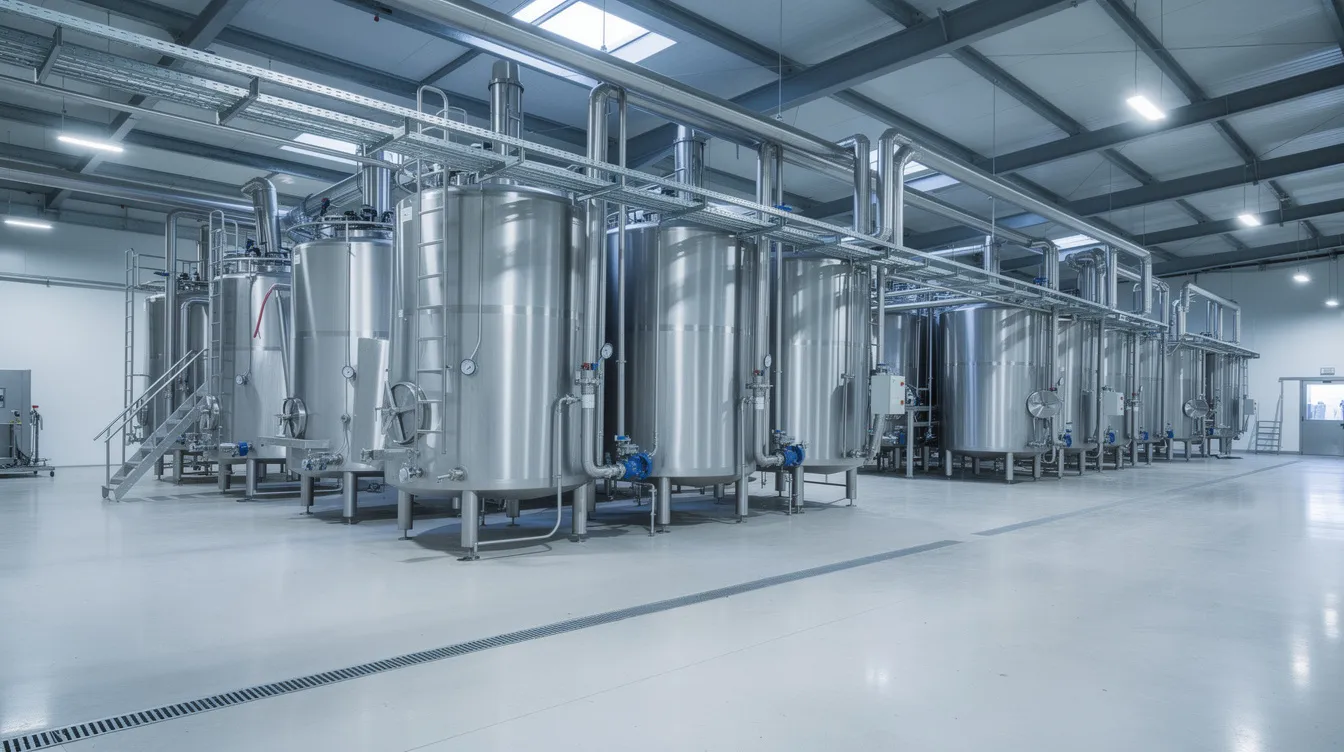
- Milk reception and weighing system, milk storage tanks, bulk milk coolers
- Paneer pasteurizing system, balance tank, standardisation equipment
- Paneer making machine (coagulation vat or automatic coagulation system)
- Whey drainage system
- Paneer press machine for shaping and moisture removal
- Paneer cutting machine for blocks or cubes
- Paneer cooling system (dip chiller or blast chiller)
- Paneer packaging machinery (vacuum or thermoforming)
- Cold rooms, refrigeration plant, boiler (a milk boiler is essential for paneer production)
- CIP system, RO plant insulation, water treatment, laboratory instruments
- Plant electrical panel, material handling and DG set
Paneer equipment costs vary by capacity, automation and imported vs indigenous machinery. The DPR should show itemised paneer plant machinery cost based on actual vendor quotations.
Automatic vs Semi-Automatic Industrial Paneer Manufacturing Plant
| Parameter | Semi-Automatic | Fully Automatic |
|---|---|---|
| Machinery investment | Rs. 1.5–3 lakh (micro); Rs. 3.5–7.5 lakh (MSME) | Rs. 13–40 lakh (processing line only) |
| Suitable capacity | 1–3 TPD | 5–20+ TPD |
| Labour requirement | Higher | Lower per kg |
| Yield consistency | Moderate | High (PLC-controlled) |
| Hygiene control | Operator-dependent | Reduced product contact |
| Scalability | Limited | High |
A 100-litre/day semi-automatic unit generates Rs. 37,000–55,000 per month profit at current indicative prices. Fully automatic lines offer the following advantages: precise temperature and pH control, higher throughput and better food-safety compliance. The DPR should present alternative scenarios so promoters and lenders can compare impact on project cost, EBITDA and DSCR.
Land, Building and Factory Layout
The plant layout should separate raw and finished product zones to minimize contamination risks. Key spaces include milk reception bay, processing hall, pressing and packaging zone, cold rooms, utility block, laboratory, staff facilities and loading docks. Principles of dairy plant land, utilities and hygienic factory layout planning apply, though exact paneer plant insulation, construction and layout must be engineered for the specific project.
Utilities and Cold Chain Requirements
Production requires a consistent supply of utilities including water, electricity and steam. A freezing temperature of -18°C is typically used for cold storage of paneer intended for longer-term storage; fresh paneer cold rooms operate at 0–4°C. Utility sizing covers refrigeration, chilled water, boiler capacity, compressed air, ETP and backup power. Cold-chain failure directly causes product spoilage, returns and revenue loss.
Packaging Options and Product Mix Strategy
Modern retail is increasing paneer’s availability in supermarkets, driving demand for vacuum-packed and thermoformed retail packs. Packaging format influences shelf life, brand perception and capital expenditure. Product variants include fresh paneer, malai paneer, low-fat paneer and institutional blocks. Industry trends show growing demand for convenience-format dairy products. The DPR maps each SKU to expected selling price, contribution margin and target clients.
Integrated Dairy Processing Opportunity
Many promoters evaluate paneer as one line within an integrated dairy processing plant project. Integration provides shared milk procurement, common boiler and refrigeration, better milk balancing and product diversification. The DPR should state whether the paneer plant is standalone or multi-product, since this affects project cost allocation and bank financing approach.
Industrial Paneer Manufacturing Plant Project Cost and Means of Finance
Total capital investment for a paneer plant is Rs. 3.99 Cr for a representative medium-scale setup. This paneer manufacturing plant project cost covers land development, building and construction, machinery, cold storage, utilities, ETP, preliminary expenses, contingencies and margin for working capital. Getting only a machinery price quote does not capture true paneer manufacturing plant setup cost in India.
Means of finance typically include promoter equity (30–35%) and term loan (65–70%), structured using principles similar to project cost and means of finance for dairy manufacturing projects. CA Manish Gugliya prepares customized paneer manufacturing plant investment and financing tables based on actual quotations and promoter funding capacity.
Working Capital Requirement and Operating Cycle
Paneer plants purchase milk daily but sell to distributors and institutional buyers on 15–30 day credit terms, creating constant working capital pressure. Components include raw milk purchases, packaging material stock, finished goods in cold storage, trade receivables, salaries, electricity and fuel. Frameworks similar to working capital assessment for dairy manufacturing plants are used to size cash-credit limits. Insufficient working capital forces capacity underutilisation even when demand exists.
Revenue Model, Cost of Production and Profitability Drivers
Annual revenue equals total paneer quantity sold multiplied by average realisation per kg, adjusted for product mix and any by-product realisation from whey. Major cost components: raw material (milk, the largest variable cost), packaging, labour, power and fuel, transport, quality control, marketing, admin overheads, finance cost and depreciation.
Profitability levers include procurement cost relative to paneer selling price, yield per 100 litres, capacity utilisation, cold-chain efficiency and disciplined control over discounts. The DPR develops projected profit and loss statements showing expected EBITDA and cash accrual based on agreed assumptions; it does not guarantee specific profit figures.
Break-Even Analysis and Risk Cushion
Break-even point for a paneer plant is 56% of capacity utilisation in a well-structured medium project, based on indicative fixed-cost and contribution assumptions. Lenders focus on whether break-even sits comfortably below planned operating capacity. The profitability and break-even analysis for dairy manufacturing projects framework is applied within the paneer DPR. Break-even analysis must be read together with cash flow, working capital and DSCR to judge financial resilience.
Financial Projections, DSCR and Loan Repayment Capacity
Financial projections must include projected Profit & Loss, Cash Flow, and Balance Sheet for at least five years, consistent with the approach used in financial projections for a dairy manufacturing DPR. DSCR (Debt Service Coverage Ratio) measures cash available for servicing the term loan against interest-plus-principal obligations in each year. Lenders review year-wise DSCR, moratorium period and repayment schedule; the concepts behind DSCR and loan repayment capacity assessment apply directly to paneer plant bank loan project reports.
Bank Loan, Term Loan Assessment and Project Finance
Banks evaluate promoter credentials, project cost, milk availability, market research reports, machinery details, statutory approvals, financial projections, DSCR, security and sensitivity analysis before sanctioning a paneer manufacturing plant term loan. Term loan assessment links eligible fixed assets with loan amount, implementation schedule and repayment tenure, following principles from term loan assessment for dairy manufacturing projects. A properly prepared paneer plant bank loan project report aligns technical configuration with financial ratios and clearly shows repayment sources.
Feasibility, ROI, IRR, Payback and Sensitivity Analysis
Three dimensions matter: technical feasibility, market feasibility and financial feasibility. ROI, IRR and payback period help promoters and investors compare a paneer plant with alternative uses of capital, as outlined in the ROI, IRR, payback and sensitivity analysis for dairy projects framework. Sensitivity analysis tests scenarios: 5–10% increase in milk price, reduced selling price, lower yield or delayed capacity ramp-up. The competitive landscape and industry overview within the DPR support feasibility and project viability analysis.
Regulatory, Statutory and Quality Compliance
FSSAI registration is mandatory for legal operations. Mandatory licenses for paneer production include FSSAI Registration and pollution control clearances. Additional registrations may cover GST, factory licence, fire safety, electricity load sanction, boiler approval, labour-law compliance and trademark. HACCP principles are critical for ensuring food safety in paneer manufacturing. BIS standards, ISO 22000 or FSSC 22000 should be considered at design stage for plants serving organised retail. Promoters must verify applicable requirements with their consultants and local authorities in the country where operations are planned.
Major Risks in an Industrial Paneer Manufacturing Project
| Risk | Possible Impact | Mitigation |
|---|---|---|
| Milk price increase | Compressed margins, negative DSCR | Long-term procurement contracts, sensitivity buffers |
| Poor milk quality | Lower yield, quality complaints | Testing protocols, supplier audits |
| Cold-chain failure | Product spoilage, returns | Backup power, preventive maintenance |
| Capacity underutilisation | Higher fixed cost per kg | Conservative capacity selection, phased expansion |
| Price competition from loose paneer | Revenue pressure | Brand building, retail positioning |
| Delayed customer payments | Working capital strain | Credit limits, diversified customer base |
| Seasonal milk shortage | Production disruption | Chilling infrastructure, flexible product mix |
These risks should be reflected in sensitivity analysis within the DPR rather than ignored.
What a Paneer Manufacturing Plant DPR Should Include
A strong paneer manufacturing plant DPR links technical data with financial projections:
- Executive summary, promoter profile, project concept
- Industry overview, market analysis, demand-supply assessment
- Capacity selection, product mix, process flow chart
- Machinery and paneer equipment list with vendor quotations
- Land, building, utilities sizing, cold-chain logistics
- Raw material and milk procurement model, manpower planning
- Implementation schedule
- Project cost, means of finance, working capital assessment
- Projected revenue, cost of production, P&L, balance sheet, cash flow
- Loan repayment schedule, DSCR, break-even, ROI, IRR, payback
- Sensitivity analysis, risk register, statutory summary
Why Professional, Customized DPR Preparation is Essential
Generic business plan templates with outdated milk prices or arbitrary assumptions do not pass bank scrutiny. A customized project report reflects actual machinery quotations, local building costs, realistic milk procurement prices, achievable selling prices in the region and true working capital cycles. Banks compare DPR assumptions with industry norms and ask detailed questions about data, DSCR and sensitivity.
How CA Manish Gugliya and ProjectReportBank.com Can Assist
I assist entrepreneurs and dairy companies with preparation of detailed project reports for industrial paneer plants, bank-finance DPRs, CMA Data, projected financial statements, working capital assessment, DSCR computation, term loan assessment, break-even analysis, ROI and IRR calculations, sensitivity analysis and feasibility evaluation. All projections are based on assumptions supplied and validated with the promoter.
Promoters planning serious industrial paneer or integrated dairy projects can reach out via ProjectReportBank.com for a customized industrial paneer manufacturing plant project report and finance advisory.
Conclusion
An industrial paneer manufacturing plant DPR is a decision tool, not paperwork. It tests whether capacity, paneer manufacturing plant setup cost, milk procurement, price assumptions and financing structure make commercial sense. The report should answer: what capacity is justified, how much investment and working capital are required, what daily milk volume is needed, whether debt can be serviced and how sensitive profitability is to changes in milk price or utilisation.
ProjectReportBank.com, under the guidance of CA Manish Gugliya, supports promoters in evaluating, structuring and presenting industrial paneer manufacturing projects to banks and investors with realistic, well-documented DPRs.
Frequently Asked Questions
What is a realistic implementation timeline for an industrial paneer manufacturing plant?
For a greenfield 5–10 TPD plant, expect 9 to 14 months covering land acquisition, design, statutory approvals, civil construction, machinery ordering, installation, commissioning and trial production. Timelines vary based on land readiness, utility availability and regulatory clearance speed. The DPR should include a month-wise implementation schedule.
Can an existing liquid milk dairy add a paneer line without new land?
Many existing dairies add a paneer line by reallocating internal space and installing coagulation vats, a paneer press machine, cutting line and additional cold room. A technical and financial add-on DPR evaluates incremental investment, additional milk requirement and impact on overall plant utilities and working capital.
How is milk price volatility handled in the financial model?
Financial models use a base-case milk price from recent 6–12 month averages and then run sensitivity scenarios with 5–10% price increases to observe effects on contribution, EBITDA and DSCR. Procurement strategies like direct farmer sourcing and cooperative tie-ups serve as additional risk-mitigation levers.
Is export of paneer feasible for a new plant?
Exports are technically possible but require higher compliance (certifications, cold chain, shelf life, packaging) and established overseas distribution. New promoters typically focus first on domestic markets and commission an export feasibility study after stabilising operations.
Can paneer whey alone justify a separate whey-processing plant?
Viability depends on total whey volume, protein content and market for whey products. A medium paneer-only plant may generate insufficient volume for a standalone whey plant. A separate whey processing plant project report should be prepared if large, continuous whey volumes are expected from multiple dairy product lines.