Key Takeaways
- This article provides a strategic, India-focused overview of preparing a whey processing plant project report, covering whey availability, technology selection, investment, profitability and bank finance.
- Liquid whey from cheese, paneer and casein production can be converted into high-value whey protein, lactose and other dairy ingredients, provided raw-material security, suitable technology and sound financial projections are in place.
- Whey processing plant project cost, capacity and product mix (whey powder, WPC, WPI, lactose, permeate) must be customised for each promoter; there is no one-size-fits-all figure for capital expenditure or profitability.
- A bankable whey processing plant DPR by a professional such as CA Manish Gugliya should integrate technical design, market assumptions, detailed financial projections, DSCR, ROI/IRR and risk analysis.
- Banks and investors in India focus on raw-whey tie-ups, realistic cost estimates, conservative capacity utilisation, working-capital planning and clear repayment capacity before considering project finance.
Introduction: Strategic Overview of a Whey Processing Plant Project Report
Every kilogram of cheese, paneer or casein manufactured in India generates several litres of liquid whey – a liquid byproduct that is approximately 93–95% water and extremely perishable. Liquid whey is collected as a by-product of cheese production, and when discharged untreated, its high biological oxygen demand (BOD) and chemical oxygen demand (COD) create serious disposal and environmental challenges for dairies across the country.
A modern industrial whey processing and dairy ingredients plant can convert this stream into products such as whey powder, whey protein concentrate, whey protein isolate, lactose and permeate powder – ingredients that serve the sports nutrition, infant formula, bakery, confectionery, pharmaceutical and animal nutrition sectors. However, setting up such a plant requires careful integration of raw-material availability, processing technology, product mix, market demand and project finance.
A whey processing plant project report – also referred to as a whey processing plant DPR or detailed project report – is a comprehensive document covering technical, commercial and financial aspects required by promoters, investors and banks. CA Manish Gugliya, as a practising Chartered Accountant (FCA, DISA) with more than 20 years of experience, focuses on integrating project concept, manufacturing process, plant layout, CAPEX, operating expenses, revenue model and bank-finance parameters into a structured DPR. This article gives a hub-level view of an industrial whey processing plant project in India and connects readers to specialised resources for deeper coverage. Project economics depend on plant capacity, membrane technology (UF, NF, RO), whey composition, product mix and location – hence every bankable DPR must be customised.
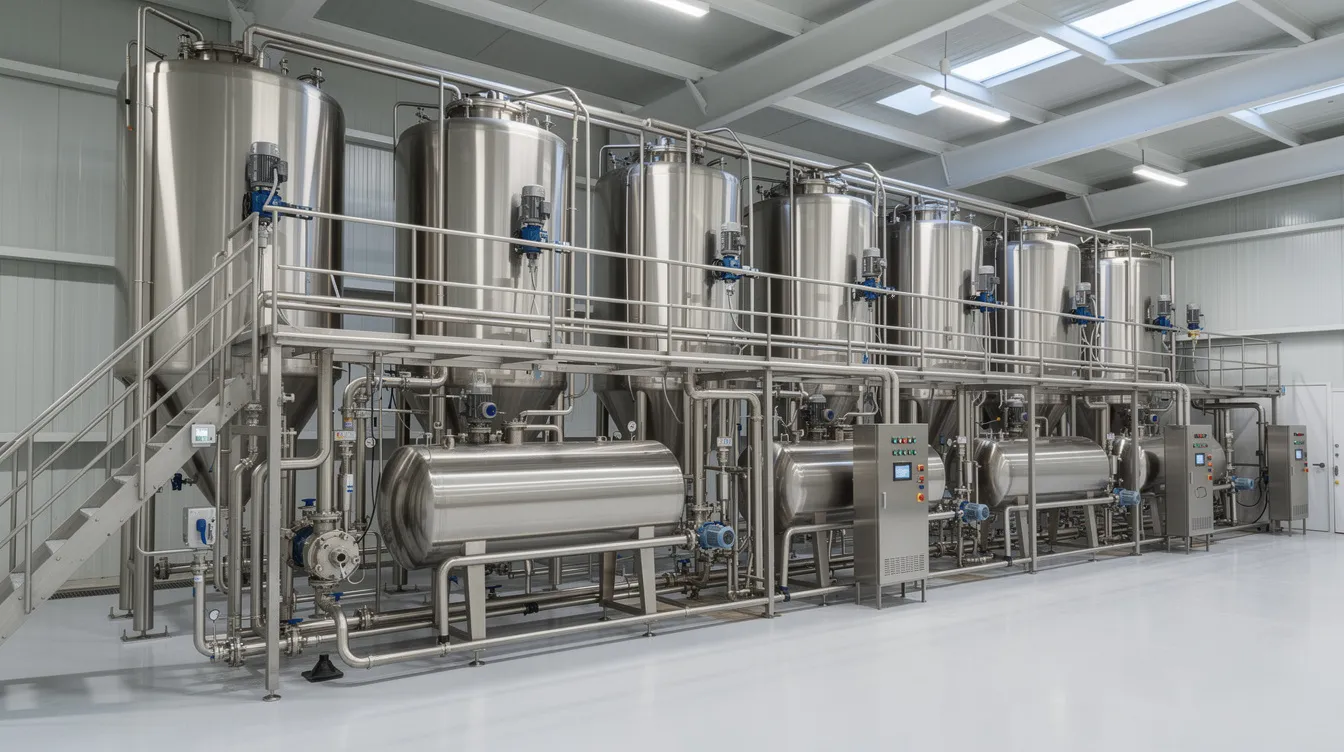
What Is a Whey Processing and Dairy Ingredients Plant?
Liquid whey is the watery fraction remaining after milk protein and fat are coagulated and removed during cheese, paneer or casein production. Whey can be processed into various products including powder and protein concentrates, making it far more than simple dairy waste.
Sweet whey, generated from rennet-coagulated cheese and many paneer operations, typically has a pH around 6.2–6.6, with relatively mild flavour suitable for human-food ingredients like WPC and WPI. Acid whey, arising from acid-coagulated products such as chhana, dahi and fermented products, has lower pH (around 4.2–4.6) and higher mineral content, making it more challenging for high-value applications but usable in lactose, permeate and animal nutrition with appropriate processing.
A typical composition snapshot of liquid whey per litre (illustrative): 0.6–0.8% whey protein, 4.5–5% lactose, 0.1–0.5% fat, 0.5–0.8% minerals and the balance water. Actual values depend on the parent milk (such as cow’s milk or buffalo milk) and the manufacturing process used. The protein content, though seemingly small per litre, adds up to significant volumes in commercial operations.
A basic whey powder manufacturing plant focuses on clarification, concentration via evaporation and spray drying of whole whey solids. An advanced fractionation dairy ingredients plant uses advanced membrane filtration, demineralisation and controlled drying to produce WPC, WPI, lactose, permeate powder and other specialised ingredients. The whey processing plant detailed project report must capture these technical choices because they determine both capital expenditure and revenue potential. For a detailed understanding of cost drivers, refer to our resource on whey processing plant setup cost in India. Equipment cost structures are explored further in our guide on whey processing plant machinery and equipment cost.
Why Invest in Whey Processing in India?
Indian cheese, paneer and value-added dairy production has expanded rapidly due to urbanisation, quick-service restaurants, and rising consumption of processed cheese and packaged paneer. This growth generates increasing quantities of liquid whey from organised dairies and cooperative plants, creating a substantial opportunity for industrial whey processing.
On the demand side, the whey protein industry is buoyant. The global whey protein market was valued at USD 5.69 billion in 2025 and is expected to reach USD 7.69 billion by 2034, growing at a CAGR of 3.41% from 2026 to 2034. Within India, the whey protein market generated approximately USD 266.6 million in 2024 and is projected to reach around USD 633 million by 2033 at a CAGR of approximately 9.9%.
Key demand drivers include:
- Protein enriched diets, sports nutrition, weight management and gym culture increasing interest in whey protein powder and ready-to-drink beverages.
- Use in infant formula, bakery, confectionery, clinical nutrition and beverages as functional dairy ingredients offering essential amino acids and complete protein profiles.
- Applications in animal feed and pet nutrition using permeate and deproteinised whey.
- Import substitution: India imports substantial volumes of supplement-grade whey protein – estimates suggest nearly 23,000 tonnes in 2025 – creating room for domestic production.
- Export potential for competitively priced, quality-compliant lactose and permeate powder.
Using whey in a commercial plant minimises effluent-load penalties and aligns with stricter discharge norms. However, long-term, reliable access to adequate whey volume and quality is essential before committing large capital.
Raw Material Availability and Whey Procurement
Raw-material security is one of the most critical sections in any whey processing plant feasibility report and directly affects plant capacity and financial viability. Key raw materials include liquid whey itself plus processing aids, chemicals and packaging.
Typical whey sources in India include captive cheese or paneer plants, third-party manufacturers, milk unions and cooperatives, and certain casein production plants generating whey streams. As an indicative thumb rule, approximately 1,000 litres of milk for cheddar or processed cheese may generate 800–900 litres of whey.
Quality and composition variations matter significantly. Sweet whey processing yields better outcomes for WPC/WPI manufacturing; acid whey processing is more suited to lactose, permeate or animal nutrition. Adulteration, antibiotics or cleaning chemicals in the raw whey can severely affect processability. Raw material requirements for each project must be documented carefully.
Logistical constraints are real: whey should be chilled below 4–5°C or processed quickly to control microbial growth. The procurement radius is typically limited to a few hours’ drive unless insulated, refrigerated tankers are used. Captive whey from own cheese or paneer lines gives maximum control, while supply agreements with neighbouring dairies help ensure minimum daily volume. Seasonal variations in milk availability affect whey volume and composition – conservative assumptions are essential in the whey processing plant project report India.
Product Portfolio of a Dairy Ingredients Plant
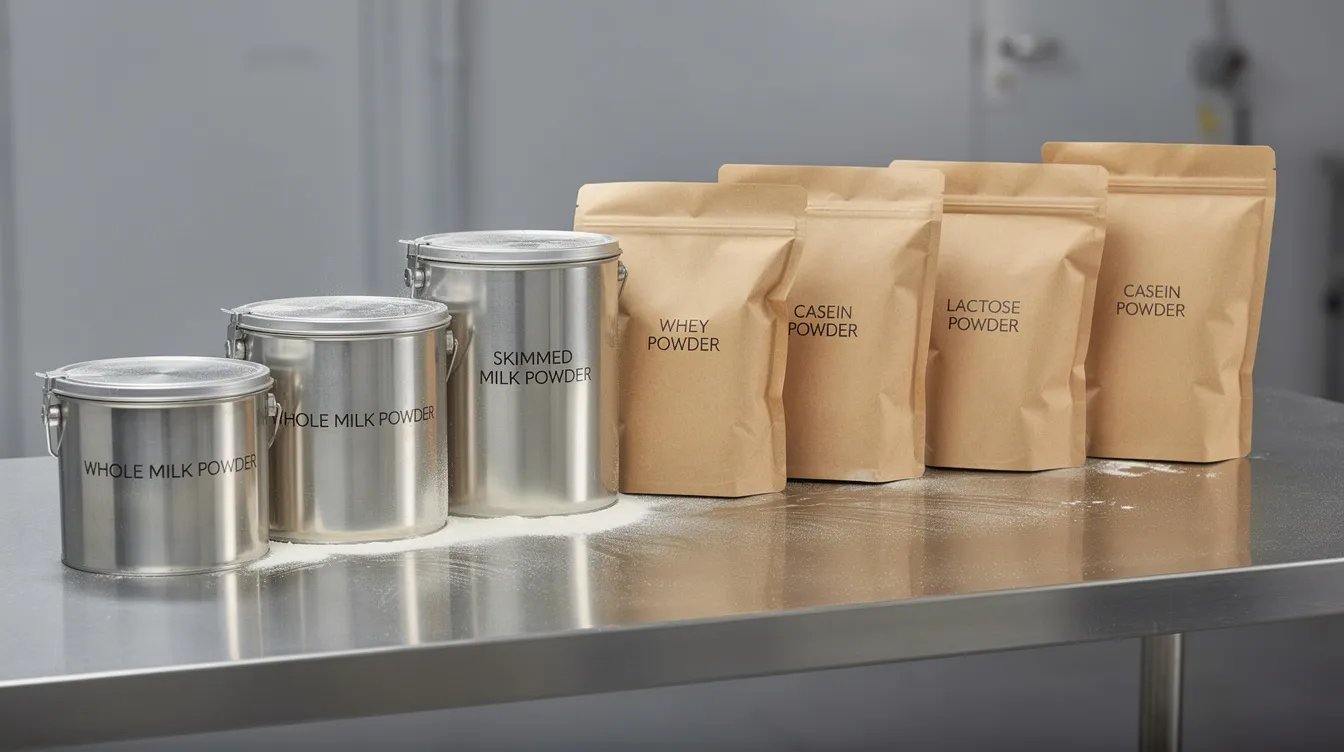
Product mix decisions drive process design, plant machinery selection, project cost and profitability. Casein, caseinate and milk protein concentrate are dairy-protein ingredients but may not always be produced directly from whey; they belong to the broader dairy ingredients manufacturing concept.
Whey Powder
Whey powder is dried whole whey solids produced by clarifying, concentrating and spray drying liquid whey. Applications include bakery, confectionery, ice cream, beverage mixes, chocolates, soups, sauces and animal feed. It is generally less technology-intensive than high-grade WPC/WPI but still requires sanitary processing and efficient dryers. The nutritional value lies in a combination of protein, lactose and minerals. For a focused analysis, refer to the whey powder manufacturing plant project report.
Whey Protein Concentrate (WPC)
Whey protein concentrate is produced by ultrafiltration where membranes retain proteins and allow lactose and minerals to pass. Ultrafiltration produces whey protein concentrate with 70–80% protein content by dry weight in higher grades (WPC 80), while WPC 35 and WPC 60 serve different applications. The amino acid profile of WPC includes branched chain amino acids and essential amino acids required for muscle growth, making it a complete protein source for dietary supplements and sports nutrition brands.
WPC production costs are lower than whey protein isolate, making it the volume leader in India’s whey protein sector. Promoters evaluating this product can study a dedicated whey protein concentrate manufacturing plant resource for capacity and process insights.
Whey Protein Isolate (WPI)
Whey protein isolate contains over 90% protein and virtually no lactose after additional filtration via microfiltration, ion exchange or similar whey protein separation technology. Applications include premium sports nutrition, clinical nutrition, low-lactose formulations and high-protein beverages. Manufacturing costs for WPI are 30–50% higher than for WPC due to more advanced technology and tighter process control.
Additionally, enzymatic hydrolysis can create whey protein hydrolysate for faster absorption, useful in specialised clinical and infant nutrition products. Exporters may prioritise WPI due to higher added value. Readers should review the dedicated whey protein isolate manufacturing plant guide for deeper planning considerations.
Lactose
Lactose is the milk sugar crystallised from deproteinised whey or permeate and refined for food, pharma and infant-nutrition uses. It serves as a pharmaceutical excipient for tablets and capsules, and is used in infant formula, bakery and confectionery. Lactose manufacturing is capital-intensive and usually suited to larger integrated plants. Promoters should refer to the lactose manufacturing plant project report for crystalliser design and purity-grade guidance.
Casein and Caseinate
Casein is the principal milk protein separated from skim milk – not from whey – through acid or rennet coagulation. Caseinates are its functional salts (e.g. sodium caseinate). These belong to the broader dairy protein ingredients segment and can complement a whey-processing project within a combined dairy ingredients manufacturing plant. Applications include processed cheese, nutritional supplements, coffee whiteners and meat analogues. Including casein affects raw material requirements since skim milk rather than whey is the feedstock. Details are available in the casein and caseinate manufacturing plant project report.
Milk Protein Concentrate (MPC)
Milk protein concentrate is derived from skim milk via ultrafiltration, concentrating both casein and whey proteins together (typically 40–85% protein). It differs from WPC because the raw material is milk rather than whey. MPC production may share technology modules such as membrane filtration and drying with whey processing. Promoters interested in a wider portfolio can explore the milk protein concentrate manufacturing plant resource.
Permeate Powder and Other By-Products
Permeate is the low-protein stream from UF or NF, rich in lactose and minerals. Drying this stream produces permeate powder used in bakery, snacks and animal nutrition. Efficient utilisation of permeate improves overall whey processing plant profitability and reduces effluent load. Other by-products include demineralised whey powder and delactosed permeate for animal-feed blends. Decisions on by-product valorisation must be reflected in the DPR, especially in revenue, utility and ETP design sections.
Whey Processing Manufacturing Process
The whey processing plant manufacturing process involves several unit operations in sequence, supported by CIP (clean-in-place) and effluent treatment systems. The technical process in whey processing involves these key stages:
- Whey collection and reception – unloading from insulated tankers into reception tanks; measurement and sampling.
- Quality testing – checking acidity, protein, fat, microbiological load and adulteration indicators.
- Clarification – using clarifiers/centrifuges to remove curd fines and extraneous matter to eliminate harmful microorganisms and improve downstream membrane life.
- Fat and casein-fines removal – separation systems for skimming residual fat.
- Pasteurisation – heating whey (e.g. 72–78°C for defined holding time) to reduce microbial load.
- Microfiltration (MF) – optional step to remove residual fat and bacteria using larger pore sizes.
- Ultrafiltration (UF) – the key step in the whey protein extraction process, retaining proteins while permeating lactose and minerals. Processing whey into value-added products like WPC requires this membrane technology.
- Nanofiltration (NF) – partly demineralises and concentrates lactose from permeate streams.
- Reverse Osmosis (RO) – concentrates whey or permeate by removing water as a pre-concentration step.
- Demineralisation – ion-exchange or electrodialysis for infant-nutrition-grade products.
- Evaporation – multi-effect evaporators further concentrate whey before drying.
- Lactose crystallisation – controlled cooling and seeding for lactose production.
- Spray drying – spray drying converts liquid protein into dry whey protein powder in powder form with long shelf life. The spray dryer atomises concentrates into a hot-air chamber, and the final powder quality depends on inlet/outlet temperature balance.
- Cooling, sieving and blending – powder handling, cooling and homogenising batches.
- Packaging and storage – packing in food-grade bags with moisture control.
- CIP system – automated cleaning of tanks, pipelines, membranes and dryers.
- Effluent and waste management – handling cleaning solutions and membrane rejects through waste management systems.
A mass balance quantifies inputs and outputs throughout processing and is essential for DPR accuracy. Membrane fouling can affect the efficiency of filtration systems, requiring robust CIP regimes. For stepwise schematics, refer to the whey processing plant manufacturing process and flow chart. Detailed membrane configuration guidance is covered in our resource on membrane filtration technology for whey processing.
Plant Capacity Planning and Product Mix
Plant capacity is typically expressed in litres per day (LPD) of liquid whey processed and in MT per annum of final products. Simply evaluating liquid-whey volume is insufficient; solids content, protein percentage and recovery efficiency determine revenue projections.
- Minimum economic scale for a commercial whey processing plant may start from 50,000–100,000 LPD (illustrative), but actual thresholds vary by product mix.
- Capacity utilisation assumptions: ramp-up from 50–60% in Year 1 to 80–90% in subsequent years is typical in DPR preparation.
- Single-product vs integrated product-mix strategies affect marketing complexity and investment.
- Phased expansion – starting with whey powder or WPC and adding WPI or lactose later – allows cash-flow stabilisation before further capital expenditure.
The plant layout should include process flow and scalability options for future diversification. For capacity scenarios and product combinations, refer to whey processing plant capacity planning and product mix.
Land, Building, Utilities and Infrastructure
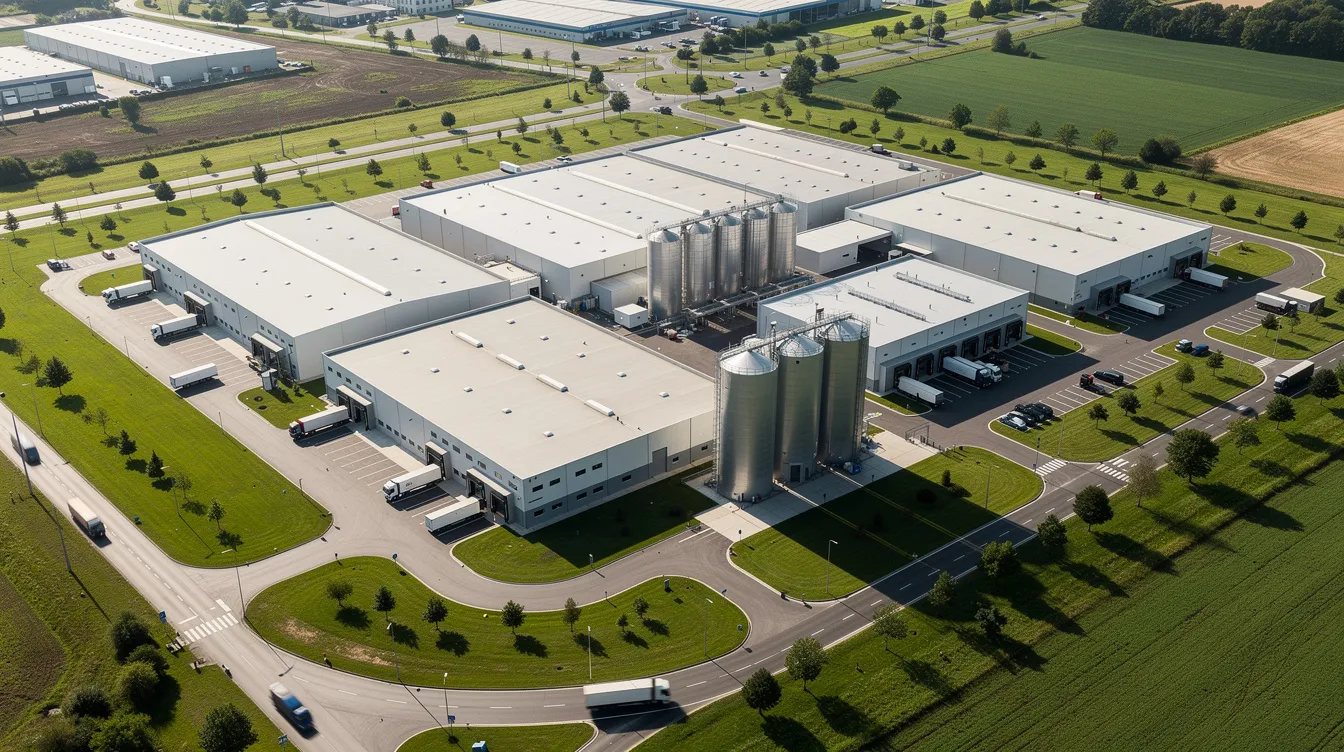
Site selection must consider land use and utilities availability. Land requirement depends on capacity, product range, type of spray dryer, storage needs and future expansion. Key layout elements include:
- Raw-material reception bay with tanker access and weighbridge
- Processing block for clarification, pasteurisation and membrane filtration under hygienic zoning
- Evaporation and drying sections with high headroom
- Finished-goods packaging and storage with controlled temperature
- Quality-control and R&D laboratory
- Utilities block (boiler, refrigeration, water treatment, compressors, DG sets)
- CIP station, ETP and sludge-handling zone
- Administrative offices and staff facilities
Utility requirements include steam for evaporation and drying, refrigeration for whey storage, electrical load for membrane systems and pumps, and process water. These assumptions materially affect capital expenditure and must be documented in the DPR.
Whey Processing Plant Machinery and Equipment
Plant and machinery specifications must align with processing requirements. Major equipment categories include:
| Category | Examples |
|---|---|
| Reception & storage | Whey tanks, balance tanks, dairy-grade pipelines |
| Separation | Centrifugal clarifiers, cream separators |
| Thermal processing | Plate/tubular pasteurisers, hot-water systems |
| Membrane filtration | UF, NF, RO skids with pumps and controls |
| Concentration | Multi-effect evaporators, TVR units |
| Crystallisation | Lactose crystallisers (for lactose lines) |
| Drying | Spray dryers, fluid-bed dryers |
| Powder handling | Conveyors, sifters, blenders |
| Packaging | Bag-packing machines, nitrogen flushing |
| Support systems | CIP, refrigeration, boilers, lab equipment, ETP |
Equipment cost depends on capacity, automation level, supplier and whether machinery is imported or indigenous. Indicative cost structures are explored in our guide on whey processing plant machinery and equipment cost.
Whey Processing Plant Project Cost
The initial capital investment for a whey processing plant is very high. Capital expenditure includes equipment costs and construction, and whey processing plant setup costs range broadly from USD 2 million to 10 million depending on capacity and product mix. In the Indian context, a WPC plant for supplement grade may cost around ₹60–100 crore, while a WPI facility may require ₹150–250 crore.
Major CAPEX components in a dairy ingredients plant project report include:
- Land, site development and boundary wall
- Factory building, civil works and internal roads
- Core process plant and machinery (membrane systems, evaporators, dryers, packaging)
- Utilities (boilers, chillers, compressors, water treatment, power systems)
- Effluent treatment plant
- Laboratory setup and quality-control instruments
- Preliminary and pre-operative expenses (design, consultancy, interest during construction)
- Contingencies and margin money for working capital
There is no universal cost of starting a whey processing plant. Refer to our detailed note on whey processing plant project cost and means of finance for structuring the overall investment.
Means of Finance and Funding Structure
A robust funding plan is central to a bankable DPR. Key components of the whey processing project means of finance include:
- Promoters’ contribution (typically 30–40% or more of project cost)
- Term loan from banks or financial institutions for eligible fixed assets
- Unsecured loans or quasi-equity where acceptable to strengthen net worth
- Subsidies or incentives under dairy or food-processing schemes (subject to eligibility verification)
- Working-capital facilities such as cash-credit limits
Realistic project cost estimation is critical – understated CAPEX leads to mid-project funding gaps, while overstated costs weaken project returns. Eligibility for funding does not automatically mean financial viability; the DPR must justify viability separately through expenditure projections and cash-flow analysis.
Revenue Model and Market Applications
The whey processing plant revenue model is built around volumes and selling prices of multiple products. The market analysis section should address demand and target customers across segments. Financial analysis should project revenue and operating margins for each product line.
Revenue components typically include sales of whey powder, WPC (various grades), WPI, lactose, permeate powder and other dairy protein ingredients. Marketing channels span direct institutional contracts with food and nutrition companies, ingredient distributors, and export markets. The global food industry continues to expand applications for whey-based ingredients.
Selling prices vary by protein content, functional properties, microbiological compliance and certifications. Price trends in the whey protein market are influenced by global commodity cycles. The nutritional quality of the final product – including its amino acid profile with essential amino acids and digestive enzymes compatibility – affects premium positioning. For segment-wise analysis, refer to the whey processing plant revenue model and market applications.
Profitability and Break-Even Analysis
Gross profit margins for whey protein typically range between 40–50%, but actual profitability depends on capacity utilisation, solids recovery, raw whey cost, energy efficiency and product mix. Operating costs for whey protein plants are driven by raw material consumption – raw materials account for 50–60% of operating expenses in whey protein production. Operating costs for a whey protein plant increase significantly by year five as membrane replacements and maintenance accumulate.
Key considerations include:
- Fixed costs (depreciation, interest, administration) vs variable costs (raw materials, energy, packaging) and their impact on contribution margin
- Break-even capacity as a percentage of installed capacity
- Effect of plant scale and operating leverage on profit volatility
- Distribution costs and raw material costs as major operational expenses
- Human resource requirements and their impact on operating costs
The DPR should summarise projected profit-and-loss statements, operating margins and break-even analysis based on transparent assumptions. Detailed scenario-based analysis is available at whey processing plant profitability and break-even analysis.
Financial Projections Required in the DPR
Banks expect detailed financial projections as part of a bankable DPR for whey processing plant project finance. Financial projections must include break-even and ROI analysis. Core projected statements include:
- Projected profit and loss account (7–10 years minimum)
- Projected balance sheet capturing fixed assets, working-capital components and net worth
- Cash-flow and fund-flow statements
- Production and capacity-utilisation assumptions by product
- Raw-material consumption and utility-consumption schedules
- Depreciation chart and term-loan amortisation schedule
- Working-capital assessment consistent with bank norms
- DSCR, ROI (Return on Investment), IRR (Internal Rate of Return) and payback period
- Sensitivity analysis on key variables like whey cost, selling price and capacity utilisation
Financial projections in a whey processing plant DPR prepared by CA Manish Gugliya are estimates based on agreed assumptions, not guarantees of future performance. For projection templates, see whey processing plant financial projections for DPR. Methods for evaluating investment attractiveness are detailed at whey processing project ROI, IRR and sensitivity analysis.
Working Capital Requirement
Working capital finances inventories, receivables and operating expenses between cash outflows and inflows. Typical components include inventory of raw materials and consumables, packaging materials, work-in-progress (intermediate concentrates), finished-goods inventory, trade receivables from institutional buyers, and cash for daily operating expenses – less trade payables from suppliers.
The working-capital cycle depends on the time between whey procurement and receipt of customer payment, including export shipment terms. Banks provide cash-credit limits based on assessed requirements and prescribed margins. Methodology and examples are covered at whey processing plant working capital requirement.
DSCR and Loan Repayment Capacity
DSCR (Debt Service Coverage Ratio) measures cash available for servicing debt relative to total debt-service obligations. Banks examine both year-wise and average DSCR over the loan tenure to identify stress years. Key influences include capacity utilisation ramp-up, profitability per tonne processed, loan tenure, interest rate and moratorium period.
Sensitivity analysis should test DSCR under adverse conditions such as lower selling prices or higher whey cost to demonstrate whey processing plant loan repayment capacity. For computation methods and acceptable ranges, see whey processing project DSCR and loan repayment capacity.
Feasibility and Project Viability
A comprehensive whey processing plant feasibility study covers three dimensions:
Technical feasibility: Evaluate assured whey availability, select appropriate technology (sweet whey processing vs acid whey processing, UF/NF/RO configuration), assess infrastructure and utility availability, define product specifications and quality-control protocols.
Commercial feasibility: Study market potential for whey-based dairy ingredients domestically and internationally. Identify target customers, assess competition, evaluate selling-price expectations and understand export regulatory requirements. The whey protein continues to gain application breadth across the global food industry.
Financial feasibility: Analyse project cost vs expected profitability, calculate break-even, cash-flow sufficiency, DSCR, ROI, IRR and payback period. Conduct sensitivity analysis on whey availability, raw-material price, product mix and energy tariffs.
For structured evaluation frameworks, see whey processing plant feasibility study and project viability.
Bank Loan and Project Finance
A bank loan for whey processing plant projects involves term loans for fixed assets and working-capital facilities, subject to standard credit appraisal. Banks typically evaluate:
- Promoter profile, dairy/food processing experience and credit history
- Quality of the DPR with realistic assumptions and professional financial projections
- Raw-material arrangements and evidence of discussions with partner dairies
- Technology clarity and supplier quotations
- Market assessment and letters of intent where available
- Project implementation schedule and risk-mitigation measures
- Security and collateral as per bank policy
A well-prepared bankable DPR improves appraisal quality but does not guarantee loan sanction. For documentation and appraisal parameters, refer to whey processing plant bank loan and project finance.
Registrations, Licences and Regulatory Considerations
Regulatory compliance includes necessary licenses and food-grade standards. Regulatory clearances for food safety must be obtained before operation. Key categories include:
- Business and tax: Company/LLP registration, PAN, GST, Udyam registration for eligible MSMEs
- Food and factory: FSSAI central license is mandatory for nutraceuticals manufacturing and whey ingredients. Factory licence under applicable Factories Act provisions
- Environmental and safety: Consent to Establish and Operate from State Pollution Control Board, fire-safety clearance, boiler registration
- Trade and export: Import Export Code (IEC), legal-metrology compliance for packed ingredients
Readers should verify current central, state and local requirements before implementation.
Quality Control and Food Safety
Quality assurance requires a testing plan and specifications at every stage. GMP certification is required for whey protein manufacturing in India, and ISO 22000 certification ensures food safety management in production.
- Incoming whey testing for protein, lactose, fat, acidity, microbiology and contaminants
- In-process monitoring of pasteurisation, membrane performance and drying conditions
- Finished-product testing for protein level, moisture, ash, solubility, bulk density and microbiological parameters
- Batch testing is essential for quality assurance in whey protein, and certificates of analysis must accompany each batch
- HACCP-based controls, traceability and allergen management
- Regular CIP validation and documented standard operating procedures
- Proper storage management to maintain nutritional quality and prevent caking
Environmental Management
Whey processing generates high-strength wastewater with significant COD. Effluent treatment systems are mandatory to comply with environmental regulations. Environmental assessments should consider wastewater characteristics and treatment requirements.
Even after product recovery, effluent arises from CIP operations, membrane rejects, spills and boiler blow-down. Typical ETP components include equalisation tanks, neutralisation, biological treatment and sludge management. Resource-efficiency measures – maximising solids recovery, heat recovery in evaporators and water reuse – reduce both environmental impact and operating costs.
Project Implementation Schedule
Project schedules detail timelines and milestones. Setting up a commercial whey processing plant is a multi-stage activity typically spread over 18–30 months:
- Concept development and preliminary whey-supplier discussions
- Raw-material assessment and market study
- Technology evaluation and equipment-supplier identification
- DPR preparation and financial appraisal
- Land finalisation, layout and infrastructure planning
- Statutory approvals (environmental, factory – parallel with DPR)
- Term-loan submission and bank discussions
- Machinery ordering after financial closure
- Civil construction and utility installation
- Mechanical erection and pre-commissioning
- Trial production and quality validation
- Commercial production and progressive ramp-up
Several activities may overlap to shorten implementation time while managing risk.
Major Project Risks and Mitigation
Risk assessments should identify potential market and operational risks. A formal risk-analysis section strengthens the DPR for banks and investors.
| Risk | Mitigation Strategy |
|---|---|
| Inadequate whey availability | Secure long-term supply agreements; invest in captive cheese/paneer capacity |
| Inconsistent whey quality | Implement supplier quality specs, regular testing and training |
| Lower-than-planned protein recovery | Choose proven technology; conduct pilot trials; proper membrane selection |
| Membrane fouling and downtime | Robust CIP regimes; maintain spare membranes; monitor parameters |
| High energy cost | Energy-efficient evaporators and dryers; heat recovery systems |
| Spray-dryer underutilisation | Conservative capacity; phased expansion; diversified product mix |
| Product-price volatility | Diversify into multiple ingredients; build stable contracts |
| Customer concentration | Develop multiple segments and geographies |
| Delayed approvals or construction | Realistic timelines; experienced project managers; contingency |
| Project-cost escalation | Lock critical contracts early; include contingencies |
| Working-capital shortage | Adequate bank lines; monitor inventory and receivables |
| Slow capacity ramp-up | Stage marketing early; conservative DPR assumptions |
| Quality rejection | Strengthen QA systems; invest in lab infrastructure |
| Environmental non-compliance | Adequate ETP capacity; continuous discharge monitoring |
| Exchange-rate risk on imported machinery | Hedging; favourable payment terms; currency risk in cost estimates |
Why a Customised DPR Is Essential
Generic manufacturing plant project reports cannot substitute for a customised whey processing plant detailed project report when investment runs into several crore rupees. Project-specific factors that must shape the DPR include:
- Actual whey availability, composition (sweet vs acid whey) and seasonal pattern
- Selected product mix, quality levels and targeted protein concentration
- Chosen technology, membrane configuration and spray-dryer design
- Location-specific costs: power tariffs, water, labour, logistics
- Machinery quotations from shortlisted suppliers
- Funding structure, interest rates and working-capital cycle
- Promoter profile and strategic priorities (export orientation, integration with existing operations)
- Sensitivity assumptions reflecting realistic upside and downside risks
A customised DPR is a decision-support and bank-appraisal document that should be revisited if major assumptions change.
Role of CA Manish Gugliya
CA Manish Gugliya is a practising Chartered Accountant (FCA, DISA – ICAI) with more than two decades of experience in project reports, DPR preparation, financial projections, feasibility studies, CMA Data assistance and MSME advisory.
For whey processing and dairy ingredients projects, his role typically includes:
- Understanding the promoter’s concept, proposed capacity and product mix
- Translating technical design and cost inputs into a coherent whey processing plant project report for banks and investors
- Preparing detailed financial projections including P&L, balance sheets, cash flows and sensitivity analysis
- Assessing project cost, structuring means of finance and evaluating loan-tenure options
- Calculating working-capital requirements, DSCR and banking ratios
- Assisting in CMA Data preparation and bank-format documentation
- Providing objective feasibility analysis and discussing key assumptions
CA Manish Gugliya does not certify that future results will match projections, nor can he guarantee bank finance or project profitability. Serious promoters, dairy companies and investors are invited to discuss their proposed capacity, location and product mix so that a customised whey processing plant project report / DPR can be prepared to professional standards.
Frequently Asked Questions
The following questions address common practical doubts beyond what is covered in the main sections above.
What is included in a whey processing plant project report?
A project report for a whey processing plant should include an executive summary, promoter and project background, raw-material availability study, product-mix selection, manufacturing process description and flow chart, plant layout with land and building requirements, detailed machinery list, project cost estimates and means of finance, revenue model, comprehensive financial projections (P&L, balance sheet, cash flow, DSCR, ROI/IRR), sensitivity analysis, risk analysis, implementation schedule and regulatory overview.
How much does a whey processing plant cost in India?
Costs vary widely. A WPC-grade plant may require ₹60–100 crore, while a WPI facility could need ₹150–250 crore. In broader terms, whey protein manufacturing plant setup costs range from USD 2 million to 10 million depending on scale and product range. Rather than relying on generic numbers, promoters should obtain a customised CAPEX estimate through a DPR based on their specific capacity and product mix.
Which products can be manufactured from liquid whey?
Whey can be processed into whey powder, whey protein concentrate (WPC 35, 60, 80), whey protein isolate (WPI), lactose, demineralised whey powder, permeate powder and whey protein hydrolysate. Broader dairy ingredients manufacturing plants may also produce casein, caseinate and milk protein concentrate from skim milk alongside whey-derived products.
What is the difference between WPC and WPI?
Whey protein concentrate has about 70–80% protein content by dry weight (in WPC 80 grade) and retains some lactose and fat. Whey protein isolate contains over 90% protein and virtually no lactose, achieved through additional filtration and processing. WPI commands premium pricing but requires higher capital and operating investment.
Is a whey processing plant profitable in India?
Profitability depends on whey availability and cost, product-mix strategy, energy efficiency, capacity utilisation and market access. Gross margins of 40–50% are achievable under favourable conditions. A detailed profitability and break-even analysis, supported by sensitivity scenarios, should be undertaken for each project rather than assuming uniform margins. The whey protein market in India offers significant opportunity, but a significant portion of success depends on operational execution.
Can paneer whey be used for manufacturing whey protein?
Paneer whey is typically acid whey with lower pH and different protein composition compared to sweet whey from rennet cheese. It can be used for lactose, permeate powder and animal nutrition ingredients, and with appropriate technological upgrades (neutralisation, demineralisation), portions can be processed for WPC. However, sweet whey remains preferred for high-grade whey protein production. The DPR must account for whey type when projecting protein recovery and product quality.
Who can prepare a bankable DPR for a dairy ingredients plant?
A bankable DPR should be prepared through collaboration between technical experts or plant suppliers who design the manufacturing process and equipment list, and financial professionals like CA Manish Gugliya who structure project cost, means of finance, cash flows, DSCR and investment-returns analysis. Serious promoters should engage experienced professionals rather than relying solely on generic template reports when presenting projects to banks or investors.
A whey processing and dairy ingredients project can convert an underutilised dairy stream into valuable food and nutrition ingredients. Commercial success, however, depends on consistent whey availability, appropriate technology, suitable plant capacity, realistic product recovery, confirmed market demand, controlled project cost, adequate working capital, sound financial projections, proper quality systems and effective environmental management.
For a customised whey processing plant project report / DPR prepared according to your proposed capacity, product mix, location, investment and bank-finance requirements, contact CA Manish Gugliya to discuss your project specifics and next steps.