Key Takeaways
- A UHT milk project is not simply a higher-temperature milk processing plant; it is an integrated ultra-high-temperature processing and aseptic packaging system whose design directly drives financial viability.
- A professional UHT Milk Processing Plant Project Report must connect capacity, technology, packaging format, utilities, product mix and distribution strategy with realistic cost, revenue, DSCR, ROI and IRR projections.
- Plant capacity, UHT technology choice (direct vs indirect), aseptic packaging format (cartons, pouches, bottles) and raw milk procurement strategy must be finalised before estimating project cost and preparing a bankable DPR.
- Profitability depends far more on raw milk quality, aseptic packaging cost, capacity utilisation, working-capital cycle and distribution than on machinery price alone – all assumptions must be customised for each project.
- Serious promoters, dairy companies and investors can obtain a customised, bankable UHT milk plant DPR, financial projections and CMA Data from CA Manish Gugliya through www.projectreportbank.com.
How a UHT Milk Project Differs from a Regular Milk Plant
A UHT Milk Processing Plant Project Report must treat processing and aseptic packaging as one integrated commercial sterility system. Unlike a normal pasteurised milk plant where the product is chilled and distributed within hours, a UHT milk processing plant heats milk to 135°C to 150°C for a few seconds, transfers it through sterile pipelines, and fills it into pre-sterilised packaging under controlled aseptic conditions. The result is processed milk with a shelf life of several months at room temperature – a fundamentally different product manufacturing model.
This integration demands that every planning decision – from raw milk quality and UHT processing parameters to filling-line speed, packaging format and supply-chain design – be evaluated as a connected system. Design mistakes such as oversizing processing relative to filling capacity, ignoring CIP downtime or underestimating packaging materials cost can make an otherwise modern plant commercially unviable.
An ultra-high-temperature milk processing plant requires a detailed project report that reflects these interdependencies. This article serves as the central hub on www.projectreportbank.com for promoters, dairy companies, milk producer companies and investors evaluating a UHT milk processing and aseptic packaging plant in India.
Understanding UHT Milk, Commercial Sterility and Aseptic Packaging
UHT milk is produced by heating liquid milk to approximately 135–150°C for a few seconds in a continuous-flow system, then rapidly cooling and packing it under aseptic conditions. According to FSSAI regulations, UHT treatment means heating at a minimum of 135°C for one second or more, followed by aseptic packing in hermetically sealed containers. UHT processing allows continuous operation with shorter processing times compared to in-container sterilisation.
Key differences between UHT milk and pasteurized milk:
- Processing temperature: 135–150°C (UHT) vs 72°C for 15 seconds (HTST pasteurisation)
- Shelf life: 3–9 months at ambient temperature (UHT) vs 3–7 days under refrigeration (pasteurised)
- Storage: UHT milk can be stored at room temperature until opened; fresh milk requires cold storage throughout
- Distribution: UHT enables ambient logistics across larger geographies; pasteurised milk needs unbroken cold chain
- Flavour: UHT milk may have a slightly cooked taste due to ultra high temperature exposure
Commercial sterility – the absence of viable pathogens and spoilage organisms capable of growing under normal storage – is the core design target. Achieving it requires the entire chain to be sterile: the UHT unit, pipelines, valves, aseptic buffer tanks, the filling machine, packaging material and sealing area. Merely applying a high heating process is not sufficient. Aseptic integrity is critical to prevent spoilage in UHT milk.
Role and Importance of a Detailed Project Report (DPR)
A UHT milk plant detailed project report is an integrated techno-economic document linking milk processing technology, aseptic packaging, project cost and financial projections. Key components of a project report include an executive summary and market analysis, along with technical infrastructure assessment. A bankable DPR supports:
- Market assessment and demand validation for UHT milk production
- Capacity planning and UHT technology selection (direct vs indirect)
- Packaging-format choice: aseptic cartons, aseptic pouches or PET bottles
- Layout, utility sizing and machinery requirements
- Project-cost estimation and means-of-finance structuring
- Working-capital assessment, DSCR, ROI, IRR and sensitivity analysis
Financial projections must demonstrate capital expenditure and operational expenditure in a manner that allows banks and investors to appraise the project. The project report should cover market feasibility and technical infrastructure comprehensively. As a practising Chartered Accountant, I always customise DPR assumptions to project-specific quotations, location, raw milk procurement plan and financing structure rather than relying on generic templates.
UHT Milk Plant Setup and Initial Planning Decisions
Project planning must start with clear strategic decisions before requesting machinery quotations or calculating total cost. The capacity of a medium-sized UHT plant typically ranges from 50,000 to 100,000 litres per day (LPD), while a UHT milk processing plant can produce 100–200 million litres annually at full commercial scale.
Key planning parameters include:
- Target markets: urban retail, modern trade, institutional supply, export
- Product mix: full-cream, standardised, toned, double-toned, skim, fortified or flavoured milk variants
- Pack-size strategy: 200 ml single-serve, 500 ml, 1 litre family packs and 5–20 litre institutional packs
- Raw material sourcing: a UHT plant requires reliable raw milk sourcing from local farmers, with assessment of seasonal availability and chilling infrastructure
- Technology and packaging format selection, as these strongly influence land area, utilities and long-term operating cost
Only after capacity, product mix, packaging format and implementation schedule are reasonably defined can the UHT milk plant project report calculate realistic investment and securing funding needs.
Machinery and Equipment for a UHT Milk Processing and Aseptic Packaging Plant
This section outlines the main machinery blocks rather than brand-specific quotations. Milk processing machinery includes pasteurizers and automated filling machines alongside specialised UHT equipment. A 200-liter batch pasteurizer is essential for milk processing in laboratory or pilot-scale operations within the plant.
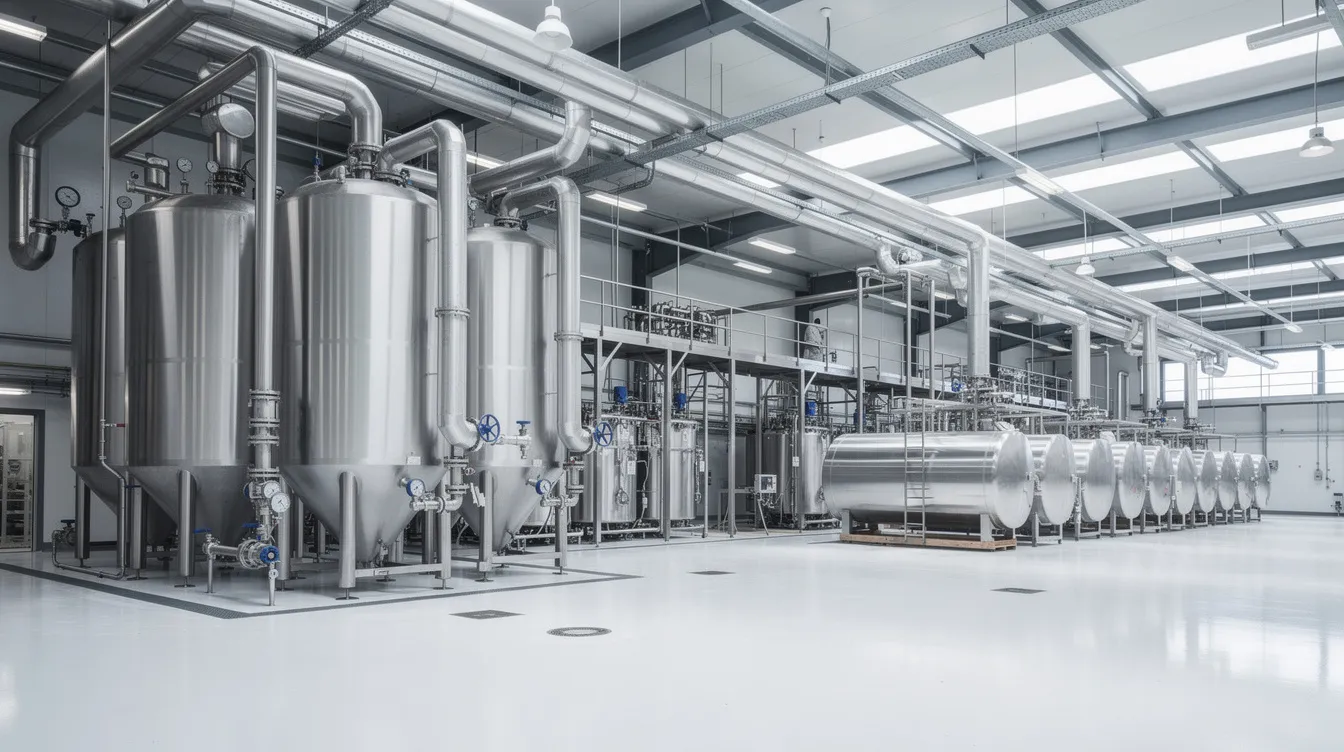
- Core process equipment: raw milk reception dock, weighing and sampling systems, filtration and clarification units, cream separator, standardisation system, plate or tubular pre-heaters, homogeniser, direct or indirect UHT system, holding tube and rapid cooler
- Sterile handling: aseptic balance tanks, aseptic valves and pipelines, sterile-product storage tanks sized to match filling speeds and CIP cycles
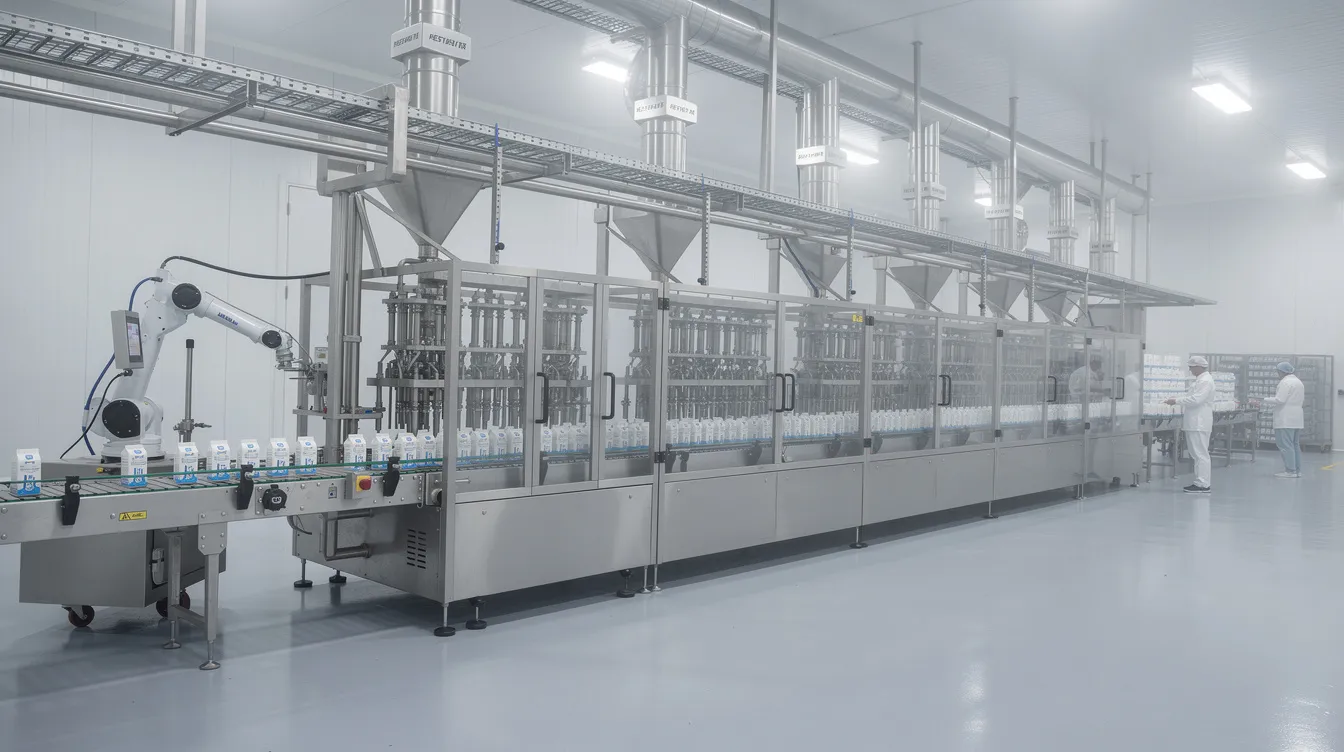
- Aseptic filling and packaging: aseptic carton filling machines, aseptic pouch or bottle filling lines, packaging machines for secondary packaging, date/batch coding and conveyor systems
- Utility equipment: boilers and steam distribution, refrigeration plant, air compressors, water-treatment plant, CIP system and effluent-treatment plant
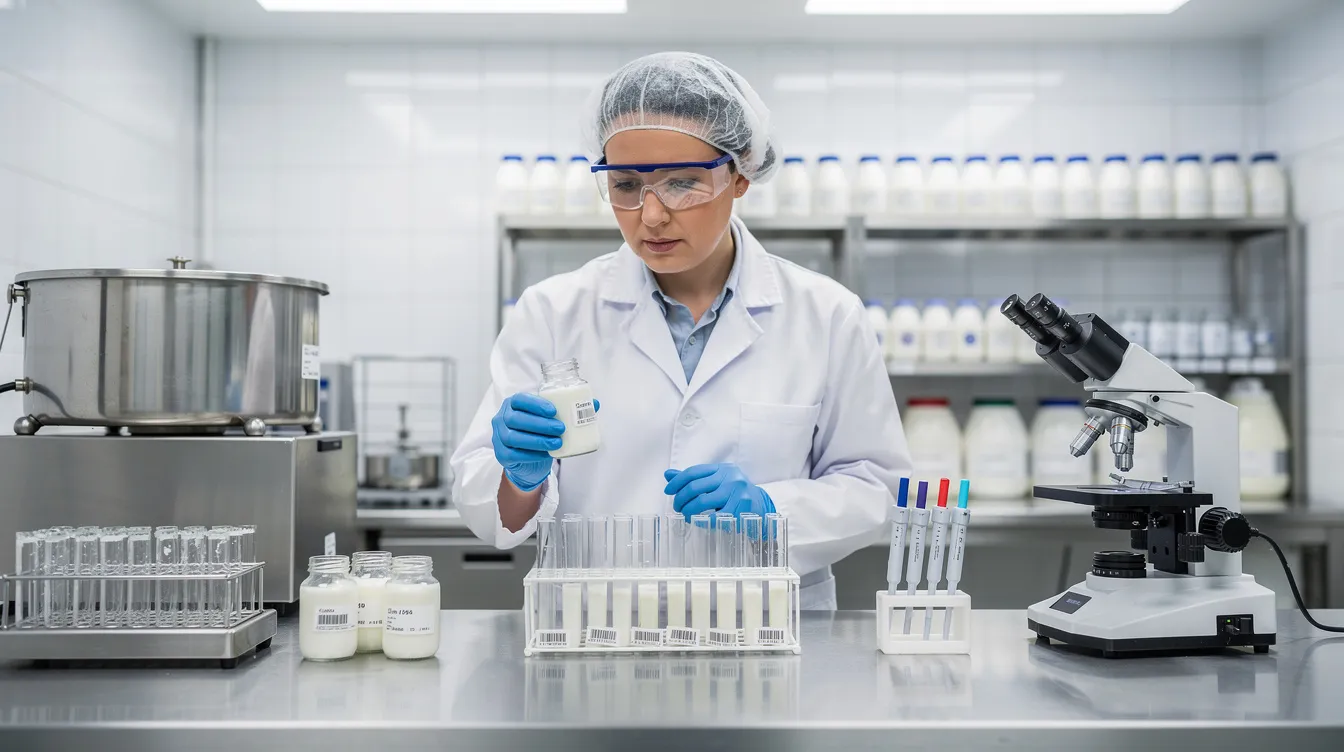
- Quality control: laboratory instruments for chemical and microbiological testing, incubators, commercial sterility-testing facilities
UHT milk plant machinery cost depends on capacity, automation level, technology choice, packaging speed, imported versus indigenous equipment and scope of integration.
UHT Milk Manufacturing Process Flow
The UHT milk manufacturing process involves clearly defined stages, each carrying quality and cost implications for the project report. Milk processing involves filtration, chilling, and homogenization as fundamental steps in the production process.
- Milk reception: raw milk is received, weighed and sampled at the reception dock
- Quality testing: chemical and microbiological analysis to verify composition and safety
- Filtration, clarification and chilling: removal of physical impurities and rapid temperature reduction
- Standardisation of fat and SNF content according to product specification
- Preheating through regenerative heat exchange and two-stage homogenisation
- UHT treatment: thermal processing at 135–150°C by direct or indirect heat exchange, holding for the required time and immediate cooling under sterile conditions
- Sterile storage: transfer to aseptic buffer tanks maintained under sterile air or nitrogen overpressure
- Aseptic filling into sterilised milk packaging material under controlled conditions
- Secondary packaging, palletisation, finished-goods storage in ambient warehouses and dispatch
Typical process losses (hold-up volumes, rejected packs, transfer losses) are reflected as process-loss percentages in the DPR’s production calculations.
Direct vs Indirect UHT Technology
Direct UHT systems (steam injection or infusion) bring culinary-grade steam into direct contact with milk, achieving very fast heating and cooling with potentially better flavour retention. Indirect systems use tubular or plate heat exchangers where milk never contacts steam directly.
- Product quality: direct systems have lower thermal load; indirect systems expose milk to heat slightly longer
- Energy: indirect systems often achieve better heat recovery; direct systems require more steam but shorter holding times
- Capital cost: direct systems generally carry higher initial machinery cost
- Operational complexity: direct systems need high-quality culinary steam and precise vacuum cooling; indirect systems require careful maintenance of gaskets and seals
- Suitability: selection depends on product profile (plain vs flavoured milk, fortified variants), budget, operator skill and planned future expansion into dairy products like cream or milkshake
Neither technology is universally better. The UHT milk processing plant project report should justify the chosen technology based on project-specific parameters.
Aseptic Filling and Packaging for UHT Milk
Aseptic packaging is a core part of UHT milk processing and not an optional add-on. Any post-UHT contamination destroys commercial sterility and shelf life.
- Sterilisation of the complete product-contact path from UHT unit to filling nozzles
- Sterile air or nitrogen overlay in tanks and filling chamber
- Packaging-material sterilisation using hydrogen peroxide, UV or heat
- Packaging formats: multi-layer aseptic cartons (six-layer paperboard, aluminium and polyethylene laminate), laminated aseptic pouches, aseptic PET or HDPE bottles – each with different cost, barrier properties and packaging requirements
- Operational factors: filling speed, changeover time between pack sizes, start-up wastage and implications for effective capacity utilisation
- Package-integrity testing, leak detection, weight control, batch coding and traceability systems
The cost of aseptic packaging materials – particularly imported laminate or specialised closures – significantly affects both the cost structure and working capital of a UHT dairy processing project.
Explore UHT Plant Setup, Technology and Infrastructure
The following navigation table directs readers to specialised technical guides on plant setup, machinery, layout, utilities and UHT milk processing methods.
Capacity Planning and Line Balancing for a UHT Milk Plant
UHT plant capacity is not simply the rated LPH (litres per hour) of the UHT unit. It is the combined effective throughput of processing, sterile storage, aseptic filling, packaging and logistics. UHT plants consume high amounts of thermal and electrical energy, making utility sizing integral to capacity decisions.
- Raw milk availability (seasonal variation, daily collection) and dispatch schedules determine achievable throughput
- Balancing UHT processing capacity, aseptic tankage and filling-line speed – including allowance for CIP, SIP, changeovers and maintenance downtime – is essential
- The DPR should model realistic capacity utilisation: typically 40–50% in Year 1, ramping to 80–90% over 3–5 years
- Oversizing processing relative to filling creates higher capital and utility cost with underutilised fixed assets; undersizing filling causes bottlenecks
Land, Building and Hygienic Layout Planning
UHT milk processing requires stricter zoning and building finishes than conventional food plants. Main functional blocks include milk reception yard, raw milk storage, processing hall, sterile-product area, aseptic filling hall, packaging-material storage, finished-goods warehouse, utilities block, laboratory, CIP area, staff changing rooms with hygiene barriers, administration offices, effluent-treatment area and dispatch yard.
Hygienic design principles include separate flows for raw and processed milk, positive-pressure sterile zones, epoxy floors with proper drainage slopes, washable wall finishes and controlled personnel entry into aseptic zones. The factory building design must support the flow requirements of both materials and people.
Utilities: Power, Steam, Water, Refrigeration, Air and CIP
Utilities are critical to UHT milk processing – any interruption or undersizing can directly cause product spoilage, sterility failure or unplanned downtime.
- Electrical load: connected and demand load estimation, DG backup and power-factor correction
- Steam: boiler sizing for UHT heating, CIP hot-water needs and packaging-material sterilisation
- Water: treated process water, softening and RO where required, chilled-water supply
- Compressed air: instrument air (oil-free, dry) for valves, sterile air for tanks and filling chambers
- CIP system: centralised CIP set with automated programs; CIP frequency impacts available production time and chemical costs
- Effluent treatment: dairy effluent with high COD/BOD requires appropriate ETP – civil works and ETP together represent a meaningful cost component
Raw Milk Quality, Process Control and Shelf-Life Testing
The long shelf life promised by a UHT dairy plant is achievable only with tightly controlled incoming raw milk quality. Quality raw milk, with low bacterial counts, is essential for UHT processing. Poor-quality raw milk cannot be fully corrected merely by applying high-temperature treatment.
- Raw milk acceptance: fat and SNF composition, acidity, absence of adulterants, microbiological plate counts, antibiotic residues
- Quality control must include in-line testing for microbial and physical properties during production
- Commercial sterility and incubation tests, package-integrity checks, sensory evaluation during shelf-life studies
- Adherence to food safety management systems such as ISO 22000 and HACCP is necessary for UHT plants
- The DPR should budget for laboratory equipment, consumables and quality assurance staffing
Statutory Approvals and Regulatory Compliance Planning
Regulatory requirements differ by location, capacity and legal structure. Compliance with relevant food safety and dairy processing regulations is important for UHT plants. Regulatory compliance includes obtaining food safety licenses and environmental clearances.
- Business-entity registration (proprietorship, partnership, LLP, company)
- FSSAI licence appropriate to installed capacity and product range
- GST registration and Udyam registration where eligible
- Factory inspectorate approvals, fire-safety NOC, boiler registration, electrical safety clearances
- Consent to establish and operate from the State Pollution Control Board
- Legal Metrology compliance for declared quantities, MRP, date coding and food safety standards
- Labelling as per FSSAI norms: product name, ingredients, net quantity, manufacturer details, batch number, manufacturing and expiry dates
A UHT milk plant project report can list likely approvals but cannot guarantee their grant or timelines.
UHT Milk Plant Project Cost and Means of Finance
Exact project cost for a UHT milk manufacturing plant depends on capacity, technology, packaging format, automation level and site conditions. UHT milk processing plant setup costs include capital and operating expenses that must be supported by current vendor quotations. As a reference, the Bhilwara Cooperative UHT Plant – a 25,000 LPD facility – had a project outlay of approximately ₹46.82 crore.
Major cost components of total capital investment:
- Land, site development and civil works
- Processing machinery and aseptic filling/packaging lines
- Utilities (boiler, refrigeration, compressors, water treatment, ETP)
- Electrical installation, laboratory equipment, furniture and IT systems
- Preliminary and pre-operative expenses including interest during construction
- Contingency provision and margin money for working capital
Means of finance typically include promoter’s equity, term loans from banks, acceptable unsecured loans and any confirmed capital subsidy under schemes related to dairy development. Financial assistance from government programmes should be verified from official sources before inclusion.
Revenue Model and Product-Mix Strategy for a UHT Milk Plant
Revenue planning for a long shelf-life milk processing plant is linked with product mix, pack sizes, selling prices, channel margins and geographic reach. Investment in milk processing units is driven by rising packaged milk consumption across India. The Indian dairy industry is growing due to urbanisation and changing consumer preferences, and urban retail chains are increasing UHT milk procurement due to shelf life advantages. Research should assess market demand and supply chain logistics for the UHT milk project.
- Revenue streams: plain UHT milk across fat ranges, fortified UHT milk, flavoured milk variants and contract manufacturing for other brands
- Pack-size strategy: 200 ml retail, 500 ml and 1 litre family packs, institutional bulk packs
- Sales channels: general trade, modern retail, online grocery platforms, institutional buyers and potential export
- Rising health awareness is driving demand for fortified UHT milk products
- Dairy processing units can manufacture multiple dairy products to maximise profitability
The highest MRP product is not always the most profitable due to higher packaging costs, flavouring ingredients and marketing expenses.
Profitability, Cost Structure and Break-Even Analysis
Profitability of a UHT milk processing unit depends on raw milk price, packaging cost, utilities, labour, overheads, logistics, selling price and capacity utilisation. Raw milk accounts for 70–80% of total operating expenses – it is the single largest cost driver. UHT milk processing plants can achieve gross profit margins of 25–35% at reasonable capacity utilisation. Operating costs are expected to increase significantly by the fifth year due to inflation and scale effects.
- Variable costs: raw material (milk procurement), aseptic packaging material, sugar and flavours, utilities, chemicals, transportation
- Fixed costs: salaries and wages, repairs and maintenance, quality-control expenses, administrative costs, insurance, depreciation
- Contribution margin = selling price minus variable cost per litre
- Break-even volume = fixed cost ÷ contribution per litre
Actual margins vary by region, brand strength, procurement model and competitive intensity. The DPR should present year-wise projections showing how profitability evolves as utilisation increases.
Financial Projections for a Bankable UHT Milk Plant DPR
Banks and investors rely on structured financial projections to evaluate the techno-economic feasibility of a UHT milk plant. The UHT milk plant financial projections should include:
- Capacity-utilisation plan and product-wise production volumes
- Projected profit and loss account, balance sheet, cash-flow and fund-flow statements
- Depreciation schedule and interest schedule for term-loan and working-capital facilities
- Break-even analysis, yearly and average DSCR, ROI, IRR (project and equity)
- All assumptions on interest rates, tax rates, inflation and techno economic parameters clearly disclosed
Working-Capital Requirement and Operating Cycle
Although UHT milk has longer shelf life than pasteurised milk, its working-capital needs can be significant. Effective logistics are crucial for distributing UHT milk within its shelf life.
- Raw milk inventory (low due to perishability), packaging material inventory (high-value carton laminate, closures), chemicals, spares and finished-goods stock
- Receivables: credit terms extended to distributors, institutional buyers and modern retail chains
- Payables: supplier credit for milk procurement, packaging suppliers and utilities
- The DPR should provide season-wise working-capital calculations with margin requirements per bank norms
Explore UHT Project Finance, Bankability and Investment Returns
The following navigation table takes readers to focused articles on project cost, profitability, DSCR, ROI, IRR and bank-loan assessment for UHT milk plants.
DSCR and Loan-Repayment Capacity
DSCR (Debt Service Coverage Ratio) measures the ratio of cash available for debt servicing to total debt obligations (interest plus principal) during a period. Factors influencing DSCR in a UHT milk plant include:
- Start-up losses or low utilisation in initial years and gradual ramp-up of sales
- Operating margins, interest rates, repayment schedule and moratorium period
- Delayed commissioning, cost overruns or lower-than-projected selling prices
Lenders review both year-wise and average DSCR across the loan tenure. No single DSCR threshold is universally acceptable – each institution has its own policies and risk appetite.
Feasibility and Overall Project Viability Assessment
Feasibility assessment for a UHT milk processing unit covers four connected aspects:
- Market feasibility: target segments, regional demand for UHT milk vs fresh milk, competitive landscape, pricing and distribution channels. The global UHT milk market was 130.97 billion litres in 2025 and is projected to reach 205.42 billion litres by 2034, growing at a CAGR of 5.10%. This rising demand signals strong investment opportunities.
- Technical feasibility: UHT technology, aseptic packaging systems, capacity, utilities, plant layout, milk procurement and keeping quality systems
- Financial feasibility: total project cost, means of finance, projected profitability, cash-flow adequacy, DSCR, ROI and IRR
- Implementation feasibility: land acquisition status, statutory approvals, machinery procurement timelines, commissioning plan
A technically advanced plant can still be unviable if demand projections, selling prices or capacity-utilisation assumptions are unrealistic. A balanced DPR addresses all four dimensions.
Bank Loan and Project Finance Considerations
The UHT milk plant detailed project report is a key input for term-loan appraisal but is not a guarantee of sanction. Banks typically evaluate promoter background and net worth, industry experience, equity contribution, clarity of business model, technology appropriateness, firm milk procurement arrangements and robustness of financial analysis. India being the world’s largest producer of milk makes dairy farming and dairy processing attractive sectors, but lenders still assess each project individually. UHT milk facility project reports often include risk analysis and mitigation strategies as part of the appraisal documentation.
Term-Loan Structuring and Assessment
The term loan should be structured to match the economic life of fixed assets and the expected cash-flow profile of the UHT plant. Key elements include acceptable debt-equity ratio, construction period, interest during construction, moratorium on principal repayment and overall tenure.
Aggressive repayment schedules risk higher EMI burdens in early years when capacity utilisation is still building, potentially stressing DSCR and working capital. The DPR should include alternative repayment scenarios showing the effect of different tenures and moratorium periods. Entities like Mother Dairy and Gokul Dairy have demonstrated that phased capacity building with prudent financial structuring can reduce costs and improve long-term viability across various industries.
ROI, IRR and Sensitivity Analysis for UHT Milk Projects
Return on Investment (ROI) is typically an annual profitability measure on invested capital. Internal Rate of Return (IRR) considers the time value of money across the project’s life. Project IRR reflects cash flows to all capital providers, while equity IRR measures returns only to equity investors after debt servicing. Payback period and Net Present Value (NPV) are additional indicators.
A robust UHT milk plant feasibility report should test the project under adverse assumptions. An illustrative sensitivity matrix (hypothetical, for illustration only):
| Scenario | Capacity Utilisation 70% | Capacity Utilisation 85% |
|---|---|---|
| Raw milk cost +5% | Project IRR reduces moderately | Project IRR remains healthy |
| Raw milk cost +10% | Project IRR drops significantly | Project IRR reduces moderately |
Sensitivity analysis helps promoters, lenders and investors understand project resilience rather than providing guaranteed outcomes.
Major Risks in UHT Milk Projects and Practical Mitigation
Every UHT dairy processing project carries operational, market, technical and financial risks that must be mapped in the DPR.
| Risk | Potential Impact | Mitigation |
|---|---|---|
| Inconsistent raw milk supply and quality | Reduced output, sterility failures, harmful microorganisms in product | Long-term contracts with dairy farming cooperatives, chilled collection centres, strict acceptance testing |
| Seasonal milk shortages | Production disruption, increased procurement cost | Multi-source procurement, buffer milk powder arrangements |
| Dependence on specific packaging materials | Supply disruption, cost escalation | Multiple suppliers, adequate inventory, evaluation of alternative laminates |
| Machinery breakdown or sterility failure | Product spoilage, batch recalls | Preventive maintenance, HACCP implementation, redundant critical equipment |
| Low capacity utilisation | Higher per-unit cost, weak DSCR | Realistic market development budget, phased capacity addition |
| Energy-cost escalation | Margin compression | Waste heat recovery, efficient boilers, power contracts |
| Working-capital strain | Cash-flow disruption | Conservative credit terms, adequate bank limits, supplier credit negotiation |
| Project-cost overruns or delayed commissioning | Higher investment, delayed revenue | Realistic implementation schedule, contingency provisions |
| Selling-price pressure from competition | Lower margins | Product differentiation, fortified and flavoured variants, private-label revenue |
| Regulatory non-compliance | Penalties, closure risk, reputational damage | Proactive compliance, periodic audits, dedicated food safety officer |
Checklist: Contents of a Bankable UHT Milk Plant DPR
This checklist summarises what a comprehensive UHT Milk Processing Plant Project Report should cover:
- Front-end: executive summary, promoter background, business concept, location, industry overview and market analysis
- Technical: UHT milk manufacturing process, technology choice, machinery and equipment list, capacity and product mix, plant layout, utilities and quality-control systems
- Organisational: manpower requirements, statutory approvals, environmental measures, implementation schedule with milestones
- Financial: project-cost estimate, means of finance, working-capital assessment, projected financial statements, break-even analysis, DSCR, ROI, IRR, sensitivity analysis and risk-mitigation plan
All sections must be based on consistent assumptions regarding capacity, utilisation, selling prices, costs and financing terms.
How CA Manish Gugliya Supports UHT Milk Project Promoters
Since 2006, as a practising Chartered Accountant (FCA, DISA – ICAI), I have been assisting industrial and MSME promoters with structured project-finance documentation across various industries. For UHT milk plants, I offer:
- Preparation of customised bankable DPRs with realistic financial projections
- CMA Data preparation for bank-finance proposals
- Working-capital assessment and term-loan structuring
- DSCR analysis, break-even studies, ROI and IRR evaluation under multiple scenarios
- Assistance with presenting the project to banks and financial institutions, explaining assumptions and responding to appraisal queries
Every UHT milk plant DPR I prepare is tailored to the specific project – proposed capacity, chosen technology, vendor quotations, location-specific factors and the promoter’s market and distribution plan. This does not guarantee sanction, as lending decisions rest with the appraising institution.
Frequently Asked Questions
These FAQs address practical queries often raised by promoters and investors beyond the main sections above.
What is included in a UHT Milk Processing Plant Project Report in practical terms?
Beyond standard financial statements, a practical UHT milk plant DPR includes daily and annual milk production calculations, SKU-wise sales planning, detailed packaging-material and raw-material estimates, manpower schedules, preliminary layout, implementation timeline and clear documentation of all assumptions used in the financial analysis.
How do I decide the right capacity for my first UHT milk plant?
Start from realistic market demand and distribution reach over 3–5 years. Evaluate raw milk procurement strength, benchmark against industry trends for new brands (typically 40–50% utilisation in Year 1), and select a capacity that allows future expansion without straining cash flows. The proposed UHT plant capacity of 100–200 million litres annually is relevant for large commercial operations.
Can a UHT milk plant use the same infrastructure as an existing pasteurised milk plant?
Some facilities – milk reception, chilling, laboratory and utilities – can often be shared or upgraded. However, sterile UHT processing, aseptic filling and packaging areas need separate, higher-grade hygienic zones, specialised equipment and dedicated pipelines to maintain commercial sterility. The processes involved are fundamentally different.
How often should assumptions in the UHT milk plant DPR be updated?
Assumptions should be reviewed whenever there are notable changes in raw milk prices, packaging-material contracts, interest rates, technology selection or market strategy, and at least once before submitting the DPR to any new bank or investor.
Is it possible to phase the UHT plant investment instead of doing it all at once?
Phased investment is often considered – for example, starting with a specific capacity and packaging format, with provisions in building layout and utilities to add another line later. The DPR must model each phase separately to ensure technical compatibility and financial viability at every stage. Butter and other dairy products can sometimes be added as secondary revenue lines in later phases.
Conclusion and Professional Call to Action
A UHT milk project is far more than the purchase of a UHT unit and a filling machine. It is an integrated system involving milk procurement, processing technology, aseptic packaging, hygienic infrastructure, utilities, quality control, logistics and carefully structured project finance. Every project is unique, and professional guidance with project-specific data is essential before committing significant capital.
A well-prepared UHT Milk Processing Plant Project Report links these technical choices with realistic assumptions on cost, revenue, profitability, working capital, DSCR, ROI and IRR – tested under multiple scenarios to demonstrate resilience.
Serious dairy entrepreneurs, existing milk plants planning UHT expansion, producer companies and investors evaluating a shelf-stable milk manufacturing plant in India are invited to engage CA Manish Gugliya through www.projectreportbank.com for a customised bankable DPR, financial projections, CMA Data assistance and investor-ready project analysis.