Key Takeaways
- UHT milk plant machinery cost in India is dominated by two blocks-the UHT steriliser and the aseptic packaging line-with utilities, process piping and installation adding 20–40% over the basic equipment price.
- For a commercial UHT milk processing plant of 5,000–10,000 LPH, total installed machinery and equipment investment typically runs into several crore rupees, varying by technology, automation level and packaging format. These are illustrative planning ranges only.
- UHT milk plant machinery cost is distinct from overall UHT milk processing plant setup cost in India, which also covers land, civil construction, working capital and pre-operative expenses.
- Accurate costing for a DPR or bank loan requires recent written quotations for UHT milk processing equipment and aseptic packaging machines from multiple Indian and international suppliers.
- As a practising Chartered Accountant, my focus in this article is on how machinery cost affects project finance, bank appraisal, DSCR and overall dairy processing feasibility.
Introduction: Understanding UHT Milk Plant Machinery Cost in India
UHT milk-heated to ultra high temperature for a very short time and packed under sterile conditions-offers an extended shelf life of 3 to 12 months at room temperature without requiring refrigeration. The global UHT milk market reached approximately 130.97 billion litres in 2025, and India’s dairy industry continues to invest heavily in this value-added segment. For any entrepreneur or dairy company entering UHT milk production, the machinery section is typically the single largest and most technically sensitive component of the capital investment.
This article focuses specifically on UHT milk plant machinery cost-the processing equipment, aseptic filling systems, utilities and supporting infrastructure. It does not treat land, building, working capital or financing charges as part of machinery investment. Estimated setup costs for a UHT milk plant vary widely based on capacity and automation, and all prices discussed here are indicative planning estimates that will change with supplier, technology and tax structure.
I am CA Manish Gugliya (FCA, DISA ICAI), a practising Chartered Accountant since 2006 and founder of ProjectReportBank.com. My work centres on DPR preparation, project finance and dairy processing project appraisal. The guidance below draws on real project-report experience and is written for entrepreneurs, investors and consultants who need to understand what UHT milk plant machinery in India actually costs-and how banks evaluate those numbers.
What Is a UHT Milk Processing Plant and How It Differs from Pasteurised Milk Plants?
A UHT milk processing plant heats raw milk to a very high temperature-typically in the range of 135–150°C for 2–4 seconds-killing virtually all harmful microorganisms, then rapidly cools the milk and transfers it to aseptic storage before filling into sealed packages under sterile conditions. This UHT sterilization process is what gives UHT milk its long shelf life, allowing storage at room temperature for 3 to 12 months while preserving nutritional value and taste.
Setting up a UHT milk processing plant requires higher capital investment than standard pasteurisation. A pasteurised milk plant heats milk to around 72°C for 15 seconds and requires cold-chain distribution. A UHT plant, by contrast, demands continuous sterilisation at far higher temperatures, aseptic packaging that protects the final product from light and oxygen, and a fully automatic system to prevent contamination at every stage. Hygienic stainless steel machinery is crucial for UHT production-every surface in contact with the product must be food-grade, smooth and cleanable.
UHT milk production requires an integrated process: reception of raw milk, clarification, standardisation, homogenisation, UHT sterilization, aseptic storage and aseptic filling. The plant can also handle more products such as flavoured milk, formulated dairy beverages or even fruit juices with appropriate modifications, though this expands the machinery CAPEX for additional mixing, dosing and cleaning capacity.
Complete UHT Milk Plant Machinery and Equipment List (Process-Wise)
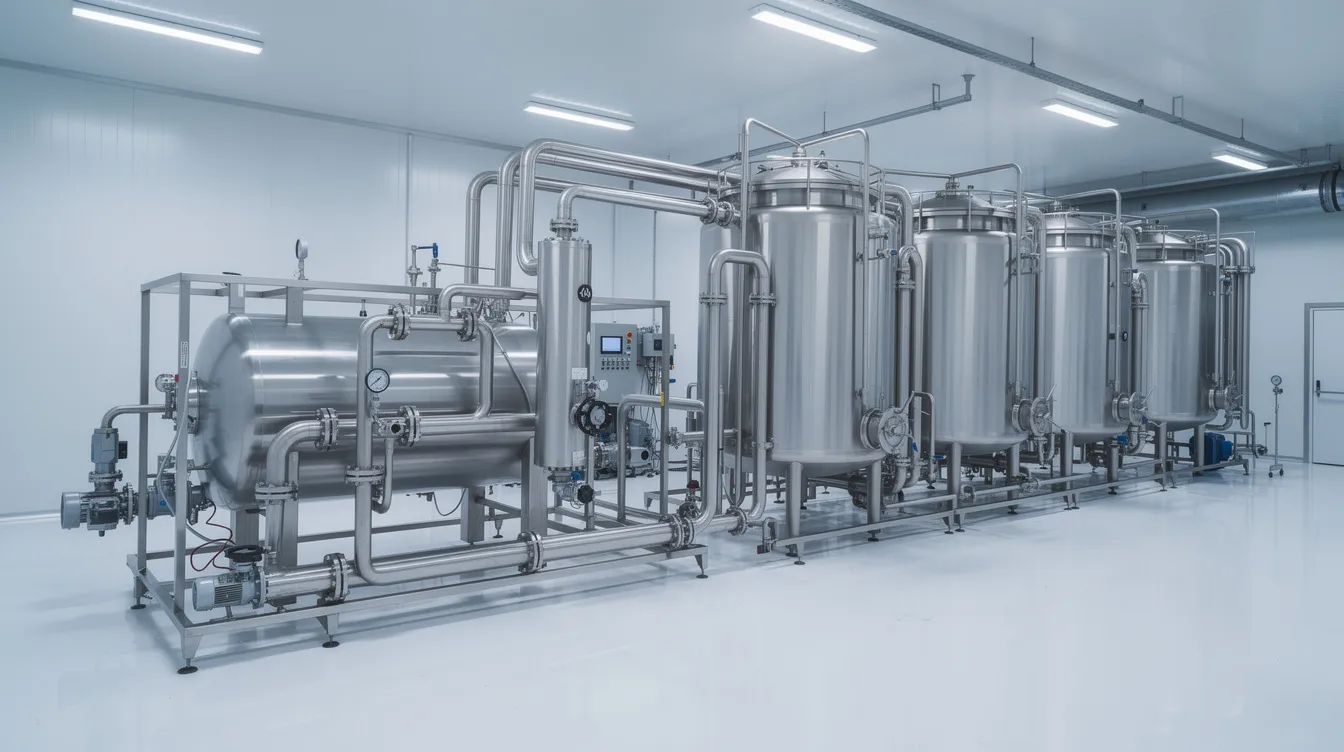
The complete production line for a UHT milk processing plant follows the milk from reception dock to packed carton. UHT milk production lines can process capacities ranging from 500 L/h to 10,000 L/h or more, and the equipment list scales accordingly. The UHT milk processing line includes a milk separator and homogeniser as standard components, alongside the steriliser and aseptic filler.
The major equipment blocks, in process sequence, are:
- Milk reception and storage equipment
- Clarification, cream separation and standardisation systems
- Homogenisation equipment
- UHT sterilisation system (the core unit)
- Aseptic storage tanks and sterile holding systems
- Aseptic filling and packaging machinery
- CIP and hygiene systems
- Quality-control laboratory equipment
- Utilities and supporting infrastructure (boilers, chillers, water treatment, electrical, HVAC)
UHT production requires specialised, food-grade stainless steel machinery throughout. A proper UHT milk plant equipment list is normally attached as an annexure to the DPR and to machinery quotations submitted to banks for loan appraisal. The detailed cost considerations for each group follow below.
Milk Reception and Storage Equipment
The first stage involves receiving fresh milk at the plant, measuring quantity and checking basic quality before chilling and storage. Raw milk reception includes chillers and filtration units to ensure that incoming milk is cooled rapidly and free of physical impurities.
Key items include:
- Milk reception dock with weigh bridge or electronic weighing scale
- Dump tank or reception tank
- Filters and strainers
- Plate-type raw milk chilling unit
- Insulated raw milk storage silos (SS 304 or SS 316)
- Centrifugal milk transfer pumps
- Stainless-steel pipelines, valves and fittings
In an existing integrated dairy processing plant, reception docks, chillers and silos may already be available. A greenfield standalone UHT unit must budget for the full reception and storage machinery. The stainless-steel process piping cost alone can be ₹20–40 lakh depending on plant layout and material grade. Tank capacity must be sized to daily raw milk volumes and planned operating hours.
Milk Clarification, Standardisation and Homogenisation Equipment
UHT milk quality depends on clean, standardised and homogenised milk entering the steriliser. The clarifier removes sediment and impurities, while the cream separator splits milk into skim and cream fractions. Automatic fat standardisation systems with inline flow meters, balance tanks and process control instruments then blend milk to the desired fat percentage.
Automatic standardisation increases UHT milk plant equipment cost but significantly improves yield control and product consistency-both critical for branded UHT packs sold in a competitive landscape.
UHT milk production includes homogenisation to prevent cream separation. Homogenisers break down fat globules under high pressure (typically 150–250 bar), preventing cream separation and ensuring uniform texture. Single-stage homogenisers cost less, while two-stage units with higher pressure ratings command a dairy homogenizer machine price of ₹20–40 lakh for domestic units, rising to ₹50–80 lakh or more for imported high-capacity machines. Process design may place the homogeniser before or after the UHT steriliser, and this decision must align with the vendor’s system design.
UHT Sterilisation System – Core of the UHT Milk Processing Line
The UHT steriliser is the heart of the plant and often one of the single highest-cost items in the UHT milk plant machinery cost per litre of installed capacity. UHT sterilization occurs at 135–150°C for 2–4 seconds, with precise control of temperature, pressure and holding time. The UHT sterilizer machine price varies significantly depending on the technology selected.
| Technology | Suitable Applications | Investment Level | Energy Efficiency | Product Quality | Utility Requirement |
|---|---|---|---|---|---|
| Indirect plate-type heat exchanger | Plain milk, standard UHT | Low to medium | High heat recovery | Good | Moderate steam |
| Indirect tubular system | Viscous products, flavoured milk | Medium | Good heat recovery | Good | Moderate steam |
| Direct steam injection (steam injected directly into milk) | Premium UHT, sensitive products | High | Lower recovery | Excellent (minimal heat damage) | High-requires food-grade steam, vacuum flash cooling |
| Direct steam infusion | High-end dairy, specialty beverages | Very high | Lower recovery | Excellent | Very high-requires advanced machinery and controls |
Direct steam systems require vacuum flash cooling, condensate separation and certified food-grade steam generation, substantially adding to both utility CAPEX and UHT milk processing equipment price. Domestic plate or tubular UHT sterilisers in the 5,000–10,000 LPH range may cost ₹40–100 lakh, while direct systems or high-capacity imported units can exceed ₹1–2 crore.
Aseptic Storage and Product Holding Systems
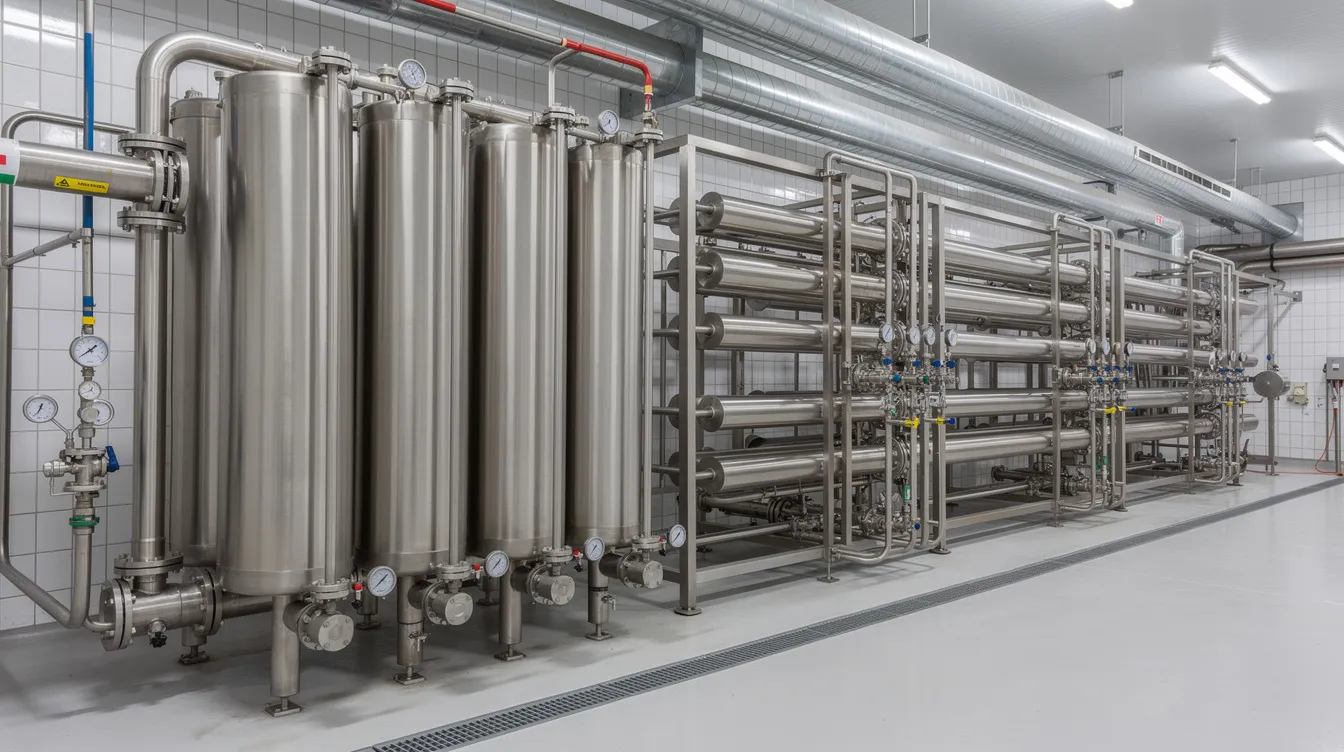
Aseptic storage tanks serve as a buffer between continuous UHT processing and intermittent packaging operations, providing critical operational flexibility. Major components include aseptic tanks with internal spray balls, sterile air or nitrogen systems, aseptic valves and fittings, dedicated product transfer pumps and sterile-barrier arrangements.
Aseptic storage tank cost depends on volume, design pressure, instrumentation and hygienic design standards. Domestic tanks of 5,000–20,000 litres typically cost ₹10–25 lakh each, with imported or high-specification units reaching ₹30–50 lakh. Validated sterilisation cycles for tanks and connecting pipelines must be factored into both CIP system cost and operational utility consumption.
Aseptic Filling and Packaging Machinery and Aseptic Packaging Machine Cost
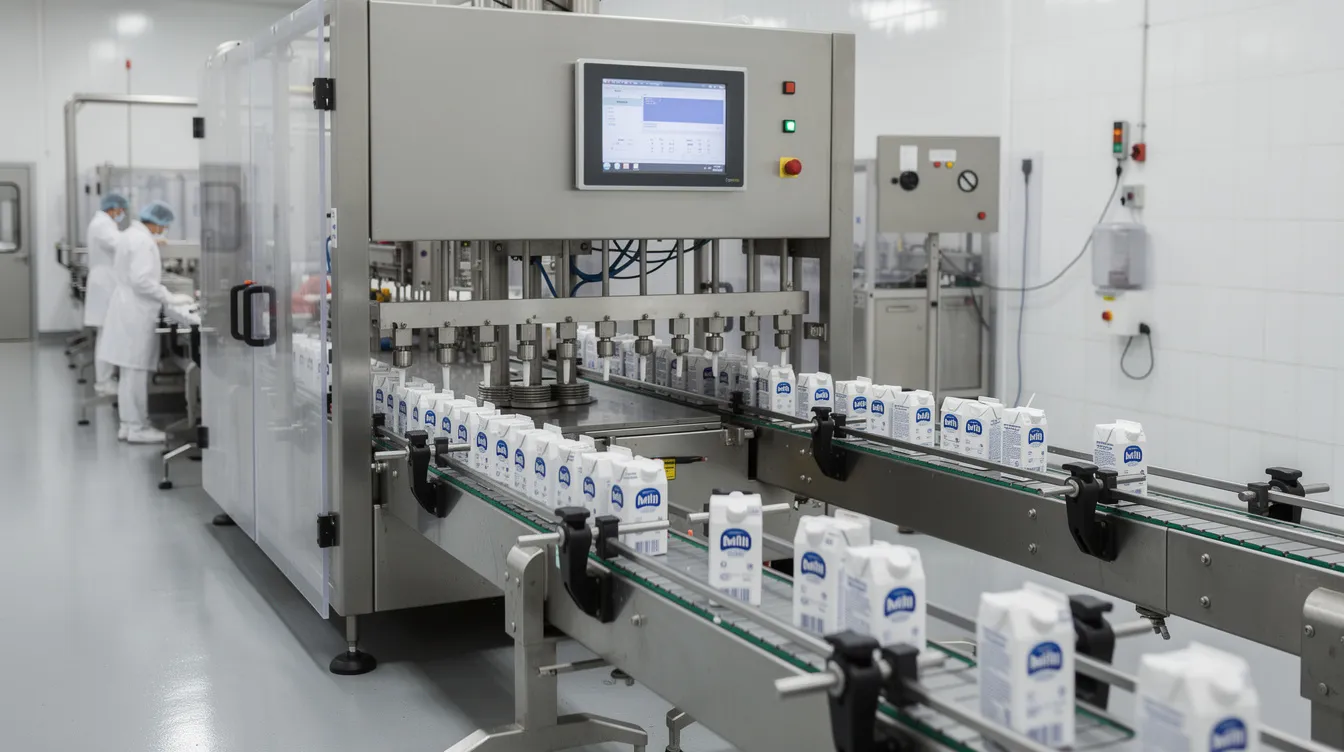
Aseptic filling machines are one of the most expensive components in UHT setups. In many projects, the aseptic packaging machine cost exceeds the UHT steriliser cost, especially for high-speed multi-lane carton systems. Aseptic filling machines package UHT milk in sterile conditions, and the final packaging solutions must protect milk from light and oxygen to maintain shelf life and microbiological safety.
Packaging formats used in UHT milk production include aseptic cartons, aseptic PET or HDPE plastic bottles, and aseptic pouches. Key machines in this block include the primary aseptic filling machine, cap or closure applicator, straw applicator, date coder, conveyors, shrink wrapping machine and carton packer.
UHT milk packaging machine cost is driven by filling speed (packs per hour), number of lanes, automation level and packaging-material compatibility. Indicative ranges from market data: low-speed semi-automated lines (3,000 packs/hour) at approximately ₹30–50 lakh, mid-speed lines (5,000–8,000 packs/hour) at ₹80–150 lakh, and high-speed imported lines exceeding ₹180–300 lakh.
Commercial considerations include dependence on specific packaging-material suppliers, annual maintenance contracts, spare-part availability in India and long-term service support. These factors must be reflected in project feasibility, not just the initial equipment cost.
CIP, Hygiene Systems and Quality-Control Laboratory
CIP systems are essential for cleaning UHT milk processing equipment safely and efficiently. Though they represent a smaller share of UHT milk plant machinery cost, they are non-negotiable for regulatory compliance and brand reputation. Licenses and certifications are necessary for compliance in UHT processing, and regulators expect validated cleaning procedures.
A centralised CIP system includes caustic, acid and hot-water tanks, dosing pumps, return pumps, heat exchangers, control panels and automatic cleaning sequences. CIP system cost for a dairy plant ranges from approximately ₹15–40 lakh depending on the number of circuits and automation level. An undersized or poorly designed CIP system creates serious food-safety and operational risks.
Laboratory equipment-covering fat and SNF testing, microbiological incubators, sterility checks, packaging integrity testers and water-quality testing instruments-usually forms a small percentage of UHT milk processing plant CAPEX but is essential for FSSAI regulatory compliance, shelf-life validation and ongoing process control.
Utilities and Supporting Equipment for a UHT Milk Processing Plant
Many turnkey UHT milk processing plant cost offers exclude boilers, refrigeration, power and effluent treatment. UHT processing requires various utility systems including steam boilers and chillers, and these must be budgeted explicitly.
Key utility systems include:
- Steam boiler (1–2 TPH): approximately ₹22–75 lakh depending on fuel type and capacity
- Refrigeration and cooling system
- Air compressors with food-grade filtration
- Water-treatment and softening plant (₹20–50 lakh depending on raw water quality and water requirements)
- Electrical panels, transformer and DG backup
- HVAC for the packaging hall
- Effluent treatment plant
For detailed guidance on sizing these systems, refer to dairy plant utilities requirements. Total project costs for UHT plants can increase by 20% to 35% for supporting infrastructure, especially in greenfield projects requiring new boilers, refrigeration, electricity connections and ETP facilities. Banks and technical appraisers routinely cross-check utility sizing against UHT milk processing plant capacity and operating hours.
Estimated UHT Milk Plant Machinery Cost in India – System-Wise View
The following table presents illustrative planning estimates for UHT milk plant machinery cost in India. These are based on typical 2024–2026 pricing conditions, domestic and mixed-origin equipment, and are not formal quotations. GST, freight, insurance and erection may or may not be included depending on the supplier.
| Machinery or System | Function | Typical Capacity Basis | Indicative Cost Range | Main Cost Variables |
|---|---|---|---|---|
| Milk reception and storage | Intake, chilling, storage | 5,000–10,000 LPH | ₹15–40 lakh | Tank volume, chiller size, SS grade |
| Clarifier and separator | Cleaning and cream separation | 5,000–10,000 LPH | ₹10–30 lakh | Flow rate, automation |
| Standardisation system | Fat adjustment | Inline automatic | ₹8–20 lakh | Sensors, control instruments |
| Homogeniser | Breaking fat globules | 5,000–10,000 LPH, 150–250 bar | ₹20–80 lakh | Stages, pressure, origin |
| UHT steriliser | Core sterilisation | 5,000–10,000 LPH | ₹40 lakh–2+ crore | Technology, material, automation |
| Aseptic tanks | Sterile buffer storage | 5,000–20,000 litres each | ₹10–50 lakh per tank | Volume, instrumentation, design |
| Aseptic filling machine | Sterile packaging | 3,000–10,000+ packs/hr | ₹30 lakh–3+ crore | Speed, format, imported vs Indian |
| CIP system | Cleaning-in-place | Multi-circuit | ₹15–40 lakh | Circuits, heat recovery, automation |
| Refrigeration system | Chilling and cooling | Plant-matched | ₹25–60 lakh | Capacity, refrigerant, redundancy |
| Boiler and steam system | Steam generation | 1–2 TPH | ₹22–75 lakh | Fuel type, IBR certification |
| Water-treatment plant | RO, softening | Plant-matched | ₹20–50 lakh | Raw water quality, capacity |
| Air compressor | Compressed air supply | Plant-matched | ₹5–15 lakh | Food-grade filtration, capacity |
| Electrical and automation | Panels, PLC/SCADA | Plant-wide | ₹10–30 lakh | Import content, redundancy |
| Lab equipment | QC and testing | Standard lab | ₹5–15 lakh | Scope of testing |
| SS process piping | Product and utility piping | Full plant | ₹20–40 lakh | Length, fittings, insulation |
| Installation and commissioning | Erection, trials, validation | Full plant | 10–20% of machinery cost | Complexity, supplier scope |
Installation and commissioning can add significant costs to the total machinery investment. Always obtain at least three current quotations per major system from established UHT milk machinery suppliers in India before finalising DPR figures.
Capacity-Wise UHT Milk Processing Line Cost and Economies of Scale
UHT milk plant machinery cost per litre of capacity generally reduces as capacity increases due to economies of scale and better utilisation of automation and utilities. UHT milk plant capacities range from 500 L/h to 10,000 L/h and beyond for large industrial plants.
| Processing Capacity | Automation Level | Processing-Line Cost (indicative) | Packaging-Line Cost (indicative) | Utilities & Other Equipment | Estimated Total Machinery |
|---|---|---|---|---|---|
| 5,000 LPH | Mid automation, domestic | ₹1.2–1.8 crore | ₹0.8–1.5 crore | ₹0.5–0.8 crore | ₹2.5–3.5 crore |
| 10,000 LPH | Semi-high, mixed origin | ₹2.5–4 crore | ₹1.5–3 crore | ₹1–2 crore | ₹5.5–9 crore |
| 20,000 LPH | High automation, imported | ₹5–7 crore | ₹3–5 crore | ₹2–3 crore | ₹10–15+ crore |
For international context: small-scale UHT plants typically cost around $50,000–$300,000, medium-scale plants often range from $150,000 to $500,000, and large industrial UHT plants can cost between $800,000 and $3 million or more.
Actual capacity selection should be based on assured raw milk availability, realistic market demand, product mix, packaging speed and working shifts. Higher-capacity UHT sterilisers do not scale linearly in price, and aseptic filling lines may become the bottleneck if packaging speed does not match processing throughput. This comparison is a planning tool and cannot substitute for a detailed techno-commercial proposal.
Processing Line Cost Versus Packaging Line Cost
UHT processing capacity (LPH through the steriliser) and aseptic packaging capacity (packs per hour) must be designed together. A mismatch creates either idle processing capacity or packaging bottlenecks that damage project economics.
For example, a 10,000 LPH UHT line operating for 16 hours may require either one high-speed carton line or multiple medium-speed filling machines, and each configuration changes aseptic packaging machine cost and factory layout significantly. Processing-line CAPEX covers reception, clarification, homogenisation, UHT steriliser, aseptic tanks and CIP. Packaging-line CAPEX covers filling heads, closures, coders, conveyors and secondary packaging.
In some Indian projects, aseptic milk packaging machine cost may represent 40–60% of total UHT milk processing line cost-a fact that often surprises first-time investors who focus only on the steriliser. DPRs and CMA data should clearly show processing and packaging investments under separate heads.
Indian Versus Imported UHT Milk Plant Machinery
Both Indian and imported UHT milk plant machinery are used across manufacturing facilities in India. The right choice depends on technology requirements, budget and after-sales support.
| Evaluation Criteria | Indian Equipment | Imported Equipment |
|---|---|---|
| Initial cost | Lower | Significantly higher |
| Automation / PLC-SCADA | Good for mid-range | Advanced |
| Energy efficiency | Moderate to good | Often superior |
| Product loss | Moderate | Lower |
| Sterility assurance | Adequate for standard products | Often higher certification |
| Spare-parts availability | Readily available in India | May require import, longer lead times |
| Service support | Faster on-ground response | Dependent on local partners |
| Foreign-exchange exposure | None | Significant |
| Long-term maintenance cost | Moderate | Can be higher |
In my experience preparing dairy project reports, the decision should rest on life-cycle cost-energy, product loss, downtime and spares-rather than only the ex-works price. Lenders are generally neutral between Indian and imported equipment but will examine whether the selection is technically and financially justified.
New, Refurbished or Used UHT Machinery – Financial and Technical Considerations
Some promoters explore refurbished or used UHT plant machinery to reduce initial CAPEX. This involves significant risk: unknown residual life of heat exchangers and valves, obsolete controls, lack of sterility validation records, higher energy consumption and uncertain maintenance history.
From a banking perspective, used machinery receives conservative valuation, and lenders may be reluctant to finance old aseptic packaging lines. Before including used UHT milk processing equipment price in a DPR, promoters should arrange detailed technical due diligence, confirm spares availability and obtain written warranties. Partial use of refurbished items such as tanks or utility equipment may be more acceptable than used UHT sterilisers or aseptic fillers, which are highly sensitive to validation requirements.
Costs Commonly Excluded from UHT Machinery Quotations
The lowest quotation is not always the cheapest once all exclusions are added. Common exclusions from supplier quotations include:
- GST and applicable taxes
- Freight, transit insurance and customs duty (for imports)
- Foreign-exchange fluctuation provision
- Civil foundations and structural platforms
- Stainless-steel process and utility piping
- Insulation, cladding and electrical cabling
- Erection and commissioning charges
- Trial-production raw materials
- Travel and accommodation for technicians
- Operator and staff training
- Performance validation and sterility testing
- Recommended spare parts and first-year AMC
- Packaging-material trials and contingency
Request a detailed “scope of supply and exclusions” annexure with every quotation, and normalise all quotations to a comparable “delivered and installed” cost before selecting a supplier for purchasing decisions.
Key Factors Affecting UHT Milk Processing Equipment Price
UHT milk processing equipment price cannot be generalised by capacity alone. Key factors include:
- Plant capacity (LPH) and daily operating hours
- UHT technology (plate, tubular or direct)
- Automation level (manual, semi-automatic or fully automatic)
- Packaging format (cartons, bottles or pouches) and filling speed
- Product variants-plain versus flavoured milk, added solids
- Stainless-steel grade and hygienic design standards
- Level of instrumentation and process control
- Energy-recovery efficiency in the heat exchanger design
- Domestic or imported origin
- Currency exchange rate and customs duty
- Site location (accessibility, construction conditions)
- Vendor warranty, expert supervision and after-sales commitments
Each of these factors affects not just prices but also long-term operating costs, which must be considered when budgeting UHT milk processing plant CAPEX.
How to Calculate Installed UHT Milk Plant Machinery Cost for a DPR
Converting supplier quotations into an installed machinery cost requires a systematic approach:
- Basic ex-works machinery price
- Packing and forwarding (typically 1–2%)
- Inland freight and transit insurance
- Customs duty and clearing charges (where applicable)
- GST and other taxes
- Erection, commissioning and trial runs
- Stainless-steel process piping and utility connections
- Calibration, validation and performance testing
- Essential spares and tools
- Technical contingency (5–10%)
Illustrative example (not a vendor quotation): If base machinery costs ₹5 crore, adding freight (2%), taxes (18% GST on applicable items), installation (12%), piping (8%) and contingency (7%) could take the installed figure to approximately ₹7–7.5 crore.
For broader project cost structuring covering land, building, IDC and margin money, refer to dairy plant project cost and means of finance. All installed machinery and equipment costs feed directly into depreciation schedules, term-loan calculations and viability analysis.
Machinery Quotations and Bank Loan Requirements
In bank-financed projects, machinery quotations serve as critical evidence for proposed CAPEX. Lenders compare UHT milk plant machinery cost with projected capacity, sales turnover and DSCR.
Banks typically expect:
- Quotations on supplier letterhead with detailed technical specifications
- Breakdown of price components including GST and freight
- Delivery period, payment terms and warranty conditions
- Utility consumption data (steam, electricity, water, compressed air)
- Required manpower for operation
Proper documentation should integrate machinery quotes with financial projections-refer to dairy processing plant bank loan and project finance for detailed guidance. Banks may also use benchmarks from an integrated dairy processing plant project report when assessing whether proposed machinery is appropriately sized and priced.
Questions to Ask a UHT Machinery Supplier Before Finalising
Before committing to any supplier, promoters should clarify:
- What is the guaranteed hourly output-measured on input milk or packed product?
- What range of milk fat, SNF and products can the line handle?
- What is the expected product loss during start-up, CIP and changeover?
- What utilities are required and at what loads (steam, electricity, water)?
- Which components are imported and what is their lead time?
- What is the energy-recovery efficiency of the UHT steriliser?
- What is included in the scope of supply and what is explicitly excluded?
- Is aseptic validation (media fills, sterility testing) included?
- Who performs installation and commissioning?
- What operator training is provided, and for how many staff?
- What warranty and performance guarantees are offered?
- What are estimated annual maintenance and service-visit costs?
- Are critical spares available in India or must they be imported?
- Is the line compatible with future packaging formats or capacity expansion?
- Which packaging materials are compatible?
- What is the quotation validity period?
- Can references from existing installations in India be provided?
Document all responses in writing and ensure that critical guarantees are written into techno-commercial contracts.
Common Mistakes in Estimating UHT Milk Plant Machinery Cost
In project-appraisal work, many UHT milk DPRs fail due to underestimation of machinery and aseptic packaging costs. Frequent mistakes include:
- Selecting capacity without confirming raw milk supply availability
- Ignoring aseptic packaging machine cost, which can dominate the budget
- Assuming existing utilities are adequate for UHT-grade processing
- Omitting installation, piping and electricals from the machinery budget
- Relying on a single supplier quotation instead of multi-supplier benchmarking
- Using brochure capacities rather than realistic throughput adjusted for CIP and changeover
- Assuming 100% capacity utilisation from the first year of production
- Not budgeting contingency, spare parts or maintenance
- Choosing machines only on the basis of the lowest price
Remedies include multi-supplier comparison, involvement of experienced process consultants, realistic operating scenarios in projections and cross-checking quotations with benchmarks from other dairy processing plant machinery and equipment cost studies.
Role of Machinery Cost in Financial Feasibility and Viability
UHT milk plant machinery cost directly affects term-loan size, depreciation, interest cost and fixed charges, which in turn influence break-even and DSCR for the project. Machinery investment feeds into depreciation schedules, loan repayment plans and minimum capacity utilisation required to cover both fixed and variable costs.
Operating costs for UHT plants are primarily driven by raw milk, which accounts for 70–80% of total operating expenses. However, the fixed-cost structure created by machinery investment determines the break-even volume. Lower machinery cost is not automatically better if it leads to higher product loss, poor energy efficiency or restrictions on packaging formats that limit market access.
Lenders routinely review sensitivity scenarios-such as a 10–15% increase in machinery cost or lower-than-planned capacity utilisation-to test the robustness of DSCR and IRR. For deeper analysis of viability modelling, refer to dairy processing plant feasibility and project viability and dairy project term loan assessment.
How CA Manish Gugliya and ProjectReportBank.com Can Assist
I assist dairy entrepreneurs with UHT milk plant DPRs, project reports and term-loan proposals through ProjectReportBank.com. Key services include:
- Detailed machinery and equipment cost estimation for UHT plants
- Analysis of multiple supplier quotations
- Structuring of project cost and means of finance
- Financial projections, CMA data and DSCR assessment
- Break-even analysis, working-capital assessment and sensitivity modelling
- Bank loan and term-loan proposal support for businesses in dairy processing across India, including Tamil Nadu and other major dairy regions
While professional support improves planning quality, no guarantee can be given regarding loan sanction, subsidy approval or project success-outcomes depend on multiple independent factors. If you are planning a UHT milk processing line or upgrading an existing dairy, contact ProjectReportBank.com for customised advisory based on your capacity, location and financing requirements.
Frequently Asked Questions on UHT Milk Plant Machinery Cost
FAQ 1: What is a realistic starting range for UHT milk plant machinery investment in India?
For small commercial UHT lines, indicative total machinery investment (processing, basic utilities and a modest aseptic filling system) may start from the low single-digit crore range. Plants of 10,000–20,000 LPH with high-speed aseptic carton fillers commonly fall into the mid to higher single-digit crore bracket or more, depending on technology and import content. These are broad planning bands only, not quotations. Actual numbers must be derived from supplier offers matched to the project’s capacity, packaging format and automation level. These ranges exclude land, building and working capital.
FAQ 2: Can an existing pasteurised milk plant add a UHT line at lower machinery cost?
Many integrated dairies can leverage existing milk reception, chilling, storage tanks, laboratory and some utilities, thereby reducing incremental UHT milk plant machinery cost compared with a greenfield project. They will still need a dedicated UHT steriliser, aseptic tanks, aseptic filling and packaging equipment, additional CIP capacity and possibly upgraded boilers and refrigeration. A tailored modification plan with separate quotations for new and upgraded systems is recommended.
FAQ 3: Are utilities and process piping included in “turnkey UHT plant” quotations?
The term “turnkey” is used inconsistently across suppliers. Some offers include utilities and piping; others restrict scope to processing and packaging machines only. Examine the scope of supply carefully and confirm whether boilers, chillers, air compressors, water treatment, electrical panels, ETP and stainless-steel process piping are included. In DPR preparation, treat utilities and piping as separate line items unless the supplier’s written quotation clearly specifies otherwise.
FAQ 4: How much contingency should be kept on UHT milk processing equipment price?
Many DPRs use a technical contingency of around 5–10% on total machinery and equipment cost to cover price movements, design refinements and minor scope changes. The exact percentage should reflect project complexity, proportion of imported equipment and the time gap between quotation date and expected order placement. Contingencies should be transparently shown in the project cost and discussed with lenders during appraisal.
FAQ 5: Does UHT Milk Plant Machinery Cost include land, building and working capital?
No. UHT milk plant machinery cost refers only to processing equipment, aseptic packaging systems, utilities, stainless-steel piping, installation and related directly capitalised items. Land purchase, site development, civil construction, cold stores, administrative buildings, preliminary expenses and margin for working capital must be budgeted under separate heads. Refer to dairy plant project cost and means of finance for structuring complete project budgets.