
Key Takeaways
- The UHT milk plant working capital requirement covers funding for raw milk procurement, aseptic packaging materials, finished-goods inventory, trade receivables and monthly operating expenses-all over and above the fixed capital invested in land, buildings and machinery.
- Net Working Capital = Current Assets – Current Liabilities. Banks assess cash-credit limits primarily on the basis of inventory valuation, receivables ageing, creditors and the operating cycle as reflected in CMA Data.
- Aseptic cartons and packaging, finished UHT milk inventory and distributor credit typically consume more working capital than raw milk inventory itself. Debtors can account for nearly half of total current assets in dairy operations.
- Underestimating working capital in the DPR, CMA Data and financial projections can cause liquidity stress, production cuts, stock-outs at distributors and difficulty in servicing term loans.
- This article explains practical working capital calculations, operating cycle analysis, bank finance assessment including drawing power and promoter margin, sensitivity analysis and common mistakes to avoid in Indian UHT milk projects.
Introduction: Why UHT Milk Plant Working Capital Requirement Is Often Underestimated
Promoters of UHT milk projects in India typically devote most of their planning energy to land acquisition, building design, UHT sterilisers, homogenisers and aseptic filling lines. The UHT milk plant working capital requirement-the money needed to run the business day-to-day-often receives only a fraction of that attention. UHT plants often require significant upfront capital investments due to specialised machinery, yet the cash needed to actually operate the plant after commissioning can be equally demanding.
Maintaining liquidity for a UHT plant covers raw milk, packaging, operating expenses, inventory, and receivables. Before a single rupee is collected from customers, the plant must pay dairy farmers and milk producers for raw milk, purchase aseptic cartons and closures, settle power and steam bills, fund wages, cover transport to distributors, pay GST and absorb administrative expenses. UHT processing requires specialised aseptic packaging and higher energy consumption than conventional pasteurisation, which further widens the funding gap.
Fixed capital-invested in UHT milk processing plant setup cost in India including land, buildings, utilities and UHT milk plant machinery and equipment cost-is a one-time outlay. Working capital, by contrast, revolves continuously over a 12-month horizon and must be planned with equal rigour to keep the organization viable.
What Is Working Capital in a UHT Milk Plant?
Working capital in a UHT milk processing and aseptic packaging unit refers to the funds required to finance current assets and meet near term obligations during routine operations. It is fundamentally different from the capital invested in fixed assets.
Gross working capital equals total current assets, which include cash, inventory and accounts receivable. Net working capital is derived from the formula:
Net Working Capital = Current Assets – Current Liabilities
Current liabilities consist of accounts payable and short-term debts such as outstanding wages, utility payables and statutory dues. A positive working capital indicates a company’s ability to meet short term obligations and reflects financial health and liquidity.
Permanent working capital is the minimum level of current assets a plant needs even at low sales volumes. Variable or seasonal working capital represents additional funding required during flush-season procurement peaks or large institutional orders. The working capital gap-total current assets minus operating current liabilities-determines how much money must come from promoters and banks. Banks typically fund the gap through a cash-credit facility or working-capital demand loan, after deducting the promoter’s margin. For context, approximately 15% to 30% of total project outlay constitutes the working capital for UHT milk processing plants, depending on scale and business model. The relationship between working capital and UHT milk plant project cost and means of finance is critical to get right at the DPR stage itself.
Why UHT Milk Plants Require Careful Working Capital Planning
UHT milk combines a daily agricultural supply chain with modern FMCG-style distribution, making working capital management uniquely complex across various industries within the dairy sector.
- Dairy farmers and co operative societies expect prompt or weekly payment for raw milk, the largest recurring expense.
- Seasonal variation in milk availability and procurement price (flush versus lean) can shift raw material costs by 8–10% year-on-year.
- UHT milk is heated to 135°C to 150°C for sterilisation and can be stored at room temperature until opened. This longer shelf life compared to pasteurised milk changes distribution strategies but does not eliminate working capital pressure.
- Aseptic cartons carry high cost per litre (INR 8–12) with minimum order quantities and long lead times, locking capital in packaging inventory.
- Distributors, modern retail chains and institutional buyers typically negotiate 30–60 day credit terms, extending the cash-conversion cycle.
- During the initial 1–2 years, capacity utilisation ramps up slowly while fixed overheads and minimum packaging orders remain unchanged, increasing working capital per litre.
The global UHT milk market size was 130.97 billion litres in 2025 and is expected to grow at a CAGR of 5.10%, signalling strong demand but also intense competition. In India, this growth attracts new entrants who must plan working capital carefully to survive the ramp-up period.
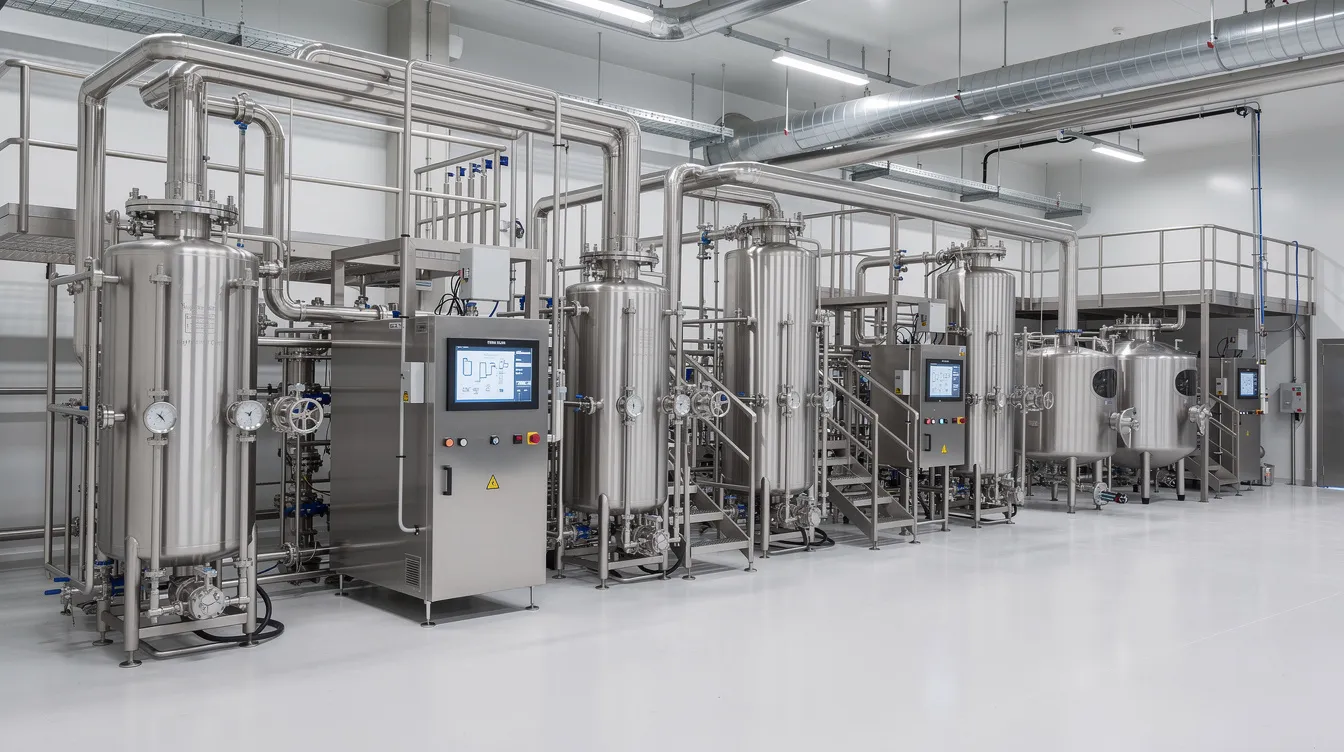
Components of the UHT Milk Plant Working Capital Requirement (Current Assets)
Proper working capital management begins with listing and valuing each category of current assets relevant to the production processes of UHT milk manufacturing. Current assets in this sector typically include raw milk and ingredients, aseptic packaging material, consumables and stores, work in progress, finished goods inventory, trade receivables, cash and bank balance, and other operating short term assets.
Each sub-component is analysed below to guide UHT milk plant working capital calculation based on realistic holding periods. All holding days and valuations should be aligned with the DPR and CMA Data assumptions to ensure internal consistency across financial projections.
Raw Milk Inventory and Related Advances
Physical raw milk inventory is usually very low-often representing only a few hours of production-because milk received at the dock is quickly processed through the UHT milk manufacturing process and flow chart. However, working capital is still tied up through procurement advances to collection centres, payments to dairy farmers and co operative societies, and chilling expenses.
Raw milk is usually the largest recurring expense for UHT processing plants, with raw milk procurement accounting for roughly 40–50% of the final product cost. During lean seasons, higher procurement prices and the need for buffer stocks of skim milk powder or stabilisers can temporarily increase advances, impacting UHT milk manufacturing working capital.
In my experience preparing DPRs, it is important to distinguish between raw milk physical inventory (valued at 1–2 days of cost) and procurement-related advances or receivables when preparing UHT milk plant CMA data. This distinction affects both the accuracy of the working capital gap and the eligibility of assets for bank drawing power.
Aseptic Packaging Material Inventory
Aseptic packaging inventory is often the single largest current-asset item in an aseptic milk plant working capital assessment. Packaging materials for UHT processing must often be imported or sourced from certified suppliers, adding lead time and minimum order constraints.
Key items include:
- Printed aseptic cartons (various SKU formats)
- Caps and closures
- Laminated rolls and films
- Corrugated boxes for secondary packaging
- Shrink film, labels, ink and coding consumables
Each is valued at landed cost and typical holding days of 15–30 days depending on supplier reliability. Multiple SKUs and pack sizes-200 ml, 500 ml, 1000 ml, institutional packs-multiply the number of printed-carton variants that must be financed. Buffer stocks of raw milk and packaging materials are essential for financing operational continuity.
The relationship between packaging operations and inventory is best understood through the aseptic filling and packaging process for UHT milk. When selecting machinery and formats, promoters should also consider how aseptic carton packaging systems for UHT milk influence carton consumption rates and inventory planning.
Consumables, Processing Materials and Work-in-Process
Consumables include CIP and cleaning chemicals, laboratory reagents, lubricants, boiler and water-treatment chemicals, gaskets and maintenance spares. These require a modest but continuous stock, typically valued at 15–30 days of consumption.
Work in progress in a continuous UHT line is limited-usually representing milk in buffer tanks, partially processed batches during shift changes or units awaiting quality checks. WIP valuation should use cost of raw materials plus proportional utilities, labour and overhead for the fraction of the process completed, converted to an equivalent in days.
Accurate estimation of consumables and WIP helps improve the precision of UHT milk plant MPBF calculation without materially inflating the working capital gap.
Finished-Goods Inventory in UHT Milk Plants
Finished UHT milk and value-added variants (flavoured, fortified, lactose-adjusted) occupy significant warehouse space and capital. Since UHT milk can be stored at room temperature until opened, plants and distributors may carry larger stocks than for pasteurised milk.
A case study of a UHT plant shows that microbiological quality testing causes a lab delay of approximately 4 days before dispatch, plus safety stock of about 8 days is maintained for demand fluctuations-totalling roughly 12 days of finished-goods holding.
The formula used is:
Finished-Goods Inventory = Annual Cost of Production × Holding Days ÷ 365
The valuation must be at cost, not selling price. Policies around UHT milk quality control and shelf-life testing directly influence how many days of safety stock a plant must finance. Banks may treat slow-moving or near-expiry stock as ineligible for drawing power calculation, so monitoring is critical.
Trade Receivables and Other Current Assets
Credit terms offered to distributors, super-stockists, modern trade, institutions and government agencies translate into significant trade receivables. Cash flow from UHT milk sales may take 30 to 60 days due to credit terms with distributors, making accounts receivable a dominant component of working capital.
The formula is:
Trade Receivables = Annual Credit Sales × Collection Period ÷ 365
The assumed debtor days must match the sales strategy described in the UHT milk plant revenue model and product mix. Assuming unrealistically low collection periods-say 7 days-when the business model actually works on 30–60 days materially understates UHT milk plant operating capital.
Other current assets include GST input credit, prepaid insurance, advances to transporters and short-term security deposits. While not always eligible for bank finance, these form part of total current assets and influence the current ratio.
Current Liabilities That Reduce the Working Capital Gap
Current liabilities are short term obligations due within 12 months that help partially fund current assets, thus reducing the working capital gap and the net bank finance required.
Typical operating current liabilities in a UHT milk project include:
- Trade creditors for packaging, chemicals and spares
- Outstanding utility expenses (power, steam, water)
- Unpaid wages and salaries
- Transporters’ payables
- Marketing and promotional creditors
- Statutory dues payable (GST, PF, ESI)
The formula used is:
Trade Creditors = Annual Credit Purchases × Supplier Credit Period ÷ 365
An APICOL model DPR for a 10 KL milk processing unit uses 15 days as the creditor credit period. In practice, raw milk suppliers (dairy farmers and cooperatives) may require prompt or weekly payment, limiting the current liabilities on this side. Overstating creditors to artificially show a lower working capital gap can cause severe liquidity strain once commercial operations commence.
UHT Milk Plant Working Capital Calculation and Summary Table
Banks and consultants typically use the operating-cycle method for UHT milk plant working capital calculation, estimating each component based on holding and credit periods. The standard formulas are:
- Raw Material Inventory = Annual Raw Material Cost × Holding Days ÷ 365
- Finished-Goods Inventory = Annual Cost of Production × Holding Days ÷ 365
- Trade Receivables = Annual Credit Sales × Collection Period ÷ 365
- Trade Creditors = Annual Credit Purchases × Supplier Credit Period ÷ 365
| Component | Basis of Calculation | Holding/Credit Period | Treatment |
|---|---|---|---|
| Raw milk & ingredients | Annual raw material cost | 2 days | Current Asset |
| Aseptic packaging material | Annual packaging cost | 15 days | Current Asset |
| Consumables & stores | Annual consumables cost | 30 days | Current Asset |
| Work-in-process | Annual production cost | 1 day | Current Asset |
| Finished goods | Annual cost of production | 12 days | Current Asset |
| Trade receivables | Annual credit sales | 45 days | Current Asset |
| Cash & operating expenses | Monthly expenses × factor | 1 month | Current Asset |
| Less: Trade creditors | Annual credit purchases | 15 days | Current Liability |
| Less: Outstanding expenses | Monthly operating expenses | 15 days | Current Liability |
Working Capital Gap = Total Current Assets – Operating Current Liabilities
Proposed Bank Finance = Working Capital Gap – Promoter’s Margin
The promoter’s margin is normally 20–25% of the assessed gap, not of total project cost. The resulting figure is the basis for bank finance for UHT milk working capital, typically sanctioned as a cash-credit limit. Typical working capital for UHT plants is needed to cover 4 to 12 months of operating expenses, depending on scale and channel mix.
Illustrative Working Capital Example for a Medium UHT Milk Plant
The following is an illustrative example for understanding the calculation method. Actual numbers must be customised to each project’s capacity, product mix and procurement terms. UHT milk processing plant capacity ranges from 100 to 200 million litres annually for large-scale operations; this example uses a mid-sized plant.
Assumptions: Installed capacity 50,000 litres/day, 330 operating days, capacity utilisation 60%, annual production 9.9 million litres. Raw milk cost INR 42/litre, packaging cost INR 10/litre, other processing cost INR 8/litre. Selling price INR 78/litre. All sales on credit.
| Component | Annual Value (₹ Cr) | Holding Days | Estimated Amount (₹ Lakhs) |
|---|---|---|---|
| Raw milk & ingredients | 41.58 | 2 | 22.78 |
| Aseptic packaging | 9.90 | 15 | 40.68 |
| Consumables & stores | 3.00 | 30 | 24.66 |
| Work-in-process | 59.40 | 1 | 16.27 |
| Finished goods | 59.40 | 12 | 195.29 |
| Trade receivables | 77.22 | 45 | 951.78 |
| Cash & operating expenses | – | 1 month | 55.00 |
| Total Current Assets | 1,306.46 | ||
| Less: Trade creditors | 12.90 | 15 | 53.01 |
| Less: Outstanding expenses | 6.00 | 15 | 24.66 |
| Total Current Liabilities | 77.67 | ||
| Working Capital Gap | 1,228.79 | ||
| Less: Promoter’s margin (20%) | 245.76 | ||
| Proposed Bank Finance (CC) | 983.03 |
This example clearly shows that receivables dominate the working capital gap, followed by finished goods and packaging inventory. A change in debtor days from 45 to 60 would increase the receivables component by approximately ₹ 2.1 crore, immediately increasing the UHT milk plant cash credit limit requirement and promoter margin.
Note: These figures are illustrative. Actual requirements depend on capacity, product mix, procurement terms, packaging arrangements, capacity utilisation, sales channel and credit policy.
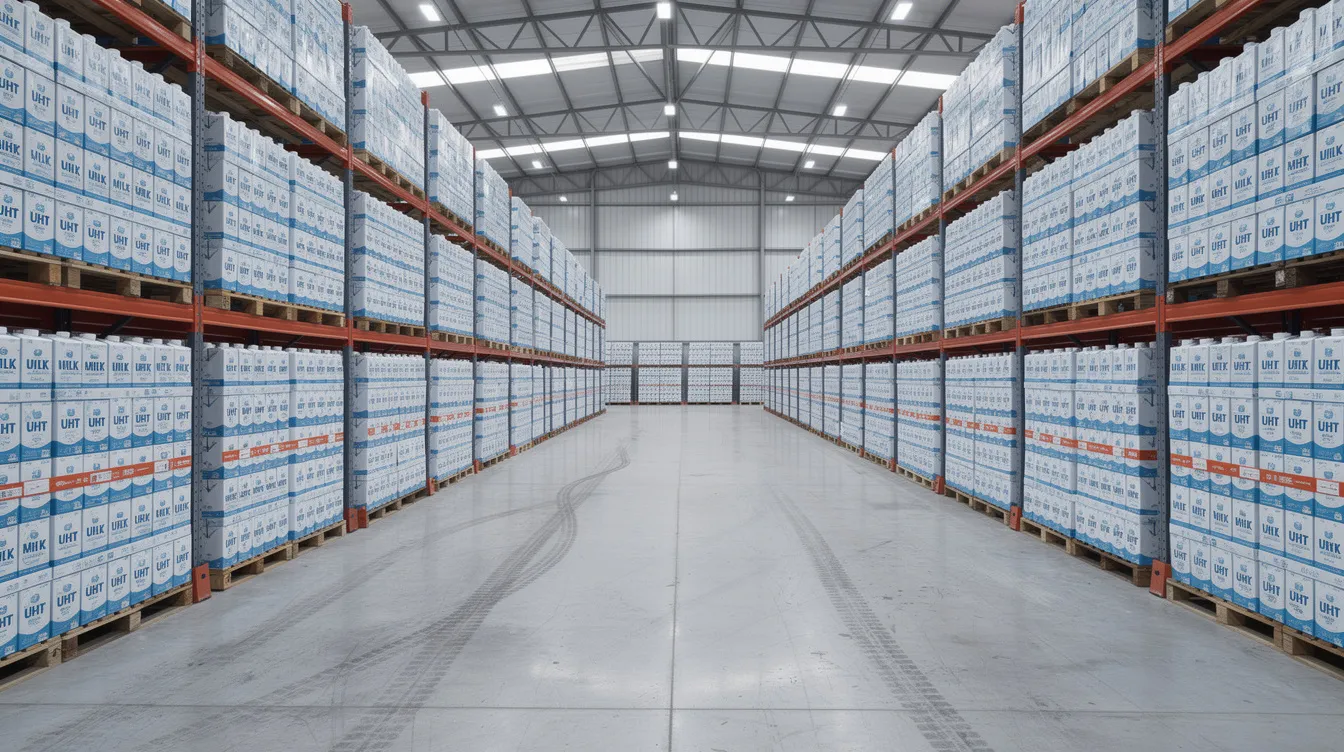
Working Capital Operating Cycle and Cash-Conversion Cycle of a UHT Milk Plant
The operating cycle of a UHT milk business follows this flow:
Cash/Bank Finance → Raw Milk and Packaging Procurement → UHT Processing → Aseptic Filling → Finished-Goods Inventory → Credit Sales → Collection from Customers → Cash
The cash conversion cycle is crucial for managing working capital in UHT milk processing. It measures the time capital is tied up in production and distribution before returning as cash.
Net Operating Cycle = Inventory Period + Receivables Period – Creditors Period
Using the illustrative example: Inventory period (raw material 2 + WIP 1 + finished goods 12 = 15 days) + receivables period (45 days) – creditors period (15 days) = 45 days. This means each rupee invested takes roughly 45 days to return as cash.
A longer cycle directly increases UHT milk plant operating capital and interest cost. Higher line efficiency and better scheduling-as discussed in UHT milk plant capacity planning and line balancing-can reduce the operating cycle by lowering WIP and finished-goods days.
Effect of Capacity Utilisation, Product Mix and Aseptic Packaging on Working Capital
Lower capacity utilisation in the first 1–2 years increases working capital per litre because fixed overheads and minimum packaging orders must be funded against lower sales volumes. A plant running at 60% utilisation still needs packaging safety stock for all active SKUs.
Multiple product categories-plain UHT milk, flavoured milk, fortified variants, different fat contents and institutional packs-require separate packaging inventory and dedicated finished-goods stock. Every new SKU increases the number of printed cartons held, significantly affecting aseptic milk plant working capital and raising the risk of obsolete inventory if designs or formulations change.
Private-label contracts and export SKUs may require even longer storage and separate inventory, which should be factored explicitly into UHT milk inventory financing needs. Aligning working capital assumptions with the planned SKU and channel strategy discussed in the UHT milk plant revenue model and product mix is essential for credible projections.
Monthly Operating Expenses and Utilities to Be Considered
Beyond inventory and receivables, promoters must ensure funding for at least 1–2 months of fixed and semi-variable operating expenses before sales collections stabilise. Operational expenses for UHT plants include raw milk procurement, energy, labour, and maintenance.
Key monthly expenses include:
- Power, steam, water, refrigeration and compressed air (UHT processing involves intensive heating and cooling processes requiring high energy costs)
- CIP chemicals, quality-control costs and laboratory consumables
- Salaries and wages, security and canteen
- Transport, logistics and warehouse rent
- Insurance, bank charges and administrative overheads
- Marketing spends and distributor incentives
UHT plants typically experience high monthly utility costs due to energy demands. A detailed breakdown of electricity, boiler fuel, water treatment and effluent treatment costs is covered under UHT milk plant utilities requirements. While many of these costs are expensed in the P&L, a portion appears as outstanding wages, utility payables and other current liabilities at any balance-sheet date, influencing net working capital and the current ratio.
Seasonal Working Capital Requirement and Milk Procurement Dynamics
Flush season (typically October–March in India) brings higher milk availability and lower procurement prices, while lean season (April–September) tightens supply and pushes prices up. This seasonal variation is significantly influenced by feed cost inflation and regional supply patterns affecting milk producers.
Higher procurement during flush season may require additional working capital for raw milk advances and for holding larger inventories of base products when sales volumes remain stable across the year. Some banks may sanction a regular limit plus a peak-season working capital limit based on CMA Data showing seasonal peaks. The NDDB working capital loan scheme for dairy co operatives, for example, assesses loans based on peak stock levels with an interest rate of approximately 7.70% (floating) as of January 2026.
Promoters should ensure that DPR and UHT milk plant CMA data clearly show seasonal peaks in inventory and receivables so that the sanctioned limit is adequate in both periods.

Bank Assessment of Cash-Credit Limit, Drawing Power and Working Capital Margin
Banks typically assess working capital loan for dairy plant projects using projected turnover, operating cycle and stock and debtor levels submitted in CMA Data. For MSMEs with fund-based limits up to ₹5 crore, banks may use the turnover method, assessing the requirement at 25% of projected annual turnover.
Standard information banks review includes:
- Production and sales projections with capacity utilisation
- Inventory holding days and receivables ageing
- Supplier credit terms and working capital gap
- Promoter’s margin (typically 20–25% of the gap)
- Projected current ratio-a current ratio of 1.5:1 is generally recommended for financial stability, though a current ratio above 1.0 suggests a healthy liquidity position
- DSCR (minimum 1.25 in many government-supported dairy schemes)
Drawing Power = Eligible Inventory and Receivables – Applicable Margin – Ineligible Current Assets
The sanctioned limit and available drawing power are different. Inadequate stock or overdue receivables can reduce drawing power even when the cash-credit limit sanction remains unchanged. Banks exclude obsolete packaging, over-aged stock, slow-moving SKUs and related-party receivables from eligible assets.
Working Capital in DPR, CMA Data and Financial Projections
A professional DPR for a UHT milk plant must show year-wise working capital requirement, current assets, current liabilities, working capital gap, promoter’s contribution and proposed bank borrowing aligned with production and sales forecasts.
CMA Data should include assumptions on inventory holding days, receivable and creditor days, reflected in projected balance sheets, profit and loss statements and cash flow statements. Interest on working capital must be calculated on likely utilisation, not simply on the full sanctioned limit-a point explained further in UHT milk plant financial projections for DPR.
Working capital also affects key ratios like current ratio, quick ratio and DSCR, which lenders examine for liquidity position and repayment capacity. Insufficient working capital can reduce achievable capacity utilisation and delay reaching break-even despite healthy gross margins, as discussed in UHT milk plant profitability and break-even analysis.
Impact of Working Capital on Liquidity, Profitability and DSCR
Working capital is primarily a liquidity measure, but it indirectly affects profitability, cash flow and loan-repayment ability. Gross profit margins for UHT milk typically range between 25–35%, yet these margins are meaningless if the plant cannot maintain production due to liquidity strain.
Inadequate working capital can cause production interruptions, inability to procure raw materials or packaging on time, stock-outs at distributors and loss of market share-all reducing revenue and EBITDA. Conversely, excessive working capital tied up in slow-moving packaging variants or long receivables increases interest cost and depresses net profit and DSCR.
Lenders watch the relationship between the operating cycle, current ratio and DSCR over the initial years to judge whether the working capital for UHT milk plant has been realistically assessed. Promoters should regularly compare actual financial performance and operating-cycle data with DPR assumptions.
Common Mistakes in UHT Milk Plant Working Capital Assessment
In my experience preparing DPRs and CMA Data for dairy projects, these mistakes recur frequently:
- Focusing only on raw milk cost and ignoring the large investment in aseptic packaging inventory and finished-goods stock
- Assuming unrealistically low debtor days (7–10 days) when institutional and commercial channels actually imply 30–45 days
- Overstating supplier credit days (especially for printed cartons where suppliers often demand advance or short-term payment)
- Using full-capacity sales from month one without providing working capital for the ramp-up period
- Ignoring GST timing differences and other expenses such as marketing launch costs in initial working capital
- Inconsistent assumptions between DPR, CMA Data and cash-flow projections, which raises concerns among lenders about the reliability of the financial analysis
- Not valuing the cash and bank balance needed for emergency procurement, utilities, wages and other day-to-day expenses
- Confusing fixed capital investments with working capital margin in the means-of-finance statement
Strategies to Optimise and Manage Working Capital in UHT Milk Projects
Operational efficiency in working capital management requires continuous attention:
- Negotiate realistic credit terms with packaging and consumable suppliers. Negotiating favourable supplier credit terms can alleviate cash flow pressure in UHT operations. Even moving from 0 to 15 days creditor credit meaningfully reduces the gap.
- Rationalise SKUs and carton formats to reduce slow-moving packaging stock and obsolete printed-carton risk.
- Improve distributor collection by aligning trade discounts and schemes with timely payments. Track receivables ageing rigorously.
- Plan production according to demand forecasts while maintaining adequate safety stock for critical inputs and finished goods.
- Monitor drawing power statements monthly, review working capital per litre of UHT milk produced and compare actuals against DPR assumptions.
- Use rolling cash flow forecasts to anticipate shortfalls, especially during the transition from flush to lean season or during next year’s capacity expansion.
Do not compromise on quality control, food-safety or hygienic-process expenditure merely to save working capital. The benefits of reduced working capital are quickly negated by a single quality failure.
Sensitivity Analysis of Working Capital Requirement
Promoters should test the robustness of UHT milk plant working capital requirement against adverse but plausible scenarios. Several factors can shift the funding requirement substantially.
| Scenario | Change | Impact on WC Gap (Approx.) |
|---|---|---|
| Debtor days increase from 45 to 60 | +15 days receivables | +₹ 3.17 Cr |
| Finished-goods days increase from 12 to 20 | +8 days FG inventory | +₹ 1.30 Cr |
| Raw milk price rises 10% | +₹ 4.2/litre | +₹ 0.23 Cr (inventory) |
| Capacity utilisation drops to 40% | Lower volume, same fixed costs | WC per litre increases ~50% |
| Supplier credit reduced from 15 to 0 days | No packaging credit | +₹ 0.53 Cr |
| Aseptic packaging cost rises 15% | +₹ 1.5/litre | +₹ 0.06 Cr (inventory) |
Such analysis helps decide an appropriate sanctioned limit and promoter margin buffer, avoiding repeated ad-hoc limit enhancements during initial years. This sensitivity analysis supports better working capital management and net working capital planning, improving comfort for both promoters and lenders. Readers evaluating the broader investment should also consider UHT milk processing plant setup cost in India for the complete capital structure picture.
Frequently Asked Questions on UHT Milk Plant Working Capital Requirement
How is the UHT milk plant working capital requirement generally calculated?
The requirement is assessed by estimating each component of current assets-inventory, receivables, cash and other current assets-based on holding and collection periods, then subtracting operating current liabilities such as trade creditors and outstanding expenses. Working capital is calculated as current assets minus current liabilities. Banks rely on the operating-cycle method combined with projected turnover and CMA Data to decide the appropriate cash-credit limit. The working capital calculations must use cost-based valuations for inventory and realistic credit period assumptions.
Are working capital and fixed capital both included in the total UHT milk project cost?
A comprehensive UHT milk DPR normally includes land, building, machinery and other fixed assets as well as margin money for working capital in the total project cost and means-of-finance statement. Term loans generally finance fixed assets and capital investments, while working capital margins are funded by promoters and operating working capital is supported by bank cash-credit and other short-term facilities. The leverage between term debt and working capital finance shapes the overall capital structure.
How often should a UHT milk plant reassess its working capital limits?
In practice, limits are reviewed annually by banks, but promoters should internally monitor utilisation and operating-cycle changes monthly or quarterly, especially in the first 3 years. Significant changes in capacity utilisation, product mix, procurement terms or customer credit policy may justify revising working capital limits. Companies across industries benefit from this discipline-it ensures that services to customers are not disrupted by avoidable liquidity problems.
Does higher working capital always mean better financial health for a dairy unit?
A reasonable positive net working capital and a healthy current ratio indicate liquidity, but excessively high working capital may indicate inefficiencies such as overstocking of dairy products or poor collection from customers. The goal of working capital management is optimisation-enough funds to run operations smoothly without locking unnecessary money or increasing avoidable interest cost on income. The value lies in balance, not in maximising the number.
Can term loans be used to fund working capital shortages in a UHT milk plant?
Term loans are primarily meant for fixed assets, while working capital should normally be funded by cash credit, WCDL or internal accruals. Any temporary use of term-loan proceeds for working capital must comply with bank sanction terms. Persistent shortages indicate the need to reassess operating limits. Promoters facing this situation should seek professional financial assistance to restructure their working capital components rather than diverting term-loan funds, as this can jeopardise the entire project’s debt-servicing capacity.
Conclusion and Professional Note
Accurate assessment of UHT milk plant working capital requirement is essential to ensure uninterrupted milk procurement, aseptic packaging, production, distribution and timely servicing of term loans. Without adequate working capital, even a technically excellent plant with strong demand will face stock-outs, strained supplier relationships and weakened profitability.
The estimate must be grounded in realistic operating-cycle assumptions for inventory and receivables-not simply a flat percentage of project cost or turnover. Every UHT milk project has its own procurement dynamics, packaging requirements, channel strategy and credit policy that shape working capital needs differently.
For professional assistance with UHT milk plant DPR preparation, working capital assessment, CMA Data, financial projections and bank-finance documentation, you are welcome to reach out through www.projectreportbank.com. Loan sanction depends on bank policies, project merits and borrower profile-accurate documentation significantly improves the prospects of a favourable appraisal.
About the Author: CA Manish Gugliya, FCA, DISA (ICAI), is a practising Chartered Accountant since 2006 with experience in project reports, DPR preparation, CMA Data, project finance, financial projections and bank-loan assessment for industrial and dairy units across India.