Key Takeaways
- A bank loan for dairy processing plant typically combines a term loan for fixed assets with working capital facilities for post-commissioning operations; sanction depends on project viability, promoter profile and lender policy.
- The typical project cost structure covers land, civil work, plant and machinery, milk collection infrastructure, utilities, cold storage, ETP, pre-operative expenses, contingency and working capital margin – each assessed separately by the bank.
- Banks appraise dairy plant project finance holistically: promoter background, technical feasibility, milk procurement strategy, product mix, financial projections, DSCR, repayment capacity and security all interact during credit assessment.
- A bankable Detailed Project Report demonstrates commercial, technical and financial logic through internally consistent assumptions – not merely attractive numbers in a spreadsheet.
- Government schemes can change the financing landscape for dairy processing projects; promoters should verify eligibility for AHIDF, DIDF, PMEGP and state-level incentives before finalising means of finance.
Introduction – Financing a Dairy Processing Plant in India
India is the largest milk production country in the world, and decades of growth in organised dairy processing have created strong demand for modern, integrated facilities. Setting up a commercial dairy processing plant requires substantial capital – from land acquisition and civil construction to processing lines, chilling infrastructure and cold storage – making bank finance an essential part of most promoters’ plans.
For a typical 50,000 to 1,00,000 litres per day integrated plant, total project cost can range from ₹30 crore for a focused unit to well over ₹100 crore for a fully diversified facility with multiple value-added product lines. This investment spans land, building, plant and machinery, milk reception, pasteurisation, packaging, refrigeration, boilers, electrical installations, laboratory, ETP, vehicles, pre-operative expenses, contingency and margin for working capital. Financing a commercial dairy processing facility requires a structured approach and thorough documentation.
Most entrepreneurs combine their own promoter contribution with a dairy plant bank loan (term loan for project assets) and separate working capital limits, rather than attempting to self-finance the entire project. The primary financing routes for a commercial dairy processing plant include government-backed credit schemes and commercial bank term loans. Interest rates, processing charges, repayment period and security structure vary by bank, NBFC and policy – this article is meant as professional guidance, not a promise of sanction.
What Is a Bank Loan for a Dairy Processing Plant?
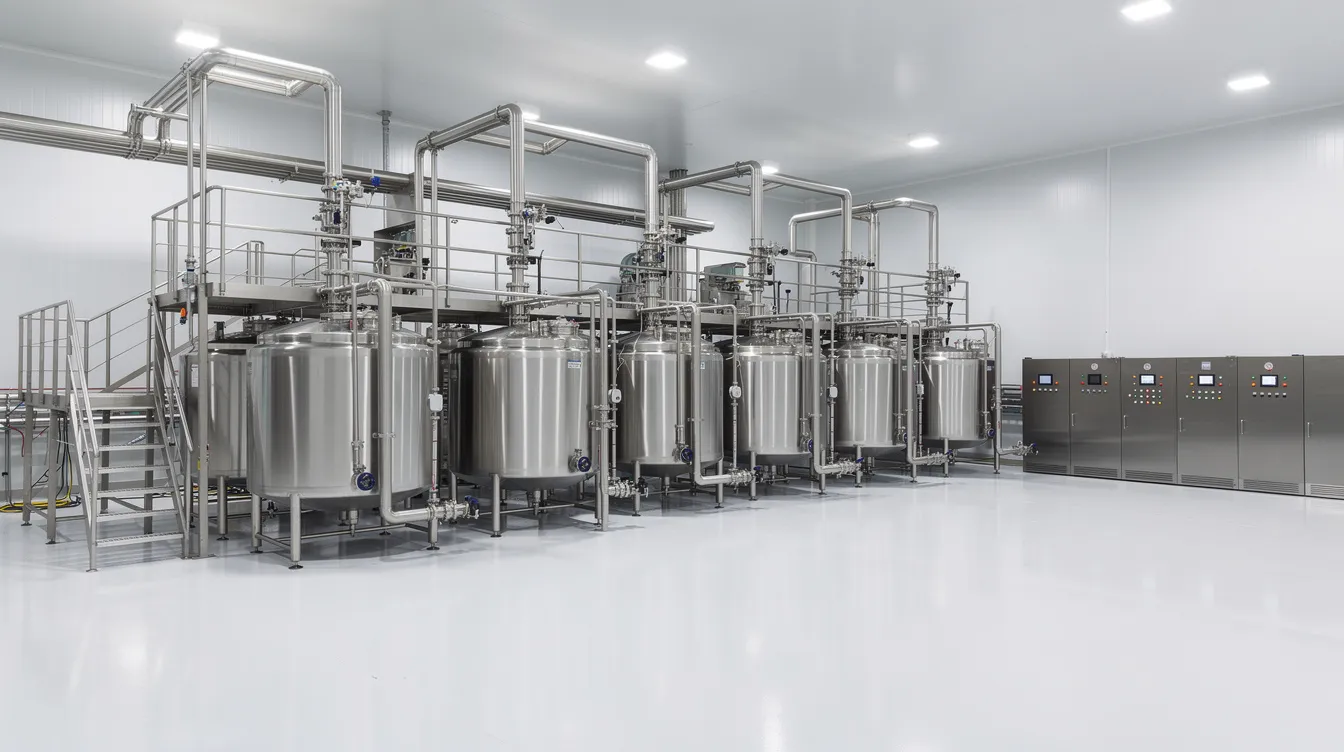
A bank loan for dairy processing plant usually combines a term loan for project cost with working capital facilities after commercial production begins. The term loan finances eligible fixed assets, while working capital limits fund daily operations – milk purchase, packaging, salaries, distribution and receivables.
Term Loan for Dairy Processing Plant
A dairy plant term loan finances eligible fixed assets: civil works, processing lines, chilling units, boilers, power systems, ETP, cold storage and sometimes vehicles. Public and private sector banks offer customized term loans for food and dairy processing, with repayment period typically ranging from 7 to 10 years including moratorium. The rate of interest depends on the bank’s internal rating, external benchmarks and borrower profile – for instance, Federal Bank’s agri-business term loan rates range from approximately 9% to 15.60%.
Some lenders may not finance land or may cap financing on certain soft-cost components, so project cost and means of finance must be aligned with specific bank norms. Processing charges, documentation fees and other costs are applied per the bank’s latest circular on agri, MSME or industrial advances. Under Central Bank of India’s Cent Animal Husbandry Infra Scheme, repayment period is 8 years including up to 2 years moratorium.
Working Capital Finance for Dairy Plant
Cash credit limits, overdraft and bill discounting facilities fund daily milk procurement, packing material, power, salaries, logistics and receivables. The working capital cycle in a dairy business involves near-daily cash outflow to farmers and suppliers, while inflow from distributors or institutional buyers arrives after a credit period of 7–30 days, creating a funding gap.
Working capital assessment is done through stock and receivables levels, operating cycle days and, in larger projects, through formal CMA Data – not arbitrary round-figure estimates.
Other Banking Facilities
Non-fund-based facilities may include bank guarantees for government supply tenders, letters of credit for imported dairy machinery or packing material, and separate term loans for vehicles in a milk distribution fleet. Which facilities are appropriate depends on business model – B2B supply, retail brand, institutional contracts or a combination.
Major Components of Dairy Processing Plant Project Cost
A bankable Detailed Project Report should clearly list each project cost component. Bankers scrutinise both totals and individual line-items while appraising dairy plant project finance.
| Project Cost Component | Typical Nature |
|---|---|
| Land | Promoter/project asset |
| Site development | Fixed project cost |
| Building & civil works | Fixed asset – factory, cold rooms, offices |
| Plant & machinery | Major CAPEX – pasteuriser, homogeniser, packaging, refrigeration |
| Utilities | Power, water, boiler, DG set, transformer |
| Milk collection infrastructure | BMCs, chilling centres, testing equipment |
| Lab & quality control | Operational infrastructure |
| Cold storage | Fixed asset |
| ETP | Environmental infrastructure |
| Preliminary & pre-operative expenses | Licences, training, trial runs |
| Contingency (3–5%) | Project cost provision |
| Working capital margin | Initial operating funding |
For a small dairy unit, total capital investment for a dairy processing plant can be approximately ₹95 lakh – with land and building costs around ₹27 lakh, plant and machinery costs around ₹20 lakh, and working capital for one month estimated at ₹37 lakh. For larger facilities, a 50,000 LPD integrated plant can require ₹60–104 crore depending on product mix.
Actual eligibility for financing each head differs between lenders. For deeper cost analysis, refer to the Integrated Dairy Processing Plant Setup Cost in India and Dairy Plant Land, Building & Infrastructure Requirements. For machinery specifics, see Dairy Processing Plant Machinery & Equipment Cost.
Means of Finance for a Dairy Project
The basic identity is straightforward: Project Cost = Promoter Contribution + Term Loan + Other Eligible Sources. Banks look for a balanced means of finance structure where promoter contribution demonstrates commitment and the debt quantum is supportable by projected cash flows.
Promoter contribution typically ranges from 20–30% of project cost in general areas. Margin money varies depending on the category of the enterprise and financing scheme – for MSME borrowers under certain schemes, margin requirements may be lower.
Key scheme-based sources include:
- The Animal Husbandry Infrastructure Development Fund is the flagship Government of India scheme for dairy processing. AHIDF offers a 3% interest subvention for up to 8 years.
- The Dairy Processing and Infrastructure Development Fund is designed for larger cooperative bodies and milk producer companies, offering financial assistance to modernise and expand milk processing plants.
- Prime Minister’s Employment Generation Programme offers credit-linked subsidy for manufacturing setups.
- The Dairy Entrepreneurship Development Scheme provides 25% capital subsidy, though this scheme is currently closed as of 2026.
- Pradhan Mantri MUDRA Yojana offers loans up to ₹20 lakh, with the maximum MUDRA loan under Tarun Plus being ₹20 lakh. MUDRA loans for dairy farms range from ₹50,001 to ₹5 lakh for smaller scale operations. No collateral is required for MUDRA’s Shishu and Kishore tiers.
- CGTMSE provides credit-guarantee support for eligible micro and small enterprises.
- Kisan Credit Card offers interest rates as low as 4% for prompt payers, applicable for dairy as well.
- Dairy processing projects may also qualify for state industrial-investment incentives including interest subsidies.
Eligibility includes individuals, farmers, and NGO members depending on the scheme. Producer companies, cooperatives, SHGs and FPOs also access scheme finance. Dairy farm loans can fund purchasing cows or buffaloes at the primary production level.
Illustrative example: For a ₹25 crore project – 30% promoter contribution (₹7.5 crore), 65% dairy plant term loan (₹16.25 crore) and 5% unsecured subordinated funds (₹1.25 crore). This is an example, not a norm. For detailed capital structure options, see Dairy Plant Project Cost & Means of Finance.
How Banks Assess a Dairy Processing Plant Loan Proposal
A technical and financial assessment is needed for bank approval of dairy processing projects. Loan amounts depend on project scale and lender assessment. No single factor guarantees approval – banks follow their own credit policy, regulatory guidelines and internal risk frameworks.
Promoter Background and Management Capability
Lenders examine promoters’ experience in dairy, agri or food processing, prior business track record, net worth (assets minus liabilities), existing banking relationships and credit bureau scores. A competent management team – production manager with dairy technology background, procurement head with field experience, marketing personnel familiar with local markets – strengthens the case.
Technical Feasibility of the Dairy Plant
Banks review plant capacity and its alignment with assessed milk availability and market size. For capacity planning guidance, see Dairy Plant Capacity Planning. Technology and machinery selection (reputable suppliers, energy-efficient equipment, automation level) feed into both project cost and collateral value.
Land title, building plans, FSSAI compliance, factory layout and hygienic design are verified. Utilities – stable power, DG sets, water supply, steam and boiler sizing, refrigeration load, and wastewater treatment – are assessed through Dairy Plant Utilities – Power, Water, Steam, Refrigeration & ETP. An implementation schedule of 12–18 months from sanction to commercial production is typical; delays affect interest during construction.
Raw Milk Procurement and Supply Chain
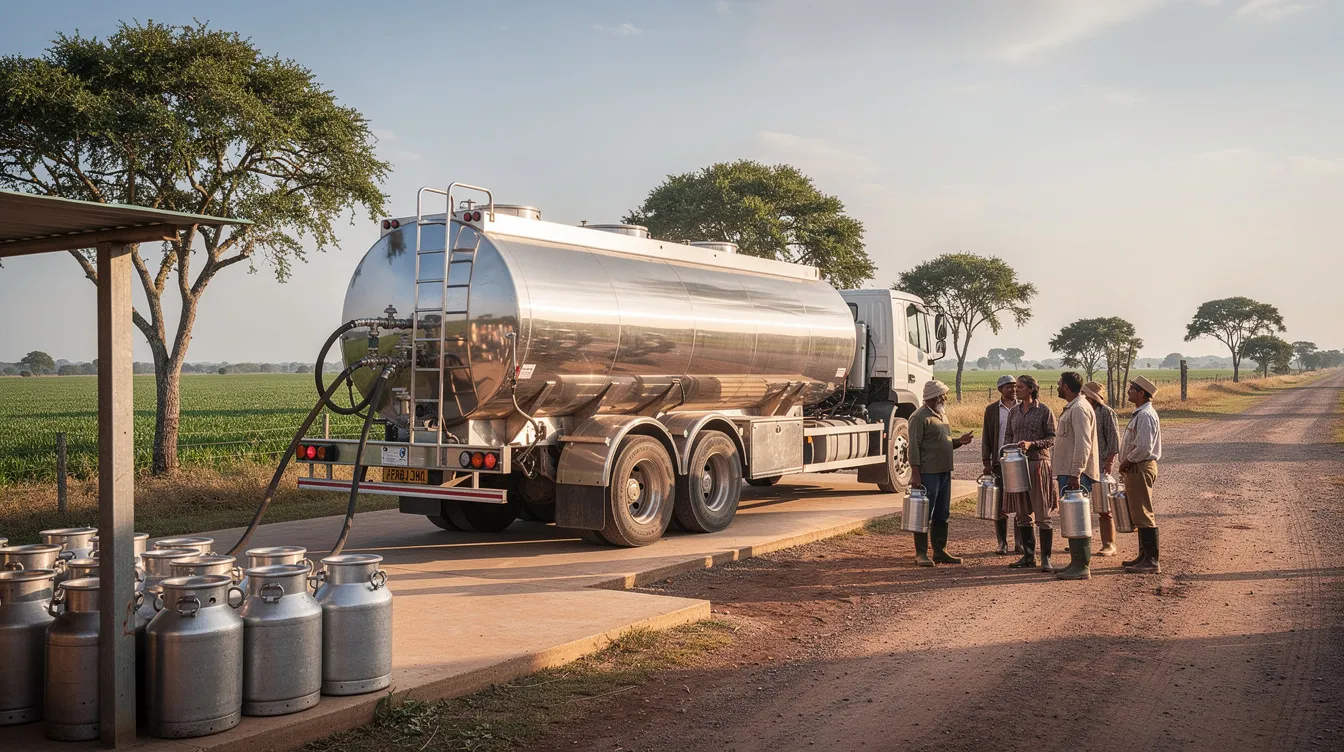
Raw milk procurement is often the most critical risk in dairy plant project finance. Banks want to see a credible milk shed area, number of villages and farmers, average herd size, expected flush and lean season variations, and competitive landscape.
Infrastructure requirements include village collection centres, bulk milk coolers, insulated tankers, chilling centres and testing equipment. These are detailed in Dairy Plant Milk Collection & Procurement Infrastructure. Procurement price assumptions must align with historical regional prices, not aggressive underestimates.
Market, Distribution and Product Mix
Banks look for evidence of a market study: target geography, competitors, selling prices, distribution network and institutional clients. Product mix – pouched milk, curd, paneer, ghee, butter, cream, flavoured milk, cheese, milk powder – directly affects margins, shelf life and working capital. For detailed analysis, see Integrated Dairy Plant Revenue Model & Product Mix.
Financial Viability and Bankability
Bankers expect projected revenue based on realistic capacity utilisation, operating expenses, EBITDA, interest, depreciation, profit after tax and cash accruals. Break-even volume – where contribution covers fixed costs – indicates resilience. DSCR is central: cash available for debt servicing divided by debt obligations for the year. Sensitivity analysis tests how changes in milk cost, selling price or utilisation affect DSCR.
For projection templates and DSCR modelling, refer to Dairy Processing Plant Financial Projections and Dairy Project DSCR & Loan Repayment Capacity.
Capacity Utilisation, Product Mix and Bankability
Projecting 90–100% capacity utilisation from year one is rarely credible for a new dairy plant. Banks look for gradual ramp-up linked to realistic milk procurement and market development – for example, 40–50% in Year 1, 60–70% in Year 2, 75–85% from Year 3 onwards.
The full chain must be consistent: milk availability → capacity utilisation → actual production by product → realistic sales volumes and pricing → gross margin → cash accrual → DSCR → loan repayment capacity. Over-optimistic assumptions at any stage weaken the case during appraisal.
Revenue Model and Product Mix in Dairy Processing
Not all litres of milk generate the same margin. Liquid milk offers high volume but lower margins and intense competition. A diversified model including curd, paneer, ghee and butter can improve realisation per litre – but adds processing complexity and market risk.
Each product impacts working capital differently: ghee ties up inventory longer, curd needs rapid sale, UHT products require specialised packaging. Value-added products are not automatically more profitable; margin depends on input costs, utilisation of by-products, demand and pricing power in the local market.
Financial Projections Required for Dairy Plant Bank Finance
Financial projections are a core part of dairy plant loan appraisal. They must cover year-wise sales volume and value by product, raw milk cost, manufacturing expenses, salaries, selling and distribution expenses, interest, depreciation, tax and net profit – prepared for at least the tenure of the proposed term loan.
Working capital assessment should use inventory, receivable and payable days for milk, packing material and finished goods. Key ratios include DSCR (year-wise and average), break-even point, debt-equity ratio, interest coverage ratio and current ratio. Refer to Dairy Processing Plant Financial Projections for detailed templates.
DSCR, Repayment Period and Repayment Capacity
DSCR = Cash Accrual (PAT + Depreciation + Non-cash charges) ÷ Annual Debt Servicing (Interest + Principal)
For example, cash accrual of ₹3 crore against annual debt servicing of ₹2 crore produces a DSCR of 1.50. This is illustrative only. Repayment tenures for NABARD-linked loans range from 3 to 7 years. Loan repayment periods typically range from 3 to 7 years for smaller scale projects, while larger integrated plants may negotiate 8–10 year tenures including moratorium.
Moratorium allows the plant to stabilise before principal repayment begins. Too short a repayment period can stress early-year DSCR during capacity ramp-up. Different banks have different comfort levels for minimum and average DSCR – these are credit-policy decisions. For detailed analysis, see Dairy Project DSCR & Loan Repayment Capacity.
Working Capital Requirement and CMA Data
Despite fast-moving inventory, dairy businesses have large monthly outflows on milk procurement and distribution. A separate assessment of working capital requirement is essential. Major components include daily milk purchase payments, packing material stocks, finished goods in cold storage, distributor credit and ongoing expenses.
The working capital gap – current assets minus current liabilities – is funded partly by bank borrowing and partly by promoter margin. CMA Data (Credit Monitoring Arrangement) captures past and projected financials, working capital assessment, fund flow and ratio analysis. For detailed working capital modelling, see Dairy Plant Working Capital Requirement and Dairy Processing Plant CMA Data for Bank Loan.
DPR for Dairy Processing Plant Bank Loan – What It Must Contain
Prepare a Detailed Project Report before applying for bank finance. Key prerequisites for financing a dairy processing facility include a detailed project report and land proof. A good dairy processing plant DPR for bank loan explains commercial, technical and financial logic – not only the machinery list.
It should cover: executive summary, promoter profile, project background, proposed capacity and technology, product mix, market assessment, raw milk availability, manufacturing process, machinery selection, land and building plan, utilities, manpower planning, implementation schedule and statutory considerations. Regulatory clearances like FSSAI licensing are mandatory for dairy processing facilities.
The DPR must also contain project cost estimates, means of finance, working capital assessment, financial projections, DSCR analysis, break-even and sensitivity scenarios. Assumptions must reconcile across sections – procurement volume must match processing and sales volume.
Illustrative Case Study – Example of Dairy Plant Project Finance
The figures below are illustrative only and should not be interpreted as lending norms, quotations, expected profitability or guaranteed financing terms.
Consider a 50,000 LPD integrated plant processing milk into liquid milk, curd, paneer and ghee:
| Component | Amount (₹ Crore) |
|---|---|
| Land & building | 8.0 |
| Plant & machinery | 12.0 |
| Utilities & infrastructure | 3.5 |
| Milk collection infrastructure | 2.0 |
| Vehicles, pre-operative, contingency | 2.0 |
| Working capital margin | 2.5 |
| Total project cost | 30.0 |
Means of finance: Promoter contribution 30% (₹9 crore), term loan 65% (₹19.5 crore), unsecured subordinated funds 5% (₹1.5 crore).
| Year | Capacity Utilisation | Estimated Revenue (₹ Cr) | Cash Accrual (₹ Cr) | Indicative DSCR |
|---|---|---|---|---|
| 1 | 45% | 50–55 | 3.0–3.5 | 1.20–1.35 |
| 2 | 60% | 70–75 | 5.0–6.0 | 1.50–1.70 |
| 3 | 70% | 90–100 | 8.0–10.0 | 2.00–2.40 |
| 4 | 80% | 105–115 | 10.0–12.0 | 2.30–2.60 |
| 5 | 85% | 115–125 | 11.0–13.0 | 2.50+ |
With an 8–9 year repayment period including 1–2 years moratorium, the DSCR improves steadily as capacity ramps up. A small change – say 5% drop in selling price or 8% rise in milk cost – could reduce Year 1 DSCR below 1.10, highlighting the importance of sensitivity analysis and prudent structuring.
Documents Required for Dairy Plant Bank Finance
Complete documentation helps avoid delays in dairy plant loan appraisal. Incomplete paperwork delays dairy farm loan applications. Submit KYC documents, bank statements and ITR for loans as a baseline. Key categories include:
- KYC documents of promoters and entity (PAN, Aadhaar, address proofs)
- Constitution documents – partnership deed, LLP agreement, MoA/AoA, registration certificates for registered entities
- Income tax returns and financial statements (audited where available) for 2–3 years
- Bank statements for the past 6–12 months
- Land ownership or lease documents – a registered lease agreement is acceptable for NABARD-linked loans
- Building plans and cost estimates, machinery quotations with technical specifications
- Milk procurement plan with milk shed details
- Detailed Project Report with financial projections and CMA Data
- FSSAI registration, pollution control consents, factory licence, GST registration
- Collateral and security details, property valuations, encumbrance certificates as required by the bank
Land ownership is not required for all dairy loans – many lenders accept long-term lease arrangements subject to their norms.
Common Reasons a Dairy Project Finance Proposal Becomes Weak
Many dairy processing plant project finance proposals fail not because of lack of opportunity but due to weak design:
- Unrealistic capacity utilisation (90% from Month 1 without procurement contracts)
- Vague milk procurement planning without milk shed data or farmer network details
- Project costs far above or below market benchmarks without justification
- Insufficient promoter contribution or unstable equity sources
- Over-optimistic selling prices ignoring local competition and trade margins
- Under-estimated working capital leading to cash flow stress after commissioning
- Excessive debt creating low DSCR and tight repayment schedules
- DPRs that are copy-paste from unrelated projects with inconsistent assumptions
- Missing land documents, incomplete machinery quotations, or undisclosed existing liabilities
Addressing these weaknesses before presenting the proposal substantially improves credibility, even though it cannot guarantee sanction.
How to Strengthen a Dairy Processing Plant Loan Proposal
Even a modest-sized dairy project can present a strong bankable case if structured carefully. Practical steps include:
- Validate milk availability using data from local operatives, animal husbandry departments and field surveys
- Obtain multiple machinery quotations from credible suppliers – see Dairy Processing Plant Machinery & Equipment Cost
- Build a balanced product mix and test multiple combinations for their impact on margins and DSCR
- Structure repayment period aligned with cash accrual patterns, with reasonable moratorium
- Prepare comprehensive DPR with internally consistent projections, proper CMA Data and realistic sensitivity analysis
- Maintain conservative DSCR targets while understanding that final terms depend on lender policy

Professional Perspective – Role of a CA in Dairy Plant Project Finance
In my experience working on dairy processing projects across different Indian states, I have observed that the most common cause of weak proposals is not lack of business opportunity but internal inconsistency in the DPR. Revenue projections assume one level of milk procurement while the cost section assumes another; capacity utilisation in Year 1 is set at 80% without any procurement infrastructure planning to support it.
As a CA, my role typically covers translating the technical and commercial plan into a coherent DPR, building realistic financial projections, structuring project cost and means of finance, preparing CMA Data, and ensuring assumptions across all documents are internally consistent. Final lending decisions always rest with the bank or financial institution based on its credit policy and risk appetite.
The true bankability of a dairy plant project finance proposal comes from using real-world data – regional milk prices, actual energy tariffs, realistic processing yields, market-tested selling prices and achievable working capital cycles – rather than numbers chosen only to make DSCR look attractive in spreadsheets.
FAQs – Bank Loan for Dairy Processing Plant
Can an existing small dairy business upgrade to a processing plant and still obtain bank finance?
Many dairy plant bank loan proposals come from existing milk traders or small chilling centres. Banks often view proven milk handling experience favourably if the account conduct and financials are satisfactory. Such promoters should present past 2–3 years’ financial statements, procurement volumes and bank statements, then build an expansion-oriented DPR showing how the new processing plant adds value. Small dairy units upgrading to larger scale operations are common borrowers.
How do changes in interest rates affect my dairy plant loan and DSCR?
Most term loans are linked to external benchmarks, so the rate of interest can change during tenure. An increase of even 1–2% can materially reduce DSCR. It is advisable to test sensitivity by adding 1–2% to assumed interest rates in projections and discuss with your banker whether fixed-rate or partially fixed structures are available. The interest subvention available under schemes like AHIDF can provide a buffer.
What if milk availability in my proposed area is seasonal or uncertain?
Seasonal variation is normal in dairy, but extreme fluctuation or unverified assumptions hurt bankability. Lenders look for credible procurement strategies: multi-district sourcing, farmer loyalty programmes, chilling infrastructure in flush-milk areas and data on animals population and competing dairies. The DPR should include contingency plans such as partial procurement from neighbouring regions.
Is working capital margin included in project cost or sanctioned separately?
In many dairy processing plant project reports, a portion of initial working capital margin (1–3 months of operating cycle) is included within total project cost and financed through the term loan. Post-commissioning, the bank separately sanctions cash credit or working capital limits based on the operating cycle. Under-funded working capital is among the most common causes of stress in otherwise viable projects.
Does a bank finance both land and machinery for a dairy processing plant?
Practices vary. Some banks prefer promoters to bring land from own funds and finance only building and machinery. Others may include land in project cost subject to valuation and security norms. The quantum of finance for each component is decided as per the bank’s internal policy. Promoters should discuss this upfront while preparing the DPR so that means of finance and the loan amount are aligned with realistic expectations. Allied activities like procurement infrastructure and vehicles may also be eligible depending on the scheme and lender.
Author & Professional Assistance – Dairy Processing Plant Project Finance
CA Manish Gugliya is a practising Chartered Accountant and project finance professional associated with ProjectReportBank.com, specialising in DPR preparation, dairy processing plant project finance proposals, CMA Data and financial feasibility analysis for MSME and industrial projects across India.
Services relevant to dairy entrepreneurs include preparation of bank-oriented Detailed Project Reports (including dairy processing plant DPR for bank loan), structured financial projections, project cost and means of finance planning, DSCR and repayment analysis, and working capital assessment – tailored to the chosen capacity, product mix and scale of the project.
This assistance focuses on preparing robust, bank-ready documentation and rational financial models. It does not and cannot guarantee bank loan sanction, which depends on lender policies, promoter profile, security and overall credit assessment.
If you are planning a new dairy processing plant or expansion in India and need professionally prepared documentation specific to your project size, location and business strategy, connect through ProjectReportBank.com.
📊 Operations & Financial Planning: Utilities | Revenue Model & Product Mix | Financial Projections | Working Capital | CMA Data | DSCR & Repayment Capacity
🏦 Bank Finance, Viability & Returns: Bank Loan & Project Finance | Term Loan Assessment | Feasibility & Viability | Break-Even Analysis | ROI, IRR & Payback | Sensitivity & Risk Analysis