Key Takeaways
- For a commercial integrated dairy processing plant of 50,000–1,00,000 LPD, total project cost in India typically falls in a broad range of several tens of crores, depending on land, civil construction, machinery, utilities and product mix. All figures must be treated as indicative and backed by current quotations.
- Plant and machinery costs typically represent 40% to 50% of total capital expenses, meaning land, building, refrigeration, ETP, electricals and working capital form the remaining half – a fact many first-time promoters overlook.
- Adding value-added product lines such as curd, paneer, ghee, cheese, flavored milk or milk powder can increase the project cost by 30–35% or more compared to a liquid-milk-only dairy processing plant of the same capacity.
- Investors should prepare a professional DPR with capacity planning, dairy processing plant cost per litre analysis, financial projections and bankability assessment before finalizing any machinery order or approaching lenders.
- As a Chartered Accountant and project finance consultant, my focus throughout this article is on realistic cost estimation, complete project cost structure and means of finance – term loan, equity, subsidy and working capital – for dairy plant projects across India.
Introduction: Integrated Dairy Processing Plant Setup Cost in India
Most entrepreneurs planning a dairy venture begin with a single question: how much will an integrated dairy processing plant cost in India? Setting up an integrated dairy processing plant in India involves capital expenditures across land, civil works, machinery, utilities, compliance and working capital – and there is no single universal answer.
An integrated dairy plant handles milk reception, milk processing, manufacturing of multiple dairy products and cold chain operations under one roof, making its setup cost significantly higher and more complex than a basic milk chilling or pasteurization unit. The total dairy processing plant setup cost in India depends mainly on capacity (LPD), product mix, automation level, building standards and utility requirements.
This article provides a practical, techno-financial breakdown to help promoters estimate every major cost head while planning bank finance and equity contribution. The guidance is based on my professional experience at ProjectReportBank.com in preparing integrated dairy processing plant DPRs, financial projections and CMA data for bank appraisal.
What Is an Integrated Dairy Processing Plant?
An integrated dairy processing plant is a facility that converts raw milk into several finished dairy products using shared infrastructure for milk reception, standardization, pasteurization, homogenization, refrigeration and packaging. The ideal process flow includes milk reception, quality testing, weighing, filtration and clarification, chilling, storage, standardization, pasteurization and homogenization, product-specific processing, packaging, cold storage and dispatch. A single-direction layout improves hygiene during processing and minimizes contamination risk.
Typical products include pasteurized milk (toned, standardized, full-cream), curd, lassi, buttermilk, paneer, cream, butter, ghee, cheese, flavored milk, yogurt and, in larger projects, skim or whole milk powder. Paneer, ghee and yogurt are among the most popular dairy products in domestic markets.
Not every integrated project includes all lines. The dairy plant project cost in India strongly depends on which product lines are selected in the first phase. An “integrated” configuration optimizes capital investment by sharing utilities – boiler, refrigeration, water treatment, compressed air and CIP system – across multiple value-added dairy products.
Major Factors Affecting Dairy Processing Plant Setup Cost
There is no single fixed milk processing plant cost in India. Costs vary based on processing capacity and level of automation, alongside several other variables.
Plant Capacity: Large dairy processing plants process over 50,000 litres per day. Small scale dairy processing capacity ranges from 2,000 to 5,000 litres per day, while medium scale dairy plants operate between 5,000 to 20,000 litres per day. Commercial integrated projects typically target 50,000 LPD to 5,00,000 LPD. Per-litre capital cost generally declines as capacity rises, but absolute investment and working capital increase sharply.
Product Mix: A liquid-milk-only processing plant will have much lower machinery and utility requirements than an integrated facility with paneer, curd, ghee, butter, cheese and milk powder lines. From industry data, value-added product lines can increase base costs by approximately 30–35% over a liquid-milk-only layout.
Automation Level: Semi automatic plants cost less initially but need higher labour. Highly automated plants with PLC-based controls and high-speed packaging require higher dairy processing plant machinery cost but offer better consistency. Costs for pasteurizers and other processing equipment can vary significantly based on automation level.
Location: Land cost, local civil construction cost, proximity to milk collection areas, power tariff, water quality and ambient temperature (impacting refrigeration load) all influence dairy processing plant investment in India. Requirements vary depending on whether the plant is located in rural areas or near metro cities, and across many states.
Technology and Equipment: Indian vs imported machinery, stainless steel grade (SS304 vs SS316), machine body material specifications and vendor reputation affect dairy plant equipment cost. The automation grade drives both initial price and long-term operating efficiency.
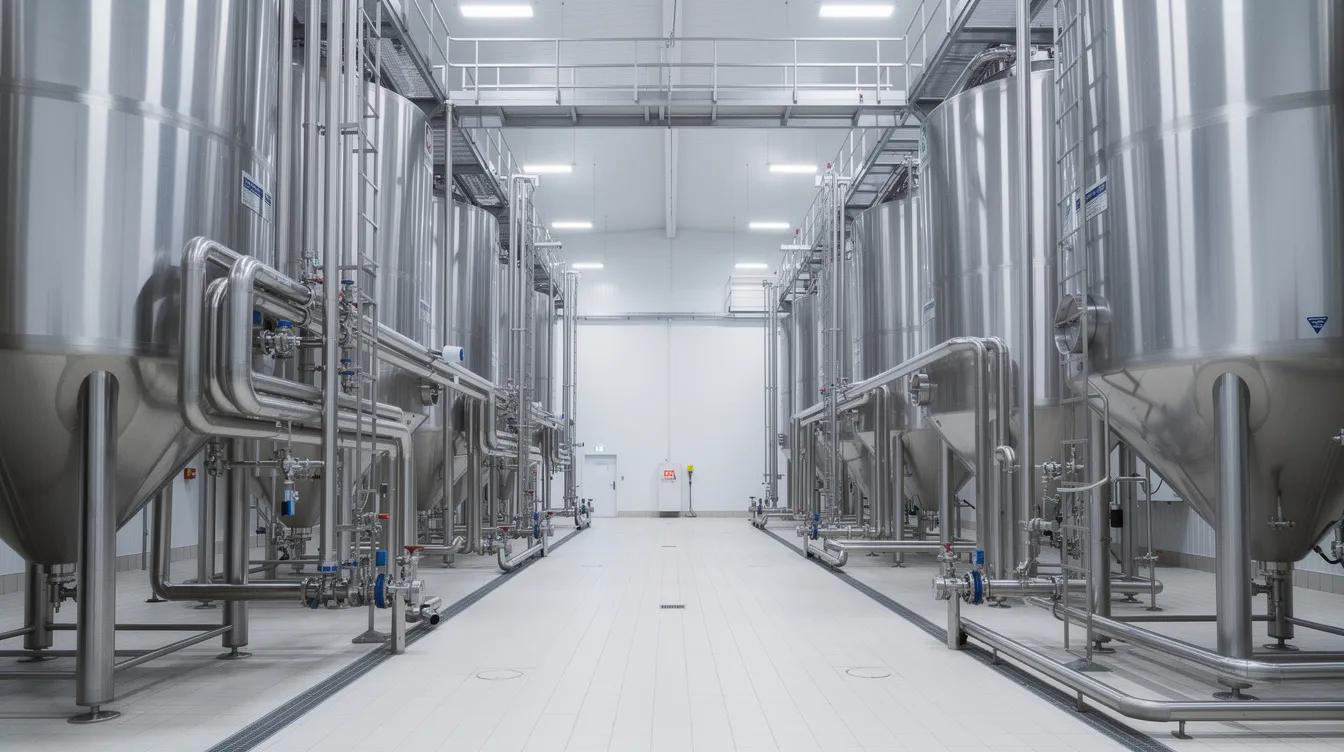
Cold Chain: Bulk milk cooler systems, cold rooms, deep freezers and refrigerated vehicles represent a substantial portion of integrated dairy processing plant cost. Milk must be chilled within two hours of milking for quality, making chilling infrastructure non-negotiable.
Detailed Cost Breakdown of an Integrated Dairy Processing Plant
The following table summarizes the major cost components that together form the total project cost.
| Cost Component | What It Includes | Cost Impact / Remarks |
|---|---|---|
| Land | Purchase or lease of site | 10–15% of project cost; highly location-specific |
| Site Development | Levelling, compound wall, internal roads | Included in land development budget |
| Factory Building | Processing hall, PEB/RCC structure, flooring, drainage | 15–20% of budget; food-grade finishes required |
| Admin Building | Offices, lab, staff amenities | Moderate; often combined with factory structure |
| Milk Reception & Chilling | Reception dock, dump tank, weigh bowl, plate chiller | Critical first stage; sized to peak milk arrival |
| Pasteurization & Homogenization | HTST pasteurizer, homogenizer, holding tubes | Core processing; high cost for large capacities |
| Product Processing Equipment | Curd tanks, paneer vats, ghee boiler, cheese vats | Varies sharply with product mix selected |
| Packaging Machinery | FFS pouch, cup filling, bottle filling, vacuum packing | Depends on formats and speed; can be 8–15% of P&M |
| Refrigeration Plant | Ammonia/Freon compressors, condensers, cold rooms | 10–15% of machinery + utility budget |
| Boiler & Utilities | Steam boiler, water treatment, compressed air | Sized for peak simultaneous load |
| CIP System | CIP tanks, dosing, return pumps | Essential for hygiene compliance |
| Laboratory & QA | Quality testing instruments, quality control bench | Moderate; required for FSSAI compliance |
| ETP | Equalization, aeration, clarifier, sludge beds | Utilities and effluent treatment costs make up around 10% of total capital |
| Electrical Installations | Transformer, panels, cabling, lighting | Often underestimated; 5–8% of project |
| DG Set | Backup power for critical loads | Sized to refrigeration + processing essentials |
| Vehicles | Insulated tankers, refrigerated vans | Distribution fleet adds to capital |
| Pre-operative Expenses | Interest during construction, trial-run costs | 3–5% of fixed capital |
| Contingency | Unforeseen cost escalation | Typically 5–10% of fixed capital |
| Working Capital Margin | Raw milk, packaging, wages, fuel, receivables | Assessed separately by banks |
Land and site development accounts for about 10% to 15% of project costs. Civil works and buildings account for approximately 15% to 20% of the budget. Plant and machinery costs typically represent 40% to 50% of total capital expenses. Promoters must add GST, freight, insurance, installation, commissioning and initial spares to basic machinery price to arrive at realistic capital expenditure.
This table is indicative. Promoters must obtain actual quotations from machinery suppliers, civil contractors and utility vendors before finalizing the integrated dairy processing plant project report.
Land Requirement and Land Cost
Land is shown as a separate line item in dairy project cost and means of finance because it varies widely across states. A 50,000 LPD multi-product plant may require roughly 2–3 acres, while 1,00,000–2,00,000 LPD may need 3–5 acres depending on layout, storage and future expansion provision.
For reference, setting up a mini dairy plant requires 1,500 to 2,000 square feet, and a 500-litre-per-day plant requires 1,500 to 2,000 square feet of covered area. Major space uses include processing block, utilities block, milk reception bay, cold rooms, ETP area, internal roads, parking and future expansion reserves. Land cost ranges from relatively low in rural or industrial-estate locations to very high near metro areas and should be clearly separated from core dairy processing plant capital investment.
Civil Construction and Building Cost
Dairy processing plant construction cost includes factory shed, RCC or PEB structures, epoxy or acid-resistant tile flooring, drainage, insulation and hygienic cladding – all of which differ from ordinary industrial buildings. Building and civil infrastructure costs can vary widely based on specifications and location.
Main building components include the processing hall, milk reception dock, packaging hall, cold storage rooms, warehouse, utility block, laboratory, administrative office and workers’ amenities. The share of civil construction in total dairy plant project cost can range between 20–35% (excluding land), depending on design standards, multi-storey layout and extent of cold rooms. Structural design should accommodate future storage tanks or product lines to avoid costly reconstruction.
Dairy Processing Plant Machinery Cost
Plant and machinery form the largest single component and must be selected according to confirmed plant capacity and product mix. At the smaller end, a 1,000-litre milk processing plant costs around ₹20 lakhs, while a 1,000-litre milk processing plant requires ₹10 to ₹20 lakhs investment depending on configuration. A 500-litre dairy processing plant costs ₹20 to ₹30 lakhs, and a 2,000-litre dairy processing unit costs ₹50 to ₹70 lakhs.
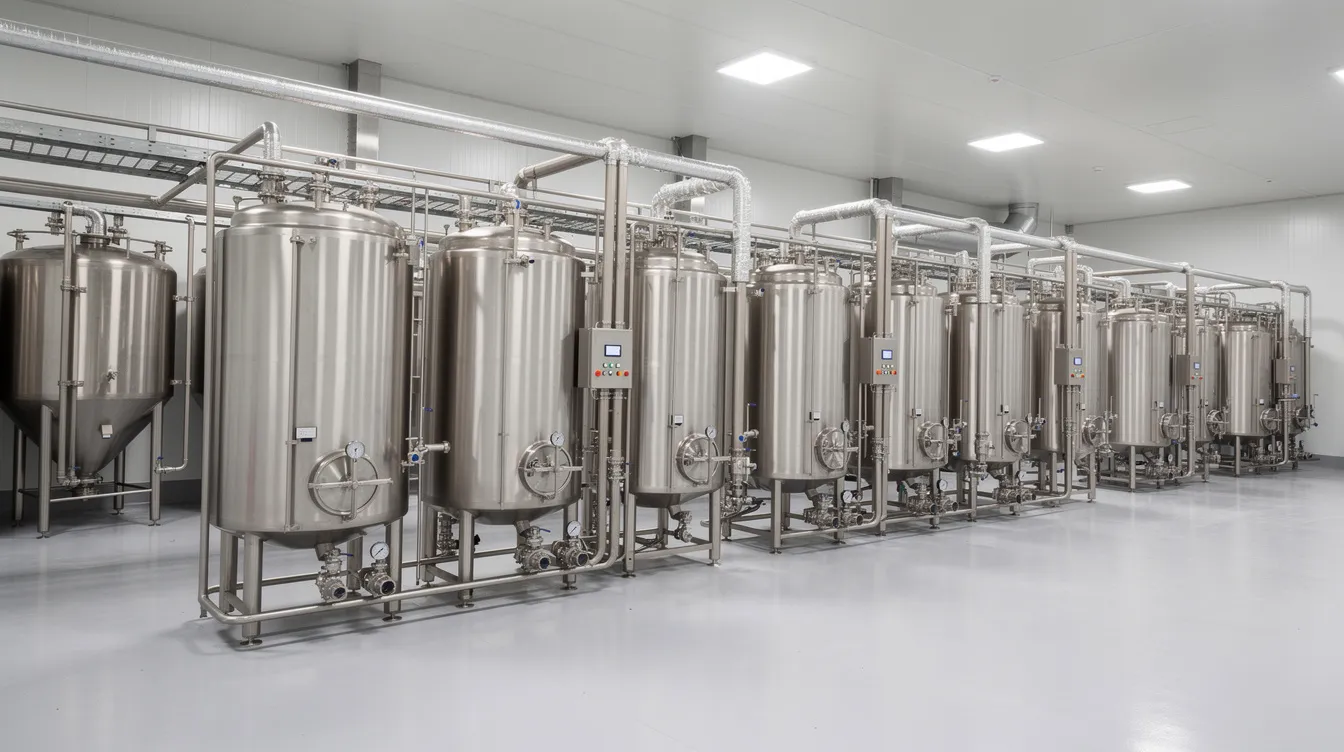
Core equipment includes milk reception tanks, weigh bowl, dump tank, clarifiers, plate heat exchangers for chilling, bulk milk coolers, milk silos, cream separators, milk pasteurizer (HTST), homogenizer, storage tanks, CIP system and associated stainless steel pumps and pipelines.
Packaging machinery categories include milk pouch packing machines (FFS), curd cup filling and sealing machines, bottle filling lines for flavored milk, paneer vacuum packing and ghee filling equipment. Dairy processing plant machinery price depends on capacity, automation grade, stainless steel thickness and vendor reputation. For a 10,000 LPD plant, machinery alone runs ₹2–3 crore, scaling steeply with capacity and product mix.
Product-Specific Processing Lines and Their Cost Impact
Adding product lines in an integrated dairy processing unit changes both machinery cost and the load on utilities like steam, refrigeration and power. Each line below represents incremental investment over the base milk processing line.
Liquid Milk Processing Line
Every integrated plant starts here: clarification, standardization, pasteurizer, homogenizer, storage tanks and pouch packing machines. For many projects, milk processing plant investment cost is initially anchored around this line.
Curd / Dahi and Lassi Line
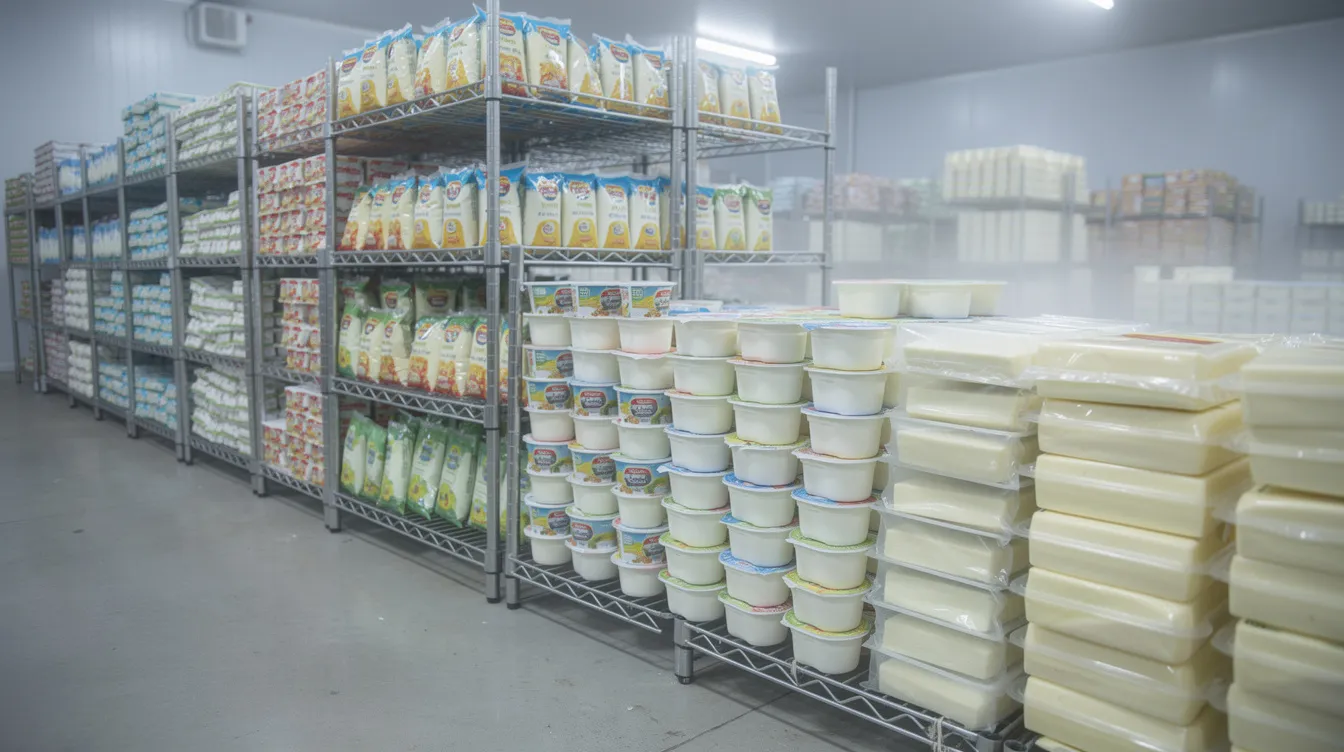
Curd needs incubation tanks, fermentation rooms, curd cup filling machines and additional cold room space. Lassi and buttermilk require blending tanks and bottle or pouch filling machines. These provide high daily turnover but require strong cold chain management.
Paneer Processing Line
Key equipment includes paneer vats, coagulation tanks, paneer press (manual or pneumatic), hoops, chilling tanks and vacuum packing machines. A well-operated paneer business can achieve 20–30% profit margins. Dairy products like paneer and ghee offer profit margins of 20 to 40 percent, making paneer attractive for integrated plants supplying hotels, restaurants and institutional buyers.
Ghee and Butter Line
Equipment includes cream storage and ripening tanks, butter churner or continuous butter maker, ghee boiler, clarifier and packing units. Ghee production requires higher steam consumption, so boiler sizing may need upgrading. Ghee ties up working capital in inventory due to longer production cycles.
Cheese Line
Cheese requires cheese vats, pressing units, brining tanks, temperature and humidity-controlled aging rooms and specialized packaging. This line significantly increases capital investment per litre and is justified only when promoters have clear market linkages for cheese.
Milk Powder Line
Adding a milk powder line transforms the project into a highly capital-intensive venture requiring evaporators, spray dryers, powder handling systems and substantial additional utilities. This is usually justified only for high-volume plants with reliable surplus milk during flush seasons. Detailed costing will be covered in a future focused resource on milk powder and milk drying plant projects.
Promoters can phase product introduction – start with pouch milk and curd, then add paneer and ghee later – to spread capital expenditure without compromising long-term integration potential.
Refrigeration, Cold Storage and Utilities Cost
Refrigeration and utilities often account for 20–30% of the combined machinery and utility budget. Components include ammonia or Freon refrigeration plant, chilled-water systems, cold rooms for raw milk and finished products, and ice bank tanks. Dairy processing requires three litres of water per litre of milk processed, making water treatment a critical utility.
Utility systems include steam boiler, water softening and treatment plant, compressed air system and DG set for backup power. High load utilities can cost between ₹60,000 to ₹1.5 lakhs per month for smaller setups in recurring expenses. Utility sizing should be based on peak milk processing capacity and simultaneous operation of multiple product lines.
Packaging Machinery and Material Handling Cost
Packaging format decisions directly impact both machinery cost and recurring material cost. Key lines include FFS pouch packing for milk, cup filling for curd, bottle filling for lassi and flavored milk, paneer vacuum packing, and ghee jar or tin filling. Ancillary systems – conveyors, date-coding printers, labelers, shrink tunnels and forklifts – must be added to dairy plant equipment cost. Packaging materials form a significant part of working capital and should be budgeted separately.
ETP, Environmental Infrastructure and Compliance Cost
Dairy processing generates high-BOD effluent from CIP, wash water, whey and process losses. State Pollution Control Board NOC is required for dairy processing, and dairy units must comply with state pollution and regulatory approvals for operation. Typical ETP elements include equalization tank, aeration system, clarifier, sludge handling and associated civil works. Environmental approvals depend on plant capacity, category and state-specific rules. Promoters should obtain current technical guidance from environmental engineers and local authorities.
Capacity-Wise Dairy Processing Plant Investment Comparison
| Processing Capacity | Typical Configuration | Relative Investment Level | Key Cost Drivers |
|---|---|---|---|
| Micro (500–2,000 LPD) | Liquid milk, basic curd | ₹40–70 lakhs (indicative) | Equipment type, minimal cold storage |
| Small (5,000–10,000 LPD) | Milk + curd + paneer | ₹5–12 crore | Automation level, product mix |
| 50,000 LPD | Multi-product integrated | Medium-high (several tens of crores) | Building scale, utilities, cold chain |
| 1,00,000 LPD | Full integrated plant | ~₹35 crore excl. land (NDDB norms) to ₹60–100+ crore | Product diversity, automation, location |
| 2,00,000–5,00,000 LPD | Large-scale with powder/cheese | Very high (₹100+ crore) | Drying technology, export infrastructure |
Total estimated initial investment for a micro dairy is between ₹40 lakhs to ₹60 lakhs. Per-litre dairy processing plant cost generally declines with scale, but complexity, working capital and market-development risks increase at higher capacities. Location, subsidy eligibility and choice of imported vs domestic machinery can shift actual investment far above or below these broad indications.
Illustrative Project Cost Structure for an Integrated Dairy Plant
For a mid-sized integrated dairy processing plant (illustrative, 1,00,000 LPD with liquid milk, curd and paneer):
| Cost Head | Approx. Share of Total Project Cost |
|---|---|
| Land & Development | 8–15% |
| Civil Construction & Building | 15–22% |
| Plant & Machinery (Processing + Packaging) | 35–45% |
| Refrigeration & Utilities | 10–15% |
| Electrical Installations | 4–7% |
| ETP, Lab, QA Equipment | 2–4% |
| Furniture, Vehicles, IT | 2–4% |
| Pre-operative Expenses & Contingency | 5–10% |
| Working Capital Margin | Assessed separately |
These items together form the total project cost as typically presented in bank loan proposals and CMA data. Promoters should not treat this as a ready-made estimate but commission a project-specific integrated dairy processing plant DPR supported by fresh quotations.
Fixed Capital vs Working Capital in Dairy Processing Projects
| Fixed Capital Components | Working Capital Components |
|---|---|
| Land and building | Raw milk procurement |
| Plant and machinery | Packaging materials and ingredients |
| Utilities and ETP | Wages and salaries |
| Vehicles | Power and fuel |
| Laboratory equipment | Transport and distribution |
| Furniture and IT | Inventory (finished goods) |
| Receivables from distributors |
Initial working capital is essential for covering procurement and operational overheads. Raw milk procurement generally constitutes 55% to 70% of operational expenses. Manpower costs can range between ₹80,000 to ₹1.8 lakhs monthly for small setups. Estimated working capital should account for 1 to 2 months of operating expenses, though many DPRs provision for up to 3 months. Banks typically finance working capital through cash credit or overdraft, distinct from the term loan for fixed assets.
Project Cost and Means of Finance
Determining dairy processing plant capital investment is only one side; structuring the means of finance is equally important. Common sources include promoter’s equity, term loan from banks, subsidy or grant components under eligible schemes, and working capital facilities.
Debt-equity ratio – for example, 2:1 means ₹2 of term debt for every ₹1 of own funds – is a key parameter banks assess. Interest cost on both term loan and working capital impacts dairy processing business profitability. The DPR should include a “Project Cost and Means of Finance” table summarising total fixed capital, working capital margin, term loan requirement and promoter contribution.
Bank Loan Appraisal for Dairy Processing Plant
Banks assess integrated dairy processing plant investment not just on collateral but on project feasibility, cash flow and promoter capability. Key aspects include promoter profile and experience in the dairy business, milk procurement arrangements with farms and farmers, plant capacity, market demand analysis, competitive positioning and detailed cost estimates supported by quotations.
Financial appraisal parameters include projected profitability, DSCR, break-even analysis, sensitivity to milk price fluctuations and adequacy of working capital. Statutory compliances – FSSAI manufacturing license, Pollution Control NOC, factory licence and electricity connections – are verified at appraisal or before disbursement. Professionally prepared dairy plant financial projections increase the credibility of the proposal.
Role of DPR in Estimating Integrated Dairy Processing Plant Setup Cost
A Detailed Project Report is a comprehensive techno-economic document used for internal decision-making and bank term-loan appraisal. A good integrated dairy processing plant DPR should include project background, promoter profile, industry overview, technical configuration, process flow, capacity selection, detailed machinery list with indicative quotes, civil estimates, project cost and means of finance, projected P&L, cash flow, balance sheet, break-even and DSCR analysis.
The DPR should also address implementation schedule, risk analysis and sensitivity scenarios. Readers wanting a complete DPR perspective beyond setup cost may explore the [Internal Link: Dairy & Milk Processing Project Report] pillar page. ProjectReportBank.com prepares integrated dairy processing plant project reports tailored to specific capacity, location, product mix and bank requirements.
Financial Viability, Revenue Potential, Break-Even and ROI
Beyond investment, promoters must understand how revenues, margins and capacity utilization interact. The Indian dairy market accounts for 23% of global milk production, and India exported 108,711 MT of dairy products in 2021-22, signalling strong demand across domestic and export channels.
Key variables include raw milk procurement price, average selling price of pouch milk and value-added products, product mix ratio, process yields, packaging cost per litre, energy cost and labour. Integrated plants earn higher gross margins when a larger share of throughput goes into value-added products. Break-even analysis examines fixed costs vs contribution margin per litre. Return on investment and payback period should be estimated over at least 3–5 financial years under both conservative and optimistic scenarios.
Revenue streams from a successful dairy processing business can include packaged milk, curd, lassi, buttermilk, paneer, butter, ghee, cheese and cream. Avoid assuming guaranteed returns – annual turnover and profits depend heavily on market execution and capacity utilization.
Licenses, Approvals and Regulatory Cost
Licenses may not dominate integrated dairy processing plant setup cost, but delays can derail implementation. FSSAI Manufacturing License is required for dairy processing plants, and FSSAI licensing requires documentation such as plant layout and machinery details. A State FSSAI license is needed for turnover below ₹20 crore. GST registration is mandatory after ₹20 lakhs turnover.
Other approvals include State Pollution Control Board NOC, factory licence, fire-safety NOC, building plan approvals and Local Body Trade License from municipal authorities. Weights and measures approval for packing machines and boiler registration may also be needed. Free Udyam Registration allows access to government subsidies and MSME benefits. Promoters should budget for consultant fees and statutory charges as part of pre-operative expenses.
Regulatory requirements vary by state and time. Readers should verify current rules with competent authorities and professional advisers.
Government Subsidies and Support for Dairy Processing Plants
Central and state governments periodically offer schemes for dairy and food-processing projects, which can reduce net dairy processing plant setup cost but should not be the primary basis of investment. The government supports dairy processing through the Animal Husbandry Infrastructure Development Fund. NABARD offers 25% to 33.33% capital subsidy for dairy projects under eligible schemes. The PMFME Scheme provides grants up to ₹10 lakhs for micro food processors. The Dairy Entrepreneurship Development Scheme and state-specific dairy schemes exist alongside central programs in India.
Most subsidies are credit-linked and back-ended, meaning they are released through the financing bank after project implementation. Promoters should structure repayment obligations so the project remains viable even if subsidy disbursement is delayed. Check with NABARD district offices or state nodal agencies for the latest applicable schemes.
Common Costing and Planning Mistakes in Dairy Projects
From my project-finance experience, these are the mistakes I see most frequently:
- Treating machinery quote as the total project cost and ignoring civil, utilities and working capital
- Ignoring ETP and environmental infrastructure entirely
- Under-provisioning refrigeration and cold storage capacity
- Forgetting electrical sub-station, internal electrification and DG set costs
- Assuming 100% capacity utilization from year one
- Underestimating working capital for daily milk procurement and packaging materials
- Ignoring initial commissioning losses, trial-run expenses and wastage
- Freezing machinery specifications before finalizing product mix
- Not leaving space in building design for future expansion
- Using unrealistic milk procurement prices or selling price assumptions
- Ignoring distribution, marketing and cold-chain logistics expenses
A robust DPR, peer benchmarking and discussion with experienced dairy entrepreneurs and operators can help avoid these pitfalls.
How to Optimize Project Cost Without Compromising Viability
Promoters naturally want to control dairy plant setup cost, but must not sacrifice food safety, product quality or regulatory compliance.
- Phased expansion: Start with core products (pouch milk, curd), design building and utilities for higher ultimate capacity, and add paneer, ghee, flavored milk or cheese lines once the base operation stabilizes.
- Modular plant design: Size utilities and pipelines to allow adding pasteurizers, tanks or packaging lines without major reconstruction.
- Right equipment selection: For medium capacities, semi-automatic packaging may suffice. Select the right equipment matching your current and near-term needs, not aspirational volumes.
- Multiple quotations: Obtain at least 3–4 competitive quotations with clearly defined scope of supply, including installation, commissioning and operator training, to avoid hidden future costs.
Integrated Dairy Plant vs Standalone Milk Processing Plant
| Aspect | Standalone Milk Processing Plant | Integrated Dairy Processing Plant |
|---|---|---|
| Investment Size | Lower | Significantly higher |
| Key Products | Pouch milk, cream | Milk, curd, paneer, ghee, butter, cheese, yogurt |
| Machinery Complexity | Moderate | High – multiple process lines |
| Utilities Requirement | Lower | Higher (boiler, refrigeration, water, CIP) |
| Working Capital | Moderate | Higher – diverse procurement & inventory |
| Revenue Diversification | Limited | Multiple revenue streams |
| Market Risk | Higher exposure to milk price swings | Better spread across value-added products |
| Scalability | Limited without major overhaul | Designed for phased expansion |
A standalone plant has lower complexity but is more exposed to price fluctuations. An integrated plant with curd, paneer, ghee and other products captures higher margins but requires stronger management capability and marketing strength. The right choice depends on local milk availability, demand for value-added products and promoter strengths – not just lower initial dairy processing unit setup cost. Readers exploring the complete project-report topic may visit the [Internal Link: Integrated Dairy Processing Plant Project Report Category] page.
Practical Perspective from CA Manish Gugliya (ProjectReportBank.com)
In my experience preparing dairy plant DPRs, CMA data and bank finance proposals across different Indian states – from Tamil Nadu to Rajasthan – the single biggest mistake I encounter is promoters equating machinery cost with total project cost. In reality, civil construction, refrigeration, electricals, ETP and working capital together can exceed the machinery budget.
Successful projects are those where capacity, product mix and market strategy are fixed first, and only then is the detailed costing exercise undertaken with vendor quotations and realistic implementation timelines. At ProjectReportBank.com, we routinely prepare integrated dairy processing plant project reports, financial projections and means-of-finance structures aligned with bank appraisal norms, though we never over-promise on subsidies or loan approvals.
Every dairy project is unique in terms of location, scale and promoter background. A one-size-fits-all figure for integrated dairy processing plant setup cost in India is neither realistic nor advisable.
Professional Disclaimer
All discussions of dairy processing plant machinery cost, civil construction cost, project cost structure, subsidies and regulatory requirements in this article are illustrative and based on general industry practices. Actual project cost will vary with capacity, technology, location, vendor terms, taxes (including origin and country of origin considerations for imported equipment), freight and on-site conditions. References to government schemes or subsidy norms are indicative – readers must check current notifications. Nothing here constitutes investment advice, legal advice or a guarantee of bank loan sanction, subsidy approval or project profitability. Commission a project-specific DPR and obtain independent professional advice before committing capital.
Conclusion
Determining the integrated dairy processing plant setup cost in India involves far more than collecting a few machinery quotations. A complete investment assessment must consider capacity, product mix, land, civil works, plant and machinery, refrigeration, utilities, ETP, electrical systems, packaging, pre-operative expenses, contingency and working capital.
Capacity selection, product mix choices (liquid milk vs value-added products), automation level and location-specific constraints directly influence total dairy processing plant investment in India and long-term profitability. The Indian dairy industry offers enormous opportunity – but returns are never automatic, and as business grows, so does complexity.
Promoters planning a significant dairy processing investment should invest the time and resources into a detailed techno-financial assessment and bankable DPR before finalizing orders or approaching lenders. Get latest price quotations, validate assumptions and stress-test your financial projections under multiple scenarios.
CA Manish Gugliya, FCA, DISA (ICAI) Project Finance & DPR Consultant ProjectReportBank.com
FAQ – Integrated Dairy Processing Plant Setup Cost in India
How much does it typically cost to set up a 1 lakh LPD integrated dairy processing plant in India?
Total project investment for a 1,00,000 LPD multi-product dairy plant (pouch milk, curd, paneer, basic ghee) generally runs into a broad range – from approximately ₹35 crore (excluding land, per NDDB norms) to ₹60–100 crore or more for fully integrated facilities with cheese, advanced automation and Made in India as well as imported equipment. Only a project-specific DPR with current quotations can produce a bankable figure.
What is the approximate dairy processing plant cost per litre for commercial projects?
Cost per litre is a useful benchmark but varies by scale and integration level. Smaller plants (5,000–10,000 LPD) tend to have higher per-litre capex, while large integrated plants enjoy economies of scale. For example, a 10,000 LPD liquid-milk plant may cost ₹5–7 crore (₹50–70 per LPD), whereas a 1 lakh LPD plant may cost ₹35+ crore (₹35 per LPD). Promoters should compute project-specific capex per LPD based on their own configuration. The minimum order quantity for most equipment also affects per-unit cost.
How long does it take to implement an integrated dairy processing plant from sanction to commissioning?
For a greenfield commercial integrated plant, expect 9–15 months from detailed engineering through civil construction, procurement, installation, trial runs and licensing. Timelines depend on land readiness, regulatory approvals, vendor lead times and whether machinery is domestically sourced. A mini dairy processing plant at smaller scale may be commissioned in 6–9 months.
Can an existing milk processing plant be upgraded into an integrated dairy plant later?
Yes, many promoters start with a liquid milk plant and later add curd, paneer, ghee or cheese lines. The key is designing the original layout, utilities and electrical infrastructure with future expansion in mind. This minimises incremental cost and avoids costly reconstruction when additional product lines are commissioned. Access to the latest price capacity data from vendors helps plan modular expansion.
Is an integrated dairy processing plant profitable?
Profitability depends on capacity utilization, product mix, raw milk procurement price, selling price realization, distribution efficiency and financial assistance terms. Well-managed plants converting a meaningful share of throughput into value-added products can achieve attractive margins. However, profit margins are never guaranteed – dairy entrepreneurship demands strong procurement networks across farms, robust marketing and disciplined cost management in a competitive industry.
📊 Operations & Financial Planning: Utilities | Revenue Model & Product Mix | Financial Projections | Working Capital | CMA Data | DSCR & Repayment Capacity
🏦 Bank Finance, Viability & Returns: Bank Loan & Project Finance | Term Loan Assessment | Feasibility & Viability | Break-Even Analysis | ROI, IRR & Payback | Sensitivity & Risk Analysis