Key Takeaways
- A dairy processing plant is an integrated line of machines running from milk reception through packaging and cold storage; correct machinery selection drives product quality, operating cost, energy consumption, and bankability of the project.
- Core dairy processing plant equipment includes bulk milk cooler, milk pasteurizer, cream separator, homogenizer, CIP system, packaging machines, and utilities (boiler, refrigeration, air compressor, ETP). Configuration changes based on whether the plant produces only pouch milk or also curd, paneer, butter, ghee, and flavored milk.
- Indicative Indian machinery investment ranges from roughly ₹1.5-3 crore for a 5,000-10,000 LPD semi-automatic plant to ₹10 crore or more for 100,000+ LPD. These are broad planning ranges; promoters must validate costs with up-to-date vendor quotations before finalising any DPR or term-loan proposal.
- From a project-finance perspective, machinery cost flows directly into total project cost, term-loan requirement, CMA Data, depreciation, and the DSCR that banks use to appraise dairy projects.
- Promoters should avoid selecting dairy processing plant machinery purely on lowest purchase price; lifecycle cost (energy, maintenance, product losses, spare parts availability) and alignment with financial projections matter more for long-term viability.
Dairy Processing Plant Machinery – Overview
In my experience preparing DPRs and CMA Data for dairy projects across India, machinery selection is where most promoters either build a strong foundation or create problems that persist for years. Dairy processing plant machinery is the single largest CAPEX line item in most projects, and it directly determines product quality, energy consumption, manpower needs, and future scalability.
Dairy processing plants use specialised machinery to transform raw milk into consumer products. The term “dairy processing plant machinery” covers the complete set of interconnected equipment needed for milk reception, testing, chilling and storage, clarification, cream separation, standardization, pasteurization, homogenization, product processing, packaging, and cold storage dispatch. A mini dairy plant automates milk processing for small businesses and can produce butter, ghee, and yogurt, with setup costs starting from ₹3-5 lakhs for the smallest configurations. These are designed for small and medium-sized dairy operations. Quality objectives of dairy equipment include safety, purity, consistency, and freshness across every stage.
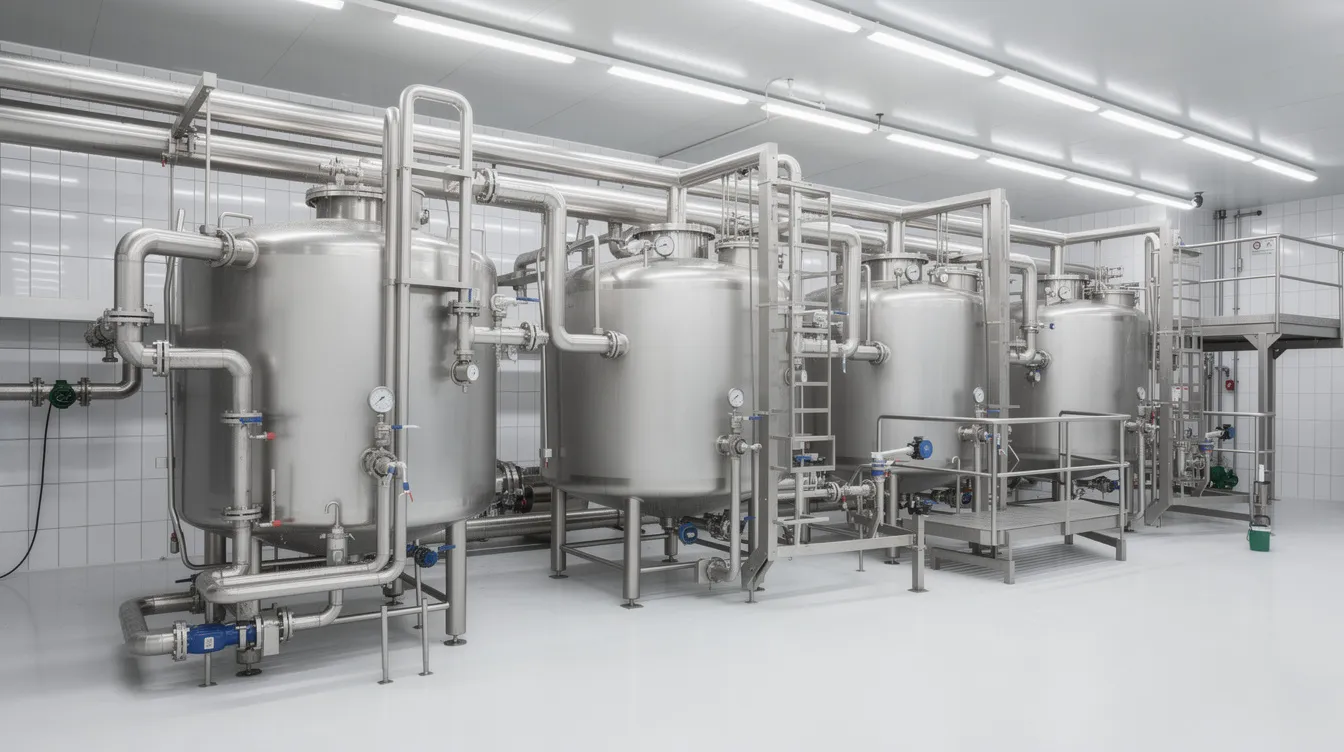
Configuration differs for a plant making only pouch milk versus one producing value added products like curd, paneer, butter, ghee, cream, and flavored milk. Main process equipment (pasteurizer, homogenizer, storage tanks, cream separator, butter churner, ghee clarifier, packaging machines) must be distinguished from utilities and ancillaries (refrigeration, boiler, CIP, air compressor, ETP). All costs discussed below are indicative Indian-market ranges as of 2025-26 and must be refined through actual supplier quotations while preparing a bankable DPR.
Complete Dairy Processing Plant Equipment List
This section provides a snapshot dairy processing plant equipment list covering core machinery for a typical integrated liquid-milk-plus-basic-products plant in India.
| Machinery / Equipment | Main Function | Typical Capacity Basis | Indicative Cost Range (₹ lakh, ex-GST) |
|---|---|---|---|
| Bulk Milk Cooler | Chill raw milk to 4°C | 500-5,000 L | 1.5-10 |
| Raw Milk Reception Tank | Receive and weigh incoming milk | 500-5,000 L | 0.5-2.5 |
| Milk Storage Tank (insulated) | Hold milk at stable temp | 5,000-30,000 L | 2-8 |
| Cream Separator | Separate cream from skim milk | 500-10,000 LPH | 0.6-8+ |
| Milk Pasteurizer (HTST, PHE-based) | Kill pathogens via controlled heating | 500-10,000 LPH | 3-15+ |
| Milk Homogenizer | Break fat globules for uniform texture | 500-5,000 LPH | 3-8+ |
| CIP System | Clean equipment without disassembly | 2-4 tank system | 5-20+ |
| Milk Pouch Packing Machine | Fill and seal pouches | 1,500-4,000 pouches/hr | 1.8-8 |
| Cup Filling Machine | Fill curd/yogurt cups | 500-3,000 cups/hr | 3-10 |
| Boiler (steam generation) | Supply steam for heating and CIP | 200-1,000 kg/hr | 3-12+ |
| Refrigeration Plant | Provide chilled water/glycol | 5-50 TR | 5-25+ |
| Cold Room | Store finished dairy products | 10-100 MT capacity | 3-15+ |
| Ghee Clarifier | Separate milk solids from ghee | 100-500 kg/batch | 2-6 |
| Butter Churner | Churn cream into butter | 50-500 kg/batch | 2-8 |
| Paneer Press (hydraulic/pneumatic) | Press and shape paneer blocks | 50-500 kg/batch | 1-4 |
| Curd Incubation Tanks | Ferment milk for curd/yogurt | 500-5,000 L | 1.5-5 |
| Evaporator | Remove water from milk under vacuum (powder) | 500-5,000 LPH | 10-50+ |
| Cheese Vat | Coagulate milk into curds for cheese | 500-5,000 L | 3-10 |
| Laboratory Equipment | Test fat, SNF, adulteration | Per lab setup | 1-3 |
| ETP | Treat dairy effluent | Plant-specific | 3-15+ |
- Tanks, vessels, and stainless steel pipework often add 20-30% to main machinery cost.
- Utilities (boiler, refrigeration, air compressor) can represent another 20-35%.
- Packaging lines are a major cost driver once automation and speed increase.
Machinery prices are indicative and influenced by stainless steel grade, controls, automation, brand, and geographical location. Promoters should take at least 3-4 competitive quotations before freezing the DPR machinery budget.
Milk Reception and Raw Milk Handling Equipment
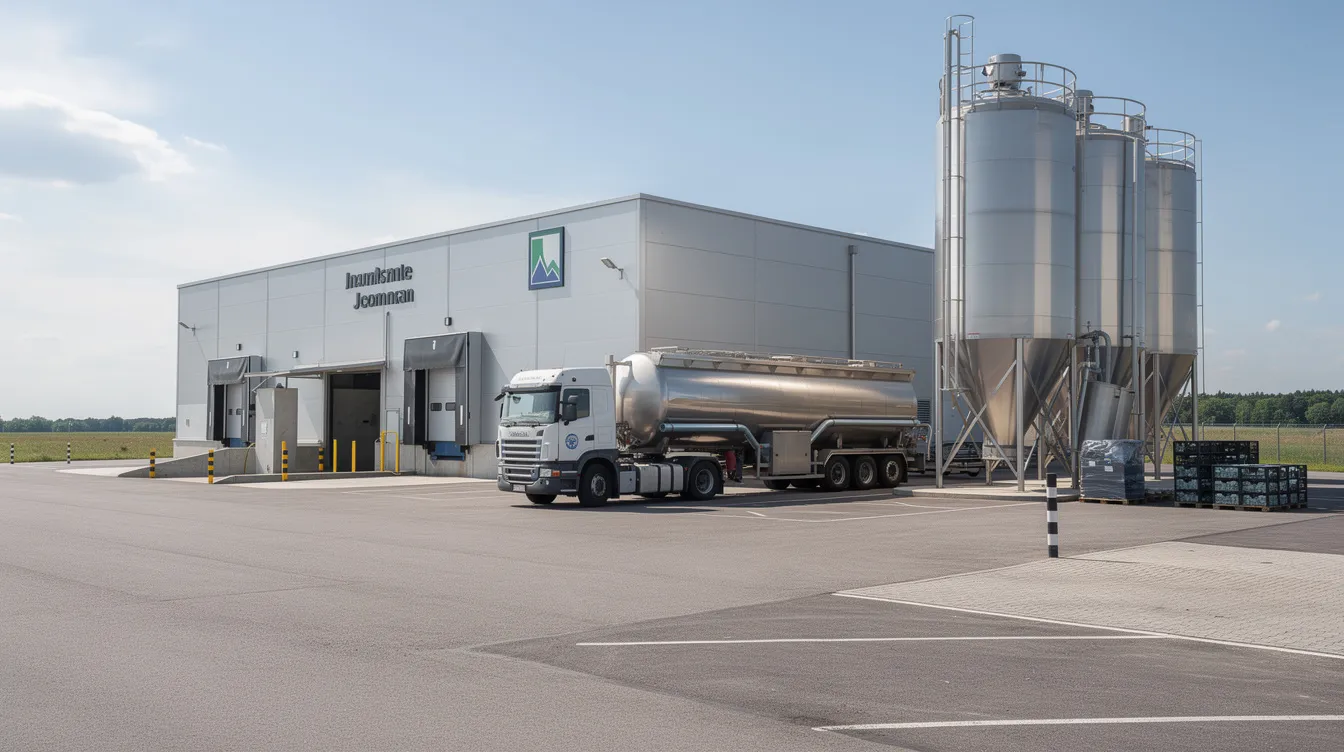
Hygienic, accurate raw milk reception is the starting control point from an FSSAI and quality perspective. A milking machine is essential for farm operations handling over 8-10 animals, and at the plant level, reception equipment includes milk reception tanks (dump tanks), weigh bowls or load-cell-based weighing, milk filters, milk transfer pumps, raw milk storage tanks, milk testing equipment (lactometer, fat/SNF analyser), and associated SS 304 piping and valves. Selection depends on peak unloading window, tanker vs can reception, and desired automation. For smaller projects (5,000-10,000 LPD), reception and raw-milk handling may account for around 5-8% of total machinery cost.
Milk Chilling and Storage Equipment
Dairy processing plants maintain strict temperature control to prevent bacterial growth. Bulk milk coolers reduce milk temperature to 4°C within 90 minutes of collection. Storage and cooling tanks keep milk at low temperatures to prevent spoilage, while milk storage tanks maintain stable temperatures to prevent contamination.
Key chilling equipment includes bulk milk coolers (direct expansion), instant milk chillers or plate chillers, insulated milk storage tanks with agitators, chilled water plants or glycol systems, and refrigeration compressors. Typical BMC sizes in India range from 500 L (₹1.5-2.5 lakh) to 5,000 L (₹6-10 lakh). Design for peak 2-3 hour collection windows. Chilling and storage equipment typically represents 15-25% of total dairy processing plant machinery cost in integrated small-to-medium projects; under-sizing this block leads to quality issues and product rejections.
Milk Clarifier and Cream Separator
A milk clarifier is a centrifugal machine removing sediment and impurities. A cream separator spins milk to separate cream from skim milk for fat standardization and production of butter, ghee, and cream. Some plants use combination clarifier-separators depending on incoming milk quality and product portfolio.
Pricing depends on capacity (matched to pasteurizer throughput), type (manual vs self-cleaning automatic), and material. Small cream separators (500-1,000 LPH) cost roughly ₹0.6-1.0 lakh; industrial separators (3,000-5,000 LPH) can run ₹4-8 lakh or more. Self-cleaning automatic models cost several times more than manual units but save labour and reduce downtime. For butter- and ghee-focused plants, separator capacity is often designed at 1.2-1.5 times pasteurizer capacity.
Milk Pasteurizer Machine and Pasteurization Plant Cost
Pasteurizers heat milk to specific temperatures to destroy harmful pathogens. Pasteurization is legally required for commercial dairy operations in India. FSSAI mandates heating milk to 63°C for 30 minutes during pasteurization (LTLT method), while modern HTST systems heat to ~72°C for 15 seconds. Pasteurized milk has a longer shelf life than raw milk.
A pasteurization plant includes a balance tank, feed pump, plate heat exchanger (PHE), regeneration section, heating section (steam/hot water), holding tube, flow diversion valve, cooling section, and control panel. Regeneration saves energy by preheating incoming cold milk with outgoing hot milk.
| Capacity (LPH) | Typical Use | Indicative Cost (₹ lakh) |
|---|---|---|
| 500-1,000 | Small dairy, mini dairy plant | 3-5 |
| 3,000 | Medium integrated plant | 12-15 |
| 5,000-10,000 | Large dairy plant | 18-35+ |
Prices vary with automation level (basic on-off vs PLC with data logging and automatic divert valves), plate material, and SS grade. The pasteurization section often represents 20-30% of main processing machinery for a pouch-milk plant.
Milk Homogenizer Machine
Homogenizers break down fat globules to prevent separation and ensure uniform texture. This process is essential for toned milk, flavored milk, drinking yogurt, cream, and premium liquid milk, typically operating at 150-250 bar. A homogenizer is normally matched to pasteurizer capacity. Pricing depends on capacity, design pressure, number of stages (single vs double), brand (Indian vs imported), and PLC integration. Small units (up to 1,000 LPH) cost roughly ₹3-4 lakh; medium units (2,000-5,000 LPH) fall in the ₹5-8 lakh range. The impact on product consistency and brand perception often justifies the investment.
Milk Standardization System
Standardization adjusts fat and SNF levels to target products (full cream, toned, double toned milk) using cream and skim milk from the separator, as required by food safety standards. Approaches range from manual (lab analysis and operator calculations) through semi-automatic (flow meters, manual valves) to automatic inline systems with density/fat sensors and PLC control. Manual systems cost less upfront but depend on operator skill; automatic units add several lakhs but reduce fat giveaway and improve margins. In DPRs, promoters should quantify savings from reduced fat giveaway against additional CAPEX.
Dairy Processing Tanks and Stainless-Steel Equipment
Stainless steel tanks and vessels form a large, sometimes underestimated share of dairy equipment cost. Types include raw milk storage tanks, pasteurized milk tanks, cream tanks, ghee storage tanks, paneer vats, curd incubation tanks, flavored milk mixing tanks, balance tanks, and CIP tanks. Key specification choices affecting price: SS 304 vs SS 316, vertical vs horizontal orientation, single-wall vs jacketed, insulated vs non-insulated, agitators, manholes, and load cells. In integrated dairy plants, total cost of tanks, small vessels, and interconnecting pipelines can equal or exceed the pasteurizer’s cost; they must be properly budgeted rather than treated as minor accessories.
Milk Packaging Machinery
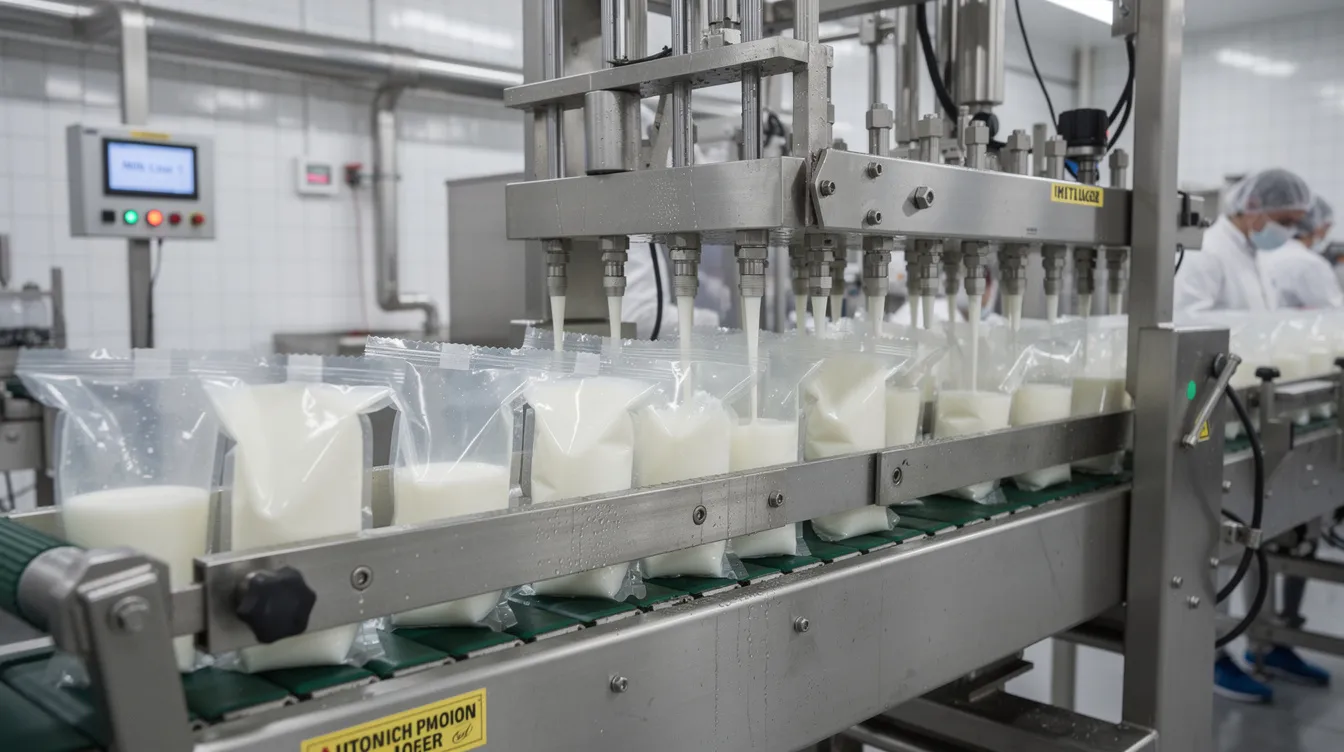
Packaging machines fill and seal dairy products in sterile conditions to maximize shelf life. Major options include milk pouch packing machines (FFS type for 200/500/1,000 ml), cup filling and sealing machines (curd, yogurt), bottle filling lines (flavored milk, PET/HDPE), and secondary packaging. Entry-level single-lane pouch machines cost ₹1.8-3.5 lakh; multi-lane high-speed machines run ₹5-8 lakh or more. Cup fillers and bottle lines with rinsing-filling-capping cost more. Date coders, labellers, and checkweighers can together add several lakhs. Always align packaging capacity with pasteurization and cold-room capacity to avoid bottlenecks during peak processing.
CIP System for Dairy Processing Plant
CIP systems clean machinery without disassembly, supporting hygiene in dairy processing. A typical CIP setup includes tanks (water, caustic, acid), a heating system, CIP pumps, return lines, chemical dosing, temperature and conductivity sensors, and a control panel. Manual/semi-automatic CIP units for 5,000-10,000 LPD plants cost roughly ₹5-10 lakh; automatic recipe-based CIP systems for larger plants run ₹10-20 lakh or more. Proper CIP reduces contamination risk, saves labour, and optimises water and chemical use. Banks increasingly view CIP investment as a sign of project sustainability.
Refrigeration and Cooling Equipment
Refrigeration covers milk chilling, cold rooms, chilled water, and sometimes glycol systems. Core equipment includes compressors, condensers, chilled water plants, cold rooms, blast chillers, and controls. Cooling load depends on pasteurizer capacity, ambient milk temperature (30-35°C in Indian summers), and target storage temperature (2-4°C). Refrigeration and cold room machinery may represent 20-35% of total dairy plant equipment cost and must be budgeted properly, not left as an afterthought.
Boiler and Steam Generation System
Steam is needed for heating milk during pasteurization, CIP solution heating, and hot-water generation. A boiler system includes the steam boiler (IBR/non-IBR), feedwater tank, water softener, fuel handling, chimney, and safety controls. Small non-IBR boilers for 5,000-10,000 LPD plants cost roughly ₹3-6 lakh; mid-sized boilers for 20,000-50,000 LPD run ₹8-12 lakh or more, excluding boiler house civil work. Banks scrutinise whether proposed boiler capacity adequately supports stated processing capacity.
Dairy Plant Utilities and Supporting Equipment
In actual costings, utility and ancillary equipment often adds 25-40% to the machinery budget. Key items: water treatment plant, RO system, hot-water sets, electrical panels, transformer/DG backup, air compressor, pumps, valves, instrumentation, ETP for dairy plant wastewater, material-handling equipment, weighing systems, and dairy laboratory equipment.
| Category | Examples | Typical Share of Machinery Budget |
|---|---|---|
| Main Processing Machinery | Pasteurizer, homogenizer, separator, packaging | 60-70% |
| Utility & Support Equipment | Boiler, refrigeration, CIP, ETP, electrical, lab | 30-40% |
An in-house dairy laboratory (fat/SNF analyser, antibiotic test kits) is modest in cost but vital for quality and regulatory compliance. ETP is a statutory necessity for organised dairies. In DPRs, these utilities should be separately itemised to facilitate realistic term-loan discussions.
Product-Specific Dairy Machinery
Beyond a basic milk processing line, additional machinery is needed for specific dairy products.
Curd / Yogurt Processing
Requires incubation/fermentation tanks, culture dosing, curd cooling, and cup filling machines or curd pouch machines. Set curd (fermented in retail cups) and stirred yogurt (fermented in tanks then filled) need different tank designs and packaging. Adding a modest curd line to an existing plant may require ₹5-15 lakh in incremental machinery.
Paneer Manufacturing
Paneer is the bestselling dairy product in India after liquid milk. Paneer production involves heating milk and adding a coagulant. A paneer making machine automates heating, coagulation, and pressing. Additional equipment: paneer coagulation vat, curd cutting tools, paneer hoops, hydraulic or pneumatic paneer press machine, whey collection tank, and chilling tank. Paneer processing equipment ensures high efficiency and product quality, and paneer processing lines are designed to meet industry quality standards. Paneer lines are relatively low CAPEX but high value-add.
Butter Manufacturing
Core machines: cream storage tank, cream pasteurizer (if not shared), butter churner, butter working and moulding table, buttermilk collection tank, and cold room. Butter churners automate the agitation process for higher yield. Churners are sized in kg per batch. Small to medium butter churners with associated tanks cost roughly ₹4-12 lakh depending on SS make and automation.
Ghee Manufacturing
A ghee processing plant includes a ghee clarifier, ghee boiler, and settling tank. Ghee is made by clarifying butter to separate milk solids. Ghee processing requires controlled heating for quality. Equipment includes butter melting vat, ghee boiler, ghee clarifier, ghee settling tank, ghee storage tanks (essential for holding finished ghee), transfer pumps, and ghee packaging machines.
Cream Processing
Cream is an intermediate product from the cream separator. Cream storage tanks need efficient agitation and cooling to prevent separation and microbial growth. Promoters should specify intended cream use (sale vs internal consumption for butter/ice cream) at DPR stage.
Flavoured Milk
Additional machinery: blending/mixing tank (jacketed with agitator), flavour and sugar dosing, a separate or shared homogenizer, bottle or pouch filling equipment, and pasteurization/sterilisation integrated with filling. Packaging choice (PET bottles, pouches) impacts machinery cost; bottle lines with rinsing-filling-capping are more expensive but support premium branding.
Dairy Processing Plant Machinery Cost by Capacity
This table provides ballpark machinery investment ranges by plant capacity for India. These are planning tools, not fixed quotations.
| Capacity (LPD) | Typical Configuration | Indicative Machinery Investment (₹ crore) | Notes |
|---|---|---|---|
| 5,000 | Pouch milk + limited curd, semi-auto | 1.0-2.0 | Excludes land, building, full working capital |
| 10,000 | Milk + curd + paneer, semi-auto | 1.5-3.0 | Includes basic utilities |
| 20,000 | Milk + curd + paneer + ghee, medium auto | 3.5-6.0 | Includes boiler, refrigeration |
| 50,000 | Multi-product, higher automation | 6.0-10.0 | Multiple packaging lines |
| 100,000+ | Full range, high automation | 10.0-20.0+ | Imported components likely |
These ranges exclude land, full building cost, GST, freight, installation, and pre-operative expenses unless mentioned. “Dairy plant machinery cost per litre” (CAPEX divided by installed LPD) decreases as capacity increases due to economies of scale, but this single metric should not drive final decisions.
What Determines Dairy Plant Machinery Cost?
Two plants with identical LPD capacity can have very different machinery budgets. Major cost drivers:
| Cost Driver | How It Affects Price | Example |
|---|---|---|
| Product mix | Each product adds specific equipment | Adding ghee line adds ₹5-15 lakh |
| Automation level | PLC/SCADA adds 1.5-2× over manual | Automatic CIP vs manual cleaning |
| SS grade | SS 316 costs more than SS 304 | Contact parts in SS 316 for export |
| Packaging speed | Multi-lane machines cost 2-3× single | 4,000 vs 1,500 pouches/hr |
| Refrigeration tonnage | Higher TR for larger plants | 30 TR vs 10 TR central plant |
| Energy efficiency | Better insulation, regeneration adds CAPEX | 85% vs 70% PHE regeneration |
Some higher upfront-cost options (energy-efficient refrigeration, automatic CIP) reduce operating cost and improve DSCR over the loan tenure. The cheapest quotation on paper may result in higher lifecycle cost once downtime, product losses, and service availability are factored in.
Semi-Automatic vs Fully Automatic Dairy Processing Plant
| Parameter | Semi-Automatic | Fully Automatic |
|---|---|---|
| Initial investment | Lower | 1.5-2× higher |
| Manpower | Higher; operator-dependent | Lower; fewer skilled operators |
| Process control | Variable; depends on operator | Consistent; PLC-driven |
| Hygiene risk | Higher | Lower; automated CIP cycles |
| Scalability | Limited | Designed for expansion |
| Typical capacity fit | 2,000-20,000 LPD | 20,000 LPD and above |
Dairy automation ensures maximum efficiency at all stages. Automated systems capture process data for real-time monitoring. Automation reduces manual labor and increases production speed while minimising waste and improving product quality. Mini dairy plants automate processes for higher hygiene standards and faster production. Plants planning exports or private-label contracts may need more automation for audit and quality reasons. Banks check whether projected manpower costs match the proposed automation level.
How to Select Dairy Processing Machinery
A practical checklist for promoters:
- Freeze your product mix (milk only vs milk + curd/paneer/ghee/butter/flavored milk).
- Assess realistic milk procurement capacity and seasonal variation.
- Decide design capacity in LPD and peak-hour throughput (LPH).
- Plan future expansion; design building and utilities for 2× current capacity.
- Prepare a process flow diagram with a dairy technologist.
- Prepare equipment specifications and take comparable quotations from multiple vendors.
- Evaluate not just price but utility consumption, automation, warranty, service network, and delivery schedule.
- Check vendor credentials: experience with similar LPD, reference plants, after sales support, and spare parts availability in India.
- Consider modular designs and phased investments (e.g., start with core milk and curd line, add ghee or paneer later).
Engage both a qualified dairy technologist and a project finance professional to jointly evaluate technical and financial aspects. A leading manufacturer in the segment does not guarantee the best fit for every project; match equipment to your specific capacity and product requirements.
Vendor Quotations and Machinery Cost for DPR
For any realistic DPR or bank term-loan proposal, generic thumb rules are insufficient. Lenders expect machinery costs backed by recent vendor quotations. Each quotation should include: equipment description, make and model, capacity, quantity, base price, item-wise breakup, GST, freight, installation and commissioning charges, delivery period, warranty, and payment schedule.
Create an internal machinery cost summary mapping each item to the dairy processing plant equipment list in the DPR. Clarify scope of supply: whether utilities like boiler, refrigeration, and CIP are included or need separate purchase. Machinery quotations form the basis for fixed asset cost in CMA Data and projected balance sheet; errors here propagate into DSCR and viability assessments. Update quotations periodically if project implementation is delayed, since stainless steel and component prices can shift over 6-12 months.
Dairy Machinery Cost and Bank Term Loan Assessment
Banks evaluate machinery investment within total project cost. Machinery cost determines gross block of fixed assets, total project cost, promoter’s contribution (equity), term-loan requirement, depreciation schedule, interest expense, and resultant profitability and cash-flow projections.
Realistic machinery costing produces accurate DSCR and break-even analysis. Under-stated machinery cost makes early DPRs look artificially profitable but creates funding gaps during implementation. Banks typically request an itemised machinery list with cost, proforma invoices, implementation timeline, and sometimes technical vetting from empanelled engineers.
A CA or project-finance advisor helps structure means of finance, prepares or supports preparation of financial projections and CMA Data around the chosen machinery configuration, tests sensitivity (e.g., higher machinery cost, lower capacity utilisation), and ensures the proposed term-loan can be serviced under realistic assumptions. CAs do not certify future outcomes; they assist promoters in preparing robust, banker-friendly documentation.
Machinery Cost vs Total Dairy Processing Plant Setup Cost
Dairy processing plant machinery cost is only one part of total CAPEX. Total dairy project investment also includes: land, site development, factory building and civil construction, utilities, ETP, laboratory, cold storage, vehicles, pre-operative expenses, interest during construction, contingency, and working capital margin.
| Component | Typical Share of Total Project Cost |
|---|---|
| Machinery & Equipment | 35-50% |
| Building & Civil Works | 20-30% |
| Utilities & ETP | 10-20% |
| Other Fixed Assets | 5-10% |
| Pre-operative & Contingency | 5-10% |
| Working Capital Margin | 10-20% |
For a complete understanding of total dairy project investment beyond machinery, refer to the dedicated guide on Integrated Dairy Processing Plant Setup Cost in India. Focusing only on lowest machinery price without planning for adequate utilities, buildings, and working capital results in a plant that is built but cannot run at intended capacity.
FAQ – Dairy Processing Plant Machinery & Cost in India
What basic machinery is required for a small dairy processing plant in India?
A small plant (2,000-5,000 LPD) needs: milk reception tank, weighing arrangement, basic milk testing kit, bulk milk cooler, milk storage tank, cream separator (if doing value-addition), small HTST milk pasteurizer, simple CIP or manual cleaning, and a milk pouch packing machine, plus basic utilities (boiler, refrigeration, air compressor). Even at small scales, these must be integrated into a logical process flow.
How much does dairy processing plant machinery usually cost for a 10,000 LPD plant?
For a 10,000 LPD plant producing pouch milk plus limited curd and paneer with semi-automatic operation, main processing and utility machinery broadly falls in the ₹1.5-3.0 crore range. This excludes land, full building cost, and initial working capital. Precise numbers require project-specific vendor quotations integrated into a DPR.
Are boiler and refrigeration systems counted in dairy processing plant machinery cost?
In most project reports, boiler, refrigeration plant, chilled water system, and air compressor are classified under “utilities” but still form part of total machinery and equipment cost from a banking and depreciation standpoint. When comparing offers, confirm whether these utility systems are included in the quoted turnkey dairy processing plant machinery price or need separate budgeting.
Is a CIP system mandatory for all dairy processing plants?
Any organised dairy processing plant handling pasteurized milk on a daily basis should have at least a semi-automatic CIP. FSSAI and large institutional buyers increasingly expect documented cleaning protocols. Proper CIP equipment makes implementation and audit of these protocols practical and reliable.
Can dairy processing machinery be financed through bank term loans in India?
Banks and financial institutions routinely finance dairy processing machinery as part of term loans for new and expansion projects. A well-prepared DPR with an itemised machinery list, vendor quotations, projected profitability and cash flows, and CMA Data improves the chances of term-loan sanction on reasonable terms.
Conclusion – Using Machinery Planning to Build a Bankable Dairy Project
The right dairy processing plant machinery is a strategic investment combining milk-processing capacity, product mix, quality targets, automation level, energy efficiency, and scope for future expansion, all within the promoter’s available budget. Machinery cost should never be evaluated in isolation; it must align with civil works, utilities, working capital, and financing structure. A robust DPR integrates equipment cost with realistic revenue projections, operating expenses, and debt-servicing capacity.
For understanding overall CAPEX beyond machinery (land, building, utilities, working capital), refer to the dedicated guide on Integrated Dairy Processing Plant Setup Cost in India.
Entrepreneurs and businesses planning dairy or integrated milk processing plant projects can reach out to CA Manish Gugliya at ProjectReportBank.com for preparing detailed project reports, machinery-costing sheets, financial projections, CMA Data, and bank term-loan proposals tailored to specific capacity, product mix, and investment requirements.
📊 Operations & Financial Planning: Utilities | Revenue Model & Product Mix | Financial Projections | Working Capital | CMA Data | DSCR & Repayment Capacity
🏦 Bank Finance, Viability & Returns: Bank Loan & Project Finance | Term Loan Assessment | Feasibility & Viability | Break-Even Analysis | ROI, IRR & Payback | Sensitivity & Risk Analysis