Key Takeaways
Membrane filtration technology for whey processing has become central to modern dairy industry projects in India, enabling promoters to transform what was once a disposal problem into a portfolio of high-value ingredients. Here are the critical points every project promoter, lender and financial consultant should take away from this article:
- MF, UF, NF and RO each perform distinct separation functions-clarification, whey protein concentration, partial demineralisation and water removal-and must be combined correctly in the membrane process to achieve target product specifications.
- A well-designed whey membrane filtration plant can convert a low-value effluent into high-value WPC, WPI, whey powder and lactose ingredients while reducing pollution load and evaporation energy.
- Actual performance, recovery and project returns depend on whey composition, membrane technology selection, plant integration, utilities and disciplined operation including regular CIP cleaning.
- This article is written from the perspective of project planning and bankable feasibility, guiding promoters on technology choices, capacity sizing and financial implications rather than acting as an equipment manual.
- No single membrane configuration suits every whey plant; project success requires vendor-supported trials, accurate mass balance and realistic financial modelling.
Author Line and Introductory Context
By CA Manish Gugliya
Whey-the liquid remaining after milk coagulation during cheese production, paneer making or casein manufacture-is one of the most undervalued streams in Indian dairy processing. For decades, smaller dairies in India treated cheese whey, paneer whey and cottage cheese whey as effluent, discharging it into drains at significant environmental cost. However, dairy science and dairy technology now recognise whey as a rich source of whey protein, lactose, essential minerals and recoverable water. The dairy sector worldwide, and increasingly in India, views whey not as waste but as a feedstock for nutritional and food-grade ingredients.
Membrane filtration technology revolutionized whey processing by enabling selective, low-temperature separation of whey components without relying entirely on energy-intensive evaporation. Using a sequence of pressure-driven membrane filtration stages-microfiltration (MF), ultrafiltration (UF), nanofiltration (NF) and reverse osmosis (RO)-a modern whey plant can recover proteins, concentrate lactose, partially demineralise streams and reclaim water, all within a single integrated facility. The choice and sequencing of these membrane processes directly influence capital cost, utility consumption, product mix, environmental compliance and overall project viability.
For project promoters, lenders and financial consultants preparing a Detailed Project Report (DPR), feasibility study or CMA Data for bank financing, understanding how membrane filtration technology for whey processing works-and what it demands-is no longer optional. It is the technological backbone that determines whether a whey-processing venture will deliver the projected revenues and margins.
Why Membrane Filtration Is Important in Whey Processing
Modern whey plants rely on a membrane filtration system as the primary separation platform because it addresses multiple commercial and technical objectives simultaneously. Membrane filtration enhances the energy efficiency of whey processing compared to purely thermal routes, and it minimizes wastewater by recovering valuable components from whey. Here are the key reasons:
- Removal of suspended solids, cheese fines and residual milk fat from raw whey to protect downstream equipment and improve overall whey clarification.
- Microbial-load reduction through microfiltration for bacteria removal from whey, lowering spoilage risk and improving the microbiological quality of downstream products.
- Protein concentration and fractionation using ultrafiltration, which retains whey protein while passing water, lactose and soluble salts-forming the basis for WPC and WPI manufacture.
- Partial demineralisation and lactose management through nanofiltration in whey processing, preparing permeate streams for lactose recovery, baby food ingredients or direct sale.
- Pre-concentration of total solids via reverse osmosis in whey processing, significantly reducing the load on multi-effect evaporators and spray dryers-and cutting steam consumption.
- Membrane filtration reduces waste in whey processing significantly by converting almost every fraction of whey into a saleable or reusable stream, lowering BOD/COD in discharged effluent.
- Water reclaimed from whey through RO permeate can be reused in production processes or CIP, reducing fresh-water abstraction-a growing concern for Indian regulators and lenders.
It is important to note that actual separation results depend strongly on whey type (sweet versus acid whey), the quality of pretreatment, the chosen membrane filtration system and operating parameters such as pressure, temperature and feed composition.
Basic Concepts of Membrane Separation in Dairy Industry
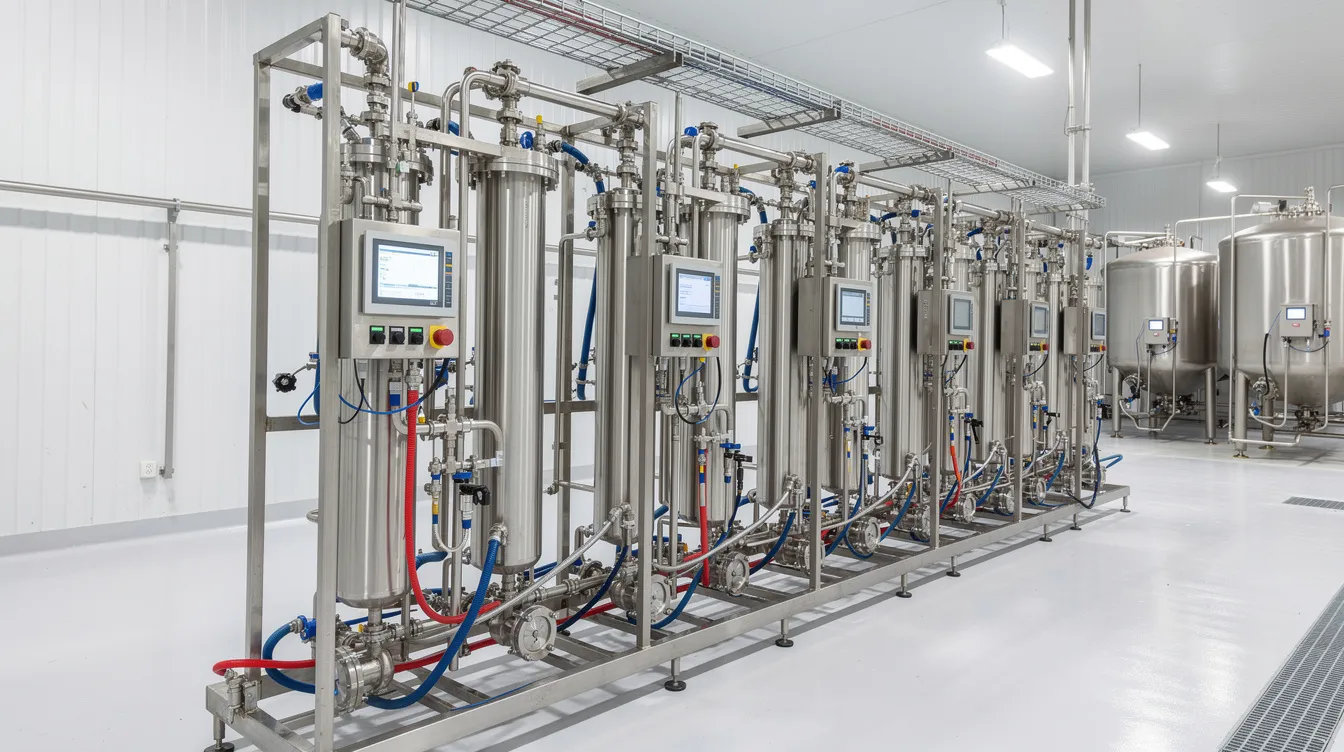
Before evaluating specific membrane technologies, it helps to understand the core concepts that govern every membrane separation process in the dairy industry. These terms appear frequently in equipment quotations, mass-balance sheets and DPR documentation.
- A semi-permeable membrane is a selective barrier that allows certain molecules (water, small solutes) to pass through while retaining others (proteins, fat, microbes). The feed stream is thus divided into two outputs: the retentate (also called concentrate or retained liquid) containing the rejected components, and the permeate (filtrate) containing what passes through.
- In cross-flow (tangential) filtration-the standard mode for all commercial whey membrane plants-the feed flows parallel to the membrane surface rather than directly into it. This sweeping action limits fouling and helps maintain permeate flux over time.
- Pore size and molecular weight cut-off (MWCO) describe the approximate size threshold of molecules that a membrane retains. MWCO is expressed in Daltons (Da) or kiloDaltons (kDa). Components with a molecular weight above the cut-off are largely retained; those of lower molecular weight mostly pass through. However, MWCO is an indicative value, not an absolute boundary.
- Transmembrane pressure (TMP) is the effective pressure difference driving permeate flow through the membrane. Higher TMP generally increases flux up to a point, beyond which fouling and osmotic back-pressure limit further gains. Membrane processes in whey processing are categorized by pore size and operating pressure, ranging from low-pressure MF to high-pressure RO.
- Permeate flux is the volume of permeate produced per unit of membrane surface area per unit time (commonly L/m²·h). It is one of the most critical design and monitoring parameters because it directly determines how much membrane area is needed and how long the plant must run.
- Solute rejection describes the fraction of a given solute that the membrane retains. Recovery ratio, concentration factor and volume reduction ratio (VRR) quantify how much of the feed is converted into retentate or permeate and how concentrated the retentate becomes.
- Diafiltration is an operating technique-not a separate membrane class-where water is added to the retentate during UF or NF to wash out residual lactose, minerals and non-protein nitrogen, thereby increasing protein purity.
- A concentration gradient develops across the membrane during operation as rejected solutes accumulate near the membrane surface, contributing to concentration polarisation and eventual fouling.
Membrane filtration separates streams into retentate and permeate based on pore size and molecular weight, but real-world performance depends on membrane chemistry, temperature, pH, feed composition and the extent of fouling-not just on catalogue MWCO values. Efficiency of membrane filtration processes varies with membrane characteristics and operating conditions, so project planners should rely on validated pilot data rather than generic assumptions. Membrane filtration operates at lower temperatures to preserve protein quality, typically below 40–45 °C for whey protein streams.
Comparison of MF, UF, NF and RO in Whey Membrane Filtration
MF, UF, NF and RO are complementary membrane technologies within a whey filtration system, not interchangeable alternatives. Each class of membrane filters addresses a different part of the separation task in the membrane separation process used in the dairy industry. The following comparison table summarises their roles:
| Parameter | Microfiltration (MF) | Ultrafiltration (UF) | Nanofiltration (NF) | Reverse Osmosis (RO) |
|---|---|---|---|---|
| General separation range | 0.1–10 µm pore size | 1–800 kDa MWCO | 150–700 Da MWCO | Dense membrane; rejects nearly all solutes |
| Main retentate components | Fat, casein micelles, bacteria, spores, suspended fines | Whey proteins, some peptides | Divalent salts, lactose (partial), larger organic molecules | All dissolved solids, lactose, minerals, proteins |
| Main permeate components | Soluble whey proteins, lactose, minerals, water | Water, lactose, soluble minerals, non-protein nitrogen | Water, monovalent ions (Na⁺, K⁺, Cl⁻), some small molecules | Mostly water |
| Typical whey-processing application | Whey clarification, pretreatment, microbial reduction | Whey protein concentration for WPC/WPI | Partial demineralisation, lactose concentration | Pre-concentration, water recovery |
| Relative operating pressure | Low (0.1–2 bar) | Medium (2–6 bar) | Medium-high (4–30 bar) | High (3.5–10 MPa) |
| Expected product stream | Clarified whey for UF feed | Protein-rich retentate; lactose-rich permeate | Partially demineralised concentrate; mineral-lean permeate | Concentrated solids; clean water permeate |
| Key limitation | Does not concentrate soluble whey proteins | Flux declines with increasing protein concentration | Not a complete demineralisation solution; osmotic pressure limits | High pressure and energy; limited by osmotic back-pressure |
It is critical to avoid comparing these technologies solely on molecular weight cut-off or pore size. Actual design values for flux, TMP and rejection are always vendor-specific and feed-specific. Indicative pressure ranges and recoveries in any project report must come from supplier data or pilot trials, not from generic rules of thumb.
Microfiltration in Whey Processing
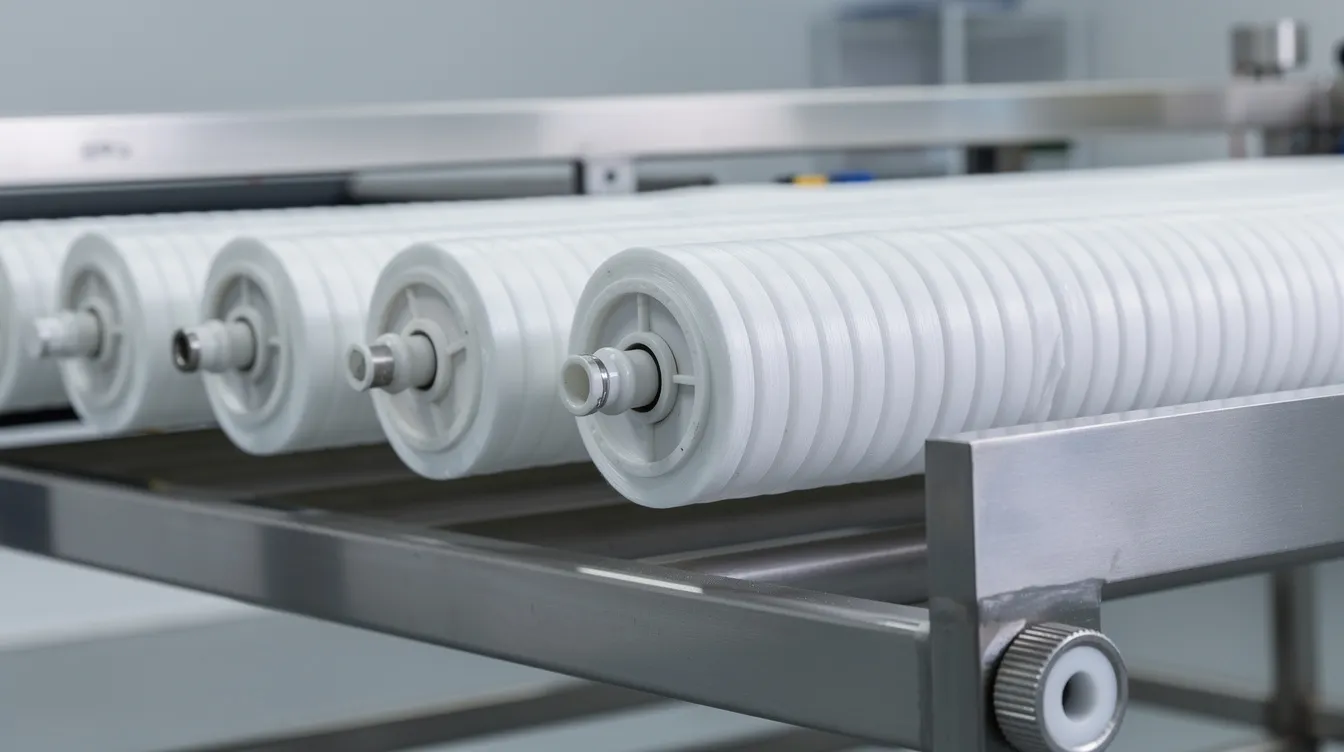
Microfiltration is the most “open” pressure-driven membrane filtration process in dairy membrane filtration technology and is typically the first membrane step in a whey-processing line. Microfiltration membranes have a cut-off of 0.1–10 µm, allowing them to work at low transmembrane pressures.
MF is applied to raw or pre-screened whey for clarification by removing casein micelles, fat globules, cheese fines and larger suspended particles before the whey enters UF, NF or RO stages. Microfiltration membranes retain bacteria and fat globules effectively, making this step essential for protecting more expensive downstream membranes from fouling. Microfiltration is effective for whey clarification and microbial reduction, substantially lowering spore and bacterial counts. However, MF does not automatically guarantee complete sterilisation; the degree of microbial removal depends on membrane pore size, integrity and operating conditions.
The protective effect of MF on downstream membranes should not be underestimated. By removing the bulk of suspended solids, residual milk fat and micellar casein, MF stabilises permeate flux and extends the operating life of UF membranes, which directly reduces replacement cost and downtime.
It is important to understand that MF does not concentrate soluble whey protein to WPC or WPI levels. Its role is clarification and microbial reduction, not protein standardization. The actual whey fractions containing soluble serum proteins pass freely through MF into the permeate, where they are subsequently concentrated by UF.
Common MF module types include ceramic membranes (tubular) and polymeric configurations. Ceramic MF membranes offer excellent temperature tolerance and cleanability but come at a higher capital cost, whereas polymeric options may suit less demanding applications at lower investment.
Ultrafiltration in Whey Processing and WPC/WPI Production
Ultrafiltration is the central membrane technology for whey protein concentration by ultrafiltration in commercial plants worldwide. Ultrafiltration is widely used for whey protein concentration, and in Indian whey projects, the UF stage is typically where the primary value creation occurs.
UF membranes-with MWCO values typically between 10 and 100 kDa in industrial systems-retain whey proteins such as β-lactoglobulin, α-lactalbumin, immunoglobulins and other dairy proteins and whey protein fractions. Ultrafiltration retains larger whey proteins while allowing smaller molecules-water, lactose and most soluble minerals-to pass into the permeate. Ultrafiltration can concentrate whey protein by a factor of 4–5, raising the protein content of the retentate substantially. Research on bovine milk, goat and buffalo whey in India reports UF producing protein concentrates in the range of 37–40 g/L under typical operating conditions.
The protein-rich UF retentate is the basis for producing whey protein concentrate, which ranges from 35% to 80% protein content on a dry basis. For higher-purity products such as whey protein isolate (WPI), which contains over 92% protein in dry matter, additional purification through diafiltration in whey protein processing is essential. Diafiltration involves repeated addition of water to the UF retentate while continuing ultrafiltration, washing out residual lactose and ash to achieve the required protein purity. Studies have shown that UF combined with diafiltration can increase protein concentration by approximately 78.8% while reducing lactose and ash content by 40–70%.
Operating considerations for UF include maintaining temperatures below 40–45 °C to avoid protein denaturation, using hygienic stainless-steel construction, and managing TMP to ensure stable permeate flux. Typical UF permeate flux values for whey range from 8–21 L/m²·h, declining as the protein concentration in the retentate increases.
The UF permeate-rich in lactose and minerals-remains commercially valuable for lactose recovery, whey permeate processing, fermentation substrates or production of whey powder. It should not be treated as waste.
For detailed project-level information on these products, readers may refer to the whey protein concentrate manufacturing plant and whey protein isolate manufacturing plant pages on ProjectReportBank.com.
Nanofiltration in Whey Processing and Demineralisation
Nanofiltration occupies an intermediate position between UF and RO in terms of membrane tightness and typical TMP. NF membranes have a cut-off of 150–700 Da and operate at pressures typically in the 4–30 bar range.
Nanofiltration membrane systems are used for partial whey demineralization by nanofiltration-retaining divalent ions (calcium, magnesium, phosphate) and some lactose while allowing much of the water and monovalent ions (sodium, potassium, chloride) to pass through. Nanofiltration can achieve 90% partition of monovalent ions under favourable conditions, though the exact rejection depends on membrane type, feed composition and operating pressure. This selective ion behaviour is driven by Donnan exclusion effects and the charge characteristics of the membrane.
NF is valuable for improving the suitability of whey permeate streams for infant-nutrition ingredients, lactose production and food applications where mineral content must be controlled. It can also pre-concentrate lactose-containing streams before evaporation and crystallisation, reducing energy consumption in downstream dairy processing. A case study from a large Indian dairy reported that replacing NF membranes with advanced variants improved throughput, retention consistency and extended membrane life to 24 months, with estimated energy savings of 20–40%.
However, NF is not a complete demineralisation solution. As the concentration process continues, osmotic pressure rises and fouling risk increases. For high-purity demineralised whey required in certain baby food and clinical-nutrition applications, ion-exchange resins or electrodialysis may be needed in addition to NF.
Reverse Osmosis in Whey Processing and Water Recovery
Reverse osmosis (RO) is the tightest of the common dairy membrane technologies and is primarily used to remove water rather than selectively separate proteins from lactose. RO membranes operate at pressures of 3.5–10 MPa, making them the highest-pressure stage in any whey membrane filtration plant.
Reverse osmosis is employed for volume reduction of whey and recovery of clean water. By concentrating whey or whey permeate before it enters evaporators, RO can dramatically reduce steam consumption. Reverse osmosis can concentrate whey up to 27% dry matter, and studies indicate that reverse osmosis can recover up to 94% of water from whey streams. This water, once its quality is verified (including conductivity below 250 µS/cm and acceptable microbial limits), can be reused as process water, CIP rinse water or boiler feed-reducing fresh-water abstraction costs.
Reverse osmosis reduces liquid volume of whey, leading to lower transportation costs where whey or whey concentrate is shipped between processing sites. This can be a meaningful cost saving for cooperatives collecting whey from multiple locations. Reverse osmosis membranes in industrial plants also assist in concentrating milk or skim milk streams for milk concentration and milk powder production in certain configurations.
The key limitations of RO are imposed by osmotic pressure and viscosity. As total solids rise in the retentate, progressively higher pressures are needed and flux drops sharply, practically capping the concentration factor. RO is most effective when positioned after MF or UF, which reduces fouling load on the relatively expensive RO membranes. Routine monitoring and CIP adherence are especially critical for RO because the dense membrane structure is sensitive to scaling and biofouling.
Integrated Whey Membrane Filtration Process Flow
In a modern industrial whey processing technology plant, the filtration process is rarely a single-step operation. Combined membrane processes improve concentration yield and product purity compared to single-step processes. A typical integrated flow for Indian dairy processing practice might look like this:
Whey reception and storage → Screening and clarification → Cooling or HTST pasteurisation as required → MF pretreatment → UF for protein concentration → Optional diafiltration → WPC/WPI retentate handling → NF or RO treatment of UF permeate → Evaporation, crystallisation or spray drying → Final whey powder, lactose and permeate-water management
The exact configuration differs significantly for sweet whey (from rennet-set cheese or cream cheese) versus acid whey (from paneer, chakka or Greek-style yoghurt). Acid whey typically has higher mineral content, lower pH and may contain partially denatured proteins, making it more challenging for membrane separation. Buffalo whey-common in India-tends to have higher total solids and calcium, which can lower permeate flux and increase fouling rates.
Flow design must also consider lactose-recovery plans, required protein purity, water-recovery targets, utilities availability, effluent-treatment strategy and available dairy technology infrastructure. For a comprehensive view of how these steps interconnect in a commercial plant, see the whey processing plant manufacturing process and flow chart.
Selecting the Correct Membrane Sequence for a Whey Project
There is no single “best” membrane configuration for every whey plant. The optimum sequence depends on target products, site-specific conditions and financial constraints.
Key decision factors include:
- Target products: WPC-35, WPC-80, WPI, whey powder, lactose or permeate powders each require different membrane combinations and downstream integration.
- Whey source: cheddar cheese whey, paneer whey, chakka whey or cottage cheese whey differ in pH, mineral load and protein profile.
- Sweet whey versus acid whey: acid whey is generally more difficult to process and may require additional pretreatment or softening.
- Required demineralisation level: for infant nutrition or export markets, NF alone may not suffice.
- Permeate utilisation: whether UF permeate will be processed for lactose, sold as-is, or treated for water recovery affects membrane selection.
- Seasonal variation: milk and whey supply in India varies with animal-husbandry cycles, affecting feed volume and composition.
- Capital budget and expansion plans: modular membrane skids allow phased investment.
The following decision-orientation table maps common objectives against recommended membrane technologies:
| Objective | Recommended Technology or Combination |
|---|---|
| Whey clarification, fat and bacteria removal | MF |
| Whey protein concentration (WPC) | UF (with optional MF pretreatment) |
| High-purity WPI production | UF + Diafiltration |
| Partial demineralisation of permeate | NF |
| Solids concentration, reduced evaporation load | RO |
| Water recovery from permeate | RO |
| Full value recovery (protein + lactose + water) | MF + UF + NF + RO (integrated) |
Multistage filtration improves flux performance and reduces fouling compared to attempting aggressive single-stage concentration. In my experience of evaluating industrial project proposals, promoters who insist on pilot-trial results, vendor process guarantees and a completed mass balance before finalising the chosen membrane process for investment achieve significantly more reliable outcomes. Membrane filtration enables product customization for specific protein content and composition, but only when the selected sequence matches the actual feed and market requirements.
Important Membrane-System Design Parameters
Design parameters directly influence both the technical performance and economics of a whey membrane filtration plant. Underestimating their importance leads to undersized membrane area, missed production targets and financial shortfalls.
- Feed composition-protein, lactose, ash, fat, total solids and acidity-varies not only with whey type but also with season, animal breed (bovine versus buffalo versus goat) and upstream cheese or paneer processing conditions. This variability affects every downstream design choice.
- Temperature and pH must be maintained within ranges that preserve protein functionality and membrane integrity. Typical UF operates at 30–45 °C; deviation risks protein denaturation or accelerated membrane degradation.
- Transmembrane pressure and cross-flow velocity determine permeate flux and selectivity. Higher cross-flow velocity reduces concentration polarisation at the membrane surface but increases pumping energy.
- Molecular weight cut-off, installed membrane surface area, number of stages and recirculation patterns must be designed to achieve the required concentration factor and product recovery within acceptable CIP-adjusted operating hours.
- Practical operational aspects-hold-up volume, cleaning frequency, expected operating hours per day, level of automation, inline sensors for flow, pressure, temperature and conductivity-all affect throughput and traceability.
Financial projections must account for realistic flux values and CIP downtime, not just nameplate capacity quoted by equipment suppliers. A plant designed on optimistic catalogue data may need 20–30% more membrane area than projected, dramatically shifting capital cost and payback calculations.
Membrane Materials and Module Configuration
The two primary categories of membrane materials used in dairy membrane filtration are polymeric and ceramic.
Polymeric membranes, commonly configured as spiral wound modules, offer lower capital cost, compact footprint and wide availability. They are the standard for UF, NF and RO stages in most whey plants. However, they typically have lower temperature tolerance (often limited to 50–55 °C for cleaning) and may have a shorter life under aggressive cleaning conditions. Earlier membrane materials such as cellulose acetate have largely been replaced by more robust polymeric chemistries, though cellulose acetate membranes are still referenced in some legacy systems.
Ceramic membranes-usually configured as tubular modules-offer superior chemical and temperature resistance, excellent cleanability and tolerance of harsh whey streams. They are often preferred for MF applications in heavily fouling environments. However, their capital cost is significantly higher, which can affect project feasibility for smaller plants. Plate-and-frame and hollow-fibre configurations also exist for specific applications.
Project promoters should confirm the availability and cost of replacement membranes in India, local technical-support infrastructure and lead times before committing to any proprietary membrane technology. This is especially relevant for NF and RO membranes where replacement frequency and leakage rates are significant cost drivers in Indian dairy operations. ESL milk and other extended-shelf-life dairy applications also increasingly use ceramic MF for bacterial reduction, though these are separate from whey-processing applications.
Membrane Fouling and Performance Loss in Whey Filtration
Membrane fouling is one of the main technical and financial concerns in any whey membrane filtration plant. Membrane fouling can impair filtration effectiveness, requiring optimized cleaning processes to restore performance.
Common causes of fouling include:
- Protein deposition on the membrane surface, particularly at higher concentration factors
- Residual fat and milk fat not fully removed by pretreatment
- Mineral scaling, especially calcium phosphate precipitation
- Microbial biofilm formation during extended operating cycles
- Suspended fines from inadequate screening or clarification
- Concentration polarisation-a build-up of rejected solutes near the membrane creating additional resistance
Symptoms of fouling include declining permeate flux, rising pressure requirements to maintain output, reduced throughput, variability in product composition and longer required CIP cycles.
The indirect economic impacts are substantial: higher chemical and water consumption, reduced on-stream time, more frequent membrane replacement (cutting membrane life from the target 18–24 months to as little as 12 months) and increased operating cost per litre of whey processed. Research shows that UF permeate flux can drop to approximately 45% of initial values during concentration and further to around 26% after extended diafiltration cycles.
High-level preventive measures include:
- Effective pretreatment (screening, clarification, MF) to remove the bulk of particulates and fat
- Stable operating conditions-avoiding shock loads, sudden temperature changes or pH excursions
- Maintaining recommended cross-flow velocities
- Strict adherence to supplier-prescribed cleaning protocols
CIP Cleaning and Hygiene in Whey Membrane Plants
Clean-in-Place (CIP) systems are essential for food safety, consistent flux restoration and membrane life in any whey membrane filtration plant. Every membrane system vendor will specify CIP requirements as part of the performance guarantee.
A typical CIP sequence includes:
- Product push-out and recovery of retained liquid to maximise yield
- Initial water rinse to remove loose deposits
- Alkaline cleaning step to dissolve protein and fat deposits
- Intermediate rinse
- Acidic cleaning step to remove mineral scale (calcium phosphate, etc.)
- Final rinse with quality-checked water
- Sanitisation (chemical or thermal) where required by product or regulatory standards
Exact chemical type, concentration, temperature and contact time must strictly follow membrane-supplier recommendations and validated site standard operating procedures (SOPs). Using incorrect chemicals or temperatures can permanently damage membranes-particularly polymeric types.
Performance restoration should be verified after each CIP cycle by monitoring permeate flux, conductivity and, periodically, microbial counts. Cleaning records must be maintained for traceability and audit purposes. Membrane filtration can recover 70–90% of spent cleaning solutions through appropriate CIP-water management, contributing to both cost savings and environmental compliance.
The relationship between CIP frequency and plant economics is a balancing act: too-frequent cleaning reduces productive hours, while insufficient cleaning risks irreversible fouling and product-quality failures.
Machinery, Equipment and Automation for Whey Membrane Filtration
Membrane systems are part of a larger dairy processing line and must be integrated seamlessly with upstream reception equipment and downstream evaporation, crystallisation and drying units.
Key equipment elements include:
- Whey reception and balance tanks
- Screens, clarifiers and decanters
- Feed pumps and high-pressure recirculation pumps
- Heat exchangers (plate or tubular) for temperature control
- Prefilters (bag or cartridge)
- MF, UF, NF and RO membrane skids with sanitary piping
- Diafiltration-water dosing system
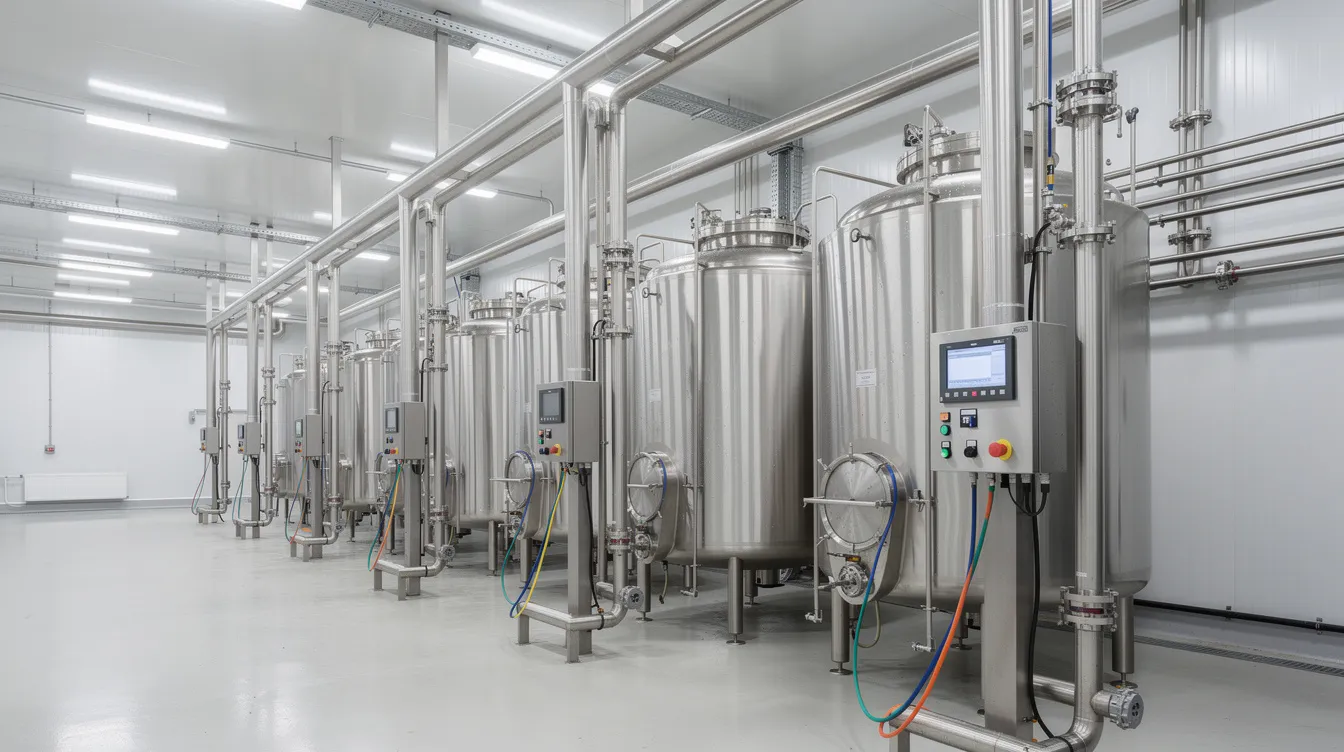
- Retentate and permeate holding tanks
- CIP station with chemical dosing, heating and rinse-water management
Automation is critical for consistent operation. PLC/SCADA systems, automatic valve manifolds, and inline sensors for flow, pressure, temperature and conductivity enable real-time monitoring and data logging. This is particularly important for traceability in food-grade production processes.
Integration interfaces with evaporators, crystallisers, spray dryers, effluent-treatment plants and water-recovery units must be planned during the initial engineering phase. For a detailed breakdown of equipment categories and associated costs, see the article on whey processing plant machinery and equipment cost.
Capacity Planning and Scale-Up Considerations
Correct sizing of membrane area and utilities is vital for ensuring the plant can handle peak whey volumes without chronic bottlenecks.
Nominal design capacity (e.g., litres/hour of whey feed) is always higher than effective capacity after accounting for flux decline during concentration runs, CIP downtime (typically 2–4 hours per day), seasonal variation in milk supply and actual operating hours. Many Indian dairies operate UF plants for 16–18 hours per day to allow for cleaning and maintenance.
Membrane area should be based on realistic design flux obtained from pilot trials or proven reference plants operating on similar whey, not optimistic catalogue values. In my experience, a 15–25% safety margin on membrane area is prudent for Indian whey projects, where feed composition can vary significantly across seasons.
It is equally important to balance membrane capacity with evaporation, crystallisation and spray-dryer capacity. An oversized UF plant that feeds into an undersized evaporator creates a bottleneck that limits overall production.
Promoters should provide for modular expansion of membrane skids and associated utilities if future whey volumes or an expanded product portfolio are anticipated. Vendor quotations must clearly specify the feed characteristics assumed, guaranteed output, expected recovery and required utilities, so that financial projections are robust and bankable.
Utilities and Operating Requirements
Utilities and operating costs are directly linked to project feasibility and form a critical component of CMA Data preparation for lenders.
- Electrical power: significant for high-pressure pumps (especially NF and RO), refrigeration compressors, automation and lighting.
- Chilled and hot water: for temperature control of feed and CIP.
- Steam: where applicable for pasteurisation, hot CIP or integration with evaporators.
- Process water and diafiltration water: must meet food-grade quality; volume depends on diafiltration ratio and CIP frequency.
- Compressed air: for pneumatic valves and instrumentation.
- Cleaning chemicals: alkali, acid and sanitiser-recurring costs that can be material at scale.
- Effluent treatment: for CIP discharge, wash water and concentrated waste streams.
- Laboratory and quality-control facilities: essential for in-process and final-product testing.
While membrane filtration can substantially reduce thermal concentration requirements-one estimate suggests up to 60% fuel saving compared to full evaporation-it still involves notable power and water consumption that must be quantified realistically. Local water availability, quality and cost deserve special attention for plants in water-stressed regions of India, where fresh milk collection and whey volumes may peak during different seasons.
Product and By-Product Routes From Membrane-Processed Whey
Membrane filtration opens multiple product routes from a single whey stream, enabling better utilisation of every milk component and risk diversification across ingredient markets. The production process can yield:
- Protein-rich UF retentate, processed into WPC or WPI for sports nutrition, clinical nutrition and functional food applications. Whey protein is a key ingredient in baby food and sports nutrition, driving strong demand growth.
- NF or RO retentate for concentrated permeate powders
- Lactose-rich UF/NF permeate for lactose manufacturing-potentially also contributing to lactose-free milk ingredients
- Recovered RO water for internal reuse
- Mineral-rich residual streams requiring appropriate disposal or valorisation
Marketability and pricing of each stream depend on composition, microbiological quality, compliance with FSSAI/BIS standards and buyer specifications. A plant designed for whole milk processing may also generate fresh milk or skim milk–derived whey, each with different characteristics. The ability to concentrate skim milk or whey permeate into milk powder or whey powder intermediates using NF/RO further extends the product portfolio.
For detailed project-level information, readers may refer to the whey powder manufacturing plant project report and the lactose manufacturing plant project report.
Related Dairy-Protein Products
Adjacent dairy-protein products-casein, caseinate and milk protein concentrate-come from different milk protein processing routes and should not be confused with whey protein products. Casein is derived from the micellar casein fraction of raw milk, while milk protein concentration technologies produce milk protein concentrate from skim milk using UF. These are complementary to, not substitutes for, whey-protein processing. For further details, see the casein and caseinate manufacturing plant project report and the milk protein concentrate manufacturing plant pages.
Effect on Project Cost and Financial Viability
From a Chartered Accountant’s perspective, membrane selection and configuration are among the most influential decisions affecting both capital investment and operating margins in a whey-processing project.
Capital-cost components include:
- Membrane skids (MF, UF, NF, RO) and associated stainless-steel pipework
- Pretreatment equipment (screens, clarifiers, heat exchangers)
- CIP systems and chemical storage
- Automation, PLC/SCADA, sensors and data logging
- Tanks, pumps and valves (sanitary grade)
- Civil works, hygienic building design and utility infrastructure
- Integration with existing dairy plant equipment
Operating-cost drivers include:
- Electricity (pumping is the dominant energy cost in membrane plants)
- Water, steam and refrigeration
- Cleaning chemicals and membrane replacement (a major recurring expense)
- Labour, technical supervision and routine maintenance
- Effluent treatment (or savings from reduced discharge load)
Revenue drivers include:
- Protein recovery into higher-value WPC and WPI
- Lactose and whey powder volumes at market prices
- Quality-based pricing premiums for controlled ash, mineral and microbial levels
- Water-reuse savings and reduced fresh-water charges
Illustrative only: Consider a scenario where a plant’s financial model assumes 90% protein recovery via UF, but actual recovery is 80% due to suboptimal feed quality and fouling. This 10-percentage-point shortfall directly reduces the volume of WPC produced, lowers revenue and extends the payback period. Similarly, if design flux is overestimated by 20%, the plant will need either more membrane area (higher capex) or longer operating hours (higher opex) to meet production targets. Small changes in recovery and flux assumptions can materially alter the Debt Service Coverage Ratio (DSCR) presented in CMA Data.
For readers seeking structured financial guidelines, refer to the whey processing plant setup cost in India article. Actual project costing always requires vendor quotations, site-specific utility tariffs, labour rates and a detailed mass balance; no generic profitability can be guaranteed.
Indicative Mass Balance Approach for Whey Membrane Projects
A sound mass balance is the backbone of any DPR, financial projection or CMA Data submitted to banks. Without it, capacity estimates, revenue forecasts and cash-flow models are built on assumptions rather than engineering reality.
The basic approach involves:
- Define daily whey feed volume and composition: protein (%), lactose (%), fat (%), ash (%), total solids (%).
- For each membrane stage (MF, UF, NF, RO), apply stage-wise solute rejections and recoveries to estimate retentate and permeate flows.
- Key conceptual relationships include:
- Product Out = Feed × Recovery (%)
- Concentration Factor = Retentate Concentration ÷ Feed Concentration
- Permeate Flow = Feed Flow − Retentate Flow (adjusted for diafiltration water additions)
A conceptual stage-wise table might include feed, retentate and permeate quantities and compositions at each stage-initially estimated from published data or supplier catalogues, then refined with actual pilot-trial results.
Final installed capacity, revenue forecasts and cash-flow projections should only be frozen after membrane vendors validate the mass balance through pilot trials or proven references on comparable whey. Concentrating milk or whey beyond validated limits introduces both technical and financial risk.
Quality Control and Food-Safety Management
Lenders and buyers both expect documented quality-control systems for any whey membrane filtration plant supplying food or nutrition industries.
Incoming whey testing should cover:
- Total solids, protein content, fat, lactose, ash and minerals
- pH and titratable acidity
- Microbial load (total plate count, coliforms, yeast and mould)
- Absence of antibiotics and cleaning-chemical residues
In-process monitoring includes:
- Permeate conductivity and turbidity (indicators of membrane integrity)
- Protein and lactose levels in retentate and permeate
- Temperature and pressure at each stage
- Microbial counts at critical control points
Final-product QC for WPC, WPI, whey powder and lactose must cover moisture, protein, lactose, ash, microbiological parameters and functional tests as per buyer specifications and FSSAI requirements.
Hygienic equipment design, full traceability from fresh milk or cheese milk intake through to final packaged product, batch records, validated CIP procedures and documented complaint-handling processes are essential for both domestic and export food-safety expectations.
Regulatory and Environmental Considerations in India
Promoters must align their whey membrane filtration projects with Indian regulatory and environmental frameworks from the earliest planning stage.
- FSSAI licensing and relevant product standards apply to whey powder, WPC, WPI, lactose and related dairy ingredients. Promoters should verify the latest applicable standards on the official FSSAI portal before finalising product specifications.
- Applicable BIS standards may be relevant for specific product quality parameters or process water quality-exact applicability depends on the product and target market.
- Other likely approvals include: State Pollution Control Board consent (for effluent discharge, air emissions and water abstraction), factory licence, fire-safety clearance and boiler or pressure-vessel approvals where applicable.
- Environmental benefits of membrane processing include substantially reduced BOD/COD load in discharged whey (since valuable organic solids are recovered as products), but concentrated waste streams and CIP effluents still require proper treatment before discharge.
Regulatory requirements vary by state and capacity. Professional legal and technical advice is essential before committing investment. No generic compliance checklist can substitute for site-specific regulatory due diligence.
Advantages and Limitations of Membrane Filtration for Whey
Balanced evaluation of advantages and limitations is critical for realistic project appraisal and for presenting a credible feasibility study to lenders.
| Key Advantages | Key Limitations |
|---|---|
| Selective protein recovery with minimal thermal damage | Membrane fouling requiring regular CIP and monitoring |
| Multiple product streams (WPC, WPI, lactose, permeate powder, water) from a single feed | Feed-quality sensitivity; acid whey and buffalo whey more challenging |
| Reduced evaporation load and energy consumption | CIP complexity; chemical and water consumption for cleaning |
| Modular design allows phased capacity expansion | Membrane-replacement cost can be significant (12–24 month life) |
| Potential for water recovery and reuse | High-pressure pumping energy, especially for NF and RO |
| Lower thermal exposure preserves protein functionality | Requires skilled operators and technical supervision |
| Improved environmental compliance through waste reduction | Market development needed for permeate and by-product streams |
Many limitations can be managed through proper design, vendor selection and disciplined operation, but they must be recognised early in feasibility studies to avoid surprises during project execution.
Questions to Ask a Membrane-System Supplier
This checklist is aimed at entrepreneurs and financial consultants negotiating with equipment vendors for a whey membrane filtration plant:
- What feed specification (composition, temperature, pH, microbial load) has been assumed in the proposal?
- What are the guaranteed feed rate and minimum operating hours per day?
- What are the expected retentate and permeate compositions at each membrane stage?
- What protein recovery and product yield are guaranteed?
- What is the total installed membrane area and module configuration (spiral wound, tubular, etc.)?
- What is the design permeate flux, and is it based on pilot data or catalogue values?
- What is the expected CIP duration, water consumption and chemical consumption per cycle?
- What is the total connected power requirement?
- What is the expected membrane life, and what is the replacement cost per module?
- What level of automation and instrumentation is included?
- Is remote monitoring or diagnostic support available?
- What performance guarantees are offered, and what are the penalty or remedy provisions?
- Is pilot or reference data available from a comparable whey source?
- What operator training is included in the scope?
- What items are excluded from the quotation (civil works, utilities, integration, taxes, freight, insurance)?
Seeking clarity on exclusions is especially important so that project cost estimates presented in the DPR and CMA Data are complete and defensible.
Frequently Asked Questions
What is the practical difference between MF, UF, NF and RO in a whey plant?
In simple terms, MF mainly clarifies whey by removing bacteria, spores and fat globules. UF concentrates soluble whey proteins into a retentate used for WPC and WPI production. NF partially removes minerals and can concentrate lactose. RO removes mostly water, pre-concentrating whey streams before evaporation. All four may appear in one integrated membrane process, each handling a different part of the separation task. The difference is fundamentally one of pore size, operating pressure and target separation.
Can a small dairy start with only UF for whey processing?
Yes, many smaller plants in India initially install only UF-sometimes with basic clarification-to produce WPC from cheese whey or paneer whey. As volumes and product demands grow, they later add MF for pretreatment, NF for demineralisation or RO for water recovery. However, each addition must be justified by a case-specific technical and financial evaluation. Starting with UF alone keeps initial capital lower but may limit product purity and the range of marketable streams.
Is diafiltration always necessary to produce WPC or WPI?
Basic WPC grades (e.g., WPC-35) can often be produced without diafiltration, as UF alone may achieve sufficient protein-to-solids ratio. However, higher-purity WPC-80 and especially whey protein isolate WPI (>90% protein) almost always require diafiltration to reduce lactose and ash to acceptable levels. The decision directly affects both capital cost (diafiltration water system, additional membrane area) and operating cost (water, energy, time).
Can lactose be economically recovered from UF permeate?
Lactose recovery from whey permeate generally requires NF or RO concentration followed by evaporation, crystallisation and drying. The business case depends on scale, current market price for pharmaceutical or food-grade lactose, quality requirements (particularly mineral content) and integration with existing utilities. Smaller plants may find it more practical to sell liquid permeate to third-party processors rather than investing in full lactose crystallisation infrastructure. For a detailed assessment, see the lactose manufacturing plant project report.
How do banks view membrane-based whey projects in India?
Lenders typically expect a detailed DPR with a validated mass balance, realistic financial projections including sensitivity analysis, clear product off-take plans and robust risk analysis covering feed-supply seasonality, market-price volatility and technology risks. Professional preparation of CMA Data and project documentation-based on vendor-confirmed performance data rather than generic assumptions-improves appraisal quality and lender confidence. However, sound documentation does not guarantee loan sanction; it reduces friction in the appraisal process.
Conclusion and Advisory Note
MF, UF, NF and RO are complementary tools in membrane filtration technology for whey processing, each addressing a distinct part of the separation task. No single membrane type can deliver clarification, protein concentration, demineralisation and water recovery on its own. The optimum membrane sequence and plant configuration depend on whey quality, desired products (WPC, WPI, whey powder, lactose), plant capacity, available utilities, regulatory requirements and downstream integration with evaporation and drying systems.
Successful whey-processing projects are built on vendor-supported trials, an accurate mass balance, realistic energy and chemical estimates and a robust financial model-not on generic assumptions or optimistic catalogue data. Every retentate stream, permeate stream, CIP requirement and utility consumption must be planned, costed and validated before the DPR is finalised.
Entrepreneurs, investors and dairy cooperatives planning a whey-processing or dairy-ingredient project are welcome to contact CA Manish Gugliya through ProjectReportBank.com for assistance with a customised DPR, feasibility study, project financial projections, CMA Data preparation and bank-finance documentation. Professional guidance can help ensure that your membrane technology investment is supported by sound technical assumptions and defensible financial projections.