Key Takeaways
- A whey protein isolate manufacturing plant is a specialised industrial whey protein processing plant that converts liquid whey (a by-product of the cheese making process or paneer production) into premium WPI powder containing 90% protein or more on a dry basis. It requires advanced membrane filtration, concentration and spray drying equipment.
- Indicative project cost for a commercial-scale WPI plant in India can range from a few tens of crores upwards, depending on plant capacity, membrane configuration, automation level, spray-dryer size and location. Setting up a whey protein plant involves significant capital investments that must be supported by a detailed feasibility study.
- Core machinery requirements centre on ultrafiltration and diafiltration membrane systems plus an industrial spray dryer, supported by clarifiers, pasteurisers, CIP systems, utilities and a quality control laboratory.
- Profitability depends primarily on the cost of liquid whey (which can account for 50–60% of operating expenses), protein recovery rate, plant capacity utilisation, WPI selling price and assured B2B market tie-ups.
- WPI is a premium dairy ingredient used in sports nutrition, clinical nutrition, infant formula, dietary supplements, functional foods and fortified foods, valued for its essential amino acids profile and low lactose content.
- Project viability is highly location- and capacity-dependent: continuous access to consistent liquid whey, realistic capacity utilisation assumptions and reliable buyers are critical success factors.
- This article is written from the perspective of CA Manish Gugliya (FCA, DISA ICAI), focusing on bankable Detailed Project Reports (DPRs), financial projections and feasibility for WPI projects in India. All costs, yields and returns discussed are indicative industry estimates and must be validated through a customised whey protein isolate plant project report.
Introduction: WPI Manufacturing Plant Opportunity in India
Whey protein isolate is a high-purity dairy protein ingredient-typically around 90% protein on a dry basis-widely used in premium sports nutrition, clinical nutrition, functional foods and infant formula. As a complete protein containing all essential amino acids (and particularly rich in leucine for muscle synthesis), WPI commands a significant premium over basic whey powder or whey protein concentrate in both domestic and export markets.
A whey protein isolate manufacturing plant is an industrial facility that converts liquid whey-the watery by-product from cheese or paneer production-into high-value WPI powder through a sequence of clarification, pasteurisation, membrane filtration, concentration and spray drying. The production process demands specialised membrane separation technology, strict food safety systems and consistent raw-material supply, making WPI manufacturing capital-intensive and technically demanding.
I am CA Manish Gugliya (FCA, DISA ICAI), practising since 2006 and specialising in detailed project reports, CMA data, financial projections and bank-finance advisory for MSME, dairy and food-processing projects through ProjectReportBank.com. A technically sound DPR for a WPI manufacturing plant must connect process assumptions-whey volume, protein content, recovery rate, plant capacity, utilities-with capital investments, working capital, profitability, DSCR and overall project viability.
What Is Whey Protein Isolate?
Whey protein isolate is produced from liquid whey by filtration and purification processes that remove sufficient fat, lactose and minerals to achieve not less than 90% protein on a dry basis. Whey protein supports the immune system and gut health, making it valuable beyond just muscle building and weight management applications.
- Liquid whey contains only about 0.8–1.2% protein alongside high lactose, fat and minerals. Whey powder is simply dried whey solids. Whey protein concentrate (WPC) is produced through ultrafiltration to reach approximately 35–80% protein. WPI requires additional purification-multiple diafiltration stages and sometimes ion exchange chromatography-to achieve the higher protein concentration of around 90%.
- WPI is positioned as a premium ingredient for sports nutrition (effective for post-workout recovery), clinical nutrition, infant formula, clear protein beverages and protein enriched diets, owing to its amino-acid profile, high bioavailability and very low lactose content.
- Actual composition depends on raw whey quality, membrane configuration, process parameters and customer specifications. Whey protein is a complete protein, making it a cornerstone in protein rich diets and protein powders for the nutritional quality it delivers.
- Entrepreneurs considering lower-purity products can also study the Whey Protein Concentrate manufacturing plant option; a WPC-versus-WPI comparison follows later in this article.
WPI Manufacturing Opportunity and Industry Trends in India
Rising health consciousness drives demand for high-protein functional foods, and the post-2020 surge in fitness culture, e-commerce and D2C nutraceutical brands has created a strong pull for domestic production of whey protein powder. Market research is essential before establishing a WPI facility to assess demand, competition and pricing dynamics. The global whey protein market was valued at USD 5.69 billion in 2025 and is expected to reach USD 7.69 billion by 2034, growing at a CAGR of 3.41% from 2026 to 2034-signalling sustained growth in the whey protein industry worldwide.
- Growing demand from sports-nutrition brands, functional-food manufacturers and the beverage industry; whey protein is increasingly used in ready-to-drink beverages and snacks alongside traditional protein powders.
- India’s large cheese and paneer industry generates substantial liquid whey, but collection remains fragmented, with variable whey composition, inconsistent volumes and logistical challenges in the whey protein sector.
- Export potential exists in Asia, the Middle East and Africa if quality consistency, regulatory compliance and competitive pricing are maintained against established international players.
- Industry trends include the shift towards high-purity dairy ingredients, advanced membrane filtration technology, stricter quality control standards and sustainability pressure. In the whey protein market, domestic production offers import substitution and reduction in distribution costs and transportation costs.
- From a macroeconomic perspective, inflation indicators such as the Wholesale Price Index and Producer Price Index for manufactured products and dairy ingredients can affect input costs and selling prices. Entrepreneurs should monitor the WPI basket (India WPI), consumer price index trends and basic price or factory price movements as reported by the economic adviser for understanding how price index shifts and linking factor adjustments influence the gross value of manufactured dairy products.
Raw Materials Required for WPI Production
Raw material sourcing is critical for consistent whey quality and availability-and is among the key factors determining WPI plant profitability. The key raw materials and input quality largely determine yield, cost structure and product specifications.
- Sweet liquid whey from cheese production is the primary raw material. Desired parameters include protein content of 0.8–1.2%, lactose ~70–75% of dry solids, fat ~1–2%, controlled acidity/pH, low microbial load and strict temperature control. Sweet whey is generally preferred over highly acidic whey for standard WPI 90 applications.
- Other raw material requirements include food-grade treated process water (critical for diafiltration), CIP cleaning chemicals (caustic, acid, sanitisers), food-grade processing aids permitted under FSSAI, packaging material (multi-layer moisture-barrier bags for B2B), and laboratory consumables.
- Critical supply parameters: stable and consistent daily volume, controlled fat and ash, and maximum holding time at chilled temperature before processing to prevent microbial growth.
- In some projects, WPI may be produced from an intermediate WPC stream generated in-house, which changes the mass balance, utility profile and raw-whey throughput requirements.
Whey Protein Isolate Manufacturing Process and Process Flow
The core manufacturing process for WPI includes clarification, pasteurisation and membrane filtration, followed by concentration and spray drying. This whey protein isolate manufacturing process transforms dilute liquid whey into a high-purity powder form suitable for premium applications.
Process Flow: Liquid Whey → Chilling → Clarification → Fat Separation → Pasteurisation → Microfiltration → Ultrafiltration → Diafiltration → Concentration → Spray Drying → Cooling → Sieving → Packaging
Readers can see a broader overview of whey processing steps in the whey processing plant manufacturing process and flow chart; WPI production requires additional purification beyond basic whey powder production. The exact combination of process steps depends on desired product specifications, supplier technology and cost–benefit analysis.
Whey Collection, Chilling and Storage
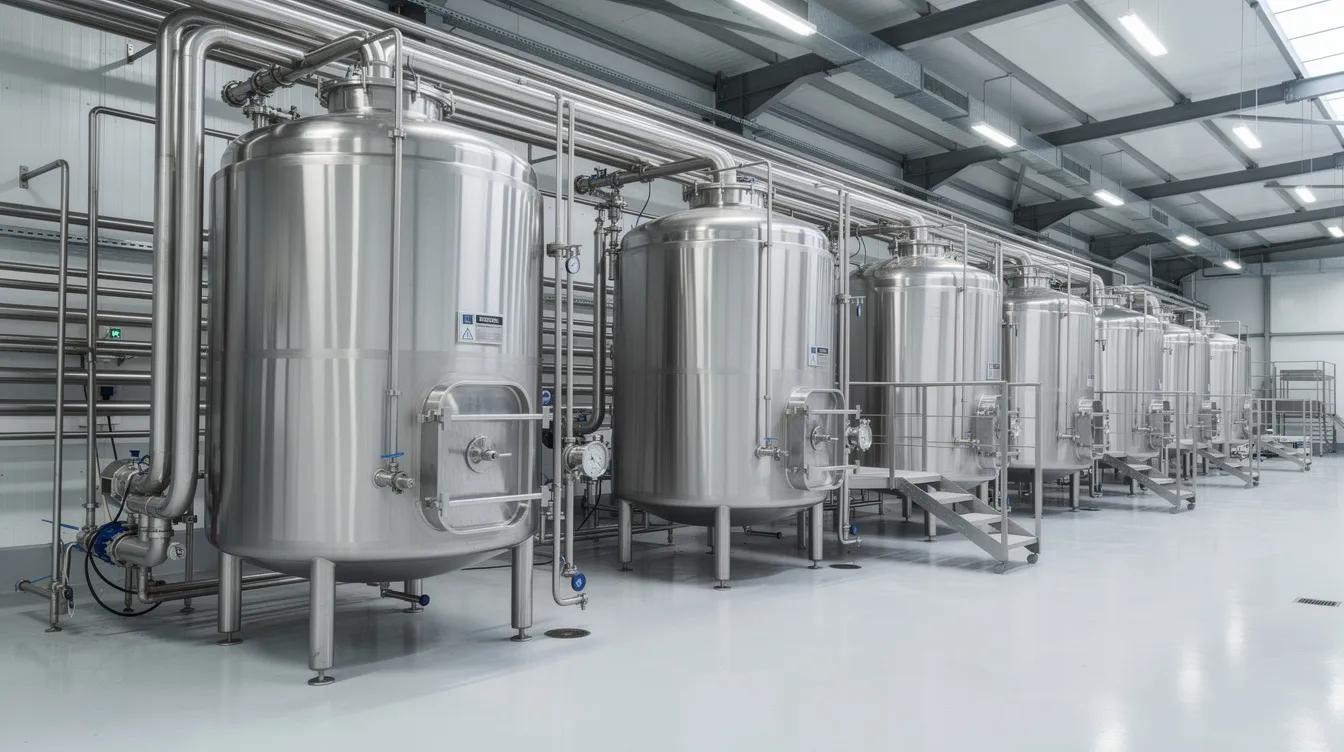
Liquid whey is collected from nearby cheese or paneer plants, rapidly cooled to approximately 4°C and transported in insulated tankers. Maintaining hygiene, minimising holding time and avoiding excessive agitation (which causes foaming) are essential. Insulated balance tanks and chilled storage tanks with agitation and CIP provisions ensure the whey plant capacity is utilised without quality degradation.
Clarification, Fat Separation and Pasteurisation
Whey passes through clarifiers and self-cleaning filters to remove curd fines and suspended solids, then through centrifugal separators that remove residual fat and cream. High-Temperature Short-Time (HTST) pasteurisation eliminates pathogenic bacteria without denaturing proteins, protecting downstream membranes and serving as a critical control point for food safety.
Microfiltration, Ultrafiltration and Diafiltration
- Microfiltration removes residual fat, bacteria and fine particles before the protein concentration process begins.
- Ultrafiltration (UF) allows small molecules (water, lactose, minerals) to pass as permeate while retaining protein molecules. Membranes typically use a 10 kDa molecular weight cut-off.
- Diafiltration (DF) enhances protein concentration by removing remaining lactose and minerals through repeated water-wash cycles. Academic studies show protein recovery rates of 93–98% under well-managed UF+DF conditions, though water consumption increases with each DF loop.
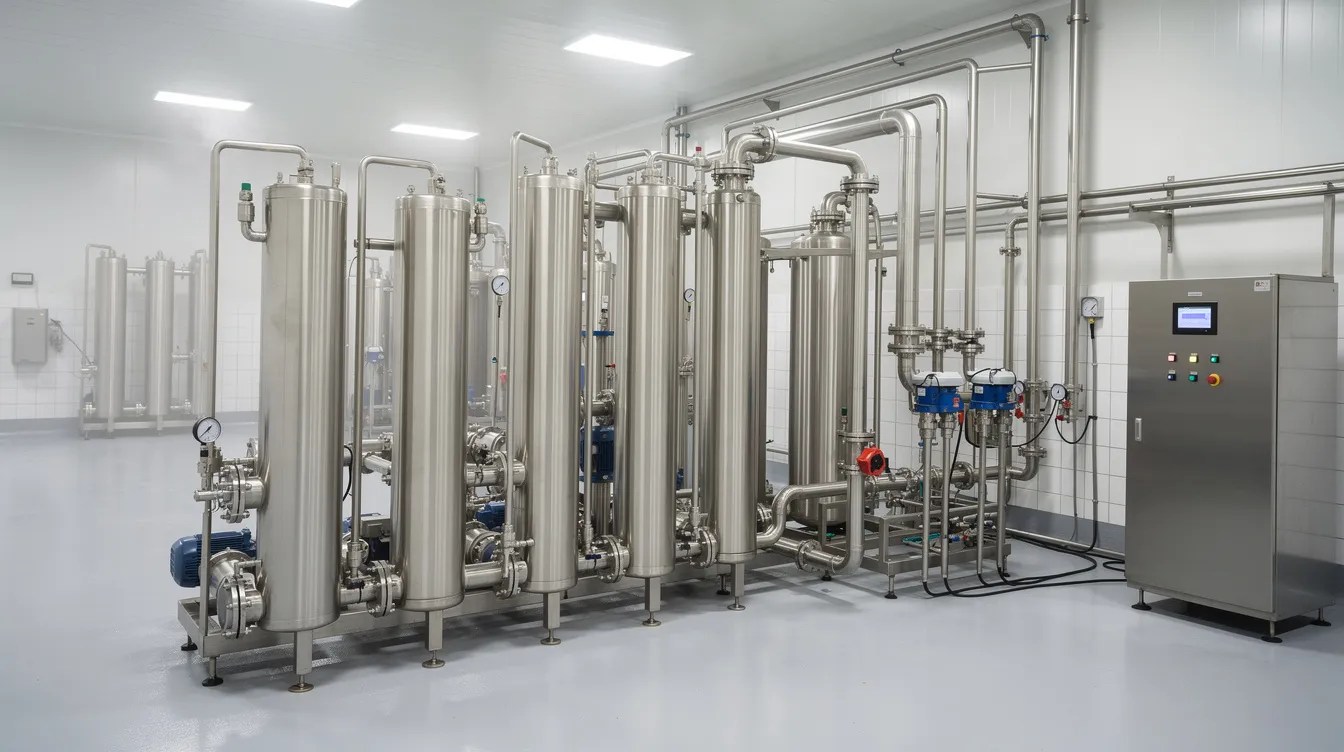
Membrane separation technology selection-spiral-wound, hollow-fibre or ceramic-affects capital investment, energy use, whey protein recovery rate and long-term operating costs.
Concentration, Spray Drying, Cooling and Packaging
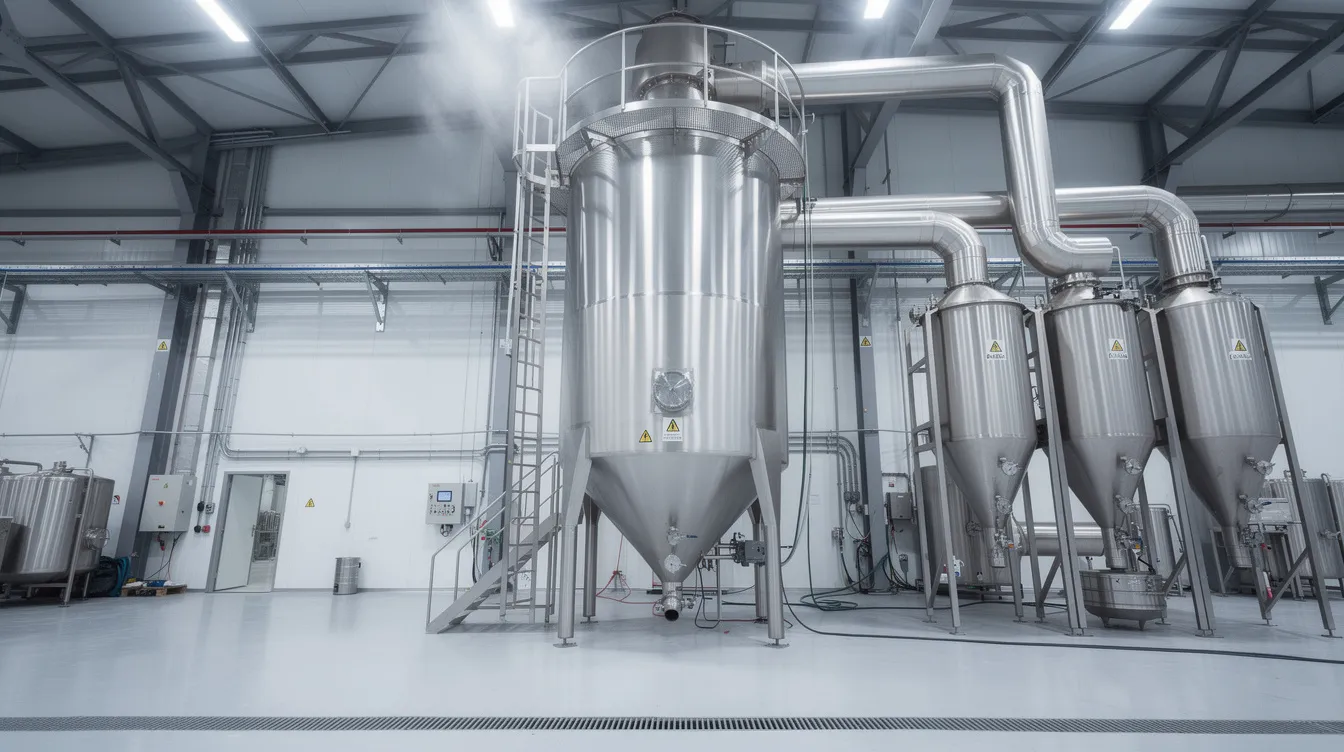
The evaporation step concentrates protein solutions before drying to save energy, reducing the load on the spray dryer. Spray-drying converts concentrated whey into a fine powder through atomisation, contact with controlled hot air and rapid moisture removal, followed by cyclone powder recovery and optional fluid-bed cooling. Improper drying can cause caking, poor solubility, off-flavours or colour changes-all costly given the high raw-material value.
After drying, powder is cooled, sieved, standardised and packed. Packaging should be done under cleanroom conditions to ensure product safety, with nitrogen flushing where specified. Clean-in-Place (CIP) systems are essential for maintaining sanitary conditions throughout the production process.
WPI 90: Product Specifications and Quality Parameters
“WPI 90” is a common commercial target where protein is at or above about 90% on dry basis. Whey protein isolate contains over 90% protein, with different markets and buyers specifying slightly different ranges.
- Protein % (≥90% dry basis), moisture (≤5%), fat (<1–2%), lactose (<1–3%), ash (controlled), bulk density, solubility index, colour, flavour and functional properties (gelling, emulsifying, foaming).
- Microbiological criteria: total plate count, yeast and mould, coliforms, pathogens, heavy metals and mycotoxins-aligned with FSSAI and applicable export norms.
- Specifications must be finalised based on end-use (sports nutrition, clear beverages, infant-grade) and aligned with customer agreements and food regulations.
- A robust quality control (QC) laboratory is necessary for testing WPI quality parameters. Testing protocols and sampling plans should be integrated into the plant’s quality control and quality assurance system. Quality control is crucial to avoid protein spiking in products.
WPI Versus WPC Manufacturing
Many Indian dairies begin with whey protein concentrate (WPC) production and later upgrade to WPI. WPI requires higher purification than WPC, meaning more membrane stages, higher water and energy consumption, and usually lower powder yield per litre of whey-though each kilogram sells at a higher price.
| Parameter | WPC (typical) | WPI (typical) |
|---|---|---|
| Protein % (dry basis) | ~35–80% | ~88–92% |
| Lactose level | Moderate–High | Very Low (<1–3%) |
| Fat level | 2–8% | <1–2% |
| Membrane/DF stages | UF (limited DF) | UF + multiple DF loops |
| Capital investment | Moderate | High |
| Operating cost per kg | Lower | Higher |
| Indicative selling price | Lower | Premium |
| Target customers | General nutrition, processed foods | Sports nutrition, clinical, infant formula |
| QC complexity | Standard | High |
Whey protein concentrate typically contains around 80% protein at the upper end. Readers specifically interested in WPC can study the Whey Protein Concentrate manufacturing plant article. Some projects strategically run both WPC and WPI lines, and entrepreneurs should decide between them based on liquid whey volume, available capital and market access.
Plant Capacity Planning and Mass-Balance Considerations
WPI plant capacity should be planned based on daily litres of liquid whey available, average protein content, desired recovery rate and the bottleneck capacities of the membrane system and spray dryer. The mass balance must be calculated to estimate yield and process efficiency for each specific project.
| Parameter | Illustrative Example |
|---|---|
| Input whey per day | 100,000 litres |
| Average protein % of whey | 1.0% |
| Protein available per day | 1,000 kg |
| Estimated protein recovery % | 90% |
| Recovered protein | 900 kg |
| Finished WPI production/day (~90% protein) | ~1,000 kg |
| Operating days/year | 300 |
| Indicative annual output | ~300 MT |
These are illustrative calculations only. Actual design must be finalised with equipment suppliers based on pilot trials. Seasonal and weekly variations in whey availability in India mean that realistic capacity utilisation (60–75% in initial years) should be assumed in the financial model. A significant portion of production planning depends on casein production volumes at the source dairy, which determine whey availability.
WPI Plant Machinery and Equipment
The WPI manufacturing plant combines whey-handling, membrane-separation, evaporation, drying, powder-handling, utility and CIP systems. Key equipment includes ultrafiltration units, spray dryers and pasteurisers as the backbone of the production line.
- Whey handling: Reception/balance tanks, plate chillers, insulated storage tanks
- Separation: Clarifiers, cream/fat separators
- Thermal processing: HTST pasteurisers, evaporators
- Membrane systems: Microfiltration, ultrafiltration modules, diafiltration loops, reverse-osmosis units
- Drying: Spray dryer (industrial units from vendors like Tetra Pak range from 0.5 to 10 tonnes/hr), fluid-bed dryer/cooler
- Powder handling: Sifters, blenders, automatic packing machines
- Utilities: Boiler/steam generator, refrigeration plant, air compressor, water-treatment plant, CIP system, electrical substation, HVAC, ETP
- Laboratory: Chemical and microbiological testing instruments
Comparing quotations should go beyond purchase price to evaluate membrane area, expected protein recovery, automation level (PLC/SCADA), stainless-steel grade, energy consumption and after-sales support. For broader machinery requirements and cost benchmarking, study the article on whey processing plant machinery and equipment cost.
Land, Building and Hygienic Plant Layout
A medium-capacity WPI manufacturing plant requires land sufficient for multi-storey drying towers, membrane halls, warehousing, utilities and ETP. Hygienic design is crucial to prevent contamination in WPI production.
- Key areas: raw-whey reception, chilled storage, membrane-processing hall, evaporation and drying zone, powder handling and packing room, finished-goods warehouse, utility block, CIP chemical room, ETP, laboratory, staff change rooms
- Hygienic zoning: separation of wet and dry areas, positive air pressure in powder zones, controlled personnel/material movement, food-grade construction materials, washable surfaces and pest-control systems
- Export and infant-food buyers impose particularly stringent plant layout and hygiene expectations
Utilities Requirement and Energy–Water Considerations
WPI manufacturing is both water- and energy-intensive due to diafiltration, chilling, evaporation and spray drying. Early utility planning is critical.
- Electrical power (connected load plus backup DG set), steam for pasteurisation and evaporation, refrigeration/chilled water, process water for diafiltration and CIP, compressed air, hot water and HVAC
- Water-treatment and reuse (permeate and condensate recovery) can materially reduce water costs and discharge volumes, improving sustainability
- Energy-efficient dryers and heat recovery systems are financially attractive given high Indian energy costs, despite higher initial capital investments
WPI Manufacturing Plant Setup Cost in India
WPI manufacturing is capital-intensive and requires careful economic planning. Plant setup cost varies widely with capacity, technology requirements, automation, imported versus domestic machinery, membrane configuration, spray-dryer size and location.
Capital investment components include:
- Land and site development
- Civil construction and building (including multi-storey drying tower)
- Whey handling and membrane equipment
- Evaporators and spray dryer (often the single costliest item, potentially several crores)
- Utilities and ETP; laboratory and QC equipment
- Electrical installation, instrumentation, commissioning
- Pre-operative expenses, technical consultancy, contingency
- Margin money for working capital
Commercial-scale WPI plants typically require multi-crore outlays. Analogous SMP plants at 15 MT/day capacity cost ₹10–18 crore; WPI facilities of similar powder output may require 25–40% higher investment due to specialised membrane systems and stricter QC requirements. Entrepreneurs planning general whey utilisation can refer to the article on whey processing plant setup cost in India; WPI represents the higher-investment end of this spectrum.
Cost estimates must be validated against current price levels, GST implications, import duties and local logistics before approaching lenders.
Operating Cost Structure and Working Capital Requirement
Liquid whey accounts for 50–60% of operating expenses in most WPI plants-even if whey is generated in-house, an internal transfer price must be considered. Operating costs are expected to rise due to inflation and market fluctuations affecting energy, packaging and chemical prices.
- Key operating cost heads: raw whey procurement/transport, chilling, membrane replacement and cleaning chemicals, utilities (electricity, steam, refrigeration, water), packaging material, manpower, QC testing, repairs, ETP operation, insurance, selling, distribution costs and administrative overheads
- Working-capital assessment considers: limited raw-whey holding (perishable), packaging stock, WPI finished-goods inventory, receivable period from B2B buyers, creditor days and monthly fixed expenses
- Large institutional or export buyers may negotiate longer credit periods, significantly increasing working-capital requirement
Revenue Model, By-Product Utilisation and Market Strategy
The primary revenue stream is bulk sale of WPI 90 powder to sports-nutrition companies, nutraceutical formulators, functional-food manufacturers and contract manufacturing for private-label brands.
- Additional revenue: custom protein blends, export sales, supply for clear beverages, clinical nutrition and processed foods formulations
- By-product utilisation: sale of lactose-rich permeate (as whey powder, lactose or animal feed), recovery of residual fat/cream. Promoters exploring permeate streams can refer to the whey powder manufacturing plant project report
- Medium- to long-term offtake agreements with anchor customers stabilise the revenue model and reduce dependence on spot-market pricing, which is a key factor for whey protein continues growth in domestic production
Profitability Analysis and Key Financial Drivers
WPI plant profitability depends on effective management of raw-whey cost, protein recovery, plant utilisation, market price and production costs. Whey protein production is profitable when these variables align, but the business is sensitive to assumptions.
| Item (Illustrative Annual) | Indicative Range |
|---|---|
| Annual WPI production | 200–400 MT |
| Average selling price | Market-dependent |
| Gross revenue | Derived from price × volume |
| Raw-material cost | 50–60% of revenue |
| Utilities | 10–15% of revenue |
| Employee + other costs | 8–12% of revenue |
| EBITDA margin | Subject to project-specific analysis |
All figures are hypothetical. CA Manish Gugliya prepares and assists with DPRs, CMA data and financial projections based on client-specific data-he does not certify or guarantee future profits or returns.
Break-Even, DSCR, ROI, IRR and Payback Analysis
Lenders and investors scrutinise break-even point, Debt Service Coverage Ratio (DSCR), Return on Investment (ROI), Internal Rate of Return (IRR) and payback period before committing funds to a capital-intensive WPI manufacturing plant.
- Break-even: The output level at which revenue covers all costs
- DSCR: Ratio of net cash available to annual debt repayment; banks typically require a minimum average threshold
- ROI/IRR: Measures of return relative to investment; critical for investor decision-making
- Payback period: Time to recover original investment from net cash flows
Sensitivity analysis should test scenarios of lower WPI selling price, higher whey cost, lower protein recovery, reduced capacity utilisation, higher energy tariffs, delayed ramp-up and stretched receivables to observe impact on DSCR and IRR.
Project Cost, Means of Finance and Bank Term Loan Assessment
Total project cost (including margin money) must be matched with a suitable funding structure: promoter’s equity contribution, bank term loan for fixed assets, working-capital facilities (cash credit, WCDL) and any eligible capital subsidy schemes for dairy or food-processing units.
Lenders examine: promoter profile and experience, raw-whey sourcing arrangements, machinery quotations and technology requirements credentials, product off-take arrangements, market assessment, detailed project cost, projected financials, DSCR, collateral and sensitivity analysis. Financial projections must reconcile with technical parameters-input whey volume, protein content, expected recovery and finished WPI output-otherwise banks will question the project’s credibility. A bank loan for WPI manufacturing plant finance requires meticulous documentation.
Detailed Project Report (DPR) and Documentation Requirements
A comprehensive, bankable DPR is compulsory for any WPI manufacturing plant seeking institutional finance. The project involves complex technology and significant capital investment, making documentation quality essential.
Major DPR contents include: executive summary; promoter profile; industry and market analysis (whey protein market opportunity in India); product profile; detailed manufacturing process description and flow chart; capacity planning and mass-balance; machinery requirements and technology selection; plant layout; utilities; manpower; QC systems; regulatory approvals; implementation schedule; project cost and means of finance; working-capital assessment; revenue assumptions; projected P&L, balance sheet, cash flow; break-even, DSCR, ROI/IRR analysis; sensitivity analysis; and risk assessment with mitigation.
CA Manish Gugliya and ProjectReportBank.com prepare customised WPI manufacturing plant DPRs, CMA data and financial projections based on client-specific location, capacity and supplier quotations.
Licences, Regulatory Approvals and Quality Control in India
A WPI manufacturing plant must comply with food-safety, factory and environmental regulations. Regulatory approvals include food safety licences and local building permits among others. Facilities must comply with regulations such as FSSAI in India, FDA in the US for exports, and ISO standards.
- Key approvals: business registration, PAN and GST, Udyam registration, FSSAI licence, Factory licence, pollution-control consent (CTE/CTO), fire-safety NOC, boiler and electrical approvals, labour-law registrations, Legal Metrology compliance, Import Export Code for exports
- QC integration: in-house laboratory for chemical and microbiological testing, HACCP and GMP implementation, traceability, allergen control, membrane integrity checks, cleaning validation and batch coding
- Promoters should obtain professional legal and regulatory advice before implementation, as exact requirements depend on location, product range and plant capacity
Environmental Management and Effluent Treatment
Whey processing generates high-strength wastewater with a high biological oxygen demand (BOD). Discharging untreated effluent is both environmentally harmful and legally risky. Effluent Treatment Plants (ETPs) are needed to manage high-strength wastewater from WPI processing.
- Segregate whey/permeate from other effluents; design appropriate ETP with waste management systems; explore reuse of permeate and condensate as process or cooling water
- Efficient CIP design reduces chemical and water consumption; energy recovery from evaporator vapours lowers carbon and cost footprint
- ETP and environmental-compliance costs must be included in the initial project budget, not treated as optional add-ons
Major Risks in WPI Manufacturing and Mitigation Strategies
WPI manufacturing is technologically sophisticated and market-sensitive. A practical risk assessment is essential before final investment decisions.
| Key Risk | Possible Mitigation |
|---|---|
| Irregular whey supply | Long-term supply contracts with multiple dairies |
| Variable raw-whey quality | Incoming quality testing, supplier qualification |
| Membrane fouling / low protein recovery | Proper CIP protocols, redundancy, optimal TMP |
| High energy consumption | Energy-efficient dryers, heat recovery |
| Spray-dryer bottlenecks | Adequate pre-concentration, right-sized dryer |
| Microbial contamination | HTST pasteurisation, hygienic design, HACCP |
| Product rejection | Strict QC, pilot validation before scale-up |
| Imported WPI price competition | Quality differentiation, cost optimisation |
| Dependence on few buyers | Diversified customer base, export channels |
| Working-capital shortage | Conservative financial structuring, adequate limits |
| Project construction delays | Contingency in budget and timeline |
| Regulatory non-compliance | Professional advisory, early licence applications |
The DPR should document these risks and mitigation measures, as banks increasingly expect structured risk analysis for agro-processing and dairy projects.
How CA Manish Gugliya and ProjectReportBank.com Can Assist
As a Chartered Accountant practising since 2006, I have extensive experience preparing bankable DPRs, CMA data and financial projections for dairy, food-processing and whey protein manufacturing plant projects.
- Services for WPI projects: detailed project report preparation; feasibility study and sensitivity analysis; project cost estimation; means-of-finance planning; CMA data for bank limits; term-loan and working-capital assessment; DSCR and repayment analysis; projected financial statements; break-even, ROI and IRR analysis
- Every assignment is customised to the client’s capacity, location, whey-sourcing plan, technology, machinery quotations and market strategy
- While professional judgement is applied, neither CA Manish Gugliya nor ProjectReportBank.com guarantee loan sanctions, subsidies or future financial performance
Frequently Asked Questions (FAQs)
How long does it typically take to commission a WPI manufacturing plant in India?
From finalising the DPR and securing finance to commercial production, a realistic timeframe is around 12–18 months. This depends on land readiness, machinery lead times (especially for imported spray dryers and membrane systems), statutory approvals and the complexity of installation and commissioning work. Entrepreneurs should build contingency into both budget and schedule.
Can a small entrepreneur start with a very low-capacity WPI plant?
Due to the high capital intensity of membranes and spray drying, extremely small WPI plants are often uneconomical. A more practical approach is to start with WPC production or shared toll processing, or to partner with an existing dairy. Once stable whey supply and market channels are proven, scaling to a dedicated WPI production line becomes a lower-risk proposition.
What type of technical team is required to run a WPI manufacturing unit?
Beyond general dairy-plant operators, the unit needs a dairy or food technologist, membrane-process specialists, experienced spray-dryer operators, quality-control chemists and microbiologists, and skilled maintenance staff for pumps, valves and CIP systems. Training from equipment suppliers during commissioning is essential for the initial operating team.
Can an existing whey powder plant be upgraded to produce WPI?
Many whey powder or basic whey processing plants can be upgraded by adding advanced membrane systems (UF/DF) and higher-specification dryers and QC systems. However, feasibility depends on existing layout, utility capacity, building height and raw-whey quality. A structured WPI plant feasibility study should evaluate the upgrade path before committing capital.
What is the typical project implementation risk for first-time dairy entrepreneurs?
Common risks include underestimating total project cost, delays in machinery delivery, changes in whey-supply arrangements, difficulty achieving initial product specifications for nutritional value standards, and slower-than-expected market ramp-up. Engaging experienced technical and financial advisors and building sufficient contingency into both cost and timelines significantly reduces these risks and improves the chances of a bankable project achieving metabolic health and commercial success.
Conclusion and Professional Disclaimer
A whey protein isolate manufacturing plant can convert low-value liquid whey into high-value WPI powder, aligning with growing demand for premium protein powders, dietary supplements and functional nutrition in India. However, success requires consistent whey supply, appropriate membrane separation technology, strong quality systems, assured markets and realistic financial planning supported by a complete project report.
Entrepreneurs, dairy companies and investors are welcome to contact CA Manish Gugliya through www.projectreportbank.com for assistance with a customised WPI manufacturing plant DPR, feasibility study, CMA data, financial projections and bank-finance planning.
Disclaimer: All technical and financial information in this article is indicative and educational in nature. It does not constitute investment advice, legal advice or a guarantee of any specific outcome. Exact costs, yields, prices and returns depend on project-specific factors including location, capacity, technology, machinery suppliers, market conditions and regulatory requirements. Readers must obtain professional consultations and conduct detailed studies before making investment decisions.