Key Takeaways
- A casein manufacturing plant project report is essential for securing bank loans and evaluating technical feasibility, project costs, profitability and bankability before committing capital to a casein and caseinate manufacturing plant in India.
- The article covers commercial acid casein, rennet casein, sodium caseinate and calcium caseinate production from skim milk, with India-specific guidance on dairy processing, milk procurement, machinery requirements, working capital and financial analysis.
- Indicative project costs depend heavily on capacity, technology, product mix, location and whether the plant is greenfield or integrated with an existing dairy – no single cost or profit margin applies universally.
- A bankable, customised Detailed Project Report must include market analysis, techno-economic details, financial projections, DSCR and sensitivity analysis covering all the aspects a lender requires.
- CA Manish Gugliya, FCA, DISA (ICAI), assists promoters across India with DPRs, CMA Data, financial projections and feasibility studies for casein and other dairy-ingredient projects through www.projectreportbank.com.
Introduction to Casein Manufacturing Plant Project Report
Casein is produced from milk proteins, primarily found in cow’s milk, and ranks among the most commercially valuable dairy ingredients globally. Caseinates – the soluble derivatives of casein – find applications across diverse industries including food processing, sports nutrition products, dietary supplements, the pharmaceutical industry and industrial adhesives. Rising health awareness is driving demand for protein-rich food products, making casein production an increasingly attractive investment opportunity in India.
A professionally prepared casein manufacturing plant project report helps promoters evaluate project economics, manufacturing process requirements, plant setup costs and bankability before approaching lenders. Setting up a casein and caseinate manufacturing plant is more complex than a generic dairy unit because it involves precision pH control, protein recovery optimisation, advanced drying technology, whey management and stringent quality control.
I am CA Manish Gugliya, FCA, DISA (ICAI), a practising Chartered Accountant since 2006 with more than 20 years of experience in preparing DPRs, CMA Data, financial projections and feasibility reports for industrial and MSME projects. This article will guide you through products, processes, machinery and technology requirements, investment considerations, financial analysis and the structure of a bankable manufacturing plant project report for casein production in India.
What Are Casein and Caseinates?
Casein is the principal phosphoprotein of bovine milk. It accounts for nearly 80% of cow’s milk protein, naturally present as micelles suspended in skim milk. When skim milk is acidified to its isoelectric point or treated with rennet enzymes, the casein precipitates as insoluble curd, which is then processed into different grades.
Caseinates are water-soluble salts produced by neutralising acid casein with food-grade alkalis such as sodium hydroxide or calcium hydroxide. This conversion dramatically improves solubility and functional performance. Casein is widely used in food, nutraceutical, and pharmaceutical sectors – it enhances the bioavailability of drugs in pharmaceuticals and is even used in cosmetics for its moisturising properties. Key functional properties include emulsification, water-binding, foaming, viscosity control, heat stability and slow-digesting nutrition – the binding and emulsifying properties make casein indispensable in processed foods.
| Product | Production Method | Solubility | Major Applications |
|---|---|---|---|
| Acid Casein | Acid precipitation at pH 4.6 | Insoluble in water | Food ingredients, paper coatings, adhesives |
| Rennet Casein | Enzymatic coagulation | Insoluble in water | Processed cheese, cheese analogues |
| Sodium Caseinate | Neutralisation with NaOH | Highly soluble | Coffee whiteners, nutrition powders, bakery |
| Calcium Caseinate | Neutralisation with Ca(OH)₂ | Dispersible | Meal replacements, protein blends |
The choice of products directly influences technology selection, drying systems, quality standards and the final structure of a casein manufacturing business plan.
Major Products in a Casein and Caseinate Manufacturing Plant
A modern casein and caseinate manufacturing plant in India typically focuses on a defined product mix. According to industry estimates, acid casein represents roughly 55–60% of India’s total casein production, with caseinates making up the remaining share.
Acid Casein
Acid casein is manufactured by acidifying pasteurised skim milk to approximately pH 4.6 using food-grade acids such as dilute hydrochloric acid or lactic acid. The precipitated curd is separated, washed, dewatered and dried. Compliance with food-grade specifications is necessary for edible grades. Applications span food ingredients, the pharmaceutical industry and industrial adhesives.
Rennet Casein
Rennet casein results from enzymatic coagulation using chymosin at controlled temperature. The curd has distinct flavour and functional characteristics suited to processed cheese and cheese-analogue manufacturing – a significant growth inducing factor for this product segment.
Sodium Caseinate
Dried acid casein is dissolved and neutralised with sodium hydroxide, then spray dried to yield a highly soluble powder. Sodium caseinate is the dominant caseinate product, widely used in coffee whiteners, nutrition powders, bakery, meat products and sports nutrition products.
Calcium Caseinate
Calcium hydroxide neutralisation produces a caseinate with higher calcium content, preferred in nutritional formulations, meal replacements and specialised protein blends targeted at consumers globally seeking building muscle fat reduction and bone health.
Other Specialised Caseinate Products
Potassium caseinate or customised blends with vitamins and minerals serve clinical-nutrition and sports-nutrition brands. These typically require more stringent quality and regulatory compliance, with products sourced from natural and organic sources commanding premium pricing.
Casein and Caseinate Manufacturing Process and Flow Sequence
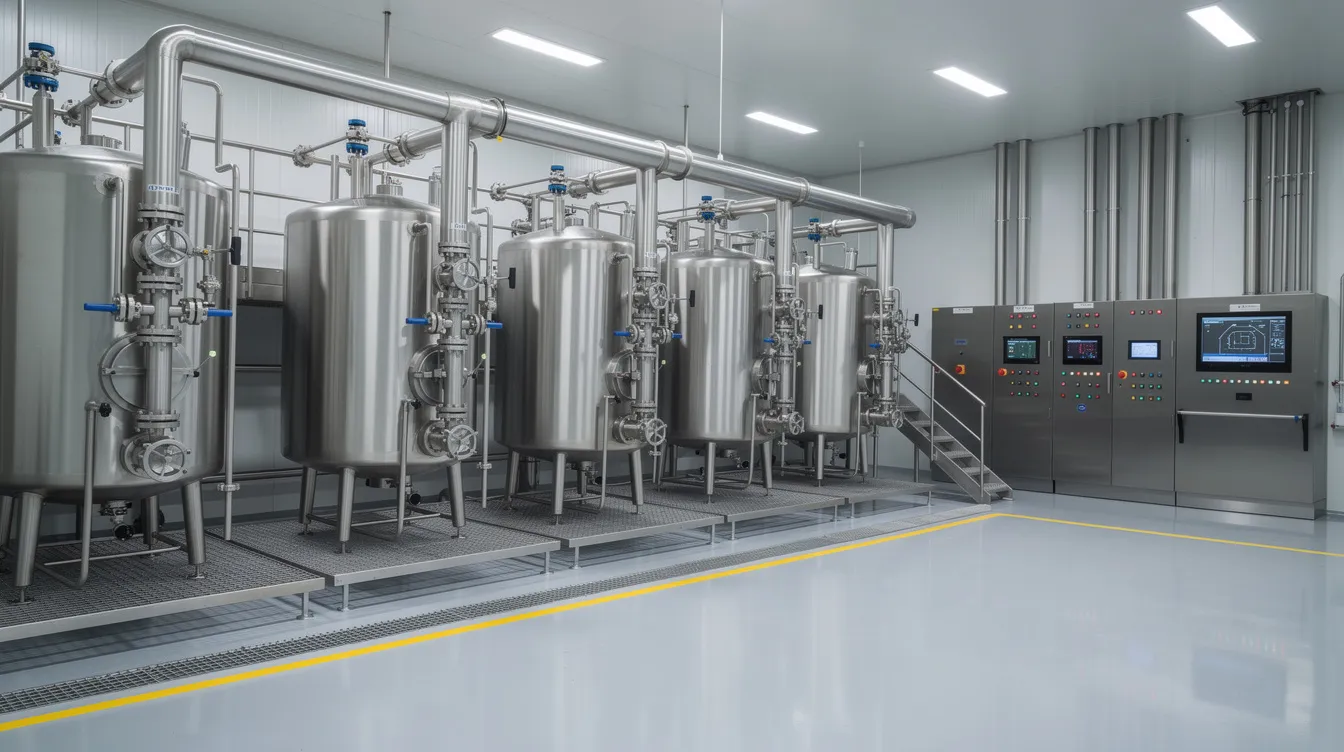
The milk casein production process involves several unit operations with critical control at each stage. The casein manufacturing process includes several key steps such as coagulation, separation, and drying. Establishing a detailed mass balance is critical for casein production planning, as it determines yield, losses and raw material consumption at every stage.
Process Flow Sequence:
- Milk reception, cooling and quality testing
- Clarification and cream separation → skim milk production
- Pasteurisation of skim milk
- Acidification to pH ~4.6 (acid casein) or rennet addition at controlled temperature (rennet casein)
- Curd formation and cutting
- Whey drainage and separation
- Curd washing (multiple stages to remove residual lactose and minerals)
- Dewatering and pressing
- Granulation and milling
- Drying (tray, fluidised bed or spray drying depending on capacity)
- Grinding, sieving and standardisation
- For caseinates: neutralisation with appropriate alkali → homogenisation → re-drying
- Quality testing (protein, moisture, microbiology, pH)
- Packing and storage
The sodium caseinate manufacturing process and calcium caseinate manufacturing process follow the same initial stages as acid casein, with additional neutralisation and re-drying steps. Quality management systems like HACCP are important for producing casein that meets food-grade and export standards. CIP systems, stainless-steel contact surfaces and inline monitoring are essential. The precise process and automation level must be finalised with a competent technology supplier and reflected accurately in the casein manufacturing plant DPR.
Casein production generates by-products like whey, which can be valuable – this is discussed in the next section.
Raw Materials, Milk Procurement and By-Product Whey Handling
Raw material sourcing is crucial for casein production. Skim milk accounts for 75–85% of casein production costs, making milk procurement strategy the single most important determinant of project viability. Key raw materials include skimmed and pasteurised milk, food-grade acids (hydrochloric acid, lactic acid), rennet enzymes, alkalis (sodium hydroxide, calcium hydroxide), packaging materials and CIP chemicals.
Site selection should consider proximity to raw material sources and utility availability. Procurement planning must address daily volume requirements, average SNF and protein content of available milk, seasonal flush and lean months, chilling and transport logistics and quality parameters. Casein yield varies with the composition of the skim milk – typical skim milk contains about 3.5–3.6% protein, of which roughly 80% is casein. Raw material consumption per kilogram of finished casein depends on these compositional factors and process efficiency.
Whey generation is a major consideration in the casein industry. Casein processing generates high-strength wastewater with high BOD and COD levels. Effluent treatment is essential to manage wastewater from casein production. Promoters should evaluate the broader whey processing plant manufacturing process to understand integration possibilities.
Investment in integrated whey-processing equipment (evaporators, membrane systems, dryers) adds to CapEx – the whey processing plant machinery and equipment cost must be assessed separately. Similarly, the whey processing plant setup cost in India requires its own cost analysis if the promoter plans a dedicated whey-recovery unit.
Raw material procurement strategy and whey utilisation plans must be quantified in the casein plant project report and techno-economic feasibility study.
Production Capacity, Product-Mix and Plant Configuration Planning
Casein plant capacity is typically expressed in litres of milk processed per day and tonnes per annum of finished product. The production capacity of a casein plant ranges from 5,000 to 20,000 MT annually for commercial-scale facilities. Capacity planning should start from realistic milk procurement estimates within a 75–150 km radius, rather than arbitrarily choosing a large tonnage figure.
Product mix – the percentage split between acid casein, rennet casein and caseinates – affects equipment selection, drying capacity, working capital and overall project economics. Seasonal utilisation must be factored in: milk availability shifts across months in many Indian states, so realistic capacity-utilisation assumptions (ramp-up over 2–3 years) are essential in casein plant financial projections.
An oversized plant without assured milk supply or confirmed offtake can result in underutilised machinery, lower contribution margin and weaker DSCR. Capacity justification and product-mix rationale are standard components of a detailed project report for casein plant appraisal by banks.
Casein Plant Machinery, Equipment and Utilities
Casein manufacturing requires specialised machinery for processing milk. Machinery costs are a significant part of casein production expenses, and the report should include detailed equipment specifications for casein production. Key machinery includes separators, evaporators, and spray dryers.
Process Equipment:
- Milk reception tanks, weigh bowls, plate/tubular pasteurisers
- Clarifiers, cream separators, ageing tanks
- Coagulation/precipitation tanks, rennet vats, curd-cutting equipment
- Whey-drainage screens, curd-washing vessels
- Dewatering systems, casein presses, granulators
- Neutralisation tanks, homogenisers (for caseinates)
- Spray dryers or fluidised-bed dryers
Post-Processing and Packing:
- Grinders, mills, sieves, blending equipment
- Automatic bagging, sealing machines, metal detectors
- Laboratory instruments (protein analysers, moisture analysers, microbiology equipment)
Utilities:
- Boiler and steam distribution, refrigeration and chilled-water system
- Air compressors, water-treatment plant, effluent-treatment plant
- Electrical substation, DG backup, CIP system
A typical casein manufacturing facility requires considerable utility resources. For promoters considering whey valorisation, a whey powder manufacturing plant project report outlines the additional investment required. High-value recovery options include a Whey Protein Concentrate manufacturing plant or a Whey Protein Isolate manufacturing plant, each requiring separate DPR evaluation. Lactose recovery is another complementary project covered in the lactose manufacturing plant project report.
Land, Building, Plant Layout and Infrastructure
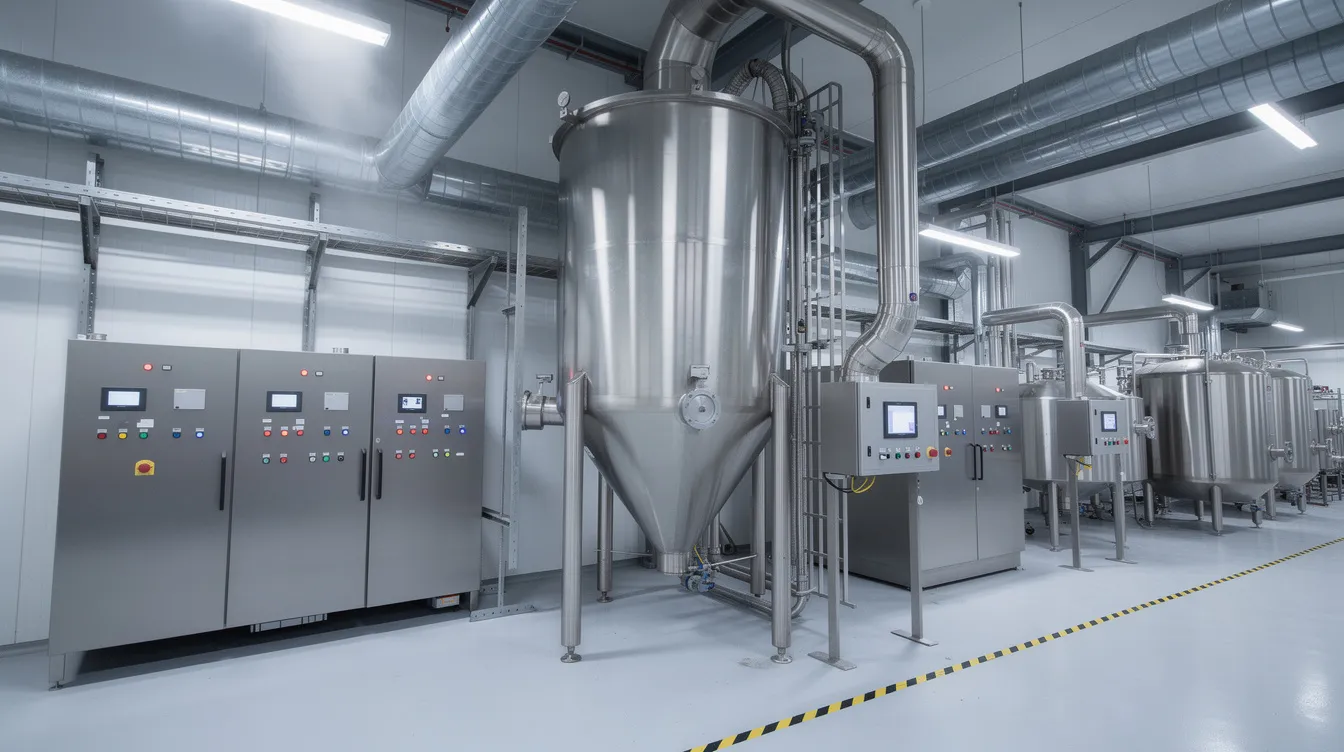
A well-planned layout in a casein manufacturing plant improves hygiene, material movement, energy efficiency and expansion possibilities. Functional areas include milk reception, chilling, main process hall, coagulation and washing area, drying and powder-handling room, caseinate production zone, packing room, warehouses, QC laboratory, utility block, ETP and administrative offices.
Site development and land requirements are critical for plant setup. Hygienic zoning – separating high-hygiene powder-handling areas from non-process zones – proper drainage, ventilation and contamination control must be addressed. Utilities, manpower, and packaging are essential setup components. Banks typically expect a block layout diagram as an annexure to the casein manufacturing plant DPR.
Casein Manufacturing Plant Setup Cost and Means of Finance
Total casein manufacturing plant setup cost in India comprises land, civil works, plant and machinery, utilities, pre-operative expenses and working capital margin. Capital investments for casein plants include machinery and utilities as the largest cost heads. Plant setup involves evaluating technological and quality assurance requirements specific to the proposed capacity and product mix.
Typical Project Cost Heads:
- Land and site development
- Building and civil construction
- Process and packaging machinery
- Utility equipment (boiler, refrigeration, WTP, ETP)
- Electrical, instrumentation, laboratory and QC equipment
- Preliminary and pre-operative expenses, technical consultancy
- Contingencies and interest during construction
- Margin for working capital
Financing is usually structured through promoters’ equity, term loans from banks, unsecured loans where acceptable and possible government subsidy or capital assistance. The project report should clearly show the means of finance, proposed debt-equity ratio and justification for loan requirement. Actual casein manufacturing plant cost in India must be prepared from current machinery quotations and location-specific estimates rather than generic internet figures. Casein plant operating costs are 75–85% raw materials, which heavily influences the financial model.
Working Capital, Revenue Model, Profitability and Break-Even
While capital investment is one-time, consistent working capital is required daily for milk procurement, utilities, wages and selling expenses. The working capital cycle for mid-scale casein plants is typically 45–60 days. First-year operating costs for a casein plant are significant, and total operational costs are expected to rise by year five as capacity utilisation increases.
Revenue sources include sale of acid casein, rennet casein, sodium and calcium caseinates, cream recovered during separation and monetised whey products where the plant has integrated processing.
Key profitability drivers: procurement price and quality of milk, casein yield and protein recovery, domestic and export selling prices, energy and drying costs, labour productivity, interest cost and capacity utilisation. Gross profit margins for casein plants range from 25–35% under favourable conditions, but a DPR must avoid promising guaranteed returns. Break-even analysis – the sales level required to cover all fixed expenses – is a standard component that banks review for industrial project assessment. The financial model should include both capital and operating expenses.
Financial Projections in a Casein Manufacturing Plant DPR
A professional casein manufacturing plant DPR should convert technical and market assumptions into detailed financial statements. Financial projections for a casein project often cover a 5 to 10 year horizon aligned with loan tenure. The project report should detail market demand and feasibility alongside comprehensive market intelligence.
Core financial components include:
- Projected production, sales and raw material consumption
- Utility, manpower and overhead cost estimates
- Projected Profit & Loss, Balance Sheet, Cash-Flow and Fund-Flow Statements
- Depreciation schedule, interest calculation and loan-repayment schedule
- CMA Data in bank-prescribed formats
- Break-even analysis, DSCR (year-wise and average), ROI, IRR and payback period
- Sensitivity analysis on milk prices, selling prices and utilisation levels
Projections must be grounded in realistic assumptions – not extrapolated from best-case scenarios. Understanding market dynamics is fundamental to the success of a casein plant.
Licences, Approvals, Subsidy and Risk Analysis
Environmental compliance and licensing are crucial in the planning phase. A casein and caseinate manufacturing plant must comply with multiple regulatory requirements that vary with location and scale.
Key approvals: business-entity registration, PAN, GST, Udyam registration for small and medium enterprises, FSSAI licence, trade licence, Factory licence, consent to establish and operate from SPCB, fire-safety NOC, boiler registration and labour-law compliances. Export-oriented plants require IEC and registration with relevant export-promotion bodies for casein export business from India.
Government schemes may support dairy and food-processing units, but eligibility depends on location, timing and scheme guidelines. Promoters should not treat any expected subsidy as assured until formally sanctioned.
Key risk factors include fluctuation in milk prices, volatility in the global casein market, lower-than-expected protein recovery, quality rejections and delays in achieving targeted capacity utilisation. The India casein market was valued at approximately USD 127.35 million in 2025, with the global casein market size reaching 442.88 Kilo Tons in 2025 and expected to reach 603.60 Kilo Tons by 2034, exhibiting a CAGR of 3.5% from 2026 to 2034. Despite this market growth, sensitivity and risk analyses are valuable for assessing project viability – a robust casein project feasibility report should test scenarios across milk cost, selling price, utilisation and energy cost variables.
What a Bankable Casein & Caseinate Manufacturing Plant Project Report Should Contain
Banks and investors expect a structured, well-supported plant project report before sanctioning term loans. It should cover promoter background, casein industry overview and industry trends, market analysis covering both qualitative and quantitative aspects, product profile, technical process description, capacity justification, milk procurement plan, machinery quotations, land and layout details, utilities and environmental arrangements.
Financial components must include total project cost, casein manufacturing plant investment structure, means of finance, projected financial statements, DSCR, ROI, IRR and break-even analysis. Sensitivity and risk analysis showing the impact of adverse scenarios on DSCR and IRR is highly valued by lenders. Downloading a generic template cannot substitute a customised, bankable project report – each project differs in location, capacity, technology and funding structure. Production cost reports and detailed cost analysis must reflect actual quotations and site-specific conditions.
How CA Manish Gugliya and ProjectReportBank.com Can Assist
As a practising Chartered Accountant since 2006, I have prepared DPRs, CMA Data, financial projections and feasibility studies for industrial and MSME projects across India. My firm offers consulting services specifically tailored to casein and caseinate manufacturing plant projects.
- Customised casein manufacturing plant project report and caseinate manufacturing plant project report aligned with proposed capacity, product mix and market
- CMA Data preparation in bank formats, detailed financial projections, DSCR and loan-repayment analysis
- Break-even, ROI and IRR calculations with working-capital assessment tailored to milk-procurement realities
- Bankable project report for casein manufacturing plant suitable for submission to commercial banks, cooperative banks and financial institutions
- Services delivered online across India through www.projectreportbank.com
If you are a serious entrepreneur, dairy company or investor planning a casein manufacturing business in India, I invite you to contact me for a tailored techno-economic feasibility study and bank-ready DPR.

Conclusion
A casein and caseinate manufacturing plant can convert skim milk into high-value milk protein ingredients with applications across food, nutrition, pharmaceutical and industrial sectors. However, commercial success depends on milk economics, process efficiency, whey utilisation, market linkage and disciplined financial management. The demand for casein in sports nutrition is increasing among fitness enthusiasts, while evolving trends in processed foods continue to drive market performance and investment opportunities.
A professionally prepared casein manufacturing plant project report translates technical and market understanding into structured financial projections, DSCR, ROI and risk assessments that promoters and lenders need. No generic figure can define casein manufacturing plant cost in India or guarantee profitability – each project must be evaluated on its own merits based on actual quotations, regional insights, capacity and product mix. Staying up to date with latest market trends and industry behaviours is essential for informed decision-making.
If you are planning a casein manufacturing business in India, engage CA Manish Gugliya through www.projectreportbank.com for a customised, bankable DPR, CMA Data and feasibility analysis before committing major capital. A market snapshot alone is not enough – experienced researchers and financial professionals working together on desk research and financial analysis deliver the insights delivered through a comprehensive project report that stands up to bank scrutiny. Research reports and a free sample report structure can be discussed during initial consultation.
Frequently Asked Questions
The following FAQs address common practical doubts that promoters raise while planning a casein and caseinate manufacturing plant in India.
What is the basic difference between casein and caseinate in commercial terms?
Casein is the insoluble milk protein precipitated from skim milk, while caseinates are soluble salts formed by neutralisation with food-grade alkalis. Casein finds use in cheese analogues, industrial applications and certain food products. Sodium and calcium caseinates are preferred in beverages, instant nutrition powders and processed foods due to better dispersibility and functionality. The production method determines solubility, which in turn dictates end-use suitability and pricing.
How much milk is generally required to produce 1 kg of casein?
The exact conversion depends on milk composition, protein content and process efficiency. Typical skim milk contains about 2.7–2.9% casein by weight, but actual recovery after washing, dewatering and drying losses may be 70–80% of the theoretical maximum. During DPR preparation, realistic yield factors from technology suppliers and benchmark plants are used – these assumptions directly impact cost of production and DSCR calculations. Any ratio quoted without specifying milk quality and process parameters is only indicative.
Can casein and caseinates be manufactured in the same facility?
Yes – many commercial plants produce both, since caseinates are manufactured from acid casein within the same complex. The DPR should describe the integrated process, additional neutralisation equipment, quality-control requirements and incremental working capital. Product-mix flexibility allows the plant to respond to market demand and optimise profit margins across the casein and caseinate product range.
Is it necessary to have whey-processing facilities along with a casein plant?
It is not legally mandatory to have full whey-processing on-site, but the promoter must have an environmentally compliant plan for whey handling. Options include sale to another processor, approved animal-feed usage or in-house processing into whey powder, whey protein concentrate or lactose. Integrated whey recovery can improve overall project economics but adds to associated costs and must be evaluated through an appropriate feasibility study with its own capital costs and operating costs assessment.
At what stage should an entrepreneur approach a professional for a casein plant DPR?
Promoters should approach a professional once they have at least a tentative site, a broad capacity idea and preliminary discussions with technology or machinery suppliers, so that realistic quotations and assumptions can be built into the DPR. Early engagement with an experienced professional helps avoid over-optimistic assumptions, underestimation of working capital and incomplete documentation when approaching banks. This is an approval key success factor that separates viable projects from those that face repeated rejection at the appraisal stage.