Key Takeaways
- A whey powder manufacturing plant project report (DPR) bridges dairy-processing technology with bank-ready financial analysis, covering everything from process design and capital expenditure to DSCR, working capital and sensitivity analysis.
- Plant viability hinges on four pillars: assured liquid whey supply, correctly sized evaporation and spray-drying systems, energy-efficient operations, and secured off-take from food, nutrition and feed buyers.
- Whey powder (typically 10–15% protein content with high lactose and minerals) is distinct from whey protein concentrate and whey protein isolate; this article focuses on industrial whey powder variants including sweet whey powder, acid whey powder and demineralised whey powder.
- Financial projections should include CAPEX, OPEX, ROI, and break-even analysis, supported by transparent assumptions and current supplier quotations rather than generic estimates.
- All numerical examples in this article are purely illustrative. Actual project costs, yields and returns must be derived from site-specific data, verified quotations and up-to-date market research.
Introduction – Why a Whey Powder Manufacturing Plant Project Report Matters
Liquid whey – the greenish-yellow fluid left behind after cheese, paneer or casein production – was once treated as an industrial effluent. Today, it is recognised as a valuable raw material. Through concentration and spray drying, liquid whey can be converted into shelf-stable whey powder that serves bakery, confectionery, infant formula, sports nutrition, protein supplements and animal feed industries.
It is important to understand that standard whey powder is not the same as whey protein concentrate (WPC) or whey protein isolate (WPI). Standard whey powder retains lactose, minerals and proteins in proportions close to the original whey, whereas WPC and WPI involve additional membrane separation – ultrafiltration, diafiltration or ion exchange – to achieve protein levels of 35–90% or higher. This article and the associated DPR framework focus on industrial whey powder and its commercially important variants.
A properly prepared whey powder manufacturing plant project report establishes technical feasibility, identifies the right plant capacity, estimates capital expenditure and operating expenses, assesses raw material requirements, plans utilities and waste management systems, evaluates market demand through a comprehensive market overview, and structures financial projections for term loans and working-capital facilities. A whey powder manufacturing plant setup costs include both capital and operating expenses, and a DPR helps promoters and lenders understand these in detail. Readers evaluating broad cost levels can also refer to guidance on whey processing plant setup cost in India while this article covers the complete DPR structure.
What Is Whey Powder? (Definition, Origin and Applications)
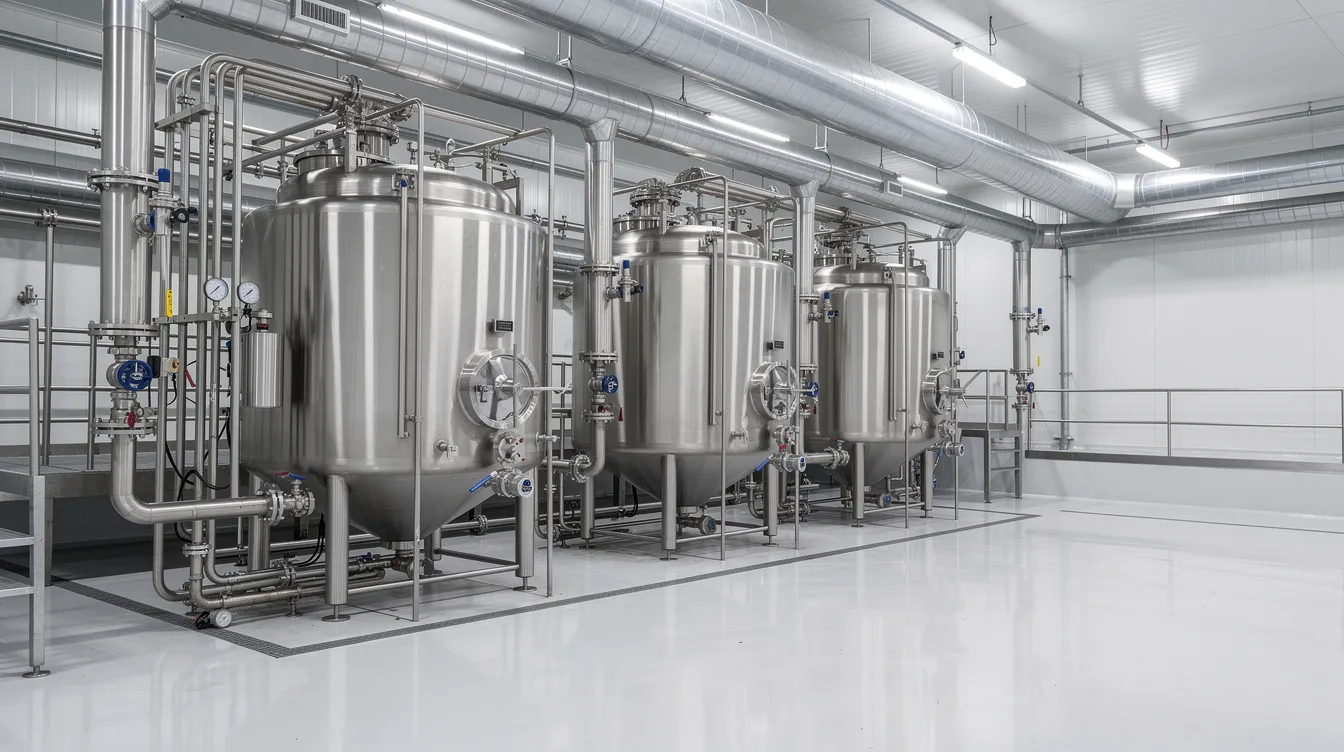
Liquid whey is the residual fluid after casein coagulation during manufacture of cheese, paneer or acid casein. It typically comprises 93–95% water with total solids of around 5–7%, including lactose (roughly 70–72% of solids), whey proteins (8–10%), minerals (12–15%) and trace fat.
Common sources of liquid whey include:
- Rennet-coagulated cheese whey (sweet whey, pH ~6.0–6.5)
- Acid-coagulated paneer or casein whey (acid whey, pH below 5.0)
- Blended whey streams from mixed dairy operations
The typical composition range of sweet whey is approximately 6–7% solids, 0.7–0.9% protein, 4.5–5% lactose, 0.5–0.7% minerals, and trace fat. Actual composition varies by milk quality, product type and manufacturing process conditions.
Fresh whey has a very short usable life due to high water activity, dissolved lactose, residual bacteria and enzymes that cause rapid souring and off-flavours. This is why whey processing – specifically concentration and spray drying – is essential to convert perishable liquid whey into a stable powder with reduced moisture, longer shelf life and lower transport cost.
Major application segments for whey powder include:
- Bakery and biscuit manufacturing (dough conditioning, browning)
- Chocolate and confectionery (milk solids replacement)
- Reconstituted milk beverages and ice cream mixes
- Infant formula and nutrition products (as a lactose and mineral source)
- Animal feed premixes (protein enriched diets for livestock)
- Functional foods and dietary supplements
Institutional buyers consistently demand stable composition and microbiological safety, making quality control a non-negotiable part of the production process.
Types of Whey Powder and Their Processing Complexity
The term “whey powder” covers a family of products that differ in mineral content, lactose level and functional properties. These differences directly influence both the machinery and technology requirements and the capital expenditure in the DPR.
The key commercial types include:
- Sweet whey powder – from rennet cheese whey; moderate mineral content; standard evaporation and spray drying
- Acid whey powder – from paneer or cottage cheese; higher calcium and ash; more challenging to dry
- Demineralised whey powder – mineral content reduced by 30%, 50% or 70% using nanofiltration, electrodialysis or ion exchange; suitable for infant formula to mimic the mineral profile of human breast milk
- Delactosed whey powder – lactose partially removed through crystallisation; higher relative protein and mineral fraction
- Modified whey powder – blends adjusted for specific buyer formulations
- Whey permeate powder – the by-product of WPC/WPI production, predominantly lactose and minerals with minimal protein content
Products like demineralised whey powder and permeate powder require process steps beyond standard evaporation and drying – including reverse osmosis, nanofiltration, electrodialysis and controlled crystallisation. Ion exchange equipment is essential for whey protein isolate production but is also relevant for high-demineralisation whey powder. These additional unit operations involved increase both fixed costs and operating costs, which must be reflected accurately in the DPR.
| Product Type | Typical Source | Main Characteristics | Typical Applications | Processing Complexity |
|---|---|---|---|---|
| Sweet whey powder | Cheese whey | Moderate minerals, high lactose | Bakery, confectionery, beverages | Low–Medium |
| Acid whey powder | Paneer, casein whey | Higher calcium/ash, lower pH | Feed, bakery ingredients | Medium |
| Demineralised whey powder | Cheese or paneer whey | Reduced minerals (30–70%) | Infant formula, specialised nutrition | High |
| Delactosed whey powder | Any whey type | Lower lactose, higher protein ratio | Clinical nutrition, low-lactose products | Medium–High |
| Whey permeate powder | WPC/WPI permeate | Very high lactose, minimal protein | Feed, standardisation, fillers | Low |
Whey Powder Manufacturing Business Opportunity in India
Growth in organised cheese, paneer and dairy processing across India – particularly after 2020 – has sharply increased liquid whey volumes. This creates both an environmental challenge (high-BOD effluent) and a significant value-addition opportunity for dairy processors and entrepreneurs.
Key demand drivers for whey powder in India include:
- Expansion of the bakery, confectionery and packaged-snacks sectors requiring consistent dairy ingredients
- Rising use of dairy-based ingredients in ready-to-eat and ready-to-cook products
- Growing demand from the whey protein industry for functional ingredients in beverages and weight management nutrition
- The demand for whey protein is driven by health and fitness trends, muscle growth goals, and increasing awareness of the amino acid profile of whey – including essential amino acids required for muscle protein synthesis and branched chain amino acids valued in sports nutrition
The global whey protein market was valued at USD 11.45 billion in 2025 and is projected to reach USD 19.34 billion by 2034, exhibiting a CAGR of 6.0% from 2026 to 2034. Within India, the whey powder market was estimated at around ₹10 billion in 2023, with projections suggesting growth to ₹53 billion by 2032. The whey protein powder market and the broader whey protein sector continue to expand, supported by industry trends and changing consumer segments.
Import-substitution is a real opportunity: Indian food manufacturers currently import a significant portion of their dairy ingredient needs. Competitive, consistent-quality domestic whey powder can partially replace these imports.
However, marketability is not automatic. Market analysis must evaluate competitive landscapes and pricing trends. A robust whey powder manufacturing plant project report should include up-to-date market research and realistic sales assumptions backed by current price trends – not generic growth percentages. Current industry trends and consumer segments must be assessed during this analysis.
Raw Material Availability and Whey Procurement Strategy
Regular liquid whey availability is the single most critical factor for financial feasibility of a whey powder production plant. Without assured supply, even the best machinery will stand idle.
The DPR must distinguish between captive whey (generated in the promoter’s own cheese, paneer or casein plant) and externally procured whey from nearby dairies. Sourcing strategies for liquid whey typically involve local cheese or paneer production facilities. Captive whey offers better control over quality, timing and raw material costs. Externally procured whey introduces transport costs, temperature risks, composition variability and the need for binding supply contracts.
Key parameters to address in the DPR include:
- Average daily litres of whey available across seasons
- Total solids content and variability by source
- Source product type (Mozzarella, Cheddar, paneer, casein)
- Temperature at dispatch and transit time to plant
- Microbiological quality on arrival
- Contractual pricing formula (e.g., per kg of solids)
Warm, old whey leads to elevated bacterial load, fouling of evaporator surfaces and yield loss. Whey reception tanks must have temperature control features, and ideally, whey should be cooled below 10–15°C promptly after generation.
A standalone whey powder manufacturing unit must secure binding supply agreements or long-term MOUs with reliable dairy processors before committing major capital expenditure. Quality tests at whey reception – including acidity, pH, temperature, organoleptic checks and total solids – directly influence process adjustments and acceptance/rejection decisions.
Whey Powder Manufacturing Process Overview
The manufacturing process depends on the target product – standard sweet whey powder versus demineralised whey powder, for example – but follows a broadly similar sequence of unit operations. The manufacturing process includes liquid whey collection, pasteurization, and spray drying as core steps.
The major process stages are:
- Reception and weighing of liquid whey
- Filtration and clarification to remove curd fines
- Fat and fines separation using cream separators
- Cooling and intermediate storage at controlled temperature
- Pasteurisation (typically HTST at 72°C for 15 seconds)
- Optional membrane processing – reverse osmosis, nanofiltration or ultrafiltration for pre-concentration or demineralisation
- Multi-effect vacuum evaporation – raising total solids from ~6–7% to 40–60%
- Lactose crystallisation where required for powder stability
- Spray drying – atomisation of liquid concentrate into a hot-air chamber
- Fluid-bed drying and cooling – final moisture reduction and temperature stabilisation
- Sieving, metal detection and packing
- Finished-goods storage and dispatch
Simplified Process Flow:
Liquid Whey Reception → Filtration and Clarification → Pasteurisation → Optional Membrane Processing → Vacuum Evaporation → Crystallisation → Spray Drying → Cooling and Sieving → Packing → Finished-Goods Storage
Process parameters – temperatures, pressures, residence times – are project-specific and must be engineered by the technology supplier based on feed composition and desired powder properties. For a broader explanation of whey processing steps, you may also refer to our guide on whey processing plant manufacturing process and flow chart.
| Process Stage | Main Equipment | Purpose |
|---|---|---|
| Reception | Weigh tanks, cooling | Receive and cool raw whey |
| Clarification | Filters, clarifiers | Remove curd fines and sediment |
| Fat separation | Cream separator | Remove residual fat |
| Pasteurisation | HTST pasteuriser | Destroy pathogens |
| Membrane processing | RO/NF/UF systems | Pre-concentrate or demineralise |
| Evaporation | Multi-effect evaporator | Concentrate to 40–60% solids |
| Crystallisation | Crystallisation tanks | Control lactose crystal formation |
| Spray drying | Spray dryer | Convert liquid concentrate to powder |
| Fluid-bed drying | Fluid-bed dryer/cooler | Final moisture and temperature control |
| Packing | Bagging machine, metal detector | Pack and inspect finished product |
Whey Concentration, Evaporation and Spray-Drying Technology
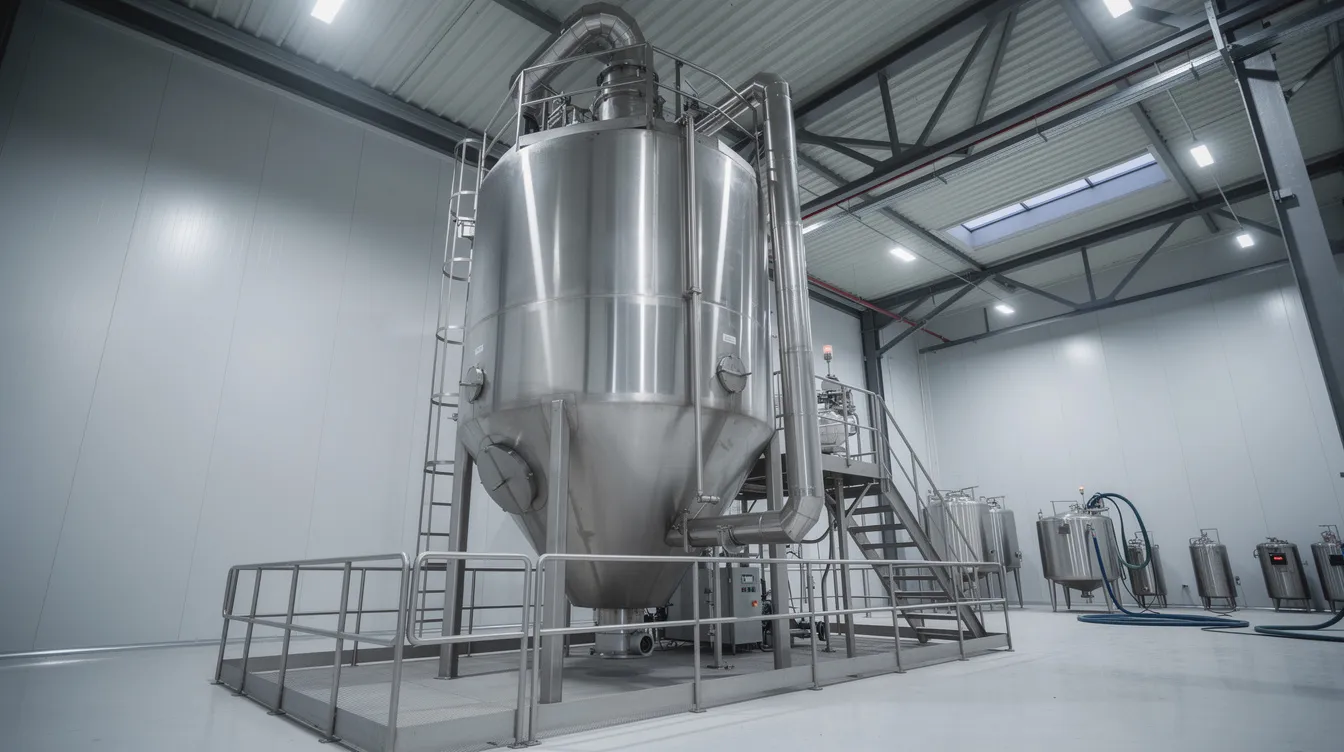
Evaporation and spray drying are the most energy-intensive and capital-intensive sections of any whey drying plant project report. Together, the spray dryer and evaporator often account for 35–40% of total plant and machinery cost.
Key technology elements include:
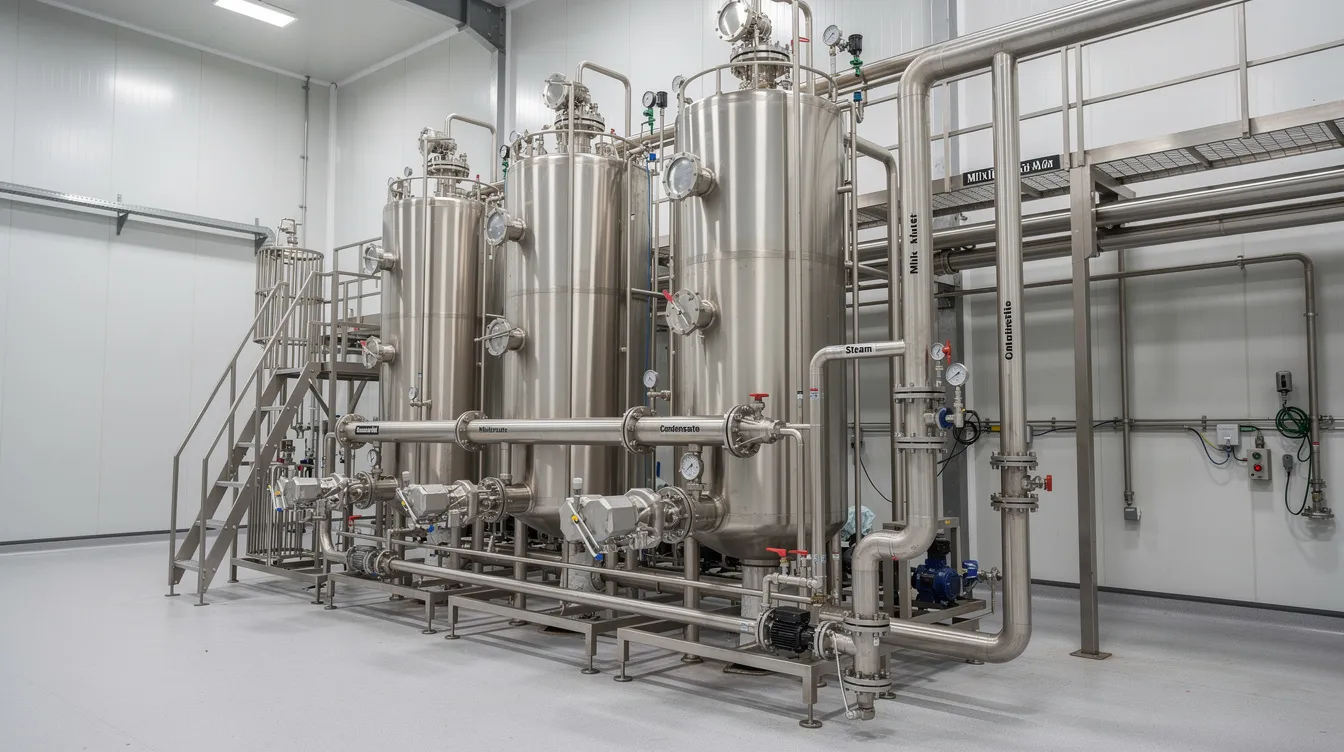
- Multi-effect falling-film evaporators for pre-concentration of whey solids – specific energy for water removal can be approximately 418 kJ/kg when using thermal vapour recompression, and substantially less with mechanical vapour recompression
- Thermal vapour recompression or mechanical vapour recompression for energy recovery
- Condensate collection for potential reuse in boiler feed or CIP systems
The spray dryer works by atomising whey concentrate (through a rotary disc or high-pressure nozzle) into a chamber of hot filtered air. Moisture evaporates rapidly, and the resulting powder is collected from the drying chamber and cyclones or bag filters. Powder handling at this stage requires careful control.
Lactose crystallisation before final drying is critical – particularly for sweet whey powder manufacturing. Without controlled pre-crystallisation, amorphous lactose causes stickiness, wall deposits, caking and poor storage stability.
A fluid-bed dryer and cooler reduces final moisture to below 5%, stabilises powder temperature, controls bulk density and can agglomerate particles for better flow and instantisation.
Exact temperatures, airflows and residence times cannot be standardised across projects. They must be confirmed with the chosen equipment supplier and validated during commissioning.
Plant Capacity Planning and Illustrative Yield Example
Plant capacity should be driven by realistic assessment of liquid whey availability and secured market demand – not by arbitrary tonnage targets. Whey protein manufacturing plants and standard whey powder units in India typically target production capacity ranges from 5,000 to 10,000 MT annually, depending on whey supply and market access.
Main considerations for capacity planning:
- Average and peak litres of liquid whey available per day
- Total solids percentage and expected powder yield per litre
- Number of operating hours per day and working days per year (commonly 300–330 days)
- Desired product mix (standard powder, demineralised, permeate)
- Evaporator and spray dryer evaporation capacity limits
- Phased expansion possibilities
Illustrative Yield Example (for explanation only – not a design guarantee):
- Assume 200,000 litres/day of sweet whey at 6.3% total solids
- Total solids available: ~12,600 kg/day
- At 95% solids recovery: ~11,970 kg whey powder/day
- Operating 330 days/year: ~3,950 MT/year of finished powder
This example is purely illustrative. Actual yield depends on whey composition, process losses and equipment efficiency. Small under-sized plants may have higher unit costs, while very large plants require extremely reliable whey supply and broader market access – both must be evaluated in the DPR.
Major Plant and Machinery for a Whey Powder Manufacturing Unit
A bankable whey powder plant DPR should list all major machinery with basic specifications and whether sourced domestically or internationally. Whey protein production requires specialized processing equipment designed for hygienic dairy operations. Key equipment includes pasteurizers, evaporators, spray dryers, and packaging units.
Major equipment groups include:
- Whey reception tanks with temperature monitoring and weighing systems
- Balance tanks, clarifiers and inline filters
- Cream separator for fat and fines removal
- HTST pasteurisation system
- Membrane filtration systems (UF/NF/RO) where applicable – key machinery includes ultrafiltration and spray drying systems for higher-protein products
- Multi-effect evaporator with vapour recompression
- Crystallisation and holding tanks
- Spray dryer with air-handling and powder-recovery system
- Fluid-bed dryer and cooler
- Powder conveying, silo storage and powder handling systems
- Vibro sifter and metal detector
- Automatic or semi-automatic bagging machine
- CIP (Cleaning-in-Place) system
- Refrigeration plant and chilled-water system
- Boiler and steam distribution network
- Air compressor and compressed-air dryer
- Water-treatment plant
- Effluent-treatment plant
- Laboratory instruments for quality control
- Electrical panels, MCCs and automation/SCADA systems
Selection criteria should include hygienic design (SS 304/316), ease of cleaning, energy efficiency, level of automation, spares availability and future expandability. For an overview of typical whey processing plant machinery and equipment cost, you may refer to our dedicated cost guide, while exact quotations must be obtained from shortlisted suppliers.
Land, Building and Hygienic Plant Layout
Adequate land is needed not only for the initial plant setup but also for future expansion, vehicle circulation, utility infrastructure and effluent treatment. Personnel planning is a critical part of project implementation for whey processing plants, and the layout must accommodate staff movement, hygiene zones and operational flow.
Typical functional blocks required:
- Raw whey reception and unloading bay
- Wet-processing area (filtration, separation, pasteurisation, evaporation)
- Drying area (spray dryer tower, fluid bed, cyclone room)
- Powder-handling and packing room with controlled humidity
- Finished-goods warehouse with pallet storage
- Utility block (boiler, refrigeration, compressor, DG set)
- ETP and condensate-handling area
- Laboratory and quality-control rooms
- Staff facilities and administrative office
Separation of wet and dry zones, unidirectional product flow, restricted personnel movement between raw and finished areas, and food-grade construction with smooth, cleanable surfaces are essential for regulatory compliance and product safety. The DPR should include a conceptual layout drawing.
Utility Requirements and Energy Considerations
Utilities account for a large portion of both capital costs and operating expenses in a whey powder plant. Utilities comprise 20–25% of operating expenses in whey protein production and powder manufacturing.
Key utilities include:
- Electrical power – connected load for motors, drives, instrumentation and lighting
- Steam – for pasteurisation, evaporation and CIP heating
- Process water and boiler-feed water
- Chilled water and refrigeration for whey cooling
- Compressed air for pneumatic valves and bagging systems
- Hot water for CIP and sanitation
- HVAC and filtered process air for drying and packing areas
- Chemicals for CIP and ETP operations
- Standby power (DG set) for critical systems
Overall power consumption for whey powder manufacturing can be around 8.69 kWh per kg of powder, with water usage roughly 2.9 litres per kg. The DPR should include an indicative utility balance prepared in consultation with technology vendors.
Energy efficiency measures – heat recovery from condensate, economisers, VFDs on large motors – can significantly improve whey powder plant profitability and should be addressed explicitly in the DPR.
Quality Control, Product Standards and Regulatory Compliance
Quality control labs are essential for testing protein content and safety. Institutional buyers specify tight limits on composition and microbiology, making quality control central to both design and operations.
Incoming whey tests:
- Acidity and pH
- Total solids
- Fat and protein by standard dairy methods
- Microbiological load (standard plate count, coliforms)
Finished-product parameters:
- Moisture (target below 5%)
- Protein, lactose, fat and ash content
- Solubility index and dispersibility
- Bulk density and particle size distribution
- Scorched particles, colour and flavour
- Microbiological criteria (TPC, coliforms, yeast and mould, pathogens) per buyer and FSSAI norms
- Foreign matter and metal contamination
Quality control should include testing for protein, moisture, and microbiological standards. Microbial testing is essential for quality assurance in whey powder production. Regulatory compliance must address food safety certifications like FSSAI, and where applicable, ISO 22000/HACCP certification. Whey powder processing facilities require detailed documentation of regulatory and environmental compliance. Current requirements should always be verified before implementation.
Packaging and Storage of Whey Powder
Packaging must protect whey powder from moisture pick-up, contamination and physical damage.
Typical formats in India:
- 20–25 kg multi-layer paper bags with food-grade polyethylene liner
- Bulk bags (FIBCs) for industrial customers
- Smaller packs only for direct retail, if planned
Proper sealing, batch numbering, date coding and statutory details (FSSAI licence, net weight, ingredients, storage conditions) are essential. Storage should be in cool, dry warehousing on pallets, with First-Expired-First-Out (FEFO) practices. In high-humidity regions, controlling residual moisture and using suitable packaging materials help prevent caking and lump formation.
Whey Powder Plant Project Cost – Components and Illustrative Structure
Total whey powder plant project cost depends on capacity, product type, level of automation, extent of utilities integration and whether the project is greenfield or brownfield. Initial capital investment for a whey processing plant is very high, and capital costs should reflect land, machinery, and construction comprehensively. Capital investment includes land, machinery, and site development costs.
Major capital expenditure components:
- Land and site development
- Civil construction and factory building
- Plant and machinery (evaporator, spray dryer, CIP, membrane systems)
- Utilities (boiler, refrigeration, electrical, water treatment)
- ETP and pollution-control systems
- Laboratory and quality-control equipment
- Electrical installation, cabling and automation
- Furniture, office equipment and IT systems
- Pre-operative expenses (interest during construction, salaries, travel)
- Consultancy and professional fees (including DPR preparation)
- Contingency margin
- Margin money for working capital
| Cost Component | Illustrative Range (₹ Crore) | Remarks |
|---|---|---|
| Land and site development | 0.5–2.0 | Location-dependent |
| Civil construction | 2.0–5.0 | Varies by capacity and finishes |
| Evaporation and spray-drying section | 5.0–15.0 | Largest machinery cost component |
| Other plant and machinery | 2.0–6.0 | Membrane, CIP, handling, packing |
| Utilities (boiler, refrigeration, electrical) | 1.5–4.0 | Capacity and fuel-type dependent |
| ETP, lab, furniture, pre-operative | 1.0–3.0 | Includes interest during construction |
| Contingency and margin money | 1.0–3.0 | Typically 5–10% of project cost |
| Total indicative range | 13.0–38.0 | Purely illustrative – not a quotation |
All values above are indicative and for explanation only. Promoters must obtain current quotations from multiple technology suppliers and civil contractors before finalising the project cost in the DPR.
Means of Finance, Working Capital and Operating Expenses
A typical whey powder project in India is financed through a mix of promoter’s equity, term loan from banks or financial institutions, unsecured loans (if acceptable to lenders) and eligible subsidies or incentives where applicable. The final debt–equity structure depends on promoter strength, project size and lender policy. In many MSME and mid-sized projects, lenders expect promoter contribution of 25–35% of project cost.
Working-capital components include:
- Procurement of liquid whey (where it is priced as a raw material)
- Packaging materials, chemicals and consumables inventory
- Power and fuel bills
- Salaries and wages
- Receivables from institutional buyers
- Finished-goods inventory of whey powder
- Maintenance expenses and day-to-day administrative costs
Credit terms given to large customers and seasonal variations in whey availability can substantially increase working-capital requirement and must be properly captured in the DPR and CMA Data for the whey powder manufacturing plant.
Key operating expenses include:
- Liquid whey cost or transfer price
- Electricity, steam and fuel
- Labour and supervision
- Packaging materials
- Routine maintenance and spare parts
- Quality-control and lab expenses
- Transport, distribution costs and logistics
- Finance costs (interest on term loan and working capital)
Raw materials account for 50–60% of total operating expenses. Operational expenditures encompass raw materials, utilities, and labor costs. Operating costs are primarily driven by raw materials at 50–60%, with energy cost and powder yield (kg powder per litre whey) being the other major profitability drivers. The operating cost structure must be analysed carefully in every DPR to reflect both direct and indirect costs accurately.
Revenue Model, Product Mix and Profitability Analysis
Revenue in a whey powder manufacturing unit should ideally come from multiple product lines. A diversified product mix reduces risk compared to relying on a single customer or one commodity-grade product.
Potential revenue streams:
- Standard sweet whey powder for bakery and confectionery
- Acid whey powder for specific applications or feed
- Demineralised whey powder for infant-food and specialised uses
- Whey permeate powder where membrane concentration is used
- Sale of separated cream or fat as a dairy ingredient
- Contract drying or toll processing for customers who own the whey
The DPR should present realistic selling prices based on market research, expected sales volumes by product, contribution margins after variable costs, and overall break-even capacity. Whey protein manufacturing has gross profit margins of 40–50% in many commercial operations, while net profit margins for whey protein projects range from 15–25% depending on scale, product mix and market conditions. It is not appropriate to promise a fixed profit percentage; the DPR must show sensitivity of profitability to factors like whey cost, selling price, capacity utilisation and energy tariffs.
Financial Projections, DSCR, ROI, IRR and Sensitivity Analysis
Any serious whey powder plant DPR presented to banks must include detailed financial projections backed by transparent assumptions. Financial projections should include CAPEX, OPEX, ROI, and break-even analysis as core components. A project report should demonstrate the technical feasibility and market viability of the facility.
Core financial statements and analyses:
- Projected profit and loss statement over loan tenure (typically 7–10 years)
- Projected balance sheets and cash-flow statements
- Working-capital assessment as per bank norms
- Term-loan repayment schedule with interest and principal
- Depreciation schedule (Companies Act and Income Tax Act)
- Break-even analysis and margin of safety
- DSCR calculation for each year and on average
- Key ratios: current ratio, debt–equity ratio, fixed-asset coverage
- Expenditure projections covering both capital and recurring items
- Net present value and IRR assessment
Key indicators explained:
- DSCR (Debt Service Coverage Ratio): Cash flow available for debt service divided by total term-loan obligations. Banks generally look for DSCR comfortably above 1.25–1.50.
- ROI: Overall return on total investment, indicating project efficiency.
- IRR: The discount rate at which the project’s net present value becomes zero – a key metric for investor evaluation.
- Payback period: Number of years to recover the initial investment from net cash flows.
Sensitivity analysis is crucial. Promoters should model 2–3 downside scenarios:
| Adverse Scenario | Direction of Impact |
|---|---|
| Selling price drops by 10% | Lower contribution margin, DSCR declines |
| Power tariff rises by 15% | Higher OPEX, lower IRR |
| Capacity utilisation falls to 60% | Higher unit cost, break-even delayed |
| Whey solids content drops from 6.5% to 5.5% | Lower yield per litre, reduced revenue |
| Customer payments delayed by 30 days | Higher working capital, increased interest |
As a practising Chartered Accountant, I assist promoters in structuring these projections, ensuring assumptions are coherent and reflect lender expectations – without guaranteeing specific outcomes.
Statutory Registrations, Approvals and Environmental Management
Whey powder manufacturing falls within the food-processing sector and attracts multiple regulatory requirements. Key regulatory procedures vary by state, capacity and project configuration.
Common registrations and licences:
- Appropriate business constitution and its registration (proprietorship, partnership, LLP, company)
- Udyam Registration for MSMEs where applicable
- GST registration
- FSSAI licence for manufacturing dairy products
- Factory licence under the Factories Act
- Pollution-control consents (Consent to Establish and Consent to Operate)
- Fire-safety clearance
- Building plan approval and completion certificate
- Boiler registration and periodic inspection
- Electrical safety approvals
- Labour-law registrations (ESI, EPF)
- Legal Metrology compliance for packaged commodities
- Trademark registration for brand names
- Import Export Code if export or machinery import is planned
Actual approvals vary by state, plant capacity and site characteristics. Promoters should verify the latest requirements with competent authorities.
Environmental management is equally important. Effluent treatment plants must be designed to handle high BOD in whey waste. Untreated whey and CIP wastewater carry very high organic loads. A properly designed ETP, condensate reuse systems, sludge management per regulations, and dust control around spray dryer exhaust and powder-handling areas are all essential. Converting whey to powder reduces environmental load significantly but is not a substitute for a well-designed pollution-control system – both product recovery and effluent treatment must be addressed in the DPR.
Bank Loan Appraisal and Contents of a Bankable Whey Powder Plant DPR
Banks evaluate a whey powder plant project by assessing promoter profile, technical feasibility, marketability and financial soundness before sanctioning term loans and working capital. A whey powder manufacturing project report must include market analysis alongside detailed technical and financial content.
Typical aspects examined by lenders:
- Promoter’s background, experience and net worth
- Clarity of business model and whey supply arrangements
- Reliability of machinery quotations from reputable suppliers
- Land title, regulatory approvals and clearances
- Realistic whey powder plant project cost and means of finance
- Projected DSCR, break-even point and margin of safety
- Collateral and acceptable security
- Implementation schedule, risk factors and mitigation plans
A comprehensive bankable DPR should contain:
- Executive summary
- Promoter profile and group strength
- Industry overview and whey powder market in India
- Product description and specifications
- Manufacturing process description with process-flow diagram
- Raw-material planning and whey procurement strategy
- Plant capacity selection and product-mix rationale
- Plant and machinery list with supplier information
- Land, building and layout concept
- Utilities and infrastructure planning
- Human resource requirements and organisation structure
- Quality control and laboratory facilities
- Statutory approvals and environmental management plan
- Implementation schedule and critical milestones
- Detailed project-cost estimate
- Means of finance and funding structure
- Working-capital assessment
- Projected financial statements and ratio analysis
- Term-loan repayment schedule and DSCR
- Break-even analysis, ROI, IRR and payback period
- Sensitivity and risk analysis
- Key assumptions and supporting quotations
A professionally prepared DPR supports the credit appraisal but does not guarantee loan approval. The final decision rests with the lending institution based on its own assessment framework.
Role of CA Manish Gugliya and Project Report Bank
CA Manish Gugliya, FCA, DISA (ICAI), is a practising Chartered Accountant since 2006 with extensive experience in Detailed Project Reports, project finance and financial feasibility across MSME and industrial projects.
Services for whey powder plant promoters include:
- Translating proposed technical configurations into structured financial models
- Preparing or assisting in preparing customised, lender-oriented whey powder plant DPRs aligned with bank formats
- Advising on project-cost structuring and balanced means of finance
- Developing detailed financial projections, DSCR analysis, ROI and IRR estimates based on transparent assumptions
- Preparation of CMA Data for submission to banks
- Working-capital assessment aligned with banking norms
- Break-even and sensitivity analysis under varied utilisation and price scenarios
- Guidance on documentation and data presentation for bank proposals
As a practising Chartered Accountant with experience in project finance and feasibility analysis, I help promoters convert technical plant information into a structured and financially credible project report suitable for discussion with lenders and investors.
Serious entrepreneurs, dairy processors and investors are invited to connect through www.projectreportbank.com for personalised advisory and preparation of a bankable whey powder manufacturing plant project report.
Conclusion – Turning Whey into a Bankable Whey Powder Project
Converting liquid whey into whey powder adds value to a perishable dairy by-product, reduces environmental load, and opens supply opportunities to the food, beverage, feed and, where feasible, export markets in India and beyond.
Project success depends on stable and assured whey supply, appropriate plant capacity and technology, strong focus on energy efficiency, consistent quality and regulatory compliance with product standards, reliable customers with realistic pricing, and prudent financial planning with adequate working capital.
A professionally prepared whey powder manufacturing plant project report that integrates detailed technical design, realistic costing, comprehensive financial projections, DSCR analysis and risk assessment is not just a document for the bank – it is the promoter’s own roadmap for a successful project.
If you are seriously considering a whey powder manufacturing business in India, contact CA Manish Gugliya via www.projectreportbank.com for a customised DPR, financial projections and project-finance advisory tailored to your specific capacity, location and product mix.
Frequently Asked Questions (FAQ)
What is a Whey Powder Manufacturing Plant Project Report (DPR)?
It is a comprehensive document combining technical details – process flow, machinery, plant capacity, utilities and layout – with financial analysis including project cost, means of finance, profitability, DSCR, IRR and break-even analysis for a proposed whey powder plant. Banks in India typically rely on such a DPR while appraising term-loan and working-capital proposals for dairy and ingredient projects. A well-prepared DPR also helps promoters assess feasibility, risk factors and implementation priorities before committing substantial capital.
How is whey powder different from WPC and WPI?
Standard whey powder contains around 10–15% protein with high lactose and mineral content, produced primarily by evaporation and spray drying. WPC involves ultrafiltration to concentrate protein to 35–80%, while WPI uses further processing (including diafiltration and sometimes ion exchange) to achieve above 90% protein. WPC and WPI are complete protein sources valued as protein powders in the whey protein powder industry, containing all nine essential amino acids. This article focuses on industrial whey powder variants, though plants may integrate with whey protein powder manufacturing in future phases. Whey protein processing involves ultrafiltration and spray drying as core operations for these higher-protein products.
How much liquid whey is needed to produce one tonne of whey powder?
The conversion depends on total solids and process losses. As an illustrative example: sweet cheese whey at 6.5% total solids with 95% solids recovery would require approximately 16,200 litres to produce one tonne of powder. This is indicative only – actual requirements vary with whey composition and equipment efficiency. Promoters should have their specific whey analysed and obtain yield estimates from the chosen technology supplier before finalising capacity in the DPR.
What is the minimum viable capacity for a whey powder plant?
There is no single answer, as viability depends on whey availability, product type and local market conditions. However, economics of scale in evaporation and spray drying generally favour plants with production capacity of 5,000 to 10,000 MT annually. Smaller plants are technically feasible but may face higher per-kilogram capital and energy costs. The DPR should model at least two capacity scenarios to test financial viability under different assumptions.
Why are DSCR and sensitivity analysis important in a whey powder plant DPR?
DSCR measures whether the project generates enough cash flow to service its debt obligations. A DSCR below 1.0 means the project cannot cover its loan repayments from operating cash flow – a clear warning sign for lenders. Sensitivity analysis tests how DSCR, IRR and profitability respond to adverse changes such as lower selling prices, higher energy costs or reduced capacity utilisation. Together, these analyses help both promoters and banks understand the project’s resilience to real-world volatility in the whey powder business.
About the Author: CA Manish Gugliya, FCA, DISA (ICAI), is a practising Chartered Accountant with experience in Detailed Project Reports, CMA Data preparation, project finance, financial feasibility and MSME advisory. Through Project Report Bank, he assists entrepreneurs and businesses in preparing customised, lender-oriented and investor-ready project reports, including Whey Powder Manufacturing Plant Project Reports tailored to specific capacities and locations.