Setting up a milk protein concentrate manufacturing plant in India represents one of the more technically demanding and commercially promising opportunities in dairy processing today. This article explains how to plan, evaluate, and finance such a project, drawing from my experience preparing detailed project reports and feasibility studies for large dairy-ingredient ventures.
Key Takeaways
This guide covers the essential technical, financial, and commercial considerations for promoters evaluating an MPC production plant. Here are the critical points before you read further:
- Milk protein concentrate is a value-added dairy protein ingredient produced via membrane filtration (ultrafiltration and diafiltration) and spray drying. It is fundamentally different from ordinary milk powder or whey protein and can contain protein levels from 42% to 85%.
- MPC projects are capital-intensive – typically ₹10 crore or more for meaningful industrial scale – and require validated milk procurement, confirmed industrial buyers, and technically sound process design.
- Plant profitability hinges on milk quality and procurement price, protein recovery efficiency, energy optimisation, permeate utilisation, and sustained capacity utilisation – not on machinery quotations alone.
- The global milk protein concentrate market is valued at USD 2.65 billion in 2025 and is projected to reach USD 4.301 billion by 2036, with India’s MPC market growing at a 6.3% CAGR.
- A customised, bankable MPC manufacturing plant project report, financial model, and feasibility study are essential before committing capital. Promoters can obtain these through CA Manish Gugliya at www.projectreportbank.com.
What is Milk Protein Concentrate (MPC)?
Milk protein concentrate is a high-protein dairy ingredient obtained by concentrating casein and whey proteins from skim milk while selectively removing water, lactose, and soluble minerals through a milk protein concentration process. MPC provides a complete dairy protein matrix and retains both casein and whey proteins in their native ratios (approximately 80:20), making it distinct from isolated protein fractions.
MPCs range from 42% to 85% protein concentration on a dry basis. The product has a low lactose content, making it suitable for low-carb diets and specialised nutritional applications. Milk protein isolate, by contrast, contains over 90% protein concentration and undergoes additional processing.
Common commercial grades include MPC 40, MPC 50 (with approximately 50% protein content), MPC 70, MPC 80, and MPC 85, where the number broadly indicates the protein percentage on dry basis.
The following table contrasts MPC with related dairy ingredients:
| Product | Source | Approx. Protein | Primary Process | Lactose | Key Applications |
|---|---|---|---|---|---|
| MPC 40–85 | Skim milk | 42–85% | UF/DF + spray drying | Low to very low | Sports nutrition, beverages, cheese, infant formula |
| Skimmed milk powder | Skim milk | ~34% | Evaporation + drying | High (~52%) | Recombined dairy, bakery |
| Whey Protein Concentrate Manufacturing Plant | Cheese whey | 34–80% | UF + drying | Moderate | Sports nutrition, confectionery |
| Whey Protein Isolate Manufacturing Plant | Cheese whey | ≥90% | MF/UF/IX + drying | Very low | Premium sports nutrition |
| Casein and Caseinate Manufacturing Plant Project Report | Skim milk | ~88–92% | Acid/rennet precipitation | Negligible | Processed cheese, coatings |
MPC enhances the nutritional value of food products by delivering essential amino acids, excellent emulsification, and water binding capacity without excessive lactose.
Milk Protein Concentrate Applications and End-Use Segments
MPC powder is a versatile ingredient with applications across the food and beverage industry, extending well beyond simple protein enrichment of liquid milk.
- Sports and performance nutrition – protein powders, RTD shakes, recovery drinks. Sports nutrition accounts for 26.4% of MPC application demand. MPC 80 and MPC 85 Plus are preferred in sports nutrition for their high protein content ranging above 80%.
- High-protein dairy based beverages and UHT drinks for fitness enthusiasts and health-conscious consumers.
- Clinical and medical nutrition products – hospital feeds, geriatric nutrition, and meal-replacement products.
- Infant formula and infant nutrition requiring controlled casein-to-whey ratios and consistent nutritional benefits.
- Yogurt, fermented products, and cheese standardisation for improved texture and yield.
- Bakery, confectionery, protein bars, and snacks where structure and protein enrichment are needed.
- Processed foods, sauces, and ready-to-eat products benefiting from MPC ingredients with strong emulsification and water binding capacity.
MPC is widely used in nutrition products including beverages, cheese, and yogurt for protein enrichment. The choice between MPC 40, MPC 70, or MPC 80 depends on functional requirements – solubility, dispersibility, viscosity, and heat stability – which vary by application. In my experience, promoters should conduct product trials with potential buyers before finalising the MPC grade.
Milk Protein Concentrate Market in India and Commercial Opportunity
The milk protein concentrate market presents a growing opportunity driven by rising demand for protein-rich foods, expansion of domestic sports nutrition brands, and increasing use of MPC in infant formula, medical nutrition products, and specialised dairy products.
India’s beverage manufacturers, food and beverage manufacturers, and organised dairy companies are seeking consistent, high-quality milk protein ingredients. Import-substitution is a significant driver, as India currently imports substantial volumes of functional dairy proteins. Export possibilities exist in Asia and the Middle East, though they require stringent certifications.
Among leading manufacturers globally, Fonterra Co-operative Group holds a 20.0% market share in MPC. Idaho Milk Products operates large-scale MPC production in the US. GCCPL is a global manufacturer of milk protein concentrate in India. Glanbia and Arla Foods focus on application development for MPC. Other MPC manufacturers include California Dairies, Dairy Farmers of America, and FrieslandCampina.
Key challenges include competition from established international players, price sensitivity in certain domestic food processing segments, and the need for consistent functional quality. I generally advise promoters to obtain indicative volume commitments from MPC powder buyers in India before locking plant capacity and capital investment.
Product and Grade Selection: MPC 40, MPC 70, MPC 80 and MPC 85
Grade selection is among the most critical strategic decisions in any MPC production plant because it directly affects processing technology, yield, energy consumption, and target customers. MPC 70 holds a 28.9% market share among product grades, reflecting strong demand from cost-sensitive food and beverage manufacturers.
| Parameter | MPC 40 | MPC 70 | MPC 80 | MPC 85 |
|---|---|---|---|---|
| Protein range | ~40–42% | ~70% | ~80% | ~85% |
| Diafiltration | Low/none | Medium | High | Very high |
| Evaporation/drying load | Lower | Moderate | Higher | Highest |
| Key applications | Bakery, recombined dairy | Beverages, food processing | Sports nutrition, clinical | Premium sports, infant nutrition |
| Relative selling price | Low | Medium | High | Premium |
| Solubility profile | Good | Moderate–good | Requires optimisation | Requires optimisation |
Higher grades demand more membrane surface area, greater diafiltration water, and more energy per kilogram of final product. However, the milk protein concentrate business profit margin per kilogram is typically higher for MPC 80 and MPC 85. Actual yield and pricing depend on milk composition, membrane performance, and market contracts – these must be validated in the DPR.
Proposed Capacity, Product Mix and Raw-Milk Procurement
MPC plant capacity planning should begin from available milk-protein volume, not just desired powder tonnage. Key factors include:
- Litres of raw milk or skim milk available per day across seasons
- Average protein content and seasonal variation in fat content and total solids
- Target MPC grade(s) and expected protein-recovery efficiency
- Evaporator and spray-dryer capacities matched to membrane output
- Annual operating days (typically 280–300) and planned maintenance shutdowns
A milk protein concentrate manufacturing plant processes skim milk to concentrate protein content, so the entire chain – milk reception, separation, pasteurisation, milk ultrafiltration plant, evaporation, spray drying, and packing – must be balanced. In my experience, promoters sometimes overestimate realistic plant utilisation by assuming full-capacity milk availability throughout the year. A robust milk protein concentrate plant feasibility study must align procurement capability with projected production and working capital.
Milk quality parameters critically affecting yield include protein content, microbiological quality, somatic cell count, antibiotic residues, and adulteration. Quality-based pricing, reliable village-level collection networks, and bulk milk chilling infrastructure are essential.
Milk Protein Concentrate Manufacturing Process and Process Flow
The production of milk protein concentrate relies on membrane filtration and thermal processing technologies. The manufacturing process is considerably more complex than ordinary skimmed milk powder production, involving multiple unit operations requiring precise control.
The process involves steps such as pasteurization, ultrafiltration, diafiltration, evaporation, and spray drying:
- Milk reception and quality testing – incoming raw milk screened for composition, acidity, and adulterants.
- Chilling and storage – rapid cooling to preserve microbiological quality.
- Clarification and separation – obtaining skim milk and recovering cream.
- Milk protein standardisation process – adjusting solids to target specifications.
- Pasteurisation – heat treatment for microbial safety while minimising protein denaturation.
- Ultrafiltration – milk protein concentrate is produced using ultrafiltration technology. Ultrafiltration retains proteins while removing lactose and minerals into the permeate stream. Ultrafiltration holds a 41.9% share of processing technology used in MPC production.
- Diafiltration – diafiltration increases protein concentration by removing non-protein materials, essential for MPC 70 and above.
- Retentate concentration and storage.
- Evaporation – evaporation reduces water content in the protein concentrate before drying, using multiple-effect evaporators for energy efficiency.
- Spray drying – spray drying converts liquid MPC into powder form for storage and transport.
- Cooling, sieving, blending, packing, and dispatch.
MPC Manufacturing Process Flow Chart:
Milk Reception → Quality Testing → Separation and Standardisation → Pasteurisation → Ultrafiltration → Diafiltration → Retentate Concentration → Evaporation → Spray Drying → Cooling and Sieving → Packing → Quality Testing → Storage and Dispatch
Detailed process parameters – temperatures, pressures, flux rates, concentration factors – must be finalised with qualified dairy technologists, process engineers, and membrane suppliers.
Membrane-Filtration, Evaporation, Spray Drying and By-Product Handling
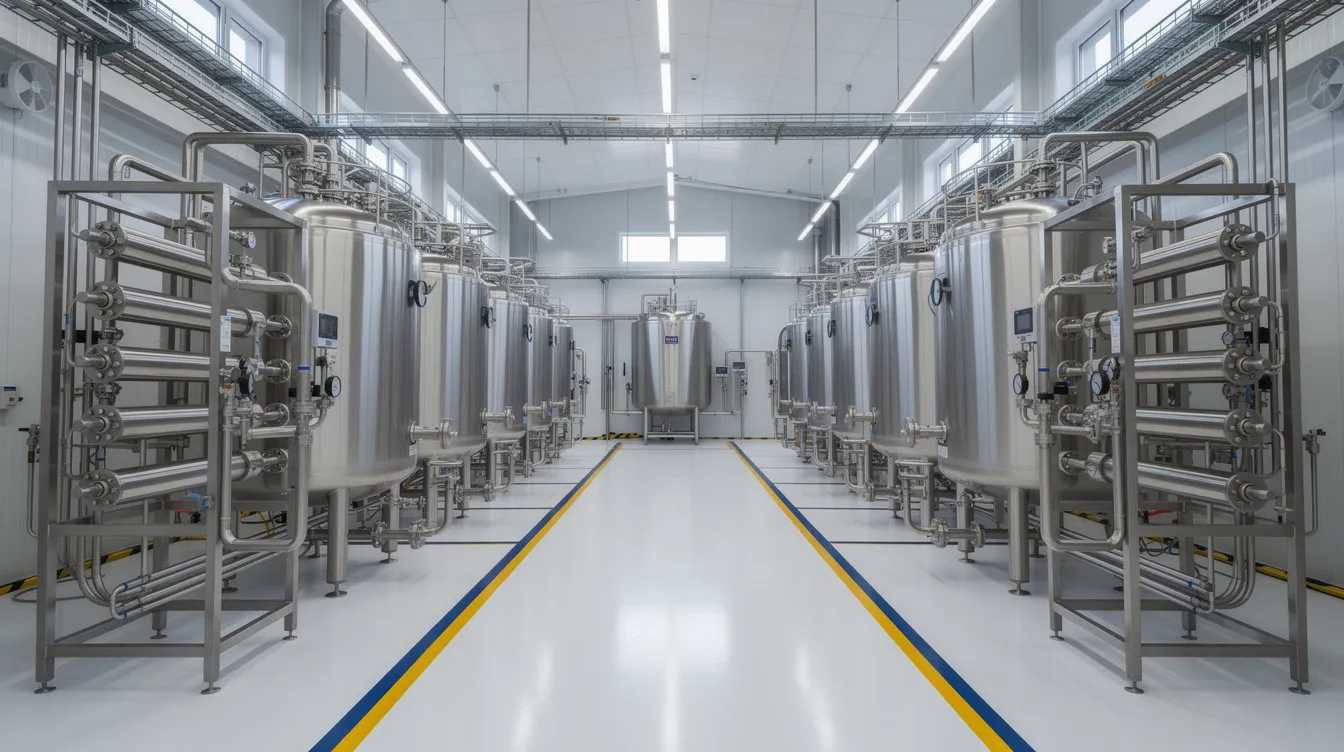
The heart of any dairy membrane processing plant is the ultrafiltration membrane system for dairy plant operations. MPCs are produced by ultrafiltration and diafiltration of skim milk, with membranes typically using 10–50 kDa molecular-weight cut-offs to retain both casein and whey proteins.
Key membrane concepts include transmembrane pressure, permeate flux (which declines with concentration and fouling), cleaning cycles, and membrane replacement cost. Membrane selection directly affects protein recovery, MPC grade achievability, and operating cost. Research shows pilot-scale flux rates of approximately 8–11 L/m²·h depending on temperature and total solids concentration.
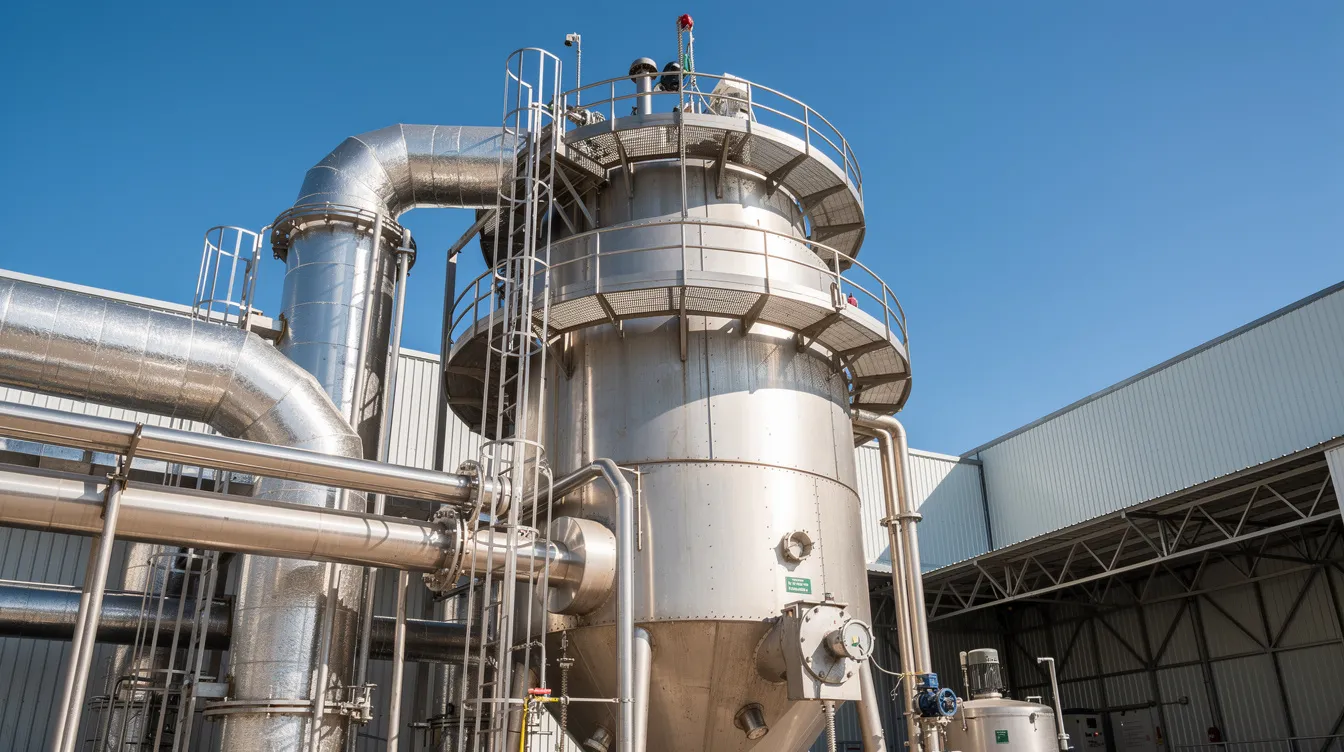
Multiple-effect evaporation before spray drying improves energy efficiency by pre-concentrating retentate, reducing spray dryer load and MPC spray dryer cost per kilogram of powder. Spray drying conditions – inlet temperatures around 180–200°C, outlet 80–90°C – control moisture, bulk density, solubility, and risk of heat damage or protein denaturation in the final product.
Permeate handling is critical. Ultrafiltration generates large permeate volumes containing lactose and soluble minerals. Utilisation options include sale of liquid permeate, concentration to permeate powder, or lactose recovery as outlined in a Lactose Manufacturing Plant Project Report. If permeate is not commercially utilised, it becomes an effluent load, increasing MPC plant wastewater treatment requirements and weakening profitability.
Plant Machinery, Equipment, Land, Building and Utilities
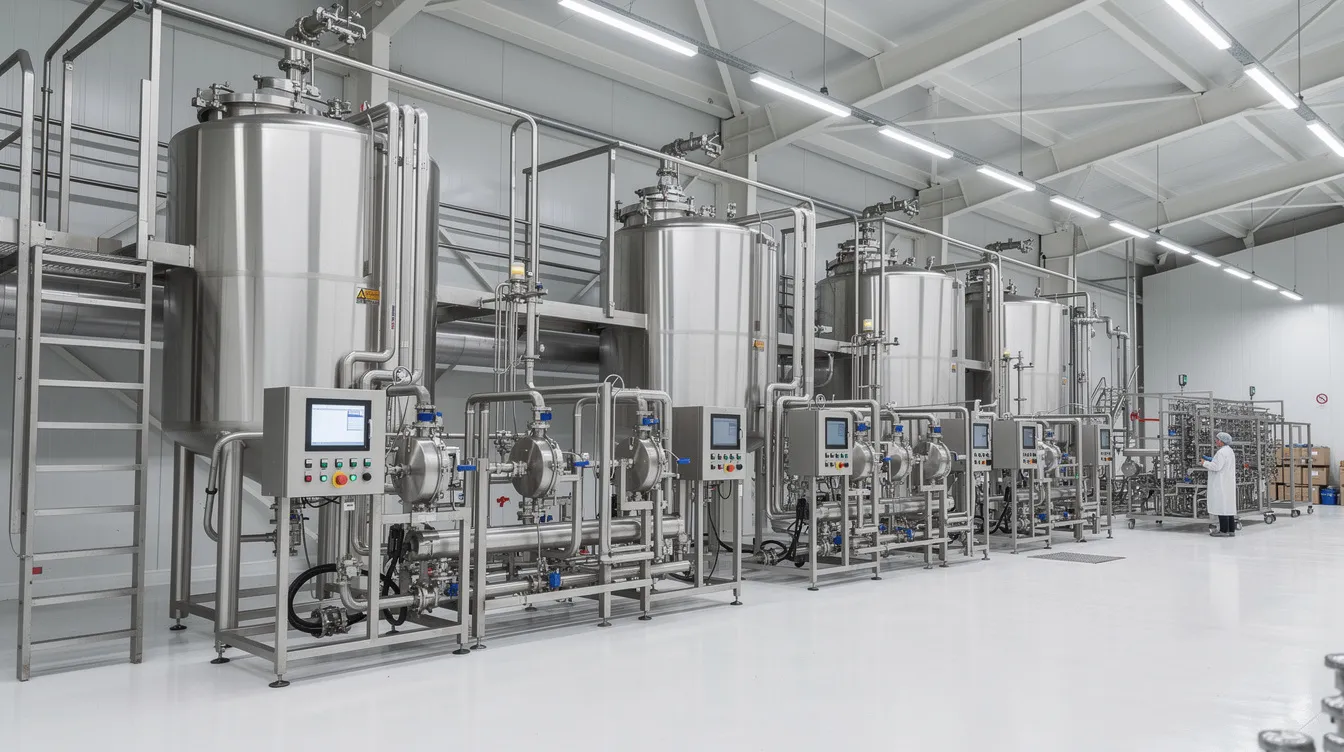
Key milk protein concentrate plant equipment includes:
- Milk reception, weighing, storage tanks, clarifier, and cream separator
- Pasteuriser and heat-exchanger systems
- Ultrafiltration membrane system and diafiltration lines
- Retentate and permeate storage tanks
- Multiple-effect evaporator
- Spray dryer and fluid-bed dryer/cooler
- Powder conveying, sieving, blending, and milk protein concentrate packaging machinery
- CIP system for MPC plant, refrigeration, boiler, air compressor, water treatment, laboratory, and effluent-treatment plant
Promoters should compare quotations from multiple MPC plant machinery manufacturers and normalise them technically before comparing prices, similar to the approach described for Whey Processing Plant Machinery and Equipment Cost. For broader context on dairy-powder equipment investment, promoters can review the Whey Powder Manufacturing Plant Project Report and Whey Processing Plant Setup Cost in India.
| Utility Consumer | Power Intensive | Steam Intensive |
|---|---|---|
| Membrane plant (UF/DF) | Yes | No |
| Evaporator | Moderate | Yes |
| Spray dryer | Yes | Yes |
| Refrigeration | Yes | No |
| CIP system | Moderate | Moderate |
MPC plant land and building requirements include separate zones for wet processing, membrane filtration, spray-drying tower, powder handling, utilities, ETP, and administration with provision for future expansion.
Quality Control, CIP, Packaging, Storage and Environmental Management
Consistent quality assurance is non-negotiable in any milk protein concentrate production plant, particularly when supplying infant formula, clinical nutrition, or export markets.
Key quality parameters for MPC include protein percentage, moisture content, and microbial safety, along with solubility, dispersibility, bulk density, particle size, and sensory attributes. Buyers of MPC ingredients typically specify functional properties like heat stability and viscosity for their specific nutritional applications.
A robust CIP system controls chemical concentration, temperature, contact time, and rinse-water volume for tanks, pipelines, ultrafiltration membranes, evaporators, and spray dryers. CIP practices directly affect membrane life, downtime, and operating cost.
Packaging uses food-grade multiwall bags with moisture-protective inner liners. Proper warehouse conditions – controlled temperature, humidity, and stacking – prevent caking and preserve the nutritional value and solubility of milk protein concentrate powders in powder form.
Wastewater from CIP, floor washing, and product losses requires appropriately designed treatment (primary, secondary, and tertiary as required). Efficient permeate utilisation and water recycling improve both environmental performance and project economics.
Regulatory Approvals, Plant Setup Cost and Means of Finance
Key Indian approvals generally applicable include business entity registration, PAN, GST, Udyam (where eligible), FSSAI licence, factory licence, pollution-control clearances (Consent to Establish and Operate), fire-safety NOC, and boiler/electrical approvals. Export-oriented units need additional certifications. Requirements vary by state and must be verified with current government notifications.
The MPC plant project cost structure typically includes:
| Cost Component | Illustrative Share |
|---|---|
| Land, site development, civil works | 15–20% |
| Processing and utility machinery | 50–60% |
| ETP and ancillary facilities | 5–8% |
| Pre-operative expenses and contingencies | 8–12% |
| Margin for working capital | 5–8% |
Milk protein concentrate plant cost in India varies substantially with plant capacity, target MPC grade, automation level, and whether equipment is indigenous or imported. The spray dryer alone can represent 35–40% of processing equipment cost.
MPC plant means of finance typically combine promoter’s equity, term loan from banks, working-capital limits, and potentially equipment finance or strategic investors. Subsidies should be considered conservatively and not treated as assured funding unless formally sanctioned.
Working Capital, Revenue Model and Profitability Analysis
MPC plant working capital requirement can be significant due to high daily milk purchases, finished-goods inventory for industrial buyers, and receivables often stretching 30–90 days for B2B customers.
The MPC plant revenue model comprises core revenue from MPC powder sales (across grades), additional streams from permeate, cream recovery, and potentially other dairy products if the plant is integrated. Premium pricing is achievable for consistent quality and high-solubility grades meeting specifications of food and beverage industry buyers.
Major profitability drivers include milk procurement price, protein recovery efficiency, energy consumption, membrane replacement cost, capacity utilisation, and MPC powder price in India for target grades. Even if per-kilogram margins appear attractive, overall viability depends on fixed costs, depreciation, interest burden, ramp-up losses, and working-capital interest.
The MPC manufacturing plant project report should include break-even analysis, ROI and IRR estimates, DSCR over the loan tenure, and scenario analysis under different milk-price and selling-price assumptions.
Financial Projections, Risk, Sensitivity and Feasibility Study
Standard milk protein concentrate plant financial projections include capacity-utilisation schedules, sales assumptions by grade, raw-material and utility projections, projected P&L, cash flow, balance sheet, working-capital assessment, and term-loan repayment schedules.
Key financial indicators – MPC plant break-even analysis, MPC project DSCR, and MPC project ROI and IRR – must be calculated using project-specific inputs rather than generic benchmarks.
Sensitivity analysis should test variables such as milk price increase, MPC selling-price reduction, lower protein recovery, higher energy cost, and lower capacity utilisation. An illustrative sensitivity format:
| Risk Variable | Adverse Change | Impact | Mitigation |
|---|---|---|---|
| Milk price | +10% | Reduced margins | Long-term procurement contracts |
| MPC selling price | −10% | Lower revenue | Diversify grades and buyers |
| Capacity utilisation | −15% | Higher per-unit fixed cost | Seasonal product planning |
| Membrane replacement | +25% frequency | Higher operating cost | Optimised CIP protocols |
A robust milk protein concentrate plant feasibility study must cover technical, market, financial, and operational feasibility together. Many concepts of sensitivity and process integration parallel those used in Whey Processing Plant Manufacturing Process and Flow Chart analysis.
Bank Loan, Project Finance and Contents of a Bankable DPR
Banks evaluating an MPC plant bank loan typically examine promoter background, technical configuration, milk-procurement arrangements, market assessment, milk protein concentrate plant investment structure, financial projections including DSCR and IRR, and sensitivity analysis.
A bankable DPR for MPC manufacturing plant must be customised – standard templates cannot capture project-specific inputs like local milk composition, customer contracts, or unique process configurations.
Contents of an MPC Manufacturing Plant Project Report:
- Executive summary and promoter profile
- Industry overview and milk protein concentrate market assessment
- Product details and milk protein concentrate applications
- Technical process and MPC plant process flow
- Proposed capacity, location, layout, and raw-material plan
- Machinery, equipment, utilities, and manpower
- Regulatory and environmental considerations
- Project cost, means of finance, and working-capital assessment
- Detailed financial projections, DSCR, break-even, ROI, and IRR
- Sensitivity analysis, risk assessment, and implementation schedule
For projects involving whey, lactose, and other dairy ingredients alongside MPC, cross-referencing with reports such as Whey Protein Isolate Manufacturing Plant can support a comprehensive funding proposal.
How CA Manish Gugliya and Project Report Bank Can Assist
As CA Manish Gugliya, FCA, DISA (ICAI), practising since 2006, I specialise in preparing detailed project reports, bank-finance DPRs, and investor-ready feasibility reports for large dairy and food-processing projects including milk protein concentrate manufacturing plant ventures.
My advisory services for MPC projects include:
- Structuring MPC plant project cost and means of finance
- Preparing milk protein concentrate plant financial projections including break-even analysis, DSCR, ROI, and IRR
- Working-capital assessment, CMA Data preparation support, and bank-loan documentation
- Sensitivity analysis on milk price, MPC selling price, capacity utilisation, and energy cost
I do not provide detailed engineering design or product formulations – these must come from qualified dairy technologists, process engineers, and machinery suppliers. My role is to integrate technical inputs into a coherent, bankable financial framework.
I invite serious promoters planning MPC projects – particularly those with proposed capital investment of ₹10 crore or more – to share their proposed location, milk-handling capacity, target MPC grades, preliminary machinery quotations, and funding structure.
Contact CA Manish Gugliya through www.projectreportbank.com for a customised complete DPR for milk protein concentrate manufacturing plant, feasibility study, financial model, CMA Data assistance, or bank-finance DPR tailored to your specific project.
Frequently Asked Questions (FAQs)
What minimum scale makes sense for an MPC Manufacturing Plant in India?
While very small plants are technically possible, MPC projects usually become economically meaningful only beyond several lakh litres of milk processing per day. The exact threshold depends on milk availability, target MPC grade, product mix, and whether the plant operates standalone or within an existing dairy. This must be evaluated case by case during the DPR preparation, considering fixed-cost recovery and buyer requirements.
Can an existing dairy-processing plant be upgraded to produce Milk Protein Concentrate?
Many organised dairies can potentially retrofit a milk ultrafiltration plant, diafiltration system, and an appropriate spray dryer into existing infrastructure. However, feasibility depends on existing milk volumes, building layout, utility capacity, wastewater handling, and whether the current processing technology supports the required hygiene standards. A specific technical and financial study is necessary before committing to such an upgrade.
How long does it typically take to implement an MPC Production Plant?
Implementation timelines commonly span 12 to 24 months from concept to commissioning, covering feasibility study, DPR preparation, bank sanction, equipment procurement, civil construction, installation, and trial runs. Actual duration depends on plant size, membrane and spray-dryer lead times, regulatory approvals, and the promoter’s decision-making speed. During the forecast period, any delays directly affect interest during construction and project economics.
Can MPC from an Indian plant be exported to developed markets?
Export potential exists but requires stringent adherence to international food-safety standards, customer audits, consistent product specifications, and certifications such as FSSC 22000 or equivalent. The DPR should account for additional capital investment and operating costs needed to meet export-market expectations. New possibilities in regional markets across Asia and the Middle East also merit evaluation.
Does an MPC project qualify for government subsidies or incentives?
Certain dairy and food-processing projects may be eligible for central or state-level schemes, but eligibility, quantum, and conditions vary and change periodically. Promoters must consult current policy documents and professional advisers. Subsidies should not be treated as guaranteed in base financial projections unless formally sanctioned, as this can create dangerous gaps in the means-of-finance structure.
Conclusion and Professional Disclaimer
A milk protein concentrate manufacturing plant can be a promising value-added dairy project for India, provided promoters secure reliable high-quality milk supplies, select appropriate MPC grades for validated customer applications, and design efficient membrane, evaporation, and spray-drying systems. Careful planning of permeate utilisation, working capital, and risk mitigation is equally essential.
Project success relies on realistic technical and financial assumptions, disciplined implementation, and strong customer relationships – not on theoretical profit margins alone. To produce MPC profitably, every element from milk procurement to MPC production and dispatch must work in concert.
Contact CA Manish Gugliya through www.projectreportbank.com for a customised milk protein concentrate plant project report, feasibility study, CMA Data support, financial projections, and bank-finance documentation tailored to your proposed MPC production plant.
Disclaimer: This article provides general information for educational and planning purposes and does not constitute investment, legal, tax, or engineering advice. Project costs, prices, returns, yields, and regulatory requirements mentioned are illustrative and may change over time. Readers should obtain project-specific professional advice and updated data before making investment or financing decisions for any MPC manufacturing plant project report. All technical parameters, whey protein hydrolysate comparisons, bone health claims, and product specifications should be validated with qualified dairy technologists and regulatory experts.