Key Takeaways
- This hub article covers five distinct rice processing and value-addition project models – integrated rice milling, Poha (rice flakes), puffed rice (murmura), instant Poha and ready-to-cook products, and integrated value-added rice processing plants – helping you identify which opportunity may suit your situation.
- Standalone Poha or puffed rice plants typically require moderate capital, while integrated multi-product rice value addition plants demand higher investment, more working capital and more complex management systems.
- A bankable project report (DPR) for any rice processing plant must go well beyond a machinery quotation – it needs realistic financial projections, capacity ramp-up assumptions, DSCR analysis, working-capital assessment and sensitivity testing to satisfy bank appraisers.
- Detailed sub-cluster hub articles are linked throughout this page for each specific project type, covering process, machinery, project cost, financial projections and DPR components in depth.
- This article is written from the perspective of CA Manish Gugliya, a practising Chartered Accountant with over 20 years of experience in DPR preparation, CMA Data, project finance and financial modelling for manufacturing and food processing projects across India.
Introduction: From Commodity Rice to Value-Added Rice Products
Rice processing in India is no longer limited to milling paddy and selling loose grain. Rising urbanization drives demand for convenient traditional breakfast options, and consumers increasingly prefer packaged, branded and ready-to-cook rice-based products. This shift is creating significant business opportunities beyond commodity milling – in Poha manufacturing, puffed rice production, instant Poha, rice-based snacks and integrated value-added rice processing.
When we talk about a Poha, Puffed Rice & Value-Added Rice Products Project Report, we are not referring to a single plant type. This hub article covers a cluster of rice processing project models, each with distinct capital needs, process complexity, working-capital cycles and market strategies. India’s rice value chain offers significant opportunities in breakfast foods, snacks and export markets – but only when the right project configuration matches the promoter’s strengths.
Value addition in rice processing means moving beyond raw paddy or milled rice into products like flattened rice (Poha), puffed rice (murmura), instant mixes, rice flour-based snacks, and branded retail packs that can command better realisation and longer shelf life. Project economics vary dramatically based on product mix, automation level, packaging format, branding ambition and sales channel – whether bulk wholesale, institutional supply, modern retail or e-commerce. A promoter selling loose murmura to local traders faces a completely different financial model than one launching branded instant Poha cups nationally.
If you are planning a rice processing or rice value addition project and need a customised DPR for bank finance, you can reach CA Manish Gugliya on WhatsApp at 7389736441.
Quick Navigation: Key Rice Processing & Value-Addition Clusters
This hub provides a strategic and financial overview across rice value-addition projects. For detailed process, machinery, layouts and project economics, explore the relevant sub-cluster page:
- Integrated Rice Milling & Processing Plant Project Report – primary rice milling, by-products and the foundation for downstream value addition.
- Poha Processing Plant Project Report – rice flakes manufacturing, grades, market channels and unit economics.
- Puffed Rice Manufacturing Plant Project Report – murmura and similar expanded rice products, snack applications and packaging.
- Instant Poha Manufacturing Plant Project Report – ready-to-cook and convenience products, formulation, packaging and branding.
- Integrated Value-Added Rice Processing Plant Project Report – multi-line projects combining Poha, puffed rice, instant products and common infrastructure.
Understanding the Poha, Puffed Rice & Value-Added Rice Products Industry
The rice value chain in India follows a clear progression: paddy procurement from farmers and mandis → primary rice milling (dehusking, polishing, grading) → by-product generation (bran, husk, broken rice) → secondary processing into products like Poha, puffed rice and rice flour → tertiary processing into instant mixes, seasoned snacks and ready-to-cook products → packaging and distribution.
The distinction between commodity-oriented rice processing and value-added food manufacturing is fundamental. A rice mill selling polished grain in bulk operates in a volume-driven, low-margin business. A plant producing branded Poha, flavoured puffed rice or instant Poha cups operates in a differentiated, packaging-dependent, higher-margin but also higher-cost business.
Key factors shaping the rice processing industry in India:
- The global rice market was valued at USD 316.58 billion in 2025 and is expected to reach USD 384.74 billion by 2034. India produced 118.43 million metric tons of paddy in 2019-20, making it the second-largest global producer and ensuring strong raw material availability.
- India exported 5.04 million metric tons of non basmati rice worth USD 2,014.59 million in 2019-20, indicating international markets potential beyond domestic consumption.
- Only about 10% of India’s rice production currently enters value-added processing, leaving substantial room for growth.
- Widespread health consciousness is driving demand toward gluten-free and low-calorie options. Rice is a source of carbohydrates, fiber and vitamins. The bran of rice is rich in γ-oryzanol, beneficial for health. Pigmented rice contains functional ingredients beneficial for health, and consumption of black rice extract can lower blood glucose levels.
- The global snack market, including traditional rice products, is projected to reach ₹1.04 lakh crore by 2034, while the global poha market is valued at approximately $1.8 billion with a CAGR of 6.2%.
- Rice can be processed into a wide variety of products: instant dosa mix, instant idli mix prepared from rice and black gram flour, murukku made from raw rice flour and black gram, traditional snacks like laddu and barfi using rice flour, and rice can be transformed into popped snacks and breakfast bars.
- Rice processing can empower rural entrepreneurship and create local employment, especially in paddy-producing regions.
- Government schemes like PMFME and PMEGP support food processing MSMEs with capital subsidies, and the rice processing industry benefits from government funding initiatives including Priority Sector Lending classification.
Major Rice Processing & Value-Addition Project Opportunities
Promoters can choose from several project formats depending on their capital, market access and operational capabilities. This section gives concise overviews; each opportunity has a dedicated sub-cluster hub page with detailed DPR-level content.
Integrated Rice Milling & Processing Plant
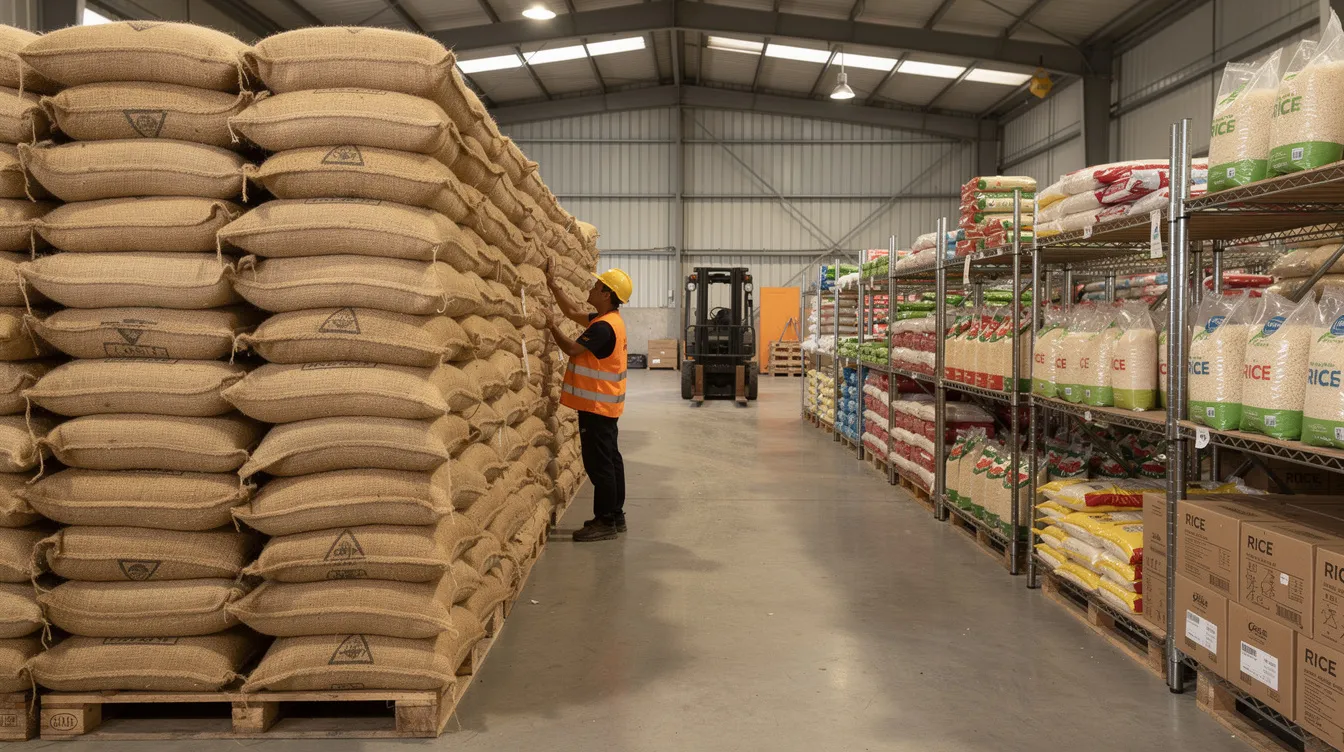
An integrated rice milling plant handles primary rice processing: cleaning, dehusking, polishing, grading and packing of milled rice. By-products like bran, husk and broken rice add supplementary revenue. Bran can be sold to oil extraction units; husk can fuel boilers.
This model suits existing grain traders, paddy aggregators or agro-based entrepreneurs with easy access to paddy. Capacity ranges from a few tonnes per hour upward, with automation level and storage strongly influencing project cost and profitability. Such a plant can be the backbone for downstream rice value addition – once milling operations stabilise, adding a Poha or puffed rice line becomes a natural next step.
For detailed machinery, process and project economics, refer to the Integrated Rice Milling & Processing Plant Project Report.
Poha & Rice Flakes Processing Plant
Poha (flattened rice) is one of India’s most widely consumed foods, used for breakfast, snacks and cooking across regions. Poha is produced by parboiling and flattening paddy grains into flakes, available in thin, medium and thick grades. The nutritional value of Poha includes easily digestible carbohydrates and dietary fiber.
A rice flakes manufacturing plant serves both loose wholesale markets and branded packaged Poha segments. Demand comes from regional retail, institutional buyers, snack manufacturers, namkeen makers and modern trade. Packaging quality and product positioning directly influence achievable selling price.
Poha processing plants are attractive for MSMEs because of moderate capital needs and established domestic demand, but proper planning of key raw materials, working capital and distribution is essential. The Poha Processing Plant Project Report covers detailed process, machinery and unit economics.
Puffed Rice & Murmura Processing Plant
Puffed rice (murmura, kurmura, muri) is a light, expanded rice product consumed directly as a snack and used as a base for mixtures, chivda and traditional foods. Puffed rice is made by expanding aged raw or parboiled rice kernels through controlled heating. Puffed rice is crucial for traditional street foods and modern breakfast cereals alike.
Market applications span loose murmura for traditional snacks, packaged puffed rice for retail, and puffed rice as an ingredient in value-added products like chikki, laddu and ready-to-eat mixes. Estimated profit margins for the puffed rice industry range between 20% to 30%, though actual results depend on scale, product form and market channel.
Such plants can be standalone units or part of an integrated project. Detailed DPR content is available in the Puffed Rice & Murmura Processing Project hub page.
Instant Poha & Ready-to-Cook Rice Products
Instant Poha and ready-to-cook rice products target urban consumers, working professionals and e-commerce channels, often sold in portion packs, bowls or cups. This is where processed rice enters the convenience food and processed foods segment.
These projects involve recipe formulation, seasoning with spices, oil and flavouring blending, precise moisture content control and packaging designed for longer shelf life. Value-added rice products include fortified rice flakes and pre-seasoned poha kits. The potential for higher per-kilogram realisation comes with higher costs for packaging, marketing, quality assurance and inventory management.
Explore the Instant Poha Manufacturing Plant Project Report for detailed DPR-level content on this segment.
Integrated Value-Added Rice Products Processing Plant
An integrated value-added rice processing plant combines two or more product lines – Poha, puffed rice, instant Poha, flavoured snacks, sometimes packaged milled rice – under common infrastructure. Typical shared facilities include paddy and rice storage, cleaning equipment, utilities (steam, power, compressed air), a packaging hall, quality control laboratory and finished-goods warehouse.
Benefits include multiple revenue streams and better by-product utilisation, but capital investment, management complexity and working-capital demand are all higher. Many promoters develop such plants in phases – starting with one core line and adding related lines as markets and internal systems stabilise.
The Integrated Value-Added Rice Processing Plant Project Report covers multi-product and integrated model planning in detail.
Which Rice Processing Project Should an Entrepreneur Choose?
Project selection is one of the most critical decisions and should be based on promoter strengths, raw material access, investment capacity, market understanding and risk appetite.
| Project Type | Primary Product | Processing Complexity | Capital Intensity | Working-Capital Requirement | Packaging & Branding Dependence | Market Orientation | Scalability | Suitable Promoter Profile |
|---|---|---|---|---|---|---|---|---|
| Integrated Rice Milling | Milled Rice, Bran, Husk | Low to Moderate | Moderate to Higher | Moderate | Low | Bulk, Institutional | Moderate | Grain traders, paddy aggregators |
| Poha Plant | Rice Flakes (various grades) | Moderate | Moderate | Moderate | Low to Moderate | Bulk, Semi-branded, Retail | Easy to Moderate | MSMEs, first-time food processors |
| Puffed Rice Plant | Murmura, Flavoured Puffs | Moderate | Lower to Moderate | Lower to Moderate | Low to High | Bulk, Snack retail | Easy to Moderate | Small manufacturers, snack businesses |
| Instant Poha / RTC | Ready-to-cook meals, cups | Higher | Higher | Higher | High | Branded retail, E-commerce | Moderate to Complex | FMCG-focused, brand-oriented |
| Integrated Value-Added Plant | Multiple rice products | High | Higher | Higher | Moderate to High | Diversified | Complex | Established millers, larger promoters |
Integrated plants score higher on complexity and capital but provide diversified revenue. Standalone Poha or puffed rice may be simpler to start and easier to fund. Before finalising, evaluate raw material availability, existing networks, regional demand patterns and bank finance access.
Integrated Plant vs Standalone Processing Unit
The choice between a focused single-product line and an integrated multi-product plant is not straightforward.
Advantages of standalone units:
- Simpler operations and staffing
- Narrower range of SKUs to manage
- Relatively lower initial project cost
- Easier troubleshooting and quality control
- Clearer market-positioning for a single product
Advantages of integrated plants:
- Common utilities and infrastructure reduce per-product overhead
- Cross-utilisation of broken rice, bran and by-products
- Ability to supply diversified customers across wholesale, retail, institutional and private label
- Opportunity to balance demand fluctuations between products
Risks of integration: Higher capital outlay, more complex supply chain, higher working-capital requirement and greater pressure on management systems and quality assurance across multiple product lines.
Promoters often benefit from a phased approach: start with one core line, then add related lines once markets, finance and internal systems stabilise.
Manufacturing Process – From Paddy and Rice to Value-Added Products
This section provides only a high-level process overview. Detailed technical steps are covered in each sub-cluster page.
Generic flow across rice value addition projects:
- Raw material procurement (paddy or rice)
- Cleaning, grading and storage
- Primary rice processing (husking, polishing) where applicable
- Product-specific processing (flattening for Poha, puffing for murmura, formulation for instant mixes)
- Quality checks and food safety controls
- Packaging (bulk bags, retail pouches, cups)
- Warehouse storage and dispatch
Moisture control is critical in processing Poha and puffed rice to maintain product quality. Actual sequences and machinery differ between a rice milling plant, a Poha plant, a puffed rice plant and an instant Poha plant.
From a project-finance perspective, process choices directly impact throughput, yields, energy consumption, labour requirement, maintenance downtime and product rejection rates – all of which flow into financial projections.
Machinery & Equipment Planning
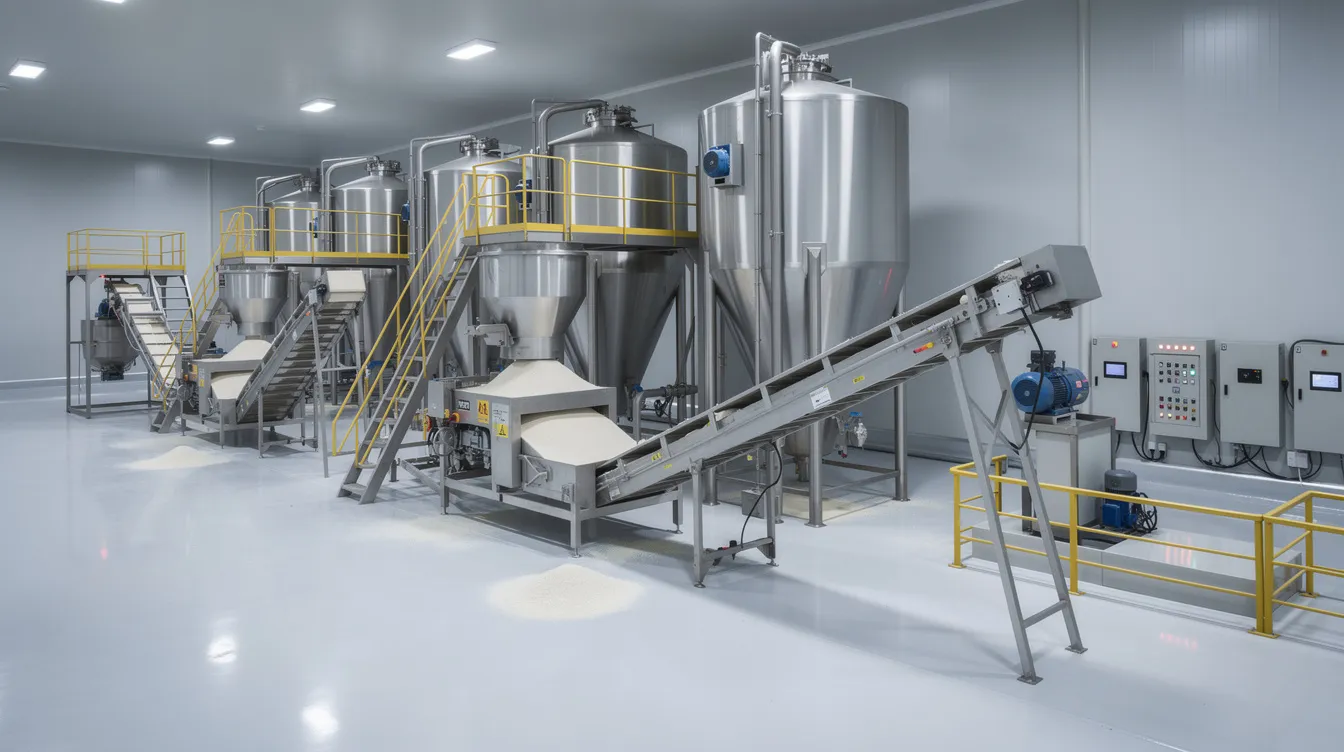
Machinery selection must start from the chosen product mix and target capacity, not from supplier catalogues alone. Machinery costs are the largest portion of capital expenditure in most rice processing projects, often accounting for 40–60% of fixed capital.
Key planning considerations:
- Rice milling and parboiling equipment
- Poha/rice flakes machinery (parboiling, flaking, dryers)
- Puffed rice roasters or puffing units
- Seasoning and blending equipment for instant Poha and snacks
- Packaging machines (weigh-fillers, sealers, cup fillers, form-fill-seal machines)
- Material handling equipment and conveyors
- Quality-control lab instruments
Automation level, desired labour intensity, power availability and building layout all influence machinery choices and total cost. Quotations must be matched with realistic production planning, civil layout drawings and utility calculations, rather than copied blindly into a rice processing plant project report.
From a DPR perspective, underestimating installation costs, foundations, spare parts and pre-operative expenses is a common planning mistake. Machinery quotations often understate full installed cost by 20–40%.
Capacity Planning & Product Mix
Installed capacity is the theoretical maximum output at full load. Achievable capacity utilisation in real conditions is always lower – realistic capacity utilisation in initial years is typically 50–70%, increasing to 80% or above after 2–3 years as distribution and supply chains stabilise. Rice processing plants can achieve economies of scale with 50,000–100,000 MT annual capacity, though many MSME projects operate at smaller scales.
Key capacity planning considerations:
- Assess local and regional demand for Poha, puffed rice, instant products
- Align machinery capacity with realistic market absorption
- Review seasonal paddy availability and storage to avoid idle plant
- Consider future expansion by reserving space and utilities in layout
- In integrated plants, avoid double counting production when two lines share the same base rice
One common mistake I see in project planning is assuming 80–90% utilisation from year one. Bankers question this immediately, and it can undermine the perceived feasibility of the entire project report.
Raw Material & Procurement Planning
Paddy and rice are the core raw materials. Quality – variety, grain size, moisture – directly affects recovery, product quality and shelf life. India is the second-largest global producer of paddy, ensuring strong raw material availability across most producing regions. Whole grain rice contains 1.07 g of phytic acid per 100 g, a nutritional detail relevant for health-positioned products.
Key procurement-planning aspects:
- Identify reliable paddy or rice suppliers in the intended catchment area
- Understand seasonal harvest cycles and pricing patterns
- Plan storage capacities and moisture control
- Decide between buying paddy (and milling in-house) or buying already milled rice
- Conduct quality-control checks at procurement: moisture testing, grain count, foreign-matter checks
The link between inventory days and working capital is direct. The setup requires a thorough site evaluation for raw material proximity. More seasonal procurement means bulk buying, larger warehouses and a bigger working-capital block.
Land, Building, Utilities & Infrastructure
Site planning should start with process flow and material movement, creating a hygienic and efficient environment for rice processing and value addition.
Core infrastructure components:
- Raw-material unloading and storage areas
- Processing halls for rice milling, Poha, puffed rice and instant products
- Drying yards or mechanical dryers
- Finished-goods warehouses and dispatch bays
- Packaging rooms with controlled conditions
- Administrative block and laboratory
Typical utilities include electrical power, water for parboiling and cleaning, steam or hot air for drying, compressed air for packaging, and fuel storage for boilers or roasters. Food safety guidelines require clear segregation of raw and finished goods, proper drainage, pest control and easy sanitation – all of which must be reflected in building design.
From a project-report perspective, built-up area assumptions, site development cost and utility installations contribute significantly to project cost and must be reasonably estimated.
Packaging, Branding & Distribution Strategy
Many rice processing businesses start with bulk selling and gradually move toward packaged, branded products. This shift changes the economics fundamentally. Urbanization is driving demand for packaged rice products, and proper packaging is essential to protect Poha and puffed rice from moisture. Packaging should provide high moisture barrier performance to retain the crunchiness of rice products.
Distribution models include:
- Bulk sales to traders and institutional buyers
- Semi-branded or private-label supplies
- Own brand distribution via general trade, modern retail and e-commerce
- Regional versus national branding strategies
While branded packaged products can provide better average realisation, they also bring marketing expenses, credit risk with distributors, higher working capital and product-return risks. Consider: a Poha processor selling in bulk to wholesalers has minimal packaging cost but low margins per kg. The same unit launching a 500 g branded Poha pack commands better price but must invest in packaging machinery, design, distribution and marketing.
Project Cost for Poha, Puffed Rice & Value-Added Rice Processing
There is no single standard project cost because costs depend on capacity, automation, technology, product mix, location and building type. Typical components include:
- Land and site development
- Building and civil works
- Plant and machinery
- Utilities (boiler, DG set, electrical panels, water systems)
- Packaging machinery and material-handling systems
- Laboratory and quality-control equipment
- Furniture, office equipment, IT
- Preliminary and pre-operative expenses (legal, consultancy, interest during construction, trial runs)
- Contingency margin
- Margin money for working capital
From a project-finance angle, the DPR should clearly separate fixed-asset costs and working-capital margin so that bankers can structure term loans and cash-credit facilities appropriately. Indicative cost ranges can be discussed during consulting, but exact numbers must come from customised design, quotations and realistic civil-cost estimates.
Means of Finance & Promoter Contribution
The typical financing structure for a rice processing plant project combines promoter equity and bank term loan, along with separate working-capital limits.
A DPR’s “means of finance” section usually covers:
- Promoter contribution/equity
- Term loan from bank or financial institution
- Unsecured loans from promoters or group entities if applicable
- Subsidies or grants where available
- Other instruments for larger projects
The ideal debt-equity mix is project-specific and should align with projected cash generation and DSCR. Banks often require promoter margin of 25–30% on machinery loans, though this varies. Sustainable agriculture and food processing projects may qualify for Priority Sector Lending, enabling more favourable terms.
Promoters planning sizeable Poha, puffed rice or integrated rice processing projects can seek Project Finance Advisory & Loan Structuring support for optimal funding structure.
Working Capital Requirement
Rice processing, Poha and puffed rice manufacturing often need substantial working capital. Operating costs are driven by raw material consumption, mainly paddy rice, and paddy rice accounts for 80–85% of operating expenses.
Major working-capital components:
- Paddy or rice inventory (often large due to seasonality)
- Packaging material inventory
- Finished-goods inventory for Poha, puffed rice and instant products
- Trade receivables from distributors or institutional buyers
- Less: credit period from suppliers
The working-capital cycle is calculated from inventory days, receivable days and payable days. Common issues include underestimating inventory levels, ignoring seasonal stock build-up, or projecting unrealistically low debtor days. Banks view these critically during appraisal.
Accurate CMA Data Preparation and working-capital assessment are essential for presenting a bankable rice processing plant DPR.
Revenue Model & Profitability
Revenue in a rice value-addition business comes from multiple product streams and sometimes by-products.
Possible revenue sources:
- Milled rice in various grades
- Poha and rice flakes in bulk or retail packs
- Puffed rice for loose markets and packaged snacks
- Instant Poha and ready-to-cook mixes
- Value-added snacks including rice-based products
- By-products: bran, husk, broken rice
Key profitability drivers include gross margin per kg after raw material and packaging cost, yields and wastage rates, capacity utilisation and fixed costs absorption, energy and labour efficiency, freight and marketing expenses, and finance costs. Gross profit margins across rice value-added products generally range between 15–25%, though actual margins depend on local buying prices, selling prices and management efficiency.
In a Poha, Puffed Rice & Value-Added Rice Products Project Report, it is good practice to show product-wise contribution margins and sensitivity of profits to changes in raw material cost or selling price. A case study of a small-scale rice milling operation in Tamil Nadu showed net profit margins of around 14–15% with current ratios of 1.7–1.8, demonstrating that even primary processing can be reasonably profitable with good operations.
Financial Projections for a Rice Processing Project
Financial projections typically cover 5–7 years and form a core part of any bankable rice processing plant project report.
Key components:
- Projected production volumes and capacity utilisation for each product
- Sales projections with assumed selling prices and product mix
- Raw material and packaging consumption based on realistic norms
- Manufacturing, administration and selling expenses
- Depreciation and interest
- Projected profit and loss account, cash-flow statement and balance sheet
For integrated value-added rice processing projects, separate line-item assumptions may be needed for Poha, puffed rice, instant Poha and other products to avoid distorted margins.
From a CA’s viewpoint, projections should be assumption-driven: each major figure should trace back to a clear assumption, not tuned simply to achieve a preferred DSCR or IRR. Financial Projections & Financial Modelling services can help build scenario analysis – best case, base case and stress case – for discussions with bankers or investors.
DSCR & Loan Repayment Capacity
Debt Service Coverage Ratio (DSCR) measures cash available for servicing debt (interest plus principal) divided by total debt service obligation for that period. Bankers use DSCR to judge whether a rice processing project can comfortably service its loans.
Factors affecting DSCR:
- Capacity utilisation ramp-up trajectory
- Gross margins and operating leverage
- Interest rate assumptions
- Loan tenure and repayment schedule
- Working-capital interest burden and delays in receivables
While some lenders target DSCR of 1.25–1.50, the acceptable level for a specific proposal is influenced by project risk, collateral, promoter background and banking relationship. In practical DPR preparation, sensitivity of DSCR to changes in utilisation, selling price and raw material cost should be shown rather than presenting a single optimistic figure.
Feasibility & Project Viability
Feasibility is a multi-dimensional assessment covering market, technical, financial and operational aspects before committing significant capital.
Components of a feasibility study:
- Market feasibility: demand assessment for Poha, puffed rice, instant products in target regions
- Technical feasibility: choice of process, machinery, layout and utilities
- Financial feasibility: projected profitability, cash flows, DSCR and break-even
- Working-capital feasibility: adequacy of limits and liquidity
- Risk and sensitivity analysis
Critical sensitivity variables include paddy price increases, drop in selling price due to competition, lower-than-expected capacity utilisation, higher energy or labour costs, and delays in collections from distributors. A SWOT analysis can help structure these dimensions systematically. An economic analysis that openly discusses both strengths and risks is more credible than one assuming everything will go exactly as planned.
A Project Feasibility Study is advisable before large investments in integrated rice value-addition plants.
Bank Loan & DPR for Rice Processing Projects
A Detailed Project Report (DPR) is the primary document banks use to evaluate term loans for rice processing and value-added rice products plants. FSSAI standards require food businesses to obtain appropriate registrations for compliance, and regulatory approvals and licensing are essential for plant operations – banks verify these as part of their appraisal.
Typical contents of a bank-oriented DPR:
- Promoter background and experience
- Project concept and location
- Product profile and capacity
- Manufacturing process and technology
- Major machinery and utilities
- Land, building and infrastructure details
- Project cost and means of finance
- Market overview and marketing strategy
- Working-capital assessment
- Projected financial statements for 5–7 years
- Break-even analysis, DSCR and key ratios
- Risk factors and mitigation strategies
Attaching a machinery quotation or brief cost sheet is not a complete DPR. The document outlines the entire project story for the banker’s appraisal. CA Manish Gugliya supports promoters by preparing and reviewing DPRs that align technical details with financial modelling and bank requirements.
For structured DPR and loan proposal support, promoters can reach out via Bank Finance DPR & Loan Proposal Assistance or WhatsApp 7389736441.
Common Mistakes While Planning a Rice Processing Project
This is one of the most important sections for promoters to read carefully. Common mistakes include:
- Choosing machinery before finalising product mix and market strategy. I have seen promoters place machinery orders worth lakhs before deciding whether they will sell bulk or retail, or what product mix they will produce.
- Assuming 80–90% capacity utilisation from year one without a realistic marketing plan or distribution network. Banks catch this immediately.
- Underestimating working-capital needs, especially when paddy procurement is seasonal and large inventory must be held for months.
- Ignoring packaging and marketing costs when projecting margins for branded Poha or instant products. Packaging alone can add ₹5–15 per kg depending on format and technology.
- Mixing up capacities of different lines, for example, assuming Poha and puffed rice lines will both run at full capacity simultaneously without confirming market demand for both.
- Preparing projections backwards – starting with a target DSCR of 1.5 and working back to derive sales and margins, rather than building projections from realistic assumptions.
- Skipping sensitivity analysis. What if paddy price rises 15%? What if selling price drops 10%? Banks want to see these scenarios.
- Overlooking storage, ventilation and food safety in land and building planning. Milk, sugar, corn, wheat, dough, batter and flours-based ingredients used in certain formulations need separate storage considerations.
- Insufficient attention to emission standards and environmental compliance requirements for boilers and roasters.
One illustrative example: a promoter in a central Indian district projected 85% utilisation from month three for a Poha plant. The bank appraiser noted that the promoter had no existing distribution network and no confirmed institutional buyers. The loan was delayed by six months while revised projections with realistic ramp-up were prepared.
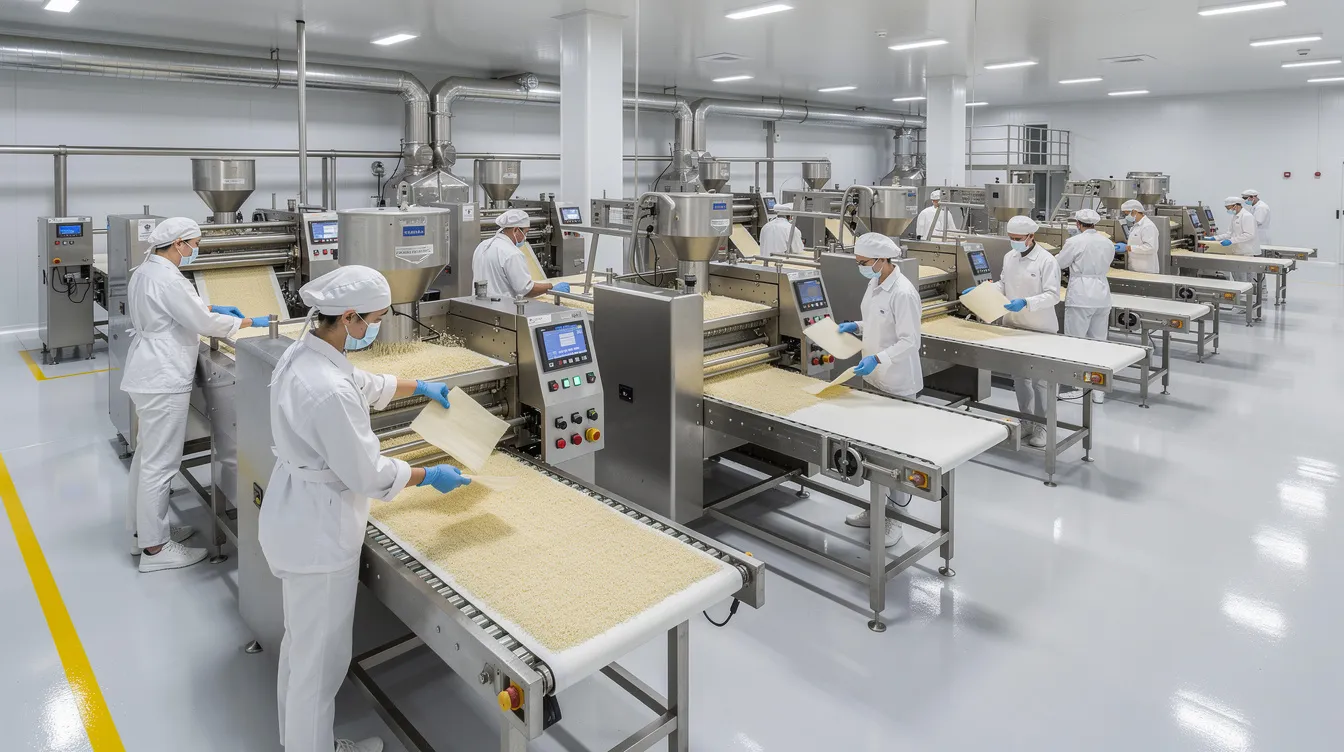
When Does an Integrated Value-Addition Model Make Sense?
Integrated Poha, puffed rice and instant rice product plants are not mandatory for every promoter. They make commercial sense when:
- An existing rice miller with assured paddy access wants to forward integrate
- The promoter has established distribution networks handling multiple SKUs
- Regional demand exists for a basket of rice-based products
- Sufficient equity and working capital are available to handle higher complexity
- The promoter has experience managing manufacturing operations at medium scale
A simpler standalone model may be more appropriate when:
- The promoter is a first-time entrepreneur with limited capital
- One product concept needs testing before scaling
- The location has clear demand for one product but uncertain potential for others
- Countries or regions being targeted need specific certifications that are easier to manage for a single product line
Integrated value-addition models are best approached in phases. The development of multiple product lines over time reduces risk and allows learning. Refer to the Integrated Value-Added Rice Processing Plant Project Report for detailed planning of multi-line projects.
How CA Manish Gugliya Can Assist with Rice Processing Projects
CA Manish Gugliya is a practising Chartered Accountant with over 20 years of experience in DPR preparation, CMA Data, project finance, financial projections and feasibility studies for manufacturing and food processing projects across India.
Specific support areas for rice processing projects:
- Preparation of bankable Detailed Project Reports for various rice processing plant configurations
- Development of financial projections and cash-flow models based on realistic capacity and market assumptions
- Working-capital assessment and CMA Data preparation aligned with bank formats
- Project finance advisory and loan-structuring support
- Assistance in responding to bank queries and clarifying project assumptions during appraisal
The role is to assist in preparation, structuring and presentation – actual loan approval always rests with the lending institution based on its policies and appraisal.
Promoters serious about planning a rice processing or rice value addition business can WhatsApp or call 7389736441 for professional DPR and project-finance assistance.
Frequently Asked Questions
What is a value-added rice products processing plant?
A value-added rice processing plant goes beyond milling and polishing rice. It converts rice into products like Poha, puffed rice, instant Poha, ready-to-cook mixes and rice-based snacks, often with specialised equipment, packaging and branding. Such plants may be standalone (producing only Poha or only puffed rice) or integrated, depending on investment and strategy. The production involves specific food processing technology that differs from commodity rice milling.
Is Poha manufacturing different from rice milling?
Yes. Rice milling focuses on converting paddy into milled rice, bran and husk. Poha manufacturing converts rice into flattened flakes through parboiling, flattening and drying operations. Some promoters operate both – milling paddy and then converting part of the produced rice into Poha – but they are technically separate processes requiring different plant sections and equipment. Cooked rice or prepared rice is not involved; the process works on parboiled rice that is then immediately flattened.
Can Poha and puffed rice be manufactured in one integrated project?
Yes, many integrated value-added rice processing plants combine Poha and puffed rice lines, sharing raw rice storage, basic cleaning, utilities and packaging areas. Integration should be planned carefully to avoid overloading utilities and to ensure the market can absorb both product lines at proposed capacities. The taste and form of these products differ significantly, so they often target different customer segments.
How is working capital calculated for a rice processing business?
Working capital is estimated from expected levels of inventory (paddy or rice, packaging materials, finished goods held for consumption or sale) plus trade receivables, minus credit from suppliers. In formal CMA Data and DPR, these are translated into “number of days” of stock and receivables, which determine the required bank limits for cash credit or working-capital term loans. Seasonal procurement patterns in agriculture make this calculation particularly important for rice-based businesses.
Should a new promoter start with one product or an integrated value-added rice plant?
The answer depends on capital availability, market knowledge and management bandwidth. Many new promoters begin with a focused Poha or puffed rice unit and later consider integration once they understand the market and operations. A basic feasibility study before committing to a large integrated project is strongly advisable. Productivity and profitability in a single well-run line often exceed those of a poorly managed multi-line setup.
Conclusion – Planning the Right Rice Value-Addition Project
There is no one-size-fits-all Poha, Puffed Rice & Value-Added Rice Products Project Report. The right configuration depends on your raw-material access, market strategy, capacity, investment size and risk comfort. Each world of rice processing – from primary milling to branded instant meals consumed by eat-on-the-go urbanites – demands its own project approach and data-backed planning.
The five sub-cluster hubs – Integrated Rice Milling, Poha Processing, Puffed Rice, Instant Poha and Ready-to-Cook Products, and Integrated Value-Added Rice Processing – represent different ways to participate in the rice processing industry in India. Study the detailed hub relevant to your interest, then structure a customised DPR and financial model. Climate change and evolving consumer preferences will continue to reshape the industry, making rigorous feasibility work more important than ever.
Promoters who want support in DPR preparation, CMA Data, financial projections or project-finance structuring can get in touch with CA Manish Gugliya via WhatsApp 7389736441 for personalised guidance.