Key Takeaways
- A semi-automatic poha making machine setup costs INR 5 to 10 lakh for basic machinery alone, while a more organised unit with land, building, and working capital can range from ₹25 lakh to ₹140 lakh depending on capacity and location.
- The fundamental capital expenditure for a poha plant includes machinery, land, and utilities; core machinery alone forms 40 to 60% of total fixed capital.
- Starting a small-to-medium scale poha processing plant requires a well-planned budget covering raw material procurement, packaging, labour, compliance, and realistic profitability projections in the project report.
- Government schemes like PMFME provide capital subsidies for micro food processing units, and PMEGP can provide a 35% capital subsidy for poha mills, reducing the promoter’s upfront contribution.
- Banks may fund 75 to 90% of poha mill projects as loans, making even ₹40 to ₹80 lakh projects accessible to first-time entrepreneurs with a strong project report.
Introduction: What Is a Poha Plant and How Much Does It Cost?
A poha plant converts raw paddy into flattened rice through cleaning, soaking, roasting, and flaking. The finished product is a shelf stability staple and a ready to eat food item consumed across India, sold to retail buyers and snack manufacturers. Typical project costs for poha mills range from ₹5 lakh to ₹40 lakh for micro and small units, and total investment for a poha mill ranges from ₹25 lakh to ₹140 lakh when you include land, civil works, and working capital for larger setups.
This article breaks down every cost component of a poha plant project cost structure: machinery, land and building, utilities, raw material, labour, and pre-operative expenses. The figures reflect 2024 to 2026 prices in states like Maharashtra, Madhya Pradesh, Chhattisgarh, Bihar, and Uttar Pradesh. Anyone preparing a bankable project report can use this outline as a starting framework before collecting local quotations.
Overview of a Standard Poha Plant Setup
A semi-automatic poha processing plant typically processes between 500 kg and 1 ton of paddy per day, operating in one 8-hour shift across approx 300 working days per year. That translates to roughly 150 to 300 tonnes of annual production capacity.
The standard plant layout includes these functional areas:
- Raw paddy receiving and silo or storage bins with moisture control
- Cleaning and de-stoning section (aspirators, stone separators to remove dust, stones, and husk)
- Soaking tanks where paddy is soaked in clean water for 8 to 12 hours
- Roasting drum section with furnace, blower, and chimney
- Flaking mill with heavy-duty rollers
- Grading and sieving unit to separate broken flakes from whole ones
- Packaging area and finished goods godown
For small units under ₹50 lakh in project cost, automation is limited: belt conveyors and basic control panels handle material movement, but PLC or HMI systems are rare. Each area above maps to specific cost lines covered in the sections below.
Core Poha Machinery and Equipment Cost
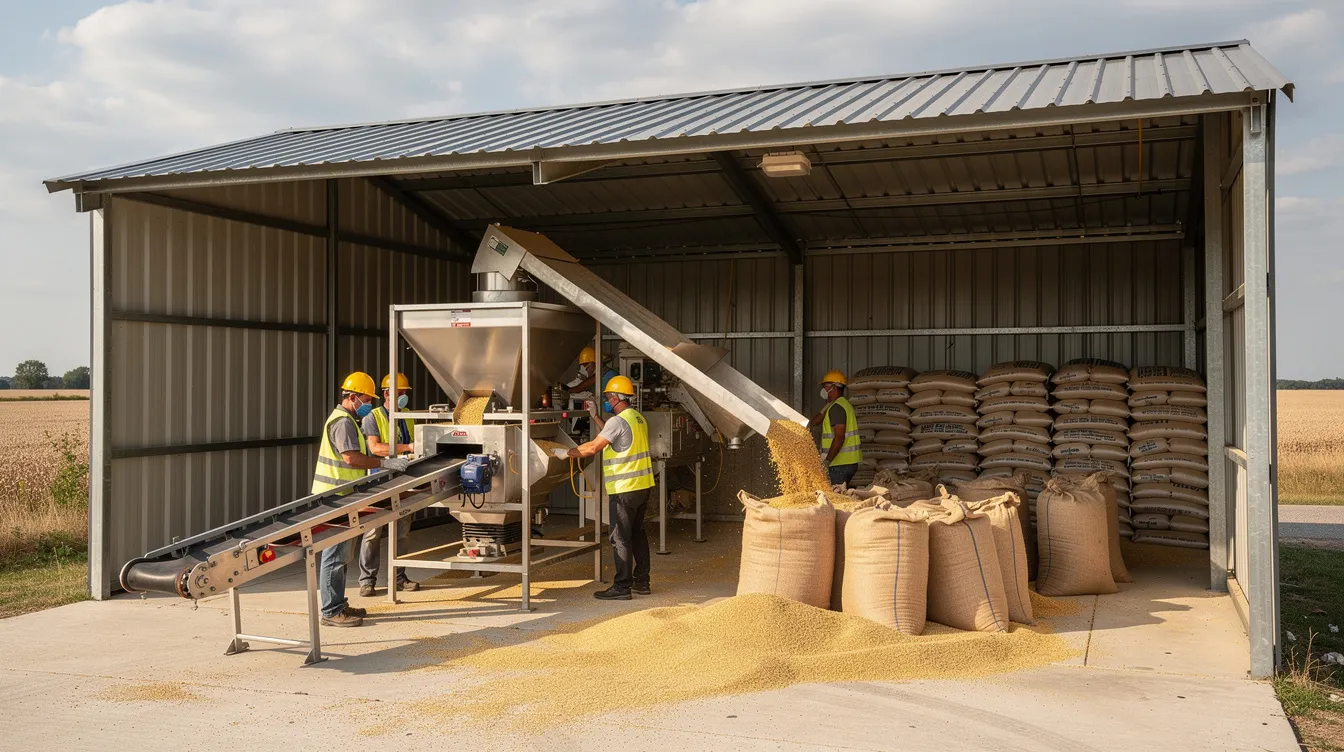
Machinery is the single largest fixed cost. A poha manufacturing setup requires a de-stoner and aspirator as the first stage of the process. Machinery costs for a 500 kg/day poha mill range from ₹12 lakh to ₹60 lakh depending on the machines selected, their capacity, and automation level.
Here are the core equipment categories and their 2024 to 2026 price ranges:
| Machine | Price Range (INR) | Notes |
|---|---|---|
| Paddy cleaner and aspirator | ₹40,000 to ₹1,50,000 | Removes dust, husk, light impurities |
| De-stoner | ₹35,000 to ₹80,000 | Separates stones from cleaned grain |
| Stainless steel soaking tanks | ₹25,000 to ₹50,000 per tank | SS preferred for FSSAI compliance |
| Rotary roasting drum with furnace | ₹1,00,000 to ₹2,00,000 | Price varies by fuel system and capacity |
| Flaking mill with rollers | ₹2,00,000 to ₹4,00,000 | Roller gap adjustment for thin/medium/thick flakes |
| Vibro sifter / grading unit | ₹60,000 to ₹1,50,000 | Grades output by size; separates broken flakes |
| Bucket elevators and conveyors | ₹40,000 to ₹1,00,000 per section | Reduces manual handling between stages |
| Semi-automatic packing machine | ₹80,000 to ₹2,00,000 | Weigh-fill-seal for bulk or retail pouches |
Cleaning and grading equipment costs between ₹5 lakh and ₹20 lakh when purchased as a complete line for higher capacity plants. Adding automatic form-fill-seal packaging for retail pouches instead of manual bagging can push machinery cost from ₹5 lakh up to ₹60 lakh for medium scale units.
Freight, installation, and GST typically add 12 to 18% overhead on top of ex-factory prices. Include this in your project report.
Land, Building, and Civil Construction Costs
Land and construction costs vary depending on location. A plot in rural Bihar or Chhattisgarh might cost ₹300 per sq ft; an industrial estate near Pune or Indore could run ₹1,500 to ₹2,500 per sq ft.
For a 500 kg/day flattened rice plant, plan for 4,000 to 6,000 sq ft of total area covering the production shed, storage, parking, and space for future expansion. Many entrepreneurs use leased plots or government food parks to avoid the upfront land purchase cost entirely.
Construction cost for an industrial shed using a steel structure with cement flooring runs ₹900 to ₹1,600 per sq ft in 2025 prices, according to recent construction cost surveys. A realistic project report might budget ₹6 lakh to ₹25 lakh for shed and minor civil works for a small to medium poha unit. This includes internal partitions, office room, drainage, and platforms.
Utilities and Supporting Infrastructure Investment
Beyond core machines, a poha plant needs reliable power, water, and a fuel-based heating system.
- Power: A 500 kg/day rice flakes plant typically needs 20 to 35 kW connected load. Electrical panel, cabling, internal wiring, and transformer or connection charges cost approx ₹1.5 lakh to ₹3 lakh for small units.
- Water: Soaking requires 8,000 to 12,000 litres of clean water per day. Borewell or municipal connection, raw water storage tank, overhead tank, pipelines, and simple filtration cost ₹50,000 to ₹2 lakh depending on region.
- Fuel system: Chimney, furnace, biomass or gas burners, and fuel storage run ₹1 lakh to ₹4 lakh. Compliance with local Pollution Control Board norms (especially for biomass or coal-fired roasting) may add ₹50,000 to ₹2 lakh.
A project report typically allocates 8 to 15% of total fixed capital to utilities and support infrastructure. The West Bengal Food Processing project model lists utilities at ₹2.30 lakh for a 450 tonnes/year unit, covering power, water, and fuel input services.
Raw Material, Packaging, and Working Capital Requirement
The biggest recurring expense in a poha manufacturing plant is raw material procurement, particularly paddy. Paddy is the primary raw material for poha processing, priced at ₹18 to ₹24 per kg depending on variety, state, and season. Yield ratio is roughly 70 to 75%, meaning you need about 130 to 140 kg of raw paddy to produce 100 kg of poha.
For a 500 kg/day unit, monthly paddy consumption runs 13 to 15 tonnes. At ₹20/kg, that is ₹2.6 to ₹3 lakh per month in raw material cost alone. Most businesses store 15 to 30 days of paddy stock.
Packaging material (PP bags, printed pouches, labels, cartons) typically costs 5 to 10% of sales value. For wholesale bulk packing, costs are lower; branded retail packaging for the market is higher.
Monthly working capital requirements are approximately ₹2 to ₹6 lakh for a small unit, covering raw material stock, packaging stock, one month of wages, utilities, and a cash buffer. Initial working capital for poha manufacturing can range from ₹3 lakh to ₹10 lakh depending on scale and how much inventory you choose to store.
Detailed Poha Manufacturing Process and Its Cost Drivers
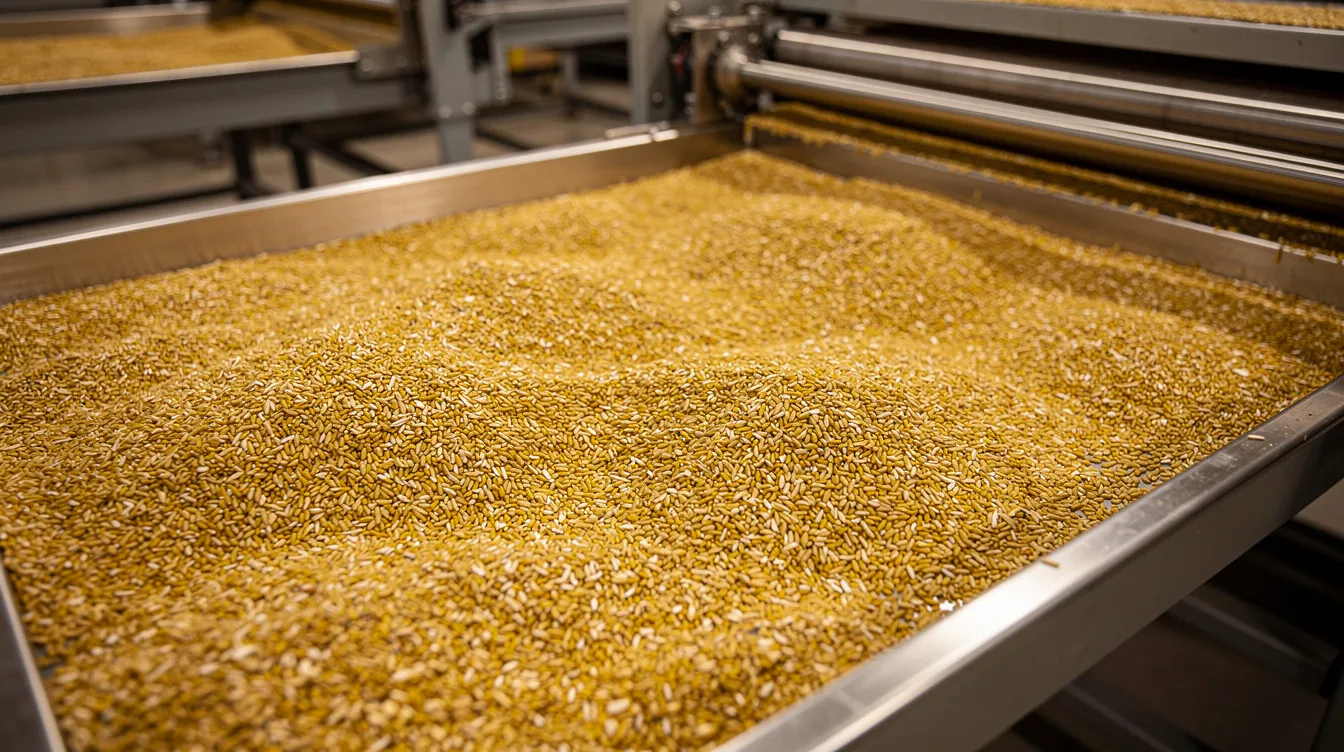
Each stage of the manufacturing process carries distinct cost implications. Here is a concise overview:
- Cleaning: Aspirator and de-stoner remove dust, stones, and husk. Poor cleaning increases downstream breakage and reduces the price you can command for your flakes.
- Soaking: Paddy is soaked in tanks for 8 to 24 hours, softening the grain for flaking. Longer soaking increases water use and drainage cost. The soaked grain’s texture determines flake quality.
- Roasting and drying: The most energy-intensive stage. Fuel choice (LPG, biomass, coal) affects both capital cost of the roaster and monthly operating expenses. Moisture must drop to 10 to 12% to prevent spoilage.
- Flaking: Soaked and roasted grain passes through heavy rollers. Roller gap determines whether you produce thin, medium, or thick flakes. SS or alloy roller surfaces cost 10 to 30% more than mild steel but improve taste consistency and food safety.
- Grading: Vibro sifters separate whole flakes from broken flakes and fines. Better screening equipment yields a higher-grade product that fetches better retail price.
- Packing: Manual bulk bagging works for wholesale; branded retail packing needs form-fill-seal machines.
Choosing stainless steel for product-contact equipment (tanks, conveyors, rollers) raises project cost but reduces contamination risk and improves FSSAI compliance. Designing short material paths and correct machine sizing can cut both capital and future operating costs.
Sample Poha Plant Project Cost Estimates by Scale
| Scale | Capacity | Total Project Cost | Rough Breakdown |
|---|---|---|---|
| Micro | 250 to 500 kg/day | ₹5 to ₹25 lakh | Machinery ₹3 to ₹10 lakh; shed/rent ₹0.5 to ₹5 lakh; working capital ₹1.5 to ₹5 lakh |
| Small organised | 1 to 2 MT/day | ₹40 to ₹80 lakh | Machinery ₹15 to ₹35 lakh; land/building ₹8 to ₹20 lakh; working capital ₹5 to ₹12 lakh; utilities ₹3 to ₹6 lakh |
| Medium | 2 to 5 MT/day | ₹80 lakh to ₹1.4 crore | Machinery ₹30 to ₹60 lakh; land/building ₹15 to ₹35 lakh; working capital ₹10 to ₹20 lakh; utilities/compliance ₹5 to ₹10 lakh |
The estimated project cost for poha manufacturing ranges from ₹15 lakh to ₹30 lakh for the most common small organised units that entrepreneurs in India tend to set up. A poha mill setup may cost INR 5 to 10 lakh at the micro end, or ₹25 lakh to ₹140 lakh at the medium end.
To adapt these figures, plug in your local land rate, collect 3 to 4 machinery quotations from suppliers, and adjust for your preferred capacity. This becomes the basis of a customised poha plant project report.
Licences, Compliance, and Pre-Operative Expenses
Non-machinery costs are often underestimated. Here are the key registrations:
- FSSAI licence: Mandatory for all food processing businesses in India. FSSAI registration costs between INR 100 and 5,000 depending on turnover bracket.
- Udyam MSME registration: Required for subsidy eligibility. Udyam registration has no government fee.
- GST registration: Mandatory above the turnover threshold. GST registration generally has no government fee.
- Shop and Establishment licence: Fees vary by state.
- Trade licence: Costs vary by municipality.
- PCB NOC: Required if roasting uses biomass or coal. PCB NOC fees vary by state and unit size. Fire safety and factory inspector approvals add further costs.
Pre-operative expenses include consultancy fees, layout design, interest during construction, trial runs, and initial branding. These typically add 5 to 10% to fixed capital. List them under “miscellaneous fixed assets and pre-operative expenses” in your project report rather than hiding them in a single line item. The NIC code for rice milling and flattened rice production (NIC 10612) should be noted on your Udyam and FSSAI applications.
Financing Options, Subsidies, and Project Report Preparation
Funding structure determines how much equity the promoter actually needs. Banks may fund 75 to 90% of poha mill projects as loans, leaving the promoter to arrange 10 to 25% as equity.
Common financing routes:
- Bank term loans under MSME schemes with DSCR benchmarks of 1.25 or higher
- Mudra Tarun loans for projects up to ₹10 lakh
- CGTMSE collateral-free loans for qualifying small units
- Gold-backed loans can offer secured funding for poha mills at lower interest rates
Key subsidy schemes:
- PMFME provides a credit-linked capital subsidy at 35% of eligible project cost, capped at ₹10 lakh per individual unit.
- PMEGP can provide a 35% capital subsidy for poha mills in certain categories and regions.
- State-level food processing subsidies in Bihar, Madhya Pradesh, and Maharashtra offer additional support.
A bank-ready project report should contain: promoter profile, market analysis for flattened rice demand across regions, manufacturing process details, machinery list with quotations, cost of project, means of finance, projected profit and loss, cash flow, DSCR, and break-even analysis. Base financial projections on realistic paddy prices, poha selling prices, and capacity utilisation ramp-up (for example, 50% in year one rising to 80% by year three).
Profitability, Payback Period, and Risk Factors
At current paddy prices (₹20/kg) and wholesale poha rates (₹30 to ₹38/kg), gross margin per kg of output runs approximately ₹7 to ₹12 after raw material and processing costs. For a 500 kg/day unit operating at 70% capacity, that translates to roughly ₹70,000 to ₹1.2 lakh in monthly gross profit before fixed costs.
After deducting wages, rent or loan interest, depreciation, power, and fuel, net profit for small units typically supports a payback period of 3 to 6 years. Units targeting the retail market with branded packaging tend to command higher margins but carry higher marketing costs.
Risk factors to model in sensitivity analysis:
- Paddy price volatility (seasonal swings of ±10 to 15%)
- Fuel tariff increases affecting roasting economics
- Local competition from established rice flakes brands
- Power supply reliability in certain regions
- Regulatory changes affecting small food processing units
Include sensitivity analysis in your project report, varying selling price and raw material cost by ±10 to 15%. This shows banks how resilient the business model is across different market conditions.
Frequently Asked Questions on Poha Plant Project Cost
These answers are indicative. Verify exact figures through current quotations and local regulatory offices before finalising your rice flakes project report.
How much money do I realistically need to start a basic poha plant in 2025 to 2026?
A bare-minimum semi-automatic poha unit processing 250 to 500 kg/day can be started with a project cost between ₹5 lakh and ₹25 lakh, including machinery, a rented shed, and working capital. This assumes simple bulk packaging for local wholesalers rather than branded retail packs requiring advanced packing machines.
Is it cheaper to convert an existing rice mill shed into a poha plant?
Using an existing rice mill or grain-processing shed can lower total project cost by 15 to 30% compared with building a new structure. The shed must still meet FSSAI hygiene norms and have a suitable layout for poha’s specific process, which may require moderate modifications to drainage, flooring, and storage arrangements.
How do automation and computerised controls affect poha plant cost?
Adding PLC-based handling, HMI-controlled flaking rollers, and fully automatic form-fill-seal packing can increase machinery cost by 20 to 60% over basic semi-automatic setups. While this raises the initial investment, it reduces long-term labour cost, improves product consistency, and helps in scaling production for organised retail chains.
Can I start with manual packing and upgrade later to automatic packing machines?
Many poha entrepreneurs initially use manual or semi-automatic weighing and sealing for 10 to 25 kg bulk bags to keep project cost lower. They add automatic pouch packing machines once sales volumes justify the extra spend. Plan your floor layout from day one with future space and power provision for additional equipment to avoid expensive restructuring later.
How important is a formal project report for obtaining bank finance?
Banks almost always insist on a structured project report detailing cost of project, means of finance, manufacturing process, and financial projections before sanctioning term loans and working capital limits. A clear, data-backed report with economics laid out in detail improves approval chances and serves as an internal roadmap for controlling both project cost and operational performance once production begins.