
Key Takeaways
- Poha plant capacity planning directly impacts your project’s investment structure, working capital requirement, profitability and bankability. Getting this decision wrong-in either direction-can undermine the entire poha manufacturing business.
- Plant size must be chosen based on market demand, raw paddy availability, machinery configuration, number of shifts and realistic capacity utilisation-not only on what a machinery supplier is ready to sell.
- The core formula for estimating poha production capacity starts from the machine rating in kg/hr or TPH, then converts to daily, monthly and annual production using effective operating hours, working days and a practical utilisation percentage.
- There is a substantial difference between installed capacity (rated by the machinery supplier) and actual achievable production. For example, a plant rated at 1 TPH running 8 hours per day for 300 days has a theoretical capacity of 2,400 TPA-but actual output in the first year may be closer to 1,200–1,450 tonnes after accounting for ramp-up, maintenance and process losses. This is an illustrative example only.
- As a practising Chartered Accountant specialising in DPR preparation, I (CA Manish Gugliya) recommend staged capacity utilisation and prudent yield assumptions so that projections are credible for bankers and investors.
Introduction: Why Poha Plant Capacity Planning Matters in a DPR
Poha plant capacity planning is one of the first and most consequential decisions when preparing a Detailed Project Report for a flattened rice processing plant in India. Whether you are an entrepreneur entering the poha manufacturing business for the first time, an existing manufacturer planning expansion, or a project consultant drafting a DPR for bank finance, this single decision ripples through every financial projection in your document.
The reason is straightforward. Your poha plant production capacity determines revenue projections; your raw material cost scales with the volume of paddy you need to process; your fixed costs-depreciation, interest, rent-get allocated across whatever quantity you actually produce. Together, these numbers drive profitability, cash accrual, DSCR and your ability to repay a bank loan.
An incorrectly selected poha manufacturing plant capacity can cause overinvestment in machinery that sits idle, higher fixed cost per kg of finished rice flakes, excessive working capital locked in raw paddy inventory, and poor debt servicing. Conversely, under-sizing creates its own problems: a small poha manufacturing unit that cannot meet growing demand will either force premature capacity expansion at unfavourable terms or result in loss of market share to competitors who planned better.
This article is focused specifically on plant capacity planning, poha plant capacity in TPD, production capacity estimation, capacity utilisation patterns and how to present these logically in a poha manufacturing DPR or project report for bank finance. It is not a generic overview of the poha industry but a practitioner’s guide written from the perspective of project-finance advisory.
What Is Poha Plant Capacity? (Definitions & Units Used in Project Reports)
Poha production capacity originates from machinery ratings that suppliers typically quote in kg/hr or tonnes per hour. However, bankers and project appraisers work with daily and annual figures. This disconnect is where many first-time entrepreneurs get confused.
Here are the key terms you will encounter:
- Hourly capacity (kg/hr or TPH): the machine’s rated output under ideal conditions.
- Daily capacity (TPD): hourly capacity multiplied by effective operating hours per day.
- Monthly capacity: daily capacity multiplied by working days in a month.
- Annual capacity (TPA): the total production possible across all operating days in a financial year.
Production capacity across the industry can range from 100 kg/hr to 5,000 kg/hr depending on plant scale, technology and automation level.
| Term | Unit | Where Typically Used |
|---|---|---|
| Hourly Capacity | kg/hr or TPH | Machinery supplier brochure, quotation |
| Daily Capacity | Tonnes per day (TPD) | DPR production plan, operational scheduling |
| Monthly Capacity | Tonnes per month | Sales forecasts, raw material procurement |
| Annual Capacity | Tonnes per annum (TPA) | Revenue projections, CMA data, bank appraisal |
A typical poha processing plant supplier might quote a poha making machine at 500 kg/hr rice flakes plant capacity, while a banker reviewing your DPR expects to see annual poha production capacity in tonnes per year, reconciled with your sales and cost projections.
One important clarification: poha manufacturing capacity may be specified either on a raw paddy input basis or on a finished flattened rice output basis. The DPR writer must state clearly which basis is being used, because the difference can be significant given process losses, husk removal and moisture changes.
Installed Capacity vs Actual Production Capacity & Capacity Utilisation
There is a meaningful distinction between four related but different numbers that appear in project reports:
- Rated machinery capacity: what the supplier’s brochure states under ideal test conditions.
- Installed capacity: the theoretical annual quantity producible if the entire line runs at rated throughput for planned hours and days without unusual stoppages.
- Practical operating capacity: adjusted for realistic factors such as start-up time, shift changeovers, cleaning and minor maintenance.
- Actual production: what the plant truly produces in a financial year, after accounting for market demand, supply constraints and operational realities.
Poha plant capacity utilisation is the percentage of installed capacity actually used in a given year. For new poha manufacturing units, DPRs commonly assume 45–70% utilisation in initial years, rising gradually as operations stabilise. This is an illustrative range, not a prescriptive rule.
Illustrative Example (for methodology understanding only): A poha mill capacity rated at 1 TPH, operating 8 hours per day for 300 days, has a theoretical installed capacity of 2,400 TPA. If first-year utilisation is 60%, actual production would be approximately 1,440 tonnes. This figure would further reduce when you apply the recovery ratio from raw paddy to finished poha. Actual values vary depending on each poha processing plant’s specific configuration and operating conditions.
How to Calculate Poha Plant Production Capacity (Step-by-Step Method)
The standard capacity formula used in DPRs is:
Installed Capacity = Hourly Processing Capacity × Effective Operating Hours per Day × Operating Days per Year
And for actual expected production:
Expected Production = Installed Capacity × Capacity Utilisation %
Each component requires careful data collection:
- Machine capacity in kg/hr: obtain from machinery supplier specifications, specifically for the bottleneck machine (often the flaking mill or roaster machine, not the cleaning section).
- Effective operating hours: account for start-up, cleaning, breaks and shift changeover. A single shift typically yields 8–10 effective production hours.
- Operating days per year: subtract Sundays, national holidays, planned maintenance and any seasonal disruption. Most DPRs use 280–310 days.
- Capacity utilisation: apply a realistic percentage reflecting market development, supply chain readiness and operator learning.
Illustrative Example (all figures are assumptions only): A 500 kg/hr rice flakes plant running 10 effective hours per day for 280 days at 70% utilisation produces: 500 × 10 × 280 × 0.70 = 980,000 kg or approximately 980 tonnes of finished poha per year. While machinery suppliers may promote higher kg/hr figures, DPRs and financial projections must remain conservative and technically defensible for bankers and investors.
Raw Paddy Input vs Finished Poha Output (Recovery, Losses and By-Products)
This distinction is crucial for any DPR. Poha manufacturing capacity in TPD can refer to tonnes of paddy processed or tonnes of finished flattened rice produced-and the two numbers are never the same.
The key mass-balance elements include: paddy input, cleaning losses (dust, stones, husk particles removed during paddy cleaning), soaking and roasting losses, moisture changes during drying, broken flakes (commonly called chura), fines and grading rejects, and final saleable poha output.
Moisture management is critical for effective poha production throughout these stages. The conversion rate from paddy to flattened rice is typically around 60% to 65%, though this varies depending on paddy variety, quality, high moisture content, processing technology and the desired finished product specification. Raw paddy often requires a resting period after harvest for optimal milling quality, which affects procurement timing.
I advise clients to obtain realistic yield data from machinery supplier trials, existing poha manufacturing units in similar regions or technical consultants rather than assuming a generic recovery percentage.
Illustrative Recovery Scenario (not universal): If a plant processes 1,000 tonnes of paddy in a year at a 65% recovery ratio, the expected finished poha output would be approximately 650 tonnes, with the balance comprising husk, bran, broken material, moisture loss and process waste. By-products like bran may have some salvage value. Actual yields differ with every project.
Key Factors Affecting Poha Plant Capacity Planning
Selecting poha manufacturing capacity per day is not purely a technical question. It is a commercial and financial decision shaped by multiple interlinked factors.
Market demand and target geography come first. Capacity should ultimately be linked to saleability-how much flattened rice you can realistically sell in your target market. Demand for poha spikes during festivals and winter mornings across many Indian states, making effective capacity planning require analysis of seasonal consumption patterns and market fluctuations. Market selling prices for poha typically range from ₹25 to ₹40 per kg depending on quality, location and brand positioning.
Raw paddy availability and procurement radius matter enormously. Paddy procurement depends on agricultural harvest cycles, and seasonal supply patterns in your region may impose a practical ceiling on how much you can process annually. Maintaining synchronized raw material storage is essential for uninterrupted production across lean procurement months.
Machinery configuration and automation level determine throughput. The effective poha processing plant capacity is limited by its slowest operation-often roasting or flaking, not necessarily the cleaning or grading stage. A poha manufacturing plant requires soaking, roasting and flaking equipment at minimum, and key equipment includes a de-stoner, soaking tanks and flaking rollers.
The number of shifts and operating hours directly affect capacity utilisation. Running a second shift increases theoretical output but also demands additional labour, supervision and maintenance planning. Simply pushing machines longer does not equate to higher production efficiency if quality or reliability suffers.
Product mix influences throughput: thick versus thin flattened rice, diet poha or ready-to-fry rice flakes each require different flaking roller gap settings, temperature control parameters and conditioning times, potentially altering effective capacity.
Utilities are non-negotiable. Energy and water are vital utilities in the poha production process. Uninterrupted steam and electricity are critical for poha processing. In some regions, summer water shortages have forced poha mills to cut output by approximately 10%. Energy costs can significantly affect operating margins, especially where furnace-based roasting is used with fuel like sand-bed roasting systems.
Labour skills, packaging capacity, working capital availability and market expansion plans each feed back into feasible poha production capacity. Packaging systems should be capable of handling the rate of finished product output; if manual packing cannot keep up with the flaking line, the entire plant operates below its technical potential.
Small, Medium and Large Poha Manufacturing Plant Capacity Planning
In practice, poha manufacturing capacity is discussed in terms of small, medium or large scale, though no single legal capacity band applies universally to all MSME projects.
A small poha plant capacity might involve one semi-automatic line catering to a district or nearby city. Semi-automatic plants can produce 80–100 kg/hr of poha, and small plants typically operate in the 100–250 kg/hr range. A semi-automatic poha making machine setup typically costs ₹5–10 lakh. A 500 kg/day poha mill requires approximately ₹5–10 lakh in machinery investment and can produce approximately 13 tonnes per month.
A medium poha plant capacity serves multiple districts or a state-level market, with higher automation and branded packaging. These plants may process 500–2,000 kg/hr and require proportionally larger investment in land, building, storage and compressed air systems for pneumatic equipment.
A large industrial poha plant capacity involves multi-line rice flakes production for national brands, institutional buyers or exports. Large automated plants can exceed 5,000 kg/hr in capacity and demand sophisticated material handling, including automated conveyor systems that minimize labor lag between production stages.
| Factor | Small Scale | Medium Scale | Large Scale |
|---|---|---|---|
| Automation Level | Semi-automatic | Partially automated | Fully automated |
| Typical Market Reach | Local / district | Regional / state | National / export |
| Working Capital Intensity | Lower | Moderate | High |
| Storage Requirement | Basic godowns | Structured warehousing | Large-scale cold/dry storage |
| Distribution | Direct / local traders | Distributor network | Organised retail / institutional |
| Management Complexity | Owner-managed | Departmental | Professional management |
Framework for Selecting the Right Poha Plant Capacity
This step-wise framework is what I recommend to entrepreneurs and consultants preparing a poha plant DPR for bank loan applications:
- Estimate your target market and a realistic share you can capture within 2–3 years.
- Estimate achievable sales volume of flattened rice and related products like chura or flavoured variants.
- Study raw paddy availability: local production, procurement logistics, quality and seasonality.
- Define product mix-thick, thin, diet poha, ready-to-fry flakes-and understand how each affects throughput.
- Select the appropriate machinery configuration and automation level. For details on poha plant machinery and equipment cost, refer to the dedicated article on ProjectReportBank.com.
- Decide planned operating hours and shifts.
- Derive practical poha plant production capacity per day and per year from these choices.
- Set year-wise capacity utilisation assumptions (for example, gradually increasing over years 1–5).
- Check corresponding working capital requirements.
- Evaluate DSCR and profitability under these assumptions.
- Build a capacity cushion of 15% to 20% to absorb demand spikes.
Planning production capacity for a poha plant requires balancing raw material availability and machinery throughput. This exercise must always integrate both technical feasibility and financial viability-not rely purely on a machinery quotation.
Capacity Utilisation Patterns in a New Poha Plant
Capacity utilisation in a poha mill context represents the percentage of installed capacity that is actually converted into finished goods production in a given year. This metric is central to bankable financial projections and CMA data submitted to lenders.
A new poha processing unit should not assume 100% utilisation from commissioning. Trial runs, staff training, market development, distributor onboarding and supply chain stabilisation all take time. Overall Equipment Effectiveness (OEE) is a key metric for monitoring machinery performance during this ramp-up period, and preventive maintenance schedules help avoid unexpected downtimes during peak demand.
Illustrative Ramp-Up Pattern (for methodology demonstration only):
| Financial Year | Installed Capacity (TPA) | Utilisation % | Estimated Production (Tonnes) |
|---|---|---|---|
| Year 1 | 1,400 | 60% | 840 |
| Year 2 | 1,400 | 75% | 1,050 |
| Year 3 | 1,400 | 90% | 1,260 |
Each project may follow a different trajectory depending on promoter experience, market tie-ups and the company’s distribution reach. The critical point is that the same utilisation percentages must consistently drive production, sales, raw material consumption and working capital estimates across all DPR sections.
Daily, Monthly and Annual Poha Production Capacity Conversion
Bankers and investors need to see poha plant production capacity in multiple time frames. Converting from hourly machine capacity to daily output involves multiplying kg/hr by effective working hours per day. Monthly capacity equals daily output multiplied by working days in a month (typically 24–26 days). Annual capacity equals daily output multiplied by operating days per year (commonly 280–310, excluding Sundays, national holidays, maintenance shutdowns and monsoon disruptions where applicable).
A 500 kg/day setup can produce approximately 13 tonnes monthly, assuming around 26 working days. Do not multiply daily production by 365-this overstates capacity and creates inconsistencies in financial projections. All such calculations in a DPR should be shown transparently so that the bank appraisal officer can trace how the projected annual poha production capacity per year was derived from the plant’s technical document and specification.
Machinery Capacity, Production Bottlenecks & Internal Linking to Machinery Costs
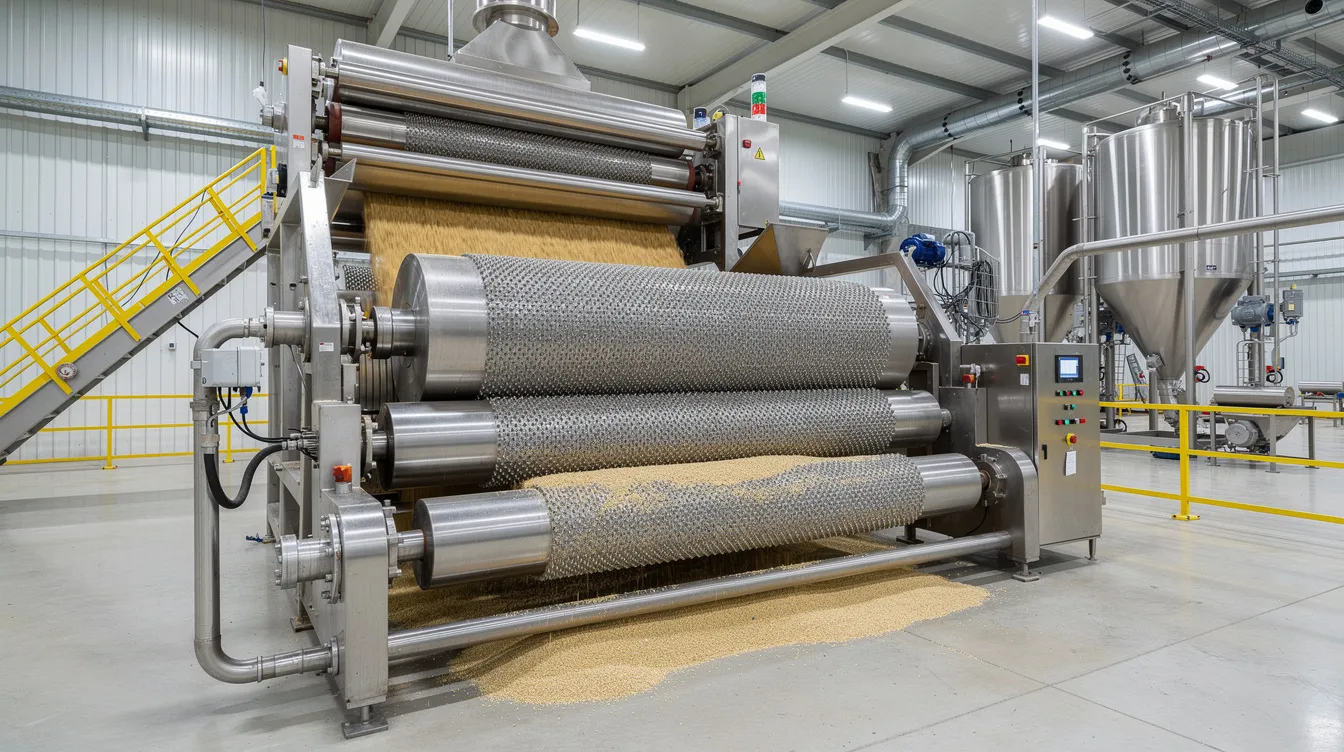
Effective poha mill capacity is determined by the slowest step in the poha manufacturing process, not by the largest or most expensive machine installed. The flaking machine is often the critical bottleneck in a poha processing line.
The typical major stages-cleaning, soaking, roasting, flaking, grading, cooling, packaging-must be balanced. Heavy-duty rollers flatten roasted grains into poha flakes, and flaking rollers determine the thickness of the flakes produced through gap settings. If any stage is under-sized, that stage becomes a bottleneck reducing overall poha manufacturing capacity per day. Machine throughput at each stage is limited by mechanical constraints and maintenance requirements.
Rotary roasting drums operate at temperatures between 180°C and 220°C. Roasting temperatures in this range are essential for proper grain expansion before flaking. Automated conveyor systems can minimize labor lag between poha production stages in medium and large installations.
I advise entrepreneurs to ask machinery suppliers for balanced line designs where each major machine’s throughput is compatible, to avoid mismatches such as an over-sized roaster feeding an under-sized flaker. Investment in higher-capacity equipment should always be justified by expected market demand and financial projections, not solely by supplier recommendations.
Production Process Flow and Its Impact on Practical Capacity
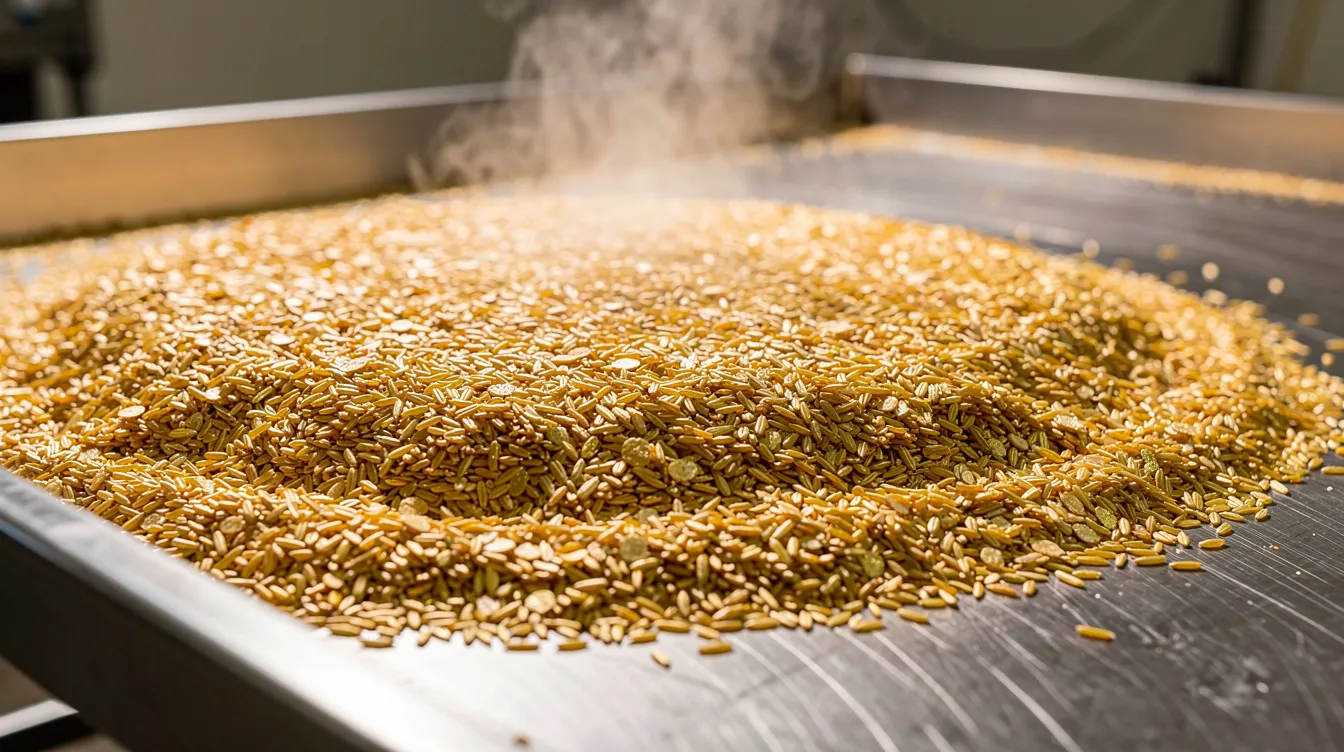
Poha production capacity is intrinsically linked to the complete production flow. Poha production relies on soaking, roasting and steaming stages, each with specific cycle times that constrain daily throughput. Paddy is soaked for 3–4 hours before roasting, which means the soaking tank capacity directly limits how many batches can be processed per day.
Cycle times at each stage, hold times during tempering, and drying or cooling durations directly influence how many tonnes per day can be realistically processed. Higher throughput is not useful if it leads to poor poha quality, uneven flaking, incorrect texture or moisture issues. For a detailed understanding of the rice flakes manufacturing process and process flow chart, refer to the dedicated article on ProjectReportBank.com.
DPRs should briefly describe the chosen process route and highlight any process features that support higher production efficiency or better temperature control over the line.
Linking Production Capacity with Raw Material Requirement
Once annual poha manufacturing capacity is estimated, the DPR must compute corresponding paddy requirement per day, per month and per year.
Formula: Required Raw Paddy = Target Finished Poha Production ÷ Expected Recovery Ratio
If your target is 840 tonnes of finished poha in Year 1 and your expected recovery is 65%, you need approximately 1,292 tonnes of raw paddy. The actual recovery ratio must be validated for your proposed process, paddy variety and location-do not treat this as a universal standard.
Raw material planning should reflect planned capacity utilisation in each projected year, not full-capacity operation. Regional paddy availability, procurement seasonality and storage limitations can impose a practical ceiling on feasible rice flakes plant capacity even if machinery could technically produce more. These raw material–capacity linkages should be clearly presented in the DPR so that bankers can reconcile production quantities with paddy consumption and purchase cost in the projected financial statements.
Storage, Land and Building Requirements as Capacity Increases
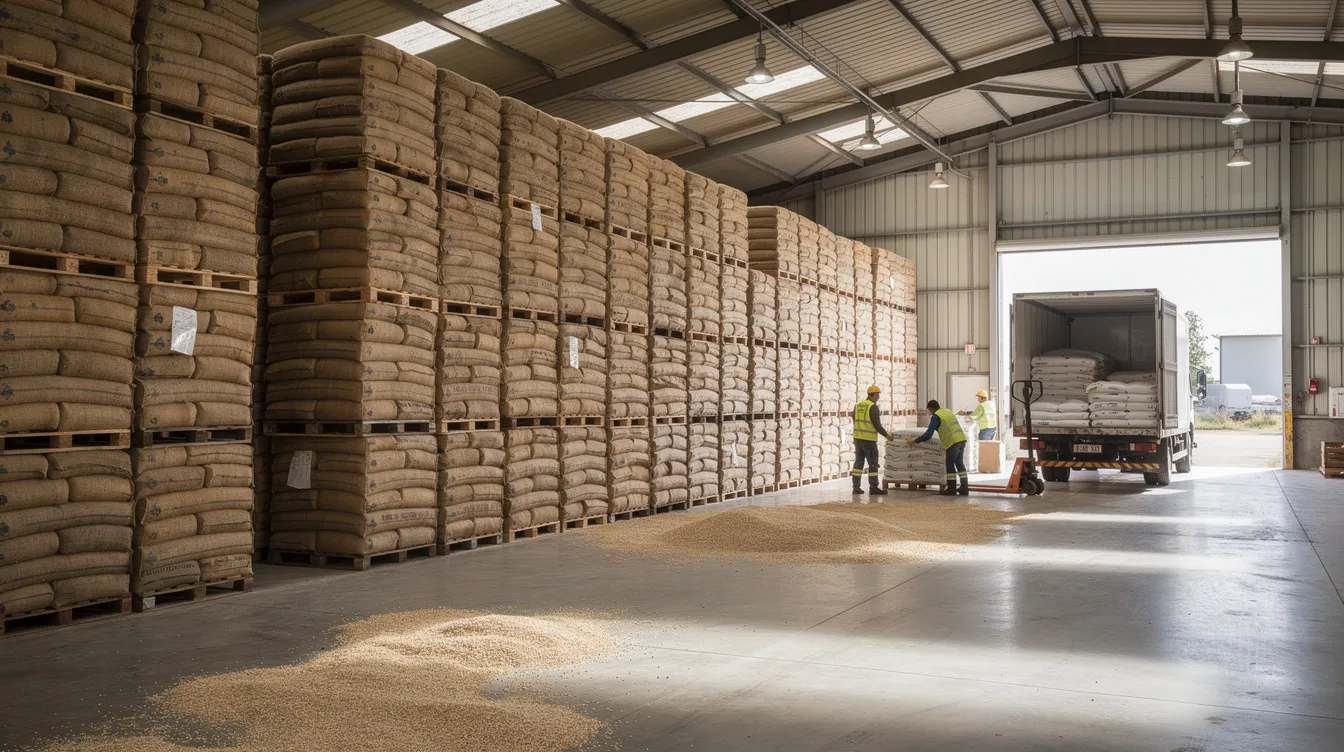
Higher poha production capacity per day automatically increases requirements for paddy godowns, intermediate storage for soaked and roasted paddy, and finished poha warehouse space. Storage must accommodate covered protection during monsoon, FIFO arrangements for best quality management, and separate zones for raw materials and finished goods from a food safety and shelf life perspective.
Land and building planning must allow for material movement, loading and unloading areas, utility rooms (including furnace or boiler areas, electrical installation), packaging sections and scope for future poha plant capacity expansion. A plant might have sufficient poha manufacturing capacity but be forced to operate below potential due to inadequate space for safe paddy and finished goods storage. I encourage promoters to store adequate buffer stock and leave provision in the site layout for modular expansion if higher future capacity is anticipated.
Impact of Plant Capacity on Project Cost and Working Capital
Poha plant capacity planning strongly influences both fixed capital investment-machinery, buildings, utilities, electrical systems-and working capital requirements for paddy, packaging, wages, power and receivables.
While some costs increase roughly in proportion to capacity (paddy consumption, packaging material), other costs benefit from economies of scale. Administrative overhead per kg, certain utility contracts and some installation charges may reduce on a per-unit basis as the plant scales up.
Total investment for a poha mill may range from ₹25 lakh to ₹140 lakh depending on capacity, automation, location, building cost and technology adopted. Gross contribution in poha manufacturing typically falls in the range of ₹5 to ₹15 per kg, which means that break-even volumes vary depending on your fixed cost structure. Project cost estimates for different capacity options-say 1 TPD versus 3 TPD versus 10 TPD-will show different cost per tonne relationships, affecting viability and bankability.
Higher capacity implies larger inventories and receivables; therefore the proposed working capital limits and margins in bank finance proposals must be aligned with planned utilisation levels. In DPRs prepared for bank loans, capacity, project cost, term loan amount and working capital proposals must form a coherent and consistent story for the appraising officer.
Capacity Planning for Bank Loan, DPR and Financial Viability
When preparing DPRs for poha manufacturing projects for submission to banks and financial institutions in India, the following capacity-related data points are typically scrutinised:
- Installed capacity (TPD and TPA)
- Planned operating days and working hours
- Year-wise capacity utilisation percentage
- Annual production volume (finished poha, not raw paddy)
- Paddy consumption corresponding to production
- Sales quantity and revenue projections
- Working capital requirement at each utilisation level
These capacity assumptions flow directly into financials: Production → Sales → Revenue → Gross margin → Profitability → Cash accrual → DSCR → Loan repayment capability. All technical assumptions (kg/hr, TPD, operating days, utilisation) must reconcile with figures appearing in the projected Profit & Loss Account, Cash Flow Statement and CMA Data. Inconsistencies are among the most common reasons for DPR rejection at the appraisal stage.
I strongly encourage presenting sensitivity analysis-for example, what happens to DSCR if poha plant capacity utilisation is 10% lower than the base case-to demonstrate prudent risk assessment to lenders. It is essential to identify bottlenecks in the processing line to optimize capacity and present defensible numbers.
Common Capacity Planning Mistakes in Poha Manufacturing Projects
Many poha manufacturing DPRs fail at the appraisal stage primarily due to unrealistic capacity assumptions rather than lack of market opportunity. The most frequent mistakes I encounter include:
- Selecting plant capacity solely on machinery supplier advice without independent market assessment.
- Assuming 100% utilisation from the first year, ignoring trial production, staff learning curve and market development time.
- Confusing paddy processing capacity with finished poha output, effectively overstating production by 35–40%.
- Overestimating operating days by using 365 without accounting for holidays, maintenance shutdowns and seasonal disruptions.
- Underestimating process losses, emissions, broken flakes, chura and quality rejections.
- Ignoring packaging and dispatch bottlenecks that constrain effective daily output.
- Installing mismatched machine capacities-a high-capacity flaker with an undersized roaster, for instance.
- Projecting sales volumes exceeding installed capacity or inflating capacity merely to justify a larger term loan.
- Underestimating working capital implications of higher production volumes.
Avoiding these errors and using transparent, evidence-backed poha plant capacity planning greatly improves DPR credibility with banks, investors and any finance company involved in project lending.
Practical Capacity Planning Checklist for Poha Plants
Use this checklist while finalising capacity for your DPR or feasibility study:
- [ ] Target market identified with realistic offtake estimates
- [ ] Product mix defined (thick, thin, diet, flavoured, ready-to-cook variants, sugar-coated etc.)
- [ ] Machinery throughput verified for each stage (kg/hr or TPH), especially the bottleneck machine
- [ ] Planned working hours and shift pattern decided
- [ ] Realistic operating days per year calculated
- [ ] Expected yield and process losses documented with supplier or trial data
- [ ] Packaging speed compatible with upstream processing capacity
- [ ] Storage space calculated for raw paddy, finished poha and packaging materials
- [ ] Utility availability confirmed: power load, fuel supply, water and hot water/steam generation
- [ ] Labour plan aligned with production schedule and skill requirements
- [ ] Sales network and distribution reach assessed
- [ ] Working capital requirement computed at planned utilisation levels
- [ ] Project cost estimated and promoter contribution confirmed
- [ ] Break-even utilisation calculated
- [ ] DSCR checked under base-case and stress scenarios
- [ ] Expansion potential considered in building layout and electrical installation design
Illustrative Poha Plant Capacity Calculation Example
All figures below are illustrative only and are presented purely to demonstrate the methodology. Actual DPR projections must be based on project-specific technical and commercial assumptions.
Step 1: A hypothetical flaking machine is rated at 500 kg/hr (finished poha output basis).
Step 2: The plant operates 10 effective hours per day, 280 days per year.
Step 3: Theoretical annual processing capacity = 500 kg/hr × 10 hrs × 280 days = 1,400,000 kg = 1,400 TPA.
Step 4: Apply capacity utilisation:
| Year | Utilisation % | Expected Poha Output (Tonnes) | Raw Paddy Required (at 65% recovery) |
|---|---|---|---|
| Year 1 | 60% | 840 | ~1,292 |
| Year 2 | 75% | 1,050 | ~1,615 |
| Year 3 | 90% | 1,260 | ~1,938 |
In an actual DPR, each of these steps should be backed by supplier documents detailing the range of machine specifications, site-specific conditions, promoter strategy and a realistic market assessment rather than generic benchmarks.
Conclusion: Choosing an Optimum, Bankable Poha Plant Capacity
The best poha manufacturing plant capacity is not simply the largest one affordable by the promoter. It is the capacity that is technically achievable, commercially saleable and financially viable for a specific promoter in a specific location, supported by adequate raw materials, working capital, infrastructure and management capability.
Sound poha plant capacity planning integrates process design, machinery selection, raw paddy availability and procurement logistics, market strategy, working capital management and risk assessment into one coherent capacity decision. A high-capacity plant with inadequate sales utilisation may perform worse financially than a smaller, appropriately sized plant. The country’s growing organised poha market presents real opportunity, but only for projects built on realistic foundations.
From my experience as CA Manish Gugliya, realistic and well-explained capacity assumptions form the backbone of DPR preparation, project cost estimation, financial projections, DSCR assessment and long-term viability of any poha manufacturing business. I encourage every entrepreneur to treat capacity planning as a strategic exercise-not a mere technical parameter-and to seek expert guidance where necessary while finalising a poha plant DPR for bank finance.

Frequently Asked Questions on Poha Plant Capacity Planning
All numerical references below are illustrative and not industry standards. Actual poha plant capacity planning must be customised to project-specific circumstances.
What capacity Poha plant is suitable for a first-time entrepreneur?
A first-time promoter should size capacity by starting from expected local demand and their realistic distribution reach, not from an arbitrary TPD figure. If your market study suggests you can sell 400–600 tonnes of poha per year in your target geography, select machinery and operating plans that deliver this volume at around 70–80% utilisation-giving you room to grow without excessive idle capacity. Many first-time manufacturers in India begin with small-scale plants in the 100–250 kg/hr range and expand once operations stabilise and market relationships are established.
How often should capacity utilisation assumptions be revised in an ongoing Poha plant?
Once the plant is operational, management should compare actual utilisation with DPR assumptions at least quarterly. If actual production consistently exceeds or falls short of projections, future working capital planning, raw material procurement, staffing and expansion decisions should be adjusted accordingly. Bankers also appreciate periodic updates demonstrating that the promoter is actively monitoring performance against the original project report.
Can I upgrade from a semi-automatic small Poha plant to a larger automated line later?
Modular capacity expansion is feasible in many cases, but its practicality depends heavily on initial building design, utilities, land availability and site layout. If the original plant was built with expansion in mind-space for additional machines, adequate electrical load, room for extra storage-upgrading to a larger automated line becomes significantly easier. If not, the cost of retrofitting can be substantial. I recommend that even small-scale projects consider future-proofing their infrastructure at the planning stage.
Do banks prefer higher capacity Poha plants while sanctioning loans?
Banks focus more on realistic utilisation, stable cash flows and DSCR than on absolute installed capacity. A sensibly sized, well-planned plant with conservative utilisation assumptions and demonstrated market demand is generally more financeable than an oversized project relying on optimistic projections. Presenting consistent details across your technical and financial sections-and including sensitivity analysis-strengthens your case regardless of plant size.
Is there a standard thumb rule for TPD to decide Poha plant capacity?
No single thumb rule applies universally. Your TPD choice must be driven by a proper market study, raw paddy availability in your procurement radius, promoter capability and financial strength. An entrepreneur near a major rice-producing belt with strong distribution may justify 5–10 TPD. Another promoter targeting a niche urban market with premium-quality rice flakes might find 1–2 TPD more appropriate. The right capacity is the one that your market, supply chain and finances can sustain-not a number picked from a brochure.