
Key Takeaways
Working capital requirement for a Poha processing plant is primarily driven by paddy inventory holding, finished goods stock, receivable days from distributors and institutional buyers, and the realistic credit available from suppliers. Production capacity alone does not determine working capital – the procurement cycle, sales model and operating efficiency matter equally, if not more.
Working capital is fundamentally different from investment in land, building and machinery. Fixed assets are financed through term loans and promoter equity, while day-to-day operational funds are typically financed through cash credit limits sanctioned by banks based on the value of stock and receivables after deducting the promoter’s margin. A professional detailed project report must address both categories separately and consistently.
As a simple numeric illustration, a 2 tonne/day Poha unit in Madhya Pradesh operating at 70% capacity utilisation in FY 2026–27 may require total current assets of approximately ₹30–40 lakh (covering paddy stock, packaging, finished goods, receivables and cash), with a working capital gap of ₹25–35 lakh after adjusting for creditors. Banks may finance a substantial portion of this gap through cash credit, subject to margin, security and credit appraisal. These figures are illustrative; actual numbers depend on each unit’s specific assumptions.
Seasonal paddy procurement – typically concentrated between October and February – can sharply increase working capital because 3–6 months of raw material must be carried in inventory simultaneously. This seasonal spike must be explicitly planned in the business plan and communicated to the bank during appraisal.
A professionally prepared detailed project report, CMA Data and realistic financial projections are essential for correct working capital assessment, MPBF calculation and sustainable bank finance. Assumptions about inventory days, receivable periods and supplier credit must be internally consistent and defensible during credit appraisal.
Introduction: Why Working Capital Matters in a Poha Processing Plant
Poha manufacturing is generally a profitable segment within the food processing industry. India’s poha market size exceeds ₹8,500 crore annually, poha consumption is consistent year-round with no seasonal dips, and branded packaged poha margins range from 18% to 25%. Yet, I have seen several otherwise viable Poha units face serious cash-flow stress within the first year of operations – not because of poor demand, but because working capital was underestimated or inadequately planned in the project report.
The core issue is straightforward. In a Poha processing plant, funds get locked simultaneously in raw paddy stock (often purchased in bulk), work-in-process as paddy moves through soaking, roasting and flaking, finished Poha inventory waiting for dispatch, and trade receivables where distributors and institutional buyers take 15–45 days to pay. Meanwhile, the unit must continue paying salaries, electricity, fuel expenses, transport charges and GST on time. If the cash credit limit is insufficient or promoter margin is inadequate, even a profitable unit runs into liquidity trouble.
This article focuses on the practical working capital requirement for a Poha processing plant in India. It is written from the perspective of a Chartered Accountant and project-finance consultant – not generic theory, but the logic that banks, CAs and experienced promoters actually apply when preparing a DPR, CMA Data and cash credit proposals for rice flakes units.
All examples used are illustrative for FY 2026–27 conditions. Actual working capital requirements must be customised based on location, installed capacity, paddy procurement strategy, sales model and operating efficiency. The objective is to help promoters, MSMEs and consultants understand the framework clearly enough to prepare – or critically evaluate – their own working capital projections.
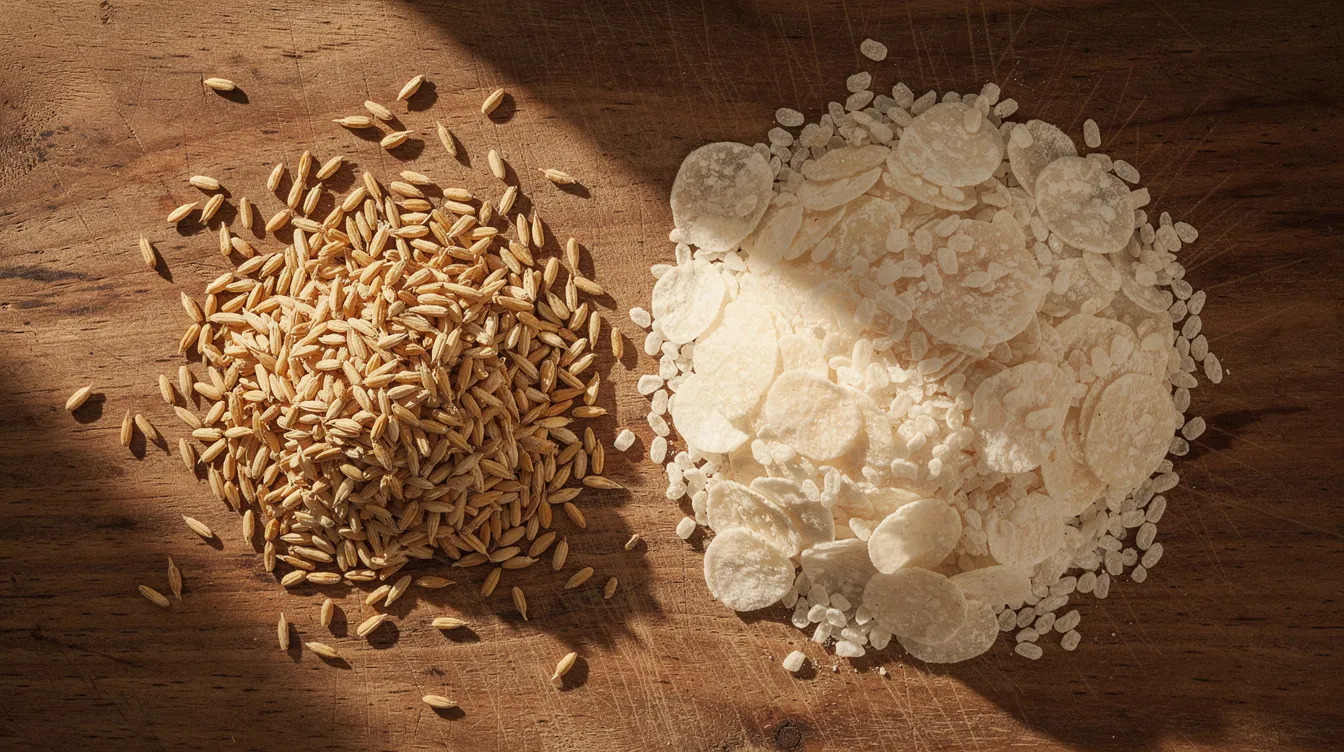
What Is Working Capital in a Poha Processing Plant?
Working capital, in the context of a poha manufacturing unit, represents the funds required to finance day-to-day operations – from purchasing raw paddy to collecting cash from customers after selling finished Poha.
The basic formula is:
Working Capital = Current Assets – Current Liabilities
For a flattened rice unit, current assets typically include:
- Raw material inventory (paddy, rice)
- Packaging material stock (BOPP pouches, HDPE bags, cartons, labels)
- Work-in-process inventory
- Finished goods inventory (market-ready Poha)
- Trade receivables (amounts due from buyers)
- Cash and bank balances
Current liabilities include:
- Trade creditors (amounts payable to paddy suppliers, packaging vendors)
- Outstanding expenses (wages payable, utility bills, statutory dues)
Gross working capital is the total of all current assets. Net working capital is current assets minus current liabilities. The working capital gap is current assets minus current liabilities other than bank borrowings – this gap is what needs to be financed jointly by the promoter’s margin and bank cash credit.
It is critical to distinguish working capital from fixed capital. Fixed capital covers land, building, Poha plant machinery and equipment – items like de-stoner and aspirator (costing ₹30,000–₹60,000), flaking mill with rollers (₹2–4 lakh), rotary roasting drum (₹1–2 lakh), soaking tanks (₹25,000–₹50,000 for 500L capacity), and cleaning and grading equipment (₹5–20 lakh). These are financed through term loans and equity. Working capital, on the other hand, is the revolving fund that keeps the plant running every day. Both must be covered in a professional detailed project report.
Why Poha Manufacturing Requires Significant Working Capital
Several characteristics of the Poha business create higher-than-average working capital needs compared to many other small-scale manufacturing activities. Paddy procurement typically constitutes 60% to 70% of total working capital in a rice flakes unit – and the procurement pattern is inherently seasonal.
In major Poha-producing states like Madhya Pradesh and Maharashtra, paddy is best procured post-harvest when prices are optimal – broadly between October and February. Government MSP for common-grade paddy has been in the range of ₹23,000–₹24,000 per metric tonne in recent years. Many units buy several months’ supply during this window to lock in favourable prices, but this blocks substantial funds in raw material stock for an extended period. Paddy prices fluctuate seasonally, affecting raw material inventory costs throughout the year. High-quality paddy must be procured in bulk to maintain liquid cash for inventory, and seasonal demand and price volatility can significantly impact working capital needs.
Beyond paddy, other day-to-day drivers include packaging material inventory (BOPP pouches, labels, cartons), finished-goods storage for branded Poha SKUs, credit extended to dealers and distributors (receivables from customers usually span 15 to 45 days in the poha industry), and regular payments for transport, electricity, fuel, wages and marketing. Administration expenses, insurance and statutory compliance payments add to the monthly cash outflow. Detailed operating expenses – power, fuel, manpower, maintenance – are analysed separately in a Poha plant operating cost study, and those expenses form part of the monthly working capital cash requirement.
Components of Working Capital Requirement for Poha Plant
Poha manufacturing working capital can be broken into identifiable components linked to the manufacturing process and sales cycle. The following sub-sections describe each component: raw material inventory, packaging material, work-in-process, finished goods, receivables, cash and operating expenses, and trade creditors. Later tables will consolidate these into a structured working capital calculation for an illustrative 2 tonne/day Poha plant.
Raw Material Inventory (Paddy and Rice)
Paddy is the primary raw material for a Poha processing plant and typically constitutes the largest single component of current assets. Maintaining adequate raw material inventory is essential for smooth operations in poha processing.
The number of days of paddy inventory held in practice varies widely: 30–90 days during off-season regular procurement, and up to 120–180 days if bulk procurement is done during harvest months. This directly impacts the working capital requirement. For a detailed discussion of procurement logistics, refer to paddy procurement planning for a Poha plant.
To quantify raw material inventory value, use the formula:
Raw Material Inventory = (Annual Paddy Consumption ÷ 365) × Inventory Days × Average Paddy Price (₹/kg)
For a 2 tonne/day Poha plant with a 2:1 paddy-to-Poha conversion ratio, annual paddy consumption at 70% capacity utilisation would be approximately 840 tonnes. At ₹24/kg and 60 days of inventory, this translates to roughly ₹3.3 lakh of paddy stock. Assumptions on paddy inventory days must be consistent with the procurement pattern shown in the feasibility study and business plan.
Packaging Material Inventory
Packaging materials such as BOPP pouches (500 g, 1 kg packs), cartons, labels and HDPE or jute bags form part of current assets in a Poha plant balance sheet. Packaging expenses for poha include costs for plastic pouches and labels, and packing material cost can be significant for branded multi-SKU operations.
Branded Poha with multiple SKUs and a retail-focused product mix requires higher packaging stock – typically 30–45 days – while bulk B2B supply may manage with 15–30 days. Compute packaging inventory as monthly packing material cost multiplied by the planned number of stock days. Underestimating packaging inventory in the working capital cycle often leads to fund shortages during peak sales months. Align packaging stock assumptions with the marketing plan described in the Poha plant revenue model.
Work-in-Process Inventory
Work-in-process includes paddy at intermediate stages – cleaning, soaking, roasting, drying and partial flaking – as documented in the Poha manufacturing process. The processing cycle time for poha includes soaking, roasting, and flaking, typically spanning 1–3 days in a continuous or semi-continuous unit.
Calculate WIP as a small percentage of monthly raw material consumption plus proportionate labour, fuel and overheads based on processing time. Though WIP is a relatively small component, it is specifically considered when preparing CMA Data to align with bank-format current asset classification. Cross-check WIP assumptions with installed and operating capacity data.
Finished Goods Inventory
Finished goods inventory is the stock of market-ready Poha – thick, medium and thin flake thickness grades – held in the warehouse before sale and dispatch. Finished goods typically hold a buffer of 15 to 30 days ready for dispatch.
Branded retail Poha with wider market coverage may hold 15–30 days of finished stock, whereas local bulk sales may operate with 7–15 days. Compute finished goods inventory on the basis of cost of production per kg multiplied by the quantity equivalent to planned inventory days. Valuation is normally done at cost (not MRP), consistent with CMA Data and stock statements submitted to banks. Excessive finished-goods days increase interest on working capital and may adversely affect Poha manufacturing profitability.
Trade Receivables (Debtors)
Trade receivables are amounts due from distributors, wholesalers, supermarkets, institutional buyers and private-label clients. They directly influence the poha manufacturing working capital cycle.
Typical receivable periods in India: 7–15 days for small retailers through cash-and-carry, 21–30 days for distributors, and 30–60 days for large institutional or modern-trade buyers. Calculate receivables based on percentage of credit sales multiplied by average debtor days and average monthly sales value derived from Poha plant financial projections.
In CMA Data, debtor ageing should be realistic. Banks become cautious if projections show abnormally high or low debtor days compared with industry practice. Longer receivable days increase the cash credit requirement.
Cash and Operating Expenses
While most expenses can be paid from the cash-credit account, a minimum cash balance plus provision for immediate payments must be considered as part of current assets. Cash reserves are necessary to handle unexpected price increases or delayed payments.
Key monthly operating costs include:
- Salaries and wages
- Power and fuel (as per power, fuel and manpower requirements)
- Transport and logistics
- Repairs and maintenance
- Marketing and promotion
- Insurance and statutory compliance
Assume a reasonable minimum cash balance – for example, 7–10 days of operating expenses – clearly marked as illustrative. Ignoring this buffer can lead to a negative cash balance in monthly projections, even if the P&L shows net profit. Operating below break-even capacity can strain working capital significantly and compound this problem.
Trade Creditors (Suppliers)
Trade creditors consist of outstanding amounts payable to paddy suppliers, packaging vendors, transporters and service providers. These reduce the net working capital requirement.
Typical supplier-credit terms: 7–15 days for mandi traders and farmers, up to 30 days for packaging suppliers, and mixed advance/credit terms for fuel suppliers. Assuming very long creditor days (such as 90 days) is usually unrealistic in paddy procurement and may be questioned during bank appraisal.
In CMA Data and MPBF calculation, only actual, sustainable trade-credit terms should be considered. Artificially inflating creditors to reduce working capital margin can weaken the DPR’s credibility with bankers.
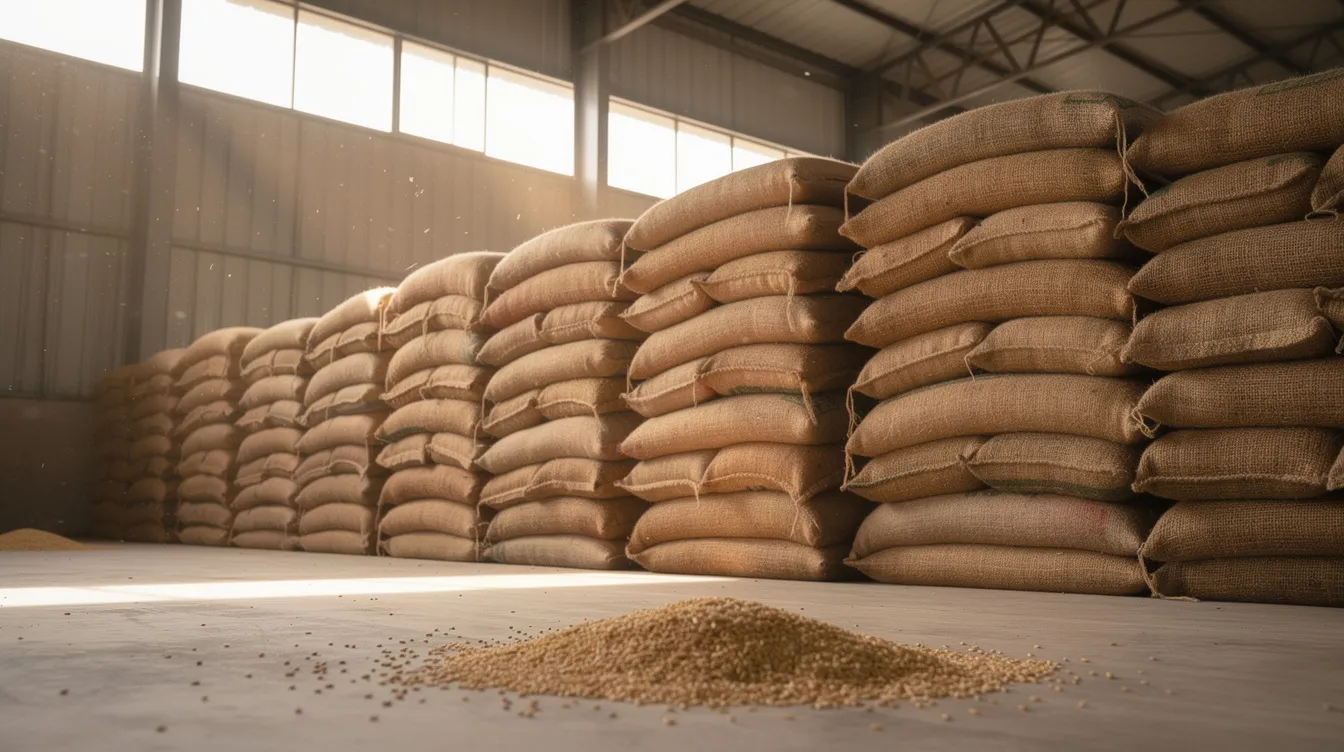
Working Capital Cycle of a Poha Processing Plant
The operating cycle of a Poha plant follows a clear sequence: cash → paddy procurement → raw material stock → processing (soaking, roasting, flaking) → finished Poha inventory → sales → receivables → cash collection.
The total cycle length is:
Operating Cycle = Raw Material Days + Processing Days + Finished Goods Days + Receivable Days – Creditor Days
For example: 60 days paddy stock + 3 days WIP + 15 days finished stock + 30 days receivables – 15 days creditors = 93 days operating cycle. The cash conversion cycle affects working capital needs significantly in poha processing. A longer cycle increases the cash credit requirement and interest cost, which should be reflected in break even analysis. Banks often examine the operating-cycle calculation while finalising working capital finance and may benchmark it against industry trends for flattened rice units.
How to Calculate Working Capital Requirement for Poha Plant
Working capital calculations should consider the operating cycle rather than a fixed percentage of project cost. The step-by-step approach is:
- Estimate annual production based on installed capacity and utilisation
- Derive annual raw material consumption and raw material cost using the paddy-to-Poha conversion ratio
- Calculate cost of production including labour, fuel, packaging and overheads
- Determine inventory holding days for each component
- Compute receivables and creditors based on sales and purchase terms
- Arrive at total current assets, total current liabilities and net working capital
Illustrative assumptions for a 2 tonne/day Poha plant (FY 2026–27):
| Parameter | Assumed Value |
|---|---|
| Daily production capacity | 2 tonnes/day |
| Working days | 300 days/year |
| Capacity utilisation (Year 1) | 70% |
| Annual Poha production | 420 tonnes |
| Paddy-to-Poha conversion | 2:1 |
| Annual paddy consumption | 840 tonnes |
| Paddy price | ₹24/kg |
| Annual raw material cost | ₹201.60 lakh |
| Packaging cost per kg (blended) | ₹10/kg |
| Annual packaging cost | ₹42 lakh |
| Monthly operating expenses (ex-RM) | ₹2.5 lakh |
Working capital requirements are approximately ₹2–6 lakh per month for smaller units. Total investment for a poha mill ranges from ₹25 lakh to ₹140 lakh depending on scale, while a poha processing unit may cost ₹5–10 lakh to start at the micro level. Machinery costs for a 500 kg/day poha unit range from ₹5–10 lakh. Actual figures must be validated through customised financial projections.
Illustrative Working Capital Assessment and Component Table
This section presents a structured view of current assets and current liabilities for bank assessment purposes.
Table 1: Components of Poha Plant Working Capital
| Component | Typical Nature | Impact on Working Capital |
|---|---|---|
| Raw material stock | Paddy/rice inventory | Largest component; increases with longer holding days |
| Packaging material | BOPP pouches, bags, labels | Higher for branded multi-SKU models |
| Work-in-process | Semi-processed paddy | Usually small (1–3 days) |
| Finished goods | Market-ready Poha | Higher for retail; lower for bulk |
| Trade receivables | Amounts due from buyers | Increases with longer credit terms |
| Cash & bank | Operating buffer | Minimum 7–10 days of expenses |
| Trade creditors | Payables to suppliers | Reduces WC requirement |
Table 2: Illustrative Working Capital Assessment (2 TPD Poha Plant, 70% Utilisation)
| Particulars | Basis | Amount (₹ Lakh) |
|---|---|---|
| Raw Material Stock | 60 days of paddy consumption | 33.15 |
| Packaging Material | 30 days of packaging cost | 3.50 |
| Work-in-Process | 3 days (RM + conversion cost) | 2.10 |
| Finished Goods | 15 days at cost of production | 10.50 |
| Trade Receivables | 30 days of sales | 8.40 |
| Cash & Other Current Assets | 10 days operating expenses | 0.85 |
| Total Current Assets | 58.50 | |
| Less: Trade Creditors | 15 days of RM + packaging purchases | 10.10 |
| Less: Outstanding Expenses | Monthly accruals | 1.20 |
| Working Capital Gap | 47.20 |
All figures are illustrative only and based on assumed example figures for a Poha processing plant. Actual numbers will differ.
Banks use this analysis for cash credit assessment. The same logic underpins the working capital section in CMA Data and the detailed project report. Promoter margin (typically 20–30% of total current assets under MSME lending norms) covers part of the gap, and bank cash credit finances the balance.
Working Capital Based on Capacity Utilisation
Working capital requirement is directly affected by capacity utilisation because higher production means higher paddy consumption, more finished stock and usually higher receivables. A 500 kg/day unit produces approximately 13 tonnes per month at full capacity – and every tonne produced locks additional funds in the operating cycle.
Typical ramp-up for a new Poha unit might look like:
- Year 1: 60–65% of installed capacity
- Year 2: 75–80%
- Year 3: 85–90%
In DPR projections, working capital is normally calculated year-wise:
| Year | Utilisation | Illustrative WC Requirement (₹ Lakh) |
|---|---|---|
| Year 1 | 65% | ~42 |
| Year 2 | 80% | ~52 |
| Year 3 | 90% | ~58 |
Banks may sanction an initial cash credit limit based on Year 1 requirements but expect enhancement requests as turnover grows.
Impact of Paddy Procurement Strategy on Working Capital
Paddy procurement strategy is the single most important factor in determining working capital requirement, especially in major rice-producing belts. Different strategies create very different inventory profiles:
- Regular monthly procurement: Spreads purchases evenly; lower inventory at any point but may face higher paddy prices in off-season months.
- Harvest-season bulk procurement: Buying 3–6 months’ supply in October–January can reduce per-kg raw material cost but blocks substantial funds in inventory.
- Direct farmer procurement: May offer price advantages but credit terms are negligible.
- Mandi-based procurement: Standard route; credit is usually 7–15 days.
- Contracted procurement via aggregators: Offers supply certainty but terms vary.
For detailed raw-material planning, refer to the paddy procurement strategy guide. In the DPR and CMA Data, paddy inventory days and procurement patterns should be explicitly mentioned so that bankers clearly understand the seasonal working capital need.
Working Capital Requirement for Branded vs Bulk Poha Business
Working capital requirement depends strongly on whether the unit focuses on bulk B2B supply or branded retail packs.
Table 3: Branded vs Bulk Poha Working Capital
| Parameter | Branded Retail | Bulk / B2B |
|---|---|---|
| Packaging inventory days | 30–45 days | 15–30 days |
| Finished goods holding | 15–30 days | 7–15 days |
| Typical receivable days | 21–45 days | 30–60 days (institutional) |
| Marketing spend | Higher (trade schemes, promotions) | Lower |
| Product SKUs | Multiple (thin, medium, thick, organic) | Limited |
| Profit margin | Net margin 16–22% | Lower but volume-driven |
| Packaging line complexity | Higher | Simpler |
Market selling prices for poha range between ₹25–40 per kg, and gross contribution in poha manufacturing is ₹5–15 per kg depending on the model. Branded packaged poha margins range from 18% to 25% at the gross level. Export-grade poha commands a 30% to 40% premium over domestic prices, and export-grade poha can achieve a net margin of 24–32%. Health-conscious consumers are driving a 20% annual growth in organic poha, opening further business opportunities and investment opportunities.
Refer to the Poha plant revenue model for an in-depth discussion of product mix and market strategy. Working capital assumptions must be consistent with the chosen revenue model.

Cash Credit Limit for Poha Processing Plant
A cash credit (CC) facility is the standard mechanism through which banks in India finance day-to-day poha production operations. It provides a revolving credit line against the security of stock and receivables.
Key concepts:
- Drawing power: Calculated monthly based on eligible current assets (stock + receivables) less margin and creditors
- Margin requirement: Promoter’s contribution, typically 20–30% of eligible current assets
- Stock statements: Monthly declarations of inventory and book-debt submitted to the bank
- Receivable ageing: Banks monitor how old the outstanding receivables are
The cash credit requirement is normally derived from the working capital gap calculated in the DPR, subject to bank norms, promoter profile and available security. Creditors and advances received from customers are deducted while calculating Maximum Permissible Bank Finance (MPBF) where such method is used.
Sanction terms, interest rate and collateral depend on each bank’s lending policy. This article does not guarantee any particular percentage of finance.
Working Capital Gap and Promoter’s Contribution
The working capital gap is defined as:
Working Capital Gap = Current Assets – Current Liabilities (other than bank borrowings)
Banks generally expect a portion of this gap to be funded by the promoter’s own contribution (margin money for working capital) and the balance by cash credit. The exact split depends on the bank, scheme and borrower profile.
Promoter’s margin for working capital is usually treated as part of total project cost in the project cost and means of finance statement, separate from the fixed-asset margin and share capital. Underestimating promoter’s contribution can cause liquidity stress once operations begin, even if the term loan and any applicable subsidy are sanctioned. DPRs should clearly show how promoter’s capital, term loan and cash credit together finance both fixed assets and working capital, keeping the balance sheet equation intact.
MPBF and Bank Working Capital Assessment
Some banks still use Maximum Permissible Bank Finance (MPBF) or similar frameworks for medium-sized units, while others focus more on turnover-based or cash-flow-based assessment. RBI norms have given banks flexibility to decide inventory and receivable levels depending on the borrower’s operating cycle.
Alternative methods include:
- Turnover method: Funding based on a percentage of projected annual turnover
- Operating-cycle method: Based on inventory and receivable days specific to the industry
- Cash-budget method: Sometimes used for seasonal agro-processing units
Whichever method is adopted, the underlying data in CMA Data – current assets, current liabilities, operating costs, sales projections – must be consistent and realistic. Bank norms can vary by institution, branch and time, so promoters should treat MPBF formulas as indicative frameworks, not rigid universal rules.
CMA Data for Poha Processing Plant
CMA Data is a standardised set of financial statements and working capital analysis that many banks require for assessing working capital finance, especially when the total facility exceeds certain limits.
Key statements within CMA Data include:
- Projected balance sheet and profit & loss account
- Fund-flow statement
- Working capital analysis and MPBF calculation
- Ratio analysis: current ratio, debt equity ratio, debt service coverage ratio, profitability ratios
- Cash flow projections
For a Poha unit, CMA Data must incorporate the paddy-to-Poha conversion ratio, realistic capacity utilisation, stock days, receivable days and creditor days derived from the actual business plan. The Poha plant financial projections article explains how projected financial statements are prepared and linked to capacity and cost structures. Professional assistance can help promoters align CMA Data with DPR assumptions, but no consultant can guarantee loan sanction.
Working Capital in Poha Plant Detailed Project Report (DPR)
A poha manufacturing plant DPR must present both fixed capital and working capital requirement, along with means of finance and profitability projections. Key elements include:
- Capital expenditure on fixed assets (land, building, plant layout, machinery)
- Working capital margin (promoter’s share)
- Total project cost and financing structure
- Projected balance sheet showing total assets, share capital and borrowings
- Projected P&L showing gross profit, net profit and financial charges
- Cash flow projections and projected pay back period
- DSCR and break even analysis
- Sensitivity analysis on key assumptions
Working capital projections should show year-wise current assets and current liabilities, interest on working capital and impact on DSCR – not just a single rough estimate. Refer to Poha plant project cost and means of finance for structuring project financials including working capital margin. Banks increasingly expect DPRs to be internally consistent: production volumes, raw material consumption, inventory days, receivable periods and finance cost must all tie up logically. Organizations like NIIR Project Consultancy Services also offer guidance on project feasibility templates.
Interest on Working Capital and Its Effect on Poha Profitability
Working capital is rarely free. Cash credit and short-term loans carry interest which becomes an operating cost. At an illustrative rate of 10–12% per annum, a working capital borrowing of ₹25 lakh would result in annual interest cost of approximately ₹2.5–3 lakh. This cost directly affects the cost of production and Poha selling price.
Underestimation of interest in the DPR leads to overstated profitability. In the break-even analysis, interest on working capital should be clearly shown and tested under various capacity scenarios. If interest increases by 1–2%, the sensitivity impact on net profit and DSCR should be evaluated. The DPR should label assumed rates clearly as illustrative. Depreciation charges on fixed assets and financial charges on working capital together influence the true profit margin of the unit.
Working Capital and Poha Plant Profitability
Working capital and profitability are related but not identical. A Poha plant may show accounting profit on the P&L yet face acute liquidity issues if funds remain tied up in inventory and receivables for extended periods.
Consider these situations:
- A unit records high sales but on 45–60 day credit terms to supermarkets, meaning cash is not available to buy paddy for next month’s production
- Heavy seasonal paddy stocking without an adequate cash credit limit forces the promoter to delay wages and utility payments
- Large finished goods buildup due to slower-than-expected off-take in a new market area
Such conditions cause delays in paying suppliers, wages or EMIs, affecting credit rating and bank confidence even when the P&L appears healthy. Robust working capital planning helps stabilise cash flows and supports better supplier terms. Poha manufacturers should regularly compare actual inventory days and receivable days with those projected in their DPR to detect and correct deviations early. Market research and market study of actual trade practices are essential inputs for realistic projections.
Common Mistakes in Poha Plant Working Capital Planning
Common errors include:
- Ignoring seasonal paddy procurement and assuming year-round uniform raw material purchases
- Assuming unrealistic supplier credit (e.g., 90 days from mandi traders who typically give 7–15 days)
- Not providing separate working capital margin in project cost
- Starting Year 1 projections at 100% capacity utilisation
- Ignoring receivable periods entirely or using an industry average without understanding the actual sales channel
- Using the same working capital percentage for every year without operational justification
- Underestimating packaging inventory for branded multi-SKU operations
- Ignoring GST and tax payment timing effects on cash flow
- Not accounting for minimum cash balance requirements
- Not considering interest on cash credit in cost of production
- Projections inconsistent with the manufacturing process flow – for example, production volumes that do not reconcile with paddy consumption or fixtures pre operative estimates
- Regular maintenance of processing machinery is crucial to avoid costly downtime; ignoring this as an operating expense distorts working capital projections
Promoters should have their working capital plan reviewed by a CA or experienced project-finance advisor before submitting DPR and CMA Data to banks.
How to Reduce Working Capital Requirement Without Affecting Production
The objective is to use working capital efficiently – not to starve the Poha plant of funds and cause stock-outs or production stoppages. Broken flakes from poor quality control also represent avoidable waste that increases effective raw material cost.
Practical measures include:
- Procurement planning: Staggered paddy buying instead of maximum bulk, balancing cost advantage with inventory financing cost
- Inventory control: Tighter monitoring of paddy stock, finished goods ageing and packaging material levels
- Production scheduling: Align production with confirmed orders and reliable sources of demand rather than producing to fill warehouse
- Receivable management: Reduce debtor days through early-payment incentives, enforce credit limits, and use digital tools for receivable monitoring
- Supplier negotiation: Negotiate better credit terms with packaging material and consumable suppliers
- SKU rationalisation: Avoid slow-moving variants that tie up finished goods inventory
- Efficient warehousing: Proper plant layout and warehouse management to reduce handling costs
Any working capital reduction strategy must still account for fixed commitments such as salaries, utilities and statutory dues.
Information Required for Working Capital Assessment of Poha Plant
Accurate working capital assessment requires detailed operational and financial information.
Table 4: Information Required for Bank Working Capital Assessment
| Information | Why Required |
|---|---|
| Installed capacity and daily production capacity | Basis for production and consumption projections |
| Expected capacity utilisation (year-wise) | Determines actual production and working capital scale |
| Paddy requirement per tonne of Poha (conversion ratio) | Derives raw material consumption |
| Raw material prices (paddy, rice) | Values inventory and total means of raw material |
| Procurement cycle and storage period | Determines raw material inventory days |
| Packaging cost per unit | Values packaging inventory |
| Processing time | Determines WIP inventory |
| Finished goods holding period | Values finished goods stock |
| Credit sales percentage and customer credit period | Values trade receivables |
| Supplier credit period | Values trade creditors |
| Monthly operating expenses (salaries, power, fuel, transport) | Values cash and expense components |
| Sales projections (monthly/annual) | Cross-check with production and receivables |
| Existing bank facilities (if any) | Context for new or enhanced working capital |
| Proposed working capital facility | Amount sought from bank |
| Promoter contribution (margin) | Bank margin and equity adequacy |
| Market access and distribution plan | Validates receivable assumptions |
Banks also review GST returns, audited financials and bank statements for existing units. FSSAI registration is mandatory for food manufacturing units, Udyam registration is free and required for MSME classification, GST registration is necessary for turnover above ₹40 lakh, trade licence is required from local authorities for manufacturing, and Pollution Control Board approval varies by state and unit size. A Mudra loan may be relevant for micro and small-scale units. Promoters seeking basic registration and approvals should keep these ready alongside financial documentation.
Working Capital Requirement for New vs Existing Poha Plant
For a new (greenfield) unit, working capital calculations rely entirely on projected production, assumed sales mix, estimated inventory and receivable days, and the feasibility study. This makes realistic assumptions critically important – overly optimistic projections are easily questioned by experienced bank appraisers.
For an existing unit seeking enhancement or expansion finance, banks expect to see:
- Historical turnover and actual stock levels
- Debtor ageing reports and creditor payment patterns
- GST returns validating actual sales
- Audited financials and existing bank statements
- Actual working capital utilisation patterns
Existing units planning expansion should reconcile their historical working capital usage with the enhanced capacity and revenue plan in the new DPR. Consistent improvement in working capital management – better current ratio, reduced debtor days, improved stock turnover – enhances credibility when requesting increased cash credit limits. In the broader industrial world, banks value demonstrated financial discipline over theoretical projections.
Role of Working Capital in Bank Loan Appraisal for Poha Plant
In bank loan appraisal for a Poha processing plant, term loan and working capital are evaluated together to judge overall project viability and repayment capacity.
Bankers examine:
- Liquidity ratios: current ratio, quick ratio
- Stock cycle and debtor cycle assumptions
- Promoter’s share capital and total equity contribution
- Projected cash accruals and loan repayment capacity
- Shareholding pattern and promoter background
- Industry trends for the poha industry and food habits driving demand
Inappropriate working capital planning – too low or too high – raises concerns. Too low indicates potential liquidity issues; too high may indicate inflated projections or inefficient commercial production practices. DSCR calculation considers interest on both term loan and working capital; therefore, incorrect working capital interest assumptions can distort the coverage ratio. The debt service coverage ratio is a critical metric that banks scrutinise during appraisal.
Promoters should be prepared to explain their working capital assumptions clearly, referencing their detailed project report and CMA Data.
Factors Increasing or Reducing Working Capital Requirement
Table 5: Factors Increasing or Reducing Working Capital
| Factor | Impact | Reason |
|---|---|---|
| Higher paddy stock days | Increases WC | More funds blocked in raw material |
| Expansion to distant states | Increases WC | More finished goods and transit stock |
| Shift from cash-and-carry to credit sales | Increases WC | Higher receivables |
| Higher number of SKUs and packaging line variants | Increases WC | More packaging and finished goods inventory |
| Just-in-time paddy procurement | Reduces WC | Lower raw material inventory |
| Strong distributor pre-payment terms | Reduces WC | Lower receivables |
| Better demand forecasting | Reduces WC | Less finished goods buildup |
| Improved supplier credit negotiation | Reduces WC | Higher creditors offset current assets |
| Longer institutional buyer payment terms | Increases WC | Receivables stretch out |
| Effective market demand analysis | Reduces WC | Aligns production with actual offtake |
Each factor should be aligned with the Poha plant’s business model. Aggressive reductions without planning can risk stock-outs and lost sales. The vegetable food and snack categories also offer growth opportunities for diversified Poha units (curry leaves flavoured Poha, for example), but each new product variant can incrementally increase working capital unless managed carefully.
Hot water usage in the soaking stage and specific fuel expenses vary by process design and affect per-unit operating costs – and by extension, the cash locked in WIP and finished goods inventory. A thorough market study and project feasibility evaluation should precede working capital calculations.

FAQs on Working Capital Requirement for Poha Processing Plant
The following questions are frequently raised by Poha plant promoters about working capital. Answers are general guidance for Indian conditions around FY 2026–27; exact figures must be tailored through a unit-specific project report.
How much working capital is typically required for a Poha processing plant in India?
There is no single standard amount. Working capital depends on production capacity, paddy procurement pattern, inventory holding days, receivable days and supplier-credit terms. As a broad illustration, a semi-automatic 2 tonne/day Poha unit with 60–70% utilisation may need working capital in the range of ₹30–50 lakh (total current assets), with monthly working capital cash outflow of ₹2–6 lakh. A 500 kg/day poha setup costs ₹5–10 lakh as total cost of the project, but working capital sits on top of that investment. Promoters should rely on customised DPR and CMA Data rather than generic thumb rules when approaching banks.
Is working capital included in the Poha plant project cost?
Permanent working capital margin – the promoter’s share of current assets – is normally included as a component of total project cost in the means of finance statement. Bank-financed working capital (cash credit or overdraft) is a separate facility from the term loan and is not counted as project cost, although its interest is reflected in profitability and DSCR calculations. Project reports should show fixed capital, working capital margin and total project cost distinctly to avoid confusion. The shelf life of raw paddy and finished Poha also influences how the inventory component is structured in project financials.
Can banks finance working capital for a Poha manufacturing unit through cash credit?
Banks generally provide working capital finance to eligible poha manufacturing businesses in the form of cash credit limits, subject to credit appraisal, security, compliance and scheme guidelines. The sanctioned limit is usually linked to drawing power based on stock and receivables after margin, monitored through regular stock and debtor statements. Sanction amounts, security requirements and interest rates vary by bank and borrower profile. Professional documentation – DPR, CMA Data, financial projections – helps present a clear case but does not guarantee approval.
Why is paddy inventory so important in working capital calculation for Poha plant?
Paddy is the main raw material and often the largest single component of current assets. When the unit procures several months’ requirement during harvest season, holding 3–6 months of paddy stock can block substantial funds. Even a small change in assumed paddy inventory days can significantly change the total working capital requirement. The rice mill and poha production sectors share this characteristic of seasonal raw material procurement. Promoters should document their planned stocking strategy and align it with the working capital projection.
Does higher production capacity always mean higher working capital?
Generally yes – higher production means more paddy consumption, more packaging, more finished goods and usually more receivables. However, the relationship also depends on operating-cycle assumptions. A well-managed larger unit with shorter inventory and receivable days may have a lower working capital requirement relative to turnover than a poorly managed smaller unit. The charges selling and distribution overheads, along with the total lab and testing expenses in quality-focused units, also influence the final working capital quantum. Industrial activity at higher utilisation levels may actually improve working capital efficiency per rupee of sales.
Conclusion and Professional Advisory Note
Careful planning of working capital requirement for a Poha processing plant is as important as selecting machinery or finalising land and building – perhaps more so, because working capital directly affects day-to-day cash flow, interest cost and DSCR. The poha industry offers genuine growth opportunities, but only for units that are financially prepared beyond the initial capital expenditure.
An integrated approach is essential: Poha plant project cost, means of finance, capacity utilisation, paddy procurement strategy, inventory days, receivable terms, operating expenses and profitability must all be aligned in one consistent financial model. Working capital estimations in DPRs and CMA Data should be treated as living documents, reviewed periodically against actual operations and market conditions.
Entrepreneurs, promoters and poha manufacturing businesses planning new or expansion projects may seek professional assistance for preparation of a detailed project report, working capital assessment, CMA Data, financial projections and project-finance documentation. A well-prepared project report – grounded in realistic assumptions and supported by sound project financials – significantly improves the quality of bank interactions and the probability of a structured, sustainable financing arrangement.
CA Manish Gugliya www.projectreportbank.com
Prepared in the professional perspective of CA Manish Gugliya for publication on www.projectreportbank.com, intended as financial guidance and not as a guarantee of bank finance or subsidy.