
Key Takeaways
- Poha plant utilities requirements-covering power, fuel, water, steam where applicable, DG backup, compressed air, lighting and manpower-are as critical as machinery capacity for determining flattened rice profitability and securing bank finance.
- Poha plant power requirement and fuel requirement vary sharply with plant capacity, roasting technology, soaking system, drying method, automation level and operating hours. Always use indicative ranges, never universal fixed numbers.
- Poha plant manpower requirement depends on shifts, degree of automation and packaging style. Underestimating labour, power and fuel in the DPR makes projections unrealistic and weakens the case before lenders.
- A boiler is not compulsory for every poha manufacturing unit. Poha plant boiler requirement, steam requirement and fuel consumption must follow the selected manufacturing process and machinery supplier specifications.
- From a DPR and project-finance viewpoint, realistic utility and manpower planning directly influences cost of production, working capital, DSCR, break-even and overall project viability.
Why Utilities and Manpower Planning Decide Poha Plant Viability
For a commercial poha manufacturing plant in India, machinery capacity alone does not determine feasibility. Total investment for a poha mill ranges from ₹25 lakh to ₹140 lakh, and machinery costs can reach ₹12–60 lakh, yet it is the recurring utility and manpower expenses that ultimately decide whether the plant earns a profit or bleeds cash every month. Setting up a poha manufacturing plant requires continuous utilities and agricultural input-paddy is the primary raw material for poha production and impacts both yield and quality, while utilities drive every stage from cleaning to packaging.
Poha manufacturing involves cleaning, soaking, roasting, flaking and drying processes. Each stage consumes electricity, fuel, water or labour in different proportions. Utilities required for poha manufacturing include electricity, fuel, steam or thermal energy, water, compressed air for some automation systems, DG backup, lighting, ventilation and material-handling power. Together, these determine your unit cost per kg, energy costs, production efficiency and ultimately the break-even point in a detailed project report.
Actual requirements depend on plant scale, roasting system (gas, biomass, steam), soaking and conditioning design, dryer type, packaging automation and planned operating hours. A 500 kg/hr plant and a 2,000 kg/hr plant will have fundamentally different utility profiles. To understand where each utility is consumed, it helps to first understand the complete Poha manufacturing process before estimating costs.
Major Utilities Required in a Poha Manufacturing Plant
Every poha plant needs certain core utilities regardless of scale, while others depend on technology choices. A poha manufacturing plant requires electricity and water supply as non-negotiable basics. Heating systems are necessary for roasting paddy. Compressed air systems may be needed for automated processes. Adequate storage facilities are essential for raw materials and finished products. Fire protection systems are necessary due to the combustible materials and processes involved.
A poha manufacturing plant requires soaking tanks and roasting drums at minimum, plus flaking rollers for producing rice flakes. The table below maps each utility to its primary usage:
| Utility | Main Usage in Poha Production | Essential or Design-Dependent |
|---|---|---|
| Electricity | Motors, blowers, conveyors, pumps, packaging, lighting | Essential for all plants |
| Fuel (thermal energy) | Roasting, drying | Essential-fuel type is design-dependent |
| Steam / thermic fluid | Steam-based roasting, conditioning, drying | Only if technology requires it |
| Water | Paddy washing, soaking, boiler feed, cleaning, domestic | Essential |
| Compressed air | Pneumatic valves, automated packaging | Depends on automation level |
| DG set | Power backup during grid outages | Depends on grid reliability |
| Fire and safety | Hydrants, extinguishers, water reserve | Essential |
| Lighting and ventilation | Work areas, dust control | Essential |
A 500 kg/day poha mill may require INR 5–10 lakh for utilities setup alone, separate from machinery. Each major machine group comes with its own electrical and utility load that must be captured in the DPR-refer to the Poha plant machinery and equipment cost breakdown for machine-wise details.
Electricity Requirement of a Poha Plant
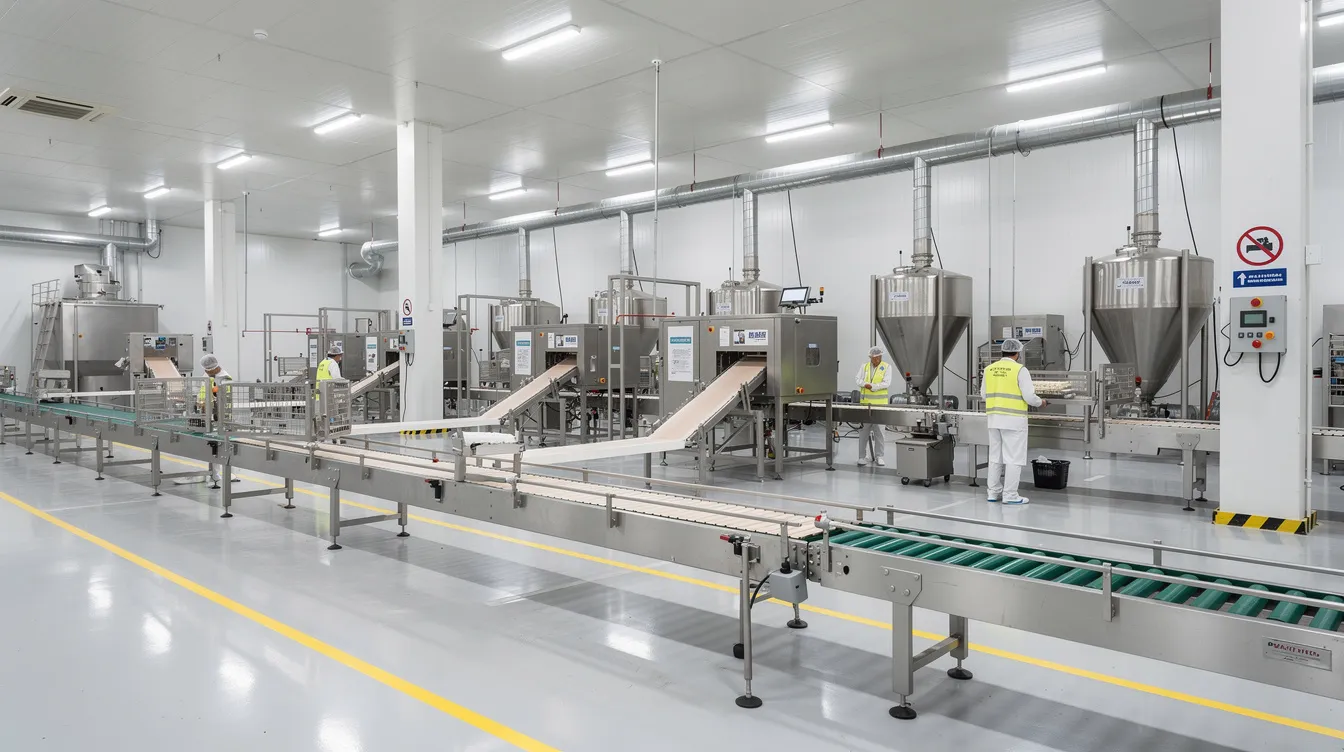
Poha plant power requirement has two dimensions: connected electrical load (total motor kW or HP installed) and actual poha plant electricity consumption (kWh or units consumed per month). Electrical power is essential for operation of heavy machinery, and a three-phase industrial power connection is typically needed for poha processing.
Key electrically driven equipment includes de-stoners and aspirators for cleaning paddy before processing, graders, elevators, screw and chain conveyors, soaking agitators, flaking mills with heavy-duty rollers that flatten roasted grain into poha flakes, dryer blowers, a vibrating grader that separates whole flakes from broken material, dust collectors, polishing machines where used, compressors, pumps and packaging machinery. Cleaning and grading equipment alone costs between ₹5–20 lakh, and the flaking roller gap determines poha thickness and grade.
| Machine Group | Typical Load Range | Notes |
|---|---|---|
| Cleaning, de-stoning, grading | 3–10 HP | Multiple small motors |
| Roasting auxiliaries (blowers, drives) | 2–10 HP | Depends on roaster type |
| Flaking / roller mills | 10–20 HP | Largest single load in many plants |
| Drying blowers and conveyors | 3–10 HP | Higher for forced-air dryers |
| Packaging and sealing | 1–5 HP | Higher with automatic bagging |
| Pumps, compressor, lighting, misc | 3–8 HP | Often underestimated |
The difference between connected load, sanctioned load, maximum demand and actual consumption matters enormously. Connected load is the sum of all motor name-plate ratings. Sanctioned load is what the DISCOM approves. Maximum demand is peak kVA drawn. Actual consumption is kWh = running kW × hours × load factor. Not all machines run simultaneously (diversity factor), and most operate below rated load (load factor typically 0.5–0.7 in poha plants). The DPR should never equate total motor HP with continuous consumption.
Power requirement rises with installed production capacity and operating hours-this relationship is explained further in the Poha plant capacity planning guide.
Indicative Power Requirement by Plant Capacity
These figures are purely illustrative to help promoters visualise ranges. Actual numbers must come from supplier quotations. The ideal capacity for a poha plant ranges from 100 to 5,000 kg/hr.
| Plant Scale | Capacity Range | Indicative Connected Load | Typical Hours/Day | Key Drivers |
|---|---|---|---|---|
| Small semi-automatic | 100–500 kg/hr | 15–40 HP (11–30 kW) | 8–10 (single shift) | Fewer conveyors, manual feed, limited blowers |
| Medium automated | 500–1,000 kg/hr | 50–100 HP (37–75 kW) | 10–16 (one to two shifts) | More blowers, larger flakers, assisted drying |
| Larger automated | 1,000–2,000+ kg/hr | 100–150+ HP (75–110+ kW) | 16–20 (double shift) | Multiple lines, automatic packing, full drying |
Load factor of 0.5–0.7 means actual units consumed per month = connected kW × hours × load factor. Sanctioned load should be set somewhat higher than expected maximum running load to avoid penalties.
How to Calculate Electricity Cost for a Poha Plant
Monthly electricity cost = Units consumed (kWh) × energy charge per unit + fixed demand charges + meter rent + electricity duty + taxes. An industrial bill in India typically includes fixed demand charges per kVA, energy charges per kWh (which vary by state and slab), power factor penalties if PF falls below 0.85, and possible Time-of-Day tariffs.
For DPR estimation, list major sections (cleaning, roasting auxiliaries, flaking, drying, packing, utilities), multiply each section’s running kW by daily hours and monthly working days, then apply a realistic load factor.
Illustrative example (indicative only): A medium plant with 50 kW connected load, load factor 0.6 (average 30 kW), running 10 hours/day for 25 days/month = 7,500 kWh. At ₹8/kWh energy charge = ₹60,000 variable cost. Add demand charges, duty and taxes of roughly ₹8,000–12,000. Total monthly electricity: approximately ₹68,000–72,000.
DG-generated power during outages costs significantly more (₹25–30/kWh equivalent) due to diesel, lube oil and maintenance, and should be calculated separately. In the poha plant project report, electricity should appear as both a fixed element (demand charges) and a variable element (per-unit consumption linked to production volume).
Fuel Requirement in Poha Manufacturing
Roasting and some drying operations require significant thermal energy. Roasting temperatures range from 180°C to 220°C, and fuel consumption in a poha manufacturing plant depends on roaster design, furnace efficiency, throughput, moisture removal and insulation quality. Fuel sources for thermal energy in poha processing can include biomass, coal or LPG, among others. Typical process yield is approximately 60–65% from raw paddy to usable poha, and any inefficiency in thermal systems directly increases fuel cost per kg of finished product.
| Fuel Option | Availability | Pros | Cons |
|---|---|---|---|
| Rice husk / biomass | Strong in rice regions | Low cost, locally available | High ash, needs covered storage, emissions |
| Briquettes | Moderate | Consistent burn, lower ash | Higher cost than loose husk |
| LPG / PNG | Urban/industrial areas | Clean, controllable temperature control | Higher cost per useful heat unit |
| Coal / hard coke | Select regions | High calorific value | Stricter environmental norms, ash handling |
| Wood (where legal) | Limited | Easy combustion | Regulatory restrictions, sustainability |
Promoters should compare landed fuel cost per useful heat unit (₹ per kcal delivered) after accounting for combustion efficiency, not just price per kg. Fuel cost is a major component of variable cost, directly affecting manufacturing cost and EBITDA. Roasting equipment or boiler suppliers normally provide indicative fuel consumption per hour or per kg of output-use these as the base for estimation.
Rice Husk and Biomass as Fuel
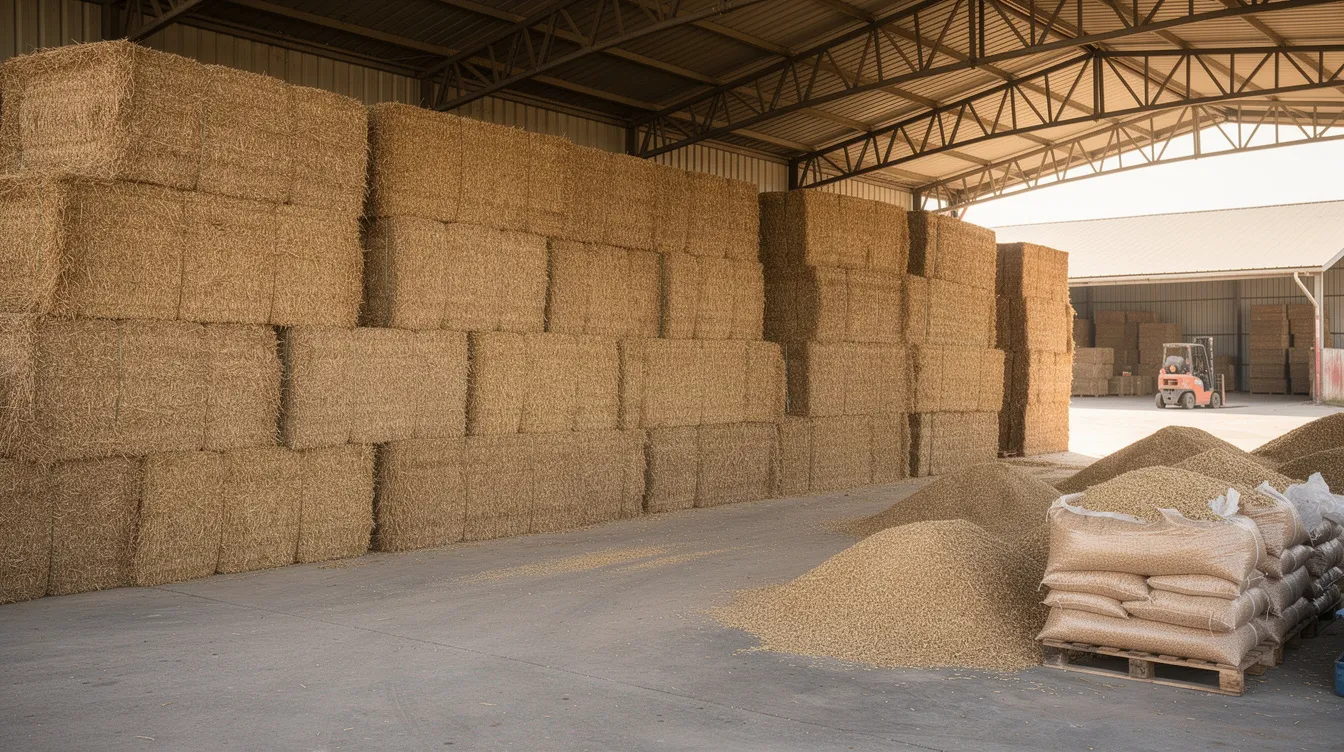
In major poha belts across Indian states like Madhya Pradesh, Maharashtra, Chhattisgarh and Odisha, rice husk is often available from local rice mills at ₹1–3/kg. However, procurement arrangements, transport logistics and covered storage to keep fuel dry are practical necessities.
High moisture in biomass reduces effective calorific value (dry husk offers roughly 3,000–4,000 kcal/kg) and increases specific fuel consumption. A Steamax energy intervention in Ujjain showed daily fuel consumption dropping from 1,000 kg/day to approximately 500 kg/day through improved combustion design, reducing ash generation from 15–20% down to about 2%.
Ash disposal, handling systems and minor labour for cleaning must be budgeted. Do not assume biomass is always cheaper-local fuel market conditions, pollution norms and handling costs must be evaluated for every DPR.
Boiler and Steam Requirement for Poha Plant
Not every poha plant requires a boiler. Poha plant boiler requirement depends entirely on whether the selected technology uses steam-based heating, direct-fired roasting, hot-air systems or thermic fluid heaters. Many small and medium scale plants use direct-fired sand roasting or hot-air systems without any boiler.
Plants opting for steam-based conditioning or drying need a suitably sized boiler, feed-water treatment (softener or RO), chimney and statutory safety features under the Boiler Act. Key details for the DPR include steam generation capacity, operating pressure, fuel type, specific fuel consumption, blowdown loss, water treatment chemicals and auxiliary power requirements.
A registered boiler operator may be mandatory for certain capacities, adding to manpower cost. Additional costs include annual inspection fees, refractory repairs and pollution-control equipment like multicyclones or bag filters for solid-fuel boilers. Always rely on supplier specifications rather than generic thumb rules.
Water Requirement for Poha Manufacturing
Water is critical for washing and soaking raw paddy in poha production-paddy is soaked for 3–4 hours before roasting. Water quality must be potable and low in hardness to prevent scaling in boilers and heat exchangers.
| Water-Use Area | Quality Needed | Consumption Pattern |
|---|---|---|
| Paddy washing and cleaning | Industrial grade, low sediment | Batch |
| Soaking / conditioning tanks | Clean, low hardness | Batch (3–4 hrs per cycle) |
| Boiler feed water (if applicable) | Softened, low TDS | Continuous |
| Equipment and floor cleaning | Industrial grade | Intermittent |
| Domestic (toilets, canteen) | Potable | Continuous |
| Fire-fighting reserve | Any grade | Emergency storage |
A small poha plant with about 450 tonnes/year capacity may consume roughly 750 litres of water per day. Larger plants require several cubic metres daily depending on scale and water reuse practices. Planning elements include daily peak requirement, overhead tank capacity, borewell or municipal connection sizing and pump HP.
Process water consumption depends heavily on the adopted production process, soaking duration, wash cycles and raw paddy quality. Moisture content and cleanliness of incoming paddy procurement directly influence water and fuel consumption.
Wastewater and Environmental Considerations
Even though poha processing is not as water-intensive as some food industries, wastewater from paddy washing, soaking overflow and cleaning contains suspended solids and organic matter from rice fines. A dedicated drainage system for wastewater management is essential. Compliance with local food safety regulations is required for operating a poha plant.
Basic requirements include sloped floors, drains with screens, settling or soak pits, and possibly a small ETP for larger plants where mandated by the State Pollution Control Board. Dust extraction and ventilation are crucial to maintaining air quality in processing areas. Solid waste-husk, dust, broken flakes and ash from biomass systems-needs planned handling and disposal. Packaging materials must be food-grade to ensure product safety and shelf life.
Exact statutory requirements differ by state and should be finalised with the local SPCB or a qualified environmental consultant.
DG Set and Power Backup Requirement
A backup power system is critical to prevent production losses during outages. Frequent power cuts can severely disrupt roasting, drying and packing operations in a poha manufacturing unit-sudden loss during roasting causes uneven product, increased broken flakes and wasted fuel.
Two approaches exist: DG sized for full plant load (expensive, mainly for larger units) versus DG sized only for critical loads such as the roaster machine, essential conveyors, key blowers and minimal lighting. To estimate DG capacity, sum critical loads in kW, apply diversity and motor starting factors, then convert to kVA considering power factor.
DG power cost per unit is significantly higher than grid power and must be calculated separately in the DPR. Space, ventilation, acoustic housing and diesel storage must be planned within the Poha plant land and building layout.
Manpower Requirement for Poha Manufacturing Plant
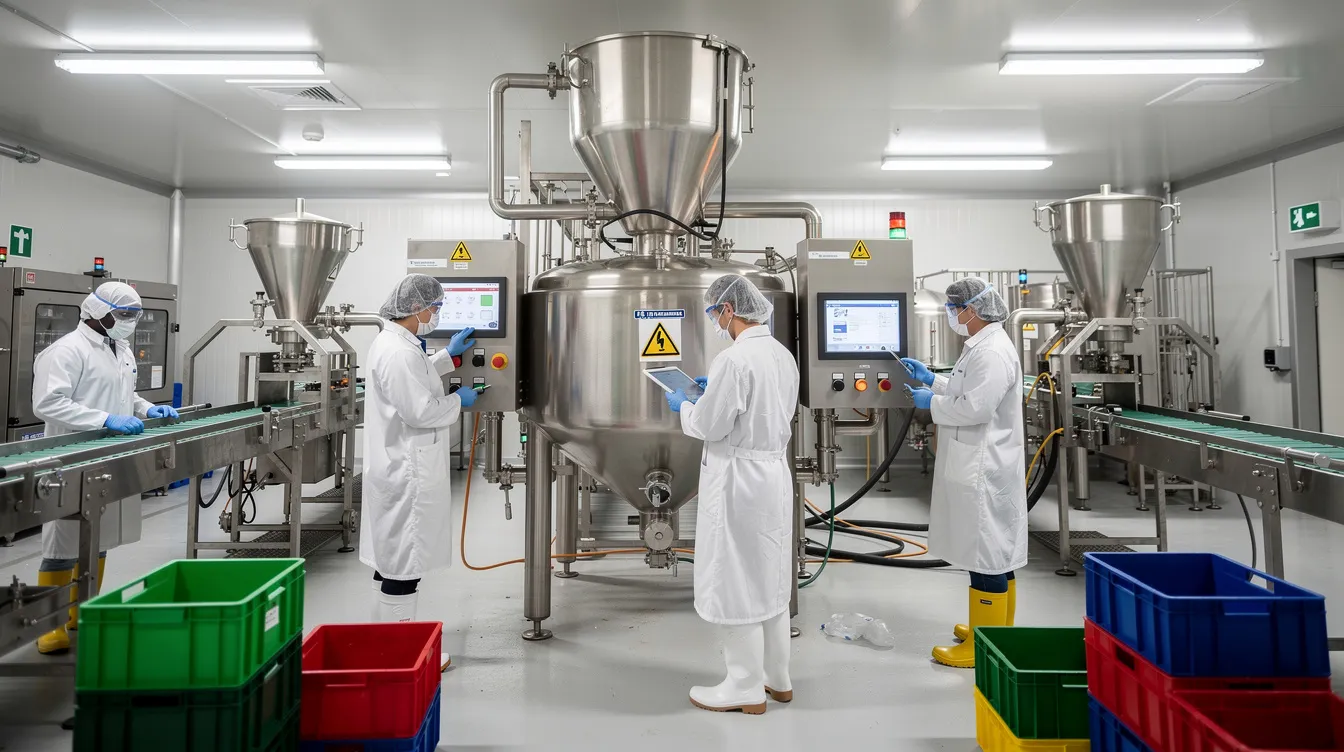
Poha plant manpower requirement is a mix of production, quality, maintenance, utilities and administration staff, varying with plant size, automation and shift pattern. A detailed manpower chart showing designation-wise and shift-wise requirements is essential in the DPR.
Automation-mechanised material handling, automatic bagging-reduces unskilled labour per tonne but rarely eliminates the need for experienced operators, supervisors and maintenance staff. Manpower cost is semi-fixed: salaries continue even at lower capacity utilisation, so underestimating headcount artificially inflates projected profitability.
Production Manpower
Key production roles include plant manager, production supervisor per shift, roasting operator, flaking machine operator (operating the poha making machine), dryer operator, cleaning section operator, soaking operator and packaging machine operators. Support workers handle feeding cleaned paddy, monitoring soaking tanks, loading and unloading bags, bag stitching and dispatch.
Small scale semi-automatic plants may combine multiple responsibilities under one skilled operator, whereas medium and large plants separate roles for better control and safety.
Quality and Maintenance Manpower
A QC supervisor monitors moisture, flake thickness, roasting level, foreign matter and hygiene-particularly important for branded poha where best quality and texture matter for retail shelf life. Maintenance staff typically include an electrician, fitter/mechanic, lubrication helper and boiler or furnace operator where applicable. Even small plants should budget at least part-time technician support.
Administrative and Commercial Manpower
Typical posts include owner/manager, accountant, stores in-charge, purchase assistant, sales/dispatch coordinator, security guards and housekeeping staff. Some functions like accounting and GST compliance may be outsourced. Administrative manpower is mostly common across shifts and does not double when adding a second production shift.
Indicative Manpower Requirement by Plant Size
These numbers are indicative planning ranges only. Monthly working capital requirements including wages typically run ₹2–6 lakh.
| Plant Scale | Production Staff | Packing & Material Handling | Maintenance / Utilities | Administration | Approx. Total |
|---|---|---|---|---|---|
| Small semi-automatic (300–500 kg/hr, 1 shift) | 4–6 | 2–3 | 1–2 | 2–3 | 10–15 |
| Medium automated (750–1,000 kg/hr) | 8–12 | 4–6 | 3–4 | 3–5 | 20–30 |
| Larger industrial (1,500+ kg/hr) | 15–25 | 8–12 | 5–8 | 5–8 | 35–55 |
Packaging format (loose bulk vs small retail pouches), degree of mechanised bagging and in-house marketing significantly impact labour requirement. See selecting the right Poha plant capacity for how capacity drives both utility and manpower planning.
One-Shift vs Two-Shift Manpower Planning
Adding a second production shift increases production capacity more than it increases total manpower. Shift-specific staff (operators, helpers, shift supervisors) must be duplicated, but common manpower-plant manager, admin, maintenance head, stores, security-serves both shifts.
Going from one to two shifts might increase total staff by 50–70% while plant output almost doubles, improving fixed-cost absorption per kg of poha. However, night-shift allowances, overtime and welfare costs must be properly captured in the operating cost calculation. The DPR should clearly specify planned shifts in the first three to five years and adjust electricity, fuel and manpower estimates accordingly.
Skilled vs Unskilled Labour Requirement
Skilled roles include plant manager, production supervisor, roaster operator, flaker operator, electrician, fitter, boiler operator and QC in-charge. Semi-skilled roles cover soaking and drying assistants, grading machine operators and experienced helpers in bagging. Unskilled roles include general helpers for loading, cleaning, manual stacking and housekeeping-many sourced through contractors.
Local availability and wage levels of skilled versus unskilled workers can influence site selection and should be considered alongside land, building and layout requirements.
How to Calculate Manpower Cost in the DPR
Manpower cost should be calculated monthly and annually, category-wise, then escalated over projection years. Include basic wages, employer’s PF contribution, ESIC where applicable, bonus, overtime, leave encashment, uniforms/PPE and staff welfare.
Where contract labour is used, the consolidated rate including contractor margin should still be broken down per worker for realistic comparison. An annual increment percentage (typically 5–8%) should be applied so that labour cost does not unrealistically decline as a share of revenue over time.
For bank finance appraisal, realistic manpower and utility costs lend credibility to the poha plant financial projections and support the borrower’s case for adequate working capital limits.
Utility Cost as Part of Poha Manufacturing Cost
In a professional project report, utilities should be expressed both as total monthly cost and as cost per kg of finished poha. Divide total monthly power, fuel and water expense by actual production quantity at assumed capacity utilisation. Other related costs-packaging materials, repair and maintenance, consumables-together with utilities and labour form the main components of manufacturing cost.
Lower capacity utilisation spreads fixed elements (minimum demand charges, fixed manpower) over smaller tonnage, increasing cost per kg and lowering gross margin. Banks often examine sensitivity of EBITDA and DSCR to changes in power and fuel cost, so utility cost estimation must be conservative.
Capacity Utilization and Utility Consumption
Poha manufacturing plant utility consumption is not perfectly proportional to production. Some costs are variable, others semi-fixed or fixed.
| Cost Category | Type | Behaviour at Low Utilisation |
|---|---|---|
| Process fuel | Variable | Falls with lower output |
| Production electricity (per unit) | Variable | Falls with lower output |
| Demand charges (minimum billing) | Fixed | Stays constant |
| Supervisory and admin salaries | Fixed | Stays constant |
| Maintenance staff | Semi-fixed | Largely constant |
| Security, lighting, basic utilities | Fixed | Stays constant |
| Packaging manpower | Semi-variable | Reduces partially |
At 50% capacity utilisation, fixed costs per kg are nearly double what they are at full capacity. Higher utilisation improves contribution, EBITDA margin and DSCR, making the project more bankable-provided market demand and paddy procurement support higher throughput.
Utility Planning for Bankable Poha Plant DPR
In my practice as a DPR consultant, I typically begin utility planning by collecting detailed machinery quotations with motor-wise HP/kW, roasting and boiler specifications, fuel consumption figures from manufacturers, an indicative water balance and a proposed manpower chart with shift details.
I align the electrical load list with sanctioned load planning, transformer sizing, DG sizing and expected electricity consumption for different capacity utilisation scenarios. Fuel, water and manpower entries are then integrated into monthly operating cost, cash flow projections and DSCR calculations.
Over-optimistic assumptions on utilities or manpower artificially inflate projected profits, misstate working capital needs and ultimately hurt loan repayment capacity once operations begin. Treat utility planning as a core part of project design, not an afterthought, and cross-check every assumption with machinery suppliers and local utility providers.
Common Mistakes While Estimating Utilities and Manpower
- Counting only main process motors while ignoring conveyors, elevators, blowers, dust collectors and packaging loads-this underestimates connected load by 20–40%.
- Treating total connected load as continuous running load, thereby miscalculating both sanctioned load requirements and monthly power cost.
- Ignoring minimum demand charges payable even during low-production months, which distorts fixed-cost estimates.
- Underestimating fuel consumption by assuming best-case low-moisture biomass without verified procurement contracts.
- No provision for wash-water drainage, wastewater treatment or ash-handling costs in biomass-fired plants.
- Using unrealistically low manpower: forgetting separate packing and loading staff, ignoring maintenance technicians, not planning for second-shift or weekly-off replacements.
- Failing to factor annual wage escalations and statutory benefits like PF and ESIC, making early-year projections look attractive but causing margin compression later.
- Not matching utility assumptions with stated production capacity-claiming 1,000 kg/hr output while budgeting power for a 500 kg/hr plant.
Utility and Manpower Checklist Before Finalising the Project
| Category | Checklist Items |
|---|---|
| Plant design | Installed capacity, semi-auto/automatic, assumed utilisation, number of shifts |
| Electricity | Connected load, sanctioned load, transformer, panel and cabling, DG capacity, local tariff category |
| Fuel | Fuel type(s), supplier consumption data, storage capacity, ash handling, emissions approvals |
| Water & environment | Daily requirement, source (borewell/municipal), tank sizes, treatment, drainage, SPCB consents |
| Manpower | Department-wise staffing, shift pattern, contract labour, salary structure, statutory compliance, annual increments |
| Layout utilities | Boiler/furnace house, fuel yard, transformer/DG room, compressor area, utility trenches, worker movement paths |
Promoters should cross-verify this checklist against machinery quotations and the Poha plant land and building requirements before locking financial projections.
FAQ – Practical Questions on Poha Plant Utilities Requirements
How much electricity is typically required for a small commercial Poha plant?
For a small semi-automatic unit processing 100–500 kg/hr, connected load typically falls in the 15–40 HP range (roughly 11–30 kW) depending on the roaster machine, flakers, blowers and packing machines. Actual electricity consumption in units per month must be calculated from the machine-wise load, daily operating hours and a realistic load factor of 0.5–0.7. Take a detailed load list from the machinery supplier and get it reviewed by an electrical consultant before applying for sanctioned load from the DISCOM.
Does every Poha plant need a boiler and steam system?
No. Many small and medium plants use direct-fired roasters or hot-air systems and do not install a boiler at all. A boiler is required only if the selected manufacturing technology specifically uses steam or thermic fluid for roasting, conditioning or drying. Promoters should base this decision on the chosen process design and supplier recommendations rather than assuming a boiler is compulsory.
Can rice husk be used as fuel in a Poha manufacturing plant?
Yes, rice husk is a common fuel in many rice-growing regions of India and can be used in suitable furnaces or boilers for poha roasting and steam generation. However, promoters must evaluate husk availability, price volatility, transport cost, storage space and ash-disposal arrangements. Environmental approvals and proper combustion system design are essential to control emissions and maintain fuel efficiency.
How many workers are generally needed for a medium-scale Poha plant?
Total manpower for a medium-capacity semi-automated plant (750–1,000 kg/hr) commonly includes 8–12 production operators, 4–6 packing and material-handling workers, 3–4 maintenance staff and 3–5 administrative personnel-typically 20–30 people in total. Exact numbers depend on automation, number of shifts and whether loading is manual or mechanised. Prepare a plant-specific staffing plan rather than copying figures from unrelated projects.
What utility details must be provided in a bankable Poha plant project report?
Lenders expect a machine-wise electrical load list, proposed sanctioned load, estimated monthly power consumption with tariff assumptions, chosen fuel type with specific fuel consumption and cost assumptions, daily water requirement and source, boiler or thermic system details if installed, DG sizing and running assumptions, and department-wise manpower requirement with salary structure. Including these details strengthens the credibility of financial projections and helps banks assess working capital, DSCR and repayment capacity accurately.