Paddy procurement for a Poha plant is not a simple purchasing decision; it is the single largest cost driver that determines whether the project earns a profit or struggles to break even. This article, written from my experience as CA Manish Gugliya in preparing detailed project reports, CMA Data and bank finance documentation for food-processing units across India, covers every dimension of paddy sourcing, quality, inventory and cost that a Poha entrepreneur must address before commissioning a plant.
Key Takeaways
Paddy procurement for a Poha plant is the foundation of the entire project’s financial viability. Getting it wrong at the planning stage creates margin leakages that no amount of good marketing can fix.
- Paddy typically forms 55 to 70 percent of the total production cost of flattened rice. A change of just ₹0.50 per kg in landed paddy cost can materially shift the profit margin on every kilogram of Poha sold.
- Correct paddy variety, moisture level, grain size and recovery percentage must be finalised at the detailed project report stage, not after the poha machine is installed and running.
- Seasonal paddy purchase timing, stock-holding days and warehouse capacity directly determine working capital, interest cost and the bank finance requirement for the project.
- Raw material planning must be integrated with the Poha manufacturing process, plant capacity assumptions, project report projections and the lender’s working-capital assessment.
Introduction: Why Paddy Procurement Determines Poha Plant Profitability
For a commercial Poha manufacturing unit, raw paddy is the principal raw material. In every DPR I have prepared for rice flakes projects, paddy accounts for over 95 percent of the total raw material value. The remaining costs, such as packaging, fuel and consumables, are small fractions by comparison.
“Paddy procurement for Poha plant” is not just about buying grain. It means deciding what paddy to buy, from where, at what price, in what quantity, and how long to store it. Each of these decisions feeds directly into cost of production, working capital and ultimately profitability.
Factors that influence Poha plant profitability through procurement include:
- Paddy variety and grain characteristics
- Moisture content at receipt
- Grain size and uniformity
- Broken and damaged grain percentage
- Foreign matter and stones
- Storage losses during holding
- Recovery percentage from paddy to saleable Poha
- Procurement season and price fluctuation
- Transportation cost and supplier reliability
- Inventory carrying cost and interest on blocked funds
These assumptions must be frozen at the DPR stage because they flow into raw material consumption schedules, cost sheets, cash-flow projections, DSCR calculations and overall project viability. A poha mill setup may cost ₹5 to 10 lakh for a small-scale 500 kg per day unit, while total investment for a poha mill ranges from ₹25 lakh to ₹140 lakh depending on automation level and scale. But even an expensive, well-equipped plant will underperform if procurement planning is weak.
Separate articles on ProjectReportBank.com cover the Poha manufacturing process flow chart, machinery selection and capacity planning in detail.
Main Raw Materials and Utilities Required for Poha Manufacturing
Although this article focuses on paddy procurement, a Poha plant DPR must list all raw materials, packing materials and utilities separately.
Primary raw material:
- Parboiled paddy suitable for producing poha; approximately 95 percent or more of total raw material value is paddy alone
Utilities:
- Water for cleaning, soaking and boiler or roasting operations; running water supply is essential for continuous production
- Electricity for motors, conveyors, graders, lighting and compressed air systems where automation is used
- Thermal energy or fuel (LPG, rice husk briquettes, biomass or coal) for roasting operations that require sustained heat
- Stainless-steel soaking tanks, which cost approximately ₹25,000 to ₹50,000, are used for hydrating cleaned paddy before the production process
Packing materials:
- LDPE or laminated pouches, outer HDPE bags, labels, stitching thread and cartons where applicable; these affect working capital but remain a fraction of paddy cost
Minor consumables:
- Cleaning chemicals, sanitizers, machine lubricants, gunny bags and pallet sheets; DPR should estimate these as a small percentage of finished goods value
Paddy Requirement for Poha Manufacturing: Basic Calculations
Paddy requirement depends on installed capacity, capacity utilisation, operating days, paddy quality, Poha grade mix (thick, medium or thin) and expected recovery percentage. A Poha manufacturing plant can produce 100 to 5,000 kg per hour depending on machinery and scale, so the raw material requirement varies widely.
The core formulas are straightforward:
Annual Poha Production (kg) = Installed Capacity (kg/hr) × Effective Operating Hours/Day × Operating Days × Capacity Utilisation %
Annual Paddy Requirement (kg) = Annual Saleable Poha Production (kg) ÷ Expected Poha Recovery Percentage
If recovery is 70 percent, you divide production by 0.70.
Worked example: Consider a 3 TPH automatic Poha plant operating 8 hours per day for 300 days at 70 percent capacity utilisation. Annual Poha production = 3,000 × 8 × 300 × 0.70 = 5,040 tonnes. At 70 percent recovery, annual paddy requirement = 5,040 ÷ 0.70 = 7,200 tonnes. Before finalising this figure in a business plan, cross-check capacity assumptions with the dedicated guide on Poha plant capacity planning and production capacity.
Paddy-to-Poha Recovery Ratio and Its Commercial Impact
Recovery ratio is the proportion of saleable flattened rice obtained from paddy after deducting husk, bran, broken flakes and process losses. Milling yield can be impacted directly by the variety and quality of the paddy used.
Components of the output from paddy include:
- Saleable Poha (the main finished product)
- By-products such as broken flakes (chura), husk and bran
- Process and moisture-related losses
Recovery depends on paddy quality, moisture, variety, processing technology (including whether heavy-duty chilled cast-iron rollers flatten roasted grain into poha), machine settings and operator skill. In many commercial setups, recovery falls in the 65 to 75 percent range on paddy weight basis. A flaking mill with rollers, costing ₹2 to 4 lakh, plays a direct role in determining how much saleable product emerges versus broken material. A vibrating grader then separates whole flakes from broken material downstream.
Hypothetical comparison: At a landed paddy cost of ₹22 per kg:
| Parameter | Example A (72% Recovery) | Example B (68% Recovery) |
|---|---|---|
| Paddy cost per kg Poha | ₹30.56 | ₹32.35 |
| Difference per kg | – | +₹1.79 |
| Annual cost difference (5,000 T production) | – | +₹89.5 lakh |
Even a 1 to 2 percentage point change in assumed recovery can materially alter cost of production, EBITDA margin, DSCR and IRR in project report projections. Assumptions should be conservative and backed by technical trials.
Paddy Quality Requirements for Poha: Key Parameters
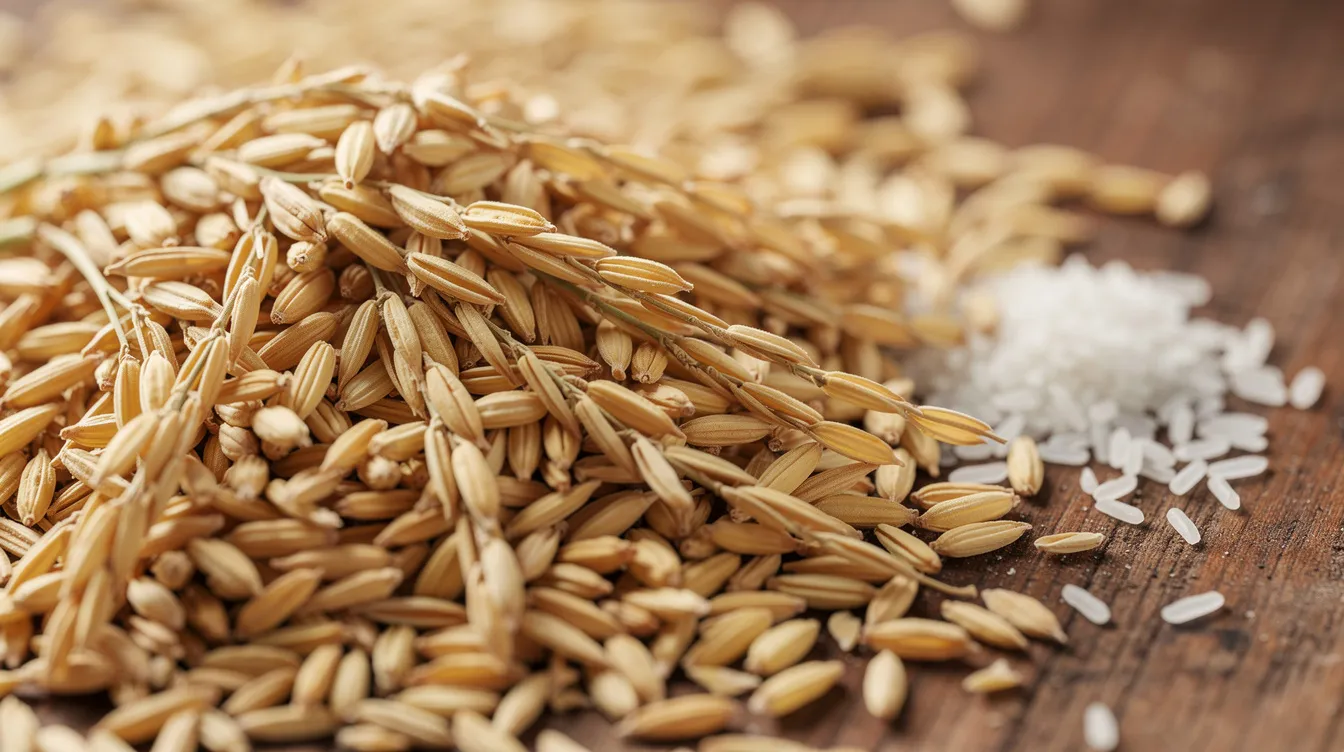
Quality of paddy directly affects Poha quality, recovery percentage and consumer acceptance. Paddy procurement for a Poha plant requires specific grain characteristics, and clear quality parameters must be specified in procurement terms.
| Parameter | Recommended Range / Standard |
|---|---|
| Moisture content | 12% to 14% (wet basis at receipt) |
| Grain type | Short, bold or medium-slender |
| Broken grains | Below 3 to 5% |
| Foreign matter | Below 1% |
| Damaged/discoloured grains | Below 2% |
| Insect infestation | Nil |
| Stones and dust | Minimal |
| Off-odour | Absent |
Paddy moisture content should ideally range between 12 and 14 percent at receipt. Uniform grain size improves soaking and rolling performance, directly benefiting flake quality and production efficiency. Freshly harvested paddy may have issues with moisture management and stickiness, so many operators prefer grain that has stabilised for a few weeks after harvest.
Deviations such as high moisture or high broken grain percentage lead to uneven soaking, poor roasting results, excess breakage in flaking rollers, non-uniform flake thickness, lower recovery, higher rejection at grading and reduced shelf life. The DPR should define these norms because they influence expected recovery and actual landed cost.
Selection of Paddy Variety for Different Poha Products
There is no single “best paddy variety for Poha making” for all plants. Suitability depends on the target market, product grades and local availability. Selecting the right variety of paddy can, however, enhance the quality of poha, reduce breakage and improve recovery.
Paddy varieties should be short, bold or medium-slender for poha production. Research on Chhattisgarh varieties such as Mahamaya, Rajeshwari and Durgeshwari found moisture content at receipt around 11.3 to 12.2 percent and mid-amylose content of approximately 24 to 25 percent, which affects flake firmness and consumer acceptance.
Requirements differ by product:
- Thick poha needs stronger, bolder grains that maintain integrity during flattening; thick poha has a roller gap of 4 to 5 mm
- Medium poha, the common retail product, works with most suitable varieties
- Thin poha used in instant mixes and chivda-type snacks requires finer flaking and varieties that tolerate higher pressure without excessive breakage
Promoters should conduct small commercial-scale trials on 2 to 3 locally available paddy varieties before locking their annual procurement strategy. Trials should be aligned with the Poha manufacturing process proposed in the DPR. During production, paddy is soaked for 3 to 4 hours before roasting, and roasting temperatures range from 180°C to 220°C; both steps interact with grain characteristics to determine final product quality.
Sources of Paddy Procurement for Poha Plant
Paddy sourcing for a Poha plant can be done through multiple channels, and a mix often gives better risk management than dependence on a single route.
- Direct from farmers: Benefits include potential price saving and traceability. Challenges include need for field staff, aggregation logistics and payment handling. Contracts with farmers can stabilise supply and reduce costs during procurement.
- Farmer Producer Organisations (FPOs): Sourcing paddy from local farmer producer organisations ensures quality and offers volume deals with some quality screening, though availability varies by state and crop.
- APMC mandis: Common route in many states; involves auction systems, commission agents (Arthiyas), mandi fees and state-specific statutory charges. In some states, procurement incidentals can add ₹42 to ₹91 per quintal above the base paddy price.
- Traders and aggregators: Easier logistics and possible short-term credit, but with price markup; useful for smaller or new plants
- Rice mill sources: Possibility of securing specific grades from rice mill operations, though suitability depends on variety and parboiling method
Tax implications, e-way bills and mandi-cess applicability differ by state and transaction type. Promoters should verify applicable provisions with their local accountant. Government financial aid is available for starting a poha business through various MSME schemes, and FSSAI registration is required for poha manufacturing before commencing commercial operations.
Direct Farmer Procurement vs Mandi/Trader Procurement
A DPR should briefly discuss the procurement route because it influences raw material cost, documentation flow and working capital pattern.
| Factor | Direct from Farmer | Mandi / Trader |
|---|---|---|
| Price level | Typically lower | Higher by ₹50-100/qtl |
| Volume commitment | Needs aggregation | Readily available |
| Quality control | Requires in-house team | Partially screened |
| Payment terms | Often immediate | Short credit possible |
| Documentation | More complex | Standardised |
| Logistics | Plant arranges transport | Trader may deliver |
Direct purchase may reduce per-quintal price but increases operational complexity and requires stronger quality-control and reconciliation systems. Medium and large industrial Poha processing plants benefit from diversified sourcing: combining mandi purchases with long-term arrangements with a few large farmers or FPOs to reduce concentration risk.
Seasonal Paddy Procurement Planning and Price Fluctuation
India’s Kharif paddy harvest (October to January in most states) brings abundant arrivals and relatively lower prices. Rabi paddy in some regions provides a second procurement window. Seasonality studies covering 2010 to 2022 data estimate that paddy prices fluctuate approximately ±5 percent from the annual average due to seasonal cycles.
- Harvest-season bulk purchase: Better quality choice and lower base price, but higher warehouse capacity, interest on blocked funds, storage insurance and risk of quality deterioration over long holding
- Staggered year-round purchase: Lower storage and interest cost but greater exposure to off-season price spikes and supply shortage
- Balanced approach: A stocking period of 1.5 to 3 months of average consumption often balances price advantage with working capital prudence
Paddy procurement logistics should align with production needs to prevent spoilage. These seasonal assumptions are a critical input for projecting working capital requirement and must be clearly mentioned in the project report and CMA Data submitted to banks.
Raw Material Inventory Planning for a Poha Plant
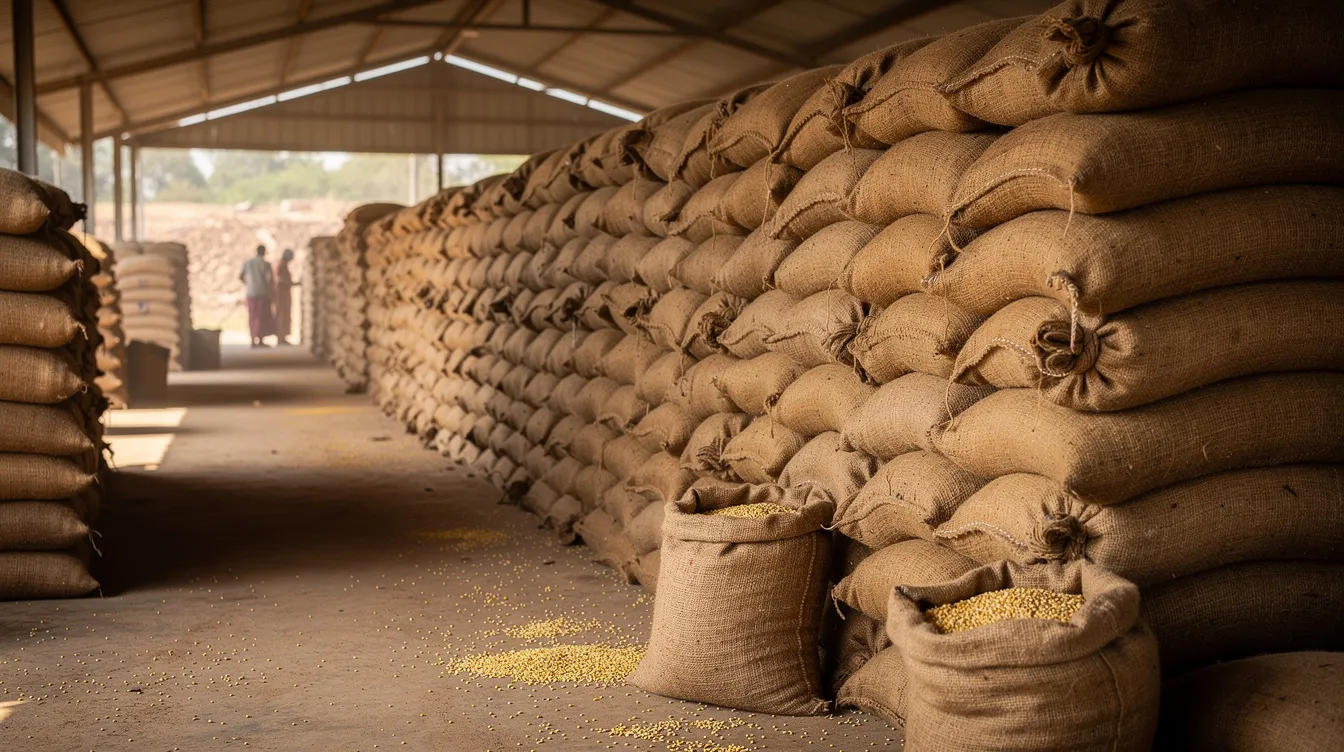
Raw material inventory planning aims to ensure uninterrupted Poha production while optimising working capital and storage cost.
Inventory Requirement (kg) = Average Daily Paddy Consumption (kg) × Number of Inventory Holding Days
Hypothetical example: A plant consuming 20 tonnes of paddy per day targeting 45 days’ stock would hold 900 tonnes (18,000 bags of 50 kg each). At a landed cost of ₹22 per kg, this locks approximately ₹1.98 crore in paddy inventory alone.
Factors influencing holding days:
- Supplier lead time and distance from paddy-growing areas
- Transport reliability and seasonal vehicle availability
- Bank drawing power and sanctioned cash-credit limit
- Available warehouse capacity
- Safety stock for emergencies
Good raw material inventory management should coordinate with expected production capacity outlined in the Poha plant production capacity plan. Implementing FIFO inventory practices helps prevent grain hardening and ensures quality throughout the production cycle.
Working Capital Requirement for Paddy Procurement
Working capital for a Poha plant largely sits in paddy stock, packing materials, finished goods and receivables, net of any supplier credit. Monthly working capital requirements typically range from ₹2 to 6 lakh for small to medium plants, scaling up for larger facilities.
Current-asset components:
- Paddy stock (largest component by value)
- Other raw material and packing material stock
- Work-in-process (soaked, roasted paddy in various stages)
- Finished Poha inventory
- Trade receivables from buyers
Current-liability offsets:
- Credit from paddy suppliers (if any)
- Credit from transporters and utility providers
Higher paddy stocking period directly increases the cash-credit limit requirement, interest cost and margin money that the promoter must bring. All of this should be transparently reflected in DPR, CMA Data and projected balance sheet. Bankers assess the operating cycle: days in raw material plus WIP plus finished goods plus receivables, minus creditor days. A typical Poha manufacturing unit might show a cycle of 60 to 90 days depending on stock and credit assumptions.
Paddy Procurement Cost: Looking Beyond Basic Mandi Price
Raw material cost for Poha manufacturing must be calculated on landed paddy cost, not the basic mandi rate alone.
Cost components beyond purchase price:
- Mandi fee and commission (₹42 to ₹91 per quintal in many states)
- Loading, unloading and local cartage
- Long-distance freight
- Weighment charges
- Labour for stacking
- Gunny-bag cost where not returnable
- Transit and cleaning losses
- Quality rejection losses
Storage-related costs:
- Warehouse rent or depreciation
- Insurance and fumigation
- Interest on working capital blocked in paddy inventory
Formula: Landed Paddy Cost per kg = (Invoice Price + All Procurement Expenses + Freight + Handling + Storage-related Direct Costs) ÷ Net Acceptable Quantity Received
Avoid purchasing paddy that has excessive impurities, which can increase cleaning costs. A de-stoner and aspirator, costing ₹30,000 to ₹60,000, removes stones and light foreign matter but cannot compensate for fundamentally dirty lots.
Impact of Paddy Price on Cost of Production and Profit Margin
For a Poha industry unit, any change in paddy price flows almost directly into cost of production per kg of finished product.
Hypothetical sensitivity (base landed paddy cost ₹22/kg, 70% recovery):
| Paddy Price Change | Landed Cost/kg | Poha Raw Material Cost/kg | Change vs Base |
|---|---|---|---|
| Base | ₹22.00 | ₹31.43 | – |
| +5% | ₹23.10 | ₹33.00 | +₹1.57 |
| +10% | ₹24.20 | ₹34.57 | +₹3.14 |
| +15% | ₹25.30 | ₹36.14 | +₹4.71 |
On annual production of 3,000 tonnes, a 10 percent increase in paddy price adds over ₹94 lakh to raw material cost. Banks require sensitivity analysis on paddy prices within DPR so that DSCR and IRR under stress scenarios are visible upfront. Poha processing machinery costs approximately ₹12 to 60 lakh depending on capacity and automation level, but this is a one-time capital expense; paddy price volatility affects the project every single month of operation.
Supplier Selection, Vendor Development and Procurement Logistics
Stable, quality-conscious suppliers are as important as good machinery in ensuring consistent Poha production.
Supplier selection criteria:
- Ability to supply required volume during peak season
- Historical reliability and quality consistency
- Transparency in weighing and billing
- Willingness to accept quality-based price adjustments
- Reasonable payment terms
Logistics considerations:
- Distance from paddy-producing areas
- Truck capacity planning and full-truck-load versus part-load cost difference
- Seasonal availability of transport vehicles
- Need for weighbridge at plant or nearby
Logistics and location assumptions should be integrated with the overall Poha plant land, building and layout requirements plan.
Paddy Storage Requirements and Warehouse Capacity Planning
Good storage protects quality and ensures that the benefit of seasonal low-cost procurement is not lost due to storage losses and infestation.
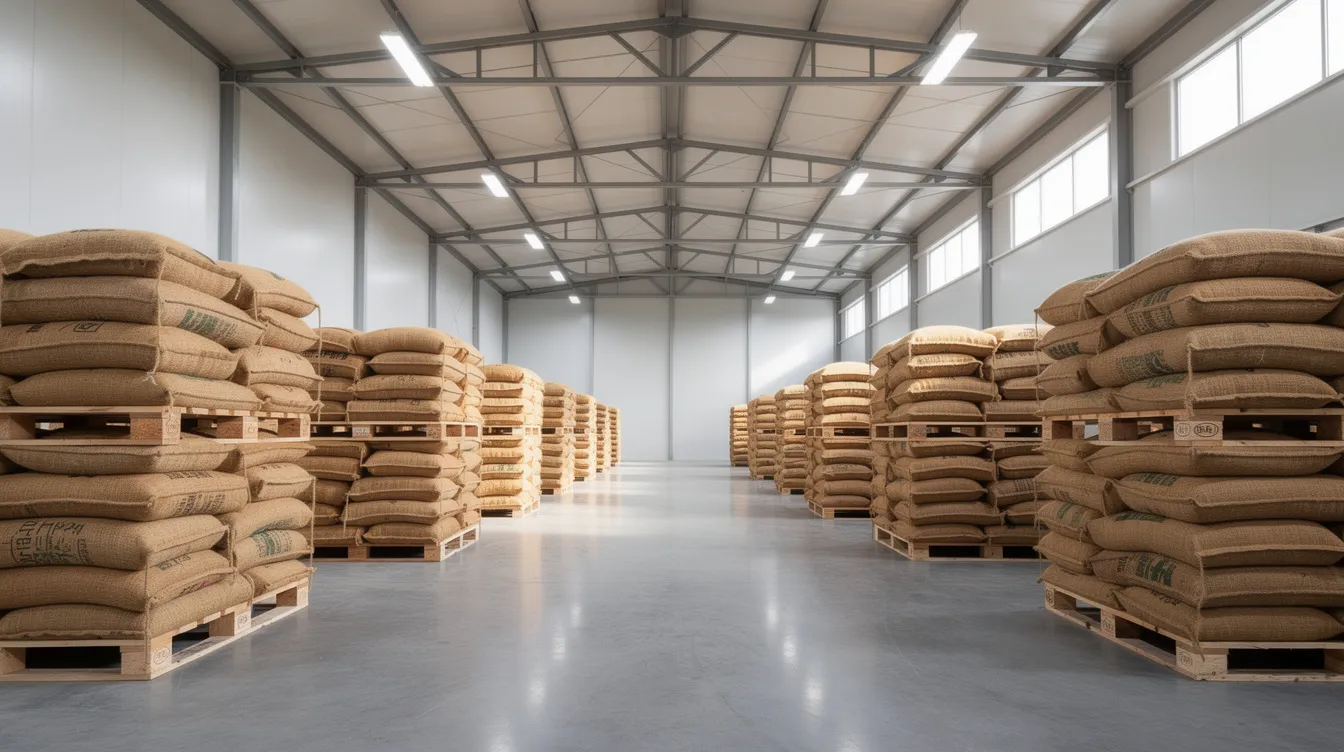
- Dry, ventilated warehouse with proper roofing and moisture protection
- Raised flooring or pallets to prevent ground moisture absorption
- Proper stacking of bags with adequate aisle spacing for inspection and movement
- Regular pest control and fumigation; stored paddy should be regularly monitored for pests to maintain quality
- Segregating varieties during storage prevents mixing and ensures consistent quality in production
- Adherence to FIFO stock rotation
- Fire safety arrangements
Excess moisture during storage can cause spoilage and reduce milling efficiency. Bag-stacking height and aisle spacing determine how many tonnes fit per square foot. This should link to the peak inventory requirement calculated in the inventory section. Poor storage raises invisible losses: mould growth, weight reduction, quality downgrades, all effectively increasing actual raw material cost per kg of Poha.
Raw Material Planning Based on Plant Capacity and Utilisation
Paddy procurement planning must align with realistic production capacity and expected ramp-up pattern, not just nameplate machine rating.
- First-year operation often runs at 50 to 60 percent utilisation; second year at 70 to 80 percent; stabilising later
- DPR projections should mirror this ramp-up in both paddy requirement and working capital needs
- Small manual or semi-automatic plants have simpler procurement needs; large automatic Poha processing plants require formal supply arrangements and structured inventory control
- For multi-grade product mix (thick, medium, thin Poha), procurement of different paddy varieties or grades may be needed
Cross-check raw material planning with machinery selection and automation level using the dedicated guide on Poha plant machinery and equipment cost. A plant producing high quality poha at scale requires correspondingly rigorous procurement systems.
Raw Material Quality Control at Receipt
Plant-gate quality control prevents sub-standard paddy from entering production, protecting recovery and brand reputation. Establishing quality inspection protocols at purchase ensures better end products.
- Vehicle and bag inspection on arrival
- Lot-wise sampling for moisture measurement with a grain moisture meter
- Visual inspection for colour, damaged grains, foreign matter and stones
- Reject or discount lots with high percentages of broken or damaged grains
- Grain cleanliness is crucial to minimise equipment wear and product defects in the manufacturing process
- Cross-check lorry weight with weighbridge records; monitor transit loss
Accepted lots should be tagged with unique lot numbers and supplier details. Maintaining traceability in procurement supports quality control in processing and helps isolate problems to specific lots if issues appear later. DPR may briefly describe the proposed quality-control setup and allocate preliminary budget for lab instruments and testing manpower.
Procurement Risks in a Poha Manufacturing Project and Mitigation
Paddy procurement carries price, quantity, quality and logistics risks, all of which should be recognised in project planning.
| Risk | Mitigation |
|---|---|
| Paddy price volatility | Diversified sourcing; partial harvest-season stocking |
| Poor harvest in one season | Multiple sourcing regions; buffer stock |
| Single-supplier dependence | Panel of 3-5 approved suppliers |
| Inconsistent quality / high moisture | Quality-linked pricing; clear purchase specs |
| Pest infestation in storage | Regular fumigation; proper warehouse |
| Transport disruption | Multiple transporter relationships |
| Recovery below DPR assumption | Conservative assumptions; periodic trial runs |
| Working-capital shortage | Realistic inventory in DPR; adequate bank limits |
Structured procurement strategy and regular monitoring reduce impact on Poha plant profitability, even if risks cannot be eliminated entirely.
Effect of Paddy Procurement Assumptions on Project Feasibility Metrics
Paddy procurement assumptions link directly to key DPR outputs: cost of production, gross margin, EBITDA, break even analysis results, DSCR, IRR and payback period.
- Underestimating landed paddy cost or overestimating recovery artificially inflates profits and misleads both promoter and lender about true viability
- Higher paddy stocking assumptions raise working capital requirement, interest cost and promoter’s margin money
- DPR should present a base case and at least one conservative case for paddy price and recovery
From my experience, many bank queries on Poha project reports relate to raw material cost and inventory levels. Transparent, well-justified assumptions improve bankability of the project.
Information Required for DPR: Raw Material and Procurement Section
Before approaching a consultant or banker for a Poha project detailed project report, entrepreneurs should compile:
Technical inputs: Proposed installed capacity (kg/hr), planned product mix (thick, medium, thin flattened rice), expected operating days and shifts, and technology type (manual, semi-automatic or automatic)
Procurement inputs: Preferred paddy varieties, tentative recovery percentage based on local trials, expected purchase rate during harvest, estimated off-season variation, typical mandi charges and average transportation distance
Inventory and credit assumptions: Days of paddy stock to maintain, expected supplier credit, planned finished-goods stock, average collection period from customers
Regulatory registrations: Udyam registration (no government fee), GST registration (generally no government fee), Shop and Establishment licence (varies by state), Pollution Control Board approval (varies by state and unit size), and trade licence (costs vary by municipality)
These inputs feed into raw material consumption schedules, cost sheets, projected profit and loss, working capital assessment and CMA Data for the Poha manufacturing project.
Practical Example of Annual Paddy Procurement Planning (Hypothetical)
The following numbers are purely illustrative. Actual figures must be taken from local market surveys and technical trials.
Sample case: A medium-scale automatic Poha plant, 2 TPH rated capacity, 8 hours per day, 300 operating days, 60 percent capacity utilisation in Year 1.
| Item | Calculation | Result |
|---|---|---|
| Annual Poha production | 2,000 × 8 × 300 × 0.60 | 2,880 tonnes |
| Recovery assumed | 68% | – |
| Annual paddy requirement | 2,880 ÷ 0.68 | 4,235 tonnes |
| Average landed paddy cost | ₹23/kg (hypothetical) | – |
| Annual raw material cost | 4,235 × 1,000 × 23 | ₹9.74 crore |
| Inventory holding period | 45 days | – |
| Average daily consumption | 4,235 ÷ 300 = ~14.1 T/day | – |
| Stock quantity | 14.1 × 45 | ~635 tonnes |
| Stock value | 635 × 1,000 × 23 | ~₹1.46 crore |
This annual paddy procurement plan ties into estimated working capital requirement and bank cash-credit limit in the project report. The total project cost will also include machinery, building, land and pre-operative expenses alongside this recurring raw material need.
Common Mistakes in Paddy Procurement and Raw Material Planning
Many first-time Poha entrepreneurs focus on machines and market demand but underestimate procurement complexity, leading to margin leakages.
Procurement mistakes:
- Choosing paddy only on price without checking recovery and moisture
- Assuming same paddy price throughout the year
- Ignoring freight, mandi levies and handling charges in cost calculations
- Maintaining either excessive or inadequate stock
- Relying on a single supplier or mandi
- Not budgeting for storage and fumigation losses
DPR-specific errors:
- Using optimistic recovery ratios without trials
- Assuming unrealistically low paddy price compared to local quotations
- Not reconciling paddy consumption with production capacity and recovery
- Ignoring by-product value (broken flakes, husk, bran)
Setting up a simple monthly MIS after commissioning helps track purchase price versus landed cost, consumption per tonne of Poha produced, actual recovery percentage and storage losses against DPR assumptions. Some growth opportunities in the poha industry, including organic, nutritious or speciality variants consumed at breakfast, require even tighter procurement discipline for product quality.
Ongoing Monitoring of Paddy Procurement After Plant Commissioning
Raw material planning is not a one-time DPR exercise. It must be actively monitored and refined based on actual operating data.
Key indicators to track monthly:
- Weighted-average landed paddy cost
- Supplier-wise quality performance
- Actual paddy-to-Poha recovery percentage
- Paddy consumption per tonne of finished product
- Stock holding days and storage losses
Conduct variance analysis between actual figures and DPR or budget assumptions. Where actual recovery is lower or costs are higher, corrective actions might include supplier changes, process adjustment or selling-price revision. Document procurement policies and regularly train procurement and warehouse staff on quality parameters. These data points help refine future project reports, CMA Data submissions and bank renewals for working capital limits.
Role of a Professional DPR in Paddy Procurement and Raw Material Planning
A well-prepared DPR for a Poha plant integrates technical design with realistic paddy procurement planning and working-capital assessment.
- DPR should clearly show annual paddy requirement, assumed landed cost, stock-holding period, by-product realisation, cost of production per kg and sensitivity to paddy price and recovery changes
- CMA Data and projected financial statements derived from DPR are used by banks to assess drawing power, working-capital limits, DSCR and repayment capability for term loans
- Projections and CMA Data are prepared based on information and assumptions shared by the promoter; they are analytical tools, not guarantees of performance
Accurate, transparent raw material planning improves the credibility and bankability of the Poha manufacturing project. Manufacturers seeking to scale in this industry should treat the DPR as a living operational document, not just a bank formality.
Conclusion: Integrating Paddy Procurement with Overall Poha Project Viability
Successful Poha manufacturing depends not only on selecting the right machinery, plant layout and building, but fundamentally on disciplined paddy procurement and sound raw material planning. Whether you cook thick poha for the snack food market in western India or produce thin rice flakes for instant mixes, the underlying economics start at the paddy purchase register.
The chain is unbreakable: paddy quality leads to recovery percentage, which determines cost of production, which drives working capital requirement, which defines profitability and project viability. Every assumption along this chain must be grounded in local crop patterns, supplier surveys, realistic recovery data and the promoter’s actual financial capacity.
From my experience preparing Poha plant DPRs, the most productive discussions with lenders consistently revolve around raw material assumptions. Entrepreneurs who arrive with verified supplier quotations, trial-run recovery data and a clear inventory strategy find that banks respond with greater confidence. Careful procurement planning, grounded in local market reality, is the foundation of a stable and profitable flattened rice manufacturing business in India.
Frequently Asked Questions on Paddy Procurement for Poha Plant
How much paddy is generally required to produce one tonne of Poha?
The actual paddy requirement per tonne of flattened rice depends on paddy variety, moisture, processing technology and operating practices. No single ratio applies to every plant. Illustratively, if a plant achieves 70 percent recovery, it will need approximately 1.43 tonnes of paddy for 1 tonne of saleable Poha (1,000 ÷ 0.70). Each entrepreneur must derive their own figure based on trials with their specific equipment and locally sourced grain. Factors such as product grade (thick versus thin), roasted grain moisture and grading efficiency all shift this number.
Which paddy varieties are usually preferred for commercial Poha manufacturing?
Many commercial units use locally available parboiled short to medium grain varieties that give acceptable flaking behaviour, good flake colour and moderate to high recovery. Varieties like Mahamaya, Kranti and similar bold-grain types have been evaluated for suitability in Chhattisgarh and Madhya Pradesh. The “best” variety is location and market specific. Promoters should test 2 to 3 varieties in their own machinery setup, checking recovery, flake appearance, taste and breakage percentage before committing to long-term procurement from any single variety.
How much paddy stock should a Poha plant normally maintain?
Ideal stock level depends on crop season, supplier proximity, warehouse capacity, bank finance and promoter’s risk appetite. Many DPRs use a range of 30 to 60 days of average paddy consumption as a planning benchmark. Holding more than 60 days ties up working capital and increases storage risk. Holding fewer than 15 days exposes the plant to supply disruption. The final decision should be customised to local conditions and discussed with the financing bank during working-capital assessment.
Can a Poha plant purchase paddy directly from farmers?
Yes, direct procurement from farmers is legally permissible in most states, subject to applicable regulations and documentation. It can reduce per-quintal cost but requires in-house procurement staff, quality-checking capability at the farm gate or collection point, and a robust payment and record-keeping system. For medium and large plants, combining direct farmer purchases with mandi or trader sourcing often gives the best balance of price, quality and supply reliability.
How does paddy inventory level affect working capital and bank finance?
Paddy stock is typically the largest component of current assets for a Poha manufacturing unit. Higher inventory holding days increase the total working capital requirement, the cash-credit limit the plant must obtain from a bank, the interest cost charged on that facility, and the margin money the promoter must contribute from equity. A 45-day stock for a plant consuming 15 tonnes per day at ₹22 per kg means approximately ₹1.49 crore blocked in paddy alone. Realistic stock-level assumptions in the DPR directly influence the bank’s assessment of drawing power and the project’s financial feasibility.