Setting up a commercial poha processing plant requires structured financial planning across multiple investment heads: land or leasehold development, factory building, plant and machinery, utilities, raw paddy inventory, packaging and working capital for receivables and wages. Most entrepreneurs cannot fund the entire project cost from personal savings alone. A bank loan for poha processing plant projects, when properly structured, bridges the gap between promoter funds and total investment. This guide explains the practical mechanics of project finance, term loan appraisal and working-capital assessment for poha manufacturing from the perspective of a practising Chartered Accountant.
Key Takeaways
- A typical project cost for poha manufacturing ranges from ₹5 lakh to ₹40 lakh depending on capacity, automation level and infrastructure; a small-to-medium plant often requires ₹15 lakh to ₹25 lakh in total project investment.
- Project finance for a poha plant is normally structured as a combination of promoter contribution (10-20% or more), bank term loan for fixed assets, working capital limits for operations, and eligible government subsidy where applicable.
- Banks evaluate realistic project cost, capacity utilisation, profitability, break-even analysis, debt service coverage ratio and repayment capacity rather than just accepting machinery quotations at face value.
- Eligibility for MSME loan, CGTMSE guarantee, PMFME subsidy or other government loan schemes depends on scheme rules, bank policy and project viability; none of these can be guaranteed in advance.
- Professional assistance from a Chartered Accountant like CA Manish Gugliya can help prepare a bankable detailed project report, financial projections and CMA data, but loan sanction remains at the sole discretion of the lending institution.
Bank Loan for Poha Processing Plant: Overview
Rice flakes, or poha, remain a staple breakfast and snack across India, with consistent market demand in states like Madhya Pradesh, Maharashtra, Chhattisgarh, Telangana and Odisha. Setting up a 1-5 TPD poha manufacturing unit in these rice-growing regions involves capital expenditure on factory building, a poha mill with flaking rolls, roasting and grading equipment, electrical installations, storage infrastructure and quality-control facilities. A project report is required for bank loan applications, and it must establish both technical feasibility and financial viability.
Banks differentiate between project types when appraising a loan proposal:
- Greenfield unit: New poha processing plant built from scratch, requiring full project finance covering land, building, machinery and working capital.
- Expansion: An existing rice mill adding a flattened rice line; lower building cost but incremental machinery and working-capital needs.
- Modernisation: Replacing obsolete flakers or roasters with higher-capacity or more energy-efficient equipment.
- Capacity enhancement: Adding shifts, parallel processing lines or upgraded grading and packaging without major civil construction.
A properly structured poha plant DPR for bank finance, incorporating realistic production assumptions, sales projections, cost estimates and DSCR analysis, reduces appraisal queries and improves the chances of a timely decision. Banks typically finance technically and financially viable projects through a combination of term loan for fixed assets and working-capital limits for operations, based on the detailed project report and promoter profile.
Types of Finance Available for a Poha Processing Plant
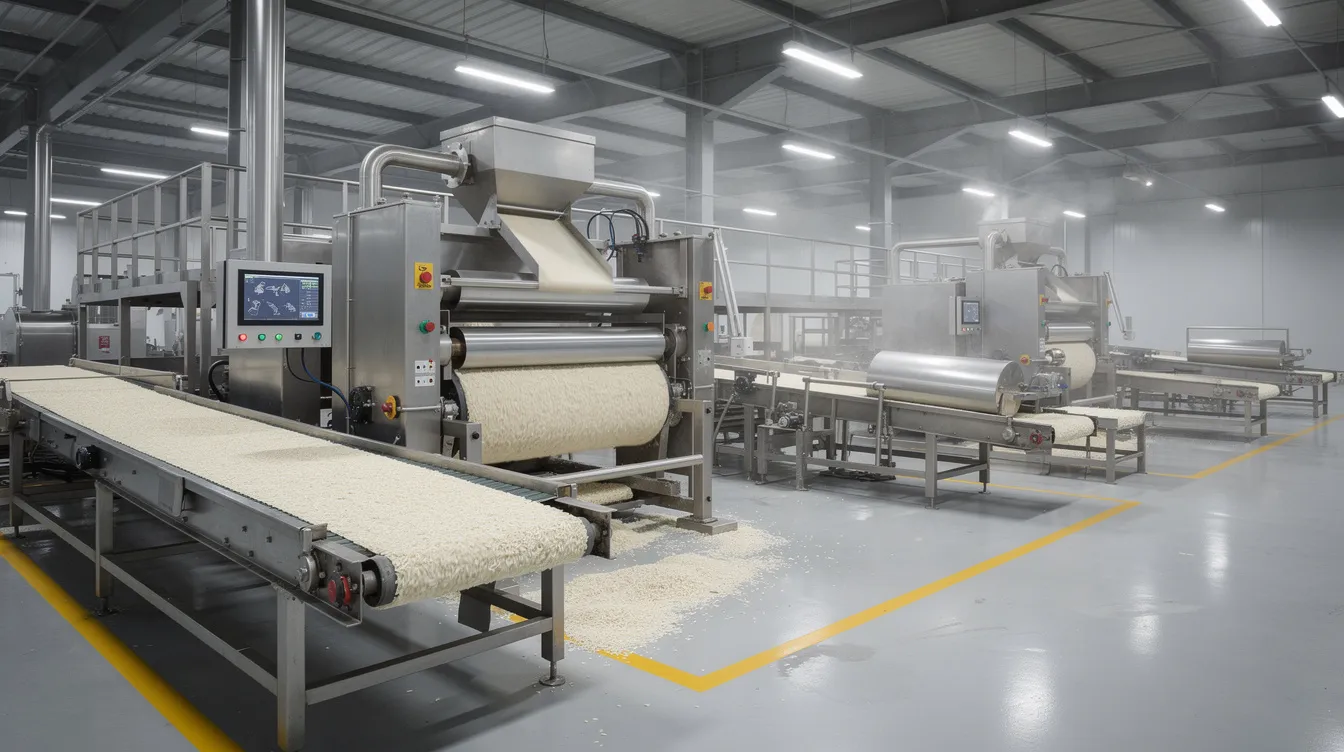
A complete poha plant project finance structure normally combines multiple credit facilities rather than relying on a single loan type. The three main components are term loan for fixed assets, working-capital finance for day-to-day operations, and specialised machinery or MSME-based financing where applicable. Final facility structure, limits and terms are decided by the bank based on project size, risk perception, collateral coverage, applicable scheme guidelines and overall financial feasibility.
Term Loan
A term loan for poha plant is generally sanctioned against eligible fixed assets. These include the paddy cleaner, destoner, soaking tanks, roasting or drying units, flaking mill, grader, conveyors, packaging machines, compressor, DG set, laboratory equipment, electrical installations and the factory building itself.
Banks may finance 60-80% of eligible fixed-asset cost as an illustrative range, with the balance funded through promoter contribution and share capital. Actual margin norms vary between banks and schemes. Repayment tenure is often structured over 5-7 years including a moratorium period during construction and initial stabilisation. The actual term, moratorium and interest rate are fixed by the lender after appraisal and may differ project to project. Interest rates for SME term loans typically fall in the 9-18% per annum range, depending on loan size, risk rating and collateral.
A strong poha plant term loan assessment hinges on projected cash accruals, DSCR, break-even analysis and security structure, not project cost alone.
Working Capital Finance
Even a profitable poha unit needs separate bank finance for working capital to fund raw paddy inventory, in-process stock, finished poha, packaging materials, wages, power and trade receivables. The common facility is cash credit or overdraft against stock and receivables, assessed using operating-cycle and drawing-power calculations.
Seasonal procurement patterns in the poha manufacturing business create working-capital spikes. Many units buy paddy in bulk between November and March (post-harvest) to lock in lower prices, pushing inventory and funding needs higher in those months. Banks may also sanction short-term demand loans, bill discounting, LC/BG limits or specific working-capital term loans depending on the size and risk profile of the poha manufacturing unit.
Realistic working-capital assessment in the poha manufacturing project report for loan must align with production capacity, sales pattern and credit terms offered to buyers and received from suppliers. MUDRA Tarun loans provide up to ₹10 lakh for working capital needs, though eligibility depends on the lender and borrower profile.
Machinery Finance
Many entrepreneurs obtain a dedicated poha plant machinery loan or equipment finance line for key assets like roasters, flakers, graders and automatic packing machines. Machinery suppliers sometimes arrange financing through tie-up NBFCs or banks. This machinery finance is a type of term loan with hypothecation of specific equipment and may carry different margin, interest-rate and tenure norms compared to a composite project term loan.
Promoters should ensure that instalment obligations from machinery finance fit into the overall project cash flow and DSCR. The DPR and credit monitoring arrangement data should capture all machinery loans, whether from the main bank or an NBFC, to avoid understating debt and interest in financial projections.
MSME and Credit Guarantee-Based Financing
Many poha units qualify as micro food processing enterprises or small enterprises under Udyam Registration, making them eligible to apply for MSME bank finance products. MSME loan eligibility can lead to access to machinery finance and cash credit facilities on terms designed for smaller units.
Government schemes and subsidies facilitate setting up poha processing plants. Key programmes include:
| Scheme | Indicative Benefit | Key Condition |
|---|---|---|
| PMEGP | 15-35% capital subsidy | DIC-prescribed format required; the project report must follow the DIC-prescribed format for PMEGP |
| PMFME | Up to 35% capital subsidy (max ₹10 lakh) | PMFME scheme beneficiaries need to contribute a minimum of 10% of the project cost |
| CGTMSE | Collateral-free loans up to ₹2 crore | Lender must be enrolled; approval not automatic |
| MUDRA | Up to ₹10 lakh (Tarun category) | For working capital and small-scale units |
| AIF | Medium-long term debt financing | For agricultural post-harvest management infrastructure |
Collateral-free loans are often available for loans up to ₹20 lakh under certain micro-unit guidelines. PMEGP funding may cover shared processing facilities for FPOs and cooperatives. State food-processing policies may provide additional capital and interest subsidies beyond central schemes.
Subsidies can reduce the net cost of setting up a poha processing unit, but entrepreneurs should check the latest scheme guidelines with their bank or nodal agency before assuming any subsidy in the means of finance. Eligibility for credit guarantee loan for poha manufacturing unit or government loan scheme for poha plant depends on current rules, sector classification, borrower profile and lender adoption. Any subsidy component should be reflected separately in the means of finance and not treated as upfront cash unless the scheme specifically permits it.
Project Cost Considered by Banks
“Project cost” for a poha plant is a structured estimate of all capital and pre-operative expenses required to bring the unit into commercial production. A 500 kg/day poha setup costs INR 5-10 lakh at the basic level, while a typical small-to-medium poha plant requires a project investment between ₹15 lakh to ₹25 lakh with better infrastructure and automation.
Key cost heads accepted in a bank appraisal:
- Land purchase or lease premium (where financed) and site development
- Factory building and civil works
- Plant and machinery (including taxes, freight and erection)
- Electrical systems and utilities (boiler, air compressor, water system)
- Storage structures for paddy and finished goods
- Laboratory and testing equipment
- Office furniture, fixtures, pre-operative expenses and computers
- Preliminary and pre-operative expenses (company formation, consultancy, interest during construction, trial runs)
- Contingency margin
- Margin money for working capital at commissioning
For a full breakdown of how the total project cost is structured and financed, refer to Poha Plant Project Cost & Means of Finance. An accurate project-cost estimate, supported by dated quotations and realistic civil-construction estimates, is the foundation for correct term-loan sizing, debt equity ratio and DSCR calculations in the detailed project report.
Machinery and Equipment Financing
The selection of machinery capacity and level of automation directly influences the overall poha plant capital investment finance requirement and, therefore, the term-loan amount. Higher automation reduces labour cost but increases initial investment and loan obligation.
Typical equipment and indicative costs for rice flakes manufacturing:
| Equipment | Indicative Cost |
|---|---|
| De-stoner and aspirator | ₹30,000-60,000 |
| Soaking tanks | ₹25,000-50,000 |
| Rotary roasting drum | ₹1-2 lakh |
| Flaking mill with rollers | ₹2-4 lakh |
| Grader/sifter | ₹40,000-80,000 |
| Packaging machine | ₹50,000-2 lakh |
| Elevators, conveyors, cooling system | ₹50,000-1.5 lakh |
For semi-automatic plants processing 500 kg-1 TPD, machinery costs typically range from ₹6-15 lakh. A more detailed machinery list and cost analysis is available at Poha Plant Machinery & Equipment Cost.
Banks generally need firm quotations dated close to the loan application. Financing eligibility for second-hand machinery, imported equipment or vendor credit varies by lender policy. Promoters should balance capacity utilisation, expected market demand and repayment capacity when selecting equipment.
Capacity Planning Before Applying for a Loan
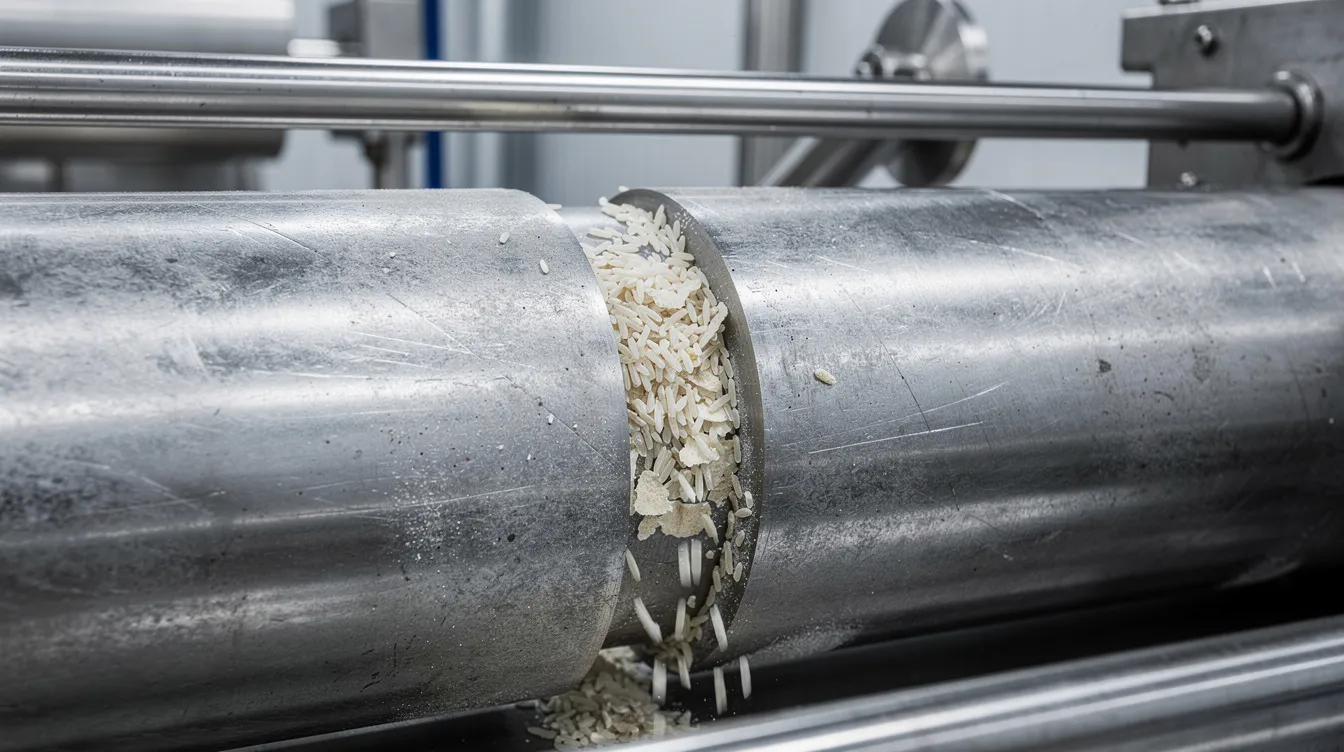
Realistic capacity planning is the foundation of a bankable poha plant project report for bank loan. Overestimated daily production capacity makes sales and working-capital projections unrealistic and triggers immediate scepticism during appraisal.
Factors to document:
- Proposed installed capacity in kg/day or TPD
- Number of working shifts and operating days per year (typically 280-300)
- Ramp-up pattern over the first 3-5 years
- Expected capacity utilisation levels (banks look at whether these are achievable in local conditions)
Production planning must be consistent with raw paddy availability, market demand, sales strategy (bulk vs branded) and the promoter’s ability to manage inventory and receivables. In project-finance assignments, I generally cross-check capacity assumptions with machinery ratings, power load, labour plan and realistic operating practices before freezing financial projections. For detailed methodology, refer to Poha Plant Capacity Planning & Production Capacity.
Land, Building and Plant Layout Considerations
Banks appraising poha plant business loan proposals examine whether the selected land and plant layout can safely and efficiently support the proposed machinery line and any future expansion. The land required depends on capacity but must accommodate:
- Raw paddy receipt and storage area
- Soaking and roasting section
- Flaking and grading area
- Finished-goods warehouse and packaging room
- Utilities block (boiler, DG set, compressor)
- Quality-control lab, administrative office and staff amenities
Industrial zoning, approach road access, power and water availability, effluent handling (Pollution Control Board approval is needed based on local regulations) and fire-safety provisions are factors that feature in technical feasibility reports and site inspections. Building cost estimates, whether based on PWD schedule or contractor quotation, should be detailed enough for inclusion in the project-cost and term-loan appraisal. More on layout design is covered at Poha Plant Land, Building & Plant Layout Requirements.
Raw Material Planning and Its Impact on Bank Finance
Raw paddy (or parboiled rice, depending on the process) is the primary raw material, and its procurement strategy heavily influences working capital, raw material cost and overall poha manufacturing plant finance requirements.
Many units buy paddy in bulk soon after the kharif harvest (October-January) to secure lower prices. This seasonal procurement creates higher inventory and funding needs in specific months and must be reflected in the working-capital assessment. The DPR should cover paddy varieties (e.g., IR-64, Swarna), expected conversion ratio from paddy to poha, expected wastage and broken flakes (chura) and pricing assumptions for by-products.
Realistic raw-material costing, stock levels and supplier-credit terms are critical inputs in both the working capital assessment and the cost-of-production calculation. For detailed procurement strategies, refer to Paddy Procurement & Raw Material Planning for Poha Plant.
Utilities and Manpower Considered in Financial Appraisal
Banks scrutinise utility and manpower assumptions because they directly affect operating costs, break-even analysis and DSCR. For a plant processing around 450 tonnes per year, approximate requirements include 25 HP connected power load and about 10,000 litres of water daily for soaking and cleaning.
Key utility heads: electricity consumption of roasters, flakers and packaging lines; fuel expenses for roasting or steaming (LPG, biomass, briquettes); and water for the manufacturing process. Manpower planning should detail operators per shift, helpers, quality-control staff, storekeepers, maintenance technicians, supervisors and administration expenses for office personnel.
Underestimation of wage rates, fuel prices or power tariffs is a frequent weakness in project reports that leads to optimistic profitability projections. For a structured approach, see Poha Plant Utilities, Power, Fuel & Manpower Requirements.
Revenue Model and Sales Assumptions
A bankable project finance proposal must clearly set out how the poha unit will generate revenue. A 500 kg/day unit produces approximately 13 tonnes monthly. Market selling prices for poha range from INR 25-40 per kg depending on thickness, grade and whether the product is sold loose or in branded packs.
The business plan should address:
- Product mix: thick, medium and thin flat flakes; by-products like chura
- Expected monthly sales volume and realistic ramp-up
- Customer segments: wholesalers, retailers, modern trade, institutional buyers
- Credit terms offered to buyers
Market research and a clear market study help justify demand assumptions. Over-aggressive sales volume or price assumptions without adequate support is a common reason banks question the financial viability of poha manufacturing unit bank finance proposals. For pricing and distribution strategies, refer to Poha Revenue Model, Product Mix & Market Strategy.
Operating Cost and Cost of Production
Accurate estimation of operating costs per kg of poha is essential for any meaningful poha plant project finance appraisal. Gross contribution in poha manufacturing is typically INR 5-15 per kg, and this margin must cover all fixed and semi-variable costs before yielding a net profit.
Major recurring costs include:
- Raw materials (paddy), packing material cost and stores
- Power and fuel
- Direct labour and supervisory salaries
- Repairs, maintenance and spares
- Quality-control expenses and factory overheads
- Selling and distribution expenses, financial charges
- Administration expenses
- Interest on term loan and working capital
- Depreciation charges on plant, machinery and building
In professional DPRs and CMA data, costs are usually projected for 5-8 years with careful consideration of inflation, maintenance escalation and scale efficiencies. Detailed cost sheets are covered at Poha Plant Operating Cost & Cost of Production.
Profitability and Break-Even Analysis
From a bank-appraisal perspective, the profitability and break-even analysis demonstrates whether the project can sustain its fixed costs and loan obligations at realistic capacity utilisation levels. Break-even for poha units typically occurs at 48-55% capacity, which means the unit needs to sell roughly half its output before covering all fixed and semi-variable costs.
Key metrics banks examine:
- Gross profit margin per kg and contribution margin
- EBITDA and net profit after tax
- Break-even quantity and break-even sales value
- Margin of safety above break-even
Net margins for branded retail poha are 16-22%, though bulk and unbranded margins tend to be lower. A change in raw-paddy price or selling price by 5-10% can materially shift break-even and DSCR, highlighting the need for sensitivity analysis in the DPR. For detailed ratio calculations, see Poha Manufacturing Profitability & Break-Even Analysis.
Financial Projections Required for Project Finance
A poha plant project report for term loan application must include integrated financial projections: the project report must include 5-year financial projections (often extended to 7 years for longer-tenure loans), aligned with the proposed repayment schedule.
Required statements and schedules include:
- Projected income statement (profit & loss)
- Projected balance sheet showing total assets, current assets and net-worth build-up
- Cash flow statement and funds-flow statement
- Fixed-asset schedule and depreciation schedule
- Interest and loan-repayment schedule showing the projected payback period
- Working-capital assessment
- Profitability ratios, current ratio, debt equity ratio and DSCR
CMA data is required for loans above ₹10 lakh in most banks, typically in RBI format. All numbers in the DPR and credit monitoring arrangement data must match exactly. Projections should be logically derived from capacity, sales, cost and financing assumptions with conservative buffers. For detailed projection methodology, refer to Poha Plant Financial Projections for DPR.
Working Capital Requirement for Poha Processing Plant
Working capital for poha processing plant is frequently underestimated, especially where large quantities of paddy must be procured seasonally or where customers receive 30-60 days’ credit.
Working-capital components:
| Current Assets | Current Liabilities |
|---|---|
| Raw-material inventory (paddy) | Trade creditors |
| In-process stock | Other current liabilities |
| Finished poha and by-products | Statutory dues |
| Packaging material stock | |
| Trade receivables | |
| Cash and bank balances |
The operating cycle, measured in days, determines how much working capital the unit needs. A 500 kg/day plant’s monthly running costs for raw paddy, packaging, wages and power typically run ₹2-6 lakh. Inadequate provision for working capital is one of the most common reasons otherwise sound projects face liquidity stress within the first year of commercial production. For detailed methodology, see Working Capital for Poha Processing Plant.
DSCR and Loan Repayment Capacity
The debt service coverage ratio is a key parameter for poha plant loan repayment capacity. It measures the relationship between available cash accruals (net profit + depreciation + interest on term loan) and annual debt-servicing obligations (principal repayment + interest on term loan).
Banks require a debt service coverage ratio of at least 1.25 for most term-loan appraisals, meaning projected cash accruals should exceed annual debt service by at least 25%. Banks examine both yearly DSCR and average DSCR over the loan tenure.
There is no single DSCR benchmark universally mandated across all banks. Acceptable levels depend on lender policy, risk rating, collateral security and project nature. Overly aggressive repayment schedules (very short tenures to “save interest”) can push DSCR below comfort levels and weaken the proposal on paper.
Repayment tenure, moratorium period, interest rate assumptions and correct estimation of profitability all influence DSCR. A detailed DSCR discussion is available at DSCR & Loan Repayment Capacity for Poha Project.
How Banks Assess a Poha Processing Plant Loan Proposal
In my experience preparing DPRs and project financials, banks conduct a holistic appraisal covering technical, commercial, financial and management aspects. The assessment is not limited to checking the machinery quotation and total cost; it extends to whether the project can generate sustainable cash flow.
Key assessment parameters:
- Promoter profile: Background in food processing, rice trading or related industry trends; KYC and credit history; net worth and capacity to bring in promoter contribution
- Technical feasibility: Suitability of machinery, the manufacturing process, plant layout, power and water availability, and capacity utilisation assumptions
- Commercial viability: Market demand, competition analysis, raw-material security, selling-price assumptions and customer contracts
- Financial appraisal: Project financials including projected profitability, break-even analysis, cash flow, DSCR, current ratio, debt equity ratio, adequacy of working capital and sensitivity to changes in material cost or selling prices
- Security and compliance: Collateral coverage, statutory approvals, implementation schedule
Even with a strong project, final sanction, loan amount and terms remain at the discretion of the lending institution, subject to internal credit policies, risk appetite and RBI regulatory guidelines on MSME lending.
Promoter Contribution and Debt-Equity Structure
Promoter contribution refers to funds brought in by owners through share capital, unsecured loans from promoters or internal accruals. Typical project financing includes promoter’s contribution (often 10-20% or more) and, where applicable, government subsidies.
Banks generally prefer a balanced poha project debt equity ratio. Excessive debt increases fixed obligations and strains DSCR, while inadequate promoter stake raises questions about commitment.
Illustrative example (not a universal norm): For a ₹100 lakh poha project, a promoter might contribute ₹30-40 lakh (through land, building, cash margin or unsecured loans), with the balance funded through term loan and working-capital limits. Actual ratios depend entirely on bank policy, project risk and scheme conditions.
Promoters should be prepared to substantiate their contribution through bank statements, asset-sale documents or net-worth certificates. The timing of promoter contribution should match machinery advances, civil-work progress and margin-money requirements for working capital.
Documents Required for Poha Plant Bank Loan
Documentation requirements vary by lender and scheme, but most poha plant loan eligibility checks require a common set of documents. Banks generally require KYC documents for all loan applications.
Promoter documents:
- Aadhaar and PAN card
- Address proofs (passport, voter ID, utility bills)
- Income-tax returns for the last 2-3 years (existing businesses)
- Bank statements (6-12 months)
- Net-worth details and shareholding pattern
Business and statutory documents:
- Partnership deed, MoA/AoA or LLP agreement
- Udyam registration is required for MSME classification
- GST registration is necessary for turnover above ₹40 lakh
- FSSAI registration is mandatory for food manufacturing units
- Trade licence is required from local authorities for manufacturing
- NIC code classification for the poha manufacturing business
Project-specific documents:
- Land ownership or lease documents showing land required and tenure
- Building plan and civil-construction estimate
- Machinery quotations from suppliers (the machinery list should be dated and specific)
- Detailed project report with 5-year financial projections
- CMA data for larger loans
- Details of existing loans, fixed assets and collateral papers
Keeping documents organised and internally consistent reduces appraisal delays.
Importance of a Bankable DPR
A bankable project report for poha plant goes beyond a cost summary. Detailed project reports must cover technical feasibility and economic viability in a single integrated document. It connects the manufacturing process, capacity assumptions and market opportunity with projected revenues, operating costs and repayment capacity.
Core contents of a bankable DPR:
- Project background, objectives and promoter profile
- Market overview and market research supporting demand assumptions
- Detailed Poha Manufacturing Process & Process Flow Chart
- Plant capacity, plant layout and machinery specifications
- Manpower requirement and utility planning
- Total project cost and means of finance for poha plant
- Projected revenue, cost of production and profitability
- Working-capital assessment
- DSCR, repayment schedule and sensitivity analysis
The DPR should be internally consistent: capacities, costs and project financials must all align. In my experience, banks scrutinise the basis of assumptions more than the final numbers. A well-documented DPR that clearly explains how each figure was derived earns more confidence than one that simply presents optimistic totals.
While a Chartered Accountant can assist in preparing DPRs, financial projections and CMA data, loan approval always remains the bank’s independent credit decision.
Term Loan Repayment Structure
For any term loan for poha manufacturing business, the repayment structure should align with projected cash flows and account for seasonality in procurement and sales. Typical elements include:
- Total repayment period: 5-8 years (illustrative)
- Moratorium on principal during construction and initial stabilisation
- Instalment frequency: monthly or quarterly
- Interest payment obligations continue even during moratorium
The DPR should present a clear amortisation schedule showing principal and interest for each period, along with expected cash accruals, to demonstrate that DSCR remains comfortable throughout. Final tenure, moratorium and repayment mode are decided by the lender based on asset life, cash-flow pattern and regulatory guidelines. Rescheduling later is generally difficult; planning a realistic structure at the sanction stage avoids strained cash flow in the early years.
Common Reasons Poha Plant Loan Proposals Become Weak
From a bank-appraisal perspective, the following mistakes reduce confidence in otherwise sound business opportunities:
- Inflated sales projections without market evidence or a proper feasibility study
- Assuming 90-100% capacity utilisation from the first year
- Underestimating raw-material inventory and working capital needs
- Using incorrect paddy-to-poha conversion ratios that overstate yield
- Machinery capacities not matching proposed output in the business plan
- Absence of proper plant layout or incomplete costing of utilities
- Inadequate promoter contribution or very high debt-equity ratio
- Weak DSCR (barely above 1.0)
- Inconsistent numbers between DPR and CMA data
- Missing licences (FSSAI, pollution NOC), incomplete collateral papers or unsigned project reports
- Ignoring seasonal variations in procurement cost and sales patterns
How to Improve the Bankability of a Poha Project
Many weaknesses in poha plant project finance proposals can be corrected through better planning before approaching the bank:
- Undertake realistic market research to justify demand assumptions and investment opportunities
- Obtain firm, dated machinery quotations from reputable suppliers
- Prepare a practical capacity-utilisation ramp-up reflecting actual market conditions and industry trends
- Carefully estimate raw-material, utilities, fuel expenses and labour costs
- Document the source and timing of promoter contribution with supporting evidence
- Maintain reasonable leverage; plan adequate working capital consistent with procurement and credit cycles
- Prepare a comprehensive, consistent DPR and CMA data where all numbers align
- Align loan repayment with projected cash flows; avoid unnecessarily short tenures
- Perform sensitivity analysis for key variables: paddy price, selling price and capacity utilisation
- Consult experienced professionals for DPR preparation and bank documentation
Sound business decisions at the planning stage prevent rework during appraisal.
Role of a Chartered Accountant in Poha Plant Project Finance
In my practice, I regularly work on project-finance assignments for food processing and MSME projects, including rice flakes manufacturing units at various scales. Before finalising a bankable model, I examine the project cost structure, means of finance, working-capital requirement, DSCR and overall repayment capacity.
The advisory services I provide include:
- Preparation of detailed project reports covering project concept through financial projections
- Projected profit and loss accounts, balance sheet, cash flow and funds-flow statements
- CMA data preparation aligned with the DPR
- Working-capital assessment and term-loan amortisation schedules
- Debt-equity planning and financial feasibility assessment
- Sensitivity analysis and break-even analysis
- Assistance in aligning DPR assumptions with scheme guidelines (PMFME, PMEGP, Mudra, CGTMSE) in coordination with the client and the bank
I do not control or guarantee loan sanction. The lending institution makes its own independent credit decision. What I can ensure is that the proposal is professionally structured, internally consistent and addresses the typical appraisal questions banks raise when evaluating poha manufacturing plant finance proposals.

Frequently Asked Questions
The questions below address practical concerns entrepreneurs frequently raise while planning a bank loan for poha processing plant, beyond what is covered in the main sections.
Can I get a bank loan for a Poha processing plant if I am a first-time entrepreneur?
Banks do finance new entrepreneurs in poha manufacturing, particularly under MSME-focused schemes. The proposal needs a clear DPR, adequate promoter contribution, acceptable credit history and, ideally, some relevant exposure (experience in food trading, rice milling or FMCG distribution). Support from a technically competent partner or project manager strengthens a first-timer’s case. Each application is assessed individually; there is no automatic approval.
How much term loan can a bank typically provide for a Poha plant?
There is no fixed percentage applicable across all cases. Many banks may finance a substantial portion of eligible fixed assets while expecting a promoter margin, but exact funding depends on project cost, risk profile, collateral coverage and internal lending norms. Entrepreneurs should first finalise a realistic project-cost estimate and then discuss tentative margin requirements with their chosen bank.
Is collateral compulsory for a Poha manufacturing loan?
Collateral requirements are determined by each bank’s credit policy, exposure size, borrower risk rating and whether the loan is covered under a credit guarantee scheme like CGTMSE. Some smaller-ticket MSME loans may be extended on a collateral-free basis under approved schemes, but this is never automatic and depends on lender approval and scheme conditions at the time of sanction.
Do I need CMA data in addition to the DPR for my Poha plant loan application?
For smaller loans, banks may rely mainly on a structured DPR and basic projections. For larger limits and cash-credit proposals, most lenders insist on CMA data in standard RBI format. Preparing CMA data aligned with the DPR improves transparency and helps credit officers assess working-capital needs, projected balance sheet and debt-servicing capacity.
How long does it usually take for banks to process a Poha plant term-loan application?
Processing time varies from a few weeks to a few months depending on bank workload, document completeness, need for site visits, external technical opinions and sanction-level hierarchy. Providing a complete, internally consistent DPR, financial projections, CMA data and clear collateral documents at the outset reduces back-and-forth queries and shortens the appraisal timeline.
Conclusion
Obtaining a bank loan for poha processing plant is a structured exercise in project finance. It requires alignment of technical design, realistic production capacity, accurate total project cost, properly planned means of finance, adequate working capital and DSCR-based repayment capacity. Lenders evaluate not just machinery but the entire business model: market demand, operating costs, profitability, break-even analysis, security and promoter commitment.
A well-prepared, bankable DPR supported by accurate financial projections, CMA data and proper documentation can improve the chances of a timely and favourable appraisal. It cannot guarantee sanction.
At ProjectReportBank.com, I assist entrepreneurs and businesses with preparation of bankable detailed project reports, financial projections, DSCR analysis, CMA data and project-finance documentation for poha manufacturing and other MSME and industrial projects. If you are planning a poha processing unit and need professional support in structuring your project for bank finance, you can reach out for a consultation.