Estimating the operating cost and cost of production of a puffed rice plant is one of the most consequential steps in preparing a DPR, setting selling prices, assessing profitability and approaching banks for project finance. Promoters frequently invest weeks selecting machinery and finalising project cost, while the recurring cost structure quietly determines whether the unit generates sustainable margins or struggles to cover its monthly EMI. India produces over 100 million tonnes of rice annually, yet only about 10% is processed into value-added products. Puffed rice, a popular street food and low-cost breakfast cereal consumed across the Indian subcontinent, sits at the centre of a market expected to grow as demand for ready-to-eat snacks rises. This article examines every layer of puffed rice plant operating cost from a project-finance perspective, so that entrepreneurs can build realistic projections before committing capital.
Key Takeaways
- Puffed rice plant operating cost is driven primarily by raw material (rice/paddy), fuel, electricity, labour and packaging; together these heads typically account for 80-90% of total murmura manufacturing cost.
- Many promoters focus on machinery and project cost while the recurring puffed rice production cost per kg ultimately determines viability, DSCR and term-loan repayment capacity.
- All cost figures and examples in this article are illustrative, based on typical Indian MSME conditions for a 2-3 TPD plant, and must be customised for each DPR using plant-specific data.
- Accurate costing supports realistic selling price, contribution margin, break-even analysis and puffed rice plant financial projections required by banks and investors.
- This article is written from the perspective of CA Manish Gugliya for ProjectReportBank.com, focusing on ground-level project finance and MSME requirements.
What Is the Operating Cost of a Puffed Rice Plant?
Puffed rice plant operating cost refers to all recurring monthly expenses required to run a murmura manufacturing unit after commercial production starts. These include raw material procurement, fuel for roasting, electricity for motors and blowers, wages, packaging materials, repairs, factory overheads, quality control, logistics and administrative expenses. Ongoing expenses include raw materials and packaging materials as the two most visible variable items each month.
Capital expenditure covers one-time investments: land, building, machinery purchase, installation, pre-operative expenses and initial working capital. Machinery investment for a puffed rice plant is discussed separately in the Puffed Rice & Murmura Plant Machinery Cost guide. Operating expenditure, by contrast, recurs every month regardless of whether the plant has finished repaying its term loan. The overall project investment structure, including land, building, machinery and means of finance, is covered in the Puffed Rice & Murmura Plant Project Cost & Means of Finance guide.
Several terms are used in project reports and each has a distinct scope. “Cost of goods manufactured” includes raw materials, direct labour and factory overheads needed to produce finished goods. “Cost of production” typically adds a share of administrative expenses. “Selling expenses” cover distribution, commissions and marketing. Interest on borrowings and depreciation are financial and valuation items that appear in the P&L but are not cash operating outflows. Puffed rice manufacturing cost depends heavily on plant capacity, technology (sand roasting vs gas-fired roaster vs continuous plant), geographic location and utilisation level, so no single per-kg figure suits all units.
Major Components of Puffed Rice Manufacturing Cost
Puffed rice manufacturing expenses can be grouped into several heads: raw material, fuel, electricity, labour, packaging, repairs, factory overheads, quality control, logistics, and administrative and selling costs. For most Indian units, raw material cost plus fuel and electricity together account for 60-75% of total puffed rice production cost. Small efficiency changes in these three areas materially alter murmura manufacturing cost per kg and, consequently, EBITDA and DSCR.
Each sub-section below defines the cost element, identifies what drives its value, and indicates how it should be treated in the puffed rice project report and P&L projections.
Raw Material Cost
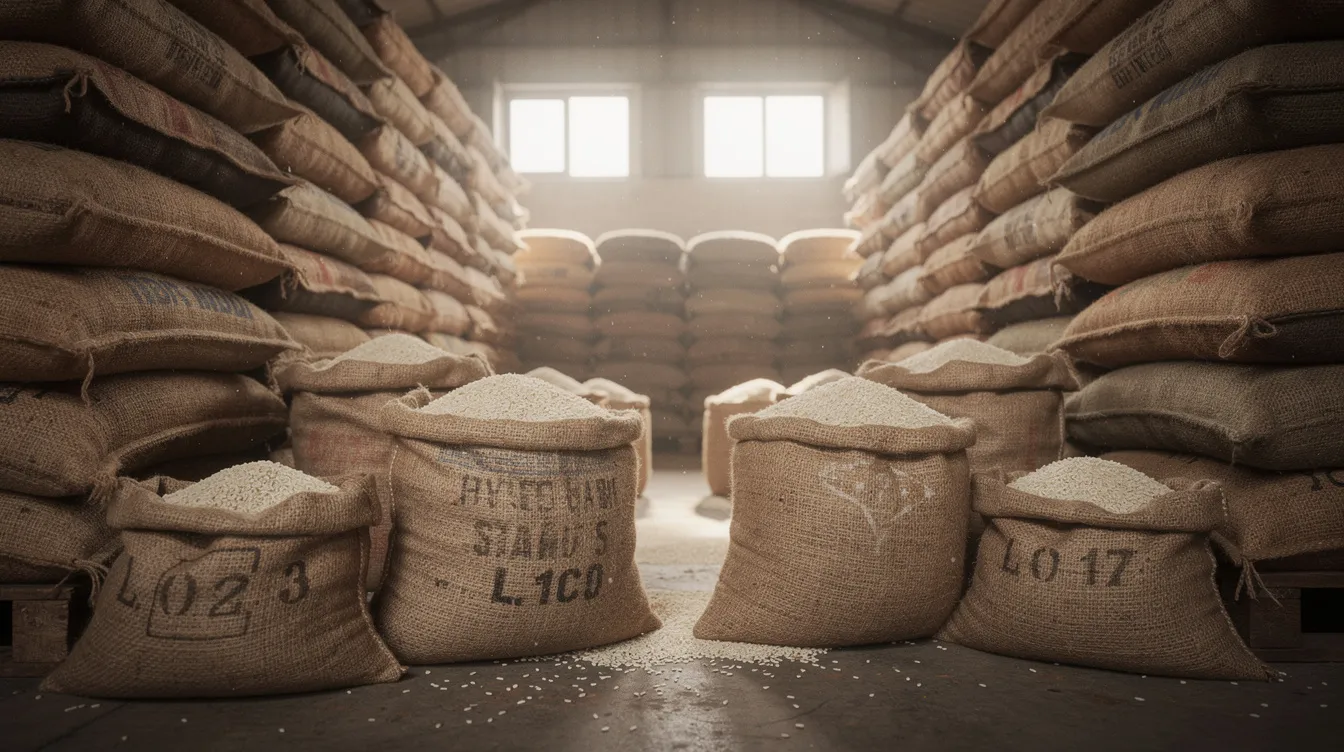
The main raw material for puffed rice is rice. Non-basmati varieties are most commonly used in Indian murmura units, sourced from states such as West Bengal, Chhattisgarh, Odisha, Telangana and Karnataka. The main inputs for puffed rice manufacturing are rice, salt, and cleaning materials, with raw rice being the largest cost head. Other ingredients include salt, sugar, and spices depending on the product variant. Raw rice prices can represent well over half of total manufacturing costs in puffed rice production. Across different studies and project profiles, raw rice or paddy constitutes the largest recurring expense, accounting for 60-70% of operational costs, while raw materials as a broader category comprise 40-60% of total operating costs depending on production scale.
Concrete factors affecting cost include procurement price per kg or per quintal, grain quality and grade (broken percentage, grain size), moisture level, seasonal price variation between harvest months (typically November to February in many eastern states) and lean months, and transportation from the rice mill to the puffing unit. A husker is required to remove husk from rice grains when procurement is in paddy form rather than pre-milled rice.
Yield and process loss deserve careful attention. From 1,000 kg of rice input, a plant may produce 880-930 kg of saleable puffed rice depending on process and equipment; this is an illustrative range, not a standard industry ratio. A Karnataka-based study using LPG-heated puffing machines reported puffing efficiency of approximately 89.3% with IR-64 variety at 45 kg/hr throughput. Storage and handling costs (godown rent, inventory loss from infestation, FIFO stock rotation) tie up working capital and add to per-kg cost. Detailed procurement and stock-planning guidance is available in the Raw Material Planning for Puffed Rice & Murmura Manufacturing guide.
Fuel and Thermal Energy Cost
Fuel is consumed during roasting and puffing, the core thermal stages of murmura manufacturing. Puffed rice is often made using high-pressure heating methods, and the heating technology used directly shapes energy consumption in puffed rice production. Common fuel options include LPG (clean, widely available but costlier), biomass or rice husk (cheaper, requires handling infrastructure), firewood (traditional, higher emissions), diesel (older units or DG backup), natural gas or PNG (where pipeline access exists), and electrical heating in some compact machines.
A study on improved puffing machines found that an efficient machine consumed approximately 0.25 kg firewood per kg of puffed rice, compared to 0.7-0.9 kg in traditional methods. That reduction in fuel usage per kg can lower the fuel cost component by several rupees. Murmura plant operating cost for fuel is typically captured as Rs/kg of puffed grain by dividing monthly fuel purchase by saleable production. DPRs often estimate fuel as a percentage of raw-material cost or per-tonne standard consumption, but actual figures should be based on supplier data and trial runs.
Electricity Cost
Electricity powers cleaning, grading, conveyors, puffing machine motors, blowers, compressors, packaging machines and lighting. Electricity is a major utility cost for puffed rice plants, required for motors, blowers, and packaging machines. A small puffed rice plant typically requires a three phase connection for its motors. For a 2-3 TPD plant, sanctioned load may fall in the 20-40 kW range (illustrative only), but actual monthly kWh consumption depends on shift hours and machine utilisation.
Utilities and power account for 20-30% of monthly operational overhead in puffed rice production, while utilities expense typically comprises 5-15% of operating costs based on the energy mix and efficiency of the specific unit. In financial projections, power cost is computed as estimated kWh per hour multiplied by operating hours per month, multiplied by the applicable tariff per kWh (including demand charges where relevant). Industrial tariffs vary by state; for reference, Andhra Pradesh industrial tariffs are approximately Rs 6-8 per kWh in recent tariff orders. Detailed power-load planning and backup DG set considerations are covered in the Puffed Rice Plant Utilities, Power & Manpower Requirements guide.
Labour and Manpower Cost
Puffed rice manufacturing requires a blend of semi-skilled and unskilled labor for various tasks. A typical plant employs a supervisor, skilled puffing machine operators, helpers for cleaning and sorting, packing staff, a storekeeper, a quality-control assistant and basic administrative staff. Small puffed rice plants generally require 3 to 6 operators. Labour costs for small processing units generally range from Rs 25,000 to Rs 40,000 monthly depending on regional wage laws, while a broader range of Rs 30,000 to Rs 80,000 applies for a small crew when supervisory and support roles are included. Labour costs increase with lower automation levels.
Labour cost includes gross wages plus statutory contributions (EPF, ESI where applicable), overtime allowances and any contract-labour charges. Part of the labour bill is directly linked to production volume (packers, helpers; semi-variable), while some is fixed (supervisor, accountant), a distinction that matters in break-even and DSCR projections.
Packaging Cost
Puffed rice packaging cost per kg depends on pack type. Bulk 25-50 kg HDPE or PP bags for wholesale cost relatively little per kg; retail branded pouches of 50 g to 1 kg cost more. Packaging costs include sealing materials, bags, and branding labels, scaling directly with production volumes. For retail FMCG-style products, packaging can add several rupees per kg to puffed rice production cost per kg, but also supports a higher selling price and better margins. Packaging equipment is needed for the final product packaging, and the level of automation in sealing and filling affects both speed and per-unit cost. Packaging decisions should align with the chosen market strategy, discussed in the Puffed Rice & Murmura Revenue Model & Market Strategy guide.
Repairs and Maintenance
Repairs and maintenance covers routine servicing, lubricants, spares (bearings, belts, heating elements, burners, mild steel wear parts), emergency breakdown repair and specialist technician visits. Maintenance typically runs around 2-5% of total machinery value annually in puffed rice operations. Routine servicing typically represents about 5-10% of machinery value annually for facilities with older or heavily used equipment. Maintenance costs also account for 5-10% of equipment replacement reserves in larger planning horizons. Preventive maintenance scheduling reduces unplanned downtime and protects murmura manufacturing cost from sudden spikes.
Factory Overheads
Factory overheads are indirect production expenses incurred inside the premises: factory rent or lease, insurance, security, housekeeping, water and sanitation, uniforms, small tools, internal material handling and minor consumables. Some puffed rice units operate from owned sheds; others lease 1,500-3,000 sq. ft. of medium industrial space (illustrative). Proper classification of these costs as factory overheads, separate from administrative expenses, ensures correct computation of factory cost of production.
Quality Control and Food Safety Cost
Puffed rice manufacturing must comply with FSSAI norms. To start, you must obtain a food license from the FSSAI, and you should register your business with the Registrar of Companies. Quality factors include uniform puffing and contamination-free production, which require periodic testing for moisture, microbial load and pest activity. Quality control cost includes lab equipment (moisture meters, weighing scales), external lab testing, cleaning chemicals, pest control and documentation. These are semi-fixed factory overheads, varying primarily with product mix and target market rather than daily volume. Additionally, you must comply with applicable pollution control measures depending on your fuel type and local regulations.
Transportation and Logistics Cost
Inward freight covers rice or paddy from the mandi or mill, plus packaging materials. Outward freight covers finished puffed rice shipped to wholesalers, retailers or institutional buyers. Whether freight is part of puffed rice manufacturing cost or selling expense depends on contract terms (ex-factory vs delivered). Loading, unloading, local transport and any third-party warehousing charges affect unit economics, especially for inter-state supplies. When choosing a location for the plant, prioritise access to raw materials and labor to minimise inward logistics cost.
Administrative and Selling Expenses
Administrative expenses include office salaries, accounting and audit fees, telephone and internet, printing and stationery, software subscriptions, professional fees and general office overheads. Selling and distribution expenses cover sales staff salaries, commissions, discounts, trade schemes, marketing campaigns, sampling, travel and any distributor margins borne by the manufacturer. These are mostly fixed or semi-variable and are shown separately from factory cost when calculating contribution and break-even.
Puffed Rice Manufacturing Process and Its Impact on Cost
The modern manufacturing process typically follows these stages: raw-rice cleaning (using machines that remove stones, dust and foreign matter), soaking or conditioning, drying, roasting or puffing, cooling, sieving and grading, seasoning (where applicable) and packaging. A parboiling unit is used to cook rice grains before puffing in processes that require parboiled rice as input. Dryers are essential for removing moisture from rice grains to the correct level before puffing. Cooling units are necessary to cool the puffed rice after processing before it enters packaging.
Process choice; traditional sand roasting versus gas-fired batch roaster versus continuous roaster; influences raw-material yield, fuel requirement, labour intensity, wastage and quality consistency. Puffed rice machines have output capacities ranging from 200 kg/hr to 1 ton/hr depending on the machine type and automation grade. Better process control reduces breakage, improves puff texture uniformity and allows a higher selling price with lower rejection, decreasing effective puffed rice production cost per kg. Promoters should study the process flow chart and machinery sequence before finalising cost assumptions in their DPR; detailed process documentation is available in the Puffed Rice Manufacturing Process & Process Flow Chart guide.
How Plant Capacity Affects Puffed Rice Production Cost
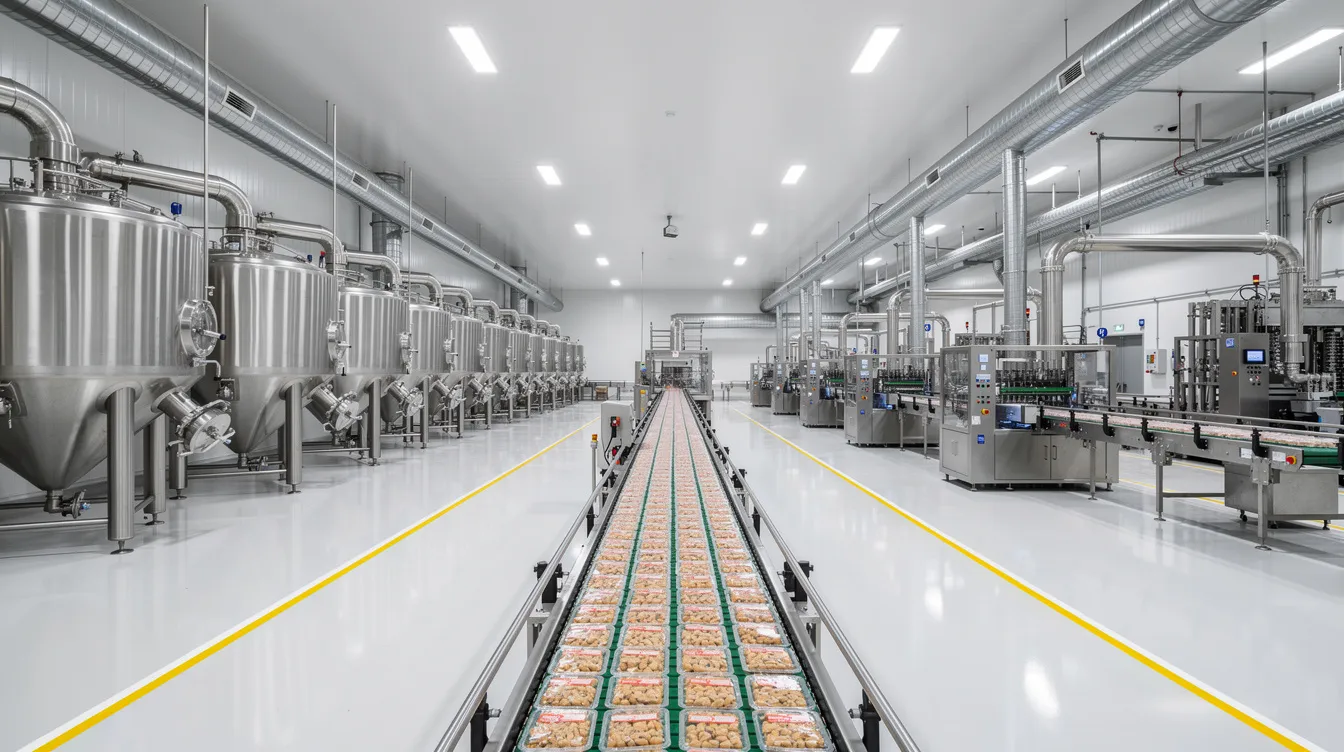
Installed capacity for puffed rice plants spans a wide range: micro units of 100-500 kg/day, semi-automated units of 500-2,000 kg/day, and commercial plants processing several tonnes per day. The minimum investment for a small-scale unit is approximately Rs 10 lakhs, covering basic machinery, working capital and setup. Most units ramp from 40-50% capacity utilisation in year one to 70-80% over two to three years (illustrative pattern).
Fixed costs; salaries of key staff, rent, depreciation, interest, minimum power demand charges; do not change proportionately with production. At low utilisation, these costs are spread over fewer kilograms, inflating puffed rice production cost per kg. A simple illustrative example: consider a 3 TPD plant with monthly fixed costs of Rs 1.5 lakh. At 40% utilisation (approximately 36 MT/month), fixed cost per kg is about Rs 4.17. At 80% utilisation (approximately 72 MT/month), it drops to about Rs 2.08. This difference of roughly Rs 2 per kg goes straight to the bottom line. These figures are for explanation only and must not be treated as industry benchmarks. Correct selection of plant size and realistic ramp-up planning is central to murmura plant cost of production calculation, discussed further in the Puffed Rice Plant Capacity Planning & Production Capacity guide.
Illustrative Monthly Operating Cost of a Puffed Rice Plant
The table below presents an illustrative puffed rice plant monthly running cost for a small-to-medium scale unit producing approximately 60-90 MT per month of saleable product. Operating costs for a small-to-medium puffed rice plant typically range from Rs 1 lakh to Rs 5 lakhs per month depending on scale, location and product mix. All figures are for illustration only.
| Cost Head | Illustrative Monthly Cost (Rs) | Nature |
|---|---|---|
| Raw material (rice) | 15,00,000 – 25,00,000 | Variable |
| Fuel (LPG/biomass) | 1,50,000 – 3,00,000 | Variable |
| Electricity | 40,000 – 80,000 | Semi-variable |
| Labour | 60,000 – 1,20,000 | Fixed / Semi-variable |
| Packaging | 80,000 – 2,00,000 | Variable |
| Repairs & maintenance | 10,000 – 25,000 | Semi-variable |
| Factory overhead | 30,000 – 60,000 | Fixed / Semi-variable |
| Administrative expenses | 25,000 – 50,000 | Mostly fixed |
| Selling & distribution | 20,000 – 50,000 | Variable / Semi-variable |
These monthly operating costs flow into the projected P&L to compute puffed rice manufacturing cost, EBITDA and cash accrual. Actual costs will vary with plant size, procurement rate, local tariffs, product mix and the automation grade of the murmura making machine. A customised puffed rice project report is always necessary.
How to Calculate Puffed Rice Production Cost Per Kg
Puffed rice production cost per kg is the foundation for setting selling price, computing contribution and estimating profit margin. It should be calculated on saleable finished quantity, not on gross input weight.
The method: (1) compute total monthly factory production cost, covering raw material, fuel, power, wages, packaging and factory overheads; (2) adjust for opening and closing work-in-progress and finished stock if relevant; (3) divide by total saleable kilograms produced in that period. “Factory cost per kg” excludes administrative and selling expenses. “Total cost per kg” adds those. “Cash cost per kg” excludes depreciation and sometimes interest, and is used for short-term pricing and working capital assessment.
A brief numerical example (illustrative only): assume monthly factory cost of Rs 20,00,000 and saleable output of 70,000 kg. Factory cost per kg = Rs 28.57. If administrative and selling expenses add Rs 1,20,000, total cost per kg becomes Rs 30.29. Add interest of Rs 30,000 and depreciation of Rs 40,000, and the fully loaded cost per kg reaches Rs 31.29. The promoter then adds a target margin to arrive at selling price. Common mistakes include ignoring process loss, excluding packaging and treating interest as factory cost. A Chartered Accountant or experienced consultant should cross-check the cost sheet before finalising a bankable DPR.
Yield and Conversion Ratio in Murmura Manufacturing
In murmura manufacturing, even a 2-3% change in raw-material recovery has a measurable impact on murmura manufacturing cost per kg. Losses include moisture evaporation during conditioning and puffing, breakage and fines, cleaning loss (dust, stones, foreign matter), sieve rejection and off-spec product. Heating rice kernels at the right temperature and pressure is critical for maximising expansion ratio and minimising rejects.
Consider an illustrative comparison: Plant A achieves 92% recovery while Plant B achieves 88%. If rice costs Rs 30 per kg, Plant A’s raw-material cost per kg of puffed rice is Rs 32.61, while Plant B’s is Rs 34.09; a difference of Rs 1.48 per kg. Across 70 tonnes per month, that gap translates to over Rs 1 lakh in monthly margin. These figures are examples only. Realistic recovery assumptions should be taken from machinery suppliers, trial runs or experienced operators.
Fixed Cost vs Variable Cost in a Puffed Rice Plant
Correct classification of costs matters for puffed rice break even analysis, contribution margin calculation and CMA data preparation.
| Category | Examples |
|---|---|
| Fixed | Key staff salaries, factory rent, insurance, minimum power demand charges, depreciation, interest |
| Variable | Rice, fuel, packaging film, outward freight, trade commissions, casual labour tied to volume |
| Semi-variable | Overtime wages, maintenance, certain utilities, administrative expenses partly linked to volume |
Contribution equals selling price per kg minus variable cost per kg. This contribution first covers fixed cost; the remainder is profit. At higher capacity utilisation, the same fixed cost is absorbed by more units, increasing margin of safety. This classification feeds directly into DSCR calculations for bank-funded projects.
Factory Layout and Its Impact on Operating Efficiency
A well-planned factory layout with smooth material flow from raw-material receipt to cleaning, puffing, cooling, packing and dispatch reduces material handling, spillage, double-handling and labour requirements. Poor layout causes bottlenecks, higher power usage from extra conveyors and longer runs, contamination risk and increased breakage, all of which push up puffed rice factory expenses. Layout planning should be finalised before freezing machinery positions and electrical routing. The Puffed Rice Plant Land, Building & Plant Layout Requirements guide covers area planning, zoning and regulatory spacing.
Machinery Selection and Cost of Production
Selection of puffing technology; batch roaster, gas-fired roaster, murmura making machine with continuous feed; has a direct, long-term effect on puffed rice manufacturing cost through its impact on fuel consumption, electricity, labour, repairs and downtime. Capital costs for puffing machinery in small facilities can range from Rs 75,000 to Rs 2,50,000, while broader puffed rice machinery costs range from Rs 35,000 to Rs 1,55,000 for specific machine components. A moderately higher machinery investment can reduce rice puffing plant operating expenses through better energy efficiency and lower rejection, improving EBITDA and DSCR over the loan tenure.
Technology choice should be evaluated on life-cycle cost, availability of spares and local service support, not only initial price. Equipment options and budget ranges are discussed in detail in the Puffed Rice & Murmura Plant Machinery Cost guide. Promoters should collect realistic consumption norms (kg of fuel per tonne, kWh per tonne, manpower per shift) from machinery suppliers and feed these into the puffed rice plant cost analysis.
Working Capital Requirement and Operating Cost
Working capital for a puffed rice plant is driven by operating cost elements: rice inventory, packaging inventory, finished goods, customer receivables, and short lags in wages and utility payments. Raw materials constitute 50-60% of recurring working capital in puffed rice production. Working capital requirements increase when raw-material holding periods extend (for example, stocking 1-2 months of rice during lean season to hedge against price hikes) or when customers take longer credit.
Banks examine current ratio, drawing power of stock, stock statements and debtor and creditor days. They confirm that projected cash accrual can service both working-capital interest and term-loan EMI. These assessments are built into CMA data and the projected balance sheet in the DPR.
Puffed Rice Selling Price, Contribution and Profit Margin
Puffed rice manufacturing profit margin depends on the gap between selling price per kg and variable cost per kg. Puffed rice manufacturing can be profitable due to high demand across the country, and puffed rice demand is high in India across multiple channels. Selling price varies with product positioning: loose bulk murmura for local bhel puri and namkeen makers, unbranded 25-50 kg bags for wholesale, own-brand 50 g or 100 g crispy puffed rice retail packs, or value-added flavoured snacks with savory spices and vegetables for modern trade. Puffed rice is also consumed as a cereal, sometimes mixed with flaked rice or regular rice products.
Promoters should compute contribution per kg and total monthly contribution, then subtract fixed and semi-fixed costs to verify whether projected EBITDA and cash accrual support term-loan repayment and desired return. The various health benefits of puffed rice (low fat, low calories) support marketing for health-conscious segments. Turnover alone does not determine viability; contribution margin and fixed-cost coverage are more important.
Break-Even Analysis for a Puffed Rice Manufacturing Plant
Break-even analysis identifies the minimum sales volume at which total revenue equals total cost. The formula: break-even sales in rupees = fixed cost divided by contribution margin ratio; break-even quantity = fixed cost divided by contribution per kg. For example, if monthly fixed cost is Rs 1.5 lakh and contribution per kg is Rs 5, break-even quantity is 30,000 kg per month (illustrative). Rising raw-material or fuel cost without timely selling-price revision reduces contribution per kg and pushes break-even upward. Break-even and margin-of-safety analysis are essential components of a professional puffed rice plant DPR.
Impact of Raw Material Price Increase on Production Cost
In most puffed rice plants, raw material cost accounts for 50-65% of murmura production cost. A simple sensitivity illustration (indicative only): if rice price rises by 5%, cost per kg may increase by Rs 1.50-2.00; at 10%, by Rs 3.00-4.00; at 15%, by Rs 4.50-6.00, assuming other costs are unchanged. Practical responses include bulk purchase contracts directly from mills, seasonal stocking at harvest prices, improving yield, optimising product mix toward higher-margin segments, adjusting pack sizes and revising selling prices where market conditions permit. Such sensitivity analysis is part of a robust puffed rice plant feasibility study.
Impact of Fuel, Electricity and Labour Cost on Murmura Production
Fuel cost is both technology and location dependent. Shifting from an older furnace to an efficient gas-fired roaster can lower fuel consumption per tonne, but LPG tariff and local availability must be verified. Using gun puffing or steam-based systems changes the fuel profile entirely.
Electricity tariffs vary by state and industrial category. Investment in energy-efficient motors, VFDs and optimised compressor usage can measurably reduce puffed rice plant electricity and fuel cost. Tariff orders change periodically, so projections should use the latest applicable rates.
Labour intensity depends on automation and factory layout. In high-wage urban areas, promoters may prefer automated cleaning, packing and conveying. In rural or semi-urban regions, carefully managed manual operations with trained workers can be cost-effective. The market share gained by efficient manufacturers in the puffed rice industry often traces back to controlled labour cost per kg.
Cost Reduction Strategies for a Puffed Rice Plant
Practical strategies for controlling puffed rice manufacturing cost include: (1) direct procurement from rice mills and off-season bulk buying to reduce per-kg rice cost; (2) operator training and SOPs to reduce process loss and improve yield; (3) investing in energy-efficient making machine variants that lower fuel and power consumption per tonne; (4) strict preventive maintenance schedules to avoid breakdown-related production loss; (5) marketing tie-ups and distribution agreements to push capacity utilisation above 70%; (6) labour productivity incentives linked to output quality parameters; (7) packaging optimisation by reducing unnecessary film thickness and standardising pack sizes; (8) inventory control to reduce carrying cost and working capital interest; (9) efficient factory layout to cut internal handling and spillage; (10) monetisation of by-products such as broken puffed grain or fines sold to namkeen or savory snack food manufacturers.
Cost reduction should never compromise food safety or product quality. A well-designed puffed rice manufacturing business plan should include yearly targets for cost per kg and efficiency indicators, so management can track performance against DPR assumptions. Rice production of white rice and popped rice variants involves different cost dynamics, and each product in the mix should carry its own margin analysis.
Operating Cost in Puffed Rice Plant DPR and Financial Projections
In a professionally prepared puffed rice plant DPR, operating-cost assumptions flow through the entire financial model. Sales volume and selling price projections generate revenue. Operating-cost assumptions (raw material, fuel, power, wages, packaging, overheads) determine puffed rice cost of production and gross profit. Adding administrative and selling expenses, interest and depreciation leads to profit before tax and cash accrual. Working capital is derived from operating cycles; stock days, debtor days and creditor days. Together with the term-loan requirement, this forms total puffed rice plant project cost and means of finance, linked to the Project Cost & Means of Finance guide.
Unrealistic assumptions (very low fuel consumption, extremely high yield, optimistic selling price) can make the project look attractive on paper but create stress during actual operations. Lenders increasingly cross-check such assumptions with industry norms and site-visit observations.
Operating Cost Assumptions for Bank Loan Project Report
Banks scrutinise puffed rice plant operating cost while appraising term-loan and working-capital proposals. They focus on whether projected profits and DSCR are achievable under reasonable market conditions. Lenders examine capacity utilisation build-up year by year, raw-material price trends, fuel and power cost assumptions, labour cost inflation, and working-capital cycle parameters. They confirm that the murmura manufacturing unit can service EMI even if margins moderate by 10-15%.
Promoters should ensure that technical details (machinery capacity, power requirement, yield) match the financial projections, and that assumptions are consistent across the DPR, CMA data and loan application forms. No projection is guaranteed; the role of a Chartered Accountant is to make estimates realistic, transparent and well-documented.
Common Mistakes While Estimating Puffed Rice Production Cost
Frequent errors in puffed rice manufacturing cost calculation include: ignoring process and wastage losses; assuming near-100% capacity utilisation from year one; underestimating fuel cost by using outdated LPG or biomass prices; missing packaging cost in per-kg calculations; overlooking seasonal variation in rice price; using insufficient or incorrect labour assumptions for the region; omitting repairs and maintenance budgets; ignoring inward and outward transportation; confusing project setup cost with monthly operating cost; not accounting for working-capital interest; and using selling prices higher than what the growing demand in the local market can actually support.
Such errors understate puffed rice plant monthly running cost, produce misleading profitability estimates and create difficulty in meeting EMI and working-capital commitments. Before freezing the DPR, promoters should benchmark their cost assumptions against at least one running plant of similar production capacity in their area.
Important Internal Resources for Setting Up a Puffed Rice Plant
ProjectReportBank.com hosts detailed, topic-wise guides for each planning stage of a puffed rice unit. For process understanding, refer to the Puffed Rice Manufacturing Process & Process Flow Chart. Equipment budgeting is covered in the Puffed Rice & Murmura Plant Machinery Cost guide, and plant sizing in Puffed Rice Plant Capacity Planning & Production Capacity.
For civil and layout planning, see Puffed Rice Plant Land, Building & Plant Layout Requirements. Procurement guidance is in Raw Material Planning for Puffed Rice & Murmura Manufacturing. Power, fuel and staffing norms are detailed in Puffed Rice Plant Utilities, Power & Manpower Requirements. Investment structuring and pricing strategy are covered in the Project Cost & Means of Finance and Revenue Model & Market Strategy guides respectively.
FAQ
These FAQs address common queries from Indian entrepreneurs about puffed rice plant operating cost beyond what is covered in the main sections above.
What is the operating cost of a puffed rice plant in India?
There is no single universal figure. Operating cost depends on capacity (1-5 TPD), technology, raw-material price, fuel choice, labour rate and utilisation level. For a small-to-medium MSME murmura manufacturing unit, total monthly operating cost may range from approximately Rs 1 lakh to Rs 5 lakhs at lower production volumes, and considerably higher for larger commercial plants. These figures are indicative only and must be computed through a plant-specific DPR.
How is puffed rice production cost per kg normally calculated?
Total monthly production cost (raw material, fuel, power, wages, packaging, factory overheads) is divided by saleable kilograms produced. Some analyses also add administrative, selling and finance cost to arrive at total cost per kg for pricing decisions. The calculation should always use saleable finished-product weight, not gross input weight, to account for process loss.
How much working capital is typically required for a puffed rice manufacturing plant?
Working capital depends on inventory holding, credit policies and monthly operating expenses. For small to medium plants, it may range from a few lakhs to several tens of lakhs. A detailed assessment must be made through customised CMA data and DPR projections, considering raw-material holding period (often 1 month), finished-goods days (0.5-1 month) and debtor days (15-45 days for B2B channels). Raw materials constitute 50-60% of recurring working capital requirements.
How does capacity utilisation affect puffed rice production cost?
Fixed costs such as salaries, rent, depreciation, interest and minimum power charges remain constant regardless of output. At 40% utilisation, these costs are spread over fewer kilograms, raising cost per kg. At 75-80% utilisation, cost per kg drops because the same fixed costs are absorbed by a larger production volume. This is why realistic ramp-up assumptions in the DPR are critical for accurate DSCR and profitability estimates.
What is included in a puffed rice plant DPR?
A professionally prepared puffed rice plant DPR includes: project description and promoter details, manufacturing process and technology, machinery specifications, land and building requirements, capacity planning, raw-material and utilities planning, projected P&L (with detailed operating-cost assumptions), cash-flow statement, projected balance sheet, working-capital assessment, break-even analysis, DSCR and IRR computation, CMA data, and means of finance. The DPR should present consistent, realistic assumptions that can withstand bank scrutiny.
Conclusion
Accurate estimation of puffed rice plant operating cost and puffed rice cost of production matters more to long-term project success than minimising the initial machinery purchase. The recurring cost structure; raw-material price and yield, fuel and electricity efficiency, labour and packaging cost, capacity utilisation, factory layout and working-capital discipline; determines profit margin, break-even level, cash accrual and DSCR across the entire loan repayment period.
All numerical examples in this article are illustrative, based on typical MSME conditions in India, and promoters should always use plant-specific data, local tariff rates, actual supplier quotations and trial-run results when preparing a bank-ready puffed rice plant DPR. The food processing business, whether producing puffed rice, extrusion snacks or related cereal products, rewards those who plan costs realistically rather than optimistically.
Entrepreneurs who require a customised puffed rice project report, DPR, CMA data, financial projections, feasibility analysis or bank-finance support for a puffed rice or murmura plant in India can consult CA Manish Gugliya and the ProjectReportBank.com team for tailored, professional assistance.