Key Takeaways
- This article explains how to prepare realistic 5–7 year puffed rice plant financial projections for a DPR, specifically for Indian murmura units seeking bank loans or subsidy-linked finance.
- Projections must link technical capacity (kg/hour, working days, shifts) with sales, costs, cash flow, DSCR and loan repayment – not just show theoretical profitability on paper.
- A bankable puffed rice plant DPR for bank loan normally includes projected Profit & Loss, Balance Sheet, Cash Flow, Loan Repayment, Working Capital and DSCR for at least 5 years.
- Assumptions for raw rice prices, selling price per kg, process loss, power and fuel, manpower and interest rates must be project-specific and justified with local market data.
- Project Report Bank provides customised puffed rice project report and financial models prepared by a Chartered Accountant, aligned with Indian banks’ appraisal practices.
Introduction: Role of Financial Projections in a Puffed Rice Plant DPR
Puffed rice is a popular snack food in India, consumed across virtually every state and demographic. With India’s snack market reaching ₹40,000 crore and growing demand among health-conscious consumers for low-fat, ready-to-eat options, establishing a murmura manufacturing unit presents a genuine opportunity. A small murmura unit can earn ₹25,000–₹50,000 per month even at modest scale, while larger plants with branded or flavoured products can generate significantly higher returns.
But opportunity alone does not secure bank finance. What converts a business idea into a fundable proposal is a properly prepared detailed project report – and at the heart of every DPR lie the financial projections.
Puffed rice plant financial projections are the “financial translation” of your technical project details. A proper puffed rice plant DPR converts inputs like installed capacity (say, 1,000 kg/day), the puffed rice manufacturing process, number of shifts, raw materials, machinery cost and manpower into projected financial statements that a banker can appraise.
These projections matter for:
- The promoter’s go/no-go investment decision
- Term loan appraisal by banks and NBFCs
- Working capital limit assessment
- Subsidy-linked loan proposals under PMEGP, CGTMSE, Mudra, PMFME
- Repayment and cash flow planning
- Evaluation of puffed rice plant profitability and financial feasibility
Copy-pasting numbers from generic templates or other industries is risky. A DPR for a specific puffed rice plant in, say, West Bengal in 2026 must use its own market prices, cost structure and financing assumptions. India produces over 100 million tonnes of rice annually, but the price you pay for broken rice grain in Hooghly district will differ from what a promoter in Raipur faces. Your projections need to reflect that reality.
What Are Puffed Rice Plant Financial Projections?
Financial projections for a puffed rice or murmura manufacturing unit are estimated future financial statements – typically covering 5 to 7 years – that show how revenue, expenses, profits, assets, liabilities and cash flows are expected to evolve as the business ramps up.
A typical puffed rice plant financial model includes:
- 5-year financial projections including revenue and profit analysis (or 7 years for larger automated plants with longer repayment tenures)
- Projected Profit and Loss Account
- Projected Balance Sheet
- Projected Cash Flow Statement
- Puffed rice plant loan repayment projection
- Working capital projection and DSCR projection
A project report includes a detailed financial analysis that connects technical feasibility (how much puffed rice can you produce, at what yield, with what machinery) to financial feasibility (can you cover costs, service your loan, and generate adequate returns). Project reports must include a 5-year financial projection at minimum – banks often insist that projections cover the entire loan tenure.
These projections are estimates based on assumptions, not guaranteed results.
Key Assumptions Required Before Preparing Financial Projections
All puffed rice plant financial projections stand on the quality of assumptions. If you feed an unrealistic raw rice price or an inflated selling price into your financial model, every number downstream – margins, DSCR, break-even, cash flow – becomes misleading for both the promoter and the bank.
Before building a puffed rice plant financial model, the following assumptions must be finalised:
- Installed production capacity (e.g., 500–1,000 kg/day murmura line)
- Number of working days per year (e.g., 300 days) and shifts per day
- Capacity utilisation ramp-up over years
- Product mix: plain puffed rice vs flavoured murmura, B2B bulk vs retail packs
- Raw materials: type of rice/paddy, conversion yield, process loss percentage (typically 2–5%)
- Expected selling price per kg by channel – average selling price for puffed rice can range from ₹40 to ₹55 per kilogram
- Raw rice/paddy price, packaging materials cost, fuel (LPG, coal, biomass), electricity tariff
- Manpower plan: operators, helpers, supervisor, quality and admin staff; wages and annual increments
- Maintenance and repairs as a percentage of machinery cost
- Admin, marketing and distribution expenses
- Term loan amount, interest rate, proposed repayment tenure and moratorium period
- Depreciation rates as per Income-tax Act or Companies Act (SLM/WDV method)
- Tax regime assumption
- Any subsidy or capital grant (government schemes can provide capital subsidies up to 35% for MSME projects) and how it is treated in projections
- Food safety registrations and compliance – FSSAI registration is mandatory for food manufacturing businesses in India
As a CA, I document these assumptions in a dedicated “Assumptions & Basis of Projections” section within the puffed rice project report so that lenders can verify and challenge specific inputs rather than guessing what drove the numbers.
Capacity Utilisation Assumptions and Production Planning
Banks scrutinise capacity utilisation figures closely. Assuming 100% utilisation from Year 1 is one of the most common – and most damaging – mistakes in murmura plant financial projections.
A realistic ramp-up pattern for a new puffed rice unit (illustrative only):
- Year 1: 45–55% utilisation (stabilisation, market development)
- Year 2: 60–70% utilisation
- Year 3: 75–80% utilisation
- Year 4–5: 80–90% utilisation subject to demand and plant size
Typical production capacity for a small-to-medium puffed rice plant is 300 kg to 500 kg per day. A small unit can produce 500 kg of puffed rice daily on a single shift. Actual utilisation depends on decisions around puffed rice plant capacity planning and production capacity, location (proximity to rice belts in Bihar, West Bengal, Chhattisgarh, Odisha or UP), raw material availability, sales network and maintenance downtime.
Revenue heavily depends on capacity utilization in puffed rice production – your production planning directly determines the quantity feeding into your revenue projection.
Revenue and Sales Projections for Puffed Rice & Murmura
The puffed rice plant revenue projection is built from a simple formula:
Production Quantity (kg/year) × Realistic Selling Price (₹/kg) × Product Mix
Major components of the sales projection include:
- Plain bulk puffed rice sold to local traders, wholesalers and chaat or bhel vendors
- Branded or flavoured murmura packs (masala, chivda mixes) with higher margins – puffed rice demand is high among health-conscious consumers seeking low-fat snacks and breakfast cereals alternatives
- Institutional or B2B contracts with namkeen and snack manufacturers
- Possible by-product or scrap income (rejected or broken rice-based products) – using byproducts strategically can enhance profitability
- Annual selling price escalation assumption (3–5% per year)
Packaging materials must be moisture-proof to maintain puffed rice quality and texture, especially for retail packs. Establishing strong distribution channels is crucial for revenue generation in puffed rice sales. Direct-to-consumer sales can improve margins but require additional promotional efforts and branding investment.
Projected turnover must be supported by installed capacity, realistic market demand and a clear puffed rice and murmura revenue model including regional competition and export markets potential.
Illustrative example only: A plant producing 500 kg/day at 60% utilisation over 300 working days generates 90,000 kg/year. At ₹45/kg, projected annual sales would be approximately ₹40.5 lakh. This is purely illustrative – your project-specific numbers will differ.
Raw Material Cost Projections and Consumption Norms
Raw rice or paddy is usually the single largest component of puffed rice plant cost projection. Raw materials constitute roughly 65–70% of operating costs in puffed rice production. Even a ₹1–2/kg change in procurement price can significantly alter margins.
Puffed rice is primarily made from rice kernels, with other ingredients including salt, sugar, and spices for flavoured variants. A project report should detail raw material costs and sources explicitly.
Key elements to project:
- Consumption norms per kg of finished puffed rice (yield typically ~95%, implying ~5% process loss)
- Annual quantity requirement based on production plan
- Seasonal fluctuations in raw material pricing can significantly affect profitability – paddy prices may vary ±10–20% across seasons
- Supplier strategy: local mandi purchase, millers, contract arrangements
- Minimum inventory to be held (15–30 days of stock) and its impact on working capital
- Annual raw material price escalation (5–10% depending on region and commodity trends)
For reference, broken rice was priced at approximately ₹33.63/kg all-India average in recent data, though bulk industrial procurement rates are typically lower. Detailed norms for raw material planning for puffed rice and murmura manufacturing should be referenced when setting consumption rates. Ignoring process loss – the gap between heating rice kernels input and finished puffed rice output – is a frequent reason for overstated profitability in DPRs.
Power, Fuel, Utilities and Manpower Cost Projections
For a murmura manufacturing plant, utilities and labour are crucial operating expenses. High-capacity electricity and eco-friendly fuel sources are necessary for puffed rice production. Electricity and water supply are essential utilities for operation.
Costs should be divided into:
- Variable costs: power per kg, fuel or LPG consumption per batch, water usage, packing materials
- Semi-variable and fixed costs: minimum demand charges for electricity, permanent staff salaries, supervision, basic maintenance
A typical manpower structure for a small MSME unit (500–1,000 kg/day) includes operators, helpers, packing staff, a supervisor and an accountant. Monthly electricity expense may range from ₹40,000–₹80,000 while fuel costs (LPG or biomass) can run ₹1,50,000–₹3,00,000 for moderate-scale operations producing 60–90 tonnes per month.
For detailed norms, refer to the guide on utilities, power and manpower requirements for a puffed rice plant. Projections should treat some utility and manpower costs as fixed up to a capacity threshold and others as proportional to production volume – this distinction is critical for accurate break-even and DSCR analysis.
Machinery Cost, Fixed Assets and Depreciation Impact
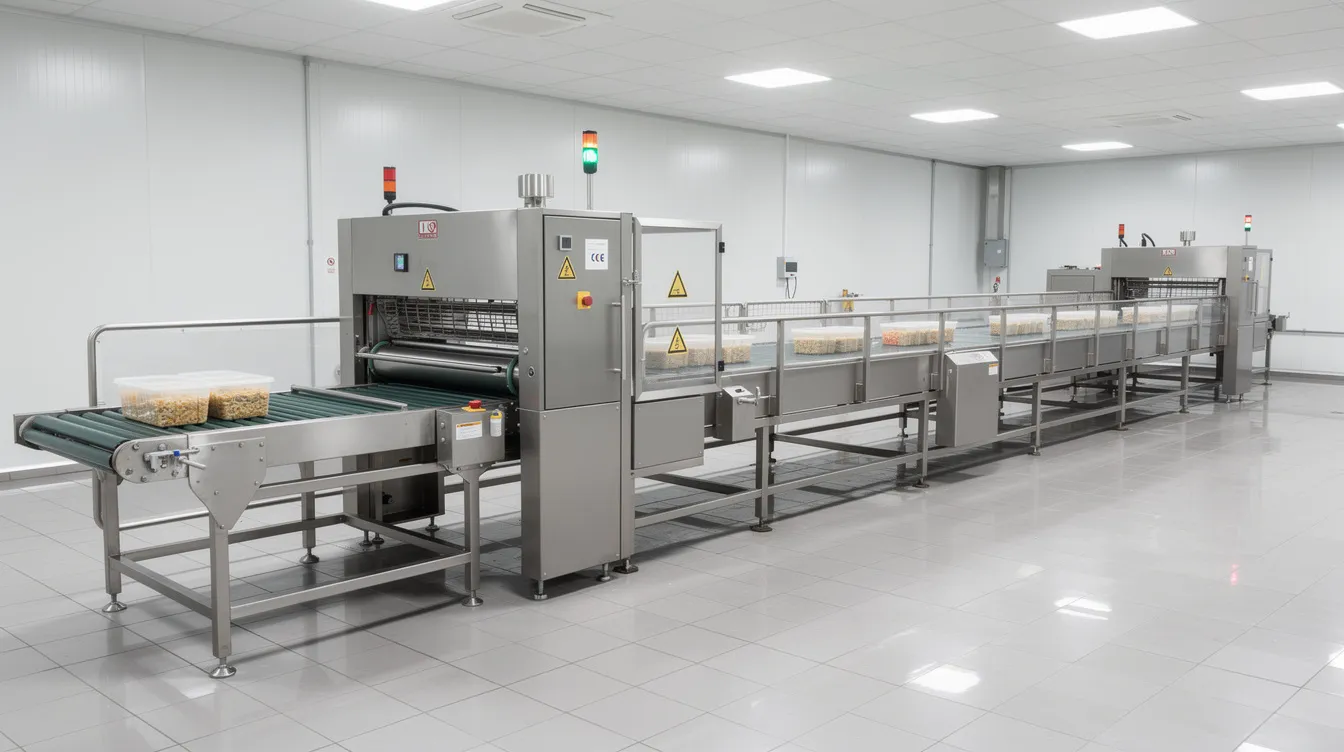
Selection of machinery – manual, semi-automatic or automatic line – directly influences total project cost, fixed asset base, term loan requirement, depreciation and ultimately reported profit. A puffed rice-making machine is essential for production. Puffed rice manufacturing requires balancing capital investments and operational expenses. Machinery and equipment costs represent the largest share of initial investment in puffed rice facilities.
Fixed assets for a puffed rice plant typically include:
- Main puffing machine, roasting unit, dryer, conveyor system
- Cleaning, grading, sieving and de-stoning equipment to remove stones and husk
- Flavouring or coating drum and mixer (if flavoured murmura is planned)
- Packaging machine – pouch packing or form-fill-seal
- Ancillary equipment: boiler, heat source, compressor, weighing scales, sealing machines, steam systems
- Electrical installations and handling equipment
Investment ranges vary: a minimum startup investment is ₹2–5 lakh for micro units, while semi-automatic plants may require ₹10–25 lakh. Detailed cost breakdowns are available in the guide on puffed rice and murmura plant machinery cost.
Depreciation is projected using applicable rates (e.g., 15% WDV for plant and machinery under Income-tax Act). Depreciation reduces accounting profit and tax but is a non-cash expense – this improves cash profit and DSCR. Higher initial machinery cost increases the depreciation shield but also raises interest cost and repayment burden.
Overall Project Cost and Means of Finance Structure
A bank-ready puffed rice manufacturing project report must clearly break down total project cost and how it will be financed. Fixed capital investment for puffed rice plants generally ranges from ₹5 lakh to ₹50 lakh depending on scale and automation.
Typical components of project cost:
- Land cost or leasehold premium, site development
- Factory building, shed, warehouse and office construction
- Plant and machinery including taxes, freight, erection and commissioning
- Electrical installations and utilities (transformer, wiring, water system, fire safety)
- Furniture, computers and office equipment
- Preliminary and pre-operative expenses (consultancy, DPR preparation, interest during construction, trial runs)
- Contingency margin
- Margin money for working capital
Means of finance:
- Promoter’s capital or contribution
- Term loan from bank or NBFC
- Subsidy or capital grant (e.g., PMFME, state subsidies) – subject to eligibility
- Other sources: unsecured loans, internal accruals from existing business
An “ideal” debt-equity ratio cannot be universally prescribed; the appropriate mix depends on the specific bank’s norms, security available and the project’s cash flow strength. Common structures for MSME food production units range from 2:1 to 3:1 debt-equity. For detailed structuring, refer to puffed rice plant project cost and means of finance.
Projected Profit and Loss Account (Income Statement)
The projected profit and loss projection for a puffed rice plant typically covers 5–7 years. Line items include:
- Gross sales and net sales
- Raw material consumption (rice, packing, fuel as direct cost)
- Manufacturing expenses (power, utilities, factory wages, repairs and maintenance)
- Employee cost and admin overheads
- Selling and distribution expenses (transport, commission, marketing)
- EBITDA – earnings before interest, tax, depreciation and amortisation, representing operating profit from core business
- Depreciation charge
- Interest on term loan and working capital
- Profit before tax (PBT), tax provision, and profit after tax (PAT)
Illustrative P&L Summary (Illustrative Only – Not Industry Standard)
| Particular | Year 1 | Year 2 | Year 3 |
|---|---|---|---|
| Capacity Utilisation | 50% | 65% | 80% |
| Net Sales (₹ lakh) | 40 | 52 | 65 |
| Raw Material & Direct Costs | 28 | 35 | 43 |
| EBITDA (₹ lakh) | 5.5 | 9.0 | 13.0 |
| PAT (₹ lakh) | 1.5 | 4.0 | 7.0 |
All figures are hypothetical for illustration purposes only.
Puffed rice facilities aim for a net profit margin of 7% to 12% at stable operations. These margins must be linked to realistic raw material and selling-price assumptions – not theoretical best-case scenarios.
Projected Balance Sheet and Financial Position
The projected balance sheet for a puffed rice plant shows assets, liabilities and net worth each year and must tie logically with the P&L and cash flow projections.
Assets side: Fixed assets net of depreciation (land, building, plant and machinery), current assets (inventories of raw material and finished goods, trade receivables, cash and bank), and other non-current assets like deposits.
Liabilities and equity side: Promoter’s capital and reserves (net worth), term loan outstanding (reducing each year by repayments), working capital borrowings (CC/OD limits), trade creditors and other current liabilities.
Retained earnings from PAT increase net worth over time. Repayment of term loan reduces liabilities and future interest. Banks look at ratios derived from the projected balance sheet – current ratio, TOL/TNW, and debt-equity – while appraising murmura plant financial projections.
Projected Cash Flow Statement and Cash Accrual
Profit on paper is different from cash in bank. The puffed rice plant cash flow projection is what banks rely on most to assess loan repayment capacity.
Key components:
- Cash profit (PAT + depreciation and other non-cash charges)
- Changes in working capital (inventory buildup, receivables, creditors)
- Capital expenditure
- Term loan disbursement and principal repayment outflow
- Interest payments
- Tax payments
- Net cash flow and closing cash balance each year
During the first 1–2 years, cash flow may be tight due to working capital build-up and initial repayments even if PAT looks positive. Banks rely on cash accrual (PAT + depreciation) to verify whether debt servicing is comfortable. Frequent negative cash flows are a red flag in any puffed rice plant financial feasibility analysis. Projections suggest that a well-structured financial model should account for working capital and cash flow comprehensively.
Working Capital Projections for a Murmura Manufacturing Unit
Puffed rice plant working capital projection is often underestimated by new promoters. Banks expect a structured calculation tied to the operating cycle, not a flat percentage of sales.
Each component is estimated based on:
- Raw material inventory: 15–30 days of rice, paddy, packaging materials and fuel
- Finished goods inventory: 7–15 days of murmura stock
- Receivables: 15–45 days credit period to distributors and wholesalers
- Cash and bank balance: minimum operating cash for wages and petty expenses
- Trade creditors: days of credit available from suppliers
The working capital gap (current assets minus current liabilities) is funded partly by the promoter’s margin money and partly by bank CC/OD limits. Working capital requirements rise as capacity utilisation and turnover grow – projections must show incremental working capital in later years. Arbitrary assumptions like “working capital = 20% of sales” are not adequate for a bankable puffed rice plant DPR.
Term Loan, Interest and Repayment Schedule
Term loan assumptions must align with project cost, implementation period and realistic cash generation. Key elements:
- Loan amount derived from eligible proportion of fixed assets and margin norms
- Interest rate linked to current MSME lending rates (illustrative range: 10–13% per annum)
- Moratorium period: typically 6–12 months on principal during construction and stabilisation
- Repayment tenure: 5–7 years including moratorium
- Annual interest calculated on opening outstanding balance
The repayment schedule must be tested against projected cash flows and DSCR. As principal outstanding reduces each year, the interest component falls, improving net profit and DSCR over time. CMA data is mandatory for loans above ₹10 lakh – understanding the difference between CMA data and project report helps promoters prepare correctly.
DSCR (Debt Service Coverage Ratio) Projections
DSCR measures whether the puffed rice plant generates enough cash to service its debt:
DSCR = Cash Available for Debt Service ÷ (Interest + Principal Repayment)
- Annual DSCR is computed from projected cash accrual (PAT + depreciation + interest on term loan) divided by total debt service obligations
- Average DSCR is calculated over the entire loan tenure
- Lenders check both: minimum DSCR for the weakest year and average DSCR for overall viability
Different banks have different comfort levels – some expect average DSCR above 1.5, others may accept 1.25 for small and medium enterprises. Artificially inflating selling prices or underestimating raw material costs to show very high DSCR backfires during bank scrutiny. DSCR is interpreted alongside current ratio, debt-equity, profitability and qualitative factors.
Break-Even Analysis and Operating Leverage
Break-even analysis shows the sales or production level at which a puffed rice plant covers all fixed costs. A break-even period for puffed rice projects can range from 12 to 24 months.
- Fixed costs: salaries, minimum power charges, rent, admin, interest on term loan
- Variable cost per kg: raw rice, packing, fuel, variable power, direct labour
- Contribution per kg = selling price minus variable cost per kg
- Break-even quantity = fixed costs ÷ contribution per kg
- Translate break-even quantity to capacity percentage
Many DPRs show break-even at 45–55% utilisation. A lower break-even point (below 60%) gives a safer cushion against market fluctuations and seasonal demand. For deeper analysis, refer to the guide on puffed rice and murmura profitability and break-even analysis.
Profitability Projections and Return Indicators
Beyond DSCR, promoters and investors assess overall puffed rice plant profitability:
- Gross profit: sales minus direct material and manufacturing expenses
- EBITDA: operating profit before interest, tax and depreciation
- Net profit margin: PAT ÷ net sales (typically 7–12% for stable puffed rice units)
- Cash profit: PAT + depreciation as a measure of internal cash generation
- Return on investment for the overall project
- Return on capital employed where appropriate
Realistic assumptions in the revenue projection and cost projection matter more than showing very high theoretical margins. Promoters should assess if projected returns justify the risk compared with alternative uses of their funds – not just whether the bank loan can be serviced.
Sensitivity Analysis and Scenario Testing
A robust puffed rice plant financial feasibility analysis tests how sensitive profitability and DSCR are to changes in key assumptions:
- 5–10% increase in raw rice price
- 5–10% reduction in selling price due to competition or oversupply in the market
- Lower-than-expected capacity utilisation in initial years
- Increase in power and fuel tariffs or labour costs
- Higher interest rate on term loan or working capital
- Implementation delay leading to higher pre-operative costs
The financial model shows impact on annual and average DSCR, break-even point, PAT and cash accrual, and any funding gap. Banks appreciate when promoters understand and can discuss these downside scenarios professionally during appraisal meetings.
Linking Production Process and Technical Design to Financial Projections
The puffed rice manufacturing process – from raw rice cleaning to the cooking process of heating rice kernels under high pressure with steam and heat, then cooling, flavouring and packing – directly determines consumption norms, yields and cycle time. Quality control is essential in maintaining product standards for puffed rice throughout this process.
- Process yield and recovery percentages influence raw rice requirement per kg of finished product
- Process loss, rejects and quality issues affect cost per kg
- Batch time versus continuous processing determines daily capacity and working hours
- Choice of technology (traditional, semi-automatic, automatic) affects both operating costs and capital costs
These technical-to-financial linkages are explained in detail in the guide on puffed rice manufacturing process and process flow chart.
Impact of Land, Building and Layout on Viability
Factory layout, land size and building design affect initial project cost and long-term efficiency. Puffed rice production facilities typically require 3,000–5,000 sq. ft. of space. The plant layout must accommodate machinery and storage areas for raw materials, finished goods and packaging.
- Allocate space for raw rice storage, processing area, cooling zone, packing section, finished goods warehouse, utilities and office
- Logical material flow reduces internal transport costs, wastage and labour requirement
- Renting versus owning premises affects cash outflow and balance sheet structure differently
A well-planned layout can support higher capacity in future without proportionate cost increases. For specifics, refer to puffed rice plant land, building and layout requirements. Location and factory setup decisions also impact logistics cost and proximity to rice belts across the country.
Financial Ratios and Metrics Banks Commonly Review
Apart from DSCR, banks use several ratios to judge puffed rice plant financial feasibility:
- Debt-equity ratio: total long-term debt versus promoter’s funds
- Current ratio: current assets ÷ current liabilities, indicating working capital health
- Interest coverage ratio: EBITDA ÷ interest expense
- Net profit margin and EBITDA margin
- TOL/TNW (total outside liabilities to tangible net worth) used by larger banks
- Break-even point as a percentage of capacity
Each lender has internal comfort levels. Projections should aim for reasonable ratios rather than artificially engineered numbers. Ratio analysis is included in a professional puffed rice plant DPR and cross-checked with CMA data where required.
Financial Projections in a Puffed Rice Plant DPR for Bank Loan
A puffed rice plant DPR for bank loan needs to speak the language of bankers: clarity, conservative assumptions, and strong linkage between projections and repayment capacity. An executive summary is essential in project reports for banks.
Lenders typically expect projections to demonstrate:
- Adequate promoter contribution with reasonable project cost
- Viable revenue assumptions backed by market analysis
- Detailed puffed rice plant profit and loss projection showing sustainable margins
- Projected balance sheet and cash flow for at least the loan tenor
- Satisfactory DSCR across the repayment period
- Working capital assessment and justification of limits requested
- Key assumptions and sensitivity analysis documented transparently
Bank branches and credit officers compare figures with industry norms and regional experience. Projections must withstand basic sanity checks – rice cost versus local mandi prices, selling price versus prevailing wholesale rates. For larger exposures, banks require CMA data, and Project Report Bank structures projections so they translate smoothly into bank CMA formats.
Common Mistakes in Puffed Rice Plant Financial Projections
Many first-time promoters lose credibility with lenders due to avoidable projection errors:
- Assuming 100% capacity utilisation from Year 1 without a sales network
- Ignoring process loss and claiming 1:1 conversion of paddy to puffed rice
- Using selling prices significantly higher than prevailing market rates
- Understating raw material cost or fuel and power expenses to show inflated profits
- Not providing sufficient working capital or assuming zero receivables in a B2B-heavy business
- Incorrect or simplistic interest calculations not matching repayment schedule
- Ignoring annual escalation in wages, utilities and overheads over the decade of projection
- Copying DSCR and financial ratios from other industries or online samples without recalculation
- Treating projections as guarantees instead of scenario-based estimates
Have your puffed rice plant financial model reviewed by a professional before submission. Small errors in assumptions compound into large credibility gaps during bank appraisal.
Illustrative 5-Year Financial Projection Framework
This section provides a framework with simple hypothetical numbers for understanding only. These do not constitute recommended or standard industry benchmarks. Every puffed rice plant’s projections will differ based on its own assumptions.
Illustrative Only – Not Industry Standard
| Year | Capacity Utilisation (%) | Sales (₹ lakh) | EBITDA (₹ lakh) | PAT (₹ lakh) | Cash Accrual (₹ lakh) | Term Loan Outstanding (₹ lakh) | DSCR (x) |
|---|---|---|---|---|---|---|---|
| 1 | 50 | 40 | 5.5 | 1.5 | 4.0 | 12.0 | 1.15 |
| 2 | 65 | 52 | 9.0 | 4.0 | 6.5 | 9.5 | 1.45 |
| 3 | 80 | 65 | 13.0 | 7.0 | 9.5 | 7.0 | 1.80 |
| 4 | 85 | 70 | 14.5 | 8.5 | 11.0 | 4.5 | 2.20 |
| 5 | 85 | 73 | 15.0 | 9.0 | 11.5 | 2.0 | 2.80 |
All figures are hypothetical and purely for illustration. Your project will have different numbers.
Notice the logical trend: capacity utilisation and sales increase, EBITDA margin stabilises, term loan reduces, and DSCR improves. This is how multiple metrics move together over 5 years in a puffed rice plant financial projection prepared for the India context. The numbers are derived from assumptions on capacity, local prices, costs and financing – each of which must be justified in your own DPR.

Documents and Data Required to Prepare a Bankable Puffed Rice Plant Financial Model
A CA cannot prepare a precise puffed rice project report without concrete project information from the promoter. Compile the following before engaging a professional:
- Proposed plant capacity (kg/day) and initial target product mix
- Quotations for major machinery, utilities and packing equipment reflecting current machinery requirements
- Land and building details (owned or leased, size, estimated construction cost or rent)
- Estimated project cost and how much you can invest from own sources
- Proposed bank finance (term loan and working capital) and any subsidy eligibility
- Current local prices for paddy, rice, packaging materials and fuel
- Target selling prices and customer segments
- Manpower plan and indicative wages for the location
- Power connection details and expected tariff
- Planned working days, shifts per day and likely implementation schedule
- Preferred repayment tenure
- Any existing business financials if the puffed rice plant is an expansion
More accurate input data leads to more credible and lender-friendly projections. This overview of required details should mark the starting point for any serious business plan.
Difference Between DPR Projections and Actual Performance
Projections are forward-looking estimates based on assumptions available at the time of DPR preparation. Actual numbers will inevitably differ because of:
- Market price changes for puffed rice or raw rice and paddy
- Changes in capacity utilisation due to demand or operational challenges
- Variations in yield and process loss as operators gain experience with the manufacturing process
- Interest rate movements and changes in banking terms
- Policy changes affecting taxes, subsidies or compliance costs
- Delays in commissioning or scaling up the sales network
Professional puffed rice manufacturing project reports describe these as “indicative assumptions.” Promoters should periodically compare actual results with projections and update their financial model. Projections are decision-support tools – not promises. Industry players who treat them as living documents achieve better financial outcomes over time.
How CA Manish Gugliya and Project Report Bank Can Help
As a practicing Chartered Accountant experienced in MSME project finance, I prepare customised puffed rice plant DPRs aligned with Indian bank requirements. Through Project Report Bank, the services available include:
- Preparation of detailed project reports for puffed rice and murmura manufacturing units with 5–7 year financial projections
- Puffed rice plant financial model development including projected P&L, Balance Sheet, Cash Flow and DSCR analysis
- CMA data preparation and alignment with bank formats for term loan and working capital proposals
- Financial feasibility analysis and sensitivity scenarios
- Support in structuring means of finance, working capital assessment and repayment scheduling
- Related documentation: project cost estimates, assumptions notes and ratio analysis for bank appraisals
While professionally prepared projections strengthen a proposal, final sanction depends on the bank’s independent assessment, policies, security and borrower profile. No document can guarantee loan approval. You can visit the Project Report Bank website for relevant services and downloadable resources across food processing, including similar project reports for related industries.
Conclusion: Integrating Technical Design and Puffed Rice Plant Financial Projections
Reliable puffed rice plant financial projections must integrate capacity and process design, revenue and cost estimates, project cost and means of finance, working capital, cash flow and repayment schedule into one coherent financial model.
Realistic, conservative assumptions and proper documentation carry more weight with banks than overly optimistic charts or inflated profitability figures. A professionally prepared puffed rice plant financial projections document – focused on India-specific inputs and lender expectations – helps both promoters and lenders assess viability, plan funding and monitor expected performance against actual results.
Treat projections as a living document. Update them as actual numbers emerge. Use them for informed decision-making and risk management – not just as a one-time document to achieve loan sanction.
FAQ – Puffed Rice Plant Financial Projections and DPR
What financial projections are mandatory in a puffed rice plant DPR submitted to banks?
Banks typically expect a 5-year projected Profit & Loss Account, projected Balance Sheet, projected Cash Flow Statement, term loan repayment schedule, working capital assessment and DSCR calculation. All projections must be consistent with the technical details, installed capacity and market assumptions described in the puffed rice project report.
How many years of projections should I prepare for a murmura plant in India?
Five-year projections are standard for most MSME units. However, if the term loan tenure extends to 7 years, banks may request projections covering the entire repayment period. The DPR should at minimum cover the full repayment period to demonstrate that cash accrual supports debt servicing throughout.
How is projected turnover for a puffed rice plant calculated in practice?
Projected turnover is computed as: Installed Capacity (kg/day) × Capacity Utilisation (%) × Working Days per year × Average Selling Price per kg. This base figure is then adjusted for product mix (plain versus flavoured), channel mix (wholesale, retail, institutional) and annual price escalation assumptions over the projection period.
Can strong financial projections alone guarantee approval of my puffed rice plant loan?
No. Even well-prepared puffed rice plant financial projections do not guarantee sanction. Banks also evaluate promoter background, credit history, collateral or security offered, market risk assessment, compliance with their internal policies, and overall creditworthiness before approving any loan. Projections are one important input among several in the bank’s credit appraisal process.
What information should I share with my CA to build accurate puffed rice plant financial projections?
Promoters should provide machinery quotations, land and building details, target capacity, local raw rice prices, expected selling prices, manpower plan with indicative wages, preferred loan amount and tenure, working capital requirements, and any existing financials or bank statements. The more accurate and specific the input data, the more credible and lender-friendly the resulting puffed rice manufacturing project report will be.