Key Takeaways
- Puffed rice plant profitability is achievable, but only when raw material cost, selling price, capacity utilisation and finance structure are planned through a proper DPR with realistic financial projections.
- Murmura plant profitability depends mainly on paddy/rice procurement price, puffed rice cost of production, product mix (loose vs branded packs), plant utilisation and tight control over fuel, labour and packaging costs.
- Puffed rice break-even analysis using contribution margin and fixed cost helps calculate the puffed rice plant break even point in kg and in rupees, revealing at what capacity utilisation the plant starts generating operating profit.
- A plant can show attractive gross margins but still struggle with cash flow if working capital, interest cost and loan repayment obligations are not properly modelled in a puffed rice plant DPR or murmura plant project report.
- Before finalising machinery, capacity and loans, every promoter should get a project-specific detailed project report with puffed rice project financial analysis, sensitivity analysis and bankable break-even calculations.
Introduction
In my experience as a practising Chartered Accountant and project finance consultant, puffed rice plant profitability and murmura break-even analysis are the first questions serious promoters ask before investing a single rupee. This is exactly the right approach. India produces approximately 89 million tonnes of rice annually, yet only about 10% of this rice is processed into value-added products. The puffed rice market, supported by steady demand from households, street food vendors and the snacks industry, represents a genuine opportunity within the Indian processed food industry and the growing puffed market attributed to health-conscious consumer trends.
However, high turnover alone does not ensure puffed rice profitability. The manufacturing economics of puffed rice favour low raw material costs and straightforward processing requirements, but net profit ultimately depends on rice processing efficiency, realistic selling prices, and properly structured bank finance. The key commercial drivers for puffed rice manufacturing profit include capacity utilisation, paddy/rice procurement price, puffing yield and recovery, fuel and electricity consumption, labour and manpower cost, packaging cost, selling price, distributor margin, transport, working-capital interest and fixed overheads.
From a project finance perspective, a murmura manufacturing unit can show attractive gross margins but still face cash-flow pressure if break-even capacity is high, utilisation is low, or working capital and repayment obligations are underestimated. A detailed project report and puffed rice project financial analysis help an entrepreneur see the full picture – profitability, break-even point, DSCR, ROI and cash-flow pattern – before money is committed.
Understanding the Revenue Model of a Puffed Rice & Murmura Plant
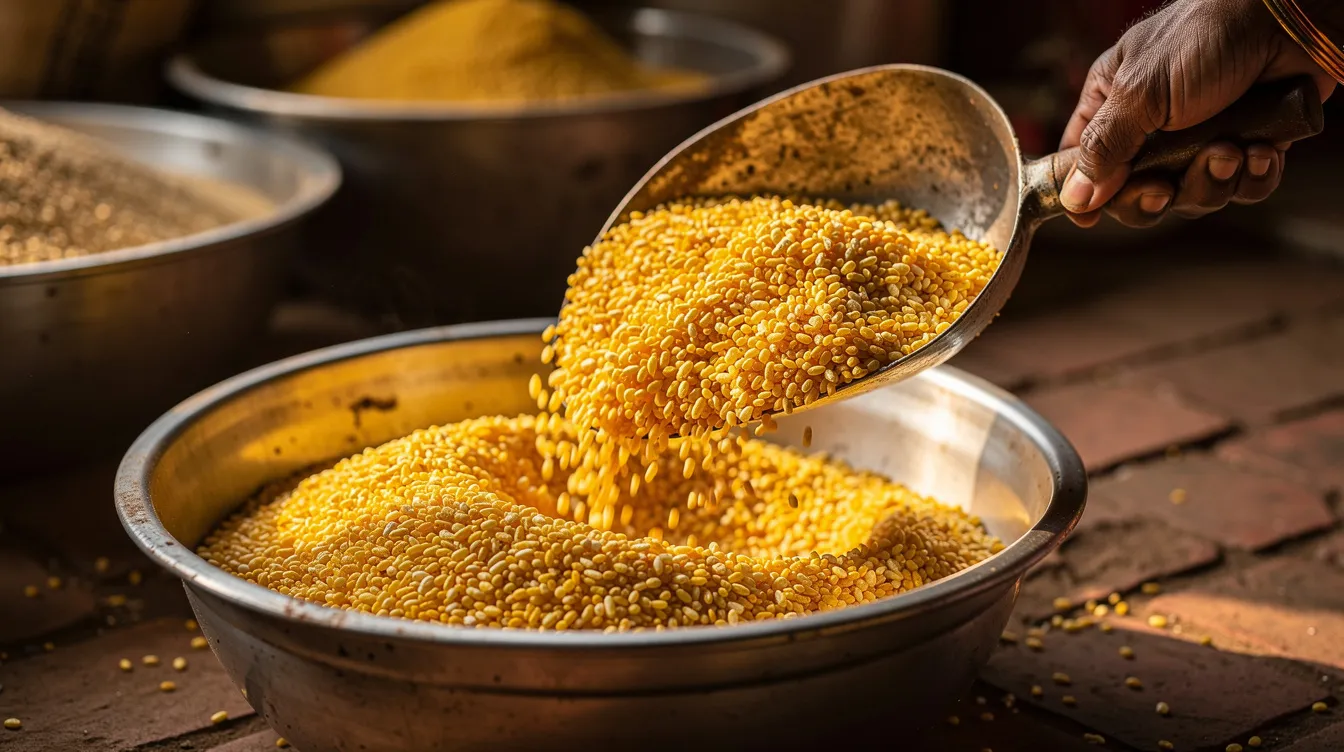
A puffed rice making business can range from a small 1–3 TPD cottage-scale operation to a medium 5–10 TPD semi-automated plant. The revenue model and sales volume build-up depend on the promoter’s market reach, product positioning and distribution infrastructure. Puffed rice is a popular low-cost breakfast cereal and a widely consumed healthy snack food. It is also used in various street foods like Bhel Puri – a savoury snack originating from Western India often served with tangy tamarind sauce – and in numerous other snack foods served across the Asia Pacific region.
Major revenue streams include sale of loose puffed rice to wholesalers, bulk institutional packs (15–25 kg), consumer packs (100g–1kg), regional branded murmura, private-label manufacturing, custom mixes for bhel and snack manufacturers, and value-added products like flavoured puffed rice or ready to eat mixtures. A puffed rice manufacturing business model can include bulk commodity supply, B2B branded retail, and value-added product lines.
Realisation per kg differs significantly: wholesale loose murmura typically trades around ₹45/kg, while branded retail packs can command ₹80–₹100+ per kg. Consumer preferences increasingly shift towards packaged, branded products over bulk unbranded items, which increases margins. Health trends favouring low-calorie and digestible snacks boost puffed rice demand – puffed rice has fewer calories than regular rice, is linked to weight loss benefits, and may help lower total cholesterol levels, making it a nutritious food and a popular street food across India.
Puffed rice manufacturing offers scalability from local production to mass-packaged brands. Geographic and channel mix – local mandi sales, regional distributors, modern retail, online platforms – changes trade margin, volume stability and credit period, directly influencing puffed rice business profitability. Promoters should align product mix and market channels with a well-planned puffed rice and murmura revenue model and market strategy.
Key Components of Puffed Rice Manufacturing Cost
While assessing puffed rice manufacturing cost and profit, the financial model must clearly classify major cost heads so that contribution margin and break-even can be accurately calculated. For a bankable puffed rice plant DPR, costs are normally split into raw materials, power and fuel, labour and manpower, packaging, repairs and consumables, selling and distribution, and finance-related charges. The sub-sections below detail each component and explain why they matter for murmura manufacturing cost and profit calculation.
Raw Material Cost
Paddy is the primary input for puffed rice production, and rice grains (typically parboiled rice of specific broken percentage and moisture content) constitute the single largest variable cost – often accounting for 50% to 60% of sales in a reasonable planning model. Utilization of high-quality rice directly impacts puffing yield, affecting profitability. Current wholesale prices for parboiled rice (IR-64, 5% broken) hover around ₹28–₹35/kg depending on quality, location and moisture. The profitability of a puffed rice plant depends heavily on raw material costs and power efficiency.
Seasonal price fluctuations in rice production – post-harvest availability versus lean-season scarcity – and procurement strategy (direct from rice mill versus traders) significantly impact murmura production cost. Procurement losses through moisture loss, infestation, quality deterioration and freight are seemingly small percentages but can materially change the puffed rice manufacturing cost and profit equation over a full year. Detailed procurement planning is discussed in Raw Material Planning for Puffed Rice & Murmura Manufacturing, and a good DPR must incorporate such planning into financial projections.
Power, Fuel and Utilities
A typical puffed rice plant requires electricity for machines, blowers, compressors and lighting, plus fuel for heating rice kernels during roasting and puffing. Roasting and puffing require continuous energy from various sources like firewood, rice husk, LPG or electricity. The choice between traditional sand roasting versus modern continuous roasters influences fuel efficiency and maintenance cost. A study of 46 puffed rice units in Davanagere found that units using agro-residue fuels like rice husk kept energy cost to approximately 4% of total production cost.
A realistic estimate of electricity, fuel and manpower must align with the puffed rice plant utilities, power & manpower requirements considered in the DPR.
Labour and Manpower Cost
Typical manpower for MSME puffed rice manufacturing includes skilled machine operators, helpers, packing workers, quality-control staff, storekeeper, supervisor and administration. In the Davanagere survey, annual labour cost was approximately ₹81,000 for ~45 tonnes output, translating to roughly ₹1.80/kg. Some labour is variable (linked to shifts and production) while some is semi-fixed (supervisors, admin), and this distinction matters when separating puffed rice plant fixed cost from variable cost. Automation level and plant layout influence labour productivity – more efficient lines require fewer people per tonne, improving murmura plant profitability.
Packaging Cost
The difference between bulk supply in simple bags and retail-branded packaging in printed laminated pouches is dramatic. For loose murmura, packaging cost is minimal. For branded consumer packs, packaging material – films, pouches, labels, ink, nitrogen flushing and secondary packaging – becomes a major portion of variable cost. Investing in quality moisture-barrier packaging preserves the product’s shelf life. Moisture-proof packaging extends shelf life significantly, and moisture level control is critical for maintaining the quality of puffed rice products. Inaccurate packaging cost assumptions can seriously misstate puffed rice plant profit margin in the project financial analysis.
Repairs, Maintenance and Consumables
Regular machine maintenance, spares, lubricants, bearings, belts, sieves and small tools should be provided for as a recurring expense. While these costs appear small compared with raw materials, poor maintenance can reduce yield, increase fuel consumption and cause unplanned downtime, directly affecting capacity utilisation and murmura plant ROI. A common illustrative thumb rule is 2–3% of machinery cost per year as maintenance provision – but actual figures depend on machinery type, usage and maintenance discipline.
Selling and Distribution Expenses
Distributor and retailer margins typical in FMCG and the snacks industry must be built into the selling price, not treated as an afterthought. Transport costs, sales commissions, promotional schemes and local advertisements form part of selling overheads. Transportation costs can significantly affect the profitability of puffed rice due to its high volume-to-weight ratio – high-quality puffed rice can expand up to 8 to 10 times the volume of raw grain, meaning freight costs to distant markets can erode profits meaningfully. A low-margin wholesale model may have lower marketing spends but higher price pressure, while a branded model may deliver better puffed rice plant ROI if managed well.
Interest, Depreciation and Financial Charges
A sound evaluation of puffed rice manufacturing profitability in India must be done at two levels: operating profit (EBITDA) and profit after finance cost and depreciation. Term-loan interest, working-capital interest, bank charges and the non-cash cost of depreciation on machinery and building all reduce reported profit. Puffed rice plant financial projections must show not just nominal profit but also how much cash is available each year to service EMIs and working-capital limits.
Fixed Cost vs Variable Cost in Puffed Rice Manufacturing
Understanding the split between fixed and variable costs is essential for any puffed rice processing business. Fixed or semi-fixed costs include salaries of key staff, factory rent, insurance, administrative overheads, security, depreciation and certain maintenance expenses. Variable costs include rice/paddy, sand and salt (if used), packaging material, fuel, electricity linked to production, direct labour, freight outward and sales commission.
Contribution margin – defined as Sales minus Variable Cost – is central to puffed rice break-even analysis. For example, if raw material price rises by ₹3/kg, the contribution per kg drops by exactly ₹3, pushing the break-even point higher. This sensitivity is why promoters must not evaluate profitability only on the basis of gross margin.
Contribution Margin in Puffed Rice & Murmura Manufacturing
Contribution = Sales – Variable Cost. Contribution per kg = Selling price per kg – Variable cost per kg. This is different from profit because contribution must first cover puffed rice plant fixed cost (salaries, rent, depreciation). Only after covering fixed cost does the balance become operating profit.
Consider an illustrative example: selling price ₹60/kg, variable cost ₹45/kg, contribution ₹15/kg. At this contribution, every additional kg sold beyond break-even adds ₹15 directly to operating profit. This is precisely why promoters should not under-price puffed rice just to win orders – reducing contribution so that even high volumes cannot cover fixed costs defeats the purpose.
All figures above are illustrative only – actual numbers vary across plants, locations and business models.
Puffed Rice Plant Break-Even Point Calculation
Break-even point is the production and sales volume at which total contribution equals total fixed cost – zero profit, zero loss.
Core formulas:
- Break-Even Quantity (kg) = Fixed Cost ÷ Contribution per kg
- Break-Even Sales (₹) = Fixed Cost ÷ P/V Ratio
- P/V Ratio = (Contribution ÷ Sales) × 100
Illustrative Example (assumptions only – not industry benchmarks):
| Parameter | Value |
|---|---|
| Selling price per kg | ₹60 |
| Variable cost per kg | ₹45 |
| Contribution per kg | ₹15 |
| Annual fixed cost | ₹24,00,000 |
| Break-even quantity | 1,60,000 kg/year |
| Break-even sales | ₹96,00,000/year |
| P/V Ratio | 25% |
This means the plant must produce and sell approximately 1,60,000 kg per year (about 533 kg per day over 300 working days) before it begins generating operating profit. The break-even period for puffed rice plants is usually between 12 to 18 months, depending on how quickly market volumes ramp up.
Break-Even Capacity Utilisation
To make the break-even quantity actionable, convert it into capacity utilisation percentage:
Break-Even Capacity Utilisation (%) = Break-Even Production ÷ Installed Annual Capacity × 100
Continuing the example: if installed capacity is 6,00,000 kg/year (2 TPD over 300 days), break-even utilisation = 1,60,000 ÷ 6,00,000 = approximately 27%. A lower break-even capacity – say 30–40% instead of 70–80% – is generally safer, providing a larger margin of safety against demand fluctuations or raw material price increases.
Margin of Safety
Margin of Safety = Actual or Projected Sales – Break-Even Sales. If projected sales are 3,00,000 kg versus BEP of 1,60,000 kg, the margin of safety is 1,40,000 kg or roughly 47% of projected sales. A bank or investor will always look at margin of safety together with puffed rice plant profitability – a thin margin of safety signals vulnerability to adverse cost or market movements.
Capacity Utilisation and Its Impact on Profitability
In my experience while evaluating manufacturing projects, puffed rice and murmura plants often underperform in the first year not because machinery is faulty, but because market development and raw material planning take time, leading to lower capacity utilisation.
Fixed costs remain broadly constant, so as production climbs, fixed cost per kg drops and puffed rice plant profit margin improves significantly. Consider this illustrative comparison:
| Capacity Utilisation | Production (kg/year) | Revenue (₹) | Variable Cost (₹) | Contribution (₹) | Fixed Cost (₹) | Operating Profit (₹) |
|---|---|---|---|---|---|---|
| 40% | 2,40,000 | 1,44,00,000 | 1,08,00,000 | 36,00,000 | 24,00,000 | 12,00,000 |
| 60% | 3,60,000 | 2,16,00,000 | 1,62,00,000 | 54,00,000 | 24,00,000 | 30,00,000 |
| 80% | 4,80,000 | 2,88,00,000 | 2,16,00,000 | 72,00,000 | 24,00,000 | 48,00,000 |
Illustrative only – actual figures depend on project specifics.
Capacity planning should be aligned with realistic market potential and raw material availability, as explained in Puffed Rice Plant Capacity Planning & Production Capacity.
Machinery Investment and Its Effect on Profitability
The choice of technology – manual sand roasting versus semi-automatic versus continuous roasters, integrated cleaning and grading lines, automatic packing machines – directly impacts capital investment and operating efficiency in puffed rice making. Under-investing in very small or inefficient machines may save initial cost but leads to higher fuel consumption, low yield, inconsistent product quality and higher labour requirement, reducing murmura business profitability.
Conversely, over-investing in large sophisticated machinery without matching market size pushes up fixed cost and break-even capacity beyond realistic sales volumes. For bankable puffed rice plant project reports, machinery selection must synchronise with planned capacity, utilities and market strategy. Typical investment levels are discussed in Puffed Rice & Murmura Plant Machinery Cost.
Manufacturing Process Efficiency and Recovery
The actual manufacturing process – soaking, drying, roasting/puffing, separation, grading and packing – determines yield, product quality and fuel consumption. Puffed rice is made by heating rice in sand-filled ovens, though modern puffing methods include sand-roasting and hot air popping. Key process parameters like rice moisture, roasting temperature and residence time affect recovery percentage and wastage. Studies in Eastern Vidarbha show that from 100 kg paddy, puffed rice yield is typically 60–62 kg.
Even a 2–3% improvement in recovery can significantly enhance contribution margin and murmura plant ROI over a year. Efficient manufacturing also allows for cost recovery through by-products like husks. A step-wise overview is available in Puffed Rice Manufacturing Process & Process Flow Chart, which should be read together with financial projections while preparing a DPR.
Impact of Plant Layout and Infrastructure on Cost
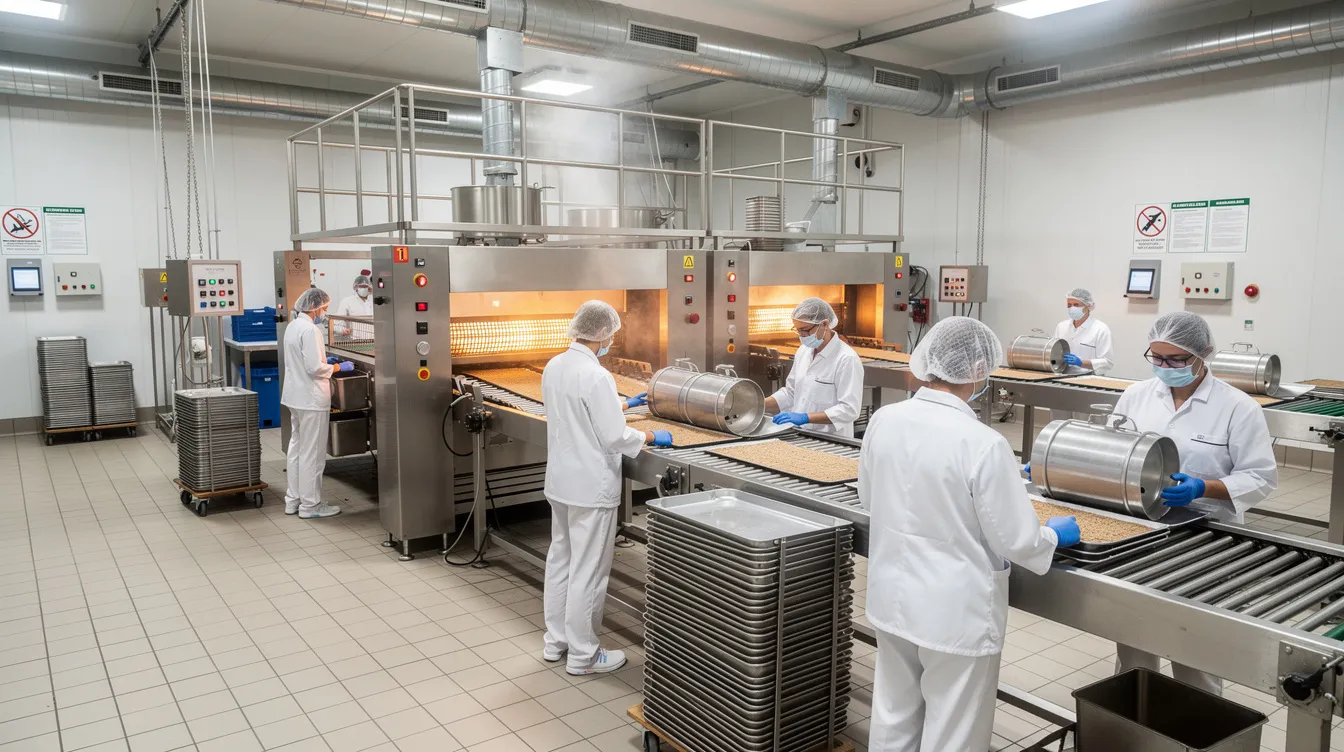
A well-planned plant layout reduces internal material movement, manual handling, waiting time and contamination risk, improving labour productivity and lowering overhead cost per kg. Poor layout may require extra helpers only to move material, cause longer transfer times resulting in moisture loss and higher breakage, or create bottlenecks at packing. These aspects are analysed in Puffed Rice Plant Land, Building & Plant Layout Requirements, which should complement cost calculations in the rice mill project report.
Project Cost and Means of Finance
Puffed rice plant profitability cannot be evaluated in isolation from total project cost and means of finance. Key components include land and site development, factory building, plant and machinery, utilities and electricals, furniture, pre-operative expenses, contingency and working capital margin. For a medium plant capacity of 1,200 MT/annum, sample project reports indicate project cost around ₹28 lakhs for plant, machinery and building.
Typical MSME-style financing uses a mix of term loan and promoter equity, sometimes with subsidies under schemes like PMFME. The PMFME scheme by the Indian government provides financial support for micro food-processing enterprises. Debt-equity ratio directly affects interest burden, DSCR and murmura plant ROI. A structured overview of typical investment components is provided in Puffed Rice & Murmura Plant Project Cost & Means of Finance.
Illustrative Puffed Rice Profitability Statement
The following simplified illustration shows how puffed rice manufacturing cost and profit build up for one financial year. All figures are illustrative only – actual figures will vary by capacity, location, raw material price, machinery, labour rate and market conditions.
| Line Item | Amount (₹ Lakhs) |
|---|---|
| Production Volume | 3,60,000 kg |
| Average Selling Price | ₹60/kg |
| Total Revenue | 216.00 |
| Raw Material Cost | 108.00 |
| Packaging Cost | 14.40 |
| Power and Fuel | 10.80 |
| Direct Labour | 7.20 |
| Repairs & Maintenance | 3.60 |
| Freight & Selling Expenses | 10.80 |
| Administrative Overheads | 7.20 |
| EBITDA | 54.00 |
| Depreciation | 6.00 |
| Interest | 4.80 |
| Profit Before Tax | 43.20 |
This sample suggests an EBITDA margin of 25% and PBT margin of 20% – broadly consistent with observed ranges in the food processing industry for puffed rice, though actual results depend entirely on project-specific conditions.
What Is a Good Profit Margin in a Murmura Plant?
There is no single universal percentage for murmura manufacturing business profit margin. Gross profit margins for puffed rice production typically range between 30% to 45%, while typical net profit margins range from 20% to 30%, depending on scale and product mix.
Margins differ between bulk commodity supply to mandis, private-label manufacturing, own branded retail packs, institutional supply, and value-added flavoured or spiced snack foods. A slightly lower margin model with faster stock rotation and lower credit risk can yield better puffed rice plant ROI than a high-margin but low-volume model. Puffed wheat and flaked rice products follow similar margin dynamics in the puffed food market.
Factors That Can Improve Puffed Rice Plant Profitability
- Structured raw material procurement: seasonal buying of brown rice or parboiled paddy, long-term relationships with millers, direct procurement to cut intermediary cost
- Process improvements to increase puffing recovery and reduce breakage; better control over lighter and crispness characteristics of the finished product
- Energy-efficient equipment and use of agro-residue fuels to lower fuel cost
- Better plant scheduling and preventive maintenance to minimise downtime
- Optimising packaging formats for target segments – equal sized servings in retail packs command better per-kg realisations
- Refining product mix towards value-added products (flavoured murmura, cereals food mixes, puffed baked potato snacks) without losing volume
- Tighter working-capital management: reducing inventory days and receivable days
- Gradual brand-building in local markets to reduce dependence on commodity pricing
Major Risks That Can Reduce Profitability
A realistic DPR for any food production business must identify key risks:
- Sudden increase in paddy/rice prices with inability to pass cost to buyers
- Under-utilisation of plant capacity due to slow market development
- Prolonged working-capital cycle from credit sales and delayed collections
- Higher-than-planned fuel or electricity cost
- Quality issues from poor moisture control leading to product rejection
- Packaging material price inflation
- Regulatory and food-safety compliance costs (FSSAI licensing, labelling standards)
- Over-investment in fixed assets leading to high interest and depreciation burden
- Competition from established murmura manufacturing plant operators in the same geography
Promoters should build contingency buffers and run downside scenarios to see how risks impact DSCR and puffed rice plant profitability.
Sensitivity Analysis for Puffed Rice Manufacturing
Sensitivity analysis tests how changes in key assumptions affect project profitability. A good puffed rice plant DPR should include scenarios such as:
| Scenario | Impact on Annual Profit |
|---|---|
| Raw material cost +5% | Profit drops by ~₹5.4 lakhs |
| Raw material cost +10% | Profit drops by ~₹10.8 lakhs |
| Selling price -5% | Profit drops by ~₹10.8 lakhs |
| Capacity utilisation 50% instead of 60% | Profit drops by ~₹15 lakhs |
| Combined: rice +5% and selling price -5% | Profit drops by ~₹16.2 lakhs |
Based on illustrative figures from the profitability statement above – not forecasts.
These scenario tests provide a more realistic picture than a single base-case projection and are essential for murmura project feasibility assessment.
Profitability vs Cash Flow
Accounting profit and cash generation are different. A murmura plant may show net profit on paper but face liquidity pressure if large funds are blocked in inventory or receivables, or if loan instalments are heavy in early years. From a project finance perspective, lenders focus on cash accrual and DSCR, not only net profit. Puffed rice plant financial projections must include cash-flow statements. Promoters should review projected monthly cash flows during initial years to ensure adequate working-capital funding.
Profitability and Bank Loan Assessment
Banks evaluate a puffed rice or murmura plant proposal on overall project cost, promoter contribution, collateral, profitability, break-even point, DSCR and industry risk. Inflated or unrealistic projections reduce credibility – lenders appreciate conservative but defensible assumptions. For bankable DPR preparation, a practising Chartered Accountant should align the puffed rice plant project report or murmura plant project report with bank formats, including CMA data and annexures. A lender generally evaluates repayment capacity together with profitability and cash generation.
Is Puffed Rice Manufacturing Business Profitable in India?
Puffed rice manufacturing can be profitable in India where the promoter has reliable raw material sourcing, appropriate capacity planning, efficient machinery and clear market linkage. The puffed rice market is supported by India’s massive rice production base, growing consumer demand for nutritious street food and healthy snack food options, and the expanding food processing industry. Puffed rice is considered a popular street food and breakfast cereal across all consumer segments.
Critical success factors include consistent quality and yield, control over puffed rice cost of production, realistic pricing, disciplined working-capital management and prudent debt levels. In my experience while assessing the financial viability of puffed rice projects, units with well-planned procurement, reasonable leverage and stable market channels show better and more stable murmura plant profitability. The beverage industry projects and agro based profitable projects in the food manufacturing industry follow similar viability principles.
Promoters should treat any indicative figures as starting reference only and must get project-specific projections prepared before final investment.
Importance of a Detailed DPR Before Investment
A project-specific detailed project report is essential before investing in machinery or committing to bank loans for any food processing business or manufacturing processing business. A professional puffed rice plant DPR or murmura plant DPR should cover installed capacity, production build-up, raw material requirement and recovery, product mix, selling price assumptions, operating cost estimates, working-capital assessment, project cost, means of finance, profitability, break-even, DSCR, ROI, IRR, payback and sensitivity analysis.
As CA Manish Gugliya, I assist entrepreneurs with preparation of puffed rice and murmura plant project reports, CMA data, financial projections, feasibility studies and bank finance proposals. If the detailed numbers do not support acceptable puffed rice plant profitability and murmura plant ROI even under conservative assumptions, it may be better to modify the project or reconsider capacity rather than proceed blindly. Start food processing industry ventures with data, not assumptions.

Conclusion
Puffed rice and murmura manufacturing can be a viable MSME opportunity in the processed food products segment and the growing puffed market when procurement cost, process efficiency, plant capacity, capacity utilisation, selling price, product mix, working capital and finance cost are all aligned through careful planning. The puff rice manufacturing business and rice puff making business models work best when promoters treat the venture as a serious food processing project rather than a simple rice making activity. The puffed food segmented market – spanning tags puffed rice, popped rice, flavor food products and other cereals food – continues to grow, but profitability is earned through operational discipline, not assumed.
Puffed rice break-even analysis, margin of safety evaluation and sensitivity analysis are not academic exercises but essential tools to decide plant size, machinery investment and term-loan level. Every promoter planning to start manufacturing processing business in this segment should invest time and resources in a thorough, realistic DPR and financial model before committing capital. Profitability must always be evaluated together with cash flow and risk – and various health benefits and consumer trends, while favourable, do not substitute for sound financial planning.
CA Manish Gugliya
Frequently Asked Questions (FAQ)
The following FAQ section addresses additional practical queries on puffed rice and murmura plant profitability and break-even analysis that promoters often raise.
How much initial investment is normally required for a small puffed rice plant in India?
The initial capital investment for puffed rice manufacturing varies widely with capacity, technology and infrastructure. For a very small-scale unit, investment can range from ₹5 lakh to ₹10 lakh covering basic machinery and setup. Semi-automated plants with higher capacity and proper building may require ₹20–₹30 lakhs or more. These figures are indicative – actual investment depends on location, land ownership, automation level and working-capital needs. A project-specific rice mill project report should detail the exact requirement.
How long does it usually take for a puffed rice plant to reach break-even?
The break-even period depends on capacity utilisation ramp-up, market development speed and financing structure. In most cases, the break-even period for puffed rice plants is usually between 12 to 18 months. First-year utilisation is often lower as distribution channels and customer relationships are being built. More stable profitability is typically seen from year two onwards if planning is realistic.
Can an existing rice miller improve profitability by adding a puffed rice line?
Many rice processing plant operators add puffed rice or other value-added rice products to improve overall rice manufacturing profitability. However, a separate murmura plant project report is needed to assess incremental investment, margins and break-even for the new line – shared infrastructure may reduce project cost, but the puffed rice processing business must justify itself independently.
What records should I maintain to monitor profitability once the plant starts?
Maintain monthly data on raw material price and consumption, recovery percentage, fuel and power use per kg, labour cost, packaging spend, sales volume by product and channel, contribution per kg and fixed overheads. Comparing actuals with DPR projections helps identify deviations early and take timely corrective action – this is fundamental to sustaining puffed rice plant profitability.
Is it necessary to register as an MSME to get bank finance for a puffed rice plant?
While MSME/Udyam registration is not legally mandatory, it is generally advisable. Registration can ease access to bank finance, interest subsidies and food processing projects support schemes. The PMFME scheme by the Indian government provides financial support for micro food-processing enterprises, which can materially improve project viability. Specific benefits depend on current government policies and bank guidelines at the time of application.