Key Takeaways
- This article is a CA-led hub on the puffed rice manufacturing plant project report, designed for Indian entrepreneurs seeking a bankable DPR, term loan and MSME project finance for commercial murmura production.
- A credible project report must integrate technical aspects – manufacturing process, machinery, capacity, layout, raw material, utilities – with financial projections covering project cost, means of finance, working capital, profitability, DSCR, ROI and IRR.
- Actual puffed rice plant setup cost and profitability depend on capacity, automation level, location, raw material sourcing, product mix and financing pattern; no universal figure applies.
- Each major topic has a dedicated in-depth article on Project Report Bank, and this page links to them for detailed reference.
- The perspective throughout is that of CA Manish Gugliya, FCA, DISA (ICAI), focusing on bankable, internally consistent documentation suitable for bank appraisal.
Introduction: Puffed Rice / Murmura as an Agro-Processing Opportunity
Puffed rice – known as murmura, muri or popped rice across the Indian subcontinent – is among the most widely consumed snack foods in the country. From bhel puri and chivda to packaged breakfast cereal mixes, it forms the base ingredient for dozens of popular street food items and ready-to-eat products. Puffed rice consumption also offers various health benefits, being low in fat and easily digestible, which has accelerated its presence as a popular ready-to-eat food item.
A puffed rice manufacturing plant requires a structured project report that goes well beyond machinery quotations. The project report serves as a blueprint for bank financing and operational setup – covering technical feasibility, capital investment, operating assumptions, working capital, profitability and loan repayment capacity. As a practising Chartered Accountant, my focus with every puffed rice plant DPR is to ensure the numbers connect logically: plant capacity feeds into production, which drives revenue, costs, cash flow and ultimately DSCR.
This article serves as the central hub, giving an integrated overview and directing readers to detailed supporting articles on process, machinery cost, financial projections and bank finance.
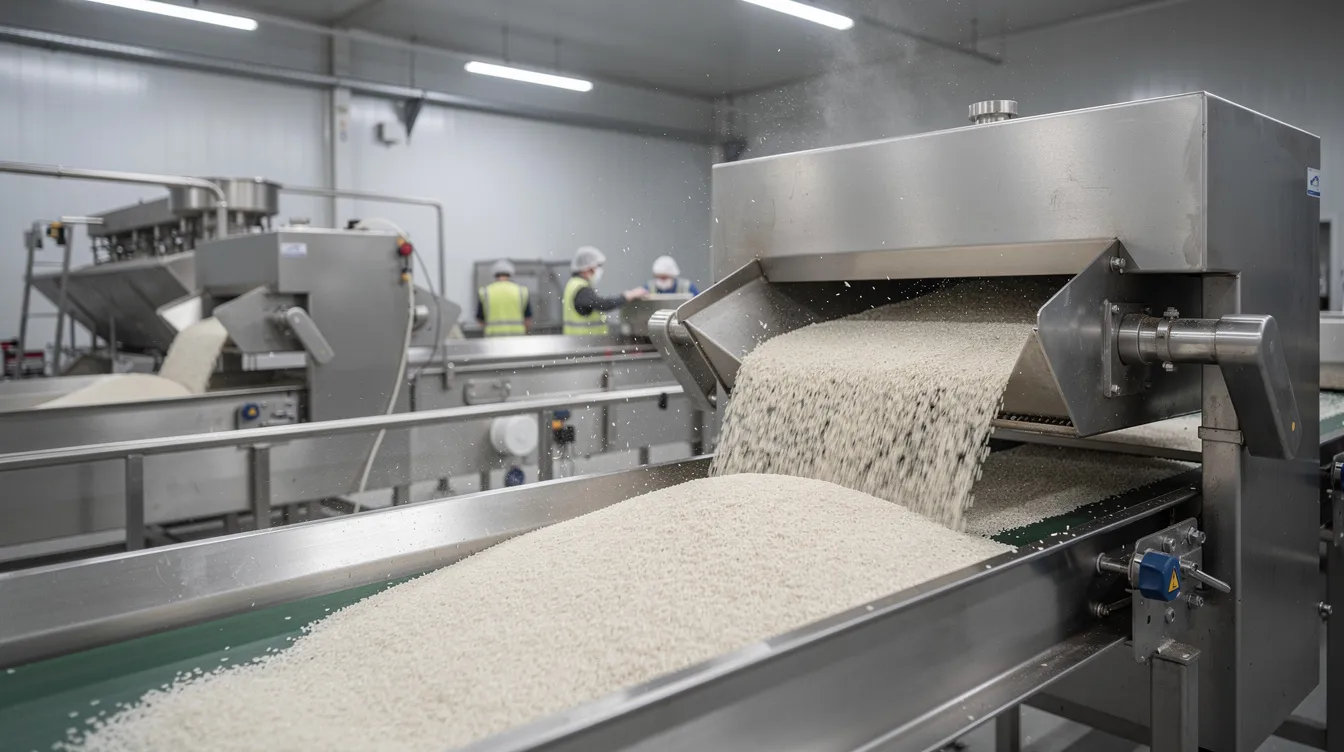
Puffed Rice (Murmura) Manufacturing Business in India
The puffed rice industry sits within the broader rice-based food processing sector in India. India produces over 100 million tonnes of rice annually, yet only about 10% is processed into value-added products – a statistic that underscores the latent opportunity for agro-processors. Determining target market demand is critical for product viability in puffed rice, and the good news is that puffed rice is in high demand in domestic markets across both urban and rural segments.
The industry spans organised and unorganised segments. Traditional manual units still dominate in several regions, but commercial puffed rice production is steadily shifting toward semi-automatic and automatic plants that deliver consistent quality, better hygiene compliance and higher throughput. B2B opportunities include supplying namkeen manufacturers, food processors and institutional buyers, while B2C possibilities include own-brand packaged murmura and flavoured snack variants.
Proximity to rice mills in states like West Bengal, Odisha, Bihar, Uttar Pradesh and Telangana provides a raw material cost advantage. Modern, industrial murmura manufacturing units that focus on packaging, quality parameters and FSSAI compliance are well-positioned to capture growing demand.
What Is Included in a Puffed Rice Manufacturing Plant Project Report?
From a lender’s perspective, a bankable project report for a puffed rice plant is a structured document that demonstrates techno-economic feasibility and financial viability. Essential components of a project report include market analysis and product descriptions, promoter background, regulatory compliance details and a clear business model.
A professional DPR typically covers:
- Product and market profile: puffed rice product specifications, target market, competition analysis and pricing assumptions. Identifying competition and performing market analysis is crucial for product positioning.
- Technical chapters: puffed rice manufacturing process description, process flow diagram, installed capacity, machinery list, utilities, quality control measures and plant layout.
- Resource planning: raw material requirement, packaging materials, manpower, power and fuel consumption estimates.
- Project cost estimation: land, building, plant and machinery, electricals, preliminary expenses, contingencies and margin for working capital. Fixed capital and working capital estimates are key for financial planning.
- Means of finance: promoter equity, term loan, working capital finance, debt–equity structure.
- Operating and financial projections: capacity utilisation assumptions, operating cost breakup, revenue projections, projected P&L, balance sheet, cash flow, DSCR, break-even, ROI, IRR, payback period and sensitivity analysis.
A well-prepared DPR also includes CMA data formats where banks demand it. For understanding how banks analyse CMA data for loan applications, a separate guide is available on Project Report Bank.
Puffed Rice Manufacturing Process
The puffed rice manufacturing process involves heating rice kernels rapidly under controlled conditions so that internal moisture converts to steam, causing each grain to expand and puff. The exact method varies – hot sand roasting, hot air puffing, gun puffing under high pressure, or steam-based extrusion – depending on technology choice and desired product quality.
Key stages include:
- Raw rice or parboiled rice selection, cleaning and grading
- Washing, soaking and conditioning (where process requires)
- Drying to target moisture content
- Roasting or puffing in specialised equipment
- Separation of sand or husk residue
- Cooling and grading
- Optional seasoning with salt or spices
- Packaging and storage
Quality control is essential to control moisture and ensure product crispness. Scientific studies show that optimised puffing at approximately 210°C can achieve expansion ratios of 340–350% and puffing efficiency near 89%. The DPR must align process assumptions – yield, wastage, fuel consumption – with financial projections.
For the detailed puffed rice manufacturing process and process flow chart, refer to our dedicated guide.
Plant Machinery & Equipment Required
Machinery selection defines the puffed rice plant capacity, automation level, product consistency and overall capital expenditure. Puffed rice machines have output capacities ranging from 200 kg/hr to 1 ton/hr, and are available in various configurations including 2hp and 3hp power specifications.
Typical equipment includes:
- Rice cleaning and grading machine
- Soaking and dewatering equipment
- Dryer or conditioning system
- Puffing or roasting unit (sand roaster, rotary roaster, hot air roaster)
- Elevators, conveyors and sieving units
- Cooling and grading equipment
- Packaging machines (manual, semi-automatic or automatic)
Muri making machines are also used for puffed rice production, particularly in eastern India. Puffed rice roasters ensure uniform roasting and corrosion resistance, and muri making machines are manufactured to comply with industry standards. Ancillary equipment includes fuel handling systems, air blowers, control panels and basic laboratory equipment for quality checks.
An automatic puffed rice plant cost is higher but reduces labour and improves scalability. For an in-depth analysis of puffed rice plant machinery and equipment cost in India, see the dedicated article.
Production Capacity & Capacity Planning
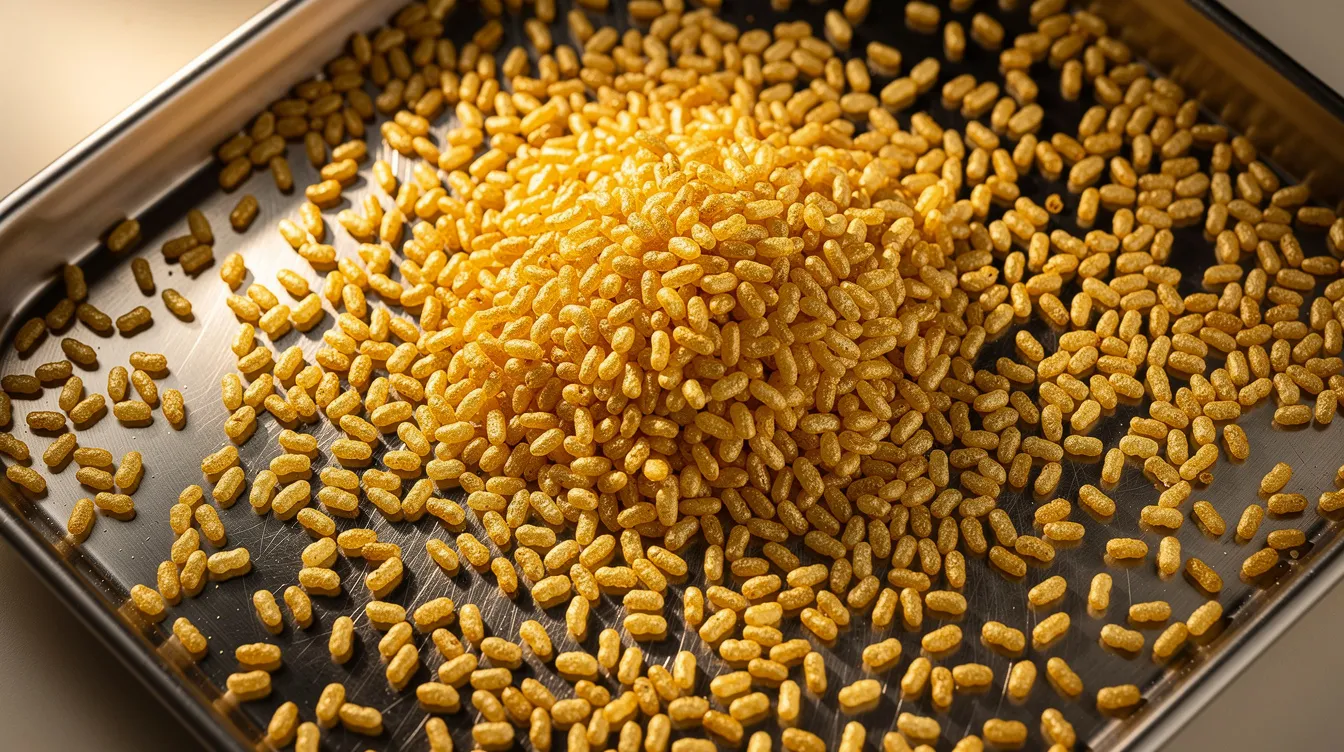
From a project finance perspective, selecting the right production capacity is among the most consequential decisions. Financial models should account for production capacity and cost per unit, and overestimating capacity utilisation is a common error in DPRs.
Key capacity planning considerations:
- Machine-rated capacity in kg/hour and planned daily operating hours
- Number of shifts and operating days per year
- Realistic utilisation ramp-up: 40–50% in year 1, 60–70% in year 2, and 70–80% thereafter
- Local market absorption, raw material availability and working capital strength
Capacity choice directly affects machinery size, building area, project cost and profitability indicators like DSCR and IRR. A detailed framework for puffed rice plant capacity planning and production capacity assessment is available separately.
Land, Building & Plant Layout
Site selection impacts plant efficiency and operational logistics. Even modest murmura manufacturing units must plan functional areas carefully: raw material storage, pre-processing, puffing or roasting section, cooling and grading, packaging, finished goods store, utility rooms, quality control lab and staff amenities.
Puffed rice plant layout should minimise material handling, avoid cross-contamination and comply with FSSAI hygiene expectations. Lenders often review civil cost estimates and layout drawings to ensure building investment is realistic for the proposed capacity. For detailed guidance on land, building and plant layout requirements for a puffed rice plant, refer to the supporting article.
Raw Material Requirement & Procurement Planning
The primary raw material for murmura manufacturing is suitable grades of rice or paddy – whether regular rice, parboiled rice or brown rice – chosen based on the puffing process adopted. Raw material sourcing strategies should focus on quality and consistency, as grain size, moisture content and broken percentage directly affect yield and product quality.
Key procurement planning points:
- Seasonal buying strategy aligned with harvest cycles
- Storage requirements to manage monsoon and lean periods
- Supplier diversification and quality testing at receipt
- Secondary inputs: sand (for traditional methods), fuel, edible oil, spices for flavoured variants
- Packaging materials must protect puffed rice from moisture to maintain quality – laminated pouches, HDPE bags and cartons
Raw material cost is the largest operating cost component. Accurate pricing assumptions and realistic wastage in the project report are critical for calculating contribution margin. A separate note on raw material planning for puffed rice and murmura manufacturing covers this in depth.
Utilities, Fuel, Power & Manpower Requirements
Utilities and manpower planning influence both operating cost and daily operational reliability. Power requirements include connected load for motors, blowers, conveyors and packaging machines. Thermal energy for the puffing process depends on fuel type – rice husk, coal, LPG, diesel or briquettes – each with different cost and availability profiles.
Manpower for a small-to-medium plant typically includes a supervisor, machine operators, helpers, packers, maintenance staff and administrative support. Multi-shift operations proportionally increase headcount and wage costs. For a structured checklist of puffed rice plant utilities, power and manpower requirements, see the detailed article.
Puffed Rice Plant Project Cost
There is no single universal puffed rice manufacturing plant cost. Investment depends on capacity, technology, land situation and working capital needs. A DPR must estimate each cost head separately:
| Cost Head | Typical Components | Key Cost Driver |
|---|---|---|
| Land & Site Development | Purchase/lease, levelling, approach roads | Location and ownership status |
| Building & Civil Works | Production hall, storage, office, amenities | Capacity, layout design, local rates |
| Plant & Machinery | Core puffing line, conveyors, packaging | Capacity, automation level |
| Electricals & Utilities | Wiring, panels, transformer, fuel system | Connected load, fuel type |
| Pre-operative Expenses | DPR preparation, interest during construction, trials | Project timeline, financing |
| Working Capital Margin | Raw material, packaging, cash expenses | Production volume, credit terms |
Lenders expect realistic cost estimates supported by genuine quotations. A dedicated analysis of puffed rice plant project cost and means of finance is available for reference.

Means of Finance for a Murmura Manufacturing Project
Typical means of finance for a manufacturing project in India include promoter equity, term loan from a bank or NBFC, and working capital limits. Banks offering food and agro processing loans typically require promoter margin of approximately 25% for machinery and 30% for land and building components.
Debt–equity structure matters for bankability. Lenders examine project cost reasonableness, DSCR, collateral and promoter track record. Eligibility for subsidies or interest subvention varies by location and prevailing guidelines – the DPR should not assume benefits without verifying current policies. For entrepreneurs exploring collateral-free MSME financing options, separate guidance is available.
Revenue Model & Product Mix
Profitability depends on a practical revenue model. Potential streams include bulk loose puffed rice sold to namkeen manufacturers and wholesalers, contract manufacturing, own-brand retail packs and value-added flavoured snack variants similar to popcorn or flaked rice mixes. Product mix and channel selection – B2B versus B2C – influence average selling price, packaging cost and working capital cycle, all of which must be reflected in DPR assumptions. Detailed guidance on puffed rice revenue model, product mix and market strategy is covered separately.
Operating Cost & Cost of Production
Operational costs must be calculated based on fixed and variable expenditures. Major variable costs include rice or paddy, fuel, electricity, packaging materials and direct labour. Fixed and semi-variable costs cover staff salaries, factory overheads, administrative expenses, insurance, interest on term loan and working capital, and depreciation.
A structured cost sheet showing per-kg production cost at different capacity utilisation levels is essential. A detailed framework on puffed rice plant operating cost and cost of production explains this further.
Profitability & Break-Even Analysis
Both entrepreneurs and bankers focus on profitability, but projections must rest on realistic assumptions. Key indicators include gross contribution per kg, operating margin, net profit after interest and tax, and cash profit.
Break-even analysis identifies the capacity utilisation or sales volume where total contribution equals fixed costs. For a plant with ₹60/kg selling price, ₹45/kg variable cost and ₹24 lakh annual fixed costs, break-even capacity utilisation can be as low as 27% – but this assumes stable pricing and efficient operations.
| Indicator | What It Measures | Why It Matters |
|---|---|---|
| Operating Margin | Profit before interest, depreciation, tax | Operational efficiency |
| Break-Even Point | Sales level covering all fixed costs | Risk in early years |
| DSCR | Cash available vs debt obligations | Loan repayment ability |
| ROI | Return relative to total investment | Overall project attractiveness |
| IRR | Discount rate making NPV zero | Comparison with alternative investments |
| Payback Period | Time to recover initial investment | Risk assessment |
For numerical illustrations, refer to puffed rice plant profitability and break-even analysis.
Financial Projections Required in a DPR
A comprehensive financial projection is crucial for securing funding. A bankable puffed rice plant DPR must present 5–7 years of integrated projections including projected P&L, balance sheet, cash flow, depreciation schedule, term loan repayment schedule, working capital assessment and ratio analysis.
From a lender’s perspective, consistency among capacity utilisation, revenue, costs and loan repayment is more important than showing extremely high profit percentages. A separate article explains the structure of financial projections for a puffed rice plant DPR.
Working Capital Requirement
Working capital for a puffed rice manufacturing business covers funds tied up in raw rice inventory, packaging stock, finished goods, trade receivables – net of supplier credit and other payables. Assumptions about credit periods, stockholding norms and production cycle length directly influence total requirement.
Insufficient working capital often causes technically sound plants to operate below capacity. The DPR should show calculation of working capital requirement in a format acceptable to lenders. For a focused discussion on working capital requirement for a puffed rice plant, see the dedicated article.
DSCR & Loan Repayment Capacity
DSCR measures whether projected cash accruals – net profit plus depreciation plus interest – adequately cover annual debt service obligations. Lenders typically expect base-case DSCR of at least 1.30–1.50, with downside scenarios not falling below 1.15.
Aggressive projections showing very high DSCR on paper but based on questionable utilisation or pricing assumptions will not survive bank scrutiny. Our detailed note on DSCR and loan repayment capacity of a puffed rice project explains the calculation methodology.
Bank Loan & Project Finance for Puffed Rice Plant
Bank finance for a puffed rice plant typically involves a term loan for fixed assets plus working capital limits for operations. Banks appraise the professionally prepared DPR, promoter KYC and financials, machinery quotations, projected statements and market data before sanctioning facilities.
Security structure usually includes primary charge over plant, machinery and current assets, with collateral security and personal guarantees as per lender norms. Food safety registrations such as FSSAI are mandatory for food manufacturing and must be in place. Statutory approvals and compliance are necessary for legal operation. For a step-by-step explanation of bank loan and project finance for a puffed rice plant, refer to the supporting guide.
Feasibility, ROI, IRR, Payback & Sensitivity Analysis
Beyond basic profitability, serious investors and bankers evaluate techno-economic feasibility and return metrics.
Project Feasibility
Feasibility covers technical (appropriate technology, utilities, layout), commercial (market demand, competition, pricing) and financial dimensions (sustainable profits, DSCR, liquidity). MoFPI guidelines score projects with IRR above 20% highest during appraisal.
Return on Investment (ROI)
ROI measures average annual profit relative to total project investment. It provides an overview of capital efficiency but should be read alongside risk indicators.
Internal Rate of Return (IRR)
IRR is the discount rate making NPV zero – useful for comparing this manufacturing project against alternative investments like corn puff production or a rice mill project.
Payback Period
The time required to recover initial investment from net cash inflows. Studies on small-scale puffed rice units in Karnataka show payback periods around 2.24 years under optimised conditions.
Sensitivity Analysis
Sensitivity testing examines the project’s resilience to lower selling price, higher rice cost, reduced capacity utilisation and increased interest or fuel costs. A DPR showing best case, base case and stress case scenarios is far more credible. Illustrative calculations for puffed rice plant feasibility, ROI, IRR, payback and sensitivity analysis are provided separately.
Indicative Project Implementation Steps
Timely, coordinated implementation reduces interest during construction and helps achieve commercial production as planned:
- Preliminary market and product study
- Capacity and technology selection
- Site identification and land acquisition or lease
- Machinery quotations and supplier finalisation
- Detailed project report and financial projection preparation
- Loan application and bank appraisal
- Statutory registrations (MSME/Udyam, FSSAI, GST, pollution consent)
- Civil construction and utility connections
- Machinery erection and installation
- Trial production, quality testing and process fine-tuning
- Ramp-up to commercial production
Key Risks in Puffed Rice Manufacturing
A well-prepared DPR should identify risks transparently:
- Supply-side: Rice and paddy price volatility, inconsistent quality from farmers affecting yield, limited supplier base
- Production: Lower-than-expected yields, equipment breakdown, higher fuel or power consumption, difficulty maintaining consistent moisture and weight standards
- Market: Aggressive competition and price undercutting in the sector, slow sales ramp-up, distribution challenges
- Financial: Inadequate working capital causing under-utilisation, excessive debt, interest rate changes, delayed receivables impacting cash flow
Proper break-even and sensitivity analysis in the project report helps promoters and lenders understand these risks before committing capital.
How to Improve the Bankability of a Puffed Rice Plant DPR
In my experience, many puffed rice manufacturing project reports are rejected not because the product is unviable, but because assumptions are inconsistent or unrealistic.
Key measures to improve bankability:
- Use realistic capacity utilisation ramps – not 90% from day one
- Base selling prices and raw material rates on actual market data, not aspirational figures
- Attach genuine machinery and civil quotations with detailed specifications
- Show adequate promoter contribution and a reasonable debt–equity ratio
- Present DSCR and break-even analysis transparently, with sensitivity checks
- Demonstrate market linkages – tie-ups with local snack food units, distributors or exporters add credibility
- Ensure the implementation schedule includes contingency for delays
A bankable DPR focuses on internal consistency – technical parameters, costs, revenues and repayment obligations must all reconcile logically.
Documents Generally Required for Project Finance
Exact requirements vary by lender, but most banks expect:
- KYC documents: Aadhaar, PAN, photographs, constitution documents
- Project documents: detailed project report, machinery quotations, civil estimates, land papers or lease agreement, layout plan
- Financial documents: ITRs, bank statements, net worth statements, existing loan details
- Licences: FSSAI registration, pollution consent, MSME/Udyam, GST
- CMA data and projected financial statements in prescribed format
Why a Professionally Prepared DPR Matters
A professionally prepared DPR connects plant capacity and process → production volumes → sales realisation → operating cost → profitability → cash flow → working capital → debt servicing. Many generic reports fail because they mix inconsistent numbers, understate working capital or show unrealistic margins.
While a DPR improves understanding and presentation, loan sanction and project success ultimately depend on the promoter’s execution, market conditions and lender appraisal.
Professional DPR & Project Finance Support by CA Manish Gugliya
CA Manish Gugliya, FCA, DISA (ICAI), is a practising Chartered Accountant associated with ProjectReportBank.com, with experience in preparing Detailed Project Reports and financial projections for manufacturing and MSME projects across India.
Professional support includes:
- Preparation of puffed rice manufacturing plant DPRs and related food processing project reports
- Project cost and means of finance structuring
- CMA data preparation and working capital assessment
- DSCR, loan repayment analysis and sensitivity modelling
No guarantees are made regarding bank loan sanction, subsidy approval or project profitability – decisions remain with lenders, authorities and actual market performance.
Conclusion
Establishing a puffed rice or murmura manufacturing plant in India is a promising agro-processing opportunity when supported by sound market understanding, appropriate capacity, reliable raw material sourcing and efficient operations. A robust puffed rice manufacturing plant project report should integrate technical design, project cost, working capital, operating cost, profitability, DSCR, ROI, IRR and sensitivity analysis into a coherent, bankable presentation.
Treat the DPR as a live planning tool rather than a formality. Entrepreneurs serious about setting up a puffed rice manufacturing plant in India should consider professional assistance from experienced Chartered Accountants and project finance advisers for DPR preparation and loan documentation.
Frequently Asked Questions
Is puffed rice manufacturing profitable in India?
Profitability depends on raw material sourcing, capacity utilisation, selling price, operating efficiency and financing cost. Many units achieve viable returns – studies from Karnataka show benefit-cost ratios of approximately 1.45 – but results are always project-specific and depend on local conditions, competition and management quality.
What is the minimum practical production capacity for a new puffed rice plant?
Most commercial entrants start with 200–300 kg/hour rated capacity, operating a single shift. This allows manageable investment while still achieving economies of scale. Capacity should match realistic market absorption and working capital strength rather than simply buying the largest available machine.
Can a new entrepreneur without prior experience get a bank loan for a puffed rice plant?
Banks do finance new entrepreneurs, particularly under MSME-friendly schemes. However, they examine equity contribution, quality of the DPR, collateral, market prospects and promoter background carefully. Associating experienced technical staff and presenting a realistic, well-documented project report significantly improves prospects.
How is working capital different from project cost?
Project cost covers one-time capital expenditure on land, building, machinery and pre-operative expenses. Working capital is the recurring fund requirement for daily operations – raw material inventory, packaging stock, receivables and day-to-day cash expenses. Both must be estimated separately in the DPR, and banks finance them through different facilities (term loan versus cash credit or overdraft).
How long does it typically take from loan sanction to commercial production?
Timeline varies by land readiness, construction complexity, machinery delivery and utility connections. A realistically planned murmura manufacturing unit may take 6–12 months from loan sanction to stable commercial operations. This duration – and the associated interest during construction – should be clearly reflected in the DPR’s implementation schedule.