
Key Takeaways
- The working capital requirement for a ghee manufacturing plant is often as large as-or larger than-the investment in machinery. Working capital accounts for 30% to 50% of the total initial project cost, especially when milk fat, butter stock and receivables are substantial.
- Funds get locked in milk, cream, white butter, ghee inventory, packaging materials, trade receivables and ongoing operating expenses. Underestimating this in a DPR or CMA Data leads to cash crunch despite paper profits.
- Working Capital = Current Assets – Current Liabilities. Banks finance only a portion of this gap through cash credit and related limits; the balance must come as promoter margin.
- The working capital requirement for a small-to-medium ghee manufacturing plant typically ranges from ₹4 lakh to ₹15 lakh, while larger industrial plants can require several crore depending on capacity, product mix and receivable cycles.
- All numerical examples in this article are purely illustrative. Promoters should get project-specific working capital projections and CMA Data prepared before approaching banks.
Introduction: Why Working Capital Is Critical in Ghee & Butter Projects
In a ghee manufacturing plant or butter manufacturing plant, working capital can be as critical as fixed assets like boilers, ghee kettles and packing lines. Many promoters invest significant effort in selecting the right equipment and finalising factory layout, but treat working capital as an afterthought-often plugging in a round number as a percentage of project cost. This is a serious mistake.
Substantial funds stay blocked in raw materials (milk, cream, white butter, milk fat), packaging materials, finished ghee and butter stock, trade receivables from distributors and institutional buyers, and ongoing expenses such as power, steam, salaries and transport. India produces over 3 million tonnes of ghee annually, and the global ghee market is projected to reach USD 97.32 billion by 2034, reflecting strong demand. Yet many otherwise profitable projects stumble because their promoters did not plan working capital realistically.
This article is written in the voice of CA Manish Gugliya, practising Chartered Accountant, who prepares project reports, DPR, CMA Data and working capital assessments for ghee, butter and other dairy processing plants at www.projectreportbank.com. The guide will help entrepreneurs estimate the working capital requirement for a ghee manufacturing plant and butter plant, understand how banks assess cash-credit limits, and incorporate realistic assumptions into their detailed project report and CMA Data.
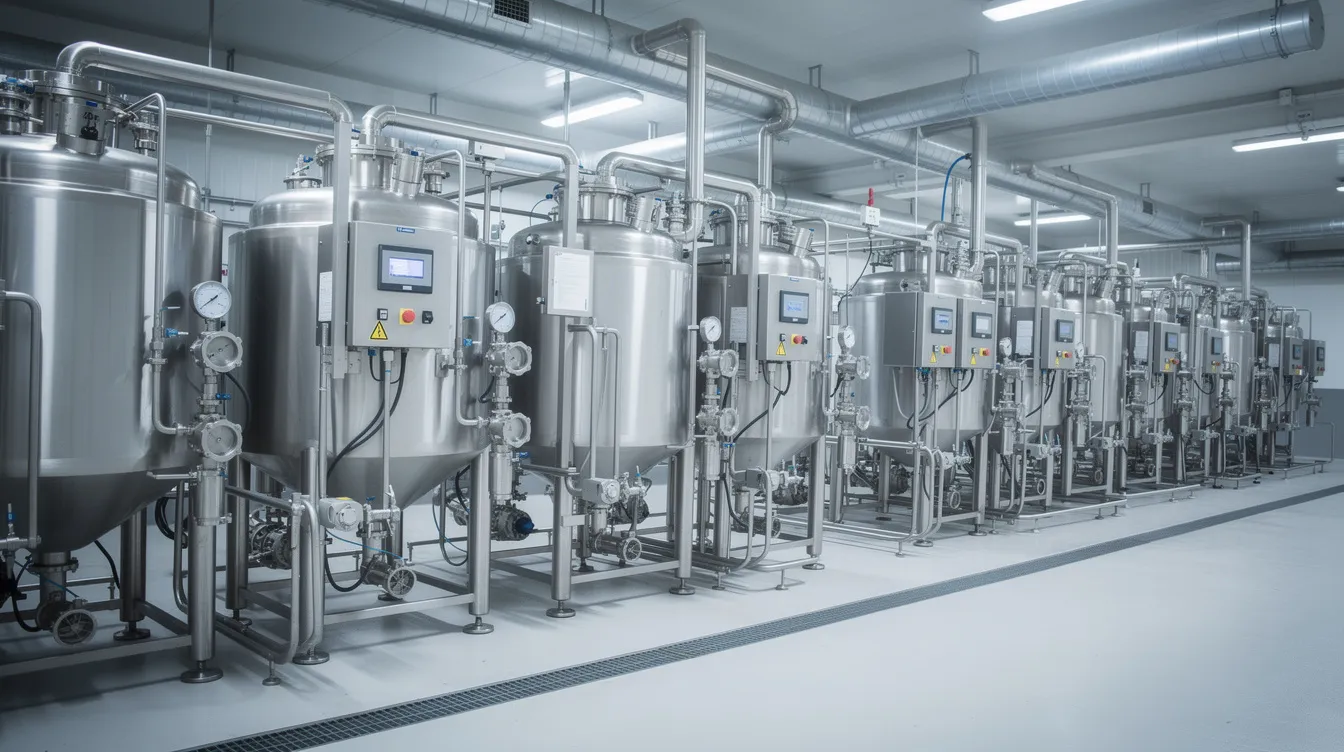
What Is Working Capital in a Ghee & Butter Manufacturing Plant?
In practical terms, working capital is the money a ghee manufacturing unit needs to fund its day-to-day operations-from buying milk and cream to collecting payment from the last distributor. The basic formula is:
Working Capital = Current Assets – Current Liabilities
For a dairy processing plant, current assets include raw milk inventory, cream, white butter, milk fat stock, packaging materials, work-in-process, finished ghee and butter, trade receivables and cash balances. Current liabilities include creditors for milk and packing suppliers, outstanding wages, utility bills and statutory dues.
A few distinctions matter when discussing working capital with banks:
- Gross working capital is the total value of current assets without netting liabilities. It tells you how much money is circulating in the business at any point.
- Net working capital is current assets minus current liabilities. A positive net working capital means the business can meet short-term obligations.
- Permanent working capital is the minimum, stable level of stocks and receivables needed even at normal activity levels. Variable working capital fluctuates with seasonality, festival demand or export orders.
- Working capital gap is the core of any ghee plant working capital calculation for bank loan: total current assets minus permissible current liabilities that the bank recognises. Working capital covers 60-75% of production costs in most dairy manufacturing businesses.
Banks finance a portion of this gap through cash credit or overdraft facilities. The rest-typically 25% of the gap-must come from the promoter as margin money. Term loans fund fixed assets (land, building, plant and machinery), while working capital facilities fund the operating cycle of the ghee manufacturing business.
Why Ghee & Butter Plants Require Significant Working Capital
Several industry-specific factors make the working capital requirement for dairy processing plants unusually high:
- Raw material procurement is continuous and cash-intensive. Milk, cream and butter must be procured daily. Raw materials account for 85-90% of total operating expenses in ghee production, and suppliers-especially farmers-expect payment within 7-10 days.
- Seasonal fluctuations in milk availability necessitate additional cash for procurement during peak seasons. Many plants build white butter stocks during the winter flush for conversion to ghee in summer, causing spikes in inventory holding.
- Operating costs in ghee manufacturing are largely driven by raw materials and utilities. Electricity for refrigeration, boiler fuel for ghee kettles, and cold-chain logistics are non-negotiable expenses.
- Different sales channels carry very different receivable profiles. Distributors may take 15-30 days credit, modern trade 30-60 days, and institutional buyers or food processors even longer.
- Packaging material with custom printing often has minimum order quantities and lead times of 5-25 days, forcing plants to hold 15-30 days of packing stock.
Two plants of similar installed capacity can have vastly different working capital needs depending on whether they procure raw milk directly or buy white butter, whether they sell through distributors or institutional channels, and how aggressively they extend credit.
Major Components of Working Capital Requirement
The following subsections break down each key component of the ghee and butter plant working capital requirement. Understanding these individually is essential before combining them into an integrated working capital calculation.
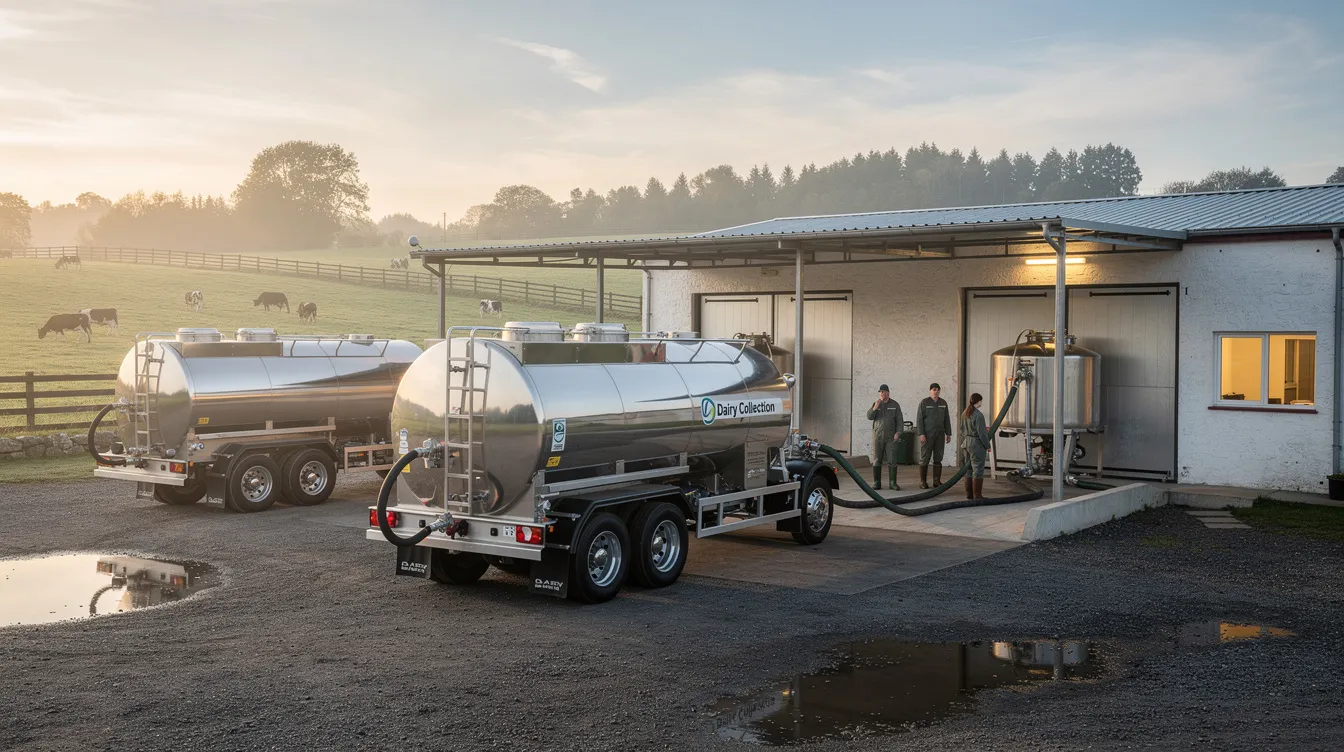
Milk and Milk-Fat Procurement
For any industrial ghee manufacturing plant, the largest element in working capital is milk, cream, white butter and milk fat. Raw material procurement represents the dominant portion of product cost, with milk and butter accounting for 85-90% of total operating expenses. Ghee production requires high-quality milk or cream as primary raw material-fresh cow or buffalo milk should have at least 3.5% fat content to be economically viable for clarified butter production.
Procurement models vary. Many private dairies like Hatsun Agro pay farmers every 10 days on fixed billing cycles. Some plants buy white butter or butter oil from cooperative unions with 7-21 days credit. Supplier credit reduces working capital requirements significantly by offsetting immediate cash needs, but negotiating longer credit on raw milk is difficult because farmers and cooperatives expect prompt payment.
Plants that build surplus milk fat inventory during the flush season to hedge against lean-period price hikes will see a sharp increase in their working capital requirement. For deeper guidance on sourcing, refer to our article on raw material and milk fat procurement for ghee and butter plants.
Raw Material Inventory
Raw material inventory in a working capital assessment includes milk, cream, white butter, butter oil and any other core inputs before conversion. Inventory carrying costs for raw materials are substantial in ghee production-raw material inventory consumes 60% to 75% of recurring production costs.
Inventory days depend on the procurement cycle. For plants with daily milk collection, 1-3 days of raw milk stock is typical. However, if the plant procures white butter from external sources or stockpiles fat for seasonal conversion, holdings of 15-30 days are common.
Effective yield of raw materials has a major effect on gross margins and working capital requirements. If fat content in procured milk drops, more litres are needed per kilogram of ghee, pushing up the rupee value of inventory. Butter must contain a minimum of 80% milk fat content for quality compliance, and any deviation affects conversion ratios and stock valuation.
Packaging Material Inventory
Typical packaging materials for ghee and butter include printed tin containers (1L, 5L, 15L), PET jars, glass jars, laminated pouches, HDPE buckets, cartons, labels, caps and corrugated boxes. Packing material cost is a distinct line item in any working capital assessment.
Customised branded packaging has high minimum order quantities and printing lead times, often compelling plants to stock 15-30 days of material. Packaging film costs around ₹150-₹250 per kilogram depending on material type and barrier properties. Automated packaging machines are necessary for ghee production at commercial scale, and their throughput determines packing material consumption rate.
Packaging suppliers may offer 15-30 days credit, but advance payments are common for first orders with new suppliers. A separate line item for packaging material working capital should be created with its own holding days and unit cost.
Work-in-Process (WIP)
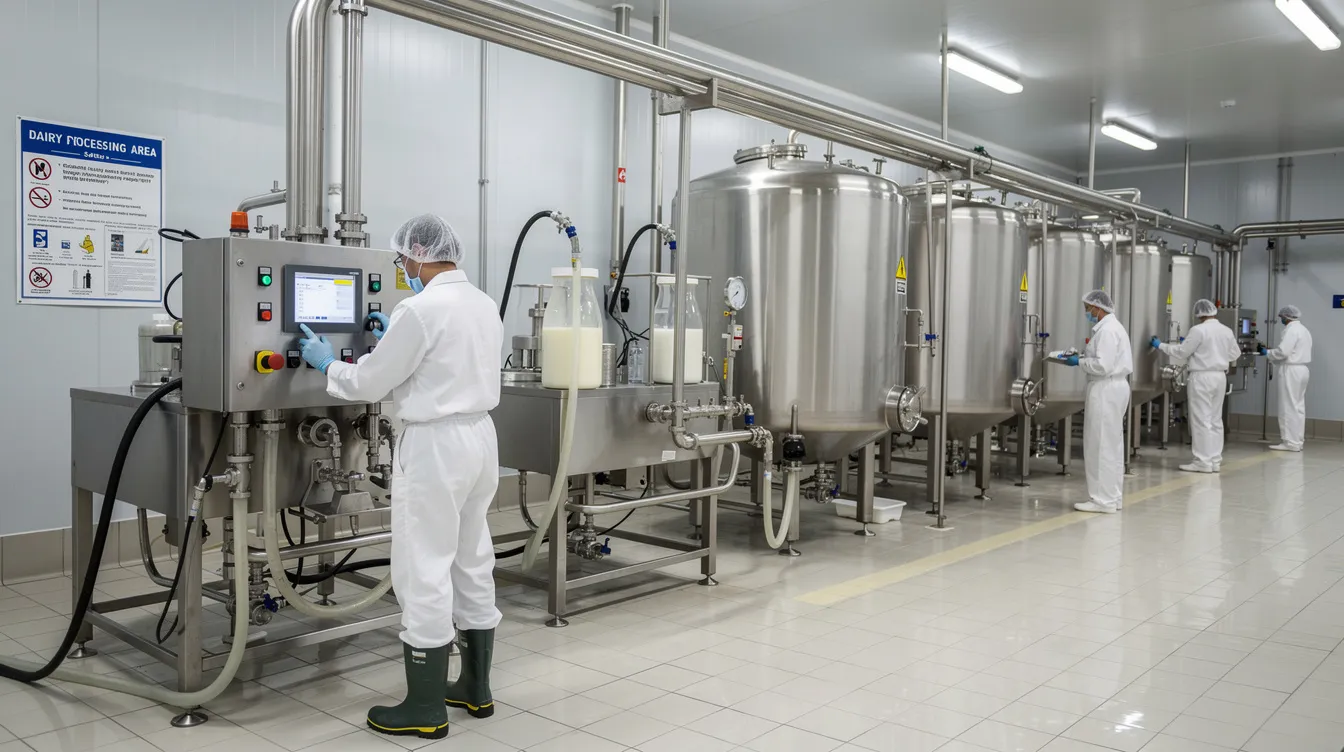
In ghee making and butter churning, work-in-process is typically confined to a few stages: cream under clarification, molten ghee awaiting filtration, and semi-processed butter awaiting packing. Ghee kettles must maintain temperatures between 105-120°C during the clarification process, and filtration units are essential for removing milk solids from ghee.
WIP days are often limited to 0.5-2 days, but the value per day can be high because it consists almost entirely of milk fat. Plants with multi-stage processing, in-line chilling and large storage tanks may have higher WIP values at any given time. This should not be ignored in working capital calculations.
Finished Goods Inventory
Finished goods requirements differ by product type:
- Retail ghee packs (200 ml to 5L) typically need 15-30 days of stock to service distributor networks and distant markets.
- Bulk ghee for sweet manufacturers or food processing units may require only 5-10 days if orders are regular.
- Table butter in consumer packs needs cold-chain storage and often carries 15-20 days of inventory.
- Industrial butter for bakeries follows a contract-based pattern with lower finished goods days.
Ghee production requires maintaining a buffer of finished stock for demand surges during festival seasons like Diwali, Navratri and wedding periods. Ghee’s longer shelf life at ambient conditions (6-12 months in proper packaging) allows slightly higher inventory days than butter, but banks will still scrutinise whether projected movement is realistic relative to turnover.
Trade Receivables / Debtors
Credit periods in the dairy distribution chain are a major driver of working capital:
| Customer Type | Typical Credit Period |
|---|---|
| Distributors / Wholesalers | 7–21 days |
| Supermarkets / Modern Trade | 30–60 days |
| Institutional Buyers / Food Processors | 30–45 days |
| Export Buyers | 60–90 days |
Accounts receivable financing often becomes a significant aspect of working capital needs for ghee production. In many dairy manufacturing businesses, receivables become the largest single component of current assets, sometimes equalling 1-2 months of sales.
When preparing working capital projections, debtor days must align with the actual sales mix. Assuming all-cash sales for a brand targeting modern trade will not survive bank scrutiny. Delayed recovery from even a few major buyers can strain cash credit utilisation and reduce available drawing power.
Cash and Operating Expenses
Key operating expenses funded through working capital include:
- Salaries and wages (labor costs include salaries for production and quality control staff)
- Power, fuel and steam (utility expenses significantly impact operational costs for ghee production)
- Refrigeration and cold-chain running costs
- Water, maintenance and laboratory testing
- Insurance, transport and distribution
- Administration expenses, marketing and regulatory compliance costs like FSSAI certification
Working capital must cover 30 to 45 days of operational expenses. Initial operational costs include labor, maintenance, and utilities. Banks generally consider 1-2 weeks of major cash expenses as part of current assets when assessing dairy plant working capital.
The DPR should clearly show the linkage between monthly operating expenses, their payment cycles and resulting current liabilities on the balance sheet.
Operating Cycle of a Ghee Manufacturing Plant
The operating cycle of a ghee manufacturing plant follows a clear path:
Cash → Milk/Cream Procurement → Conversion to Butter/Ghee → Packing & Storage → Sale → Receivables → Cash
The length of this cycle determines how long money stays locked in the business before returning as cash. The formula:
Operating Cycle = Raw Material Days + WIP Days + Finished Goods Days + Receivable Days – Creditor Days
Here is a simple illustrative example for a medium-sized ghee manufacturing unit:
| Component | Days |
|---|---|
| Raw material stock | 7 |
| Work-in-process | 2 |
| Finished goods | 15 |
| Debtors (receivables) | 30 |
| Less: Creditors (payables) | (10) |
| Net Operating Cycle | 44 days |
Each additional day in this cycle increases the working capital requirement. This is illustrative only-real-world cycles differ by plant size, procurement model, product mix and market strategy.
Working Capital Calculation for Ghee & Butter Plant
Here is a stepwise illustrative calculation for a medium-sized ghee and butter plant with annual cost of production of approximately ₹12 crore and annual sales of approximately ₹15 crore. The purpose is to demonstrate methodology, not to prescribe universal numbers.
Step 1: Compute Current Assets
| Particulars | Basis | Amount (₹ Lakh) |
|---|---|---|
| Raw material inventory | 7 days of annual consumption ₹10.20 cr | 19.56 |
| Packing material inventory | 20 days of annual consumption ₹0.96 cr | 5.26 |
| Work-in-process | 2 days at cost of production ₹12 cr | 6.58 |
| Finished goods inventory | 15 days at cost of production | 49.32 |
| Trade receivables (debtors) | 30 days of annual sales ₹15 cr (at cost) | 98.63 |
| Cash and operating expenses | 15 days of salaries, power, fuel etc. ₹0.84 cr | 3.45 |
| Total Current Assets | 182.80 |
Step 2: Compute Current Liabilities
| Particulars | Basis | Amount (₹ Lakh) |
|---|---|---|
| Creditors for raw materials | 10 days of annual purchase ₹10.20 cr | 27.95 |
| Creditors for packing materials | 15 days of annual purchase ₹0.96 cr | 3.95 |
| Outstanding wages and expenses | 10 days of salaries and overhead | 2.30 |
| Total Current Liabilities | 34.20 |
Step 3: Working Capital Gap and Finance Split
| Particulars | Amount (₹ Lakh) |
|---|---|
| Total Current Assets | 182.80 |
| Less: Total Current Liabilities | 34.20 |
| Working Capital Gap | 148.60 |
| Promoter’s Margin (25%) | 37.15 |
| Proposed Bank Finance (75%) | 111.45 |
Key formulas used:
- Value of Inventory = (Annual Cost ÷ 365) × Holding Days
- Value of Debtors = (Annual Sales at Cost ÷ 365) × Debtor Days
All figures above are illustrative only. Actual working capital requirement for ghee manufacturing plant and butter manufacturing plant will vary by capacity, product mix, procurement model and lender norms.
Working Capital Requirement Based on Plant Capacity
As installed capacity and throughput increase, working capital rises-but not always in direct proportion. A small ghee unit requires an investment of ₹2-5 lakh and may have a working capital requirement of ₹4-15 lakh, whereas a plant processing 5,000 litres of milk per day will need several crore. A small ghee unit can earn ₹50,000–₹1,00,000 per month, but its working capital cycle is fundamentally simpler than a large automated plant.
Higher processing capacity requires bulk procurement of raw material, which increases the absolute value of each inventory day. Capacity utilisation levels-say 60% in year 1 ramping to 80-90%-change both raw material consumption and receivables year by year, requiring annual revision of working capital projections.
Ghee manufacturing plant setup costs vary by capacity and technology, and capacity planning should be integrated with working capital projections. For guidance, refer to our resource on ghee, butter and milk fat plant capacity planning and product mix.
Impact of Product Mix on Working Capital
A plant focusing on retail ghee with many SKUs (200 ml, 500 ml, 1L, 5L) will hold more diverse packaging stocks and higher finished goods inventory than a plant supplying bulk ghee or traditional ghee to sweet manufacturers. Table butter in consumer packs needs cold-chain storage and higher inventory days, whereas industrial butter for bakeries follows a contract-based pattern with shorter cycles.
AMF and cream-based products targeted at domestic and international markets or premium urban segments may have longer receivable cycles but higher margins, changing both the funding profile and profitability ratios. Marketing and distribution require dedicated budgets for new entrants entering the retail ghee market.
Product mix decisions directly affect working capital. For strategic planning, see our article on ghee and butter plant revenue, product mix and market strategy.
Working Capital and Raw Material Price Volatility
Sharp increases in milk fat, cream or white butter prices can inflate the rupee value of the same number of inventory days, causing a sudden jump in ghee manufacturing business working capital. Raw material cost volatility is one of the biggest risks in dairy processing.
In flush seasons, some promoters deliberately stock more butter or milk fat to hedge against future price hikes, temporarily stretching the cash credit limit and promoter funds. Conversely, if prices drop after heavy stocking, inventory losses can erode margins.
A prudent DPR should include sensitivity checks-for example, modelling a 10-15% increase in fat prices and measuring its impact on inventory valuation and the working capital gap.
Cash Credit Limit for Ghee Manufacturing Plant
A cash credit (CC) account is a revolving working capital facility where interest is charged on actual daily utilisation within the sanctioned limit. It is the most common working capital facility for ghee and butter manufacturers in India.
Three important distinctions:
- Sanctioned limit: the maximum amount the bank approves based on projected working capital requirement.
- Drawing power (DP): calculated monthly based on eligible stock and receivable statements after applying stipulated margins. Utilisation cannot exceed DP even if the sanctioned limit is higher.
- Actual utilisation: the amount the business actually borrows at any given time-interest is charged only on this.
Security typically includes a primary charge on stock and book debts, with collateral depending on the bank’s policy. Butter manufacturing plant working capital finance may also use Working Capital Demand Loans, bill discounting or receivable financing for large institutional or export orders.
Working Capital Assessment by Banks
Banks use different methodologies depending on borrower profile and ticket size. For smaller accounts, a simplified turnover-based method may apply-the RBI’s guidelines allow working capital assessment at 25% of projected turnover for micro and small enterprises, with bank finance of at least 20% and promoter margin of 5%.
For larger dairy processing plants, banks review projected turnover, current asset levels, current liability levels, proposed margin and resultant drawing power. They scrutinise assumptions on inventory days, debtor days and creditor days. If the ghee or butter plant DPR uses unrealistic numbers, the sanction may be reduced or delayed.
MPBF (Maximum Permissible Bank Finance) style analysis may apply for larger units, where the bank determines what portion of the working capital gap it will fund after ensuring adequate promoter margin.
Working Capital Requirement in a DPR
In a detailed project report, the working capital requirement should flow logically from technical capacity, production planning, raw material consumption and sales projections-not inserted as an arbitrary percentage of project costs.
Key DPR components that must be consistent with working capital:
- Capacity utilisation assumptions
- Monthly production and raw material procurement terms
- Inventory policy (days for raw materials, packing, FG)
- Customer credit period by channel
- Supplier credit period
A sound DPR shows year-wise working capital projections for at least 5-7 years, reconciling with projected balance sheets and cash-flow statements. For guidance on building such projections, see financial projections for a ghee, butter and milk fat plant DPR.
Working Capital and Project Cost
Fixed capital-land, building, dairy processing plant and machinery, utilities and pre-operative expenses-is funded primarily through term loans and promoter equity. Working capital is funded via cash credit limits and margin money from the promoter.
In many bankable DPRs, margin for working capital is shown as part of the total capital investment. Equipment costs represent a significant portion of capital expenditure, but the margin money for working capital is equally important in the means of finance statement.
For a comprehensive view of project costing, refer to ghee, butter and milk fat processing plant project cost and means of finance.
Machinery Capacity and Its Impact on Working Capital
Higher-capacity cream separators, butter churns, ghee kettles and packing lines increase daily throughput, which raises daily milk and fat requirements and the rupee value of each inventory day. While larger plants may negotiate better purchase prices, they still need more absolute working capital.
When evaluating machinery-using references like ghee manufacturing plant machinery and equipment cost-the promoter should simultaneously verify whether proposed working capital limits can support the planned throughput. Under-sized working capital limits relative to installed machinery lead to capacity underutilisation and lower-than-projected net profit.
Manufacturing Process and Working Capital Cycle
The specific ghee manufacturing process configuration-continuous vs batch, direct ghee from cream vs from white butter, in-line cooling vs storage-directly affects WIP days and finished goods formation. Ghee production requires cream separators and butter churners as core equipment, and process choices determine how many intermediate inventory layers exist at any time.
For technical process details, refer to industrial ghee manufacturing process and production line and industrial butter manufacturing process and production line. Lactic acid bacterial cultures are used for flavor development in cultured butter, adding another input to the manufacturing process and inventory.
Higher process efficiency and tighter production scheduling reduce WIP and finished goods build-up, lowering working capital blockage. Quality rejections and re-processing can unexpectedly increase stock values, so contingency provision in working capital planning is prudent.
Working Capital for AMF and Milk Fat Processing
Anhydrous Milk Fat (AMF) plants have a different inventory profile compared to conventional ghee plants-higher-value fat inventory but fewer retail packaging SKUs. AMF production meant for exports or B2B clients may have extended receivable cycles and larger batch sizes.
Export-oriented ghee and AMF facilities need HACCP and ISO 22000 certifications, adding to regulatory compliance costs. Export demand for AMF can be significant, but the working capital cycle is longer due to shipment and documentation timelines.
Promoters planning AMF lines should refer to the Anhydrous Milk Fat (AMF) manufacturing plant project report and AMF manufacturing process, machinery and production technology for technical alignment with working capital needs.
Working Capital and Profitability
Ghee manufacturing typically yields gross profit margins of 20-30%, making it a potentially profitable business. Break-even for ghee manufacturing typically ranges from 2 to 4 years. However, high profitability does not automatically ensure adequate liquidity.
As sales increase, more money gets locked in raw materials, WIP, finished goods and debtors. If inventory and receivables grow faster than available funding, the unit faces cash stress despite healthy gross profit and profitability ratios on paper.
Working capital cost (interest) must be built into profitability analysis. For detailed guidance, see ghee and butter manufacturing plant profitability and break-even analysis.
Working Capital Interest and Its Effect on Profitability
Interest on cash credit and other working capital facilities is a direct cost that reduces net profit. Under the NDDB working capital scheme, dairy cooperatives can access finance at approximately 7.70% p.a. for conserved commodities including ghee, covering up to 80% of peak working capital requirement. Private companies may pay higher rates depending on their credit profile.
Inventory carrying cost includes not just interest but also storage, insurance, handling and the risk of quality loss in dairy products-particularly for traditional dairy products like butter that require cold chain. DPR and CMA Data should include realistic interest assumptions on working capital borrowing, calculated on average utilisation rather than the full sanctioned limit.
Working Capital and Factory Infrastructure
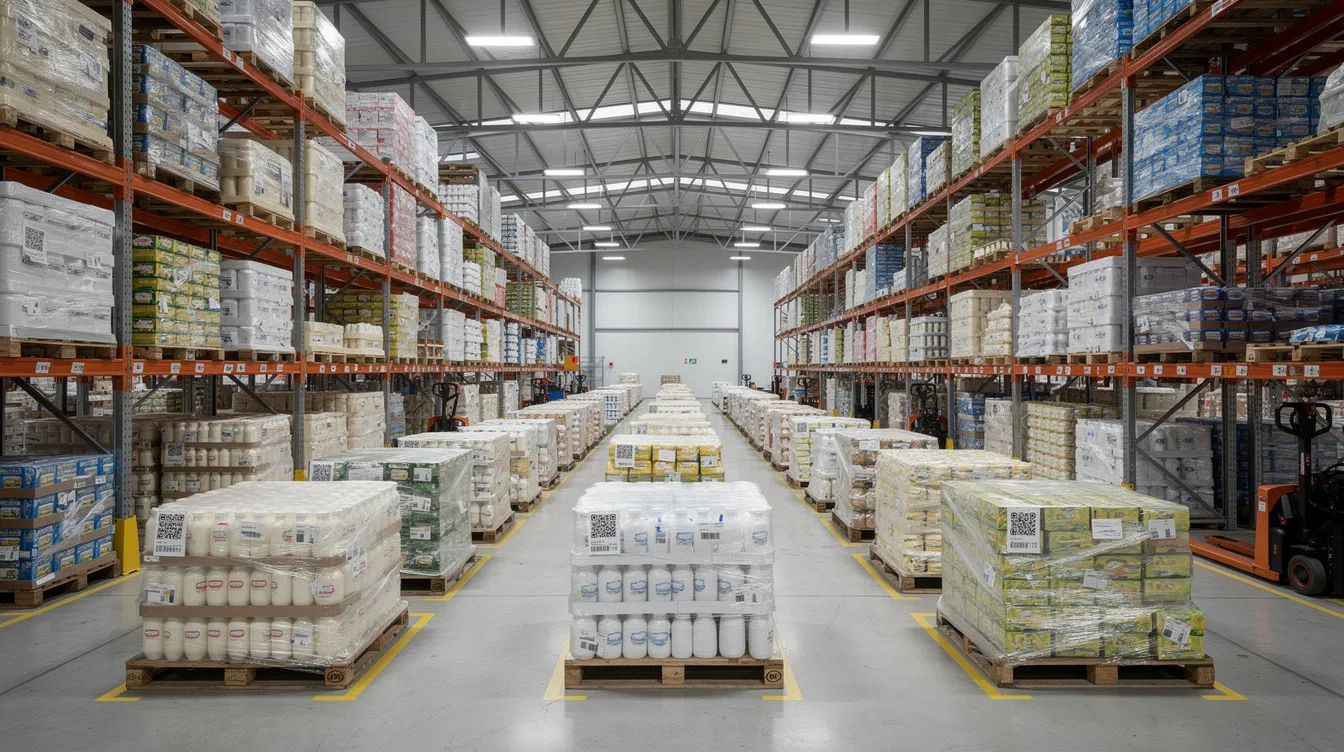
Cold storage capacity for butter, ghee storage tanks (which should be insulated stainless steel), ambient warehouses for finished goods, and adequate milk reception facilities influence feasible stock levels. If cold storage is limited, the plant may be forced into more frequent dispatches with lower finished goods days but higher logistics costs.
Factory layout, utilities (boilers, refrigeration plant, compressors) and internal material flow determine practical capacity to hold and rotate stock. These are discussed in detail in ghee and butter plant land, building, utilities and factory layout. Working capital projections must be realistic about physical space-projecting 45 days of finished goods without warehouse capacity is a mismatch that banks will question.
Working Capital Requirement Under Different Sales Models
Distributor-Based Retail Sales
Retail distribution through distributors and wholesalers requires higher finished goods inventory, credit periods of 15-30 days (sometimes extending to 45-60 days in weaker networks), promotional schemes and product returns management. This is the most working-capital-intensive sales model for most ghee manufacturers.
Institutional / B2B Sales
Bulk packaging for bakeries, sweet shops, hotels and food processors simplifies the supply chain but often involves longer receivable cycles of 30-60 days. Concentration of debtor risk in a few large buyers is an additional concern for the target customer group.
Direct Sales
Own outlets, online D2C or direct retail potentially reduce receivable days but increase marketing, warehousing and last-mile logistics expenses funded through working capital.
Export Sales
Export sales require export-grade packing, compliance with local food safety regulations of the destination country, logistics time, documentation cycles and sometimes pre-shipment or post-shipment credit. Ghee production must adhere to FSSAI and FDA guidelines for export markets. These factors extend the operating cycle of the butter manufacturing plant or ghee plant considerably.
How to Reduce Working Capital Requirement
Practical strategies include:
- Improve procurement planning with staggered deliveries of packaging and raw materials aligned with production schedules.
- Negotiate realistic supplier credit terms-even 5 additional days on packing material reduces the cash credit burden.
- Optimise inventory through demand forecasting tied to seasonality, festival cycles and confirmed orders.
- Avoid overproduction of slow-moving SKUs; align production batches with actual market demand.
- Define and enforce credit policy per customer segment with clear credit limits and timely collection follow-up.
- Use bill discounting or receivable financing judiciously where economically viable.
- Monitor SKU-level finished goods and raw material stock weekly, not just monthly.
Any reduction in inventory or receivables must not compromise food safety, product quality, quality control standards or supply reliability. The goal is optimisation, not aggressive cost-cutting at the expense of regulatory compliance.
Common Working Capital Mistakes in Ghee & Butter Project Reports
Frequent errors observed in DPRs include:
- Copying working capital numbers from unrelated industries or assuming a fixed 20-25% of project cost without detailed calculation.
- Ignoring seasonal build-up of butter or white butter stock during the flush season.
- Showing zero or negligible debtor days despite planned distributor and modern trade sales.
- Ignoring packaging material inventory entirely, treating it as negligible.
- Assuming 60-90 days credit from milk suppliers when the industry norm is 7-10 days.
- Valuing debtors at selling price instead of cost of sales.
- Omitting finance cost on working capital in profitability projections.
- Not providing for GST timing, outstanding wages and power bills on the liabilities side.
Ghee manufacturing requires an FSSAI manufacturing license, and pollution control clearances are mandatory for ghee production. Compliance with local food safety regulations is essential. Regulatory compliance costs contribute to ongoing operational expenses that must be factored into working capital-omitting these weakens the DPR.
These inconsistencies cause the working capital numbers to not reconcile with the projected balance sheet, cash flow and profit & loss, undermining the entire bank appraisal process.
CMA Data and Working Capital Assessment
CMA Data (Credit Monitoring Arrangement statement) is the standard format used by Indian banks to capture historical performance and projections for term loans and working capital limits. Key components relevant to dairy plant working capital include projected sales, inventory levels (raw materials, WIP, finished goods), receivables, creditors, current ratio, bank borrowing and working capital gap.
CA Manish Gugliya, as a practising Chartered Accountant and business consultant, prepares and assists in preparing, reviewing and structuring CMA Data and financial projections for ghee manufacturing plant and butter manufacturing plant finance proposals. Well-prepared CMA Data should show logical progression of capacity utilisation, turnover, working capital requirement and debt-servicing capacity over the projection period, along with other project financials.
Working Capital Sensitivity Analysis
Sensitivity analysis tests how changes in key parameters affect the total working capital requirement. Here is an illustrative sensitivity table:
| Scenario | Change | Incremental WC Gap (₹ Lakh) |
|---|---|---|
| Base Case | As projected | – |
| Milk fat prices rise 10% | Raw material cost +10% | +10.8 |
| Debtor days increase from 30 to 45 | Receivable period +15 days | +49.3 |
| Creditor days fall from 10 to 5 | Supplier credit -5 days | +14.0 |
| Capacity utilisation rises from 70% to 90% | Production volume +28.6% | +35.2 |
Figures are illustrative only.
Such analysis helps promoters and economic analysts understand risk, plan for contingencies and negotiate appropriate working capital limits. Industry trends, market research and market growth projections should inform the scenarios tested, along with consideration of changes in product mix and entry into new channels.
Working Capital Requirement and Business Growth
When sales grow-say from ₹5 crore to ₹10 crore-quantities of raw materials, finished stock and receivables also grow. The working capital requirement increases even as the business becomes more profitable. This is where the concept of overtrading becomes relevant: rapid turnover growth outpaces available working capital and bank finance, leading to delayed supplier payments, stock-outs and missed investment opportunities despite a profitable order book.
Promoters should plan incremental enhancements in cash credit limits aligned with projected sales growth. Growth should be supported by timely equity infusion or ploughing back profits to maintain a healthy current ratio and adequate margin money. Sound business decisions on credit policy and inventory become even more critical as the ghee manufacturing industry scales.
Illustrative Working Capital Assessment for a Ghee & Butter Plant
The following table presents a hypothetical working capital assessment for a medium-capacity ghee and butter plant. This is meant to demonstrate methodology, not serve as a benchmark.
| Particulars | Basis / Holding Period | Amount (₹ Lakh) | Remarks |
|---|---|---|---|
| Current Assets | |||
| Raw materials (milk fat, cream, butter) | 10 days; annual consumption ₹10.50 cr | 28.77 | Includes seasonal buffer |
| Packing materials | 20 days; annual consumption ₹0.90 cr | 4.93 | Tins, pouches, cartons, labels |
| Work-in-process | 2 days; annual cost of production ₹12.00 cr | 6.58 | Cream under clarification, ghee in process |
| Finished goods (ghee + butter) | 18 days; annual CoP ₹12.00 cr | 59.18 | Retail and bulk packs |
| Trade receivables | 25 days; annual sales at cost ₹12.00 cr | 82.19 | Distributor + institutional mix |
| Cash & operating expenses | 15 days; annual cash expenses ₹0.80 cr | 3.29 | Power, fuel expenses, salaries, transport |
| Total Current Assets | 184.94 | ||
| Current Liabilities | |||
| Creditors – raw materials | 10 days; annual purchase ₹10.50 cr | 28.77 | Based on farmer/co-op payment cycle |
| Creditors – packing materials | 15 days; annual purchase ₹0.90 cr | 3.70 | Supplier credit |
| Outstanding wages & expenses | 10 days | 2.19 | Monthly payroll, power bills |
| Total Current Liabilities | 34.66 | ||
| Working Capital Gap | 150.28 | ||
| Promoter’s Margin (25%) | 37.57 | From equity / internal accruals | |
| Proposed Bank Finance (75%) | 112.71 | Cash credit / WC facility |
All numbers are purely illustrative and must not be used as a universal benchmark for any specific ghee, butter or dairy processing project. Actual requirements depend on capacity, procurement, selling price, credit policy, product mix and lender assessment.
Information Required for Preparing Working Capital Projections
A practical checklist for promoters:
- Installed capacity (litres per day of milk processing or tonnes per day of ghee/butter output)
- Expected capacity utilisation by year (Year 1 through Year 5-7)
- Detailed product mix: ghee SKUs, table butter, industrial butter, organic ghee, AMF
- Monthly milk, cream and butter raw material requirements and key raw materials pricing
- Supplier credit terms, logistics costs, and any long-term procurement contracts
- Packaging details: type, size, material cost per pack, typical order size and lead time
- Customer segments, credit periods and expected receivable days per segment
- Projected annual turnover and channel mix (distributor, institutional, direct, export)
- Monthly operating expenses: salaries, power, fuel, maintenance, marketing, administration expenses
- Variable vs fixed cost breakdown for project feasibility and cash flow planning
- Existing bank limits, proposed enhancements, and promoter’s capacity for additional margin
- Business plan including projected pay back period and break-even targets
Role of a Detailed Project Report in Working Capital Finance
A professionally prepared DPR links technical feasibility (manufacturing process, capacity, layout) with financial feasibility (total cost, revenue, profitability, working capital requirement, DSCR and cash flow). For ghee butter plant project finance, lenders expect the DPR to clearly present working capital requirement in DPR, including year-wise gap, margin and proposed bank borrowing.
A strong DPR and realistic working capital projections improve chances of smooth appraisal-but actual loan sanction depends on the bank’s independent assessment, security offered, promoter profile, compliance and prevailing policies. No project report guarantees approval. Project identification and project feasibility must be substantiated by the numbers in the DPR, not by optimistic assumptions.
CA Manish Gugliya and ProjectReportBank.com focus on preparing and supporting such bank-ready DPRs, working capital assessments and CMA Data for ghee, butter, AMF and other food processing units across related industries in the ghee manufacturing sector.
Frequently Asked Questions
How much working capital is typically required for a new ghee manufacturing plant?
There is no fixed percentage applicable to all plants. The requirement depends on capacity, product mix, inventory days and receivable cycle. In practice, total current assets often represent a few months of operating cost and cost of sales. For a small-to-medium ghee manufacturing unit, the range is typically ₹4 lakh to ₹15 lakh, while larger industrial plants can require several crore. Promoters should avoid rules of thumb and rely on a detailed operating-cycle-based assessment.
Is milk and cream procurement considered part of working capital or fixed capital?
Raw milk, cream, white butter and milk fat held for processing are current assets and therefore working capital. Machinery raw materials like chillers, tankers or farm infrastructure used to collect milk are fixed assets. Banks finance recurring procurement of liquid milk, buffalo milk and cream mainly through cash credit limits, not term loans, although initial margin for stocking may be included in the total project cost.
Can a bank finance 100% of my ghee plant working capital requirement?
Banks normally require promoter margin on working capital-typically 25% of the working capital gap-so they do not fund the entire requirement. The exact margin depends on bank policy, risk profile and the nature of the facility. Borrowers should plan to bring in their portion of margin money and maintain an acceptable current ratio as per lender norms. For dairy cooperatives, schemes like NDDB’s working capital finance cover up to 80% of peak requirement for conserved commodities.
How often should a ghee or butter plant review its working capital limits?
An annual review aligned with bank renewal cycles is the minimum. Internal reviews should be more frequent when capacity, product mix, industry performance or sales channels change significantly. Rapid growth, new export contracts, rising disposable incomes driving higher demand, or major distributor tie-ups may justify seeking enhanced cash credit limits with updated CMA Data and projections.
Is CMA Data mandatory for all ghee and butter plant working capital proposals?
Most banks require CMA Data for larger working capital limits or term loans. Smaller micro or Mudra-type loans may use simplified formats. Exact requirements depend on the bank, ticket size and applicable policies. However, preparing structured CMA Data early helps present the working capital story clearly to lenders, even if the formal requirement is minimal. CA Manish Gugliya assists in this preparation for dairy and food processing projects.
Conclusion
Accurate working capital assessment is as important as estimating plant and machinery cost-or evaluating the ghee market and supply chain-in any ghee manufacturing plant or butter manufacturing plant project. The working capital requirement for a ghee manufacturing plant should be derived from realistic assumptions on milk fat procurement, inventory holding, production cycle, packaging stock, receivable period, supplier credit, product mix and capacity utilisation. It should never be estimated as a random percentage of project cost.
Robust working capital planning improves cash-flow stability, supports bank discussions, strengthens the DPR and CMA Data, and reduces the risk of liquidity stress even when the ghee manufacturing business is profitable on paper. It connects the manufacturing plant’s technical capacity with its financial viability-making it a profitable project not just in projections but in practice.
CA Manish Gugliya assists entrepreneurs and manufacturing businesses in preparing Detailed Project Reports (DPR), financial projections, CMA Data, working capital assessments and bank-finance proposals for ghee, butter, AMF, dairy and other food processing projects. For professional assistance with your project, visit www.projectreportbank.com. Loan sanction is subject to the lender’s independent appraisal, borrower profile, documentation and applicable banking policies.