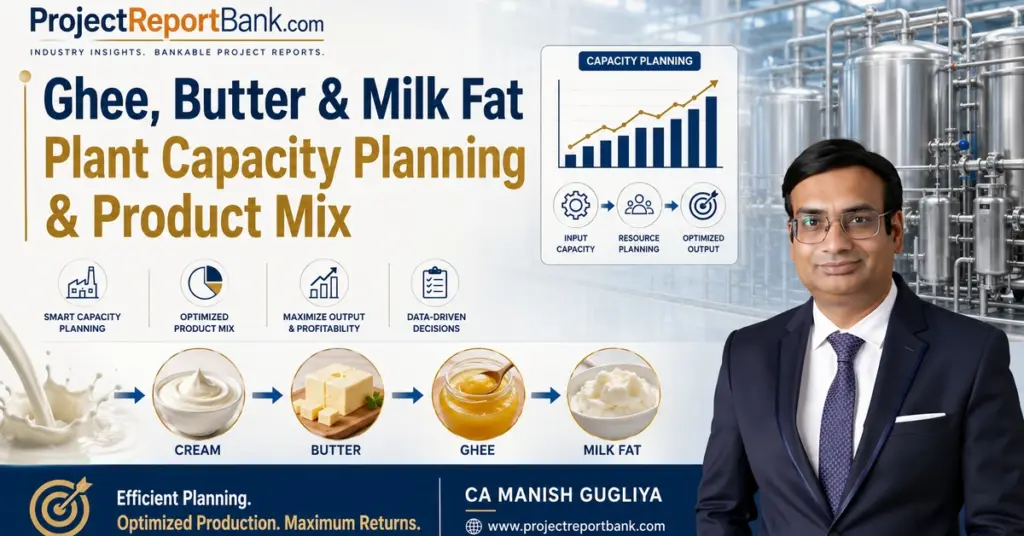
Key Takeaways
Ghee, butter and milk fat plant capacity planning is the core strategic decision in any industrial dairy fat project. Capacity cannot be picked from a machinery brochure-it must start from realistic milk and cream availability, seasonal fat balance, market-backed demand and financial feasibility. Here are the critical points this article covers:
- Ghee plant capacity planning and butter plant capacity planning must be derived from fat balance calculations, seasonal procurement data and dairy plant production planning-not from a vendor’s rated output alone.
- The optimal ghee butter plant product mix (ghee, butter, cream, AMF) should be decided by contribution margin per kilogram of fat used, storage requirements and working capital implications, not simply by the product with the highest selling price.
- A robust ghee butter plant DPR links technical capacity, milk fat processing plant capacity, project financing, DSCR, break-even capacity and sensitivity analysis into one internally consistent feasibility model.
- Raw materials typically account for 85–90% of operating expenses in dairy fat processing, making procurement planning and fat recovery efficiency the single largest determinant of profitability.
- As a practising Chartered Accountant, I focus on how capacity and product mix choices affect project cost, bankability and long-term profitability, with references to ProjectReportBank.com resources where relevant.
Introduction: Why Ghee, Butter & Milk Fat Plant Capacity Planning Matters
In my practice preparing Detailed Project Reports for industrial dairy projects, I have seen one mistake more often than any other: promoters decide capacity first and then try to fit procurement, market demand and finances around that number. This approach almost always leads to trouble.
Ghee, butter and milk fat plant capacity planning is not about choosing a “10 MT/day ghee plant” from a vendor catalogue. It means aligning daily milk procurement, cream availability, fat content by season, operating days, number of shifts, machinery efficiency, downstream market demand and available project finance into a single, coherent plan. The major products-ghee, table butter, bulk butter, cream and anhydrous milk fat-share common upstream assets such as milk reception, chilling and cream separation. This interdependence makes dairy plant capacity calculation and product mix planning inseparable exercises.
This article is written for entrepreneurs, dairy companies, promoters, investors, consultants and lenders evaluating medium- to large-scale plants-typically handling 20 to 200 or more tonnes per day of liquid milk equivalent. It is not intended for small household or micro-level ghee making. Capacity and product mix are the most sensitive assumptions in any ghee butter plant DPR, and I will revisit them throughout this article from technical, commercial and banking viewpoints.
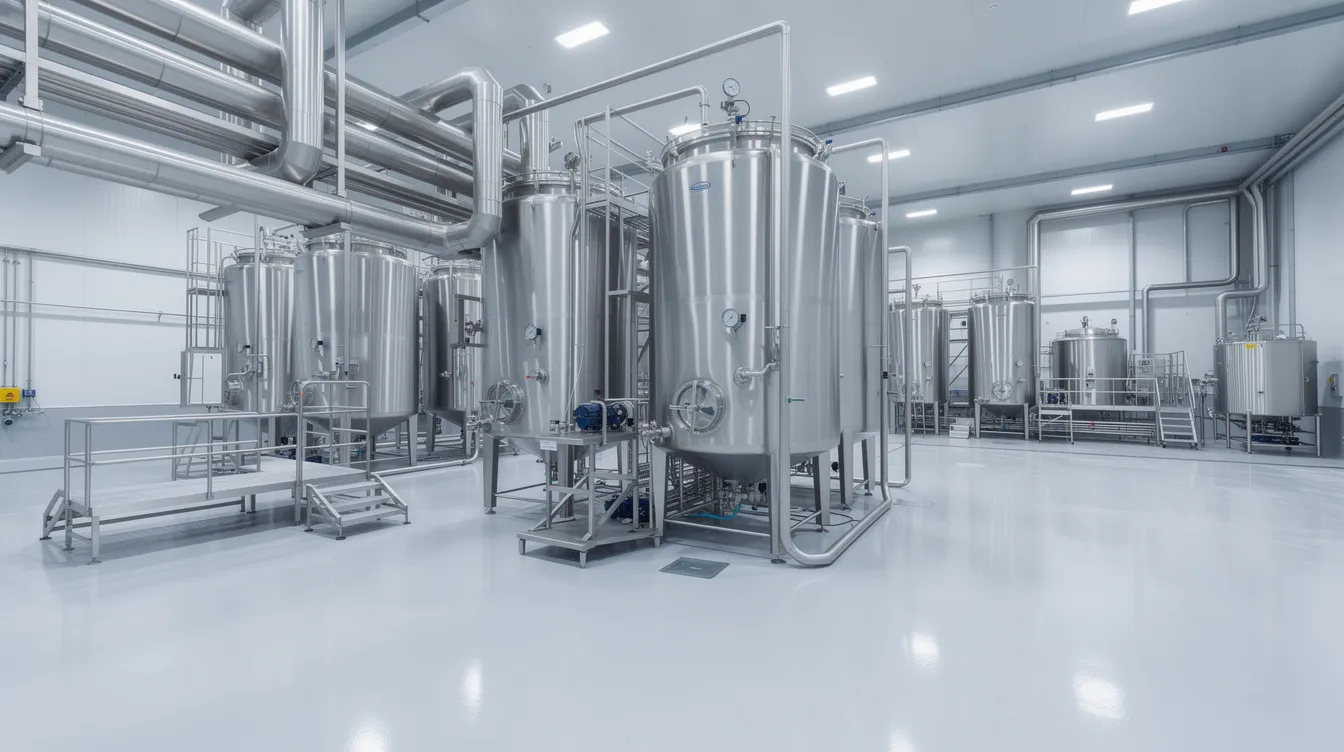
Understanding the Milk Fat Value Chain in an Industrial Dairy Plant
A typical industrial milk fat value chain follows this path: raw milk arrives from farmers or chilling centres, undergoes clarification and standardization, then moves to cream separation. The separated cream can then be converted into butter, which in turn can be packed as a final product or further processed into ghee or AMF. Whey, skim milk and buttermilk generated along the way feed back into the broader dairy business as powder, liquid milk or animal feed.
The main milk fat streams include:
- Fresh liquid milk arriving from village collection centres or bulk milk coolers.
- Cream generated during standardization of pouch milk, curd milk or other liquid milk products.
- Purchased cream or butter if the promoter supplements internal fat to improve plant utilization.
Decisions such as selling cream directly versus converting it into butter or ghee change the utilization of separators, pasteurizers and packaging lines, affecting overall dairy plant capacity utilization. In an integrated dairy business, the ghee plant, butter plant and liquid milk section all compete for the same fat, so milk fat product mix choices must be made at group level-not product by product in isolation. Later sections build on this value-chain view to show fat balance calculations and how they influence ghee plant capacity planning and butter plant capacity planning.
Major Products in a Milk Fat Processing Plant
A modern milk fat processing plant rarely produces only one product. It typically handles a portfolio of high-value milk fat products to balance demand across seasons. Indicative industrial scales range from 5–50 MT/day for ghee, 5–40 MT/day for butter and 3–20 MT/day for AMF (these ranges are purely illustrative and project-specific). Understanding each product’s demand profile, margin structure and storage characteristics is essential before any ghee butter plant product mix analysis.
Ghee
Ghee is a type of clarified butter that originated in ancient India. Industrially, it is produced by heating butter or cream at temperatures between 105–120°C, removing water and milk solids to achieve a final product with minimum 99.5% fat and moisture below 0.3%. The entire process-from cream separation through controlled heating to filtration-follows the industrial ghee manufacturing process and production line that most established dairies deploy.
Ghee has a high smoke point of around 482°F (250°C), a rich nutty taste and smooth texture, making it widely used in South Asian cuisine and traditional medicine across Indian households. It is virtually free of lactose and casein, making it suitable for individuals with dairy sensitivities. Without water and milk solids, ghee can be stored at room temperature for months without spoiling-a critical advantage over butter.
Demand is strong in both domestic and international markets. The global ghee market was valued at USD 58.99 billion in 2025 and is expected to reach USD 97.32 billion by 2034, growing at a CAGR of 5.7% from 2026 to 2034. Ghee exports are strengthening due to global demand from diaspora markets. Packaging formats include pouches, tins, PET jars, glass jars and bulk packs-each affecting packaging line capacity and changeover time.
From a production economics standpoint, ghee offers long ambient shelf life (9–12 months), lower cold storage requirements but higher working capital locked in packaging material and retail inventory. Food-grade antioxidants are used to prevent oxidative rancidity. Ghee is often used as a buffer product during flush season to convert surplus fat into shelf-stable stock, directly influencing seasonal capacity planning. Ghee production is energy and water-intensive, requiring sustained supplies of steam and electricity. Compliance with food safety frameworks like FSSAI requires specific space and hygiene infrastructure in the ghee manufacturing plant. Cultures or curd are also essential for traditional ghee-making methods where butter is extracted from churned curd during production.
Butter
Regular butter contains about 80% to 82% milk fat, with the remainder being moisture, milk solids and sometimes salt. The distinction between table butter (consumer packs) and bulk butter for industrial or bakery use is important for capacity planning. Salted and unsalted variants must comply with FSSAI standards.
Butter requires continuous refrigeration from production to retail, making cold-storage capacity a key design factor in butter plant capacity planning. End users include retail consumers, bakeries, confectionery units, HoReCa channels and food manufacturers-institutional buyers often favour 5–25 kg bulk blocks. Critically, butter can be a final sale product or an intermediate stage for conversion into ghee or AMF, so its capacity must be integrated with downstream plans. For a deeper understanding of the industrial butter manufacturing process and production line, promoters should study how churn design, working section and packing systems affect overall butter production line capacity.
Anhydrous Milk Fat (AMF)
AMF is defined as milk fat with fat content of at least 99.8%, virtually free of moisture and solids-non-fat. It is used as an ingredient in recombined milk products, ice cream, chocolate, bakery fats and export-oriented formulations. AMF typically requires a dewatering and polishing stage starting from high-quality butter, so AMF plant capacity is directly tied to butter plant output and quality.
Its advantages include high fat concentration, long shelf life, ease of transportation and bulk storage-attractive for B2B and export customers. Promoters should evaluate AMF only after assessing bulk customer contracts, export regulations and price spreads versus ghee and butter. The Anhydrous Milk Fat (AMF) Manufacturing Plant Project Report provides additional context. AMF volumes can significantly influence overall milk fat processing plant capacity and capital investment due to specialized evaporation, vacuum and polishing equipment.
Cream
Cream-typically 35–45% fat-is an intermediate that can be sold directly as bulk cream or converted into butter, ghee or cream-based products. Fresh cream has a shorter shelf life and needs cold-chain infrastructure. Industrial cream can be a flexible outlet during periods when butter and ghee demand is weak, but it should not be the primary profitability driver in most project reports.
The DPR should show at least one scenario where a portion of cream is sold and another where it is fully converted, illustrating the impact on overall capacity utilization and revenue mix.
How to Calculate Ghee Plant Capacity from Milk & Fat Availability
“How to calculate capacity of ghee manufacturing plant” is one of the most common questions I receive from promoters. The answer starts from milk and fat availability, not from ghee kettle size. Ghee production relies heavily on a consistent supply of milk cream or butter, and ghee production requires high-quality milk or cream as primary raw material. Milk must contain a minimum of 3.5% fat content for ghee production, and butter used for ghee must have at least 80% milk fat content.
Key variables for ghee production capacity calculation include:
- Average daily liquid milk procurement (e.g., 100,000 litres/day, illustrative).
- Average fat percentage by season-cow milk in India typically averages 4.0–4.5% while Murrah buffalo fat averages around 7.8%.
- Proportion of milk diverted to liquid milk products versus fat processing.
- Cream separation efficiency and process losses (typically 2–3%).
- Planned operating days per year (e.g., 300 days) and shifts per day.
Illustrative calculation (for explanation purposes only): 100,000 L/day × 4.0% fat = 4,000 kg fat/day gross. After ~2% separation loss, recoverable fat ≈ 3,920 kg/day. If 70% of this fat is allocated to ghee, potential ghee output ≈ 2,650–2,800 kg/day after melting and clarification losses. Annually (300 working days), this yields roughly 795–840 MT of ghee. Ghee recovery from raw milk or butter typically yields 15% to 25%, depending on process and raw material quality. Ghee manufacturing plant capacity generally ranges from 5,000 to 10,000 MT annually at industrial scale.
Actual industrial ghee plant capacity must be cross-checked with machinery capacities-kettles, the ghee clarifier and packaging machines-covered in detail in the Ghee Manufacturing Plant Machinery & Equipment Cost resource.
Butter Plant Capacity Planning & Cream-Based Calculations
How to select capacity for a butter manufacturing plant depends primarily on cream generation-not on a notional butter tonnage chosen in advance. The stepwise approach for butter production capacity calculation involves:
- Determining the quantity of standardized milk and other dairy products generating cream.
- Estimating cream fat content (typically 35–45%) and expected cream-to-butter conversion yield.
- Accounting for downstream conversion of butter into ghee or AMF, if applicable.
Illustrative example (for teaching purposes only): If 60,000 L/day of milk at 4% fat is processed, cream separators extract cream sufficient for roughly 1.8–2.2 MT butter/day. Purchasing additional cream can raise butter plant utilization. Design questions include whether butter plant machinery capacity should match peak cream generation or annual average, how many hours per day continuous butter churners will run, and whether chilled cream storage tanks can buffer daily fluctuations. Cultured butter production requires cream ageing tanks, adding complexity.
AMF Plant Capacity Planning and Integration with Ghee & Butter
AMF capacity is typically considered after a dairy has established butter and ghee operations, particularly for projects targeting exports or B2B ingredient segments. AMF output is a function of high-quality butter input and dewatering efficiency, so AMF plant capacity should be a percentage of butter plant capacity, not independently chosen.
Commercial triggers for installing AMF include confirmed industrial buyers (ice cream, chocolate, foreign dairies), a price premium over butter or ghee on a fat-equivalent basis, and the ability to sell in bulk tankers or drums. The AMF Manufacturing Process, Machinery & Production Technology article covers vacuum deodorisers, polishers and other specialised milk fat processing machinery. The DPR should compare at least two scenarios-with and without AMF-showing the effect on capital cost, dairy fat processing plant capacity planning and project IRR.
Cream Processing Capacity and Upstream Bottlenecks
Many dairy fat projects underestimate the importance of cream separation and pasteurization capacity, which then becomes the bottleneck for both ghee and butter output. Key equipment whose capacity must be balanced includes:
- Milk clarifiers and cream separators (rated in LPH).
- Pasteurizers for cream and milk.
- Intermediate cream storage tanks and silos.
- Cream ageing tanks where cultured butter is planned.
The dairy processing line capacity for cream separation must be compatible with downstream ghee production line capacity and butter production line capacity. For example, a 10,000 LPH separator cannot support a 50 MT/day butter plant. A strong ghee butter plant DPR explicitly shows cream balance sheets for flush and lean seasons separately.
Raw Milk Availability as the Starting Point for Capacity
Any serious ghee manufacturing plant capacity or butter manufacturing plant capacity decision must begin with realistic raw material requirements and procurement planning. Milk is tested for quality before processing-fat content, SNF, adulteration checks-and procurement parameters include:
- Collection radius (typically 50–120 km).
- Number of villages and collection centres.
- Average per-farmer milk supply.
- Competing dairies’ presence and procurement price levels.
- Supply chain logistics and chilling infrastructure.
Lean-season milk availability (summer months) often constrains annual capacity utilization even if flush-season volumes are abundant. For example, procurement might be 150,000 L/day in winter but drop to 90,000 L/day in summer-immediately reducing ghee plant capacity utilization if capacity is sized only for peak. In Andhra Pradesh, cow milk fat dropped from 4.00% in winter to approximately 3.49% in summer, compounding the volume shortfall with lower fat recovery.
Lenders are more comfortable when dairy plant capacity planning is based on conservative milk procurement assumptions and verified collection data, not optimistic projections.
Seasonal Capacity Planning & Fat Balance
India’s dairy economy experiences flush (winter-excess milk) and lean (summer-low milk) seasons that change both volume and fat percentage. Strategic capacity choices include:
- Designing for average annual milk procurement (most conservative).
- Designing for peak procurement and accepting underutilization in lean months.
- Adopting modular capacity that can be expanded when procurement stabilizes.
The concept of “fat balance” is central: higher flush-season fat availability can be diverted into ghee and AMF for long-term ambient storage, while lean months may focus on liquid milk and high-margin fresh products. A well-prepared DPR should include a seasonal table allocating monthly available fat between butter, ghee and AMF to show how ghee butter AMF plant capacity planning stabilizes annual sales and margins.
Higher production of shelf-stable ghee during flush requires funding for inventory until it is sold-this must be factored into the DPR’s working capital assessment.
Installed Capacity vs Practical Capacity in Dairy Fat Plants
Understanding the gap between installed and practical capacity is critical. Key definitions:
| Capacity Type | Definition |
|---|---|
| Rated Capacity | Vendor’s maximum under ideal 24-hour continuous conditions |
| Installed Capacity | Sum of machinery line ratings as built |
| Achievable/Practical Capacity | After deducting downtime for CIP, maintenance, shifts (~80–90% of rated) |
| Actual Utilized Capacity | Real-world production, often lower due to procurement or demand limits |
Factors reducing practical output include cleaning and CIP cycles, maintenance shutdowns, changeover between SKUs and pack sizes, packaging material shortages and utility interruptions. As a reference, Amul’s ghee section reportedly has rated capacity of 16–18 TPD but averages only 8–10 TPD in actual production-utilization below 60%.
Assuming 100% dairy plant capacity utilization from day one overstates revenue and understates per-unit operating costs in any ghee plant project report. Lenders routinely discount overly aggressive utilization assumptions.
Capacity Utilization Assumptions in DPR & Financial Feasibility
In a ghee butter plant feasibility study, utilization ramp-up is typically gradual. An illustrative (project-specific) ramp-up pattern might look like:
| Year | Illustrative Utilization Range |
|---|---|
| Year 1 | 45–60% |
| Year 2 | 65–75% |
| Year 3 | 75–85% |
Utilization directly affects cost per kg of ghee or butter through fixed cost absorption, cash break-even timing, DSCR and interest coverage, payback period and project IRR. Projecting very high utilization merely to make financial ratios look attractive can mislead promoters and create operational stress. A disciplined dairy processing plant financial feasibility analysis should also run downside cases with lower utilization to test resilience.
Ghee Butter Plant Product Mix Planning & Optimization
Ghee butter plant product mix is the conscious allocation of available milk fat across ghee, butter, cream and AMF to maximize long-term profit-not just output volume. Maximum volume does not necessarily produce maximum profit.
Key variables driving dairy plant product mix optimization include:
- Expected selling price net of trade discounts and pricing trends.
- Direct variable costs (raw milk, cream, power, packaging, labour).
- Contribution margin per kg of fat used.
- Market size, seasonality and channel strength (retail vs institutional vs export).
- Storage requirements (cold vs ambient) and shelf life.
- Distribution channels and working capital cycle.
An “industrial-fat-focused” strategy (more AMF and bulk butter) reduces packaging costs and sales overheads but increases dependence on a few large buyers. A “ghee-focused” strategy increases brand-building and marketing requirements but builds stronger retail margins. The DPR should include at least two alternative product-mix scenarios comparing revenue, EBITDA and working capital under different mixes for the same plant capacity.
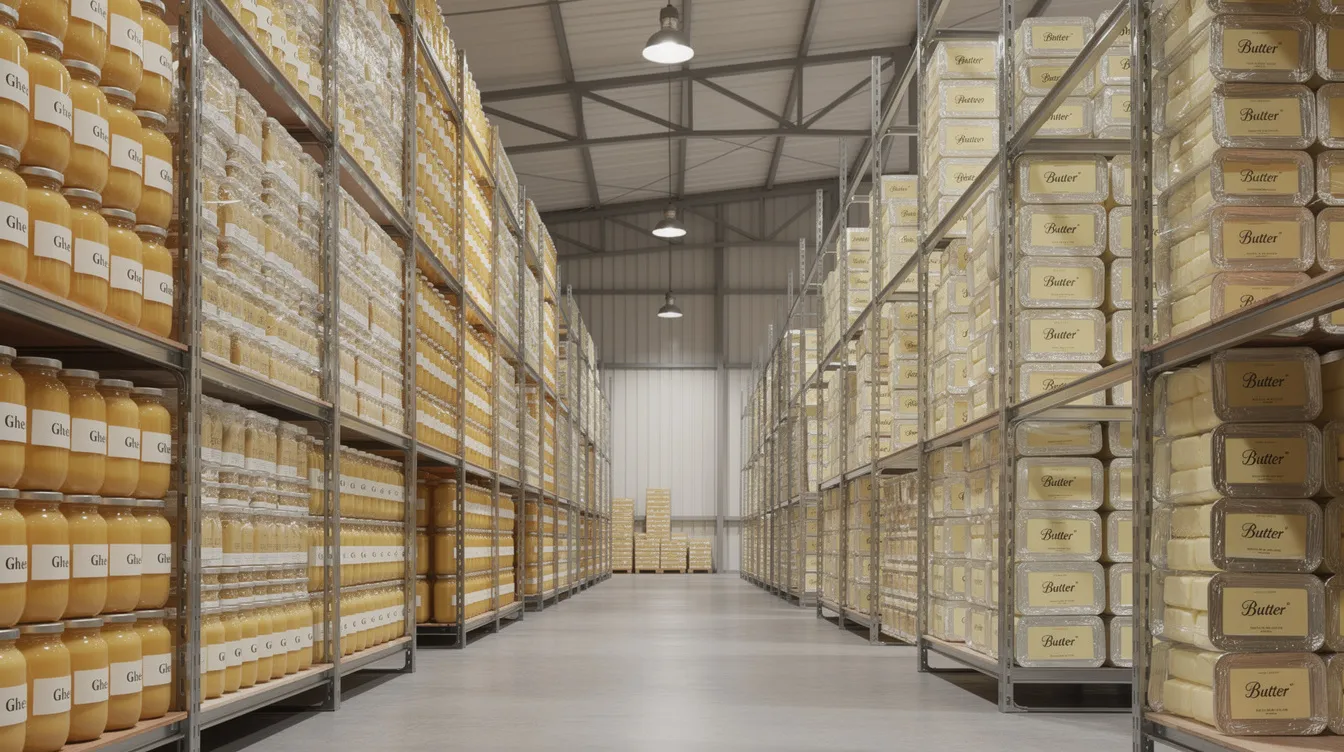
Illustrative Product Mix Scenarios & Profitability Impact
The following table presents indicative scenarios to help promoters and lenders visualize how milk fat product portfolio choices affect profitability. Actual decisions require detailed market research.
| Parameter | Scenario A: Ghee-Focused | Scenario B: Balanced | Scenario C: Industrial-Fat Focused |
|---|---|---|---|
| % of fat to Ghee | 60–70% | 35–40% | 20–25% |
| % of fat to Butter | 20–25% | 30–35% | 15–20% |
| % of fat to AMF/Cream | 5–15% | 25–30% | 55–65% |
| Revenue concentration | Retail-heavy | Diversified | B2B-heavy |
| Packaging cost intensity | High | Moderate | Low |
| Cold storage need | Moderate | High | Low-Moderate |
| Key strategic objective | Retail brand building | Risk diversification | Ingredient/export focus |
All figures are for explanation purposes only.
A high-price product is not always the most profitable if its packaging, promotional and distribution costs are also high. Promoters should calculate and compare contribution per kg of fat used, not just per kg of final product. A diversified ghee butter cream product mix may reduce impact of price fluctuations in any single product but might complicate operations and inventory management.
Ghee manufacturing plant gross profit margins typically range from 20–30%, and break-even for ghee manufacturing typically ranges from 2 to 4 years, depending on scale and product mix.
Working Capital, Storage & Product Mix Interlinkages
Working capital is often underestimated in dairy fat projects. Product mix-retail ghee versus bulk butter versus AMF-can dramatically change working capital needs for the same installed capacity.
| Factor | Ghee (Retail) | Butter (Bulk & Retail) | AMF (Industrial) |
|---|---|---|---|
| Storage type | Ambient | Cold storage | Ambient/controlled |
| Typical inventory days | 30–60 days | 15–30 days | 30–45 days |
| Packaging cost intensity | High (jars, tins) | Moderate | Low (drums, tankers) |
| Customer credit period | 15–45 days | 7–30 days | 30–60 days |
| Energy cost for storage | Low | High (refrigeration) | Low |
Banks assess the working capital cycle carefully. Overproduction of slow-moving SKUs to “utilize capacity” can lock up capital in unsold inventory, hurting liquidity even if accounting profits appear adequate.
Machinery Selection, Line Balancing & Capacity Planning
Machinery vendors quote capacities in isolation-a 2,000 kg/hr ghee boiler or a 5,000 LPH cream separator. But a Chartered Accountant preparing a DPR must ensure end-to-end dairy plant machinery sizing is balanced. Key equipment whose capacity must be cross-checked includes milk reception and chilling, clarifiers and cream separators, pasteurizers, butter churners or continuous butter-making lines, ghee kettles and the ghee clarifier, AMF processing equipment, filtration units that remove impurities, storage tanks for processed ghee before packaging, filling and packaging machines, and utilities (boiler, refrigeration, compressed air, electrical system).
If upstream milk and cream capacity supports 20 MT/day equivalent ghee but packaging machines can handle only 10 MT/day, inventory builds up or overtime becomes necessary. Uninterrupted production requires balanced capacities and standard operating procedures across the entire process. The DPR should attach a capacity balancing sheet summarising line-by-line rated and effective capacities along the ghee butter processing line.
Utilities, Land, Building & Infrastructure for Planned Capacity
Once core dairy processing line capacity is decided, utilities and civil infrastructure must be sized accordingly. Utility requirements that scale with capacity include steam generation (boiler rating), refrigeration tonnage for cream and butter cold rooms, chilled and hot water systems, electrical connected load with backup power, compressed air, water supply and effluent treatment (environmental compliance).
Land and building requirements expand to cover process halls, utility blocks, raw milk reception and tanker parking, finished-goods warehouses and cold storages, quality inspection laboratories, circulation roads and future expansion areas. Promoters can review Industrial Ghee Manufacturing Plant Setup Cost in India to understand how increases in industrial ghee plant capacity influence land, building and infrastructure costs. The setup timeline for a ghee manufacturing plant is typically 12 to 18 months. Capital investment for a ghee plant varies based on production scale and technology.
Project Cost, Means of Finance, DSCR & Break-Even Capacity
Once ghee manufacturing plant capacity and butter manufacturing plant capacity are firmed up, total capital investment and financing structure can be estimated. Major project cost heads include:
- Land and site development
- Civil construction
- Plant and machinery for ghee, butter, cream and AMF lines (equipment costs can vary widely)
- Utilities, cold storage and refrigeration
- Laboratory and quality control equipment
- Pre-operative and contingency expenses
- Margin for working capital
Some costs increase stepwise rather than linearly, creating economies of scale. However, excessive capacity raises interest burden, depreciation and risk of underutilization. Capacity and product mix assumptions feed directly into DSCR: higher utilization and stronger margins improve cash accruals, while excessive term-loan for an oversized plant can depress DSCR even if EBITDA looks strong.
Ghee butter plant break-even capacity is the minimum percentage of practical capacity at which contribution covers fixed costs. Promoters and lenders must understand and agree on this threshold. Ghee manufacturing requires compliance with FSSAI and pollution control regulations, adding to project feasibility requirements.
Market Demand, Regional Milk Procurement & Capacity Selection
Technically possible capacity is not always commercially viable. The ghee market and butter production demand, together with procurement conditions, must anchor final plant size. Growing demand for ghee is driven by rising disposable incomes, population growth and the growing Indian population’s preference for traditional dairy products-55% of consumers prefer snacks made with natural ingredients. Demand for organic and premium ghee products is increasing, along with investment opportunities in the ghee manufacturing sector.
Assessment should cover institutional demand, distributors, retail channels, HoReCa, bakery, confectionery, food processing industry buyers and export markets. Regional milk procurement conditions vary: dairy-rich belts like Gujarat, Rajasthan and Uttar Pradesh offer different feasibility than milk-deficit regions. A 30 MT/day ghee plant might be fully viable in one region but risky in another. Market growth and industry trends should inform capacity, not internal optimism alone.
Common Capacity Planning Mistakes & Banker’s Perspective
In my DPR and bank appraisal experience, several recurring mistakes cause projects to underperform despite good machinery and technical design:
- Selecting capacity based purely on peak-season milk availability.
- Ignoring fat balance between liquid milk, ghee, butter and curd.
- Assuming near-100% capacity utilization from the first year.
- Underestimating cold-storage and packaging bottlenecks.
- Planning too many SKUs without adequate sales channels or distribution channels.
- Overleveraging the project with a high term-loan to equity ratio.
- Preparing financial projections before completing technical capacity planning.
- Choosing products solely on selling price without analysing contribution margin.
- Ignoring temperature control and quality production requirements.
Lenders typically examine evidence of milk procurement tie-ups, realistic ghee plant capacity utilization and butter plant capacity utilization plans, competitive analysis, DSCR under conservative assumptions and adequacy of working capital. No DPR can “guarantee” loan sanction-but well-reasoned capacity and product mix planning increases project credibility with banks and financial institutions. Sensitivity analysis testing adverse scenarios for milk price, fat percentage, selling prices, power and fuel costs and interest rates is essential.
Role of DPR in Ghee Butter Milk Fat Plant Capacity Planning
The Detailed Project Report is the primary document that converts a technical plant concept into a bankable, financially tested business plan. A good DPR integrates:
- Technical capacity (machinery list and sizing)
- Raw-material availability analysis
- Product-mix strategy and sales plan
- Working capital assessment and bank finance requirements
- Profitability projections, cash flows and DSCR
The logical flow is: Milk Procurement → Fat Availability → Dairy Plant Capacity Calculation → Ghee Butter AMF Plant Capacity Planning → Product Mix & Pricing → Revenue & Cost Projections → Cash Flow & DSCR → Sensitivity & Risk Analysis.
All figures in a ghee plant project report, butter plant project report or milk fat processing plant project report must be traceable to realistic capacity and utilization assumptions. DPRs should cite vendor quotations, process guarantees and market prices rather than generic benchmarks, clearly distinguishing between base-case, optimistic and stressed scenarios. The entire process must demonstrate regulatory compliance, project feasibility and a viable business plan.
How CA Manish Gugliya & ProjectReportBank.com Can Assist
I am CA Manish Gugliya, FCA, DISA (ICAI), a practising Chartered Accountant with experience in DPR preparation, CMA Data, financial feasibility studies, MSME advisory and bank loan assessment for industrial projects including the ghee manufacturing industry, dairy business and food processing industry ventures.
I can support promoters with:
- Preparation of ghee butter plant DPRs covering ghee, butter, cream and AMF lines with realistic ghee butter AMF production planning.
- Project cost estimation using actual machinery and infrastructure quotations.
- Means of finance structuring, including term-loan and working capital planning.
- Financial projections with capacity utilization ramp-up, DSCR and break-even analysis.
- Sensitivity analysis on milk price, fat percentage, product selling prices and utilization.
My role is advisory and analytical. I do not certify projected financials as guaranteed outcomes and cannot assure loan sanction. I help promoters build technically and financially coherent proposals. Promoters exploring an industrial ghee plant investment or a ghee manufacturing business can review resources on ProjectReportBank.com for further technical-commercial understanding.
Serious promoters and investors are invited to approach ProjectReportBank.com with basic project details-location, planned capacity, product mix idea-so that a structured DPR and capacity planning exercise can be undertaken.
Conclusion: Integrating Capacity, Product Mix & Finance for Sustainable Dairy Fat Projects
Successful ghee, butter and milk fat plant capacity planning lies at the intersection of assured milk and cream procurement, carefully calculated milk fat processing plant capacity, a market-backed product mix, balanced machinery and utility sizing, and prudent financing with realistic DSCR assumptions. The “best” capacity is not the largest plant you can build-it is the capacity that can be supplied with raw material, operated efficiently, sold profitably and serviced comfortably from a banking viewpoint.
Capacity and ghee butter plant product mix should be reviewed periodically as procurement networks, markets and technology evolve, making modular and flexible planning valuable. Ghee is more concentrated in milk fat than butter due to the removal of water and non-fat milk components, giving it unique advantages in storage and transportation, and the ghee manufacturing unit that plans around these realities positions itself for long-term viability. The ghee processing plant that succeeds is one where every capacity assumption is tested, every product-mix decision is backed by data, and the project report tells a consistent story from procurement to profitability.
A well-prepared DPR is the bridge between a technically sound plant design and a commercially bankable, financially sustainable dairy fat processing business. I actively encourage promoters to treat capacity planning not as a one-time exercise but as a living strategy that evolves with their ghee manufacturing business.

FAQs on Ghee, Butter & Milk Fat Plant Capacity Planning
The following questions address practical doubts that promoters often raise after understanding the main concepts of capacity and product mix planning.
How do I decide the initial capacity for an industrial ghee plant?
There is no universal “ideal” capacity. It should be based on confirmed or realistically achievable daily milk procurement, fat percentage and separation efficiency, expected product mix (what share of fat goes to ghee), target markets and sales channels that can absorb projected volumes, and investment capability with acceptable DSCR. I recommend that promoters start with a capacity that can reach 70–80% utilization within 2–3 years based on conservative procurement and sales plans, while keeping options open for phased expansion. Ghee has strong health benefits and nutritional benefits that support steady demand, but the plant project must still match supply with realistic absorption.
Can the same plant manufacture both ghee and butter efficiently?
Yes. Most industrial dairy fat plants are intentionally designed to produce both. Cream is converted to butter using butter churners, and butter is either packed as a final product or melted through ghee kettles and processed into ghee via controlled heating and filtration to achieve pure ghee. Efficient combined operation requires properly sized cream separators and butter-making lines, ghee kettles and clarifiers that can handle the butter stream, packaging facilities for both bulk and retail packs, and careful production planning to minimize changeovers and idle time. The DPR should model separate and combined scenarios to demonstrate viability.
Should I base capacity on peak-season milk availability or annual average?
In most cases, capacity should be closer to sustainable annual average procurement, not peak flush-season volumes, to avoid chronic underutilization in lean months. Consider some headroom for future procurement growth, using flush-season surplus to produce shelf-stable ghee or AMF, and modular additions later if procurement and market expand. Banks generally favour conservative, average-based planning supported by data.
How much milk is typically required for a ghee manufacturing plant?
Milk requirement depends heavily on fat content and process recovery. Illustratively, if average fat is 4%, about 25 litres of milk may yield around 1 kg of ghee after losses-but actual figures vary by region, breed (buffalo vs cow) and process configuration. Promoters should obtain realistic fat percentage and loss data from local dairies or pilot runs and prepare a fat balance sheet based on their planned product mix.
Why is sensitivity analysis important in ghee and butter plant feasibility studies?
Sensitivity analysis tests how project viability changes when key assumptions move adversely-higher milk procurement price, lower fat percentage, lower selling price of ghee or butter, lower capacity utilization in early years, or higher power and fuel costs. By running such scenarios, promoters and lenders can understand risk levels, identify breakeven points and design appropriate risk-mitigation strategies. This makes the investment decision more informed, robust and bankable. A quality inspection of every assumption in the DPR, tested under stress, is what separates a credible project report from a speculative one.