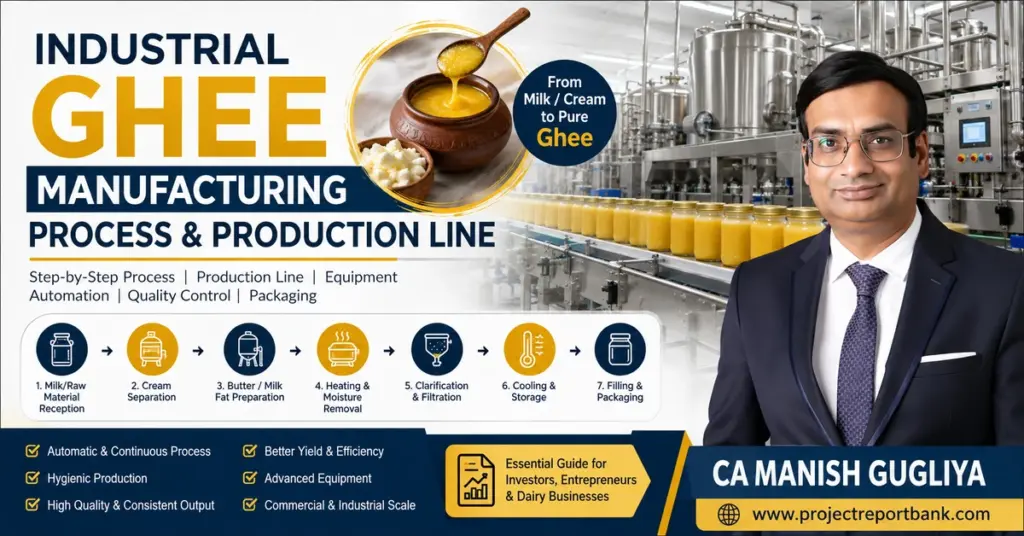
Setting up an industrial ghee manufacturing process is fundamentally different from making ghee at home. Commercial plants require controlled heating, standardized raw materials, process control at every stage, hygienic handling, filtration, engineered cooling, and consistent packaging. At its core, ghee is made by heating butter to remove moisture and milk solids, but scaling this to hundreds or thousands of kilograms per day demands purpose-built dairy processing equipment, documented parameters, and a clear production strategy.
The exact production configuration varies according to raw material (milk, cream, or butter), production capacity, automation level, desired product characteristics, packaging format, plant design, and technology supplier. This article explains the complete industrial ghee manufacturing process from a project-planning and DPR perspective, covering each processing stage, equipment sequence, and the practical considerations that determine whether a ghee production line delivers consistent quality and viable economics.
Key Takeaways
- The industrial ghee manufacturing process is a controlled, multi-stage system involving fat preparation, heating, moisture removal, clarification, filtration, cooling, storage, and packaging-very different from household ghee making.
- Three main raw material routes exist-milk to ghee, cream to ghee, and butter to ghee-each requiring a different ghee production line design, material balance, and machinery selection.
- Ghee production involves five core stages: preparation, melting, stratification, clarification, and cooling, executed using food grade stainless steel equipment such as ghee boilers, ghee kettles, cream separators, and clarifiers.
- Automation (CIP system, automatic valves, temperature control, filling and packing lines) improves hygiene, consistency, and monitoring but increases initial investment.
- Accurate process design is critical for bankable DPRs in India because material balance, utility sizing, and yield assumptions directly drive project cost, working capital, and financial viability.
What Is an Industrial Ghee Manufacturing Process?
An industrial ghee manufacturing process is a systematic, controlled way of converting milk fat-sourced from milk, cream, or butter-into finished ghee at commercial scale. Industrial ghee manufacturing relies on thermal processing and moisture removal to produce clarified butter with almost total removal of water and non-fat milk solids, yielding a product that meets regulatory standards for purity and extended shelf life.
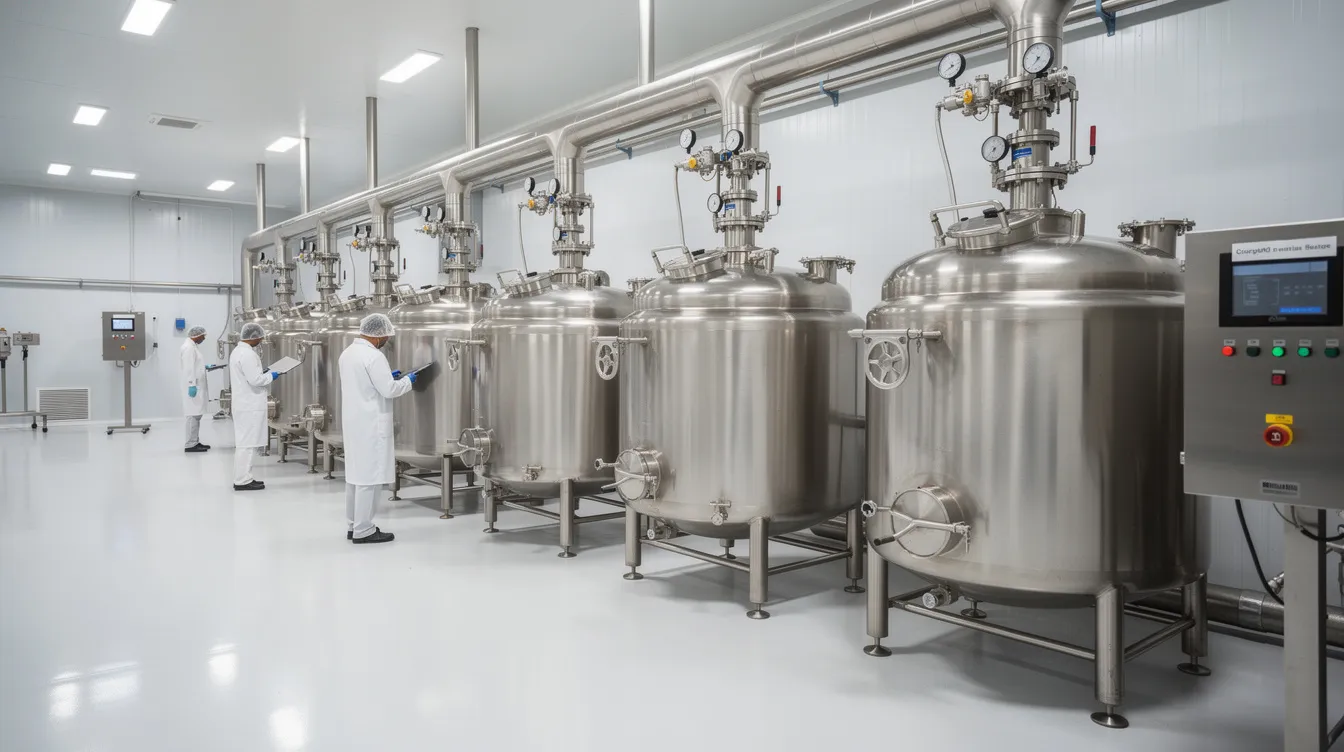
Unlike traditional household or bilona methods that use open-fire pans and manual timing, industrial plants use dedicated ghee processing plant machinery. This includes cream separators, butter churners, ghee boilers, and ghee kettles constructed from food grade stainless steel with a cylindrical body, steam jackets, sweeping agitators to prevent sticking, and sanitary fittings. Ghee making machines convert butter into clarified ghee through precisely controlled temperature and time parameters, producing machine-made ghee that offers consistent quality and shorter processing time compared to manual approaches.
From a DPR and project-finance perspective, understanding the process is essential because it determines capacity, yield, utilities, and operating cost-not just “how to make ghee.”
Raw Materials Used for Industrial Ghee Production
The industrial ghee manufacturing process can start from several raw-material streams, each with distinct economics and process-flow implications. Raw material quality affects the flavor and consistency of industrial ghee, making feedstock selection a critical project decision.
The main options include:
- Whole milk – requires full upstream processing infrastructure
- Standardized cream – separated in-house or procured externally
- White butter – produced internally or purchased from other dairies
- Cultured butter / cream butter – adds specific flavour characteristics
- Existing butter oil or milk fat – from other dairy processes
Choosing between milk, cream, or butter routes changes upstream machinery requirements (pasteurizers, cream separators, butter churners), affects ghee yield, and reshapes the plant layout. In India, industrial projects often integrate ghee production lines into broader milk, curd, butter, and milk-powder operations to share utilities and raw materials.
Milk-to-Ghee Route
The milk to ghee manufacturing process begins with raw milk and progressively concentrates fat before converting it into ghee. The typical sequence runs: milk reception → filtration → chilling/pasteurization → fat standardization → cream separation → cream processing → butter making → ghee production stages.
This route needs the most equipment-milk silos, clarifiers, cream separators, pasteurizers-but gives flexibility to produce multiple products simultaneously. Ghee plant capacity in this route is often expressed relative to daily milk-handling volume, and the material balance must account for both fluid-milk sales and ghee output.
Cream-to-Ghee Route
In many industrial ghee processing plants in India, cream sourced from in-house milk separation or external suppliers is the primary feedstock. Chilled cream is received through a cream loading door or sanitary inlet, stored in insulated tanks, standardized for fat, and then processed either to butter via butter churners or directly to ghee.
The cream to ghee manufacturing process reduces upstream complexity versus starting from raw milk but still demands reliable cream quality and cold-chain management. DPRs for cream-based projects must clearly define average cream fat percentage and purchase cost, as both strongly influence ghee yield and profitability.
Butter-to-Ghee Route
The butter to ghee manufacturing process uses white butter or cultured butter as the immediate feedstock. The Creamery Butter Method is a standard method for commercial ghee production, where butter is loaded into a butter melter or ghee boiler, gently melted, and then taken through heating, clarification, and filtration stages.
This option simplifies upstream operations-no milk reception or cream separation is needed in a standalone ghee factory production process. Many commercial ghee manufacturing plants in India use this route because it allows specialization in ghee while others handle milk processing and butter making. From a financial-planning angle, butter price, fat content, and handling losses must be carefully modelled in the project’s material balance.
Industrial Ghee Manufacturing Process Flow Chart
Below is a representative ghee manufacturing process flow chart in text form. Actual production lines differ by route and technology supplier.
Full Milk-Based Plant Flow:
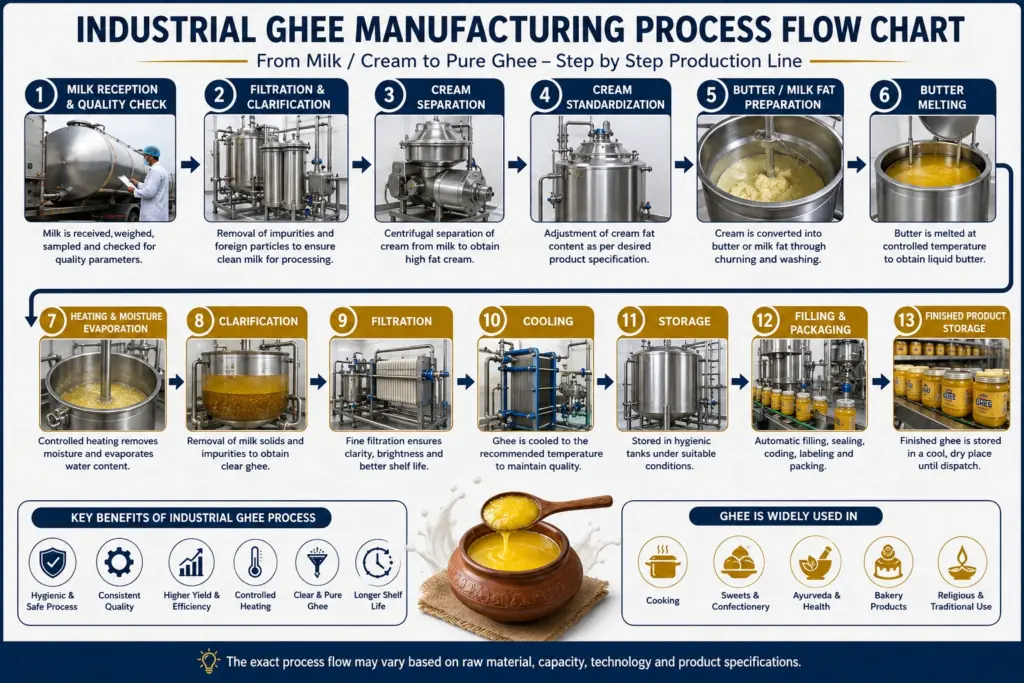
Milk Reception → Weighing → Milk Filtration/Clarification → Chilling/Pasteurization → Standardization → Cream Separation → Cream Cooling & Storage → Cream Processing/Butter Churning → Butter Melting → Ghee Boiler Heating & Moisture Evaporation → Ghee Clarification → Ghee Filtration → Controlled Cooling → Ghee Storage Tank → Automatic Filling & Packaging → Finished Product Storage
Butter-Based Ghee Production Line Flow:
Butter Reception → Butter Melting Vat → Ghee Kettle/Ghee Boiler Heating → Stratification & Clarification → Skimming/Draining Non-Fat Solids → Filtration → Cooling → Storage → Packaging
Items like air vent fittings, butter milk drain valves, and ball valve controlled pipelines are part of the sanitary product-transfer and safety system within this flow. A formal industrial ghee process flow diagram is usually prepared by the process engineer and attached as an annexure in a DPR.
Industrial Ghee Manufacturing Process Step by Step
This section provides a detailed explanation of the ghee manufacturing process flow chart above, covering each major operation for an automatic or semi-automatic ghee processing plant. The sub-sections follow an approximate milk-to-ghee path while remaining applicable to cream and butter routes.
Typical ghee processing temperature ranges and times mentioned here are indicative; final parameters must be confirmed with the selected machinery supplier.
Milk Reception and Initial Quality Inspection
Milk arrives by tanker at the reception bay where it is weighed, temperature-checked, and sampled. Routine tests include fat percentage, SNF, acidity, and organoleptic checks. Poor-quality or adulterated milk is rejected per plant policy. Accurate recording of accepted quantities is essential for material-balance calculations in the DPR.
Milk Filtration and Clarification
After reception, milk passes through stainless steel inline strainers and clarifier separators to remove visible and microscopic physical impurities. This protects downstream cream separators and heat exchangers, and results in cleaner ghee further down the line.
Cream Separation
Centrifugal cream separators (available in capacities from 1,000 LPH to 10,000+ LPH) use a rapidly rotating bowl to separate cream-the fat rich milk portion-from skim milk based on density difference. Cream fat percentage is adjusted per process design. Skim milk can be routed to fluid milk, curd, or powder production, improving overall plant economics.
Accurate fat measurement here is critical because ghee yield in the DPR depends heavily on how much fat is routed to cream and subsequently to ghee.
Cream Standardization and Processing
Separated cream is cooled, stored in insulated tanks with agitators, and standardized to a suitable fat level. Cream may be sweet or cultured; cultured cream can lend different flavour notes to ghee but needs careful process control. For cream butter production, cream goes to a butter churner where it is converted into butter and buttermilk; buttermilk is drained through butter milk drain valves and handled separately.
Butter or Milk Fat Preparation
Standardized cream is converted into butter using batch butter churners or continuous butter-making machines, yielding white butter suitable as ghee feedstock. Buttermilk is removed, butter is washed to reduce residual serum, and moisture is standardized to keep the ghee making process consistent.
Some advanced plants convert cream directly to anhydrous milk fat (AMF), which can then be used for ghee production with slightly different heating and clarification behaviour. DPRs must specify the intermediate stage-cream butter, white butter, or AMF-as this affects equipment and utilities.
Butter Melting
Solid butter blocks are transferred to a butter melter or melting vat-a jacketed vessel with a cylindrical body, steam or hot-water jacket, and gentle agitation. The butter is warmed to approximately 60–80 °C to melt fat without scorching the milk solids.
The melter is equipped with sanitary fittings including level indicators, an air vent, and hygienic ball valve outlets for transferring melted butter to the ghee boiler or kettle. Controlled melting prevents uneven heating and supports consistent ghee clarification downstream.
Heating and Moisture Removal
This is the core of the industrial ghee manufacturing process. Melted butter or high-fat cream is heated in a ghee boiler or ghee kettle-typically a double or triple-walled vessel with an inner shell of SS316 and an outer shell of SS304, separated by an intermediate shell or a middle layer of insulation.
Steam, electric heaters, or thermic-fluid coils raise the temperature to remove moisture. Clarification temperature during ghee production typically ranges from 110°C to 120°C. Many Indian butter-route plants target approximately 114±2 °C for flavour development. Operators monitor foaming, bubble size, and aroma as moisture reduces; in automatic systems, temperature and time are controlled via sensors and control panels.
Ghee must achieve a moisture content below 0.3% for shelf stability, well within FSSAI’s maximum limit of 0.5%. Over-heating creates burnt flavours and higher free fatty acids, while under-heating leaves excess moisture, shortening shelf life. The Pre-Stratification Method can improve energy efficiency in ghee production by allowing partial separation of water and fat phases before full heating.
Ghee Clarification
As heating proceeds, non-fat milk solids (curd particles, proteins, lactose residues) coagulate and either settle at the bottom layer or float as scum at the top layer. A ghee boiler heats butter while a clarifier finishes the product-the clarification stage removes impurities to produce pure ghee.
In many ghee boilers, the operator allows stratification and then carefully drains ghee through outlets located above the sediment layer. Sight glass fittings and sample valves help judge clarity. Centrifugal clarifiers are used to separate fine solids from liquid ghee in larger plants, reducing manual intervention. The curd content and ghee residue left behind are removed and handled separately.
Ghee Filtration
Even after clarification, ghee passes through a filtration system. Filtration is critical to remove residual solids and impurities in ghee. Common options include stainless steel mesh filters, cartridge filters, and filter presses designed for hot-fat handling. Hot ghee (above its melting point) is pumped through filters using sanitary pipelines to avoid solidification. Good filtration produces clarified ghee with improved clarity and stability, reducing sediment in final packs.
Controlled Cooling
After filtration, ghee is cooled under controlled conditions to develop the desired grain structure and texture. Controlled cooling affects flavor and texture development in ghee-rapid chilling may produce coarse grain, while slower cooling yields finer texture.
Cooling arrangements include jacketed ghee storage tanks with chilled-water circulation or plate heat exchangers. For DPRs, the cooling technology selection directly affects refrigeration load and utility sizing.
Ghee Storage Before Packaging
Hygienic ghee storage tanks made of SS304 or SS316 with conical or dished ends hold clarified ghee before packaging. Tanks are fitted with sanitary vents, level gauges, sample valves, and bottom outlets. The system drains ghee towards the filling section using positive displacement pumps. Nitrogen blanketing may be used to prevent oxidation.
In a continuous ghee manufacturing plant, intermediate storage volumes and number of tanks must match filling-line capacity and shift patterns.
Filling and Packaging
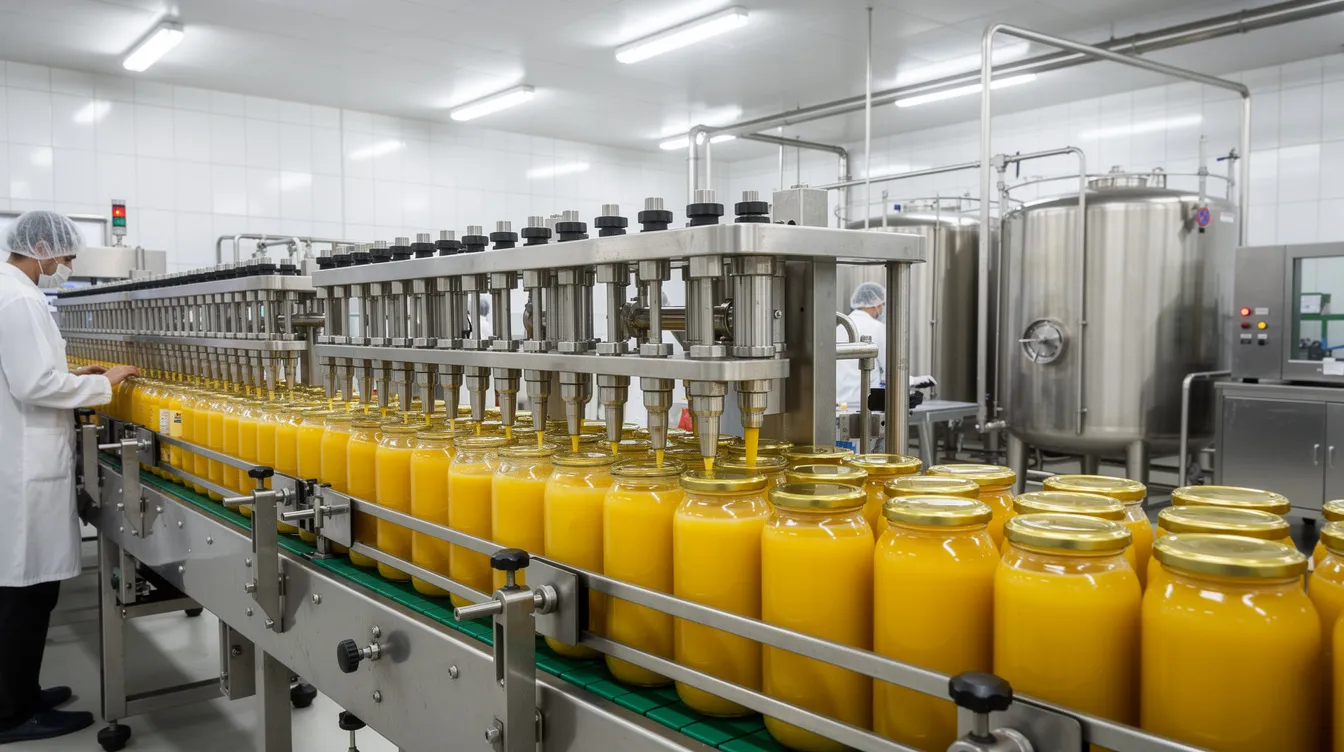
Ghee packaging production lines handle multiple formats: flexible pouches, tins, glass jars, PET containers, or bulk 15–20 kg packs. Hot or semi-liquid ghee is dosed through automatic or semi-automatic filling machines fitted with mass-flow or volumetric fillers and sanitary ball valves.
Associated equipment includes sealing and capping machines, induction sealers, labeling systems, coding units, and secondary packaging for cartons and shrink-wrapping. Packaging speed must align with ghee production line capacity to avoid bottlenecks.
Automatic Ghee Production Line – Equipment Sequence
An automatic ghee production line is an integrated set of equipment where product flows from one stage to another through sanitary pipelines under pump and valve control. Major equipment groups in logical order:
| Stage | Key Equipment |
|---|---|
| Milk reception | Weighing system, reception tank, transfer pumps |
| Storage | Raw milk silos, pasteurized milk tanks |
| Separation | Cream separator, skim milk tank |
| Cream/Butter | Cream storage tanks, butter churners, butter handling |
| Melting | Butter melter (jacketed vessel) |
| Ghee production | Ghee boiler / ghee kettle, heating system (steam/thermic fluid) |
| Clarification | Ghee clarifier, settling arrangements |
| Filtration | Stainless steel mesh or cartridge filters |
| Storage & Cooling | Ghee storage tanks, cooling system |
| Packaging | Automatic filling, sealing, labeling, coding, cartoning |
| Cleaning | CIP system with tanks, pumps, spray balls |
| Utilities | Steam boiler, chiller, compressor, electrical panels |
Ghee making machines can have capacities from 180L to 1000L. Ghee machine prices depend on capacity and automation level, and prices vary based on material grade and heating type. Ghee machine pricing is not fixed and varies by manufacturer, so it is advisable to request a direct quote for accurate ghee machine pricing. Connecting elements include pipelines sized for viscosity of cream and ghee, sanitary butterfly or ball valve manifolds, air vent points, and automation components.
For detailed machinery sizing and pricing, refer to automatic ghee manufacturing plant machinery and equipment cost.
Batch vs Continuous Ghee Manufacturing Process
Industrial ghee can be manufactured using batch kettles, semi-continuous arrangements, or continuous ghee manufacturing plant technology:
- Batch processing: A fixed quantity of butter or cream is charged to a ghee kettle, heated, boiled, clarified, filtered, and discharged. Simpler, more flexible for multiple SKUs, and suitable for smaller capacities.
- Semi-continuous: Continuous feeding of melted butter into a series of vessels with some automation, combining higher throughput with batch-like control.
- Continuous: Continuous melting, heating/evaporation, and clarification in specially designed equipment. Continuous ghee making systems suit high-volume operations better and continuous ghee production systems operate in a single line for efficiency, but require higher capital and engineering complexity.
The choice affects labour requirement, process control, scalability, and how capacity utilization assumptions appear in the DPR and financial model.
Automation in an Industrial Ghee Manufacturing Plant
Automation in a ghee processing plant ranges from basic temperature controllers on ghee kettles to fully PLC-controlled lines with SCADA monitoring. Automated systems in ghee processing improve yield and consistency through:
- Automated product transfer using sanitary pumps, automatic valves, and interlocks
- Temperature and level monitoring in ghee boilers using RTDs and level transmitters
- Integrated CIP system where cleaning cycles run automatically for tanks, pipelines, and all dairy equipment
- Packaging automation (automatic weighing, filling, capping, labeling, coding) for speed and accuracy
- Production data capture for yield analysis and OEE tracking
Fully automatic configurations increase initial capital expenditure but reduce variable labour costs and improve process consistency.
Ghee Plant Capacity and Production Line Configuration
Ghee plant capacity can be defined as kg of ghee per day, litres per hour, or equivalent raw material handled. Low-capacity plants (for example, an illustrative 300 kg/day) typically use batch kettles and semi-automatic filling. High-capacity plants may require continuous or multi-kettle lines. Mini ghee machines are designed for home-based or startup businesses and sit at the lowest end of the capacity spectrum.
Configuration must consider raw-material availability (milk seasonality, cream/butter supply), product mix, planned operating hours, and provision for future expansion. During project planning, teams should align on practical capacity utilization assumptions-typically 60–80% in initial years-rather than assuming 100% from day one.
Ghee Yield and Material Balance
Material balance means accounting for all inputs (milk, cream, butter) and outputs (ghee, buttermilk, skim milk, losses) to ensure consistency across process and financial projections. Ghee yield depends on fat content of incoming material, moisture level, non-fat solids, and unavoidable processing losses (spillage, fat loss in residue, adherence to equipment).
Illustrative Example: If a plant processes 1,000 kg of butter at 80% fat content, maximum theoretical milk fat is 800 kg. After moisture and SNF removal and applying a 3% total loss factor, expected output is approximately 770–780 kg of ghee. Actual yield must be validated against lab analysis, plant trials, or supplier guarantees. Good process control-accurate cream separation, controlled heating, efficient clear fat recovery-reduces losses and improves project viability.
Utilities Required for a Ghee Production Line
Major utility requirements include:
- Electricity – pumps, agitators, separators, packaging machines, lighting
- Steam / thermic fluid – butter/cream heating, moisture evaporation, CIP solution heating
- Chilled water / refrigeration – milk/cream chilling, ghee cooling
- Compressed air – pneumatic valves, actuators, packaging machinery
- Potable/process water – cleaning, CIP, boiler feed
Accurate estimation of utility loads is essential for sizing boilers, chillers, compressors, and electrical transformers. Energy efficiency measures-insulated pipelines, efficient ghee boiler design with proper intermediate shell insulation, heat recovery-significantly affect long-term plant economics. DPRs should separate process electricity consumption from general utilities for more accurate costing.
Cleaning-in-Place (CIP) and Plant Hygiene
As a high-fat dairy product, ghee demands strict hygiene. A clean in place system circulates cleaning solutions through ghee boilers, cream tanks, ghee storage tanks, pipelines, and filling machines without dismantling them.
Typical cleaning steps: pre-rinse with water → alkaline wash → intermediate rinse → acid wash (where required) → final rinse. Design aspects such as smooth internal surfaces, absence of dead legs, proper slope for drainage, and other accessories like CIP-ready spray balls maintain hygiene. Regular cleaning records and adherence to food-safety standards under FSSAI are important for compliance and customer audits.
Quality Control in Industrial Ghee Manufacturing
Key quality checks span the entire ghee making process:
- Raw materials: Fat content, moisture, microbial load, sensory attributes of butter or cream
- In-process: Monitoring ghee processing temperature, observing foam behaviour during cooking, spot checks on developing aroma and colour
- Finished product: Moisture content, free fatty acids (fresh ghee averages around 0.16% FFA), peroxide value, colour, flavour profile, grain structure, clarity at melt
Quality testing of ghee includes checking moisture and free fatty acids as primary shelf-life indicators. Debugging oxidation during ghee production can maintain product quality during storage. Ghee production processes must adhere to regulatory standards set by agencies like FSSAI, and packaging integrity, coding accuracy, and storage-stability evaluation complete the quality framework. Applicable IS/FSSAI standards should be consulted in their latest versions.
Ghee Packaging Production Line
The packaging line is the final section of the plant ghee production and processing operation, directly influencing market presentation and shelf life. Typical sequence:
- Ghee from storage tank → buffer tank near filler
- Filling (by weight or volume)
- Sealing / capping
- Induction sealing (if used)
- Labeling → inkjet or laser coding
- Check-weighing → shrink-wrapping / cartoning → palletizing
Retail packaging (200 ml–1 L jars, 500 g–1 kg tins) differs significantly from institutional or bulk packs (5 kg, 15 kg, 20 kg containers). Packaging materials for ghee must protect against oxidative rancidity to ensure best quality over the stated shelf life. DPRs should outline expected packaging-mix assumptions because foil laminates, PET containers, and metal tins carry different per-unit costs.
Plant Layout and Material Flow
Efficient ghee manufacturing plant layout minimizes unnecessary movement of milk, cream, butter, ghee, packaging material, and people while maintaining hygiene zoning. Logical zones include:
- Raw-material reception (milk, cream, butter)
- Processing area (separation, butter churning, ghee boilers, clarification, filtration)
- Packaging area
- Finished-goods warehouse
- Utility block (boiler house, chiller room, electrical panel room)
- QC laboratory
Flow should be one-directional from “dirty” to “clean” areas, with adequate space around ghee kettles, clarifiers, and CIP skids for maintenance access and future upgrades.
Industrial Ghee Manufacturing Plant Setup Considerations
Setting up an industrial ghee processing plant involves decisions on capacity, technology route, automation level, and integration with existing dairy operations. Key components include land and building, ghee manufacturing process equipment, utilities, QC and lab facilities, packaging line, and storage. Regulatory aspects such as FSSAI licensing, local pollution-control norms, and fire and building approvals must be addressed early.
Working capital planning must account for inventory of raw materials, packaging materials, finished ghee stock, and credit terms to distributors. For detailed investment numbers and cost breakdowns, refer to industrial ghee manufacturing plant setup cost in India.
Process Parameters That Influence Ghee Plant Economics
Even small changes in process parameters can significantly affect raw-material consumption, energy use, and yield-ultimately impacting profitability and loan-servicing capacity:
- Fat content in incoming milk, cream, or butter directly affects ghee yield; higher average fat improves economics but may cost more per unit
- Processing losses (spillage, fat left in buttermilk or spent solids, residual ghee in equipment) are influenced by plant design and operational discipline
- Energy consumption for heating, moisture evaporation, cream chilling, ghee cooling, and CIP heating varies with ghee boiler efficiency and insulation quality
- Labour and automation decisions influence both fixed and variable cost elements in the DPR
- Packaging cost differs by format and affects per-unit margins
Importance of the Manufacturing Process in a Ghee Plant DPR
A credible Detailed Project Report must treat the industrial ghee manufacturing process as the backbone for all technical and financial projections. Key process-related elements that must be internally consistent include:
- Installed plant capacity and planned shift pattern
- Ghee production process flow and machinery capacities
- Material balance linking raw-material consumption to finished-product output
- Utility requirement aligned with process loads
These feed directly into cost estimation: machinery and utility sizing determine capital cost, while raw-material and energy consumption norms feed into operating expenses and working-capital needs. Sales projections must match realistic capacity utilization. From CA Manish Gugliya’s perspective, banks and investors increasingly scrutinize process assumptions-generic industry averages are not sufficient; they must align with the chosen technology and supplier quotations.
Common Mistakes While Planning a Ghee Production Line
- Finalizing ghee making plant machinery without first defining the raw-material route and realistic capacity
- Equating milk-handling capacity directly with ghee output without considering fat content and conversion losses
- Under-sizing boilers or chilled-water systems, which later restrict achievable output or degrade product quality
- Poor plant layout leading to cross-movement of raw and finished products, higher labour, and hygiene risks
- Underestimating cleaning and CIP requirements, causing long downtimes or non-compliance with food-safety audits
- Over-automation beyond actual needs or budget, increasing capital cost without proportionate operational benefit
- Planning without sufficient allowance for future capacity expansion or changes in packaging format
- Using generic project assumptions without obtaining quotations from a leading manufacturer or technology supplier
FAQs – Industrial Ghee Manufacturing Process & Production Line
What is the industrial process of manufacturing ghee?
Industrial ghee manufacturing involves concentrating milk fat (from milk, cream, or butter), heating it in a ghee boiler or kettle to remove moisture, separating milk solids through clarification, filtering the clear fat, cooling it under controlled conditions, and packaging it in hygienic containers. Unlike household methods, the process uses stainless steel equipment with monitored temperatures, CIP-enabled cleaning, and documented quality checks.
How is ghee manufactured from cream?
For cream-based production, chilled cream is standardized for fat, optionally cultured, then converted to butter in a butter churner or processed directly to ghee through melting, heating, moisture removal, clarification, filtration, cooling, and packaging stages. This route reduces the need for milk-reception infrastructure but requires reliable cream supply and effective cold-chain management.
How is ghee manufactured from butter?
White or cultured butter is first melted in a butter melter, then heated in a ghee kettle or ghee boiler until moisture evaporates and milk solids separate. The clear fat is drawn off, filtered, cooled, and packed as ghee. This is a common industrial method of ghee preparation for standalone ghee factories that buy butter from other dairies.
What machinery is required for a ghee manufacturing plant?
A typical plant may include milk-reception and storage equipment, a cream separator, cream and butter handling systems, a butter melter, ghee boiler or kettle, clarifier, filtration unit, ghee storage tanks, cooling setup, automatic or semi-automatic filling and packing machines, pipelines, valves, and a CIP system. Supporting utility systems include boilers, chillers, air compressors, and electrical panels. Ghee making machines range from 180L to 1000L capacity; detailed sizing depends on planned capacity and automation level.
How is moisture removed during ghee manufacturing?
Moisture is removed by heating melted butter or high-fat cream above the boiling point of water so that water evaporates as steam, accompanied by foam and bubbling. Operators or automated controls continue heating until visual cues, temperature readings, and moisture tests confirm residual water content is within specification.
What determines the production capacity of a ghee plant?
Practical ghee plant capacity is determined by the smallest bottleneck in the line-often the ghee kettles, clarifier, or packaging section-as well as available raw material and operating hours per day. In project reports, capacity must be defined clearly (kg of ghee per day at a specified number of shifts) so machinery sizing, utilities, and financial projections align.
How is ghee yield calculated for a project report?
Consultants calculate ghee yield by starting from the fat content of incoming milk, cream, or butter, deducting moisture and non-fat solids, then applying realistic loss percentages for processing and handling. These calculations are illustrative and must be validated against supplier data, lab tests, or pilot results before being finalised in a DPR.
What information about the manufacturing process is required in a ghee plant DPR?
A ghee plant DPR should include a clear description of the industrial ghee manufacturing process flow, selected raw-material route, process flow diagram, machinery list with capacities, material balance, utility requirement, manpower estimates, and planned capacity utilisation profile. These technical details form the foundation for investment estimation, working-capital planning, revenue projections, and debt-servicing analysis.
Conclusion
The industrial ghee manufacturing process is an integrated system covering raw-material handling, fat preparation (from milk, cream, or butter), controlled heating and moisture removal, ghee clarification and filtration, cooling, storage, and final packaging on a suitable ghee production line. The right configuration-batch or continuous, level of automation, type and size of ghee boiler or ghee kettle, clarifier, CIP system, and packaging machines-depends on capacity, product specifications, market focus, and broader dairy industry strategy.
For any industrial ghee manufacturing plant in India, a realistic, technically sound process design is essential because it drives the DPR’s material balance, machinery selection, utility sizing, project cost, working capital, revenue estimates, and overall financial viability. Promoters should work with both technical vendors and experienced project-finance and DPR consultants to ensure that the industrial ghee manufacturing process, ghee production line, and financial model are properly aligned before approaching banks and investors.
CA Manish Gugliya assists entrepreneurs, dairy processors, and businesses in evaluating industrial projects from financial, commercial, and bank-finance perspectives. If you are planning a ghee manufacturing project and need a technically grounded, bankable DPR, ensure your process assumptions reflect your actual technology, raw-material reality, and market conditions-because turnkey solutions on paper mean nothing if the numbers behind them do not hold up under scrutiny.