
When promoters ask me how much it costs to set up a ghee, butter or milk fat processing plant, the answer is never a single number pulled from a machinery quotation. Ghee manufacturing plant setup costs include land, equipment, and utilities – but they also encompass civil construction, refrigeration, effluent treatment, pre-operative expenses, working capital margin and a dozen other heads that most first-time entrepreneurs overlook.
India produces over 3 million tonnes of ghee annually, and the global ghee market was valued at USD 58.99 billion in 2025, projected to reach USD 97.32 billion by 2034. With 55% of consumers now preferring snacks made with natural ingredients, industry trends point firmly toward continued market growth for clarified butter and traditional dairy products in both domestic and international markets. Setting up a combined ghee, butter, and milk fat processing plant requires land investment and specialized machinery – but the total project cost goes far beyond what any single vendor can quote.
This article walks through every component of ghee butter milk fat processing plant project cost and explains, from my perspective as a practising Chartered Accountant and DPR consultant, how the means of finance should be structured for bank approval.
Key Takeaways
- The total project cost of a ghee, butter or milk fat processing plant includes land, site development, factory building, plant and machinery, utilities, electrical installation, erection and commissioning, lab equipment, preliminary and pre-operative expenses, contingency and margin money for working capital – not just the machinery price.
- Medium to large industrial ghee and butter projects in India typically fall in the multi-crore range. A hypothetical 10–15 TPD ghee-butter facility may require around ₹25–30 crore in total capital investment, though actual figures depend heavily on capacity, product mix, automation level and location.
- Project cost must exactly match means of finance. Every rupee of expenditure must have an identified funding source – promoter contribution, term loan, eligible subsidy or quasi-equity – and this alignment is what makes a ghee butter plant project report bankable.
- From a banker’s perspective, a structured detailed project report with realistic DSCR, break even analysis, ROI and cash flow projections significantly improves the probability of term-loan sanction for dairy plant financing.
- Engaging an experienced CA and DPR consultant helps promoters avoid cost underestimation, structure debt–equity properly and prepare bank-oriented financials that withstand credit-officer scrutiny.
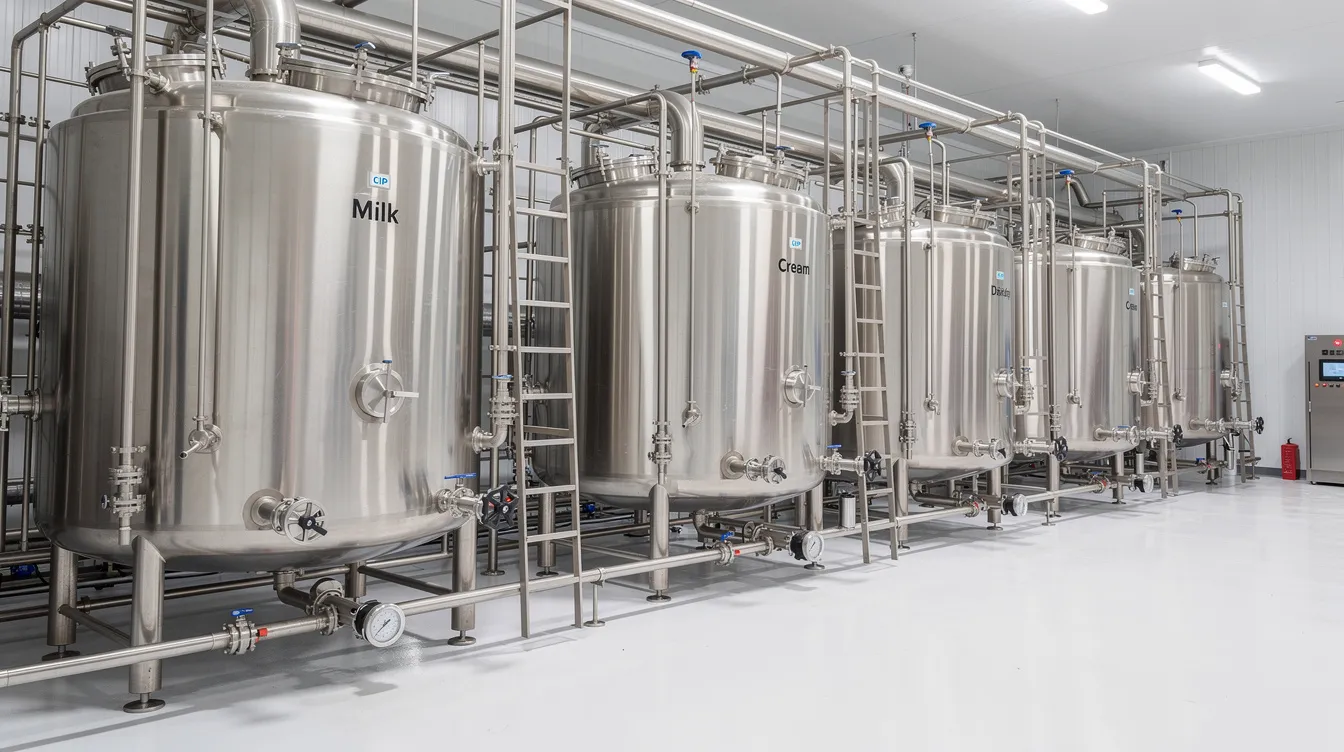
Understanding Project Cost in an Industrial Dairy-Fat Plant
In my practice, I regularly see promoters approach banks with a machinery quotation and call it their “project cost.” That is a fundamental misunderstanding. Project cost is the total financial commitment required to bring an industrial ghee, butter or milk fat processing plant from bare land to commercial production – and then sustain it through its initial operating cycle.
Let me clarify the hierarchy of terms that matter:
- Machinery price – the ex-works or FOB cost quoted by the equipment supplier; excludes freight, installation, civil works and utilities.
- Plant setup cost – machinery plus all other CAPEX needed to make the plant physically operational: civil works, utilities, refrigeration, electrical.
- Fixed capital investment – the sum of land, building, plant and machinery, utilities, electrical, installation, lab and furniture, plus pre-operative and contingency provisions.
- Total project cost – fixed capital investment plus margin money for working capital. This is the figure that appears in the project report submitted to lenders.
- Working capital requirement – the operating funds needed for raw materials, packaging materials, fuel, inventory and receivables once production starts. Assessed separately but the promoter’s margin portion may form part of project cost.
- Total funding requirement – how the total project cost will be financed: promoter equity, term loan, subsidy and any other sources. Must exactly equal project cost.
Two plants with identical 10 TPD ghee production capacity can show vastly different investment costs. One may process liquid milk from scratch through cream separation and butter churning before ghee making, while the other may buy pre-made butter. One may target consumer jars with automated packaging, the other bulk tins. One may add an AMF line. Each configuration changes the ghee butter processing plant investment cost dramatically.
For bank finance, project cost is a structured summary table used in the ghee butter plant detailed project report – not a compilation of vendor quotations. Lenders, investors and rating agencies in India rely on this structured definition when appraising dairy processing plant capital cost and repayment capacity.
Major Components of Ghee Butter Milk Fat Processing Plant Project Cost
This section breaks down each major CAPEX head in a typical dairy fat processing plant CAPEX statement. Think of these sub-sections as a practical checklist that can be converted directly into a project-cost working sheet. Costs for processing plants vary extensively based on daily processing capacity, and actual numbers depend on whether you are building a 5 TPD unit or a 20 TPD facility, where the plant is located and what technology you choose.
Every head discussed below affects bank appraisal. Credit officers do not just look at the total – they examine each line item for reasonableness.
Land and Site Development
Land is typically the first head in a ghee butter milk fat plant project report, and it is almost always costed separately from machinery because its value depends entirely on geography – a plot in an industrial belt near Anand will cost very differently from one near Hyderabad or in rural Rajasthan.
For a medium to large plant (10–20 TPD of finished ghee and butter), the required land area is typically 1–3 acres depending on layout, product lines and expansion plans. Land and site development for a processing plant typically requires 3,000 to 7,500 sq. ft. of built-up area, but the total plot may be larger to accommodate milk tanker movement, parking, loading bays and future capacity.
Key considerations include:
- Purchase versus long-term lease and how each is treated in the project cost presentation for banks
- Stamp duty, registration and legal due diligence expenses
- Internal roads with adequate turning radius for milk tankers and dispatch trucks
- Storm-water drainage and boundary walls
- Loading and unloading bays, security gates and parking areas
- Open space reserved for future expansion – compliance with local zoning laws is essential for ghee plants
In practice, land can account for anywhere from 5% to 25% of total ghee butter plant capital expenditure depending on location. Banks scrutinise land valuations carefully and may require independent valuation reports. For detailed layout and site-planning considerations, refer to the guide on ghee butter plant land and building.
Factory Building and Civil Construction
Civil works for a hygienic dairy plant cost substantially more than a simple industrial shed. RCC flooring, non-slip finishes, sanitary drains, insulation for cold areas and food-grade wall and ceiling finishes all add to the bill. Hygienic design and compliance are crucial for maintaining food safety in dairy facilities, and building hygienic processing halls and cold storage contributes significantly to capital expenditure.
Functional blocks that should be budgeted include:
- Raw milk and cream reception and testing area
- Cream storage and ageing rooms
- Butter production block (churning, working, packaging)
- Ghee manufacturing section (boiling, clarification, settling)
- AMF section where applicable (dewatering, vacuum processing)
- Packaging hall with controlled environment
- Cold rooms and cold storage for butter and cream
- Finished-goods warehouse
- Boiler house and utilities block
- ETP civil structures
- Quality-control laboratory
- Administrative and quality assurance offices
- Staff amenities, change rooms and hygiene zoning
Civil construction cost is generally estimated using per-sq-ft or per-sq-m rates based on specifications. In the 2025–26 era, this head frequently accounts for 20–30% of fixed capital in multi-product dairy setups – though these are hypothetical ranges and not universal benchmarks. Lenders often compare the proposed civil cost per square foot with benchmarks from other ghee manufacturing units and food processing industry projects in their portfolio.
Plant and Machinery for Ghee, Butter & Milk Fat Processing
Machinery and process lines are usually the single largest component of ghee butter processing plant investment cost, often forming 30–40% of total fixed capital. Equipment costs represent a significant portion of capital expenditure, and core machinery requirements for ghee processing vary by production scale.
The main equipment groups include:
- Milk reception systems and cream separators – ghee production requires cream separators and butter churners as foundational equipment
- Cream pasteurizers and standardisers
- Milk storage and balance tanks necessary for holding raw and processed milk
- Butter churns or continuous butter-making machines
- Butter silos, melting and re-churning systems
- Ghee boilers or kettles (batch or continuous) – ghee kettles must maintain temperatures between 105–120°C for proper clarification
- Clarifiers, filters and settling tanks – filtration units are essential for removing milk solids from ghee
- AMF processing equipment (dewatering, vacuum systems) where applicable
- Storage tanks for ghee, butter oil and cream – these should be insulated stainless steel
- CIP (clean-in-place) system and product transfer pumps
- Automated packaging machines for tins, pouches, jars and bulk packs – necessary for efficient ghee production
Automation level – manual, semi-automatic or fully automatic with PLC and SCADA – significantly changes ghee processing machinery cost and labour requirements. For a detailed breakdown of equipment investment, see the article on ghee plant machinery investment. Processing capacity determines the machinery size and refrigeration requirements, and the manufacturing process specifics are covered separately in the guides on industrial ghee processing line and industrial butter production line.
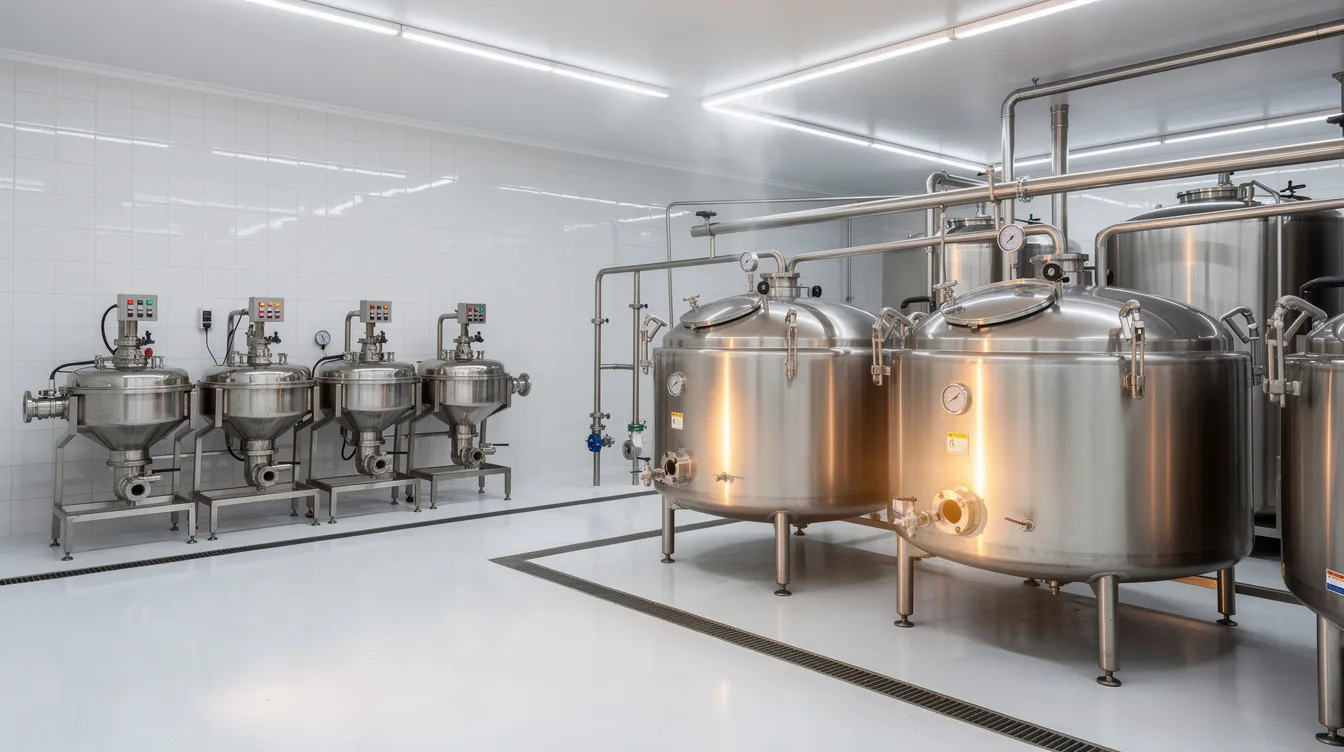
Utilities and Supporting Infrastructure
Many promoters underestimate boiler, refrigeration, water treatment and ETP costs, which can distort the dairy fat processing plant project cost by 15–25%. Utilities and power needs range from 40 kW to 60 kW for refrigeration and other operations in a medium-scale unit, and this figure scales significantly for larger plants.
Major utility systems to be budgeted:
- Boilers and steam distribution for ghee boiling and pasteurisation
- Refrigeration plant and chillers for cream, butter and cold rooms
- Cooling towers and chilled-water circuits
- Water treatment, softening and RO systems – ghee production requires clean water for cleaning purposes
- Compressed-air system
- CIP and hot-water generation
- ETP and waste-management systems (dairy ETPs for 500 KLD can cost ₹2–5 crore depending on technology)
- Fire-fighting, hydrant and sprinkler systems
- Laboratory utilities including gas lines and HVAC where needed
Energy-efficiency features such as VFDs, heat recovery and insulation affect both CAPEX and long-term operating costs. Utilities expenses often comprise 5% to 8% of overall operating expenditures in dairy processing, making efficient design a priority. Banks and credit officers cross-check proposed utility capacities against plant TPD capacity before accepting CAPEX estimates. For detailed utility planning, refer to dairy fat plant utilities and factory layout.
Electrical Installation and Electrification
Electrical systems, though sometimes clubbed with utilities, are better shown as a separate line item in the ghee butter plant financial project report. This gives clarity to both the promoter and the appraising bank.
Typical items include:
- Power-load assessment in kW/kVA covering all machinery, utilities and lighting
- Transformer and HT/LT panels
- Motor control centres, cable trays and control panels
- Internal lighting and small power distribution
- Earthing, lightning protection and power-factor correction
- DG set for backup power where grid reliability is low
At early estimation stages, electrical capital cost is often estimated as a percentage of mechanical and utility cost, later refined with vendor quotations. Correct treatment of GST, duties and erection charges in this head is important to avoid understating dairy processing plant capital cost. Automation systems (PLC, SCADA, VFDs) can add materially to electrical CAPEX and should be clearly identified in the ghee butter plant machinery cost breakdown.
Installation, Freight and Commissioning
These costs are often ignored by first-time promoters, yet can add 8–12% to the basic ex-works machinery price in a medium-sized ghee manufacturing plant.
Expense heads to capture:
- Inland freight and transit insurance
- Unloading, handling and storage at site
- Mechanical and electrical erection
- Fabrication of interconnecting pipelines and structures
- Insulation and cladding
- Testing and commissioning charges
- Technical supervision and training
- Trial-production losses and utility consumption during start-up
For imported equipment, ocean freight, customs duty, clearing and forwarding charges and foreign technical-supervision visits must also be budgeted. Lenders routinely compare the total erection and commissioning figure as a percentage of machinery cost while reviewing a ghee butter plant bankable project report. Without provisioning these costs, cash flows in the first year may become tight, undermining DSCR and repayment capacity.
Furniture, Office and Laboratory Equipment
Though smaller in quantum, these assets complete the ghee butter plant CAPEX structure and should not be clubbed under “miscellaneous” without detail.
Key items:
- Office furniture, computers, networking and CCTV
- Weighing scales, sampling equipment and quality control instruments
- Milk and fat analysers, moisture and peroxide testers, microbiology lab basics
- Basic warehousing equipment such as pallets and pallet trucks
For a medium to large ghee butter manufacturing business, lab-equipment cost is significant because food-safety compliance and quality assurance depend on proper QC infrastructure. Packaging and quality control are integral components of operational expenditures in ghee production. AGMARK certification ensures quality standards for ghee and demands adequate testing capability. High-end export units or AMF plants may require more sophisticated lab CAPEX due to stricter fat-specification and shelf-life studies. These assets are generally eligible for term loan alongside machinery.
Preliminary and Pre-Operative Expenses
These intangible and time-based costs distinguish a rough vendor budget from a professional ghee butter processing plant DPR. Underestimation here leads directly to higher-than-projected borrowing once operations commence.
Typical preliminary expenses:
- Company incorporation, registration and legal documentation
- Project report preparation, professional fees and consultancy
- Loan processing charges and documentation fees
- Market research and business plan development
Typical pre-operative expenses:
- Salary and administrative overheads during construction and trial runs – initial operational costs include labor, maintenance, and utilities
- Travel, site visits and training at established ghee manufacturers
- Interest during construction (IDC) where the term loan is drawn before commercial operation date
- Initial marketing, branding and launch expenses
- Statutory approvals and regulatory compliance costs including FSSAI License (mandatory for ghee manufacturing), Pollution Control Board NOC, and Factory License
- Initial insurance premiums and security deposits with utilities
Pre-operative expenses are normally capitalised and included within the total ghee butter plant project cost calculation for appraisal purposes.
Contingencies and Cost Escalation Provision
Contingency is not “padding” – it is a realistic provision to cover minor design changes, cost escalation and items missed at the estimating stage. Common practice involves keeping a modest percentage on applicable heads (typically 5–10% on building, machinery and utilities), with the exact percentage depending on project complexity, import content and implementation period.
For a ghee butter plant bank finance proposal, transparent disclosure of contingency helps credit officers recognise that the promoter has planned for realistic overruns. In a 24-month implementation of a large AMF-cum-ghee facility, steel-price or forex volatility justifies a higher provision than a simple domestic-machinery project. Once utilised, contingency becomes part of asset cost and must be appropriately apportioned in the fixed-assets schedule.
Margin Money for Working Capital
Many dairy promoters confuse long-term project cost with post-commissioning working capital. In Indian bank DPR formats, margin money for working capital is often included in project cost as the promoter’s own contribution towards:
- Raw-material inventory (milk, cream, butter) – initial working capital for ghee processing should cover several months of raw material costs
- Packaging materials and consumables
- Fuel, stores and spares
- Finished-goods stock
- Receivables from distributors and institutional buyers
Fixed capital is largely funded through term loan plus equity. Working capital limits (cash credit, WCDL) are sanctioned separately. The promoter must bring in a margin – often 20–25% of assessed working capital – which is shown in project cost. In ghee butter plant working capital requirement assessment, seasonality (festive-demand peaks) and credit terms to wholesalers significantly influence inventory holding and margin.
The critical distinction: “working capital margin” is a project-cost component, while the total sanctioned fund-based working-capital limit is a separate facility. Confusing the two leads to double-counting in the funding requirement.
Illustrative Project Cost Structure for an Industrial Ghee–Butter Plant
The figures below are purely illustrative, based on hypothetical 2025–26 assumptions for a mid-sized 10–15 TPD ghee and butter plant in India. They cannot be treated as machinery quotations, current market prices or a substitute for a project-specific DPR.
| Component | Hypothetical Amount (₹ Crore) | Approx. % of Total |
|---|---|---|
| Land | 2.00 | ~7% |
| Site Development | 0.50 | ~2% |
| Building & Civil Works | 6.00 | ~21% |
| Plant & Machinery | 8.50 | ~30% |
| Utilities (incl. ETP) | 3.50 | ~12% |
| Electrical Installation | 1.50 | ~5% |
| Erection & Commissioning | 1.00 | ~4% |
| Lab & Miscellaneous Fixed Assets | 0.50 | ~2% |
| Preliminary & Pre-Operative Expenses | 1.00 | ~4% |
| Contingency | 1.00 | ~4% |
| Margin Money for Working Capital | 2.50 | ~9% |
| Total Project Cost | ~28.00 | 100% |
In this illustration, machinery and utilities together form about 42% of total project cost, while land and civil works account for roughly 30%. These proportions shift with automation, product mix and location. A project-specific ghee butter plant DPR must always be prepared before finalising loan proposals.

How Capacity Affects Ghee, Butter & Milk Fat Project Cost
Doubling plant capacity from 5 TPD to 10 TPD does not double the project cost. Certain utilities, buildings and support systems are common, creating economies of scale.
Consider three illustrative capacity bands:
- 5 TPD ghee or butter unit – proportionally higher per-kg costs for building, utilities and administration. A small ghee unit can start with an investment of ₹2–5 lakh at the cottage level, but an industrial 5 TPD unit requires substantially more. Plant economics are more sensitive to capacity utilisation at this scale.
- 10 TPD integrated plant – begins to benefit from larger equipment at lower per-unit cost, shared utility systems and more efficient labour distribution. This is the range where many mid-market ghee manufacturers operate a profitable business.
- 20+ TPD industrial facility – fixed costs flatten further. Investment in energy recovery, larger cold storage and automated packaging lines becomes justified. Per-kg capital cost is typically lowest.
Economies of scale show up clearly in larger cream-storage and bulk butter silos, higher-capacity boilers and refrigeration at lower per-kg utility cost, and automated packaging lines reducing labour cost. For deeper capacity-analysis, see ghee butter plant capacity planning. In term-loan appraisal, banks evaluate whether projected turnover from a given production capacity justifies the requested investment and debt level.
Impact of Product Mix on Plant Cost and Working Capital
A plant focused on branded consumer ghee – a consumed dairy product with a rich nutty taste and smooth texture – will have a different configuration compared to one supplying industrial butter or AMF to B2B customers. Dairy processing can yield several co-products such as cream, butter, and ghee, and the chosen product mix determines what you build and how much it costs.
Product combinations and their implications:
- Pure ghee only – simpler cold-storage requirements, but investment in ghee-boiling and clarification capacity. Food-grade antioxidants are used to prevent oxidative rancidity in ghee.
- Ghee + table butter – requires additional cold rooms and consumer-format packaging. Butter used in ghee must contain at least 80% milk fat content.
- Ghee + industrial butter + white butter – higher refrigeration and bulk-handling infrastructure. Packaging formats can vary significantly between bulk and retail offerings in dairy businesses.
- Ghee + AMF + specialty milk-fat ingredients – highest capital intensity, with vacuum systems, advanced controls and export-grade lab infrastructure.
Product mix impacts cold-storage capacity, QC and lab requirements (especially for exports), type and number of packaging machines, and working capital. Butter-heavy plants need more cold-chain inventory. For market strategy alignment, see milk fat plant product mix. Lenders look for alignment between proposed product mix, installed machinery and projected revenues in any ghee butter plant bankable project report.
Cost Comparison: Ghee Plant vs Butter Plant vs AMF Plant
While the core raw material (milk fat from high-quality milk or cream) is common, cost structure differs:
- Ghee-focused plants – relatively lower cold-storage CAPEX but higher ghee-boiling and clarification capacities. Simpler supply chain for traditional ghee in Indian markets.
- Butter-focused plants – require larger refrigeration, cold rooms and quick-freezing facilities. Higher working capital due to perishability.
- Integrated ghee + butter plants – share utilities and milk processing infrastructure but need both hot (ghee boiling) and cold (butter storage) sections.
- AMF plants – highest capital intensity. Need advanced dewatering, vacuum systems and higher-spec process controls. However, export demand and margins are also typically higher for this product.
Capital intensity usually increases from simple ghee to integrated ghee-plus-butter to AMF, though margins and investment opportunities in international markets also rise. For AMF-specific cost considerations, refer to the Anhydrous Milk Fat Manufacturing Plant Project Report, while detailed technology aspects are covered at AMF Manufacturing Process, Machinery & Production Technology.
Indigenous Versus Imported Machinery: Effect on Investment
For a large ghee manufacturing plant or butter manufacturing plant, promoters often evaluate a mix of Indian and imported process lines.
Factors to compare:
- Basic machinery cost and payment terms (imported lines carry foreign-exchange exposure)
- Automation level and integration with SCADA systems
- Consistent quality of finished product and yield recovery
- Availability of spares and local service support
- Impact on project implementation timeline (imported equipment often has longer lead times)
Imported machinery can increase ghee butter plant machinery cost and total project cost, but it may improve yields, reduce losses and support premium or organic ghee production for export markets, improving long-term ROI. From a banker’s perspective, technology choice must be justified through projected revenue, savings in operating cost and improved DSCR and IRR – not through brand value alone. A well-prepared ghee butter processing plant feasibility report should include a technology-comparison note wherever large imported packages are proposed.
What Is “Means of Finance” in a Ghee Butter Milk Fat Project?
For any industrial dairy-fat project:
Project Cost = Means of Finance
This equality is non-negotiable. The means of finance section in a ghee butter plant project report answers how much money is required, from which sources, in what form (equity, term loan, subsidy, unsecured loans) and when it will be brought into the project.
Each project cost component – land, building, machinery, pre-operative expenses, margin for working capital – must have a corresponding funding source. Gaps in this mapping will be immediately flagged by any bank’s credit department. Lenders insist that assumptions on subsidy, unsecured loans and internal accruals be realistic, documented and consistent with the promoter’s existing financials.
As a practising CA, I typically structure the means of finance table alongside the cost table to ensure they align with bank norms on debt–equity ratio and promoter contribution.
Major Sources of Project Finance
The following funding components are commonly used in ghee butter project financing for medium and large dairy plants:
- Promoter contribution – equity, partners’ capital, internal accruals or retained earnings. This signals financial commitment and “skin in the game” to lenders.
- Term loan – from banks or financial institutions, typically used for eligible fixed assets such as building, plant and machinery, utilities and installation. Under the AHIDF scheme, interest subvention of 3% is available for eligible dairy processing units with loan coverage up to 90% of project cost.
- Working capital finance – cash credit, working capital demand loan and bill discounting, assessed separately based on operating cycle.
- Subsidy or government assistance – potentially available where the project and promoter meet applicable scheme conditions. Should never be assumed as guaranteed.
- Unsecured loans and quasi-equity – from promoter group concerns, treated according to lender guidelines.
The combination chosen must satisfy both bank guidelines (exposure, margin, security) and project viability (DSCR, interest cover, cash-flow stability).
Illustrative Means of Finance Structure
| Source | Amount (₹ Crore) | % of Total |
|---|---|---|
| Promoter’s Contribution (Equity) | 12.00 | 30% |
| Term Loan | 25.00 | 62.5% |
| Eligible Subsidy (if applicable) | 2.00 | 5% |
| Unsecured Loans / Quasi-Equity | 1.00 | 2.5% |
| Total Means of Finance | 40.00 | 100% |
This example (for a hypothetical ₹40 crore project) shows a debt–equity ratio of approximately 1.75:1. This is illustrative – some banks may demand more equity for greenfield, high-risk or export-oriented projects.
Subsidy should be treated conservatively: projected as a separate source only after verifying eligibility, cap, timelines and any back-ended conditions. Sound ghee butter plant means of finance planning improves bank comfort and helps avoid funding gaps during implementation. Actual structuring must be customised to promoter strength, project location, scheme availability and lender policy.

Debt-Equity Ratio and Promoter Contribution
Debt–equity ratio is simply the proportion of borrowed funds to the promoter’s own investment. If a project has ₹25 crore in term debt and ₹12 crore in equity, the ratio is roughly 2:1. Banks look at this ratio as one of the first key parameters when assessing ghee butter plant term loan proposals.
Higher debt raises repayment obligations and DSCR risk. Higher promoter contribution shows commitment but may reduce project IRR if equity is over-deployed. The appropriate ratio depends on project economics, lender policy and promoter strength – no single ratio is mandatory for every project.
Acceptable sources of promoter contribution include savings, retained earnings, sale of disclosed assets and fresh equity infusion. Lenders require a documented banking trail and perform due diligence on source of funds. As a practising CA, I assist promoters in planning staged equity infusion aligned with construction milestones, which is captured in the ghee butter plant cash flow projection and CMA data.
Term Loan Assessment and Bank Appraisal
Banks evaluate a term-loan request for a ghee butter milk fat processing plant by examining:
- Total project cost and means of finance structure
- Eligibility and value of assets offered as security
- Projected revenues and profitability – gross profit margins for ghee manufacturing typically range between 20–30%
- DSCR (both average and minimum), IRR and ROI
- Break even analysis and payback period – break-even for a ghee manufacturing business typically ranges from 2 to 4 years
- Credit history and management capability of the promoter
- Raw material availability and competitive landscape
A bankable ghee butter processing plant DPR includes 5–7 year financial projections, sensitivity analysis and a realistic implementation schedule with IDC calculation. Term-loan amount is typically back-calculated from project cost minus promoter contribution and confirmed subsidy, subject to the bank’s exposure limits. CA-prepared repayment capacity workings and CMA data significantly influence sanction terms such as moratorium period and loan tenor.
Working Capital Requirements for Dairy-Fat Processing
Running ghee butter plant profitability depends heavily on adequate working capital for:
- Milk and cream procurement – milk procurement constitutes the largest ongoing financial commitment in ghee processing, and ghee production requires high-quality milk or cream as primary raw material with minimum fat content of 3.5%
- Bulk butter stock and cream procurement
- Packaging materials and consumables
- Fuel, power and stores
- Finished-goods inventory and debtor cycles
Raw materials account for 85–90% of total operating expenses, and operational expenses for milk fat processing plants are significantly driven by raw material costs. Raw materials usually account for 70% to 80% of daily operational costs in dairy processing when looked at from a daily cash-flow perspective. Operational expenses also include manpower for skilled labor and quality control.
Working capital limits are assessed on operating cycles and projected sales. Margin requirements mean promoters must fund part of this investment from their own resources. Underestimating working capital can force promoters to divert term loan funds, causing implementation delays and DSCR stress. Separate dairy processing project financial projections for working capital are typically presented in CMA data formats required by banks.
How Banks Evaluate Project Cost Estimates
Banks perform practical checks on ghee butter plant capital expenditure estimates:
- Comparing machinery quotations with market benchmarks and similar recent projects
- Checking civil cost per square foot against their own portfolio of food processing projects
- Verifying that ETP, refrigeration and utilities are not understated
- Validating land-cost reasonableness through independent valuation reports
- Confirming that GST and taxes are properly treated
- Assessing whether pre-operative expenses and IDC are realistic for the proposed timeline
Inconsistent or inflated costs raise doubts about promoter credibility and may trigger reductions in eligible term-loan amount. Credit officers may ask questions like: “Why is your refrigeration cost lower than industry norms for a 10 TPD butter line?” or “Why have you not included an ETP when your plant capacity exceeds SPCB thresholds?” A properly structured ghee butter plant bankable project report, prepared with CA support, anticipates these queries and presents supporting documents in annexures.
Common Mistakes in Estimating Ghee Butter Plant Project Cost
Frequent errors I encounter:
- Treating the main machinery quotation as total project cost
- Ignoring boiler, refrigeration, ETP and electrical infrastructure costs
- Underestimating civil construction for food-grade standards
- Excluding freight, installation and commissioning charges
- Missing pre-operative expenses and IDC
- Omitting contingency for price escalation
- Underestimating working capital and margin requirements
- Assuming maximum possible bank funding or treating subsidy as guaranteed cash
- Using old machinery quotations without escalation adjustment
- Ignoring GST and cash-flow implications
Such mistakes cause funding gaps mid-project, delay commercial operation date and reduce DSCR – damaging lender confidence permanently. In one case I reviewed (details anonymised), a promoter estimated his 8 TPD ghee plant at ₹4 crore based purely on machinery quotes. The actual requirement after including civil works, utilities, ETP and working capital margin exceeded ₹9 crore. Mid-construction, he had to approach his bank for enhanced limits, which delayed the project by a year and eroded the project financials. Corrections at DPR stage are always cheaper than mid-construction course changes.
Role of a Professional DPR and Financial Projections
A comprehensive ghee butter plant project report for bank finance integrates:
- Technical configuration and plant layout
- Project cost and means of finance
- Production capacity and product mix assumptions
- Sales and pricing assumptions based on market research
- Detailed financial projections including DSCR, IRR, ROI and break even analysis
- SWOT analysis and competitive landscape assessment
Project cost must be fully reconciled with the fixed-asset schedule, depreciation plan, projected balance sheet, term-loan amortisation schedule and cash-flow statement. Credible ghee butter plant financial projections cover at least 5–7 years with sensitivity for raw-material price rise (milk procurement cost variations), capacity-utilisation ramp-up and interest-rate changes. The global ghee market is projected to reach ₹5 lakh crore by 2027, and research reports confirm strong demand across domestic and international markets – but project financials must still be grounded in conservative, plant-specific assumptions. Net profit projections should reflect realistic operating costs, not optimistic market scenarios.
Scenario and Sensitivity Analysis
Scenario analysis tests the robustness of ghee butter plant profitability under changing conditions.
Key scenarios to model:
- CAPEX escalation of 10–15% on machinery or civil cost
- Delayed implementation increasing IDC and pre-operative expenses
- Lower-than-expected capacity utilisation in the first 2–3 years of production scale ramp-up
- Higher raw-material cost or sales discount pressure in a competitive ghee market
- Tighter credit terms from buyers increasing working capital needs
Each scenario should show its impact on DSCR, IRR, cash-flow coverage of term-loan instalments and payback period. Banks are increasingly giving weight to such sensitivity tables when assessing ghee butter plant bank finance for large projects. This analysis is usually performed as part of a professional ghee butter processing plant feasibility report.
How a Chartered Accountant / DPR Consultant Adds Value
As CA Manish Gugliya, I contribute far more than number crunching to a dairy-fat project. A practising CA with project-finance experience helps promoters by:
- Structuring realistic project cost and means of finance aligned with bank norms
- Validating vendor quotes and civil estimates against market benchmarks
- Preparing 5–7 year financial projections, DSCR analysis and CMA data
- Designing term-loan repayment schedules that match projected cash flows
- Performing sensitivity and scenario analysis to support bank appraisal
- Coordinating with technical consultants and machinery suppliers on cost assumptions
- Assisting in preparing annexures and assumption notes for bankable project reports
- Advising on documentation and financial-closure strategy with lenders
While I prepare, evaluate and structure financial figures, final business risk and decisions remain with the promoter. No guarantee of sanction, subsidy or profitability is implied. However, promoters considering a medium or large industrial ghee plant investment, butter manufacturing plant project or milk fat processing plant investment should treat DPR preparation and financial structuring as an early, integral part of their project – not as a last-minute formality for the bank.
FAQs on Ghee, Butter & Milk Fat Processing Plant Project Cost and Finance
How much investment is typically required for a medium-sized ghee manufacturing plant in India?
A medium-sized industrial ghee manufacturing plant processing 5–10 TPD typically requires a total project cost in the range of ₹5–15 crore, including land, building, machinery, utilities, pre-operative expenses and working capital margin. For a larger integrated 10–15 TPD ghee-butter facility, the figure may rise to ₹25–30 crore or more depending on automation, product mix and location. These are hypothetical ranges – actual ghee butter plant setup cost in India varies significantly. A small ghee unit can earn ₹50,000–₹1,00,000 per month at cottage scale, but industrial plants target substantially higher revenues. For a deeper exploration of setup investment, see Industrial Ghee Manufacturing Plant Setup Cost in India.
What is included in ghee butter plant project cost, and how is it different from machinery cost?
Machinery cost is only one component. The total ghee butter milk fat processing plant project cost includes land and site development, factory building and civil construction, plant and machinery, utilities (boiler, refrigeration, ETP, water treatment), electrical installation, erection and commissioning, laboratory and office equipment, preliminary and pre-operative expenses (including IDC), contingency and margin money for working capital. Machinery may form 30–40% of the total. Presenting machinery cost alone as project cost is one of the most common errors in weak ghee manufacturing plant project reports submitted to banks.
How much promoter contribution do banks usually expect for a dairy processing plant?
There is no single mandatory ratio. However, banks generally expect promoters to bring in 25–40% of total project cost as equity or own contribution for medium to large dairy processing projects. The remainder may be funded through term loan and, where eligible, government subsidy. Higher promoter contribution reduces the project’s debt–equity ratio, improves DSCR and signals financial commitment. Lenders verify the source and genuineness of promoter funds through banking trails and documentation. Rising disposable incomes and growing health benefits awareness are expanding the ghee manufacturing sector, but lender comfort still depends on the promoter’s financial strength.
Can a bank fully finance my ghee butter plant without any equity?
In practice, no. Banks require the promoter to bring meaningful equity – both as financial margin and as a demonstration of commitment. Under certain government schemes like AHIDF, bank loan coverage can extend up to 90% of project cost, but even then, the remaining 10% must come from the promoter. Subsidy, if applicable, is typically back-ended or conditional and cannot be treated as day-one cash. A business consultant or CA can help structure the optimal debt–equity mix for your specific project.
How can CA Manish Gugliya help in preparing a bankable DPR for my ghee, butter or milk-fat processing project?
CA Manish Gugliya assists promoters with end-to-end DPR preparation including project cost structuring, means of finance planning, 5–7 year financial projections, CMA data assistance, DSCR analysis, term-loan repayment scheduling, break even analysis and sensitivity modelling. The deliverable is a bank-oriented detailed project report that connects your plant’s technical configuration with its financial viability – helping both lenders and investors evaluate the ghee butter manufacturing project financial feasibility objectively. Whether you are planning a traditional ghee unit using traditional methods, a modern butter manufacturing plant or a high-value AMF facility targeting export demand, getting a customised DPR prepared is an essential first step before finalising investment decisions.
Conclusion
Successful financing of a ghee, butter or milk fat processing project begins with realistic, well-structured estimation of CAPEX, pre-operative expenses, working capital margin and a robust means-of-finance plan. Machinery price alone is not the project cost. Capacity and product mix choices – whether you plan to produce traditional ghee for the ghee market, consumer butter, industrial butter or AMF – determine the investment level.
Land, civil works, utilities and refrigeration significantly affect ghee butter plant investment cost, and these heads are precisely where most underestimation occurs. Means of finance must be aligned with debt–equity comfort and DSCR targets. A project that looks viable on a machinery quotation may become unviable once you add the full infrastructure, regulatory compliance, and operating costs.
A professional, bank-ready ghee butter milk fat plant project report connects technical design with financial viability, helping promoters, lenders and investors evaluate the project objectively. Before finalising land acquisition or placing machinery orders, get a customised DPR and financial plan prepared for your specific capacity, location and product mix.
Written by CA Manish Gugliya, practising Chartered Accountant and project-finance consultant specialising in Detailed Project Reports, financial projections, CMA Data assistance, DSCR analysis and term-loan assessment for dairy and food-processing units in India.