Selecting the right ghee manufacturing plant machinery is one of the most consequential decisions in any industrial ghee project. A commercial ghee manufacturing plant uses specialized dairy equipment to convert raw milk into clarified butterfat, and the machinery configuration directly determines production capacity, product quality, energy consumption and long-term bankability. Ghee manufacturing requires specialized machinery for raw milk separation, butter production, moisture clarification, and packaging – and getting this right at the project-planning stage avoids costly corrections later.
This article provides a structured, technically grounded overview of automatic ghee plant machinery, equipment lists, indicative cost frameworks and project-finance considerations relevant to promoters, dairy companies and investors planning industrial ghee plants in India.
Key Takeaways
- An industrial ghee manufacturing plant needs a complete integrated line – not just a single ghee making machine – covering raw material handling, processing, utilities, automation and packaging.
- Ghee plant machinery cost in India depends primarily on capacity, raw material route (cream or butter), level of automation (semi-automatic vs fully automatic ghee plant), packaging formats and utility integration.
- A realistic DPR must consider landed and installed machinery cost – including boilers, refrigeration, piping, electricals, installation and taxes – rather than only ex-factory ghee boiler or ghee kettle prices.
- Plant layout, supplier selection, energy efficiency and scope of supply have a direct impact on project bankability, DSCR and long-term profitability for a commercial ghee processing plant.
- Promoters should treat machinery quotations as input for a structured project-finance plan, combining term loan and promoter contribution, instead of basing investment decisions only on online ghee making machine price lists.
Automatic Ghee Manufacturing Plant Machinery – Overview
As a practitioner involved in Detailed Project Reports and project cost estimation for dairy and food-processing ventures, I consistently observe that promoters underestimate the scope of plant ghee manufacturing infrastructure. The ghee boiler or ghee kettle may be the most visible piece of equipment, but it is only one component of an integrated system. Correct machinery specification is critical for achieving target capacity, meeting quality standards such as minimum 99.5% milk fat and maximum 0.5% moisture, and presenting a bankable project to lenders.
A commercial ghee making plant is an integrated system covering raw milk reception, cream and butter preparation, ghee production, storage, packaging, CIP and utilities. Raw materials for ghee production can include either cream from milk or pre-made butter, and this choice shapes the entire equipment configuration. Ghee is produced by processes that remove water and non-fat milk solids, resulting in clarified butterfat suitable for retail and institutional sale.
The main functional blocks include:
- Raw material receiving – milk reception tanks, weighing systems
- Cream and fat preparation – cream separator, butter churn (if using butter route), butter melting vat
- Core ghee processing – ghee melting tank, ghee boiler or steam-jacketed kettle, clarification system, filtration unit
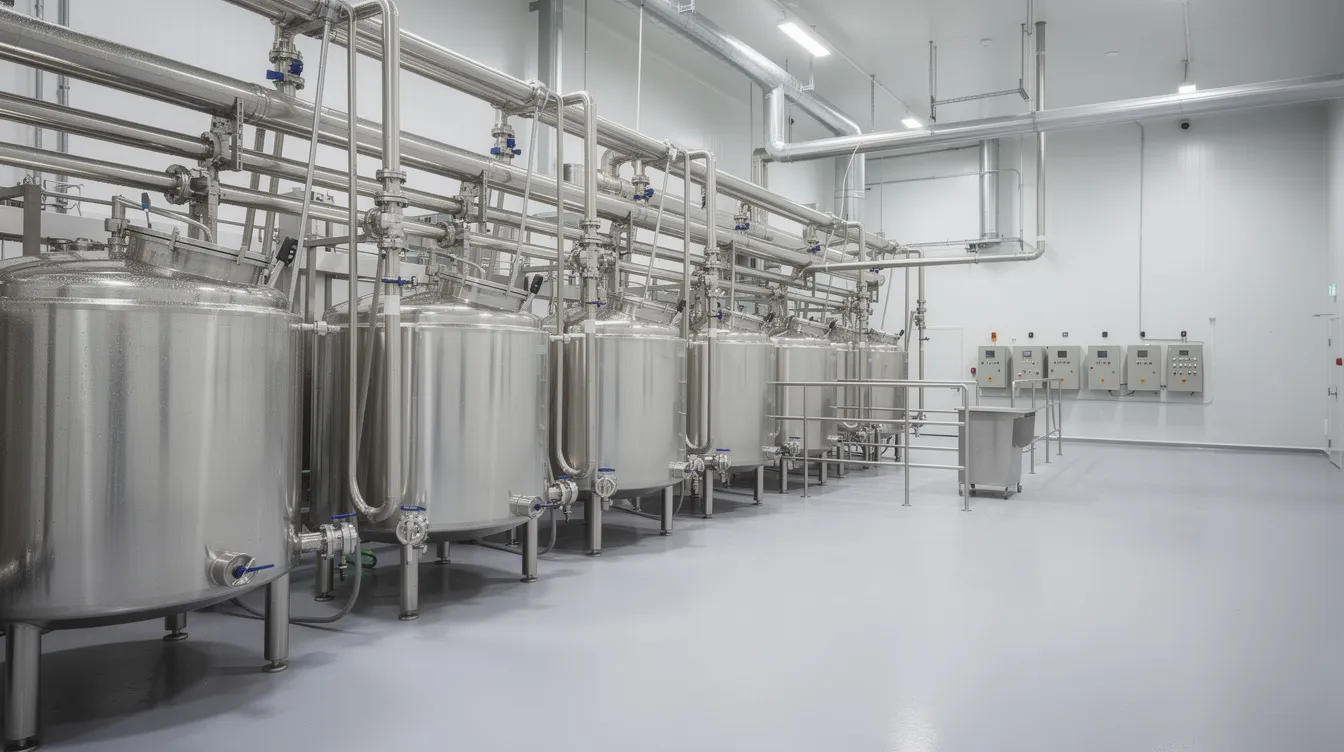
- Post-processing – cooling and holding tanks, insulated SS storage tanks, transfer pumps, stainless steel pipelines and valves
- Packaging – automatic ghee filling machine (pouch, jar, tin), labeling, coding
- Cleaning and sanitation – CIP system
- Utilities – steam boiler, hot water system, refrigeration, air compressor, water treatment, electrical panels
Ghee making machines are constructed from food-grade stainless steel to ensure hygiene, durability and compliance. Ghee plants typically include a ghee boiler and cream separator as core process equipment, though the exact configuration varies with capacity. Typical project profiles in India range from 500 kg/day to 10,000 kg/day commercial plants, and the configuration of automatic ghee plant machinery changes significantly across this range.
Ghee Manufacturing Process and Machinery Flow
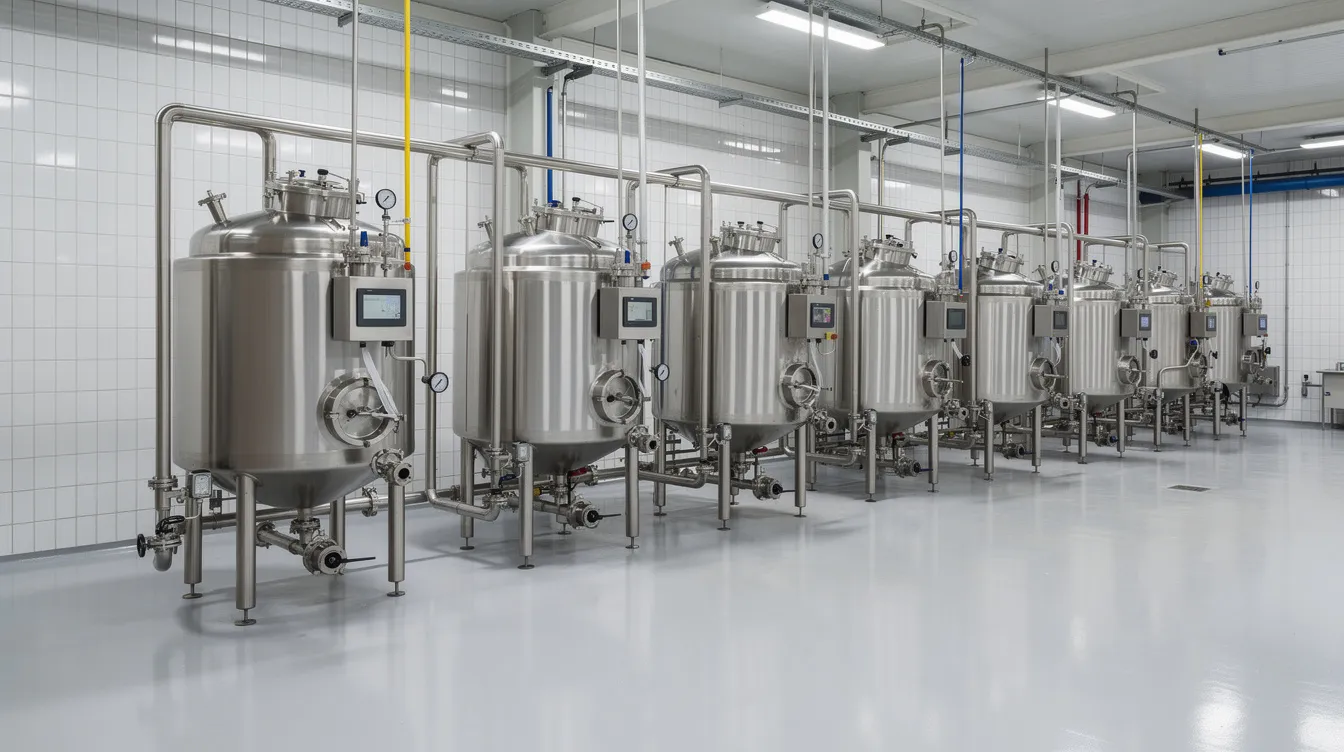
The machinery flow depends on the selected technology and raw material route. The three common routes are: cream → butter → ghee, cream directly to ghee, or recombined fat routes used in some organized dairies. Continuous ghee production plants often employ scraped-surface heat exchangers for efficient processing at higher throughputs.
A typical cream-to-ghee process flow follows this sequence:
Raw Milk Reception Tank → Cream Separator → Cream Balance Tank → Pasteurization → Butter Churn → Butter Melting Vat → Ghee Boiler / Steam-Jacketed Kettle → Clarification System → Ghee Filtration Unit → Cooling/Holding Tank → Insulated SS Storage Tank → Automatic Ghee Filling and Packaging Machines
The initial process of ghee production from milk includes milk reception, cream separation, butter making, and then ghee processing stages. A typical production flow involves pasteurization, cream separation, butter making, and clarification.
Key variations:
- Buying butter as raw material – skip cream separator, butter churn; focus on melting, clarification and packaging
- Integrating with existing dairy plant – leverage existing milk reception and pasteurization; add ghee-specific sections
- Continuous production equipment vs batch kettles – suited for larger capacities with consistent demand
Process control at the ghee boiler is critical: ghee plants use controlled heating to prevent burning, and moisture removal must be monitored carefully. Hygienic product transfer through stainless steel pipelines, pumps and sanitary valves protects product quality throughout the line.
The machinery flow must be mapped into a process-flow diagram (PFD) and layout drawing, which then forms the technical base for the DPR and machinery cost estimation.
Complete Ghee Manufacturing Plant Machinery & Equipment List
This section serves as a core reference for entrepreneurs evaluating industrial ghee manufacturing plant machinery. The table below lists key equipment, followed by brief explanations of critical categories.
| Machinery / Equipment | Main Function | Typical Application | Cost Significance |
|---|---|---|---|
| Milk reception tank | Receiving and temporary storage of raw milk | Integrated dairy-ghee plants | Low–Medium |
| Cream separator | Separating cream from milk using centrifugal force | Plants processing raw milk | Medium–High |
| Cream pasteurizer | Heat treatment for food safety | Where cream is processed in-house | Medium |
| Butter churn | Converting cream into butter by agitation | Butter-route ghee plants | Medium |
| Butter melting vat | Gently melting butter for ghee processing | All butter-route plants | Medium |
| Ghee melting tank | Preparing fat feed for ghee boiler | Most configurations | Medium |
| Ghee boiler / steam-jacketed kettle | Controlled heating, moisture removal, flavour development | All ghee plants | High |
| Ghee clarification system | Removing non-fat solids for clear, bright ghee | All commercial plants | Medium–High |
| Ghee filtration unit | Removing fine particles; improving clarity and shelf life | All plants | Medium |
| Heat exchanger (plate/tubular) | Temperature control where needed | Larger/continuous plants | Medium |
| Balance tank | Buffering flow between process stages | Continuous plants | Low |
| Insulated SS storage tank | Holding finished ghee at stable temperature | All plants | Medium |
| Transfer pumps | Moving product between vessels hygienically | All plants | Low–Medium |
| SS pipelines and valves | Hygienic product routing | All plants | Medium |
| CIP system | Automated cleaning of equipment and lines | All commercial plants | Medium–High |
| Automatic ghee filling machine | Filling pouches, jars, tins, bulk packs | All plants | High |
| Labeling machine | Applying product labels | Retail packaging | Low–Medium |
| Coding / inkjet printer | Date, batch, FSSAI details | All plants | Low |
| Conveyors | Moving packs between stations | Automated lines | Medium |
| Steam boiler | Generating steam for kettles, pasteurizers, CIP | All plants | High |
| Hot water generator | Hot water supply for cleaning and process | Most plants | Medium |
| Refrigeration / chilled water | Cold storage for butter, cream handling | Butter-route plants | Medium–High |
| Air compressor | Pneumatic valves, packaging systems | Most plants | Low–Medium |
| Water treatment plant | Treating process and boiler feed water | All plants | Low–Medium |
| Electrical panel (MCC/PCC) | Power distribution and motor control | All plants | Medium |
| Instrumentation & automation | Sensors, PLC, SCADA | Automatic plants | Medium–High |
| Laboratory / QC equipment | Testing fat, moisture, acidity | All plants | Low |
After the core ghee processing equipment (ghee boiler, clarifier, filtration), packaging machinery is often the second-largest cost block. Utility and automation systems – while less visible – can represent 25–40% of total installed equipment cost. The ghee manufacturing plant equipment list will differ for a 1 TPD semi-automatic plant vs a 10 TPD fully automatic ghee manufacturing plant; this table should be treated as an indicative checklist rather than a rigid bill of materials.
Cream and Butter Handling Machinery
Whether plant ghee is produced from cream, from in-house butter, or from purchased butter, the choice directly influences both the machinery list and ghee production machinery cost in India. Combining milk processing and ghee manufacturing under one roof (with cream separator and butter churn) increases fixed capital but may improve fat utilization and margins for integrated dairies.
In many cases, existing dairy plants already have milk reception, pasteurizers and cream separators, so incremental ghee plant machinery cost mainly relates to butter and ghee sections plus packaging. Stand-alone ghee plants using market butter can skip cream separator and butter churn investments, though cold storage and butter melting arrangements become more important.
The DPR must clearly define the chosen fat route – cream vs butter – before finalizing the ghee manufacturing plant equipment list and approaching suppliers for a quote.
Cream Separator
Cream separators exploit centrifugal force to separate milk into skimmed milk and cream. They are required in integrated milk-processing plants that receive milk and produce their own cream for butter and ghee production. If the plant buys ready butter or cream from third parties, a separator may not be essential.
Typical capacities in the Indian market range from 500 LPH to 3,000 LPH and above. For smaller plants, the cost share of a cream separator is meaningful; for larger plants, it reduces in percentage terms. Construction involves food-grade stainless steel, a high-speed bowl, balanced operation and provisions for preventive maintenance. From a project-finance perspective, cream separator investment should be justified by expected volumes and the value addition from converting cream into ghee vs selling milk or cream separately.
Butter Churn and Butter Handling Equipment
Butter churners convert cream into butter by agitating the mixture, and are used wherever ghee is produced through the butter route. Typical features include horizontal or vertical configuration, SS 304 construction, rotation mechanism, manhole for loading and unloading, and provision for CIP washing.
Associated equipment – butter trolleys, working tables, short-term cold storage, weighing systems – adds to the complete ghee manufacturing plant machinery cost even though individual items may appear small. Promoters should align churn capacity with ghee boiler batch size to minimize idle time and bottlenecks, reflecting this coordination in both the DPR and machinery layout.
Butter Melting Vat / Ghee Melting Tank
Butter melting vats or ghee melting tanks are jacketed SS vessels designed to gently melt butter or ghee blocks without overheating. They are typically constructed from double-jacketed food-grade stainless steel (SS 304), with insulation, provision for steam or hot water circulation, an agitator for uniform melting, a temperature gauge or digital controller, and a bottom outlet for transfer pumps.
Their operational role – feeding melted fat to the ghee boiler or continuous ghee making machine at controlled temperature – influences both product quality and energy consumption. While the unit cost may not be as high as a large ghee kettle, proper sizing and insulation can reduce energy losses and improve overall plant efficiency, which matters in long-term financial projections.
Core Ghee Processing Machinery
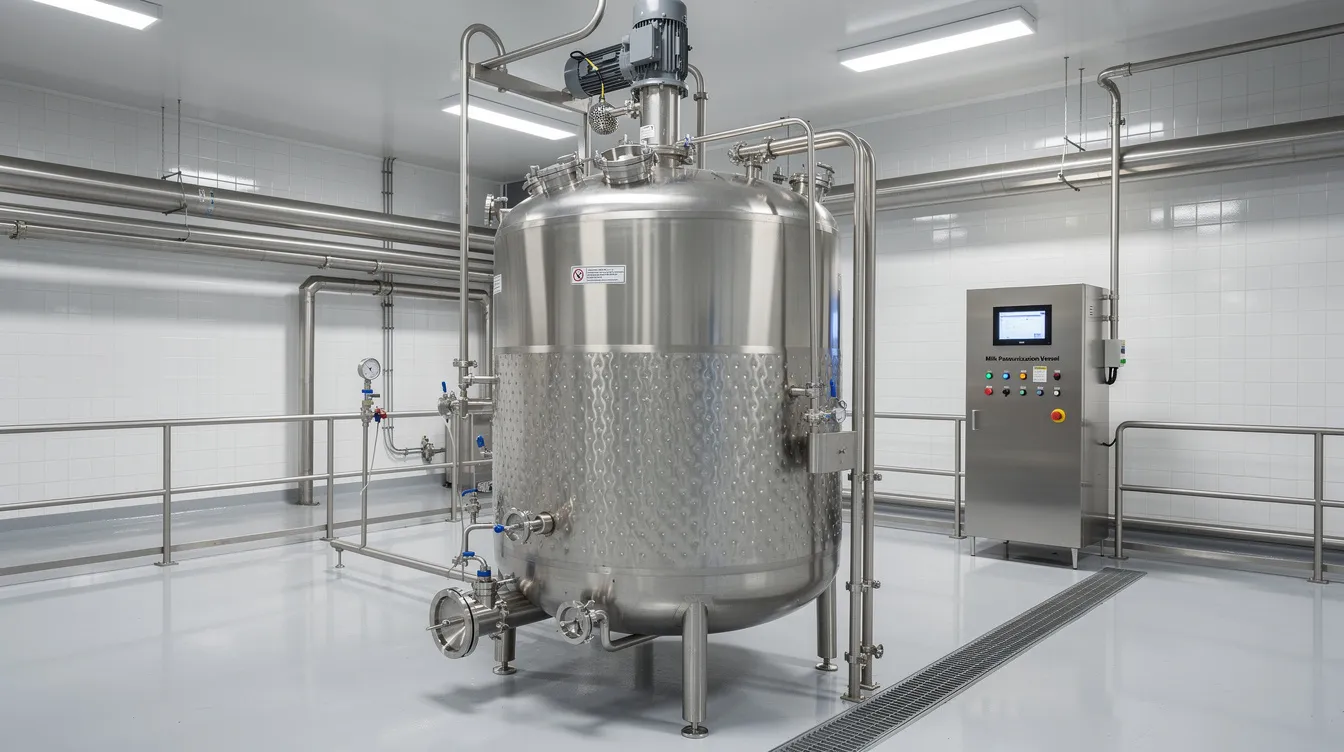
This section focuses on the core industrial ghee manufacturing equipment that actually converts fat into finished ghee: the ghee boiler, clarification system, filtration system and immediate storage and holding. For automatic ghee processing plant design, these machines define throughput, energy use, flavour consistency and yield, forming a major part of ghee production machinery cost in India.
The choice between batch ghee kettles and continuous ghee production equipment should be determined based on target capacity, variability in demand, product types and budget. Batch-type ghee processing units are suitable for small to medium dairies due to lower capital costs. From a DPR angle, these core machines are classified under “plant & machinery” in the fixed asset schedule and are central to the bank’s technical appraisal.
Ghee Boiler or Steam-Jacketed Ghee Kettle
The ghee boiler or steam-jacketed kettle is the heart of the plant ghee line, responsible for controlled heating of butter or cream to remove moisture and develop characteristic ghee flavour and colour. Key specifications include batch capacity (100 kg, 300 kg, 500 kg, 1,000 kg), SS 304 or higher construction, dimple or full steam jacket, proper insulation, geared agitator system, temperature sensor and control panel. Ghee making machines include features like automatic stirring mechanisms that ensure uniform heat distribution.
A 200 LPH ghee boiler machine processes 200 liters per hour and is priced at approximately ₹95,000 for basic configurations. A 200 LPH ghee boiler machine is designed for processing 200 liters of milk per hour. Heating medium options include steam, thermic fluid, or gas-fired systems, each influencing both Capex (boiler and burner cost) and Opex (fuel and maintenance). Accurate temperature control and uniform agitation are essential for avoiding burnt flavour and ensuring consistent quality.
The ghee boiler is a high-value item in the ghee manufacturing machine price structure, so capacity, metallurgy and automation level (e.g., PLC-based controls) must be carefully chosen with future expansion in mind. As one government project profile illustrates, machinery cost for a small unit including ghee boiler, separator and filling machine was approximately ₹16.44 lakh – indicating that the ghee boiler, while significant, is only one component.
Ghee Clarification System
Clarification separates non-fat solids and impurities from melted fat to achieve clear, bright ghee with stable shelf life. This may involve a ghee clarifier (a type of high-speed separator) or gravity settling combined with skimming. Automatic clarifier machines (e.g., 500 LPH, 1,000 LPH, 3,000 LPH) improve consistency and reduce manual labour compared to purely manual methods.
Selection parameters include flow rate, bowl design, SS contact parts, ease of cleaning, compatibility with CIP and alignment with overall plant capacity. In a financial model, clarification efficiency impacts yield (kg of saleable ghee per kg of fat), which has a cumulative effect on profitability and DSCR over the project life.
Ghee Filtration Unit
Filter presses remove fine milk solids and impurities from ghee to improve clarity and shelf life. Hygienic design requirements include a food-grade SS frame, heated pipelines if needed to prevent solidification, easy filter media replacement, and provision for CIP or manual cleaning.
Although filtration units are medium-cost items, under-specifying them can cause quality issues, product returns and clogging in filling machines, ultimately affecting operational costs. Filtration should be clearly itemized in the ghee manufacturing plant equipment list for accurate budgeting and comparison.
Ghee Storage and Holding Tanks
After processing, liquid ghee is cooled in temperature-controlled environments prior to the filling and packaging process. Ghee storage tanks keep clarified ghee at stable temperatures until packaging. Key features include SS 304 or 316 construction, appropriate capacity relative to daily production and packaging speeds, insulation where required, hygienic fittings (tri-clover, sanitary valves), manholes, CIP spray balls and level indication.
Their role in balancing production and packaging is important: when ghee production runs in larger batches but packaging operates for extended hours, sufficient holding capacity avoids stoppages and idle manpower. The number and size of storage tanks influence both capital cost and flexibility to handle different ghee grades or batch segregation.
Pumps, Pipelines and Valves
Transfer pumps, stainless steel pipelines and sanitary valves are often underestimated in budgets but together constitute a sizeable portion of total installed machinery cost. Typical items include sanitary centrifugal pumps for ghee and cream transfer, positive displacement pumps where needed, SS 304 pipelines with proper slopes, bends, unions and valves suitable for hot fat service.
Correct sizing and routing avoids dead-ends, product stagnation, cleaning difficulty and unnecessary product losses. Piping, valves and fittings should be a dedicated line item in machinery quotations and in the DPR cost sheet, rather than assumed to be automatically included with main equipment.
CIP System (Clean-in-Place)
CIP systems are essential for the sanitary cleaning of dairy processing equipment in commercial ghee production. These centralized cleaning arrangements use hot water, caustic and acid solutions circulated through ghee production equipment, pipelines and tanks without disassembly. Main components include CIP tank set (alkali, acid, rinse water), dosing arrangement, circulation pump, return line, temperature and conductivity control, and integration with process equipment.
CIP system automation level (manual valves vs semi-automatic vs fully automatic) affects both capital cost and ongoing cleaning labour cost. For industrial and commercial ghee manufacturing plants – especially those integrated with a dairy section – CIP is essential for hygiene, compliance and labour efficiency, and should be aligned with overall automation strategy.
Automatic Ghee Filling and Packaging Machines
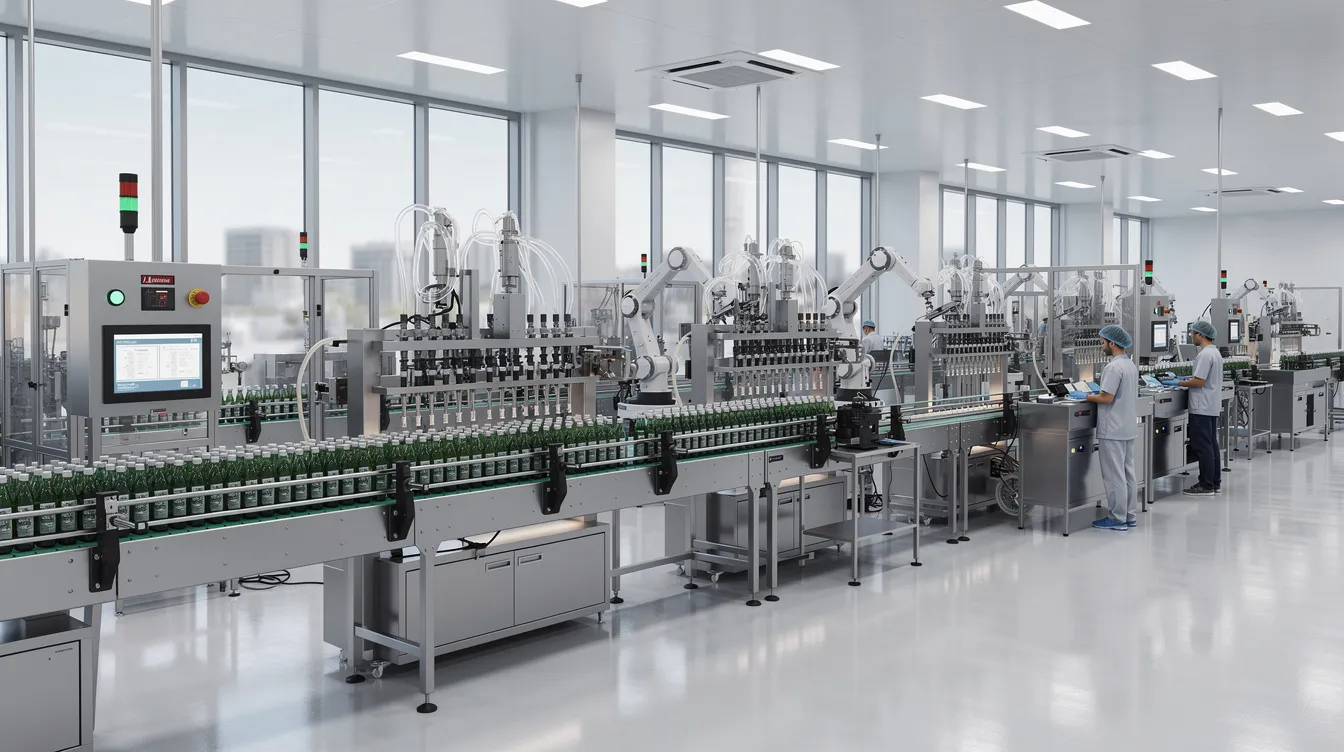
Typical packaging formats in India include retail pouches (200 ml, 500 ml, 1 litre), jars and PET/HDPE containers, tin cans, and institutional or bulk packs like 15 kg tins. The use of automated filling machines improves the efficiency of the packing process in ghee manufacturing, reducing manual labour, minimizing spillage and ensuring weight accuracy.
- Pouch filling lines: automatic form-fill-seal or pre-formed pouch filling machines, including hopper, dosing system, sealing jaws and date coding. Higher speed (e.g., 40 vs 80 pouches per minute) increases ghee plant machinery price in India.
- Jar/container filling machines: automatic or semi-automatic ghee filling machines with volumetric piston or mass-flow systems, integrated with capping, induction sealing and conveyors.
- Bulk filling: semi-automatic weight-based filling for 15 kg tins or drums, suitable for B2B and institutional sales where weight accuracy is critical.
From a DPR perspective, packaging machinery can contribute a substantial share of total ghee plant equipment cost, particularly when multiple SKUs and parallel lines are planned. This must be carefully modeled in the Capex.
Labeling, Coding and Secondary Packaging Equipment
Auxiliary downstream equipment includes automatic labeling machines for jars and tins, inkjet or thermal transfer coding machines, shrink tunnels (if using shrink sleeves), carton erectors, carton sealing machines and case conveyors. Smaller plants may begin with manual or semi-automatic labeling and coding to reduce initial Capex, while larger automatic ghee manufacturing plants opt for integrated, high-speed secondary packaging lines.
These machines improve presentation and compliance (manufacturing date, batch number, FSSAI license display) and can reduce labour per pack, which should be factored into project-feasibility analysis. The DPR should treat secondary packaging equipment as a distinct subhead under plant and machinery.
Automatic vs Semi-Automatic Ghee Plant
In Indian conditions, ghee plants range from largely manual (basic kettle and simple filling) to fully automatic ghee manufacturing plants with PLC/SCADA and integrated packaging lines. The right choice depends on capacity, strategy and available financing.
| Parameter | Semi-Automatic Plant | Automatic Ghee Plant | Highly Automated Line |
|---|---|---|---|
| Capital investment | Lower | Moderate–High | High |
| Labour per shift | More operators | Fewer operators | Minimal operators |
| Throughput consistency | Variable | Good | Very consistent |
| Process control | Manual monitoring | Automated temp/level control | PLC/SCADA with recipe management |
| Data logging | Manual records | Partial digital | Full digital with alarms |
| Packaging speed | Lower | Higher | Highest |
| Flexibility for small batches | Good | Moderate | May require recipe changes |
| Maintenance complexity | Simple | Moderate | Requires trained technicians |
| Scalability | Limited | Good | Best for large-scale |
Semi-automatic plants involve manual cream or butter loading, batch ghee kettles with basic controls, and semi-automatic jar or pouch filling. Automatic ghee processing plant features include automated temperature control, level sensors, automated product transfer and automatic ghee filling machine with synchronized conveyors.
Highly automated industrial ghee manufacturing equipment setups use PLC/SCADA-based control rooms, recipe management, integrated alarms, and feedback from flow meters and load cells. However, maximum automation is not always financially optimal – the DPR should evaluate capacity, wage rates, expected uptime, skill availability, SKU complexity and financing ability before choosing the automation level.
Ghee Plant Machinery Cost in India – Key Drivers
Ghee plant machinery cost in India cannot be summarized by a single number. Any figure seen online must be treated as indicative only, because cost depends on capacity, scope and technical specification.
Major cost drivers include:
- Processing capacity (kg/day or LPH)
- Batch vs continuous configuration
- Raw material route (cream vs butter)
- Level of automation (semi-automatic vs fully automatic)
- SS grade and thickness – fabrication quality
- Instrumentation – temperature, flow, level sensors
- PLC/SCADA requirements
- Packaging format and speed
- Number and size of storage tanks
- CIP configuration and automation
Additional commercial factors impacting ghee manufacturing machine price include supplier scope (equipment only vs turnkey), inclusion of piping and electrical work, freight, insurance, installation, commissioning, statutory taxes (GST), and on-site training.
Indicative planning ranges (not quotations):
Prices for ghee making machines start around Rs 60,000 for basic configurations. A ghee making machine costs around ₹130,000 at entry level. A mini ghee making machine costs approximately ₹150,000. A 300 LPH ghee processing plant – processing 300 liters per hour – costs around ₹240,000. A ghee making plant with 500 kg/hr capacity costs approximately ₹500,000. Ghee making machines can process up to 300 liters per hour depending on model and configuration.
For small industrial plants, the total core process and packaging machinery broadly falls in the low to mid tens of lakhs of rupees. For larger multi-TPD automatic ghee plants, investment can move into higher tens of lakhs or several crores. As one state-government project profile for a 6 TPD plant illustrates, total machinery and equipment (with utilities) was quoted at approximately ₹99.50 lakh.
For accurate budgeting, promoters must obtain detailed technical quotations from multiple qualified suppliers and reconcile them with DPR assumptions to avoid funding gaps.
Capacity-Wise Machinery Cost and Economies of Scale
Machinery cost does not rise in a straight line with capacity. Larger commercial ghee manufacturing plants often benefit from economies of scale in both Capex per kg and operating cost per kg.
| Indicative Plant Capacity | Typical Automation | Major Equipment Configuration | Investment Consideration |
|---|---|---|---|
| 200–500 kg ghee/day | Semi-automatic | Single ghee kettle, basic separator, semi-auto filling | Lower investment but higher per-kg Capex and labour cost |
| 500–2,000 kg ghee/day | Automatic | Multiple kettles or larger batch size, automatic filling, CIP | Better economies; shared utilities across higher output |
| 2,000–10,000 kg ghee/day | Highly automated | Continuous or large batch systems, multiple packaging lines, PLC/SCADA | Highest absolute investment but lowest per-kg Capex |
Capacity decisions must consider realistic ramp-up, market access and working capital. Oversizing machinery increases loan burden and interest cost, which may weaken DSCR and project feasibility even if unit Capex is lower. Final capacity selection should be backed by a market study and financial projections before orders are placed.
Cost of Ghee Packaging Machinery
Packaging machinery is often the second-largest cost block after ghee processing equipment, but many promoters under-budget it in early project planning.
- Pouch packing machines: form-fill-seal units vs pre-formed pouch fillers; multi-lane systems and automatic film tracking raise investment but reduce unit packing costs.
- Jar and container filling lines: volumetric or net weight fillers, integrated with capping, induction sealing, labeling and coding machines. Each additional SKU (200 ml, 500 ml, 1 litre) may require change parts and recipe settings.
- Bulk and institutional filling: semi-automatic weight-based filling for 15 kg tins, cans or drums – lower Capex but more manual handling.
SKU mix and branding strategy directly influence packaging Capex and Opex (including materials and labour), so this section of machinery must be aligned with the marketing plan before freezing the budget.
Utility Equipment Cost and Integration
Many first-time promoters focus on visible process equipment like the ghee boiler and filling machine, but underestimate the investment required in utilities, which can be 25–40% of total installed plant equipment cost.
Critical utilities:
- Steam boiler (for ghee kettles, pasteurizers, CIP)
- Hot water generation
- Refrigeration system and chilled water plant (for butter and cream handling)
- Air compressor for pneumatic valves and packaging
- Water treatment plant
- ETP (where necessary) and fire safety systems
Electrical infrastructure:
- MCC and PCC electrical panels, cabling, earthing, lighting
- VFDs for pumps and agitators
- Transformers or DG sets where applicable
Utility equipment cost should be broken out separately from core process ghee manufacturing plant machinery cost in the fixed-asset schedule, so the bank can assess completeness of the project. Incorrectly sized utilities – over or under – will affect operating costs and reliability. Energy load calculations should be done early and shared with machinery suppliers.
Laboratory and Quality-Control Equipment
Industrial ghee plants require basic laboratory and QC setups. Quality-control equipment is crucial in ghee manufacturing to monitor moisture, acidity, and other critical parameters. The quality of ghee is defined by standards such as a minimum of 99.5% milk fat and a maximum of 0.5% moisture in India.
Typical basic QC items include analytical balance, butyrometer and related ghee and milk testing glassware, moisture determination setup, basic microbiology equipment where scale demands it, sampling accessories, and temperature and weighing instruments.
The exact lab scope depends on capacity, customer requirements and internal quality standards. Laboratory equipment should be classified separately in the project cost but must not be omitted when calculating total plant and machinery requirement for bank finance.
Factors Affecting Ghee Manufacturing Machine Price
Two quotations for similar capacity from different suppliers can differ significantly. Understanding why is essential before comparing numbers.
- Plant capacity and batch size: higher daily capacity and larger batch kettles increase price, but per-kg Capex may fall
- Automation level: manual valves and local indicators vs automated valves, sensors, PLC and SCADA systems change both investment and operator skill requirements
- Construction quality: SS grade (304 vs 316), plate thickness, type of welds, surface finish (mirror vs dull), insulation quality, gaskets and seals. Equipment constructed from higher-grade materials offers greater durability but costs more
- Heating technology: simple direct gas-fired kettles vs steam-heated and thermic-fluid systems, with trade-offs in energy efficiency, safety and upfront cost
- Advanced instrumentation: level transmitters, flow meters, load cells under tanks, pressure gauges and central data logging. Though they raise initial price, they support better control and traceability
- Commercial aspects: reputation of the manufacturer and engineering depth, imported vs domestic components, warranty terms, inclusion of installation and commissioning, and availability of after-sales service and spares – all of which matter beyond the headline price. Selecting a leading manufacturer with proven dairy experience generally reduces implementation risk
What Is Included in a Ghee Plant Machinery Quotation?
Promoters should never compare quotations only by total amount. The underlying scope and technical details must be aligned before judging price differences.
Key areas to check:
- Detailed equipment list with capacities, MOC and SS grade
- Motor and gearbox specifications
- Type and number of control panels, sensors and instruments
- Whether piping, valves and fittings are covered
- Freight to site, unloading, erection and alignment
- Electrical cabling and panel installation
- Insulation and cladding
- Civil foundation bolts and platforms
- Commissioning, trial runs and operator training
Quotation comparison checklist:
| Check Item | Supplier A | Supplier B | Supplier C |
|---|---|---|---|
| Equipment list with capacities | ☐ | ☐ | ☐ |
| SS grade and MOC specified | ☐ | ☐ | ☐ |
| Piping and valves included | ☐ | ☐ | ☐ |
| Electrical panels included | ☐ | ☐ | ☐ |
| Freight and transit insurance | ☐ | ☐ | ☐ |
| Erection and commissioning | ☐ | ☐ | ☐ |
| Trial run and training | ☐ | ☐ | ☐ |
| Warranty period and coverage | ☐ | ☐ | ☐ |
| GST and payment terms | ☐ | ☐ | ☐ |
| Delivery timeline | ☐ | ☐ | ☐ |
| Recommended spares list | ☐ | ☐ | ☐ |
| Items explicitly excluded | ☐ | ☐ | ☐ |
Taxes, payment terms, delivery time, warranty period, recommended spares and AMC options should be clearly spelled out in writing and linked to the project’s implementation schedule and cash-flow planning.
Hidden Costs in Ghee Plant Machinery Procurement
Several costs commonly appear after the basic machinery PO is placed, affecting total investment and sometimes leading to cash-flow stress:
- Transportation beyond basic ex-works price
- Transit insurance
- Unloading equipment (cranes, forklifts)
- Foundation and platform fabrication
- Interconnecting SS piping, valves, flexible hoses
- Electrical cabling and cable trays
- Thermal insulation of pipelines and vessels
- Fuel and utilities for trial runs
- Water treatment chemicals and first-charge CIP chemicals
- Packaging materials for test packing
- Lab testing during stabilization
A thorough DPR should budget for “landed and installed” machinery cost including these items, not just ex-factory equipment prices, to ensure that term loan and promoter contribution are adequate. A reasonable contingency percentage on plant and machinery – explained clearly in the DPR – helps absorb realistic escalation or minor scope additions without jeopardizing project funding.
Machinery Cost Treatment in DPR and Project Finance
As a practitioner in DPR preparation and project-finance documentation, I want to emphasize that how machinery cost is captured in the Detailed Project Report is central to project appraisal and term-loan planning.
Typical DPR grouping:
- Core process ghee manufacturing plant machinery
- Packaging machinery
- Utility equipment
- Laboratory and QC equipment
- Electrical installations
- Other fixed assets
- Pre-operative expenses related to installation and commissioning
Taxes may be capitalized or adjusted depending on credit eligibility and accounting policy. Freight, erection, commissioning and initial trial expenses are often capitalized as part of plant and machinery or pre-operative costs. Machinery cost feeds into project cost and means-of-finance tables, influencing term-loan requirement, promoter’s margin, interest during construction, and depreciation in financial projections.
Underestimating machinery cost leads to funding gaps after bank sanction. Overestimating without justification may make the project appear unviable on DSCR. The DPR should rely on realistic, updated quotations.
Machinery Cost, Means of Finance and Bank Appraisal
Total project cost (including plant and machinery) is financed through a mix of promoter contribution, term loan and, where applicable, other sources. Plant and machinery generally forms the largest part of fixed-asset cost.
Lenders typically evaluate ghee manufacturing plant machinery proposals by:
- Verifying supplier credentials
- Checking whether quoted capacities align with projected production volumes
- Assessing whether proposed automation is appropriate for the target market
- Reviewing project cost, debt-equity ratio, projected cash flows, DSCR, repayment schedule and security structure
- Cross-checking whether machinery costs are reasonable compared to industry norms
Promoters should finalize the machinery configuration and obtain budgetary quotations before locking the DPR, so that the means of finance works realistically. Adequate provision must also be made for working capital – over-investment in machinery at the cost of working capital can strain operations once the plant starts.
How Machinery Selection Affects Profitability
Machinery choice links directly to core financial metrics: capacity utilization, contribution margin, operating cost per kg and DSCR. Technical and financial decisions are closely connected in any ghee project.
Correctly sized and energy-efficient ghee plant equipment reduces fuel and power cost per kg, minimizes product losses and rework, and improves throughput – directly raising EBITDA over time. Inappropriate machinery (either under-capacity or over-specified) can cause bottlenecks, frequent breakdowns, excessive labour, high rejects, or low utilization, all of which hurt profitability and loan repayment capacity.
“Lowest machinery price” is rarely equal to “best project economics.” Life-cycle cost (Capex + Opex + maintenance + scrap) over several years should guide supplier and configuration selection. I encourage promoters to model a few technical scenarios (e.g., semi-automatic vs more automated lines) in financial projections to see the impact on breakeven output and DSCR before finalizing orders.
Energy-Efficient Ghee Plant Machinery
Energy expenditure – steam, electricity, sometimes fuel oil or gas – is a significant operating cost in ghee production, especially in plants with large ghee boilers and continuous operation.
Key efficiency measures:
- Well-insulated ghee boilers and pipelines
- Steam traps and condensate recovery systems
- Properly sized motors and VFDs
- Optimized agitation speeds
- Controlled heating profiles to avoid over-processing
- Possible heat-recovery from outgoing product streams or hot condensate (requires case-specific engineering review)
Expected energy consumption assumptions should be captured in the DPR (e.g., kg steam per kg ghee, kWh per batch) and validated with suppliers, as these feed directly into cost of production and profitability projections.
Machinery Layout and Space Planning
Finalizing building design before machinery layout is a common and costly mistake. Equipment selection and layout must guide the civil plan, not the other way around.
Key layout principles:
- Linear and hygienic product flow from raw material reception to finished goods dispatch
- Clear segregation between raw and finished areas, avoiding cross-traffic
- Adequate space for people and material movement
- Height and access for installing ghee boilers and SS storage tanks
- Platforms and staircases for manholes
- Drainage slopes, CIP access and space for utility lines
- Maintenance clearances
- Provision for future expansion (e.g., space for a second ghee kettle or additional packaging line)
Machinery GA drawings should be coordinated among suppliers, architect and services consultants. These drawings should be included as annexures in the DPR and provided to lenders where relevant.
How to Select a Ghee Plant Machinery Supplier
Selecting suppliers for complete ghee manufacturing plant machinery requires a due-diligence framework that prioritizes technical competence and long-term partnership over the lowest quote.
Evaluation criteria:
- Proven experience in dairy ghee plant machinery – ask for details of past installations
- Number and scale of existing installations that can be visited
- Ability to design integrated plants (process + utilities + packaging)
- Capability to customize automation and instrumentation as per project needs
- Fabrication quality and documentation support
- Willingness to share layout and utility drawings
- Clarity in scope and exclusions
- Realistic delivery schedules
Service-related aspects:
- Availability of commissioning engineers
- Training provided for operators
- Responsiveness for breakdowns
- Spare parts stocking
- Clarity of warranty conditions
Collecting references from existing installations, visiting at least one live plant equipped with similar automatic ghee plant machinery, and documenting observations is strongly recommended before the final PO decision. Contact multiple suppliers rather than relying on a single source.
Questions to Ask Before Ordering Ghee Manufacturing Plant Machinery
This practical checklist helps promoters avoid ambiguities during technical and commercial discussions with suppliers:
Capacity and process questions:
- What is the rated capacity per hour and per batch?
- What assumptions determine rated capacity?
- What is the expected yield?
- What process route (cream vs butter) is assumed?
- What is the typical batch cycle time including heating and cleaning?
Utility questions:
- What is the required steam load (kg/h)?
- What hot water demand, refrigeration tonnage and compressed-air requirements are specified?
- What is the connected electrical load and recommended cable sizes?
Scope questions:
- Are piping and valves included?
- Are electrical panels and field cabling included?
- Is installation, commissioning and trial production support part of the offer?
- Which items (civil work, insulation, platforms) are excluded?
Packaging flexibility:
- What packaging formats and sizes are supported by the ghee filling machine?
- What are maximum speeds and changeover times between SKUs?
- Is future automation upgrade or capacity expansion possible?
Commercial questions:
- Delivery period and payment terms?
- Warranty duration and coverage?
- Recommended spare parts list?
- Typical life of critical wear components?
All responses should be captured in writing before order placement.
Common Mistakes While Budgeting Ghee Plant Machinery
From practical project experience, these are typical pitfalls that create cost overruns or operational bottlenecks:
Technical omissions:
- Focusing only on the main ghee kettle or ghee boiler and ignoring cream or butter preparation equipment, filtration, CIP and QC
- Under-specifying packaging capacity
- Not providing for future expansion in layout
Financial oversights:
- Ignoring installation, freight, taxes, pipelines and electricals
- Assuming online “ghee making machine price” covers all requirements
- Not allocating contingency for inevitable minor additions or specification refinements
Planning errors:
- Choosing plant capacity based only on optimistic sales targets without phased ramp-up
- Not considering SKU mix and packaging formats early
- Comparing non-equivalent quotations (different scopes manufactured and provided by different suppliers)
- Delaying working-capital planning until after machinery is ordered
A structured DPR, vetted by financial and technical professionals, is the most reliable tool to minimize these mistakes and align machinery investment with realistic market and financing scenarios.
Machinery Cost vs Total Ghee Plant Setup Cost
While this article focuses on ghee manufacturing plant machinery and equipment cost, overall project cost also includes land, building, statutory approvals, pre-operative expenses, working capital and contingencies. In many industrial-scale projects, plant and machinery (including utilities) may account for a major part of fixed capital but not the entire project investment.
Readers who want a broader view of total project investment – beyond machinery – should refer to a dedicated resource discussing overall industrial ghee manufacturing plant setup cost in India, while treating this present article as a machinery-specific guide. Keeping machinery cost and other project costs clearly separated in financial models allows any scope changes in equipment to be tracked and their impact on term loan and promoter contribution quickly assessed.
FAQs on Ghee Manufacturing Plant Machinery & Cost
These answers are general guidelines based on typical Indian industrial conditions. They should be validated against supplier quotations and project-specific DPRs before final investment decisions.
What machinery is required for a commercial ghee manufacturing plant?
A commercial ghee manufacturing plant requires cream or butter handling equipment (cream separator, butter churn, butter melting vat), core ghee processing machines (ghee boiler, clarification and filtration units, storage tanks, pumps and pipelines), packaging systems (automatic ghee filling machine for pouches, jars and tins, labeling and coding), CIP system, and utility equipment like steam boiler, refrigeration (if needed), air compressor and water treatment. The exact list depends on capacity, raw material route and products manufactured.
How much does ghee plant machinery cost in India for an automatic plant?
Cost depends on capacity, automation and scope. For smaller industrial plants, the total machinery package may fall in the lower tens of lakhs of rupees, while large fully automatic ghee production lines can require investments reaching into several crores. These are indicative planning ranges – actual costs require project-specific quotations from qualified suppliers in the Indian market.
Is a cream separator always required in a ghee processing plant?
A cream separator is needed when the plant processes milk and produces its own cream or butter. If the plant buys ready butter or cream from external dairies, cream separators can be avoided and machinery focus shifts to melting, ghee boiler, clarification and packaging.
What is the role of an automatic ghee filling machine in overall plant efficiency?
Automatic ghee filling machines determine how quickly processed ghee can be converted into saleable packs. Higher-speed, accurate fillers reduce manual labour, minimize spillage and under or over filling, and are vital for consistent branding – especially when the plant operates multiple pack sizes or serves modern retail and institutional clients.
Should machinery be finalized before preparing the DPR and applying for bank finance?
While final purchase orders can wait, an approximate yet realistic machinery configuration and budgetary quotations should be in place before freezing the DPR. Plant and machinery figures drive total project cost, means of finance and DSCR, which banks use to appraise the feasibility of the ghee manufacturing project. Preparing the DPR without reliable machinery inputs is a common mistake that can lead to funding gaps or unrealistic projections.
Conclusion
Designing and costing an automatic ghee manufacturing plant machinery package requires aligning capacity, raw material route, process technology, packaging mix, automation and utilities with realistic financial plans and bankability. Promoters must move beyond single ghee making machine prices and instead evaluate the complete ghee production plant equipment set – including hidden and installation costs – within a structured DPR and financial model.
Appropriate machinery selection contributes to stable product quality, energy efficiency, manageable labour cost, scalability and improved long-term project profitability. The place to start is with a clear process route, realistic capacity targets and supplier quotations designed to create a credible, finance-ready project plan.
If you are planning an industrial ghee manufacturing project and need support with a Detailed Project Report, project cost estimation, means of finance planning, CMA data preparation, financial projections, working capital assessment or DSCR analysis for bank term-loan documentation, feel free to contact ProjectReportBank.com. No guarantee of loan sanction or specific financial outcomes is implied – what is offered is structured, professionally prepared project documentation to support your investment decisions.