When a promoter approaches a bank with a ₹40 crore dairy project, the bank does not simply approve 70% of that figure as a term loan. The lender disassembles the entire project cost, questions each line item, tests whether projected cash flows can service the debt, and then arrives at an eligible term loan amount that may be lower, differently structured, or conditional. This article explains how that assessment works for value-added dairy manufacturing plants producing paneer, curd, yogurt, lassi, probiotic products and similar SKUs in India.
I am CA Manish Gugliya, and through my practice at ProjectReportBank.com, I prepare Detailed Project Reports, financial projections and CMA Data for industrial dairy projects. This article reflects the practical, banker-oriented perspective I bring to term loan structuring for dairy entrepreneurs across India.
Key Takeaways
- Term loan assessment for a value-added dairy manufacturing plant is a project-finance exercise that evaluates eligible fixed assets, promoter contribution, debt-equity structure, projected cash flow, DSCR and security coverage; it is not a flat percentage of project cost.
- Banks may sanction a term loan amount different from what the promoter requests, based on their independent appraisal of viability, risk and repayment capacity.
- Lenders separately assess term loan, working capital and, where relevant, subsidy under schemes such as dairy farm loans, the Dairy Entrepreneurship Development Scheme and programmes for mini dairy units; each carries distinct eligibility criteria and documentation.
- DSCR, realistic assumptions on milk availability, product mix (paneer, curd, yogurt, lassi, probiotic products), selling prices and capacity utilisation drive the final term loan eligibility for the dairy manufacturing plant.
- A banker-oriented, bankable DPR and CMA Data prepared by a professional improves how the project is understood and appraised, though it never guarantees sanction, specific interest rates or processing charges.
What Is Term Loan Assessment for a Value-Added Dairy Manufacturing Plant?
Term loan assessment for a value-added dairy manufacturing plant is the structured process through which a bank or financial institution evaluates whether, and to what extent, it should provide long-term credit for a proposed dairy project. The lender appraises eligibility; it does not simply accept the loan amount requested in the application. Dairy projects typically require feasibility assessments focusing on technical, market and financial aspects before a credit decision is made.
The total project cost stated in a DPR is not automatically the “eligible project cost” for term loan purposes. Banks distinguish between project cost, eligible project cost, term loan component and separate working capital limits. Land, buildings, plant and machinery, cold rooms, utilities and pre-operative expenses each receive different treatment during appraisal. For instance, speculative land cost, brand-building expenses, unrelated vehicles, excessive preliminary expenses and promoter salary unrelated to project operations may be restricted or excluded from the eligible project cost entirely.
Lenders assess business plans and repayment capacity to judge technical feasibility, financial viability, promoter strength, security coverage and repayment capacity over the full tenure. Several banking terms recur throughout this process: DSCR (Debt Service Coverage Ratio), debt-equity ratio, moratorium, margin money and promoter contribution. Each guides value-added dairy project financing decisions and will be explained in detail in the sections that follow.
What Does a Term Loan Finance in a Dairy Manufacturing Project?
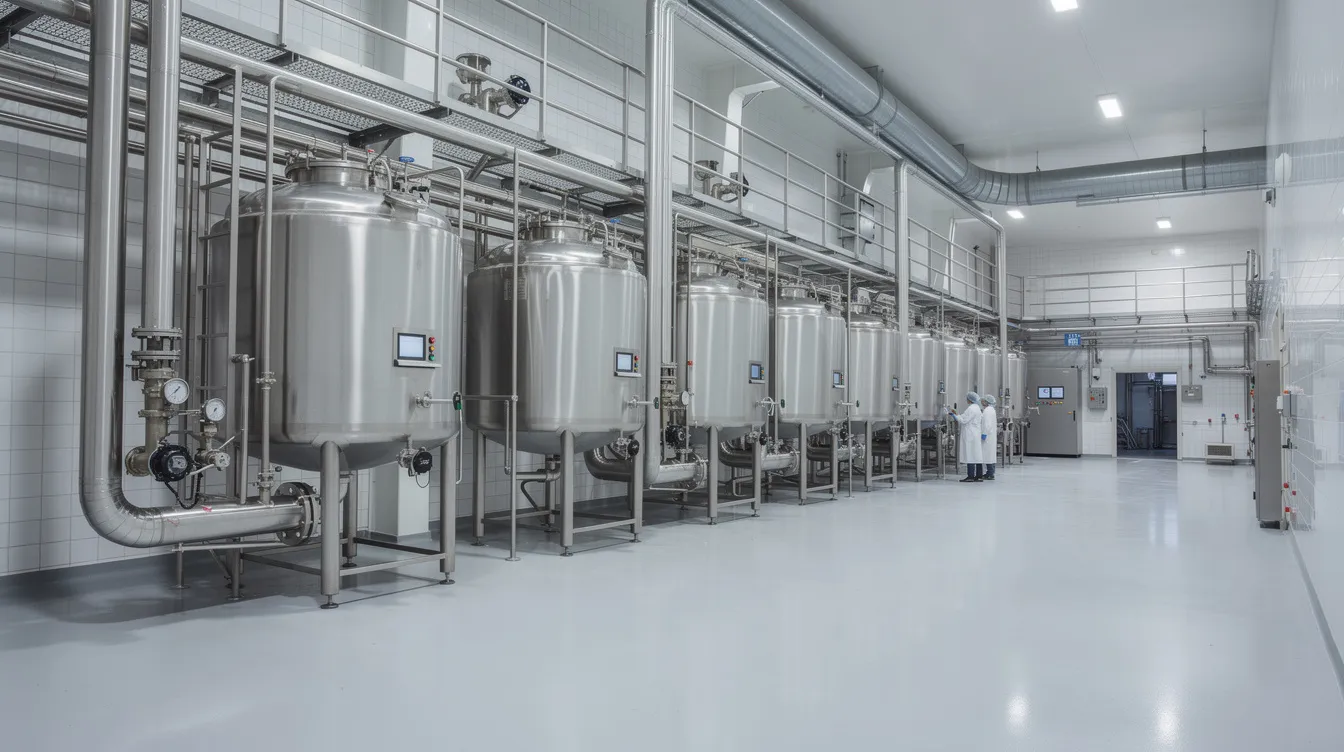
A dairy processing plant term loan finances long-term fixed assets required for manufacturing paneer, curd, yogurt, Greek yogurt, lassi and probiotic dairy products. It does not cover routine operating expenses like daily milk procurement or staff salaries. A value-added dairy manufacturing facility involves complex processing and higher perishability risks, which means the asset base financed through a term loan is more capital-intensive than a simple liquid milk plant.
Typical asset categories financed include:
- Land development (where eligible under bank policy)
- Factory building and civil construction, including food-grade finishes
- Milk reception, chilling and storage systems
- Pasteurisation and homogenisation equipment
- Fermentation tanks and incubation chambers
- Paneer coagulation vats and pressing systems
- Yogurt, curd and lassi production lines
- Filling, sealing and packaging machines
- Cold rooms, blast chillers and refrigeration plants
- Boilers, DG sets and electrical installations
- Quality-control laboratory equipment
- ETP (effluent treatment plant) and CIP (clean-in-place) systems
- Water treatment, steam distribution, compressed air and food-grade drainage
- Cold-chain infrastructure including insulated vans and reefer vehicles
Pre-operative expenses such as interest during construction, consultancy fees, statutory approvals and trial runs are treated by most lenders with percentage caps. Contingencies are admissible within limits. Items like initial raw milk inventory, packaging stock and day-to-day expenses fall under working capital assessment, not term loan, though margin for working capital may be included in overall project cost.
Technological complexity in dairy processing, including the sophistication of processing equipment and cold chain infrastructure, means the fixed-asset base for a value-added plant is considerably larger than for a commodity milk operation.
Project Cost Considered for Term Loan Assessment
Banks review each cost head in the dairy plant project report for term loan to arrive at “acceptable project cost.” Figures must be supported by land documents, civil estimates, machinery quotations and utility budgets. In many Indian banking setups, project cost norms, internal circulars on eligible components and sector guidelines influence what portion of the DPR cost is considered for value-added dairy project financing.
Land and Site Development
Owned land, leasehold land and land already held by the promoter are treated differently. Some banks do not finance bare agricultural land purchase but accept it as collateral. Acceptable evidence includes sale deeds, title search reports, non-encumbrance certificates, conversion to non-agricultural use (where applicable) and land use approvals. These affect eligibility criteria and disbursement timing.
Basic site development (levelling, compound wall, internal roads, bore-well, drainage) may be financed within reasonable limits. Banks often moderate high speculative land valuations and consider only realistic cost or norm-based values for dairy plant term loan assessment.
Building and Civil Construction
Civil components of a value-added dairy plant include raw milk reception bay, processing hall, fermentation and incubation rooms, paneer section, packaging hall, cold rooms, dispatch area, boiler house, utility block and administrative building. Banks expect civil estimates based on approved architectural drawings and bill of quantities (BOQ), often vetted by empanelled valuers.
Food-grade finishes, insulation, epoxy flooring, clean-room partitions, drain channels and hygienic zoning add cost. For reference, food-grade wet hall construction typically costs ₹2,000 to ₹2,800 per sq ft, cold storage rooms ₹3,000 to ₹4,000 per sq ft, and dry halls ₹1,200 to ₹1,600 per sq ft. Cost overruns or vague lump-sum estimates without BOQ lead to downward revision of eligible civil cost. Regulatory compliance with food safety standards is essential for dairy processing facilities and affects building design from the outset.
Plant and Machinery
Plant and machinery is typically the largest block of eligible project cost in a dairy manufacturing plant bank loan. It covers pasteurisers, homogenisers, separators, ageing tanks, paneer vats, curd incubation systems, yogurt fermenters, lassi blenders, filling and sealing machines and CIP systems.
Lenders require item-wise machinery quotations from reputed suppliers, specifying make, model, capacity, automation level, origin (domestic or imported) and inclusive costs covering freight, erection, commissioning and taxes. Technology suitability for the proposed product mix is verified; over-designed or under-sized lines relative to projected volumes raise questions. Second-hand, refurbished or unbranded equipment usually receives more conservative financing treatment, sometimes with lower loan-to-cost ratios.
Utilities and Support Infrastructure
Key utilities include refrigeration plant (ammonia or freon-based), cold rooms, blast chillers, ice-bank tanks, boiler and steam distribution, chilled water systems, air compressors, water treatment plant, DG sets, electrical panels, transformers and internal electrification. Banks treat these as core to viability because refrigeration and energy reliability are mission-critical for paneer, yogurt, lassi and probiotic plants.
Cost estimates should be based on vendor quotes or engineering estimates. Ad-hoc rounding off or inflated “miscellaneous utilities” line items are often cut back. Dairy processing generates high volumes of effluent that must be managed according to environmental regulations; ETP, STP, fire fighting and mandatory statutory installations must be budgeted realistically.
Pre-operative Expenses
Typical pre-operative heads include project consultancy fees, DPR preparation, legal charges, interest during construction (IDC), insurance during construction, salaries of key staff during trial runs and initial marketing launch costs. Lenders usually cap these as a percentage of tangible project cost and require supporting workings for IDC based on realistic implementation schedules (12 to 18 months for a mid-sized dairy plant).
Excessive promoter drawings, unrelated travel and non-project overheads are not admissible. Correct pre-operative budgeting prevents cash crunch during installation and reduces the risk of project delays impacting dairy plant loan repayment capacity.
Contingency Provision
Contingency, typically a modest percentage on civil, machinery and utilities, covers minor design changes, price revisions and foreign exchange fluctuations. Banks may not accept high contingency percentages; they moderate these to align with internal policy. Contingency should be clearly separated in the project cost and not used as a hidden buffer for promoter margin or working capital. Transparent disclosure in the dairy plant DPR for bank loan builds banker confidence.
Means of Finance for a Value-Added Dairy Plant
The core funding identity is straightforward:
Project Cost = Promoter Contribution + Term Loan + Other Eligible Sources
Each component serves a distinct role. Promoter’s equity or margin demonstrates commitment and absorbs initial risk. The bank term loan finances the bulk of fixed assets. Unsecured loans from promoters or family (subject to bank acceptance and subordination) may supplement equity. Government capital subsidy, where available under schemes, reduces effective cost. Internal accruals from existing business activity and other institutional funding round out the structure.
The Dairy Entrepreneurship Development Scheme (DEDS), implemented in September 2010 by the government and administered through NABARD, provides capital subsidies for bankable dairy projects. The subsidy is 25% of the project cost for general category borrowers and 33.33% for SC/ST borrowers. Under DEDS, eligible applicants include individual farmers, self-help groups and farmer groups. Around 1.86 lakh entrepreneurs have benefited from DEDS. The scheme aims to promote modern dairy farms for clean milk production.
Below is an illustrative means-of-finance table for a ₹50 crore value-added dairy project. This is an example only; actual financing structure depends on project size, bank policy, credit profile and appraisal.
| Component | ₹ Crore | % of Project Cost |
|---|---|---|
| Promoter Contribution (Equity/Margin) | 15.00 | 30% |
| Term Loan from Bank | 32.50 | 65% |
| Unsecured Loans (Subordinated) | 2.50 | 5% |
| Total Project Cost | 50.00 | 100% |
For a detailed breakdown of value-added dairy plant project cost and means of finance, promoters should prepare component-wise estimates supported by quotations and market evidence.
Promoter Contribution and Margin Requirement
Promoter contribution refers to own funds invested by the promoters in the project. Margin is the portion of project cost not financed by the term loan. In practice, the two overlap but are not identical concepts; margin may include subsidy and unsecured loans alongside equity.
Banks in India insist on meaningful promoter contribution to ensure commitment, absorb initial shocks and maintain a healthy debt-equity structure. Acceptable sources include capital infusion from promoters, retained profits from existing dairy or food business, sale of non-core assets, verifiable unsecured loans from promoters or relatives (subject to subordination) and, in some cases, already-incurred eligible expenditure backed by invoices.
Lenders scrutinise bank statements, ITRs and net-worth statements to verify that promoter contribution is genuine and not borrowed from undisclosed sources. Lenders prefer clients with diversified income sources, as this indicates stronger financial resilience. Margin norms vary by bank, scheme (NABARD-linked dairy projects vs commercial MSME term loans), risk profile and nature of security. No single percentage applies universally.
Debt-Equity Ratio in Dairy Plant Term Loan Assessment
Debt-equity ratio measures the proportion of long-term debt versus the promoter’s tangible net worth funding the value-added dairy plant. The formula is:
Debt-Equity Ratio = Total Long-Term Debt ÷ Tangible Net Worth (Equity)
Higher leverage (more debt relative to equity) increases fixed repayment obligations and risk, reducing DSCR and making lenders more conservative in their dairy plant loan appraisal. Many banks have internal comfort ranges, but these are policy matters and vary across institutions.
A simple example: if a dairy project has ₹30 crore in term loan and ₹20 crore in equity, the debt-equity ratio is 1.5:1. If the promoter increases equity to ₹25 crore and reduces the term loan to ₹25 crore, the ratio improves to 1:1, reducing annual debt service and improving DSCR. Promoters can use this lever to plan their dairy project means of finance realistically.
How Banks Calculate the Eligible Term Loan
Banks arrive at an “eligible term loan amount” after adjusting project cost, verifying promoter contribution and checking DSCR-based repayment capacity. This amount may differ from the promoter’s requested figure. Loan amounts depend on project scale and lender assessment.
The process follows a logical sequence:
- Determine acceptable project cost by reviewing each cost head
- Remove ineligible or unsupported expenditure
- Fix minimum margin or promoter contribution
- Factor in subsidy or other sources (where applicable)
- Derive maximum bank exposure (project cost minus margin minus other sources)
- Test debt-equity structure against policy norms
- Project cash flows over the loan tenure
- Analyse year-wise and average DSCR
- Determine suitable repayment period and moratorium
- Evaluate collateral and security coverage
- Assess project implementation risks and management capability
- Finalise the sanctionable term loan amount
Numerical illustration: A promoter proposes a total project cost of ₹50 crore. After excluding ₹2 crore of ineligible items, the acceptable cost is ₹48 crore. With promoter contribution at ₹16 crore (33%), the maximum eligible term loan is ₹32 crore, yielding a debt-equity ratio of 2:1. If projected DSCR at ₹32 crore of debt is only 1.15 in Year 2 (below the 1.25 minimum), the bank may reduce the term loan to ₹28 crore and ask the promoter to fund the gap. These numbers are purely illustrative.
Term loan assessment is constrained both by security coverage and by cash-flow-based DSCR, not by project cost alone.
Capacity Planning and Its Impact on Term Loan Eligibility
Banks closely examine proposed installed capacity (for example, 1,00,000 LPD milk handling with 40% curd, 25% yogurt, 20% paneer, 15% lassi) and capacity utilisation ramp-up. Over-ambitious sizing makes DSCR projections unrealistic.
Lenders evaluate milk sourcing and supply chain stability based on proximity to a quality milk shed. They cross-check procurement logistics, chilling centres, seasonality, competition and market demand. The procurement strategy for raw milk is critical for a dairy plant’s financial viability and is closely scrutinised. Lenders expect capacity utilisation of around 50% in Year 1, rising to 65% in Year 2 and 75 to 80% by Year 3 for a greenfield value-added plant.
Product mix (mass-market curd vs premium Greek yogurt or probiotic SKUs) influences selling price, margin and repayment capacity. A detailed breakdown of dairy plant capacity planning and product mix helps lenders verify whether the plant size is justified and sustainable. Banks may prefer phased expansion over an oversized plant that remains underutilised for the first three to five years.
Machinery Cost Verification by Banks
Banks scrutinise machinery quotations by verifying that major equipment (pasteuriser lines, paneer presses, yogurt fermentation systems, cup-filling machines, shrink tunnels, automatic CIP) is correctly specified and priced. Lenders often compare multiple quotations, industry benchmarks and approved supplier lists. Unsupported or handwritten quotes trigger queries or reductions.
Machinery cost must be broken down into base price, GST, freight, insurance, installation and commissioning. Term loan eligibility may differ across these sub-components. For detailed costing, promoters can review the value-added dairy plant machinery and equipment cost structure used in professional DPRs. Mismatches between machinery capacity and sales projections lead bankers to reconsider both project cost and sanctioned term loan.
Land, Building and Hygienic Layout Assessment
Beyond cost, banks (often through technical officers or external consultants) review whether the land parcel and building layout support a hygienic, efficient, expandable value-added dairy plant. Key layout considerations include segregated raw milk reception, controlled processing zones, separate clean and utility corridors, unidirectional material flow, cold storage near dispatch and clear separation of ETP and boiler house from food areas.
Lenders want adequate space for utilities, future capacity expansion and proper vehicular movement for milk tankers and refrigerated vans. For more on dairy plant land, building and hygienic layout, promoters should ensure their DPR includes approved layout drawings. Incomplete civil works, poor drainage and non-compliant layouts can delay FSSAI and pollution control board approvals, affecting moratorium usage and the start of repayment obligations.
Cold Storage and Cold Chain as Part of Project Appraisal
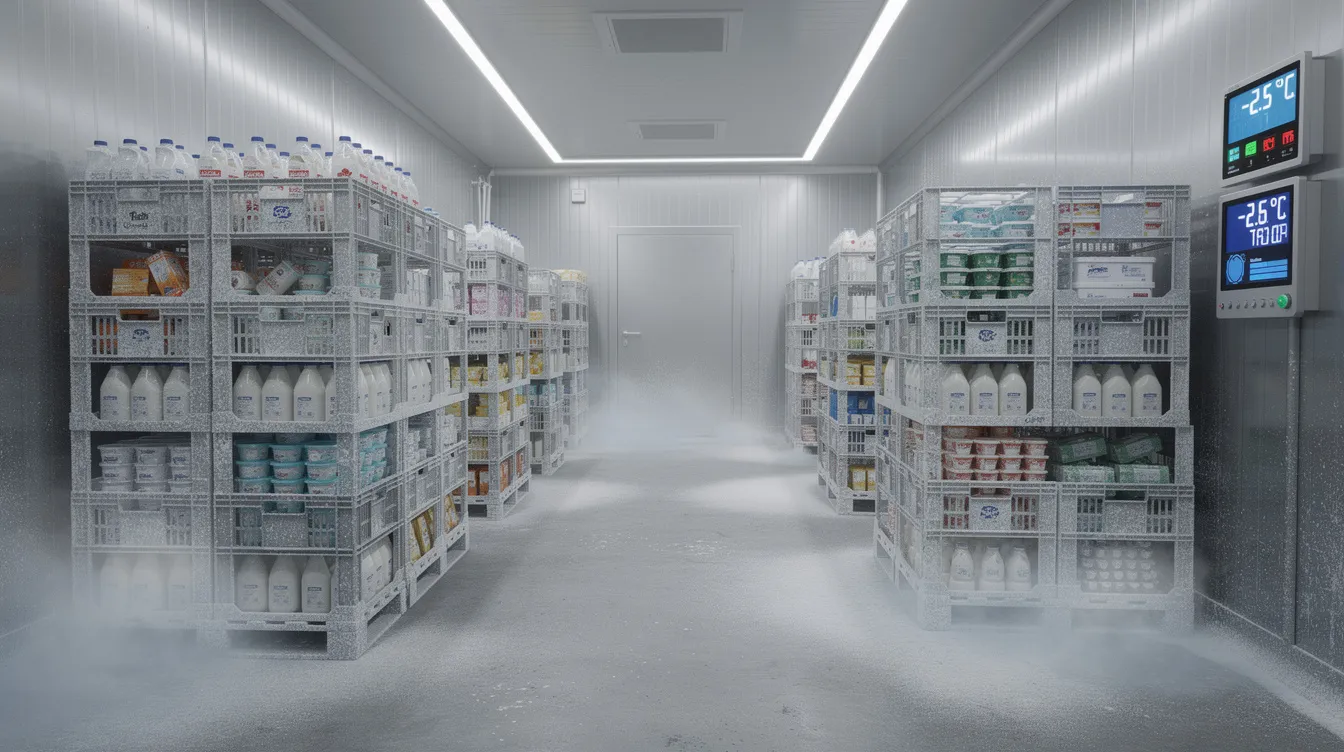
Paneer, yogurt, dahi, lassi and probiotic products are perishable. Cold rooms, chilling systems and cold-chain logistics are central to dairy plant project finance appraisal. Cold chain integrity is critical for value-added dairy, requiring power backup to prevent product loss.
Components include refrigerated milk reception, chilled storage tanks, fermentation rooms with controlled temperatures, finished-goods cold rooms, blast chillers, refrigerated vans and backup power for continuous cooling. The size and energy load of cold storage influences both project cost and operating expenses, impacting profitability and DSCR over the term loan tenure. An energy audit in a Rajasthan dairy plant showed annual energy costs of ₹1.24 crore, with potential savings of ₹19.1 lakh and a payback period of about 17 months.
For a detailed assessment of cold storage and cold chain requirements for dairy products, promoters should budget these components based on vendor quotes rather than estimates. Inadequate cold-chain investment is a red flag for bankers, especially in probiotic and extended-shelf-life projects.
Revenue Assessment During Term Loan Appraisal
Lenders review detailed revenue projections: product-wise selling price, planned volumes, market segments (retail vs HoReCa vs institutional), channel margins and expected ramp-up over at least five to seven years. Market demand for value-added dairy products is evaluated against generic liquid milk to test whether the premium pricing assumed in the DPR is realistic.
The DPR should break down revenue by key value-added SKUs (200 g paneer packs, 500 g dahi tubs, 90 g flavoured yogurt cups, 200 ml lassi bottles, probiotic drinks) rather than generic “milk products” sales. Dairy processing requires expertise in supply chain management and food retail marketing for effective operation, and lenders expect promoters to demonstrate this.
Price escalation assumptions, discounts, promotional schemes and geographic expansion must be reasonable. A detailed value-added dairy products revenue model strengthens the DPR. Sensitivity analysis is crucial in evaluating dairy financial projections against market fluctuations. Banks run sensitivity checks on volume, price and product mix to see how DSCR behaves under less optimistic scenarios before finalising dairy plant term loan assessment.
Profitability Assessment by the Bank
Projected turnover alone does not convince lenders. They examine cost structure and profitability to judge dairy plant loan repayment capacity. High fixed costs in dairy processing necessitate careful break-even analysis for loan assessments.
Major cost heads include:
- Raw milk procurement (seasonal pricing, fat/SNF basis; procurement price around ₹30 to ₹40 per litre)
- Cultures and ingredients for yogurt and probiotic lines
- Packaging material (cups, pouches, cartons; approximately ₹0.80 per litre)
- Electricity and refrigeration power (approximately ₹0.60 per litre)
- Boiler fuel
- Labour and salaries
- Distribution and marketing
- Repairs and maintenance
Contribution margin (selling price minus variable cost), EBITDA, PAT and break-even quantity are the core profitability metrics lenders examine. A thorough dairy plant profitability and break-even analysis shows whether projected EBITDA comfortably covers interest and principal instalments, with buffers for milk price spikes and power tariff increases.
Financial Projections Required for Term Loan Assessment
Any bankable dairy plant project report for term loan must include integrated financial projections for at least the full loan tenure plus a buffer; usually seven to ten years for medium and large plants.
Key statements include:
- Projected Profit and Loss Account
- Projected Balance Sheet
- Cash Flow Statement
- Fund Flow Statement (where applicable)
- Term loan amortisation schedule
- Depreciation chart
- Working capital assessment
- Ratio analysis (DSCR, interest coverage, current ratio, debt-equity, asset turnover)
- Break-even analysis
- Sensitivity analysis
These projections must be linked with consistent assumptions. For detailed guidance on preparing value-added dairy plant financial projections for a DPR, promoters should work with professionals who understand both dairy operations and banking formats. Projections are based on promoter inputs and market study; they are tools for appraisal, not guaranteed performance.
Working Capital Assessment and Its Relationship With Term Loan
Term loan finances fixed assets. Working capital finances day-to-day operations. Both must be assessed together for complete dairy plant project finance.
Working capital needs in dairy are affected by fast-paced procurement and longer customer payment cycles. Typical components include:
- Raw milk procurement (often paid weekly or fortnightly)
- Ingredients and cultures
- Packaging inventories
- Finished-goods stock in cold rooms
- Trade receivables from distributors and modern trade
- Minimum cash and bank balances
Value-added dairy products often require working capital tied up in inventory, given the need for chilled and frozen storage at multiple stages. Banks assess working capital under methods like MPBF (Maximum Permissible Bank Finance) based on current assets minus stipulated margin. Inadequate working capital can derail an otherwise well-financed term loan project.
For a structured assessment of working capital requirement for value-added dairy plant, promoters should prepare detailed inventory, receivable and creditor schedules. Bundling all working capital into a long-tenure term loan is uncommon; banks prefer flexible cash credit or WCDL limits with different interest rates and processing charges.
DSCR and Loan Repayment Capacity
Debt Service Coverage Ratio (DSCR) measures how comfortably a project’s cash accruals can service interest and principal repayments of all long-term debt. This is one of the most critical metrics in dairy plant term loan assessment.
DSCR = Cash Available for Debt Service ÷ Total Debt Service (Interest + Principal due in a year)
Cash available for debt service typically equals PAT plus depreciation plus interest on term loan plus other non-cash charges, adjusted for any dividends or drawings.
Lenders typically require a DSCR of 1.25 to 1.50 for dairy projects. A DSCR of 1.25 means the project generates 25% more cash than needed to service debt in that year. Banks examine both year-wise DSCR (especially during initial ramp-up years) and average DSCR over the full loan tenure. A healthy average does not compensate for a year where DSCR falls below the minimum threshold.
Moratorium on principal in early years improves initial DSCR but increases total interest burden. In illustrative models, Year 1 DSCR may be 1.20 to 1.35, improving to 2.0 or above by Year 4 to 5 as capacity utilisation stabilises. If projected DSCR remains weak even after adjusting tenure and moratorium, banks may reduce the eligible term loan, increase promoter contribution or decline the proposal.
For a detailed treatment of DSCR and loan repayment capacity for dairy project, promoters should prepare year-wise DSCR tables with sensitivity scenarios covering adverse milk pricing, lower volumes and delayed ramp-up. Loan repayment schedules are typically structured according to cash flow.
Determining the Term Loan Repayment Period
Repayment tenure for a dairy processing plant term loan is decided after considering asset life, cash flow profile, DSCR, project size and bank policy. Loan repayment periods typically range from 3 to 7 years for smaller dairy units. For larger, integrated value-added plants, repayment tenures for dairy loans can extend to 8 to 10 years including moratorium, especially under schemes like DIDF.
Value-added dairy plants see gradual capacity utilisation build-up (50% in Year 1, 65% in Year 2, 75 to 80% in Year 3), which must align with instalment sizes. Shorter tenure means faster debt reduction but higher annual instalments that can strain early-year cash flows. Longer tenure reduces annual debt service but increases total interest cost.
Some refinance or scheme-linked loans, including certain dairy farm loans and DEDS-style subsidies, may carry prescribed tenure ranges that banks follow.
Moratorium Period for a Dairy Manufacturing Plant
Moratorium is the initial period post-sanction where principal (and sometimes part of interest) is not payable, giving the project time for construction, installation, trial runs and market stabilisation. This is often called the grace period or gestation period.
Typical stages covered by moratorium include land development and building construction, machinery supply and installation, utilities commissioning, trial production of paneer, curd and yogurt lines, regulatory clearances and commercial launch. Realistic project implementation timelines, usually 9 to 18 months for industrial dairy plants, form the basis for proposing moratorium.
Grace periods for dairy loans can be 3 to 6 months for smaller projects, while larger integrated plants may get 12 to 24 months. Calf-rearing units may receive grace periods up to 3 years under specific dairy farm expansion or animal husbandry schemes. Whether interest during construction is payable or capitalised depends on lender norms. Promoters should not treat moratorium as a “free holiday” but as part of structured dairy plant debt service coverage planning.
Security and Collateral Considered by Banks
Banks distinguish between primary security (fixed assets created out of the term loan, such as land, building, plant and machinery, cold rooms, utilities) and collateral (additional security like other immovable properties, fixed deposits, guarantees).
The usual security structure includes:
- Hypothecation or charge on plant and machinery
- Equitable mortgage of factory land and building
- Charge on current assets for working capital
- Personal guarantees of promoters
- Corporate guarantees (where applicable)
- Assignment of insurance policies on major assets
Collateral requirements vary based on loan type and amount. Lenders look for a minimum Loan-to-Value (LTV) ratio of 60% to 75% for dairy facilities. Asset coverage is evaluated based on the value of fixed assets relative to term debt. Some government guarantee schemes or special dairy schemes can reduce collateral requirements for eligible borrowers, but promoters should not assume collateral-free finance unless confirmed by the lender.
While good security helps, modern term loan assessment focuses on project viability and repayment capacity rather than collateral alone.
Bank Loan and Project Finance Evaluation
After technical and financial appraisal, the bank’s credit committee reviews the entire proposal: DPR, financial projections, risk analysis, security, compliance with internal policies and regulatory guidelines. Dairy manufacturing plant loan eligibility is influenced by promoter track record, existing banking relationship, sector exposure norms and internal credit rating.
Lenders assess the social impact and environmental footprint of value-added dairy projects, particularly for scheme-linked financing. A structured bank loan and project finance for value-added dairy plant proposal integrates all these elements. The term loan is typically sanctioned along with separate working capital limits, subject to completion of documentation, creation of security and due diligence.
Processing charges, interest rate, repayment terms and covenants are communicated through a formal sanction letter. Interest rates for dairy loans are set by lending banks per RBI guidelines, and are subject to change based on policy revisions.
Product-Specific Term Loan Considerations
While the core appraisal framework is similar across dairy projects, certain product categories involve different machinery, cold-chain intensity and margin structures that affect dairy plant financial assessment and term loan sizing. The subsections below provide focused, finance-oriented pointers for each major category.
Industrial Paneer Manufacturing Plant
Paneer is a high-fat product with strong B2B demand from hotels, restaurants and institutional kitchens. Production requires coagulation vats, presses, chilling, cutting and packing lines plus cold storage. Term loan appraisal must factor higher milk-to-product ratios, whey handling or disposal and consistent quality requirements. For detailed costing and projections, see the industrial paneer manufacturing plant project report. Paneer plants may have higher margin per kg but need cold-chain reliability that increases both capital and operating costs.
Curd / Dahi Manufacturing Plant
Dahi is a staple with high daily turnover and strong linkage to fresh milk procurement. Production involves standardisation, pasteurisation, culture addition, incubation and refrigerated storage. Term loan assessment focuses on fermentation room capacity, cold storage and cup- or pouch-filling lines. Because of high volume and lower per-unit margin, lenders are sensitive to realistic volume and pricing assumptions. See the curd dahi manufacturing plant project report for detailed financials.
Industrial Yogurt Manufacturing Plant
Yogurt (set and stirred variants) is a differentiated segment requiring precise culture control, fruit or flavour addition lines and premium packaging. Capex per litre may be higher due to automation and quality-control lab requirements. Lenders assess whether premium pricing and urban demand assumptions are consistent with recent Indian FMCG trends. The industrial yogurt manufacturing plant project report covers product-specific cost structures.
Greek Yogurt Manufacturing Plant
Greek yogurt requires additional straining or ultrafiltration, leading to higher equipment cost and lower yield per litre of milk. The product targets premium segments with higher per-unit margins. Lenders weigh higher capex and operating cost against niche demand, expecting conservative capacity utilisation ramp-up and robust marketing strategy. Detailed financials are in the Greek yogurt manufacturing plant project report.
Industrial Lassi Manufacturing Plant
Lassi (sweet, salted, plain, flavoured) is a mass-market drinkable product requiring mixing tanks, homogenisation and high-speed bottling or pouch-filling lines. Seasonality (higher summer demand) influences projected sales patterns and cash flow. Packaging choice (PET bottles, aseptic packs, pouches) affects machinery cost and working capital. See the industrial lassi manufacturing plant project report.
Probiotic Dairy Products Manufacturing Plant
Probiotic products need stricter process control, advanced quality testing and more rigorous cold-chain conditions extending to the retail end. Lenders pay close attention to technology partners, brand positioning, regulatory claims and marketing budgets. Financial projections should recognise higher per-unit price but lower initial volumes and higher launch costs. The probiotic dairy products plant project report provides detailed term loan structuring for this segment.

Documents Normally Required for Dairy Plant Term Loan Appraisal
Documentation requirements vary by bank and scheme, but a typical dairy manufacturing plant loan file needs comprehensive business, technical and financial documents. Applicants must submit KYC documents and a project overview for loans.
Promoter and entity documents:
- KYC (PAN, Aadhaar, voter id, address proof)
- Constitution documents (Partnership Deed, LLP Agreement, MOA/AOA)
- MSME/Udyam registration, GST registration
- Existing loan statements and bank statements (12 to 24 months)
Project-specific documents:
- Detailed Project Report (DPR)
- Machinery quotations with item-wise breakdown
- Civil and utility estimates with layout plans
- Land records, ownership or lease documents
- Statutory approvals or consents (as applicable)
- Projected financial statements including CMA Data where required
Financial history:
- Last 3 years audited financial statements (if existing business)
- Latest income-tax returns
- Net-worth statement of promoters
- Details of unsecured loans or investments proposed as promoter contribution
Food safety certifications are often required for the disbursement of loans in the dairy sector. For scheme-based loans including dairy farm loans, the Dairy Entrepreneurship Development Scheme and programmes for mini dairy units, lenders may have additional documentation templates and formats.
Why Banks Reject or Reduce the Proposed Term Loan Amount
Even technically sound projects may see reduced term loan sanctions if financial or risk parameters are not satisfactory.
Common reasons include:
- Inflated or unsupported project cost
- Unrealistic sales or capacity-utilisation assumptions (full capacity from Year 1)
- Weak DSCR below the lender’s threshold
- Inadequate or unverifiable promoter contribution
- Mismatched debt-equity ratio
- Insufficient working capital planning
- Poor milk procurement strategy lacking supply agreements
- Lack of proper cold-chain design
- Over-dependence on a single buyer or limited geographic market
- Inadequate collateral where required
- Weak credit history of promoters
- Inconsistent or incomplete documentation
Non-core vehicles, unrelated brand acquisition, speculative land cost and excessive pre-operative or contingency provisions are often scaled down during dairy plant loan appraisal. Promoters should validate assumptions with market data and seek professional DPR preparation before approaching banks.
Common Mistakes in Dairy Plant Term Loan Proposals
- Requesting 90 to 100% funding of total project cost, leaving almost no promoter contribution
- Ignoring separate working capital assessment entirely
- Assuming full-capacity production from Year 1 instead of realistic ramp-up
- Underestimating electricity, refrigeration and cattle feed costs for milk procurement operations
- Overlooking seasonal variations in milk supply, availability and demand
- Copying generic financial models without aligning with actual machinery capacities
- Failing to reconcile project cost with supplier quotation totals
- Not explaining the source of promoter contribution and unsecured loans
- Preparing a repayment schedule first and then forcing projections to match it, instead of letting DSCR analysis guide instalment sizing
- Treating Dairy Entrepreneurship Development Scheme (DEDS) subsidy or capital subsidy as guaranteed before formal sanction from the concerned agency
- Using inconsistent assumptions across profit and loss, balance sheet and cash flow statements
A corrective approach includes robust revenue studies, conservative assumptions, stress-testing of DSCR and professional guidance for dairy plant financial assessment.
Illustrative Term Loan Assessment for a Value-Added Dairy Plant
This is a purely illustrative case study for understanding. It is not a commitment or indicative sanction from any bank or from ProjectReportBank.com.
Project: A 1,50,000 LPD value-added dairy plant in India producing paneer, curd, yogurt, lassi and probiotic drinks, commissioned in FY 2026-27.
| Cost Head | ₹ Crore |
|---|---|
| Land and Site Development | 5.00 |
| Building and Civil Works | 12.00 |
| Plant and Machinery | 20.00 |
| Utilities and Refrigeration | 6.00 |
| Cold-Chain Infrastructure | 3.00 |
| Pre-operative Expenses | 3.50 |
| Contingency | 2.50 |
| Margin for Working Capital | 3.00 |
| Total Project Cost | 55.00 |
Means of Finance:
| Source | ₹ Crore | % |
|---|---|---|
| Promoter Contribution | 17.50 | 31.8% |
| Term Loan | 35.00 | 63.6% |
| Unsecured Loans (Subordinated) | 2.50 | 4.6% |
| Total | 55.00 | 100% |
Debt-Equity Ratio: 35.00 ÷ 17.50 = 2.0:1
Projected performance at stabilised capacity (Year 3 onward):
- Annual turnover: ₹95 crore
- EBITDA margin: approximately 14%
- Annual EBITDA: ₹13.3 crore
- Cash accrual after tax: ₹7.5 crore
- Annual debt service (principal + interest at assumed rate): ₹6.0 crore
- DSCR at stabilised year: approximately 2.2
Average DSCR over 8-year repayment period (including 1-year moratorium): approximately 1.85
The steady cash flow from a diversified product mix (paneer, curd, yogurt, lassi and probiotic products) supports stable debt servicing. If sensitivity analysis shows DSCR dropping below 1.25 under a 10% adverse milk price scenario, the bank may reduce the term loan to ₹32 crore and require ₹3 crore additional promoter contribution.
Disclaimer: Actual bank term loan assessment depends on bank-specific norms, project configuration, promoter profile, sector outlook, interest rate environment and independent credit judgment.
Role of a Bankable DPR in Term Loan Assessment
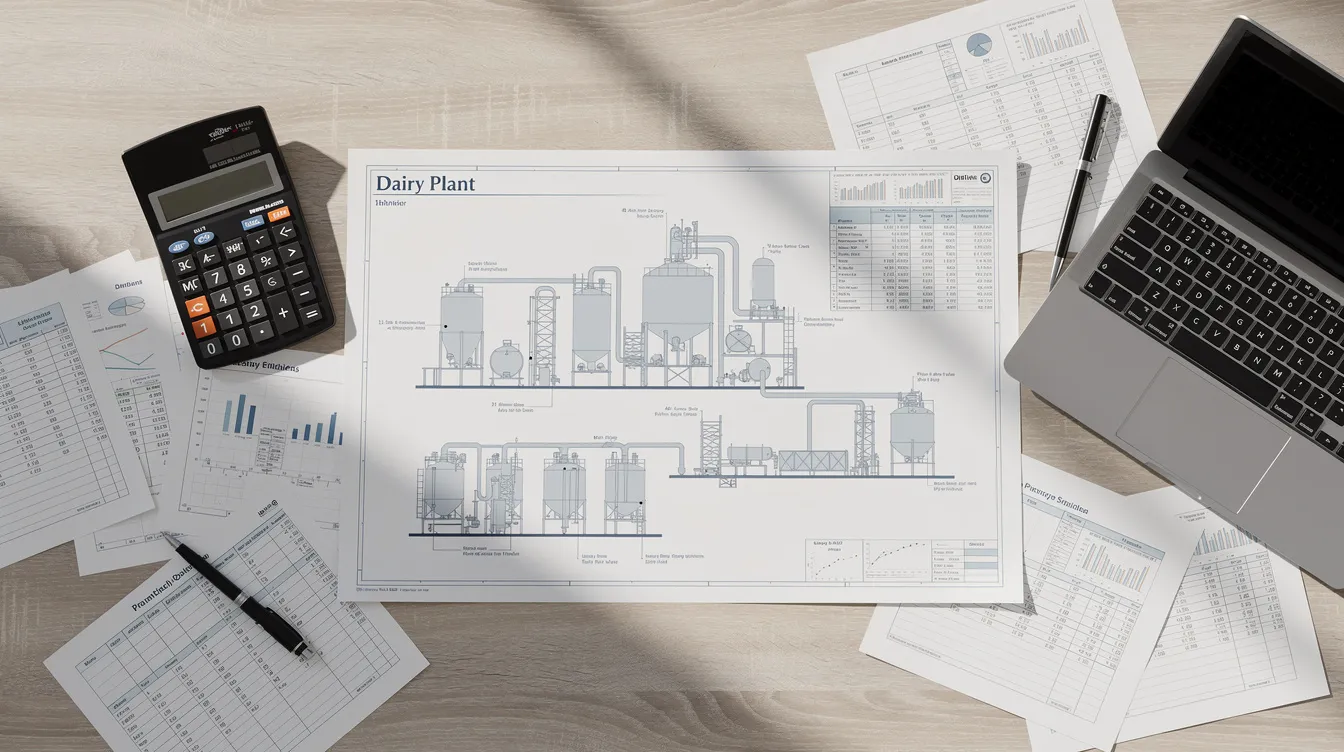
A bankable DPR integrates technical design, market analysis, project cost, means of finance, working capital, profitability, financial ratios and risk assessment into one coherent document for lenders. For value-added dairy plants, the DPR should detail milk procurement strategy, product mix (including considerations for milk unions, milk producer companies and multi state cooperatives as potential sourcing partners), processing capacities, pricing strategy and distribution channels.
A robust DPR supports faster and clearer dairy plant term loan assessment by reducing back-and-forth queries, aligning numbers across sections and disclosing underlying assumptions. Prepared with banker-style CMA Data, DSCR analysis, sensitivity scenarios and break-even calculations, it improves appraisal quality. It does not guarantee loan approval or specific interest rates.
How CA Manish Gugliya Can Assist
I am CA Manish Gugliya, a practising Chartered Accountant specialising in DPR preparation, CMA Data, term loan structuring and MSME advisory for industrial projects including value-added dairy plants.
The professional services I provide include:
- Preparation of Detailed Project Reports tailored for dairy plant term loan assessment
- Project cost structuring and means-of-finance planning
- Financial projections (profit and loss, balance sheet, cash flow) for the full loan tenure
- DSCR and sensitivity analysis
- Working capital assessment
- Preparation and assistance of CMA Data where required
- Break-even analysis and ratio analysis
- Repayment schedule structuring aligned to projected cash flows
I prepare and assist in presenting professionally structured project reports, financial projections and CMA Data based on the project information, assumptions and supporting documents provided by the promoter.
Loan sanction, eligible loan amount, interest rate, security requirements and repayment terms remain subject to the independent appraisal and credit policy of the concerned bank or financial institution. I do not certify projections or guarantee loan sanction.
Frequently Asked Questions
The following questions address common queries that dairy entrepreneurs raise about term loan assessment in the Indian context.
How is a term loan assessed for a value-added dairy manufacturing plant?
Banks evaluate the project through technical feasibility, project cost validation, means of finance, promoter contribution, security, cash flow projections, DSCR, debt-equity ratio, working capital and risk factors before determining the eligible term loan amount and structure. The assessment relies on a detailed DPR, financial projections and promoter credentials. The sanctioned term loan often differs from the amount requested, based on this holistic appraisal.
What percentage of my dairy plant project cost can the bank finance?
There is no fixed universal percentage. The financeable portion depends on bank norms, scheme guidelines, project risk, security coverage, promoter contribution and DSCR. For some government or refinance-linked schemes, including dairy farm loans for mini dairy units or under DEDS, indicative margin norms may apply. Final exposure is at the bank’s discretion. Individuals, farmers and NGOs can apply for dairy loans under various government schemes, each with its own account of eligible costs.
Can land and building cost be fully financed under the term loan?
Many banks prefer to treat land primarily as collateral rather than fully finance its purchase cost. Factory building and civil works are more readily financed as part of eligible project cost. Treatment of land, especially agricultural land requiring conversion, depends on each bank’s internal policy. Promoters should discuss this early with their lender and reflect it correctly in the DPR. Land records and conversion documentation affect eligibility.
Can working capital be included in the same term loan for my dairy plant?
Banks distinguish between including “margin for working capital” in project cost (which the term loan may partly support) and sanctioning separate, revolving working-capital facilities like cash credit or WCDL. These facilities are assessed and priced differently. Bundling all working capital into a long-tenure term loan is uncommon; banks prefer flexible limits that adjust as the dairy plant’s seasonal needs change.
How do processing charges and interest rates work for dairy plant term loans?
Banks levy processing charges, documentation fees and service charges as per their latest circulars. Interest rates are typically linked to external benchmarks or MCLR plus a spread based on risk rating and scheme. Under the Dairy Entrepreneurship Development Scheme, NABARD provides capital subsidies for dairy projects, and some schemes offer interest subvention (for example, DIDF provides 2.5% interest subvention). The Kisan Credit Card scheme offers interest rates as low as 4% for prompt payers, applicable mainly to rural development and agricultural credit. MUDRA loans for dairy farming can range from ₹50,001 to ₹5 lakh and require no collateral for Shishu and Kishore tiers. Exact rates depend on the lending institution’s current policy.
Is a DPR compulsory for getting a dairy manufacturing plant bank loan?
For industrial-scale value-added dairy manufacturing projects, a structured DPR with financial projections is practically essential. Banks frequently ask for a formal project report and CMA Data for larger exposure sizes, making a professional DPR a de facto requirement for promoters targeting multi-crore term loans. For very small dairy units or livestock loans, simpler formats may sometimes suffice. Joint liability groups applying for small dairy farm loans or cattle purchase financing may face different documentation norms at the village level.
Does CA Manish Gugliya or ProjectReportBank.com arrange or guarantee bank loan sanction?
I do not arrange funds or guarantee sanction. My role is to prepare robust DPRs, projections and financial analyses that help lenders appraise the project more effectively. The final decision on loan amount, interest rate, security, tenure and approval rests with the concerned bank or financial institution based on its independent assessment and credit policy. An online application through a bank’s portal or direct submission of the DPR initiates the formal process, which is entirely under the lender’s control.
Can machinery already purchased be considered in project finance?
Already-incurred expenditure on eligible equipment may be treated as part of the promoter’s contribution, subject to the bank’s acceptance. The promoter must provide purchase invoices, installation evidence and proof of payment through banking channels. Lenders verify that the equipment is relevant to the proposed project and in usable condition. This treatment is not automatic and depends on each bank’s credit policy and the timing of the purchase relative to the loan application.
Conclusion
Term loan assessment for a value-added dairy manufacturing plant is an integrated project-finance exercise. Lenders examine eligible project cost, promoter contribution, means of finance, market potential, installed capacity, profitability, working capital, DSCR, debt-equity, repayment capacity, security structure, technical feasibility and promoter capability. They do not finance a flat percentage of machinery or project cost.
Banks test realistic assumptions on milk procurement, product mix, pricing, costs, capacity utilisation and market absorption. A 50,000 LPD paneer-curd plant and a 1,50,000 LPD multi-product facility face the same appraisal logic but different scale parameters. Well-prepared DPRs, financial projections and CMA Data tailored to bank expectations improve appraisal quality, even though they cannot ensure approval.
Promoters and dairy entrepreneurs planning medium to large value-added dairy manufacturing projects in India can engage CA Manish Gugliya through ProjectReportBank.com for preparing a bankable DPR, financial projections, DSCR analysis, working capital assessment and structured term loan proposal. A professionally prepared project report does not guarantee a loan; it ensures the project speaks the language lenders understand.