Key Takeaways
- This article is a DPR-style guide for setting up an industrial Greek yogurt manufacturing plant in India, designed for commercial operations processing 5,000–50,000+ litres of milk per day – not for home or micro-scale units.
- Greek yogurt is a premium, concentrated fermented dairy product with higher protein content and thicker texture that can significantly improve realisation over liquid milk when backed by sound project planning and cold chain infrastructure.
- A Greek Yogurt Manufacturing Plant Project Report must integrate technical design, manufacturing process, capital expenditure, operating costs, working capital, profitability and bankability metrics including DSCR, IRR and ROI.
- Plant cost varies widely with capacity, automation level, straining technology, cold storage requirements, packaging systems and location – no single “standard” cost fits all projects.
- This outline is written from the perspective of CA Manish Gugliya, ProjectReportBank.com, focusing on bank loan readiness, detailed financial projections and realistic feasibility for serious entrepreneurs and dairy companies.
Greek Yogurt Manufacturing Plant Project Report – Context and Purpose
Conventional liquid milk businesses in India often operate with relatively thin margins. Greek yogurt – a concentrated fermented dairy product with protein levels typically reaching 8–12% after processing – offers a path to significantly higher product realisation per kg. With rising consumer demand for high protein dairy products in cities like Mumbai, Delhi NCR, Bengaluru and Hyderabad, the opportunity for organised dairy manufacturing in this segment is growing rapidly.
This article focuses on commercial and industrial Greek yogurt manufacturing plants processing 5,000–50,000 litres of fresh milk per day, not homemade or cottage-scale units. At this scale, the manufacturing process, cold chain distribution, regulatory compliance and financial modelling require structured project planning.
A Greek Yogurt Manufacturing Plant Project Report is a structured DPR document that evaluates:
- Technical feasibility, installed capacity and raw milk requirement
- Capital expenditure, operating costs and working capital
- Profitability, cash flow and loan servicing capacity (DSCR)
- Investment viability for promoters, banks and investors
A professionally prepared DPR helps promoters engage with banks and financial institutions on realistic terms, avoiding over-optimistic assumptions that collapse during appraisal. The sections that follow are structured like a banker-friendly outline covering every dimension a serious Greek yogurt project demands.
Greek Yogurt Manufacturing Business Opportunity in India
The Greek yogurt market in India sits within the broader yogurt and value-added dairy segment, which has seen visible growth across modern retail chains and platforms like BigBasket and Zepto. The global Greek yogurt market was valued at USD 10.22 billion in 2025 and is projected to reach USD 17.71 billion by 2034, growing at a CAGR of 6.3%. India’s yogurt market itself is projected to grow at over 20% CAGR, driven by evolving dietary trends and rising health awareness driving demand for protein dense dairy products.
Key demand drivers include:
- Health-conscious urban consumers and gym/fitness communities prioritising protein intake and digestive health
- Working professionals seeking convenient breakfast products and nutritional snacks
- Growing preference for probiotic and functional food choice products, supporting gut health
- Expansion of quick-commerce and e-grocery platforms enabling stable demand
Relevant customer segments for a Greek yogurt manufacturing unit span retail consumers (single-serve cups and family packs), modern trade and supermarkets, hotels, restaurants, cafés, QSR chains, institutional caterers, airlines and B2B food manufacturers. Positioning can range from mass-premium retail to niche fitness brands to private-label co-manufacturing for FMCG labels. A Greek Yogurt Manufacturing Plant DPR should define the intended business model because this fundamentally changes pricing, margins, packaging costs and distribution costs.
Difference Between Regular Yogurt, Dahi and Greek Yogurt
Greek yogurt is not the same as standard yogurt or home-made dahi. It is a concentrated fermented dairy product produced by straining regular yogurt or concentrating milk solids to remove whey, yielding a product with substantially higher protein and thicker texture. This distinction has direct implications for manufacturing process, yield and economics.
| Parameter | Dahi / Curd | Regular Yogurt (Set/Stirred) | Greek Yogurt |
|---|---|---|---|
| Total Solids | ~12–14% | ~14–16% | ~18–25% |
| Protein | ~3–4% | ~3.5–5% | ~8–12% |
| Texture | Soft, variable | Smooth (stirred yogurt) or firm (set) | Very thick, creamy texture |
| Whey Removal | None | None or minimal | Significant concentration step |
| Yield per 100L milk | ~95–100 kg | ~90–95 kg | ~40–60 kg |
| Packaging | Pouches, matkas, cups | Cups, tubs | Premium cups, tubs |
| Market Positioning | Mass, commodity | Standard to mid-range | Premium, high protein food products |
Regular dahi often uses loose milk with basic heat treatment and may be sold in poly pouches. Industrial Greek yogurt uses standardised pasteurized milk, controlled starter cultures and additional straining or concentration technology. Greek yogurt yield is lower – meaning more milk per kg of final product – but the average selling price and margin can be higher when brand and distribution are planned correctly. Recipes vary by manufacturer regarding fat content, added milk solids, stabilisers or only natural ingredients formulations, so the DPR should model yields using realistic, project-specific assumptions.
Greek Yogurt Manufacturing Process – Technical Overview
The yogurt production process for Greek yogurt follows a controlled sequence from milk reception to cold storage. The primary production methods include homogenization, pasteurization, and fermentation, followed by a concentration step that defines the product.
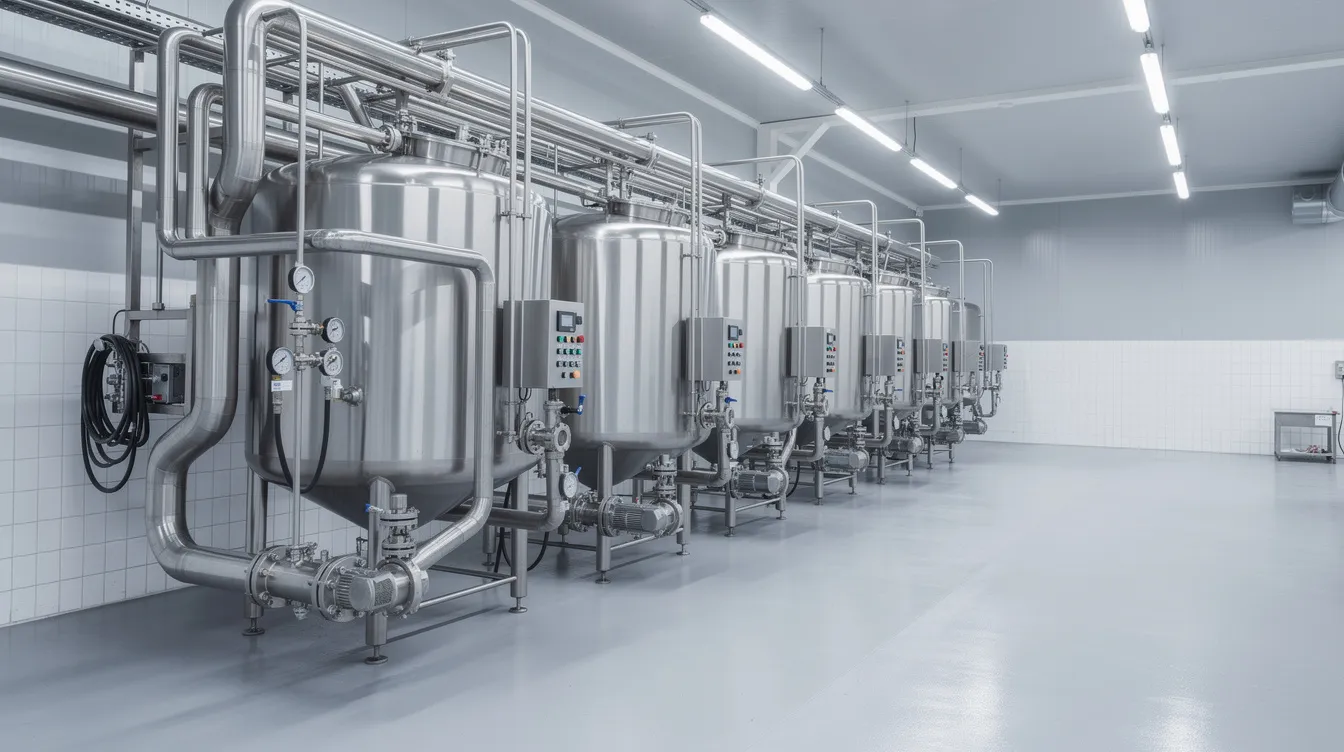
Process flow:
- Milk Reception → Quality testing of raw milk (fat, SNF, adulteration checks)
- Filtration / Clarification → Removal of physical impurities
- Milk standardization → Adjusts fat and total solids content to ensure consistency; cream or milk powder may be added
- Homogenization → Reduces fat globule size, improves yogurt texture and prevents cream separation
- Milk pasteurization → Milk is pasteurized at 90–95°C for 5–10 minutes, essential for destroying harmful bacteria and denaturing whey proteins to improve gel structure
- Cooling → To inoculation temperature (~41–43°C)
- Starter culture addition → The fermentation process typically uses cultures like Lactobacillus delbrueckii subsp. bulgaricus and Streptococcus thermophilus, which convert lactose into lactic acid
- Fermentation → Fermentation occurs at 41–43°C for 2–3 hours; monitoring pH and acidity during fermentation is crucial for achieving desired texture and safety
- Cooling → To halt fermentation at target acidity
- Concentration / Whey separation → The defining step – Greek yogurt is produced by straining regular yogurt to remove whey, concentrating milk proteins
- Blending / Formulation → Fruit, flavour or sweetener addition where applicable
- Filling and packaging → Automatic cup/tub filling machines with sealing
- Cold storage → Immediate transfer to refrigerated storage
- Refrigerated dispatch → Maintaining cold chain integrity from production to storage is vital for yogurt quality
Fermentation time and temperature are critical factors influencing yogurt quality. Process deviations – temperature abuse, poor culture performance, inadequate pasteurisation – directly impact product consistency, shelf life and financial results. Greek yogurt production lines may be fully automatic or semi-automatic depending on capacity and budget.
Greek Yogurt Concentration and Straining Technology
The straining or concentration step is commercially critical: it defines protein content, texture, yield and whey generation. Ultrafiltration can be used to concentrate milk proteins before fermentation, raising total solids from ~9% to ~17–18% and protein from ~3.8% to ~10–11%, significantly improving yield.
Industrial approaches include:
- Mechanical straining using bags or curd mats (labour-intensive, limited to very small scale)
- Centrifugal separation systems for moderate throughput
- Membrane-based concentration (ultrafiltration / microfiltration) – the dominant technology in automatic Greek yogurt manufacturing plants
Technology choice depends on target capacity, desired finished protein and milk solids, yield objectives, investment budget, local equipment service support and desired automation level. No single technology is universally superior – the DPR must compare options across capital cost, operating cost, flexibility and whey management. Concentration technology also affects downstream handling of acid whey, linking directly to effluent and by-product management.
Whey Generation and By-Product Management
Greek yogurt manufacturing inherently generates significant quantities of acid whey. Whey generated during Greek yogurt production must be effectively managed to minimize waste and environmental impact. In traditional straining, whey volumes can approach 50–60% of input milk weight.
Key considerations for the DPR:
- Expected whey volume per kg of Greek yogurt produced
- Storage requirements (insulated tanks, short holding time due to microbial growth)
- Utilisation options: animal feed blends, integration with fermented milk beverages, conversion to whey powder
- Environmental compliance: improper disposal raises effluent treatment load and may invite regulatory penalties from State Pollution Control Boards
Promoters considering deeper by-product utilisation should evaluate a whey processing plant manufacturing process alongside the Greek yogurt project. Larger integrated facilities can route acid whey into beverage or powder production, reducing waste and potentially improving overall margins.
Raw Materials for a Greek Yogurt Manufacturing Plant
Milk procurement strategy is the single largest cost driver in any Greek yogurt manufacturing plant. Raw material costs account for 62–73% of total operational expenses, and the lower yield per litre of milk compared to conventional yogurt amplifies this impact.
Key raw materials include:
- Raw cow or buffalo milk, standardised milk blends, skimmed milk
- Milk powder or skim milk powder for SNF adjustment
- Cream for higher-fat or premium variants
- Starter cultures (direct-vat set, freeze-dried)
- Stabilisers/emulsifiers where permitted
- Sugar, sweeteners, fruit preparations, flavours
- Packaging: cups, tubs, aluminium foil lids, secondary packaging cartons
- CIP systems and cleaning/sanitation chemicals – essential for maintaining hygiene in yogurt production
Milk procurement variables that affect profitability include seasonal availability, fat and SNF variation between summer and flush seasons, procurement radius, chilling infrastructure, milk quality tests and raw milk price volatility. Plants integrated into larger dairies may also handle skimmed milk or milk powder as inputs; an integrated dairy processing plant project report helps evaluate combined product portfolios. A realistic DPR should convert the raw materials plan into monthly and annual raw material consumption schedules tied to capacity utilisation assumptions.
Plant Capacity Planning and Product Mix Strategy
Correct capacity planning is central to the Greek Yogurt Manufacturing Plant Project Report. Both under-sizing and over-sizing impair returns. Greek yogurt plants can produce 50–150 MT annually at smaller industrial scale, and capacity can be customized based on investor requirements and market reach.
Factors guiding capacity selection:
- Target market geography and distribution reach
- Shelf life of Greek yogurt under Indian conditions (typically 21–45 days refrigerated)
- Number of SKUs (plain, flavoured, high-protein, varying pack sizes)
- Fermentation cycle time versus number of fermentation tanks
- Filling machines speed and cold storage volume
- Realistic capacity utilisation ramp-up (often 40–50% in year 1, rising to 80–85% by year 4–5)
Illustrative capacities – 3,000 LPD, 10,000 LPD, 25,000 LPD – serve as reference points, but actual choice depends on the promoter’s plan, milk availability and funding capacity. Annual production capacity ranging from a few hundred to several thousand tonnes is feasible depending on scale.
Product mix examples: plain yogurt (full fat and low fat), flavoured Greek yogurt (mango, strawberry, blueberry, Indian flavours), high-protein “fitness” variants, unsweetened and no-added-sugar options with reduced sugar concentration, probiotic-labelled varieties supporting digestive health, single-serve cups (80–150 g), family tubs (400–1,000 g) and institutional B2B bulk packs. Product mix influences selling price, packaging costs, production planning and profitability.
Greek Yogurt Manufacturing Plant Machinery and Production Line
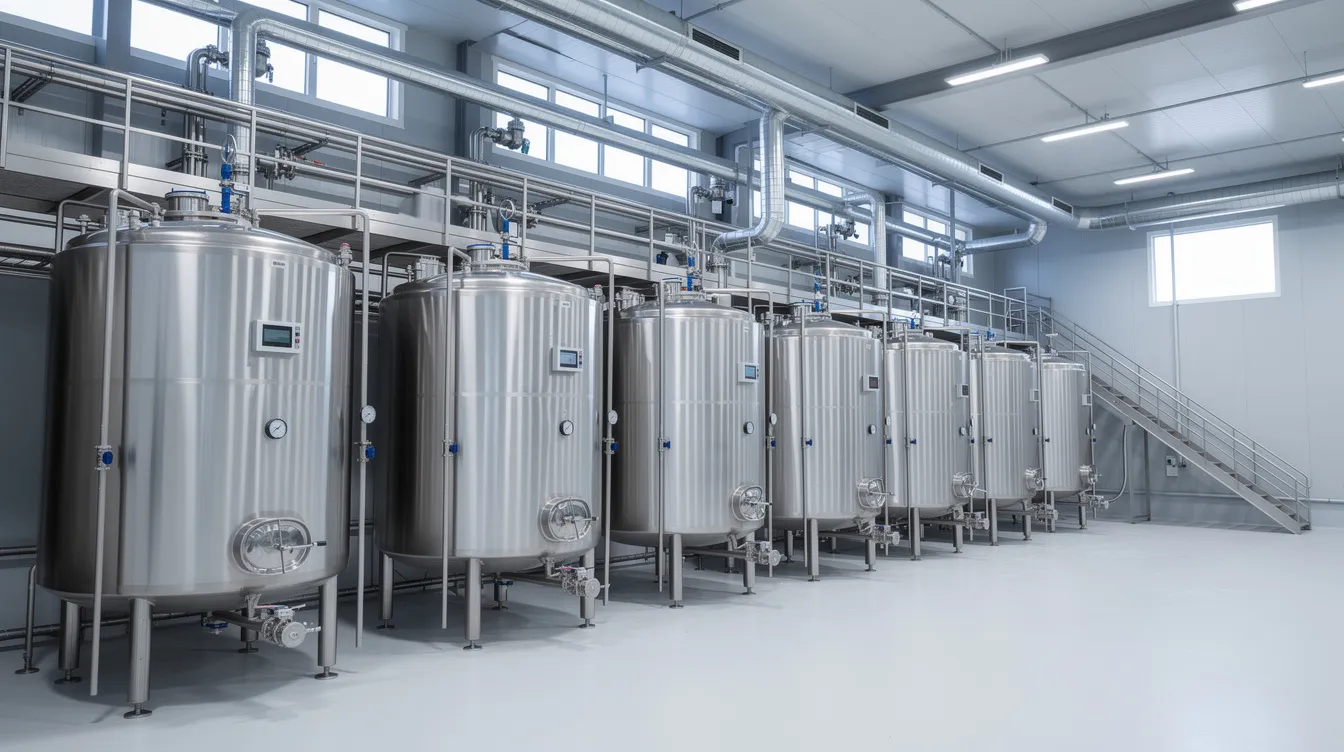
The choice of equipment significantly affects the economics and efficiency of yogurt production. Machinery configuration and automation level directly influence Greek yogurt manufacturing plant cost, operating efficiency and manpower requirement.
| Equipment | Function | Scale Relevance |
|---|---|---|
| Milk reception dock | Weighing, sampling incoming milk | All scales |
| Storage tanks | Raw and pasteurized milk holding | All scales |
| Homogeniser | Reduces fat globules, improves texture | All scales |
| Pasteurisation system | Heat treatment for safety | All scales |
| Fermentation tanks | Incubation with starter cultures | All scales |
| UF membrane system | Concentration of milk proteins | Mid to large scale |
| Filling and sealing machines | Automatic cup/tub packaging | Semi-auto to fully automatic |
| CIP skids | Clean-in-place hygiene systems | All scales |
| Refrigeration plant | Cold room, chilled water | All scales |
| Boiler / hot-water system | Steam/hot water for pasteurisation, CIP | All scales |
| ETP | Effluent treatment | All scales |
Industrial Greek yogurt processing equipment for membrane filtration may cost ₹40–60 lakh for a 5,000 LPH skid with basic automation, scaling to ₹2.5–5 crore for fully integrated PLC/CIP systems at 10,000–20,000 LPH. Automatic Greek yogurt production lines reduce labour and improve consistency but require higher initial investment. Both Indian-manufactured and imported equipment should be compared for cost, service support and financing options in the DPR.
Land, Building and Factory Infrastructure
Land and building represent major components of Greek yogurt plant project cost, especially for greenfield units. Key functional blocks include milk reception, raw milk chilling and storage, processing hall, fermentation room, concentration area, ingredient kitchen, packaging hall, finished goods cold store, dry store, laboratory, utility block, CIP area, effluent treatment plant, administrative office, workers’ change rooms and dispatch bay.
Hygienic zoning – separating the raw milk side from the pasteurised side and packaging area – is essential for meeting FSSAI regulations that govern dairy food manufacturing in India. Proper floor drains, washable finishes and controlled personnel movement align with good manufacturing practices. For broader dairy factory layout concepts, the ghee and butter plant land, building and utilities resource provides a related reference, though Greek yogurt requires its own process-specific layout. Site selection near milk sheds and target markets impacts land cost, logistics and utilities access.
Utilities, Cold Storage and Cold Chain Requirements
Greek yogurt is a refrigerated product from the fermentation stage onwards. Maintaining cold chain integrity is vital for yogurt quality, and refrigeration forms a substantial share of both capital expenditure and operating costs. Utility costs represent 5–9% of total operational expenses.
Utilities required:
- Electrical power for process equipment, refrigeration and lighting
- Process water and chilled water systems
- Refrigeration plant (ammonia or Freon-based)
- Hot water or steam for pasteurisation and CIP
- Compressed air, HVAC in sensitive areas
- Effluent treatment plant
- Backup DG set to prevent temperature excursions
Cold chain elements:
- Rapid post-fermentation cooling
- Finished product cold storage facilities with temperature monitoring
- Insulated and refrigerated vehicles for cold chain distribution
- Distributor and retailer cold storage compliance
For related industrial cold-chain infrastructure concepts, the ice cream cold storage and hardening tunnel resource provides a reference, though Greek yogurt requires refrigerated storage rather than deep freezing. The DPR should estimate monthly refrigeration energy consumption and logistics cost as these significantly affect operating cost and selling-price strategy.
Quality Control, Food Safety and Regulatory Compliance
A Greek yogurt processing plant handling thousands of litres of milk daily must operate under strict quality-control and food safety systems. Quality checks in yogurt production include monitoring fat, protein, solids, and microbiological safety at every stage. Yogurt production requires strict adherence to food safety regulations such as HACCP.
QC checkpoints:
- Raw milk reception testing (fat, SNF, microbial load)
- Pasteurisation logs and verification
- Incubation monitoring (pH, time, acidity)
- Finished-product microbiological and organoleptic testing
- Packaging integrity and shelf-life verification
Regulatory compliance requirements:
- FSSAI central licence for dairy units
- Factory act compliance is required for yogurt manufacturing facilities
- Compliance with pollution control norms is mandatory for yogurt plants
- Fire and building approvals, boiler inspection where applicable
- GST registration, legal metrology and packaged commodity labelling rules
- Regulatory management resources are essential from project inception
Exact approvals depend on state, capacity and layout and must be confirmed during implementation. A well-drafted DPR should summarise the regulatory roadmap and timeline so that lenders and promoters can factor this into the project schedule.
Greek Yogurt Plant Project Cost, Means of Finance and Working Capital
This section forms the financial backbone of the Greek Yogurt Manufacturing Plant Project Report. Capital expenditure includes land, construction, and machinery costs. Initial investment for a yogurt plant is significantly high given the specialised equipment, cold chain infrastructure and effluent treatment requirements.
Major capital cost heads:
- Land (purchase or leasehold), site development
- Factory building and civil works
- Plant and machinery including fermentation tanks, concentration systems, filling machines
- Refrigeration and cold storage
- Utilities (boiler, compressor, electricals), ETP
- Laboratory, office equipment, vehicles
- Preliminary and pre-operative expenses, contingencies
- Interest during construction and margin money for working capital
Means of finance typically includes promoter equity (25–35%), term loan from banks (60–70%) and potentially unsecured loans or applicable dairy-sector subsidies. For a related structure, the dairy processing plant project cost and means of finance resource illustrates how CAPEX and funding are organised for similar projects.
Working capital covers weekly and monthly requirements for milk procurement, cultures, fruit preparations, packaging material stock, salaries, power and fuel, cold chain expenses, finished goods inventory in cold storage and receivables from distributors. Because Greek yogurt has short shelf life, working-capital planning must balance inventory against expiry risk. The working capital assessment for dairy manufacturing plants provides a related methodology.
Revenue Model, Operating Cost and Profitability of a Greek Yogurt Plant
Profitability depends on both top line (selling price, product mix, sales volume) and bottom line (milk utilisation, yield, operating efficiency, cold-chain cost). Greek yogurt is typically a mass-premium or premium product in the food industry, not a low-margin commodity. Higher capacity utilization improves profitability significantly.
Revenue sources: Sales from plain Greek yogurt, flavoured variants, high-protein SKUs, family tubs, B2B packs for HoReCa and food manufacturing, private-label co-packing, and potentially frozen yogurt or adjacent cultured dairy products.
Operating cost structure: Raw milk and dairy ingredients dominate (62–73% of OpEx), followed by packaging materials, electricity and fuel (especially refrigeration), labour, logistics, marketing and administrative overheads. Total operational costs are projected to increase by the fifth year as capacity utilisation and distribution scale up. Variable costs track production volume while fixed costs remain relatively stable.
Gross profit margins range between 14–22%, and net profit margins range between 5–10%, depending on scale, product mix and brand positioning. Milk cost and product yield are crucial levers – even small improvements in yield or reductions in wastage materially improve gross margin. For break-even analysis methodology, the dairy plant profitability and break-even analysis resource provides a useful framework.
Financial Projections, Break-Even, DSCR, ROI and IRR Analysis in the DPR
Lenders expect a complete set of financial projections in any Greek Yogurt Manufacturing Plant DPR, usually covering 7–10 years with realistic volume build-up. Key statements include projected production and sales volumes by SKU, raw material consumption, manufacturing expenses, projected P&L, balance sheet, cash-flow statement, working-capital assessment, term-loan amortisation and depreciation schedules. The financial projections for dairy DPR resource illustrates how these are structured.
Break-even analysis should define fixed costs (cold storage, utilities, depreciation) versus variable costs (milk, packaging, logistics), contribution per kg and break-even capacity utilisation – often 50–60% for Greek yogurt plants given substantial fixed costs.
DSCR (Debt Service Coverage Ratio) measures cash accrual against term-loan obligations. Banks generally expect minimum DSCR of 1.25×, with average DSCR over loan life ideally above 1.5×. Over-aggressive repayment schedules can strain DSCR even in a profitable plant. Year-wise DSCR tracking is essential. For deeper understanding, refer to the DSCR and loan repayment capacity assessment resource.
ROI and IRR help promoters judge whether the Greek yogurt plant project offers attractive returns relative to risk. Net present value analysis and sensitivity modelling – stress-testing changes in milk price, selling price, yield, capacity utilisation and energy costs – are essential components. The ROI, IRR, payback and sensitivity analysis resource provides a related methodology.
Term Loan Assessment, Bank Loan Process and Project Feasibility
Banks in India evaluate dairy projects such as Greek yogurt plants with strong focus on repayment capacity, promoter background and technical feasibility. A Greek yogurt project report for bank loan should document:
- Total project cost and proposed means of finance with promoter’s equity and net worth
- Projected DSCR and cash flows under realistic and stressed scenarios
- Sensitivity of profits to changes in raw milk and selling prices
- Collateral/security and overall risk profile
Feasibility should be assessed across four axes: technical (technology, process, capacity, milk availability), market (target customers, competition, pricing, distribution), financial (profitability, payback, DSCR, cash flow) and operational (milk procurement, manpower, logistics, cold-chain management). The term loan assessment for dairy plants and bank loan project finance DPR resources illustrate how banks evaluate similar proposals.
A well-prepared Greek Yogurt Manufacturing Plant Project Report reduces back-and-forth with banks and aligns expectations on loan amount, tenure, moratorium and security.
Risk Analysis and Sensitivity for Greek Yogurt Manufacturing Projects
Greek yogurt plants face specific commercial and operational risks that should be explicitly acknowledged in the DPR.
| Risk | Mitigation |
|---|---|
| Raw milk price volatility | Multiple procurement sources, long-term contracts |
| Under-utilisation of capacity | Phased ramp-up, realistic sales build-up |
| Slow market acceptance | Product differentiation, strong quality, trial packs |
| Competition from national dairy brands | Niche positioning, institutional sales mix |
| High packaging and cold-chain costs | Route optimisation, bulk procurement |
| Short shelf life / returns | Tighter distribution planning, FIFO inventory |
| Culture failure / batch losses | Process controls, preventive maintenance |
| Whey disposal challenges | Integration with whey processing or animal feed |
| Working-capital strain | Conservative credit policies, modern-trade negotiation |
Sensitivity analysis should numerically demonstrate the impact of adverse scenarios – 5–10% increase in milk price, 5% drop in selling price, lower utilisation – helping promoters and lenders understand risk-bearing capacity. The feasibility and project viability analysis resource provides a related framework. No DPR should guarantee profits; rigorous planning manages these risks.
Integration with Other Dairy Products and Wider Dairy Projects
Greek yogurt plants can function as components of integrated dairy processing facilities handling multiple value-added products: regular stirred yogurt, fermented yogurt, probiotic variants, lassi, flavoured milk, paneer, cheese, whey beverages or whey powder, ghee, industrial butter and industrial ice cream. Cross-utilisation of milk production capacity, cream, whey streams and cold chain infrastructure can improve overall plant ROI and risk diversification.
Larger promoters may evaluate an integrated dairy processing plant project report to plan a multi-product strategy. Integration increases complexity, so the DPR must clearly separate economics of Greek yogurt from other products while showing synergies in utilities and overheads. The whey processing plant feasibility study is relevant for promoters considering by-product valorisation.
What a Greek Yogurt Manufacturing Plant DPR Should Contain
A bankable Greek Yogurt Plant DPR is much more than a machinery quotation plus rough sales estimate. It should contain:
- Executive summary and promoter profile
- Project concept, objectives and Greek yogurt industry overview
- Detailed market assessment and target customers
- Technical process description and flow chart
- Plant capacity, product mix and raw material requirement
- Machinery and technology selection
- Land, building, layout, utilities and cold chain
- Manpower planning and statutory compliance roadmap
- Project implementation schedule
- Detailed project cost and means of finance
- Projected operating costs and revenue assumptions
- Financial projections (P&L, balance sheet, cash flow)
- Break-even analysis, working-capital assessment
- DSCR and loan repayment schedule
- ROI, IRR, payback and sensitivity analysis
- Risk analysis and overall project feasibility conclusion
Annexures should include machinery lists, utility load calculations, process diagrams and assumption sheets. The final DPR must be tailored to the specific Greek yogurt manufacturing plant – location, capacity, product mix and financing structure – and not used as a generic template.
Why Professional DPR Preparation and Financial Modelling Matter
From my experience preparing DPRs for dairy processing and food manufacturing projects, many ventures fail to achieve projected numbers because the initial project report was superficial or based on unrealistic assumptions about yield, pricing and timelines. A professional DPR and CMA Data should create a coherent chain:
Installed Capacity → Milk Requirement → Production Volume → Sales Mix → Revenue → Operating Cost → Working Capital → Profitability → Cash Flow → Debt Servicing
If any link is weak or unrealistic, the entire model becomes unreliable. The consultant’s role is to structure and analyse data – not to “guarantee” financial outcomes. Projections remain subject to market and operational realities. Professional financial modelling helps promoters negotiate realistically with bankers regarding term-loan amount, tenure and moratorium, and with equipment suppliers regarding capacity claims and performance guarantees.
Serious promoters planning Greek yogurt manufacturing business ventures or broader value-added dairy projects are welcome to discuss professional DPR preparation, CMA Data, financial projections and project finance advisory with our team.
Frequently Asked Questions (FAQs)
How much does it typically cost to set up an industrial Greek yogurt manufacturing plant in India?
Total project cost depends on daily milk handling capacity, automation level, imported versus indigenous machinery, concentration technology (membrane versus mechanical), cold chain infrastructure, land and building expenses, and whether the project is greenfield or integrated into an existing dairy. Serious industrial plants may start from a few thousand litres per day and scale to tens of thousands, with corresponding increases in Greek yogurt plant investment cost. Concrete rupee figures must be estimated case by case in the DPR. Promoters must also budget for pre-operative expenses, contingencies and margin for working capital beyond visible machinery cost.
Is a Greek yogurt manufacturing business profitable in the Indian context?
Profitability is possible but not automatic. It depends on milk procurement price, manufacturing yield, product mix (plain versus flavoured versus high-protein SKUs), average selling price, packaging and cold-chain costs, distribution margins and capacity utilisation over time. Greek yogurt generally enjoys higher realisation per kg than regular curd but uses more milk per kg of product. Gross profit margins range between 14–22% and net profit margins between 5–10%, but these must be validated through detailed contribution and break-even analysis under conservative assumptions and sensitivity testing.
What minimum capacity makes commercial sense for a Greek yogurt plant?
While smaller plants are technically feasible, the economics of Greek yogurt – higher packaging and cold-chain costs, brand-building investment, shelf-life constraints – generally favour at least a modest industrial scale. The right minimum capacity depends on milk availability, capital, target geography and whether the plant operates standalone or as part of a larger dairy. During DPR preparation, capacity should be planned backward from realistic sales projections and distribution reach, not from an arbitrary plant-size number.
Can a Greek yogurt manufacturing plant obtain a bank loan, and what do banks look for?
Greek yogurt plants are generally eligible for term loans and working-capital limits from commercial banks, subject to standard credit appraisal. Banks examine promoter background, quality of the DPR, total project cost and means of finance, security, realistic projections, DSCR, sensitivity to milk and selling-price changes and regulatory compliance. Professionally prepared DPRs and CMA Data backed by clear assumptions and supporting documents – quotations, layout plans, licences in process – significantly improve the quality and speed of bank appraisal.
How is working capital planned for a Greek yogurt manufacturing plant?
Major working-capital components include inventory of milk and ingredients, cultures and fruit preparations, packaging material stock, finished goods in cold storage, receivables from distributors and modern trade, and provision for payment cycles covering power, wages and overheads. Because Greek yogurt is a short shelf-life refrigerated product, planning must balance sufficient inventory to avoid stock-outs against the risk of expiry and returns. Banks typically assess working-capital limits based on projected turnover and holding norms, making accurate estimation of days of inventory and receivables critical in the DPR.