Setting up a dairy beverage manufacturing plant in India requires significant capital investment that goes far beyond purchasing a few machines. As a practising Chartered Accountant who has prepared dozens of DPRs and bank finance proposals for value-added dairy projects, I can tell you that the most common mistake promoters make is equating machinery quotations with project cost. This article breaks down exactly where your investment goes and what drives cost up or down.
Key Takeaways
- A basic dairy beverage plant setup generally demands ₹1 crore to ₹8 crores for smaller commercial capacities (5,000–10,000 LPD chilled flavoured milk, semi-automatic, pouches, excluding land). A 40,000–80,000 LPD UHT line may need ₹8–15 crore, while initial estimates for a 100,000 LPD dairy beverage plant can reach ₹50–60 crores excluding working capital.
- Dairy beverage plant cost in India varies mainly by production capacity, product mix (flavoured milk, milkshake, protein drinks, RTD beverages), packaging format (pouch, PET bottle, aseptic carton), automation level and cold storage requirements.
- Total dairy beverage manufacturing plant project cost must include land, civil construction, plant and machinery, packaging line, utilities, quality control lab, pre-operative expenses, contingency and margin money for working capital-not just equipment purchasing costs.
- Lenders evaluate a complete DPR with financial projections, DSCR and means of finance before sanctioning a term loan. This article is a planning guide, not a price list.
- The content reflects the practical experience of CA Manish Gugliya in preparing DPRs, CMA Data, project finance proposals and investment analysis for dairy and beverage production projects across India.
Role of Dairy-Based Beverages in the Indian Dairy Business
A dairy beverage manufacturing facility produces items like flavoured milk, chocolate milk, milkshakes, buttermilk, protein-enriched drinks, fortified beverages and ready-to-drink dairy products. These value-added categories have emerged as a key growth driver within the Indian dairy processing plant ecosystem since 2022, fuelled by rising urban incomes, expanding demand in Tier-2 and Tier-3 towns, and growing health consciousness. India’s dairy export is also steadily increasing, opening new channels for packaged beverages. Meanwhile, the growing interest in plant based beverages has pushed traditional dairy companies to innovate with functional and premium offerings to maintain market demand.
Unlike selling raw milk or basic pasteurized milk, beverage production requires a more complex manufacturing process: formulation and flavor blending systems, homogenisation for texture, stricter quality control, advanced packaging and often UHT or aseptic processing technology to extend shelf life. This is why dairy beverage plant investment must be evaluated at a full-project level.
When a dairy plant focuses on individual beverage categories, product-specific DPRs are often prepared-such as the Flavoured Milk Manufacturing Plant Project Report or the Milkshake Manufacturing Plant Project Report. However, the total investment framework discussed here applies broadly to any dairy beverage manufacturing plant setup in India.
Dairy Beverage Manufacturing Plant Setup Cost in India – What Actually Makes Up the Investment?
There is no single universal figure for dairy beverage plant cost in India. Estimates for setting up dairy processing units can vary significantly by scale and regional factors. Major cost drivers include land, equipment, utilities and compliance systems. Here are three indicative examples:
- Example A (10,000 LPD chilled flavoured milk, pouches, semi-automatic): Total project cost excluding land ~ ₹3–6 crore. Machinery forms roughly half of fixed capital.
- Example B (20,000 LPD flavoured milk + milkshake, PET bottles, moderate automation): Total project cost excluding land ~ ₹10–12 crore including basic working capital.
- Example C (50,000–80,000 LPD RTD portfolio, UHT/aseptic line): Total project cost excluding land ~ ₹15–40+ crore depending on packaging and automation.
Large-scale dairy plants require investments starting from ₹2 crores even at modest scales, while an estimated investment for a micro dairy unit ranges from ₹40 lakhs to ₹80 lakhs. The distinction between machinery cost and total investment is critical-civil works, utilities, packaging lines, laboratory setup, pre-operative expenses and working capital together often match or exceed machinery expenditure.
| Cost Head | Typical Share of Total Project Cost |
|---|---|
| Land / Site Development | 5–15% (excluded if land already owned) |
| Factory Building & Civil Construction | 15–25% |
| Plant & Machinery | 35–50% |
| Packaging Line | 20–40% of machinery cost |
| Utilities & Electricals | 10–15% |
| Cold Storage & Refrigeration | Varies; critical for chilled beverages |
| Quality-Control Lab | 2–4% |
| Pre-Operative Expenses | 3–7% |
| Contingency | 5–10% of fixed capital |
| Margin for Working Capital | Calculated separately |
All figures above are indicative planning ranges for 2025–2026 India, based on MSME and medium-scale industrial projects, not vendor quotations. A bankable DPR is required for precise estimation. For integrated plants, cost allocation between the main dairy plant and the beverage section is usually done within the DPR for bank appraisal.
Capacity Planning and Its Impact on Dairy Beverage Plant Cost
Capacity in a dairy beverage processing plant is measured in litres per hour (LPH) or litres per day (LPD). Annual saleable production depends on capacity and utilisation rate. Plant and machinery can make up 40% to 50% of the budget, while land and civil work typically account for 20% to 30% and utilities and infrastructure generally constitute 10% to 15% of the total budget.
- Small commercial (3,000–10,000 LPD): Semi-automatic, limited product range, lower factory space and utility requirements. A small dairy processing plant costs ₹20 to ₹30 lakhs at the most basic scale, while a 500-litre-per-day dairy plant requires 1,500 to 2,000 square feet. A larger 2,000-litre-per-day dairy unit costs ₹50 to ₹70 lakhs. A medium-scale dairy plant can cost between ₹75 lakhs and ₹2 crores.
- Medium (10,000–30,000 LPD): More automation, multiple SKUs, stronger quality control, growing refrigeration demand.
- Large automatic (30,000–100,000+ LPD): Full automation, UHT/aseptic technology, multiple packaging formats, significant civil and utility infrastructure.
Dairy beverage plant cost per litre of installed capacity decreases with higher capacity, but not linearly-many civil, utility and administrative costs are semi-fixed. Avoid relying on a single benchmark; always use capacity-specific DPR-based analysis.
| Capacity Band | Automation Level | Product Diversification | Machinery as % of Total Cost |
|---|---|---|---|
| 3,000–10,000 LPD | Semi-automatic | 1–2 SKUs | 45–55% |
| 10,000–30,000 LPD | Mixed automation | Multiple SKUs | 40–50% |
| 30,000–100,000+ LPD | Fully automatic / PLC-SCADA | RTD, UHT, multiple formats | 35–45% |
Product Mix, Market Demand and Their Effect on Investment
The chosen product mix directly influences machinery configuration and capex. A plant producing a single flavoured milk SKU has a fundamentally different cost structure from one handling chocolate milk, milkshakes, protein drinks, functional beverages and RTD dairy products. High-demand dairy products in India include ghee, SMP and whey protein, while paneer and ghee offer profit margins of 20 to 40 percent-demonstrating that value addition drives dairy business profitability.
A diversified plant needs extra formulation and mixing tanks, syrup preparation systems, flavour and ingredient dosing, cocoa and protein handling, high-shear mixers, stabiliser systems and multiple storage tanks for different recipes. Premium categories such as high-protein or functional dairy beverages often require more sophisticated process control, specialised raw material and stronger quality-control infrastructure-detailed further in the Protein & Functional Dairy Beverages Manufacturing Plant Project Report.
Offering multiple packaging formats (pouch plus PET bottle plus cup) multiplies machinery cost for filling, sealing and secondary packaging, along with inventory of change parts and moulds. Packaging choices impact the overall project economics significantly, so product mix decisions must be aligned with realistic market demand and available investment.
Dairy Beverage Plant Machinery Cost – Major Equipment and Cost Drivers
For a 10,000–20,000 LPD semi-automatic chilled beverage production line, machinery cost often forms 40–55% of fixed capital. Total equipment cost for a small dairy plant ranges from ₹25 to ₹75 lakhs. Key equipment categories include:
- Milk reception system with weighbridge and raw milk chilling
- Filtration, clarification and cream separator for standardisation
- Pasteuriser (batch or HTST) or UHT sterilisation system
- Homogeniser (homogenization is required for certain milk types under FSSAI standards)
- Formulation and mixing tanks with ingredient dosing
- Sugar syrup preparation and balance tanks
- Clean in place (CIP) systems, which are essential for cleaning dairy processing equipment
- Boiler and steam generation, air compressor, water treatment plant
- Refrigeration and chilled water systems
- Laboratory instruments for food safety regulations compliance
Machinery cost is sensitive to throughput (LPH), stainless-steel grade, level of automation and PLC-SCADA integration, hygienic design standards, and whether the line handles chilled or ambient shelf-stable products. Multi-product lines for flavoured milk, chocolate milk and milkshakes may need additional high-viscosity pumps, powerful homogenisers and agitation systems, as discussed in the Chocolate Milk Manufacturing Plant Project Report.
A semi automatic dairy beverage plant costs less in machinery but requires more manpower and may have less consistent quality. A fully automatic PLC-controlled production line reduces labour, cuts wastage, improves product consistency and traceability, but increases capex substantially. Unlike a soft drink plant or soft drink manufacturing plant where carbon dioxide injection and carbonation are central, dairy beverage lines focus more on heat treatment, homogenisation and aseptic handling-making processing technology fundamentally different from soft drink production.
Packaging Line and Automation – A Major Component of Dairy Beverage Plant Investment
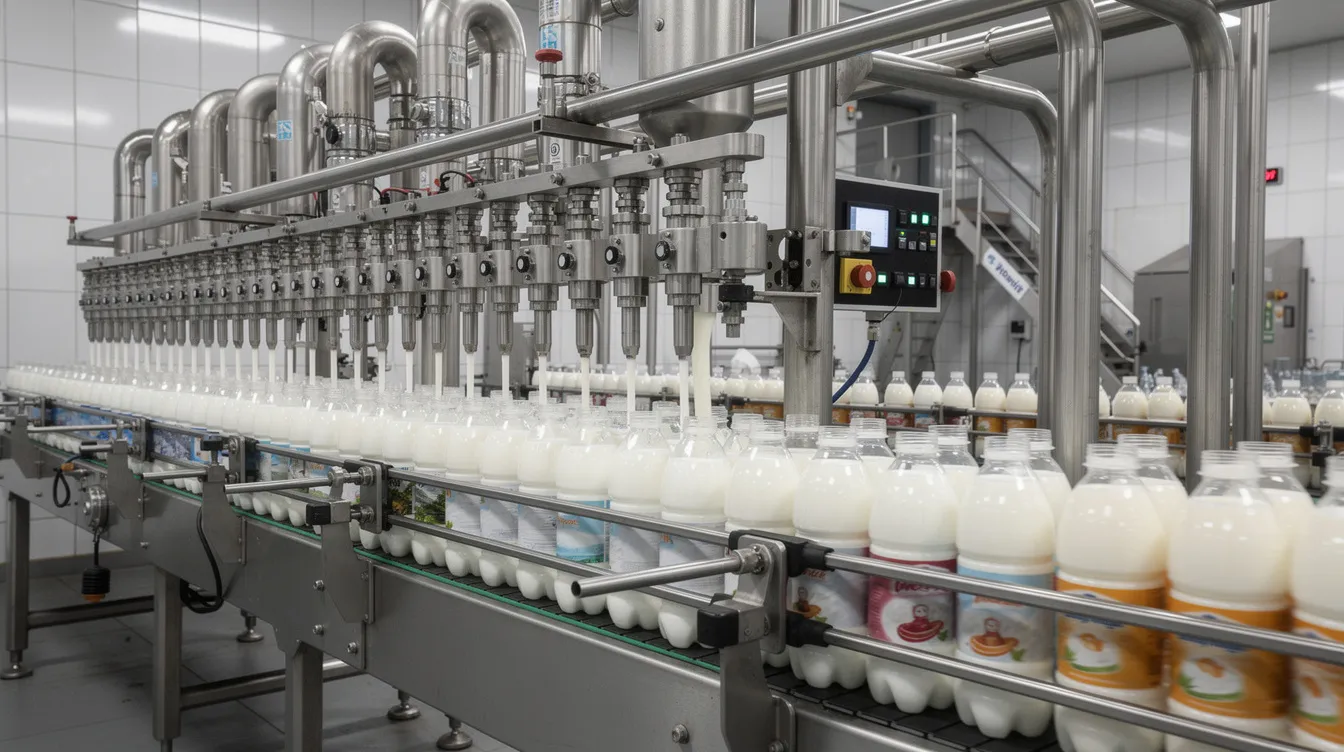
The packaging line can represent 25–40% of overall machinery cost, especially for high-speed bottle or aseptic carton lines. Different packaging materials and formats have vastly different cost implications for a dairy beverage plant:
- Pouches: Lower capex, flexible, suited to chilled markets; shorter shelf life
- PET/HDPE bottles: Higher filling and capping machinery cost; requires rinsing, labelling, cold chain
- Aseptic cartons: Highest filling line cost; ambient storage possible; reduced cold chain
- Cups/glass bottles: Niche markets; slower line speeds; higher handling cost
Packaging line cost depends on speed (units per hour), integration of rinsing-filling-capping, automation level, in-line labelling, shrink-wrapping and changeover flexibility between SKUs. RTD dairy beverages targeting modern trade and export opportunities often require fully automatic filling and packaging lines-detailed in the Ready-to-Drink Dairy Beverages Manufacturing Plant Project Report.
| Packaging Scenario | Initial Line Capex | Cold Chain Required? | Typical Shelf Life | Market Positioning |
|---|---|---|---|---|
| Chilled pouches | Lower | Yes (mandatory) | 5–10 days | Mass market, regional |
| Chilled PET bottles | Medium–High | Yes (mandatory) | 10–21 days | Modern trade, premium |
| UHT aseptic cartons | Highest | Minimal | 3–6 months | National, export, Middle East |
Infrastructure: Land, Building, Utilities, Cold Chain and Quality Control
Dairy beverage plant cost in India is heavily influenced by site-related expenditure. In greenfield projects, civil construction, food-grade interiors, utilities, cold storage and laboratory setup can equal or exceed machinery cost.
Factory layout must accommodate milk reception dock, processing block, ingredient and packaging materials stores, finished products cold rooms, utilities yard, quality-control lab, administrative block, staff amenities and space for future expansion-covered in detail at Value-Added Dairy Plant Land, Building, Utilities & Hygienic Layout. A dairy beverage factory building cost is higher than a generic warehouse due to food-grade flooring, washable walls, proper drainage, insulation, segregated flows and hygiene standards for personnel movement.
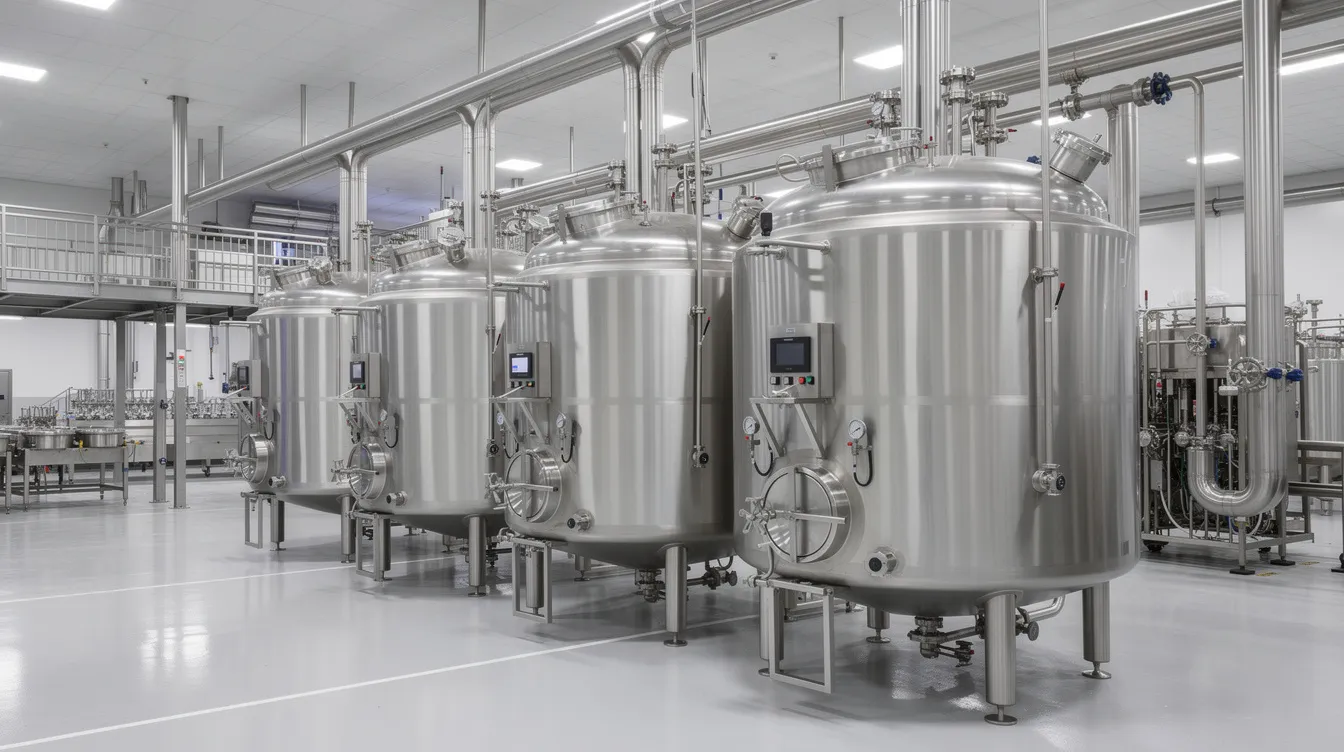
Utility requirements include electrical connection with transformer and DG backup, boiler and steam generation, refrigeration and chilled water, compressed air, process water purification through water treatment plant systems, hot water generation and CIP solution circulation. Cold storage costs-finished goods chillers, intermediate cold rooms and possibly reefer vehicles-are critical for chilled pasteurized beverages, as outlined in Cold Storage & Cold Chain Requirements for Value-Added Dairy Products.
Minimum quality-control and product safety infrastructure includes milk testing (fat, SNF, adulteration), microbiology for beverages, chemical analysis, packaging integrity tests and documentation systems for FSSAI compliance and ensuring product safety through consistent quality monitoring.
Regulatory Compliance, Pre-Operative Expenses and Working Capital
Dairy businesses must comply with regulations such as obtaining FSSAI licenses and state pollution control board approvals. A dairy processing plant needs an FSSAI manufacturing license, and dairy units processing over 50,000 litres per day are categorised under central licensing by FSSAI. GST registration is mandatory for dairy plants with annual turnover over ₹20 lakhs. A State Pollution Control Board NOC is required, along with local body trade licenses from municipal authorities. FSSAI approvals typically take 30 to 60 days for processing. FSSAI licensing must match installed capacity and product categories, while MSME Udyam Registration allows access to government scheme benefits and regulatory approvals should be factored into project timelines.
Pre-operative and preliminary expenses form part of total project cost: DPR preparation, engineering and plant layout design, legal and incorporation costs, trial production, staff recruitment and training, interest during construction, initial branding and market-testing expenses and contingency provisions. These operational expenses are frequently underestimated.
Working capital should cover initial operational expenses for 30 to 90 days, including daily milk procurement from raw material suppliers, sugar, cocoa, flavours, stabilisers, functional ingredients, packaging materials, utilities, salaries, distribution and credit to distributors. Initial working capital for a dairy plant is typically 3 to 6 months of milk procurement costs. Raw milk costs are an important consideration affecting daily operational budgeting, and raw milk procurement is a significant portion of operational costs. For larger plants, working capital requirements can be substantial, often reaching ₹5 to ₹15 crores. Detailed guidance is available at Working Capital Requirement for Value-Added Dairy Products Plant. Fixed capital and working capital are separate but both must be funded-underestimation of working capital is a common cause of stress even in technically sound projects.
Project Cost Structuring, Means of Finance and Financial Viability
A professional dairy beverage manufacturing plant DPR structures project cost into clear heads: land, building, plant and machinery, packaging line, utilities, electricals, furniture and fixtures, vehicles, pre-operative expenses, contingency and margin money for working capital. This structured approach, detailed in Value-Added Dairy Plant Project Cost & Means of Finance, is what lenders expect to see.
Typical means of finance include promoter’s equity (usually 20–30%), term loan from bank or financial institution, and possible unsecured or subordinate loans from promoters. The Indian government offers various incentives for dairy startups-government support is available through schemes like AHIDF and PMFME for dairy processing infrastructure. NABARD’s scheme provides 25% to 33.33% capital subsidy, while PMFME scheme offers grants up to ₹10 lakhs for micro food processors. State governments also provide financial assistance through reduced land costs and electricity exemptions.
Banks appraise dairy beverage manufacturing project finance using DSCR, IRR, payback period and break-even analysis, with sensitivity to raw milk price, selling price and capacity utilisation. Detailed financial projections are covered in Value-Added Dairy Plant Financial Projections for DPR and DSCR & Loan Repayment Capacity for Value-Added Dairy Project. Lenders require realistic CMA Data, proper documentation and technically coherent DPRs-see Bank Loan & Project Finance for Value-Added Dairy Products Plant and Term Loan Assessment for Value-Added Dairy Manufacturing Plant.
| Parameter | Semi-Automatic | Automatic | Highly Automated (PLC/SCADA) |
|---|---|---|---|
| Initial Investment | Lower | Medium | Highest |
| Manpower Requirement | High | Moderate | Low |
| Consistency | Variable | Good | Excellent |
| Wastage Control | Basic | Good | Precise |
| Scalability | Limited | Moderate | High |
| Best Suited For | 3,000–10,000 LPD | 10,000–30,000 LPD | 30,000–100,000+ LPD |
Feasibility, profitability and break-even analysis are essential before committing investment. Liquid milk operations typically take 18 to 24 months to break even; value-added beverages may differ based on product range and margins. For deeper analysis, refer to Value-Added Dairy Plant Feasibility & Project Viability, Value-Added Dairy Plant Profitability & Break-Even Analysis and ROI, IRR, Payback & Sensitivity Analysis of Value-Added Dairy Plant.
Dairy Beverage Manufacturing Plant DPR and Practical Cost Illustration
A bankable DPR should contain: promoter profile, detailed product description, manufacturing process flow, capacity planning, equipment list, plant layout, implementation schedule, market strategy, and realistic financial projections covering at least 5–7 years of P&L, cash flow, balance sheet, DSCR and sensitivity scenarios.
For illustration, consider a 20,000 LPD dairy beverage plant producing flavoured milk, chocolate milk and basic milkshake in PET bottles-approximate cost split (excluding land):
- Building and civil construction: ₹2.5–3 crore
- Plant and machinery including production line: ₹4–5 crore
- Utilities and refrigeration: ₹1.5–2 crore
- Packaging line changes and materials: ₹1–1.5 crore
- Quality lab, cold storage: ₹0.5 crore
- Pre-operative, approvals, contingency: ₹0.5–1 crore
The DPR must also articulate the revenue model-channels, pricing, product mix and regional focus-as discussed in Value-Added Dairy Products Revenue Model & Market Strategy. With proper planning, a professional DPR reduces surprises in actual cost and increases the chances of securing appropriate project finance while avoiding over-borrowing through minimum investment discipline.
Cost Escalation Factors, Risk and Capacity Utilisation
Final dairy beverage plant total project cost often exceeds initial estimates due to scope creep (adding SKUs or packaging formats mid-project), imported machinery with foreign-exchange risk, civil-cost escalation, underestimated refrigeration and cold-chain needs, higher stainless-steel grades, custom automation, ETP complexity, power infrastructure upgrades and inadequate contingency provisions.
Even if investment goes exactly as per budget, profitability depends on capacity utilisation, product mix, contribution margins, wastage control and overheads. A realistic capacity ramp-up model assumes 40–50% utilisation in year one, 60–70% in year two, and 75–85% from year three-financial projections must reflect this rather than assuming full utilisation from day one. Soft drink industry benchmarks do not apply directly to dairy because of perishability, cold chain and raw material volatility.
Export opportunities for UHT and RTD dairy beverages-particularly to the Middle East and neighbouring markets-may justify additional packaging, certification and compliance investment, but also carry incremental risk that must be modelled.
Conclusion – Using Cost Insight to Build a Bankable Dairy Beverage Project
Dairy beverage manufacturing plant setup cost in India is the combined outcome of capacity, product mix, packaging technology, automation level, infrastructure, utilities, quality-control systems and working capital. Focusing only on machinery cost is a common but risky mistake that leads to underfunded projects.
A disciplined approach-starting from market demand assessment, capacity planning, structured project cost estimation, realistic financial projections and DSCR-based term-loan assessment-greatly improves project viability and bankability in the dairy industry.
Serious promoters should obtain a professional DPR and financial feasibility study before placing machinery orders or committing to land and building investments. Treat this article as a framework for proper planning, and seek customised project-report and finance support tailored to your specific dairy beverage manufacturing plant in India.
Frequently Asked Questions (FAQs)
What is the minimum practical investment for a commercial dairy beverage manufacturing plant in India?
For a 3,000–5,000 LPD chilled flavoured milk plant with semi-automatic equipment, basic cold storage and pouch packaging, the minimum investment typically starts around ₹1.5–3 crore excluding land. A 500-litre dairy processing plant at the smallest commercial scale needs 1,500 to 2,000 square feet and may cost ₹20 to ₹30 lakhs, though this would be a very basic dairy plant rather than a full beverage manufacturing facility. Exact figures require a capacity-specific DPR.
How does dairy beverage plant cost differ from a standard pasteurised milk plant?
A dairy beverage plant requires additional formulation and mixing systems, higher-capacity homogenisers, advanced filling and packaging lines for multiple formats, stronger quality-control labs for food processing compliance, and often more extensive cold storage or aseptic processing technology. These incremental requirements make beverage plant investment materially higher than a basic liquid milk processing plant.
Can one plant produce flavoured milk, milkshakes and protein dairy beverages together?
Yes-a well-designed value-added dairy beverage plant can handle multiple SKUs with appropriate mixing tanks, flexible filling systems and robust CIP cycles. However, this increases machinery cost, changeover complexity and batch planning requirements. The DPR should carefully model batch sizes, changeover time and cleaning cycles to ensure the expanded product range is operationally and financially viable.
Is a fully automatic dairy beverage plant always more profitable than a semi-automatic plant?
Not necessarily. Higher automation raises capex but reduces labour, wastage and consistency issues. For high-volume, standardised RTD lines, full automation typically delivers better economics. For lower volumes, experimental product ranges or markets where labour costs remain moderate, a semi-automatic or hybrid setup can be more appropriate. Profitability depends on utilisation, market demand and operating efficiency-a DPR-based comparison is the right approach.
How long does it take to set up and commission a dairy beverage manufacturing plant in India?
Typical timelines: 2–3 months for planning and DPR preparation, 3–6 months for civil works and utilities, 3–5 months for machinery manufacture and installation (with some overlap). Total implementation for an MSME or medium-scale plant usually spans 6–12 months, depending on land readiness, regulatory approvals, finance closure and machinery delivery schedules.