Key Takeaways
- Dairy beverage plant machinery typically accounts for 40–60% of total project CAPEX, making it the single largest investment block in any dairy beverage project.
- For a small 5,000 LPD flavoured milk unit, core machinery starts around ₹2.5–3.5 crore; a medium 25,000–50,000 LPD plant can require ₹8–20 crore depending on automation and packaging format.
- Asking the price of just a pasteuriser or homogeniser is insufficient – complete dairy beverage processing equipment must be planned from milk reception through cold storage, including CIP, refrigeration and utilities.
- All machinery prices in this article are indicative estimates for preliminary planning in 2025–26; actual supplier quotations are mandatory before finalising any DPR or term-loan proposal.
- This guide combines technical configuration guidance with project-finance considerations from the perspective of CA Manish Gugliya.
Introduction: Why Dairy Beverage Plant Machinery Drives Project Cost
For any industrial dairy beverage project in India, plant and machinery often represents 40–60% of total project cost when you include beverage processing lines, filling equipment, CIP and refrigeration. Dairy beverage production requires hygienic and efficient machinery, and dairy beverage plants need to comply with food safety standards in equipment selection from the outset, as expected across the beverage industry.
Dairy beverage plant machinery cost in India cannot be judged by a single quote. Total CAPEX depends on product portfolio (flavoured milk, milkshakes, RTD dairy beverages), litres processed per day, number of SKUs, packaging formats, shelf-life requirements (chilled vs UHT), automation level and cold-chain design. This article serves as a practical project-planning guide rather than a vendor quotation – helping promoters, MSMEs and investors understand realistic machinery budgets that are defensible in a DPR and during bank appraisal.
What Machinery Is Required for a Dairy Beverage Manufacturing Plant?
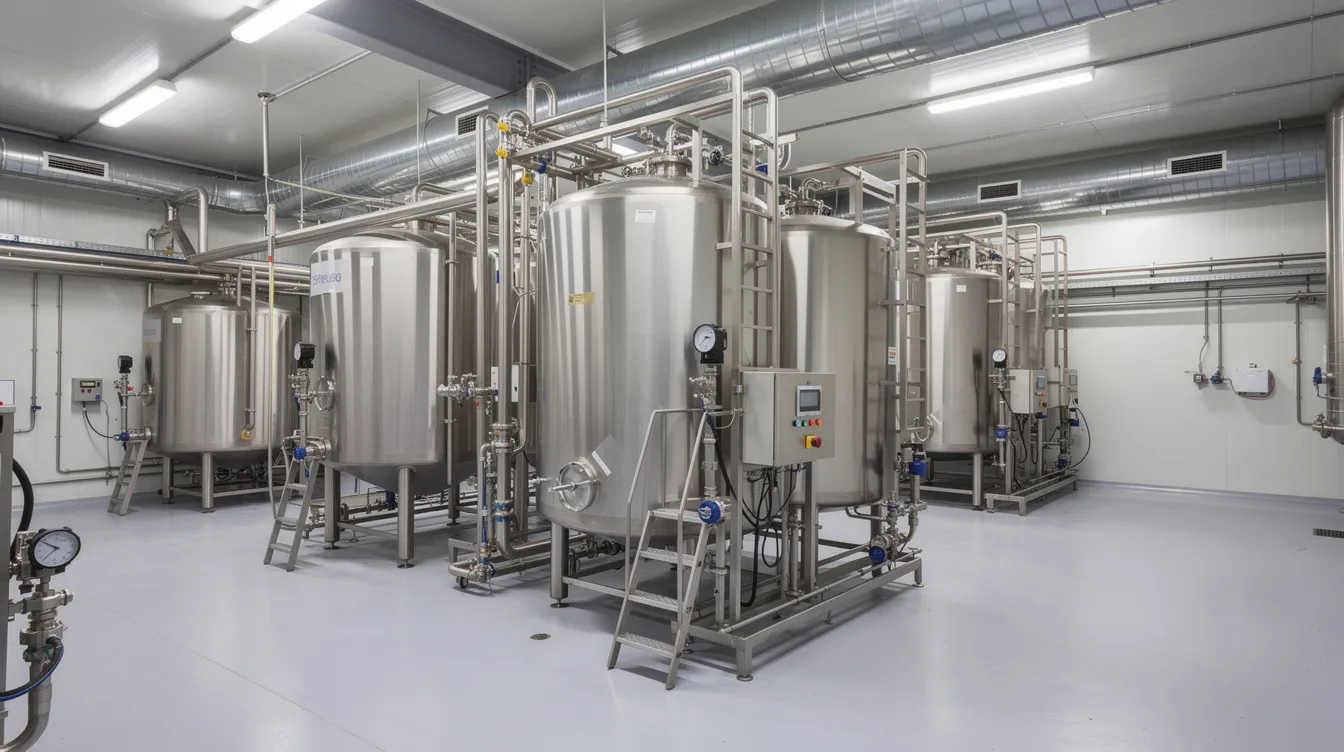
The complete process flow for a typical dairy beverage processing plant runs as follows: Raw Milk Reception → Clarification/Filtration → Chilling/Storage → Standardisation → Ingredient Preparation → Mixing/Blending → Homogenisation → Pasteurisation or UHT → Cooling → Intermediate Storage → Filling & Sealing → Secondary Packaging → Cold Storage/Dispatch.
Dairy beverage plants typically use pasteurisation and homogenisation for safety and texture consistency. Standardisation units adjust fat and solids content to compliance specifications, while centrifuges separate milk into skim milk and cream to adjust fat content. The machinery configuration changes significantly depending on whether you produce chilled flavoured milk, chocolate milk, thick milkshakes, protein beverages or long-shelf-life RTD dairy beverages. Beverage processors need a complete dairy beverage processing plant engineered as an integrated system – a 5,000 LPH pasteuriser must be matched with a suitable homogeniser, mixing tanks and filling speed to avoid bottlenecks.
Complete Dairy Beverage Plant Machinery & Beverage Processing Equipment List
Beverage processing equipment must ensure safe human consumption and stable shelf life. The table below lists major categories with indicative cost ranges for India. All figures are equipment-only estimates excluding GST, freight and installation.
| Machinery / Equipment | Main Function | Indicative Cost Range (₹, 2025–26) |
|---|---|---|
| Milk Reception Tank (5,000–10,000 L) | Receive and hold raw milk | ₹1.5–4 lakh |
| Plate Chiller / Milk Chilling System | Cool raw milk to 4°C | ₹1.5–8 lakh |
| Cream Separator / Clarifier | Remove impurities, adjust fat | ₹2–8 lakh |
| Beverage Mixing Tank (5,000 L, jacketed) | Blend ingredients | ₹2–6 lakh |
| High-Shear Mixer / Powder Induction | Disperse stabilisers, cocoa | ₹3–12 lakh |
| Homogeniser (5,000 LPH, 2-stage, 200 bar) | Break fat globules, stabilise emulsion | ₹7.5–8 lakh |
| HTST Pasteuriser (5,000 LPH) | Kill pathogens, preserve taste | ₹25–40 lakh |
| UHT Steriliser (5,000–10,000 LPH) | Shelf-stable sterilisation | ₹40 lakh–2+ crore |
| Storage / Buffer Tanks (5,000–30,000 L) | Hold pasteurised product | ₹2–8 lakh each |
| CIP System (2-tank or 3-tank) | Automated cleaning | ₹5–25 lakh |
| PET Bottle Filling Line (3,000–6,000 BPH) | Fill, cap, seal bottles | ₹15–50 lakh |
| Pouch Packing Machine | Fill dairy pouches | ₹1.8–8 lakh |
| Aseptic Carton Filler | UHT product packaging | ₹30 lakh–3+ crore |
| Refrigeration Plant & Cold Room | Maintain cold chain | ₹10–40 lakh |
| Boiler (steam generation) | Heat for pasteurisation, CIP | ₹5–15 lakh |
| Water Treatment (RO/Softener) | Process water quality | ₹3–10 lakh |
These ranges are cost effective starting points for preliminary planning. Customized milk processing plants can change overall investment costs, with exact figures depending on capacity, automation and specifications.
Milk Reception and Raw Milk Handling Equipment
Milk reception tanks are used to store raw milk before processing – typically SS304 construction with proper slope for complete drainage. Plate heat exchangers cool incoming raw milk to prevent bacterial growth immediately upon arrival. Sanitary centrifugal pumps, inline filters and electromagnetic flow meters linked to PLC complete the reception system.
Dairy Beverage Mixing and Blending Equipment
Unlike plain milk, dairy beverages require controlled mixing of sugar, cocoa, stabilisers, proteins and flavours. High-shear mixers disperse powdered ingredients without lumps, while powder induction systems reduce dusting and improve batch-to-batch consistent product quality. For chocolate milk production, more robust cocoa mixing systems prevent sedimentation – details are covered in our Chocolate Milk Manufacturing Plant Project Report.
Homogenizer for Dairy Beverage Plant
Homogenisers break down fat globules under high pressure to prevent cream separation in dairy beverages. Homogenisers improve product consistency, stability and mouthfeel – critical for beverage manufacturers targeting premium market positioning.
Dairy Beverage Homogenizer Cost
A 5,000 LPH two-stage milk homogeniser machine for dairy plant applications costs approximately ₹7.5–8 lakh from Indian manufacturers. Smaller 2,000 LPH units start around ₹4–5 lakh, while 10,000 LPH units can reach ₹12–18 lakh depending on pressure rating and PLC automation. Tradeindia lists multiple manufacturers of beverage processing equipment offering competitive options. Homogeniser sizing should always align with pasteuriser capacity and filling speed, and energy efficiency and seal maintenance affect lifecycle cost beyond purchase price.
Dairy Beverage Pasteurizer Cost
Pasteurisers heat liquid to kill pathogens while preserving taste – typically 72–75°C for 15–20 seconds in HTST systems for chilled flavoured milk. Batch pasteurisers suit micro plants but carry higher energy cost per litre (₹0.18–0.25) compared to HTST systems (₹0.06–0.10). A 5,000 LPH HTST pasteurisation system with regeneration, holding tube and automation typically costs ₹25–40 lakh depending on brand and automation level.
UHT Processing Equipment for Shelf-Stable Dairy Beverages
UHT systems create shelf-stable products by heating beverages to ultra-high temperatures (135–150°C for 2–4 seconds). Aseptic filling machines are used for UHT-treated beverages to prevent contamination during packaging. A 5,000–10,000 LPH UHT line with aseptic filling can cost ₹1–5 crore depending on technology. For financial planning of such projects, refer to our Ready-to-Drink Dairy Beverages Manufacturing Plant Project Report.
Dairy Beverage Storage and Stainless Steel Processing Tanks
Milk silos store raw or pasteurised milk at low temperatures, typically in PUF-insulated SS304 vessels with agitation and temperature probes. Stainless steel dairy storage tanks for 5,000–30,000 litres cost ₹2–8 lakh each depending on insulation, SS grade and instrumentation. Multi-product plants making flavoured milk, chocolate milk and milkshakes need multiple buffer tanks for continuous operation.
Dairy Beverage Filling Machine & Packaging Line
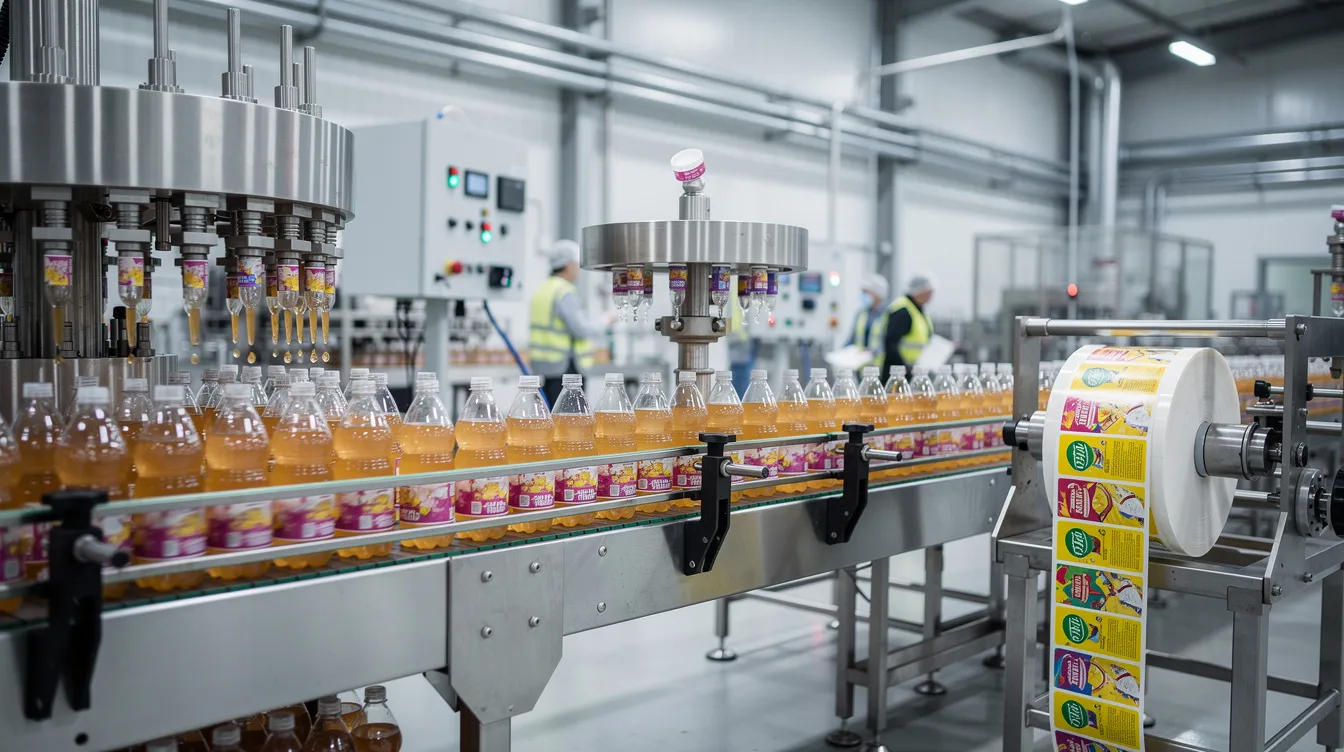
Filling machines seal dairy products into bottles or cartons for distribution – and often represent the highest-cost machinery block. A PET bottle filling line (rinsing, filling, capping, labeling) for 3,000–6,000 BPH costs ₹15–50 lakh. Pouch filling machines suit value-focused brands at ₹1.8–8 lakh. Aseptic carton filling systems for UHT beverages start around ₹30 lakh and can exceed ₹3 crore for high-speed lines.
CIP System Cost for Dairy Beverage Plant
CIP systems automate cleaning processes to maintain microbiological hygiene across all product-contact surfaces. A two-tank CIP system for a 5,000 LPD plant costs ₹5–10 lakh; larger three-tank automated systems for 50,000+ LPD plants can exceed ₹20–25 lakh. Cutting CIP budget is a false economy – inadequate cleaning causes microbial spoilage and brand damage.
Dairy Beverage Chilling & Refrigeration Equipment
It is important to maintain the cold chain during milk processing and finished goods storage. Chilling systems, cold rooms and condensing units for a 5,000 LPD plant cost ₹10–20 lakh; at 50,000 LPD, refrigeration investment can reach ₹30–50 lakh. Energy-efficient processing equipment like screw compressors with VFDs lowers environmental impact and long-term operational costs.
Utility Equipment Required for Dairy Beverage Manufacturing
Plants must be equipped with the right utilities, though promoters frequently underestimate them. Steam boilers, compressed air systems, water treatment (RO/softener), cooling towers, transformers, DG backup and ETP together add 10–20% of total dairy beverage plant CAPEX. Energy efficiency influences operational costs significantly across the plant’s lifetime. Utility costs should always be combined with core machinery estimates for accurate project-finance budgeting.
Laboratory and Quality-Control Equipment
A basic QC lab – Gerber analysers, pH meter, Brix refractometer, incubators for microbiology – typically costs ₹3–8 lakh. While small relative to total machinery investment, inadequate QC capacity can prevent FSSAI compliance, private-label contracts or export opportunities. Equipment requirements depend on whether you produce flavoured milk, protein drinks or functional dairy beverages.
Indicative Dairy Beverage Plant Machinery Cost in India
| Plant Scale | Process Type | Packaging | Core Machinery Cost (₹ Crore) |
|---|---|---|---|
| Small (3,000–5,000 LPD) | Chilled HTST | Pouches / low-speed bottles | 2.5–3.5 |
| Medium (10,000–25,000 LPD) | Chilled, multi-product | Bottles / PET / pouches | 5–10 |
| Large (50,000 LPD) | Chilled + UHT options | Bottles, cartons, pouches | 15–25 |
| Integrated (100,000+ LPD) | Full portfolio incl. UHT/aseptic | All formats | 20–40+ |
Overall Dairy-Based Beverage Manufacturing Plant Setup Cost in India – including civil works, utilities, lab and working capital – is typically 1.6–2.5 times core machinery cost. A 10,000 LPD plant with machinery around ₹2–3 crore may require ₹5–7 crore total project cost.
Machinery Cost by Dairy Beverage Plant Capacity
Dairy beverage plant machinery cost does not scale linearly – doubling capacity increases cost by roughly 1.5–1.8x due to economies of scale. A 500 ltr milk processing plant cost varies by configuration and automation, while even a 500 ltr milk processing plant improves productivity for localised distribution. At 50,000 LPD and above, multiple processing lines and high-speed fillers create step-change cost increases. Beverage processing lines can be expanded without disrupting operations if future provisions are included during design. Capacity planning must be tied to realistic sales estimates – over-sized machinery without demand leads to underutilisation and poor DSCR.
Semi-Automatic vs Fully Automatic Dairy Beverage Plant
Automated control systems monitor temperatures and flow rates in dairy processing lines, ensuring precision and consistent product quality. Automated solutions in milk processing reduce operational costs by 20–35% on labour alone. Full automation with PLC/SCADA raises CAPEX by 1.5–2x but improves hygiene, traceability and productivity. Semi-automatic lines suit plants below 5,000–10,000 LPD with limited SKUs; fully automatic dairy beverage production lines become essential for high-volume, multi-state distribution.
Machinery Requirements by Product Type
Machinery configuration depends heavily on your target product mix. For Flavoured Milk Manufacturing Plant Project Report requirements, standard HTST, homogeniser and bottle/pouch filler suffice. Milkshake Manufacturing Plant Project Report projects need more powerful mixers and different filling nozzles for higher viscosity. Protein & Functional Dairy Beverages Manufacturing Plant Project Report projects often require specialised blending, powder induction and potentially UHT with aseptic filling.
Major Factors Affecting Dairy Beverage Plant Equipment Cost and Energy Efficiency
Several factors determine final dairy beverage plant machinery investment: plant capacity, product mix, automation level, packaging format, pasteurised vs UHT processing, number of production lines, imported vs Indian machinery, SS specifications, instrumentation, CIP configuration, refrigeration load, utility infrastructure, installation costs and future expansion provision. Factors affecting milk processing plant cost include material quality and equipment specifications. Always compare quotations on identical capacity, material grades and scope – not just headline price.
Indian Machinery vs Imported Dairy Processing Equipment
Many Indian manufacturers have supported the Beverage Industry for decades while supplying reliable processing tanks, CIP systems, HTST pasteurisers and filling lines at competitive prices. Imported UHT systems and high-speed aseptic fillers offer advanced features but at significantly higher cost with foreign exchange exposure. Evaluate lifecycle cost rather than brand name alone.
Turnkey Dairy Beverage Plant vs Individual Machinery Procurement
Neologic Engineers offers customized turnkey beverage processing solutions, as do several other established suppliers. Modular systems optimise beverage processing plant layout and reduce installation time. Turnkey approaches provide single-point responsibility, clearer performance guarantees, and simpler account coordination for first-time promoters, but at premium cost. For first-time promoters, a well-chosen turnkey dairy beverage processing plant supplier reduces technical risk significantly.
Hidden Costs Beyond Machinery Purchase Price
Machinery quotation value is only part of total project cost. Freight, transit insurance, foundations, SS piping, electrical cabling, instrumentation, PLC programming, trial production, operator training and ETP together add 15–25% beyond equipment price. Include a 5–10% contingency in the DPR to avoid funding gaps.
How Machinery Cost Is Considered in a Dairy Beverage Project Report
From my experience preparing DPRs, machinery cost integration follows a structured process: preparing a detailed plant and machinery schedule, capturing vendor quotations, adding installation and taxes, and building a fixed asset schedule. Capacity utilisation ramp-up assumptions (typically 50% Year 1, 70–80% by Year 3) are linked with machinery capacities to derive revenue projections, DSCR, IRR and break-even analysis. Investing in milk processing plants ensures high-quality dairy products only when DPR assumptions match actual machinery specifications.
Common Mistakes While Planning Dairy Beverage Plant Machinery
Common errors include buying equipment before finalising product specifications, selecting excessive capacity without matching demand, under-sizing filling equipment, ignoring CIP and refrigeration, and preparing DPR assumptions that don’t match actual machinery capacity. Milk processing plants support sustainable growth in the dairy industry only when the business plan is realistic and built around customer requirements.
Frequently Asked Questions
What is the minimum practical capacity for a commercial dairy beverage plant in India?
Most industry professionals consider 3,000–5,000 LPD the minimum for semi-automatic lines to justify HTST pasteurisation, CIP and cold rooms. Smaller setups are possible but carry higher per-litre fixed costs and suit only localised distribution with limited SKUs.
How long does it typically take to install and commission dairy beverage plant machinery?
For a small Indian-manufactured plant, expect 4–6 months from equipment order to commissioning including utilities. Complex multi-line or UHT/aseptic projects with imported components can take 9–15 months depending on civil works and validation requirements.
Can I start with chilled flavoured milk and later upgrade to UHT RTD beverages?
Yes, provided the plant is designed with future expansion in mind – adequate floor space, utility capacity and sterile storage provisions. However, UHT adds substantial machinery blocks (steriliser, aseptic filler) and the packaging format must be reconsidered. The upgrade cost often exceeds several individual chilled-line items.
How do lenders view dairy beverage plant machinery during project loan assessment?
Banks and technical appraisers require a complete equipment list from milk reception through cold storage, not just key processing machines. They evaluate capacity utilisation ramp-up, DSCR sensitivity to CAPEX and OPEX, and whether machinery specifications in the DPR match actual vendor quotations. Machinery values feed directly into CMA Data and fixed asset schedules reviewed during appraisal.
Conclusion
Correct dairy beverage plant machinery configuration must be driven by intended capacity, product range, processing technology, shelf-life goals, packaging formats and automation level. Machinery cost is only one component – it must be evaluated alongside utilities, working capital, distribution infrastructure and marketing investment to determine true financial feasibility of the end product reaching consumers profitably.
For professional assistance with detailed dairy beverage project reports, DPRs, financial projections, CMA Data and feasibility studies, CA Manish Gugliya and ProjectReportBank.com bring extensive experience across the food processing industry, including adjacent machinery segments such as namkeen making machines. Before locking any investment decision, obtain current machinery quotations from multiple suppliers and ensure your project report reflects realistic, defensible assumptions.