Key Takeaways
The dairy beverage homogenization process and heat treatment for dairy beverages are not optional refinements. They are foundational unit operations that determine whether a commercial dairy beverage succeeds or fails in the market. Here is what project promoters, investors and plant operators need to understand before committing capital:
- Homogenization reduces fat globule size from roughly 3.5 µm to below 1 µm, preventing cream separation, improving mouthfeel and ensuring uniform distribution of flavours, cocoa, proteins and other ingredients across every serving.
- Heat treatment, whether pasteurization or UHT, is the primary barrier against harmful bacteria such as Salmonella and E. coli, and its design directly controls whether the product can be sold as a chilled beverage with a few days of shelf life or as an ambient shelf-stable product lasting several months.
- Optimal homogenization pressure, temperature and thermal regime must be tailored through pilot trials for each specific formulation rather than copied from generic textbooks; what works for a simple flavoured milk will not work for a high-protein functional drink.
- These processing choices drive major portions of CAPEX, utility requirements, packaging decisions, distribution strategy and ultimately the bankability of a dairy beverage manufacturing project in India.
- Successful projects integrate formulation, process design, hygienic handling, packaging, cold-chain or ambient logistics, quality control and financial planning from the concept stage itself.
Introduction: Why Homogenization & Heat Treatment Matter for Dairy Beverages
Modern Indian dairy production plants producing flavoured milk, chocolate milk, protein drinks and RTD shakes operate in an intensely competitive market where product stability, food safety and consistent quality separate profitable brands from failed ventures. A single batch of visible cream separation or an off-flavour complaint from a retailer can undo months of brand-building effort.
Homogenization and heat treatment are two core unit operations in any industrial dairy beverage processing technology line. Homogenization mechanically reduces the size of fat globules and disperses ingredients into a stable emulsion. Thermal processing, whether HTST pasteurization or UHT treatment, ensures microbiological safety and extends shelf life.
Together, these steps govern fat separation, protein stability, sedimentation, viscosity, flavour, colour, microbiological stability and commercial dairy beverage shelf life. Neither can be designed in isolation from the other.
These operations sit within a broader dairy beverage manufacturing process and production line that includes milk reception, standardization, mixing, filling and packaging. Understanding where and how homogenization and heat treatment fit into this flow is essential for anyone evaluating or planning a dairy beverage processing plant.
What Is Homogenization in Dairy Beverage Processing?
The dairy beverage homogenization process is a mechanical operation that forces milk or a dairy beverage formulation under high pressure through a narrow valve, breaking apart fat globules and other dispersed phases such as cocoa particles or flavour oils into much smaller droplets.
Milk is naturally an oil-in-water emulsion containing tiny fat globules. In non homogenized milk, these globules, typically a few micrometres in diameter, tend to rise and form a cream layer over time, making the beverage visually unstable and texturally uneven. Homogenization reduces fat globule size from approximately 3.5 µm to below 1 µm, dramatically increasing the total surface area of the dispersed fat phase.
This increased surface area allows milk protein, primarily casein, to adsorb onto the newly formed smaller fat globules, creating a protective coating that resists coalescence and creaming. The result is improved emulsion stability, a smoother mouthfeel and uniform consistency across all servings of dairy beverages.
Homogenization also improves even distribution of flavours, colours, vitamins and mineral fortificants throughout the beverage during its entire shelf life. However, in the dairy industry, homogenization alone does not make a product safe. It works alongside pasteurization or UHT processing as part of an integrated system to deliver both physical stability and microbiological safety.
Working Principle of a Dairy Beverage Homogenizer
The milk homogenizer working principle centres on high-pressure pumping followed by a sudden and extreme pressure drop across a narrow homogenizing valve.
A typical dairy beverage homogenizer consists of:
- A high-pressure piston pump that pressurizes the product
- One or two homogenizing valves where size reduction occurs
- A drive motor and pressure gauges
- Cooling and utility connections
High-pressure pumps in homogenization typically operate between 10 to 25 MPa, forcing the product through a valve gap of only a few micrometres. As the liquid passes through this gap, it experiences intense turbulence, cavitation, shear and impact forces that disrupt fat globules, break agglomerates and disperse solids such as cocoa clusters.
Most of the mechanical energy applied is converted to heat within the fluid. Research indicates a temperature rise of approximately 0.17–0.18 °C per MPa across the valve for milk. This heat must be factored into the overall thermal profile of the dairy beverage processing plant, as it affects downstream pasteurization or UHT design and cooling requirements.
Single-Stage vs Two-Stage Homogenization
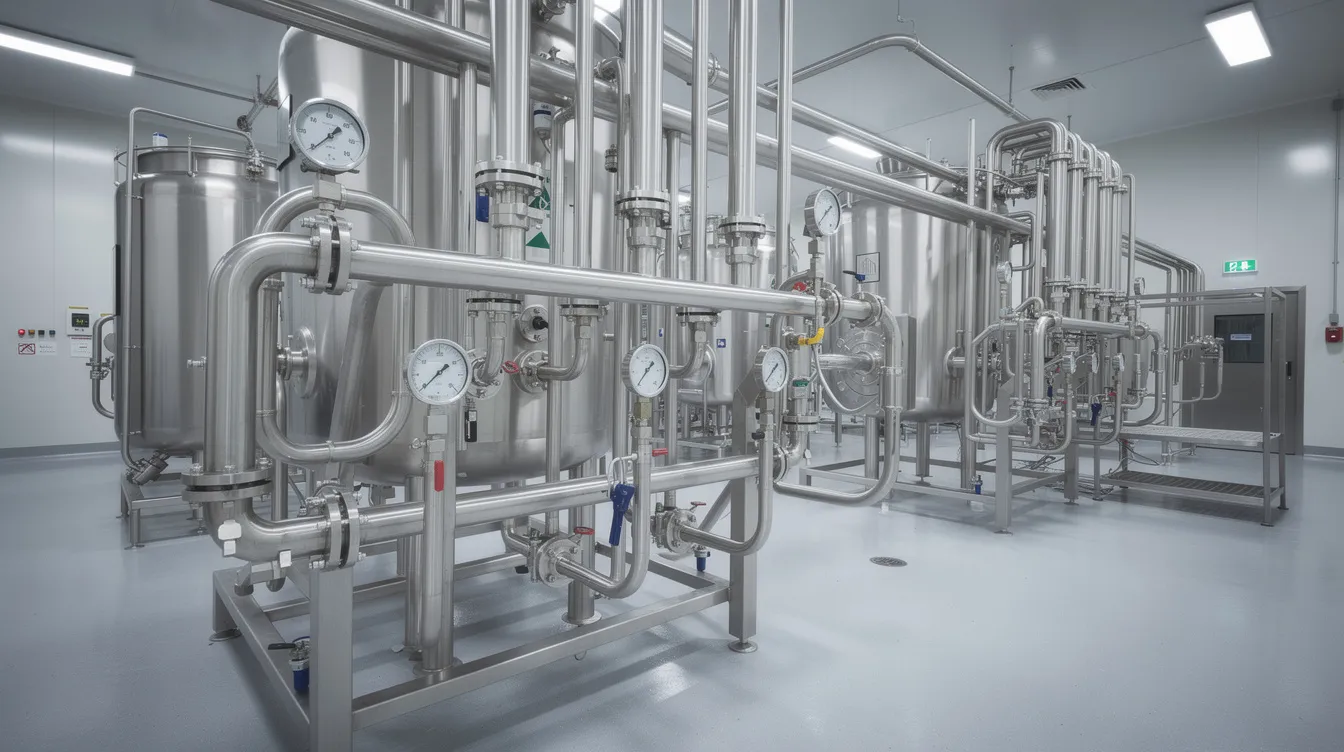
Industrial dairy beverage homogenizers may have either one or two homogenizing valves, referred to as stages. Homogenization can be single-stage or two-stage, and each configuration serves different product requirements. The total homogenization pressure in milk processing is distributed between these stages for different functional purposes.
Single-Stage Homogenization
Single-stage homogenization uses one valve for low-viscosity products. It applies a single high-pressure drop to reduce fat globule size and is often adequate for simpler dairy beverages with moderate fat content, such as some drinking milk, basic flavoured milks intended for short chilled distribution, or standard yoghurt production where extreme long-term emulsion stability is not the primary concern.
Single-stage systems are mechanically simpler, require less maintenance and have lower CAPEX. However, they may leave some residual fat globule clustering, which can become visible during storage in more complex formulations.
Two-Stage Homogenization
Two stage homogenization in dairy employs two valves operating in series. The first stage applies higher pressure to break fat globules into smaller droplets. The second stage operates at lower pressure, typically around 30–50 bar, specifically to break apart clusters and prevent fat globule clustering that forms immediately after the first-stage pressure drop.
A second stage of homogenization can improve emulsion stability further without substantially reducing globule size. This is why a two stage system is commonly preferred for UHT flavoured milk, chocolate milk, milkshakes, ice cream mix and protein-enriched beverages where long shelf life, low creaming and minimal sedimentation are required.
For project promoters, the choice between single and two-stage equipment affects product stability, energy load and CAPEX. It should be aligned with the intended product mix early in project planning.
Homogenization Pressure for Dairy Beverages
Homogenization pressure for dairy beverages is a critical processing parameter that must be optimized, not assumed. Homogenization pressure typically ranges from 100 to 300 bar across different product types, with pressure for drinking milk typically at 100–200 bar and optimal homogenization pressure for UHT milk at 150–250 bar.
Higher pressure generally creates smaller fat globules and better milk beverage emulsion stability but increases power consumption, mechanical wear on valve components and heat generation within the product.
Excessive pressure can produce undesirable effects:
- Over-shearing of whey proteins, leading to aggregation
- Undesirable viscosity changes in some formulations
- Degradation of certain hydrocolloid stabilizers
- Higher energy bills with diminishing returns on stability
One standard pressure cannot be applied to all products in an industrial dairy beverage processing line. A flavoured milk, a chocolate beverage, a protein drink and a thick milkshake each have different fat content, protein profiles, stabilizer systems and viscosity characteristics that demand different pressure settings. Pilot-scale or semi-commercial trials, guided by equipment suppliers and qualified dairy technologists, are essential for each formulation.
Homogenization Temperature and Its Impact
The homogenization temperature for milk is normally set above the melting point of milk fat so that fat is in a fully liquid state during processing. Homogenization occurs at temperatures between 60–75 °C in most dairy beverage plants, with many Indian facilities operating around 60–65 °C.
Temperature influences many parameters simultaneously:
- Lower viscosity at higher temperature improves the effectiveness of fat globule disruption
- Energy consumption decreases when fat is fully liquid
- Protein behaviour changes: excessive temperature before homogenization may pre-denature whey proteins, altering how they coat fat droplets and affecting downstream heat stability
Too low a temperature leads to incomplete fat disruption and poor stability, particularly in winter when incoming milk fat may be partially solidified. Too high a temperature may aggravate heat-induced protein changes, especially when the product will subsequently undergo intense UHT treatment.
The final combination of homogenization temperature and pressure should be validated for each recipe, considering the full thermal profile from preheating through heat treatment to cooling. For project planners, this temperature directly affects utility calculations for steam, hot water and chilled water in the dairy beverage processing plant.
Role of Homogenization in Dairy Beverage Product Stability
Dairy beverage product stability, in practical terms, means the absence of a cream layer, minimal sedimentation, consistent viscosity, no phase separation and stable flavour and colour over the intended shelf life.
Homogenization enhances the physical stability of dairy products during storage by reducing creaming and fat separation. Smaller fat globules rise much more slowly, effectively preventing cream separation in flavoured milk and similar beverages. Homogenization alters the beverage’s structure and stability while preventing phase separation.
Beyond fat stability, homogenization enhances visual appeal by increasing whiteness and opacity, delivers a smoother creamier texture, and improves integration of fat-soluble flavours and vitamins throughout the liquid milk matrix.
However, homogenization alone cannot always prevent sedimentation of cocoa, added proteins or minerals. It must work together with correct stabilizer selection, pH management and properly designed heat treatment. This is particularly important for shelf stable dairy beverages where months of storage magnify minor formulation or process weaknesses.
Homogenization for Flavoured Milk and Sweetened Milk Beverages
Indian-style flavoured milk, whether cardamom, kesar, rose, chocolate or vanilla, is a key product segment in the beverage industry, sold in glass bottles, PET packs and cartons in both chilled and UHT formats.
In the dairy beverage manufacturing process, sugar, flavours, colours and sometimes stabilizers are added during mixing before homogenization to ensure proper dispersion. Homogenization for flavoured milk helps maintain uniform colour, prevents cream line formation, and homogenization improves palatability and flavor release in dairy products, leading to a smoother creamier texture that consumers expect.
Stability challenges include sedimentation of added powders like malt, cocoa or spices, where particle size and pre-hydration affect behaviour under high pressure homogenization milk processing. Promoters considering a flavoured milk manufacturing plant project should pay special attention to homogenization pressure, stabilizer choice and downstream pasteurization or UHT conditions to meet desired shelf life and distribution targets.
Homogenization for Chocolate Milk and Cocoa-Containing Beverages
Chocolate milk presents additional challenges because cocoa particles are insoluble solids with a strong tendency to sediment and form a hard layer at the bottom if not properly stabilized.
Under the dairy beverage homogenization process, cocoa particles interact with milk fat, proteins and stabilizers in ways that are highly dependent on mixing order, homogenization pressure and thermal processing. Inadequate homogenization leads to rapid sedimentation and phase separation, making the product commercially unacceptable.
Appropriate two-stage homogenization, combined with suitable hydrocolloid stabilizers and correct ingredient addition sequence, improves dispersion of cocoa and contributes to milk beverage emulsion stability. Higher viscosity may be desirable to slow sedimentation, but excessive viscosity causes processing and filling problems, so homogenization pressure must be tuned with rheology in mind.
Promoters evaluating a chocolate milk manufacturing plant should recognize that cocoa-based drinks require careful design of homogenization, heat treatment and stabilizer systems in both the DPR and machinery sizing.
Homogenization in Milkshake and Thick Dairy Beverage Manufacturing
Milkshakes and thick dairy beverages typically include higher fat, added sugars, stabilizers and sometimes particulates such as nuts or fruit preparations. These high viscosity products demand careful attention during homogenization.
Homogenization for milkshake production must consider shear sensitivity of the stabilizer system. Too much pressure may over-reduce viscosity or trigger phase separation later during storage. Homogenization can influence viscosity and texture in dairy products in ways that are formulation-specific and not always predictable from theory alone.
Higher base viscosity can reduce homogenization efficiency, requiring careful selection of pressure and flow conditions. In some thick beverages, partial homogenization or specific process sequences are used to balance stability and desired mouthfeel.
The milkshake manufacturing plant project report from ProjectReportBank.com models these process decisions financially, including their impact on machinery capacity and utility loads.
Homogenization for Protein and Functional Dairy Beverages
High protein lines and functional dairy beverages, including whey-based drinks, protein shakes and fortified milks, represent a rapidly growing segment in India and globally. These functional formulations demand special processing attention.
Protein stability in dairy beverages is sensitive to both homogenization and heat treatment. Whey proteins denature and interact with casein micelles and minerals under thermal stress, which may cause aggregation or gelation if poorly controlled. High pressure homogenization can improve dispersion of added protein powders but also intensify protein–protein interactions, affecting viscosity and sedimentation risk.
For heat treatment for protein enriched dairy beverages, challenges include increased fouling in heat exchangers, higher risk of age gelation in UHT treated milk products, and changes in protein profile during storage. These products need joint input from project finance experts and dairy technologists, as outlined in the protein and functional dairy beverages manufacturing plant project report.
Heat Treatment in Dairy Beverage Manufacturing: Purpose and Options
The dairy beverage heat treatment process is the primary barrier against pathogens and spoilage organisms. Raw milk can contain harmful bacteria like Salmonella and E. coli, and drinking raw milk poses safety issues with bacterial counts often exceeding regulations. The EU regulation limits total bacterial count in raw milk to ≤ 100,000 CFU/mL, underscoring why thermal treatment is non-negotiable for human consumption.
Key objectives of thermal treatment in dairy processing include:
- Pathogen destruction and reduction of total microbial load
- Inactivation of enzymes such as lipases and proteases
- Contribution to extended shelf life
- Preparation of product for filling and packaging
- Regulatory compliance and food control
Heat treatment reduces pathogenic microorganisms in milk, enhancing safety. The selection of heat treatment depends on the intended distribution: pasteurized for chilled channels versus UHT or sterilized for ambient shelf stable dairy beverages. Critically, homogenization and heat treatment in the dairy industry must be designed as a pair, because they jointly influence protein stability, flavour, colour and product shelf life.
Pasteurization and HTST Processing for Dairy Beverages
The dairy beverage pasteurization process is a controlled heating operation designed to destroy pathogenic microorganisms while limiting damage to nutritional and sensory attributes. Heat treatment reduces harmful bacteria in milk to levels safe for human health.
Common industrial approaches include:
- Batch pasteurization (LTLT): Approximately 63–65 °C for 30 minutes, used in smaller or traditional plants
- HTST pasteurization: Pasteurization occurs at 72–80 °C for 15–30 seconds using a plate heat exchanger for milk processing with holding tubes and regenerative sections for energy recovery
HTST processing for dairy beverages offers continuous processing, better energy efficiency and lower heat damage compared with prolonged batch heating. It integrates well into industrial milk processing lines and scales with capacity.
Pasteurized flavoured milk, milkshakes and other chilled beverages require an unbroken cold chain from plant to retailer. Pasteurization parameters for dairy beverage manufacturing should be validated by process authorities, as products with different compositions may behave differently under the same thermal conditions.
For plant designers, the capacity of the plate heat exchanger, holding time and cooling capability directly affect throughput, energy consumption and milk quality.
UHT Processing and Sterilization for Shelf-Stable Dairy Beverages
UHT processing dairy beverages involves very high temperature treatment, typically at or above 135 °C for at least 1 second under FSSAI regulations, to achieve commercial sterility. UHT milk can be stored for 6 months at room temperature when properly processed and aseptically packaged.
Dairy beverage heat exchanger systems for UHT, often tubular designs for higher-fouling products, rapidly heat and cool the product with appropriate holding sections. However, UHT processing must be integrated with aseptic tanks, sterile pipelines and aseptic filling to realize long ambient dairy beverage shelf life. Heat alone is not enough.
Practical challenges include protein stability under severe heat, increased Maillard reactions affecting colour and flavour, higher fouling on heat surfaces, and more complex CIP needs. Shelf stable UHT flavoured milk and protein drinks demand careful formulation design alongside appropriate homogenization parameters and thermal processing, all of which impact project cost and machinery selection.
Pasteurized vs UHT Dairy Beverages: Commercial Comparison
| Parameter | Pasteurized (Chilled) | UHT (Ambient) |
|---|---|---|
| Process intensity | Milder (72–80 °C, seconds) | Severe (≥135 °C, seconds) |
| Shelf life | ~5–7 days refrigerated | ~90–180 days ambient |
| Cold-chain requirement | Mandatory throughout | Not required after filling |
| Packaging | Standard bottles, pouches, cartons | Aseptic cartons, PET, pouches |
| Equipment complexity | Moderate | High |
| Capital investment | Lower | Significantly higher |
| Flavour profile | Fresher, closer to liquid milk | May show cooked or caramel notes |
| Distribution reach | Limited by cold-chain | Wider geographic coverage |
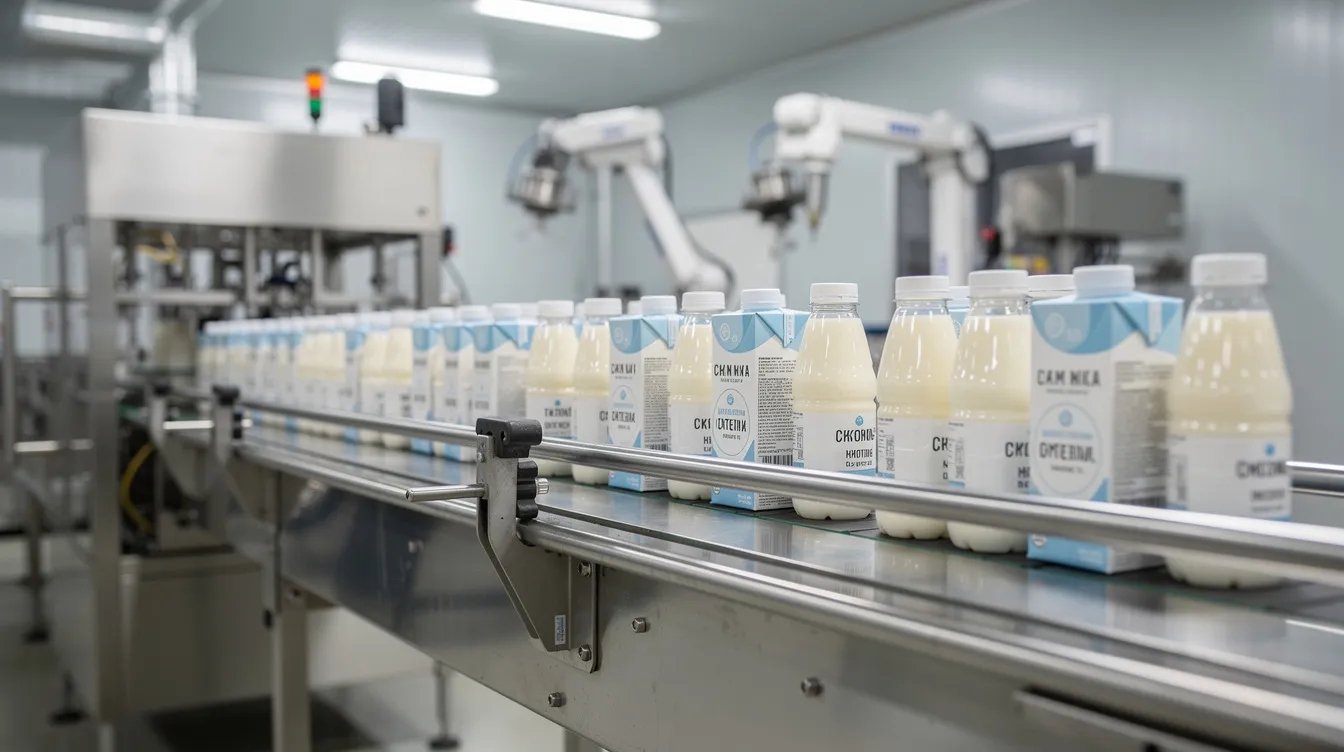
Pasteurized beverages often taste fresher, while UHT drinks may show more “cooked” notes and slight colour darkening due to heat treatment of milk products. In India, pasteurized lines may have lower CAPEX but depend heavily on reliable cold-chain logistics. UHT lines require higher investment in aseptic technology but enable distribution across regions where refrigeration is inconsistent.
Project feasibility studies must evaluate market demand, distribution radius, power reliability and retailer infrastructure before choosing between these production line configurations.
Effect of Heat Treatment on Milk Proteins and Nutritional Quality
Thermal treatment in dairy processing denatures whey proteins and affects casein micelles, influencing emulsion stability, viscosity and sedimentation behaviour. Heat treatment can lead to protein denaturation in milk, which is of particular concern in protein-enriched formulations.
Intense heat causes protein aggregation and formation of complexes with lactose and minerals, impacting protein stability in dairy beverages. These structural changes can manifest as sedimentation, gelation or viscosity drift during storage, especially in high-protein products.
Heat can slightly reduce availability of some amino acids such as lysine through Maillard reactions, but under well-designed commercial processing, the impact on overall protein quality and nutritional value is usually acceptable. For protein-enriched beverages, pilot work should assess long-term storage behaviour under chosen heat treatment regimes.
Plant designers should allow for higher fouling and more frequent CIP cycles when processing protein-rich, UHT-treated dairy beverages, as these directly affect plant capacity and operating cost.
Effect of Heat Treatment on Flavour, Colour and Consumer Acceptance
Heat treatments can generate “cooked” flavours, caramel notes and browning through Maillard reactions between lactose and amino acids, especially under UHT conditions or extended holding times. Heat treatment may also generate hazardous compounds like advanced glycation end products (AGEs), which is an area of ongoing research regarding human health implications.
Maillard products can darken colour and change the appearance of flavoured milk and chocolate drinks. In some products, slight browning is acceptable or even desirable, but beyond a threshold it becomes objectionable.
Vitamins and some sensitive flavour compounds may degrade with higher thermal loads, requiring possible overages or reformulation to maintain label claims and taste profile. Entrepreneurs must balance thermal processing intensity with desired sensory profile and brand positioning: premium “fresh-tasting” chilled beverages versus longer-life ambient products targeting different markets.
Sensory panels and storage trials are critical parts of process validation alongside microbiological and physicochemical testing.
Interaction Between Homogenization and Heat Treatment
Homogenization and heat treatment cannot be optimized separately. Their sequence and combination define the final stability, texture and shelf life of milk beverages. This interaction is one of the most important considerations in dairy beverage processing technology.
The most common processing sequence in modern dairy plants is:
Mixing → Preheating → Homogenization → Pasteurization or UHT → Cooling or Aseptic Filling
Preheating brings fat fully into a liquid state, improving homogenizer efficiency. Some configurations place pasteurization before homogenization to reduce microbial load entering the homogenizer, but this can alter how proteins coat fat globules and affect downstream emulsion stability.
The degree of protein denaturation before or after homogenization directly influences how whey proteins interact with fat droplet surfaces, how stable the resulting emulsion will be during subsequent heat treatment, and how the product behaves during a longer period of storage.
In project planning, this interaction affects selection and arrangement of equipment, utility consumption and CIP design, and must be modelled early in the DPR for a dairy beverage manufacturing plant India project.
Common Product Stability Issues in Dairy Beverages
Major practical problems in commercial dairy beverage processing include:
- Cream separation: Caused by inadequate homogenization pressure, wrong temperature, or poor formulation. Corrective levers include adjusting pressure, stage configuration, stabilizers and fat content standardization.
- Sedimentation: Cocoa, added proteins, minerals and other solids settle when particle size is too large, density difference is high, or viscosity control is insufficient. Homogenization efficiency and stabilizer selection are key.
- Protein aggregation and phase separation: Driven by pH imbalance, mineral interactions, excessive heat load and incompatible hydrocolloid systems. Improper combination with high pressure homogenization can aggravate instability.
- Gelation and excessive viscosity: Especially in UHT high-protein dairy products where continued protein interactions during storage lead to gel formation, making the beverage non-pourable and commercially unacceptable.
Each of these problems can be prevented or managed through correct formulation, validated homogenization and heat treatment parameters, and appropriate stabilizer systems.
Use of Stabilizers and Emulsifiers in Dairy Beverages
Homogenization works together with hydrocolloid stabilizers and emulsifiers to achieve long-term stabilization of dairy beverages. These stabilizers for dairy beverages serve distinct functional roles:
- Hydrocolloids (such as carrageenan, xanthan gum, microcrystalline cellulose) increase viscosity and slow sedimentation
- Emulsifying agents reduce interfacial tension and improve fat dispersion
- Protein-based stabilizers bind water and improve mouthfeel
Selection depends on product type, regulatory allowances in India, desired texture, cost constraints and whether the product is pasteurized or UHT treated. Stabilizer systems should be evaluated under actual homogenization and heat treatment conditions because their behaviour can change significantly with shear and temperature.
Project promoters should work with qualified dairy technologists and ingredient suppliers during development, while financial projections must include realistic ongoing costs of these functional ingredients.
Shelf-Life Considerations and Storage Stability
There is a critical distinction between microbiological shelf life (how long the product remains safe) and physical or sensory shelf life (how long it remains visually and organoleptically acceptable).
Key drivers of dairy beverage shelf life include:
- Initial raw milk quality and microbiological safety
- Hygiene throughout processing
- Choice of heat treatment (pasteurization or ultra pasteurization or UHT)
- Homogenization conditions and efficiency
- Packaging type (light barrier, oxygen barrier)
- Storage temperature and distribution conditions
Shelf life of pasteurized dairy beverages is typically limited by microbial growth under refrigeration, while shelf life of UHT dairy beverages is often limited by chemical and physical changes such as flavour drift, colour darkening, sedimentation and age gelation. Homogenization efficiency affects product stability during shelf life by maintaining emulsion integrity over time.
To improve shelf life of milk beverages, plants must combine appropriate thermal processing and homogenization with effective packaging and robust cold-chain or ambient storage design. Shelf-life studies should be conducted at realistic and slightly abusive storage conditions during pilot and pre-commercial phases.
Cold-Chain vs Ambient Shelf-Stable Dairy Beverages
Refrigerated pasteurized and homogenized milk beverages such as chilled flavoured milk and milkshakes require reliable cold rooms, refrigerated transport and retailer refrigeration. This can be challenging in some Indian regions but allows a fresher sensory profile that the dairy sector increasingly demands variety in.
Ambient shelf-stable dairy beverages depend on UHT or sterilization plus aseptic packaging, involving higher CAPEX and OPEX in the plant, but enabling wider geographic reach, longer distribution cycles and lower wastage. This represents a significant shift in how dairy products reach consumers.
This strategic choice influences dairy beverage processing parameters, packaging material selection, utility sizing and the overall business model. Promoters should decide early in the DPR whether to target cold-chain markets, ambient markets or a mix, as this shapes the homogenization and heat treatment section design entirely.
Equipment for Homogenization and Heat Treatment in Dairy Beverage Plants
Major milk beverage processing equipment components include:
- Balance tanks and mixing or blending tanks
- Inline filters and preheaters
- Plate heat exchangers (for HTST pasteurization of low- to medium-viscosity beverages)
- Tubular heat exchangers (for viscous or fouling-prone UHT products)
- Dairy beverage homogenizer, typically high-pressure two-stage units
- Holding tubes, pasteurizer or UHT system, cooling or aseptic sections
- Filling and packaging machines and CIP systems
The homogenizer for dairy processing plant applications is a high-pressure, utility-intensive machine that must be carefully sized in relation to line capacity and production scheduling. Considerations include product range, viscosity levels, desired automation level, CIP compatibility and future expansion plans.
ProjectReportBank.com provides comparative CAPEX insights for different technology combinations through their resource on dairy beverage plant machinery and equipment cost.
Position of Homogenization & Heat Treatment in the Overall Production Line
A typical industrial milk beverage production process flow follows this sequence:
Milk reception → Pre-treatment (clarification, chilling, storage) → Standardization of fat and SNF → Ingredient dissolution and mixing → Filtration → Preheating → Homogenization → Pasteurization or UHT → Cooling or aseptic transfer → Filling and sealing → Secondary packaging → Storage and dispatch
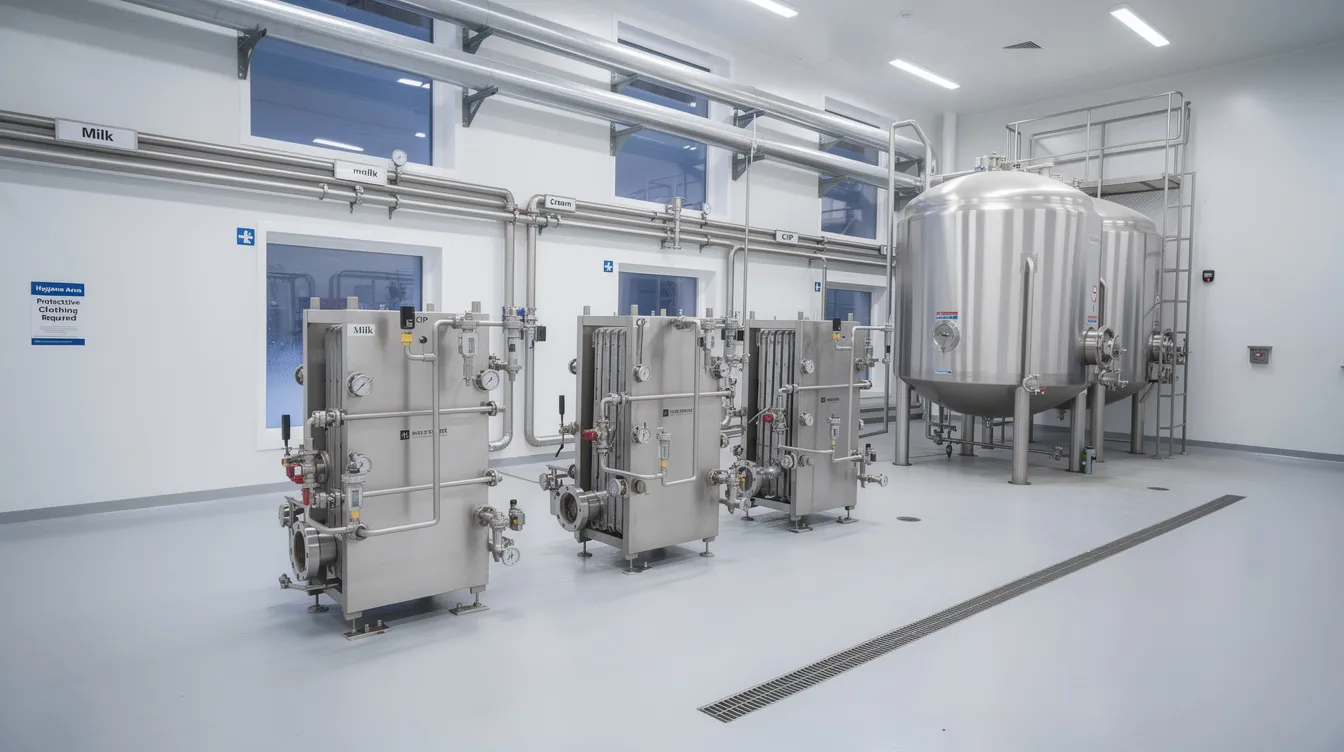
The homogenizer and heat exchangers sit at the heart of this flow. Product routing includes bypass lines, recirculation during start-up and automatic diversion valves that redirect insufficiently heated product back for reprocessing. Actual layouts vary depending on plant size, choice of heat treatment and degree of automation, but the functional logic remains consistent.
This production mapping is a core part of any DPR where mass balance, utility balance and manpower planning are detailed. Lines should be designed for flexibility to handle multiple SKUs with different flavours, fat levels and protein content without excessive downtime for cleaning and changeovers. The ability to reorganise production quickly across different formulations is an increasingly valued capability in modern dairy plants.
Ready-to-Drink Dairy Beverage Processing and Market Relevance
Ready-to-drink dairy beverages, including on-the-go flavoured milk, protein drinks, cold coffee and lassi-based beverages, represent a high-growth category requiring professionally designed homogenization and thermal processing lines.
RTD products in the food and beverage industry often share the same base production line for mixing, homogenization and heat treatment but differ in formulations, SKUs and packaging formats. Reproducible homogenization pressure and pasteurization or UHT parameters across batches are essential to maintain brand consistency and meet retailer shelf-life commitments.
The ready-to-drink dairy beverages manufacturing plant project report from ProjectReportBank.com integrates technical, financial and market assumptions related to these process choices. Promoters should study local competition, distribution reach and consumer preferences before freezing plant design.
Quality-Control Parameters for Homogenized & Heat-Treated Dairy Beverages
Key QC tests for the milk processing industry include:
- Fat %, SNF, protein, pH, titratable acidity, total solids
- Viscosity and particle size or homogenization efficiency
- Sedimentation tendency and creaming index
- Microbiological counts (total plate count, coliforms, pathogens)
- Sensory evaluation (flavour, colour, appearance)
- Packaging integrity (seal strength, leaks, headspace oxygen)
Homogenization efficiency is measured by fat globule size reduction, and the NIZO method measures fat content after centrifugation for homogenization efficiency, providing a standardized assessment. Specific tests relate directly to heat treatment, such as the phosphatase test for pasteurization verification and sterility tests for UHT products.
Entrepreneurs should budget for a basic but robust QC laboratory and trained staff as part of the dairy beverage processing plant investment. Inadequate QC leads to high rejections and loss of brand credibility. Consistent documentation supports both food safety compliance and bank or investor confidence in operational robustness.
CIP, Hygiene and Heat Exchanger Fouling
Dairy beverages, especially those with sugar and protein, create significant risk of deposits on heat exchanger surfaces and inside homogenizers. Integrated hygienic design prevents contamination in modern dairy plants by eliminating dead legs, using sanitary valves and ensuring smooth internal piping surfaces.
Fouling in plate or tubular heat exchangers reduces heat transfer efficiency, increases energy consumption, shortens production runs and can compromise food safety. This is an efficient method of losing money if not managed properly through scheduled CIP cycles.
Typical CIP considerations include alkali and acid washes, hot water rinses, sanitizing steps and cycle times that reduce available production hours. Products used for hard cheeses and cream cheese production foul differently than liquid beverages, but the principle of regular cleaning applies universally.
During project planning, CIP systems and hygienic design should be treated as core process assets, not cost centres. They directly affect uptime, product quality and regulatory compliance.
Energy Consumption and Process Efficiency
Both high pressure homogenization and thermal processing are energy-intensive, requiring steam, electricity and chilled water. These utility loads must be carefully estimated during DPR preparation.
Regenerative heating in plate heat exchangers can recover 85–95% of heat energy, substantially reducing operating costs. Proper insulation, optimized homogenization pressure and efficient CIP design further improve margins over the life of a dairy beverage manufacturing plant.
Heat generated inside the homogenizer raises product temperature, which must be considered in upstream preheating and downstream cooling designs to avoid redundant heating or cooling. Energy prices in India directly impact project profitability, and efficient homogenization and heat treatment configurations can materially improve competitiveness.
Promoters should evaluate life-cycle operating costs, not just initial machinery price, when selecting milk beverage processing equipment and utilities.
Automation and Process Control
Consistent dairy beverage quality requires stable control of homogenization pressure, flow rates, temperatures, holding times and CIP cycles. These are typically managed through PLC- or SCADA-based systems.
Key instruments include temperature sensors, flow meters, pressure gauges and transmitters, automatic diversion valves for pasteurization compliance, homogenization pressure controllers and level sensors in balance tanks.
Automation logs critical control points, supports traceability and reduces manual errors that might otherwise lead to under-processing or over-processing. While automation adds to CAPEX, it reduces operating risk and manpower requirements, which is important when banks evaluate project risk and repayment capacity. The sophistication chosen should match plant size, product mix and operational capabilities.
Capacity, Scale and Expansion Planning
Homogenizers and heat treatment systems must be sized in litres per hour based on planned daily volume, number of SKUs, shift patterns, CIP downtime and expected future growth.
Undersized equipment becomes a bottleneck, limiting plant output and increasing per-litre fixed cost. Oversizing increases CAPEX and may operate inefficiently at low loads. A practical approach is designing for a realistic ramp-up curve, starting at 50–60% of ultimate plant capacity, with provisions for adding another homogenizer or UHT module later with minimal disruption.
High-protein or high viscosity beverages and products like microfiltered milk may require lower line speeds than standard flavoured milk, and this must be factored into capacity calculations. Capacity planning, aligned with market projections and financing terms, is a core part of the DPR and can materially influence bankability.
Project Cost Implications of Homogenization & Heat Treatment Choices
Selection between pasteurization-only versus UHT and aseptic systems, and between basic versus advanced homogenizers, significantly impacts total project cost.
Principal cost heads influenced include:
- Machinery CAPEX (homogenizers, heat exchangers, aseptic tanks, fillers)
- Building and utility CAPEX (boilers, chillers, compressors)
- Packaging materials (aseptic versus standard)
- Ongoing energy, maintenance and food control expenses
UHT lines and aseptic packaging involve higher initial investment but can reduce per-unit distribution costs and widen market reach without compromising quality. This may be attractive for large regional or national brands in the dairy sector.
Promoters should use realistic local quotations and utility tariffs while preparing financial projections, rather than relying on generic industry thumb rules. For detailed cost modelling, ProjectReportBank.com offers resources on dairy beverage manufacturing plant setup cost in India.
Common Processing Mistakes in Industrial Dairy Beverage Plants
Frequent errors in commercial dairy beverage processing include:
- Copying homogenization pressure from another plant without considering formulation differences
- Ignoring the effect of viscosity changes on homogenization efficiency
- Adding stabilizers in cold water without proper hydration, leading to lumps
- Adding protein powders too late or without adequate dispersion
- Under-processing (microbial risk, poor shelf life) or over-processing (excessive cooked flavour, gelation, higher energy bills, potential fat oxidation)
- Inadequate CIP and poor hygienic design causing fouling, contamination and unplanned downtime
These mistakes directly erode profitability. Plants should include scale-up trials, SOP development and staff training as part of project commissioning, with easier digestion of operational procedures by all staff being a priority.
Pilot Trials and Scale-Up Before Full Commercialization
Pilot or semi-commercial trials are essential before freezing homogenization temperature and pressure, heat treatment regimes, stabilizer levels and packaging choices. The present review of industry practice consistently confirms this.
These trials should measure not only immediate quality, such as viscosity, taste and colour, but also behaviour over the intended shelf life under real storage conditions, including creaming, sedimentation, off-flavours and package performance. Pilot homogenizers and UHT or HTST units are often available through equipment suppliers or technical institutions.
Testing multiple variants of different homogenization parameters for milk based beverages and different pasteurization parameters for dairy beverage manufacturing helps identify robust processing windows. This robust pilot work reduces risk for both promoters and lenders, improving confidence in product performance and cash-flow projections.
Homogenization and Heat Treatment in DPR & Project Planning
From a DPR and project finance standpoint, the homogenization and heat treatment sections of a dairy beverage plant drive major portions of CAPEX, OPEX and quality risk. This is where the advisory perspective of CA Manish Gugliya and ProjectReportBank.com becomes particularly relevant.
These parameters influence machinery selection, utility loads for steam, electricity and cooling water, required automation level and the overall investment pattern. At ProjectReportBank.com, process flow design, equipment configuration and financial modelling are done together, ensuring that chosen technologies support the targeted product mix, shelf life and distribution strategy.
Decisions about cold-chain versus ambient shelf-stable products, level of process flexibility and QC infrastructure are taken early in consultation with technologists, equipment vendors and the promoter’s marketing plans. Careful engineering of the dairy beverage homogenization process and heat treatment strategy not only improves technical performance but also strengthens the bankability and long-term viability of the manufacturing project.

Conclusion: Integrating Technology, Quality and Business for Dairy Beverages
Homogenization and heat treatment are central pillars of industrial dairy beverage processing technology. They govern safety, stability, texture, appearance, flavour and shelf life across flavoured milk, chocolate milk, milkshakes, protein beverages and functional dairy drinks. Every decision about homogenization pressure, temperature and thermal regime ripples through equipment selection, utility design, packaging choice and ultimately the financial performance of the plant.
Successful dairy beverage manufacturing plants in India blend sound food engineering with robust project planning: machinery sizing, energy efficiency, hygiene, automation, quality control and realistic financial projections. The dairy beverage homogenization process and heat treatment for dairy beverages should be viewed not as isolated technical steps, but as strategic levers that determine market reach, brand reputation and profitability.
For entrepreneurs, consultants and investors seeking professionally prepared DPRs, feasibility studies, financial modelling and bank-finance support for dairy beverage processing plants, CA Manish Gugliya and ProjectReportBank.com offer the integration of technical, commercial and financial expertise needed to move from concept to commercially viable operation.
Frequently Asked Questions (FAQ)
Below are practical queries often raised by entrepreneurs and investors that are not fully covered in the main article.
Is homogenization mandatory for all dairy beverages, or can some products be sold without it?
Homogenization is technically not a legal requirement for every dairy beverage. However, from a commercial perspective, it is highly recommended for most flavoured milks, chocolate milks and RTD beverages to avoid cream separation and inconsistent appearance. Niche products such as traditional non homogenized milk in bottles can exist, but they are usually limited in volume and require consumer education about the natural cream layer that forms on top. Homogenization ensures uniform consistency, which is what most consumers in the food and beverage industry expect.
Can one homogenizer and heat-treatment line handle multiple dairy beverages with different recipes?
A single well-designed line can process multiple products including different flavours, fat levels and some protein-enriched variants, provided the equipment is correctly sized and supported by effective CIP and changeover procedures. Products with widely different viscosities or heat sensitivities may require adjusted parameters or even dedicated lines if volumes justify the investment. Flexibility in process control is key to managing multiple SKUs efficiently.
Does homogenization itself increase the shelf life of milk beverages?
Homogenization mainly improves physical stability by reducing creaming and phase separation, enhancing product appearance and delivering uniform distribution of ingredients. It does not significantly kill microorganisms and therefore does not by itself provide microbiological shelf life extension. Real shelf-life improvement comes from appropriate pasteurization or UHT processing combined with good hygiene, packaging, and storage conditions. Homogenization supports these efforts by preventing visible defects that would otherwise cause consumer rejection.
How early in project planning should homogenization and heat treatment decisions be finalized?
Broad decisions such as pasteurized versus UHT, approximate line capacity and level of flexibility should be taken at the concept stage, as they drive building layout, utilities and CAPEX. Fine-tuning of pressures, temperatures and holding times can be refined after pilot trials. Delaying these choices too far into execution leads to costly redesigns, re-quotation of machinery and misalignment between plant capabilities and market strategy.
Do bankers and investors really look into technical parameters like homogenization pressure and UHT configuration?
While lenders may not review specific valve designs or pressure settings, they do assess whether the chosen technology is appropriate for the proposed products, capacity and shelf-life claims, and whether utilities and QC infrastructure have been adequately budgeted. A professionally prepared DPR that links homogenization and heat treatment choices to financial outcomes, including working capital tied to shelf life and distribution, improves confidence for both banks and equity investors considering dairy beverage projects.