Establishing a dairy beverage manufacturing plant involves far more than selecting machinery and estimating project cost. A dairy beverage plant feasibility assessment is a structured analysis that evaluates whether a proposed plant can consistently produce milk, convert it into saleable beverages, distribute them profitably and service the debt raised to fund the project. This article covers the full spectrum of feasibility; from market demand and raw milk procurement to DSCR, sensitivity analysis and bank finance.
Key Takeaways
Dairy beverage plant feasibility is not just about equipment purchasing and civil construction budgets. It integrates market demand, milk procurement security, technology selection, capacity planning, cold chain infrastructure, distribution logistics and financial viability into one assessment. Weakness in any single area can make an otherwise sound project unviable.
Even though India’s dairy sector is growing and the flavoured milk market alone was valued at approximately INR 76.4 Billion in 2025, an individual plant can still fail if capacity, product mix, cold chain or working capital are misaligned with ground realities. A structured feasibility study for an India-focused dairy beverage plant typically covers market feasibility, technical feasibility, milk procurement feasibility, project cost, working capital, DSCR and sensitivity analysis from a bank finance perspective.
- Realistic, project-specific assumptions (milk price, selling price, utilisation rate, interest rate) matter more than optimistic industry averages or rule-of-thumb profit margins.
- A dairy beverage plant can be technically straightforward but financially challenging if revenue assumptions are aggressive or operating costs are underestimated.
- CA Manish Gugliya, Practising Chartered Accountant (FCA, DISA), prepares and reviews DPRs, financial projections and dairy beverage plant project reports for bank loans and investors through www.projectreportbank.com.
What Is a Dairy Beverage Plant Feasibility Study?
A dairy beverage plant feasibility study is a structured decision document that evaluates whether the proposed manufacturing facility can operate profitably, consistently and within acceptable risk limits before the promoter commits major capital investment.
A robust feasibility study tests viability across market, technical and financial dimensions. For India, this normally covers: product mix, plant size, milk procurement, technology, land and utilities, cold chain, distribution, project cost, funding structure and profitability. The study distinguishes between:
- Pre-feasibility: A quick, high-level go/no-go assessment based on broad market and cost estimates.
- Detailed feasibility: Deeper analysis with preliminary vendor quotations, location-specific costs and initial financial projections.
- Techno-economic feasibility: Technical process assessment combined with detailed cost and revenue analysis.
- Full DPR (Detailed Project Report): A comprehensive, bankable document used for bank appraisal, covering DSCR, loan repayment capacity and sensitivity analysis.
A dairy beverage plant bankable project report aligns the feasibility analysis with lender expectations. It must use current, location-specific prices and realistic assumptions rather than outdated standard project profiles.
Why Detailed Feasibility Assessment Is Critical Before Investing
In practice, many dairy beverage projects in India run into trouble because land, machinery and plant size were finalised before feasibility was properly evaluated. Conducting a feasibility study for a dairy beverage production facility requires evaluating market demand, procurement reliability and financial sustainability together, not in isolation.
Typical irreversible commitments that should wait until feasibility is established include:
- Land purchase or long-term lease
- Civil construction and building work
- Imported filling lines and process equipment
- Long-term milk procurement contracts
- Distributor agreements and brand launches
Relying only on “dairy industry growth” reports without analysing local demand, consumer preferences, competition and cold-chain gaps in the chosen catchment area is a common and costly mistake. From a project finance perspective, wrong capacity, wrong product mix or excessive leverage can make even a technically sound dairy plant financially unviable. A structured dairy beverage business feasibility study can often save several crores by stopping or resizing a project at the planning stage.
Define the Proposed Dairy Beverage Product Portfolio
The starting point of dairy beverage manufacturing plant feasibility is a clear, realistic product portfolio. Promoters should define what they intend to produce before evaluating machinery brochures.
Typical value-added dairy beverages in India include:
- Flavoured milk (chocolate, strawberry, mango, elaichi)
- Milkshakes
- Lassi (sweet and salted variants)
- Buttermilk (masala chaach)
- Drinking yoghurt and fermented dairy beverages
- High-protein and functional beverages
- Coffee/tea-based milk drinks
- Aseptic shelf-stable dairy beverages
Each product family affects process complexity. Fermented products require culture management and incubation; non-fermented products need different heat treatment and holding times. Ambient UHT beverages demand aseptic filling, while chilled products require continuous cold chain.
Product choice directly drives packaging format (PET bottles, glass bottles, cups, laminated cartons, aseptic packs), which in turn impacts capex, shelf life and working capital. By 2026, lower sugar and cleaner labels are influencing beverage trends across markets. Fruit-flavoured milk drinks combine nutritional benefits with appealing flavours, making them a growing segment. Product positioning (mass-market buttermilk vs premium protein shake) determines target selling price, gross margins and marketing spend, all of which feed into the revenue model of the dairy beverage plant.
Market Feasibility and Demand Assessment for Dairy Beverages in India
Dairy beverage market feasibility India requires assessing realistic demand for the proposed SKUs in the plant’s primary and secondary markets. Market demand should be analysed in relation to competitors and pricing strategies, not assumed from national averages.
India’s flavoured milk market is projected to grow from INR 76.4 Billion (2025) to approximately INR 385.5 Billion by 2034, with South India and Western India showing faster growth than many Northern and Central states. APAC holds 46.4% of the global fruit-flavoured milk market share, confirming the region’s consumer demand strength.
Key segments and channels to evaluate:
- Urban millennials and office commuters (single-serve, grab-and-go)
- School children and institutional buyers (bulk supply)
- HORECA (hotels, restaurants, cafes, QSR chains)
- Modern trade, supermarkets and e-commerce
- Kirana stores and general trade
The feasibility study must quantify expected market size in litres per day, realistic market share ramp-up over the first five years, channel-wise selling price, retail and distributor margins, and introductory discounts. The U.S. beverage market, for comparison, shows fragmented demand across categories; Indian markets similarly require local, not national, demand analysis.
Dairy beverage sales forecasts in the DPR should be built bottom-up (outlets multiplied by offtake multiplied by days), not by assuming a fixed percentage of installed plant capacity.
Product Positioning and Dairy Beverage Revenue Strategy
Dairy beverage plant project viability is sensitive to product positioning and revenue model, not just total litres sold. Revenue per litre varies sharply between a low-priced 500 ml masala chaach pouch and a 200 ml premium protein shake in a PET bottle.
- Mass-market: Buttermilk, basic lassi. Lower margins, high volumes, price-sensitive consumer demand.
- Mid-range: Flavoured milk in PET or carton. Moderate margins, brand-dependent.
- Premium/functional: Protein-enriched milk, functional beverages. Higher margins, smaller initial volumes, higher marketing spend.
Institutional and private-label supply models (school milk schemes, airline catering, supermarket own-brands) typically offer lower margin but more stable sales volume. SKU mix (200 ml bottles vs 1 litre family packs) impacts average realisation per litre and effective plant capacity utilisation.
Promoters can study different revenue combinations before freezing the plant design. For a deeper framework, see dairy beverage revenue model and market strategy.
Raw Milk Procurement Feasibility and Supply Security
A dairy beverage plant requires a reliable raw milk supply. Milk procurement is one of the most important feasibility questions because it determines both production continuity and cost. A dairy farm network’s output varies by season; during lean season (typically March to June), milk supply can drop by 15 to 30 percent due to heat stress on dairy cows and fodder scarcity.
Key procurement parameters:
- Collection radius: Typically 30 to 60 km from the plant.
- Milk quality: Fat and SNF standards differ by product (for example, flavoured milk may need 3% fat minimum; lassi requires different standardisation).
- Procurement price: Average milk procurement price (6% fat / 9% SNF) was approximately Rs 49.03/kg in 2024-25. Lean season prices can be 10 to 15% higher than flush season.
- Procurement models: Direct farmer collection, village-level chilling centres, tie-ups with existing cooperative or private dairies, or bulk contracts.
- Seasonal buffer: Many plants produce and stock SMP (skimmed milk powder) during flush season to reconstitute during lean months.
Procurement cost assumptions, transport cost, chilling cost and potential seasonal price spikes must be clearly stated in the feasibility study because they directly drive dairy beverage plant profitability.
Other Raw Materials and Packaging Material Feasibility
A dairy beverage manufacturing technical assessment must ensure stable supply of all critical inputs beyond milk. Key ingredients include sugar and sweeteners, flavours, cocoa, coffee, stabilisers and emulsifiers, probiotic or yoghurt cultures, fruit pulps and permitted additives. Compliance with allergen management is essential for dairy products that may contain multiple allergens.
Packaging items include PET bottles, glass bottles, HDPE bottles, laminated cartons, plastic cups, caps, shrink sleeves, labels, corrugated boxes and secondary packaging films. Packaging can materially affect both CAPEX and distribution economics in dairy beverage production.
Feasibility analysis should check local vendor base, minimum order quantities, lead times and price sensitivity to crude oil or import duty changes. Equipment suppliers and packaging vendors should be diversified to reduce single-source risk. Packaging choices must align with the market positioning and shelf life targets defined in the product portfolio.
Dairy Beverage Manufacturing Process Feasibility
Dairy beverage manufacturing process feasibility evaluates whether the proposed process flow can consistently deliver safe, standardised product at planned volumes. Dairy beverages are highly sensitive to microbiological contamination and require a robust quality system from reception to dispatch.
A typical process flow:
Milk reception → quality testing → filtration/clarification → standardisation → ingredient preparation and dissolution → blending and mixing → homogenisation → heat treatment (pasteurisation at 72-75°C for 15-20 seconds, or UHT at 135-150°C) → cooling → filling and sealing → packaging → cold storage or ambient storage → dispatch
Chosen process parameters (temperature, holding time, homogenisation pressure, fermentation conditions where applicable) must match each product’s shelf life and taste profile. Dairy beverage projects require strict food safety compliance and hygienic packaging at every stage.
CIP (Cleaning in Place) systems and changeover times between products affect effective line capacity. Poor scheduling of changeovers can reduce achievable utilisation by 15 to 25 percent on multi-product lines. Dairy beverages must also comply with Current Good Manufacturing Practice requirements.
For detailed technical reading, see dairy beverage manufacturing process and production line and homogenization and heat treatment for dairy beverages.
Machinery and Technology Feasibility
Dairy beverage plant machinery feasibility is not only about finding the lowest quotation but about selecting appropriate, scalable technology with reliable after-sales support. Technical feasibility involves assessing machinery requirements for pasteurisation and homogenisation as core process steps.
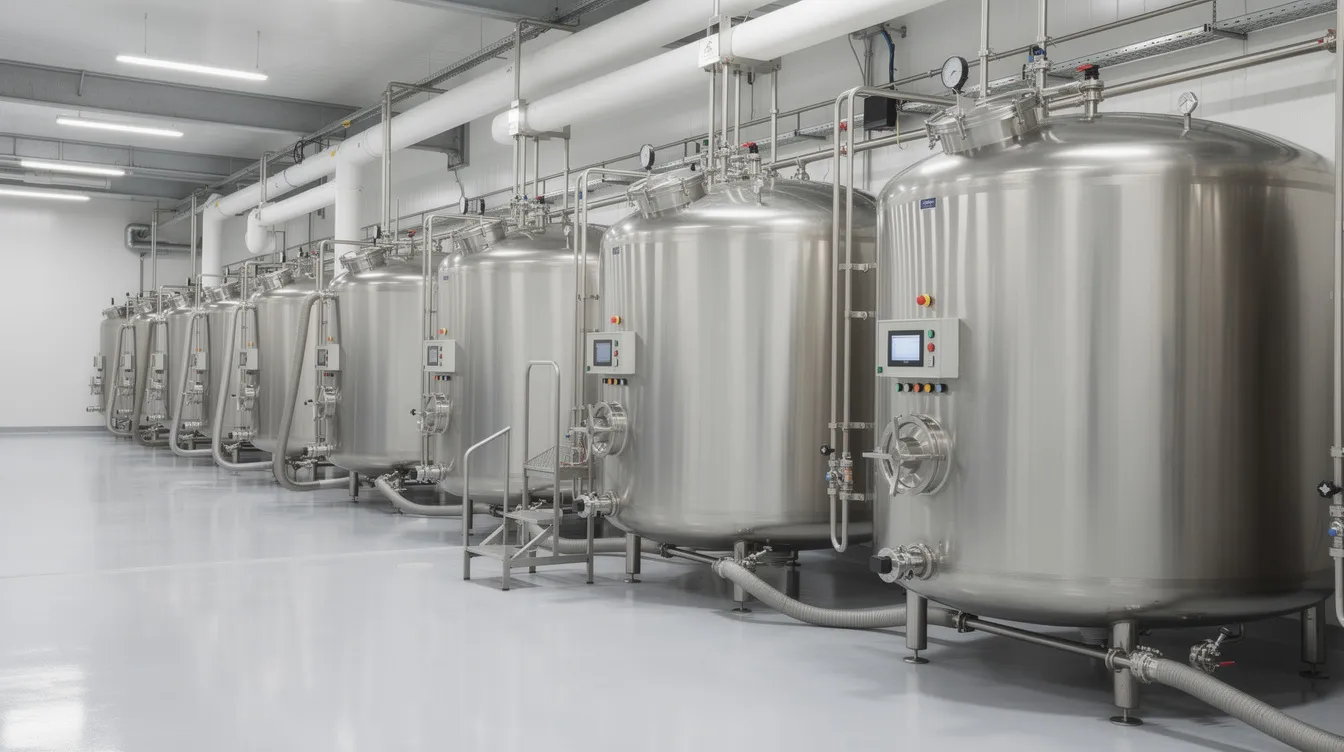
Key process equipment includes:
- Milk reception dock and weigh bowl
- Chillers and storage tanks
- Cream separators (if needed)
- Mixing and blending tanks
- Homogeniser
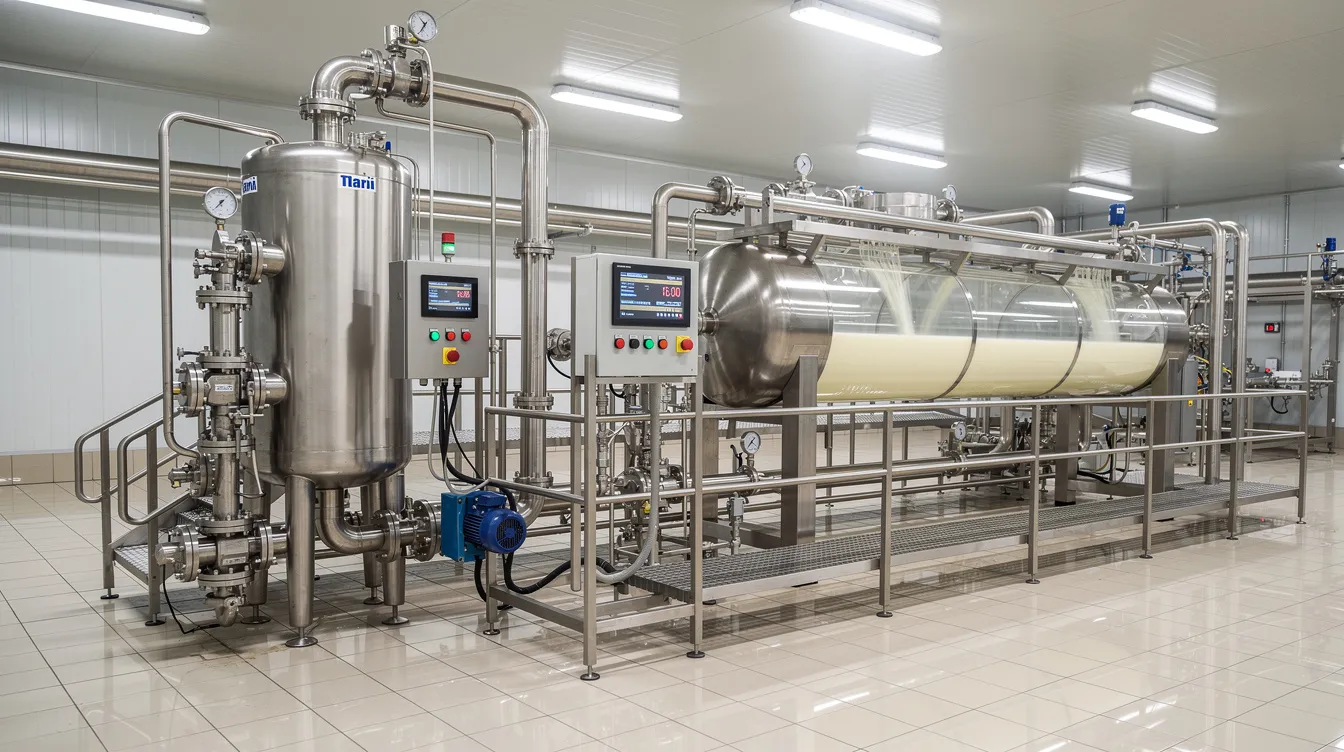
- Pasteuriser or UHT system
- CIP system
- Fillers, cappers, labelling machines and coders
Supporting systems: refrigeration plant, boilers or thermic fluid heaters, air compressors, water treatment plant, effluent treatment plant, and quality control laboratory equipment. A can line rated at 400 cans per minute needs stable utilities to operate reliably.
Machinery and equipment typically account for 40 to 60 percent of total project CAPEX. For a 10,000 LPD plant, total project cost (excluding land) in 2026 may range from Rs 5.05 to 7.30 crore. Decisions on automation level, changeover time, energy efficiency and future expandability should be based on indicative vendor quotations, not outdated standard cost lists.
Bottling and Packaging System Feasibility
Packaging format strongly impacts dairy beverage plant investment feasibility through machinery cost, shelf life, logistics and customer perception.
| Format | Capex | Shelf Life | Cold Chain | Best For |
|---|---|---|---|---|
| PET bottles | Moderate | 7-21 days (chilled) | Required | Flavoured milk, lassi |
| Glass bottles | Higher (handling) | 7-14 days (chilled) | Required | Premium/regional |
| Plastic cups | Lower | 5-15 days (chilled) | Required | Lassi, curd-based |
| Aseptic cartons | Higher | 3-6 months (ambient) | Not required | Wide distribution |
High-speed aseptic bottling requires higher capital and more complex quality systems but enables access to distant markets without continuous refrigeration. Common Indian pack sizes (180-200 ml, 250 ml, 500 ml, 1 litre) must align with consumer price points and institutional demand.
For comparisons, see PET, glass and packaging systems for dairy beverage bottling plants and aseptic dairy beverage processing and packaging.
Plant Capacity and Product Mix Feasibility
Dairy beverage plant capacity feasibility means aligning litres-per-day capacity with realistic market offtake, milk procurement and financial strength of the promoters. A dairy beverage plant can produce 10 to 50 million litres annually depending on plant size and shift patterns.
Capacity should be determined from projected sales by SKU and market, converted to daily litres, with seasonal peaks factored in. Product mix (for example 60% buttermilk, 25% flavoured milk, 15% lassi) affects homogenisation load, heat treatment time and filling formats.
Capacity ramp-up assumptions are critical:
- Year 1: 40 to 50% utilisation
- Year 2: 55 to 65%
- Year 3-4: 70 to 80%
Over-ambitious utilisation assumptions make a financial model look attractive but unrealistic. Capacity planning directly influences both dairy beverage plant capacity planning and product mix and project cost.
Land, Building, Utilities and Hygienic Layout Feasibility
Dairy beverage plant infrastructure requirements must ensure smooth production flow, personnel hygiene, quality control and regulatory compliance. Location for a dairy beverage plant should consider proximity to milk collection points and distribution channels. Logistics, labor and utilities are key site selection criteria. Site feasibility should assess zoning and food-grade suitability before land is acquired.
Key built-up areas include: raw milk reception and testing, processing hall, utility block, ingredient and packaging stores, cold rooms, finished goods storage, dispatch bay, laboratory, change rooms and administrative block. For reference, a 500-litre-per-day dairy plant needs approximately 1,500 to 2,000 square feet; medium plants require proportionally larger areas.
Dairy beverage plant hygienic layout principles require unidirectional flow of raw material to finished product, separation of clean and unclean zones, controlled access and adequate drainage. Utility requirements include reliable power supply with DG backup, steam for heat treatment and CIP, chilled water for cooling, adequate process water (dairy processing requires approximately three litres of water per litre of milk processed) and ETP/STP capacity.
Labor availability impacts operational efficiency and cost. Utility reliability is crucial for consistent production operations. For layout specifics, refer to dairy beverage plant land, building, utilities and hygienic layout.
Cold Storage and Cold Chain Feasibility
For chilled products like lassi, buttermilk and most flavoured milks, dairy beverage cold chain requirements are a central part of operational feasibility. A controlled cold chain is essential for transporting dairy beverages to minimise spoilage.
Evaluation must cover:
- In-plant cold room size and temperature (typically 2-5°C)
- Refrigeration tonnage and standby arrangements
- Temperature monitoring systems
- Insulated or refrigerated vehicles for distribution
- Distributor-level cold rooms
- Retailer refrigeration infrastructure
- Delivery frequency and likely product returns from cold-chain breaks
Cost implications include higher electricity consumption, higher vehicle operating cost and potential spoilage write-offs. All these must be built into operating cost projections. Feasibility should examine whether target markets genuinely support chilled distribution or require cold storage and cold chain requirements for dairy beverages along with aseptic options.
Distribution and Logistics Feasibility
Even a technically excellent dairy plant can struggle without a robust distribution strategy. Facilities near major trade corridors have logistical advantages, but the distribution plan must match the product’s shelf life and cold chain needs.
Key issues include:
- Selection and appointment of distributors; typical dairy beverage distributor margins range from 5 to 12%
- Transport radius from plant and route planning
- Payment terms, expected credit period and receivable management
- Handling of damaged or expired goods and product returns
- Mapping of outlet coverage: kirana stores, modern trade, HORECA units in Year 1, Year 2 and Year 3
Distribution feasibility should be assessed through pilot marketing or detailed field visits before finalising plant capacity and product mix. Installed capacity does not automatically translate into sales volume.
Project Cost Feasibility and Investment Estimation
Dairy beverage plant project cost estimation must be comprehensive, updated to current year prices and supported by supplier quotations. Startup costs for dairy beverage plants can reach millions; a modest dairy beverage plant may require a few million dollars to establish depending on capacity and technology.
Major cost heads:
| Cost Component | Indicative Range (Medium Plant) |
|---|---|
| Land (purchase/lease) | Location-dependent |
| Building and civil works | ₹1.5-4 Crore |
| Plant and machinery | ₹8-20 Crore |
| Utilities and ETP | ₹1-3 Crore |
| Cold storage | ₹0.5-2 Crore |
| Quality lab | ₹15-40 Lakh |
| Vehicles | ₹30-80 Lakh |
| Pre-operative expenses | ₹20-60 Lakh |
| Contingency | 5-10% of above |
| Margin for working capital | As assessed |
Figures are indicative for 25,000-50,000 LPD plants and vary by location, automation and product mix.
For bank appraisal, the cost structure must clearly distinguish eligible project cost, promoter margin and dairy beverage plant project cost and means of finance. Cost overruns are common and must be addressed through adequate contingency.
Means of Finance and Funding Structure
Dairy beverage plant financial feasibility depends not only on profitability but also on an appropriate mix of promoter funds and bank finance.
Typical finance pattern:
- Promoter contribution: Usually 25 to 30% of project cost (equity plus unsecured loans)
- Term loan: 60 to 70% from bank or financial institution
- Working capital: Cash credit, overdraft and bill discounting facilities
High leverage with low promoter contribution can make DSCR weak and may not be acceptable in bank appraisal, even if projected profits look adequate. Interest rate assumptions, moratorium period and tenure of term loan should match project cash flow patterns for at least the first 7 to 10 years. For expansion projects, internal accruals and retained earnings can partially fund capital investment.
Revenue Assumptions and Sales Projections for Feasibility
Projected Revenue = Saleable Production × Capacity Utilisation × Average Net Realisation per Litre.
SKU-wise projections should show pack size, selling price, distributor margin, scheme discounts, GST treatment and expected net realisation. National milk production and per-capita availability data provide context, but plant-level revenue depends on local market conditions.
Financial projections should include capital investment and operating costs alongside revenue. Sales projections must reflect market ramp-up, seasonality (summer peak for flavoured milk and buttermilk), regional festivals and institutional demand cycles.
Illustrative example (disclaimer: actual figures depend on project-specific factors): A 50,000 LPD plant at 60% utilisation producing an average mix of flavoured milk and buttermilk at Rs 45 net realisation per litre could project annual revenue of approximately Rs 49 crore. This is illustrative only; actual revenue depends on product mix, pricing, seasonality and market penetration.
Operating Cost Assessment and Margin Analysis
In dairy beverage plant feasibility, operating cost estimates must be as rigorous as revenue projections. Operating costs for fruit-flavoured milk plants typically run at 70 to 80 percent raw materials (milk, sugar, flavours, packaging).
Key operating costs:
- Raw milk procurement
- Other ingredients (sugar, flavours, cultures, stabilisers)
- Packaging materials
- Power and fuel
- Refrigeration
- Labour and supervision
- Transportation costs
- Repairs and maintenance
- Sales, marketing and distribution
- Administration and insurance
The distinction between variable costs (milk, sugar, packaging, freight) and fixed costs (salaries, depreciation, rent, interest) is critical. Contribution margin per litre determines how much each additional litre sold contributes to covering fixed costs and generating profit.
Milk procurement price and packaging cost should be treated as key sensitivity variables in the financial model. Realistic wage levels, energy tariffs and freight rates applicable to the proposed location must be used rather than generic national averages.
Profitability, Break-Even and Cash Accrual Feasibility
Dairy beverage plant profitability should be analysed both at EBITDA level and after interest and depreciation, with focus on cash accruals available for loan repayment. Break-even for fruit-flavoured milk plants typically ranges from 3 to 6 years depending on capital structure and market ramp-up.
Break-even analysis calculates the minimum sales volume or capacity utilisation at which total revenue equals total cost (fixed plus variable). This helps promoters understand the minimum sustainable utilisation level and the buffer required to withstand demand fluctuations.
Banks look for comfortable margins above break-even. For detailed analytical frameworks, refer to dairy beverage plant profitability and break-even analysis.
Financial Projections and Project Viability Analysis
A comprehensive dairy beverage manufacturing project report must contain integrated financial projections. Financial projections should include capital investment and operating costs, linked to physical production assumptions.
Projected statements should cover:
- Profit and loss account for 7 to 10 years
- Balance sheet projections
- Cash flow statement
- Depreciation and interest schedules
- Term loan repayment schedule
- Key ratios: ROI, IRR, net present value, payback period, DSCR
From a bankability perspective, the financial model should link capacity utilisation, product mix, selling price and milk cost with EBITDA, cash flow and DSCR. Dairy beverage project IRR and ROI help promoters and investors evaluate returns; DSCR is particularly important for lenders.
Projections should be transparent and supportable during credit appraisal. See dairy beverage plant financial projections for DPR for the framework.
Working Capital Requirement and Feasibility
Dairy beverage plant working capital needs are continuous and often underestimated, especially where credit is extended to distributors and modern trade chains.
Major working capital components:
- Inventory of raw milk and other ingredients (2 to 5 days)
- Packaging stock (7 to 15 days)
- Finished goods in cold rooms (3 to 7 days)
- Receivables from customers (7 to 30 days depending on channel)
- Cash required for daily business operations
The working capital cycle converts supplier credit period, processing time and customer credit period into rupee requirements at projected activity levels. Inadequate working capital can lead to under-utilisation of capacity and operational stress even when order books appear healthy. For assessment methodology, see working capital requirement for a dairy beverage plant.
DSCR and Debt Servicing Capacity
DSCR (Debt Service Coverage Ratio) measures the ratio of cash available for servicing debt to total debt obligations (interest plus principal repayment) in a year.
For bank appraisal purposes, lenders typically prefer:
- Average DSCR: 1.4 to 1.5 or above
- Minimum DSCR in any year: above 1.2
Projected cash accruals after tax, interest and essential replacement capex should be compared with scheduled term loan instalments to test dairy beverage plant loan repayment capacity. Both yearly DSCR and project-average DSCR should be evaluated; very low DSCR in early years remains risky even if later years are strong.
DSCR analysis is central to bank appraisal. For a deeper explanation, refer to DSCR and loan repayment capacity for a dairy beverage project.
Term Loan Feasibility and Bank Appraisal Parameters
Banks in India appraise dairy beverage plant term loan proposals by evaluating factors beyond projected profitability.
Key appraisal parameters:
- Eligible project cost and promoter contribution (typically 25 to 30%)
- Net worth and security coverage
- Repayment period (usually 7 to 10 years after moratorium)
- Projected DSCR across the repayment tenure
- Working capital tie-up and promoter experience in dairy or FMCG
The proposed repayment schedule must be consistent with capacity ramp-up and cash flow projections. Lenders may also examine stress scenarios to see if the plant can still service debt. Professional DPR preparation can assist in presenting a coherent case; see term loan assessment for a dairy beverage manufacturing plant.
Bank Loan and Project Finance Perspective
Dairy beverage plant bank finance is usually sanctioned based on a comprehensive, bankable DPR rather than on a brief project summary. State regulations may impose additional requirements for dairy beverages beyond central FSSAI norms.
A dairy beverage plant bankable project report typically includes:
- Promoter profile and background
- Project concept and industry overview
- Market analysis with commercial analysis of competition
- Technical configuration and process description
- Detailed project cost with quotations
- Means of finance
- Financial projections and ratio analysis
- Working capital assessment
- DSCR and break-even analysis
- Sensitivity analysis
From a credit officer’s perspective, consistency between technical, commercial and financial sections is crucial. Banks may seek clarifications on assumptions such as milk procurement price, selling price and government subsidies eligibility. The dairy processing sector is heavily regulated and requires compliance with local food safety standards; FDA food facility registration is mandatory for dairy beverages where applicable. Regulatory compliance is mandatory before commercial operations. This perspective should guide feasibility work from the beginning; see bank loan and project finance for dairy beverage manufacturing plant.
Sensitivity Analysis and Stress Testing of Project Viability
Dairy beverage project sensitivity analysis is an essential step to understand how sensitive profitability and DSCR are to changes in key assumptions. Feasibility should not be tested only under the base case.
Typical scenarios to test:
- 10 to 15% increase in milk procurement price
- 5 to 10% reduction in selling price
- 10 to 15% increase in packaging costs
- Delayed capacity ramp-up (for example, reaching 60% utilisation only by the fifth year instead of Year 3)
- 1 to 2% higher interest rate
- 10% project cost overrun
- Higher working capital blockage
Each scenario should be evaluated for its impact on EBITDA, cash flow, DSCR, break-even utilisation and equity IRR. Projects that remain financially viable under multiple adverse scenarios are more robust. Stress testing supported by realistic commentary is valued by both banks and equity investors.
Major Risks Affecting Dairy Beverage Project Viability
Dairy beverage plant risk assessment should be part of every feasibility study and DPR. Dairy beverage demand is driven by health-conscious consumer preferences, but the business faces several operational and financial risks.
| Risk Factor | Potential Impact | Possible Mitigation |
|---|---|---|
| Insufficient milk supply | Production shortfall, higher spot prices | Diversified procurement network, SMP buffer stock |
| Milk price volatility | Margin compression, cost overrun | Procurement contracts, seasonal price hedging |
| Poor product-market fit | Low sales volume, inventory write-off | Pilot marketing before full launch |
| Low capacity utilisation | Higher per-unit fixed cost, weak DSCR | Phased capacity addition, conservative planning |
| High packaging cost | EBITDA erosion | Vendor diversification, bulk procurement |
| Inadequate cold chain | Spoilage, returns, brand damage | Invest in cold rooms, insulated vehicles |
| Weak distributors | Poor market coverage, slow ramp-up | Careful distributor selection, pilot routes |
| Short shelf life | Product returns, wastage | Process optimisation, aseptic options |
| Machinery breakdown | Production loss, quality risk | Preventive maintenance, critical spares inventory |
| Regulatory delays | Delayed commissioning, penalty | Early FSSAI/PCB application, secure required licenses |
| Working capital shortage | Under-utilisation despite orders | Adequate cash credit limit, realistic projections |
| Excessive debt burden | Inability to service loans, financial stress | Conservative leverage, higher promoter contribution |
Identifying risks early does not weaken the DPR; it increases credibility from both lender and investor perspectives.
Feasibility Checklist Before Final Investment Decision
This checklist summarises key points promoters should cross-check before locking in money or approaching banks.
Market and Product:
- Is consumer demand for proposed SKUs validated through field data, not just industry reports?
- Have selling prices been tested against competitor pricing in the target geography?
- Is the product mix aligned with plant design and capacity?
Raw Materials:
- Is milk availability within the collection radius sufficient for planned production?
- Are procurement price assumptions realistic for both flush and lean seasons?
- Are ingredient and packaging vendors identified and diversified?
Technical and Capacity:
- Is the chosen technology and plant size matched to projected demand?
- Are capacity utilisation ramp-up assumptions conservative?
- Does plant design allow future expansion if the plan succeeds?
Infrastructure:
- Are land, building, utilities, cold chain and hygienic layout adequate?
- Does the location have reliable power, water and road connectivity?
- Is ETP capacity sufficient for the dairy processing facility?
Distribution:
- Are distribution channels identified and margin structures agreed?
- Can cold chain logistics support the planned delivery radius?
- Have payment terms and receivable cycles been assessed?
Financials:
- Is the total cost supported by current quotations and realistic contingencies?
- Is promoter contribution sufficient for lender comfort?
- Do financial projections show acceptable DSCR and break-even?
- Has sensitivity analysis been completed for key variables?
Regulatory:
- Have FSSAI licensing, pollution control and local approvals been mapped?
- Are allergen management, food safety and labelling requirements clear?
- Note: alcoholic beverages, if considered, require TTB permits and formula approvals.
If multiple checklist items remain uncertain, it may be advisable to revisit project design or conduct a more detailed dairy beverage plant feasibility study.
When Can a Dairy Beverage Project Be Considered Viable?
There is no single ratio or thumb rule that guarantees dairy beverage plant project viability. A viable project usually shows balanced alignment between market demand, product portfolio, plant capacity, milk procurement, technology, infrastructure, realistic pricing, operating margins, working capital lines and distribution strength.
From a project finance perspective, satisfactory indicators may include acceptable contribution margins, comfortable DSCR, reasonable payback period, manageable leverage and resilience under stress scenarios. Exact thresholds vary by lender and investor. A feasibility study assesses market demand, product mix and utility loads together to form the viability picture.
Promoters should be willing to modify capacity, product mix or phasing of investment if the feasibility analysis suggests it. The dairy industry rewards discipline and realism in planning.
Role of a Detailed Project Report (DPR) in Feasibility Assessment
A DPR consolidates technical, market, cost and financial assumptions into a coherent dairy beverage plant feasibility report for both promoters and lenders.
Core components include: project background, promoter profile, industry overview, market analysis, proposed products, technical configuration and process description, capacity planning, infrastructure and layout, project cost and means of finance, revenue and cost assumptions, projected financial statements, break-even and DSCR analysis, sensitivity analysis and risk assessment.
In a well-prepared DPR, unrealistic assumptions or gaps become visible, prompting promoters to revise the project structure before implementation. From a bank’s perspective, clarity, internal consistency and reasonable assumptions in the DPR are more important than aggressive profitability figures. DPR preparation is an iterative process and usually requires coordination between promoters, technical consultants, equipment suppliers and financial advisors.
How CA Manish Gugliya Can Assist Promoters and Investors
CA Manish Gugliya is a Practising Chartered Accountant (FCA, DISA) engaged in project finance, DPR preparation, CMA Data and business advisory for manufacturing projects including dairy beverage plants.
Key areas of assistance include:
- Preparation and review of dairy beverage manufacturing project reports and DPRs
- Financial analysis and projections
- Assessment of project cost and means of finance
- Working capital assessment
- DSCR and loan repayment capacity analysis
- CMA Data preparation and assistance
- Support in presenting project finance proposals to banks and financial institutions
All assignments are project-specific, based on the technical and commercial inputs shared by promoters. The role is to assist and advise on feasibility and presentation, not to guarantee loan sanctions or investment returns. For medium and large dairy beverage plants, integrated advice on capacity planning, funding structure and sensitivity analysis can help promoters take more informed decisions before committing capital.
Interested promoters, MSMEs and dairy companies can explore relevant resources and professional support at www.projectreportbank.com.
FAQs on Dairy Beverage Plant Feasibility & Project Viability
Below are practical questions that often arise during early planning.
How long does it usually take to complete a dairy beverage plant feasibility study in India?
Timeframes depend on project complexity. A basic pre-feasibility may take 2 to 3 weeks. A detailed dairy beverage plant DPR with vendor quotations and full financial modelling can take 6 to 10 weeks if data is provided promptly by the promoter. Additional time may be needed for site visits, market surveys, iterative revisions and bank clarifications.
Can a small flavoured milk or lassi plant be feasible without its own milk collection network?
It is possible to run a smaller flavoured milk, lassi or buttermilk manufacturing unit by sourcing milk from established dairies or bulk suppliers. However, procurement contracts, quality specifications and pricing formulas must be carefully assessed in the feasibility study. Dependence on a single supplier increases procurement risk; diversification and clear quality-testing protocols are important for long-term viability.
How do government subsidies and incentives affect dairy beverage project feasibility?
Central and state-level schemes (for example dairy infrastructure or food processing incentives) can improve investment feasibility by reducing net capital cost or interest burden. However, they should be treated as additional support, not the sole basis for viability. In the financial model, promoters should test project viability both with and without subsidy, as actual sanction and disbursement depend on scheme guidelines and compliance.
Is it better to start with only chilled beverages or plan an aseptic dairy beverage line?
The decision depends on target markets, capital budget and technical capability. Chilled products usually require lower initial capex but need strong cold chain infrastructure. Aseptic dairy beverages demand higher investment and more complex quality systems but can reach wider markets without continuous refrigeration. Feasibility analysis should compare both options on projected volume, price realisation, logistics cost and net present value before finalising plant design.
At what stage should promoters approach banks for a dairy beverage plant term loan?
It is generally advisable to approach banks after completion of at least a reasonably detailed dairy beverage plant feasibility report or DPR, when key assumptions, project cost, means of finance and financial projections are crystallised. Early informal discussions with bankers can still be useful, but formal appraisal usually requires a structured, bankable project report supported by quotations and realistic projections.
Conclusion: Using Dairy Beverage Plant Feasibility to Guide Investment Decisions
A dairy beverage plant feasibility assessment brings together market demand, product mix, milk procurement, manufacturing process, plant capacity, infrastructure, cold chain, distribution and financing structure into one integrated view of project viability. A project should not be considered viable merely because the dairy sector is growing or because national milk production figures look promising. Viability flows from realistic assumptions, robust cash flow, comfortable DSCR and manageable risk, confirmed through detailed financial analysis and sensitivity testing.
Promoters should validate the complete business plan; technical, commercial and financial; before committing substantial capital or debt. A well-prepared DPR is not just a document for the bank. It is a tool for the promoter to establish whether the proposed dairy beverage manufacturing project genuinely deserves the investment being considered.