Key Takeaways
- A Protein & Functional Dairy Beverages Manufacturing Plant produces high-protein milk, protein-enriched flavoured milk, fortified dairy drinks, probiotic beverages, and RTD nutritional milk beverages – products that demand more complex formulation, stringent quality control, and specialised packaging than conventional packaged milk.
- Higher value addition through increased milk protein, whey protein, vitamins, minerals, probiotics, and low-sugar formulations also raises capital expenditure, working capital requirements, and technical risk compared with commodity dairy processing.
- The manufacturing plant project report must integrate technical design, manufacturing process, machinery selection, plant capacity, project cost, means of finance, financial projections, DSCR analysis, and risk assessment into a single bankable document.
- Project cost and profitability depend on several key factors including capacity (10,000–100,000+ LPD), protein level per serving, chilled vs UHT processing, packaging format (PET bottles, HDPE bottles, aseptic cartons), channel margins, and plant location in India.
- CA Manish Gugliya at ProjectReportBank.com provides specialised DPR preparation, financial projections, CMA data, and project finance support for protein and functional dairy beverage plants seeking bank loans and investor funding.
Protein & Functional Dairy Beverages Manufacturing Plant: Project Overview
A Protein & Functional Dairy Beverages Manufacturing Plant is an industrial facility that converts raw milk, milk powder, and dairy proteins into high-protein, fortified, and functional ready-to-drink beverages. Unlike conventional pouched milk or basic flavored milk – which typically delivers about 3.2 g protein per 100 ml with limited fortification – this plant focuses on products that deliver 8 to 20 g (or more) of protein per serving through concentrated milk protein, whey protein additions, and formulation with vitamins, minerals, probiotics, or other health-oriented ingredients.
Typical products include high-protein milk, protein-enriched flavoured milk with chocolate flavors or fruit flavors, whey protein dairy drinks, vitamin and mineral fortified milk beverages, probiotic functional dairy drinks, sports-nutrition dairy beverages for muscle recovery, and low-sugar high-protein options. These products command higher revenue per litre than standard milk but also require more sophisticated drink formulation, heat stability management, advanced packaging, and stronger distribution infrastructure.
A project report for a protein dairy beverages manufacturing plant evaluates technical feasibility and financial viability – guiding decisions on capacity, technology (pasteurised vs UHT), product mix, plant layout, capital expenditure, and funding structure. For any promoter planning a medium-to-large plant setup in India, this document becomes the foundation for both investment decisions and lender appraisal.
What Are Protein and Functional Dairy Beverages?
Protein dairy beverages are milk-based drinks delivering enhanced protein content – typically 8 to 20 g per 200–250 ml serving. Functional dairy beverages extend this further by combining protein with added vitamins, minerals, probiotics, fibres, or electrolytes. Protein drinks typically contain 15–35g of protein per serving in sports and fitness-oriented variants such as a protein shake.
These beverages may be based on fresh milk, recombined milk from milk powder, whey protein concentrate or whey protein isolate, milk protein concentrate, or combinations thereof. They can be distributed as chilled products, ambient-stable UHT beverages, or in aseptic packaging with extended shelf life.
Conventional flavored milk typically provides 6–8 g protein per glass with limited fortification. Protein dairy beverages differ in protein-per-serving, consumer positioning, and processing complexity. Each product type – from fortified family milk to sports nutrition whey drinks – carries distinct formulation, pH sensitivity, heat stability, and packaging requirements. These differences must be clearly reflected in any Functional Dairy Beverages Manufacturing Plant Project Report.
Types of Protein & Functional Dairy Beverages
The protein and functional dairy beverage category encompasses a range of products, each with distinct technological demands and market positioning. Below is a practical overview relevant to Indian manufacturing conditions.
High-Protein Milk
High-protein milk in India typically involves raising protein from the standard ~3.2% to 4–6% using ultrafiltration, addition of skim milk powder, or milk protein concentrate, while maintaining drinkable viscosity and familiar taste. Products like Provilac’s high-protein milk deliver 25 g protein per 250 ml using ultrafiltration to naturally increase protein content. A High Protein Milk Manufacturing Plant Project Report must address higher heat load, protein aggregation risks, and consumer expectations for taste comparable to regular milk. Both chilled and UHT formats are commercially viable.
Protein-Enriched Flavoured Milk
This category upgrades standard flavored milk – historically rooted in formulations dating back to the 1950s in Germany and Asia – by adding milk protein or whey protein to achieve 8–12 g protein per 200 ml. Flavored milk drinks typically provide approximately 300 mg of calcium per serving, and sugar content typically ranges from 4% to 6%. Promoters considering both segments should review the Flavoured Milk Manufacturing Plant Project Report for base technology before layering protein fortification. Protein-enriched chocolate milk production can also be explored through a dedicated Chocolate Milk Manufacturing Plant Project Report.
Whey Protein Dairy Drinks
Whey protein milk beverage manufacturing involves blending whey protein concentrate or isolate with milk or milk-serum to create sports and fitness drinks with 15–25 g protein per serving. Protein water – a clear formulation variant – delivers 15–25g of protein per bottle and is typically formulated using hydrolyzed whey protein isolate for clarity and solubility. Projects in this segment often benefit from backward integration with a Whey Processing Plant Project Report for whey handling and dairy protein valorisation.
Fortified and Probiotic Functional Dairy Drinks
Vitamin fortified milk beverages (A, D, B-complex) and mineral fortified dairy beverages (calcium, zinc, iron) address mass-market nutrition needs – for children, families, and institutional programmes. FSSAI’s Food Fortification regulations mandate or encourage fortification of milk with Vitamins A and D under the +F logo framework. Probiotic functional dairy beverages incorporate specific strains such as Lactobacillus or Bifidobacterium and require cold chain, strict microbiological control, and viable-count testing across the product’s shelf life. Any Functional Dairy Beverage Plant DPR must define precise dosing protocols, heat stability evaluation, and shelf-life studies for these products.
Sports Nutrition & Low-Sugar High-Protein Dairy Beverages
Sports nutrition dairy beverages combine high milk protein or whey protein with electrolytes and sometimes carbohydrates, positioned for gym-goers, athletes, and individuals focused on muscle recovery. Protein shakes typically contain 15–35g of protein per serving and the protein shake market is projected to grow significantly by 2026 globally. Protein drinks are often low-sugar or sugar-free to enhance health appeal. Low-sugar high-protein variants use permitted non-nutritive sweeteners and optimised flavour systems to meet the demands of weight management and diabetic-friendly positioning.
Ready-to-Drink Nutritional Milk Beverages
RTD protein dairy beverages are long-shelf-life, single-serve products in PET bottles, HDPE bottles, or aseptic cartons, designed for on the go snacking and convenience consumption. These require an integrated RTD protein drink processing line with aseptic or ultra-clean filling capability. For a deeper discussion of RTD technology and packaging, promoters should consult the Ready-to-Drink Dairy Beverages Manufacturing Plant Project Report.
Market Opportunity for Protein Dairy Beverages in India
The protein drink market in India is rapidly growing and evolving. The broader beverage industry has witnessed flavored milk sales in India increase by 25% from 2020 to 2024, and the value-added dairy segment – including protein-enriched and functional drinks – is growing at roughly 20% per year. Leading manufacturers such as Parag Milk Foods have launched products like Avvatar Protein Cold Coffee with 15 g protein per 250 ml, while Akshayakalpa Organic introduced high-protein milk with 25 g protein per 250 ml at approximately ₹100. These launches confirm rising demand from health conscious individuals seeking more from their daily dairy consumption.
A comprehensive market analysis evaluates consumer trends and the competitive landscape for protein beverages. Structural demand drivers include increasing gym membership, growth of running and sports culture, urbanisation, and the expansion of modern retail, quick-commerce, and e-commerce platforms that stock chilled and ambient functional dairy beverages across metros and Tier-II cities. The protein shake market data shows North America held 40.8% of the global protein shake market in 2025, but India represents one of the fastest-growing geographies, creating a significant runway for domestic manufacturing.
Premium dairy products – including high-protein and fortified beverages – allow brands to move away from low-margin commoditised liquid milk. However, marketing, distribution, and cold chain costs rise in parallel. Any Functional Dairy Beverages Manufacturing Plant Project Report should align realistic volume ramp-up with market development rather than assuming instant full-capacity utilisation, particularly given competition from established protein beverage brand players and emerging plant based alternatives in the global food landscape.
Target Consumer Segments and Product Positioning
Defining the target segment is critical before finalising plant capacity, automation level, and packaging. Market viability for protein dairy beverages entails targeting specific demographic segments with tailored products. Core consumer segments for protein dairy beverages include fitness enthusiasts and health-conscious buyers, but the opportunity extends further.
- Fitness consumers, sportsmen and women, and gym members seeking sports nutrition and post-workout recovery drinks
- Young professionals and college students in urban centres looking for convenient meal-replacement style beverages
- Working adults pursuing weight management and healthy aging through higher-protein diets
- Families and parents – 68% of parents prefer flavored milk over unflavored varieties for children, and protein-enriched options enhance nutritional value for growing children
- Institutional customers: gyms, sports academies, corporate canteens, hospitals, wellness centres, and airline/railway catering, each with distinct packaging and volume requirements
Premium RTD protein beverages may focus on per-serving protein claim and convenience, whereas mass-market fortified milk beverages stress daily nutrition, immunity, or children’s growth. Defining positioning – sports nutrition vs family nutrition vs kids’ flavoured protein milk – will drive product mix, MRP range, pack size (180 ml, 200 ml, 500 ml, 1 L), and channel strategy.
Product Portfolio and Product Mix Strategy
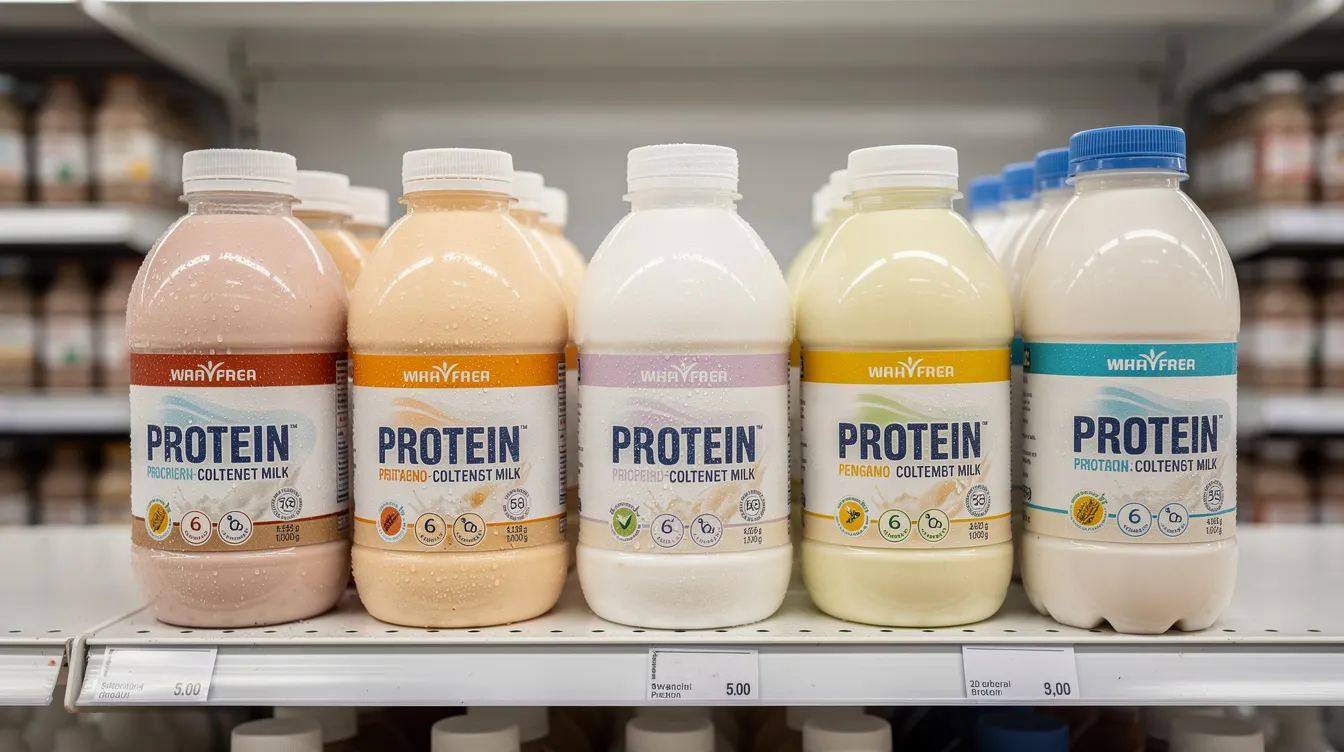
The chosen product combination – for instance, 70% high-protein milk, 20% protein-enriched chocolate milk, and 10% probiotic drinks – has a major impact on plant design, packaging lines, and profitability. Market analysis should identify core consumer groups and assess demand trends for protein dairy beverages before locking the portfolio.
| Product Category | Protein Positioning (g/serving) | Packaging Format | Primary Consumer Segment | Relative Price vs Regular Milk |
|---|---|---|---|---|
| High-Protein Milk | 8–12 g / 200 ml | PET bottle, aseptic carton | Health-conscious families | 1.5–2.5× |
| Protein-Enriched Flavoured Milk | 10–15 g / 250 ml | PET bottle, HDPE | Young professionals, students | 2–3× |
| Sports Nutrition Whey Drink | 20–25 g / 250 ml | PET bottle | Gym-goers, athletes | 3–5× |
| Probiotic Dairy Drink | 6–8 g / 200 ml | PET bottle (chilled) | Wellness-focused adults | 2–3× |
| Low-Sugar High-Protein Family Drink | 10–12 g / 200 ml | Aseptic carton | Diabetic-friendly, calorie-conscious | 2–3× |
Product mix directly influences selection of UHT vs pasteurised equipment, requirement for fermentation tanks, number of SKUs, flexibility of filling lines, inventory of flavours, sweeteners and stabilisers, and ultimately value-added dairy plant capacity planning and product mix decisions that balance SKU complexity with operational efficiency.
Raw Materials and Ingredients for Protein Dairy Beverages
Ingredient quality, consistency, and regulatory approval are central to both product performance and lender confidence in the project. Reliable suppliers and a steady supply of key inputs underpin raw material sourcing strategy.
Dairy inputs: Raw chilled milk, standardised milk, skim milk, skim milk powder, whole milk powder, whey protein concentrate (WPC), whey protein isolate (WPI), milk protein concentrate (MPC), and milk protein isolate for premium positioning. Milk powder production involves pasteurization, evaporation, and spray drying – and the global milk powder market has seen immense growth over the past decade. Demand for protein milk powder is increasing due to health trends. Milk powder is used in bakeries, confectionaries, and beverage production to serve end use sectors well beyond dairy beverages alone, and milk powder prices are influenced by population growth and export demand.
Formulation aids: Stabilisers (carrageenan, guar gum, gellan gum), emulsifiers, buffer salts, permitted acidity regulators, flavours (chocolate, vanilla, coffee, fruit), cocoa powder, fruit pulp, and fruit preparations for fruit flavored milk drink variants.
Health ingredients: Vitamin premixes (A, D, B2, B12), minerals (calcium, zinc, iron), probiotic cultures for refrigerated functional drinks, fibres, electrolytes, and non-nutritive sweeteners for low-sugar formulations.
Packaging materials: PET and HDPE bottle preforms, aseptic cartons, multilayer laminates, closures, labels, secondary cartons, shrink-wrap, and pallets. Packaging cost can constitute a significant component of per-unit cost in premium RTD protein beverages.
All ingredients and claims must comply with applicable FSSAI regulations, and compatibility and heat stability must be thoroughly tested during product development. Consistent supply and raw material procurement planning are critical for uninterrupted plant’s operations.
Protein Dairy Beverage Manufacturing Process
The manufacturing process for protein dairy beverages follows a structured sequence. The process begins with milk reception and quality testing – checking fat, SNF, acidity, and adulterants – followed by clarification, cream separation, and standardisation of fat and solids-non-fat. If reconstituted milk is part of the formulation, milk powder is dissolved and hydrated separately.
Ingredient pre-mixing is a critical stage: dairy proteins, sugar (or permitted sweeteners), stabilisers, and functional additives are prepared in dedicated mixing tanks. Protein hydration requires controlled agitation and temperature management to prevent lump formation. The blended mix then undergoes two-stage homogenisation at 150–250 bar to ensure uniform particle size and stability.
For chilled products, heat treatment involves high-temperature short-time (HTST) pasteurisation at approximately 72°C for 15 seconds, followed by rapid cooling and chilled filling into PET or HDPE bottles. For ambient-stable RTD products, ultra high temperature processing at 135°C or above for at least one second is applied, followed by aseptic handling and filling into sterile cartons or bottles. Protein shake production requires controlled processing for safety and stability throughout these stages.
A robust Protein Dairy Beverage Manufacturing Plant DPR must include a block diagram of these production processes, key process parameters (temperatures, times, pressures), and critical control points for food safety. Promoters considering thicker or dessert-style formulations should also reference the Milkshake Manufacturing Plant Project Report where similar homogenisation and viscosity management steps apply.
Protein Hydration, Heat Stability and Formulation Challenges
The main technical risk in high-protein dairy beverages is poor protein hydration and instability under heat treatment, leading to sedimentation, gelation, or phase separation. pH is critical in protein drink formulation, directly affecting protein solubility, charge behaviour, and interaction with minerals.
Milk protein and whey protein each have specific hydration requirements. MPC and WPC powders need adequate hydration time (often 30–60 minutes), controlled agitation, and careful temperature management to avoid lump formation in high-solids mixes. The protein level per serving amplifies these challenges – a beverage targeting 25 g protein per 250 ml behaves very differently from one at 8 g.
During UHT processing, whey proteins denature and can aggregate, leading to age gelation during prolonged storage. Mineral-fortified formulations compound this problem, as calcium and other minerals interact with proteins, increasing viscosity and precipitation risk. The viscosity of flavored milk drinks typically ranges from 1,000 to 5,000 centipoise, and higher-protein formulations push toward the upper end.
Sensory defects – chalkiness, sandy mouthfeel, protein off-notes – require stabiliser systems, flavour masking, and emulsification strategies to mitigate. Heat stability testing and pilot-scale trials are essential before scaling any drink formulation commercially. In the DPR, promoters should demonstrate either in-house formulation capability or identify technical partners for formulation scale-up – this is a key concern for lender feasibility assessment.
Pasteurised vs UHT Protein Dairy Beverages
Both pasteurised (short shelf life, chilled) and UHT (ambient shelf life, 4–9 months) technologies are viable. The choice depends on market strategy, distribution infrastructure, and capital investment appetite.
- Pasteurised high-protein beverages offer 7–10 days shelf life under 2–4°C. Suited to local or regional distribution with strong cold chain. Lower capex, but daily logistics and cold storage demands are more intensive.
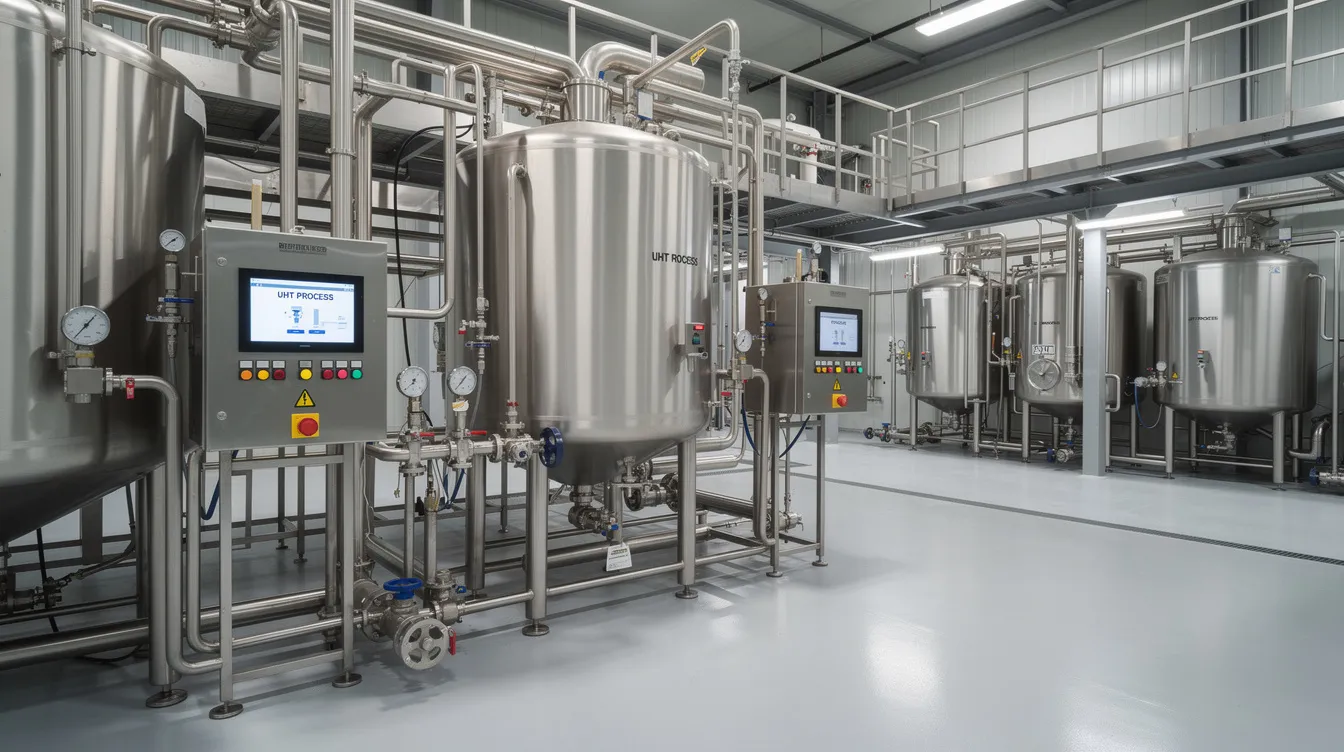
- UHT protein dairy beverages require advanced UHT systems (indirect or direct), aseptic tanks, and aseptic filling lines. Capital expenditure is materially higher, but wider geographic reach and ambient storage reduce downstream distribution complexity and extend shelf life significantly.
UHT products demand extensive pilot trials to avoid instability at elevated protein levels, while pasteurised products face milder heat load but still require careful protein and stabiliser selection. The DPR must justify the chosen route in terms of project cost, operating costs, logistics, consumer expectations, and distribution radius. Neither technology is universally superior.
Machinery and Equipment for a Protein Dairy Beverage Plant
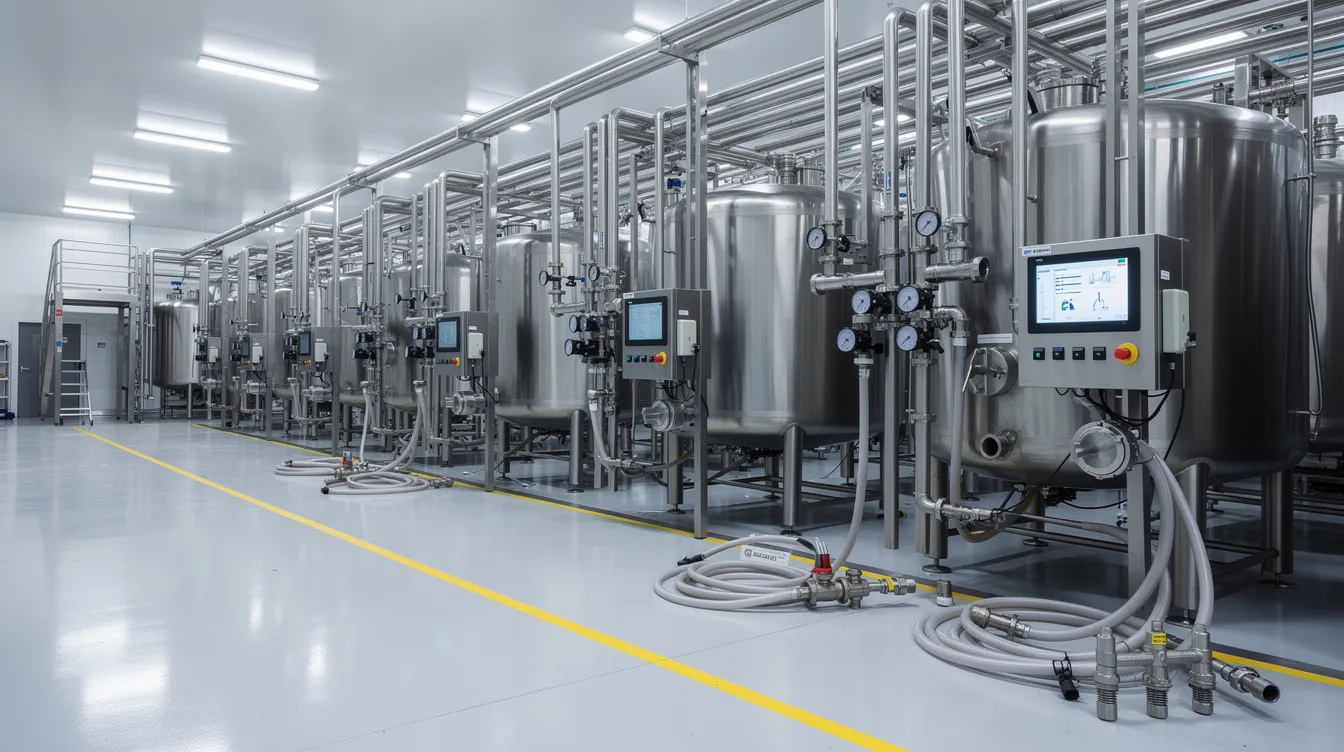
Protein beverage manufacturing plant machinery selection depends on capacity, product mix, and automation level. Core equipment groups include:
- Processing: Milk reception chillers and weigh scales, insulated storage tanks, clarifier, cream separator, fat/SNF standardisation system, blending and mixing tanks, high-shear mixers, powder induction systems, protein hydration tanks, and homogenisers (two-stage, 150–250 bar)
- Thermal processing: Plate or tubular pasteurisers, UHT systems (indirect or direct), holding tubes
- Filling and packaging: PET/HDPE bottle rinsing, filling and capping machines, aseptic carton filling lines, inkjet coding, shrink tunnels, secondary packaging systems, and packaging lines for multiple SKU formats
- Utilities: Boiler/steam generation, refrigeration plant, chilled water system, compressed air, CIP system, water-treatment plant, ETP, and electrical distribution panels
- Laboratory: Milk analysers, protein testing instruments (Kjeldahl or near-infrared), microbiology lab setup, and physical-chemical testing equipment for quality control
Protein dairy beverage plant cost in India varies significantly depending on whether equipment is sourced domestically or imported, and whether manual, semi-automatic, or fully automatic lines are selected. For indicative reference, UHT plant machinery for 5,000–10,000 LPH capacity often falls in the ₹4–8 crore range, while full project cost (excluding land) can range from ₹8–15 crore for smaller plants to ₹30–50 crore for mid-size facilities.
Plant Capacity Planning, Land and Layout
Typical capacity ranges for Indian conditions span small plants at 5,000–10,000 litres per day to medium-to-large plants at 20,000–100,000+ litres per day. Plant capacity must align with market demand and growth projections to ensure sustainability. Production schedules should account for CIP downtime, changeovers between SKUs, and seasonal variation in raw milk availability.
Rated versus effective production capacity differs significantly – packaging-line speed constraints often become the bottleneck even when processing capacity is adequate. Operational efficiency depends on balancing SKU complexity with run lengths.
A hygienic plant layout should separate:
- Raw milk reception dock and chilling
- Processing hall (standardisation, blending, homogenisation, heat treatment)
- Ingredient preparation room
- Filling and packaging area
- Cold storage (for pasteurised products and temperature-sensitive raw materials)
- Finished-goods warehouse, utilities block, ETP
- QA/QC laboratory and administration block
Zoning between raw and processed product flows, personnel hygiene routes, and provision for future expansion are essential. Promoters working on multi-product layouts should review dairy plant capacity planning as further reading.
Utilities Requirement and Cold Chain
Utilities planning drives both capital expenditure and ongoing energy costs. A Functional Dairy Beverage Plant DPR must estimate:
- Electricity: Connected load for homogenisers, pumps, UHT systems, chillers, compressors, and packaging lines
- Steam: Demand for pasteurisation/UHT, CIP, and hot-water generation – boiler selection (oil, gas, biomass) affects both capex and running cost
- Water: Process and potable requirements, water-treatment plant sizing, and wastewater treatment obligations
- Refrigeration and chilled water: Milk cooling, cold storage rooms, and refrigerated transport for pasteurised and probiotic products
- Human resources: Skilled operators, quality staff, and maintenance teams to manage the plant’s operations
For chilled high-protein milk and probiotic drinks, cold storage and cold chain requirements for value-added dairy products are a critical determinant of distribution reach and product quality.
Packaging Options and Their Business Implications
Packaging decisions drive shelf life, brand positioning, and per-unit cost. These must be finalised early for accurate DPR costing.
- PET bottles: Widely used for chilled and some ambient products; moderate cost; good brand visibility
- HDPE bottles: Cost-effective option for certain product formats
- Aseptic cartons: Higher capex for filling lines but deliver ambient shelf life of several months – essential for national distribution of UHT protein beverages
- Multilayer pouches: Technically feasible for some formats; lower per-unit packaging cost but may limit premium positioning
Pack size (180–250 ml single-serve, 500 ml, 1 L family) affects consumer price perception, trial, repeat purchase, and channel margins. The Protein Dairy Beverage Plant DPR must include detailed primary and secondary packaging cost estimates, since packaging materials cost can exceed raw milk cost in some premium RTD protein beverages.
Quality Control, Food Safety and Regulatory Considerations
High-protein milk, fortified dairy beverages, and probiotic functional drinks must meet strict specifications on protein content, fortification levels, and microbiological safety protocols beyond standard milk norms.
Typical lab tests include:
- Raw milk quality (fat, SNF, acidity, adulterants)
- Finished product: protein content (g/100 ml), fat, total solids, pH, microbial load (TPC, coliforms, pathogens), viscosity, sedimentation, and sensory attributes
- Probiotic products: viable counts of probiotic strains and stability across shelf life
Quality assurance in dairy beverages involves HACCP, ISO 22000, and Good Manufacturing Practices – implemented as integrated safety protocols rather than standalone certifications. Regulatory approvals like FSSAI license are crucial for dairy beverage manufacturing plants in India. Products making protein, fortification, or health claims must comply with applicable food standards, labelling requirements, and restrictions under FSSAI regulations. Promoters should obtain specialist regulatory advice during product development – regulatory compliance is non-negotiable.
Project Cost, Capital Expenditure and Investment Drivers
Protein dairy beverage plant cost in India depends on several key factors: installed capacity, technology (UHT vs pasteurised), automation level, packaging choices, and plant location. Rather than quoting generic numbers, a detailed project report must outline the actual cost heads specific to the proposed project.
Major capital expenditure components:
- Land and site development
- Civil construction and building
- Processing machinery and UHT systems
- Filling and packaging lines
- Cold storage and refrigeration
- Utilities (boiler, compressor, WTP, ETP)
- Electrical works and laboratory setup
- Pre-operative expenses (consultancy, design, interest during construction, trial runs, contingency)
Functional dairy beverage plant setup cost is also influenced by imported vs indigenous machinery, fully automatic vs semi-automatic filling, and in-house vs contract manufacturing packing arrangements. A deeper reference for promoters structuring capital investment is available through value-added dairy plant project cost and means of finance.
Working Capital Requirement and Revenue Model
For protein dairy beverages, working capital can be substantial due to expensive protein ingredients, vitamin/mineral premixes, and premium packaging. Operating costs for protein shake manufacturing are typically 60–70% raw materials, underscoring raw material costs as the dominant variable cost driver.
Working-capital components:
- Raw material procurement (milk, milk powder, proteins, flavours, sweeteners)
- Stock of whey protein and milk protein concentrates
- Packaging materials inventory
- Finished goods (especially for ambient UHT products with longer production-to-sale cycles)
- Trade receivables and distributor credit
- Minimum bank balances
Revenue sources include retail distribution, modern trade and supermarkets, quick-commerce and e-commerce, institutional channels (gyms, hospitals, canteens), contract manufacturing and private label production, and online/D2C sales. Each channel carries different margins impacting net realisation – this business model dimension should be documented in the value-added dairy products revenue model and market strategy. For a deeper assessment of how banks evaluate working-capital limits, refer to working capital requirement for a value-added dairy plant.
Financial Projections, Profitability, DSCR and Feasibility Analysis
From a DPR consultant’s standpoint, lenders will evaluate profitability, debt-servicing ability, and sensitivity to key variables before sanctioning any Protein Beverage Plant Bank Loan Project Report. Financial projections should include capital and operational expenditure along with profitability metrics over a 7–10 year horizon. Investment justification in a project report aims to secure funding by demonstrating market potential and profitability.
Core financial statements required:
- Projected profit and loss account, balance sheet, and cash-flow statement
- Assumptions on capacity utilisation ramp-up, selling prices, raw material costs, variable costs, and operating expenses
Profitability analysis must cover contribution margin per litre, gross margin, EBITDA margin, and the impact of capacity utilisation on operating leverage. Break-even analysis (Fixed Costs ÷ Contribution per Unit) is especially critical in capital-intensive protein beverage plants. Detailed guidance is available via value-added dairy plant profitability and break-even analysis.
DSCR (Debt Service Coverage Ratio) – calculated as cash accruals available for debt service divided by total debt service (interest + principal) – is the metric lenders use to judge loan repayment capacity. A thorough DSCR and loan repayment capacity analysis for a dairy project should form a core part of the DPR.
ROI, IRR, and payback period must be examined under sensitivity scenarios: changes in milk price, protein ingredient cost, selling price, packaging cost, and capacity ramp-up pace. For structured guidance, see ROI, IRR, payback and sensitivity analysis for dairy plants. Linking these into value-added dairy plant financial projections demonstrates how integrated financial analysis models are built for bankable DPRs.
Means of Finance, Bank Loan and Project Finance Considerations
Most medium and large protein and functional dairy beverages manufacturing plants in India are funded through a mix of promoter equity, term loans from banks or financial institutions, and working-capital facilities. Eligible subsidies or incentive schemes may apply depending on state and sector policies, but promoters should not assume eligibility without verification.
Lenders will appraise promoter background and track record, project concept, technical details of the manufacturing process, machinery quotations, project cost, means of finance, projected profitability, DSCR, and security coverage. A professionally prepared Protein Dairy Beverage Plant DPR should align with typical bank appraisal formats. For detailed guidance on structuring a funding proposal, consult bank loan and project finance for a value-added dairy plant and term loan assessment for a dairy manufacturing plant. Project finance terms – moratorium, repayment period, interest rate – depend on lender policy and project risk profile, and should not be assumed generically.
Risks, Sensitivity and Overall Feasibility Assessment
Risk analysis should identify operational, market, and financial risks along with mitigation strategies in the project report. This is especially important for premium FMCG-style dairy beverage ventures.
Technical risks: Formulation failure, heat instability of high-protein formulations, inconsistent raw milk quality, packaging failures, and cold-chain breakdown for chilled products.
Commercial risks: Slower-than-expected consumer acceptance, intense price competition from established dairy brands, higher-than-planned distributor margins, and industry trends that shift consumer demand toward plant based alternatives.
Financial risks: Milk price trends volatility, spikes in whey and milk protein costs (which follow global commodity cycles and price trends), currency risk for imported ingredients or machinery, interest-rate risk, and working-capital stress due to delayed receivables.
A holistic feasibility report must consider technical feasibility, market feasibility, financial feasibility, operational feasibility, and promoter capability. A value-added dairy plant feasibility and project viability assessment helps determine whether a technically feasible protein beverage is also financially viable under realistic pricing and distribution assumptions.
Risk-mitigation approaches: Phased capacity expansion, pilot launches via contract manufacturing, diversified product portfolio (including more accessible fortified milk SKUs alongside premium sports nutrition), long-term raw milk sourcing contracts for consistent supply, and sustainable practices in procurement and energy use to manage cost and compliance risks.
Why Professional DPR Preparation Matters
As a Chartered Accountant experienced in project finance and DPR preparation, I approach a Protein Dairy Beverages Manufacturing Plant Project Report as much more than a cost sheet or a generic template. A detailed project report must outline manufacturing processes, technology requirements, and quality controls – integrated with realistic financial analysis that reflects actual operating conditions of dairy manufacturing in India.
When I prepare a DPR for a protein or functional dairy beverage project, the objective is to integrate technical assumptions (process route, pasteurised vs UHT, plant capacity), product mix (high-protein milk vs functional flavoured milk vs probiotic drinks), market strategy, detailed project cost, working capital, and realistic selling-price and volume assumptions into one coherent financial and project model. This includes CMA data, DSCR analysis, and sensitivity analysis tailored to the specific project, not copied from a standard format.
The financial projections I prepare are based on information and assumptions shared by the promoter, relevant industry benchmarks, and technical inputs from the project team. They are not a guarantee of performance or loan approval. However, a strong, internally consistent feasibility report significantly improves the quality and speed of lender appraisal.
Through ProjectReportBank.com, I assist promoters, dairy companies, and MSMEs in developing bankable DPRs, assessing protein beverage manufacturing plant investment, and structuring means of finance so that lenders can properly evaluate project viability. If you are planning a medium-to-large protein dairy beverage plant in India, professional DPR preparation is not an optional expense – it is a foundational investment in your project’s credibility.

Conclusion: Building a Bankable Protein Dairy Beverage Project
Protein and functional dairy beverages represent a high-value, fast-evolving extension of traditional dairy processing. The segment offers higher revenue per litre and stronger brand differentiation, but success demands far greater complexity in formulation, processing, packaging, marketing, and distribution than commodity milk.
Building a viable project requires integrating consumer positioning, product portfolio definition, sound process design, appropriate machinery, robust cold chain (where relevant), disciplined working-capital management, and carefully structured project finance. A well-prepared Protein & Functional Dairy Beverages Manufacturing Plant Project Report allows both promoters and lenders to evaluate technical feasibility, market opportunity, financial returns, DSCR, and risk under realistic assumptions.
Serious promoters planning a protein dairy beverage manufacturing plant in India are invited to engage with CA Manish Gugliya at www.projectreportbank.com for DPR preparation, financial projections, CMA data, and project-finance support tailored to their specific capacity, product mix, and funding requirements.
Frequently Asked Questions
What is a protein dairy beverage manufacturing plant?
A protein dairy beverage manufacturing plant is an industrial facility designed to receive raw milk or milk powder, standardise composition, add milk protein and/or whey protein, fortify with vitamins and minerals where required, thermally process (pasteurise or UHT), and pack ready-to-drink high-protein and functional dairy beverages. Typical products include high-protein milk, protein-enriched flavoured milk, sports nutrition whey milk drinks, vitamin-fortified milk beverages, and probiotic dairy drinks, all produced under controlled hygienic and quality conditions with quality assurance systems in place.
How much does it cost to set up a Protein & Functional Dairy Beverages Manufacturing Plant in India?
Project cost varies widely depending on capacity (10,000 vs 50,000 litres per day), chosen technology (UHT with aseptic cartons vs chilled PET), level of automation, imported vs indigenous machinery, and land/building costs in the selected state. For indicative reference, a small UHT plant (5,000–10,000 LPH) may involve machinery cost of ₹4–8 crore and total project cost (excluding land) of ₹8–15 crore, while mid-size plants (15,000–25,000 LPH) can reach ₹30–50 crore. Rather than relying on generic figures, promoters should obtain a customised Protein Dairy Beverage Plant DPR with an itemised capital expenditure estimate based on the intended product mix, location, and technology.
What is the typical manufacturing process for protein-enriched milk beverages?
The core steps include: reception and testing of raw milk → standardisation of fat and solids → preparation and hydration of proteins and other dry ingredients in mixing tanks → blending with milk → homogenisation (typically at 150–250 bar) → pasteurisation (72°C/15s for chilled products) or UHT treatment (≥135°C for ambient) → cooling or aseptic handling → filling into PET bottles, HDPE bottles, cartons or pouches → secondary packaging and storage. Process parameters (temperature, time, homogenisation pressure, pH) must be optimised for the selected protein system and protein level to avoid sedimentation or gelation over shelf life.
Can whey protein be used directly in milk beverages, and what challenges arise?
Whey protein concentrate and whey protein isolate can be successfully incorporated into milk-based beverages and are commonly used for sports and high-protein drinks. However, they require careful hydration, pH control, and heat treatment design. Challenges include potential sandiness, increased viscosity, protein denaturation during UHT processing, and interaction with minerals such as calcium. Pilot-scale trials and experienced formulation support are strongly recommended before finalising the process in the DPR.
How can a bank loan be obtained for a protein dairy beverage manufacturing project?
Promoters typically approach banks or financial institutions with a professionally prepared Protein Dairy Beverage Plant Bank Loan Project Report containing the project concept, promoter profile, detailed cost estimates, machinery quotations, implementation schedule, financial projections, DSCR analysis, and proposed security. Loan approval depends on lender appraisal of project viability, promoter credentials, equity contribution, collateral, and overall debt-servicing capacity. No consultant can guarantee sanction, but a strong, internally consistent DPR with realistic financial analysis significantly improves the quality and speed of appraisal.