Key Takeaways
- This article by CA Manish Gugliya is a practical guide to preparing a bankable sweetened condensed milk manufacturing plant project report and DPR for an industrial plant in India, combining dairy-processing technology with project-finance depth.
- Success in sweetened condensed milk production depends not only on machinery but on milk procurement economics, sugar usage, evaporation efficiency, lactose crystallisation control, packaging cost and plant utilisation.
- The guide covers the sweetened condensed milk manufacturing process, machinery, land, utilities, project cost, means of finance, working capital, profitability, DSCR and loan repayment capacity.
- Readers will see how assumptions on milk price, sugar price, selling price and capacity utilisation flow through to cost of production, profitability, DSCR, ROI, IRR and overall project viability.
- ProjectReportBank.com serves as a specialist resource for customised sweetened condensed milk plant project reports, DPRs, financial projections, CMA data and bank-finance support.
Sweetened Condensed Milk Manufacturing Plant Project Report & DPR
In my experience preparing DPRs for dairy processing ventures across India, I have seen promoters treat the project report as little more than a machinery quotation bundle stapled to a generic financial model. A sweetened condensed milk manufacturing plant project report must integrate technical, commercial and financial aspects into a single coherent document. The project report for an SCM manufacturing plant should cover technical, market, and financial feasibility – not just equipment costs.
A professional DPR should include:
- Promoter background, project rationale and proposed sweetened condensed milk plant capacity (tonnes/day)
- Product specifications, target markets (retail, B2B, institutional) and regulatory framework
- Location analysis – proximity to raw milk catchment, sugar suppliers, utilities and logistics routes, with impact on procurement cost
- Technical section: sweetened condensed milk manufacturing process description, process flow chart, equipment list, utilities, manpower, quality-control plan and linkage between milk solids balance, sugar addition, evaporation and milk final product specifications
- Financial component: item-wise capital expenditure, working capital assessment, projected profit and loss, balance sheet, cash-flow statement, DSCR, break-even point, ROI, IRR, payback period and sensitivity analysis
Copying ratios from a generic dairy DPR (such as a curd or paneer project) is misleading because milk solids utilisation, sugar consumption, steam requirement and working capital cycle in condensed milk production are fundamentally different. Banks expect clarity of assumptions, realistic capacity utilisation ramp-up and consistency between technical capacity, turnover projections and term loan repayment schedule.
What Is Sweetened Condensed Milk?
Sweetened condensed milk is concentrated milk to which sugar is added, resulting in total solids of around 70–75% and a thick, viscous product. Condensed milk requires high sugar content for preservation rather than thermal sterilisation – the high sucrose concentration lowers water activity, giving the finished product a long shelf life without in-container sterilisation.
- Unlike fresh milk (unconcentrated, short shelf life) or UHT milk (sterilised but not highly concentrated), SCM is a shelf-stable concentrated milk product
- Unsweetened condensed milk, also called unsweetened evaporated milk, is concentrated but sterilised without sugar addition
- Milk powder involves almost complete moisture removal, yielding a fully dry product suited to powder production applications
Sweetened condensed milk has applications in both direct consumption and as an ingredient in various foods. It adds flavor to coffee and tea, enhances taste in bakery products and chocolate, is a key ingredient in cold cakes and fruit puddings, and is used in making biscuits and sweets. Condensed milk is used in desserts and beverages across many countries. Entrepreneurs considering both sweetened and unsweetened products should refer to the evaporated milk manufacturing plant guide for complementary details.
Sweetened Condensed Milk Manufacturing Process
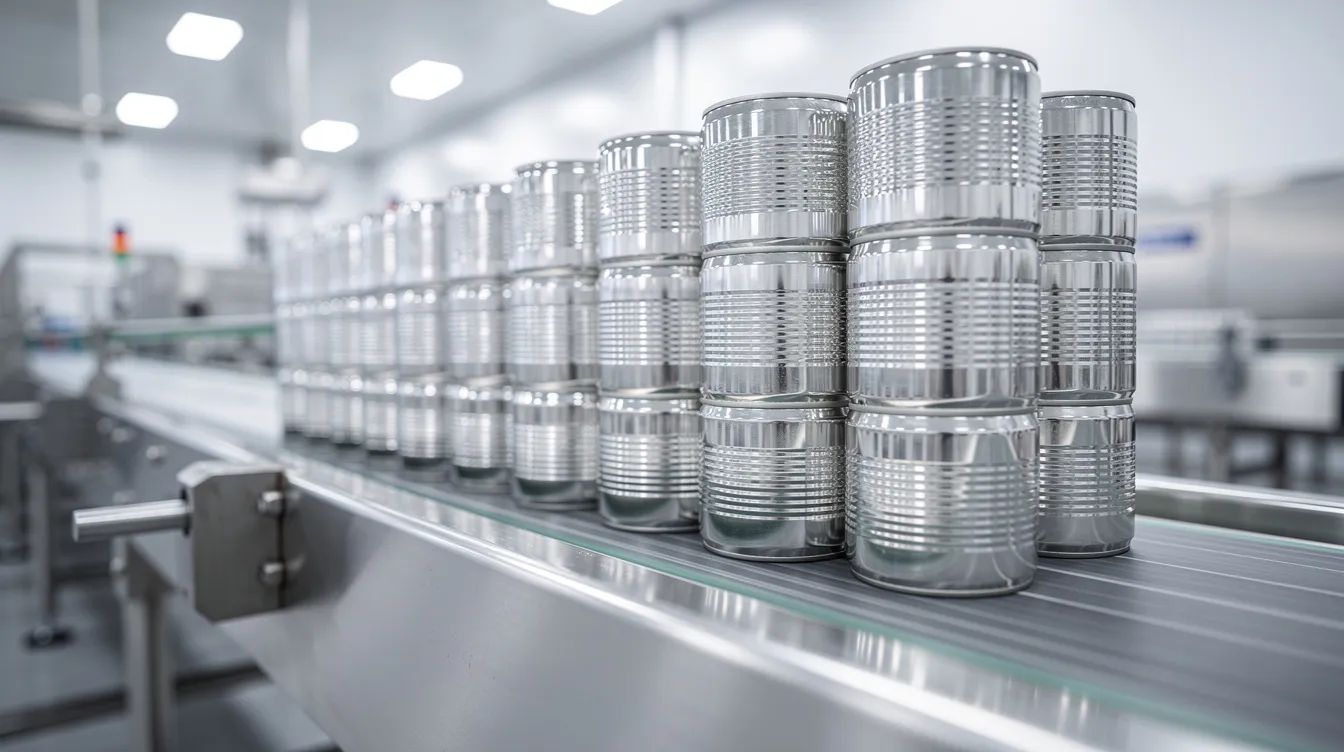
The manufacturing process for SCM includes concentration via evaporation and cooling, with multiple controlled stages from milk reception to dispatch. SCM production involves raw milk reception, testing, standardization, and pasteurization before evaporation and crystallisation. Condensed milk production can be fully automatic or semi-automatic depending on scale and investment. Each step affects yield, energy consumption, texture, microbiological safety and ultimately cost of production.
Milk Reception and Quality Testing
Raw milk arrives in chilled tankers or cans, is weighed, filtered and maintained at low storage temperature to inhibit bacterial growth. A reliable supply of high quality raw milk is critical in the SCM industry.
- Critical parameters: fat content, solids-not-fat (SNF), acidity, organoleptic properties, microbiological quality, antibiotic residues
- Higher and more consistent fat/SNF in whole milk improves process yield and reduces cost per kg of milk solids
- Poor milk quality increases process losses, fuel consumption and risk of off-flavours in the final product
The DPR should include realistic assumptions on milk sourcing – through village-level collection centres, chilling centres, milk unions or direct farmer tie-ups – and how this affects average procurement price and seasonal availability of fresh milk.
Milk Standardisation
Milk standardisation adjusts fat and SNF to meet the desired SCM formulation using cream separators and mixing of skim and standardized milk streams. Condensed milk is standardized to 7.5% fat and 25% total solids, and contains a minimum of 7.5% milk fat as per applicable standards. Fat separation and recombination with skim milk powder and butter oil may be used for consistent standardisation across seasons using recombined milk.
From a financial perspective, standardisation influences yield calculations: kg of sweetened condensed milk produced per 100 litres of standardised milk is a key driver in the financial model, directly affecting desired fat and solid content ratios.
Forewarming and Heat Treatment
Forewarming is controlled heat treatment before evaporation, used to reduce microbial load, inactivate enzymes and improve protein stability during concentration. The milk is heated gradually to the pasteurization temperature per process design. Higher forewarming temperatures can promote desirable viscosity material characteristics and body in SCM, but excessive high temperature treatment causes cooked flavour, colour darkening and reduced heat stability.
Homogenization pressure for condensed milk is 5–25 MPa, applied where process design requires it. Energy consumed in pasteurisation and forewarming is part of steam and electricity cost, and milk heat-treatment considerations including heat-recovery systems can meaningfully reduce operating cost.
Sugar Addition
Sugar is added either as dry sugar or as prepared sugar syrup, typically after forewarming and before or during vacuum evaporation. Adding sugar serves both sweetness and preservation by lowering water activity. The sugar concentration in sweetened condensed milk must be 62.5–64.5% in the water phase – too low risks microbial growth, too high causes crystallisation and sandy texture. Production efficiency in SCM relies on managing the sugar-to-water ratio effectively.
A sugar syrup system involves dissolving white crystalline sugar in hot water, filtering to remove insoluble impurities and dosing into standardised milk. Sugar is the second-largest raw material cost after milk, so the DPR should clearly show sugar consumption per kg of SCM, sugar price assumptions and sugar capacity planning.
Vacuum Evaporation
Vacuum evaporation is the heart of the condensed milk manufacturing process. Evaporation in condensed milk production occurs at 65–70°C under vacuum conditions, allowing evaporating water at lower boiling temperatures to protect product flavor and nutrients.
- Multiple-effect falling-film evaporators create steam economy by reusing vapours from one effect to heat the next, functioning like a vacuum pan system
- The condensed milk vacuum evaporator design (number of effects, heat-transfer area, vapour recompression) directly influences steam requirement per kg of water evaporated
- Target concentration of milk concentrate is monitored via refractometer or density measurement
In the DPR, steam and power load for the evaporator should be calculated from vendor data and translated into boiler capacity, fuel consumption and operating cost per kg of finished SCM. This determines a large share of utility cost in industrial condensed milk production.
Cooling, Lactose Seeding and Crystallisation
Lactose crystallization control is crucial for preventing gritty textures in sweetened condensed milk. After evaporation, SCM is a supersaturated lactose solution. Sweetened condensed milk contains 38–45 g lactose per 100 g water. If cooled without control, lactose forms large crystals leading to sandy or grainy texture – most consumers and B2B buyers reject this.
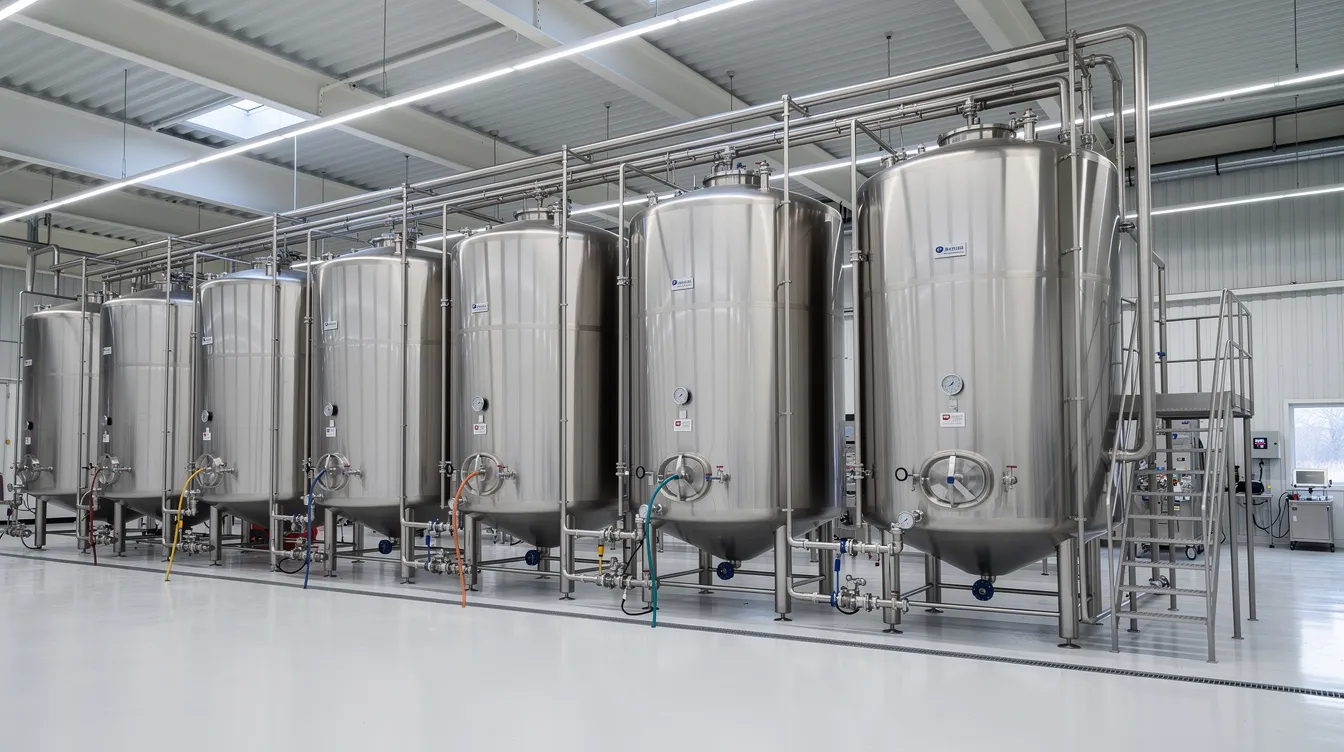
- Controlled cooling occurs in jacketed crystallisation tanks under agitation, following a defined cooling curve
- Lactose seeding – adding fine lactose crystals as nuclei – ensures uniform, micro-crystalline texture
- Seeding rate, agitation speed and cooling system profile must be optimised for each formulation
Sandy product leads to downgrading, price discount or write-off. Proper investment in crystallisation equipment and process control saves money through reduced wastage and stronger brand reputation. This is one of the most critical quality control points in the entire sweetened condensed milk manufacturing process.
Filling and Packaging
Key packaging formats include metal cans for retail (the most common for long shelf life), flexible pouches, and large food-service packs (5 kg or 20 kg tins) for bakeries and institutional users. The filling process requires:
- Hygienic filling at controlled temperature for proper viscosity
- Accurate sealing – double seaming for cans, heat sealing for pouches
- Coding with batch number, MRP, date of manufacture and best-before date
- Packaging integrity tests (leak checks, seam inspection) to prevent microbial contamination
The packaging unit selection affects both capital expenditure and per-unit cost. Metal can lines and aseptic lines have different machinery costs and labour requirements, which must be built into the project report alongside the chosen distribution strategy.
Sweetened Condensed Milk Process Flow Chart
Milk Reception → Weighing and Filtration → Quality Testing → Standardisation → Forewarming/Heat Treatment → Sugar Syrup Preparation → Sugar Addition → Vacuum Evaporation → Concentration to Target Total Solids → Controlled Cooling → Lactose Seeding → Crystallisation under Agitation → Final Cooling → Holding/Storage Tank → Filling → Sealing → Coding → Secondary Packaging → Finished-Goods Storage → Dispatch
Critical control stages include milk quality at reception, forewarming temperature, sugar dissolution, evaporation under vacuum, total solids at draw-off, crystallisation profile and packaging integrity. These influence food safety and financial outcome through yield and rejection rates.
Sweetened Condensed Milk Plant Machinery and Equipment
Machinery selection depends on planned capacity, product range, automation level and packaging formats. Quotations from reputed condensed milk plant manufacturers are essential DPR inputs. All contact parts compliance FSSAI standards require construction stainless steel of appropriate grade. Major equipment includes:
- Milk reception tanks, weighing systems, filtration/clarifier, cream separator, balance tanks
- Plate or tubular pasteuriser/forewarming system, homogeniser where required
- Sugar handling system, sugar syrup preparation tank with steam jacket and agitator, syrup filter
- Multi-effect vacuum evaporator, vacuum system, condensers, product holding tanks
- Jacketed cooling and crystallisation tanks with slow-speed agitators, lactose seeding facility
- Sweetened condensed milk filling machine (piston or volumetric type), can seamer, packaging machine, coding devices
- Boiler, refrigeration plant, air compressor, water treatment plant, CIP system, electrical panels, laboratory equipment
Clean-in-place (CIP) systems are essential for preventing microbial contamination in SCM production. The main equipment pasteurizer, evaporator and filling line represent the core of the sweetened condensed milk production line. Machinery cost varies widely based on Indian or foreign make, automation and integration level, so obtain itemised quotations rather than relying on generic numbers.
Sweetened Condensed Milk Plant Capacity Planning
Deciding plant capacity is a strategic decision based on milk availability, demand, financing capacity and market strategy. Over-sized plants struggle with underutilisation. Factors to evaluate:
- Average and peak raw milk availability in the region and competition from other milk products
- Evaporator capacity, bottleneck capacities of crystallisation tanks and filling line, processing hours and shifts
- B2B contracts and whether the plant can handle multiple types of products during off-peak demand
- Capacity utilisation ramp-up: typically 50–60% in year one, reaching 80–90% by year three
The principles of dairy plant capacity planning and product mix also apply to sweetened condensed milk projects. Capacity choices directly affect capital expenditure, unit cost and break-even volume.
Land, Building and Factory Layout
A condensed milk factory layout must ensure hygienic product flow with clear segregation of raw and processed areas. Key areas include milk reception dock, raw milk testing and storage, main processing hall (standardisation, forewarming, sugar handling, evaporation), crystallisation room, filling and packing hall, finished-goods warehouse, quality-control laboratory, CIP station, utility block (boiler, refrigeration, compressor, water treatment), ETP and staff amenities.
Building design should account for proper drainage, washable floors and walls, pest control and logical material movement paths. Best practices on hygienic dairy plant layout and utilities are directly relevant when planning a sweetened condensed milk factory.
Utility Requirements
A sweetened condensed milk manufacturing plant is energy-intensive due to evaporation and cooling system operations. Major utilities include:
- Steam for forewarming, sugar syrup preparation, evaporation and CIP
- Electricity for pumps, agitators, control systems, filling machines and lighting
- Refrigeration for raw milk chilling and crystallisation
- Water for process, boiler feed, cooling tower and CIP
- Compressed air for instruments and pneumatic valves
- Fuel for boiler operation
Steam economy in the evaporator significantly affects fuel cost. Multiple-effect evaporators and heat recovery systems improve efficiency but increase initial capital – this trade-off must be evaluated in the DPR. Effluent treatment must also be sized for whey, wash water and sugar-containing effluents.
Raw Materials and Packaging Materials
Milk, sugar and packaging together represent a huge amounts share of cost of production. Primary raw materials include raw milk (or recombined milk using skim milk powder and butter or cream), white crystalline sugar, lactose seed material, potable process water and legally permitted processing aids.
Packaging materials include metal cans and ends, food-grade coatings, flexible laminates, labels, carton boxes and corrugated secondary packaging. Fluctuations in raw material prices – both milk (seasonal) and sugar – directly affect gross margins. The DPR should test scenarios with higher input prices and show impact on profitability and DSCR. Sourcing strategy should include tie-ups with cooperatives for milk production and regional suppliers for packaging.
Sweetened Condensed Milk Plant Project Cost
There is no single standard sweetened condensed milk plant setup cost India – actual investment varies with capacity, technology, automation, packaging options and site conditions. Financial projections for SCM projects should include capital and operational expenditures. Key components:
- Land, site development, civil construction (factory, admin, utility block, storage)
- Processing machinery and condensed milk production line
- Packaging machinery, utilities (boiler, refrigeration, compressors, ETP, water treatment)
- Electrical infrastructure, piping, insulation, instrumentation
- Laboratory, furniture, pre-operative expenses, contingency and margin money for working capital
Project cost estimation should be based on actual quotations from machinery suppliers. The framework for project cost and means of finance for dairy plants can be adapted for sweetened condensed milk projects.
Means of Finance for a Condensed Milk Project
A typical sweetened condensed milk factory investment is funded through promoter contribution (equity and unsecured loans) and bank finance (term loan plus working-capital limits). The debt–equity ratio should reflect project cash-generation capacity rather than maximising borrowing at the cost of weak DSCR. The DPR must clearly tie total project cost with means of finance through a sources-and-uses statement.
Working Capital Requirement
Sweetened condensed milk plant working capital is often underestimated. Components include raw milk inventory, sugar inventory, packaging-material stocks, consumables, work-in-process, finished-goods stock, trade receivables and minimum cash balance. A proper DPR should calculate working-capital requirement based on realistic holding periods. Guidance on working capital requirement for dairy plants applies equally to condensed milk manufacturing working capital assessment.
Revenue Model and Market Strategy
A condensed milk manufacturing business needs a clear revenue model. Potential streams include branded retail SCM, B2B sales to bakeries and confectionery manufacturers, institutional sales to hotels and restaurants, private-label manufacturing and possible export sales. Sweetened condensed milk enhances taste across food categories – from chocolate to butter-based confectionery.
Pricing assumptions should be benchmarked against existing brands, adjusted for distribution margins, GST and promotional spends. A dairy product revenue model and market strategy framework can be adapted for SCM sales planning across large scale and regional markets.
Cost of Production
Accurate cost of production per kg of SCM underpins pricing, margin analysis and break-even calculations. Major variable costs include raw milk, sugar, packaging materials, fuel/steam, electricity, production labour and consumables. Fixed costs include salaries, maintenance, insurance, depreciation and interest.
Key profitability drivers: milk procurement price and average fat/SNF, sugar content price, product yield, steam economy of evaporators, plant capacity utilisation and per-unit packaging cost. The DPR should present per-unit cost at different capacity utilisations (60%, 70%, 80%) to show how fixed costs are absorbed during ramp-up.
Sweetened Condensed Milk Plant Profitability
Profitability analysis follows: revenue minus raw material and packaging minus utilities minus labour and overhead minus selling and admin expenses minus depreciation and interest equals profit before tax. Concepts to evaluate include gross contribution, EBITDA margin, net profit margin and capacity utilisation impact.
Break-even analysis must show the sales volume at which contribution covers fixed costs. Guidance on profitability and break-even analysis for dairy plants applies here. Profitability depends on execution quality, procurement efficiency and market access – avoid fixed-margin claims.
Financial Projections Required in a DPR
Lenders evaluating a sweetened condensed milk plant bank loan expect projections for at least 7–10 years. Core statements include projected profit and loss, balance sheet, cash-flow statement and supporting schedules (depreciation, term-loan repayment, working-capital assessment). Key ratios: break-even sales, DSCR, ROI, IRR, payback period and sensitivity analysis. Detailed guidance on financial projections for DPR preparation applies to condensed milk plant projections.
DSCR and Loan Repayment Capacity
DSCR measures whether cash accruals from the SCM plant will meet term-loan principal and interest obligations each year. Conceptually: cash available for debt service (PAT + depreciation + interest on term loan) divided by total debt service (interest + principal repayment). Lenders examine both year-wise and average DSCR across the loan tenure. The principles of DSCR and loan repayment capacity assessment for dairy projects apply directly.
Bank Loan and Project Finance
To secure a sweetened condensed milk plant term loan, promoters must present a bankable DPR demonstrating technical soundness, commercial feasibility and financial viability. Lenders examine promoter profile, market study, machinery quotations, land documents, statutory approvals status, raw material availability, projected financials, DSCR and sensitivity analysis. The documentation discipline described in bank loan and project finance guidance is essential.
Term Loan Assessment
Term loan assessment determines how much of fixed-asset requirement can be funded by bank finance. Key considerations include eligible fixed assets, promoter margin, acceptable debt–equity ratio, moratorium period, repayment tenure and projected cash accruals. The DPR should include a realistic implementation schedule since delays increase interest during construction. The term loan assessment framework for dairy plants applies when planning condensed milk plant funding.
Feasibility and Project Viability
A sweetened condensed milk manufacturing plant DPR must clearly demonstrate three types of feasibility:
Technical Feasibility: Adequacy of milk supply, suitability of chosen equipment and technology, availability of utilities and skilled manpower, ability to meet product specifications and food standards across the dairy science domain.
Commercial Feasibility: Market size for condensed milk in the chosen region, competitive landscape, customer segments (retail versus institutional), distribution channels, pricing power and potential for product diversification. The dairy industry context – including pmr india market research – supports growing demand from bakery, confectionery and café segments.
Financial Feasibility: Projected margins, break-even, DSCR, ROI, IRR, payback period and resilience of cash flows to adverse changes. The project feasibility and viability evaluation logic applies equally to SCM projects.
ROI, IRR, Payback and Sensitivity Analysis
Beyond profit projections, investors assess ROI (average annual return relative to investment), IRR (discount rate at which NPV equals zero) and payback period (years to recover initial investment). Condensed milk plants can produce sweetened and unsweetened variants, and financial models should reflect the chosen product mix.
Sensitivity analysis must test scenarios including higher milk prices, higher sugar prices, lower selling prices, lower capacity utilisation, increased packaging costs, higher fuel/steam costs and delayed market penetration. The analytical techniques in ROI, IRR and sensitivity analysis guidance should be adapted for condensed milk plant DPRs.
Quality Control and Product Consistency
Consistent quality is crucial for producing high quality condensed milk. Quality control checks in SCM production include testing for sugar concentration, viscosity, and microbiological safety. Key parameters monitored:
- Fat percentage, milk solids-not-fat, sugar content, total solids
- Viscosity and flow characteristics, colour (creamy to light yellow), flavour
- Lactose crystal size distribution – the first stage of quality defence against sandy texture
- Microbiological status and packaging integrity
The Codex standard for sweetened condensed milk specifies acceptable sugar ratios and composition. In-process checks at each manufacturing processes stage – from milk quality at reception through evaporator outlet to crystallisation profile – directly support financial performance by reducing rejections.
Food Safety, Licensing and Statutory Approvals
Regulatory compliance in SCM production includes obtaining necessary licenses and adhering to environmental standards. Compliance with local food safety standards such as FSSAI is necessary in SCM manufacturing. Typical requirements include:
- Business registration, FSSAI food licensing, factory registration
- Pollution-control permissions, fire-safety NOC, boiler approvals
- GST registration, labour-law compliances, Legal Metrology approvals for packaged commodities
- Trademark registration for brand protection
Specific thresholds and conditions vary by state and change over time, so promoters should consult current regulations and competent advisors.
Key Risks in a Sweetened Condensed Milk Project
- Supply risks: Milk-price volatility, seasonal shortages, sugar-price fluctuations, variability in milk quality. Mitigate through diversified procurement, chilling infrastructure and long-term supplier relationships.
- Process risks: Incorrect concentration, poor lactose crystallisation causing sandy texture, high energy consumption, packaging failures. Mitigate through proven technology, staff training and preventive maintenance.
- Market risks: Competition from established brands, distributor dependence, delayed receivables. Mitigate through diversified customer base, stringent credit policies and continuous product improvement using multiple types of channels.
- Financial risks: Excessive debt and weak DSCR, underestimated working capital, interest-rate increases. Mitigate through conservative borrowing, contingency planning and regular projection reviews.
How to Prepare a Bankable Sweetened Condensed Milk Plant DPR
A bankable DPR must be customised using actual project data – not copied from generic internet reports. Project-specific inputs to compile:
- Proposed location, capacity, product range and milk procurement plan
- Sugar consumption norms, expected yield, selected machinery with quotations
- Land and building design, utility sizing, project-implementation timeline
- Target markets, selling prices by pack size, credit period, distribution margins
- Milk and sugar price trends, capacity utilisation ramp-up, wage levels, energy tariffs, salt balance considerations, interest rates and tax assumptions
The DPR should integrate a coherent narrative with technical data, cost estimates, financial models (DSCR, IRR, break-even), risk analysis and sensitivity scenarios.
Why Financial Assumptions Matter
Even technically efficient plants can struggle if financial assumptions are unrealistic. The chain works like this:
Milk procurement price and average solids → cost of milk solids per kg of SCM → gross contribution per kg → total contribution at given capacity utilisation → operating cash flow → available surplus after working-capital needs → term-loan repayment capacity → DSCR and project viability.
Similarly: capacity utilisation → production volume → sales and revenue → fixed-cost absorption → profitability → break-even → cash accruals → ability to withstand temporary market shocks in the milk processing plant operation.
Small changes – even ₹2–3 per litre in milk price – can significantly affect margins in a condensed milk plant. Assumptions must be validated against local realities and conservative forecasts. This connection between manufacturing variables and financial results is what distinguishes a professional DPR from a generic document.
Frequently Asked Questions
What is the approximate time required to implement a sweetened condensed milk manufacturing plant?
Depending on capacity and complexity, implementation typically takes 9–15 months from land acquisition and approvals to commissioning. Key stages include DPR preparation, financial closure, civil construction, machinery ordering and installation, utilities commissioning and trial production. Actual timelines vary based on scale, regulatory clearances and vendor delivery schedules.
Can a new entrepreneur start with a smaller capacity condensed milk plant and expand later?
Many promoters begin with modest capacity aligned to locally available milk and initial market size. The layout, utilities and evaporator system can be designed with provision for future expansion. This staged approach reduces initial risk but requires careful planning to avoid bottlenecks in the first stage when scaling up.
Is it necessary to produce only sweetened condensed milk, or can the plant handle other products?
Depending on process design, the plant can sometimes produce evaporated milk or certain milk concentrate products during off-peak SCM demand periods. Such flexibility must be built into the process layout and equipment selection from the beginning and reflected in the DPR.
How important is technical manpower in running a sweetened condensed milk plant?
Trained dairy technologists, engineers, quality-control personnel and skilled operators are critical for controlling evaporation, crystallisation and hygiene in a milk processing environment. The DPR should include realistic manpower planning and training costs. Inadequate skills quickly lead to quality problems and financial losses.
Why should I engage a professional consultant for preparing a condensed milk plant DPR?
A professional consultant with dairy-processing and project-finance experience can integrate technical design, cost estimation, financial projections, working-capital assessment, DSCR analysis and risk evaluation into a coherent, bank-acceptable DPR. This reduces overlooked assumptions or inconsistencies that might delay loan processing or jeopardise project viability.
Conclusion
Establishing a sweetened condensed milk manufacturing plant requires careful alignment of processing technology – milk standardisation, sugar addition, vacuum evaporation, controlled lactose crystallisation and hygienic packaging – with sound project-finance planning covering project cost, means of finance, working capital, profitability, DSCR and sensitivity analysis.
The commercial success of such a plant in India depends not merely on installing a condensed milk production line, but on designing appropriate capacity, establishing robust milk and sugar procurement models, optimising energy use, planning market channels and maintaining strict quality control for the finished product across every pack size and food application.
Promoters should treat the sweetened condensed milk manufacturing plant project report and DPR as a living blueprint – updated as assumptions change – and use it to engage constructively with banks, investors and technology suppliers.
Entrepreneurs, dairy companies and investors who require a customised sweetened condensed milk plant DPR, financial projections, CMA data, feasibility study or bank-finance assessment are welcome to approach ProjectReportBank.com for tailored, data-driven support.