An aseptic dairy beverage processing plant produces commercially sterile dairy beverages that can be stored and distributed at ambient temperature for months without refrigeration. For Indian dairy processors, FMCG companies and entrepreneurs, this represents one of the clearest paths to serving Tier-2/3 cities, institutional buyers and export markets where cold-chain infrastructure remains unreliable or expensive.
This article covers the technical configuration, machinery, packaging choices, project cost structure and financial feasibility of aseptic dairy beverage manufacturing. It is written from the advisory perspective of CA Manish Gugliya, FCA, DISA (ICAI), a practising Chartered Accountant and project finance consultant at ProjectReportBank.com, with experience in preparing DPRs, CMA data and bank finance proposals for dairy processing projects across India.
Key Takeaways
- UHT treatment combined with aseptic packaging delivers ambient shelf life of 6 to 12 months for dairy beverages, reducing cold-chain dependence and enabling reach into remote and semi-urban markets across India.
- An aseptic dairy beverage processing plant integrates UHT sterilization, sterile product transfer through aseptic tanks, dedicated aseptic filling machines and high automation into one continuous system; it is not a simple packaging upgrade over pasteurised dairy facilities.
- Project viability depends on aligning the product mix (flavoured milk, protein drinks, RTD beverages), packaging format (aseptic cartons vs PET bottles), market channels and realistic capacity utilisation from the outset.
- Capital intensity is materially higher than conventional dairy units because of UHT systems, aseptic filling lines, sterile infrastructure, cleanroom-type construction and automation; a robust DPR with integrated DSCR, ROI, IRR and sensitivity analysis is essential for bank finance.
- This article combines plant engineering and project finance perspectives to help promoters plan, fund and execute aseptic dairy beverage projects in India.
Strategic Importance of Aseptic Dairy Beverages in India
Between 2015 and 2026, growth in modern retail, e-commerce grocery, quick-commerce and institutional segments (schools, airlines, QSR chains, railways) has pulled demand toward ambient, long shelf life dairy beverages. Aseptic processing and aseptic packaging enable distribution of milk products without continuous refrigeration, opening markets that were previously uneconomical for perishable dairy. Shelf stable flavoured milk, coffee-milk beverages, protein dairy drinks and functional dairy beverages now fit well into India’s ambient dairy beverage market, including exports to South Asia, the Middle East and Africa.
Aseptic dairy processing simplifies distribution by eliminating the need for refrigeration during transit and retail storage. Longer shelf life translates to fewer unsold returns, lower spoilage losses and better inventory planning for dairies and brand owners. The reduction in food waste from spoilage is a measurable benefit, particularly in hot Indian climates where chilled dairy beverages face high return rates.
Shifting to an aseptic dairy beverage manufacturing plant is a strategic move, not merely a switch of packaging material. It affects plant layout, utilities, automation levels, working capital structure and the project risk profile. Promoters must understand this before committing capital.
What Is an Aseptic Dairy Beverage Processing & Packaging Plant?
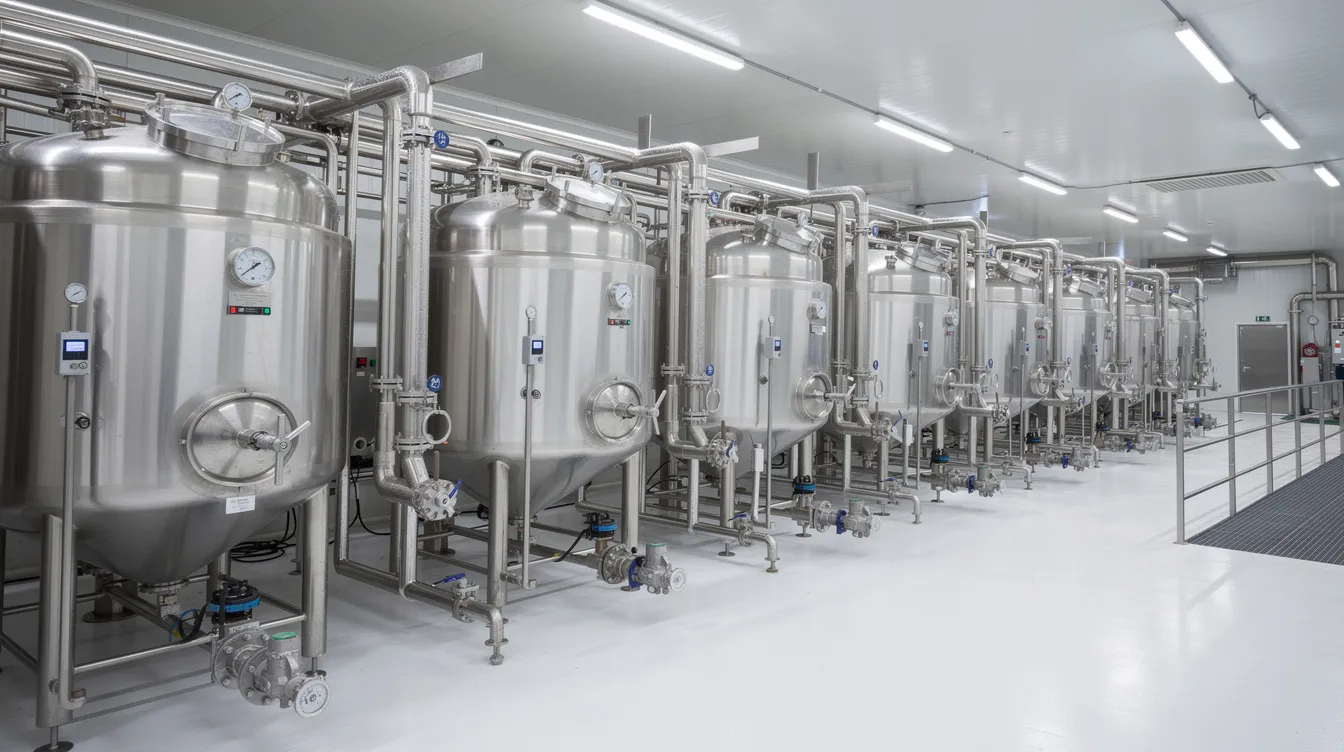
An aseptic dairy beverage processing plant is one where the product and the packaging material are sterilised separately, then brought together in a sterile environment for hermetically sealed filling. The aseptic process integrates product sterilization and sterile packaging into a single validated chain. UHT treatment heats dairy beverages to ultra high temperature levels (above 135°C) for a few seconds, achieving commercial sterility by destroying vegetative organisms and spore-formers. Post-UHT, all equipment maintains sterile conditions: aseptic tanks hold sterilized product under sterile air or nitrogen overpressure, and aseptic valves and hygienic pipelines transfer the sterile product to the filling machine without exposure to contamination.
The aseptic packaging must be hermetically sealed to prevent contamination. Packaging material is sterilised (using hydrogen peroxide, UV or dry decontamination) before contact with the product. The sterile environment in the filling chamber, combined with automatic monitoring of critical control points, ensures that the final product remains commercially sterile throughout its shelf life.
Achieving ambient long shelf life depends on validated process parameters (temperature, hold time, flow rate), the integrity of aseptic packaging systems, packaging material barrier properties (protection against light, oxygen and moisture) and proper storage and distribution conditions. Promoters should avoid generic shelf-life claims and instead plan for product-specific shelf-life validation studies during commissioning.
The technology has a long lineage. Aseptic processing originated from C. Olin Ball’s 1927 HCF (Heat-Cool-Fill) machine. The Avoset process was developed in the 1940s by George Grindrod, and Roy Graves began sterilizing milk in the 1940s using a vacuum tank. These early efforts laid the groundwork for what became a global industry.
Dairy Beverages Suitable for Aseptic Processing
A well-designed aseptic milk beverage processing plant can handle a range of formulated dairy beverages. Key product categories include:
Flavoured milk is a primary product category for aseptic lines, spanning vanilla, strawberry, cardamom and regional flavour profiles. Entrepreneurs planning flavoured milk manufacturing at scale often evaluate aseptic processing to access wider geographies. Chocolate milk is another core product, with strong demand across institutional and retail channels; dedicated projects are covered in the chocolate milk manufacturing plant resource.
Beyond basic flavoured milk, aseptic processing suits protein-enriched dairy drinks, high-protein shakes and functional dairy beverage manufacturing products fortified with vitamins and minerals. RTD coffee-milk, tea-milk and nutritional beverages are gaining traction in ambient formats. Thicker products such as certain milkshake-style beverages can also be aseptically processed, though viscosity and particulate handling require careful equipment selection.
Not every dairy formulation is automatically suitable for UHT aseptic dairy beverage processing. Heat stability (protein denaturation, Maillard browning), viscosity, pH and ingredient interactions must be evaluated through pilot trials. ITC, for example, developed India’s first milk-based drinks with fruit pieces using dry preform decontamination and barrier PET bottles, which required specific formulation and equipment adaptations.
Aseptic Dairy Beverage Manufacturing Process Flow
A typical aseptic dairy beverage manufacturing process follows this sequence:
Milk reception → chilling to ~4°C → filtration and clarification → standardization of fat and SNF → ingredient preparation and blending → preheating → homogenization → UHT treatment → aseptic holding or buffer tank → sterile product transfer → aseptic filling → coding and labelling → secondary and tertiary packaging → finished goods warehousing (ambient) → dispatch.
The overall dairy beverage manufacturing process and production line design must account for the fact that aseptic steps begin immediately after UHT treatment. From that point forward, every piece of equipment, every valve, every pipeline must maintain aseptic conditions. A single breach in sterile product transfer can compromise large volumes of processed beverage.
Different SKUs may share upstream processing (reception, standardisation) but require separate handling for formulation, homogenization pressure and heat treatment conditions. A low-fat flavoured milk and a high-protein shake, for instance, have different viscosities, heat stability profiles and UHT parameter requirements.
Milk Reception, Quality and Standardization
Milk reception includes unloading, filtration, chilling to approximately 4°C and storage in insulated raw milk tanks with agitation. Testing covers fat, SNF, total solids, adulterants, antibiotic residues and microbiological load, aligned with FSSAI requirements.
Standardization systems adjust fat and SNF to the desired levels for each product formulation. In aseptic dairy beverage manufacturing, initial microbial load and spore counts in raw milk are critical: higher spore loads demand more severe UHT conditions, which can increase cooked flavour and reduce shelf-life predictability. Bactofugation (separation of spores) before UHT is an option for improving both flavour and storage stability.
Reliable milk procurement contracts or integration with existing dairy plants strengthen supply consistency for a shelf stable dairy beverage manufacturing plant, particularly during lean-season months.
Formulation and Ingredient Preparation
Formulation of flavoured and functional dairy beverages involves sugar, sweeteners, cocoa, coffee extracts, fruit concentrates, stabilizers (gums, carrageenan), emulsifiers, protein powders, vitamins and minerals. Each ingredient affects heat stability, viscosity and sensory profile under UHT conditions.
Dedicated ingredient preparation tanks with agitation, and where required, high-shear mixers, ensure proper dispersion and hydration of powders and stabilizers. Incomplete dispersion leads to lumps, sedimentation or inconsistent Brix values across batches.
Formulation control requires measuring Brix, viscosity, pH and heat stability before the mix enters the UHT system. For specialised products like protein-enriched or functional dairy beverages, promoters should plan for lab-scale trials and pilot UHT runs before freezing final formulations. This is equally relevant for ready-to-drink dairy beverage concepts where formulation complexity is higher.
Homogenization and Product Stability
Homogenization reduces fat globule size, improves stability and prevents creaming or phase separation during long shelf life ambient storage. This step is particularly important for dairy beverages held at room temperature for months; improper homogenization leads to fat rise, sedimentation or protein aggregation that compromises product quality and market acceptance.
Homogenization pressure and stage configuration (single vs two-stage) must be tailored to product type. A standard flavoured milk may need a different pressure profile than a high-viscosity milkshake or a high-protein functional drink. The homogenizer can also function as a flow control device in some aseptic lines, influencing line hydraulics and energy consumption.
A detailed discussion is available in the article on homogenization and heat treatment for dairy beverages, which covers pressure selection, equipment sizing and the interaction between homogenization and downstream heat treatment.
UHT Treatment, Sterilization and Aseptic Processing
UHT milk processing requires heating to 135-150°C for a few seconds, followed by rapid cooling. Aseptic processing uses temperatures above 135°C for sterilization to achieve commercial sterility while preserving nutritional content and minimising cooked flavour. Aseptic processing retains more nutrients compared to conventional retort sterilization methods because of the shorter heat exposure time.
Aseptic processing requires strict temperature and hold time controls for validation. The scheduled process (validated temperature, time and flow combination) must be established for each product formulation, particularly for high-protein or fortified beverages where heat stability varies. Critical factors must be documented to ensure commercial sterility across every production batch.
Aseptic processing requires continuous operation of sterilization equipment; the UHT system in an aseptic dairy beverage plant is designed for sustained runs with proper CIP/SIP between batches. Frequent start-stop cycles degrade product quality and reduce effective capacity.
The UHT milk manufacturing process page covers the sterilization flow in detail. UHT processing is only one part of aseptic beverage processing technology; sterile product transfer, aseptic tanks and the filling environment are equally critical to maintaining sterile conditions throughout the product path.
Direct vs Indirect UHT Systems
Direct UHT systems use direct steam injection or infusion: the product contacts steam directly, achieving near-instantaneous heating and cooling. This reduces thermal load and flavour impact. Indirect UHT uses plate heat exchangers, tubular heat exchangers or scraped surface heat exchangers to transfer heat through a metal wall, without direct steam-product contact.
Key considerations for choosing between them include: flavour sensitivity (direct systems preserve fresh milk flavour better for sensitive products), fouling behaviour (indirect plate systems foul faster with high-protein or high-sugar formulations), energy efficiency (indirect systems recover more heat through regeneration sections), capital cost (direct systems cost more and have higher operating complexity) and product profile (scraped surface heat exchangers handle viscous products better than plates).
Indirect systems are common in many UHT flavoured milk packaging projects in India. Direct systems may be preferred where very high flavour quality is required, such as premium RTD coffee-milk beverages.
The direct vs indirect UHT processing article provides a detailed technology comparison. Neither system is universally superior; the choice should be guided by target products, budget and operator capability.
Aseptic Holding Tanks and Sterile Product Transfer
After UHT treatment, the sterilized product is transferred to an aseptic storage tank (aseptic surge tank) maintained under sterile air or nitrogen overlay and positive pressure. Maintaining sterile conditions during processing is crucial to product safety; a single failure in this sterile barrier can compromise the entire batch.
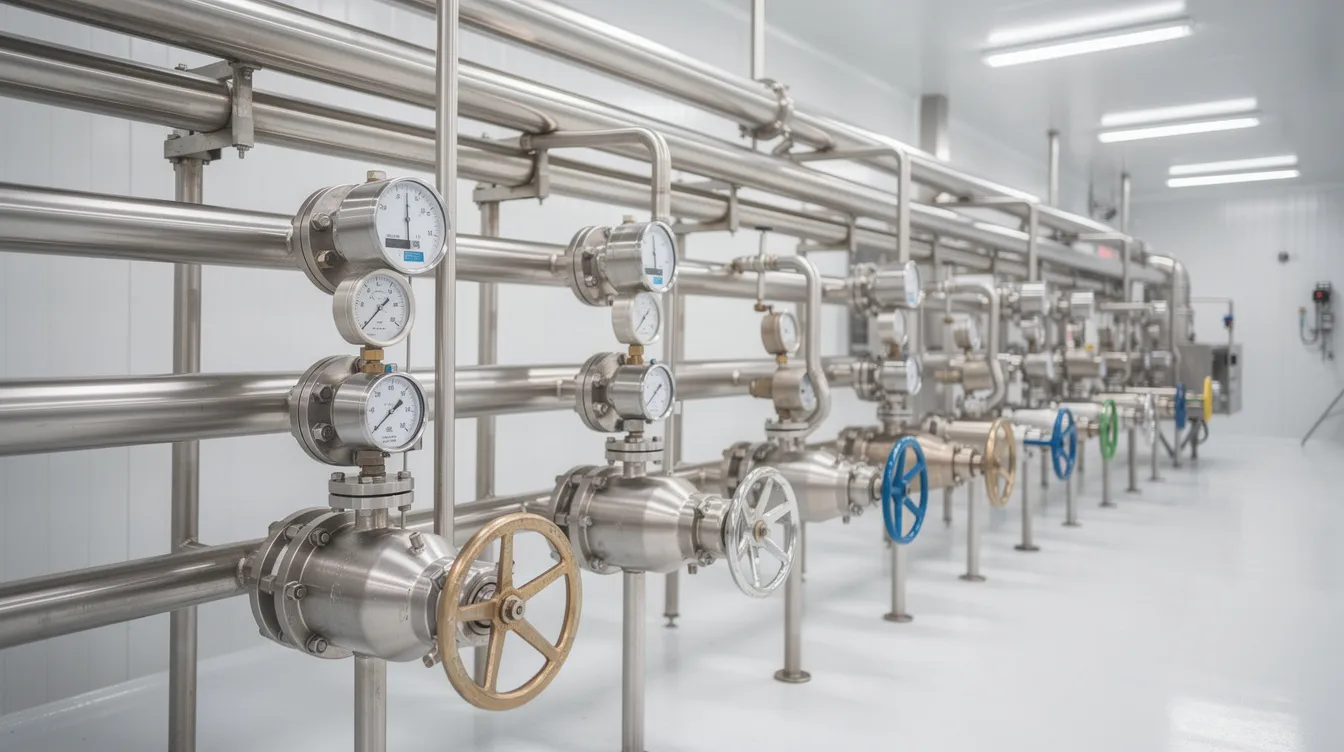
Aseptic valves (double-seat, mix-proof designs), sterile barriers and hygienic piping maintain a closed, sterile product path from the UHT outlet to the aseptic filling machine. Aseptic processing systems must maintain sterile conditions throughout this transfer. Any valve leak, gasket failure or pressure drop opens the path for recontamination.
Tank capacity should be matched to filler speed and UHT capacity. If the tank is too small, minor stoppages at the filler force the UHT system to recirculate or shut down, wasting product and energy. If too large, product sits longer than necessary, potentially affecting quality. Instrumentation for pressure, temperature and level must be integrated into the plant’s PLC/SCADA automation and alarm system to detect deviations in real time.
CIP and SIP Systems for an Aseptic Dairy Plant
CIP (Cleaning-in-Place) systems are essential for maintaining hygiene in aseptic plants. CIP automates cleaning of pipelines, tanks, heat exchangers and filling systems using circulated cleaning solutions (caustic, acid, rinse water) without disassembly. Clean in place protocols must be validated for each circuit to confirm effective removal of residues and biofilms.
SIP (Sterilization in Place) uses steam or hot water to sterilise all product-contact surfaces before production begins. In an aseptic dairy beverage plant, SIP of the aseptic tank, transfer lines and filler is mandatory before every production cycle.
Aseptic dairy beverage plants require more disciplined and automated CIP/SIP design than conventional dairy facilities. Recipe-based cleaning cycles, electronic logs, audit trails and validation records support food safety audits and FSSAI compliance. Underestimating CIP/SIP capacity or design leads to longer downtimes, lower line availability and hidden financial losses through reduced capacity utilisation.
CIP/SIP chemicals, water, steam and energy are recurring operating costs. These should be factored into aseptic dairy beverage plant financial projections with realistic specific consumption norms.
Aseptic Filling Technology and Packaging Systems
The aseptic filling and packaging process brings together sterilized product, sterilized container and a sterile filling environment, followed by hermetic sealing and closure application. Sterilization of packaging materials is crucial in aseptic processing; packaging materials must be sterilized before use, whether through hydrogen peroxide bath, UV exposure or dry decontamination of preforms.
The aseptic filling and packaging process is often the most capital-intensive and technology-sensitive part of the project. FDA approved hydrogen peroxide for sterilizing containers in 1981, and H2O2-based sterilization remains the dominant method in both carton and PET aseptic filling lines today. Critical control points include H2O2 concentration, exposure time, temperature in the sterilization zone and sterile air overpressure in the filling chamber.
The dairy beverage aseptic packaging system may be configured for aseptic cartons, PET bottles or HDPE bottles. Choice affects both aseptic dairy packaging plant cost and market positioning. OEM after-sales support, spare parts availability and integration with plant automation are practical selection factors that influence long-term operating reliability.
Aseptic Carton Packaging for Dairy Beverages
Aseptic cartons use multilayer construction: paperboard, polyethylene and aluminium foil. This combination provides barrier against light, oxygen and moisture. Aseptic cartons prevent food spoilage and reduce waste effectively by maintaining a sealed, inert internal environment throughout the product’s shelf life. Aseptic packaging protects against light, oxygen and moisture, which are the primary drivers of flavour degradation and nutrient loss in liquid foods.
In 1959, Tetra Pak introduced paper-foil-plastic containers in the U.S., establishing the format that now dominates global UHT dairy packaging. In India, aseptic carton packaging systems are widely used for school milk programmes, institutional supplies and retail shelves. SIG has established a production facility in Bhayla, Gujarat, with Phase-1 capacity of approximately 4 billion packs annually, reducing import dependency for aseptic cartons in India.
Key advantages include strong branding and printing surface, stackability, efficient secondary packaging and light weight compared to glass bottles. The main considerations are proprietary packaging material formats (which can create supplier dependency) and long-term packaging material price fluctuations.
Aseptic PET and Bottle Filling Technology
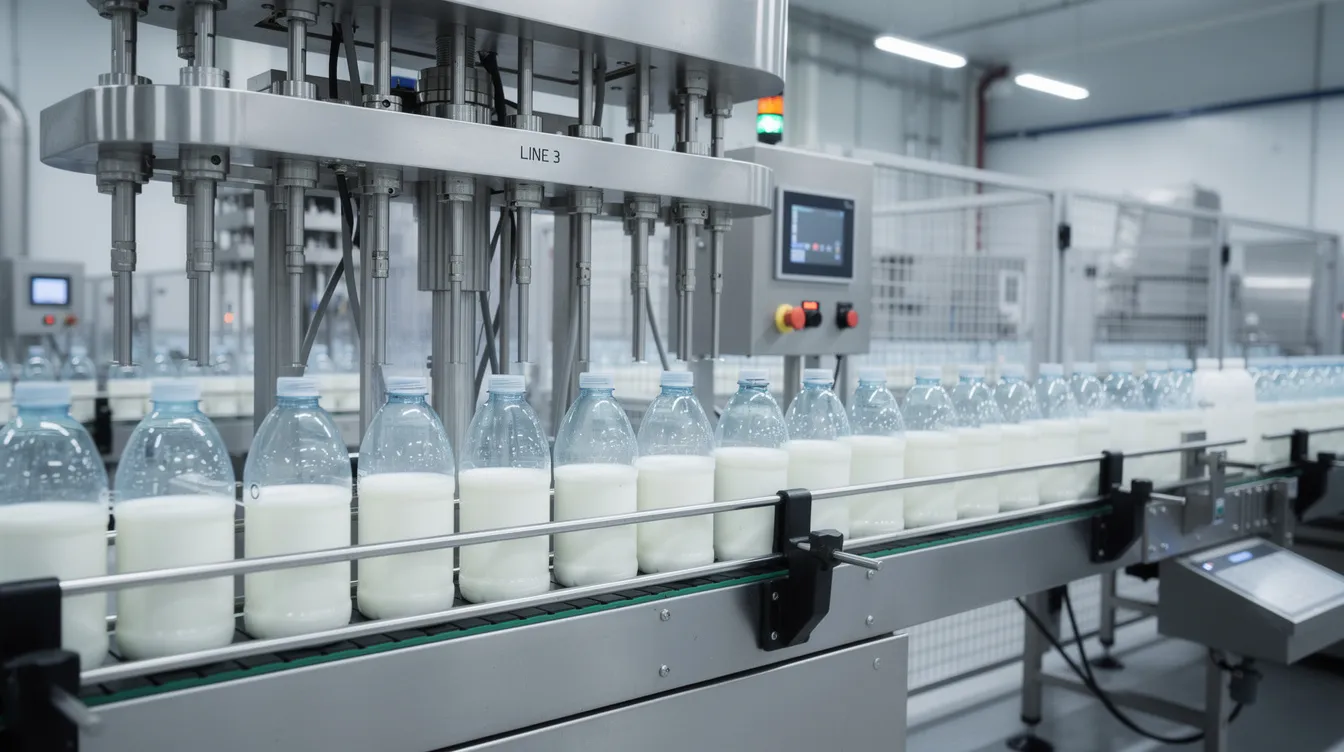
Aseptic PET filling for dairy beverages involves container sterilisation (H2O2 fogging, peracetic acid or dry preform decontamination), cap sterilisation and a fully enclosed sterile environment in the filling machine. PET and HDPE bottle formats offer reclosability, on-shelf visibility and suitability for premium or on-the-go functional dairy beverages.
ITC’s Kapurthala facility uses Sidel’s Aseptic Combi Predis with dry preform sterilisation for milk-based drinks with fruit pieces, targeting six months shelf life. Amul installed a GEA aseptic PET filling line for flavored milk and milk-based drinks, increasing output ten-fold. Britannia’s Ranjangaon plant operates at approximately 24,000 bottles per hour on its aseptic PET line.
Aseptic bottle filling lines tend to be technically complex, with higher aseptic packaging machinery cost benchmarks than carton systems, and may justify themselves at higher capacities. Line design must consider preform and bottle supply logistics, integrated bottle blowing (if applicable) and quality checks for seal integrity. Further packaging options are discussed in the dairy beverage bottling and packaging systems article.
Carton vs PET/Bottle Packaging: Comparison Table
Entrepreneurs often compare aseptic cartons against aseptic PET or bottle packaging when finalising project configuration. The choice affects capital investment, packaging cost per unit, branding flexibility and distribution economics. Actual numbers vary by OEM, line speed, import duty and local sourcing conditions; both options can be viable depending on product strategy and market positioning.
| Parameter | Aseptic Carton | Aseptic PET / Bottle |
|---|---|---|
| Capital requirement | Moderate to high; carton filler generally lower cost than integrated blow-fill-cap PET block | Higher; blow-moulding or dry preform sterilisation plus filler plus capping systems involved |
| Packaging material cost per litre | Often lower at large volumes; aluminium foil layer adds cost but improves barrier | Preform plus cap plus barrier PET can be higher; barrier PET costs more than standard PET |
| Barrier to light and oxygen | Very strong with aluminium foil lining; supports 6+ months shelf life | Requires barrier PET or coatings; higher risk of light-induced oxidation without protection |
| Branding and shape flexibility | Good printing surface; shape and size mostly standardised by OEM format | More flexible bottle shapes; better on-shelf visibility; reclosable lids add convenience |
| Distribution and logistics | Lighter per unit; stacks densely; some risk with moisture exposure to carton exteriors | More robust against handling; higher shipping weight per unit in many cases |
| Consumer perception | Well accepted for school/institutional milk; may be seen as less premium for on-the-go consumption | Perceived as premium for single-serve beverages; preferred for on-the-go and convenience retail |
| Minimum viable scale | Lower; OEMs offer entry-level aseptic carton lines at moderate capacities | Higher; technical complexity and cost favour larger production scales to amortise investment |
| OEM and supplier dependence | Packaging material tied to specific OEM formats and supply contracts | Preforms can be sourced from multiple suppliers, though machine is still OEM-specific |
The aseptic filling line investment cost can differ by 30-50% or more between carton-based and PET-based solutions at equivalent output speeds. This difference should be clearly evaluated in the DPR.
Machinery and Equipment Required for an Aseptic Dairy Beverage Plant
Equipment configuration depends on line capacity (for example, 5,000 to 15,000 LPH lines are common for medium to large projects) and product mix, but certain core elements are common to most aseptic dairy beverage processing plants:
Milk reception and chilling system, raw and balance tanks, clarifier or separator (with optional bactofuge), standardisation skid, ingredient preparation tanks with agitators, high-shear mixer (for protein or powder dispersion), homogenizer (single or two-stage), UHT system (direct or indirect), aseptic storage tank, sterile product transfer piping and valves, aseptic filling machine (carton or PET format), secondary packaging line (conveyors, shrink wrappers, cartoners), coding and labelling equipment, CIP and SIP systems, boilers and steam generation, refrigeration plant, compressed air system, water treatment plant (RO, softeners), sterile air generation, HVAC for aseptic zone, electrical control panels, PLC/SCADA automation, and laboratory QC equipment.
The dairy beverage plant machinery and equipment cost article provides a broader reference for equipment selection and budgeting. Aseptic systems require specialized equipment and high capital investment compared to conventional pasteurised dairy lines. Selecting reputable aseptic dairy beverage machinery suppliers, evaluating lifecycle cost (spares, service contracts, operator training) and ensuring SCADA integration are practical priorities. Imported vs domestic machinery choices can shift total machinery cost by 20-40% and should be transparently captured in the DPR.
Key Equipment: Function and Selection
| Equipment | Function | Key Selection Consideration |
|---|---|---|
| Homogenizer | Reduces fat globule size; improves product stability; prevents creaming | Pressure rating; one-stage vs two-stage; ease of CIP; matching to fat and protein content; energy draw |
| UHT System | Continuous heat treatment at 135-150°C for commercial sterility | Direct vs indirect; heat regeneration efficiency; flow rate capacity; fouling tendency; flavour retention |
| Aseptic Storage Tank | Surge buffer; holds sterilized product under sterile overpressure until filling | Volume matched to filler speed; CIP/SIP compatibility; sterile air or nitrogen overlay; level/pressure instrumentation |
| Aseptic Filling Machine | Fills sterilised product into sterilised containers in a sterile environment | Format (carton vs PET vs bottle); fill speed (packs/hour); container sterilisation method; changeover flexibility; OEM service in India |
| CIP/SIP System | Automated cleaning and pre-production sterilisation of all product-contact surfaces | Automation level; recipe control; chemical and water consumption; validation capability; integration with SCADA |
| Packaging and Conveying Line | Secondary packaging, coding, cartoning, palletising | Throughput matched to filler; flexibility for multiple pack sizes; robustness; spare parts availability |
Equipment choices directly affect aseptic production line design, operating cost and the investment total presented in the DPR.
Automation, Controls and Data Recording
Aseptic dairy plants require PLC-based control systems with SCADA for process visualisation, trend logging, alarms and batch recording. Automation covers flow control, temperature recording, pressure differentials, valve sequencing, CIP recipes, UHT sterilisation logic and aseptic filler operation.
Higher automation increases initial investment but improves reproducibility, food safety compliance, labour productivity and traceability. Electronic records for critical control points, process deviations and corrective actions support both FSSAI audits and buyer audits from institutional customers or export markets. FDA requires records of thermal processing operations for compliance in export-oriented projects; maintaining these digitally is standard practice for a high automation dairy beverage processing plant.
The financial model should treat automation as integral to the project, not as an optional extra. Its cost is part of the aseptic dairy beverage plant machinery and equipment cost, and its benefit shows up in labour savings, reduced error rates and faster changeovers.
Plant Capacity Planning and Line Balancing
From a project finance perspective, mismatched plant capacity can either underutilise capital or limit revenue, directly affecting DSCR and IRR. The UHT milk plant capacity ranges from 100 to 200 million liters annually for large-scale facilities; Indian projects commonly target 5,000 to 15,000 LPH UHT systems matched to aseptic filling lines of corresponding speed. NDDB’s recent UHT processing and aseptic packaging plant targets approximately 4 lakh litres per day.
Line balancing means matching capacities of preparation, homogenizer, UHT, aseptic tank and filling/packaging systems to avoid bottlenecks. An idle aseptic filler represents large opportunity cost because its fixed costs (depreciation, OEM maintenance contracts, cleanroom HVAC) continue regardless of output.
Installing a very high-speed automatic aseptic filling line for milk based beverages without firm market demand weakens DSCR in early years. Capacity planning should be integrated with a realistic sales ramp-up curve in the DPR, factoring in seasonal milk availability, number of SKUs, pack sizes and planned shift patterns.
Land, Building and Hygienic Plant Layout
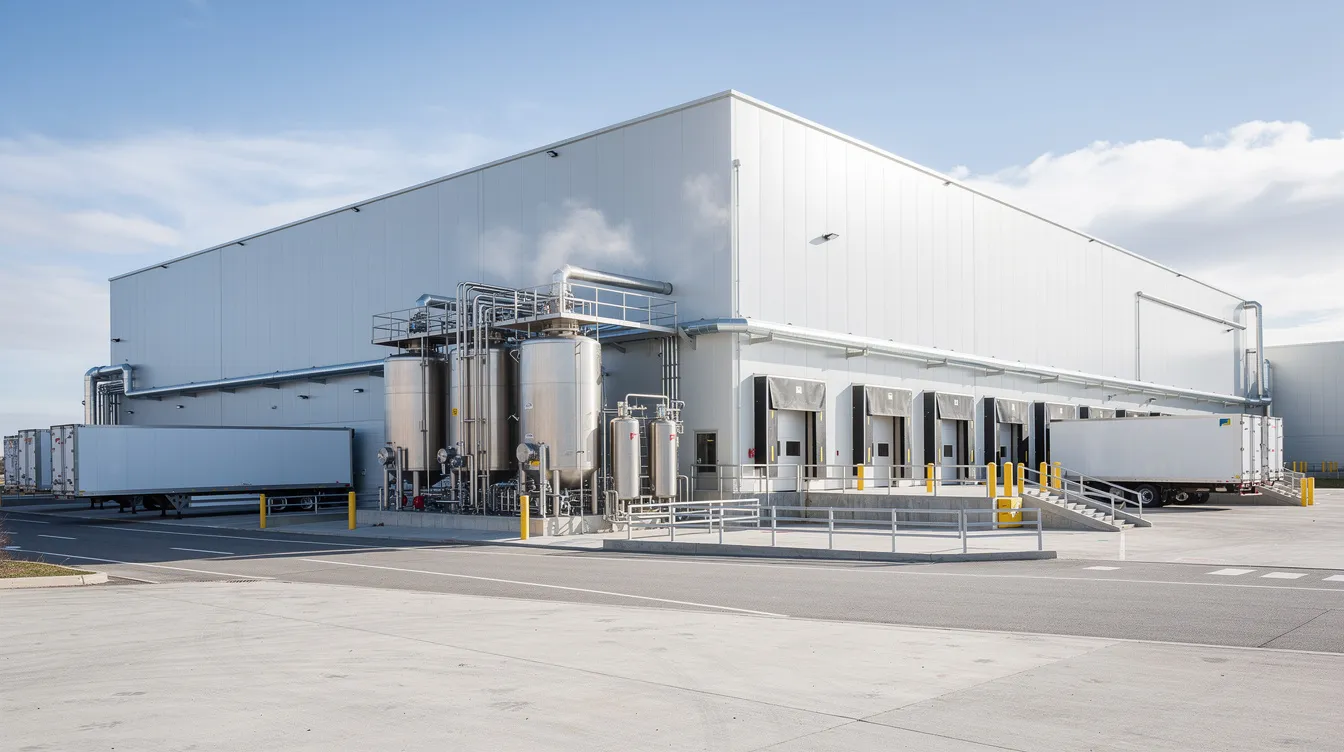
Typical zoning in an aseptic dairy beverage processing and packaging plant includes: raw milk reception area, processing hall, high-care aseptic zone (filling), packaging hall, utilities block, QC laboratory, administrative offices and ambient finished-goods warehouse.
Separate personnel and material flows protect the aseptic area from cross-contamination. Airlocks, controlled access doors, gowning areas and positive-pressure zones are standard for the sterile filling area. Civil design must support drain slopes, washable wall and ceiling finishes, insulation for cold rooms and provisions for future expansion of an additional aseptic beverage production line.
Land and building costs are location-dependent (industrial estate vs rural site, state regulations, proximity to raw milk sources) and form a substantial portion of the aseptic dairy beverage plant project cost. The DPR should include a simplified layout drawing and implementation schedule for bank appraisal.
Utility Requirements and Operating Economics
Utility design has a direct impact on both capital expenditure and operating cost per litre. Aseptic plants have complex requirements for utilities such as sterile water and steam, in addition to standard power, chilled water, refrigeration, compressed air and water treatment.
The most utility-intensive areas are: UHT system (steam for heating, chilled water for cooling), homogenizer (electric power), CIP/SIP circuits (steam, chemicals, treated water) and aseptic filling and packaging zone (compressed air, sterile air, HVAC). Redundancy in critical utilities (standby boiler, backup generator) is more important in aseptic projects because unplanned downtime during a production run can mean scrapping an entire batch of sterilized product. This redundancy increases the aseptic dairy processing plant cost in India but reduces production risk.
Energy efficiency measures such as heat recovery in UHT regeneration sections, variable frequency drives on pumps and compressors, and efficient boiler systems improve long-term operating margins. Utilities should be sized and costed in the DPR using reasonable specific consumption norms (steam kg per litre, kWh per litre, water litres per litre of product) so that financial projections reflect actual operating economics.
Quality Control, Food Safety and Regulatory Compliance
The aseptic manufacturing process must be validated to comply with food safety regulations. Aseptic dairy beverage plants must maintain a strong QC and QA framework: raw milk testing (composition, acidity, microbiology, adulterants), in-process checks (temperature, pressure, flow), packaging integrity testing, microbiological analysis of finished product and incubation tests to confirm commercial sterility.
Compliance with applicable FSSAI standards for flavoured milk, milk-based beverages and proprietary foods, as well as packaging and labelling regulations, is mandatory for domestic sale. For products positioned as shelf stable products targeting export markets, additional certifications may be required.
Validating CIP/SIP cycles, UHT schedules and aseptic filling processes forms part of the plant’s food safety management system (HACCP, ISO 22000 or equivalent). Sterility checks, commercial sterility verification and shelf-life studies should be planned during commissioning, without assuming guaranteed results. No preservatives are needed in properly sterilized and aseptically packaged products, which is both a regulatory advantage and a consumer preference in various industries.
Good quality control and food safety practices support brand reputation and are viewed positively by institutional buyers, modern trade chains and lenders assessing project risk. Ensuring safety of the affected product at every stage, from raw materials through to distribution to consumers, requires documented procedures and trained personnel.
Extended Shelf Life, Distribution and Food Waste Reduction
Long shelf life dairy beverage packaging transforms distribution economics. Ambient storage, longer inventory cycles, reduced dependence on refrigerated vehicles and a larger servicing radius from a single plant become possible. The typical shelf life for aseptically processed dairy beverages is 6 to 12 months, depending on formulation and packaging barrier. Aseptic packaging extends shelf life for months without refrigeration, and aseptic packaging ensures high food safety standards during distribution.
Commercial benefits include serving modern trade chains, airlines, railways, schools, QSRs and e-commerce partners from a central shelf stable dairy beverage manufacturing plant. Reduced food waste through lower spoilage and fewer retailer returns is a measurable advantage, particularly for food products distributed across large distances in hot climates. Sustainable practices in dairy packaging benefit both profitability and brand positioning.
There are trade-offs. Higher aseptic packaging material cost, more complex machinery requiring specialised maintenance, higher skill requirements for operators, and the risk of larger product recalls if sterility failures occur must be balanced against distribution savings. Promoters should model distribution cost savings and additional market reach against the higher capital investment in the aseptic dairy beverage packaging plant. Not all beverage categories or geographies justify the premium; fruit juice and plant based drinks may have different economics than dairy-based beverages.
Aseptic Dairy Beverage Plant Setup Cost and Investment Factors
Aseptic dairy beverage plant setup cost in India depends on capacity (a 3,000 LPH line vs a 10,000 LPH line), packaging technology (aseptic cartons vs PET), level of automation and the share of imported equipment. The dairy beverage manufacturing plant setup cost in India article provides broader context for investment planning.
Major cost heads include: land and site development, civil construction (with hygienic finishes and cleanroom construction for the filling zone), processing machinery (reception, tanks, homogenizer), UHT system, aseptic tanks, aseptic filling line, packaging equipment and conveyors, utilities (boilers, refrigeration, compressed air, water treatment, electrical), laboratory equipment, automation and SCADA, pre-operative expenses (trials, licensing, training), contingency and working capital margin.
Unlike smaller pasteurised milk plants, aseptic beverage factory investment is higher per litre of installed capacity due to technology intensity and international OEM involvement. Each cost component scales differently with capacity and technology choices; these variations should be transparently presented in the aseptic dairy beverage plant DPR rather than relying on generic industry averages.
Why Aseptic Dairy Beverage Projects Are Capital Intensive
Capital intensity arises from several specific requirements: UHT systems (whether direct or indirect), aseptic filling equipment (with integrated container sterilisation), sterile tanks and transfer systems, hygienic layout with cleanroom-type construction, high-level automation and SCADA, and packaging systems that may involve proprietary formats.
Packaging system choices increase both aseptic packaging machinery cost and ongoing dependence on specific packaging material suppliers. Redundancy in utilities and critical equipment, often required to mitigate production risk, further raises the aseptic dairy beverage plant project cost. From the perspective of a practising Chartered Accountant, such projects need larger equity contributions and careful term-loan structuring to maintain acceptable DSCR during the initial ramp-up years when capacity utilisation may be 40-60% of installed capacity.
Higher capital intensity can still be justified if the project captures wider markets, achieves premium pricing through branded shelf stable dairy beverages, or secures contract manufacturing volumes for established FMCG brands. The key is matching the scale of investment to demonstrated or contracted market demand.
Investment Drivers: Cost Factors Comparison
| Cost Factor | Impact on Project Investment | Why It Matters |
|---|---|---|
| Line capacity (LPH) | High | Directly scales machinery, utilities and civil works; oversizing increases fixed cost burden |
| Choice of filling technology (carton vs PET) | High | PET blow-fill systems typically cost more than carton fillers at equivalent speed; affects packaging cost components |
| Automation level | Moderate to High | Higher automation increases CAPEX but reduces labour cost, improves consistency and supports food safety compliance |
| Imported vs domestic machinery share | High | Imported aseptic fillers and UHT systems carry duties, freight and forex risk; domestic alternatives, where available, lower cost |
| Number of SKUs | Moderate | More SKUs require more changeovers, larger ingredient inventories and potentially more flexible filling configurations |
| Utility infrastructure | Moderate | Boiler, refrigeration, compressed air and water treatment sizing must match peak process demand with adequate redundancy |
| Provision for expansion or redundancy | Moderate | Future-proofing (space, utility headers, electrical load) increases initial cost but avoids expensive retrofits later |
These factors should be discussed in the aseptic dairy beverage plant feasibility report and presented to lenders and investors with clear rationale for each design decision.
Working Capital Requirements for Aseptic Dairy Plants
Working capital assessment must factor in raw milk procurement, sugar, cocoa, flavours, stabilisers, and the substantial inventories of specialised packaging materials (aseptic cartons, closures, preforms or bottles) that aseptic plants must hold. In many aseptic beverage projects, packaging material becomes a larger cost component of working capital than in conventional dairy plants because minimum order quantities from OEM packaging suppliers are often high.
Longer shelf life allows building larger finished-goods stocks across the distribution network, which is an advantage for sales continuity but increases inventory financing needs. Receivables from modern trade chains and institutional buyers can extend to 30-60 days, adding to the cash cycle.
The aseptic dairy beverage plant bank loan project report should include a realistic working capital cycle showing procurement-to-collection timelines and cash-flow gaps during the scale-up phase when sales volumes are still building.
Revenue Model and Major Operating Costs
Revenue in an aseptic dairy beverage manufacturing plant is driven by product mix (basic flavoured milk vs premium functional beverages), pack sizes (200 ml single-serve vs 1 litre family packs), geographical coverage, channel mix (general trade, modern retail, institutions, exports) and contract manufacturing opportunities. Higher-value products such as protein dairy beverages or RTD coffee-milk can offer better contribution margins but require stronger branding, marketing investment and consumer trust.
Key operating cost components include: raw milk (typically 40-55% of product cost for basic formulations), ingredients, packaging materials (aseptic cartons or PET plus secondary packaging can represent 25-40% or more of product cost in some formulations), utilities (steam, power, refrigeration, water), labour, equipment maintenance, quality assurance, logistics, marketing and finance cost.
Contribution margin per litre and sustainable capacity utilisation are more reliable indicators of project health than any single notional “profit percentage.” Financial projections should model multiple scenarios for raw materials pricing and utilisation levels.
Financial Feasibility, Profitability and Bankability
An aseptic dairy beverage project’s profitability must be analysed through projected income statements, cash flows and balance sheets over at least 7-10 years. Realistic sales ramp-up (typically 40-50% utilisation in Year 1, scaling to 70-80% by Year 3-4), costs and depreciation on plant and machinery must be modelled rather than assumed.
Key metrics include: contribution margin, EBITDA, break-even volume (in litres per day and as a percentage of installed capacity), DSCR, ROI, IRR and payback period. Lenders use these to assess aseptic dairy beverage plant financial feasibility before sanctioning a term loan. An average DSCR above 1.5 over the loan tenure generally provides comfort, though specific requirements for the specific project are set by the appraising bank.
Assumptions on selling price, milk price, packaging material rate and capacity utilisation should be conservative and tested through sensitivity analysis. In my experience preparing DPRs for dairy projects, a single-scenario optimistic projection often unravels during bank appraisal. A properly structured aseptic dairy beverage plant term loan, with an appropriate moratorium period (often 12-18 months) and repayment schedule matched to projected cash flows, can help stabilise DSCR in early years while the brand and distribution network are being built.
Detailed Project Report (DPR) for Aseptic Dairy Beverage Plants
An aseptic dairy beverage plant DPR is not a standard template. It must integrate technical configuration, market assessment and robust financial modelling specific to UHT aseptic dairy projects. The main components include: promoter background, market and competition analysis, product portfolio with formulation specifics, detailed aseptic dairy beverage manufacturing process description, machinery layout and vendor comparison, utilities design, manpower plan, project cost break-up, means of finance (equity, term loan, working capital), detailed financial projections (profit and loss, cash flow, balance sheet for 7-10 years), year-wise DSCR, ROI, IRR, break-even and sensitivity analysis.
Specific sections should address aseptic filling technology for dairy beverages, choice of packaging systems, dependence on particular OEMs and associated supply contracts for packaging material. The aseptic dairy beverage plant project report for bank loan should align plant capacity with realistic market absorption. A very high-speed aseptic filling line operating at 30-40% utilisation can materially depress project returns and make debt servicing difficult.
CA Manish Gugliya, through ProjectReportBank.com, provides professional support in preparing such DPRs. This assistance covers technical assumptions, financial projections, CMA data preparation and sensitivity analysis. Final lending decisions rest with the concerned financial institution and depend on promoter profile, collateral, market assessment and multiple other factors.
Project Cost, Means of Finance and DSCR Analysis
Most Indian aseptic dairy beverage projects are financed through a mix of promoter equity (25-35% of project cost), term loan (60-70%) and working capital limits, sometimes supplemented by unsecured loans. Lenders examine overall debt-equity ratio, minimum promoter contribution, adequacy of working capital and provision for cost overruns.
DSCR is calculated using projected cash accruals (net profit after tax plus depreciation plus interest on term loan) divided by term-loan principal repayment plus interest obligations for each year. Sustainable DSCR above 1.5 on average is normally expected for bank comfort in capital-intensive dairy projects, though normal operating conditions may cause year-to-year variation. Repayment schedules should be aligned with projected cash flows, taking into account seasonality in milk procurement and expected sales growth.
Sensitivity analysis on milk price, packaging cost, selling price and capacity utilisation is particularly important in aseptic projects where fixed costs and debt servicing obligations are high relative to contribution margin. Testing what happens to DSCR and IRR if milk price increases by 10-15%, or if utilisation stays at 50% for two years instead of one, gives both the promoter and the lender a realistic picture of project resilience.
Key Technical and Market Risks, and Mitigation
Technical risks: Failure to maintain aseptic conditions can result in product recalls, brand damage and unplanned financial stress. Sterility failures in an aseptic dairy beverage plant may affect large volumes because production runs are continuous. Mitigation requires strict process validation, operator training, preventive maintenance schedules and real-time monitoring through SCADA. Frequent CIP/SIP cycles and equipment downtime reduce effective capacity; these must be accounted for in utilisation assumptions.
Market risks: Slower brand acceptance, competition from established players (Amul, Nestle, ITC), price pressure from modern trade and seasonal demand fluctuations can all affect volumes. Piloting products, phased capacity build-up and possibly starting with contract manufacturing for established brands can stabilise volumes in initial years.
Input risks: Milk price volatility and packaging material cost spikes (particularly for imported aseptic cartons or barrier PET) can compress margins. Negotiating long-term supply terms, exploring alternative packaging material sources where possible and building appropriate price escalation clauses into contracts are practical measures.
Financial risks: Low utilisation during ramp-up, higher-than-projected interest rates and delayed market entry weaken cash flows. The DPR should model these scenarios explicitly. Risk management is an integral part of the financial model, not an afterthought. Any re sterilized batch or rejected product batch represents direct cost and lost throughput.
Who Should Consider Setting Up an Aseptic Dairy Beverage Plant?
Aseptic dairy beverage projects are suitable for established dairy processors looking to add value-added products beyond fresh milk and curd, regional dairy brands seeking national presence through ambient distribution, FMCG companies diversifying into dairy beverages, and entrepreneurs with strong distribution partnerships or institutional supply contracts.
Dairy cooperatives and large integrated dairy companies may consider aseptic plants to expand their product portfolios beyond bulk liquid milk. Pure financial investors should typically partner with experienced operating teams, as the process involves complex system integration, specific requirements for food safety, brand-building challenges and ongoing maintenance that require hands-on management.
Capital availability alone is not sufficient. Long-term commitment to product development, quality, marketing and distribution is essential. Serious promoters should evaluate whether starting with a smaller aseptic line or using contract manufacturing initially might be the prudent path before committing to a very large-scale aseptic dairy beverage plant investment.
Professional Support and Next Steps for Promoters
When an entrepreneur moves from concept to formal feasibility study, structuring the DPR becomes the critical step. Many banks and financial institutions require a structured aseptic dairy beverage plant feasibility report with detailed technical, market and financial sections before appraising a term-loan proposal.
CA Manish Gugliya, through ProjectReportBank.com, assists with DPR preparation, financial projections, CMA data, project finance modelling and sensitivity analysis for aseptic dairy beverage processing and packaging plants. While a professionally prepared project report strengthens a bank proposal, final lending decisions rest entirely with the concerned financial institution and depend on promoter profile, collateral, project location, market assessment and other factors.
Serious promoters should compile preliminary information (proposed capacity, product mix, target location, packaging preference, tentative investment range, market access strategy) before engaging for a detailed DPR exercise. This preparation allows the feasibility study to focus on the specific configuration rather than generic assumptions.
Frequently Asked Questions
Is an aseptic dairy beverage plant only for UHT milk, or can it handle multiple products?
A well-designed aseptic dairy beverage processing plant can handle multiple SKUs: UHT milk, flavoured milk, chocolate milk, coffee-milk, protein beverages and selected functional drinks. The UHT system, homogenizer and aseptic filler must be sized and configured for the range of viscosities and formulations involved. Frequent product changeovers require CIP/SIP cycles between products, which reduces effective line availability. This should be reflected in capacity-utilisation assumptions in the DPR; a plant running five different SKUs per day will have lower net output than one running a single product continuously.
Does aseptic packaging completely remove the need for any refrigeration?
Commercial sterility allows storage and distribution of sealed packs at ambient temperature within the validated shelf life. Once opened, dairy beverages should be refrigerated and consumed within a short period as per label instructions. In very hot climates, warehousing at excessively high temperatures (above 40-45°C for extended periods) can still affect product quality and nutritional content, even if the pack remains sealed. Promoters should plan for reasonably controlled storage, particularly for products with a holding tube designed for specific process conditions. The product remains suitable for ambient distribution only while the package seal is intact.
How early should I involve equipment suppliers when planning my aseptic plant?
Preliminary discussions with UHT and aseptic filling OEMs should begin at the feasibility stage. Realistic machinery quotations, utility load requirements, layout constraints and installation timelines from equipment suppliers feed directly into the DPR’s capital cost estimates, utility sizing and implementation schedule. Starting these conversations early avoids the common problem of building financial projections on assumed costs that turn out to be 20-30% below actual quotations. Final vendor selection should follow comparison of technical offers, lifecycle costs, local service presence and integration capability.
Can I upgrade an existing pasteurised milk plant to an aseptic dairy beverage plant?
Partial reuse is sometimes possible. Raw milk reception tanks, some storage tanks, basic utilities and laboratory equipment may be retained. The UHT section, aseptic tanks, sterile product transfer system, the aseptic filling line and hygienic construction of the filling zone generally need to be new and specifically designed for commercial sterility. A structured technical audit and retrofit study will determine which existing assets can be retained without compromising aseptic processing and packaging standards. The injection chamber for direct UHT systems, for example, requires purpose-built construction that cannot be retrofitted from pasteurisation equipment.
What timeline should I plan from concept to commercial production?
For a medium to large aseptic dairy beverage manufacturing plant in India, typical timelines range from 12 to 18 months from detailed design and DPR approval to commercial production. Key milestones include: financial closure, land acquisition, civil works, machinery ordering (imported aseptic fillers can have 6-9 month lead times), installation, utility commissioning, trial production runs, shelf-life validation and commercial launch. The DPR should include a Gantt-chart-style implementation schedule with these milestones to manage lender and stakeholder expectations realistically.