By CA Manish Gugliya.
Key Takeaways
- This page is a professional hub for dal mill project report preparation, integrated pulse processing plant DPR and bankable business planning in India, covering every stage from pulse selection to financial projections and bank proposals.
- The focus is on commercial-scale dal mills and multi-pulse processing plants, particularly projects with total outlays around ₹5 crore and above – not micro units or Mudra-style financing.
- Project Report Bank, led by CA Manish Gugliya, FCA, DISA (ICAI), prepares customised, bank-ready and investor-ready DPRs, CMA Data and financial models for dal mills and integrated pulse processing plants across India.
- Viability of a dal mill depends on the specific combination of pulse mix, capacity, milling recovery, procurement strategy, sales arrangements and working capital – not just machinery cost.
- Serious promoters can share their project details via the WhatsApp enquiry option on ProjectReportBank.com for a customised dal mill DPR and feasibility study.
Dal Mill Project Report & DPR for Commercial Pulse Processing Projects
A commercial dal mill project involves the procurement, processing and sale of split pulses – toor, moong, urad, chana, masoor – through a systematic manufacturing process of cleaning, dehusking, splitting, polishing, colour sorting and packing for bulk and retail channels. India produces approximately 13.19 million tonnes of pulses annually, accounting for roughly 25% of global production and consuming about 27% of the world’s pulses. The global pulses market was valued at USD 103.25 billion in 2025 and the pulses processing market is expected to grow at 3.5% CAGR, potentially reaching USD 140.23 billion by 2034. Processed pulses are increasingly popular in vegetarian and vegan diets, reinforcing long-term demand. Against this backdrop, a properly structured dal mill project report in India serves as the foundation for sound investment decisions.
An integrated pulse processing plant differs significantly from a basic milling unit. While a basic dal mill may handle one or two pulses with limited automation, an integrated plant processes multiple pulse varieties, includes in-house retail packaging, colour sorting, by-product utilisation and quality control. This adds complexity in machinery configuration, process changeovers, inventory management and financial planning. A comprehensive project report outlines project assumptions and financial requirements for such operations – covering technical configuration, total project cost, means of finance, working capital assessment, financial projections, DSCR analysis, IRR, sensitivity analysis and implementation planning.
This hub page is written for entrepreneurs, existing pulse traders, dal mill owners and food processing companies planning new 5–50 TPD multi-pulse plants, expansion or modernisation projects, mainly with total project outlays around ₹5 crore and above. This is an indicative focus based on commercial scale, not a mandatory minimum. The critical requirement is that project planning must connect raw pulse procurement, milling recovery, by-product economics, selling model, fixed investment and working capital into one coherent financial model – not treat each element independently.
If you are evaluating a commercial dal mill or integrated pulse processing project and need a customised dal mill project report for bank loan or investor presentation, you can share your project location, capacity and pulse mix via the WhatsApp enquiry option on ProjectReportBank.com to begin a professional discussion.
Quick Navigation
- Integrated Plant Scope – what an integrated multi-pulse processing plant includes
- Pulse Mix and Business Model – toor, moong, urad, chana, masoor and operating models
- Capacity Planning and Automation – TPD selection, semi-automatic versus fully automatic
- Milling Process, Recovery and Quality – mass balance, recovery ratios, product quality
- Machinery, Utilities and Plant Layout – equipment, power requirement and warehouse planning
- Setup Cost, Project Cost and Means of Finance – investment structure and funding
- Procurement, Storage and Working Capital – seasonal sourcing and cash credit
- Revenue, Production Cost and Profitability – cost per kg, margins and selling models
- Financial Projections, CMA Data and DSCR – bank-ready financial analysis
- Feasibility Study – viability assessment before investment
- Government Schemes and Licences – approvals, subsidies and compliance requirements
- Modernisation and Expansion – upgrading existing dal mills
- Customised Dal Mill DPR Services – what Project Report Bank delivers
What Does an Integrated Dal Mill & Pulse Processing Plant Include?
An integrated multi-pulse processing plant, at capacities of 10–50 TPD raw input, operates as a continuous flow from truck unloading of raw pulses to palletised finished dal and by-products. The main sections typically include a raw material receiving yard, weighbridge, silos or warehouses for raw pulse storage, cleaning and grading lines, destoning and magnetic separation, pulse conditioning and drying systems, dehusking and splitting machines, polishing units, colour sorters, packaging machines for both bulk and retail packs, by-product handling and a quality control lab.
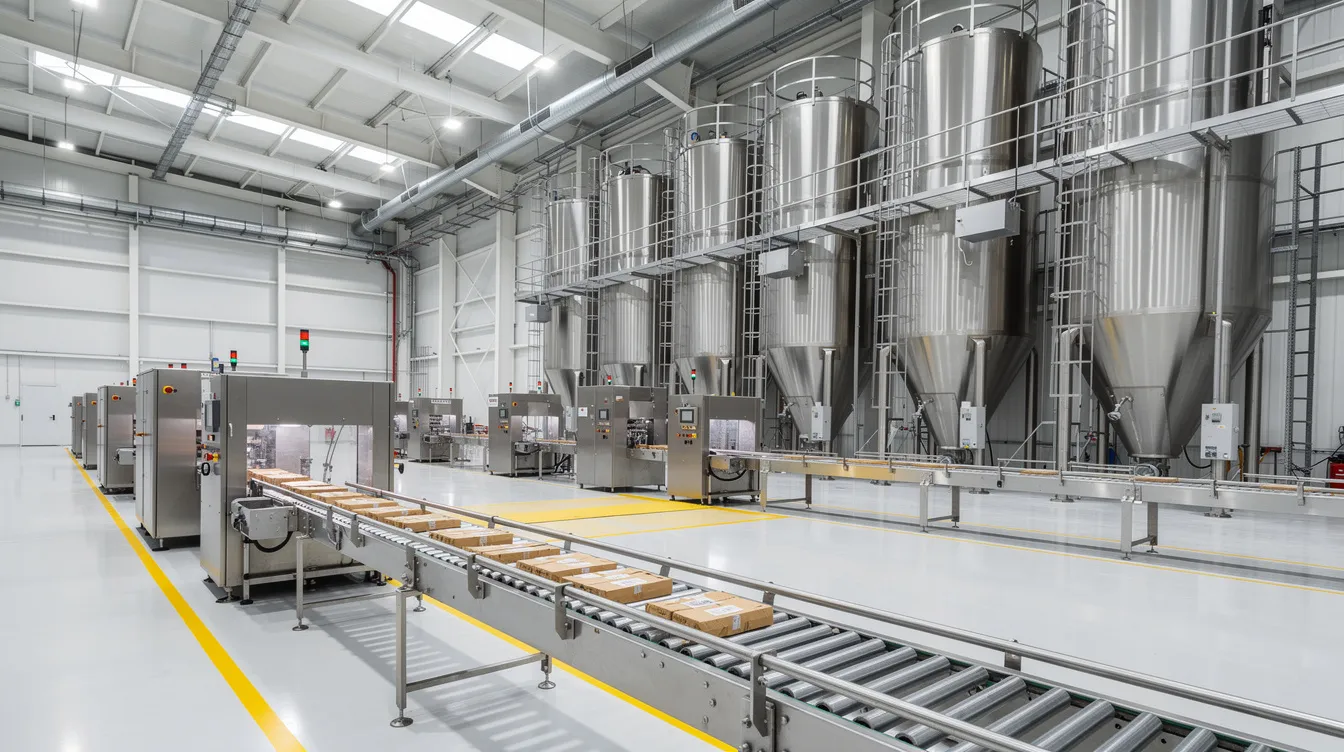
One processing line can often handle several pulses – toor, moong, urad, chana and masoor – but capacity, recovery and quality outcomes vary pulse to pulse. Machinery settings, conditioning parameters and changeover times differ, and these must be validated for each product during project design. For a detailed treatment of multi-pulse plant configuration, refer to the guide on integrated multi-pulse processing plant project report covering Tur, Moong, Urad, Chana and Masoor. The plant layout may also integrate a branded dal packaging area for pouches, intermediate bulk containers and private-label contracts. In a bankable dal mill DPR, Project Report Bank defines section-wise capacities, equipment lists, manning, utility requirements and material flows, connecting them into a coherent financial model.
Select the Right Pulse Mix and Business Model
Pulse selection changes everything in a dal mill business plan – from procurement region and seasonal availability to milling behaviour, recovery, by-product volumes and selling channels. Market analysis should include demand-supply trends for specific pulses in the target region before finalising the mix. A plant focused primarily on toor will have different inventory cycles, capital investments and price risk than one processing chana or moong as the primary volume.
The promoter must also decide whether the plant will primarily serve bulk buyers, job-work clients or an own-brand retail channel. The choice between own-stock, job-work or hybrid operating models heavily affects working capital, commodity risk and profitability, and should be decided before detailed financial projections are built. For a thorough comparison, see the guide on own-stock vs job-work dal milling – business model, working capital and profitability.
Pulse-wise Considerations: Toor, Moong, Urad, Chana and Masoor
Toor (Arhar/Pigeon Peas): Among the highest-volume pulses processed in India. Husk adhesion is strong, making conditioning critical. Recovery for head and split dal typically falls in the 63–75% range under good conditions. Toor attracts significant price volatility. A dedicated guide is available: Toor Dal (Arhar Dal) Mill Project Report & DPR in India.
Moong (Green Gram): Thin husk, fragile grain. Easier to dehusk than toor but sensitive to moisture; over-wetting causes discolouration that reduces market value. Quality and colour are critical for higher prices. For detailed planning, see the Moong Dal Processing Plant Project Report & DPR in India.
Urad (Black Gram): Strong seed coat with higher brittleness, leading to a larger broken percentage if conditioning is inadequate. Whole gota (unsplit dehusked urad) commands niche demand. Refer to the Urad Dal Mill Project Report & DPR in India for process-specific planning.
Chana (Bengal Gram): Generally among the best in recovered split yield – often 78–82% under good conditions. Husk adherence is moderate and conditioning relatively straightforward. Sub-standard splits can be diverted to besan production. The dedicated guide is the Chana Dal Manufacturing Plant Project Report & DPR in India.
Masoor (Red Lentil): Smaller, thinner seed requiring precision in splitting and polishing. Broken yield tends to be higher if machinery or moisture control is sub-optimal. See the Masoor Dal Processing Plant Project Report & DPR in India.
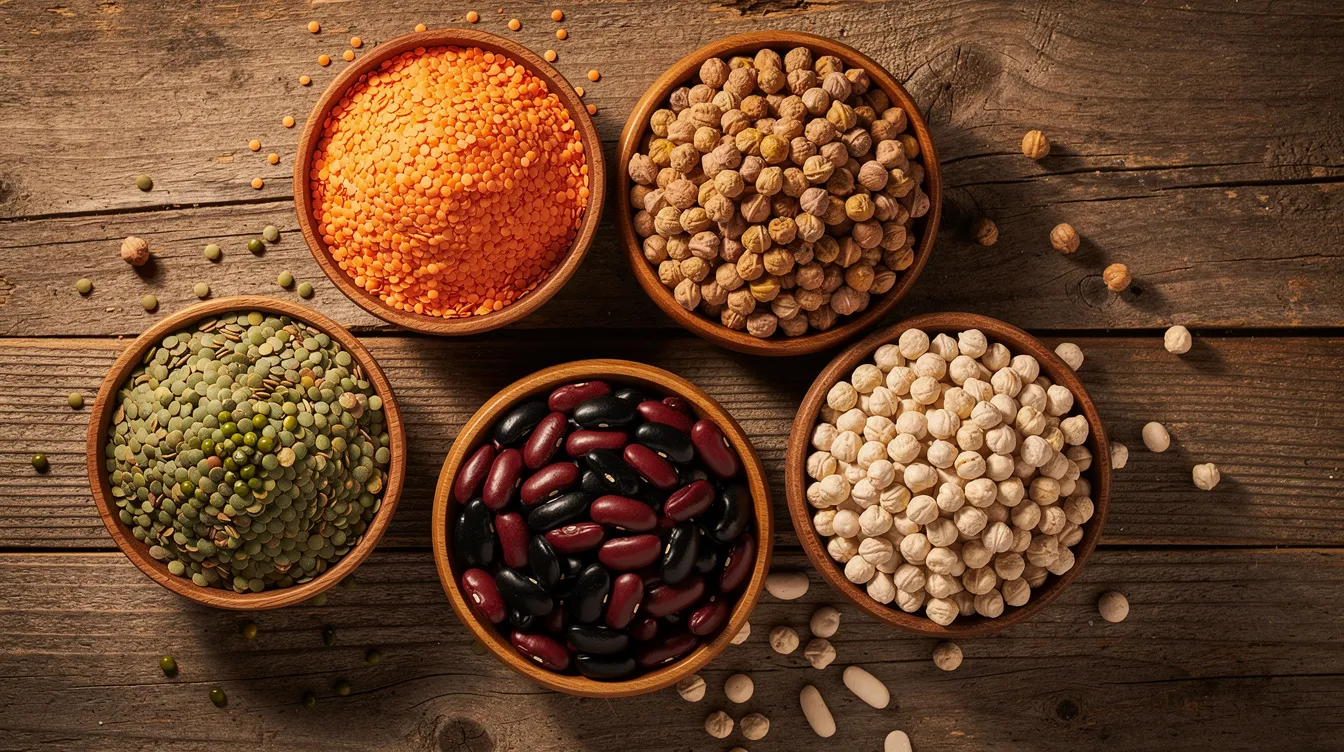
Promoters should shortlist a primary and secondary pulse mix early and share this with Project Report Bank when requesting a customised dal mill DPR.
Own-Stock, Job-Work and Hybrid Dal Milling Models
In the own-stock model, the mill buys raw pulses, owns inventory and by-products, and sells finished dal. This captures both trading and processing margin but carries full commodity price and recovery risk, requiring significant working capital.
In the job-work model, the customer supplies pulses and the mill charges a processing fee. The mill does not normally own the raw material or finished product. Working capital is substantially lower but the margin is capped at the processing charge.
A hybrid model combines own-stock processing during peak season with job-work during off-peak months, stabilising plant utilisation and cash flow. The implications of this choice on working capital, DSCR and risk assumptions are examined further in the sections on procurement and financial projections below.
Dal Mill Capacity Planning and Level of Automation
Capacity in dal mill DPRs is expressed in tonnes per hour (TPH) or tonnes per day (TPD) of raw pulse input – not finished dal output. Operating days per year (typically 280–300) and capacity utilisation ramp-up over the initial 2–3 years determine actual throughput. A typical dal mill requires a minimum capacity of 500 kg per day for viable commercial operation, but most serious projects evaluate scales of 5 TPD, 10 TPD, 20 TPD or 50 TPD depending on raw material availability, market demand, logistics and financial strength. The detailed comparison is covered in the guide on dal mill capacity planning across 5, 10, 20 and 50 TPD configurations.
The choice between semi-automatic and fully automatic configurations affects labour cost, product consistency and capital investment. A semi-automatic plant involves manual bag handling, basic graders and limited process control. A fully automatic line integrates PLC-based controls, mechanised conveyors, automated colour sorting and packaging. Higher automation typically reduces unit processing cost and improves quality consistency but increases initial investment. The DPR must quantify this trade-off in terms of cash flow and debt service capacity, not just technical specifications. For a structured comparison, refer to fully automatic vs semi-automatic dal mill – cost, efficiency and investment comparison.
Dal Milling Process, Recovery and Product Quality
The dal milling process follows a sequence: raw pulse reception, cleaning, grading, destoning, conditioning (moisture and oil tempering), drying, dehusking, splitting, aspiration, polishing, colour sorting and final packing. Each stage influences recovery and quality of the finished product. A step-by-step explanation is available in the dal milling process and flow chart guide.
For financial modelling, every kilogram must be accounted for. An illustrative mass balance for 1,000 kg of raw toor might show approximately 630–700 kg of head and split dal, 50–120 kg of broken dal, 110–150 kg of husk, powder and chuni, and 40–80 kg of moisture reduction and process losses. This is purely illustrative – actual outcomes differ by pulse variety, grain quality and machinery. Expected recovery rates for pulses vary typically between 70% and 75% on a cleaned basis, while split pulses yield stands at 80–85% depending on pulse variety under well-maintained modern equipment. De-husking efficiency of improved dal mills is approximately 95%.
Conditioning methods and their impact on recovery are discussed in the guide on pulse conditioning, dehusking and splitting process. For detailed analysis of yield and losses, see dal mill recovery ratio, dal yield, broken percentage and milling losses.
Even small changes in recovery – say 2 percentage points – can materially alter profitability across thousands of tonnes processed annually. Plant design, machinery selection and operating discipline must all target stable recovery and consistent quality.
Dal Mill Machinery, Utilities and Plant Layout
Machinery configuration must be tailored to the specific pulse mix and capacity, not copied from a generic quotation. The main categories include pre-cleaners, graders, destoners, magnetic separators, dehusking machines (emery roll type), splitters, polishers, aspirators, bucket elevators, conveyors, colour sorters and packing machines. A typical dal mill requires a grader, polisher, and elevator as core components. Dal mill machinery costs range from ₹8–30 lakh for basic configurations, scaling significantly for integrated automated plants. Comprehensive equipment descriptions are available in the dal mill machinery, equipment and cost guide.
Finishing and value-addition equipment – colour sorters, advanced grading and automated packaging lines – are covered in the guide on dal mill colour sorter, grading, polishing and packaging machinery.
Utility requirements include connected electrical load, compressed air for sorters, drying systems (steam, thermal or electric), dust extraction and ventilation. For a 20 TPD plant, annual electricity and fuel cost may run to approximately ₹66 lakh; a 15% increase adds ₹9.9 lakh, which can erode profit margins significantly. The power requirement must be validated against local DISCOM tariffs and backup availability.
Plant layout should allow linear material flow from raw material receiving through cleaning, processing, packing and dispatch, with adequate storage for raw pulses, WIP and finished products. Future expansion provisions and maintenance access must be planned from the start. Land and building requirements depend on inventory holding as much as production capacity – covered in detail in the guide on dal mill land, building and plant layout requirements in India.
Dal Mill Setup Cost, Total Project Cost and Means of Finance
Several cost concepts are frequently confused. They must be distinguished clearly:
| Cost Component | What It Covers |
|---|---|
| Machinery and equipment cost | Ex-works quotations, taxes, erection and commissioning |
| Total fixed assets | Land/leasehold, buildings, machinery, electricals, utilities, furniture, pre-operative expenses, contingency |
| Total project cost | Fixed assets plus margin for working capital |
| Total funding requirement | Promoter contribution plus term loan plus working capital facilities |
For context, a typical dal mill project costs ₹15 lakh to ₹1 crore at the basic end – a typical dal mill unit costs around ₹39 lakh, with plant and machinery costs ranging from ₹8 lakh to ₹30 lakh, land and building costs estimated between ₹3 lakh and ₹10 lakh, and working capital for raw pulses inventory at ₹3 lakh to ₹10 lakh. For a 1 ton/day capacity, total cost is around ₹25 lakh. However, these figures apply to basic or mini dal mill setups. For commercial integrated plants at 10–50 TPD, indicative project costs range considerably higher:
| Capacity | Indicative Total Project Cost |
|---|---|
| ~5 TPD semi-automatic | ₹1.50–2.50 crore |
| ~10 TPD semi/automatic | ₹3.50–6.00 crore |
| ~20 TPD higher automation | ₹7.00–11.00 crore |
| ~50 TPD fully automatic | ₹18.00–30.00+ crore |
These are illustrative ranges based on general industry observations and must be updated to current quotations and local conditions. Machinery typically represents 40–60% of total fixed investment, but warehousing, utilities, pre-operative expenses and working capital margin are frequently underestimated.
Sources of finance may include promoter’s equity and bank loans. Banks typically fund 65–75% of project costs through term loans and cash credit, but the actual structure depends on lender norms, collateral, credit rating and applicable schemes. For detailed breakdowns, see the guides on dal mill project cost and means of finance and dal mill plant setup cost in India.
Project Report Bank does not promise any fixed project size or guaranteed return. The cost estimate and finance plan are built specific to each client’s capacity, location and bank requirements.
Raw Pulse Procurement, Storage and Working Capital Planning
Procurement strategy shapes dal mill viability as directly as machinery selection. Planning for raw material procurement includes identifying local suppliers and seasonal availability – whether through direct mandi purchases, aggregators, FPOs or farmer contracts. Price exposure must be managed through staggered buying and quality specifications.
Working capital assessment considers inventory, receivables, and operational costs. In the own-stock model, funding covers raw pulses (often several weeks’ stock), WIP in process, finished packed dal awaiting dispatch and trade receivables. Working capital for raw pulses inventory alone can be ₹3 lakh to ₹10 lakh for a mini dal mill, but for commercial plants processing 10–50 TPD, the requirement is far more significant. Inventory plus receivables often exceed the value of plant and machinery.
Banks typically evaluate both average and peak-season funding when sanctioning cash credit limits. Seasonal procurement months may require substantially higher short-term funding than annual averages suggest. For detailed inventory and godown planning, refer to the guide on raw pulse procurement, storage and seasonal inventory planning for dal mills.
Customer-owned pulses under job-work arrangements must not be shown as the mill’s own inventory for cash credit appraisal. Correct segregation is essential to avoid bank queries. Working capital calculations in bank-acceptable formats, including CMA Data, are part of the dal mill working capital assessment, cash credit and stock financing service that Project Report Bank provides.
Dal Mill Revenue, Production Cost and Profitability
Revenue in a dal mill is driven by the spread between raw pulse purchase price and finished dal realisation, multiplied by recovery and throughput. By-product income from husk, chuni and broken dal adds a non-trivial additional stream – covered in the guide on dal mill by-products including husk, chuni, broken dal and additional revenue.
Raw material typically represents 75–85% of the cost of finished dal per kg. Processing cost includes power, fuel, labour, maintenance and packing materials. The typical net profit margin for dal mills is 8–15%, depending heavily on procurement skill, recovery consistency, scale and selling channel.
It is essential to distinguish between gross margin (after raw material and direct variable costs), contribution margin (after all variable costs), EBITDA (after fixed operating costs) and net profit (after interest, depreciation and tax). High sales turnover does not automatically mean strong profitability. For a detailed per-kg cost and margin analysis, see dal mill production cost per kg, revenue and profit margin in India.
Bulk B2B sales offer higher volumes with lower marketing cost. Branded retail packaging – discussed in the guide on branded dal packaging plant – bulk supply vs retail packaging business model – may offer better per-kg margin but requires investment in marketing, distribution, retailer margins and extended customer credit.
Financial Projections, CMA Data, DSCR and Investment Returns
A professionally prepared dal mill DPR must include integrated financial projections – projected profit and loss, balance sheet and cash flow – aligned to operating assumptions. Financial projections typically span 3 to 5 years, and for bank-finance DPRs, a detailed project report includes 5-year financial projections or longer. CMA data is essential for demonstrating project profitability to banks and is a standard requirement for term loan and cash credit proposals.
Key components include year-wise production and sales schedules by pulse and product, item-wise revenue and variable cost calculations, working capital requirement, term loan amortisation and interest schedules, depreciation, DSCR, break-even volume, project IRR, equity IRR and payback period. The break-even point is the production volume where costs equal revenues – an important milestone for any new project.
Profit, cash flow and loan repayment capacity are different. A project may show accounting profit but face cash-flow pressure due to working capital absorption or aggressive repayment structure. Loan repayment capacity reflects the ability to cover debt obligations from operating cash flows, not from accounting profits alone.
The Debt Service Coverage Ratio measures cash available for debt service against the repayment obligation. Banks require a Debt Service Coverage Ratio (DSCR) of at least 1.5, though lender-specific definitions and thresholds may vary. Financial modelling supports the assessment of profitability and cash flow under multiple scenarios – including changes in raw pulse price, finished dal price, recovery and utilisation. These are covered in the guides on dal mill financial projections, CMA Data, working capital and DSCR and dal mill ROI, IRR, payback period and sensitivity analysis.
Project Report Bank prepares and assists with CMA Data and financial projections. Projected figures are estimates based on disclosed assumptions and cannot be treated as certified or guaranteed results.
Feasibility Study Before Investing in a Dal Mill
A structured feasibility study is critical before committing to land purchase, machinery orders or long-term loans. Financial viability is a critical component of a dal mill project report, but it must be supported by market, procurement, technical, site and implementation feasibility. Market potential analysis identifies target customers and competitive landscape. The report must validate demand and establish buyer relationships prior to launching.
Problems a feasibility study commonly identifies early:
- Oversized plant capacity relative to realistically procurable raw material or a consistent supply arrangement
- Inadequate working capital estimates that create funding gaps after commissioning
- Unrealistic recovery assumptions that inflate projected profitability
- Weak marketing or sales arrangements leaving finished stock unsold
- Excessive debt relative to cash-generation capacity
For a detailed treatment, see the guide on dal mill feasibility study and project viability analysis in India. Project Report Bank typically recommends a feasibility study especially where project size, debt component or technical complexity is significant.
Dal Mill Licences, Approvals and Government Support
Exact licences depend on location, capacity, operating model and current regulations. Statutory approvals include FSSAI registration and GST registration for food businesses selling processed pulses and branded products. Other approvals typically relevant include local trade licences, building plan approvals, pollution control board consents (particularly for dust control), factory-related registrations, fire safety NOC and electrical load sanction. A detailed discussion is available in the guide on dal mill licence requirements, FSSAI registration and pollution control in India.
Government support may include food processing subsidies, credit guarantees, interest subvention and MSME benefits. For instance, subsidy under PMFME covers 35% of eligible project costs up to ₹10 lakh – relevant primarily for micro food processing units. For larger commercial projects, central schemes such as CEFPPC under PMKSY may provide assistance of 35–50% of eligible cost subject to caps, and some state-level food processing policies (such as Uttar Pradesh’s Food Processing Industry Policy 2023) offer additional capital subsidies, mandi fee exemptions and utility support. Availability, eligibility and quantum change over time and must be verified from official sources. The guide on dal mill subsidy, bank loan and government schemes in India provides a broader overview.
Project Report Bank does not guarantee subsidy sanction or bank approval. DPRs can be aligned with current scheme formats where feasible, but actual sanction depends on scheme rules and competent authorities.
Modernisation, Capacity Expansion and Automation of Existing Dal Mills
Existing dal mill owners often consider upgrading rather than building a new greenfield project. Common objectives include improving dal recovery and reducing breakage, upgrading colour sorting and polishing to access premium buyers, reducing power and labour cost per tonne through targeted automation, expanding storage, adding a retail packaging section, or increasing capacity through additional shifts.
For expansion projects, the DPR must treat incremental investment and incremental cash flow separately from the existing base business. Lenders typically want to see both combined and stand-alone viability. Automation decisions should be guided by quantifiable savings or revenue uplift rather than technology appeal alone – this assessment is integral to the financial modelling work. The guide on dal mill modernisation, capacity expansion and automation project report covers this in detail.
What Our Customised Dal Mill Project Report & DPR Covers
Project Report Bank provides customised dal mill DPR preparation services – not generic downloadable templates. Each report prepared by CA Manish Gugliya covers:
- Promoter profile, group background and existing business
- Project concept, location, capacity, pulse mix and business model
- Market and procurement assessment referencing current trade realities
- Machinery and plant configuration based on actual or indicative quotations
- Land, building and utilities planning aligned to projected inventory and throughput
- Total project cost and detailed means of finance
- Working capital assessment and cash credit requirement
- Integrated financial projections for 5–7 years, including CMA Data formats
- DSCR, break-even, IRR and sensitivity analysis
- Implementation schedule, key risks and mitigants
- Assistance in preparing bank documents and guidance for banker presentations
Project Report Bank focuses on financial, commercial and high-level technical planning. Detailed machinery engineering, structural and architectural drawings come from equipment suppliers and qualified specialists.
Related professional services:
- Bank Finance DPR & Loan Proposal Assistance
- CMA Data Preparation Services for Bank Loan
- Financial Projections & Financial Modelling Services
- Project Feasibility Study Services in India
- Project Finance Advisory & Loan Structuring Services
If you are planning a dal mill or integrated pulse processing project and need a bankable DPR, you can share your project note, capacity and location via the WhatsApp enquiry option on ProjectReportBank.com for an initial discussion and a customised proposal.
Information Required to Prepare Your Dal Mill DPR
A high-quality, bank-ready dal mill project report depends on accurate baseline information. Project Report Bank typically requests:
- Promoter details, existing business activities and experience in pulses or food processing
- Project location, land status (owned or lease), plot area and existing construction
- Proposed pulse mix and indicative product split between bulk and branded retail packs
- Desired capacity (e.g., 10 TPD, 20 TPD, 50 TPD), operating days and hours
- Level of automation preferred and any shortlisted machinery suppliers or quotations
- Expected investment in buildings, utilities and storage
- Procurement strategy (local mandis, aggregators, imports) and planned inventory levels
- Target markets: wholesale, institutional, own brand or private label, with any confirmed MOUs
- Proposed funding structure: available promoter funds, collateral, existing loans and target bank
- Past 2–3 years’ financial statements and bank statements for existing businesses
- Current project stage: conceptual, land purchased, quotation received or loan discussion initiated
Based on this information, Project Report Bank prepares a customised engagement plan and timeline for delivering the dal mill DPR, CMA Data and financial model.
Frequently Asked Questions
What exactly is included in a customised dal mill project report for bank loan?
A customised report from Project Report Bank includes the project description, capacity and process assumptions, detailed project cost and means of finance, working capital assessment, 5–7 year financial projections with CMA Data formats, DSCR and ratio analysis, machinery list and implementation schedule – all aligned to bank appraisal requirements. The report is prepared under the supervision of CA Manish Gugliya using practical financial assumptions. Projected results are indicative estimates, not guaranteed outcomes.
Can one integrated plant handle toor, moong, urad, chana and masoor?
Many modern dal mills share cleaning, grading and destoning infrastructure across pulses. However, dehusking settings, conditioning parameters and changeover times differ. Whether a single integrated line is feasible or separate parallel lines are needed depends on expected volumes, acceptable downtime, recovery targets and total investment. This evaluation is incorporated into the integrated multi-pulse plant DPR.
How is plant capacity selected for a new dal mill project?
Capacity selection is based on expected raw pulse availability, target market size, logistics radius, promoter capital strength and bankability. Project Report Bank helps compare alternative capacities – for example, 10 TPD versus 20 TPD – on DSCR, IRR and sensitivity to key risks. Nameplate capacity alone does not establish viability; effective throughput depends on utilisation, operating days and ramp-up schedule.
Why does working capital requirement appear so high in dal mill DPRs?
Pulses are high-value raw materials. Stocking even a few weeks’ quantity for a medium-large plant can block significant funds. In own-stock models, inventory plus receivables often exceed the value of plant and machinery. Correct treatment of job-work stocks – which must not be counted as owned inventory – is critical for accurate bank appraisal.
Is a generic downloadable sample dal mill report sufficient for bank appraisal?
Generic samples may help understand report structure but are seldom accepted by banks for meaningful appraisal, particularly for projects of ₹5 crore and above. Lenders and investors expect a project-specific, data-backed DPR and CMA Data reflecting actual location, quotations, capacity, pulse mix, promoter finances and realistic operating assumptions.
Discuss Your Dal Mill & Integrated Pulse Processing Project
If you are evaluating a new dal mill, integrated pulse processing plant, expansion or modernisation project, I invite you to share a brief note covering your project location, proposed capacity, pulse mix, estimated investment range, land status, whether this is a new project or expansion, and whether you are seeking bank term loan, working capital facilities or investor funding.
I am CA Manish Gugliya, FCA, DISA (ICAI), practising Chartered Accountant since 2006, representing Project Report Bank and Manish Gugliya & Company, Ratlam, Madhya Pradesh. I work with entrepreneurs and MSMEs across India through online professional services. After an initial review of your project details, I can propose a scope, timeline and professional fee for preparing a customised dal mill and integrated pulse processing plant project report, feasibility study, CMA Data and financial model aligned to your objectives.
You can start the conversation through the WhatsApp enquiry option available on ProjectReportBank.com, followed by email and virtual meetings as needed.