
Key Takeaways
- Dal mill power consumption is among the top three operational expenses in pulse processing, alongside raw pulses and labour. For plants ranging from 5 TPD to 50 TPD, connected electrical load typically falls between ~40 kW and ~250 kW, with specific energy consumption often in the 50–90 kWh/tonne range depending on automation and process configuration. These are planning assumptions, not fixed benchmarks.
- Dryers and hot air generation can account for 30–50% of total energy cost in plants handling moist raw pulses or using pre-conditioning, making fuel selection (biomass, diesel, LPG) a critical cost driver.
- Proper sizing of transformer, DG set, water storage, compressor and fuel system is essential for reliable operations and must be aligned with plant layout and capacity planning.
- Realistic utility costing is a critical part of the Detailed Project Report (DPR), financial projections, DSCR analysis and bank finance appraisal for any dal mill business.
- Energy-efficient motors, VFDs, and optimised dryer selection can meaningfully reduce electricity cost per tonne and strengthen project viability.
Introduction – Why Power Consumption Matters in Dal Mill Projects
In a dal mill plant handling 5 to 50 TPD of raw pulses, electricity and fuel are among the largest variable costs after raw materials and labour. Electricity is a primary recurring expense for pulse-processing mill operations, and how you estimate it determines whether your projected cost of production for chana dal, moong dal, urad dal, toor dal or masoor dal is realistic or misleading.
Dal mill plants process pulses into consumable dal through processing stages that include cleaning, dehusking, and splitting. Automatic dal mill plants can process 500 to 2,000 kg/hr, and quality raw materials directly impact the output’s quality. A complete dal mill plant can cost up to ₹2,00,00,000, while an automatic dal mill plant costs approximately ₹1,63,10,000-making utility planning essential for protecting that investment.
This guide is written from the perspective of Project Report Bank and CA Manish Gugliya, focusing on practical project planning rather than machinery marketing. It covers electricity, dryer energy, water, compressed air, fuel, transformer and DG requirements across 5, 10, 20 and 50 TPD plants. Readers planning a detailed investment can also refer to our guide on dal mill plant setup cost in India and dal mill machinery, equipment and cost.
Dal Mill Power Consumption – Understanding the Basics
Dal mill power consumption refers to the total electrical energy (kWh) used by motors, drives, compressors, lighting and dryers over a given period. It is fundamentally different from the connected HP printed on motor nameplates. The power consumption of a dal milling plant is primarily driven by mechanical processing operations, and electricity costs depend on total power drawn by all machines running simultaneously.
Key concepts every promoter should understand:
- Connected load vs operating demand: Connected load is the sum of all installed motor ratings. Actual operating demand is typically 60–75% of connected load. Electric load for dal mill plants ranges from 21.75 kW to 75.75 kW for small-to-medium configurations, while the average power consumption of small-scale dal mills typically ranges from 5 kW to 30 kW.
- HP to kW conversion: 1 HP ≈ 0.746 kW. A 30 HP motor draws approximately 22.4 kW at full load.
- kW vs kWh: kW is instantaneous power; kWh is energy consumed over time. If a plant runs at 60 kW average demand for 16 hours: 60 × 16 = 960 kWh/day.
- Specific energy consumption (SEC): Total kWh ÷ tonnes processed. If 960 kWh processes 10 tonnes, SEC = 96 kWh/tonne. Operating below a mill’s rated capacity increases specific energy consumption per ton of finished dal.
- Power factor and billing: Indian industrial consumers are billed on kVA-based demand charges, not just kWh. Low power factor attracts penalties.
Factors influencing power consumption include machine loading, raw material characteristics, and drive efficiency. Industrial electricity billing in states like Madhya Pradesh or Maharashtra includes energy charges, demand charges and power factor penalties-all of which influence your dal mill electricity cost per tonne. Dal mill power consumption varies based on capacity from 1.5 kWh for micro-units to over 25 kWh for small setups, and electricity costs can become a significant expense for small commercial mills with auxiliary equipment.
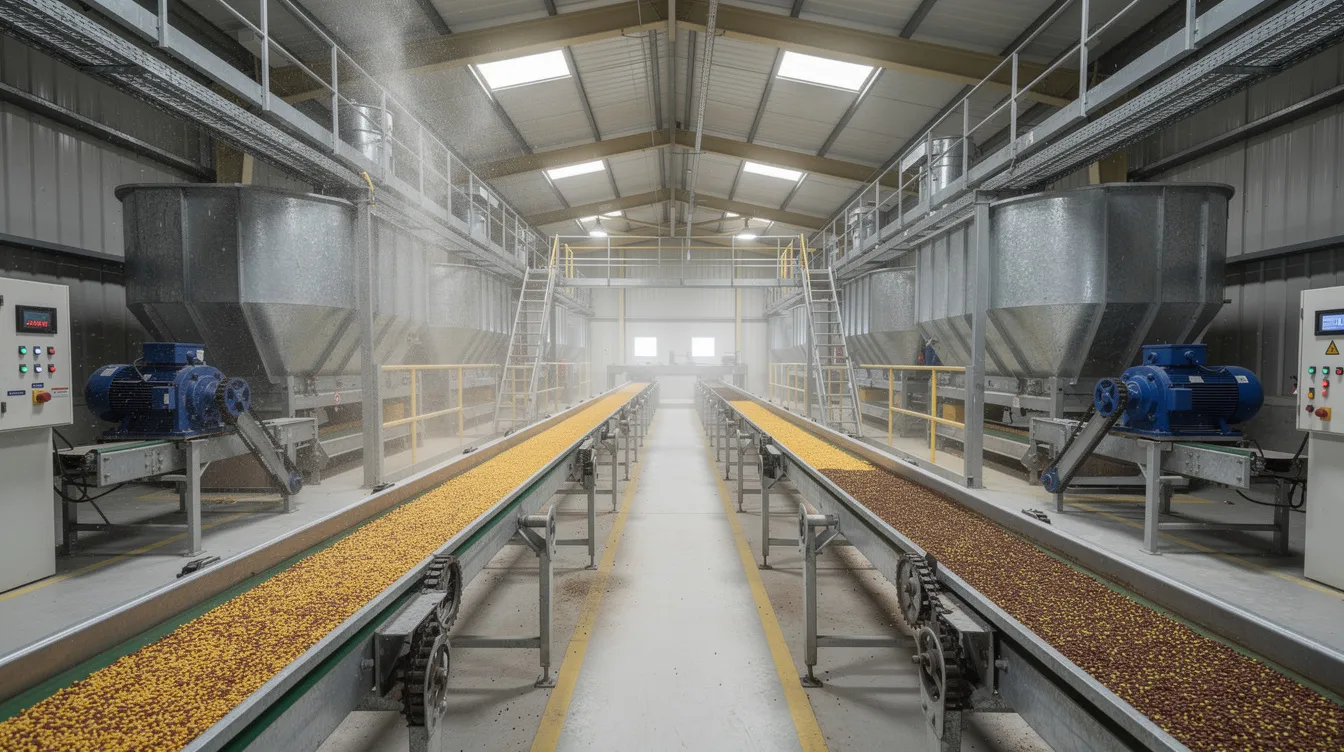
Dal Mill Power Requirement for 5 TPD, 10 TPD, 20 TPD and 50 TPD Plants
The numbers below are indicative planning ranges based on common supplier quotations and DPR experience, not fixed industry benchmarks. Final values must come from actual machinery offers specific to your project. Processing capacity affects the overall cost of a dal mill plant, and so does the electrical infrastructure needed to support it.
TPD refers to tonnes of raw pulse throughput per day. Most medium plants operate 16–20 hours/day across two shifts.
| Parameter | 5 TPD | 10 TPD | 20 TPD | 50 TPD |
|---|---|---|---|---|
| Connected load (HP) | ~55–80 HP | ~80–135 HP | ~200–340 HP | ~400–670 HP |
| Connected load (kW) | ~40–60 kW | ~60–100 kW | ~150–250 kW | ~300–500 kW |
| Avg. operating demand (kW) | ~28–42 kW | ~42–70 kW | ~105–175 kW | ~210–350 kW |
| Operating hours/day | 8–16 | 16 | 16–20 | 16–20 |
| Daily consumption (kWh) | ~330–500 | ~670–1,120 | ~1,680–3,500 | ~3,360–7,000 |
| Monthly consumption (kWh) | ~8,000–13,000 | ~17,000–28,000 | ~42,000–87,500 | ~84,000–1,75,000 |
| SEC (kWh/tonne) | ~55–90 | ~55–90 | ~50–85 | ~45–80 |
For capacity planning across these scales, note that a fully automatic dal mill at a given capacity may have 15–25% higher connected load than a semi-automatic plant, but often achieves lower kWh/tonne because of better throughput, reduced re-handling and fewer idle motor hours.
Machinery-Wise Power Consumption in a Dal Mill
Connected load must be broken down machine-wise for accurate electrical design, cabling, DG and transformer sizing. The type and capacity of machinery dictate the power draw in commercial and industrial-grade mills. Dal mill machinery includes cleaning, dehusking, and polishing equipment, and a 5 HP dal mill machine is commonly used for processing pulses at smaller scales while the 30 HP dal mill machine is suited for large-scale pulse processing. Dal mill plant machinery is priced around ₹99,00,000 for a medium-capacity configuration.
Here is a representative machinery-wise connected load estimate for a 20 TPD automatic dal mill plant:
| Equipment Group | No. of Motors | Motor Rating (HP each) | Total HP | Total kW |
|---|---|---|---|---|
| Pre-cleaners, aspirators, graders | 4–5 | 3–7.5 | 20–30 | 15–22 |
| Destoners, magnetic separators | 2–3 | 5–10 | 15–25 | 11–19 |
| Dehusking/emery roll machines | 3–4 | 10–20 | 40–60 | 30–45 |
| Splitting & grading machines | 2–3 | 5–10 | 15–25 | 11–19 |
| Polishing/brush polishers | 2–3 | 5–7.5 | 12–20 | 9–15 |
| Colour sorters + compressor | 1–2 | 7.5–15 | 15–25 | 11–19 |
| Elevators, conveyors | 8–12 | 1–3 | 15–25 | 11–19 |
| Dryer fans/blowers | 1–2 | 7.5–10 | 10–20 | 7–15 |
| Dust collection, aspiration | 2–3 | 5–10 | 15–20 | 11–15 |
| Weighing, packing, stitching | 2–3 | 1–3 | 5–8 | 4–6 |
| Lighting, office, misc. | – | – | 5–10 | 5–10 |
| Total | ~170–270 | ~125–200 |
Colour sorters and air compressors can significantly add to connected load, especially where high-speed grading is installed. After processing, pulses are graded according to size and quality, and urad dal requires specific dehusking and splitting equipment. For detailed equipment specifications, refer to our guides on dal mill colour sorter, grading, polishing and packaging machinery.
Dal Mill Dryer Machine – Types, Capacity and Power Consumption
Dryers are critical in pulse processing because the moisture content of the grain critically affects energy consumption during dehusking. Adjusting moisture is essential for safe storage, optimal conditioning and maximising dal mill recovery ratio and yield for pulses like toor dal (pigeon peas), moong dal (mung beans), urad dal, chana dal (chickpeas) and masoor dal (lentils).
The key distinction is between electrical power for dryer fans and motors (typically 5–15 kW) and thermal energy needed for moisture removal. According to manufacturer specifications, circulating-type dryers may use ~7.5 kW for fan/blower motors handling 10–16 tonnes per batch, but the real cost driver is the fuel burned to generate hot air.
| Dryer Type | Capacity Range | Energy Source | Key Advantage | Key Limitation |
|---|---|---|---|---|
| Batch tray dryer | 0.5–2 TPH | Electric/diesel/biomass | Flexible for multi-pulse ops | Slower, labour-intensive |
| Continuous rotary dryer | 2–8 TPH | Biomass/diesel/LPG | High throughput, uniform drying | Higher capex, space |
| Biomass hot air generator | 1–10 TPH | Rice husk, briquettes | Low fuel cost | Ash handling, operator skill |
| Diesel/LDO hot air generator | 1–10 TPH | Diesel/furnace oil | Reliable, compact | Higher fuel cost, price volatility |
| LPG/CNG system | 1–5 TPH | LPG/PNG | Clean, fast startup | Gas availability, higher cost |
| Steam dryer (boiler-fed) | 2–10 TPH | Biomass/diesel boiler | Suitable for integrated plants | Boiler investment, compliance |
Understanding where drying fits in the dal milling process and flow chart and the pulse conditioning, dehusking and splitting process is essential for sizing dryers correctly.
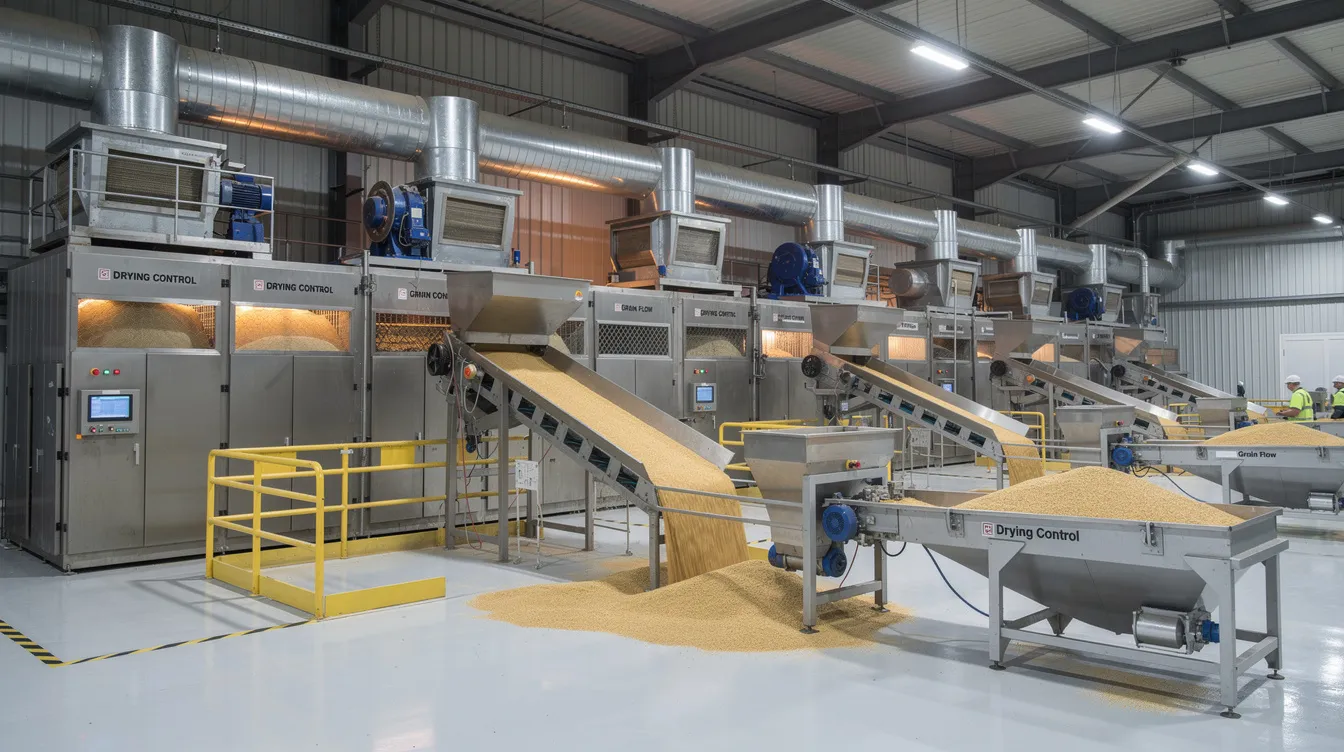
Dal Mill Dryer Capacity Selection for Different Plant Sizes
Dryer size must reflect process flow, moisture reduction requirement and batch cycle time-not simply equal the nominal dal mill plant TPD capacity. Key variables include the type of pulses processed, incoming moisture from mandis (often 14–16%), whether pre-soaking or tempering is used, and target moisture for optimum dehusking (typically 10–12%).
| Plant Size | Dryer Capacity Range | Typical Configuration |
|---|---|---|
| 5 TPD | 0.5–1 TPH batch dryer | More batches, longer hours |
| 10 TPD | 1–2 TPH batch/continuous | Moderate batching |
| 20 TPD | 3–4 TPH continuous | Sized for 16-hr operation |
| 50 TPD | 5–8+ TPH continuous or multiple lines | May use parallel dryers |
For integrated multi-pulse processing plant designs, a common central dryer sized for peak combined load may be more efficient than smaller dedicated dryers per product line. Dryer selection directly influences connected electrical load and thermal fuel system design, both of which must be reflected in your DPR and utility cost estimates.
Dal Mill Electricity Cost Per Ton – Calculation with Examples
Bank DPRs and CMA Data require realistic estimates of electricity cost per tonne, not a lump-sum monthly figure. Here is a worked example for a semi-automatic 20 TPD dal mill:
| Parameter | Value |
|---|---|
| Average operating demand | 120 kW |
| Operating hours/day | 16 hours |
| Daily consumption | 120 × 16 = 1,920 kWh |
| Working days/month | 25 |
| Monthly consumption | 48,000 kWh |
| Tariff (assumed, all-inclusive) | ₹7.50/kWh |
| Monthly energy charges | ₹3,60,000 |
| Monthly demand/fixed charges (est.) | ₹25,000 |
| Total monthly electricity cost | ₹3,85,000 |
| Raw pulses processed/month | 500 tonnes |
| Electricity cost per tonne (raw) | ₹770/tonne |
| Finished dal (at ~72% recovery) | 360 tonnes |
| Electricity cost per tonne (dal) | ~₹1,070/tonne |
Electricity represents a core variable operating cost alongside raw grains and labor for pulse processing units. The difference between cost per tonne of raw pulses and cost per tonne of finished dal matters-processing losses mean each tonne of saleable split dal carries a higher share of electricity cost.
Dal Mill Transformer, DG Set and Electrical Infrastructure Requirements
Connected load in HP/kW determines transformer, contract demand and DG backup sizing-all capital-intensive items that must be planned alongside the dal mill land, building and plant layout.
- A three phase country (industrial) power connection is required for any 10–50 TPD dal mill plant. Voltage levels are typically 11 kV or 33 kV depending on local distribution norms.
- Transformer kVA is usually sized at 1.2–1.4 times maximum demand kW divided by power factor. For a 20 TPD plant with ~175 kW peak demand and 0.9 PF, this suggests ~230–270 kVA transformer capacity.
- DG backup is typically sized for 50–70% of connected load for critical operations. In areas with unreliable grid supply, full-load backup may be necessary.
| Plant Size | Transformer (kVA) | DG Set (kVA) |
|---|---|---|
| 5 TPD | 63–100 | 40–62.5 |
| 10 TPD | 100–200 | 62.5–125 |
| 20 TPD | 250–400 | 125–250 |
| 50 TPD | 500–750+ | 250–500 |
MCC panels, cable sizing, earthing and protection must comply with food-grade industrial standards. Electrical load calculations should always be verified by a licensed electrical consultant, not just rule-of-thumb estimates.
Dal Mill Water, Fuel, Compressed Air and Other Utility Requirements
Apart from electricity, utilities like water, fuel, compressed air and dust extraction significantly affect both design and monthly operating costs for a pulse processing plant.
| Utility | Main Usage Points | Infrastructure Required |
|---|---|---|
| Electricity | Motors, dryers, lighting, offices | Transformer, DG, panels, cabling |
| Water | Conditioning, cleaning, sanitation, drinking | Borewell/tank, pump, pipelines |
| Biomass fuel | Hot air generator for drying | Fuel yard, feeding system, ash handling |
| Diesel | DG backup, hot air (if diesel-fired) | Fuel storage tank, piping |
| LPG/CNG | Dryer, if gas supply available | Gas line, regulator, safety equipment |
| Compressed air | Colour sorters, pneumatic gates, packing | Compressor, air receiver, drier |
| Dust extraction | Cleaning, dehusking, polishing areas | Cyclones, bag filters, ducting |
For integrated plants processing chana dal, moong dal, urad dal, toor dal and masoor dal on shared lines, utilities are often consolidated to improve efficiency. The moong dal processing plant DPR and toor dal mill project report provide pulse-specific examples of how these requirements differ.
Monthly Utility Operating Cost for Dal Mill Plants
Lenders and investors closely examine monthly utility costs because they directly influence EBITDA, cash flow and DSCR for the dal mill business. Below is an illustrative comparison at assumed 70% capacity utilisation and 2026 price levels:
| Utility Expense | 10 TPD Plant (₹/month) | 20 TPD Plant (₹/month) |
|---|---|---|
| Electricity | ~₹1,50,000 | ~₹3,85,000 |
| Dryer fuel (biomass) | ~₹40,000 | ~₹90,000 |
| DG diesel (est. 30 hrs/month) | ~₹25,000 | ~₹55,000 |
| Water & sanitation | ~₹8,000 | ~₹15,000 |
| Compressed air & misc. | ~₹5,000 | ~₹10,000 |
| Total monthly utility cost | ~₹2,28,000 | ~₹5,55,000 |
All figures are indicative DPR planning assumptions at 2026 price levels. Actual costs will vary based on local tariffs, fuel availability, grid reliability and chosen equipment.
For serious project promoters planning a new dal mill or expansion, Project Report Bank offers customised DPR, CMA Data, financial projections and bank-finance advisory. Contact CA Manish Gugliya via WhatsApp for a professional consultation.
Fully Automatic vs Semi-Automatic Dal Mill – Energy Cost Comparison
While a fully automatic dal mill plant generally has higher connected load and capital cost, it may deliver lower electricity cost per tonne through better throughput, reduced idle running and higher recovery. A 3 HP electric mini dal mill is designed for small-scale operations, whereas larger automatic plants leverage higher motor rpm and production capacity to spread fixed energy costs across more output.
| Aspect | Semi-Automatic | Fully Automatic |
|---|---|---|
| Connected load range | Lower (40–150 kW) | Higher (80–500+ kW) |
| Manpower required | Higher per tonne | Lower per tonne |
| SEC (kWh/tonne) | Often higher | Often lower at full utilisation |
| Quality consistency | Variable | Higher uniformity |
| Typical project scale | 5–10 TPD | 10–50 TPD |
For a detailed energy and productivity comparison between fully automatic and semi-automatic dal mills, selection must be based on market research, labour availability, power tariff, recovery expectations and financing-not just nameplate HP or quoted machinery price.
How to Reduce Power Consumption and Improve Dal Mill Energy Efficiency
Managing energy efficiency directly affects a small mill’s profit margins and improving machinery efficiency is crucial for reducing electricity costs in dal mills. Energy efficiency investments typically improve payback period and DSCR by reducing monthly bills without compromising output.
| Energy-Saving Measure | Area of Application | Indicative Benefit |
|---|---|---|
| IE3 high-efficiency motors | All processing stages | ~2–3% lower motor energy use |
| VFDs on fans and blowers | Aspiration, drying, dust collection | ~10–20% kWh reduction at part load |
| Efficient dryer insulation | Drying section | Lower thermal losses, less fuel |
| Capacitor bank for PF correction | Entire plant | Avoids demand penalties |
| Optimised plant layout | Conveying, elevation | Fewer conveyors, less idle running |
| Scheduled shutdown protocols | All motors, compressors | Eliminates no-load energy waste |
| Regular maintenance | Bearings, belts, filters, rollers | Prevents overloading and inefficiency |
An improved plant layout can reduce idle running and unnecessary handling losses in dal mills. Regular maintenance is essential to minimize energy losses-worn milling rollers, for instance, can lead to increased power consumption and reduced efficiency. According to the Indore dal mill cluster energy profile, upgrading motors from IE2 to IE3 in the 5–30 HP range can yield aggregate savings meaningful enough to enhance project IRR.
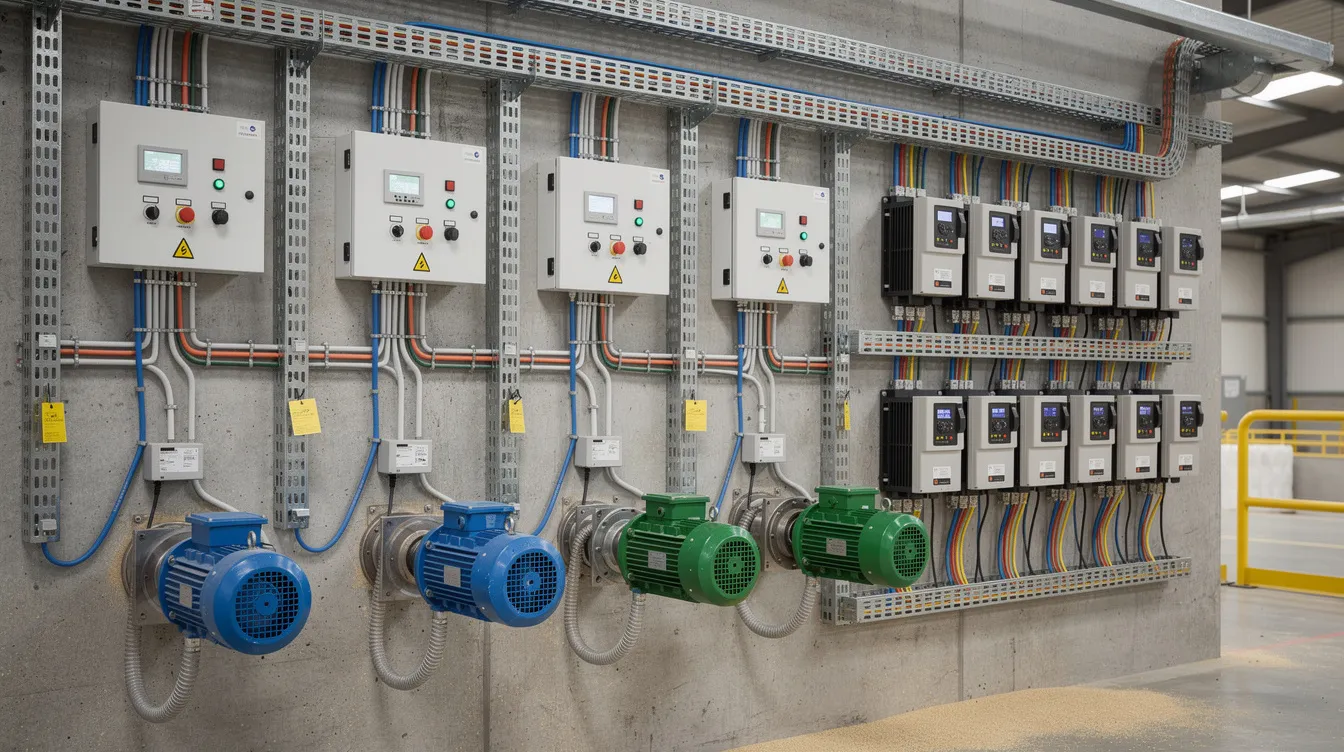
Role of Utility Cost in Dal Mill DPR, Financial Projections and Bank Finance
In a professional Detailed Project Report, utility costs are not a side note. They directly feed into cost of production, gross margin, EBITDA, cash flow and DSCR calculations that banks scrutinise before term-loan sanction. Electricity is among the top three operational expenses in the pulse processing industry.
Consider this sensitivity illustration for a 20 TPD plant:
- Annual electricity + fuel cost at base case: ₹66 lakh
- If electricity tariff and fuel prices increase by 15%: cost rises to ₹75.9 lakh
- Additional burden: ₹9.9 lakh/year
- If annual net profit at base case was ₹35 lakh, the 15% utility cost increase reduces profit by ~28% and can push DSCR from a comfortable 1.6x toward 1.3x or lower
This is why sensitivity analysis in a dal mill DPR should test scenarios with 10–20% increases in power or fuel rates, alongside lower plant utilisation. Specific energy consumption is measured by the electricity used per ton of raw pulses processed, and any deviation in utilisation directly changes the per-tonne cost structure.
Project Report Bank, led by CA Manish Gugliya (FCA, DISA), prepares customised DPRs, CMA Data, financial projections and bank loan proposals where all utility-related sensitivities are analysed professionally. Entrepreneurs planning a new dal mill plant, future expansion or value addition can reach out via WhatsApp for a detailed consultation-without any assurance of loan approval, but with a commitment to defensible, practical financial analysis.
Common Mistakes in Dal Mill Power and Utility Planning
Many first-time promoters underestimate power and utility complexity, leading to cost overruns and lower-than-planned production capacity utilisation:
- Sizing transformer only on motor HP without diversity factor, future expansion margin or power factor considerations-forcing a costly upgrade after commissioning.
- Ignoring electrical load of auxiliary systems like dust collectors, colour sorters, compressors and packing machines, which can add 20–30% to the base connected load.
- Underestimating dryer fuel consumption and not providing adequate raw material storage for fuel (biomass yard, diesel tank).
- Assuming unrealistically low electricity tariffs or ignoring demand/fixed charges in projections.
- Overestimating capacity utilisation at 90–95% from Year 1, which masks the real impact of utility cost per tonne during ramp-up.
- Not budgeting for DG power and diesel consumption in regions with unreliable electricity connection.
- Inadequate water storage and pumping capacity, disrupting conditioning and cleaning operations for farmers’ produce arriving with variable moisture.
The practical lesson: finalise your machinery list, plant layout and utility plan jointly with your machinery supplier, electrical consultant and DPR/finance advisor before freezing project cost. Errors at this stage can expand the investment by 10–15% post-commissioning.
Frequently Asked Questions on Dal Mill Power Consumption and Utilities
What is the typical electricity consumption per tonne in a commercial dal mill?
For modern medium-scale dal mills (10–50 TPD), specific energy consumption typically falls in the range of 50–90 kWh per tonne of raw pulses processed, excluding thermal drying energy. Older research on pulse milling technologies quotes ~24.5 kWh/tonne for modern methods and ~13.4 kWh/tonne for conventional, but these figures were for smaller, less automated plants. Actual SEC depends on machinery configuration, automation level and type of pulses.
What is the approximate power requirement for a 10 TPD dal mill in India?
A 10 TPD dal mill typically has a connected load of approximately 60–100 kW (80–135 HP). Average operating demand may be 42–70 kW depending on process pulses and the degree of automation.
Which type of dal mill dryer machine is most suitable for small 5–10 TPD plants?
Batch tray dryers or small continuous dryers with biomass-fired hot air generators are generally suitable for 5–10 TPD plants. They offer flexibility across multiple pulse types and moderate capital investment. Electric hot air dryers may suit compact locations but have higher running cost for large moisture removal.
How is dal mill electricity cost per tonne calculated in bank DPRs?
Electricity cost per tonne is calculated as: (Average running load in kW × operating hours × tariff per kWh + demand charges) ÷ tonnes processed. DPR professionals distinguish between cost per tonne of raw pulses and cost per tonne of finished dal by applying the recovery ratio.
How are utility costs typically estimated and justified in a dal mill DPR for bank finance?
A professionally prepared DPR itemises electricity, dryer fuel, water, compressed air and DG diesel as separate line items with transparent assumptions-tariff rates, consumption per tonne, operating hours and capacity utilisation. These feed directly into projected P&L, cash flow and DSCR calculations. For customised utility costing aligned with your specific machinery and location, Project Report Bank prepares detailed DPRs and CMA Data with plant-specific load calculations.
Conclusion – Planning an Energy-Efficient and Financially Viable Dal Mill
Accurate estimation of dal mill electricity consumption per ton, dryer fuel usage and other utilities is fundamental for project feasibility. The difference between a project that looks viable on paper and one that actually generates adequate cash flow often comes down to how honestly utility costs have been estimated. Integrated planning of machinery, dryer selection, transformer/DG sizing and energy efficiency measures determines your real cost of production for pulses like chana dal, moong dal, urad dal, toor dal and masoor dal.
Utility planning must be part of a comprehensive DPR and financial model, not an afterthought-particularly where bank finance, working capital and investor funding are involved. Every rupee of underestimated utility cost flows directly into weaker DSCR and slower payback.
Serious entrepreneurs and MSME promoters planning a new dal mill business or expansion can contact Project Report Bank for customised DPR, bankable project reports, CMA Data and project finance advisory. Reach CA Manish Gugliya via WhatsApp to discuss your specific requirements-from market research, plant layout and pulse processing design to financial projections, DSCR analysis and investor-ready documentation.