Key Takeaways
- This guide covers the complete planning framework for entrepreneurs setting up a Masoor Dal (Red Lentil) processing plant in India, with a focus on the detailed project report, DPR structure, investment analysis and bank loan requirements.
- Efficient dal processing, realistic capacity planning across 5–50 TPD scales, and accurate recovery assumptions (typically 72–78% for masoor) directly determine the bankability and profitability of the project.
- Raw material cost, selling price spread, working capital management and capacity utilisation are the variables that most influence actual Masoor Dal mill profit margin – not just installed machinery capacity.
- A comprehensive project report for a masoor dal processing plant serves as a blueprint for securing financing from banks, NBFCs and investors.
- All cost figures and profitability numbers in this article are illustrative, based on transparent assumptions as of October 2026, and must be validated with current quotations and local conditions before investment decisions.
Introduction – Investment Opportunity in Masoor Dal Processing
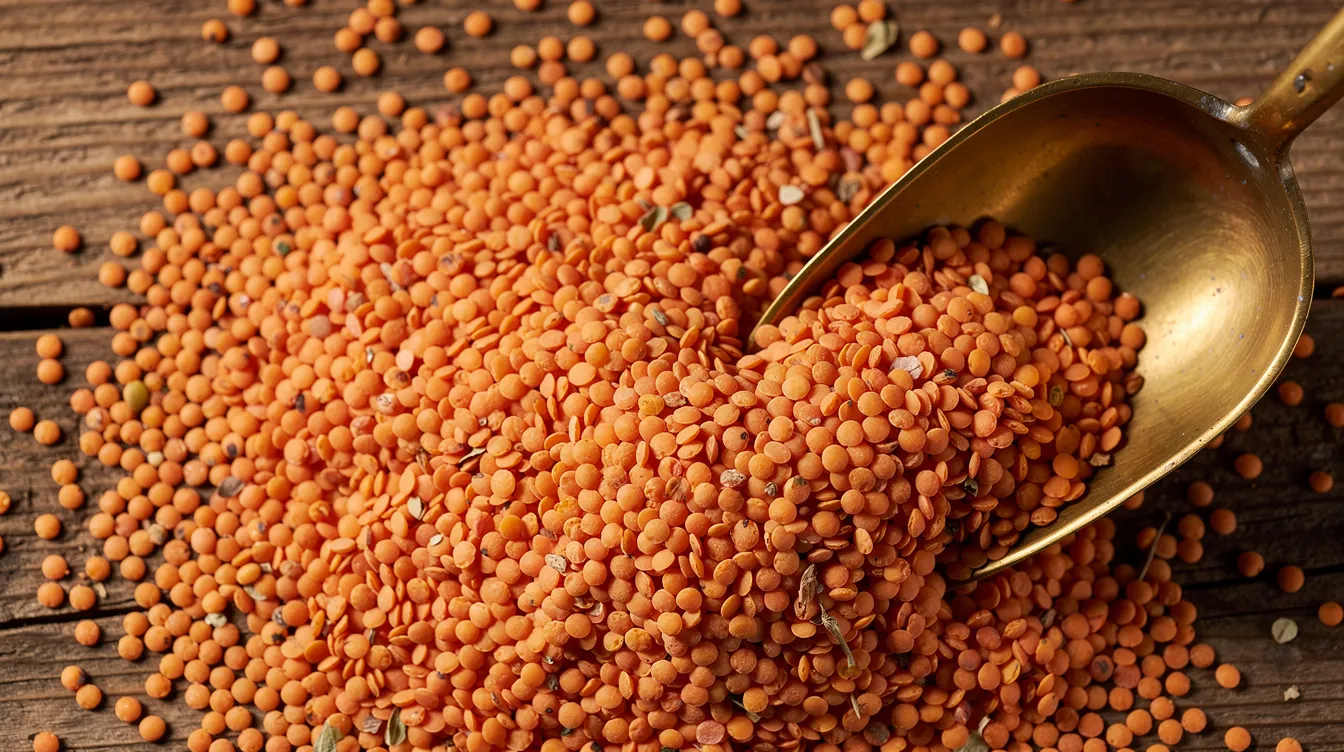
Masoor Dal, commonly known as Red Lentil, is among the most widely consumed pulses in Indian households. From everyday dal preparations and restaurant kitchens to ready-mix products and institutional catering, masoor occupies a consistent position in India’s food industry. The demand for processed pulses is increasing due to health awareness, urbanisation and the shift toward packaged, branded food products.
A masoor dal processing plant essentially receives whole raw masoor grain, removes impurities, dehusks and splits the lentil, grades the output, and packages it for wholesale or retail distribution. The business may appear straightforward, but the financial viability depends on several interdependent variables – procurement cost, processing recovery, selling price, capacity utilisation and working capital management.
Before committing capital to land, building and machinery, a promoter needs a professionally prepared Masoor Dal Processing Plant Project Report. This is not merely a compliance document for a bank. A well-structured DPR helps the promoter evaluate whether the proposed investment can generate adequate returns and service its debt. This article, written from the professional perspective of a practising Chartered Accountant with over 20 years of experience in project finance and dal milling feasibility, covers both the technical process and financial viability framework for masoor dal processing projects in India.
Masoor Dal Processing Industry in India – Market Overview & Business Opportunities
India produces 25% of global pulses and approximately 13.19 million tonnes of pulses annually. The dal milling industry processes 75% of this output, making it the third-largest food processing industry in India and one of the major agro processing industries. Over 1,000 units are engaged in pulse processing across the country, and the dal mill machine market is projected to reach $4.86 billion by 2035, growing at a CAGR of 3.76%.
Masoor fits into this industry alongside other key pulses – moong dal, chana dal, toor dal (processed from pigeon peas) and urad dal. What distinguishes masoor is its dual sourcing: India grows masoor domestically (primarily in Madhya Pradesh, Uttar Pradesh and Bihar) and also imports significant volumes from Canada and Australia. This import dimension introduces both opportunity and risk for processors.
Business models in masoor dal processing range from bulk unbranded supply to mandi traders, contract processing for brand owners, own-brand packaged masoor dal for retail customers, and integrated multi-pulse dal milling. Export of pulses has grown by approximately 10% annually, opening additional revenue channels for quality-conscious processors. Key opportunities include value addition through colour sorting and polishing, serving institutional demand (hotels, hostels, canteens), and operating an integrated multi-pulse processing plant to diversify seasonal risk.
Promoters must, however, account for industry risks in their detailed project report: raw material price volatility, import policy changes, quality rejection, competition from large branded players and logistics constraints in rural areas.
Market Research and Location Selection for a Masoor Dal Mill
Before finalising the DPR, structured market research is essential. Market potential for masoor dal includes demand-supply trends and socio-economic feasibility of the proposed location. Practical steps include:
- Survey wholesalers, retailers, mandi traders and institutional buyers within your target region to assess current demand, quality preferences and price expectations.
- Identify existing dal mills within a 100–200 km radius – their capacities, product mix, level of automation (semi automatic dal mill versus fully automatic) and pricing strategy.
- Analyse raw material sourcing: proximity to masoor-growing belts, local APMC mandis and import arrival points. Proper site selection for a processing plant should consider proximity to raw material sources to control logistics cost.
- Evaluate infrastructure: reliable three-phase power, road connectivity, water supply, labour availability and state-level incentives for food processing or MSME units.
Findings from this research should feed directly into the market and competition section of your Masoor Dal Manufacturing Business Plan and the DPR.
Masoor Dal Processing Plant Capacity Planning (5 TPD to 50 TPD)
Plant capacity is determined by the processing capability expressed in tons per hour or day. “TPD” refers to tonnes of raw masoor input processed per day. The installed capacity differs from effective capacity after adjusting for operating days and utilisation.
Typical scales for commercial masoor dal processing in India:
| Parameter | 5 TPD | 10 TPD | 20 TPD | 50 TPD |
|---|---|---|---|---|
| Annual Raw Input (MT) at 300 days | 1,500 | 3,000 | 6,000 | 15,000 |
| Assumed Utilisation (Stable Year) | 80% | 80% | 80–85% | 80–85% |
| Annual Dal Output (MT) at ~75% recovery | ~900 | ~1,800 | ~3,600–3,825 | ~9,000–9,563 |
| Approx. Manpower | 8–12 | 18–25 | 25–35 | 40–60 |
| Indicative Total Project Cost | ₹1.5–2.5 Cr | ₹3.5–6 Cr | ₹7–11 Cr | ₹18–30+ Cr |
All figures are illustrative as of October 2026 and require validation.
Standard operating assumptions for a DPR include two shifts of 8 hours each, 250–300 working days per year, and a realistic capacity utilisation ramp-up: approximately 60% in Year 1, 70–75% in Year 2, and 80–85% in stable years. A mini dal mill processing 0.5–2 TPD may suit local or captive use but is generally insufficient for a commercially viable standalone business.
Higher capacities improve per-unit processing cost through economies of scale but increase project cost, working capital requirement and break-even risk. Detailed dal mill capacity planning guidance can help promoters fine-tune their plant size decision.
Masoor Dal Manufacturing Process – Step-by-Step Flow
Masoor dal processing is a dry process. The milling process for masoor dal includes cleaning, conditioning, dehusking and grading, and masoor dal processing involves several stages from raw material receipt to packaging. The typical flow:
Raw Masoor Receiving → Pre-Cleaning → Grading → Destoning → Magnetic Separation → Conditioning (if needed) → Dehusking → Splitting → Aspiration & Husk Separation → Grading of Split Dal → Polishing (optional) → Colour Sorting → Weighing & Packing → Finished Goods Storage
Key steps explained:
- Pre-cleaning and destoning: Removes dust, foreign matter, stones and metallic particles. Quality control measures in masoor dal processing include checks for moisture and foreign impurities at this stage.
- Conditioning: Adjusting moisture to approximately 11–13% helps improve husk removal. Excess moisture risks moulding; insufficient moisture increases breakage.
- Dehusking and splitting: Roller or emery dehuskers remove the outer husk and split the lentil. Modern dal mills achieve a dehusking efficiency of approximately 95%.
- Aspiration and grading: Separates husk, brokens and dust from finished split dal.
- Colour sorting and polishing: Produces high quality dal meeting market preferences for appearance and consistency.
Illustrative Mass Balance (per 1,000 kg raw masoor):
| Output | Quantity (kg) | % |
|---|---|---|
| Split / Head Dal | 720–780 | 72–78% |
| Brokens | 50–80 | 5–8% |
| Husk / Powder | 100–130 | 10–13% |
| Process Loss / Dust | 20–40 | 2–4% |
The recovery rate for masoor dal milling typically ranges from 72% to 78%, while the split pulses yield stands at 80–85% depending on variety and machine condition. By-products – husk and brokens – can be sold for cattle feed, partially offsetting processing cost and contributing to by-product revenue in the DPR. Accurate mass-balance calculations are critical for financial projections. For the complete dal milling process and flow chart, promoters should review our detailed technical guide.
Masoor Dal Mill Machinery and Equipment – Automatic vs Semi-Automatic
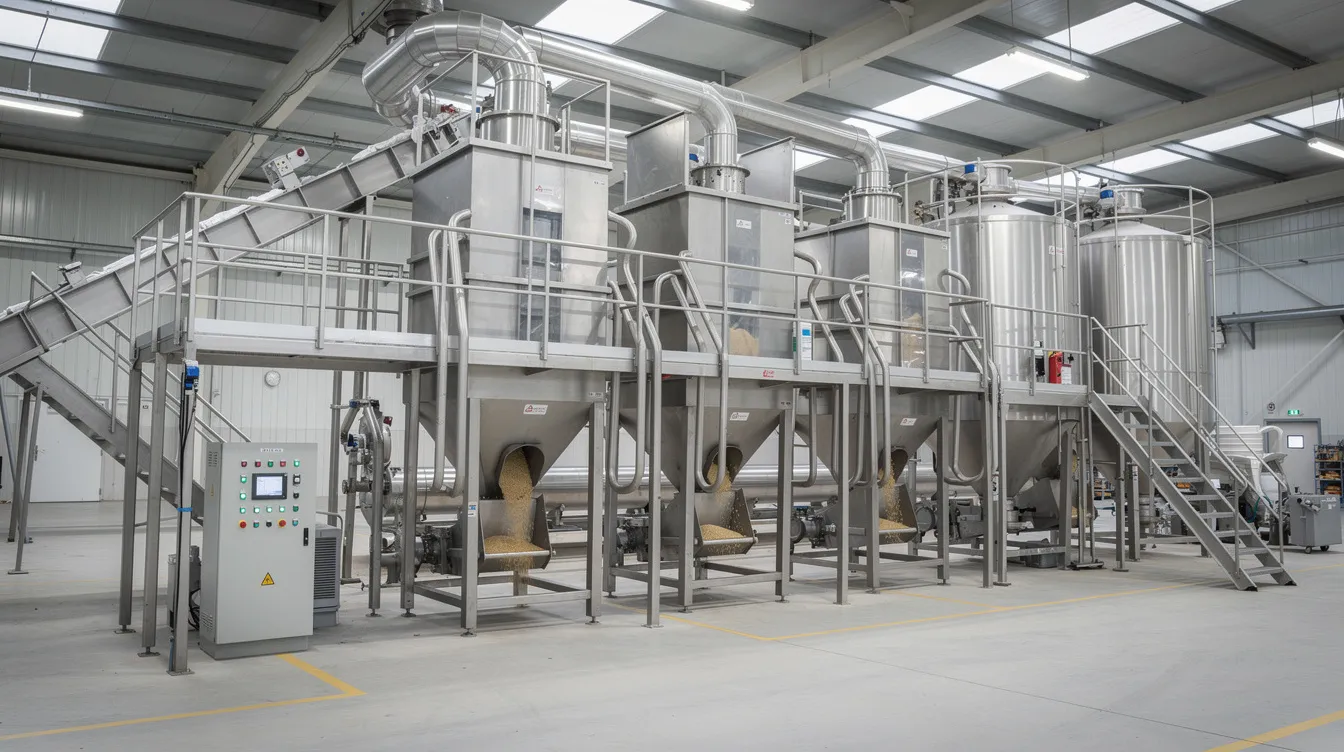
The main categories of masoor dal processing machinery include raw material handling (conveyors, elevators), pre-cleaner, grader, destoner, magnetic separator, dehusker or arrar machine, split dal grader, aspiration system, dal polishing machine, colour sorter, weighing scales, packaging machines, dust collection system and storage bins.
Dal mill machines can achieve outputs ranging from 40 to 100 kg/hr depending on the machine size and configuration. For reference, a 2HP dal mill machine processes 40 to 50 kg/hr, while a 3HP dal mill machine processes 80 to 100 kg/hr – these are relevant mainly for very small-scale operations. Commercial plants at 5 TPD and above use multi-stage integrated lines designed for higher speed and throughput.
| Parameter | Semi-Automatic | Fully Automatic |
|---|---|---|
| Machinery Cost (10 TPD) | ₹60–90 lakh | ₹1.5–3.0 crore |
| Labour Requirement | Higher | Significantly lower |
| Typical Capacity | 2–10 TPD | 10–50+ TPD |
| Quality Consistency | Operator-dependent | More consistent quality |
| Maintenance | Regular, manual monitoring | Minimal maintenance with automation |
| Suitability | Mini to small plants | Medium to larger operations |
Advanced technology features like colour sorters and automatic packing systems help streamline operations, reduce waste and produce consistent quality output. Key selection criteria for suppliers include proven installations, after-sales reliability, availability of spares and training support. Manufacturers such as Shri Viratra Engineering and others are active in this segment. A detailed comparison of fully automatic vs semi-automatic dal mill plants can help promoters evaluate the right fit.
For broader dal mill machinery, equipment and cost guidance, promoters should collect quotations from 2–3 vendors before finalising the DPR.
Land, Building and Infrastructure for a Masoor Dal Processing Plant
Dal milling is a relatively dry, low-water process, but it requires well-planned industrial land and building layout for efficient, hygienic operations. The typical plant layout includes storage for raw materials, processing areas and finished goods warehousing.
Indicative area requirements:
- 5–10 TPD: 5,000–7,500 sq. ft. built-up area; connected power load 60–80 kW
- 20 TPD: 10,000–15,000 sq. ft.; proportionally higher power
- 50 TPD: 20,000+ sq. ft. with expanded godown and utility infrastructure
Key building blocks include the production hall, raw material godown, finished goods warehouse, utility room (electrical panel, compressor), quality control lab, office and staff amenities. Infrastructure must support three-phase power, DG backup where necessary, dust collection and ventilation systems, and fire safety compliance.
The plant layout should respect product flow from raw to finished without cross-contamination, facilitate gravity-assisted material movement where possible, and provide for future expansion. The dal mill land, building and plant layout requirements guide covers this in greater detail.
Masoor Dal Processing Plant Setup Cost in India – Illustrative Project Cost
Actual masoor dal processing plant cost in India varies significantly by capacity, automation level, machinery brand, location and year of investment. A detailed project cost should include land, machinery, utilities and pre-operative expenses. Below is an illustrative break-up for a 20 TPD plant:
| Component | Illustrative Cost (₹ Lakh) |
|---|---|
| Land (purchase or lease deposit) | 50–100 |
| Site Development | 10–20 |
| Building & Civil Works | 100–150 |
| Plant & Machinery (dal mill machine line, colour sorter, packing) | 200–350 |
| Electricals & Utilities | 25–40 |
| Material Handling Equipment | 10–20 |
| Furniture & Office Equipment | 5–10 |
| Preliminary & Pre-Operative Expenses | 15–25 |
| Contingency (5–10%) | 25–50 |
| Margin for Working Capital | 70–120 |
| Total Indicative Project Cost | ₹510–885 Lakh (₹5.1–8.85 Cr) |
These are approximations as of October 2026, not supplier quotations. Actual figures depend on location, specifications and current market rates.
Dal mill plant setup cost in India provides broader cost benchmarks across scales. Automatic lines with colour sorters and integrated packing have higher capital cost but deliver lower per-tonne operating cost, reduced wastage and higher precision in output grading.
Raw Material Requirements, Procurement Strategy and Working Capital
Raw material – whole masoor or red lentil – is the single largest cost item, often comprising 60–70% of operating cost. As of October 2026, wholesale mandi prices for raw masoor are approximately ₹6,200/quintal, while the government MSP for Rabi 2026-27 stands at ₹7,000/quintal. Finished split masoor dal trades wholesale at approximately ₹9,500/quintal, and the average retail price is around ₹90.93/kg.
Procurement options include buying from local farmers and FPOs, purchasing through APMC mandis, sourcing from large traders and contracting for imported lentils. Many mills procure heavily during the domestic harvest season, store and process throughout the year – this seasonality directly increases inventory holding and working capital requirement.
Illustrative Monthly Working Capital Cycle (20 TPD, 80% utilisation):
| Component | Holding Period | Approx. Value (₹ Lakh) |
|---|---|---|
| Raw Masoor Stock | 45 days | 120–150 |
| Finished Dal Inventory | 10 days | 35–45 |
| Packing & Consumables | 15 days | 3–5 |
| Receivables (Debtors) | 20 days | 55–70 |
| Less: Creditors (Payables) | 15 days | (40–55) |
| Net Working Capital Requirement | ₹170–215 Lakh |
Understanding working capital assessment is critical. For more on this topic, our guide on working capital requirements covers the underlying principles. Risk factors include volatile raw material prices, foreign exchange impact on imported lentils, and quality variations across procurement lots – all of which should be reflected in the DPR’s sensitivity analysis.
Operating Costs and Masoor Dal Manufacturing Process Efficiency
Beyond raw material, operating costs include power and electricity, packing material (PP bags, retail pouches), direct labour and supervisors, repairs and maintenance, consumables, rent or lease payments, insurance, administrative and selling expenses, and quality control costs.
Efficient dal processing with high efficiency dehusking and better split yield directly reduces raw material cost per kilogram of finished masoor dal. Consider this illustrative sensitivity:
| Recovery Rate | Dal Output from 1,000 kg | Raw Cost per kg of Dal (at ₹62/kg raw) |
|---|---|---|
| 72% | 720 kg | ₹86.1/kg |
| 75% | 750 kg | ₹82.7/kg |
| 78% | 780 kg | ₹79.5/kg |
A 3-percentage-point improvement in recovery can reduce raw material cost per kg of finished dal by over ₹3 – translating to significant annual savings at commercial scale. Equipment performance, regular cleaning of aspirators, proper dehusker settings, timely replacement of parts and operator training all play a crucial role in maintaining high efficiency and reducing waste. The DPR should document baseline efficiency targets and the promoter’s plans for preventive maintenance and quality standards enforcement.
Masoor Dal Plant Profitability, Financial Projections and Break-Even Analysis
A professionally prepared Masoor Dal Processing Plant DPR must include 5–7-year financial projections. Financial projections should include profit and loss statements, cash flow and break-even analysis. Projected profitability analysis includes considerations for working capital and cost assessment alongside revenue and operating expenses.
Core projection elements: production volumes by year, revenue from masoor dal and by-products, raw material cost, gross profit, operating expenses breakdown, EBITDA, interest on term loan and working capital, depreciation, profit before tax, net profit and projected cash flow.
Illustrative Annual Scenario (20 TPD, Year 3 at 80% utilisation):
| Parameter | Value |
|---|---|
| Raw Masoor Processed | 4,800 MT |
| Dal Output (75% recovery) | 3,600 MT |
| Revenue (dal at ₹95/kg avg.) | ₹34.20 Cr |
| Raw Material Cost | ₹29.76 Cr |
| Gross Margin (before other costs) | ₹4.44 Cr |
| Operating Expenses (power, labour, packing, overheads) | ₹1.50–2.00 Cr |
| Approx. EBITDA | ₹2.44–2.94 Cr |
Illustrative only. Actual performance depends on procurement prices, recovery, sales mix and market conditions.
Break-even typically requires 60–65% capacity utilisation for medium-scale plants. Early-year utilisation assumptions are critical – a plant may operate below break-even during Year 1 while building customer relationships and stabilising production. Professional financial projections should distinguish between accounting profit and free cash flow available for loan repayment, which is what banks actually evaluate.
Project Cost, Means of Finance, Bank Loan DPR and CMA Data
Once project cost is estimated, promoters must structure the means of finance: promoter equity contribution, term loan and working capital limits. Funding for masoor dal processing projects can come from bank loans and government subsidies, structured according to the project’s cash generation capacity.
A Masoor Dal Mill Bank Loan Project Report should include project background, promoter profile, technical description, machinery list, project cost and means of finance, 5–7-year financial projections, DSCR analysis, sensitivity analysis and risk mitigation. CMA Data preparation – summarising projected balance sheets, profit and loss and fund flow – must align precisely with DPR assumptions. For detailed guidance on CMA Data, promoters can refer to our CMA Data preparation services.
DSCR analysis evaluates whether projected cash flows can comfortably service term loan instalments and interest. Lenders typically look for an average DSCR above 1.5x over the loan tenure. Over-optimistic projections that inflate DSCR harm credibility rather than help.
Professional DPR and bank finance loan proposal assistance for Masoor Dal mills is available starting from ₹25,000, depending on scope and project complexity. This includes customised projections, ratio analysis and support in preparing bank documentation.
Project Feasibility, ROI, IRR, DSCR and Risk Analysis
Beyond profitability, a Masoor Dal Processing Plant feasibility study must evaluate investment returns, payback period and downside resilience.
- ROI (Return on Investment): Annual net profit as a percentage of total capital employed.
- IRR (Internal Rate of Return): The discount rate at which the project’s net present value equals zero. A robust masoor dal project may target IRR of 18–25%, but this depends heavily on assumptions.
- Payback Period: For mini units, payback may be achievable in 12–18 months; medium-scale plants typically require 3–5 years.
- DSCR: Must remain above comfortable minimums even under stress scenarios.
A project implementation schedule outlines key activities from feasibility to commercial production, helping both promoters and lenders track milestones.
Key risks specific to masoor dal mills:
- Raw material price shocks and procurement shortages
- Low recovery due to machine condition or poor-quality raw grain
- Market price erosion from competition or oversupply
- Receivable delays and working capital stress
- Policy changes affecting pulse imports or exports
Sensitivity analysis should test the impact of changes in raw material cost (+5%, +10%), selling price (-3%, -5%), capacity utilisation (-10%) and interest rate (+1–2%) on profitability and DSCR. A robust DPR does not present only one optimistic case – it shows downside scenarios and the promoter’s strategies to mitigate risk. Our guide on feasibility, ROI, IRR, payback and sensitivity analysis explains these concepts in practical detail.
Licences, Registrations and Regulatory Compliance for Masoor Dal Plants
Masoor dal processing falls under food processing activities and must comply with applicable regulations. Regulatory approvals required for a masoor dal plant include FSSAI registration and local licences. Key requirements typically include:
- Udyam Registration (MSME)
- FSSAI Food Manufacturing Licence
- GST Registration
- Factory Registration or Shop & Establishment Registration
- Local Municipal Trade Licence
- State Pollution Control Board consent (where applicable)
- Fire Safety NOC
- IEC (Importer-Exporter Code) if importing raw lentils or exporting finished dal
Government schemes can provide financial assistance and subsidies for food processing units under central programmes (like PMFME) and state-level incentives. Government funding for agricultural machinery increased by 15% in the previous year. However, eligibility is project- and scheme-specific, and no subsidy approval can be guaranteed. Promoters should verify current eligibility through official scheme portals before factoring any subsidy into the project finance structure.
Comparison with Other Dal Milling Opportunities (Moong, Chana, Urad, Toor)
Many entrepreneurs evaluate masoor dal processing alongside moong dal, chana dal, urad dal and toor dal, or consider a multi-pulse plant to diversify risk and improve utilisation across seasons.
Masoor differs from other pulses in sourcing (significant import component), dehusking characteristics (generally easier than urad), and market positioning. A dedicated masoor plant offers simpler product focus and specialised process optimisation. An integrated plant provides diversified demand, better seasonal utilisation and a broader market, but requires more complex machinery settings and DPR financials.
Promoters evaluating alternatives can review our project reports for toor dal, moong dal, urad dal and chana dal plants. Core project finance principles – DSCR, working capital assessment, capacity utilisation and sensitivity analysis – remain common across all dal milling businesses. Innovation in equipment selection and product mix is what differentiates one plant’s performance from another.
Professional DPR, Financial Modelling and Advisory Support by Project Report Bank
A generic template is not sufficient for a Masoor Dal Processing Plant DPR that must be placed before banks or investors. Each project has unique capacity, location, machinery, financing structure and market conditions. The DPR must reflect these details with customised assumptions and defensible projections.
Project Report Bank provides customised professional advisory for masoor dal and other dal milling projects, including:
- Customised Detailed Project Report with technical and financial chapters
- Bank finance DPR and loan proposal assistance
- CMA Data preparation for term loan and working capital limits
- 5–7-year financial projections and financial modelling
- Project feasibility and viability studies
Professional fees for bank finance DPR and proposal support start from ₹25,000, depending on scope and project size. All advisory is led by CA Manish Gugliya, FCA, DISA (ICAI), with expertise developed over more than 20 years.
Serious promoters planning a masoor dal manufacturing plant can share basic project details – proposed location, capacity, new or expansion project, and funding requirement – through our website enquiry form or WhatsApp channel for a customised engagement proposal. No guarantee is offered for bank sanction or subsidy approval; the focus is on presenting a credible, well-structured project case.
Frequently Asked Questions on Masoor Dal Processing Plant DPR
Below are practical questions commonly raised by promoters, with concise answers.
What is the minimum viable capacity for a commercial Masoor Dal mill in India?
For a standalone commercial operation, a practical minimum is around 3–5 TPD of raw masoor input. Smaller units at 0.5–2 TPD function more as mini dal mills for local or captive use and may not generate sufficient margin to service bank debt or justify investment in quality equipment like colour sorters. The choice depends on the promoter’s capital, market access and growth plans.
How much profit margin can I expect from a Masoor Dal processing plant?
Profit margin depends on the spread between raw masoor cost and finished dal selling price, the recovery percentage achieved, capacity utilisation, sales mix (bulk versus branded retail) and operating efficiency. Gross margins in the dal milling industry can range from ₹15–35 per kg of finished dal before processing costs, but net margins after all expenses – including interest and depreciation – are significantly lower. No fixed percentage can be guaranteed; the DPR should model multiple scenarios.
Can the same dal mill machinery be used for Masoor as well as Moong and Chana?
Many cleaning, grading and destoning machines are readily usable across multiple pulses. However, dehusking settings, roller gaps and some machine components may need adjustment for different pulse types. Moong, for instance, requires different conditioning. An integrated design should be discussed with the machinery supplier and DPR consultant to ensure the plant can handle multiple pulses without compromising productivity or product quality.
What documents do banks usually ask for along with a Masoor Dal Mill project report?
Typical requirements include the DPR, KYC documents of promoters, personal net worth statement, property and collateral documents, machinery quotations, projected financials with CMA Data, past audited financials (for existing businesses), and details of any existing banking relationships. Banks may also request a project implementation schedule and copies of licences or registration applications.
How long does it typically take to set up a Masoor Dal processing plant from concept to commissioning?
Realistic timelines range from 6 to 12 months, covering DPR preparation (2–4 weeks), loan processing (1–3 months), civil construction (2–4 months), machinery procurement, delivery and installation (2–3 months), and trial runs. Actual duration depends on the speed of regulatory approvals, loan sanction and fund disbursement. Promoters should build reasonable contingency into their implementation schedule.
Conclusion – Making Your Masoor Dal Processing Project Bankable
The viability of a masoor dal processing plant depends on sound market research, realistic capacity selection, efficient dal milling machinery, disciplined raw material procurement and professional financial planning. Growth in the food processing industry and rising demand for packaged, quality-assured pulses present a genuine business opportunity – but only for promoters who approach the investment with commercial discipline.
A rigorous Masoor Dal Processing Plant Project Report with accurate cost estimation, working capital assessment, DSCR analysis and sensitivity testing significantly improves the project’s credibility with lenders and investors. Profitability is driven not only by scale but by recovery percentages, waste reduction and an appropriate mix of bulk and branded sales channels.
Entrepreneurs and MSME promoters serious about setting up a masoor dal manufacturing plant in India should engage a qualified project finance and DPR advisor before committing capital. Project Report Bank can support with customised DPRs, CMA Data and financial modelling tailored to your dal milling venture.
CA Manish Gugliya FCA, DISA (ICAI) More than 20 years of professional experience in project reports, financial projections, CMA Data, project finance and business advisory.