
Key Takeaways
- A dal mill colour sorter machine, combined with proper grading, polishing and packaging equipment, directly determines the marketable quality, selling price and profitability of finished dal across capacities from 5 TPD to 50 TPD.
- Colour sorter selection must consider actual defect load, compressed air and power requirements, and realistic throughput – not just brochure capacity or the lowest price quote.
- Indicative dal mill machinery cost in India for a complete finishing line ranges from a few lakh rupees for small semi-automatic setups to ₹1–2 crore for fully automatic higher-capacity plants.
- Color sorting improves the visual appeal and market value of processed pulses, while grading and polishing further separate premium fractions and enhance product appearance.
- Project Report Bank, led by CA Manish Gugliya, prepares customised DPR, financial projections and bankable documentation for dal finishing-line investments.
Introduction – Why Sorting, Grading, Polishing & Packaging Matter in a Modern Dal Mill
After dehusking and splitting, raw processed dal still contains discoloured kernels, broken pieces, immature grains and occasional foreign matter. Without proper finishing, these defects reach the buyer – leading to rejections, price discounts and inconsistency batch to batch. Using color sorters reduces reliance on manual sorting processes and brings consistency in product quality across production batches.
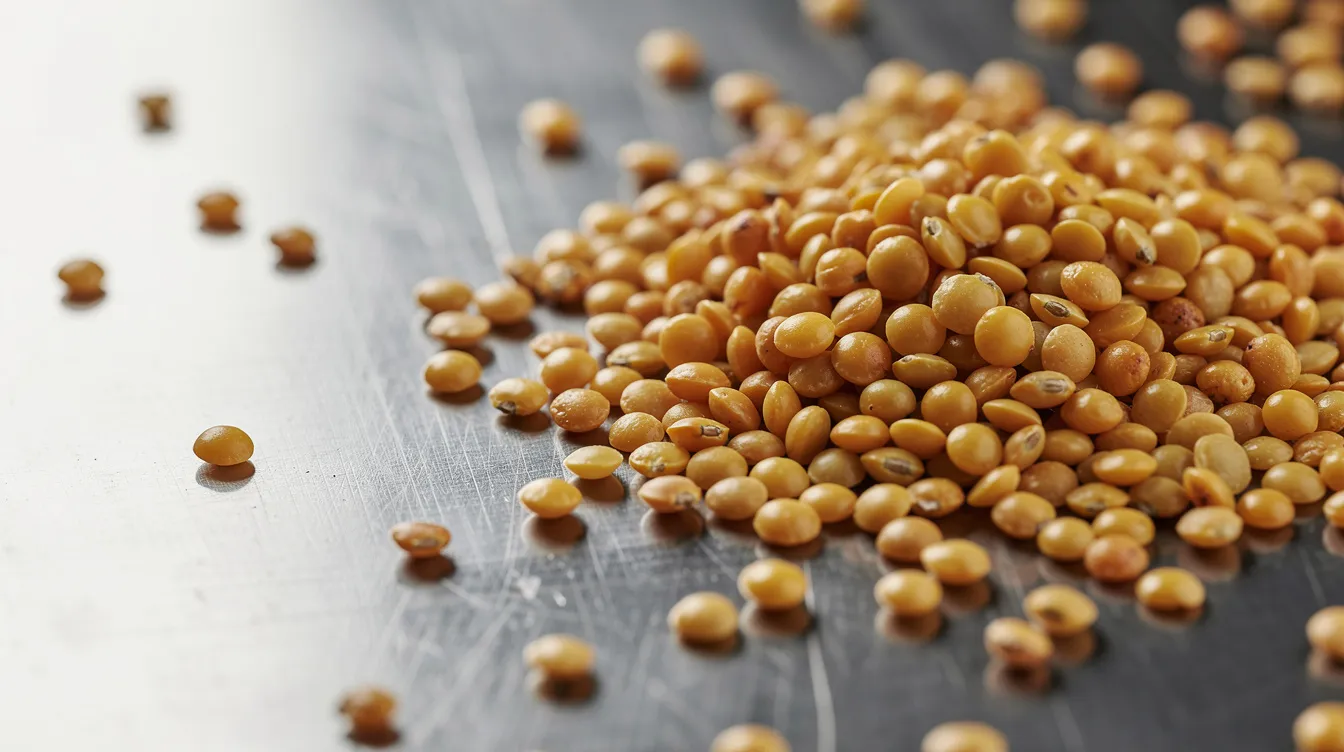
Indian markets expect specific visual standards for each pulse variety. Toor dal should appear bright lemon-yellow with minimal brown spots. Chana dal needs uniform golden splits. Urad dal must show clean white surfaces without blackened kernels. Moong dal requires removal of under-mature green or brown grains, while masoor demands separation of chalky or off-shade splits. Meeting these expectations at scale requires machinery – not manual labour.
The four pillars of a dal mill finishing line are the dal mill colour sorter machine, grading machine, polishing machine and packaging machine. Together, these determine capital investment, operating cost per tonne, selling-price realisation and overall commercial viability. For a better understanding of the complete dal milling process and flow chart, finishing comes after cleaning, conditioning, dehusking and splitting.
Understanding the Complete Dal Mill Finishing Line
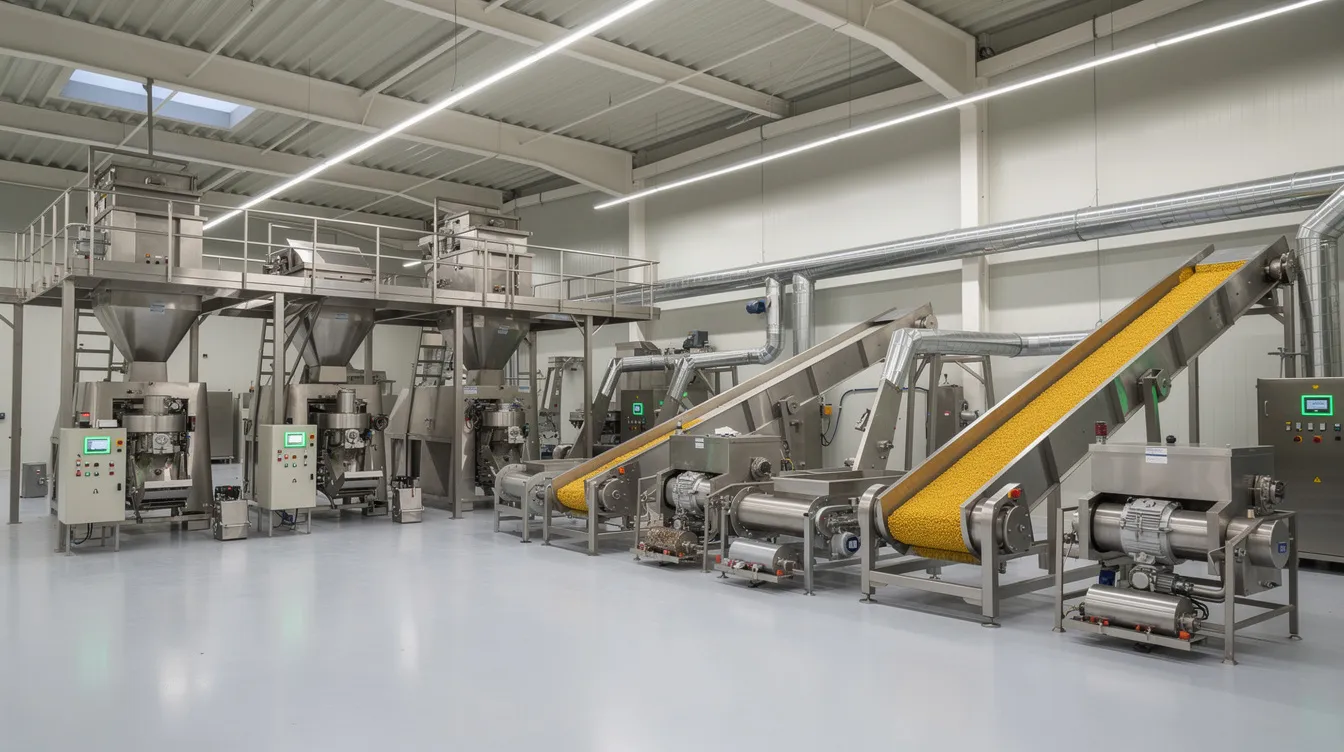
The journey from raw processed dal to dispatch-ready packed products follows a defined sequence. A typical flow is: Dehusked and split dal → Size grading → Aspiration and dust removal → Polishing (if required) → Optical colour sorting → Final quality inspection → Weighing and packaging → Palletisation and dispatch.
Sorting machines are utilized at various stages in the pulse processing line, and the exact sequence may vary with dal variety, polishing requirements, export versus domestic specifications, and automation level. The pulse conditioning, dehusking and splitting process feeds directly into this finishing line.
| Stage | Purpose | Typical Equipment | Key Output Parameter |
|---|---|---|---|
| Size Grading | Separate whole, split, broken, undersize | Vibro grader, cylinder grader | Uniform size distribution |
| Polishing | Enhance surface shine and appearance | Drum polisher, screw polisher | Brightness, surface smoothness |
| Colour Sorting | Remove discoloured, defective, foreign grains | Optical colour sorter | Colour uniformity, defect-free product |
| Packaging | Accurate weighing, sealing, labelling | VFFS machine, semi-auto weigher | Pack weight accuracy, seal integrity |
Layout planning must minimise double handling – conveyors, bucket elevators and intermediate bins are supporting infrastructure, not core finishing machines.
Dal Mill Colour Sorter Machine – Technology, Types & Working Principle
A dal mill colour sorter machine has become almost mandatory in commercial dal mills above 5 TPD capacity. It is the single most impactful piece of finishing equipment for separating defective grains from acceptable products.
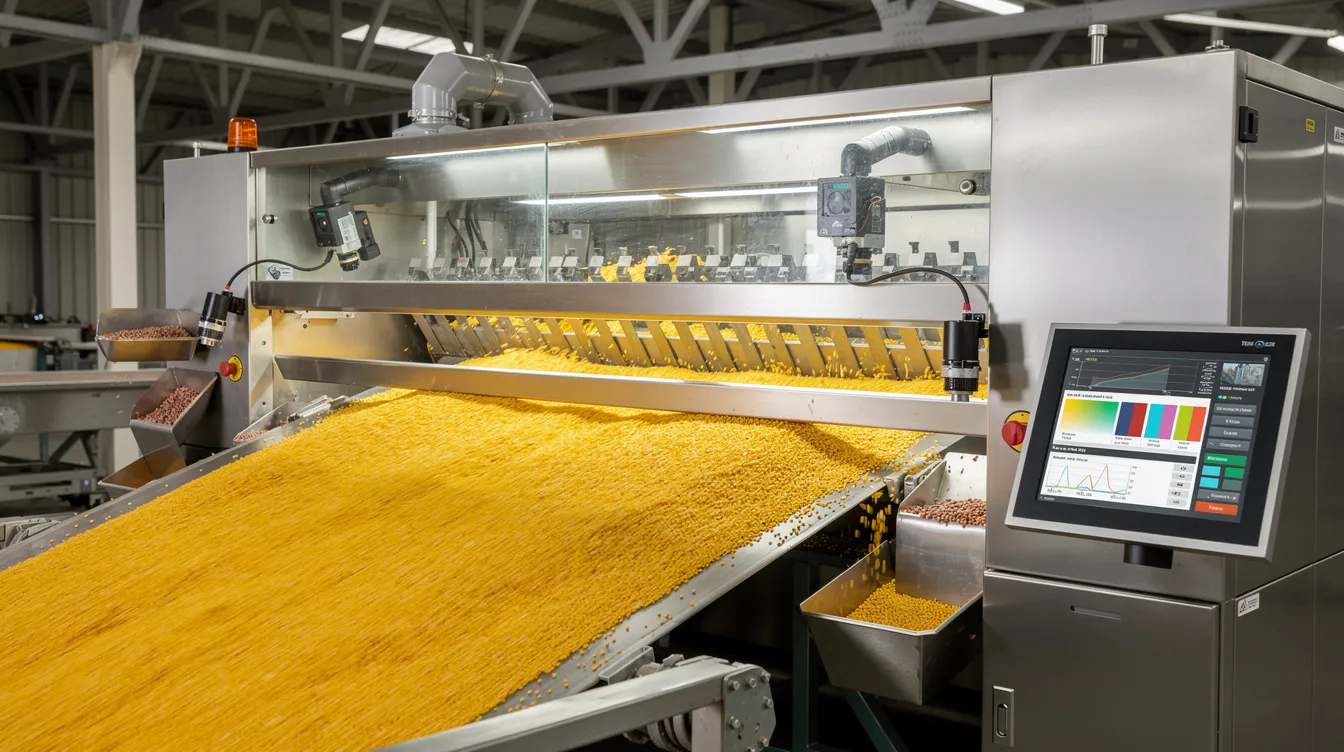
The working principle is straightforward: product flows down chutes under gravity while optical cameras scan pulses for color variations and detect surface defects. Illumination systems use LED lighting to enhance the visibility of defects in pulses. The machinery in dal milling can differentiate between good and defective grains based on optical characteristics, with the sorting process occurring in milliseconds as pulses fall through the machine. High-resolution cameras detect defects, a micro controller and FPGA digital processor technology analyses each kernel against accepted colour thresholds, and fast pneumatic ejectors blow out rejects. A dal mill color sorter helps ensure food safety and hygiene by removing contaminants, and automated optical color sorting can achieve near 100% sorting accuracy. Color sorters can significantly minimize product wastage by preserving high-quality grains.
Multi-stage sorting – primary, secondary and final passes – is common when raw material has higher defect load or when export-quality dal with very low contamination is targeted. The number of passes directly affects head pulses recovery and premium-grade yield.
Types of Dal Colour Sorting Machines
Most dal mills use chute-type colour sorters where pulses free-fall through vertical chutes past camera arrays. These suit mainstream free-flowing pulses (toor, chana, masoor) and are available from compact models to high-capacity configurations. Belt-type sorters carry product on a belt for gentler inspection – useful for fragile or rolling products but typically lower throughput and higher cost.
Optical detection ranges from monochromatic to trichromatic RGB systems. A typical specification features a trichromatic RGB camera with 5400 x 3 pixels, providing colour depth to detect subtle shade differences. Adding NIR detection helps identify foreign material of similar colour but different origin or composition. Classifier systems can be configured for specific pulse types and quality criteria through recipe settings, and AI/ML-assisted sorters developed in recent years allow operators to build defect image libraries for improved consistency across multi-pulse plants processing toor, moong, urad and chana on the same machine.
- Chute-type: Lower cost, higher throughput, ideal for 5–50 TPD dal mills
- Belt-type: Gentler handling, higher cost, limited throughput – niche applications
- AI-assisted: Better adaptability for multiple commodities, higher investment
Dal Colour Sorter Capacity Planning
Brochure capacities like “2–3 TPH” assume clean product, low defect rate and single-pass sorting. Promoters must design with realistic working throughput. A commonly available Dal Color Sorter Machine outputs 800 kg to 1.2 TPH with 126 channels and 2 chutes. High-speed color sorters improve processing efficiency by handling large volumes, but actual performance depends on defect load and acceptable contamination limits.
- 5 TPD finished dal (16 hours): ~0.3–0.4 TPH required; a compact 63–126 channel machine may suffice
- 10 TPD: ~0.6–0.8 TPH; a mid-size 126–252 channel sorter is appropriate
- 20 TPD: ~1.2–1.5 TPH; 252–504 channel sorter with multi-chute configuration
- 50 TPD: ~3+ TPH; large or dual sorters with 500+ channels
Plan at least 20–30% excess nominal capacity to accommodate seasonal quality variation and future expansion. Feeding arrangement, calibration and operator skill often limit practical capacity more than the hardware rating itself.
Dal Colour Sorter Machine Price in India
Dal colour sorter machine price in India varies widely by brand, channel configuration, camera technology, and after-sales support. These figures are indicative and require live quotations:
- Compact (63–126 channels, 0.5–2 TPH): approximately ₹5–15 lakh
- Mid-range (252–504 channels, 2–5 TPH): approximately ₹15–25 lakh
- Large/premium (500+ channels, 5–10 TPH): ₹25–80 lakh or more
Additional costs include a dedicated screw air compressor and air dryer, starter panels, platform and civil foundation, installation and commissioning, and operator training – these can add 15–25% over the bare machine price. When preparing a detailed project report, Project Report Bank uses either formal quotations or conservative budgetary estimates, adding freight, GST and contingencies before finalising project cost.
Dal Grading Machine – Types, Applications & Capacity
Even when a colour sorter is used, a dal grading machine is required to separate whole, splits, brokens, katar, and undersize material to meet buyer specifications on size distribution. Proper grading reduces load on the colour sorter, improves premium-grade recovery and gives better utilisation of each size fraction.
| Grader Type | Capacity Range (TPH) | Key Application | Indicative Price (₹ Lakh) |
|---|---|---|---|
| Vibro grader (multi-deck) | 2–6 | General dal size separation | 2–6 |
| Rotary/drum grader | 3–8 | Toor, chana bold/regular separation | 3–8 |
| Thick-and-thin grader | 3–8 | Length-based sorting, football vs katar chana | 3–10 |
Screen maintenance, periodic replacement, correct mesh selection and proper dust aspiration are essential for stable capacity. Understanding how grading decisions affect dal mill recovery ratio, yield, broken percentage and milling losses is important for financial planning.
Dal Polishing Machine – Working, Types & Machinery Selection
Certain Indian markets prefer very bright, glossy dal – especially toor and chana – while institutional and export buyers sometimes prefer minimal polishing to retain natural appearance. The product range includes dry polishing (mechanical rubbing with emery rollers or buffing material) and mist-assisted polishing where permitted under FSSAI norms.
Common machines in the Indian market include:
- The 2 HP Dal Screw Polisher is designed for professional polishing applications and features adjustable speed settings for versatility, suitable for smaller dal mills
- The 3 HP Dal Buff Polisher Machine is ideal for achieving a flawless finish on split dal
- The 5 HP Automatic Dal Polish Machine costs ₹85,000 and enhances productivity in food processing for medium-capacity plants
Polishing generates fines and powder (aspirated away), so excessive polishing increases material loss and electricity consumption without proportional price benefit. The material of construction should include food-grade contact surfaces for ease of cleaning between pulse types. Machines from 2–3 HP suit 5 TPD plants, while 5–15 HP polishers handle 10+ TPD requirements.
Dal Packaging Machine – Automatic & Semi-Automatic Systems
Packaging is the final revenue-generating step. Poor packaging accuracy leads to underweight issues (legal risk under metrology rules), overweight losses, or damaged packs and returns.
- Semi-automatic systems: Electronic weigh scale with gravity or screw feeding, foot-operated bag clamps, separate impulse or band sealers; typical output 200–500 packs/hour for 1 kg pouches
- Automatic VFFS (Vertical Form Fill Seal): Roll stock film, forming collar, vertical and horizontal sealing jaws, date coding; output 500–3,000 pouches/hour
- Bulk bagging: Net/gross weigh baggers for 25–50 kg HDPE/PP sacks with stitching heads
Optional add-ons include metal detectors, check weighers and inkjet printers for batch coding to meet modern retail and export requirements.
Packaging Options for 500 g, 1 kg, 5 kg, 25 kg & 50 kg Dal
Dal mills typically handle two streams: consumer packs (500 g, 1 kg, 5 kg in laminated pouches) and bulk packs (25 kg, 50 kg in woven sacks). Consumer packs require VFFS or premade-pouch machines. Bulk sacks use gravity-fed baggers with stitching. Smaller dal mills can begin with semi-automatic packing for 25/50 kg and outsource consumer SKU packing initially, upgrading to their own VFFS machines as brand volumes grow.
Dal Packaging Machine Price & Automation Options
- Semi-automatic weigh-filler plus band sealer: ₹0.5–1.5 lakh
- Entry-level VFFS (500 g–5 kg): ₹1.2–3 lakh
- Servo-driven VFFS with multi-head weigher: ₹7–20 lakh
- Bulk bagging line (25–50 kg): ₹2–5 lakh per spout
All figures are indicative, exclusive of GST, freight and installation. Operating costs include film consumption, manpower per shift, maintenance of sealing jaws and load cells. Promoters should perform a simple payback comparison between manual and automatic packing, factoring in labour cost, weight variation losses and brand positioning.
Dal Mill Colour Sorter, Grading, Polishing & Packaging Machinery Cost in India
Dal mill machinery cost in India for a complete finishing line varies substantially with capacity and automation. For context, a Mini Dal Mill costs Rs 67,000, while a complete Dal Mill Plant Machinery package is priced at Rs 99,00,000. A Pulses Mill Plant is priced at Rs 1,00,00,000, an Automatic Dal Mill Plant costs Rs 1,63,10,000, and a fully equipped Dal Mill Plant is available for Rs 2,00,00,000 – these are complete-plant figures, not finishing lines alone.
| Equipment Head | Indicative Range (₹ Lakh) | Notes |
|---|---|---|
| Colour sorter (1–5 TPH) | 5–25 | Depends on channels, camera, brand |
| Grading machines | 2–10 | Multi-deck, capacity dependent |
| Polishing machines | 0.4–2 | Capacity and HP dependent |
| Packaging (consumer + bulk) | 2–20 | Semi-auto to fully automatic |
| Air compressor and treatment | 2–8 | Oil-free, dry air required |
| Conveyors and elevators | 2–6 | Plant-specific layout |
| Electrical controls and MCC | 1–4 | PLC, starters, cabling |
| Installation and commissioning | 2–5 | Civil, erection, trials |
| Contingency (5–10%) | Variable | Budget buffer |
The difference between ex-works machine price and landed installed cost (including GST, freight, civil works, cabling and ancillaries) is typically 20–35%. Refer to the detailed guide on dal mill machinery, equipment and cost for a complete-plant perspective.
Machinery Selection for 5 TPD, 10 TPD, 20 TPD & 50 TPD Dal Mills
TPD here refers to finished dal output over one 16-hour working day.
| Parameter | 5 TPD | 10 TPD | 20 TPD | 50 TPD |
|---|---|---|---|---|
| Sorter capacity needed | ~0.4 TPH | ~0.7 TPH | ~1.5 TPH | ~3.5 TPH |
| Sorter type | Compact 63–126 ch | Mid 126–252 ch | Large 252–504 ch | Dual/large 500+ ch |
| Grader | Small vibro | Multi-deck | Parallel graders | Multiple units |
| Polisher | 2–3 HP (optional) | 5 HP | Multiple 5–10 HP | Multiple large |
| Packaging | Semi-auto + bulk | Semi-auto + entry VFFS | Auto VFFS + bulk | Multiple auto lines |
| Shift manpower (finishing) | 3–4 | 5–7 | 8–12 | 15–25 |
For details on capacity assumptions, refer to the guide on dal mill capacity planning for 5, 10, 20 and 50 TPD plants.
Fully Automatic vs Semi-Automatic Dal Finishing Machinery
| Criterion | Semi-Automatic | Fully Automatic |
|---|---|---|
| Initial capex | Lower | 2–4x higher |
| Manpower per shift | Higher | Significantly lower |
| Throughput consistency | Operator-dependent | More consistent |
| SKU changeover | Flexible | Requires setup time |
| Best suited for | Up to ~5 TPD, startup phase | 10+ TPD, branded products |
Small dal mills (up to about 5 TPD) may be better off with semi-automatic solutions initially, upgrading once volume and brand demand stabilise. For medium and large mills, automation reduces per-tonne labour cost and improves consistency for export or modern retail supply contracts. The comparison of fully automatic vs semi-automatic dal mills provides detailed financial modelling of these trade-offs.
Utility Requirements, Space Planning & Finishing Line Layout
Many dal mill projects underestimate utility and layout needs. A colour sorter requires a three-phase electricity connection – typically 2–10 kW depending on model – plus dry, oil-free compressed air. A machine with 126 channels requires 48 CFM air and a 15 HP compressor at 6–8 bar pressure. India, as a major pulses country, has varying power quality across regions; voltage stabilisation is essential for optical equipment. Small single phase motors may suffice for ancillary feeders, but core finishing equipment needs stable three-phase supply.
Construction of the finishing area should address MS power consumption distribution boards, proper earthing, and separate circuits. Space planning must allocate area for the sorter platform (elevated feeding), grading and polishing area, packing room, finished-goods storage and QC inspection. Dust control through aspiration systems and bag filters near polishers and graders is essential. The guide on dal mill land, building and plant layout requirements covers these details comprehensively.
How Finishing Machinery Affects Dal Mill Profitability
Finishing-line decisions directly impact recovery of premium grade, selling price per kg, labour and utility cost per tonne, and brand reputation. A good colour sorter enables a “premium” grade with reduced visible defects, while the rejection stream can still be sold separately at lower margins. Precise grading of brokens and undersize fractions allows separate sale, reducing effective wastage.
Consider a hypothetical 10 TPD plant where investing ₹20 lakh in a mid-range colour sorter and ₹3 lakh in semi-automatic packaging increases the premium-grade proportion by 8–10%, yielding an additional ₹2–3/kg on roughly 60% of output. Under these assumptions, the incremental annual revenue could be ₹15–25 lakh against additional operating costs of ₹3–5 lakh, suggesting a payback within 18–30 months. These figures are illustrative – actual results depend on products, market and operating conditions.
Such analyses should be incorporated into a dal mill project report covering ROI, IRR, DSCR and sensitivity analysis.
How to Select Reliable Dal Mill Machinery Suppliers in India
Supplier selection should focus on long-term reliability and service, not the lowest upfront price. A practical checklist:
- Conduct machine trials with your own dal samples at the supplier’s demo centre
- Verify output quality, rejection percentage and technical specifications under defined conditions
- Evaluate the supplier’s team for local service network, response time and spare parts availability
- Request a clear written quote specifying inclusions and exclusions (compressor, platform, cabling, civil works)
- Ask for a callback or visit reference from an existing dal mill using the same equipment
- Compare total cost of ownership (energy, maintenance, downtime risk, expected life) rather than purchase price alone
Machinery Investment Planning, DPR & Bank Finance
Accurate finishing-line costing must be integrated into the Detailed Project Report when seeking bank finance. The DPR should capture item-wise machinery cost, taxes, freight, installation and contingencies so that fixed capital is properly estimated. Realistic capacity utilisation and operating assumptions feed into financial projections – production volume, cost of production per kg, EBITDA margins and DSCR for term loans.
Banks scrutinise whether machinery selection is appropriate for the proposed capacity. Overly small or excessively large machines raise feasibility concerns. Working capital planning must account for inventory of raw pulses and finished dal, packaging material stock and credit periods.
Project Report Bank can support promoters with customised DPR, CMA Data preparation, term-loan structuring, means-of-finance planning and sensitivity analysis specific to dal mill projects. For making informed investment decisions, connect via WhatsApp for a customised dal mill finishing-line DPR tailored to your location, capacity and market segment.
Relevant resources: Dal mill plant setup cost in India | Bank finance DPR and loan proposal assistance
Frequently Asked Questions
What technical specifications should I focus on while comparing dal mill colour sorter machines?
Focus on channel and chute count, camera type (trichromatic RGB or RGB plus NIR), valve response time, supported throughput in TPH under defined defect-load conditions, and compressed air consumption in CFM. A machine with 126 channels and 2 chutes using FPGA digital processor technology is a common mid-range configuration. Prioritise stable performance and after-sales service over purely higher technical numbers in brochures.
Can I use one colour sorter machine for multiple dal varieties and other grains?
Most modern pulse colour sorting machines can handle multiple commodities – toor, chana, moong, urad, masoor and some grains – through recipe settings. However, changeover requires cleaning chutes and loading new sorting programs. Limit the number of very different commodities on one machine to avoid frequent changeovers and contamination risks, especially where food safety standards are strict.
Is it necessary to invest in polishing and fully automatic packing at the initial stage?
Very small or start-up dal mills may begin with limited or no polishing and semi-automatic packing if their market is primarily bulk wholesale. Quality sorting and basic grading are usually higher-priority investments than high-level polishing and full automation in the initial project phase. Upgrade once demand for branded consumer packs stabilises.
Can finishing machinery be added later if I start with only basic dal mill equipment?
Many entrepreneurs start with basic milling plus simpler finishing and later retrofit colour sorters, advanced graders or automatic packaging lines as volumes grow. However, the original plant layout and DPR should anticipate space, power, air and financial capacity for future installation to avoid costly modifications.
How often should a dal mill colour sorter be calibrated and serviced?
Daily cleaning of optical and contact areas is essential. Weekly inspection of chutes, hoppers and air valves is recommended. Formal calibration and servicing should follow manufacturer guidelines – typically quarterly or half-yearly. Annual maintenance contracts with the supplier are common in India and help ensure predictable servicing costs and consistent performance.
Conclusion – Selecting the Right Dal Finishing Machinery for Sustainable Growth
Sustainable dal mill growth depends on coordinated selection of colour sorter, grading, polishing and packaging systems aligned to capacity, quality targets and market positioning. Machinery decisions should be evaluated not only on technical specifications and initial price, but also on operating cost, product recoveries, selling-price potential and long-term support.
Integrating machinery planning into a professionally prepared DPR helps promoters negotiate better with banks, investors and suppliers – and reduces the risk of under- or over-investment.
If you are planning a new dal mill or upgrading your finishing line, connect with Project Report Bank via WhatsApp for customised project reports, machinery investment planning, financial modelling and bank finance documentation. All assumptions are tailored to your specific location, capacity, product mix and market segment.
CA Manish Gugliya, FCA, DISA (ICAI) Practising Chartered Accountant | 20+ Years of Professional Experience Project Report, DPR, CMA Data, MSME & Project Finance Advisor Website: projectreportbank.com